EP4462933A1 - Präambelübertragungsverfahren, -vorrichtung und -system - Google Patents
Präambelübertragungsverfahren, -vorrichtung und -system Download PDFInfo
- Publication number
- EP4462933A1 EP4462933A1 EP22923613.8A EP22923613A EP4462933A1 EP 4462933 A1 EP4462933 A1 EP 4462933A1 EP 22923613 A EP22923613 A EP 22923613A EP 4462933 A1 EP4462933 A1 EP 4462933A1
- Authority
- EP
- European Patent Office
- Prior art keywords
- preambles
- value
- information
- terminal device
- communication apparatus
- Prior art date
- Legal status (The legal status is an assumption and is not a legal conclusion. Google has not performed a legal analysis and makes no representation as to the accuracy of the status listed.)
- Granted
Links
Images





Classifications
-
- H—ELECTRICITY
- H04—ELECTRIC COMMUNICATION TECHNIQUE
- H04W—WIRELESS COMMUNICATION NETWORKS
- H04W74/00—Wireless channel access
-
- H—ELECTRICITY
- H04—ELECTRIC COMMUNICATION TECHNIQUE
- H04L—TRANSMISSION OF DIGITAL INFORMATION, e.g. TELEGRAPHIC COMMUNICATION
- H04L27/00—Modulated-carrier systems
- H04L27/26—Systems using multi-frequency codes
- H04L27/2601—Multicarrier modulation systems
- H04L27/2602—Signal structure
- H04L27/261—Details of reference signals
- H04L27/2613—Structure of the reference signals
-
- H—ELECTRICITY
- H04—ELECTRIC COMMUNICATION TECHNIQUE
- H04L—TRANSMISSION OF DIGITAL INFORMATION, e.g. TELEGRAPHIC COMMUNICATION
- H04L27/00—Modulated-carrier systems
- H04L27/26—Systems using multi-frequency codes
- H04L27/2601—Multicarrier modulation systems
- H04L27/2602—Signal structure
- H04L27/2605—Symbol extensions, e.g. Zero Tail, Unique Word [UW]
-
- H—ELECTRICITY
- H04—ELECTRIC COMMUNICATION TECHNIQUE
- H04W—WIRELESS COMMUNICATION NETWORKS
- H04W56/00—Synchronisation arrangements
- H04W56/004—Synchronisation arrangements compensating for timing error of reception due to propagation delay
- H04W56/0045—Synchronisation arrangements compensating for timing error of reception due to propagation delay compensating for timing error by altering transmission time
-
- H—ELECTRICITY
- H04—ELECTRIC COMMUNICATION TECHNIQUE
- H04W—WIRELESS COMMUNICATION NETWORKS
- H04W64/00—Locating users or terminals or network equipment for network management purposes, e.g. mobility management
-
- H—ELECTRICITY
- H04—ELECTRIC COMMUNICATION TECHNIQUE
- H04W—WIRELESS COMMUNICATION NETWORKS
- H04W74/00—Wireless channel access
- H04W74/002—Transmission of channel access control information
- H04W74/004—Transmission of channel access control information in the uplink, i.e. towards network
-
- H—ELECTRICITY
- H04—ELECTRIC COMMUNICATION TECHNIQUE
- H04W—WIRELESS COMMUNICATION NETWORKS
- H04W74/00—Wireless channel access
- H04W74/08—Non-scheduled access, e.g. ALOHA
-
- H—ELECTRICITY
- H04—ELECTRIC COMMUNICATION TECHNIQUE
- H04W—WIRELESS COMMUNICATION NETWORKS
- H04W74/00—Wireless channel access
- H04W74/08—Non-scheduled access, e.g. ALOHA
- H04W74/0833—Random access procedures, e.g. with 4-step access
Definitions
- This application relates to the communication field, and in particular, to a preamble transmission method, an apparatus, and a system.
- terminal devices establish connections to a network device by using random access procedures (random access procedures), to achieve uplink synchronization.
- the terminal device sends a random access preamble (random access preamble) (briefly referred to as “preamble” below) to the network device to request random access.
- the network device may estimate a transmission delay between the network device and the terminal device based on the received preamble, determine timing advance (timing advance, TA) information based on the transmission delay, and send the TA information to the terminal device.
- the terminal device may determine, based on the received TA information, time at which data is sent to the network device.
- a TA value corresponding to a terminal device far from the network device is larger, in other words, the terminal device far from the network device needs to send data to the network device earlier; and a TA value corresponding to a terminal device near the network device is smaller, in other words, the terminal device near the network device may send data to the network device later.
- time at which data sent by different terminal devices to the network device arrives at the network device may be consistent, to implement the uplink synchronization.
- a preamble of one cell is usually a Zad-off Chu (ZC) sequence, and a quantity of preambles is limited.
- ZC Zad-off Chu
- a quantity of preambles in a new radio system is 64.
- One preamble may be uniquely determined based on a root of the ZC sequence and a cyclic shift, and different preambles correspond to different combinations of roots of the ZC sequence and cyclic shifts.
- a quantity of roots of the ZC sequence is limited by a length of the ZC sequence.
- N CS L RA / N Step CS
- L RA represents the length of the ZC sequence
- N Step CS represents a step of cyclic shift values
- ⁇ ⁇ represents rounding down.
- the step N Step CS of the cyclic shift values is limited by a cell radius, or may be limited by a maximum transmission delay between the terminal device and the network device.
- a larger cell radius indicates a larger transmission delay between the network device and a terminal device that is farthest from the network device and that is in the cell.
- a larger TA value corresponding to the terminal device that is farthest from the network device correspondingly indicates a larger value of N Step CS .
- Embodiments of this application provide a preamble transmission method, an apparatus, and a system, to increase a quantity of available preambles.
- a preamble transmission method may be a terminal device, or may be a module, for example, a chip or a chip system, used in a terminal device.
- the following uses an example in which an execution body is the terminal device for descriptions.
- the terminal device obtains first information.
- the first information includes at least one of the following: historical timing advance TA information, geographical location information, or power information of the terminal device.
- the terminal device determines one group of preambles from K G groups of preambles based on the first information.
- K G is an integer greater than 1
- a total quantity of preambles in the K G groups of preambles is positively correlated with a quantity of preamble cyclic shifts
- the quantity of preamble cyclic shifts is positively correlated with the quantity K G of groups of preambles.
- the terminal device may design the K G groups of preambles, and K G is the integer greater than 1.
- K G the integer greater than 1.
- the quantity of preamble cyclic shifts may be increased by increasing the quantity of groups of preambles, to further increase the total quantity of preambles. That is, in comparison with the conventional technology, the method provided in this embodiment of this application can increase a preamble capacity.
- the terminal device determines one group of preambles from K G groups of preambles based on the first information includes: The terminal device determines a first parameter based on the first information, and determines the one group of preambles from the K G groups of preambles based on a correspondence between the first parameter and the K G groups of preambles.
- the first parameter is introduced, so that the terminal device can select one group of preambles from a plurality of groups of preambles as a candidate to-be-sent preamble.
- an i th group of preambles in the K G groups of preambles corresponds to at least one piece of TA information, and at least one TA value corresponding to the i th group of preambles is different from at least one TA value corresponding to a j th group of preambles.
- Both i and j are non-negative integers less than K G , and values of i and j are different.
- there is a correspondence between the groups of preambles and TA information so that the terminal device can determine the first parameter, to be specific, one piece of TA information, based on the first information, and determine the one group of preambles corresponding to the first parameter.
- the i th group of preambles in the K G groups of preambles corresponds to a first TA value range
- the first TA value range corresponding to the i th group of preambles does not overlap a second TA value range corresponding to the j th group of preambles.
- Both i and j are the non-negative integers less than K G , and the values of i and j are different.
- a range of the first TA value range is related to the quantity K G of groups of preambles and a maximum TA value.
- the quantity K G of groups of preambles and the maximum TA value are considered, so that K G TA value ranges corresponding to the K G groups of preambles can be designed in a range from 0 to the maximum TA value.
- the first information is the historical TA information of the terminal device
- the first parameter is the historical TA information of the terminal device.
- the first parameter is equivalent to the first information, and no conversion is required.
- the first information is the geographical location information of the terminal device, and the geographical location information of the terminal device is a distance between the terminal device and the network device. That the terminal device determines a first parameter based on the first information includes: The terminal device determines the first parameter based on the distance between the terminal device and the network device, a cell radius of a cell in which the terminal device is located, and a maximum TA value.
- the first parameter is TA information, and the first parameter is the same as one of at least one piece of TA information corresponding to the one group of preambles determined from the K G groups of preambles.
- the first parameter is not equivalent to the first information, and the first information needs to be converted by using the cell radius of the cell in which the terminal device is located and the maximum TA value, to obtain the first parameter.
- the first information is the historical TA information of the terminal device and the geographical location information of the terminal device, and the geographical location information of the terminal device is a distance between the terminal device and the network device. That the terminal device determines a first parameter based on the first information includes: The terminal device determines the first parameter based on a historical TA value of the terminal device, the distance between the terminal device and the network device, a cell radius of a cell in which the terminal device is located, and a maximum TA value.
- the first parameter is TA information, and the first parameter is the same as one of at least one piece of TA information corresponding to the one group of preambles determined from the K G groups of preambles.
- the first parameter is not equivalent to the first information, and the first information needs to be converted by using the cell radius of the cell in which the terminal device is located and the maximum TA value, to obtain the first parameter.
- an i th group of preambles in the K G groups of preambles corresponds to at least one radius value
- the at least one radius value corresponding to the i th group of preambles is different from at least one radius value corresponding to a j th group of preambles.
- Both i and j are non-negative integers less than K G , and values of i and j are different.
- the terminal device can determine the first parameter, in other words, one radius value, based on the first information, and determine the one group of preambles corresponding to the first parameter.
- the i th group of preambles in the K G groups of preambles corresponds to a first radius value range
- the first radius value range corresponding to the i th group of preambles does not overlap a second radius value range corresponding to the j th group of preambles.
- Both i and j are the non-negative integers less than K G , and the values of i and j are different.
- a range of the first radius value range is related to the quantity K G of groups of preambles and a cell radius of a cell in which the terminal device is located.
- the quantity K G of groups of preambles and the cell radius are considered, so that K G radius value ranges corresponding to the K G groups of preambles can be designed in a range from 0 to the cell radius.
- the first information is the geographical location information of the terminal device
- the geographical location information of the terminal device is a distance between the terminal device and the network device
- the first parameter is the geographical location information of the terminal device.
- the first information is the historical TA information of the terminal device. That the terminal device determines a first parameter based on the first information includes: The terminal device determines the first parameter based on a historical TA value of the terminal device, a cell radius of a cell in which the terminal device is located, and a maximum TA value.
- the first parameter is a radius value, and the first parameter is the same as one of at least one radius value corresponding to the one group of preambles determined from the K G groups of preambles.
- the first parameter is not equivalent to the first information, and the first information needs to be converted by using the cell radius of the cell in which the terminal device is located and the maximum TA value, to obtain the first parameter.
- the first information is the historical TA information of the terminal device and the geographical location information of the terminal device, and the geographical location information of the terminal device is a distance between the terminal device and the network device. That the terminal device determines a first parameter based on the first information includes: The terminal device determines the first parameter based on a historical TA value of the terminal device, the distance between the terminal device and the network device, a cell radius of a cell in which the terminal device is located, and a maximum TA value.
- the first parameter is a radius value, and the first parameter is the same as one of at least one radius value corresponding to the one group of preambles determined from the K G groups of preambles.
- the first parameter is not equivalent to the first information, and the first information needs to be converted by using the cell radius of the cell in which the terminal device is located and the maximum TA value, to obtain the first parameter.
- the i th group of preambles in the K G groups of preambles is first arranged in ascending order of cyclic shift indexes, and then arranged in ascending order of root indexes, and an (i+1) th group of preambles in the K G groups of preambles is arranged sequentially after the i th group of preambles is arranged; in a value range iN CS Ini ⁇ i , i + 1 N CS Ini ⁇ 1 ⁇ i of cyclic shift indexes, the i th group of preambles in the K G groups of preambles is first arranged in ascending order of the cyclic shift indexes, and then arranged in ascending order of root indexes; or the i th group of preambles in the K G groups of preambles is first arranged in ascending order of cyclic shift indexes, where the cyclic shift indexes are
- An apparatus for performing the preamble transmission method may be a network device, or may be a module, for example, a Bluetooth chip or a chip system, used in a network device.
- the following uses an example in which an execution body is the network device for descriptions.
- the network device receives a first preamble, and determines a first time-domain channel based on the first preamble.
- the first time-domain channel includes N CS regions.
- the network device determines, based on a correspondence between the N CS regions of the first time-domain channel and cyclic shift indexes of K G groups of preambles, a cyclic shift index and a group sequence number that are of the first preamble.
- a p th cyclic shift of an i th group of preambles in the K G groups of preambles corresponds to a (( p + i )mod N CS ) th region of the first time-domain channel, mod represents a modulo operation, and N CS represents a quantity of cyclic shifts.
- the p th cyclic shift of the i th group of preambles in the K G groups of preambles corresponds to the (( p + i )mod N CS ) th region of the first time-domain channel. That is, correspondences between cyclic shift values or cyclic shift indexes of different groups of preambles and regions are different. Specifically, the region corresponding to the p th cyclic shift of the i th group of preambles is offset by i regions compared with a region corresponding to a p th cyclic shift of a 0 th group of preambles. In this way, the network device can still determine a group number corresponding to a cyclic shift, and therefore, can correctly detect a preamble, and avoid a collision between different groups of preambles.
- the network device determines a TA value based on the group sequence number and the first preamble, and sends the TA value to a terminal device.
- the network device determines the TA value by referring to the first preamble and the group sequence number, so that the TA value corresponding to the first preamble can be accurately calculated.
- An apparatus for performing the preamble transmission method may be a terminal device, or may be a module, for example, a chip or a chip system, used in a terminal device.
- the following uses an example in which an execution body is the terminal device for descriptions.
- the terminal device obtains first information.
- the first information includes at least one of the following: historical timing advance TA information, geographical location information, or power information of the terminal device.
- the terminal device determines a first TA value based on the first information, and determines, based on the first TA value, first time at which a first preamble is sent to a network device.
- the first preamble is one of N all root preambles, and N all root is a positive integer greater than 1.
- the terminal device sends the first preamble to the network device at the first time.
- the terminal device determines the first TA value based on the first information, and determines, based on the first TA value, the first time at which the first preamble is sent to the network device.
- the terminal device calculates the TA value in advance and sends the first preamble to the network device, so that a second TA value determined by the network device is small.
- the second TA value determined by the network device is far less than a maximum TA value in the conventional technology, and therefore, a cell radius is reduced.
- a smaller cell radius indicates an increase in a total quantity of preambles, and therefore, a preamble capacity is improved.
- that the terminal device determines a first TA value based on the first information includes: The terminal device determines the first TA value based on the first information and a third parameter.
- the third parameter is positively correlated with a total quantity N all root of preambles and a quantity of preamble cyclic shifts, and the third parameter is a positive integer greater than 1. Because the third parameter is positively correlated with the quantity N all root of preambles and the quantity of preamble cyclic shifts, the total quantity of preambles may be increased by increasing the third parameter, or the quantity of cyclic shifts may be increased by increasing the third parameter, to further increase the total quantity of preambles.
- the first information is a historical TA value of the terminal device. That the terminal device determines a first TA value based on the first information includes: The terminal device determines the historical TA value of the terminal device as the first TA value.
- the first TA value is equivalent to the first information, and no conversion is required.
- the first information is not the historical TA information of the terminal device. That the terminal device determines the first TA value based on the first information and a third parameter includes: The terminal device determines a fourth parameter based on the first information. The terminal device determines the first TA value based on the third parameter, the fourth parameter, and a maximum TA value.
- the first TA value is not equivalent to the first information, and the first information needs to be first converted into the fourth parameter, so that the first TA value can be further obtained.
- the N all root preambles are first arranged in ascending order of cyclic shift indexes, and then arranged in ascending order of root indexes.
- a manner for arranging the preambles is still a manner used in the conventional technology, and can be compatible with the conventional technology.
- the method further includes: The terminal device receives a second TA value from the network device.
- the terminal device adds the first TA value and the second TA value, to obtain a third TA value.
- the terminal device sends the third TA value to the network device.
- the third TA value in this application is a TA value determined by the network device in the conventional technology.
- the second TA value determined by the network device in this application is less than a TA value determined by a network device in the conventional technology, so that a cell radius is reduced, and a preamble capacity is improved.
- An apparatus for performing the preamble transmission method may be a network device, or may be a module, for example, a Bluetooth chip or a chip system, used in a network device.
- the following uses an example in which an execution body is the network device for descriptions.
- the network device receives a first preamble, and determines a first time-domain channel based on the first preamble.
- the first time-domain channel includes N CS regions.
- the network device determines a cyclic shift index of the first preamble based on a correspondence between the N CS regions of the first time-domain channel and cyclic shift indexes of preambles.
- a p th cyclic shift corresponds to a p th region of the first time-domain channel.
- the network device determines a second TA value based on the cyclic shift index and a root index that are of the first preamble.
- the network device sends the second TA value to a terminal device.
- the correspondence that is on a network device side and that is between the N CS regions of the first time-domain channel and the cyclic shift indexes of the preambles and a method for determining the second TA value are still in a conventional technology, and can be compatible with the conventional technology.
- a difference from the conventional technology is that the second TA value determined by the network device is far less than a maximum TA value in the conventional technology. Therefore, this is equivalent to reducing a cell radius. As described in the background, a smaller cell radius indicates an increase in a total quantity of preambles, and therefore, a preamble capacity is improved.
- a terminal device is provided to implement the foregoing method.
- the terminal device includes a corresponding module, unit, or means (means) for implementing the foregoing method.
- the module, unit, or means may be implemented by hardware or software, or implemented by hardware executing corresponding software.
- the hardware or the software includes one or more modules or units corresponding to the foregoing functions.
- the terminal device includes: a transceiver module and a processing module.
- the processing module is configured to obtain first information.
- the first information includes at least one of the following: historical timing advance TA information, geographical location information, or power information of the terminal device.
- the processing module is further configured to determine one group of preambles from K G groups of preambles based on the first information.
- K G is an integer greater than 1, a total quantity of preambles in the K G groups of preambles is positively correlated with a quantity of preamble cyclic shifts, and the quantity of preamble cyclic shifts is positively correlated with the quantity K G of groups of preambles.
- the transceiver module is configured to send a first preamble in the one group of preambles to a network device.
- an i th group of preambles in the K G groups of preambles corresponds to at least one piece of TA information, and at least one TA value corresponding to the i th group of preambles is different from at least one TA value corresponding to a j th group of preambles.
- Both i and j are non-negative integers less than K G , and values of i and j are different.
- the i th group of preambles in the K G groups of preambles corresponds to a first TA value range
- the first TA value range corresponding to the i th group of preambles does not overlap a second TA value range corresponding to the j th group of preambles.
- Both i and j are the non-negative integers less than K G , and the values of i and j are different.
- a range of the first TA value range is related to the quantity K G of groups of preambles and a maximum TA value.
- the first information is the historical TA information of the terminal device
- the first parameter is the historical TA information of the terminal device.
- the first information is the geographical location information of the terminal device, and the geographical location information of the terminal device is a distance between the terminal device and the network device. That the processing module is further configured to determine a first parameter based on the first information includes: The processing module is configured to determine the first parameter based on the distance between the terminal device and the network device, a cell radius of a cell in which the terminal device is located, and a maximum TA value.
- the first parameter is TA information, and the first parameter is the same as one of at least one piece of TA information corresponding to the one group of preambles determined from the K G groups of preambles.
- the first information is the historical TA information of the terminal device and the geographical location information of the terminal device, and the geographical location information of the terminal device is a distance between the terminal device and the network device. That the processing module is further configured to determine a first parameter based on the first information includes: The processing module is configured to determine the first parameter based on a historical TA value of the terminal device, the distance between the terminal device and the network device, a cell radius of a cell in which the terminal device is located, and a maximum TA value.
- the first parameter is TA information, and the first parameter is the same as one of at least one piece of TA information corresponding to the one group of preambles determined from the K G groups of preambles.
- an i th group of preambles in the K G groups of preambles corresponds to at least one radius value
- the at least one radius value corresponding to the i th group of preambles is different from at least one radius value corresponding to a j th group of preambles.
- Both i and j are non-negative integers less than K G , and values of i and j are different.
- the i th group of preambles in the K G groups of preambles corresponds to a first radius value range
- the first radius value range corresponding to the i th group of preambles does not overlap a second radius value range corresponding to the j th group of preambles.
- Both i and j are the non-negative integers less than K G , and the values of i and j are different.
- a range of the first radius value range is related to the quantity K G of groups of preambles and a cell radius of a cell in which the terminal device is located.
- the first information is the geographical location information of the terminal device
- the geographical location information of the terminal device is a distance between the terminal device and the network device
- the first parameter is the geographical location information of the terminal device.
- the first information is the historical TA information of the terminal device. That the processing module is further configured to determine a first parameter based on the first information includes: The processing module is configured to determine the first parameter based on a historical TA value of the terminal device, a cell radius of a cell in which the terminal device is located, and a maximum TA value.
- the first parameter is a radius value, and the first parameter is the same as one of at least one radius value corresponding to the one group of preambles determined from the K G groups of preambles.
- the first information is the historical TA information of the terminal device and the geographical location information of the terminal device, and the geographical location information of the terminal device is a distance between the terminal device and the network device. That the processing module is further configured to determine a first parameter based on the first information includes: The processing module is configured to determine the first parameter based on a historical TA value of the terminal device, the distance between the terminal device and the network device, a cell radius of a cell in which the terminal device is located, and a maximum TA value.
- the first parameter is a radius value, and the first parameter is the same as one of at least one radius value corresponding to the one group of preambles determined from the K G groups of preambles.
- the i th group of preambles in the K G groups of preambles is first arranged in ascending order of cyclic shift indexes, and then arranged in ascending order of root indexes, and an (i+1) th group of preambles in the K G groups of preambles is arranged sequentially after the i th group of preambles is arranged; in a value range iN CS Ini ⁇ i , i + 1 N CS Ini ⁇ 1 ⁇ i of cyclic shift indexes, the i th group of preambles in the K G groups of preambles is first arranged in ascending order of the cyclic shift indexes, and then arranged in ascending order of root indexes; or the i th group of preambles in the K G groups of preambles is first arranged in ascending order of cyclic shift indexes, where the cyclic shift indexes are
- a network device is provided to implement the foregoing method.
- the network device includes a corresponding module, unit, or means (means) for implementing the foregoing method.
- the module, unit, or means may be implemented by hardware or software, or implemented by hardware executing corresponding software.
- the hardware or the software includes one or more modules or units corresponding to the foregoing functions.
- the network device includes a transceiver module and a processing module.
- the transceiver module is configured to receive a first preamble.
- the processing module is configured to determine a first time-domain channel based on the first preamble.
- the first time-domain channel includes N CS regions.
- the processing module is further configured to determine, based on a correspondence between the N CS regions of the first time-domain channel and cyclic shift indexes of K G groups of preambles, a cyclic shift index and a group sequence number that are of the first preamble.
- a p th cyclic shift of an i th group of preambles in the K G groups of preambles corresponds to a (( p + i ) mod N CS ) th region of the first time-domain channel, mod represents a modulo operation, and N CS represents a quantity of cyclic shifts.
- the processing module is further configured to determine a TA value based on the group sequence number and the first preamble; and the transceiver module is further configured to send the TA value to a terminal device.
- a terminal device is provided to implement the foregoing method.
- the terminal device includes a corresponding module, unit, or means (means) for implementing the foregoing method.
- the module, unit, or means may be implemented by hardware or software, or implemented by hardware executing corresponding software.
- the hardware or the software includes one or more modules or units corresponding to the foregoing functions.
- the terminal device includes a processing module and a transceiver module.
- the processing module is configured to obtain first information.
- the first information includes at least one of the following: historical timing advance TA information, geographical location information, or power information of the terminal device.
- the processing module is further configured to determine a first TA value based on the first information, and determine, based on the first TA value, first time at which a first preamble is sent to a network device.
- the first preamble is one of N all root preambles, and N all root is a positive integer greater than 1.
- the transceiver module is configured to send the first preamble to the network device at the first time.
- the processing module is further configured to determine a first TA value based on the first information includes: The processing module is configured to determine the first TA value based on the first information and a third parameter.
- the third parameter is positively correlated with a total quantity N all root of preambles and a quantity of preamble cyclic shifts, and the third parameter is a positive integer greater than 1.
- the first information is a historical TA value of the terminal device. That the processing module is further configured to determine a first TA value based on the first information includes: The processing module is configured to determine the historical TA value of the terminal device as the first TA value.
- the first information is not the historical TA information of the terminal device. That the processing module is further configured to determine the first TA value based on the first information and a third parameter includes: The processing module is configured to determine a fourth parameter based on the first information, and determine the first TA value based on the third parameter, the fourth parameter, and a maximum TA value.
- the N all root preambles are first arranged in ascending order of cyclic shift indexes, and then arranged in ascending order of root indexes.
- the transceiver module is further configured to receive a second TA value from the network device.
- the processing module is further configured to add the first TA value and the second TA value, to obtain a third TA value.
- the transceiver module is further configured to send the third TA value to the network device.
- a network device is provided to implement the foregoing method.
- the network device includes a corresponding module, unit, or means (means) for implementing the foregoing method.
- the module, unit, or means may be implemented by hardware or software, or implemented by hardware executing corresponding software.
- the hardware or the software includes one or more modules or units corresponding to the foregoing functions.
- the network device includes a transceiver module and a processing module.
- the transceiver module is configured to receive a first preamble.
- the processing module is further configured to determine a first time-domain channel based on the first preamble.
- the first time-domain channel includes N CS regions.
- the processing module is configured to determine a cyclic shift index of the first preamble based on a correspondence between the N CS regions of the first time-domain channel and cyclic shift indexes of preambles.
- a p th cyclic shift corresponds to a p th region of the first time-domain channel.
- the processing module is further configured to determine a second TA value based on the cyclic shift index and a root index that are of the first preamble.
- the transceiver module is configured to send the second TA value to a terminal device.
- a communication apparatus includes a processor.
- the processor is configured to: after being coupled to a memory and reading computer instructions stored in the memory, perform the method according to any one of the first aspect, the second aspect, the third aspect, or the fourth aspect based on the instructions.
- the communication apparatus further includes the memory.
- the memory is configured to store the computer instructions.
- the communication apparatus further includes a communication interface.
- the communication interface is used by the communication apparatus to communicate with another device.
- the communication interface may be a transceiver, an input/output interface, an interface circuit, an output circuit, an input circuit, a pin, or a related circuit.
- the communication apparatus may be a chip or a chip system.
- the communication apparatus may include a chip, or may include a chip and another discrete device.
- a computer-readable storage medium stores instructions. When the instructions are run on a computer, the computer is enabled to perform the method according to any one of the first aspect, the second aspect, the third aspect, or the fourth aspect.
- a computer program product including instructions is provided.
- the computer program product runs on a computer, the computer is enabled to perform the method according to any one of the first aspect, the second aspect, the third aspect, or the fourth aspect.
- a communication system includes a terminal device and a network device.
- the terminal device is configured to perform the preamble transmission method according to the first aspect
- the network device is configured to perform the preamble transmission method according to the second aspect.
- the terminal device is configured to perform the preamble transmission method according to the third aspect
- the network device is configured to perform the preamble transmission method according to the fourth aspect.
- the preamble capacity is a quantity of available preambles. Necessity of increasing the preamble capacity is as follows.
- the plurality of terminal devices may send mutually orthogonal preambles, so that the network device can determine, by detecting a preamble, which terminal device initiates a random access procedure.
- a large quantity of terminal devices need to be supported to access a network device and complete uplink synchronization.
- a quantity of orthogonal preambles is limited.
- a contention-based random access procedure may be used.
- each terminal device randomly selects a preamble for sending.
- the network device cannot determine, based on a detected preamble, which terminal device sends the preamble. Consequently, a collision is caused. Therefore, increasing the preamble capacity can reduce a collision probability and improve preamble detection performance.
- a preamble sent by a terminal device is randomly selected from available preambles in a cell in which the terminal device is located.
- the formula (2) indicates that the preamble x u , v is obtained by performing, based on the cyclic shift C v , cyclic shift processing on the ZC sequence x u whose root is u . It should be noted that, because the preamble is generated by performing cyclic shift processing on the ZC sequence in time domain, the length of the ZC sequence is also a length of the preamble.
- performing cyclic shift processing in time domain is equivalent to performing phase rotation in frequency domain.
- obtaining the preamble x u , v by performing cyclic shift processing on the ZC sequence x u by using the cyclic shift value C v is equivalent to obtaining, by performing phase rotation on the frequency domain data y u corresponding to the ZC sequence x u , the frequency domain data y u , v corresponding to the preamble x u , v .
- a k th element y u , v ( k ) of y u , v can be obtained by multiplying a k th element y u ( k ) of y u by a phase factor e j 2 ⁇ C ⁇ L RA k , where there is a correspondence between a value of the phase factor e j 2 ⁇ C ⁇ L RA k and the cyclic shift value C v .
- a combination of a root and a cyclic shift that correspond to an available preamble in a cell may be determined using a quantity of cyclic shifts.
- Roots u of the ZC sequence may be in one-to-one correspondence with root indexes i root , and the value of the root u may be correspondingly determined by determining a root index. For example, it is assumed that, when the length L RA of the ZC sequence is 139, there may be 138 roots, the root u may have a value of 1 to 138, and the root index i root may have a value of 0 to 137.
- a correspondence between the roots u of the ZC sequence and the root indexes i root may be shown in Table 1.
- the quantity of cyclic shifts in other words, a quantity of cyclic shift values C v is N CS .
- the cyclic shift index has a value of 0 to N CS -1, and a step of cyclic shift values, in other words, a distance between two adjacent cyclic shift values is N Step CS .
- N CS of cyclic shifts is related to the step N Step CS of the cyclic shift values.
- the quantity N CS of cyclic shifts may be first determined, and then the step N Step CS of the cyclic shift values is determined based on the quantity N CS of cyclic shifts.
- the quantity N CS of cyclic shifts may be preset, or may be sent by a network device to a terminal device by using signaling.
- N CS 16
- L RA 139
- the step N Step CS of the cyclic shift values may be first determined, and then the quantity N CS of cyclic shifts is determined based on the step N Step CS of the cyclic shift values.
- the step N Step CS of the cyclic shift values may be preset, or may be sent by a network device to a terminal device by using signaling.
- available preambles in a cell are first arranged in ascending order of cyclic shift indexes, and then arranged in ascending order of root indexes. For example, a start value of the cyclic shift indexes and a start value of the root indexes may be determined, and then the available preambles in the cell are first arranged in ascending order of the cyclic shift indexes based on the start value of the cyclic shift indexes, and then arranged in ascending order of the root indexes based on the start value of the root indexes.
- the start value of the cyclic shift indexes and/or the start value of the root indexes may be predefined, or may be sent by the network device to the terminal device by using signaling.
- a step N Step CS of cyclic shift values is limited by a cell radius
- increasing the cell radius causes an increase in a value of N Step CS . Consequently, a quantity of cyclic shifts is reduced, that is, a preamble capacity is insufficient.
- a collision is introduced if the quantity of cyclic shifts is forcibly and directly increased.
- a network device that receives the preambles x u , v and x u , v +1 cannot distinguish which terminal device sends a corresponding preamble. The following further describes a process in which a collision occurs when the network device detects a preamble.
- the network device may perform channel estimation based on the received frequency domain data and a ZC sequence x u whose root is u , to obtain a frequency domain channel, and then convert the frequency domain channel into a time-domain channel.
- a specific procedure is as follows.
- the estimated time-domain channel h ⁇ u , v may be obtained by performing inverse Fourier transform on the estimated frequency domain channel. It can be learned from the foregoing formula (10) that the estimated frequency domain channel H ⁇ u , v is obtained by multiplying an actual frequency domain channel H u , v by a phase factor e j 2 ⁇ C ⁇ L RA k . It may be understood that the phase factor e j 2 ⁇ C ⁇ L RA k enables the estimated time-domain channel to be obtained by performing cyclic shift processing on an actual time-domain channel.
- the network device may divide obtained data of a time-domain channel into a plurality of regions, a quantity of the plurality of regions is the same as a quantity of cyclic shifts, and the plurality of regions are in one-to-one correspondence with a plurality of cyclic shift values or cyclic shift indexes. In this way, the network station device can detect energy or energy of a maximum value of a time-domain channel in any one of the plurality of regions.
- the network device When detecting that energy of a time-domain channel in a specific region exceeds a specified threshold, the network device determines that a terminal device sends a preamble by using a cyclic shift value corresponding to the region. Therefore, the network device can detect preambles sent by different terminal devices and distinguish the preambles, and feed back, to the terminal device, a TA value estimated based on a detected preamble.
- FIG. 1 is a diagram of sending preambles by different terminal devices to a network device. It is assumed that a quantity of available cyclic shifts determined based on a cell radius is 4, and preambles sent by a terminal device 0 to a terminal device 3 are all generated by performing cyclic shift processing on a same ZC sequence based on different cyclic shift values. That is, a same root of the ZC sequence is used, but cyclic shift values or cyclic shift indexes v are different.
- FIG. 2 is a diagram of detecting the preambles by the network device.
- the network device divides an estimated time-domain channel into four regions, and a region 0 to a region 3 respectively correspond to a cyclic shift index of 0 to a cyclic shift index of 3. It can be learned that a time-domain channel corresponding to the preamble sent by the terminal device 0 is in the region 0; a time-domain channel corresponding to the preamble sent by the terminal device 1 is in a region 1; a time-domain channel corresponding to the preamble sent by the terminal device 2 is in a region 2; and a time-domain channel corresponding to the preamble sent by the terminal device 3 is in the region 3.
- the time-domain channel corresponding to the preamble may have a maximum value of the time-domain channel.
- the terminal devices are at different geographical locations in a cell, transmission delays of sending the preambles by the terminal devices to the network device are different.
- specific locations of time-domain channels that correspond to different preambles and that are in regions may be determined based on transmission delays. For example, the terminal device 0 is far from the network device, and a transmission delay is large. Therefore, the time-domain channel corresponding to the preamble sent by the terminal device 0 is at an end location of the region 0.
- the terminal device 1 is close to a base station, and a transmission delay is small.
- the time-domain channel corresponding to the preamble sent by the terminal device 1 is at a front location of the region 1.
- the network device may calculate a TA value based on a location of a time-domain channel in a region. Because a quantity of cyclic shifts is determined based on the cell radius or a maximum transmission delay, the time-domain channel corresponding to the preamble sent by the terminal 0 is only in the region 0, and is not in another region. Therefore, preambles corresponding to different cyclic shift values do not collide.
- a longer distance between a terminal device and the network device indicates that a location of a time-domain channel that corresponds to a preamble sent by the terminal device and that is in a region is closer to an end of the region.
- a designed size of a time-domain channel region needs to ensure that a time-domain channel of a preamble sent by the terminal device is still in a corresponding region, and is not in another region, to avoid a collision.
- a quantity of time-domain channel regions is the same as the quantity of cyclic shifts, to be specific, the quantity of time-domain channel regions is related to a step of cyclic shifts, and a size of each time-domain channel region (that is, a quantity of elements included in each region) is related to the step of cyclic shifts. Therefore, the step of cyclic shifts is limited by the cell radius, and the quantity of cyclic shifts is limited by the cell radius.
- a transmission delay is the largest, and a TA value corresponding to the terminal device is also the largest. Therefore, it may also be considered that the step of cyclic shifts is limited by a maximum TA value, and the quantity of cyclic shifts is limited by the maximum TA value.
- FIG. 3 is a diagram of sending preambles by terminal devices to the network device in a case in which the cell radius remains unchanged and the quantity of cyclic shifts is doubled.
- the quantity of available cyclic shifts is 8.
- FIG. 4 is a diagram of detecting the preambles by the network device.
- the network device divides an estimated time-domain channel into eight regions, and a region 0 to a region 7 respectively correspond to a cyclic shift index of 0 to a cyclic shift index of 7.
- the time-domain channel corresponding to the sent preamble is in a region 1.
- the terminal device 4 is also close to the network device, a time-domain channel corresponding to the sent preamble is in the region 7.
- the time-domain channel corresponding to the preamble sent by the terminal device 0 is not in the region 0, and is in the region 1.
- the network device detects, in the region 1, that energy of a time-domain channel exceeds a threshold, the network device cannot determine whether a preamble is sent by the terminal device 0 or the terminal device 1, in other words, the preamble corresponding to the cyclic shift index of 0 collides with the preamble corresponding to the cyclic shift index of 1.
- Preamble collision greatly affects detection performance of the network device.
- At least one of the following items (pieces)" or a similar expression thereof means any combination of these items, including any combination of singular items (pieces) or plural items (pieces).
- at least one item (piece) of a, b, or c may indicate: a, b, c, a and b, a and c, b and c, or a, b, and c, where a, b, and c may be singular or plural.
- terms such as “first” and “second” are used in embodiments of this application to distinguish between same items or similar items that provide basically same functions or effects.
- a "quantity of cyclic shifts” may be understood as a “quantity of cyclic shift values”
- a "p th cyclic shift” may be understood as a “p th cyclic shift value”. This is uniformly described herein, and details are not described below again.
- FIG. 5 shows a communication system 50 according to an embodiment of this application.
- the communication system 50 includes a network device 502 and one or more terminal devices 501 connected to the network device 502.
- the terminal device 501 is connected to the network device 502 in a wireless manner.
- different terminal devices 501 may communicate with each other.
- the terminal device 501 may be at a fixed location, or may be movable.
- FIG. 5 is merely a diagram.
- another network device may further be included in the communication system 50.
- the communication system 50 may further include one or more of the following: a core network device, a wireless relay device, and a wireless backhaul device.
- the network device may be connected to the core network device in a wireless or wired manner.
- the core network device and the network device 502 may be different independent physical devices, or functions of the core network device and logical functions of the network device 502 may be integrated into a same physical device, or a part of functions of the core network device and a part of functions of the network device 502 may be integrated into one physical device. This is not specifically limited in this embodiment of this application.
- the terminal device 501 is configured to obtain first information.
- the first information includes at least one of the following: historical timing advance TA information, geographical location information, or power information of the terminal device 501.
- the terminal device 501 is further configured to determine one group of preambles from K G groups of preambles based on the first information.
- K G is an integer greater than 1, a total quantity of preambles in the K G groups of preambles is positively correlated with a quantity of preamble cyclic shifts, and the quantity of preamble cyclic shifts is positively correlated with the quantity K G of groups of preambles.
- the terminal device 501 is further configured to send a first preamble in the one group of preambles to the network device 502.
- the network device 502 is configured to receive the first preamble from the terminal device 501, and determine a first time-domain channel based on the first preamble.
- the first time-domain channel includes N CS regions.
- the network device 502 is further configured to determine, based on a correspondence between the N CS regions of the first time-domain channel and cyclic shift indexes of the K G groups of preambles, a cyclic shift index and a group sequence number that are of the first preamble.
- a p th cyclic shift index of an i th group of preambles in the K G groups of preambles corresponds to a (( p + i ) mod N CS ) th region of the first time-domain channel, mod represents a modulo operation, and N CS represents the quantity of cyclic shifts.
- the terminal device 501 is configured to obtain first information.
- the first information includes at least one of the following: historical timing advance TA information, geographical location information, or power information of the terminal device 501.
- the terminal device 501 is further configured to determine a first TA value based on the first information, and determine, based on the first TA value, first time at which a first preamble is sent to the network device 502.
- the first preamble is one of N all root preambles, and N all root is a positive integer greater than 1.
- the terminal device 501 is further configured to send the first preamble to the network device 502 at the first time.
- the network device 502 is configured to receive the first preamble, and determine a first time-domain channel based on the first preamble.
- the first time-domain channel includes N CS regions.
- the network device 502 is further configured to determine a cyclic shift index of the first preamble based on a correspondence between the N CS regions of the first time-domain channel and cyclic shift indexes of preambles.
- a p th cyclic shift corresponds to a p th region of the first time-domain channel.
- the network device 502 is further configured to determine a second TA value based on the cyclic shift index and a root index that are of the first preamble.
- the network device 502 is further configured to send the second TA value to the terminal device 501.
- the network device 502 in this embodiment of this application is a device for connecting a terminal device to a wireless network, and may be a BS, an evolved NodeB (evolved NodeB, eNodeB), a transmission reception point (transmission reception point, TRP), a next generation NodeB (next generation NodeB, gNB) in a fifth generation (the fifth generation, 5G) mobile communication system, a base station in a future mobile communication system, an access node in a wireless fidelity (wireless fidelity, Wi-Fi) system, or the like; or may be a module or unit that completes a part of functions of a base station, for example, may be a central unit (central unit, CU), or may be a distributed unit (distributed unit, DU).
- the network device is a radio access network device.
- the terminal device in this embodiment of this application may be a device, for example, a terminal or a chip that may be used in the terminal, configured to implement a wireless communication function.
- the terminal may be UE, an access terminal, a terminal unit, a terminal station, a mobile station, a remote station, a remote terminal, a mobile device, a wireless communication device, a terminal agent, a terminal apparatus, or the like in a 5G network or a future evolved public land mobile network (public land mobile network, PLMN).
- PLMN public land mobile network
- the access terminal may be a cellular phone, a cordless phone, a session initiation protocol (session initiation protocol, SIP) phone, a wireless local loop (wireless local loop, WLL) station, a personal digital assistant (personal digital assistant, PDA), a handheld device or a computing device having a wireless communication function, another processing device connected to a wireless modem, a vehicle-mounted device, a wearable device, a virtual reality (virtual reality, VR) terminal apparatus, an augmented reality (augmented reality, AR) terminal apparatus, a wireless terminal in industrial control (industrial control), a wireless terminal in self driving (self driving), a wireless terminal in telemedicine (telemedicine), a wireless terminal in a smart grid (smart grid), a wireless terminal in transportation safety (transportation safety), a wireless terminal in a smart city (smart city), a wireless terminal in smart home (smart home), or the like.
- a virtual reality virtual reality, VR
- AR augmented reality
- a wireless terminal in industrial control industrial control
- the terminal device includes a hardware layer, an operating system layer running above the hardware layer, and an application layer running above the operating system layer.
- the hardware layer includes hardware such as a central processing unit (central processing unit, CPU), a memory management unit (memory management unit, MMU), and a memory (also referred to as a main memory).
- An operating system may be any one or more types of computer operating systems that implement service processing through a process (process), for example, a Linux operating system, a Unix operating system, an Android operating system, an iOS operating system, or a Windows operating system.
- the application layer includes applications such as a browser, an address book, word processing software, and instant messaging software.
- an execution body of a method provided in embodiments of this application is not specifically limited in embodiments of this application, provided that communication can be performed according to the method provided in embodiments of this application by running a program that records code of the method provided in embodiments of this application.
- the execution body of the method provided in embodiments of this application may be a terminal device, or may be a functional module that can invoke a program and execute the program in a terminal device.
- the network device 502 shown in FIG. 5 may be the network device in FIG. 1 or FIG. 3
- the terminal device 501 shown in FIG. 5 may be at least one of the terminal device 0 in FIG. 1 or FIG. 3 , the terminal device 1 in FIG. 1 or FIG. 3 , the terminal device 2 in FIG. 1 , the terminal device 3 in FIG. 1 , or the terminal device 4 in FIG. 3 .
- related functions of the terminal device in this embodiment of this application may be implemented by one device, or may be implemented by a plurality of devices together, or may be implemented by one or more functional modules in one device.
- the foregoing function may be a network element in a hardware device, a software function running on dedicated hardware, a combination of hardware and software, or a virtualized function instantiated on a platform (for example, a cloud platform).
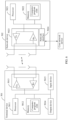
- FIG. 6 is a diagram of structures of a network device 502 and a terminal device 501 according to an embodiment of this application.
- the terminal device 501 includes at least one processor 5011 and at least one transceiver 5013.
- the terminal device 501 may further include at least one memory 5012, at least one output device 5014, or at least one input device 5015.
- the processor 5011, the memory 5012, and the transceiver 5013 are connected through a communication line.
- the communication line may include a path for transmitting information between the foregoing components.
- the processor 5011 may be a general-purpose central processing unit (central processing unit, CPU), another general-purpose processor, a digital signal processor (digital signal processor, DSP), an application-specific integrated circuit (application-specific integrated circuit, ASIC), a field programmable gate array (field programmable gate array, FPGA) or another programmable logic device, a transistor logic device, a hardware component, or any combination thereof.
- the general-purpose processor may be a microprocessor or any conventional processor or the like.
- the processor 5011 may also include a plurality of CPUs, and the processor 5011 may be a single-core processor or a multi-core processor.
- the processor herein may be one or more devices, circuits, or processing cores configured to process data.
- the memory 5012 may be an apparatus having a storage function.
- the memory may be a read-only memory (read-only memory, ROM) or another type of static storage device that can store static information and instructions, a random access memory (random access memory, RAM) or another type of dynamic storage device that can store information and instructions, or may be a programmable read-only memory (programmable ROM, PROM), an erasable programmable read-only memory (erasable PROM, EPROM), an electrically erasable programmable read-only memory (electrically erasable programmable read-only memory, EEPROM), a compact disc read-only memory (compact disc read-only memory, CD-ROM) or other optical disk storage, optical disc storage (including a compact disc, a laser disc, an optical disc, a digital versatile disc, a Blu-ray disc, and the like), a magnetic disk storage medium or another magnetic storage device, or any other medium that can be configured to carry or store desired program code in a form of an instruction or a data
- the memory 5012 is configured to store computer-executable instructions for executing the solutions of this application, and the processor 5011 controls execution. Specifically, the processor 5011 is configured to execute the computer-executable instructions stored in the memory 5012, to implement the preamble transmission method in embodiments of this application.
- the processor 5011 may perform processing-related functions in the preamble transmission method provided in the following embodiments of this application, and the transceiver 5013 is responsible for communicating with another device or a communication network. This is not specifically limited in this embodiment of this application.
- the computer-executable instructions in this embodiment of this application may also be referred to as application program code or computer program code. This is not specifically limited in this embodiment of this application.
- the transceiver 5013 may use any apparatus such as a transceiver, and is configured to communicate with another device or a communication network, for example, an Ethernet, a radio access network (radio access network, RAN), or a wireless local area network (wireless local area network, WLAN).
- the transceiver 5013 includes a transmitter (transmitter, Tx) and a receiver (receiver, Rx).
- the output device 5014 communicates with the processor 5011, and may display information in a plurality of manners.
- the output device 5014 may be a liquid crystal display (liquid crystal display, LCD), a light-emitting diode (light-emitting diode, LED) display device, a cathode ray tube (cathode ray tube, CRT) display device, a projector (projector), or the like.
- the input device 5015 communicates with the processor 5011, and may receive user input in a plurality of manners.
- the input device 5015 may be a mouse, a keyboard, a touchscreen device, a sensing device, or the like.
- the network device 502 includes at least one processor 5021, at least one transceiver 5023, and at least one network interface 5024.
- the network device 502 may further include at least one memory 5022.
- the processor 5021, the memory 5022, the transceiver 5023, and the network interface 5024 are connected through a communication line.
- the network interface 5024 is configured to connect to a core network device through a link (for example, an S1 interface), or connect to a network interface (not shown in FIG. 6 ) of another network device through a wired or wireless link (for example, an X2 interface). This is not specifically limited in this embodiment of this application.
- FIG. 7 is a specific structural form of the terminal device 501 according to an embodiment of this application.
- a function of the processor 5011 in FIG. 6 may be implemented by a processor 110 in FIG. 7 .
- a function of the transceiver 5013 in FIG. 6 may be implemented by an antenna 1, an antenna 2, a mobile communication module 150, a wireless communication module 160, and the like in FIG. 7 .
- the mobile communication module 150 may provide a solution that is applied to the terminal device 501 and that includes a wireless communication technology such as LTE, NR, or future mobile communication.
- the wireless communication module 160 may provide a solution that is applied to the terminal device 501 and that includes a wireless communication technology such as WLAN (for example, a Wi-Fi network), Bluetooth (Bluetooth, BT), a global navigation satellite system (global navigation satellite system, GNSS), frequency modulation (frequency modulation, FM), near field communication (near field communication, NFC), infrared, or the like.
- WLAN for example, a Wi-Fi network
- Bluetooth Bluetooth
- a global navigation satellite system global navigation satellite system
- GNSS global navigation satellite system
- frequency modulation frequency modulation, FM
- near field communication near field communication
- NFC near field communication
- a function of the memory 5012 in FIG. 6 may be implemented by an internal memory 121 in FIG. 7 , an external memory connected to an external memory interface 120 in FIG. 7 , or the like.
- a function of the output device 5014 in FIG. 6 may be implemented by displays 194 in FIG. 7 .
- a function of the input device 5015 in FIG. 6 may be implemented by a mouse, a keyboard, a touchscreen device, or a sensor module 180 in FIG. 7 .
- the terminal device 501 may further include one or more of the following: an audio module 170, cameras 193, a button 1502, SIM card interfaces 195, a USB interface 130, a charging management module 140, a power management module 141, and a battery 142.
- the structure shown in FIG. 7 does not constitute a specific limitation on the terminal device 501.
- the terminal device 501 may include more or fewer components than those shown in the figure, or some components may be combined, or some components may be split, or different component arrangement may be used.
- the components shown in the figure may be implemented by hardware, software, or a combination of software and hardware.
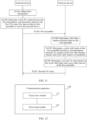
- FIG. 8 shows a preamble transmission method according to an embodiment of this application.
- the preamble transmission method includes the following steps.
- a terminal device obtains first information.
- the first information includes at least one of the following: historical timing advance TA information, geographical location information, or power information of the terminal device.
- the historical TA information may be a historical TA value.
- the historical TA value may be determined based on the previous random access procedure.
- the historical TA value may be a TA value determined in the previous random access procedure.
- the historical TA value may be preset.
- the geographical location information of the terminal device may be location information of the terminal device relative to a network device in a cell, for example, a distance between the terminal device and the network device, and more specifically, a straight-line distance between the terminal device and the network device.
- a geographical location of the terminal device may be geographical coordinate information of the terminal device, for example, longitude and latitude information.
- the geographical location information of the terminal device may be carried by the terminal device.
- the terminal device is fixed and does not move, and the geographical location information of the terminal device may be determined after the terminal device is placed.
- the geographical location information of the terminal device may be obtained by the terminal device through measurement based on data sent by the network device.
- the geographical location information of the terminal device may alternatively be obtained by the terminal device by sensing a surrounding environment. This is not limited in this embodiment of this application.
- the power information may be determined by the terminal device based on power of the data received from the network device, for example, power of broadcast data of the network device.
- the power information may be determined by the network device based on power of data received from the terminal device.
- the network device may determine the power information based on data sent by the terminal device in a historical transmission process, and then notify the terminal device of the power information by using signaling.
- the terminal device determines one group of preambles from K G groups of preambles based on the first information.
- K G is an integer greater than 1
- a total quantity of preambles in the K G groups of preambles is positively correlated with a quantity of preamble cyclic shifts
- the quantity of preamble cyclic shifts is positively correlated with the quantity K G of groups of preambles.
- the quantity K G of groups of preambles may be preset, or may be notified by the network device to the terminal device by using signaling. This is not limited in this embodiment of this application.
- the terminal device determines one group of preambles from K G groups of preambles based on the first information includes: The terminal device determines a first parameter based on the first information, and determines the one group of preambles from the K G groups of preambles based on a correspondence between the first parameter and the K G groups of preambles.
- the first parameter is introduced, so that the terminal device can select one group of preambles from a plurality of groups of preambles as a candidate to-be-sent preamble.
- an i th group of preambles in the K G groups of preambles corresponds to at least one piece of TA information, and at least one TA value corresponding to the i th group of preambles is different from at least one TA value corresponding to a j th group of preambles.
- Both i and j are non-negative integers less than K G , and values of i and j are different.
- there is a correspondence between the K G groups of preambles and TA information so that the terminal device can determine the first parameter, to be specific, one piece of TA information, based on the first information, and determine the one group of preambles corresponding to the first parameter.
- the i th group of preambles in the K G groups of preambles corresponds to a first TA value range
- the first TA value range corresponding to the i th group of preambles does not overlap a second TA value range corresponding to the j th group of preambles.
- Both i and j are the non-negative integers less than K G , and the values of i and j are different.
- a range of the first TA value range is related to the quantity K G of groups of preambles and a maximum TA value.
- the quantity K G of groups of preambles and the maximum TA value are considered, so that K G TA value ranges corresponding to the K G groups of preambles can be designed in a range from 0 to the maximum TA value.
- the K G TA value ranges corresponding to the K G groups of preambles may be K G ranges into which the range [0, T A ,max ] is evenly divided.
- T A ,max represents the maximum TA value, and the maximum TA value may be notified by the network device to the terminal device by using signaling, for example, notified by the network device to the terminal device through a broadcast channel.
- a corresponding TA value range is iT A , max K G i + 1 T A , max K G
- the corresponding TA value range is K G ⁇ 1 T A , max K G T A , max .
- a length of a corresponding TA value range is 2 K G ⁇ i K G K G + 1 T A , max , so that a range [0, T A ,max ] is divided into TA ranges of different lengths.
- K G 3
- Table 3 Group sequence number of a preamble TA value range 0 0 T A , max 2 1 T A , max 2 5 T A , max 6 2 5 T A , max 6 T A , max
- TA values corresponding to all terminal devices may not be evenly distributed, in this case, sizes of different TA value ranges may be flexibly designed. Therefore, quantities of terminal devices corresponding to the different TA value ranges are basically the same, and a probability of preamble collision caused by an excessively large quantity of terminal devices corresponding to a specific TA value range is avoided.
- a corresponding TA value range is 0 2 T A , max K G + 1 ; when the group sequence number i of the current preamble is 1, 2, ..., or K G - 2, the corresponding TA value range is 1 + i T A , max K G + 1 2 + i T A , max K G + 1 ; and when the group sequence number i of the current preamble is K G - 1, the corresponding TA value range is 1 + i T A , max K G + 1 T A , max .
- Table 4 Group sequence number of a preamble TA value range 0 0 T A , max 2 1 T A , max 2 3 T A , max 4 2 3 T A , max 4 T A , max
- the first information is the historical TA information of the terminal device
- the first parameter is the historical TA information of the terminal device.
- the first parameter is equivalent to the first information, and no conversion is required.
- the terminal device may further determine, by determining a TA value range within which a historical TA value falls, one group of preambles corresponding to the TA value range within which the historical TA value falls.
- the first information is the geographical location information of the terminal device, and the geographical location information of the terminal device is a distance between the terminal device and the network device. That the terminal device determines a first parameter based on the first information includes: The terminal device determines the first parameter based on the distance between the terminal device and the network device, a cell radius of a cell in which the terminal device is located, and a maximum TA value.
- the first parameter is TA information, and the first parameter is the same as one of at least one piece of TA information corresponding to the one group of preambles determined from the K G groups of preambles.
- the first parameter is not equivalent to the first information, and the first information needs to be converted by using the cell radius of the cell in which the terminal device is located and the maximum TA value, to obtain the first parameter.
- a formula used by the terminal device to determine the first parameter based on the distance between the terminal device and the network device, the cell radius of the cell in which the terminal device is located, and the maximum TA value may be preset.
- the first information is the historical TA information of the terminal device and the geographical location information of the terminal device, and the geographical location information of the terminal device is a distance between the terminal device and the network device. That the terminal device determines a first parameter based on the first information includes: The terminal device determines the first parameter based on a historical TA value of the terminal device, the distance between the terminal device and the network device, a cell radius of a cell in which the terminal device is located, and a maximum TA value.
- the first parameter is TA information, and the first parameter is the same as one of at least one piece of TA information corresponding to the one group of preambles determined from the K G groups of preambles.
- the first parameter is not equivalent to the first information, and the first information needs to be converted by using the cell radius of the cell in which the terminal device is located and the maximum TA value, to obtain the first parameter.
- a formula used by the terminal device to determine the first parameter based on the historical TA value of the terminal device, the distance between the terminal device and the network device, the cell radius of the cell in which the terminal device is located, and the maximum TA value may be preset.
- a formula used when the terminal device determines the first parameter based on the first information may be preset.
- an i th group of preambles in the K G groups of preambles corresponds to at least one radius value
- the at least one radius value corresponding to the i th group of preambles is different from at least one radius value corresponding to a j th group of preambles.
- Both i and j are non-negative integers less than K G , and values of i and j are different.
- the terminal device can determine the first parameter, in other words, one radius value, based on the first information, and determine the one group of preambles corresponding to the first parameter.
- the i th group of preambles in the K G groups of preambles corresponds to a first radius value range, and the first radius value range corresponding to the i th group of preambles does not overlap a second radius value range corresponding to the j th group of preambles.
- Both i and j are the non-negative integers less than KG, and the values of i and j are different.
- a range of the first radius value range is related to the quantity K G of groups of preambles and a cell radius of a cell in which the terminal device is located.
- the quantity K G of groups of preambles and the cell radius are considered, so that K G radius value ranges corresponding to the K G groups of preambles can be designed in a range from 0 to the cell radius.
- the K G radius value ranges corresponding to the K G groups of preambles may be K G ranges into which the range [0, r cell ] is evenly divided.
- r cell represents the cell radius of the cell in which the terminal device is located.
- the cell radius of the cell in which the terminal device is located may be notified by the network device to the terminal device by using signaling, for example, notified by the network device to the terminal device through a broadcast channel.
- a corresponding radius value range is ir cell K G i + 1 r cell K G
- the corresponding radius value range is K G ⁇ 1 r cell K G r cell .
- a length of a corresponding radius value range is 2 K G ⁇ i K G K G + 1 r cell , so that a range [0, r cell ] is divided into radius value ranges of different lengths.
- K G 3
- correspondences between group sequence numbers of preambles and three radius value ranges may be shown in Table 6.
- Table 6 Group sequence number of a preamble Radius value range 0 0 r cell 2 1 r cell 2 5 r cell 6 2 5 r cell 6 r cell
- a corresponding radius value range is 0 2 r cell K G + 1 ; when the group sequence number i of the current preamble is 1, 2, ..., or K G - 2, the corresponding radius value range is 1 + i r cell K G + 1 2 + i r cell K G + 1 ; and when the group sequence number i of the current preamble is K G -1, the corresponding radius value range is 1 + i r cell K G + 1 r cell .
- Table 7 Group sequence number of a preamble Radius value range 0 0 r cell 2 1 r cell 2 3 r cell 4 2 3 r cell 4 r cell
- radius values corresponding to all terminal devices may not be evenly distributed, in this case, sizes of different radius value ranges may be flexibly designed. Therefore, quantities of terminal devices corresponding to the different radius value ranges are basically the same, and a probability of preamble collision caused by an excessively large quantity of terminal devices corresponding to a specific radius value range is avoided.
- the first information is the geographical location information of the terminal device.
- the first information is a distance between the terminal device and the network device.
- the first parameter is the distance between the terminal device and the network device.
- the first parameter is equivalent to the first information, and no conversion is required.
- the terminal device may further determine, by determining a radius value range within which the distance between the terminal device and the network device falls, one group of preambles corresponding to the radius value range within which the distance falls.
- the first information is the historical TA information of the terminal device. That the terminal device determines a first parameter based on the first information includes: The terminal device determines the first parameter based on a historical TA value of the terminal device, a cell radius of a cell in which the terminal device is located, and a maximum TA value.
- the first parameter is a radius value, and the first parameter is the same as one of at least one radius value corresponding to the one group of preambles determined from the K G groups of preambles.
- the first parameter is not equivalent to the first information, and the first information needs to be converted by using the cell radius of the cell in which the terminal device is located and the maximum TA value, to obtain the first parameter.
- a formula used by the terminal device to determine the first parameter based on the historical TA value of the terminal device, the cell radius of the cell in which the terminal device is located, and the maximum TA value may be preset.
- the first information is the historical TA information of the terminal device and the geographical location information of the terminal device, and the geographical location information of the terminal device is a distance between the terminal device and the network device. That the terminal device determines a first parameter based on the first information includes: The terminal device determines the first parameter based on a historical TA value of the terminal device, the distance between the terminal device and the network device, a cell radius of a cell in which the terminal device is located, and a maximum TA value.
- the first parameter is a radius value, and the first parameter is the same as one of at least one radius value corresponding to the one group of preambles determined from the K G groups of preambles.
- the first parameter is not equivalent to the first information, and the first information needs to be converted by using the cell radius of the cell in which the terminal device is located and the maximum TA value, to obtain the first parameter.
- a formula used by the terminal device to determine the first parameter based on the historical TA value of the terminal device, the distance between the terminal device and the network device, the cell radius of the cell in which the terminal device is located, and the maximum TA value may be preset.
- a formula used when the terminal device determines the first parameter based on the first information may be preset.
- the preamble x u , v sent by the terminal device may be obtained by performing cyclic shift processing on the ZC sequence. It may be understood that one preamble may be uniquely determined by determining a root u of the ZC sequence and a cyclic shift value C v that are used by the preamble, or determining a root index i root of the ZC sequence and a cyclic shift index v that are used by the preamble.
- quantities of preambles included in different groups of preambles may be the same.
- N root is a positive integer, and a value of N root may be preset by the terminal device, or may be set by the network device and sent to the terminal device. This is not limited in this embodiment of this application.
- quantities of preambles included in different groups of preambles may alternatively be different.
- An example in which any group of preambles in the K G groups of preambles corresponds to one TA range is used.
- a range of a TA value range corresponding to the i th group of preambles is larger, a quantity N i root of preambles included in the i th group of preambles may be larger.
- N i root K G ⁇ g N root
- a step N Step CS of cyclic shift values may be first determined, and then the quantity N CS of cyclic shifts is determined based on the step N Step CS of the cyclic shift values.
- the value of N Step CS , Ini is determined based on the cell radius, a maximum transmission delay between the terminal device and the network device, or the maximum TA value.
- the value of N Step CS , Ini may be set by the network device and sent to the terminal device. This is not limited in this embodiment of this application.
- ⁇ ⁇ represents rounding down
- K G represents the quantity of groups of preambles.
- N CS L RA / N Step CS , Ini / K G
- N CS represents the quantity of preamble cyclic shifts
- L RA represents a length of the preamble
- N Step CS Ini represents a basic step of the cyclic shift values
- ⁇ ⁇ represents rounding down.
- the quantity N CS of cyclic shifts may be first determined, and then a step N Step CS of cyclic shift values is determined based on the quantity N CS of cyclic shifts.
- N CS K G N CS Ini
- N CS Ini a basic quantity of cyclic shifts
- N CS Ini a positive integer greater than 1.
- the quantity N CS of preamble cyclic shifts is positively correlated with the quantity K G of groups of preambles.
- the quantity N CS of preamble cyclic shifts may be correspondingly increased. Because the total quantity of preambles is positively correlated with the quantity of preamble cyclic shifts, an increase in the quantity N CS of cyclic shifts causes an increase in the total quantity of preambles, thereby achieving a technical effect of increasing preamble capacity.
- the value of N CS Ini may be preset by the terminal device.
- the value of N CS Ini is determined based on the cell radius, a maximum transmission delay between the terminal device and the network device, or the maximum TA value.
- the value of N CS Ini may be set by the network device and sent to the terminal device. This is not limited in this embodiment of this application.
- N Step CS L RA / K G N CS Ini
- L RA represents a length of the preamble
- N CS Ini is the basic quantity of cyclic shifts
- K G represents the quantity of groups of preambles
- ⁇ ⁇ represents rounding down.
- one preamble may be uniquely determined by determining the root index i root of the ZC sequence and the cyclic shift index v that are used by the preamble.
- a combination of the root index i root and the cyclic shift index v may be represented as ⁇ i root , v > .
- the i th group of preambles in the K G groups of preambles is first arranged in ascending order of cyclic shift indexes, and then arranged in ascending order of root indexes, and an (i+1) th group of preambles in the K G groups of preambles is arranged sequentially after the i th group of preambles is arranged.
- a start value i root , ini of root indexes and a start value v ini of cyclic shift indexes may be first determined, and then arrangement is performed starting from the start value i root , ini of the root indexes and the start value v ini of the cyclic shift indexes.
- Values of i root , ini and v ini may be preset by the terminal device, or may be set by the network device and sent to the terminal device. This is not limited in this embodiment of this application. For example, v ini may be preset to 0.
- the step N Step CS of the cyclic shift values is first determined, and then the quantity N CS of cyclic shifts is determined based on the step N Step CS of the cyclic shift values.
- N root 12
- both the start value i root , ini of the root indexes and the start value v ini of the cyclic shift indexes are 0.
- combinations of the root indexes and the cyclic shift indexes (that is, values of ⁇ i root , v >) of the 0 th group of preambles are sequentially arranged as: ⁇ 0, 0>, ⁇ 0, 1>, ⁇ 0, 2>, ⁇ 0, 3>, ⁇ 0, 4>, ⁇ 0, 5>, ⁇ 0, 6>, ⁇ 0, 7>, ⁇ 1, 0>, ⁇ 1, 1>, ⁇ 1, 2>, and ⁇ 1, 3>.
- Combinations of root indexes and cyclic shift indexes of the 1 st group of preambles are sequentially arranged as: ⁇ 1, 4>, ⁇ 1, 5>, ⁇ 1, 6>, ⁇ 1, 7>, ⁇ 2, 0>, ⁇ 2, 1>, ⁇ 2, 2>, ⁇ 2, 3>, ⁇ 2, 4>, ⁇ 2, 5>, ⁇ 2, 6>, and ⁇ 2, 7>.
- a combination of a root index and a cyclic shift index that correspond to a last preamble in the 0 th group of preambles is ⁇ 1, 3>, and preambles of the 1 st group of preambles are arranged sequentially after preambles of the 0 th group of preambles.
- the i th group of preambles in the K G groups of preambles is first arranged in ascending order of the cyclic shift indexes, and then arranged in ascending order of root indexes.
- the quantity N CS of cyclic shifts is first determined, and then the step N Step CS of the cyclic shift values is determined based on the quantity N CS of cyclic shifts.
- N CS Ini 4
- K G 2
- L RA 139
- N root 12
- both the start value i root , ini of the root indexes and the start value v ini of the cyclic shift indexes are 0.
- combinations of the root indexes and the cyclic shift indexes of the 0 th group of preambles are sequentially arranged as: ⁇ 0, 0>, ⁇ 0, 1>, ⁇ 0, 2>, ⁇ 0, 3>, ⁇ 1, 0>, ⁇ 1, 1>, ⁇ 1, 2>, ⁇ 1, 3>, ⁇ 2, 0>, ⁇ 2, 1>, ⁇ 2, 2>, and ⁇ 2, 3>.
- Combinations of root indexes and cyclic shift indexes of the 1 st group of preambles are sequentially arranged as: ⁇ 0, 3>, ⁇ 0, 4>, ⁇ 0, 5>, ⁇ 0, 6>, ⁇ 1, 3>, ⁇ 1, 4>, ⁇ 1, 5>, ⁇ 1, 6>, ⁇ 2, 3>, ⁇ 2, 4>, ⁇ 2, 5>, and ⁇ 2, 6>.
- the i th group of preambles in the K G groups of preambles is first arranged in ascending order of cyclic shift indexes, where the cyclic shift indexes are incremented by an interval of K G , and then is arranged in ascending order of root indexes, and the i th group of preambles in the K G groups of preambles is the same as the j th group of preambles.
- regular arrangement helps the terminal device select a to-be-sent preamble, and also helps the network device detect the preamble.
- the quantity N CS of cyclic shifts is first determined, and then the step N Step CS of the cyclic shift values is determined based on the quantity N CS of cyclic shifts.
- N CS Ini 4
- K G 2
- L RA 139
- N root 12
- both the start value i root , ini of the root indexes and the start value v ini of the cyclic shift indexes are 0.
- both combinations of the root indexes and cyclic shift indexes of the 0 th group of preambles and combinations of root indexes and cyclic shift indexes of the 1 st group of preambles are arranged as: ⁇ 0, 0>, ⁇ 0, 2>, ⁇ 0, 4>, ⁇ 0, 6>, ⁇ 1, 0>, ⁇ 1, 2>, ⁇ 1, 4>, ⁇ 1, 6>, ⁇ 2, 0>, ⁇ 2, 2>, ⁇ 2, 4>, and ⁇ 2, 6>.
- the terminal device sends a first preamble in the one group of preambles to the network device.
- the network device receives the first preamble from the terminal device.
- the terminal device may randomly select, as the first preamble, a preamble from the one group of preambles determined in the step S802, and send the first preamble to the network device.
- the network device determines a first time-domain channel based on the first preamble.
- the first time-domain channel includes N CS regions.
- the network device determines the first time-domain channel based on the received first preamble
- the first frequency-domain channel is first determined by using the foregoing formula (10), and then inverse Fourier transform is performed on a first frequency-domain channel, to obtain the first time-domain channel.
- the network device may evenly divide the determined first time-domain channel h ⁇ u,v into N CS regions starting from a 0 th element to a last element, and sequentially number the regions as a region 0 to a region N CS -1.
- Each region includes one or more elements. Different cyclic shift indexes correspond to different regions.
- the network device determines, based on a correspondence between the N CS regions of the first time-domain channel and cyclic shift indexes of the K G groups of preambles, a cyclic shift index and a group sequence number that are of the first preamble.
- a p th cyclic shift of an i th group of preambles in the K G groups of preambles corresponds to a ( ( p + i) mod N CS ) th region of the first time-domain channel, mod represents a modulo operation, and N CS represents a quantity of cyclic shifts.
- K G TA value ranges corresponding to the K G groups of preambles are K G ranges into which a range [0, T A ,max ] is evenly divided.
- a cyclic shift index of 0 in the 0 th group of preambles may correspond to the region 0 of the first time-domain channel h ⁇ u,v .
- the network device may detect energy of the first time-domain channel h ⁇ u,v in the region 0, for example, detect energy of an element with a maximum amplitude in the region 0.
- the network device When the detected energy of the time-domain channel in the region 0 exceeds a preset threshold, the network device considers that the terminal device sends a preamble that is in the 0 th group of preambles and that corresponds to a root u of a ZC sequence and the cyclic shift index of 0. Therefore, the network device may estimate a TA value based on the time-domain channel in the region 0, and send the TA value to the terminal device.
- a cyclic shift index of 1 in the 0 th group of preambles may correspond to a region 1 of the first time-domain channel h ⁇ u v , and the network device may detect the region 1 with reference to the foregoing method for detecting the region 0.
- a 0 th cyclic shift to an ( N CS -1) th cyclic shift that are in the 0 th group of preambles correspond to a 0 th region to an ( N CS -1) th region that are of the first time-domain channel.
- FIG. 9 shows a correspondence between cyclic shift indexes in the 0 th group of preambles and regions of the first time-domain channel.
- the 0 th cyclic shift corresponds to the 0 th region of the first time-domain channel; a 1 st cyclic shift corresponds to a 1 st region of the first time-domain channel; a 2 nd cyclic shift corresponds to a 2 nd region of the first time-domain channel; a 3 rd cyclic shift corresponds to a 3 rd region of the first time-domain channel; a 4 th cyclic shift corresponds to a 4 th region of the first time-domain channel; a 5 th cyclic shift corresponds to a 5 th region of the first time-domain channel; a 6 th cyclic shift corresponds to a 6 th region of the first time-domain channel; and a 7 th cyclic shift corresponds
- a region corresponding to a cyclic shift index p of the 1 st group of preambles may be offset by one region compared with a region corresponding to a cyclic shift index p of the 0 th group of preambles. That is, a p th cyclic shift in the 1 st group of preambles corresponds to a (( p + 1) mod N CS ) th region of the first time-domain channel.
- a cyclic shift index of 0 in the 1 st group of preambles may correspond to the region 1 of the first time-domain channel h ⁇ u,v .
- the network device may estimate a TA value based on the time-domain channel in the region 1, and send the TA value to the terminal device.
- FIG. 10 shows a correspondence between cyclic shift indexes in the 1 st group of preambles and regions of the first time-domain channel.
- a 7 th cyclic shift corresponds to the 0 th region of the first time-domain channel;
- a 0 th cyclic shift corresponds to a 1 st region of the first time-domain channel;
- a 1 st cyclic shift corresponds to a 2 nd region of the first time-domain channel;
- a 2 nd cyclic shift corresponds to a 3 rd region of the first time-domain channel;
- a 3 rd cyclic shift corresponds to a 4 th region of the first time-domain channel;
- a 4 th cyclic shift corresponds to a 5 th region of the first time-domain channel;
- a 5 th cyclic shift corresponds to a 6 th region of the first time-domain channel;
- a 6 th cyclic shift corresponds to a 5
- the p th cyclic shift of the i th group of preambles corresponds to the ( p + i ) mod N CS ) th region of the first time-domain channel.
- a base station device may determine a group sequence number, a root index, and a cyclic shift index that are of a preamble sent by a terminal, to avoid a collision that occurs when two terminals use preambles with adjacent cyclic shift indexes to perform sending.
- the K G TA value ranges corresponding to the K G groups of preambles are the K G ranges into which the range [0, T A ,max ] is evenly divided.
- the p th cyclic shift of the i th group of preambles corresponds to the (( p + i) mod N CS ) th region of the first time-domain channel. In this case, a case in which different cyclic shifts correspond to a same region does not occur.
- TA values of a plurality of terminal devices corresponding to a same group are close, when the terminal device sends a preamble corresponding to the p th cyclic shift of the i th group of preambles, a time-domain channel of the preamble is only in the (( p + i ) mod N CS ) th region of the first time-domain channel, and is not in another region. Therefore, no collision occurs.
- the base station may determine, based on a correspondence between the different groups, a group sequence number, a root index, and a cyclic shift index that are of a detected preamble, to avoid a collision.
- the preamble transmission method provided in this embodiment of this application further includes: The network device determines a TA value based on the group sequence number and the first preamble, and sends the TA value to the terminal device.
- the network device determines the TA value by referring to the first preamble and the group sequence number, so that the TA value corresponding to the first preamble can be accurately calculated.
- the network device may send the TA value to the terminal device in a broadcast manner.
- the terminal device may design the K G groups of preambles, and K G is the integer greater than 1.
- K G the integer greater than 1.
- the quantity of preamble cyclic shifts may be increased by increasing the quantity of groups of preambles, to further increase the total quantity of preambles.
- the method provided in this embodiment of this application can increase a preamble capacity.
- the p th cyclic shift of the i th group of preambles in the K G groups of preambles corresponds to the (( p + i ) mod N CS ) th region of the first time-domain channel. That is, correspondences between cyclic shift values or cyclic shift indexes of different groups of preambles and regions are different.
- the region corresponding to the p th cyclic shift of the i th group of preambles is offset by i regions compared with a region corresponding to a p th cyclic shift of the 0 th group of preambles.
- the network device can still determine a group number corresponding to a cyclic shift, and therefore, can correctly detect a preamble, and avoid a collision between different groups of preambles.
- FIG. 11 shows another preamble transmission method according to an embodiment of this application.
- the preamble transmission method includes the following steps.
- a terminal device obtains first information, where the first information includes at least one of the following: historical TA information, geographical location information, or power information of the terminal device.
- step S1101 For related descriptions of the step S1101, refer to the step S801. Details are not described herein again.
- the terminal device determines a first TA value based on the first information, and determines, based on the first TA value, first time at which a first preamble is sent to a network device, where the first preamble is one of N all root preambles, and N all root is a positive integer greater than 1.
- the N all root preambles are first arranged in ascending order of cyclic shift indexes, and then arranged in ascending order of root indexes.
- a manner for arranging the preambles may still be a manner used in the conventional technology, and can be compatible with the conventional technology.
- the terminal device may randomly select a preamble from the N all root preambles as the first preamble.
- the first information is a historical TA value of the terminal device. That the terminal device determines a first TA value based on the first information includes: The terminal device determines the historical TA value of the terminal device as the first TA value. In this solution, when the first information is the historical TA value of the terminal device, the first TA value is equivalent to the first information, and no conversion is required.
- the terminal device determines a first TA value based on the first information includes: The terminal device determines the first TA value based on the first information and a third parameter.
- the third parameter is positively correlated with a total quantity N all root of preambles and a quantity of preamble cyclic shifts, and the third parameter is a positive integer greater than 1.
- the total quantity of preambles may be increased by increasing the third parameter, or the quantity of cyclic shifts may be increased by increasing the third parameter, to further increase the total quantity of preambles.
- the first information is not the historical TA information of the terminal device. That the terminal device determines the first TA value based on the first information and a third parameter includes: The terminal device determines a fourth parameter based on the first information. The terminal device determines the first TA value based on the third parameter, the fourth parameter, and a maximum TA value.
- the first TA value is not equivalent to the first information, and the first information needs to be first converted into the fourth parameter, so that the first TA value can be further obtained.
- the fourth parameter is a TA value.
- the terminal device determines the fourth parameter based on the first information refer to the implementation in which the terminal device determines the first parameter based on the first information in the step S802.
- a difference between the first parameter and the fourth parameter lies in that the first parameter may be a TA value or a radius value, and the fourth parameter can only be a TA value.
- S1103 The terminal device sends the first preamble to the network device at the first time.
- S1104 The network device receives the first preamble, and determines a first time-domain channel based on the first preamble, where the first time-domain channel includes N CS regions.
- step S110 For related descriptions of the step S1104, refer to the step S804. Details are not described herein again.
- the network device determines a cyclic shift index of the first preamble based on a correspondence between the N CS regions of the first time-domain channel and cyclic shift indexes of preambles, where a p th cyclic shift corresponds to a p th region of the first time-domain channel.
- the correspondence between the N CS regions of the first time-domain channel and the cyclic shift indexes of the preambles is the same as that in a conventional technology.
- the network device determines a second TA value based on the cyclic shift index and a root index that are of the first preamble.
- the network device sends the second TA value to the terminal device.
- the network device may send the second TA value to the terminal device in a broadcast manner.
- the embodiment shown in FIG. 11 may further include the following steps: The terminal device receives the second TA value from the network device. The terminal device adds the first TA value and the second TA value, to obtain a third TA value. The terminal device sends the third TA value to the network device.
- the third TA value is a TA value of the terminal device, the third TA value is greater than the second TA value, and a maximum value of the third TA value is greater than a maximum value of the second TA value.
- the quantity of cyclic shifts is related to a cell radius, that is, the maximum TA value. Specifically, the quantity of cyclic shifts may be determined by the network device based on a maximum value of a TA value estimated based on a preamble sent by the terminal device.
- the terminal device sends the preamble to the network device, and does not determine, based on the first TA value, the first time at which the first preamble is sent to the network device (which may alternatively be understood that the first TA value is 0); and the network device estimates the TA value based on the preamble, and the maximum value of the TA value is the maximum value of the third TA value.
- the first time at which the first preamble is sent to the network device is determined based on the first TA value.
- the TA value estimated by the network device is the second TA value
- the maximum value of the second TA value estimated by the network device is less than the maximum value of the third TA value. Therefore, determining the quantity of cyclic shifts based on the maximum value of the second TA value may increase the quantity of cyclic shifts, and further increase a preamble capacity.
- the terminal device determines the first TA value based on the first information, and determines, based on the first TA value, the first time at which the first preamble is sent to the network device.
- the terminal device calculates the TA value in advance and sends the first preamble to the network device, so that the second TA value determined by the network device is small.
- the second TA value determined by the network device is far less than a maximum TA value in the conventional technology, and therefore, the cell radius is reduced.
- a smaller cell radius indicates an increase in the total quantity of preambles, and therefore, the preamble capacity is improved.
- the methods and/or the steps implemented by the terminal device may alternatively be implemented by a component (for example, a chip or a circuit) that may be used in a terminal device or a device including a terminal device; and the methods and/or the steps implemented by the network device may be implemented by a component (for example, a chip or a circuit) that may be used in a network device or a device including a network device.
- a component for example, a chip or a circuit
- the methods and/or the steps implemented by the network device may be implemented by a component (for example, a chip or a circuit) that may be used in a network device or a device including a network device.
- the terminal device or the network device include corresponding hardware structures and/or software modules for performing the functions.
- a person skilled in the art should easily be aware that, in combination with units and algorithm steps of the examples described in embodiments disclosed in this specification, this application may be implemented by hardware or a combination of hardware and computer software. Whether a function is performed by hardware or hardware driven by computer software depends on particular applications and design constraints of the technical solutions. A person skilled in the art may use different methods to implement the described functions for each particular application, but it should not be considered that the implementation goes beyond the scope of this application.
- each functional module may be obtained through division based on each function, or two or more functions may be integrated into one processing module.
- the integrated module may be implemented in a form of hardware, or may be implemented in a form of a software functional module. It should be noted that, in embodiments of this application, module division is an example, and is merely a logical function division. In actual implementation, another division manner may be used.
- the terminal device or the network device in embodiments of this application may be implemented in a form of a communication apparatus 120 shown in FIG. 12 .
- the communication apparatus 120 includes a transceiver module 121 and a processing module 122.
- the transceiver module 121 may also be referred to as a transceiver unit, and is configured to implement a transceiver function.
- the transceiver module may be a transceiver circuit, a transceiver machine, a transceiver, or a communication interface.
- the processing module 122 is configured to obtain first information.
- the first information includes at least one of the following: historical timing advance TA information, geographical location information, or power information of the terminal device.
- the processing module 122 is further configured to determine one group of preambles from K G groups of preambles based on the first information.
- K G is an integer greater than 1, a total quantity of preambles in the K G groups of preambles is positively correlated with a quantity of preamble cyclic shifts, and the quantity of preamble cyclic shifts is positively correlated with the quantity K G of groups of preambles.
- the transceiver module 121 is configured to send a first preamble in the one group of preambles to a network device.
- an i th group of preambles in the K G groups of preambles corresponds to at least one piece of TA information, and at least one TA value corresponding to the i th group of preambles is different from at least one TA value corresponding to a j th group of preambles.
- Both i and j are non-negative integers less than K G , and values of i and j are different.
- the i th group of preambles in the K G groups of preambles corresponds to a first TA value range
- the first TA value range corresponding to the i th group of preambles does not overlap a second TA value range corresponding to the j th group of preambles.
- Both i and j are the non-negative integers less than K G , and the values of i and j are different.
- a range of the first TA value range is related to the quantity K G of groups of preambles and a maximum TA value.
- the first information is the historical TA information of the terminal device
- the first parameter is the historical TA information of the terminal device
- the first information is the geographical location information of the terminal device, and the geographical location information of the terminal device is a distance between the terminal device and the network device. That the processing module 122 is further configured to determine a first parameter based on the first information includes: The processing module is configured to determine the first parameter based on the distance between the terminal device and the network device, a cell radius of a cell in which the terminal device is located, and a maximum TA value.
- the first parameter is TA information, and the first parameter is the same as one of at least one piece of TA information corresponding to the one group of preambles determined from the K G groups of preambles.
- the first information is the historical TA information of the terminal device and the geographical location information of the terminal device, and the geographical location information of the terminal device is a distance between the terminal device and the network device. That the processing module 122 is further configured to determine a first parameter based on the first information includes: The processing module is configured to determine the first parameter based on a historical TA value of the terminal device, the distance between the terminal device and the network device, a cell radius of a cell in which the terminal device is located, and a maximum TA value.
- the first parameter is TA information, and the first parameter is the same as one of at least one piece of TA information corresponding to the one group of preambles determined from the K G groups of preambles.
- an i th group of preambles in the K G groups of preambles corresponds to at least one radius value
- the at least one radius value corresponding to the i th group of preambles is different from at least one radius value corresponding to a j th group of preambles.
- Both i and j are non-negative integers less than K G , and values of i and j are different.
- the i th group of preambles in the K G groups of preambles corresponds to a first radius value range
- the first radius value range corresponding to the i th group of preambles does not overlap a second radius value range corresponding to the j th group of preambles.
- Both i and j are the non-negative integers less than KG, and the values of i and j are different.
- a range of the first radius value range is related to the quantity K G of groups of preambles and a cell radius of a cell in which the terminal device is located.
- the first information is the geographical location information of the terminal device
- the geographical location information of the terminal device is a distance between the terminal device and the network device
- the first parameter is the geographical location information of the terminal device.
- the first information is the historical TA information of the terminal device. That the processing module 122 is further configured to determine a first parameter based on the first information includes: The processing module is configured to determine the first parameter based on a historical TA value of the terminal device, a cell radius of a cell in which the terminal device is located, and a maximum TA value.
- the first parameter is a radius value, and the first parameter is the same as one of at least one radius value corresponding to the one group of preambles determined from the K G groups of preambles.
- the first information is the historical TA information of the terminal device and the geographical location information of the terminal device, and the geographical location information of the terminal device is a distance between the terminal device and the network device. That the processing module 122 is further configured to determine a first parameter based on the first information includes: The processing module is configured to determine the first parameter based on a historical TA value of the terminal device, the distance between the terminal device and the network device, a cell radius of a cell in which the terminal device is located, and a maximum TA value.
- the first parameter is a radius value, and the first parameter is the same as one of at least one radius value corresponding to the one group of preambles determined from the K G groups of preambles.
- N CS L RA / N Step CS , Ini / K G , where
- the i th group of preambles in the K G groups of preambles is first arranged in ascending order of cyclic shift indexes, and then arranged in ascending order of root indexes, and an (i+1) th group of preambles in the K G groups of preambles is arranged sequentially after the i th group of preambles is arranged; in a value range iN CS Ini ⁇ i , i + 1 N CS Ini ⁇ 1 ⁇ i of cyclic shift indexes, the i th group of preambles in the K G groups of preambles is first arranged in ascending order of the cyclic shift indexes, and then arranged in ascending order of root indexes; or the i th group of preambles in the K G groups of preambles is first arranged in ascending order of cyclic shift indexes, where the cyclic shift indexes are incremented by an interval of
- the transceiver module 121 is configured to receive a first preamble.
- the processing module 122 is configured to determine a first time-domain channel based on the first preamble.
- the first time-domain channel includes N CS regions.
- the processing module 122 is further configured to determine, based on a correspondence between the N CS regions of the first time-domain channel and cyclic shift indexes of K G groups of preambles, a cyclic shift index and a group sequence number that are of the first preamble.
- a p th cyclic shift of an i th group of preambles in the K G groups of preambles corresponds to a (( p + i ) mod N CS ) th region of the first time-domain channel, mod represents a modulo operation, and N CS represents a quantity of cyclic shifts.
- the processing module 122 is further configured to determine a TA value based on the group sequence number and the first preamble; and the transceiver module 121 is further configured to send the TA value to a terminal device.
- the processing module 122 is configured to obtain first information.
- the first information includes at least one of the following: historical timing advance TA information, geographical location information, or power information of the terminal device.
- the processing module 122 is further configured to determine a first TA value based on the first information, and determine, based on the first TA value, first time at which a first preamble is sent to a network device.
- the first preamble is one of N all root preambles, and N all root is a positive integer greater than 1.
- the transceiver module 121 is configured to send the first preamble to the network device at the first time.
- processing module 122 is further configured to determine a first TA value based on the first information includes: The processing module is configured to determine the first TA value based on the first information and a third parameter.
- the third parameter is positively correlated with a total quantity N all root of preambles and a quantity of preamble cyclic shifts, and the third parameter is a positive integer greater than 1.
- the first information is a historical TA value of the terminal device. That the processing module 122 is further configured to determine a first TA value based on the first information includes: The processing module is configured to determine the historical TA value of the terminal device as the first TA value.
- the first information is not the historical TA information of the terminal device. That the processing module 122 is further configured to determine the first TA value based on the first information and a third parameter includes: The processing module is configured to determine a fourth parameter based on the first information, and determine the first TA value based on the third parameter, the fourth parameter, and a maximum TA value.
- the N all root preambles are first arranged in ascending order of cyclic shift indexes, and then arranged in ascending order of root indexes.
- the transceiver module 121 is further configured to receive a second TA value from the network device.
- the processing module 122 is further configured to add the first TA value and the second TA value, to obtain a third TA value.
- the transceiver module 121 is further configured to send the third TA value to the network device.
- the transceiver module 121 is configured to receive a first preamble.
- the processing module 122 is further configured to determine a first time-domain channel based on the first preamble.
- the first time-domain channel includes N CS regions.
- the processing module 122 is configured to determine a cyclic shift index of the first preamble based on a correspondence between the N CS regions of the first time-domain channel and cyclic shift indexes of preambles.
- a p th cyclic shift corresponds to a p th region of the first time-domain channel.
- the processing module 122 is further configured to determine a second TA value based on the cyclic shift index and a root index that are of the first preamble.
- the transceiver module 121 is configured to send the second TA value to a terminal device.
- the communication apparatus 120 is presented in a form of functional modules obtained through division in an integrated manner.
- the "module” herein may be an ASIC, a circuit, a processor that executes one or more software or firmware programs, a memory, an integrated logic circuit, and/or another component capable of providing the foregoing functions.
- the communication apparatus 120 is the terminal device in the foregoing method embodiments, in a simple embodiment, a person skilled in the art may figure out that the communication apparatus 120 may be in a form of the terminal device 501 shown in FIG. 6 .
- the processor 5011 in the terminal device 501 shown in FIG. 6 may invoke the computer-executable instructions stored in the memory 5012, to enable the terminal device 501 to perform the IMS registration method in the foregoing method embodiments.
- functions/implementation processes of the processing module 122 in FIG. 12 may be implemented by the processor 5011 in the terminal device 501 shown in FIG. 6 by invoking the computer-executable instructions stored in the memory 5012.
- Functions/implementation processes of the transceiver module 121 in FIG. 12 may be implemented by the transceiver 5013 shown in FIG. 6 .
- the communication apparatus 120 is the terminal device in the foregoing method embodiments, in a simple embodiment, a person skilled in the art may figure out that the communication apparatus 120 may be in a form of the terminal device 501 shown in FIG. 7 .
- the processor 150 in the terminal device 501 shown in FIG. 7 may invoke computer-executable instructions stored in a memory (including the internal memory 121 or the external memory connected to the external memory interface 120), to enable the terminal device 501 to perform the preamble transmission method in the foregoing method embodiments.
- functions/implementation processes of the transceiver module 121 and the processing module 122 in FIG. 12 may be implemented by the processor 150 in the terminal device 501 shown in FIG. 7 by invoking the computer-executable instructions stored in the memory.
- the functions/implementation processes of the processing module 122 in FIG. 12 may be implemented by the processor 150 in the terminal device 501 shown in FIG. 7 by invoking the computer-executable instructions stored in the memory
- the functions/implementation processes of the transceiver module 121 in FIG. 12 may be implemented by the wireless communication module 160 shown in FIG. 7 .
- the communication apparatus 120 is the network device in the foregoing method embodiments, in a simple embodiment, a person skilled in the art may figure out that the communication apparatus 120 may be in a form of the network device 502 shown in FIG. 6 .
- the processor 5021 in the network device 502 shown in FIG. 6 may invoke computer-executable instructions stored in the memory 5022, to enable the network device 502 to perform the preamble transmission method in the foregoing method embodiments.
- functions/implementation processes of the processing module 122 in FIG. 12 may be implemented by the processor 5021 in the network device 502 shown in FIG. 6 by invoking the computer-executable instructions stored in the memory 5022.
- Functions/implementation processes of the transceiver module 121 in FIG. 12 may be implemented by the transceiver 5023 shown in FIG. 6 .
- the communication apparatus 120 provided in this embodiment may perform the foregoing preamble transmission method, for technical effects that can be obtained by the communication apparatus 120, reference may be made to the foregoing method embodiments. Details are not described herein again.
- one or more of the foregoing modules or units may be implemented by software, hardware, or a combination thereof.
- the software exists in a form of computer program instructions, and is stored in the memory.
- the processor may be configured to execute the program instructions and implement the foregoing method procedures.
- the processor may be built into a SoC (system on chip) or an ASIC, or may be an independent semiconductor chip.
- the processor may further include a necessary hardware accelerator, for example, a field programmable gate array (field programmable gate array, FPGA), a PLD (programmable logic device), or a logic circuit that implements a dedicated logic operation.
- the hardware may be any one or any combination of a CPU, a microprocessor, a digital signal processing (digital signal processing, DSP) chip, a microcontroller unit (microcontroller unit, MCU), an artificial intelligence processor, an ASIC, a SoC, an FPGA, a PLD, a dedicated digital circuit, a hardware accelerator, or a non-integrated discrete device, and the hardware may run necessary software or does not depend on software to perform the foregoing method procedures.
- a CPU central processing unit
- DSP digital signal processing
- MCU microcontroller unit
- an artificial intelligence processor an ASIC
- SoC SoC
- FPGA field-programmable gate array
- PLD dedicated digital circuit
- a hardware accelerator or a non-integrated discrete device
- an embodiment of this application further provides a chip system, including: at least one processor and an interface.
- the at least one processor is coupled to a memory through an interface.
- the at least one processor executes a computer program or instructions in the memory, the method in any one of the foregoing method embodiments is performed.
- a first device further includes the memory.
- the chip system may include a chip, or may include a chip and another discrete component. This is not specifically limited in this embodiment of this application.
- the foregoing embodiments may be implemented by software, hardware, firmware, or any combination thereof.
- a software program is used to implement embodiments, a part or all of the embodiments may be implemented in a form of a computer program product.
- the computer program product includes one or more computer instructions.
- the computer program instructions When the computer program instructions are loaded and executed on a computer, the procedures or functions according to embodiments of this application are all or partially generated.
- the computer may be a general-purpose computer, a dedicated computer, a computer network, or another programmable apparatus.
- the computer instructions may be stored in a computer-readable storage medium or may be transmitted from a computer-readable storage medium to another computer-readable storage medium.
- the computer instructions may be transmitted from a website, computer, server, or data center to another website, computer, server, or data center in a wired (for example, a coaxial cable, an optical fiber, or a digital subscriber line (DSL)) or wireless (for example, infrared, radio, or microwave) manner.
- the computer-readable storage medium may be any usable medium accessible by the computer, or a data storage device, such as a server or a data center, integrating one or more usable media.
- the usable medium may be a magnetic medium (for example, a floppy disk, a hard disk, or a magnetic tape), an optical medium (for example, a DVD), a semiconductor medium (for example, a solid-state drive (solid-state disk, SSD)), or the like.
- a magnetic medium for example, a floppy disk, a hard disk, or a magnetic tape
- an optical medium for example, a DVD
- a semiconductor medium for example, a solid-state drive (solid-state disk, SSD)
Landscapes
- Engineering & Computer Science (AREA)
- Computer Networks & Wireless Communication (AREA)
- Signal Processing (AREA)
- Mobile Radio Communication Systems (AREA)
Applications Claiming Priority (2)
| Application Number | Priority Date | Filing Date | Title |
|---|---|---|---|
| CN202210096810.6A CN116546650A (zh) | 2022-01-26 | 2022-01-26 | 前导码容量提升方法、装置及系统 |
| PCT/CN2022/141911 WO2023142827A1 (zh) | 2022-01-26 | 2022-12-26 | 前导码传输方法、装置及系统 |
Publications (3)
| Publication Number | Publication Date |
|---|---|
| EP4462933A1 true EP4462933A1 (de) | 2024-11-13 |
| EP4462933A4 EP4462933A4 (de) | 2025-03-26 |
| EP4462933B1 EP4462933B1 (de) | 2026-02-11 |
Family
ID=87454766
Family Applications (1)
| Application Number | Title | Priority Date | Filing Date |
|---|---|---|---|
| EP22923613.8A Active EP4462933B1 (de) | 2022-01-26 | 2022-12-26 | Präambelübertragungsverfahren, -vorrichtung und -system |
Country Status (4)
| Country | Link |
|---|---|
| US (1) | US20240396775A1 (de) |
| EP (1) | EP4462933B1 (de) |
| CN (1) | CN116546650A (de) |
| WO (1) | WO2023142827A1 (de) |
Families Citing this family (1)
| Publication number | Priority date | Publication date | Assignee | Title |
|---|---|---|---|---|
| WO2026055928A1 (zh) * | 2024-09-13 | 2026-03-19 | Oppo广东移动通信有限公司 | 无线通信的方法、终端设备及网络设备 |
Family Cites Families (4)
| Publication number | Priority date | Publication date | Assignee | Title |
|---|---|---|---|---|
| CN108809597B (zh) * | 2017-05-05 | 2023-05-26 | 北京三星通信技术研究有限公司 | 前导序列循环移位量确定方法及其集合配置方法与装置 |
| KR102174653B1 (ko) * | 2018-10-24 | 2020-11-05 | 연세대학교 산학협력단 | 무선 통신 시스템의 랜덤 액세스 장치 및 방법 |
| EP4072230A4 (de) * | 2019-05-10 | 2023-04-12 | Guangdong Oppo Mobile Telecommunications Corp., Ltd. | Verfahren für direktzugriff und vorrichtung |
| WO2021026931A1 (zh) * | 2019-08-15 | 2021-02-18 | 华为技术有限公司 | 一种确定随机接入资源的方法及装置 |
-
2022
- 2022-01-26 CN CN202210096810.6A patent/CN116546650A/zh active Pending
- 2022-12-26 EP EP22923613.8A patent/EP4462933B1/de active Active
- 2022-12-26 WO PCT/CN2022/141911 patent/WO2023142827A1/zh not_active Ceased
-
2024
- 2024-07-25 US US18/783,542 patent/US20240396775A1/en active Pending
Also Published As
| Publication number | Publication date |
|---|---|
| CN116546650A (zh) | 2023-08-04 |
| US20240396775A1 (en) | 2024-11-28 |
| WO2023142827A1 (zh) | 2023-08-03 |
| EP4462933B1 (de) | 2026-02-11 |
| EP4462933A4 (de) | 2025-03-26 |
Similar Documents
| Publication | Publication Date | Title |
|---|---|---|
| KR101904443B1 (ko) | 전력 절감, 범위 개선 및 개선된 검출을 위한 향상된 prach 방식 | |
| EP4207818B1 (de) | Informationsübertragungsverfahren, vorrichtungen und speichermedium | |
| CN111867135B (zh) | 随机接入方法、装置及系统 | |
| US11997671B2 (en) | Communication method, apparatus, and system | |
| CN106465428B (zh) | 用于功率节省、范围改善和改善的检测的增强型prach方案 | |
| US12200507B2 (en) | Positioning reference signal transmission method and apparatus, device, and storage medium | |
| EP4472319A1 (de) | Kommunikationsverfahren und -vorrichtung | |
| US20250044406A1 (en) | Device sensing method and apparatus | |
| US20240396775A1 (en) | Preamble transmission method, apparatus, and system | |
| US10728898B2 (en) | Method for use in transmitting signal, terminal device, and network device | |
| US12426100B2 (en) | Sequence sending method and apparatus | |
| CN114365534B (zh) | 信息处理方法、通信设备及存储介质 | |
| US20250274814A1 (en) | Signal transmission method and apparatus | |
| EP4598097A1 (de) | Ressourcenkonfigurationsverfahren und zugehörige vorrichtungen | |
| US12035341B2 (en) | Communication method, apparatus, and system | |
| US12294545B2 (en) | Method for receiving and sending reference signal, apparatus, and system | |
| EP4387180A1 (de) | Signalübertragungsverfahren, -vorrichtung und -system | |
| EP4622200A1 (de) | Sequenzübertragungsverfahren und -vorrichtung | |
| US20250310938A1 (en) | Sequence transmission method and apparatus | |
| US20260058852A1 (en) | Communication Method, Communication Apparatus, and Communication System | |
| EP4679786A1 (de) | Sequenzübertragungsverfahren und -vorrichtung | |
| CN120358584A (zh) | 一种通信方法及装置 |
Legal Events
| Date | Code | Title | Description |
|---|---|---|---|
| STAA | Information on the status of an ep patent application or granted ep patent |
Free format text: STATUS: THE INTERNATIONAL PUBLICATION HAS BEEN MADE |
|
| PUAI | Public reference made under article 153(3) epc to a published international application that has entered the european phase |
Free format text: ORIGINAL CODE: 0009012 |
|
| STAA | Information on the status of an ep patent application or granted ep patent |
Free format text: STATUS: REQUEST FOR EXAMINATION WAS MADE |
|
| 17P | Request for examination filed |
Effective date: 20240806 |
|
| AK | Designated contracting states |
Kind code of ref document: A1 Designated state(s): AL AT BE BG CH CY CZ DE DK EE ES FI FR GB GR HR HU IE IS IT LI LT LU LV MC ME MK MT NL NO PL PT RO RS SE SI SK SM TR |
|
| A4 | Supplementary search report drawn up and despatched |
Effective date: 20250220 |
|
| RIC1 | Information provided on ipc code assigned before grant |
Ipc: H04W 74/0833 20240101ALI20250214BHEP Ipc: H04W 74/08 20240101ALI20250214BHEP Ipc: H04W 56/00 20090101ALI20250214BHEP Ipc: H04W 74/00 20090101AFI20250214BHEP |
|
| DAV | Request for validation of the european patent (deleted) | ||
| DAX | Request for extension of the european patent (deleted) | ||
| GRAP | Despatch of communication of intention to grant a patent |
Free format text: ORIGINAL CODE: EPIDOSNIGR1 |
|
| STAA | Information on the status of an ep patent application or granted ep patent |
Free format text: STATUS: GRANT OF PATENT IS INTENDED |
|
| INTG | Intention to grant announced |
Effective date: 20250911 |
|
| GRAS | Grant fee paid |
Free format text: ORIGINAL CODE: EPIDOSNIGR3 |
|
| GRAA | (expected) grant |
Free format text: ORIGINAL CODE: 0009210 |
|
| STAA | Information on the status of an ep patent application or granted ep patent |
Free format text: STATUS: THE PATENT HAS BEEN GRANTED |
|
| AK | Designated contracting states |
Kind code of ref document: B1 Designated state(s): AL AT BE BG CH CY CZ DE DK EE ES FI FR GB GR HR HU IE IS IT LI LT LU LV MC ME MK MT NL NO PL PT RO RS SE SI SK SM TR |
|
| REG | Reference to a national code |
Ref country code: CH Ref legal event code: F10 Free format text: ST27 STATUS EVENT CODE: U-0-0-F10-F00 (AS PROVIDED BY THE NATIONAL OFFICE) Effective date: 20260211 Ref country code: GB Ref legal event code: FG4D |
|
| REG | Reference to a national code |
Ref country code: DE Ref legal event code: R096 Ref document number: 602022030382 Country of ref document: DE |
|
| REG | Reference to a national code |
Ref country code: IE Ref legal event code: FG4D |