EP4460106A1 - Drahtloskommunikationsverfahren, endgerätevorrichtung und netzwerkvorrichtung - Google Patents
Drahtloskommunikationsverfahren, endgerätevorrichtung und netzwerkvorrichtung Download PDFInfo
- Publication number
- EP4460106A1 EP4460106A1 EP21969602.8A EP21969602A EP4460106A1 EP 4460106 A1 EP4460106 A1 EP 4460106A1 EP 21969602 A EP21969602 A EP 21969602A EP 4460106 A1 EP4460106 A1 EP 4460106A1
- Authority
- EP
- European Patent Office
- Prior art keywords
- scell
- indication information
- dormancy
- scg
- terminal device
- Prior art date
- Legal status (The legal status is an assumption and is not a legal conclusion. Google has not performed a legal analysis and makes no representation as to the accuracy of the status listed.)
- Pending
Links
Images

Classifications
-
- H—ELECTRICITY
- H04—ELECTRIC COMMUNICATION TECHNIQUE
- H04W—WIRELESS COMMUNICATION NETWORKS
- H04W52/00—Power management, e.g. Transmission Power Control [TPC] or power classes
- H04W52/02—Power saving arrangements
-
- H—ELECTRICITY
- H04—ELECTRIC COMMUNICATION TECHNIQUE
- H04W—WIRELESS COMMUNICATION NETWORKS
- H04W52/00—Power management, e.g. Transmission Power Control [TPC] or power classes
- H04W52/02—Power saving arrangements
- H04W52/0209—Power saving arrangements in terminal devices
- H04W52/0212—Power saving arrangements in terminal devices managed by the network, e.g. network or access point is leader and terminal is follower
- H04W52/0216—Power saving arrangements in terminal devices managed by the network, e.g. network or access point is leader and terminal is follower using a pre-established activity schedule, e.g. traffic indication frame
-
- H—ELECTRICITY
- H04—ELECTRIC COMMUNICATION TECHNIQUE
- H04W—WIRELESS COMMUNICATION NETWORKS
- H04W52/00—Power management, e.g. Transmission Power Control [TPC] or power classes
- H04W52/02—Power saving arrangements
- H04W52/0209—Power saving arrangements in terminal devices
- H04W52/0225—Power saving arrangements in terminal devices using monitoring of external events, e.g. the presence of a signal
- H04W52/0229—Power saving arrangements in terminal devices using monitoring of external events, e.g. the presence of a signal where the received signal is a wanted signal
-
- H—ELECTRICITY
- H04—ELECTRIC COMMUNICATION TECHNIQUE
- H04W—WIRELESS COMMUNICATION NETWORKS
- H04W52/00—Power management, e.g. Transmission Power Control [TPC] or power classes
- H04W52/02—Power saving arrangements
- H04W52/0209—Power saving arrangements in terminal devices
- H04W52/0225—Power saving arrangements in terminal devices using monitoring of external events, e.g. the presence of a signal
- H04W52/0229—Power saving arrangements in terminal devices using monitoring of external events, e.g. the presence of a signal where the received signal is a wanted signal
- H04W52/0235—Power saving arrangements in terminal devices using monitoring of external events, e.g. the presence of a signal where the received signal is a wanted signal where the received signal is a power saving command
-
- H—ELECTRICITY
- H04—ELECTRIC COMMUNICATION TECHNIQUE
- H04W—WIRELESS COMMUNICATION NETWORKS
- H04W72/00—Local resource management
- H04W72/20—Control channels or signalling for resource management
- H04W72/23—Control channels or signalling for resource management in the downlink direction of a wireless link, i.e. towards a terminal
- H04W72/232—Control channels or signalling for resource management in the downlink direction of a wireless link, i.e. towards a terminal the control data signalling from the physical layer, e.g. DCI signalling
-
- Y—GENERAL TAGGING OF NEW TECHNOLOGICAL DEVELOPMENTS; GENERAL TAGGING OF CROSS-SECTIONAL TECHNOLOGIES SPANNING OVER SEVERAL SECTIONS OF THE IPC; TECHNICAL SUBJECTS COVERED BY FORMER USPC CROSS-REFERENCE ART COLLECTIONS [XRACs] AND DIGESTS
- Y02—TECHNOLOGIES OR APPLICATIONS FOR MITIGATION OR ADAPTATION AGAINST CLIMATE CHANGE
- Y02D—CLIMATE CHANGE MITIGATION TECHNOLOGIES IN INFORMATION AND COMMUNICATION TECHNOLOGIES [ICT], I.E. INFORMATION AND COMMUNICATION TECHNOLOGIES AIMING AT THE REDUCTION OF THEIR OWN ENERGY USE
- Y02D30/00—Reducing energy consumption in communication networks
- Y02D30/70—Reducing energy consumption in communication networks in wireless communication networks
Definitions
- Embodiments of this application relate to the communications field, and more specifically, to a wireless communication method, a terminal device, and a network device.
- a new radio (New Radio, NR) system has introduced a secondary cell (Secondary Cell, SCell) dormancy (SCell dormancy) function that is based on an energy saving signal.
- SCell Secondary Cell
- SCell dormancy secondary cell group
- a network device configures a dormant BWP (dormant BWP) that is dedicated to dormancy.
- DCI Downlink Control Information
- the terminal device may not monitor a physical downlink control channel (Physical Downlink Control Channel, PDCCH), but just measure and report channel state information (Channel State Information, CSI), so that power consumption of the terminal device is reduced.
- PDCCH Physical Downlink Control Channel
- CSI Channel State Information
- Embodiments of this application provide a wireless communication method, a terminal device, and a network device, to reduce power consumption of a terminal device.
- this application provides a wireless communication method, including:
- this application provides a wireless communication method, including:
- this application provides a terminal device, configured to perform the method according to the first aspect or implementations of the first aspect.
- the terminal device includes a functional module configured to perform the method according to the first aspect or implementations of the first aspect.
- the terminal device may include a processing unit, where the processing unit is configured to execute a function related to information processing.
- the processing unit may be a processor.
- the terminal device may include a transmitting unit and/or a receiving unit.
- the transmitting unit is configured to execute a function related to transmitting
- the receiving unit is configured to execute a function related to receiving.
- the transmitting unit may be a transmitting set or a transmitter
- the receiving unit may be a receiving set or a receiver.
- the terminal device is a communications chip
- the transmitting unit may be an input circuit or an interface of the communications chip
- the transmitting unit may be an output circuit or an interface of the communications chip.
- this application provides a network device, configured to perform the method according to the second aspect or implementations of the second aspect.
- the network device includes a functional module configured to perform the method according to the second aspect or implementations of the second aspect.
- the network device may include a processing unit, where the processing unit is configured to execute a function related to information processing.
- the processing unit may be a processor.
- the network device may include a transmitting unit and/or a receiving unit.
- the transmitting unit is configured to execute a function related to transmitting
- the receiving unit is configured to execute a function related to receiving.
- the transmitting unit may be a transmitting set or a transmitter
- the receiving unit may be a receiving set or a receiver.
- the network device is a communications chip
- the receiving unit may be an input circuit or an interface of the communications chip
- the transmitting unit may be an output circuit or an interface of the communications chip.
- this application provides a terminal device, including a processor and a memory.
- the memory is configured to store a computer program
- the processor is configured to invoke the computer program stored in the memory and run the computer program to perform the method according to the first aspect or implementations of the first aspect.
- a quantity of the processor is one or more, and a quantity of the memory is one or more.
- the memory may be integrated with the processor, or the memory is disposed separately from the processor.
- the terminal device further includes a transmitting set (transmitter) and a receiving set (receiver).
- this application provides a network device, including a processor and a memory.
- the memory is configured to store a computer program
- the processor is configured to invoke the computer program stored in the memory and run the computer program to perform the method according to the second aspect or implementations of the second aspect.
- a quantity of the processor is one or more, and a quantity of the memory is one or more.
- the memory may be integrated with the processor, or the memory is disposed separately from the processor.
- the network device further includes a transmitting set (transmitter) and a receiving set (receiver).
- this application provides a chip, configured to implement the method according to any one of the first aspect and the second aspect or implementations of the first aspect and the second aspect.
- the chip includes a processor, configured to invoke a computer program from a memory and run the computer program, so that a device installed with the chip performs the method according to any one of the first aspect and the second aspect or implementations of the first aspect and the second aspect.
- this application provides a computer-readable storage medium, configured to store a computer program, where the computer program causes a computer to perform the method according to any one of the first aspect and the second aspect or implementations of the first aspect and the second aspect.
- this application provides a computer program product, including computer program instructions, where the computer program instructions cause a computer to perform the method according to any one of the first aspect and the second aspect or implementations of the first aspect and the second aspect.
- this application provides a computer program, and when the computer program runs on a computer, the computer performs the method according to any one of the first aspect and the second aspect or implementations of the first aspect and the second aspect.
- receiving indication information by using a WUR signal is equivalent to receiving the indication information by using a radio signal.
- the foregoing manner can reduce power consumed in receiving the indication information and power consumed in demodulating the indication information.
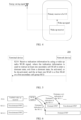
- FIG. 1 is an example of a system framework according to an embodiment of this application.
- the communications system 100 may include terminal devices 110 and a network device 120.
- the network device 120 may communicate with the terminal devices 110 by using air interfaces. Multi-service transmission is supported between the terminal devices 110 and the network device 120.
- the communications system 100 is merely used as an example for description in this embodiment of this application, but this embodiment of this application is not limited thereto.
- the technical solutions in embodiments of this application may be applied to various communications systems, for example, a long term evolution (Long Term Evolution, LTE) system, an LTE time division duplex (Time Division Duplex, TDD) system, a universal mobile telecommunications system (Universal Mobile Telecommunication System, UMTS), an Internet of things (Internet of Things, IoT) system, a narrow band Internet of things (Narrow Band Internet of Things, NB-IoT) system, an enhanced machine-type communications (enhanced Machine-Type Communications, eMTC) system, a 5G communications system (also referred to as a new radio (New Radio, NR) communications system), or a future communications system.
- LTE Long Term Evolution
- TDD Time Division Duplex
- UMTS Universal Mobile Telecommunication System
- IoT Internet of things
- NB-IoT narrow band Internet of things
- the network device 120 may be an access network device that communicates with the terminal devices 110.
- the access network device may provide communication coverage for a specific geographical area, and may communicate with a terminal device 110 (for example, a UE) located in the coverage area.
- the network device 120 may be an evolved NodeB (Evolutional Node B, eNB or eNodeB) in a long term evolution (Long Term Evolution, LTE) system, or a next generation radio access network (Next Generation Radio Access Network, NG RAN) device, or a gNB (gNB) in an NR system, or a wireless controller in a cloud radio access network (Cloud Radio Access Network, CRAN), or the network device 120 may be a relay station, an access point, a vehicle-mounted device, a wearable device, a hub, a switch, a bridge, a router, or a network device in a future evolved public land mobile network (Public Land Mobile Network, PLMN).
- PLMN Public Land Mobile Network
- the terminal device 110 may be any terminal device, which includes but is not limited to a terminal device that is connected to the network device 120 or another terminal device by using a wired or wireless connection.
- the terminal device 110 may be an access terminal, a user equipment (User Equipment, UE), a subscriber unit, a subscriber station, a mobile site, a mobile station, a remote station, a remote terminal, a mobile device, a user terminal, a terminal, a wireless communications device, a user agent, or a user apparatus.
- UE User Equipment
- the access terminal may be a cellular phone, a cordless phone, a session initiation protocol (Session Initiation Protocol, SIP) phone, an IoT device, a satellite handheld terminal, a wireless local loop (Wireless Local Loop, WLL) station, a personal digital assistant (Personal Digital Assistant, PDA), a handheld device with a wireless communication function, a computing device, another processing device connected to a wireless modem, a vehicle-mounted device, a wearable device, a terminal device in a 5G network, or a terminal device in a future evolved network.
- SIP Session Initiation Protocol
- WLL Wireless Local Loop
- PDA Personal Digital Assistant
- the terminal device 110 may be configured for device to device (Device to Device, D2D) communication.
- D2D Device to Device
- the wireless communications system 100 may further include a core network device 130 that communicates with a base station.
- the core network device 130 may be a 5G core network (5G Core, 5GC) device, for example, an access and mobility management function (Access and Mobility Management Function, AMF), for another example, an authentication server function (Authentication Server Function, AUSF), for still another example, a user plane function (User Plane Function, UPF), or for yet another example, a session management function (Session Management Function, SMF).
- 5G Core, 5GC 5G Core, 5GC
- AMF Access and Mobility Management Function
- AUSF Authentication Server Function
- UPF User Plane Function
- SMF Session Management Function
- the core network device 130 may also be an evolved packet core (Evolved Packet Core, EPC) device of an LTE network, for example, a session management function + core packet gateway (Session Management Function + Core Packet Gateway, SMF+PGW-C) device of a core network.
- EPC evolved Packet Core
- SMF+PGW-C Session Management Function + Core Packet Gateway
- the SMF+PGW-C may implement both a function that can be implemented by an SMF and a function that can be implemented by a PGW-C.
- the foregoing core network device may also be called another name, or a new network entity may be formed by dividing a function of the core network, which is not limited in embodiments of this application.
- Communication between functional units in the communications system 100 may be further implemented by establishing a connection by using a next generation network (next generation, NG) interface.
- next generation network next generation, NG
- the terminal device establishes an air interface connection to an access network device by using an NR interface, to transmit user plane data and control plane signalling.
- the terminal device may establish a control plane signalling connection to an AMF by using an NG interface 1 (N1 for short).
- the access network device for example, a next-generation radio access base station (gNB), may establish a user plane data connection to a UPF by using an NG interface 3 (N3 for short).
- the access network device may establish a control plane signalling connection to the AMF by using an NG interface 2 (N2 for short).
- the UPF may establish a control plane signalling connection to an SMF by using an NG interface 4 (N4 for short).
- the UPF may exchange user plane data with a data network by using an NG interface 6 (N6 for short).
- the AMF may establish a control plane signalling connection to the SMF by using an NG interface 11 (N11 for short).
- the SMF may establish a control plane signalling connection to a PCF by using an NG interface 7 (N7 for short).
- FIG. 1 exemplarily shows a base station, a core network device, and two terminal devices.
- the wireless communications system 100 may include a plurality of base station devices, and a coverage area of each base station may include another quantity of terminal devices. This is not limited in embodiments of this application.
- each device that has a communication function in a network or a system may be referred to as a communications device.
- the communications system 100 shown in FIG. 1 is used as an example.
- the communications device may include a network device 120 and a terminal device 110 that have a communication function.
- the network device 120 and the terminal device 110 may be the foregoing devices, and details are not described herein again.
- the communications device may further include another device in the communications system 100, such as a network controller, a mobility management entity, or another network entity. This is not limited in embodiments of this application.
- system and “network” may often be used interchangeably herein.
- the term “and/or” is merely an association relationship that describes associated objects, and represents that there may be three relationships. For example, A and/or B may represent three cases: only A exists, both A and B exist, and only B exists.
- the character “/" in this specification generally indicates an "or" relationship between the associated objects.
- corresponding mentioned in embodiments of this application may mean that there is a direct or indirect correspondence between two elements, or that there is an association between two elements, or that there is a relationship of "indicating” and “being indicated”, “configuring” and “being configured”, or the like.
- pre-defined or “pre-defined rule” mentioned in embodiments of this application may be implemented in a manner in which corresponding code, a table, or other related information used for indication is pre-stored in a device (for example, including a terminal device and a network device). A specific implementation is not limited in this application. For example, "pre-defined” may be “defined” in a protocol.
- the "protocol” may be a standard protocol in the communication field, for example, may include an LTE protocol, an NR protocol, and a related protocol applied to a future communications system. This is not limited in this application.
- UE User Equipment
- energy saving of the UE may be implemented by using a discontinuous reception (Discontinuous Reception, DRX) mechanism.
- DRX discontinuous Reception
- PDCCH Physical Downlink Control Channel
- electricity saving can be further optimized.
- energy saving of the UE may be further implemented by introducing an energy saving signal.
- the energy saving signal may be used in combination with the DRX mechanism.
- the terminal device receives the energy saving signal before a DRX on duration.
- the energy saving signal is used to wake up the terminal device, to monitor a PDCCH in a DRX on duration. Otherwise, when the terminal device does not have data transmission in a DRX cycle, the energy saving signal is used to skip waking up the terminal device, and a terminal does not need to monitor a PDCCH in a DRX on duration.
- the terminal may skip monitoring the PDCCH in the DRX on duration, to further save energy.
- the energy saving signal may be carried by using a downlink control information (Downlink Control Information, DCI) format (format) 2_6.
- DCI Downlink Control Information
- Time at which the terminal device is not in the DRX on duration is referred to as inactive time; and time at which the terminal device is in the DRX on duration is referred to as active time.
- FIG. 2 is an example of a DRX cycle according to an embodiment of this application.
- a terminal device receives an energy saving signal before a DRX on duration.
- the energy saving signal may be used to instruct the terminal device to monitor or not to monitor a PDCCH.
- the terminal device monitors the PDCCH in a corresponding DRX on duration.
- the energy saving signal is used to instruct the terminal device not to monitor the PDCCH, the terminal device does not monitor the PDCCH in a corresponding DRX on duration.
- the terminal may skip monitoring the PDCCH in the DRX on duration, to further save energy.
- energy saving of UE may be further optimized by introducing a secondary cell (Secondary Cell, SCell)/secondary cell group (Secondary Cell Group, SCG) dormancy (dormancy) function.
- a network configures a dedicated dormant (dormant) bandwidth part (Bandwidth Part, BWP) for each SCell/SCG.
- DCI may be used to instruct a UE to activate a dormant BWP on a corresponding SCell/SCG.
- the UE does not monitor a PDCCH on the dormant BWP, and performs only channel state information (Channel State Information, CSI) measurement and reporting, so that electricity saving of the UE is facilitated.
- Channel State Information Channel State Information
- a dormancy trigger process of the SCell/SCG includes two cases: Case 1: Dormancy triggering of the SCell/SCG in a time different from active time.
- a dormancy indication for the dormancy triggering of the SCell/SCG in the time different from the active time may be carried in a dedicated bit in a DCI format 2_6. Because the dormancy indication may be a multi-terminal indication, or for another reason, a dormancy indication of each terminal device is limited to five bits or fewer bits. Each bit is used to indicate dormancy or non-dormancy of the SCell/SCG.
- the SCG may include one or more SCells.
- the dormancy of the SCG may be dormancy of each SCell in the SCG.
- the SCG exiting dormancy may be each SCell in the SCG exiting dormancy.
- enabling/disabling of carrier frequencies (namely, SCells) of a same frequency band may be associated.
- a difference between power consumed in simultaneously enabling carrier frequencies in a frequency band for receiving and transmitting and power consumed in separately enabling the carrier frequencies in the frequency band is small.
- a carrier group (namely, an SCG) is configured and determined by a network device.
- a terminal device configures only one dormant BWP on one SCell. When the terminal device is instructed to exit from a dormant BWP, it is required to select a non-dormancy BWP.
- a network device may configure a first non-dormancy BWP for the terminal device.
- an NR specifies that the terminal device is switched to the first non-dormancy BWP only when current activation is for a dormant BWP and a dormancy exit indication is received. The terminal only needs to maintain a current BWP when the current activation is for a non-dormancy BWP and the dormancy exit indication is received.
- the dormancy triggering of the SCell/SCG in the active time is indicated by using a common PDCCH.
- Using the PDCCH for indication may include the following two manners.
- the dedicated bit is added in DCI formats 0_1 and 1_1. This manner is characterized in that the scheduling DCI may initiate a dormancy indication at any time. However, even if SCell dormancy needs not to be changed, the scheduling DCI still needs to transmit the dedicated bit. This results in unnecessary overhead. In this case, using Manner 2 may be taken into consideration.
- a HARQ-ACK of an NR is feedback on decoding of scheduled data.
- a communication handshake between a base station and a terminal may be implemented in Manner 1. This facilitates synchronization on both sides.
- Manner 2 another manner is required to support the handshake. Therefore, for Manner 2, HARQ-ACK feedback timing based on a PDCCH needs to be further introduced. For example, a fixed timing relationship may be used at different subcarrier spacing (SCS).
- SCS subcarrier spacing
- Manner 1 and Manner 2 may be flexibly configured by the base station according to a scenario requirement.
- the base station configures the first non-dormancy BWP for the terminal device. Regardless of a case in which a BWP inactivity timer (bwp-InactivityTimer) expires, in the active time, the terminal device is switched to the first non-dormancy BWP only when current activation is for a dormant BWP and a dormancy exit indication is received. The terminal device only needs to maintain a current BWP when the current activation is for a non-dormancy BWP and the dormancy exit indication is received.
- bwp-InactivityTimer a BWP inactivity timer
- FIG. 3 is a schematic diagram of receiving an energy saving signal by using a PDCCH according to an embodiment of this application.
- an activated BWP on a PCell of a terminal device is an activated BWP; an activated BWP on an SCell 1 of the terminal device is a non-dormancy BWP; and an activated BWP on an SCell 2 of the terminal device is a non-dormancy BWP.
- the terminal device may receive a dormancy indication of the SCell 1 by using a PDCCH on the PCell. In this case, the terminal device activates a dormant BWP on the SCell 1. Further, the terminal device may also receive a dormancy exit indication of the SCell 1 by using a PDCCH on the PCell.
- the terminal device activates a non-dormancy BWP on the SCell 1.
- the terminal device may receive a dormancy indication of the SCell 2 by using a PDCCH on the PCell.
- the terminal device activates a dormant BWP on the SCell 2.
- introduction of a wake up receiver may also be taken into consideration, to receive an energy saving signal.
- the wake up receiver has features of extremely low costs, extremely low complexity, and extremely low power consumption.
- a signal received by the wake up receiver is a radio signal, and is mainly received in an envelope-detection-based manner.
- the radio signal may be an envelope signal obtained by performing ASK modulation on a carrier signal. Demodulation of the envelope signal may be completed by driving a low-power circuit based on energy provided by a radio frequency signal. Therefore, the wake up receiver may be passive. Alternatively, the wake up receiver may be powered by using the terminal device. No matter which power supply manner is used, power consumption of the wake up receiver is greatly reduced compared with a conventional receiver of the UE.
- the wake up receiver may receive the radio signal transmitted by the network device, to trigger the terminal device to receive the signal carried in the PDCCH.
- FIG. 4 is a schematic diagram of receiving an energy saving signal by using a wake up receiver and a primary receiver according to an embodiment of this application.
- a terminal device may include a wake up receiver and a primary receiver of a UE.
- the wake up receiver is connected to the primary receiver of the UE.
- the wake up receiver may be configured to trigger enabling of the primary receiver.
- the wake up receiver may be combined with the UE, to be used as an additional module of a receiving set of the UE; or may be separately used as a wake-up functional module of the UE.
- the wake up receiver first receives an energy saving signal in a form of a radio signal.
- the energy saving signal received by the wake up receiver may be used as a wake-up signal to wake up the primary receiver.
- the primary receiver is triggered to receive an energy saving signal carried in a PDCCH.
- the wake up receiver first receives an energy saving signal in a form of a radio signal, and is configured to wake up the primary receiver, although electricity saving can be implemented by disabling a master transceiver.
- the dormancy indication depends on reception of the PDCCH; and for the reception of the PDCCH, a master transceiver of the UE needs to be enabled. Therefore, a radio signal used for waking up the primary receiver needs to be additionally transmitted, which increases power consumption of the terminal device.
- embodiments of this application provide a wireless communication method, a terminal device, and a network device, to reduce power consumption of a terminal device.
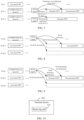
- FIG. 5 is a schematic flowchart of a wireless communication method 200 according to an embodiment of this application.
- the wireless communication method 200 may be executed by a terminal device and a network device interactively.
- the terminal device shown in FIG. 5 may be the terminal devices shown in FIG. 1 .
- the network device shown in FIG. 5 may be the access network device shown in FIG. 1 .
- the method 200 may include the following step.
- the terminal device receives indication information by using a wake up radio (wake up radio, WUR) signal.
- a wake up radio wake up radio, WUR
- the indication information is used to instruct at least one secondary cell SCell be in dormancy, exit from dormancy, be activated, or be deactivated.
- the at least one SCell is a first SCell or a first secondary cell group SCG.
- the network device indicates, by using the WUR signal, the terminal device that at least one SCell is in dormancy, exit from dormancy, is activated, or is deactivated.
- the indication information is used to instruct the first SCell be in dormancy, exit from dormancy, be activated, or be deactivated.
- the indication information is used to instruct the first SCG be in dormancy, exit from dormancy, be activated, or be deactivated.
- the WUR signal may be a signal that can be received and demodulated by a wake up receiver.
- the wake up receiver may be passive, or may be powered by using the terminal device.
- the WUR signal may be received in an envelope-detection-based manner.
- the WUR signal may be an envelope signal obtained by performing amplitude shift keying (ASK) modulation on a carrier signal.
- demodulation of the WUR signal may be completed by driving a low-power circuit based on energy provided by a radio frequency signal.
- receiving indication information by using a WUR signal is equivalent to receiving the indication information by using a radio signal.
- the foregoing manner can reduce power consumed in receiving the indication information and power consumed in demodulating the indication information.
- SCell in this application may be equivalently replaced with a similar term such as a carrier. This is not specifically limited in this application.
- S210 may include: receiving, by the terminal device on a primary cell PCell or a primary cell group PCG, the indication information by using the WUR signal.
- S210 may include: receiving, by the terminal device on a second SCell or a second SCG, the indication information by using the WUR signal.
- the first SCell is the second SCell, or the first SCell is different from the second SCell.
- the terminal device receives, on the first SCell, the indication information by using the WUR signal.
- the terminal device receives, on the first SCG, the indication information by using the WUR signal.
- the terminal device receives, on an SCell different from the first SCell, the indication information by using the WUR signal.
- the terminal device receives, on an SCG different from the first SCG, the indication information by using the WUR signal.
- the first SCG is the second SCG, or the first SCG is different from the second SCG.
- the indication information is used to instruct the at least one SCell be in dormancy; and the method 200 may further include: activating a dormant BWP on each of the at least one SCell.
- the indication information is used to instruct the first SCell be in dormancy.
- the terminal device activates a dormant BWP on the first SCell.
- the indication information is used to instruct the first SCG be in dormancy.
- the terminal device activates a dormant BWP on each SCell in the first SCG.
- the indication information is used to instruct the at least one SCell to exit from dormancy; and the method 200 may further include: activating a non-dormancy BWP on each of the at least one SCell.
- the indication information is used to instruct the first SCell to exit from dormancy.
- the terminal device activates a non-dormancy BWP on the first SCell.
- the indication information is used to instruct the first SCG to exit from dormancy.
- the terminal device activates a non-dormancy BWP on each SCell in the first SCG.
- the terminal device activates a non-dormancy BWP on each of the at least one SCell.
- the non-dormancy BWP is pre-defined.
- pre-defined may be implemented in a manner in which corresponding code, a table, or other related information used for indication is pre-stored in a device (for example, including a terminal device and a network device).
- a specific implementation is not limited in this application.
- pre-defined may be “defined” in a protocol.
- the "protocol” may be a standard protocol in the communication field, which may include, for example, an LTE protocol, an NR protocol, and a related protocol applied to a future communications system. This is not specifically limited in this application.
- the non-dormancy BWP may alternatively be configured by the network device or determined via negotiation with the network device.
- the indication information is used to instruct the at least one SCell to exit from dormancy; and the method 200 may further include: maintaining an activated BWP on each of the at least one SCell.
- the indication information is used to instruct the first SCell to exit from dormancy.
- the terminal device After receiving the indication information, the terminal device maintains an activated BWP on the first SCell.
- the indication information is used to instruct the first SCG to exit from dormancy.
- the terminal device After receiving the indication information, the terminal device maintains an activated BWP on each SCell in the first SCG.
- the terminal device maintains the activated BWP on each of the at least one SCell.
- the indication information is used to instruct the at least one SCell be in dormancy or exit from dormancy; and S210 may include: when the at least one SCell is dormant, receiving the indication information by using the WUR signal.
- the indication information may be received by using the WUR signal.
- the indication information is used to instruct the first SCell be in dormancy or exit from dormancy.
- the terminal device may receive, on the first SCell or another dormant SCell, the indication information by using the WUR signal.
- the indication information is used to instruct the first SCG be in dormancy or exit from dormancy.
- the terminal device may receive, on the first SCG or another dormant SCG, the indication information by using the WUR signal.
- the at least one SCell being dormant includes each of the at least one SCell being dormant.
- the first SCG being dormant includes each SCell in the first SCG being dormant.
- the method 200 may further include: when the at least one SCell is non-dormancy, receiving the indication information by using a physical downlink control channel PDCCH or downlink control information DCI.
- the indication information may be received by using the PDCCH or the DCI.
- the indication information may be received by using DCI that is used for scheduling data or not used for scheduling data.
- the indication information may be received by the foregoing Case 1 or Case 2.
- the indication information is used to instruct the first SCell be in dormancy or exit from dormancy.
- the terminal device may receive, on the first SCell, a PCell, or another non-dormancy SCell, the indication information by using the PDCCH or the DCI.
- the indication information is used to instruct the first SCG be in dormancy or exit from dormancy.
- the terminal device may receive, on the first SCG, a PCG, or another non-dormancy SCG, the indication information by using the PDCCH or the DCI.
- the at least one SCell being non-dormancy includes each of the at least one SCell being non-dormancy.
- the first SCG being non-dormancy includes each SCell in the first SCG being non-dormancy.
- a terminal device receives indication information by using a WUR signal, where the indication information is used to instruct a first SCG be in dormancy.
- the terminal device may be instructed, by using DCI, be in dormancy on the first SCG, that is, to activate a dormant BWP on the first SCG.
- the terminal device does not monitor any PDCCH, and performs only CSI measurement and reporting, which helps reduce power consumption of the terminal device.
- the terminal device may receive some wake-up signals related to energy saving, so that the terminal device can disable a master transceiver to implement electricity saving.
- the terminal device cannot detect any PDCCH.
- the terminal device may have enabled the wake up receiver and disabled the master transceiver.
- the first SCG may be in a non-dormancy.
- the first SCG needs to be instructed, by using the indication information, to enter the dormancy. If the indication information is received by using a PDCCH, the wake up receiver needs to be used first to receive the wake-up signals, thereby waking up the master transceiver of the terminal device; and then, the master transceiver is used to receive the PDCCH, thereby obtaining the indication information.
- power consumption and a transmission delay of the terminal are increased.
- the indication information used for indicating the first SCG be in dormancy is received by using the WUR signal, so that electricity consumed by the terminal device in detecting and demodulating the PDCCH can be further reduced.
- the terminal device may have enabled the wake up receiver and disabled the master transceiver.
- the terminal device may receive the indication information by using the WUR signal, thereby entering the dormancy on the first SCG, that is, a dormant BWP on each SCell in the first SCG may be activated.
- the terminal device may receive the indication information on a PCell or a PCG by using the wake up receiver, or may receive the indication information on an SCell or an SCG by using the wake up receiver.
- the terminal device may receive the indication information on the first SCG, or may receive the indication information on an SCG different from the first SCG. This is not specifically limited in this application.
- a terminal device receives indication information by using a WUR signal, where the indication information is used to instruct a first SCG to exit from dormancy.
- the terminal device may receive some wake-up signals related to energy saving, so that the terminal device can disable a master transceiver to implement electricity saving.
- the terminal device cannot detect any PDCCH.
- the terminal device may have enabled the wake up receiver and disabled the master transceiver.
- the first SCG may be in a dormancy. In this state, when the first SCG has data transmission, the first SCG needs to be instructed, by using the indication information, to exit from dormancy. If the terminal device receives the indication information by using a PDCCH, a master transceiver of a UE needs to be woken up first by using the WUR signal; and then, the master transceiver receives the indication information by using the PDCCH.
- a bit in a dormancy indication field in the PDCCH corresponding to the first SCG is set to 1, thereby instructing the first SCG to exit from dormancy.
- power consumption and a transmission delay of the terminal are increased.
- the indication information is received by using the WUR signal.
- the indication information can be received only when the wake up receiver is enabled, so that power consumption of the terminal device can be reduced.
- the terminal device may have enabled the wake up receiver and disabled the master transceiver.
- the terminal device may receive the indication information by using the WUR signal, thereby exiting dormancy on the first SCG, that is, a non-dormancy BWP on each SCell in the first SCG is activated. For example, a pre-defined non-dormancy BWP on each SCell in the first SCG is activated.
- the terminal device may receive the indication information on a PCell or a PCG by using the wake up receiver, or may receive the indication information on an SCell or an SCG by using the wake up receiver.
- the terminal device may receive the indication information on the first SCG, or may receive the indication information on an SCG different from the first SCG. This is not specifically limited in this application.
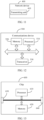
- FIG. 6 is a schematic diagram of instructing an SCG be in dormancy or exit from dormancy according to an embodiment of this application.
- a wake up receiver is enabled on a PCG of a terminal device; an activated BWP on an SCG 1 of the terminal device is a non-dormancy BWP; and an activated BWP on an SCG 2 of the terminal device is a non-dormancy BWP.
- the terminal device may receive a dormancy indication of the SCG 1 by using a WUR signal on a PCell. In this case, the terminal device activates a dormant BWP on the SCG 1. Further, the terminal device may also receive a dormancy exit indication of the SCG 1 by using a WUR signal on the PCell.
- the terminal device activates a non-dormancy BWP on the SCG 1.
- the terminal device may receive a dormancy indication of the SCG 2 by using a WUR signal on the PCell. In this case, the terminal device activates a dormant BWP on the SCG 2.
- FIG. 7 is another schematic diagram of instructing an SCG be in dormancy or exit from dormancy according to an embodiment of this application.
- a BWP on a PCG of a terminal device is activated; wake up receivers are enabled on both an SCG 1 and an SCG 2 of the terminal device; an activated BWP on the SCG 1 of the terminal device is a non-dormancy BWP; and an activated BWP on the SCG 2 of the terminal device is a non-dormancy BWP.
- the terminal device may receive a dormancy indication of the SCG 1 by using a WUR signal on the SCG 1. In this case, the terminal device activates a dormant BWP on the SCG 1. Further, the terminal device may also receive a dormancy exit indication of the SCG 1 by using a WUR signal on the SCG 1.
- the terminal device activates a non-dormancy BWP on the SCG 1.
- the terminal device may receive a dormancy indication of the SCG 2 by using a WUR signal on the SCG 2.
- the terminal device activates a dormant BWP on the SCG 2.
- a terminal device receives indication information by using a WUR signal, where the indication information is used to instruct a first SCell to be activated or deactivated.
- the terminal device may receive some wake-up signals related to energy saving, so that the terminal device can disable a master transceiver to implement electricity saving.
- the terminal device cannot detect any PDCCH.
- the terminal device may have enabled the wake up receiver and disabled the master transceiver, when the first SCell needs to be activated or deactivated, if the indication information is carried by an MAC CE, a PDCCH and a PDSCH need to be received.
- a master transceiver of a UE needs to be woken up first by using the wake-up signals; and then, the master transceiver is used to receive the PDCCH and the PDSCH, thereby obtaining the MAC CE.
- power consumption and a transmission delay of the terminal are increased.
- the indication information is received by using the WUR signal.
- the indication information can be received only when the wake up receiver is enabled, so that power consumption of the terminal device can be reduced.
- the terminal device may receive, in this case, the indication information by using the WUR signal, thereby activating or de-activating a downlink BWP and an uplink BWP that correspond to the first SCell.
- an identifier of an activated downlink BWP may be a first active downlink BWP identifier (firstActiveDownlinkBWP-Id) configured by a network device.
- an identifier of an activated uplink BWP may be a first active uplink BWP identifier (firstActiveUplinkBWP-Id) configured by a network device.
- the terminal device may receive the indication information on a PCell or a PCG by using the wake up receiver, or may receive the indication information on an SCell or an SCG by using the wake up receiver.
- the terminal device may receive the indication information on the first SCell, or may receive the indication information on an SCell different from the first SCell. This is not specifically limited in this application.
- FIG. 8 is a schematic diagram of instructing an SCG be in dormancy or exit from dormancy according to an embodiment of this application.
- a wake up receiver is enabled on a PCell of a terminal device; a BWP on an SCell 1 of the terminal device is in an activated state; and a BWP on an SCell 2 of the terminal device is in an activated state.
- the terminal device may receive a de-activation indication of the SCell 1 by using a WUR signal on the PCell. In this case, the terminal device de-activates a corresponding BWP on the SCell 1. Further, the terminal device may also receive an activation indication of the SCell 1 by using a WUR signal on the PCell. In this case, the terminal device activates a corresponding BWP on the SCell 1. Similarly, the terminal device may receive a de-activation indication of the SCell 2 by using a WUR signal on the PCell. In this case, the terminal device de-activates a corresponding BWP on the SCell 2.
- Embodiment 1 and Embodiment 3 may be combined with each other.
- the indication information may be used to simultaneously instruct the first SCell be in dormancy/exit from dormancy and instruct the first SCell to be activated/be deactivated.
- FIG. 9 is another schematic diagram of instructing an SCell be in dormancy or exit from dormancy according to an embodiment of this application.
- a wake up receiver is enabled on a PCell of a terminal device; a BWP on an SCell 1 of the terminal device is in an activated state; and a BWP on an SCell 2 of the terminal device is in an activated state.
- the terminal device may receive a dormancy indication of the SCG 1 by using a WUR signal on the PCell. In this case, the terminal device activates a dormant BWP on the SCG 1. Further, the terminal device may also receive a dormancy exit indication of the SCG 1 by using a WUR signal on the PCell. In this case, the terminal device activates a non-dormancy BWP on the SCG 1. Similarly, the terminal device may receive a de-activation indication of the SCell 2 by using a WUR signal on the PCell. In this case, the terminal device de-activates a corresponding BWP on the SCell 2.
- FIG. 6 to FIG. 9 are merely examples of this application, and should not be construed as a limitation to this application.
- the terminal device may further feed back acknowledgment information to a base station.
- the acknowledgment information may be fed back by using an uplink WUR signal or another channel, for example, a PUCCH.
- the uplink WUR signal is used to request the terminal device to be provided with a wake up transmitter (WUT).
- WUT wake up transmitter
- the uplink WUR signal may be transmitted according to a backscattering method.
- the indication information takes effect after a pre-defined time interval or a time interval configured by a network.
- the terminal device causes at least one SCell be in dormancy, exit from dormancy, be activated, or be deactivated.
- FIG. 10 is a schematic block diagram of a terminal device 300 according to an embodiment of this application.
- the terminal device 300 may include: a receiving unit 310, configured to receive indication information by using a wake up radio WUR signal.
- the indication information is used to instruct at least one secondary cell SCell be in dormancy, exit from dormancy, be activated, or be deactivated.
- the at least one SCell is a first SCell or a first secondary cell group SCG.
- the receiving unit 310 is specifically configured to: receive, on a primary cell PCell or a primary cell group PCG, the indication information by using the WUR signal.
- the receiving unit 310 is specifically configured to: receive, on a second SCell or a second SCG, the indication information by using the WUR signal.
- the first SCell is the second SCell, or the first SCell is different from the second SCell.
- the first SCG is the second SCG, or the first SCG is different from the second SCG.
- the indication information is used to instruct the at least one SCell be in dormancy; and the receiving unit 310 is further configured to: activate a dormant BWP on each of the at least one SCell.
- the indication information is used to instruct the at least one SCell to exit from dormancy; and the receiving unit 310 is further configured to: activate a non-dormancy BWP on each of the at least one SCell.
- the non-dormancy BWP is pre-defined.
- the indication information is used to instruct the at least one SCell to exit from dormancy; and the receiving unit 310 is further configured to: maintain an activated BWP on each of the at least one SCell.
- the indication information is used to instruct the at least one SCell be in dormancy or exit from dormancy; and the receiving unit 310 is specifically configured to: when the at least one SCell is dormant, receive the indication information by using the WUR signal.
- the receiving unit 310 is further configured to: when the at least one SCell is non-dormancy, receive the indication information by using a physical downlink control channel PDCCH or downlink control information DCI.
- the apparatus embodiments may correspond to the method embodiments, and for similar descriptions, reference may be made to the method embodiments.
- the terminal device 300 shown in FIG. 10 may correspond to a corresponding body in the method 200 for executing embodiments of this application, and the foregoing and other operations and/or functions of the units in the terminal device 300 are respectively used to implement corresponding procedures in the methods provided in embodiments of this application. For brevity, details are not described herein again.
- FIG. 11 is a schematic block diagram of a network device 400 according to an embodiment of this application.
- the network device 400 may include: a transmitting unit 410, configured to transmit indication information by using a wake up radio WUR signal.
- the indication information is used to instruct at least one secondary cell SCell be in dormancy, exit from dormancy, be activated, or be deactivated.
- the at least one SCell is a first SCell or a first secondary cell group SCG.
- the transmitting unit 410 is specifically configured to: transmit, on a primary cell PCell or a primary cell group PCG, the indication information by using the WUR signal.
- the transmitting unit 410 is specifically configured to: transmit, on a second SCell or a second SCG, the indication information by using the WUR signal.
- the first SCell is the second SCell, or the first SCell is different from the second SCell.
- the first SCG is the second SCG, or the first SCG is different from the second SCG.
- the indication information is used to instruct the at least one SCell be in dormancy or exit from dormancy.
- the transmitting unit 410 is specifically configured to: when the at least one SCell is dormant, transmit the indication information by using the WUR signal.
- the transmitting unit 410 is further configured to: when the at least one SCell is non-dormancy, receive the indication information by using a physical downlink control channel PDCCH or downlink control information DCI.
- the apparatus embodiments may correspond to the method embodiments, and for similar descriptions, reference may be made to the method embodiments.
- the network device 400 shown in FIG. 11 may correspond to a corresponding body that performs the method 200 in embodiments of this application, and the foregoing and other operations and/or functions of the units in the network device 400 are respectively used to implement corresponding procedures in the methods provided in embodiments of this application. For brevity, details are not described herein again.
- the communications device in embodiments of this application from a perspective of a functional module with reference to the accompanying drawings.
- the functional module may be implemented in a hardware form, may be implemented in an instruction in a software form, or may be implemented in a combination of hardware and a software module.
- the steps of the method embodiments in embodiments of this application may be completed by using an integrated logic circuit of hardware in a processor and/or an instruction in a form of software.
- the steps of the methods disclosed with reference to embodiments of this application may be directly executed by a hardware decoding processor, or may be executed by using a combination of hardware and a software module in a decoding processor.
- the software module may be located in a mature storage medium in the art such as a random access memory, a flash memory, a read-only memory, a programmable read-only memory, an electrically erasable programmable memory, or a register.
- the storage medium is located in a memory.
- the processor reads information from the memory, and performs the steps in the foregoing method embodiments in combination with hardware in the processor.
- the receiving unit 310 or the transmitting unit 410 described above may be implemented by a transceiver.
- FIG. 12 is a schematic structural diagram of a communications device 500 according to an embodiment of this application.
- the communications device 500 may include a processor 510.
- the processor 510 may invoke a computer program from a memory and run the computer program to implement a method in embodiments of this application.
- the communications device 500 may further include a memory 520.
- the memory 520 may be configured to store indication information, and may be further configured to store code, an instruction, and the like that are executed by the processor 510.
- the processor 510 may invoke a computer program from the memory 520 and run the computer program to implement a method in embodiments of this application.
- the memory 520 may be a separate component independent of the processor 510, or may be integrated into the processor 510.
- the communications device 500 may further include a transceiver 530.
- the processor 510 may control the transceiver 530 to communicate with another device. Specifically, the processor 510 may transmit information or data to the another device, or receive information or data transmitted by the another device.
- the transceiver 530 may include a transmitting set and a receiving set.
- the transceiver 530 may further include an antenna, and a quantity of the antenna may be one or more.
- the bus system further includes a power bus, a control bus, and a status signal bus.
- the communications device 500 may be a terminal device in embodiments of this application, and the communications device 500 may implement a corresponding procedure implemented by the terminal device in the methods in embodiments of this application.
- the communications device 500 in embodiments of this application may correspond to the terminal device 300 in embodiments of this application, and may correspond to a corresponding body that performs the method 200 according to embodiments of this application.
- the communications device 500 may be a network device in embodiments of this application, and the communications device 500 may implement a corresponding procedure implemented by the network device in the methods in embodiments of this application.
- the communications device 500 in this embodiment of this application may correspond to the network device 400 in embodiments of this application, and may correspond to a corresponding body that performs the method 200 according to embodiments of this application.
- the communications device 500 in this embodiment of this application may correspond to the network device 400 in embodiments of this application, and may correspond to a corresponding body that performs the method 200 according to embodiments of this application.
- the communications device 500 in this embodiment of this application may correspond to the network device 400 in embodiments of this application, and may correspond to a corresponding body that performs the method 200 according to embodiments of this application.
- an embodiment of this application further provides a chip.
- the chip may be an integrated circuit chip, which has a signal processing capability, and may implement or perform the methods, steps, and logical block diagrams disclosed in embodiments of this application.
- the chip may also be referred to as a system-level chip, a system chip, a chip system, a system-on-chip, or the like.
- the chip may be applied to various communications devices, so that a communications device installed with the chip can perform the methods, steps, and logical block diagrams disclosed in embodiments of this application.
- FIG. 13 is a schematic structural diagram of a chip 600 according to an embodiment of this application.
- the chip 600 includes a processor 610.
- the processor 610 may invoke a computer program from a memory and run the computer program to implement a method in embodiments of this application.
- the chip 600 may further include a memory 620.
- the processor 610 may invoke a computer program from the memory 620 and run the computer program to implement a method in embodiments of this application.
- the memory 620 may be configured to store indication information, and may be further configured to store code, an instruction, and the like that are executed by the processor 610.
- the memory 620 may be a separate component independent of the processor 610, or may be integrated into the processor 610.
- the chip 600 may further include an input interface 630.
- the processor 610 may control the input interface 630 to communicate with another device or chip, and specifically, may obtain information or data transmitted by the another device or chip.
- the chip 600 may further include an output interface 640.
- the processor 610 may control the output interface 640 to communicate with another device or chip, and specifically, may output information or data to the another device or chip.
- the chip 600 may be applied to a network device in embodiments of this application, and the chip may implement a corresponding procedure implemented by the network device in the methods in embodiments of this application, or may implement a corresponding procedure implemented by a terminal device in the methods in embodiments of this application.
- the chip 600 may be applied to a network device in embodiments of this application, and the chip may implement a corresponding procedure implemented by the network device in the methods in embodiments of this application, or may implement a corresponding procedure implemented by a terminal device in the methods in embodiments of this application.
- details are not described herein again.
- bus system In addition to a data bus, the bus system further includes a power bus, a control bus, and a status signal bus.
- the foregoing processor may include but is not limited to: a general-purpose processor, a digital signal processor (Digital Signal Processor, DSP), an application specific integrated circuit (Application Specific Integrated Circuit, ASIC), a field programmable gate array (Field Programmable Gate Array, FPGA) or another programmable logic device, a discrete gate or a transistor logic device, or a discrete hardware component.
- DSP Digital Signal Processor
- ASIC Application Specific Integrated Circuit
- FPGA Field Programmable Gate Array
- FPGA Field Programmable Gate Array
- the processor may be configured to implement or perform the methods, steps, and logical block diagrams disclosed in embodiments of this application.
- the steps of methods disclosed with reference to embodiments of this application may be directly executed by a hardware decoding processor, or may be executed by a combination of hardware and software modules in a decoding processor.
- the software module may be located in a mature storage medium in the art, for example, a random access memory, a flash memory, a read-only memory, a programmable read-only memory, an erasable programmable memory, or a register.
- the storage medium is located in a memory.
- the processor reads information from the memory, and completes the steps of the foregoing methods in combination with hardware in the processor.
- the foregoing memory includes but is not limited to: a volatile memory and/or a non-volatile memory.
- the non-volatile memory may be a read-only memory (Read-Only Memory, ROM), a programmable read-only memory (Programmable ROM, PROM), an erasable programmable read-only memory (Erasable PROM, EPROM), an electrically erasable programmable read-only memory (Electrically EPROM, EEPROM), or a flash memory.
- the volatile memory may be a random access memory (Random Access Memory, RAM), and is used as an external cache.
- RAMs may be used, for example, a static random access memory (Static RAM, SRAM), a dynamic random access memory (Dynamic RAM, DRAM), a synchronous dynamic random access memory (Synchronous DRAM, SDRAM), a double data rate synchronous dynamic random access memory (Double Data Rate SDRAM, DDR SDRAM), an enhanced synchronous dynamic random access memory (Enhanced SDRAM, ESDRAM), a synchronous link dynamic random access memory (synch link DRAM, SLDRAM), and a direct rambus random access memory (Direct Rambus RAM, DR RAM).
- Static RAM static random access memory
- DRAM dynamic random access memory
- DRAM synchronous dynamic random access memory
- SDRAM synchronous dynamic random access memory
- DDR SDRAM double data rate synchronous dynamic random access memory
- Enhanced SDRAM, ESDRAM enhanced synchronous dynamic random access memory
- SLDRAM synchronous link dynamic random access memory
- Direct Rambus RAM Direct Rambus RAM
- An embodiment of this application further provides a computer-readable storage medium, configured to store a computer program.
- the computer-readable storage medium stores one or more programs, and the one or more programs include an instruction.
- the portable electronic device can perform the wireless communication method provided in this application.
- the computer-readable storage medium may be applied to a network device in embodiments of this application, and the computer program causes a computer to perform a corresponding procedure implemented by the network device in the methods in embodiments of this application. For brevity, details are not described herein again.
- the computer-readable storage medium may be applied to a mobile terminal or a terminal device in embodiments of this application, and the computer program causes a computer to perform a corresponding procedure implemented by the mobile terminal or the terminal device in the methods in embodiments of this application.
- the computer program causes a computer to perform a corresponding procedure implemented by the mobile terminal or the terminal device in the methods in embodiments of this application.
- An embodiment of this application further provides a computer program product, including a computer program.
- the computer program product may be applied to a network device in embodiments of this application, and the computer program causes a computer to perform a corresponding procedure implemented by the network device in the methods in embodiments of this application.
- the computer program product may be applied to a mobile terminal or a terminal device in embodiments of this application, and the computer program causes a computer to perform a corresponding procedure implemented by the mobile terminal or the terminal device in the methods in embodiments of this application.
- details are not described herein again.
- An embodiment of this application further provides a computer program.
- the computer program When the computer program is executed by a computer, the computer can perform the wireless communication methods provided in this application.
- the computer program may be applied to a network device in embodiments of this application.
- the computer program runs on a computer, the computer performs a corresponding procedure implemented by the network device in the methods in embodiments of this application.
- the computer program may be applied to a mobile terminal or a terminal device in embodiments of this application.
- the computer program runs on a computer, the computer performs a corresponding procedure implemented by the mobile terminal or the terminal device in the methods in embodiments of this application. For brevity, details are not described herein again.
- An embodiment of this application further provides a communications system.
- the communications system may include the terminal device and the network device that are described above, to form the communications system 100 shown in FIG. 1 .
- the communications system may also be referred to as a "network management architecture", a “network system”, or the like.
- the computer software product is stored in a storage medium and includes several instructions for instructing a computer device (which may be a personal computer, a server, a network device, or the like) to perform all or some of the steps of the methods described in embodiments of this application.
- a computer device which may be a personal computer, a server, a network device, or the like
- the foregoing storage medium includes any medium that can store program code, such as a USB flash drive, a removable hard disk, a read-only memory, a random access memory, a magnetic disk, or an optical disc.
- the foregoing units/modules/components described as separate/display components may be or may not be physically separated, that is, may be located in one place, or may be distributed on a plurality of network units. Some or all of the units/modules/components may be selected according to an actual need to achieve the objectives of embodiments of this application.
- the foregoing displayed or discussed mutual coupling or direct coupling or communication connections may be implemented by using some interfaces. Indirect couplings or communication connections between apparatuses or units may be implemented in electrical, mechanical, or other forms.
Landscapes
- Engineering & Computer Science (AREA)
- Computer Networks & Wireless Communication (AREA)
- Signal Processing (AREA)
- Mobile Radio Communication Systems (AREA)
Applications Claiming Priority (1)
| Application Number | Priority Date | Filing Date | Title |
|---|---|---|---|
| PCT/CN2021/143236 WO2023123241A1 (zh) | 2021-12-30 | 2021-12-30 | 无线通信方法、终端设备和网络设备 |
Publications (2)
| Publication Number | Publication Date |
|---|---|
| EP4460106A1 true EP4460106A1 (de) | 2024-11-06 |
| EP4460106A4 EP4460106A4 (de) | 2025-10-29 |
Family
ID=86996996
Family Applications (1)
| Application Number | Title | Priority Date | Filing Date |
|---|---|---|---|
| EP21969602.8A Pending EP4460106A4 (de) | 2021-12-30 | 2021-12-30 | Drahtloskommunikationsverfahren, endgerätevorrichtung und netzwerkvorrichtung |
Country Status (4)
| Country | Link |
|---|---|
| US (1) | US20240357501A1 (de) |
| EP (1) | EP4460106A4 (de) |
| CN (1) | CN118383054A (de) |
| WO (1) | WO2023123241A1 (de) |
Families Citing this family (2)
| Publication number | Priority date | Publication date | Assignee | Title |
|---|---|---|---|---|
| CN117204057A (zh) * | 2023-07-26 | 2023-12-08 | 北京小米移动软件有限公司 | 信息指示方法及终端、网络设备、通信系统及存储介质 |
| WO2025054775A1 (zh) * | 2023-09-11 | 2025-03-20 | 北京小米移动软件有限公司 | 通信方法、终端、网络设备、通信系统及存储介质 |
Family Cites Families (5)
| Publication number | Priority date | Publication date | Assignee | Title |
|---|---|---|---|---|
| CN112997540B (zh) * | 2018-09-27 | 2025-02-14 | 交互数字专利控股公司 | Nr中的功率节省机制 |
| US11218963B2 (en) * | 2018-10-05 | 2022-01-04 | Qualcomm Incorporated | Discontinuous reception wakeup operation with multiple component carriers |
| EP4011128B1 (de) * | 2019-09-30 | 2023-03-08 | Ofinno, LLC | Energiespar- und zelldormanzbetrieb |
| US12028293B2 (en) * | 2019-11-08 | 2024-07-02 | Qualcomm Incorporated | Scell dormancy indication by PDCCH |
| EP4115655A1 (de) * | 2020-03-05 | 2023-01-11 | Nokia Technologies Oy | Verfahren zur leistungseinsparung von benutzergeräten unter verwendung von gruppen von zellen und netzwerkknoten dafür |
-
2021
- 2021-12-30 CN CN202180102765.4A patent/CN118383054A/zh active Pending
- 2021-12-30 WO PCT/CN2021/143236 patent/WO2023123241A1/zh not_active Ceased
- 2021-12-30 EP EP21969602.8A patent/EP4460106A4/de active Pending
-
2024
- 2024-07-01 US US18/761,034 patent/US20240357501A1/en active Pending
Also Published As
| Publication number | Publication date |
|---|---|
| CN118383054A (zh) | 2024-07-23 |
| WO2023123241A1 (zh) | 2023-07-06 |
| US20240357501A1 (en) | 2024-10-24 |
| EP4460106A4 (de) | 2025-10-29 |
Similar Documents
| Publication | Publication Date | Title |
|---|---|---|
| US12167334B2 (en) | Reference signal receiving method, reference signal sending method, and apparatus | |
| US12363637B2 (en) | Terminal device wakeup method and apparatus, network device, and terminal device | |
| EP4132209A1 (de) | Drx-steuerungsverfahren und -vorrichtung | |
| CN113163413B (zh) | 无线通信方法、终端设备和网络设备 | |
| US20200120604A1 (en) | Power-efficient drx for multi-link communication | |
| US10182422B2 (en) | Wireless communications system, mobile station, base station, and communication method | |
| US20240357501A1 (en) | Wireless communication method, terminal device, and network device | |
| WO2021062612A1 (zh) | 通信方法及装置 | |
| EP3952193A1 (de) | Verfahren zur übertragung von signalen, endgerätevorrichtung und netzwerkvorrichtung | |
| EP3909303A2 (de) | Stromsparsignalkonfigurationen für einen angeschlossenen diskontinuierlichen empfang | |
| WO2021259138A1 (zh) | 上行信号的发送方法、装置及系统 | |
| CN119923824A (zh) | 信息处理方法和装置 | |
| EP4240099B1 (de) | Systeminformationsblockübertragungsverfahren und kommunikationsvorrichtung | |
| US20230422342A1 (en) | Sidelink Discontinuous Reception Configuration Method, Device, and Non-transitory Computer-Readable Storage Medium | |
| EP4615061A1 (de) | Drahtloskommunikationsverfahren und endgerätevorrichtung und netzwerkvorrichtung | |
| CN113826421B (zh) | 激活终端的方法及装置 | |
| US20230413253A1 (en) | Channel State Measurement Method and Related Device | |
| CN109314926B (zh) | 一种通信方法及无线设备 | |
| US20250048264A1 (en) | Signal transmission method and communication apparatus | |
| EP4633282A1 (de) | Kommunikationsverfahren und zugehörige vorrichtung | |
| WO2025123969A1 (zh) | 一种通信方法和装置 | |
| CN120456199A (zh) | 通信方法及通信装置 | |
| WO2025209547A1 (zh) | 通信方法及装置、计算机程序产品及可读存储介质 | |
| KR20260025911A (ko) | 기지국 및 단말의 장치 및 방법 | |
| WO2026067268A1 (zh) | 传输方法、装置、终端及网络侧设备 |
Legal Events
| Date | Code | Title | Description |
|---|---|---|---|
| STAA | Information on the status of an ep patent application or granted ep patent |
Free format text: STATUS: THE INTERNATIONAL PUBLICATION HAS BEEN MADE |
|
| PUAI | Public reference made under article 153(3) epc to a published international application that has entered the european phase |
Free format text: ORIGINAL CODE: 0009012 |
|
| STAA | Information on the status of an ep patent application or granted ep patent |
Free format text: STATUS: REQUEST FOR EXAMINATION WAS MADE |
|
| 17P | Request for examination filed |
Effective date: 20240730 |
|
| AK | Designated contracting states |
Kind code of ref document: A1 Designated state(s): AL AT BE BG CH CY CZ DE DK EE ES FI FR GB GR HR HU IE IS IT LI LT LU LV MC MK MT NL NO PL PT RO RS SE SI SK SM TR |
|
| DAV | Request for validation of the european patent (deleted) | ||
| DAX | Request for extension of the european patent (deleted) | ||
| A4 | Supplementary search report drawn up and despatched |
Effective date: 20250926 |
|
| RIC1 | Information provided on ipc code assigned before grant |
Ipc: H04W 52/02 20090101AFI20250922BHEP |