EP4460077A1 - Datenübertragungsverfahren und -vorrichtung, endgerät und netzwerkvorrichtung - Google Patents
Datenübertragungsverfahren und -vorrichtung, endgerät und netzwerkvorrichtung Download PDFInfo
- Publication number
- EP4460077A1 EP4460077A1 EP22914006.6A EP22914006A EP4460077A1 EP 4460077 A1 EP4460077 A1 EP 4460077A1 EP 22914006 A EP22914006 A EP 22914006A EP 4460077 A1 EP4460077 A1 EP 4460077A1
- Authority
- EP
- European Patent Office
- Prior art keywords
- qos
- qos flow
- target
- flows
- terminal
- Prior art date
- Legal status (The legal status is an assumption and is not a legal conclusion. Google has not performed a legal analysis and makes no representation as to the accuracy of the status listed.)
- Pending
Links
- 230000005540 biological transmission Effects 0.000 title claims abstract description 398
- 238000000034 method Methods 0.000 title claims abstract description 136
- 238000012545 processing Methods 0.000 claims description 31
- XHSQDZXAVJRBMX-UHFFFAOYSA-N 2-(5,6-dichlorobenzimidazol-1-yl)-5-(hydroxymethyl)oxolane-3,4-diol Chemical compound OC1C(O)C(CO)OC1N1C2=CC(Cl)=C(Cl)C=C2N=C1 XHSQDZXAVJRBMX-UHFFFAOYSA-N 0.000 claims description 29
- 238000004590 computer program Methods 0.000 claims description 13
- 238000013507 mapping Methods 0.000 claims description 12
- 238000013480 data collection Methods 0.000 description 11
- 230000008569 process Effects 0.000 description 8
- 230000000694 effects Effects 0.000 description 7
- 238000005516 engineering process Methods 0.000 description 7
- 230000006854 communication Effects 0.000 description 6
- 238000010586 diagram Methods 0.000 description 6
- 230000006870 function Effects 0.000 description 6
- 238000010295 mobile communication Methods 0.000 description 6
- 230000004913 activation Effects 0.000 description 5
- 238000004891 communication Methods 0.000 description 5
- 230000009849 deactivation Effects 0.000 description 5
- 238000007726 management method Methods 0.000 description 5
- 230000003287 optical effect Effects 0.000 description 5
- 230000009286 beneficial effect Effects 0.000 description 3
- 238000012986 modification Methods 0.000 description 3
- 230000004048 modification Effects 0.000 description 3
- 238000003672 processing method Methods 0.000 description 3
- 230000009467 reduction Effects 0.000 description 3
- 230000009471 action Effects 0.000 description 2
- 230000006399 behavior Effects 0.000 description 2
- 230000007774 longterm Effects 0.000 description 2
- 230000002093 peripheral effect Effects 0.000 description 2
- 239000000725 suspension Substances 0.000 description 2
- 230000001960 triggered effect Effects 0.000 description 2
- 230000006978 adaptation Effects 0.000 description 1
- 238000003491 array Methods 0.000 description 1
- 230000001413 cellular effect Effects 0.000 description 1
- 239000003795 chemical substances by application Substances 0.000 description 1
- 230000006835 compression Effects 0.000 description 1
- 238000007906 compression Methods 0.000 description 1
- 238000011161 development Methods 0.000 description 1
- 230000000977 initiatory effect Effects 0.000 description 1
- 238000013468 resource allocation Methods 0.000 description 1
- 239000004065 semiconductor Substances 0.000 description 1
- 230000011664 signaling Effects 0.000 description 1
- 239000007787 solid Substances 0.000 description 1
Images

Classifications
-
- H—ELECTRICITY
- H04—ELECTRIC COMMUNICATION TECHNIQUE
- H04W—WIRELESS COMMUNICATION NETWORKS
- H04W28/00—Network traffic management; Network resource management
- H04W28/02—Traffic management, e.g. flow control or congestion control
-
- H—ELECTRICITY
- H04—ELECTRIC COMMUNICATION TECHNIQUE
- H04W—WIRELESS COMMUNICATION NETWORKS
- H04W28/00—Network traffic management; Network resource management
- H04W28/02—Traffic management, e.g. flow control or congestion control
- H04W28/0268—Traffic management, e.g. flow control or congestion control using specific QoS parameters for wireless networks, e.g. QoS class identifier [QCI] or guaranteed bit rate [GBR]
-
- H—ELECTRICITY
- H04—ELECTRIC COMMUNICATION TECHNIQUE
- H04L—TRANSMISSION OF DIGITAL INFORMATION, e.g. TELEGRAPHIC COMMUNICATION
- H04L47/00—Traffic control in data switching networks
- H04L47/10—Flow control; Congestion control
- H04L47/24—Traffic characterised by specific attributes, e.g. priority or QoS
-
- H—ELECTRICITY
- H04—ELECTRIC COMMUNICATION TECHNIQUE
- H04L—TRANSMISSION OF DIGITAL INFORMATION, e.g. TELEGRAPHIC COMMUNICATION
- H04L47/00—Traffic control in data switching networks
- H04L47/10—Flow control; Congestion control
- H04L47/24—Traffic characterised by specific attributes, e.g. priority or QoS
- H04L47/2458—Modification of priorities while in transit
-
- H—ELECTRICITY
- H04—ELECTRIC COMMUNICATION TECHNIQUE
- H04W—WIRELESS COMMUNICATION NETWORKS
- H04W28/00—Network traffic management; Network resource management
- H04W28/02—Traffic management, e.g. flow control or congestion control
- H04W28/0205—Traffic management, e.g. flow control or congestion control at the air interface
-
- H—ELECTRICITY
- H04—ELECTRIC COMMUNICATION TECHNIQUE
- H04W—WIRELESS COMMUNICATION NETWORKS
- H04W76/00—Connection management
- H04W76/30—Connection release
-
- H—ELECTRICITY
- H04—ELECTRIC COMMUNICATION TECHNIQUE
- H04W—WIRELESS COMMUNICATION NETWORKS
- H04W76/00—Connection management
- H04W76/30—Connection release
- H04W76/34—Selective release of ongoing connections
Definitions
- the present disclosure relates to the field of communication technology, and in particular to a data transmission method, an apparatus, a terminal and a network device.
- holographic services are gradually becoming a reality. Combined with wireless communication technology, holographic services can be put into practical application and promoted. The most important feature of holographic services is the huge amount of data and high latency requirements. It is a great challenge to realize the system capacity and latency reliability requirements in wireless communication systems. For holographic services that require real-time data collection, transmission and presentation, how to reasonably upload the collected service data and ensure service quality and user experience while reducing system overhead is a technical problem that needs to be solved urgently.
- the present disclosure is to provide a data transmission method, an apparatus, a terminal and a network device to solve the problem that for holographic services that require real-time data collection, transmission and presentation, how to reasonably upload the collected service data, meanwhile reducing system overhead and ensuring service quality and user experience.
- the present disclosure provides a data transmission method, applied to a terminal and including: when sending multiple Quality of Service (QoS) flows of a target service to at least one network device, reducing a QoS guarantee level of a target QoS flow, or stopping a transmission of the target QoS flow; where the target QoS flow is one or more of the multiple QoS flows of the target service.
- QoS Quality of Service
- the data transmission method further includes: storing an untransmitted QoS flow of the target service, and sending the untransmitted QoS flow to the network device actively or according to a scheduling of a network side.
- the sending the untransmitted QoS flow to the network device actively or according to the scheduling of the network side includes one of:
- the sending the untransmitted QoS flow to the network device actively or according to the scheduling of the network side further includes: marking a priority of the untransmitted QoS flow as lower than a priority of a subsequently arriving QoS flow.
- the target QoS flow includes at least one QoS flow and/or at least one QoS flow group, and each of the QoS flow group includes at least one of the multiple QoS flows of the target service.
- the QoS flows are grouped according to at least one of the following methods:
- the method further includes:
- the reducing the QoS guarantee level of the target QoS flow or stopping the transmission of the target QoS flow includes: receiving first indication information sent by the at least one network device; where the first indication information is configured to indicate reducing the QoS guarantee level of the target QoS flow, or stopping the transmission of the target QoS flow.
- the method further includes: receiving second indication information sent by the at least one network device; where the second indication information is configured to indicate restoring the transmission of the target QoS flow, or restoring the QoS guarantee level of a target QoS flow group.
- the method further includes:
- the uplink transmission configuration information further includes: multiple sets of QoS transmission parameters corresponding to the QoS flows, where priorities of different sets of QoS transmission parameters are the same or different.
- the method further includes:
- the method when sending the multiple QoS flows of the target service to the at least one network device, the method further includes: carrying a group identifier of each QoS flow according to at least one of the following methods:
- a data transmission method is further provided in the embodiment of the present disclosure, applied to a network device and including: receiving multiple QoS flows of a target service sent by at least one terminal; where a QoS guarantee level of a target QoS flow of the target service is reduced or a transmission of the target QoS flow is stopped, and the target QoS flow is one or more of the multiple QoS flows of the target service.
- the method further includes: receiving an untransmitted QoS flow of the target service sent by the at least one terminal.
- the target QoS flow includes at least one QoS flow and/or at least one QoS flow group, and each of the QoS flow group includes at least one of the multiple QoS flows of the target service.
- the QoS flows are grouped according to at least one of the following methods:
- the method prior to the receiving the multiple QoS flows of the target service sent by at least one terminal, the method further includes:
- the method further includes:
- the method further includes: sending second indication information to the at least one terminal; where the second indication information is configured to indicate restoring the transmission of the target QoS flow, or increasing the QoS guarantee level of a target QoS flow group.
- the method prior to the receiving the multiple QoS flows of the target service sent by at least one terminal, the method further includes:
- the uplink transmission configuration information further includes: multiple sets of QoS transmission parameters corresponding to the QoS flows, where priorities of different sets of QoS transmission parameters are the same or different.
- the method when receiving the multiple QoS flows of the target service sent by at least one terminal, the method further includes: obtaining a group identifier of each QoS flow according to at least one of the following methods:
- a terminal is further provided in the embodiment of the present disclosure, including: a transceiver, a memory, a processor, and a computer program stored in the memory and executable on the processor; where:
- the processor is further configured to read the program in the memory to perform: storing an untransmitted QoS flow of the target service, and sending the untransmitted QoS flow to the network device actively or according to a scheduling of a network side.
- processor is further configured to read the program in the memory to perform one of:
- the processor is further configured to read the program in the memory to perform: marking a priority of the untransmitted QoS flow as lower than a priority of a subsequently arriving QoS flow.
- the target QoS flow includes at least one QoS flow and/or at least one QoS flow group, and each of the QoS flow group includes at least one of the multiple QoS flows of the target service.
- the QoS flows are grouped according to at least one of the following methods:
- the processor is further configured to read the program in the memory to perform:
- the processor is further configured to read the program in the memory to perform: receiving first indication information sent by the at least one network device; where the first indication information is configured to indicate reducing the QoS guarantee level of the target QoS flow, or stopping the transmission of the target QoS flow.
- the processor is further configured to read the program in the memory to perform: receiving second indication information sent by the at least one network device; where the second indication information is configured to indicate restoring the transmission of the target QoS flow, or restoring the QoS guarantee level of a target QoS flow group.
- the processor is further configured to read the program in the memory to perform:
- the uplink transmission configuration information further includes: multiple sets of QoS transmission parameters corresponding to the QoS flows, where priorities of different sets of QoS transmission parameters are the same or different.
- the processor is further configured to read the program in the memory to perform:
- the processor is further configured to read the program in the memory to perform: carrying a group identifier of each QoS flow according to at least one of the following methods:
- a network device including: a transceiver, a memory, a processor, and a computer program stored in the memory and executable on the processor;
- the processor is configured to read the program in the memory to perform: receiving an untransmitted QoS flow of the target service sent by the at least one terminal.
- the target QoS flow includes at least one QoS flow and/or at least one QoS flow group, and each of the QoS flow group includes at least one of the multiple QoS flows of the target service.
- the QoS flows are grouped according to at least one of the following methods:
- the processor is configured to read the program in the memory to perform:
- the processor is configured to read the program in the memory to perform:
- the processor is configured to read the program in the memory to perform: sending second indication information to the at least one terminal; where the second indication information is configured to indicate restoring the transmission of the target QoS flow, or increasing the QoS guarantee level of a target QoS flow group.
- the processor is configured to read the program in the memory to perform:
- the uplink transmission configuration information further includes: multiple sets of QoS transmission parameters corresponding to the QoS flows, where priorities of different sets of QoS transmission parameters are the same or different.
- the processor is configured to read the program in the memory to perform: obtaining a group identifier of each QoS flow according to at least one of the following methods:
- a data transmission apparatus is further provided in the embodiment of the present disclosure, applied to a terminal and including: a first processing module, configured to: when sending multiple Quality of Service (QoS) flows of a target service to at least one network device, reduce a QoS guarantee level of a target QoS flow, or stop a transmission of the target QoS flow; where the target QoS flow is one or more of the multiple QoS flows of the target service.
- QoS Quality of Service
- a data transmission apparatus is further provided in the embodiment of the present disclosure, applied to a network device and including: a fifth receiving module, configured to: receive multiple QoS flows of a target service sent by at least one terminal; where a QoS guarantee level of a target QoS flow of the target service is reduced or a transmission of the target QoS flow is stopped, and the target QoS flow is one or more of the multiple QoS flows of the target service.
- a processor-readable storage medium is further provided in the embodiment of the present disclosure, where a computer program is stored in the processor-readable storage medium, the computer program is configured to cause the processor to perform the data transmission method hereinabove.
- the beneficial effects of the above technical solution disclosed in the present invention are as follows: according to the present disclosure, when the terminal sends multiple QoS flows of the target service to at least one network device, the QoS guarantee level of the target QoS flow is reduced, or transmitting of the target QoS flow is stopped; where the target QoS flow is one or more of the multiple QoS flows of the target service. Therefore, it is able to reasonably upload the collected service data, meanwhile reducing system overhead and ensuring service quality and user experience.
- the term "and/or” describes the association relationship of associated objects, indicating that three relationships may exist.
- a and/or B may represent three situations: A exists alone, A and B exist at the same time, and B exists alone.
- the character "/" generally indicates that the associated objects before and after are in an "or” relationship.
- multiple in the embodiments of the present disclosure refers to two or more than two, and other quantifiers are similar thereto.
- the terminal device in the embodiments of the present disclosure may be a device that provides voice and/or data connectivity to a user, a handheld device with a wireless connection function, or other processing devices connected to a wireless modem.
- the names of terminal devices may also be different.
- the terminal device may be called a user equipment (UE).
- UE user equipment
- a wireless terminal device may communicate with one or more core networks (CN) via a radio access network (RAN).
- CN core networks
- RAN radio access network
- the wireless terminal device may be a mobile terminal device, such as a mobile phone (or a "cellular" phone) and a computer with a mobile terminal device.
- the wireless terminal device may also be referred to as a system, a subscriber unit, a subscriber station, a mobile station, a mobile station, a remote station, an access point, a remote terminal device, an access terminal device, a user terminal device, a user agent, and a user device, but is not limited in the embodiments of the present disclosure.
- the network device in the embodiments of the present disclosure may be a base station, which may include multiple cells providing services for terminals.
- the base station may also be called an access point, or may be a device in an access network that communicates with a wireless terminal device through one or more sectors on an air interface, or may be another name.
- the network device may be used to interchange received air frames with Internet Protocol (IP) packets, and serve as a router between the wireless terminal device and the rest of the access network, where the rest of the access network may include an Internet Protocol (IP) communication network.
- IP Internet Protocol
- the network device may also coordinate the attribute management of the air interface.
- the network device involved in the embodiments of the present disclosure may be a network device (Base Transceiver Station, BTS) in the Global System for Mobile communications (Global System for Mobile communications, GSM) or Code Division Multiple Access (Code Division Multiple Access, CDMA), or a network device (NodeB) in Wide-band Code Division Multiple Access (WCDMA), or an evolutionary network device (evolutional Node B, eNB or e-NodeB) in the long-term evolution (long term evolution, LTE) system, a 5G base station (gNB) in the 5G network architecture (next generation system), or a home evolved Node B (Home evolved Node B, HeNB), a relay node, a home base station (femto), a pico base station (pico), etc., which is not limited in the embodiments of the present disclosure.
- BTS Base Transceiver Station
- GSM Global System for Mobile communications
- CDMA Code Division Multiple Access
- NodeB Wide-band Code Division Multiple Access
- an evolutionary network device e
- the network device may include a centralized unit (CU) node and a distributed unit (DU) node, and the centralized unit and the distributed unit may also be arranged geographically separately.
- 5G refers to the fifth generation mobile communication technology (5th Generation Mobile Communication Technology).
- Network devices and terminal devices can each use one or more antennas for multiple input multiple output (MIMO) transmission.
- MIMO transmission can be single user MIMO (SU-MIMO) or multi-user MIMO (MU-MIMO).
- MIMO transmission can be two-dimensional MIMO (2D-MIMO), three-dimensional MIMO (3D-MIMO), full-dimensional MIMO (Full-MIMO), and multi-user MIMO (MU-MIMO).
- Dimension MIMO, FD-MIMO) or massive MIMO (massive-MIMO) it can also be diversity transmission, precoding transmission, or beamforming transmission, etc.
- holographic services In holographic services, a picture is captured from different viewpoints, levels and angles. From the viewer's perspective, different domains of the captured image are presented to the viewer according to the viewer's position relative to the picture. For the same target or scene, the presentation pictures seen from different viewpoints are different, and these different presentation pictures are composed of different image domains.
- 6G refers to the sixth generation mobile communication technology (6th Generation Mobile Communication Technology).
- At least three links are involved: data collection, data transmission on the network, and holographic service presentation after the data reaches the destination.
- the data collection end After capturing the holographic service data, the data collection end decomposes it into multiple holographic service streams, and sends these holographic service streams to the receiving end through the network. After receiving the holographic service stream, the receiving end can present it and restore the holographic service audio and video.
- the holographic service data collection end sends the holographic service stream directly to the receiving end through a direct link; if it is remote transmission (this is a more common method), the holographic service data collection end uploads the holographic service stream to the network side, and then sends it to the holographic service receiving end through the network side.
- the User Plane Function (UPF) entity of the core network performs QoS management on data packets from the application layer and sends QoS rules to the access network node (AN) (such as the base station) and the terminal.
- the core network maps the application layer data to the QoS flow (a QoS flow can be regarded as a pipeline for transmitting a type of application layer data, and each QoS flow is identified by a QoS flow ID (QFI)) according to the QoS rules, and sends the QoS flow to the access network node.
- the access network node maps the QoS flow, specifically mapping the QoS flow to the data radio bearer (DRB) and transmits it on the access network resources.
- DRB data radio bearer
- the terminal maps the application layer data to the QoS flow according to the QoS rules, and then maps the QoS flow to the DRB according to the configuration of the access network node, and transmits the data on the air interface according to the resource allocation of the access network node.
- the core network performs QoS management on the application layer data, and the core network sends the QoS rules and parameters (such as priority, latency of QoS flow, reliability, guaranteed bit rate, etc.) to the access network (including base stations and terminals).
- the access network transmits service data according to the QoS rules and QoS parameters indicated by the core network, and it is considered that the service layer data requirements are met if the QoS requirements sent by the core network are met. That is, the QoS parameter requirements of the service layer for the QoS flow are mandatory for the access network.
- Holographic services have a different model from traditional services. They introduce multi-flow and co-flow, and have ultra-high rate requirements. Traditional services use QoS to ensure user experience.
- QoS Quality of Service
- the embodiments of the present disclosure provide a data transmission method, apparatus, terminal and network device to solve the problem of how to reasonably upload the collected service data for holographic services that require real-time data collection, transmission and presentation, while reducing system overhead and ensuring service quality and user experience.
- the method and the device are based on the same application concept. Since the method and the device solve the problem in a similar principle, the implementation of the device and the method can refer to each other, and the repeated parts will not be repeated.
- an embodiment of the present disclosure provides a data transmission method, which is applied to a terminal and includes the following steps:
- Step 101 when sending multiple Quality of Service (QoS) flows of a target service to at least one network device, reducing a QoS guarantee level of a target QoS flow, or stopping a transmission of the target QoS flow; where the target QoS flow is one or more of the multiple QoS flows of the target service.
- QoS Quality of Service
- the terminal is the data collection end of the target service.
- the terminal transmits multiple QoS flows of the target service to the network device according to the QoS rules and QoS parameters indicated by the core network.
- the QoS guarantee level of some QoS flows is reduced, or the transmission of some QoS flows is stopped.
- the embodiments it is possible to upload a QoS flow that can guarantee the user experience of the receiving end according to the highest QoS requirements of the target service, thereby saving air interface overhead and improving the capacity of the holographic service system. In this way, it is possible to guarantee the user service experience when the bandwidth requirement is high and the resources are limited, or to increase the service capacity when the resources are fixed. Therefore, this embodiment can guarantee the service quality and user experience while reducing the system overhead.
- the data upload model may include: a terminal sends multiple QoS flows belonging to a target service to a network device; or, multiple terminals send different QoS flows belonging to a target service to a network device; or, multiple terminals send different QoS flows belonging to a target service to one or more network devices.
- the terminal in the present disclosure is one of them.
- the present disclosure is described in accordance with the model in which IP flows are mapped to QoS flows and services are transmitted as QoS flows over the air interface. If the service flow is mapped to other flow models over the air interface, as long as the flow type has different flow characteristics that reflect service flows at different layers or angles, the "QoS flow" in the present disclosure can be directly replaced with the corresponding flow name.
- the data transmission method further includes: storing an untransmitted QoS flow of the target service, and sending the untransmitted QoS flow to the network device actively or according to a scheduling of a network side.
- the sending the untransmitted QoS flow to the network device actively or according to the scheduling of the network side includes one of:
- the method when mapping the untransmitted QoS flow to a new data radio bearer (DRB) to transmit the untransmitted QoS flow via air interface or transmitting the untransmitted QoS flow through an originally configured DRB via air interface, the method further includes: marking a priority of the untransmitted QoS flow as lower than a priority of a subsequently arriving QoS flow.
- DRB new data radio bearer
- the QoS flow data that has not been uploaded can be stored in the terminal or a memory associated with the terminal, and no longer transmitted over the air interface; or, the QoS flow data that has not been uploaded is mapped to another DRB and transmitted over air interface transmission, where the DRB has a high-latency and high-reliability configuration (such as mapping to a non guarantee bitrate (NGBR) service, with a low air interface configuration priority and a low Prioritised Bit Rate (PBR), but with high reliability requirements); or, it remains in the originally configured DRB, but is specially marked to determine that this part of the data packets has a lower priority than the subsequently arriving data packets, and can only be transmitted over the air interface after the high-priority data are transmitted.
- NGBR non guarantee bitrate
- PBR Prioritised Bit Rate
- the target QoS flow includes at least one QoS flow and/or at least one QoS flow group, and each of the QoS flow group includes at least one of the multiple QoS flows of the target service.
- the QoS flows are grouped according to at least one of the following methods:
- the QoS flows in each group need a QoS guarantee at the same time.
- the grouping basis may include: grouping QoS flows that can be presented in one direction as a group (such as dividing 360 degrees into N directions); grouping QoS flows according to the different solutions that can be presented; grouping a group of QoS flows that affect each other as a group, such as a group of audio and video flows in a specific direction triggered by a specific action flow.
- the terminal uploads some QoS flow data with lower QoS guarantee, or stops uploading some QoS data flows, and is configured and activated in one of the following two ways:
- the method before lowering the QoS guarantee level of the target QoS flow or stopping the transmission of the target QoS flow, the method further includes:
- the uplink transmission configuration information is configured for each QoS flow, or is configured for a DRB and applied to all QoS flows mapped to the DRB;
- the uplink transmission configuration information includes at least one of: multiple sets of QoS transmission parameters corresponding to the QoS flows, where priorities of different sets of QoS transmission parameters are the same or different; configuration information about whether a transmission of QoS flow is allowed to be stopped.
- each set of QoS transmission parameters is configured for a QoS flow or a QoS flow group or a DRB, and each set of QoS transmission parameters includes priority, guaranteed bit rate PBR, etc.
- one set of QoS parameters is the highest priority parameter required by the target service, and the other QoS parameters have a lower transmission priority (cannot meet the transmission requirements of the service layer).
- the configuration information of whether transmission of QoS flow is allowed to be stopped is configured for the QoS flow or the QoS flow group or the DRB.
- the reducing the QoS guarantee level of the target QoS flow or stopping the transmission of the target QoS flow includes:
- the first indication information is configured to indicate reducing the QoS guarantee level of the target QoS flow, or stopping the transmission of the target QoS flow.
- the method further includes: receiving second indication information sent by the at least one network device; where the second indication information is configured to indicate restoring the transmission of the target QoS flow, or restoring the QoS guarantee level of a target QoS flow group.
- the network device (such as a base station) sends a QoS level modulation indication (first indication information) to specify the QoS level currently used by the terminal for the target QoS flow or DRB, or the network device sends a stop indication to instruct the terminal to stop the transmission of the target QoS flow or DRB. Further, after instructing the terminal to reduce the QoS level transmission or stop the transmission of the target QoS flow or DRB, the network device may send a second indication information again to instruct the terminal to increase the QoS level or resume the transmission of the target QoS flow or DRB.
- a QoS level modulation indication first indication information
- the method prior to the reducing the QoS guarantee level of the target QoS flow or stopping the transmission of the target QoS flow, the method further includes:
- the uplink transmission configuration information further includes: multiple sets of QoS transmission parameters corresponding to the QoS flows, where priorities of different sets of QoS transmission parameters are the same or different.
- the network device configures for the terminal whether to allow the QoS flow or DRB to automatically reduce the QoS level or stop transmission.
- the network device can also configure multiple sets of QoS transmission parameters for the QoS flow or DRB, and the priorities of different sets of QoS transmission parameters are the same or different.
- the method prior to the reducing the QoS guarantee level of the target QoS flow or stopping the transmission of the target QoS flow, the method further includes:
- the target receiving end user refers to the user who finally receives the target service.
- the terminal corresponding user in the present disclosure is the service collection and sending user, and has a peer relationship with the target receiving end user.
- the terminal determines the information of the QoS flow or DRB that the target receiving end needs to receive. Specifically, the viewpoint information of the user of the target receiving end is obtained through the position sensor of the target receiving end. The target receiving end sends the viewpoint information to the terminal of the data acquisition end via wired or wireless means. The terminal determines that it can reduce the QoS level or stop transmitting the target QoS flow or DRB on its own, and triggers the reduction of the QoS guarantee level of the target QoS flow, or stops transmitting the target QoS flow.
- the method when sending the multiple QoS flows of the target service to the at least one network device, the method further includes: carrying a group identifier of each QoS flow according to at least one of the following methods:
- Mode 3 carrying the group identifier of each QoS flow on a packet of the QoS flow.
- the group identifier of each QoS flow is added to the QoS flow grouping data packet through the Service Data Adaptation Protocol (SDAP) layer of the terminal.
- SDAP Service Data Adaptation Protocol
- Mode 4 carrying the group identifier of each QoS flow on a layer-2 packet at a radio access network (RAN) side.
- RAN radio access network
- the terminal adds the group identifier of each QoS flow to a layer-2 data packet on the RAN side, such as a Packet Data Convergence Protocol (PDCP) or a Protocol Data Unit (PDU).
- PDCP Packet Data Convergence Protocol
- PDU Protocol Data Unit
- Example 1 The base station configures and triggers the terminal to reduce the QoS level of transmission or stop transmission for the target QoS flow or DRB.
- Step 1 using a dedicated Radio Resource Control (RRC) message to adjust the uplink transmission parameters for the terminal, including:
- RRC Radio Resource Control
- Step 2 If the terminal subsequently transmits data at a lower QoS level or stops transmitting data for a period of time, the processing rules for the untransmitted data may include one of the following processing methods:
- Step 3 the base station receives instructions from the core network or obtains the user's location (viewpoint) information from other wired or wireless transmission paths; based on the user's location (viewpoint) information, determines the QoS flow (QoS flow group) or DRB for which the QoS level can be reduced or transmission can be stopped; or, after determining the user's location (viewpoint) information, the core network determines the QoS flow (QoS flow group) for which the QoS level can be reduced, and sends the QoS flow (QoS flow group) information to the base station.
- the base station receives instructions from the core network or obtains the user's location (viewpoint) information from other wired or wireless transmission paths; based on the user's location (viewpoint) information, determines the QoS flow (QoS flow group) or DRB for which the QoS level can be reduced or transmission can be stopped; or, after determining the user's location (viewpoint) information, the core network determines the QoS flow (
- Step 4 the base station sending an instruction to activate special transmission to the terminal, including:
- Step 4 the base station sends signaling to update the transmission parameters of the terminal uploading data according to the receiving end user location (viewpoint) information or the core network instruction; or instructs the terminal to resume the transmission of a specific QoS flow (QoS flow group) or DRB.
- Step 1 the receiving base station may adjust the uplink transmission configuration of the transmission parameters for a specific QoS flow (QoS flow group) or DRB.
- QoS flow group QoS flow group
- DRB DRB
- Step 2 receiving an indication from the base station to activate special transmission, and performing uplink transmission for the specified QoS flow (QoS flow group) or DRB according to the transmission parameters with a reduced QoS level based on the indication; or, based on the indication from the base station, stop the uplink transmission of the special QoS flow (QoS flow group) or DRB.
- Step 3 for the data packets that are not transmitted uplink due to the reduction of QoS level or the suspension of transmission, one of the following processing methods is performed according to the base station instruction or protocol provisions:
- Example 2 the terminal automatically reduces the QoS level of a specific QoS flow (QoS flow group) or DRB, or stops transmission thereof
- Step 1 using a dedicated RRC message, adjusting the uplink transmission configuration of the transmission parameters for the terminal, including:
- Step 2 If the terminal subsequently transmits data at a lower QoS level or stops transmitting data for a period of time, the processing rules for the untransmitted data may include one of the following processing methods:
- Step 1 receiving an uplink transmission configuration from a base station that can adjust transmission parameters for a specific QoS flow (QoS flow group) or DRB.
- QoS flow group QoS flow group
- DRB DRB
- Step 2 receiving the user's location information (such as user viewpoint) indicated by the core network through a non-access stratum (NAS) message or obtained from other wired or wireless transmission paths; determine the QoS flow (QoS flow group) or DRB for which the QoS level can be reduced or the transmission can be stopped based on the user's location information; or, after determining the location information of the receiving user, the core network determines the QoS flow (QoS flow group) for which the QoS level can be reduced, and sends the QoS flow (QoS flow group) to the terminal through a NAS message.
- NAS non-access stratum
- Step 3 performing uplink transmission on the determined QoS flow (QoS flow group) or DRB according to the transmission parameters with reduced QoS level, or stop the uplink transmission of the QoS flow (QoS flow group) or DRB.
- Step 4 for the data packets that are not transmitted uplink due to the reduction of QoS level or the suspension of transmission, according to the base station instruction or protocol provisions, one of the following is performed:
- holographic services is also applicable to services and scenarios such as XR that have multiple independent streams but have synchronization requirements, and require multiple streams to be presented jointly. When some streams cannot be transmitted according to the highest requirements, it does not affect the user experience.
- the terminal at the service data acquisition end only uploads the QoS stream that can guarantee the user experience of the receiving end according to the highest QoS requirements of the holographic service based on the service presentation requirements of the service receiving end (such as the service presentation end only needs to perform the clearest service presentation at some angles, that is, the QoS stream corresponding to this angle needs to ensure the most complete data collection and transmission from the source end), thereby saving air interface overhead and improving the capacity of the holographic service system.
- the subsequent data that has not been uploaded can be transmitted during idle time based on network-side scheduling, which ultimately guarantees the collection and storage of holographic service data and improves the overall system capacity.
- an embodiment of the present disclosure provides a data transmission method, which is applied to a network device and includes the following steps:
- Step 201 receiving multiple QoS flows of a target service sent by at least one terminal; where a QoS guarantee level of a target QoS flow of the target service is reduced or a transmission of the target QoS flow is stopped, and the target QoS flow is one or more of the multiple QoS flows of the target service.
- the network device is used to send the data of the target service collected and uploaded by the terminal to the target receiving end for presentation.
- the terminal is the data collection end of the target service.
- the terminal transmits multiple QoS flows of the target service to the network device according to the target QoS rules and QoS parameters indicated by the core network; among the multiple QoS flows of the target service uploaded by the terminal side, the QoS guarantee level of some QoS flows is reduced, or the transmission of some QoS flows is stopped.
- this embodiment can upload a QoS flow that can guarantee the user experience of the receiving end according to the highest QoS requirements of the target service, thereby saving air interface overhead and improving the capacity of the holographic service system.
- this embodiment can guarantee the service quality and user experience while reducing the system overhead.
- the data upload model may include: a terminal sends multiple QoS flows belonging to a target service to a network device; or multiple terminals send different QoS flows belonging to a target service to a network device; or multiple terminals send different QoS flows belonging to a target service to one or more network devices.
- the upload model involves multiple network devices, the network device in the present disclosure is one of them.
- the method subsequent to the receiving the multiple QoS flows of the target service sent by at least one terminal, the method further includes: receiving an untransmitted QoS flow of the target service sent by the at least one terminal.
- the QoS flow that is not transmitted by the terminal side can be scheduled by the network device or the terminal side can actively send it to the network device.
- the way in which the terminal side sends the untransmitted QoS flow to the network device includes one of the following:
- the method further includes: marking a priority of the untransmitted QoS flow as lower than a priority of a subsequently arriving QoS flow.
- the target QoS flow includes at least one QoS flow and/or at least one QoS flow group, and each of the QoS flow group includes at least one of the multiple QoS flows of the target service.
- the QoS flows are grouped according to at least one of the following methods:
- the QoS flows in each group need to be QoS guaranteed at the same time.
- the grouping basis may include: grouping QoS flows that can be presented in one direction as a group (such as dividing 360 degrees into N directions); grouping QoS flows according to the different clarity that can be presented; grouping a group of QoS flows that affect each other as a group, such as a group of audio and video flows in a specific direction triggered by a specific action flow.
- the terminal uploads some QoS flow data with lower QoS guarantee, or stops uploading some QoS data flows, and is configured and activated in one of the following two ways:
- the method prior to the receiving the multiple QoS flows of the target service sent by at least one terminal, the method further includes:
- each set of QoS transmission parameters is configured for a QoS flow or a QoS flow group or a DRB, and each set of QoS transmission parameters includes priority, guaranteed bit rate PBR, etc.
- one set of QoS parameters is the highest priority parameter required by the target service, and the other QoS parameters have a lower transmission priority (cannot meet the transmission requirements of the service layer).
- the configuration information of whether transmission of QoS flow is allowed to be stopped is configured for the QoS flow or the QoS flow group or the DRB.
- the method subsequent to the sending uplink transmission configuration information of the multiple QoS flows belonging to the target service to the at least one terminal, the method further includes:
- the method further includes: sending second indication information to the at least one terminal; where the second indication information is configured to indicate restoring the transmission of the target QoS flow, or increasing the QoS guarantee level of a target QoS flow group.
- the network device (such as a base station) sends a QoS level modulation indication (first indication information) to specify the QoS level currently used by the terminal for the target QoS flow or DRB, or the network device sends a stop indication to instruct the terminal to stop the transmission of the target QoS flow or DRB. Further, after instructing the terminal to reduce the QoS level transmission or stop the transmission of the target QoS flow or DRB, the network device may send a second indication information again to instruct the terminal to increase the QoS level or resume the transmission of the target QoS flow or DRB.
- a QoS level modulation indication first indication information
- the method prior to the receiving the multiple QoS flows of the target service sent by at least one terminal, the method further includes:
- the uplink transmission configuration information further includes: multiple sets of QoS transmission parameters corresponding to the QoS flows, where priorities of different sets of QoS transmission parameters are the same or different.
- the network device configures for the terminal whether to allow the QoS flow or DRB to automatically reduce the QoS level or stop transmission.
- the network device can also configure multiple sets of QoS transmission parameters for the QoS flow or DRB, and the priorities of different sets of QoS transmission parameters are the same or different.
- activation and deactivation are implemented by terminal control. Please refer to the solution on the terminal side, which will not be repeated here.
- the method when receiving the multiple QoS flows of the target service sent by at least one terminal, the method further includes: obtaining a group identifier of each QoS flow according to at least one of the following methods:
- an embodiment of the present disclosure provides a data transmission apparatus 300, which is applied to a terminal and includes: a first processing module 301, configured to: when sending multiple Quality of Service (QoS) flows of a target service to at least one network device, reduce a QoS guarantee level of a target QoS flow, or stop a transmission of the target QoS flow; where the target QoS flow is one or more of the multiple QoS flows of the target service.
- QoS Quality of Service
- the data transmission method further includes: a second processing module, configured to: store an untransmitted QoS flow of the target service, and sending the untransmitted QoS flow to the network device actively or according to a scheduling of a network side.
- a second processing module configured to: store an untransmitted QoS flow of the target service, and sending the untransmitted QoS flow to the network device actively or according to a scheduling of a network side.
- the second processing module includes one of:
- the second processing module further includes: a third processing sub-module, configured to mark a priority of the untransmitted QoS flow as lower than a priority of a subsequently arriving QoS flow.
- a third processing sub-module configured to mark a priority of the untransmitted QoS flow as lower than a priority of a subsequently arriving QoS flow.
- the target QoS flow includes at least one QoS flow and/or at least one QoS flow group, and each of the QoS flow group includes at least one of the multiple QoS flows of the target service.
- the QoS flows are grouped according to at least one of the following methods:
- the apparatus 300 further includes:
- the apparatus 300 further includes: a second receiving module, configured to receive first indication information sent by the at least one network device; where the first indication information is configured to indicate reducing the QoS guarantee level of the target QoS flow, or stopping the transmission of the target QoS flow.
- a second receiving module configured to receive first indication information sent by the at least one network device; where the first indication information is configured to indicate reducing the QoS guarantee level of the target QoS flow, or stopping the transmission of the target QoS flow.
- the apparatus 300 further includes: a third receiving module, configured to receive second indication information sent by the at least one network device; where the second indication information is configured to indicate restoring the transmission of the target QoS flow, or restoring the QoS guarantee level of a target QoS flow group.
- a third receiving module configured to receive second indication information sent by the at least one network device; where the second indication information is configured to indicate restoring the transmission of the target QoS flow, or restoring the QoS guarantee level of a target QoS flow group.
- the apparatus 300 further includes:
- the uplink transmission configuration information further includes: multiple sets of QoS transmission parameters corresponding to the QoS flows, where priorities of different sets of QoS transmission parameters are the same or different.
- the apparatus 300 further includes:
- a third processing module configured to: carry a group identifier of each QoS flow according to at least one of the following methods:
- an embodiment of the present disclosure provides a data transmission apparatus 400, which is applied to a network device and includes: a fifth receiving module 401, configured to: receive multiple QoS flows of a target service sent by at least one terminal; where a QoS guarantee level of a target QoS flow of the target service is reduced or a transmission of the target QoS flow is stopped, and the target QoS flow is one or more of the multiple QoS flows of the target service.
- the apparatus 400 further includes: a sixth receiving module, configured to: receive an untransmitted QoS flow of the target service sent by the at least one terminal.
- the target QoS flow includes at least one QoS flow and/or at least one QoS flow group, and each of the QoS flow group includes at least one of the multiple QoS flows of the target service.
- the QoS flows are grouped according to at least one of the following methods:
- the apparatus 300 further includes:
- the apparatus 400 further includes:
- the apparatus 400 further includes: a third sending module, configured to send second indication information to the at least one terminal; where the second indication information is configured to indicate restoring the transmission of the target QoS flow, or increasing the QoS guarantee level of a target QoS flow group.
- a third sending module configured to send second indication information to the at least one terminal; where the second indication information is configured to indicate restoring the transmission of the target QoS flow, or increasing the QoS guarantee level of a target QoS flow group.
- the apparatus 400 further includes:
- the uplink transmission configuration information further includes: multiple sets of QoS transmission parameters corresponding to the QoS flows, where priorities of different sets of QoS transmission parameters are the same or different.
- a third obtaining module configured to obtain a group identifier of each QoS flow according to at least one of the following methods:
- the above-mentioned device provided in the embodiment of the present disclosure can implement all the method steps implemented by the method embodiment on the above-mentioned network device side, and can achieve the same technical effect.
- the parts and beneficial effects that are the same as the method embodiment in this embodiment will not be described in detail here.
- each functional unit in each embodiment of the present disclosure may be integrated into a processing unit, or each unit may exist physically separately, or two or more units may be integrated into one unit.
- the above-mentioned integrated unit may be implemented in the form of hardware or in the form of software functional units.
- the integrated unit is implemented in the form of a software functional unit and sold or used as an independent product, it can be stored in a processor-readable storage medium.
- the technical solution of the present disclosure is essentially or the part that contributes to the prior art or all or part of the technical solution can be embodied in the form of a software product.
- the computer software product is stored in a storage medium, including several instructions to enable a computer device (which can be a personal computer, server, or network device, etc.) or a processor (processor) to perform all or part of the steps of the method described in each embodiment of the present disclosure.
- the aforementioned storage medium includes: U disk, mobile hard disk, read-only memory (ROM), random access memory (RAM), disk or optical disk, etc.
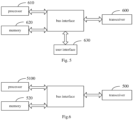
- an embodiment of the present disclosure provides a terminal, including: a processor 510; and a memory 520 connected to the processor 510 via a bus interface, the memory 520 is used to store programs and data used by the processor 510 when performing operations, and the processor 510 calls and executes the programs and data stored in the memory 520.
- the transceiver 500 is connected to the bus interface, and is used to receive and send data under the control of the processor 510; the processor 510 is used to read the program in the memory 520 and perform the following processes: when sending multiple Quality of Service (QoS) flows of a target service to at least one network device, reducing a QoS guarantee level of a target QoS flow, or stopping a transmission of the target QoS flow; where the target QoS flow is one or more of the multiple QoS flows of the target service.
- QoS Quality of Service
- the processor is further configured to read the program in the memory to perform: storing an untransmitted QoS flow of the target service, and sending the untransmitted QoS flow to the network device actively or according to a scheduling of a network side.
- processor 510 is further configured to read the program in the memory 520 to perform one of:
- the processor 510 is further configured to read the program in the memory 520 to perform: marking a priority of the untransmitted QoS flow as lower than a priority of a subsequently arriving QoS flow.
- the target QoS flow includes at least one QoS flow and/or at least one QoS flow group, and each of the QoS flow group includes at least one of the multiple QoS flows of the target service.
- the QoS flows are grouped according to at least one of the following methods:
- the processor 510 is further configured to read the program in the memory 520 to perform:
- the processor 510 is further configured to read the program in the memory 520 to perform: receiving first indication information sent by the at least one network device; where the first indication information is configured to indicate reducing the QoS guarantee level of the target QoS flow, or stopping the transmission of the target QoS flow.
- the processor 510 is further configured to read the program in the memory 520 to perform: receiving second indication information sent by the at least one network device; where the second indication information is configured to indicate restoring the transmission of the target QoS flow, or restoring the QoS guarantee level of a target QoS flow group.
- the processor 510 is further configured to read the program in the memory 520 to perform:
- the uplink transmission configuration information further includes: multiple sets of QoS transmission parameters corresponding to the QoS flows, where priorities of different sets of QoS transmission parameters are the same or different.
- the processor 510 is further configured to read the program in the memory 520 to perform:
- the processor 510 is further configured to read the program in the memory 520 to perform: carrying a group identifier of each QoS flow according to at least one of the following methods:
- the bus architecture may include any number of interconnected buses and bridges, specifically one or more processors represented by processor 510 and various circuits of memory represented by memory 520 are linked together.
- the bus architecture can also link various other circuits such as peripherals, voltage regulators, and power management circuits together, which are all well known in the art, so they are not further described herein.
- the bus interface provides an interface.
- the transceiver 500 can be a plurality of components, namely, a transmitter and a receiver, providing a unit for communicating with various other devices on a transmission medium, and these transmission media include transmission media such as wireless channels, wired channels, and optical cables.
- the user interface 530 can also be an interface that can be connected to external and internal devices, and the connected devices include but are not limited to keypads, displays, speakers, microphones, joysticks, etc.
- the processor 510 is responsible for managing the bus architecture and general processing, and the memory 520 can store data used by the processor 510 when performing operations.
- the processor 510 may be a central processing unit (CPU), an application specific integrated circuit (ASIC), a field programmable gate array (FPGA) or a complex programmable logic device (CPLD), and the processor may also adopt a multi-core architecture.
- CPU central processing unit
- ASIC application specific integrated circuit
- FPGA field programmable gate array
- CPLD complex programmable logic device
- the processor is configured to execute any of the methods provided by the embodiments of the present disclosure according to the obtained executable instructions by calling the computer program stored in the memory.
- the processor and memory can also be physically separated.
- an embodiment of the present disclosure provides a network device, including: a processor 610; and a memory 620 connected to the processor 610 through a bus interface, the memory 620 is used to store programs and data used by the processor 610 when performing operations, and the processor 610 calls and executes the programs and data stored in the memory 620.
- the transceiver 600 is connected to the bus interface and is used to receive and send data under the control of the processor 610; the processor 610 is used to read the program in the memory 620 and execute the following process: receiving multiple QoS flows of a target service sent by at least one terminal; where a QoS guarantee level of a target QoS flow of the target service is reduced or a transmission of the target QoS flow is stopped, and the target QoS flow is one or more of the multiple QoS flows of the target service.
- the processor 610 is configured to read the program in the memory 620 to perform: receiving an untransmitted QoS flow of the target service sent by the at least one terminal.
- the target QoS flow includes at least one QoS flow and/or at least one QoS flow group, and each of the QoS flow group includes at least one of the multiple QoS flows of the target service.
- the QoS flows are grouped according to at least one of the following methods:
- the processor 610 is configured to read the program in the memory 620 to perform:
- the processor 610 is configured to read the program in the memory 620 to perform:
- the processor 610 is configured to read the program in the memory 620 to perform: sending second indication information to the at least one terminal; where the second indication information is configured to indicate restoring the transmission of the target QoS flow, or increasing the QoS guarantee level of a target QoS flow group.
- the processor 610 is configured to read the program in the memory 620 to perform:
- the uplink transmission configuration information further includes: multiple sets of QoS transmission parameters corresponding to the QoS flows, where priorities of different sets of QoS transmission parameters are the same or different.
- the processor 610 is configured to read the program in the memory 620 to perform: obtaining a group identifier of each QoS flow according to at least one of the following methods:
- the bus architecture can include any number of interconnected buses and bridges, specifically one or more processors represented by processor 610 and various circuits of memory represented by memory 620 are linked together.
- the bus architecture can also link various other circuits such as peripherals, voltage regulators, and power management circuits together, which are all well known in the art, so they are not further described herein.
- the bus interface provides an interface.
- the transceiver 600 can be a plurality of components, that is, including a transmitter and a receiver, providing a unit for communicating with various other devices on a transmission medium, and these transmission media include transmission media such as wireless channels, wired channels, and optical cables.
- the processor 610 is responsible for managing the bus architecture and general processing, and the memory 620 can store data used by the processor 610 when performing operations.
- the processor 610 may be a central processing unit (CPU), an application specific integrated circuit (ASIC), a field programmable gate array (FPGA) or a complex programmable logic device (CPLD).
- the processor may also adopt a multi-core architecture.
- the present disclosure also provides a processor-readable storage medium, where the processor-readable storage medium stores a computer program, and the computer program is used to enable the processor to execute the above-mentioned data transmission method on the terminal side or the network device side.
- the processor-readable storage device that can be accessed by the processor, including but not limited to magnetic storage (e.g., floppy disk, hard disk, magnetic tape, magneto-optical disk (MO), etc.), optical storage (e.g., compact disc (CD), digital video disc (DVD), Blu-ray Disc (BD), high-definition versatile disc (HVD), etc.), and semiconductor storage (e.g., read-only memory (ROM), electrically programmable read-only memory (EPROM), electrically erasable programmable read-only memory (EEPROM), non-volatile memory such as NAND FLASH, solid state drive (SSD), etc.).
- magnetic storage e.g., floppy disk, hard disk, magnetic tape, magneto-optical disk (MO), etc.
- optical storage e.g., compact disc (CD), digital video disc (DVD), Blu-ray Disc (BD), high-definition versatile disc (HVD), etc.
- semiconductor storage e.g., read-only memory (
- the embodiments of the present disclosure may be provided as methods, systems, or computer program products. Therefore, the present disclosure may take the form of a complete hardware embodiment, a complete software embodiment, or an embodiment combining software and hardware. Moreover, the present disclosure may take the form of a computer program product implemented on one or more computer-usable storage media (including but not limited to disk storage and optical storage, etc.) containing computer-usable program codes.
- processor-executable instructions may also be stored in a processor-readable memory that can direct a computer or other programmable data processing device to operate in a specific manner, so that the instructions stored in the processor-readable memory produce a product including an instruction device that implements the functions specified in one or more processes in the flowchart and/or one or more boxes in the block diagram.
- processor-executable instructions may also be loaded onto a computer or other programmable data processing device so that a series of operational steps are executed on the computer or other programmable device to produce a computer-implemented process, whereby the instructions executed on the computer or other programmable device provide steps for implementing the functions specified in one or more flows in the flowchart and/or one or more blocks in the block diagram.
- the division of the above modules is only a division of logical functions. In actual implementation, they can be fully or partially integrated into one physical entity, or they can be physically separated, and these modules can all be implemented in the form of software called by processing elements; they can also be all implemented in the form of hardware; some modules can also be implemented in the form of software called by processing elements, and some modules can be implemented in the form of hardware.
- the determination module can be a separately established processing element, or it can be integrated in a chip of the above-mentioned device for implementation. In addition, it can also be stored in the memory of the above-mentioned device in the form of program code, and called and executed by a processing element of the above-mentioned device.
- each step of the above method or each module above can be completed by an integrated logic circuit of hardware in the processor element or instructions in the form of software.
- each module, unit, sub-unit or sub-module may be one or more integrated circuits configured to implement the above method, such as one or more application specific integrated circuits (ASIC), or one or more digital signal processors (DSP), or one or more field programmable gate arrays (FPGA).
- ASIC application specific integrated circuits
- DSP digital signal processors
- FPGA field programmable gate arrays
- the processing element may be a general-purpose processor, such as a central processing unit (CPU) or other processor that can call program code.
- CPU central processing unit
- these modules may be integrated together and implemented in the form of a system-on-a-chip (SOC).
- SOC system-on-a-chip
Landscapes
- Engineering & Computer Science (AREA)
- Computer Networks & Wireless Communication (AREA)
- Signal Processing (AREA)
- Mobile Radio Communication Systems (AREA)
Applications Claiming Priority (2)
| Application Number | Priority Date | Filing Date | Title |
|---|---|---|---|
| CN202111666097.6A CN116419314A (zh) | 2021-12-31 | 2021-12-31 | 一种数据传输方法、装置、终端及网络设备 |
| PCT/CN2022/135907 WO2023124751A1 (zh) | 2021-12-31 | 2022-12-01 | 一种数据传输方法、装置、终端及网络设备 |
Publications (2)
| Publication Number | Publication Date |
|---|---|
| EP4460077A1 true EP4460077A1 (de) | 2024-11-06 |
| EP4460077A4 EP4460077A4 (de) | 2025-04-02 |
Family
ID=86997609
Family Applications (1)
| Application Number | Title | Priority Date | Filing Date |
|---|---|---|---|
| EP22914006.6A Pending EP4460077A4 (de) | 2021-12-31 | 2022-12-01 | Datenübertragungsverfahren und -vorrichtung, endgerät und netzwerkvorrichtung |
Country Status (4)
| Country | Link |
|---|---|
| US (1) | US20250039732A1 (de) |
| EP (1) | EP4460077A4 (de) |
| CN (1) | CN116419314A (de) |
| WO (1) | WO2023124751A1 (de) |
Families Citing this family (3)
| Publication number | Priority date | Publication date | Assignee | Title |
|---|---|---|---|---|
| CN119946732A (zh) * | 2023-11-03 | 2025-05-06 | 华为技术有限公司 | 一种通信方法及装置 |
| CN120224216A (zh) * | 2023-12-27 | 2025-06-27 | 华为技术有限公司 | 通信方法、装置及系统 |
| CN121692438A (zh) * | 2024-09-14 | 2026-03-17 | 大唐移动通信设备有限公司 | 传输控制方法、装置、终端及接入网设备 |
Family Cites Families (6)
| Publication number | Priority date | Publication date | Assignee | Title |
|---|---|---|---|---|
| US11140572B2 (en) * | 2017-03-22 | 2021-10-05 | Lg Electronics Inc. | Method for transmitting UL packet based on quality of service (QoS) framework in wireless communication system and a device therefor |
| CN108924872B (zh) * | 2017-04-13 | 2022-03-18 | 中兴通讯股份有限公司 | 数据传输方法、终端和核心网设备 |
| GB201715920D0 (en) * | 2017-09-29 | 2017-11-15 | Nec Corp | Communication system |
| CN109996285B (zh) * | 2017-12-29 | 2022-09-06 | 中国移动通信集团四川有限公司 | 网络拥塞控制方法、装置、设备及介质 |
| CN111436081B (zh) * | 2019-03-06 | 2023-06-30 | 维沃移动通信有限公司 | 数据传送的保障方法及通信设备 |
| CN112105053B (zh) * | 2019-06-17 | 2022-04-22 | 华为技术有限公司 | 一种拥塞控制方法及装置 |
-
2021
- 2021-12-31 CN CN202111666097.6A patent/CN116419314A/zh active Pending
-
2022
- 2022-12-01 WO PCT/CN2022/135907 patent/WO2023124751A1/zh not_active Ceased
- 2022-12-01 EP EP22914006.6A patent/EP4460077A4/de active Pending
- 2022-12-01 US US18/717,082 patent/US20250039732A1/en active Pending
Also Published As
| Publication number | Publication date |
|---|---|
| US20250039732A1 (en) | 2025-01-30 |
| EP4460077A4 (de) | 2025-04-02 |
| CN116419314A (zh) | 2023-07-11 |
| WO2023124751A1 (zh) | 2023-07-06 |
Similar Documents
| Publication | Publication Date | Title |
|---|---|---|
| US20240236765A1 (en) | Communication method and apparatus | |
| EP4460077A1 (de) | Datenübertragungsverfahren und -vorrichtung, endgerät und netzwerkvorrichtung | |
| US20230354334A1 (en) | Communication method and apparatus | |
| US20240250794A1 (en) | Method and apparatus for configuring parameter, electronic device, and storage medium | |
| US20240305574A1 (en) | Quality of service qos management method and apparatus | |
| US20260012946A1 (en) | Downlink transmission method and communication apparatus | |
| EP4311198A1 (de) | Kommunikationsverarbeitungsverfahren zur datenübertragung und zugehörige vorrichtung | |
| WO2022056863A1 (zh) | 一种切换方法及装置 | |
| WO2023185769A1 (zh) | 通信方法、通信装置和通信系统 | |
| CN114007087B (zh) | 一种媒体流切换方法及装置 | |
| CN119095103A (zh) | 通信方法和通信装置 | |
| CN111132223A (zh) | 一种数据包的传输方法和通信设备 | |
| EP4460078A1 (de) | Datenübertragungsverfahren und -vorrichtung sowie endgerät und netzwerkvorrichtung | |
| EP4694305A1 (de) | Informationsverarbeitungsverfahren, informationsübertragungsverfahren, vorrichtung, endgerät und netzwerkvorrichtung | |
| EP4560953A1 (de) | Verfahren und vorrichtung zum senden eines pdu-satzes und kommunikationsknoten | |
| CN114271007B (zh) | 有线策略控制器和无线策略控制器之间的协调 | |
| US11064503B2 (en) | Method and apparatus for transmitting control information | |
| EP4645988A1 (de) | Informationsverarbeitungsverfahren und -vorrichtung, übertragungsverfahren und -vorrichtung, endgerät und netzwerkseitige vorrichtung | |
| CN114390699A (zh) | 状态参量处理方法及装置、网络设备 | |
| EP4664984A1 (de) | Pdu-ablösungsverfahren und -vorrichtung | |
| WO2023245649A1 (en) | Method and apparatus of supporting delay budget handling | |
| CN121692438A (zh) | 传输控制方法、装置、终端及接入网设备 | |
| WO2024027335A1 (zh) | 一种信息传输方法、装置及通信设备 | |
| WO2025113280A1 (zh) | 一种通信方法及装置 | |
| CN121692276A (zh) | 业务数据传输方法、装置、终端及接入网设备 |
Legal Events
| Date | Code | Title | Description |
|---|---|---|---|
| STAA | Information on the status of an ep patent application or granted ep patent |
Free format text: STATUS: THE INTERNATIONAL PUBLICATION HAS BEEN MADE |
|
| PUAI | Public reference made under article 153(3) epc to a published international application that has entered the european phase |
Free format text: ORIGINAL CODE: 0009012 |
|
| STAA | Information on the status of an ep patent application or granted ep patent |
Free format text: STATUS: REQUEST FOR EXAMINATION WAS MADE |
|
| 17P | Request for examination filed |
Effective date: 20240606 |
|
| AK | Designated contracting states |
Kind code of ref document: A1 Designated state(s): AL AT BE BG CH CY CZ DE DK EE ES FI FR GB GR HR HU IE IS IT LI LT LU LV MC ME MK MT NL NO PL PT RO RS SE SI SK SM TR |
|
| A4 | Supplementary search report drawn up and despatched |
Effective date: 20250303 |
|
| RIC1 | Information provided on ipc code assigned before grant |
Ipc: H04L 47/24 20220101ALI20250225BHEP Ipc: H04W 76/30 20180101ALI20250225BHEP Ipc: H04W 28/02 20090101AFI20250225BHEP |
|
| DAV | Request for validation of the european patent (deleted) | ||
| DAX | Request for extension of the european patent (deleted) |