EP4460071A1 - Informationserfassungsverfahren und -vorrichtung sowie kommunikationsvorrichtung - Google Patents
Informationserfassungsverfahren und -vorrichtung sowie kommunikationsvorrichtung Download PDFInfo
- Publication number
- EP4460071A1 EP4460071A1 EP22914931.5A EP22914931A EP4460071A1 EP 4460071 A1 EP4460071 A1 EP 4460071A1 EP 22914931 A EP22914931 A EP 22914931A EP 4460071 A1 EP4460071 A1 EP 4460071A1
- Authority
- EP
- European Patent Office
- Prior art keywords
- reference point
- information
- model
- communication device
- target
- Prior art date
- Legal status (The legal status is an assumption and is not a legal conclusion. Google has not performed a legal analysis and makes no representation as to the accuracy of the status listed.)
- Pending
Links
Images



Classifications
-
- H—ELECTRICITY
- H04—ELECTRIC COMMUNICATION TECHNIQUE
- H04L—TRANSMISSION OF DIGITAL INFORMATION, e.g. TELEGRAPHIC COMMUNICATION
- H04L5/00—Arrangements affording multiple use of the transmission path
- H04L5/003—Arrangements for allocating sub-channels of the transmission path
- H04L5/0053—Allocation of signalling, i.e. of overhead other than pilot signals
- H04L5/0055—Physical resource allocation for ACK/NACK
-
- G—PHYSICS
- G06—COMPUTING OR CALCULATING; COUNTING
- G06N—COMPUTING ARRANGEMENTS BASED ON SPECIFIC COMPUTATIONAL MODELS
- G06N20/00—Machine learning
-
- G—PHYSICS
- G06—COMPUTING OR CALCULATING; COUNTING
- G06N—COMPUTING ARRANGEMENTS BASED ON SPECIFIC COMPUTATIONAL MODELS
- G06N3/00—Computing arrangements based on biological models
- G06N3/02—Neural networks
- G06N3/08—Learning methods
-
- G—PHYSICS
- G06—COMPUTING OR CALCULATING; COUNTING
- G06N—COMPUTING ARRANGEMENTS BASED ON SPECIFIC COMPUTATIONAL MODELS
- G06N3/00—Computing arrangements based on biological models
- G06N3/02—Neural networks
- G06N3/08—Learning methods
- G06N3/082—Learning methods modifying the architecture, e.g. adding, deleting or silencing nodes or connections
-
- G—PHYSICS
- G06—COMPUTING OR CALCULATING; COUNTING
- G06N—COMPUTING ARRANGEMENTS BASED ON SPECIFIC COMPUTATIONAL MODELS
- G06N5/00—Computing arrangements using knowledge-based models
- G06N5/01—Dynamic search techniques; Heuristics; Dynamic trees; Branch-and-bound
-
- H—ELECTRICITY
- H04—ELECTRIC COMMUNICATION TECHNIQUE
- H04L—TRANSMISSION OF DIGITAL INFORMATION, e.g. TELEGRAPHIC COMMUNICATION
- H04L1/00—Arrangements for detecting or preventing errors in the information received
- H04L1/004—Arrangements for detecting or preventing errors in the information received by using forward error control
- H04L1/0072—Error control for data other than payload data, e.g. control data
- H04L1/0073—Special arrangements for feedback channel
-
- H—ELECTRICITY
- H04—ELECTRIC COMMUNICATION TECHNIQUE
- H04L—TRANSMISSION OF DIGITAL INFORMATION, e.g. TELEGRAPHIC COMMUNICATION
- H04L41/00—Arrangements for maintenance, administration or management of data switching networks, e.g. of packet switching networks
- H04L41/14—Network analysis or design
- H04L41/145—Network analysis or design involving simulating, designing, planning or modelling of a network
-
- H—ELECTRICITY
- H04—ELECTRIC COMMUNICATION TECHNIQUE
- H04L—TRANSMISSION OF DIGITAL INFORMATION, e.g. TELEGRAPHIC COMMUNICATION
- H04L41/00—Arrangements for maintenance, administration or management of data switching networks, e.g. of packet switching networks
- H04L41/16—Arrangements for maintenance, administration or management of data switching networks, e.g. of packet switching networks using machine learning or artificial intelligence
-
- H—ELECTRICITY
- H04—ELECTRIC COMMUNICATION TECHNIQUE
- H04W—WIRELESS COMMUNICATION NETWORKS
- H04W24/00—Supervisory, monitoring or testing arrangements
- H04W24/02—Arrangements for optimising operational condition
Definitions
- This application pertains to the field of communication technologies, and specifically relates to an information obtaining method and apparatus, and a communication device.
- AI Artificial Intelligence
- a wireless communication system an AI model needs to be run on a terminal.
- a wireless environment changes, a service to be performed changes, and so on
- the AI model used on the terminal further needs a change and evolution.
- the terminal needs to obtain a new model from a network side device.
- the AI model when a model is requested and delivered, the AI model needs different inputs and outputs for different tasks, and therefore a lot of information needs to be used to describe physical quantities corresponding to the inputs and outputs of the model, causing high communication overheads during model interaction.
- Embodiments of this application provide an information obtaining method and apparatus, and a communication device, to resolve a problem that communication overheads of an existing communication device are high during model interaction.
- an information obtaining method includes: obtaining, by a first communication device, description information of a set of target reference points, where a reference point in the set of target reference points is a process node in a communication process, and the set of target reference points includes a reference point corresponding to an input of a first model and/or a reference point corresponding to an output of a second model.
- an information obtaining method includes: receiving, by a second communication device from a first communication device, description information of a set of target reference points, where a reference point in the set of target reference points is a process node in a communication process, and the set of target reference points includes a reference point corresponding to an input of a first model and/or a reference point corresponding to an output of a second model.
- an information obtaining apparatus includes: an obtaining module, configured to obtain description information of a set of target reference points, where a reference point in the set of target reference points is a process node in a communication process, and the set of target reference points includes a reference point corresponding to an input of a first model and/or a reference point corresponding to an output of a second model.
- an information obtaining apparatus includes: a receiving module, configured to receive description information of a set of target reference points from a first communication device, where a reference point in the set of target reference points is a process node in a communication process, and the set of target reference points includes a reference point corresponding to an input of a first model and/or a reference point corresponding to an output of a second model.
- a communication device includes a processor, a memory, and a program or an instruction that is stored in the memory and capable of being run on the processor.
- the program or the instruction is executed by the processor to implement steps of the information obtaining method according to the first aspect or the second aspect.
- a readable storage medium stores a program or an instruction, and the program or the instruction is executed by a processor to implement steps of the information obtaining method according to the first aspect or the second aspect.
- a chip includes a processor and a communication interface.
- the communication interface is coupled to the processor, and the processor is configured to run a program or an instruction of a network side device to implement steps of the information obtaining method according to the first aspect or the second aspect.
- the first communication device obtains the description information of the set of target reference points, where the reference point in the set of target reference points is the process node in the communication process, and the set of target reference points includes the reference point corresponding to the input of the first model and/or the reference point corresponding to the output of the second model.
- the input of the first model and/or the output of the second model each correspond to a reference point, so that the input of the first model and/or the output of the second model can separately be determined based on description information of reference points.
- the communication device can determine an input and output of a model based on description information of a reference point during model interaction, to reduce model interaction overheads.
- first, second, and the like in the description and claims of this application are used to distinguish between similar objects instead of describing a specific order or sequence. It should be understood that, data used in such a way is interchangeable in proper circumstances, so that embodiments of this application can be implemented in an order other than the order illustrated or described herein.
- Objects classified by “first” and “second” are usually of a same type, and a quantity of objects is not limited. For example, there may be one or more first objects.
- “and/or” represents at least one of connected objects, and a character “/” generally represents an "or” relationship between associated objects.
- transmission means signal transmission, and is not signal sending in a narrow sense.
- LTE Long Term Evolution
- LTE-A Long Term Evolution-Advanced
- CDMA code division multiple access
- Time Division Multiple Access Time Division Multiple Access
- FDMA frequency division multiple access
- OFDMA Orthogonal Frequency Division Multiple Access
- SC-FDMA single-carrier Frequency-Division Multiple Access
- system and “network” in embodiments of this application may be used interchangeably.
- the described technologies may be applied to both the systems and the radio technologies mentioned above as well as to other systems and radio technologies.
- NR New Radio
- the following describes a new radio (New Radio, NR) system for illustrative purposes, and NR terms are used in most of the following description.
- NR New Radio
- 6G 6th Generation
- FIG. 1 is a diagram of a structure of a wireless communication system to which embodiments of this application may be applied.
- the wireless communication system includes a terminal 11 and a network side device 12.
- the terminal 11 may also be referred to as a terminal device or user equipment (User Equipment, UE).
- UE User Equipment
- the terminal 11 may be a terminal side device, for example, a mobile phone, a tablet personal computer (Tablet Personal Computer, TPC), a laptop computer (Laptop Computer, LC) or notebook computer, a personal digital assistant (Personal Digital Assistant, PDA), a palmtop computer, a netbook, an ultra-mobile personal computer (ultra-mobile personal computer, UMPC), a mobile internet device (Mobile Internet Device, MID), a wearable device (Wearable Device, WD), vehicle user equipment (Vehicle User Equipment, VUE), or pedestrian user equipment (Pedestrian User Equipment, PUE).
- the wearable device includes a bracelet, a headset, glasses, and the like. It should be noted that a specific type of the terminal 11 is not limited in embodiments of this application.
- the network side device 12 may be a base station or a core network.
- the base station may be referred to as a NodeB, an evolved NodeB, an access point, a base transceiver station (Base Transceiver Station, BTS), a radio base station, a radio transceiver, a basic service set (Basic Service Set, BSS), an extended service set (Extended Service Set, ESS), an evolved NodeB (eNB), a home NodeB, a home evolved NodeB, a wireless local area network (Wireless Local Area Network, WLAN) access point, a wireless fidelity (Wireless Fidelity, Wi-Fi) node, a transmission and reception point (Transmission and Reception Point, TRP), or another suitable term in the field.
- the base station is not limited to a specific technical term, provided that same technical effect is achieved. It should be noted that in embodiments of this application, only a base station in an NR system is used as an example, but a specific type of the base station
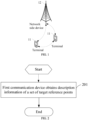
- FIG. 2 is a flowchart of an information obtaining method according to an embodiment of this application.
- the information obtaining method includes the following steps.
- Step 201 obtaining, by a first communication device, description information of a set of target reference points, where a reference point in the set of target reference points is a process node in a communication process, and the set of target reference points includes a reference point corresponding to an input of a first model and a reference point corresponding to an output of a second model.
- the first communication device may be any device in a communication system.
- the description information of the set of target reference points may be sent by another communication device other than the first communication device in the communication system, or determined through pre-configuration, for example, determined according to protocol specifications.
- the set of target reference points may be obtained by the first communication device performing reference point configuration on an existing set of first reference points.
- the set of target reference points may be a set obtained through reference point configuration on the set of first reference points, or the set of target reference points includes a reference point, in the set of first reference points, that has been through a change because of reference point configuration, that is, the set of target reference points is a subset of the set obtained through reference point configuration on the set of first reference points.
- the set of target reference points may be a set obtained through reference point configuration on the set of first reference points, or the set of target reference points is a subset of a set obtained through reference point configuration on the set of first reference points.
- the first model and the second model may be a same model or different models. This is not limited herein.
- the set of target reference points may include the reference point corresponding to the input of the first model, may include the reference point corresponding to the output of the second model, or may include both the reference point corresponding to the input of the first model and the reference point corresponding to the output of the second model.
- the set of target reference points includes one or more reference points.
- the reference point is a process node in a communication process.
- the communication process may include an information processing process, an event process, and a signaling process.
- the first model and the second model may both be AI models.
- the first communication device obtains the description information of the set of target reference points, where the reference point in the set of target reference points is the process node in the communication process, and the set of target reference points includes the reference point corresponding to the input of the first model and/or the reference point corresponding to the output of the second model.
- the input of the first model and/or the output of the second model each correspond to a reference point, so that the input of the first model and/or the output of the second model can separately be determined based on description information of reference points.
- the communication device can determine an input and output of a model based on description information of a reference point during model interaction, to reduce model interaction overheads.
- Each reference point in the set of target reference points corresponds to one piece of description information, and the description information of the reference point includes at least one of the following:
- the set of target reference points is obtained by the first communication device performing reference point configuration on a pre-obtained set of first reference points, and reference point configuration includes at least one of the following:
- a first reference point needs to be added to the set of first reference points, and the new process corresponds to the first reference point; and/or in a case in which a new reference point is needed in a new model, a first reference point needs to be added to the set of first reference points, and the new model corresponds to the first reference point.
- the adding a first reference point to the set of first reference points includes: configuring an association relationship between the first reference point and a reference point in the set of first reference points, and modifying the association relationship between original reference points (that is, reference points, in the set of first reference points, that are not the first reference point) in the set of first reference points.
- the communication system may include a plurality of devices, for example, a terminal and a network side device, and one device is determined from the plurality of devices as a reference point maintenance device, a remaining device is a reference point application device.
- the first communication device may be a reference point maintenance device, or may be a reference point application device. Preferably, only one reference point maintenance device is set in the communication system.
- the step of adding a first reference point may be performed by the reference point maintenance device, or may be performed by the reference point application device, and is preferably performed by the reference point maintenance device.
- the second triggering condition includes at least one of the following:
- the second reference point does not correspond to an input or output of any model within a preset time period; and a function of the second reference point is replaced with a new reference point, where for example, a new reference point is added to the set of first reference points, and the function of the second reference point is replaced with the new reference point.
- the preset time period may be set based on an actual case. This is not limited here.
- the deleting a second reference point from the set of first reference points includes: modifying an association relationship between reference points, in the set of first reference points, that are not the second reference point.
- the step of deleting a second reference point may be performed by the reference point maintenance device, or may be performed by the reference point application device, and is preferably performed by the reference point maintenance device.
- Modifying an association relationship between reference points in the set of first reference points Specifically, the first communication device modifies the association relationship between the reference points in the set of first reference points based on a third triggering condition.
- the third triggering condition includes at least one of the following:
- a new process is added, where the new process corresponds to the first reference point, or the new process corresponds to a reference point in the set of first reference points;
- the modifying an association relationship between reference points in the set of first reference points includes at least one of the following:
- the association relationship between the reference points in the set of first reference points may be modified by the reference point maintenance device, or may be modified by the reference point application device, and is preferably modified by the reference point maintenance device.
- the first communication device may perform reference point configuration through triggering based on trigger information
- the trigger information includes at least one of the following:
- the second communication device may be a reference point maintenance device (in this case, the first communication device is a reference point application device), or may be a reference point application device.
- the trigger information may be sent by the reference point application device to the reference point maintenance device, or may be obtained by the reference point maintenance device through sensing.
- the trigger information may alternatively be carried in a control instruction sent from a higher-level control device.
- the trigger information includes at least one of the following:
- the method further includes: sending the description information of the set of target reference points to the second communication device, where the set of target reference points includes a set obtained through reference point configuration on the set of first reference points, or a subset of reference points of a set obtained through reference point configuration on the set of first reference points, and the subset of reference points includes a reference point, in the set of first reference points, that has been through a change based on reference point configuration, where for example, if the set of first reference points includes a reference point A, a reference point B, and a reference point C, a reference point D is added based on reference point configuration, and there is an association relationship between the reference point D and the reference point A, the subset of reference points may include only the reference point A and the reference point D.
- That the first communication device sends the description information of the set of target reference points to the second communication device may be understood as a reference point alignment operation between the first communication device and the second communication device.
- a new set of reference points may be sent by the reference point maintenance device to the reference point application device incrementally (sending only a changed part of the updated set of first reference points) or fully (sending the entire updated set of first reference points). Further, the reference point application device feeds back an update result to the reference point maintenance device.
- a manner of sending the set of target reference points includes at least one of periodical sending, sending triggered based on an event, and sending triggered based on an instruction.
- the sending triggered based on an event may include the following two cases.
- the first communication device performs reference point configuration on the set of first reference points.
- the first communication device is the reference point maintenance device, and the reference point maintenance device performs reference point configuration to obtain the updated set of first reference points, including adding a new reference point, deleting a reference point, updating an association relationship between reference points, or the like, and determines the set of target reference points based on the updated set of first reference points.
- the updated set of first reference points is used as the set of target reference points, or a reference point that has been through a change in the updated set of first reference points is used as the set of target reference points, and the reference point maintenance device sends the set of target reference points to the reference point application device.
- an alignment request is initiated.
- the alignment request is used for reference point alignment between the communication devices.
- the reference point mismatching means a set of reference points of a model sending end is different from a set of reference points of a model receiving end.
- the model sending end and the model receiving end may be two reference point application devices.
- the triggering with an event during model interaction includes the following two cases.
- Reference points needs to be aligned for all or some communication devices in a communication system when a new reference point is added, a reference point is deleted, or an association between reference points is modified (reference points may not be aligned for some communication devices as the communication devices do not need to use an updated reference point).
- there may be another periodic trigger an event-based trigger (for example, when reference point mismatching occurs in model interaction, an alignment request is initiated), or an instruction-based trigger, and the following two manners are included.
- the first communication device may be a model sending end, or may be a model receiving end.
- the method further includes:
- the first communication device obtains a model according to the first request.
- the first communication device is an end that requests for the model, or may be understood as an end that requires the model.
- the second communication device is an end that sends the model.
- the first request includes reference point information identifying a third reference point corresponding to an input of a model and reference point information identifying a fourth reference point corresponding to an output of the model.
- reference point information may be one or more items in description information of a reference point, provided that the reference point information can identify the reference point.
- the reference point information may be an identity symbol of the reference point.
- the second communication device searches, based on the reference point in the first request, for a model that matches the reference point, and feeds back the first feedback information to the first communication device.
- the first communication device receives the first feedback information.
- the first feedback information includes at least one of the following:
- the first feedback information may include at least one of the following: the first acknowledgment information (for example, that the first acknowledgment information is 1 indicates that the matched model is found), and the first target model that is found.
- the first feedback information may include at least one of the following: the second acknowledgment information (for example, that the acknowledgment information is 0 initiates that no matched model is found), and a request message for initiating reference point alignment.
- the first feedback information may include at least one of the following: the second acknowledgment information (for example, that the acknowledgment information is 0 initiates that no matched model is found), the reference point information of the reference point, in the third reference point, with mismatching, the reference point information of the reference point, in the fourth reference point, with mismatching, and the reference point information of the recommended reference point.
- the first communication device assesses the received recommended reference point, and sends feedback information about whether to accept the recommended reference point.
- the method further includes:
- the first communication device is an end that receives the request for the model, or may be understood as an end that sends the model; and the second communication device is an end that receives the model.
- the first communication device performs model matching based on the set of reference points of the first communication device and the reference point information of the reference points in the second request, and feeds back the second feedback information to the second communication device.
- the set of reference points of the first communication device includes the set of target reference points. The following two cases are included.
- the set of target reference points is a set obtained through reference point configuration based on the set of first reference points
- the set of target reference points is the set of reference points of the first communication device. For example, if the set of first reference points includes a reference point A, a reference point B, and a reference point C, and a reference point D is added based on reference point configuration, where there is an association relationship between the reference point D and the reference point A, the set of target reference points includes the reference point A, the reference point B, the reference point C, and the reference point D.
- the set of reference points of the first communication device is a set obtained by updating the set of first reference points based on the set of target reference points. For example, if the set of first reference points includes a reference point A, a reference point B, and a reference point C, and a reference point D is added based on reference point configuration, where there is an association relationship between the reference point D and the reference point A, the set of target reference points includes only the reference point A and the reference point D, and the set of reference points of the first communication device is the set obtained by updating the set of first reference points based on the set of target reference points. To be specific, the set of reference points of the first communication device includes the reference point A, the reference point B, the reference point C, and the reference point D.
- the second feedback information includes at least one of the following:
- the second feedback information may include at least one of the following: the first acknowledgment information (for example, that the first acknowledgment information is 1 indicates that the matched model is found), and the second target model that is found.
- the second feedback information may include at least one of the following: the second acknowledgment information (for example, that the acknowledgment information is 0 initiates that no matched model is found), and a request message for initiating reference point alignment.
- the first feedback information may include at least one of the following: the second acknowledgment information (for example, that the acknowledgment information is 0 initiates that no matched model is found), the reference point information of the reference point, in the fifth reference point, with mismatching, the reference point information of the reference point, in the sixth reference point, with mismatching, and the reference point information of the recommended reference point.
- the method further includes:
- a model is not sent according to a request, but is directly sent by the second communication device.
- the first communication device is an end that receives the model, that is, a model receiving end
- the second communication device is an end that sends the model, that is, a model sending end.
- the third feedback information includes at least one of the following:
- the method further includes:
- a model is not sent according to a request, but is directly sent by the first communication device.
- the second communication device is an end that receives the model, that is, a model receiving end
- the first communication device is an end that sends the model, that is, a model sending end.
- the fourth feedback information includes at least one of the following:
- FIG. 3 is a flowchart of an information obtaining method according to an embodiment of this application. As shown in FIG. 3 , the information obtaining method provided in this embodiment of this application includes the following steps.
- Step 301 receiving, by a second communication device from a first communication device, description information of a set of target reference points, where a reference point in the set of target reference points is a process node in a communication process, and the set of target reference points includes a reference point corresponding to an input of a first model and/or a reference point corresponding to an output of a second model.
- the second communication device may be any device in a communication system.
- the description information of the set of target reference points may be sent by the first communication device.
- the set of target reference points may be a set obtained through reference point configuration on the set of first reference points, or the set of target reference points includes a reference point, in the set of first reference points, that has been through a change because of reference point configuration, that is, the set of target reference points is a subset of the set obtained through reference point configuration on the set of first reference points.
- the first model and the second model may be a same model or different models. This is not limited herein.
- the set of target reference points may include the reference point corresponding to the input of the first model, may include the reference point corresponding to the output of the second model, or may include both the reference point corresponding to the input of the first model and the reference point corresponding to the output of the second model.
- the set of target reference points includes one or more reference points.
- the reference point is a process node in a communication process.
- the communication process may include an information processing process, an event process, and a signaling process.
- the second communication device receives the description information of the set of target reference points from the first communication device, where the reference point in the set of target reference points is the process node in the communication process, and the set of target reference points includes the reference point corresponding to the input of the first model and/or the reference point corresponding to the output of the second model.
- the input of the first model and/or the output of the second model each correspond to a reference point, so that the input of the first model and/or the output of the second model can separately be determined based on description information of reference points.
- the communication device can determine an input and output of a model based on description information of a reference point during model interaction, to reduce model interaction overheads.
- the description information of the set of target reference points includes description information of the reference point in the set of target reference points, and the description information of the reference point includes at least one of the following:
- the method further includes: sending, by the second communication device to the first communication device, trigger information.
- the trigger information includes at least one of the following:
- the set of reference points of the second communication device may be a set of reference points that already exists on the second communication device before the set of target reference points is received, where for example, the existing set of reference points may be the set of first reference points; or may be a set of reference points determined after the set of target reference points is received. If the set of reference points of the second communication device is the set obtained based on the set of target reference points, the following two cases are included.
- the set of target reference points is a set obtained through reference point configuration based on the set of first reference points
- the set of reference points of the second communication device is the set of target reference points.
- the set of first reference points includes a reference point A, a reference point B, and a reference point C
- a reference point D is added based on reference point configuration, where there is an association relationship between the reference point D and the reference point A
- the set of target reference points includes the reference point A, the reference point B, the reference point C, and the reference point D.
- the set of reference points of the second communication device is a set obtained by updating the set of first reference points based on the set of target reference points. For example, if the set of first reference points includes a reference point A, a reference point B, and a reference point C, and a reference point D is added based on reference point configuration, where there is an association relationship between the reference point D and the reference point A, the set of target reference points includes only the reference point A and the reference point D, and the set of reference points of the second communication device is the set obtained by updating the set of first reference points based on the set of target reference points.
- the second communication device may be a model sending end, or may be a model receiving end.
- the method further includes:
- the first communication device obtains a model according to the first request.
- the first communication device is an end that requests for the model, or may be understood as an end that requires the model.
- the second communication device is an end that sends the model.
- the first request includes the third reference point corresponding to the input of the model and the fourth reference point corresponding to the output of the model.
- the second communication device searches, based on the reference point in the first request, for a model that matches the reference point, and feeds back the first feedback information to the first communication device.
- the first communication device receives the first feedback information.
- the first feedback information includes at least one of the following:
- the first feedback information may include at least one of the following: the first acknowledgment information (for example, that the first acknowledgment information is 1 indicates that the matched model is found), and the first target model that is found.
- the first feedback information may include at least one of the following: the second acknowledgment information (for example, that the acknowledgment information is 0 initiates that no matched model is found), and a request message for initiating reference point alignment.
- the first feedback information may include at least one of the following: the second acknowledgment information (for example, that the acknowledgment information is 0 initiates that no matched model is found), the reference point information of the reference point, in the third reference point, with mismatching, the reference point information of the reference point, in the fourth reference point, with mismatching, and the reference point information of the recommended reference point.
- the method further includes: receiving, by the second communication device, feedback information about whether the first communication device accepts the recommended reference point.
- the method further includes:
- the first communication device is an end that receives the request for the model, or may be understood as an end that sends the model; and the second communication device is an end that receives the model.
- the second feedback information includes at least one of the following:
- the method further includes:
- a model is not sent according to a request, but is directly sent by the second communication device.
- the third feedback information includes at least one of the following:
- the method further includes:
- a model is not sent according to a request, but is, for example, directly sent by the first communication device.
- the second communication device is an end that receives the model, that is, a model receiving end
- the first communication device is an end that sends the model, that is, a model sending end.
- the fourth feedback information includes at least one of the following:
- a baseband signal processing process the whole process is further classified by different functional units (or functions, units, or basic units) and includes at least one of the following: channel coding, modulation, resource mapping, multi-antenna precoding (multi-antenna precoding), fast Fourier transform (Fast Fourier Transform, FFT)/inverse fast Fourier transform (Inverse Fast Fourier Transform, IFFT), and the like.
- Baseband signal processing is implemented by at least one module, and an input or output location of each module may be defined as one reference point.
- a process node included in a physical layer process may be used as a reference point.
- the physical layer process includes an initial cell search process, a random access procedure, a beam management process, and the like.
- a start point or an end point in each process may be used as one reference point.
- a subdivided process in each process may further generate a reference point. For example, in a contention-based random access procedure, subdivision may be as follows: a random access preamble (random access preamble) transmission message 1 (Msg1), a random access response (Random Access Response, RAR) (Msg2), an uplink scheduling transmission (Msg3), and contention resolution (Msg4).
- Msg1 random access preamble
- RAR Random Access Response
- Msg3 uplink scheduling transmission
- Msg4 contention resolution
- a start point or an end point in another event or signaling process and an internal node in each process may be used as a reference point.
- a modulation functional unit is used an example.
- a modulation module 10 may be a structure that can be divided into three modules in serial.
- a module 411 is configured to select a constellation diagram pattern (pattern)
- a module 42 is configured to select a constellation point (to be specific, select, based on input data, a specific constellation point from a selected constellation diagram pattern)
- a module 43 is configured for amplitude processing and phase processing for the constellation point.
- a sound circle represents an original reference point
- a square represents a new reference point
- a reference point needs to be deleted.
- a layer mapping output location needs to be defined as a reference point, and the reference point is used as an input for precoding.
- the foregoing two functions may be implemented with one step in the future, and a signal is mapped to a plurality of antennas. In this case, the original reference point corresponding to the layer mapping output location needs to be deleted.
- an A-end sends a request for a model.
- the A-end is the first communication device, and a B-end is the second communication device.
- the A-end is the second communication device, and the B-end is the first communication device.
- the model update process includes the following steps.
- Step 401 The A-end sends a first request, where the first request includes a third reference point corresponding to an input of a model and a fourth reference point corresponding to an output of the model.
- Step 402 The B-end receives the first request, and performs model matching based on the third reference point and the fourth reference point that are carried in the first request.
- Step 403 If the B-end matches the model of which the input corresponds to the third reference point and the output corresponds to the fourth reference point, step 405a is performed; or if the B-end does not match the model, step 404 is performed.
- Step 404 Whether reference points of the A-end and the B-end are misaligned is determined, and if the reference points are misaligned, step 405b is performed; or if the reference points are aligned, step 405c is performed.
- Step 405a The B-end sends first feedback information, where the first feedback information includes first acknowledgment information and the matched model, and step 406a is performed.
- Step 406a The A-end uses the model sent by the B-end.
- Step 405b The B-end sends first feedback information, where the first feedback information includes a reference point alignment request, and step 406b is performed.
- Step 406b The A-end performs reference point alignment.
- Step 405c The B-end sends first feedback information, where the first feedback information includes second acknowledgment information, reference point information of a reference point, in the reference points in the first request, with mismatching, and reference point information of a recommended reference point, and step 406c is performed.
- Step 406c The A-end verifies whether the recommended reference point matches a local reference point, and step 407 is performed.
- Step 407 The A-end sends information about whether to accept the recommended reference point.
- a B-end in a model update process based on a reference point, directly sends a stored model.
- the B-end does not need to send the model according to a request for the model.
- An A-end is the first communication device, and the B-end is the second communication device.
- the A-end is the second communication device, and the B-end is the first communication device.
- the model update process includes the following steps.
- Step 401' The B-end sends first model information.
- Step 402' The A-end performs reference point matching based on a reference point in the first model information, and if the reference point is matched, step 403a is performed; or if the reference point is not matched, step 403b is performed.
- Step 403a' The A-end sends third feedback information to the B-end, where the third feedback information includes first acknowledgment information.
- Step 403b' The A-end sends third feedback information to the B-end, where the third feedback information includes at least one of second acknowledgment information, reference point information of a reference point, in the first model information, with mismatching, a reference point alignment request, and reference point information of a recommended reference point.
- a working location, an input, and an output of a model may be determined by using unified description information based on a reference point, to reduce overheads during model interaction and provide a basis for flexible system self-evolution.
- the information obtaining method may be performed by an information obtaining apparatus, or a control module that is in the information obtaining apparatus and that is configured to perform the information obtaining method.
- the information obtaining apparatus performs the information obtaining method is used as an example to describe the information obtaining apparatus provided in embodiments of this application.
- FIG. 5 is a diagram of a structure of an information obtaining apparatus according to an embodiment of this application.
- a first information obtaining apparatus 500 includes: a first obtaining module 501, configured to obtain description information of a set of target reference points, where a reference point in the set of target reference points is a process node in a communication process, and the set of target reference points includes a reference point corresponding to an input of a first model and/or a reference point corresponding to an output of a second model.
- the description information of the set of target reference points includes description information of the reference point in the set of target reference points, and the description information of the reference point includes at least one of the following:
- the set of target reference points is obtained by the first communication device performing reference point configuration on a pre-obtained set of first reference points, and reference point configuration includes at least one of the following:
- the first communication device adds a first reference point to the set of first reference points based on a first triggering condition.
- the first triggering condition includes at least one of the following:
- the adding a first reference point to the set of first reference points includes:
- the first communication device deletes a second reference point from the set of first reference points based on a second triggering condition.
- the second triggering condition includes at least one of the following:
- the second reference point does not correspond to an input or output of any model within a preset time period; and a function of the second reference point is replaced with a new reference point.
- the deleting a second reference point from the set of first reference points includes: modifying an association relationship between reference points, in the set of first reference points, that are not the second reference point.
- the first communication device modifies the association relationship between the reference points in the set of first reference points based on a third triggering condition.
- the third triggering condition includes at least one of the following:
- the modifying an association relationship between reference points in the set of first reference points includes at least one of the following:
- reference point configuration is performed through triggering based on trigger information, and the trigger information includes at least one of the following:
- the trigger information includes at least one of the following:
- the apparatus further includes: a first sending module, configured to send the description information of the set of target reference points to a second communication device, where the set of target reference points includes a set obtained through reference point configuration on the set of first reference points, or a subset of reference points of a set obtained through reference point configuration on the set of first reference points, and the subset of reference points includes a reference point, in the set of first reference points, that has been through a change based on reference point configuration.
- a first sending module configured to send the description information of the set of target reference points to a second communication device, where the set of target reference points includes a set obtained through reference point configuration on the set of first reference points, or a subset of reference points of a set obtained through reference point configuration on the set of first reference points, and the subset of reference points includes a reference point, in the set of first reference points, that has been through a change based on reference point configuration.
- a manner of sending the set of target reference points includes at least one of periodical sending, sending triggered based on an event, and sending triggered based on an instruction.
- the apparatus further includes:
- the first feedback information includes at least one of the following:
- the apparatus further includes: a second sending module, configured to: in a case in which the first feedback information includes the reference point information of the recommended reference point, send feedback information about whether to accept the recommended reference point.
- a second sending module configured to: in a case in which the first feedback information includes the reference point information of the recommended reference point, send feedback information about whether to accept the recommended reference point.
- the apparatus further includes:
- the second feedback information includes at least one of the following:
- the apparatus further includes:
- the third feedback information includes at least one of following:
- the apparatus further includes:
- the fourth feedback information includes at least one of the following:
- the first information obtaining apparatus 500 provided in this embodiment of this application can implement processes implemented in the method embodiment of FIG. 2 , and same technical effect is achieved. To avoid repetition, details are not described herein again.
- FIG. 6 is a diagram of a structure of an information obtaining apparatus according to an embodiment of this application.
- a second information obtaining apparatus 600 includes: a first receiving module 601, configured to receive description information of a set of target reference points from a first communication device, where a reference point in the set of target reference points is a process node in a communication process, and the set of target reference points includes a reference point corresponding to an input of a first model and/or a reference point corresponding to an output of a second model.
- the description information of the set of target reference points includes description information of the reference point in the set of target reference points, and the description information of the reference point includes at least one of the following:
- the apparatus further includes a first sending module, configured to send trigger information to the first communication device.
- the trigger information includes at least one of the following:
- the apparatus further includes:
- the first feedback information includes at least one of the following:
- the apparatus further includes: a second receiving module, configured to receive information about whether the first communication device accepts the recommended reference point.
- the apparatus further includes:
- the second feedback information includes at least one of the following:
- the apparatus further includes:
- the third feedback information includes at least one of following:
- the apparatus further includes:
- the fourth feedback information includes at least one of the following:
- the second information obtaining apparatus 600 provided in this embodiment of this application can implement processes implemented in the method embodiment of FIG. 3 , and same technical effect is achieved. To avoid repetition, details are not described herein again.
- an embodiment of this application further provides a communication device 70, including a processor 71, a memory 72, and a program or an instruction that is stored in the memory 72 and that can be run on the processor 71.
- a communication device 70 including a processor 71, a memory 72, and a program or an instruction that is stored in the memory 72 and that can be run on the processor 71.
- the communication device 70 is a terminal, and the program or the instruction is executed by the processor 71 to implement processes in the information obtaining method embodiment shown in FIG. 2 or FIG. 3 , and same technical effect can be achieved.
- the communication device 70 is a network side device, the program or the instruction is executed by the processor 71 to implement processes in the information obtaining method embodiment shown in FIG. 2 or FIG. 3 , and same technical effect can be achieved.
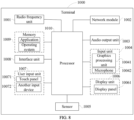
- FIG. 8 is a schematic diagram of a hardware structure of a terminal according to an embodiment of this application.
- a terminal 1000 includes but is not limited to components such as a radio frequency unit 1001, a network module 1002, an audio output unit 1003, an input unit 1004, a sensor 1005, a display unit 1006, a user input unit 1007, an interface unit 1008, a memory 1009, and a processor 1010.
- the terminal 1000 may further include a power supply (such as a battery) that supplies power to each component.
- the power supply may be logically connected to the processor 1010 by using a power supply management system, to implement functions such as charging and discharging management, and power consumption management by using the power supply management system.
- the structure of the terminal shown in FIG. 8 constitutes no limitation on the terminal.
- the terminal may include more or fewer components than those shown in the figure, combine some components, or have different component arrangements. Details are not described herein.
- the input unit 1004 may include a graphics processing unit (Graphics Processing Unit, GPU) 10041 and a microphone 10042.
- the graphics processing unit 10041 processes image data of a static picture or a video obtained by an image capture apparatus (for example, a camera) in a video capture mode or an image capture mode.
- the display unit 1006 may include a display panel 10061.
- the display panel 10061 may be configured in a form such as a liquid crystal display or an organic light-emitting diode.
- the user input unit 1007 includes a touch panel 10071 and another input device 10072.
- the touch panel 10071 is also referred to as a touchscreen.
- the touch panel 10071 may include two parts: a touch detection apparatus and a touch controller.
- the another input device 10072 may include but is not limited to a physical keyboard, a functional button (such as a volume control button or a power on/off button), a trackball, a mouse, and a joystick. Details are not described herein.
- the radio frequency unit 1001 after receiving downlink data from a network side device, the radio frequency unit 1001 sends the downlink data to the processor 1010 for processing, and sends uplink data to the base station.
- the radio frequency unit 1001 includes but is not limited to an antenna, at least one amplifier, a transceiver, a coupler, a low noise amplifier, a duplexer, and the like.
- the memory 1009 may be configured to store a software program or an instruction and various data.
- the memory 1009 may mainly include a program or instruction storage area and a data storage area.
- the program or instruction storage area may store an operating system, an application or an instruction required by at least one function (for example, a sound playing function or an image playing function), and the like.
- the memory 1009 may include a high-speed random access memory, and may further include a non-volatile memory.
- the non-volatile memory may be a read-only memory (Read-Only Memory, ROM), a programmable read-only memory (Programmable ROM, PROM), an erasable programmable read-only memory (Erasable PROM, EPROM), an electrically erasable programmable read-only memory (Electrically EPROM, EEPROM), or a flash memory, for example, at least one disk storage device, a flash memory device, or another non-volatile solid-state storage device.
- ROM Read-Only Memory
- PROM programmable read-only memory
- Erasable PROM Erasable PROM
- EPROM electrically erasable programmable read-only memory
- EEPROM electrically erasable programmable read-only memory
- flash memory for example, at least one disk storage device, a flash memory device, or another non-volatile solid-state storage device.
- the processor 1010 may include one or more processing units.
- an application processor and a modem processor may be integrated into the processor 1010.
- the application processor mainly processes an operating system, a user interface, an application, an instruction, or the like.
- the modem processor mainly processes wireless communication, for example, a baseband processor. It may be understood that the modem processor may alternatively not be integrated into the processor 1010.
- the processor 1010 is configured to obtain description information of a set of target reference points, where a reference point in the set of target reference points is a process node in a communication process, and the set of target reference points includes a reference point corresponding to an input of a first model and/or a reference point corresponding to an output of a second model.
- the description information of the set of target reference points includes description information of the reference point in the set of target reference points, and the description information of the reference point includes at least one of the following:
- the set of target reference points is obtained by the first communication device performing reference point configuration on a pre-obtained set of first reference points, and reference point configuration includes at least one of the following:
- the first communication device adds a first reference point to the set of first reference points based on a first triggering condition.
- the first triggering condition includes at least one of the following:
- a new process is added, where the new process corresponds to the first reference point; and a new model is added, where the new model corresponds to the first reference point.
- the adding a first reference point to the set of first reference points includes:
- the first communication device deletes a second reference point from the set of first reference points based on a second triggering condition.
- the second triggering condition includes at least one of the following:
- the second reference point does not correspond to an input or output of any model within a preset time period; and a function of the second reference point is replaced with a new reference point.
- the deleting a second reference point from the set of first reference points includes: modifying an association relationship between reference points, in the set of first reference points, that are not the second reference point.
- the first communication device modifies the association relationship between the reference points in the set of first reference points based on a third triggering condition.
- the third triggering condition includes at least one of the following:
- the modifying an association relationship between reference points in the set of first reference points includes at least one of the following:
- reference point configuration is performed through triggering based on trigger information, and the trigger information includes at least one of the following:
- the trigger information includes at least one of the following:
- the radio frequency unit 1001 is configured to send the description information of the set of target reference points to a second communication device, where the set of target reference points includes a set obtained through reference point configuration on the set of first reference points, or a subset of reference points of a set obtained through reference point configuration on the set of first reference points, and the subset of reference points includes a reference point, in the set of first reference points, that has been through a change based on reference point configuration.
- a manner of sending the set of target reference points includes at least one of periodical sending, sending triggered based on an event, and sending triggered based on an instruction.
- the radio frequency unit 1001 is further configured to: send a first request to the second communication device, where the first request includes reference point information identifying a third reference point corresponding to an input of a model and reference point information identifying a fourth reference point corresponding to an output of the model; and receive first feedback information sent by the second communication device.
- the first feedback information includes at least one of the following:
- the radio frequency unit 1001 is further configured to: in a case in which the first feedback information includes the reference point information of the recommended reference point, send information about whether to accept the recommended reference point.
- the radio frequency unit 1001 is further configured to receive a second request sent by the second communication device, where the second request includes reference point information identifying a fifth reference point corresponding to an input of a model and reference point information identifying a sixth reference point corresponding to an output of the model.
- the processor 1010 is configured to perform model matching based on a set of reference points of the first communication device according to the second request, to obtain second feedback information, where the set of reference points of the first communication device includes the set of target reference points.
- the radio frequency unit 1001 is further configured to send the second feedback information to the second communication device.
- the second feedback information includes at least one of the following:
- the radio frequency unit 1001 is further configured to receive first model information sent by the second communication device, where the first model information includes reference point information identifying a seventh reference point corresponding to an input of a model and reference point information identifying an eighth reference point corresponding to an output of the model.
- the processor 1010 is further configured to perform model matching based on the first model information and a set of reference points of the first communication device, to obtain third feedback information, where the set of reference points of the first communication device includes the set of target reference points.
- the radio frequency unit 1001 is further configured to send the third feedback information to the second communication device.
- the third feedback information includes at least one of following:
- the radio frequency unit 1001 is further configured to: send second model information, where the second model information includes reference point information identifying a ninth reference point corresponding to an input of a model and reference point information identifying a tenth reference point corresponding to an output of the model; and receive fourth feedback information.
- the fourth feedback information includes at least one of the following:
- the radio frequency unit module 1001 is configured to receive description information of a set of target reference points from the first communication device, where a reference point in the set of target reference points is a process node in a communication process, and the set of target reference points includes a reference point corresponding to an input of a first model and/or a reference point corresponding to an output of a second model.
- the description information of the set of target reference points includes description information of the reference point in the set of target reference points, and the description information of the reference point includes at least one of the following:
- the radio frequency unit 1001 is further configured to send trigger information to the first communication device.
- the trigger information includes at least one of the following:
- the radio frequency unit 1001 is further configured to receive a first request, where the first request includes reference point information identifying a third reference point corresponding to an input of a model and reference point information identifying a fourth reference point corresponding to an output of the model.
- the processor 1010 is configured to perform model matching based on a set of reference points of the second communication device according to the first request, to obtain first feedback information, where the set of reference points of the second communication device includes the set of target reference points.
- the radio frequency unit 1001 is further configured to send the first feedback information.
- the first feedback information includes at least one of the following:
- the radio frequency unit 1001 is further configured to receive information about whether the first communication device accepts the recommended reference point.
- the radio frequency unit 1001 is further configured to: send a second request to the first communication device, where the second request includes reference point information identifying a fifth reference point corresponding to an input of a model and reference point information identifying a sixth reference point corresponding to an output of the model; and receive second feedback information.
- the second feedback information includes at least one of the following:
- the radio frequency unit 1001 is further configured to: send first model information, where the first model information includes reference point information identifying a seventh reference point corresponding to an input of a model and reference point information identifying an eighth reference point corresponding to an output of the model; and receive third feedback information.
- the third feedback information includes at least one of following:
- the radio frequency unit 1001 is further configured to receive second model information, where the second model information includes reference point information identifying a ninth reference point corresponding to an input of a model and reference point information identifying a tenth reference point corresponding to an output of the model.
- the processor 1010 is configured to perform model matching based on the second model information and a set of reference points of the second communication device, to obtain fourth feedback information, where the set of reference points of the second communication device includes the set of target reference points.
- the radio frequency unit 1001 is further configured to send fourth feedback information.
- the fourth feedback information includes at least one of the following:
- the terminal 1000 provided in the foregoing embodiment can implement processes implemented in the method embodiment of FIG. 2 or FIG. 3 , and same technical effect can be achieved. To avoid repetition, details are not described herein again.
- a network device 900 includes an antenna 91, a radio frequency apparatus 92, and a baseband apparatus 93.
- the antenna 91 is connected to the radio frequency apparatus 92.
- the radio frequency apparatus 92 receives information through the antenna 91, and sends the received information to the baseband apparatus 93 for processing.
- the baseband apparatus 93 processes information that needs to be sent, and sends processed information to the radio frequency apparatus 92.
- the radio frequency apparatus 92 processes the received information, and then sends processed information through the antenna 91.
- a frequency band processing apparatus may be located in the baseband apparatus 93.
- the method performed by the network side device in the foregoing embodiment may be implemented in the baseband apparatus 93.
- the baseband apparatus 93 includes a processor 94 and a memory 95.
- the baseband apparatus 93 may include, for example, at least one baseband board, and a plurality of chips are disposed on the baseband board. As shown in FIG. 9 , one chip is, for example, the processor 94, and is connected to the memory 95, to invoke a program in the memory 95 to perform operations of the network device shown in the foregoing method embodiment.
- the baseband apparatus 93 may further include a network interface 96, configured to exchange information with the radio frequency apparatus 92.
- the interface is a common public radio interface (common public radio interface, CPRI for short).
- the network side device in this embodiment of the present invention further includes an instruction or a program that is stored in the memory 95 and that can be run on the processor 94.
- the processor 94 invokes the instruction or the program in the memory 95 to perform processes implemented in the method embodiment of FIG. 2 or FIG. 3 , and same technical effect can be achieved. To avoid repetition, details are not described herein again.
- An embodiment of this application further provides a readable storage medium.
- a program or an instruction is stored in the readable storage medium.
- the program or the instruction is executed by a processor, processes in the method embodiment of FIG. 2 or FIG. 3 can be implemented, and same technical effect can be achieved. To avoid repetition, details are not described herein.
- the processor is a processor in the terminal or the network side device in the foregoing embodiment.
- the readable storage medium includes a computer-readable storage medium, such as a computer read-only memory (Read-Only Memory, ROM), a random access memory (Random Access Memory, RAM), a magnetic disk, or an optical disc.
- An embodiment of this application further provides a chip.
- the chip includes a processor and a communication interface.
- the communication interface is coupled to the processor.
- the processor is configured to run a program or an instruction of a network side device to implement processes in the method embodiment of FIG. 2 or FIG. 3 , and same technical effect can be achieved. To avoid repetition, details are not described herein again.
- the chip mentioned in this embodiment of this application may also be referred to as a system-level chip, a system chip, a chip system, or a system on chip.
- the term "include”, “include”, or any other variant thereof is intended to cover a non-exclusive inclusion, so that a process, a method, an article, or an apparatus that includes a list of elements not only includes those elements but also includes other elements which are not expressly listed, or further includes elements inherent to this process, method, article, or apparatus.
- an element preceded by a statement "includes a " does not preclude the presence of additional identical elements in the process, method, article, or apparatus that includes the element.
- the method in the foregoing embodiment may be implemented by software in addition to a necessary universal hardware platform or by hardware only. In most circumstances, the former is a preferred implementation. Based on such an understanding, the technical solutions of this application essentially or the part contributing to the prior art may be implemented in a form of a software product.
- the computer software product is stored in a storage medium (such as a ROM/RAM, a magnetic disk, or an optical disc), and includes several instructions for instructing a terminal (which may be a mobile phone, a computer, a server, an air conditioner, a network, or the like) to perform the method described in embodiments of this application.
Landscapes
- Engineering & Computer Science (AREA)
- Signal Processing (AREA)
- Theoretical Computer Science (AREA)
- Computer Networks & Wireless Communication (AREA)
- Software Systems (AREA)
- Physics & Mathematics (AREA)
- Artificial Intelligence (AREA)
- Evolutionary Computation (AREA)
- Computing Systems (AREA)
- Mathematical Physics (AREA)
- General Physics & Mathematics (AREA)
- General Engineering & Computer Science (AREA)
- Data Mining & Analysis (AREA)
- Computational Linguistics (AREA)
- Health & Medical Sciences (AREA)
- Biophysics (AREA)
- General Health & Medical Sciences (AREA)
- Molecular Biology (AREA)
- Computer Vision & Pattern Recognition (AREA)
- Medical Informatics (AREA)
- Biomedical Technology (AREA)
- Life Sciences & Earth Sciences (AREA)
- Databases & Information Systems (AREA)
- Mobile Radio Communication Systems (AREA)
- Communication Control (AREA)
Applications Claiming Priority (2)
| Application Number | Priority Date | Filing Date | Title |
|---|---|---|---|
| CN202111666058.6A CN116419270A (zh) | 2021-12-31 | 2021-12-31 | 信息获取方法、装置及通信设备 |
| PCT/CN2022/142888 WO2023125679A1 (zh) | 2021-12-31 | 2022-12-28 | 信息获取方法、装置及通信设备 |
Publications (2)
| Publication Number | Publication Date |
|---|---|
| EP4460071A1 true EP4460071A1 (de) | 2024-11-06 |
| EP4460071A4 EP4460071A4 (de) | 2025-03-12 |
Family
ID=86998016
Family Applications (1)
| Application Number | Title | Priority Date | Filing Date |
|---|---|---|---|
| EP22914931.5A Pending EP4460071A4 (de) | 2021-12-31 | 2022-12-28 | Informationserfassungsverfahren und -vorrichtung sowie kommunikationsvorrichtung |
Country Status (4)
| Country | Link |
|---|---|
| US (1) | US20240396695A1 (de) |
| EP (1) | EP4460071A4 (de) |
| CN (1) | CN116419270A (de) |
| WO (1) | WO2023125679A1 (de) |
Families Citing this family (1)
| Publication number | Priority date | Publication date | Assignee | Title |
|---|---|---|---|---|
| US20250226938A1 (en) * | 2024-01-04 | 2025-07-10 | Qualcomm Incorporated | Quasi-model relation between machine-learning-based user equipment position estimation models |
Family Cites Families (7)
| Publication number | Priority date | Publication date | Assignee | Title |
|---|---|---|---|---|
| US11080616B2 (en) * | 2016-09-27 | 2021-08-03 | Clarifai, Inc. | Artificial intelligence model and data collection/development platform |
| WO2020139181A1 (en) * | 2018-12-28 | 2020-07-02 | Telefonaktiebolaget Lm Ericsson (Publ) | A wireless device, a network node and methods therein for updating a first instance of a machine learning model |
| WO2021054877A1 (en) * | 2019-09-19 | 2021-03-25 | Telefonaktiebolaget Lm Ericsson (Publ) | Predicting conditions on carrier frequencies in a communications network |
| CN111216738B (zh) * | 2020-02-19 | 2022-02-01 | 阿波罗智能技术(北京)有限公司 | 自动驾驶中车辆的控制方法、装置、电子设备及车辆 |
| GB2593756B (en) * | 2020-04-02 | 2022-03-30 | Graphcore Ltd | Control of data transfer between processing nodes |
| US20230115368A1 (en) * | 2020-04-23 | 2023-04-13 | Telefonaktiebolaget Lm Ericsson (Publ) | Improving Random Access Based on Artificial Intelligence / Machine Learning (AI/ML) |
| CN112015470B (zh) * | 2020-09-09 | 2022-02-01 | 平安科技(深圳)有限公司 | 模型部署方法、装置、设备及存储介质 |
-
2021
- 2021-12-31 CN CN202111666058.6A patent/CN116419270A/zh active Pending
-
2022
- 2022-12-28 EP EP22914931.5A patent/EP4460071A4/de active Pending
- 2022-12-28 WO PCT/CN2022/142888 patent/WO2023125679A1/zh not_active Ceased
-
2024
- 2024-07-01 US US18/760,556 patent/US20240396695A1/en active Pending
Also Published As
| Publication number | Publication date |
|---|---|
| EP4460071A4 (de) | 2025-03-12 |
| CN116419270A (zh) | 2023-07-11 |
| WO2023125679A1 (zh) | 2023-07-06 |
| US20240396695A1 (en) | 2024-11-28 |
Similar Documents
| Publication | Publication Date | Title |
|---|---|---|
| US12513590B2 (en) | Method for configuring and obtaining secondary cell group information, and communications device | |
| US20260032427A1 (en) | Capability reporting for multi-model artificial intelligence/machine learning user equipment features | |
| US20240188023A1 (en) | Sensing Assistance Method and Apparatus, Network Side Device, and Terminal | |
| US12592756B2 (en) | Measurement resource configuration method and apparatus and related device | |
| JP2023527056A (ja) | チャネル情報の処理方法及び装置 | |
| US20240172140A1 (en) | P-MPR Reporting Method and Terminal | |
| US20240396695A1 (en) | Information obtaining method and apparatus, and communication device | |
| US20240323714A1 (en) | Model configuration method and apparatus and communication device | |
| EP4277392B1 (de) | Gleichstrompositionsverarbeitungsverfahren, endgerät, netzwerkvorrichtung | |
| US20220279521A1 (en) | Secondary cell (scell) activation in a new radio (nr) system | |
| CN115333581B (zh) | 终端天线面板信息的传输方法、终端及网络侧设备 | |
| CN116980882A (zh) | 功率余量报告传输方法、装置、终端及网络侧设备 | |
| EP4429209A1 (de) | Verfahren zum senden von dns-nachrichten, endgerät und netzwerkseitige vorrichtung | |
| JP2024525034A (ja) | 空間関係指示方法及び機器 | |
| US12621793B2 (en) | Method for direct current location processing and related device | |
| US20240080721A1 (en) | Information processing method and apparatus, terminal, and network side device | |
| EP4712426A1 (de) | Modellverwaltungsverfahren und -vorrichtung sowie kommunikationsvorrichtung | |
| US20230111158A1 (en) | Method and apparatus for suspending secondary cell group | |
| US20260025698A1 (en) | Beam prediction method, apparatus, device, and storage medium | |
| US20230086511A1 (en) | Communication devices and methods for random access reporting | |
| CN121396404A (zh) | 模型使用方法、终端及网络侧设备 | |
| WO2025021059A1 (zh) | 信道信息上报方法、接收方法、终端、网络侧设备及介质 | |
| WO2025140124A1 (zh) | 信息上报方法、装置及相关产品 | |
| CN119496538A (zh) | 信道状态信息上报、接收方法、装置、设备及可读存储介质 | |
| WO2025108272A1 (zh) | 基于ai模型的推理方法、通信装置、通信设备及介质 |
Legal Events
| Date | Code | Title | Description |
|---|---|---|---|
| STAA | Information on the status of an ep patent application or granted ep patent |
Free format text: STATUS: THE INTERNATIONAL PUBLICATION HAS BEEN MADE |
|
| PUAI | Public reference made under article 153(3) epc to a published international application that has entered the european phase |
Free format text: ORIGINAL CODE: 0009012 |
|
| STAA | Information on the status of an ep patent application or granted ep patent |
Free format text: STATUS: REQUEST FOR EXAMINATION WAS MADE |
|
| 17P | Request for examination filed |
Effective date: 20240731 |
|
| AK | Designated contracting states |
Kind code of ref document: A1 Designated state(s): AL AT BE BG CH CY CZ DE DK EE ES FI FR GB GR HR HU IE IS IT LI LT LU LV MC ME MK MT NL NO PL PT RO RS SE SI SK SM TR |
|
| A4 | Supplementary search report drawn up and despatched |
Effective date: 20250211 |
|
| RIC1 | Information provided on ipc code assigned before grant |
Ipc: H04L 41/16 20220101ALI20250205BHEP Ipc: G06N 20/00 20190101ALI20250205BHEP Ipc: G06N 5/01 20230101ALI20250205BHEP Ipc: G06N 3/08 20230101ALI20250205BHEP Ipc: G06N 3/082 20230101ALI20250205BHEP Ipc: H04W 24/02 20090101AFI20250205BHEP |
|
| DAV | Request for validation of the european patent (deleted) | ||
| DAX | Request for extension of the european patent (deleted) | ||
| STAA | Information on the status of an ep patent application or granted ep patent |
Free format text: STATUS: EXAMINATION IS IN PROGRESS |
|
| 17Q | First examination report despatched |
Effective date: 20260123 |