EP4459957A1 - Serverauswahlverfahren und -vorrichtung - Google Patents
Serverauswahlverfahren und -vorrichtung Download PDFInfo
- Publication number
- EP4459957A1 EP4459957A1 EP22914631.1A EP22914631A EP4459957A1 EP 4459957 A1 EP4459957 A1 EP 4459957A1 EP 22914631 A EP22914631 A EP 22914631A EP 4459957 A1 EP4459957 A1 EP 4459957A1
- Authority
- EP
- European Patent Office
- Prior art keywords
- dns
- information
- delay
- communication device
- eas
- Prior art date
- Legal status (The legal status is an assumption and is not a legal conclusion. Google has not performed a legal analysis and makes no representation as to the accuracy of the status listed.)
- Pending
Links
Images




Classifications
-
- H—ELECTRICITY
- H04—ELECTRIC COMMUNICATION TECHNIQUE
- H04L—TRANSMISSION OF DIGITAL INFORMATION, e.g. TELEGRAPHIC COMMUNICATION
- H04L61/00—Network arrangements, protocols or services for addressing or naming
- H04L61/45—Network directories; Name-to-address mapping
- H04L61/4505—Network directories; Name-to-address mapping using standardised directories; using standardised directory access protocols
- H04L61/4511—Network directories; Name-to-address mapping using standardised directories; using standardised directory access protocols using domain name system [DNS]
-
- H—ELECTRICITY
- H04—ELECTRIC COMMUNICATION TECHNIQUE
- H04L—TRANSMISSION OF DIGITAL INFORMATION, e.g. TELEGRAPHIC COMMUNICATION
- H04L67/00—Network arrangements or protocols for supporting network services or applications
- H04L67/01—Protocols
- H04L67/10—Protocols in which an application is distributed across nodes in the network
- H04L67/1001—Protocols in which an application is distributed across nodes in the network for accessing one among a plurality of replicated servers
- H04L67/1004—Server selection for load balancing
- H04L67/101—Server selection for load balancing based on network conditions
-
- H—ELECTRICITY
- H04—ELECTRIC COMMUNICATION TECHNIQUE
- H04L—TRANSMISSION OF DIGITAL INFORMATION, e.g. TELEGRAPHIC COMMUNICATION
- H04L67/00—Network arrangements or protocols for supporting network services or applications
- H04L67/01—Protocols
- H04L67/10—Protocols in which an application is distributed across nodes in the network
- H04L67/1001—Protocols in which an application is distributed across nodes in the network for accessing one among a plurality of replicated servers
- H04L67/1004—Server selection for load balancing
- H04L67/1012—Server selection for load balancing based on compliance of requirements or conditions with available server resources
-
- H—ELECTRICITY
- H04—ELECTRIC COMMUNICATION TECHNIQUE
- H04L—TRANSMISSION OF DIGITAL INFORMATION, e.g. TELEGRAPHIC COMMUNICATION
- H04L67/00—Network arrangements or protocols for supporting network services or applications
- H04L67/01—Protocols
- H04L67/10—Protocols in which an application is distributed across nodes in the network
- H04L67/1001—Protocols in which an application is distributed across nodes in the network for accessing one among a plurality of replicated servers
- H04L67/1004—Server selection for load balancing
- H04L67/1021—Server selection for load balancing based on client or server locations
-
- H—ELECTRICITY
- H04—ELECTRIC COMMUNICATION TECHNIQUE
- H04L—TRANSMISSION OF DIGITAL INFORMATION, e.g. TELEGRAPHIC COMMUNICATION
- H04L2101/00—Indexing scheme associated with group H04L61/00
- H04L2101/60—Types of network addresses
- H04L2101/69—Types of network addresses using geographic information, e.g. room number
Definitions
- This application pertains to the field of communication technologies and specifically relates to a server selection method and a device.
- a core network device such as an edge application server discovery function (Edge Application Server Discovery Function, EASDF) can transmit a domain name system (Domain Name System, DNS) query of a terminal to a DNS server, so that the DNS server can resolve an application server corresponding to the DNS query.
- EASDF Edge Application Server Discovery Function
- DNS Domain Name System
- the application server resolved by the DNS server may have poor performance, such as insufficient computing power and large N6 delay, thereby affecting the communication performance of the terminal.
- Embodiments of this application provide a server selection method and a device, so as to solve the problem that the communication performance of a terminal is affected by the poor performance of an application server resolved by a DNS server.
- a server selection method including: obtaining, by a first communication device, a DNS handling rule, where the DNS handling rule is used for transmitting a DNS query of a terminal to a DNS server, where the DNS server supports resolution of an FQDN in the DNS query to obtain an IP address of an EAS meeting a first condition, and the first condition includes at least one of the following: shortest N6 delay, shortest N3 delay, shortest N9 delay, shortest user plane function UPF processing delay, and optimal EAS computing power resource; and transmitting, by the first communication device, the DNS handling rule to a second communication device.
- a server selection method including: obtaining, by a second communication device, a DNS handling rule; and transmitting, by the second communication device, a DNS query of a terminal to a DNS server based on the DNS handling rule, where the DNS server supports resolution of an FQDN in the DNS query to obtain an IP address of an EAS meeting a first condition, and the first condition includes at least one of the following: shortest N6 delay, shortest N3 delay, shortest N9 delay, shortest UPF processing delay, and optimal EAS computing power resource.
- a server selection method including: generating, by a third communication device, a DNS handling rule; transmitting, by the third communication device, the DNS handling rule to a first communication device or a second communication device, where the DNS handling rule is used for transmitting a DNS query of a terminal to a DNS server, where the DNS server supports resolution of an FQDN in the DNS query to obtain an IP address of an EAS meeting a first condition, and the first condition includes at least one of the following: shortest N6 delay, shortest N3 delay, shortest N9 delay, shortest UPF processing delay, and optimal EAS computing power resource.
- a server selection method including: transmitting, by a fourth communication device, first information to a third communication device, a first communication device, or a second communication device, where the first information is used to generate a DNS handling rule; where the DNS handling rule is used for transmitting a DNS query of a terminal to a DNS server, where the DNS server supports resolution of an FQDN in the DNS query to obtain an IP address of an EAS meeting a first condition, and the first condition includes at least one of the following: shortest N6 delay, shortest N3 delay, shortest N9 delay, shortest UPF processing delay, and optimal EAS computing power resource.
- a server selection method including: transmitting, by a fifth communication device, third information to a third communication device, where the third information is used to generate a DNS handling rule; where the DNS handling rule is used for transmitting a DNS query of a terminal to a DNS server, where the DNS server supports resolution of an FQDN in the DNS query to obtain an IP address of an EAS meeting a first condition, and the first condition includes at least one of the following: shortest N6 delay, shortest N3 delay, shortest N9 delay, shortest UPF processing delay, and optimal EAS computing power resource.
- a first communication device including: an obtaining module, configured to obtain a DNS handling rule, where the DNS handling rule is used for transmitting a DNS query of a terminal to a DNS server, where the DNS server supports resolution of an FQDN in the DNS query to obtain an IP address of an EAS meeting a first condition, and the first condition includes at least one of the following: shortest N6 delay, shortest N3 delay, shortest N9 delay, shortest user plane function UPF processing delay, and optimal EAS computing power resource; and a transmitting module, configured to transmit the DNS handling rule to a second communication device.
- a second communication device including: an obtaining module, configured to obtain a DNS handling rule; and a transmitting module, configured to transmit a DNS query of a terminal to a DNS server based on the DNS handling rule, where the DNS server supports resolution of an FQDN in the DNS query to obtain an IP address of an EAS meeting a first condition, and the first condition includes at least one of the following: shortest N6 delay, shortest N3 delay, shortest N9 delay, shortest UPF processing delay, and optimal EAS computing power resource.
- a third communication device including: a generating module, configured to generate a DNS handling rule; and a transmitting module, configured to transmit the DNS handling rule to a first communication device or a second communication device, where the DNS handling rule is used for transmitting a DNS query of a terminal to a DNS server, where the DNS server supports resolution of an FQDN in the DNS query to obtain an IP address of an EAS meeting a first condition, and the first condition includes at least one of the following: shortest N6 delay, shortest N3 delay, shortest N9 delay, shortest UPF processing delay, and optimal EAS computing power resource.
- a fourth communication device including: a transmitting module, configured to transmit first information to a third communication device, a first communication device, or a second communication device, where the first information is used to generate a DNS handling rule; where the DNS handling rule is used for transmitting a DNS query of a terminal to a DNS server, where the DNS server supports resolution of an FQDN in the DNS query to obtain an IP address of an EAS meeting a first condition, and the first condition includes at least one of the following: shortest N6 delay, shortest N3 delay, shortest N9 delay, shortest UPF processing delay, and optimal EAS computing power resource.
- a fifth communication device including: a transmitting module, configured to transmit third information to a third communication device, where the third information is used to generate a DNS handling rule; where the DNS handling rule is used for transmitting a DNS query of a terminal to a DNS server, where the DNS server supports resolution of an FQDN in the DNS query to obtain an IP address of an EAS meeting a first condition, and the first condition includes at least one of the following: shortest N6 delay, shortest N3 delay, shortest N9 delay, shortest UPF processing delay, and optimal EAS computing power resource.
- a network-side device includes a processor and a memory.
- the memory stores a program or instructions capable of running on the processor.
- the program or instructions are executed by the processor, the steps of the method according to any one of the first aspect to the fifth aspect are implemented.
- a network-side device including a processor and a communication interface, where the processor and the communication interface are used to implement the steps of the method according to any one of the first aspect to the fifth aspect.
- a readable storage medium stores a program or instructions, and when the program or instructions are executed by a processor, the steps of the method according to any one of the first aspect to the fifth aspect are implemented.
- a chip includes a processor and a communication interface, where the communication interface is coupled to the processor, and the processor is configured to run a program or instructions to implement the steps of the method according to any one of the first aspect to the fifth aspect.
- a computer program/program product is provided.
- the computer program/program product is stored in a storage medium, and the computer program/program product is executed by at least one processor to implement the steps of the method according to any one of the first aspect to the fifth aspect.
- the DNS handling rule is improved.
- the DNS query of the terminal can be transmitted to the DNS server, where the DNS server supports resolution of the IP address of the EAS meeting the first condition.
- the first condition includes at least one of the following: shortest N6 delay, shortest N3 delay, shortest N9 delay, shortest UPF processing delay, and optimal EAS computing power resource.
- first, second, and the like in this specification and claims of this application are used to distinguish between similar objects rather than to describe a specific order or sequence. It should be understood that terms used in this way are interchangeable in appropriate circumstances so that the embodiments of this application can be implemented in other orders than the order illustrated or described herein.
- first and second are usually used to distinguish objects of a same type, and do not restrict a quantity of objects. For example, there may be one or a plurality of first objects.
- “and/or” in the specification and claims represents at least one of connected objects, and the character “/" generally indicates that the associated objects have an "or” relationship.
- technologies described in the embodiments of this application are not limited to a long term evolution (Long Term Evolution, LTE) or LTE-Advanced (LTE-Advanced, LTE-A) system, and may also be applied to other wireless communication systems, for example, code division multiple access (Code Division Multiple Access, CDMA), time division multiple access (Time Division Multiple Access, TDMA), frequency division multiple access (Frequency Division Multiple Access, FDMA), orthogonal frequency division multiple access (Orthogonal Frequency Division Multiple Access, OFDMA), single-carrier frequency-division multiple access (Single-carrier Frequency Division Multiple Access, SC-FDMA), and other systems.
- code division multiple access Code Division Multiple Access
- Time Division Multiple Access Time Division Multiple Access
- FDMA frequency division multiple access
- OFDMA Orthogonal frequency division multiple access
- SC-FDMA single-carrier Frequency Division Multiple Access
- system and “network” in the embodiments of this application are often used interchangeably, and the technology described herein may be used in the above-mentioned systems and radio technologies as well as other systems and radio technologies.
- NR New Radio
- NR terms are used in most of the following descriptions, although these technologies may also be applied to other applications than the NR system application, for example, to the 6th generation (6 th Generation, 6G) communication system.
- FIG. 1 is a block diagram of a wireless communication system to which the embodiments of this application are applicable.
- the wireless communication system includes a terminal 11 and a network-side device 12.
- the terminal 11 may be a terminalside device, such as a mobile phone, a tablet personal computer (Tablet Personal Computer), a laptop computer (Laptop Computer) or a notebook computer, a personal digital assistant (Personal Digital Assistant, PDA), a palmtop computer, a netbook, an ultra-mobile personal computer (ultra-mobile personal computer, UMPC), a mobile Internet device (Mobile Internet Device, MID), an augmented reality (augmented reality, AR)/virtual reality (virtual reality, VR) device, a robot, a wearable device (Wearable Device), vehicle user equipment (VUE), or pedestrian user equipment (PUE), a smart appliance (a home appliance with a wireless communication function, for example, a refrigerator, a television, a washing machine, or furniture), a game console, a personal computer (personal computer, PC), a
- the wearable device includes a smart watch, a smart band, a smart earphone, smart glasses, smart jewelry (a smart bangle, a smart bracelet, a smart ring, a smart necklace, a smart ankle bangle, a smart anklet, or the like), a smart wristband, smart clothing, or the like.
- the network-side device 12 may include an access network device or a core network device.
- the access network device may also be referred to as a radio access network device, a radio access network (Radio Access Network, RAN), a radio access network function, or a radio access network unit.
- the access network device may include a base station, a WLAN access point, a WiFi node, or the like.
- the base station may be referred to as a NodeB, an evolved NodeB (eNB), an access point, a base transceiver station (Base Transceiver Station, BTS), a radio base station, a radio transceiver, a basic service set (Basic Service Set, BSS), an extended service set (Extended Service Set, ESS), a home NodeB, a home evolved NodeB, a transmission reception point (Transmitting Receiving Point, TRP), or other appropriate terms in the art.
- the base station is not limited to any specific technical term.
- the core network device may include but is not limited to at least one of the following: core network node, core network function, mobility management entity (Mobility Management Entity, MME), access and mobility management function (Access and Mobility Management Function, AMF), session management function (Session Management Function, SMF), user plane function (User Plane Function, UPF), policy control function (Policy Control Function, PCF), policy and charging rules function (Policy and Charging Rules Function, PCRF), edge application server discovery function (Edge Application Server Discovery Function, EASDF), unified data management (Unified Data Management, UDM), unified data repository (Unified Data Repository, UDR), home subscriber server (Home Subscriber Server, HSS), centralized network configuration (Centralized network configuration, CNC), network repository function (Network Repository Function, NRF), network exposure function (Network Exposure Function, NEF), local NEF
- a first communication device may be a session management function (Session Management Function, SMF); a second communication device may be an edge application server discovery function (Edge Application Server Discovery Function, EASDF); a third communication device may be a network data analytics function (Network Data Analytics Function, NWDAF); a fourth communication device may be an application function (Application Function, AF); and a fifth communication device may be a user plane function (User Plane Function, UPF).
- SMF Session Management Function
- EASDF Edge Application Server Discovery Function
- NWDAF Network Data Analytics Function
- NWDAF Network Data Analytics Function
- AF Application Function
- UPF User Plane Function
- an embodiment of this application provides a server selection method 200.
- the method may be executed by a first communication device.
- the method may be executed by software or hardware installed in the first communication device.
- the method includes the following steps.
- a first communication device obtains a domain name system (Domain Name System, DNS) handling rule, where the DNS handling rule is used for transmitting a DNS query of a terminal to a DNS server, where the DNS server supports resolution of a fully qualified domain name (Fully Qualified Domain Name, FQDN) in the DNS query to obtain an internet protocol (Internet Protocol, IP) address of an edge application server (Edge application server, EAS) meeting a first condition, and the first condition includes at least one of the following: shortest N6 delay, shortest N3 delay, shortest N9 delay, shortest UPF processing delay, and optimal EAS computing power resource.
- DNS Domain Name System
- the first communication device may be an SMF.
- the first communication device may generate a DNS handling rule (DNS handling rules); alternatively, the first communication device requests a third communication device to provide a DNS handling rule for the DNS query.
- the first communication device may receive the DNS handling rule transmitted by the third communication device, and the third communication device may be an NWDAF.
- N6 is an interface between a UPF and a data network (Data Network, DN).
- the foregoing N6 delay may be a public network delay, specifically, a delay between a protocol data unit (Protocol Data Unit, PDU) session anchor (PDU Session Anchor, PSA) and an EAS or an application server (Application Server, AS).
- N6 delay may alternatively represent a delay between the UPF and the DN data network.
- N6 delay may alternatively be predicted by artificial intelligence (Artificial Intelligence, Al) based on historical statistics.
- the NWDAF collects the historical records of N6 delay from a UPF to a DN, and then the NWDAF uses its own AI model to predict the delay of an N6 interface at the current time point; alternatively, the N6 delay may be obtained by requesting a third-party application server or UPF to provide priori information, for example, subscribing to the service of the UPF to obtain the N6 delay provided by the UPF.
- N3 is a delay between the user plane and the RAN.
- N3 is an interface between a UPF and an RAN.
- the N3 interface delay may be reported by the UPF; alternatively, the delay of one N3 interface at the current time point may be obtained through collection of historical records of the delay of the N3 interface by the NWDAF and then analysis of the records by the AI.
- the foregoing N9 delay is a delay between two UPFs. Since data needs to be forwarded through multiple UPFs before transmitted to an EAS or a DN through a PSA, the N9 delay between UPFs is also one of parameters that affect the delay of accessing the EAS. Similarly, the N9 delay may alternatively be reported by a UPF or provided by an NWDAF.
- the end-to-end delay for accessing an EAS can be minimized, or the computing power of the EAS can be optimized to minimize the internal processing delay of the EAS. Therefore, to ensure that a server providing optimal EAS experience can be resolved by a DNS server for a DNS query of a terminal, the generated DNS handling rule must be guaranteed to be transmitted to the DNS server, and an EAS IP address resolved by this DNS server must have the shortest end-to-end delay or the optimal EAS computing power.
- the first communication device needs to consider the delays of various interfaces reported by the UPF, or consider the computing power state of the EAS.
- the NWDAF is used to assist in generating the handling rule, where the NWDAF generates the DNS handling rule based on the delays of various interfaces or the computing power state of the EAS.
- the first communication device transmits the DNS handling rule to a second communication device.
- the second communication device may be an EASDF, and the EASDF is used to process the DNS query of the terminal based on the DNS handling rule.
- the DNS handling rule is improved.
- the DNS query of the terminal can be transmitted to the DNS server, where the DNS server supports resolution of the IP address of the EAS meeting the first condition.
- the first condition includes at least one of the following: shortest N6 delay, shortest N3 delay, shortest N9 delay, shortest UPF processing delay, and optimal EAS computing power resource.
- This embodiment of this application fully considers the computing power of the EAS, the N6, N3, and N9 interface delays, and the UPF processing delay.
- a DNS handling rule that can be used to select an optimal server is formulated such that the DNS query of the terminal is transmitted to a DNS server capable of resolving and obtaining an optimal EAS.
- the UPF processing delay refers to changes in speed at which data packets are processed due to changes in the computing power resource inside the UPF. For example, if the UPF computing power is insufficient, the speed of forwarding or processing data packets decreases.
- the UPF processing delay is also one of the factors affecting the end-to-end delay from the terminal to the service server.
- the DNS handling rule includes at least one of the following (1) and (2):
- an extension mechanism for DNS client subnet (Extension Mechanisms for DNS Client Subnet, ECS) option (option) (also known as edns-client-subnet) may be added in the DNS query.
- This field generally uses a specific IP address to indicate the current location of the terminal.
- the DNS server can resolve an FQDN based on this field and report an IP address of a server that is closest to the topology of the terminal.
- the first IP address may be added to the DNS query as the ECS option of the DNS query.
- the first IP address includes at least one of the following (1) to (3):
- the foregoing (1) to (3) indicate that the first IP address reflects the location of the EAS with the optimal computing power. Therefore, after the IP address is added to the ECS option field of the DNS query, the DNS server can resolve an IP address of an EAS with the optimal topology or optimal computing power under the address region based on the IP address.
- the obtaining, by a first communication device, a DNS handling rule includes: requesting, by the first communication device, a third communication device to provide the DNS handling rule for the DNS query; or generating, by the first communication device, the DNS handling rule based on first information, where the first information includes at least one of the following: EAS computing power information, N6 delay information of each PSA, PSA and RAN N3 delay information, N9 delay information, and UPF processing delay information, where the EAS computing power information includes computing power resource information corresponding to an FQDN under a target region.
- the target region may be within a DN or DNAI.
- the DNS query is a DNS query transmitted by the terminal.
- the requesting, by the first communication device, a third communication device to provide the DNS handling rule for the DNS query includes: transmitting, by the first communication device, at least one of the following (1) to (5) to the third communication device: (1) an IP address of the terminal; (2) location information of the terminal; (3) the DNS query transmitted by the terminal or the FQDN in the DNS query; (4) EAS computing power information, where the EAS computing power information includes the computing power resource information corresponding to the FQDN under the target region; and (5) information on N6, N3, and N9 interface delays and the UPF processing delay.
- the EAS computing power information includes at least one of the following: (1) computing power resource information of one or more EASs corresponding to a first FQDN under the target region; and (2) an EAS with a largest computing power resource corresponding to the first FQDN under the target region; where the first FQDN is an FQDN supported and resolvable by the first DNS server or the second DNS server.
- the first FQDN is an FQDN supported and resolvable by the first DNS server or the second DNS server.
- one FQDN www.abc.com corresponds to a plurality of servers. Then, we need to obtain EAS computing power information in the following two cases.
- Case 1 The computing power resource information corresponding to the server IP addresses that can be resolved through the FQDN. For example, if the FQDN can correspond to IP addresses of 5 servers, although we do not know the IP addresses (requiring DNS server resolution), we can know the information on the computing power resources corresponding to these 5 servers, for example, the server cluster consists of 10 servers, or 1 million floating-point operations per second (floating-point operations per second, flops) can be completed every second.
- the network-side of the 5G core network can comprehensively evaluate the computing power resources corresponding to each FQDN in each region.
- the method before the generating, by the first communication device, the DNS handling rule, the method further includes: transmitting, by the first communication device, second information to the third communication device, where the second information is used to obtain third information, and the third information includes at least one of the following: N6 delay information of each PSA, PSA and RAN N3 delay information, N9 delay information, and UPF processing delay information; and receiving, by the first communication device, the third information from the third communication device; where the third information is used by the first communication device to generate the DNS handling rule.
- the first communication device SMF obtains the third information from the NWDAF through a subscription model (Nnwdaf_AnalyticsSubscription_Subscribe) or a request model (Nnwdaf_AnalyticsInfo_Request).
- the NWDAF outputs N3, N6, or N9 delay through the notification model (Nnwdaf_AnalyticsSubscription_Notify) or the response model (Nnwdaf_AnalyticsInfo_Response).
- the SMF obtains the corresponding delays of various interfaces from the NWDAF.
- the third information may alternatively be obtained by the SMF from the UPF.
- the fifth communication device may be a UPF and the device can provide the foregoing third information.
- the UPF can provide service-oriented signaling, such as the event exposure subscription service (Nupf_EventExposure_Subscribe), and the signaling can be used to subscribe to information on delays of interfaces such as N3, N6, and N9.
- the first communication device may be an SMF, and it has subscribed to the delay information of one UPF.
- the SMF transmits the parameter: SUPI (UE ID), Event ID (that is, N6 delay), DNN, N6 interface ID, or the like.
- Nupf_EventExposure_Notify includes: Event ID, notification correlation information (Notification Correlation Information), UE ID(s) (subscription permanent identifier(s) and if available generic public subscription identifier(s) (Subscription Permanent Identifier(s) and if available Generic Public Subscription Identifier(s), SUPI(s) and if available GPSI(s))), PDU Session ID(s), time stamp (time stamp), and N3, N6, or N9 interface delay.
- Notification Correlation Information includes: Event ID, notification correlation information (Notification Correlation Information), UE ID(s) (subscription permanent identifier(s) and if available generic public subscription identifier(s) (Subscription Permanent Identifier(s) and if available Generic Public Subscription Identifier(s), SUPI(s) and if available GPSI(s))
- PDU Session ID(s) time stamp (time stamp), and N3, N6, or N9 interface delay.
- the method further includes: in a case that the terminal moves or the third information is updated, updating, by the first communication device, the DNS handling rule; where the third information includes at least one of the following: N6 delay information of each PSA, PSA and RAN N3 delay information, N9 delay information, and UPF processing delay information.
- FIG. 3 is a schematic flowchart of implementing the server selection method according to this embodiment of this application, and the method is applicable to a second communication device. As shown in FIG. 3 , the method 300 includes the following steps.
- a second communication device obtains a DNS handling rule.
- the second communication device may be an EASDF.
- the second communication device may generate a DNS handling rule (DNS handling rules); alternatively, the second communication device requests the first communication device or the third communication device to provide a DNS handling rule for the DNS query.
- the second communication device may receive the DNS handling rule transmitted by the first communication device or the third communication device.
- the first communication device may be an SMF
- the third communication device may be an NWDAF.
- the second communication device transmits a DNS query of a terminal to a DNS server based on the DNS handling rule, where the DNS server supports resolution of an FQDN in the DNS query to obtain an IP address of an EAS meeting a first condition, and the first condition includes at least one of the following: shortest N6 delay, shortest N3 delay, shortest N9 delay, shortest UPF processing delay, and optimal EAS computing power resource.
- the DNS handling rule is improved.
- the DNS query of the terminal can be transmitted to the DNS server, where the DNS server supports resolution of the IP address of the EAS meeting the first condition.
- the first condition includes at least one of the following: shortest N6 delay, shortest N3 delay, shortest N9 delay, shortest UPF processing delay, and optimal EAS computing power resource.
- the obtaining, by a second communication device, a DNS handling rule includes: requesting, by the second communication device, a first communication device or a third communication device to provide the DNS handling rule for the DNS query; or, generating, by the second communication device, the DNS handling rule based on first information, where the first information includes at least one of the following: EAS computing power information, N6 delay information of each PSA, PSA and RAN N3 delay information, N9 delay information, and UPF processing delay information, where the EAS computing power information includes computing power resource information corresponding to an FQDN under a target region.
- the requesting, by the second communication device, a first communication device to provide the DNS handling rule for the DNS query includes: transmitting, by the second communication device, at least one of the following to the first communication device: (1) an IP address of the terminal; (2) location information of the terminal; (3) the DNS query transmitted by the terminal or the FQDN in the DNS query; and (4) EAS computing power information, where the EAS computing power information includes the computing power resource information corresponding to the FQDN under the target region.
- the requesting, by the second communication device, a third communication device to provide the DNS handling rule for the DNS query includes: transmitting, by the second communication device, at least one of the following to the third communication device: (1) an IP address of the terminal; (2) location information of the terminal; (3) the DNS query transmitted by the terminal or the FQDN in the DNS query; and (4) EAS computing power information, where the EAS computing power information includes the computing power resource information corresponding to the FQDN under the target region.
- FIG. 4 is a schematic flowchart of implementing a server selection method according to an embodiment of this application, and the method is applicable to a third communication device. As shown in FIG. 4 , the method 400 includes the following steps.
- a third communication device generates a DNS handling rule.
- the third communication device may be an NWDAF.
- the third communication device transmits a DNS handling rule to a first communication device or a second communication device, where the DNS handling rule is used for transmitting a DNS query of a terminal to a DNS server, where the DNS server supports resolution of an FQDN in the DNS query to obtain an IP address of an EAS meeting a first condition, and the first condition includes at least one of the following: shortest N6 delay, shortest N3 delay, shortest N9 delay, shortest UPF processing delay, and optimal EAS computing power resource.
- the first communication device may be an SMF and the second communication device may be an EASDF.
- the DNS handling rule is improved.
- the DNS query of the terminal can be transmitted to the DNS server, where the DNS server supports resolution of the IP address of the EAS meeting the first condition.
- the first condition includes at least one of the following: shortest N6 delay, shortest N3 delay, shortest N9 delay, shortest UPF processing delay, and optimal EAS computing power resource.
- the DNS handling rule includes at least one of the following (1) and (2):
- the first IP address includes at least one of the following: (1) an IP address or IP address segment of a DN in which the EAS meeting the first condition is located; (2) a DNAI of the DN in which the EAS meeting the first condition is located; and (3) an IP address or address segment of a PSA corresponding to a first DNAI, where the first DNAI includes the DNAI of the DN in which the EAS meeting the first condition is located.
- the second DNS server being located at a same location as the terminal includes: the second DNS server and the terminal being under a same DNAI.
- the generating, by a third communication device, a DNS handling rule includes: generating, by the third communication device, the DNS handling rule based on first information, where the first information includes at least one of the following: EAS information, N6 delay information of each PSA, PSA and RAN N3 delay information, N9 delay information, and UPF processing delay, where the EAS computing power information includes computing power resource information corresponding to an FQDN under a target region.
- the method further includes: obtaining, by the third communication device, the first information.
- the first or second communication device can obtain the DNS handling rule from the NWDAF through Nnwdaf_AnalyticsSubscription_Subscribe or Nnwdaf_AnalyticsInfo_Request.
- the NWDAF is expected to provide DNS handling rules for the UE and the FQDN.
- the NWDAF outputs DNS handling rules through Nnwdaf_AnalyticsSubscription_Notify or Nnwdaf_AnalyticsInfo_Response.
- the SMF or EASDF obtains the corresponding delays of various interfaces from the NWDAF.
- FIG. 5 is a schematic flowchart of implementing a server selection method according to an embodiment of this application, and the method is applicable to a fourth communication device. As shown in FIG. 5 , the method 500 includes the following steps.
- a fourth communication device transmits first information to a third communication device, a first communication device, or a second communication device, where the first information is used to generate a DNS handling rule; where the DNS handling rule is used for transmitting a DNS query of a terminal to a DNS server, where the DNS server supports resolution of an FQDN in the DNS query to obtain an IP address of an EAS meeting a first condition, and the first condition includes at least one of the following: shortest N6 delay, shortest N3 delay, shortest N9 delay, shortest UPF processing delay, and optimal EAS computing power resource.
- the fourth communication device may be an AF.
- the DNS handling rule is improved.
- the DNS query of the terminal can be transmitted to the DNS server, where the DNS server supports resolution of the IP address of the EAS meeting the first condition.
- the first condition includes at least one of the following: shortest N6 delay, shortest N3 delay, shortest N9 delay, shortest UPF processing delay, and optimal EAS computing power resource.
- the first information includes at least one of the following: EAS computing power information, N6 delay information of each PSA, PSA and RAN N3 delay information, N9 delay information, UPF processing delay information, local DNS server IP (local DNS server IP) address per DNAI, and EAS computing power information corresponding to the FQDN per DNAI, where the EAS computing power information includes computing power resource information corresponding to an FQDN under a target region.
- the first information in an embodiment, is also called EAS deployment information.
- FIG. 6 is a schematic flowchart of implementing a server selection method according to an embodiment of this application, and the method is applicable to a fifth communication device. As shown in FIG. 6 , the method 600 includes the following steps.
- a fifth communication device transmits third information to a third communication device, where the third information is used to generate a DNS handling rule; where the DNS handling rule is used for transmitting a DNS query of a terminal to a DNS server, where the DNS server supports resolution of an FQDN in the DNS query to obtain an IP address of an EAS meeting a first condition, and the first condition includes at least one of the following: shortest N6 delay, shortest N3 delay, shortest N9 delay, shortest UPF processing delay, and optimal EAS computing power resource.
- the fifth communication device may be a UPF.
- the DNS handling rule is improved.
- the DNS query of the terminal can be transmitted to the DNS server, where the DNS server supports resolution of the IP address of the EAS meeting the first condition.
- the first condition includes at least one of the following: shortest N6 delay, shortest N3 delay, shortest N9 delay, shortest UPF processing delay, and optimal EAS computing power resource.
- the third information includes at least one of the following: N6 delay information of each PSA, PSA and RAN N3 delay information, N9 delay information, and UPF processing delay information.
- the third communication device before the transmitting, by a fifth communication device, third information to a third communication device, the third communication device has subscribed to a service of the fifth communication device, where the service is used to obtain the third information.
- the fifth communication device may be a UPF and the device can provide the foregoing third information.
- the UPF can provide service-oriented signaling, such as Nupf_EventExposure_EventExposure_Subscribe, and the signaling can be used to subscribe to information on delays of interfaces such as N3, N6, and N9.
- the first communication device may be an SMF, and it has subscribed to the delay information of one UPF. When subscribing, the SMF transmits the parameter:. After the UPF receives the subscription request, it transmits the delay information subscribed by the SMF to the SMF through Nupf_EventExposure_Notify.
- Nupf_EventExposure_Notify includes: Event ID, Notification Correlation Information, UE ID(s) (SUPI(s) and if available GPSI(s)), PDU session ID(s), time stamp, and N3 or N6 or N9 interface delay.
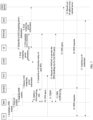
- the embodiment includes the following steps.
- Step 1 A terminal establishes a PDU session.
- Step 2 An SMF selects an EASDF for UE.
- Step 3 The SMF establishes DNS context for the UE in the EASDF.
- Step 4 An AF subscribes to EAS computing power information.
- the AF subscribes to the computing power information of each EAS.
- Step 5 The AF provides the EAS computing power information to a 5G core network (5GC).
- the EAS computing power information is included in EAS deployment information.
- the AF provides the EAS computing power information and an NEF then transmits this information to a Unified Data Repository (Unified Data Repository, UDR).
- UDR Unified Data Repository
- the AF provides the EAS deployment information to the NEF through Nnef_EASDeployment_Create/Update/Delete, and the NEF then transmits this information to the UDR through Nudr_DM_Create/Update/Delete.
- the AF provides the EAS computing power information, and the NEF then possibly transmits this information to an NWDAF.
- the AF provides the EAS deployment information to the NEF through Nnef_EASDeployment_Create/Update/Delete; then the NEF provides the EAS deployment information to the NWDAF; additionally, the NWDAF can subscribe to the EAS deployment information of the AF, for example, the NWDAF subscribes to Nnef_EventExposure_Subscribe, and then the NEF subscribes to Naf_EventExposure_Subscribe of the AF to obtain the EAS deployment information (including the EAS computing power information).
- the AF transmits the EAS deployment information to the NEF via Naf_EventExposure_Notify, and then the NEF transmits the EAS deployment information to the NWDAF via Nnef_EventExposure_Notify.
- the foregoing EAS deployment information includes the EAS computing power information, including at least one of the following (1) to (3):
- Step 6 The DNS server can subscribe to the EAS computing power information. In this way, when resolving the FQDN, the DNS server can use the IP address of the EAS with the optimal computing power as the resolution result of the FQDN.
- the DNS server can subscribe to the EAS computing power information in the form of AF.
- Step 7 The SMF restores the EAS computing power information from the UDR or the NEF.
- the EAS computing power information is included in the EAS deployment information.
- the information is used by the SMF to generate the DNS handling rule for the EASDF.
- the handling rule being generated based on the new EAS computing power information, takes into account factors such as the EAS computing power and an N6 delay.
- the SMF obtains the EAS deployment information through Nnef_EASDeployment_Subscribe.
- Step 8 When the terminal moves, the N6 delay changes, or the EAS computing power information changes, the SMF can update the DNS handling rule, where the N6 delay information may come from the NWDAF.
- Step 9 The SMF can subscribe to the N6 interface delay, an N3 delay, or an N9 delay of each PSA in the NWDAF.
- PSA IDs, IP addresses, and the like, which are controlled by the SMF, are provided by the SMF to the NWDAF, and the NWDAF can collect the N6 delays of these PSAs.
- the first communication device SMF obtains third information from the NWDAF through Nnwdaf_AnalyticsSubscription_Subscribe or Nnwdaf_AnalyticsInfo_Request.
- the NWDAF outputs N3/N6/N9 delay through Nnwdaf_AnalyticsSubscription_Notify orNnwdaf_AnalyticsInfo_Response.
- the SMF obtains the corresponding delays of various interfaces from the NWDAF.
- Step 10 The UE sends a DNS query, where the query includes an FQDN, that is, a domain name to be resolved.
- Step 11 After receiving the DNS query from the UE, the EASDF transmits the FQDN in the DNS query to the SMF in a method of transmitting the following signaling Neasdf_DNSContext_Notify Request.
- the SMF has two schemes for providing the DNS handling rule for the EASDF.
- step 12 the SMF requests the NWDAF to provide the DNS handling rule for this DNS query, for example, through the following signaling: Nnwdaf_AnalyticsSubscription_Subscribe, or Nnwdaf_AnalyticsInfo_Request.
- Analytics ID DNS handling rules.
- the UE IP address, FQDN, EAS computing power information possibly have been provided to the NWDAF by the AF before), and the like are also input to the NWDAF. It is expected that the NWDAF can provide the DNS handling rule for the UE and the FQDN.
- Scheme 2 The SMF provides the DNS handling rule for this DNS query based on the EAS computing power information and the N6 delay provided by the NWDAF.
- Step 13 The SMF issues the DNS handling rule to the EASDF, for example, through the following signaling: Neasdf DNSContext_Update Request.
- the DNS handling rule includes one IP address used to fill in an ECS option part of the DNS query.
- This IP address should correspond to a comprehensive consideration: optimal computing power + shortest N6/N3/N9 delay.
- the IP address corresponds to the PSA with the shortest N6 delay, the UPF with the shortest N3 delay, or the IP address of the UPF with the shortest N9 delay.
- Case B A local DNS server IP address is put in the DNS handling rule.
- the local DNS server IP address corresponds to the DNS server that can resolve an optimal server.
- Step 14 The DNS query is transmitted to the DNS server.
- Step 15 If the DNS server has subscribed to or obtained the previous optimal computing power information in this region, as described in Step 5, then the DNS server can resolve an IP address of the optimal server for the FQDN of this UE.
- Step 16 A DNS response is fed back. If a new user plane needs to be inserted during this process, the inserted PSA is the PSA corresponding to the optimal server.
- Step 17 The UE establishes an IP connection with the EAS.
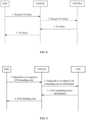
- the embodiment primarily introduces NWDAF providing N6 delay, N3 delay, N9 delay, and the like. For part of the description, refer to the embodiment shown in FIG. 7 .
- This embodiment includes the following steps.
- Step 1 An SMF can subscribe to N6 interface delay, N3 delay, or N9 delay of each PSA in an NWDAF.
- the SMF obtains third information from the NWDAF through Nnwdaf_AnalyticsSubscription_Subscribe or Nnwdaf_AnalyticsInf_Request.
- the NWDAF outputs N3/N6/N9 delay through Nnwdaf_AnalyticsSubscription_Notify or Nnwdaf_AnalyticsInfo_Response.
- the SMF obtains the corresponding delays of various interfaces from the NWDAF.
- Step 2 The NWDAF subscribes to the service of a UPF, for example, through the following signaling: Nupf EventExposure_EventExposure_Subscribe.
- Parameters include: SUPI (UE ID), Event ID (that is, N6 delay), DNN, N6 interface ID, or the like, to obtain the N3/N9/N6 interface delay for each PSA.
- Step 3 The UPF notifies the NWDAF of the delay of one N6 interface through Nupf_EventExposure_Notify.
- Step 4 The NWDAF informs the SMF of the subscribed N6 delay through Nnwdaf_AnalyticsSubscription_Notify or Nnwdaf_AnalyticsInfo_Response.
- this embodiment primarily introduces NWDAF providing a DNS handling rule.
- NWDAF providing a DNS handling rule.
- this embodiment includes the following steps.
- Step 1 An SMF requests an NWDAF to provide a DNS handling rule for a DNS query.
- the UE IP address, FQDN, EAS computing power information (possibly have been provided to the NWDAF by the AF before), and the like are also input to the NWDAF. It is expected that the NWDAF can provide the DNS handling rule for the UE and the FQDN.
- Step 2 If in step 1, the SMF have not provided the EAS computing power information, then an AF may have provided the EAS computing power information in advance. Then the NWDAF subscribes to Nnef_EASDeployment_Subscribe, subscribing to the EAS computing power information.
- Step 3 The NWDAF is informed of the EAS computing power information through the following signaling Nnef_EASDeployment_Notify.
- Step 4 The NWDAF informs the SMF of the DNS handling rule generated for the DNS query of a specific UE through Nnwdaf_AnalyticsSubscription_Notify or Nnwdaf_AnalyticsInfo_Response.
- FIG. 10 is a schematic structural diagram of a first communication device according to an embodiment of this application. As shown in FIG. 10 , the first communication device 1000 includes the following modules:
- the DNS handling rule is improved.
- the DNS query of the terminal can be transmitted to the DNS server, where the DNS server supports resolution of the IP address of the EAS meeting the first condition.
- the first condition includes at least one of the following: shortest N6 delay, shortest N3 delay, shortest N9 delay, shortest UPF processing delay, and optimal EAS computing power resource.
- the DNS handling rule includes at least one of the following (1) and (2):
- the first IP address includes at least one of the following (1) to (3):
- the second DNS server being located at a same location as the terminal includes: the second DNS server and the terminal being under a same DNAI.
- the obtaining module 1002 is configured to request a third communication device to provide the DNS handling rule for the DNS query.
- the DNS handling rule is generated based on first information, where the first information includes at least one of EAS computing power information, N6 delay information of each PSA, N3 delay information of PSA and RAN, N9 delay information and UPF processing delay information, where the EAS computing power information includes computing power resource information corresponding to an FQDN under a target region.
- the DNS query is a DNS query transmitted by the terminal.
- the obtaining module 1002 is configured to transmit at least one of the following 1) to 4) to the third communication device: (1) an IP address of the terminal; (2) location information of the terminal; (3) the DNS query transmitted by the terminal or the FQDN in the DNS query; and (4) EAS computing power information, where the EAS computing power information includes the computing power resource information corresponding to the FQDN under the target region.
- the EAS computing power information includes at least one of the following: (1) computing power resource information of one or more EASs corresponding to a first FQDN under the target region; and (2) an EAS with a largest computing power resource corresponding to the first FQDN under the target region; where the first FQDN is an FQDN supported and resolvable by the first DNS server or the second DNS server.
- the transmitting module 1004 is further configured to transmit second information to a third communication device, where the second information is used to obtain third information, and the third information includes at least one of the following: N6 delay information of each PSA, PSA and RAN N3 delay information, N9 delay information, and UPF processing delay information.
- the first communication device receives the third information from the third communication device, where the third information is used by the first communication device to generate the DNS handling rule.
- the first communication device further includes an updating module, where the updating module is configured to update the DNS handling rule in a case that the terminal moves or the third information is updated, where the third information includes at least one of the following: N6 delay information of each PSA, PSA and RAN N3 delay information, N9 delay information, and UPF processing delay information.
- the updating module is configured to update the DNS handling rule in a case that the terminal moves or the third information is updated, where the third information includes at least one of the following: N6 delay information of each PSA, PSA and RAN N3 delay information, N9 delay information, and UPF processing delay information.
- FIG. 11 is a schematic structural diagram of a second communication device according to an embodiment of this application. As shown in FIG. 11 , the second communication device 1100 includes the following modules:
- the DNS handling rule is improved.
- the DNS query of the terminal can be transmitted to the DNS server, where the DNS server supports resolution of the IP address of the EAS meeting the first condition.
- the first condition includes at least one of the following: shortest N6 delay, shortest N3 delay, shortest N9 delay, shortest UPF processing delay, and optimal EAS computing power resource.
- the obtaining module 1102 is configured to request a first communication device or a third communication device to provide a DNS handling rule for the DNS query.
- the DNS handling rule is generated based on first information, where the first information includes at least one of EAS computing power information, N6 delay information of each PSA, N3 delay information of PSA and RAN, N9 delay information and UPF processing delay information, where the EAS computing power information includes computing power resource information corresponding to an FQDN under a target region.
- the obtaining module 1102 is configured to transmit at least one of the following to the first communication device: (1) an IP address of the terminal; (2) location information of the terminal; (3) the DNS query transmitted by the terminal or the FQDN in the DNS query; and (4) EAS computing power information, where the EAS computing power information includes the computing power resource information corresponding to an FQDN under a target region.
- the obtaining module 1102 is configured to transmit at least one of the following to the third communication device: (1) an IP address of the terminal; (2) location information of the terminal; (3) the DNS query transmitted by the terminal or the FQDN in the DNS query; and (4) EAS computing power information, where the EAS computing power information includes the computing power resource information corresponding to an FQDN under a target region.
- FIG. 12 is a schematic structural diagram of a third communication device according to an embodiment of this application. As shown in FIG. 12 , the third communication device 1200 includes the following modules:
- the DNS handling rule is improved.
- the DNS query of the terminal can be transmitted to the DNS server, where the DNS server supports resolution of the IP address of the EAS meeting the first condition.
- the first condition includes at least one of the following: shortest N6 delay, shortest N3 delay, shortest N9 delay, shortest UPF processing delay, and optimal EAS computing power resource.
- the DNS handling rule includes at least one of the following (1) and (2):
- the first IP address includes at least one of the following: (1) an IP address or IP address segment of a data network DN in which the EAS meeting the first condition is located; (2) a data network access identity DNAI of the DN in which the EAS meeting the first condition is located; and (3) an IP address or address segment of a PSA corresponding to a first DNAI, where the first DNAI includes the DNAI of the DN in which the EAS meeting the first condition is located.
- the second DNS server being located at a same location as the terminal includes: the second DNS server and the terminal being under a same DNAI.
- the generating module 1202 is configured to generate the DNS handling rule based on first information, where the first information includes at least one of the following: EAS information, N6 delay information of each PSA, PSA and RAN N3 delay information, N9 delay information, and UPF processing delay, where the EAS computing power information includes computing power resource information corresponding to an FQDN under a target region.
- the third communication device further includes an obtaining module, configured to obtain the first information.
- FIG. 13 is a schematic structural diagram of a fourth communication device according to an embodiment of this application.
- the fourth communication device 1300 includes the following modules: a transmitting module 1302, configured to transmit first information to a third communication device, a first communication device, or a second communication device, where the first information is used to generate a DNS handling rule; where the DNS handling rule is used for transmitting a DNS query of a terminal to a DNS server, where the DNS server supports resolution of an FQDN in the DNS query to obtain an IP address of an EAS meeting a first condition, and the first condition includes at least one of the following: shortest N6 delay, shortest N3 delay, shortest N9 delay, shortest UPF processing delay, and optimal EAS computing power resource.
- the DNS handling rule is improved.
- the DNS query of the terminal can be transmitted to the DNS server, where the DNS server supports resolution of the IP address of the EAS meeting the first condition.
- the first condition includes at least one of the following: shortest N6 delay, shortest N3 delay, shortest N9 delay, shortest UPF processing delay, and optimal EAS computing power resource.
- the first information includes at least one of the following: EAS computing power information, N6 delay information of each PSA, PSA and RAN N3 delay information, N9 delay information, and UPF processing delay information, where the EAS computing power information includes computing power resource information corresponding to an FQDN under a target region.
- FIG. 14 is a schematic structural diagram of a fifth communication device according to an embodiment of this application.
- the fifth communication device 1400 includes the following modules: a transmitting module 1402, configured to transmit third information to a third communication device, where the third information is used to generate a DNS handling rule; where the DNS handling rule is used for transmitting a DNS query of a terminal to a DNS server, where the DNS server supports resolution of an FQDN in the DNS query to obtain an IP address of an EAS meeting a first condition, and the first condition includes at least one of the following: shortest N6 delay, shortest N3 delay, shortest N9 delay, shortest UPF processing delay, and optimal EAS computing power resource.
- the DNS handling rule is improved.
- the DNS query of the terminal can be transmitted to the DNS server, where the DNS server supports resolution of the IP address of the EAS meeting the first condition.
- the first condition includes at least one of the following: shortest N6 delay, shortest N3 delay, shortest N9 delay, shortest UPF processing delay, and optimal EAS computing power resource.
- the third information includes at least one of the following: N6 delay information of each PSA, PSA and RAN N3 delay information, N9 delay information, and UPF processing delay information.
- the third communication device has subscribed to a service of the fifth communication device, where the service is used to obtain the third information.
- an embodiment of this application further provides a communication device 1500 including a processor 1501 and a memory 1502.
- the memory 1502 stores a program or instructions capable of running on the processor 1501.
- the communication device 1500 is a network-side device, when the program or the instructions are executed by the processor 1501, the steps of the foregoing embodiment of the server selection method are implemented, with the same technical effects achieved. To avoid repetition, details are not described herein again.
- An embodiment of this application further provides a network-side device including a processor and a communication interface.
- the processor and the communication interface are configured to execute the steps of the embodiments shown in FIG. 2 to FIG. 6 .
- This network-side device embodiment corresponds to the foregoing network-side device method embodiment. All processes and implementations in the foregoing method embodiment can be applicable to this network-side device embodiment, with the same technical effect achieved.
- an embodiment of this application further provides a network-side device.
- the network-side device 1600 includes a processor 1601, a network interface 1602, and memory 1603.
- the network interface 1602 is, for example, a common public radio interface (Common Public Radio Interface, CPRI).
- CPRI Common Public Radio Interface
- the network-side device 1600 in this embodiment of the present invention further includes: instructions or a program stored in the memory 1603 and capable of running on the processor 1601.
- the processor 1601 invokes the instructions or program in the memory 1603 to execute the method executed by the modules shown in FIG. 10 to FIG. 14 , with the same technical effects achieved. To avoid repetition, details are not described herein again.
- An embodiment of this application further provides a readable storage medium, where the readable storage medium stores a program or instructions, and when the program or instructions are executed by a processor, the processes of the foregoing server selection method embodiments are implemented, with the same technical effects achieved. To avoid repetition, details are not described herein again.
- the processor is a processor in the terminal described in the foregoing embodiment.
- the readable storage medium includes a computer-readable storage medium such as a computer read-only memory ROM, a random access memory RAM, a magnetic disk, or an optical disc.
- An embodiment of this application further provides a chip.
- the chip includes a processor and a communication interface.
- the communication interface is coupled to the processor.
- the processor is configured to run a program or instructions to implement the processes of the foregoing server selection method embodiment, with the same technical effect achieved. To avoid repetition, details are not described herein again.
- the chip mentioned in an embodiment of this application may also be referred to as a system-level chip, a system chip, a chip system, a system-on-chip, or the like.
- An embodiment of this application further provides a computer program or program product, where the computer program or program product is stored in a storage medium, and the computer program product is executed by at least one processor to implement the processes of the foregoing server selection method embodiments, with the same technical effects achieved. To avoid repetition, details are not described herein again.
- An embodiment of this application further provides a server selection system including a terminal and a network-side device.
- the network-side device may be configured to execute the steps of the foregoing server selection method.
- the technical solutions of this application essentially or the part contributing to the prior art may be implemented in a form of a software product.
- the software product is stored in a storage medium (such as a ROM/RAM, a magnetic disk, or an optical disc), and includes several instructions for instructing a terminal (which may be a mobile phone, a computer, a server, an air conditioner, a network device, or the like) to perform the methods described in the embodiments of this application.
Landscapes
- Engineering & Computer Science (AREA)
- Computer Networks & Wireless Communication (AREA)
- Signal Processing (AREA)
- Mobile Radio Communication Systems (AREA)
- Data Exchanges In Wide-Area Networks (AREA)
- Telephonic Communication Services (AREA)
Applications Claiming Priority (2)
| Application Number | Priority Date | Filing Date | Title |
|---|---|---|---|
| CN202111616682.5A CN116366659A (zh) | 2021-12-27 | 2021-12-27 | 服务器选择方法及设备 |
| PCT/CN2022/141821 WO2023125377A1 (zh) | 2021-12-27 | 2022-12-26 | 服务器选择方法及设备 |
Publications (2)
| Publication Number | Publication Date |
|---|---|
| EP4459957A1 true EP4459957A1 (de) | 2024-11-06 |
| EP4459957A4 EP4459957A4 (de) | 2025-04-16 |
Family
ID=86939286
Family Applications (1)
| Application Number | Title | Priority Date | Filing Date |
|---|---|---|---|
| EP22914631.1A Pending EP4459957A4 (de) | 2021-12-27 | 2022-12-26 | Serverauswahlverfahren und -vorrichtung |
Country Status (4)
| Country | Link |
|---|---|
| US (1) | US20240356889A1 (de) |
| EP (1) | EP4459957A4 (de) |
| CN (1) | CN116366659A (de) |
| WO (1) | WO2023125377A1 (de) |
Families Citing this family (3)
| Publication number | Priority date | Publication date | Assignee | Title |
|---|---|---|---|---|
| CN120111611A (zh) * | 2023-12-06 | 2025-06-06 | 中兴通讯股份有限公司 | 移动性管理方法、电子设备及计算机可读存储介质 |
| CN120321708A (zh) * | 2024-01-15 | 2025-07-15 | 华为技术有限公司 | 一种通信方法和装置 |
| WO2025174092A1 (ko) * | 2024-02-16 | 2025-08-21 | 삼성전자 주식회사 | 무선 통신 시스템에서 엣지 서비스 리소스 선택을 위한 방법 및 장치 |
Family Cites Families (7)
| Publication number | Priority date | Publication date | Assignee | Title |
|---|---|---|---|---|
| US11924163B2 (en) * | 2020-04-08 | 2024-03-05 | Intel Corporation | Initiation of domain name system (DNS) resolution in 5G systems |
| CN113573303B (zh) * | 2021-07-20 | 2022-08-26 | 中国联合网络通信集团有限公司 | 一种边缘应用服务器确定方法及装置 |
| CN116668511B (zh) * | 2021-07-21 | 2025-08-19 | 腾讯科技(深圳)有限公司 | 一种数据处理方法、网元设备以及可读存储介质 |
| CN113795014B (zh) * | 2021-08-05 | 2022-11-18 | 华为技术有限公司 | 发现边缘应用服务器的方法及装置 |
| CN116267034A (zh) * | 2021-10-18 | 2023-06-20 | 北京小米移动软件有限公司 | 边缘应用服务器的选择方法及装置、网元设备、终端及存储介质 |
| US20250240241A1 (en) * | 2021-10-18 | 2025-07-24 | Yang Shen | Route selection method and apparatus for edge application server, communication device and storage medium |
| CN116074383B (zh) * | 2021-11-04 | 2025-11-04 | 维沃移动通信有限公司 | Dns消息的发送方法、终端及网络侧设备 |
-
2021
- 2021-12-27 CN CN202111616682.5A patent/CN116366659A/zh active Pending
-
2022
- 2022-12-26 WO PCT/CN2022/141821 patent/WO2023125377A1/zh not_active Ceased
- 2022-12-26 EP EP22914631.1A patent/EP4459957A4/de active Pending
-
2024
- 2024-06-27 US US18/757,408 patent/US20240356889A1/en active Pending
Also Published As
| Publication number | Publication date |
|---|---|
| WO2023125377A1 (zh) | 2023-07-06 |
| EP4459957A4 (de) | 2025-04-16 |
| US20240356889A1 (en) | 2024-10-24 |
| CN116366659A (zh) | 2023-06-30 |
Similar Documents
| Publication | Publication Date | Title |
|---|---|---|
| EP4459957A1 (de) | Serverauswahlverfahren und -vorrichtung | |
| EP4412268A1 (de) | Datenabonnementverfahren und -vorrichtung sowie netzwerkelement | |
| EP4517608A1 (de) | Verfahren und vorrichtung zur erfassung von modellinformationen, verfahren und vorrichtung zum senden von modellinformationen sowie knoten und speichermedium | |
| WO2023169558A1 (zh) | 协同操作方法、信息提供方法、网元和存储介质 | |
| EP4554263A1 (de) | Informationsverarbeitungsverfahren, vorrichtung, kommunikationsvorrichtung und lesbares speichermedium | |
| WO2023174221A1 (zh) | 多模态业务实现方法、装置及通信设备 | |
| EP4561170A1 (de) | Cho-konfigurationsaktualisierungsverfahren und netzwerkseitige vorrichtung | |
| WO2024153081A1 (zh) | 算力资源的确定方法、装置及网络侧设备 | |
| WO2023208044A1 (zh) | 小区切换方法、装置及网络侧设备 | |
| WO2024017244A1 (zh) | 信息发送方法、信息接收方法、装置及相关设备 | |
| JP2025508008A (ja) | 情報処理方法、装置、通信機器及び可読記憶媒体 | |
| CN116847328A (zh) | 用户面功能网元确定方法及装置 | |
| CN117412353A (zh) | 网元选择方法、装置及网元 | |
| CN116847330A (zh) | 终端不可用时期的协商方法、终端及网络侧设备 | |
| EP4583559A1 (de) | Zielinformationen, zielinformationserfassungsverfahren und -vorrichtung sowie vorrichtung | |
| EP4664854A1 (de) | Informationserfassungsverfahren und -vorrichtung sowie kommunikationsvorrichtung | |
| CN116170754B (zh) | 通信业务的实现方法、装置及网络侧设备 | |
| CN116567776B (zh) | 信息传输方法、装置及网络功能 | |
| WO2025231777A1 (en) | User equipment dynamic compute offload | |
| US20250220738A1 (en) | Parameter obtaining method and apparatus, first network function, and second network function | |
| EP4376381A1 (de) | Verfahren und vorrichtung für dns-abfrage sowie vorrichtung und medium | |
| CN117998344A (zh) | 信息确定方法、装置、通信设备以及可读存储介质 | |
| WO2025223322A1 (zh) | 设备选择方法、装置、网络侧设备及存储介质 | |
| CN119031421A (zh) | 网络功能查询方法、装置、通信设备及可读存储介质 | |
| CN120568359A (zh) | 设备通信方法、装置及通信设备 |
Legal Events
| Date | Code | Title | Description |
|---|---|---|---|
| STAA | Information on the status of an ep patent application or granted ep patent |
Free format text: STATUS: THE INTERNATIONAL PUBLICATION HAS BEEN MADE |
|
| PUAI | Public reference made under article 153(3) epc to a published international application that has entered the european phase |
Free format text: ORIGINAL CODE: 0009012 |
|
| STAA | Information on the status of an ep patent application or granted ep patent |
Free format text: STATUS: REQUEST FOR EXAMINATION WAS MADE |
|
| 17P | Request for examination filed |
Effective date: 20240710 |
|
| AK | Designated contracting states |
Kind code of ref document: A1 Designated state(s): AL AT BE BG CH CY CZ DE DK EE ES FI FR GB GR HR HU IE IS IT LI LT LU LV MC ME MK MT NL NO PL PT RO RS SE SI SK SM TR |
|
| DAV | Request for validation of the european patent (deleted) | ||
| DAX | Request for extension of the european patent (deleted) | ||
| A4 | Supplementary search report drawn up and despatched |
Effective date: 20250319 |
|
| RIC1 | Information provided on ipc code assigned before grant |
Ipc: H04L 101/69 20220101ALN20250313BHEP Ipc: H04L 67/1021 20220101ALI20250313BHEP Ipc: H04L 67/1012 20220101ALI20250313BHEP Ipc: H04L 61/4511 20220101ALI20250313BHEP Ipc: H04L 67/101 20220101AFI20250313BHEP |