EP4459915A1 - Empfangs- und sendeverfahren und -vorrichtungen für physikalischen downlink-steuerkanal - Google Patents
Empfangs- und sendeverfahren und -vorrichtungen für physikalischen downlink-steuerkanal Download PDFInfo
- Publication number
- EP4459915A1 EP4459915A1 EP21969467.6A EP21969467A EP4459915A1 EP 4459915 A1 EP4459915 A1 EP 4459915A1 EP 21969467 A EP21969467 A EP 21969467A EP 4459915 A1 EP4459915 A1 EP 4459915A1
- Authority
- EP
- European Patent Office
- Prior art keywords
- receiving
- receiving manner
- pdcch
- determining
- manner
- Prior art date
- Legal status (The legal status is an assumption and is not a legal conclusion. Google has not performed a legal analysis and makes no representation as to the accuracy of the status listed.)
- Pending
Links
- 238000000034 method Methods 0.000 title claims abstract description 84
- 230000007774 longterm Effects 0.000 claims abstract description 19
- 230000002776 aggregation Effects 0.000 claims description 80
- 238000004220 aggregation Methods 0.000 claims description 80
- 230000004044 response Effects 0.000 claims description 50
- 238000004891 communication Methods 0.000 claims description 33
- 238000004590 computer program Methods 0.000 claims description 24
- 230000015654 memory Effects 0.000 claims description 17
- 230000011664 signaling Effects 0.000 claims description 15
- 238000010586 diagram Methods 0.000 description 18
- 238000005516 engineering process Methods 0.000 description 6
- 230000008569 process Effects 0.000 description 5
- 238000001514 detection method Methods 0.000 description 4
- 230000003287 optical effect Effects 0.000 description 4
- 230000009286 beneficial effect Effects 0.000 description 3
- 230000001133 acceleration Effects 0.000 description 2
- 230000006978 adaptation Effects 0.000 description 2
- 230000005540 biological transmission Effects 0.000 description 2
- 230000008859 change Effects 0.000 description 2
- 230000003993 interaction Effects 0.000 description 2
- 238000007726 management method Methods 0.000 description 2
- 230000004048 modification Effects 0.000 description 2
- 238000012986 modification Methods 0.000 description 2
- 238000003491 array Methods 0.000 description 1
- 238000013500 data storage Methods 0.000 description 1
- 238000003384 imaging method Methods 0.000 description 1
- 239000004973 liquid crystal related substance Substances 0.000 description 1
- 230000002093 peripheral effect Effects 0.000 description 1
- 230000005236 sound signal Effects 0.000 description 1
- 238000001228 spectrum Methods 0.000 description 1
- 230000003068 static effect Effects 0.000 description 1
Images




Classifications
-
- H—ELECTRICITY
- H04—ELECTRIC COMMUNICATION TECHNIQUE
- H04L—TRANSMISSION OF DIGITAL INFORMATION, e.g. TELEGRAPHIC COMMUNICATION
- H04L5/00—Arrangements affording multiple use of the transmission path
- H04L5/003—Arrangements for allocating sub-channels of the transmission path
- H04L5/0048—Allocation of pilot signals, i.e. of signals known to the receiver
-
- H—ELECTRICITY
- H04—ELECTRIC COMMUNICATION TECHNIQUE
- H04W—WIRELESS COMMUNICATION NETWORKS
- H04W72/00—Local resource management
- H04W72/20—Control channels or signalling for resource management
- H04W72/23—Control channels or signalling for resource management in the downlink direction of a wireless link, i.e. towards a terminal
-
- H—ELECTRICITY
- H04—ELECTRIC COMMUNICATION TECHNIQUE
- H04L—TRANSMISSION OF DIGITAL INFORMATION, e.g. TELEGRAPHIC COMMUNICATION
- H04L5/00—Arrangements affording multiple use of the transmission path
- H04L5/003—Arrangements for allocating sub-channels of the transmission path
- H04L5/0048—Allocation of pilot signals, i.e. of signals known to the receiver
- H04L5/005—Allocation of pilot signals, i.e. of signals known to the receiver of common pilots, i.e. pilots destined for multiple users or terminals
-
- H—ELECTRICITY
- H04—ELECTRIC COMMUNICATION TECHNIQUE
- H04L—TRANSMISSION OF DIGITAL INFORMATION, e.g. TELEGRAPHIC COMMUNICATION
- H04L5/00—Arrangements affording multiple use of the transmission path
- H04L5/003—Arrangements for allocating sub-channels of the transmission path
- H04L5/0053—Allocation of signalling, i.e. of overhead other than pilot signals
-
- H—ELECTRICITY
- H04—ELECTRIC COMMUNICATION TECHNIQUE
- H04W—WIRELESS COMMUNICATION NETWORKS
- H04W72/00—Local resource management
- H04W72/04—Wireless resource allocation
-
- H—ELECTRICITY
- H04—ELECTRIC COMMUNICATION TECHNIQUE
- H04W—WIRELESS COMMUNICATION NETWORKS
- H04W72/00—Local resource management
- H04W72/30—Resource management for broadcast services
-
- H—ELECTRICITY
- H04—ELECTRIC COMMUNICATION TECHNIQUE
- H04L—TRANSMISSION OF DIGITAL INFORMATION, e.g. TELEGRAPHIC COMMUNICATION
- H04L5/00—Arrangements affording multiple use of the transmission path
- H04L5/003—Arrangements for allocating sub-channels of the transmission path
- H04L5/0058—Allocation criteria
- H04L5/0073—Allocation arrangements that take into account other cell interferences
Definitions
- the present disclosure relates to the field of communication technology, and in particular to physical downlink control channel receiving methods, physical downlink control channel transmitting methods, physical downlink control channel receiving apparatuses, physical downlink control channel transmitting apparatuses, communication devices, and computer-readable storage media.
- LTE Long Term Evolution
- NR New Radio
- a terminal when a Resource Element (RE) for an LTE CRS conflicts with an RE for an NR PDCCH (Physical Downlink Control Channel), a terminal does not expect to receive an NR PDCCH on a conflicting RE.
- RE Resource Element
- NR PDCCH Physical Downlink Control Channel
- the embodiments of the present disclosure propose physical downlink control channel receiving methods, physical downlink control channel transmitting methods, physical downlink control channel receiving apparatuses, physical downlink control channel transmitting apparatuses, communication devices, and computer-readable storage media, to solve a technical problem in related arts.
- a physical downlink control channel receiving method is proposed, performed by a terminal, and includes: in response to determining that a Long Term Evolution Cell-specific Reference Signal (LTE CRS) conflicts with a New Radio Physical Downlink Control Channel (NR PDCCH), determining a receiving manner for receiving the NR PDCCH; and receiving the NR PDCCH according to the receiving manner.
- LTE CRS Long Term Evolution Cell-specific Reference Signal
- NR PDCCH New Radio Physical Downlink Control Channel
- a physical downlink control channel transmitting method is proposed, performed by a network side device, and includes: in response to determining that a Long Term Evolution Cell-specific Reference Signal (LTE CRS) conflicts with a New Radio Physical Downlink Control Channel (NR PDCCH), determining a receiving manner for a terminal receiving the NR PDCCH; and transmitting indication information to the terminal, where the indication information is configured to indicate the receiving manner.
- LTE CRS Long Term Evolution Cell-specific Reference Signal
- NR PDCCH New Radio Physical Downlink Control Channel
- a physical downlink control channel receiving apparatus including: a processing module, configured to, in response to determining that a Long Term Evolution Cell-specific Reference Signal (LTE CRS) conflicts with a New Radio Physical Downlink Control Channel (NR PDCCH), determine a receiving manner for receiving the NR PDCCH; and a receiving module, configured to receive the NR PDCCH according to the receiving manner.
- LTE CRS Long Term Evolution Cell-specific Reference Signal
- NR PDCCH New Radio Physical Downlink Control Channel
- a physical downlink control channel transmitting apparatus including: a processing module, configured to, in response to determining that a Long Term Evolution Cell-specific Reference Signal (LTE CRS) conflicts with a New Radio Physical Downlink Control Channel (NR PDCCH), determine a receiving manner for a terminal receiving the NR PDCCH; and a transmitting module, configured to transmit indication information to the terminal, where the indication information is configured to indicate the receiving manner.
- LTE CRS Long Term Evolution Cell-specific Reference Signal
- NR PDCCH New Radio Physical Downlink Control Channel
- a communication device including: one or more processors; and one or more memories for storing a computer program; where when the computer program is executed by the one or more processors, the physical downlink control channel receiving method described above is implemented.
- a communication device including: one or more processors; and one or more memories for storing a computer program; where when the computer program is executed by the one or more processors, the physical downlink control channel transmitting method described above is implemented.
- a computer-readable storage medium for storing a computer program, where when the computer program is executed by one or more processors, the physical downlink control channel receiving method described above is implemented.
- a computer-readable storage medium for storing a computer program, where when the computer program is executed by one or more processors, the physical downlink control channel transmitting method described above is implemented.
- the terminal can determine the receiving manner for receiving the NR PDCCH in response to determining that an LTE CRS conflicts with an NR PDCCH, and then receive the NR PDCCH according to the receiving manner. According to this, the terminal can determine an appropriate receiving manner as needed, and receive the NR PDCCH in a case of a conflict between LTE CRS and NR PDCCH, which is beneficial to ensure that the receiving manner adapts to an actual situation, compared to the related arts where an NR PDCCH can only be received in a fixed receiving manner.
- first, second, third, and the like may be used herein to describe various information, the information should not be limited by these terms. These terms are only used to distinguish the same type of information from each other. For example, without departing from the scope of the present disclosure, first information may be referred as second information; and similarly, second information may also be referred as first information.
- first information may be referred as second information; and similarly, second information may also be referred as first information.
- word “if” as used herein can be interpreted as “upon”, “when” or “in response to determining”.
- the terms used in the present disclosure to represent comparison are “greater than”, “less than”, “higher than” or “lower than”. But for those skilled in the art, it can be understood that the term “greater than” also encompasses the meaning of “greater than or equal to”, “less than” also encompasses the meaning of “less than or equal to”, “higher than” encompasses the meaning of “higher than or equal to”, and “lower than” also encompasses the meaning of “lower than or equal to”.
- FIG. 1 is a schematic flowchart of a physical downlink control channel receiving method according to embodiments of the present disclosure.
- the physical downlink control channel receiving method shown in the embodiments can be performed by a terminal.
- the terminal includes but is not limited to a communication device such as a mobile phone, a tablet, a wearable device, a sensor, or an Internet of Things (IoT) device.
- the terminal can communicate with a network side device.
- the network side device includes but not limited to a network side device (such as a base station, a core network, etc.) in a communication system such as a 4G communication system, a 5G communication system, or a 6G communication system, etc.
- the physical downlink control channel receiving method may include the following steps S101 to S102.
- step S101 in response to determining that a Long Term Evolution Cell-specific Reference Signal (LTE CRS) conflicts with a New Radio Physical Downlink Control Channel (NR PDCCH), a receiving manner for receiving the NR PDCCH is determined.
- LTE CRS Long Term Evolution Cell-specific Reference Signal
- NR PDCCH New Radio Physical Downlink Control Channel
- step S102 the NR PDCCH is received according to the receiving manner.
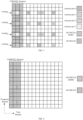
- FIG. 2 is a schematic diagram of an LTE CRS according to embodiments of the present disclosure.
- a Cell ID of an LTE cell is 0, an LTE CRS supports four ports, namely an antenna port 0, an antenna port 1, an antenna port 2, and an antenna port 3.
- LTE CRS corresponding to each antenna port occupies a different resource, and the resources occupied by the LTE CRS corresponding to the four antenna ports are stacked together as the first resource.
- a Resource Block there are 14 symbols (such as orthogonal frequency division multiplexing (OFDM) symbols) in a time domain, and 12 Resource Elements (REs) in a frequency domain.
- OFDM orthogonal frequency division multiplexing
- REs Resource Elements
- REs are numbered from bottom to top as RE #0 to RE #11, as shown in FIG. 2
- resources occupied by an LTE CRS include the first, second, fifth, eighth, ninth, and twelfth symbols on RE #0, RE #3, RE #6, and RE #9.
- an LTE CRS can be transmitted by an LTE network side device, but an NR network side device can also determine the resources occupied by an LTE CRS, e.g., by communicating with an LTE network side device, or according to a protocol agreement. In addition, the terminal can also determine the resources occupied by LTE CRS, e.g., according to a protocol agreement.
- FIG. 3 is a schematic diagram illustrating a conflict between an NR PDCCH and an LTE CRS according to embodiments disclosed herein.
- a duration of a control resource set is three time-domain symbols, such as the first three symbols in RB, for the REs used to carry an NR PDCCH in the CORESET, on the first and second symbols, the NR PDCCH carried by REs numbered RE #0, RE #3, and RE# 6 conflicts with the LTE CRS. Therefore, on these conflicting REs, the terminal does not expect to receive NR PDCCH, but on other REs in CORESET, the terminal still needs to receive NR PDCCH.
- CORESET control resource set
- the LTE CRS can also conflict with NR PDCCH Demodulation Reference Signal (DMRS).
- DMRS NR PDCCH Demodulation Reference Signal
- the RE #9 on the first and second symbols carries the NR PDCCH DMRS, which conflicts with the LTE CRS. On these conflicting REs, the terminal will not expect to receive NR PDCCH DMRS.
- the receiving manner for the terminal receiving the NR PDCCH is fixed and not determined as needed by the terminal or network side device, which makes it difficult for the receiving manner to adapt to the actual situation.
- the terminal can determine the receiving manner for receiving the NR PDCCH in response to determining that an LTE CRS conflicts with an NR PDCCH, and then receive the NR PDCCH according to the receiving manner. According to this, the terminal can determine an appropriate receiving manner as needed, and receive the NR PDCCH in a case of a conflict between LTE CRS and NR PDCCH, which is beneficial to ensure that the receiving manner adapts to an actual situation, compared to the related arts where an NR PDCCH can only be received in a fixed receiving manner.
- the receiving manner includes at least one of a first receiving manner or a second receiving manner.
- the first receiving manner is puncturing a second resource where the NR PDCCH is located according to a first resource corresponding to the LTE CRS.
- the second receiving manner is performing rate matching on the NR PDCCH according to a first resource corresponding to the LTE CRS.
- the receiving manners adopted by the terminal include two. One is to puncture a second resource where the NR PDCCH is located according to a first resource corresponding to the LTE CRS, abbreviated as the first receiving manner, and the other one is to perform rate matching on the NR PDCCH according to a first resource corresponding to the LTE CRS, abbreviated as the second receiving manner.
- FIG. 4 is a schematic diagram of puncturing a second resource where an NR PDCCH is located according to a first resource corresponding to an LTE CRS, according to embodiments of the present disclosure.
- the terminal determines to use the first receiving manner to receive NR PDCCH, that is, according to the first resource corresponding to LTE CRS, the terminal punctures the second resource where NR PDCCH is located. Therefore, for the terminal, the presence of the LTE CRS can be ignored, and an RE transmitting LTE CRS can be considered as transmitting NR PDCCH, and NR PDCCH can be detected on this basis.
- This manner is relatively simple to process, but it may result in the loss of NR PDCCH.
- the terminal when puncturing the second resource where NR PDCCH is located according to the first resource corresponding to LTE CRS, the terminal does not consider the presence of LTE CRS and considers all the REs in CORESET to be used for transmitting NR PDCCH and NR PDCCH DMRS, and detects and receives NR PDCCH based on this.
- FIG. 5 is a schematic diagram of rate matching of an NR PDCCH according to a first resource corresponding to an LTE CRS, according to embodiments of the present disclosure.
- the terminal determines to use a second receiving manner to receive NR PDCCH, that is, performs rate matching on NR PDCCH according to the first resource corresponding to LTE CRS.
- the presence of LTE CRS can be determined, and then rate matching is performed on NR PDCCH according to the first resource corresponding to LTE CRS, such as detecting and receiving NR PDCCH on an RE without LTE CRS.
- This manner has a relatively high processing complexity and improves the effective bit rate of Downlink Control Information (DCI) in NR PDCCH, but this manner can relatively ensure the integrity of NR PDCCH.
- DCI Downlink Control Information
- the terminal when puncturing the second resource where NR PDCCH is located according to the first resource corresponding to LTE CRS, the terminal determines the existence of LTE CRS, determines that the REs used to transmit LTE CRS in CORESET are not used to transmit NR PDCCH and NR PDCCH DMRS, and detects and receives NR PDCCH based on this.
- the first and second receiving manners mentioned above are the receiving manners for the terminal receiving NR PDCCH, and for the network side device, the transmitting manner used by the network side device cannot be restricted by the receiving manner selected by the terminal.
- the network side device can first map NR PDCCH on the REs in the CORESET, then remove the REs corresponding to the NR PDCCH from the REs occupied by the LTE CRS, and then transmit the NR PDCCH.
- the network side device can also map the NR PDCCH on the REs within the CORESET and then transmit the NR PDCCH.
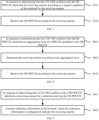
- FIG. 6 is a schematic flowchart of another physical downlink control channel receiving method according to embodiments of the present disclosure. As shown in FIG. 6 , in response to determining that the Long Term Evolution Cell-specific Reference Signal (LTE CRS) conflicts with the New Radio Physical Downlink Control Channel (NR PDCCH), determining the receiving manner for receiving the NR PDCCH includes steps S601-S602.
- LTE CRS Long Term Evolution Cell-specific Reference Signal
- NR PDCCH New Radio Physical Downlink Control Channel
- step S601 indication information transmitted by a network side device is received.
- step S602 the receiving manner is determined according to the indication information.
- the network side device can indicate the receiving manner adopted by the terminal by transmitting indication information. For example, in he case where the receiving manner includes the first receiving manner and the second receiving manner mentioned above, the network side device can indicate the receiving manner to the terminal by one bit, as shown in Table 1: Table 1 Manner configuration information NR PDCCH receiving manner 0 first receiving manner 1 second receiving manner
- the terminal can store the corresponding relationship between the indication information and the receiving manner as shown in Table 1.
- the indication information being 0 indicates the first receiving manner
- the indication information being 1 indicates the second receiving manner.
- the network side device can determine the receiving manner that the terminal needs to adopt according to the actual situation, and then indicate the corresponding receiving manner to the terminal through the indication information, which is conducive to ensuring that the receiving manner used by the terminal is adapted to the actual situation.
- the indication information is carried in at least one of: Radio Resource Control (RRC) signaling; or broadcast information.
- RRC Radio Resource Control
- the network side device may transmit indication information to the terminal in a unicast manner, e.g., by carrying indication information through RRC signaling; or the network side device may transmit indication information to the terminal through broadcasting, e.g., by carrying indication information through broadcast information, where the broadcast information includes but is not limited to system information, or paging signaling, etc.
- FIG. 7 is a schematic flowchart of still another physical downlink control channel receiving method according to embodiments of the present disclosure. As shown in FIG. 7 , in response to determining that the Long Term Evolution Cell-specific Reference Signal (LTE CRS) conflicts with the New Radio Physical Downlink Control Channel (NR PDCCH), determining the receiving manner for receiving the NR PDCCH includes step S701.
- LTE CRS Long Term Evolution Cell-specific Reference Signal
- NR PDCCH New Radio Physical Downlink Control Channel
- step S701 the receiving manner is determined according to a support capability of the terminal for the receiving manner.
- the terminal can determine its own support capability for the receiving manner, such as only supporting the first receiving manner, only supporting the second receiving manner, and supporting both the first and second receiving manners. According to the support capability, the terminal can determine the receiving manner for receiving NR PDCCH to ensure that the selected receiving manner is suitable for its own capability.
- determining the receiving manner according to the supporting capability of the terminal for the receiving manner includes:
- the terminal can choose to receive NR PDCCH according to the first method. For example, if the terminal determines that it only supports the second receiving manner, the terminal can choose to receive NR PDCCH according to the second method. Further, if the terminal determines that it supports both the first and second receiving manners, the terminal can choose to receive NR PDCCH according to a default manner, where the default manner can be the first receiving manner or the second receiving manner. For example, the default manner can be determined according to a protocol agreement. According to this, it can be ensured that the receiving manner chosen by the terminal is suitable for its own capabilities.
- the method further includes: reporting information of the support capability to the network side device.
- the terminal can further report its own support capability information to the network side device, such that the network side device can perform appropriate operations according to the support capability of the terminal.
- the network side device can indicate the receiving manner that the terminal needs to adopt according to the support capability of the terminal to the receiving manner.
- the terminal can independently determine the receiving manner for NR PDCCH according to its own support capability for the receiving manner, or the terminal can first report its support capability for the receiving manner to the network side device, and then determine the receiving manner for NR PDCCH according to the indication information transmitted by the network side device based on the support capability.
- FIG. 8 is a schematic flowchart of still another physical downlink control channel receiving method according to embodiments of the present disclosure. As shown in FIG. 8 , in response to determining that the Long Term Evolution Cell-specific Reference Signal (LTE CRS) conflicts with the New Radio Physical Downlink Control Channel (NR PDCCH), determining the receiving manner for receiving the NR PDCCH includes steps S801 to S802.
- LTE CRS Long Term Evolution Cell-specific Reference Signal
- NR PDCCH New Radio Physical Downlink Control Channel
- step S801 an aggregation level of a PDCCH candidate in the NR PDCCH is determined.
- step S802 the receiving manner is determined according to the aggregation level.
- control channel elements can be aggregated into a PDCCH candidate, where the number of CCEs aggregated into the PDCCH candidate can be used as the aggregation level (AL).
- the aggregation level includes but not limited to 1, 2, 4, 8, or 16, etc.
- the terminal can determine the aggregation level corresponding to the PDCCH candidate in NR PDCCH, and then determine the receiving manner according to the aggregation level, which can ensure that the adopted receiving manner meets the aggregation level of the PDCCH candidate.
- the terminal can independently determine the receiving manner of NR PDCCH according to the aggregation level, or determine the receiving manner of NR PDCCH according to the indication information transmitted by the network side device according to the aggregation level.
- determining the receiving manner according to the aggregation level includes:
- the terminal when the aggregation level is relatively high, such as greater than the first preset threshold, the terminal may receive NR PDCCH according to the first receiving manner; when the aggregation level is relatively low, such as less than or equal to the first preset threshold, the terminal may receive NR PDCCH according to the second receiving manner.
- the first preset threshold can be determined according to a protocol agreement or indicated by the network side device. For example, when the aggregation levels include 1, 2, 4, 8, and 16, the first preset threshold can be 4, such that when the aggregation level is 1, 2, or 4, the second receiving manner can be used to receive NR PDCCH, and when the aggregation level is 8 or 16, the first receiving manner can be used to receive NR PDCCH.
- the CEs corresponding to NR PDCCH is also relatively less.
- the first receiving manner i.e., the second resource where NR PDCCH is located is punctured according to the first resource corresponding to LTE CRS, it will result in a large proportion of missing information in NR PDCCH, making it difficult to accurately detect NR PDCCH.
- the second receiving manner can be adopted i.e., rate matching can be performed on NR PDCCH according to the first resource corresponding to the LTE CRS, to ensure the integrity of NR PDCCH as much as possible and ensure accurate detection of NR PDCCH.
- the CEs corresponding to NR PDCCH is also relatively more.
- the first receiving manner i.e., the second resource where NR PDCCH is located is punctured according to the first resource corresponding to LTE CRS, it will not cause a large proportion of missing information in NR PDCCH, but it can effectively reduce the complexity of detection and shorten the time for detecting NR PDCCH. Therefore, in this case, the first receiving manner can be used to receive NR PDCCH.
- the first receiving manner is used to receive NR PDCCH
- the second receiving manner is used to receive NR PDCCH, which is only one of the multiple embodiments in the present disclosure, and the logic for determining the receiving manner according to the aggregation level can also be determined as needed. For example,
- determining the receiving manner according to the aggregation level includes: in response to determining that the aggregation level is greater than a second preset threshold, determining the second receiving manner as the receiving manner; in response to determining that the aggregation level is less than or equal to the second preset threshold, determining the first receiving manner as the receiving manner.
- the second preset threshold can be the same or different from the first preset threshold mentioned above.
- the logic for determining the receiving manner according to the aggregation level can be determined according to a protocol agreement or indication information from the network side device.
- FIG. 9 is a schematic flowchart of a physical downlink control channel transmitting method according to embodiments of the present disclosure.
- the physical downlink control channel transmitting method shown in the embodiments can be performed by a network side device, where the network side device can communicate with a terminal.
- the network side device includes but is not limited to a base station in a communication system such as a 4G base station, a 5G base station, or a 6G base station, etc.
- the terminal includes but is not limited to a communication device such as a mobile phone, a tablet, a wearable device, a sensor, or an Internet of Things (IoT) device.
- IoT Internet of Things
- the physical downlink control channel transmitting method may include the following steps S901 to S902.
- step S901 in response to determining that a Long Term Evolution Cell-specific Reference Signal (LTE CRS) conflicts with a New Radio Physical Downlink Control Channel (NR PDCCH), a receiving manner for a terminal receiving the NR PDCCH is determined.
- LTE CRS Long Term Evolution Cell-specific Reference Signal
- NR PDCCH New Radio Physical Downlink Control Channel
- step S902 indication information is transmitted to the terminal, where the indication information is configured to indicate the receiving manner.
- the network side device can determine the receiving manner for the terminal receiving the NR PDCCH in response to determining that an LTE CRS conflicts with an NR PDCCH, and then receive the NR PDCCH according to the receiving manner.
- the network side device can determine an appropriate receiving manner as needed and indicate the receiving manner to the terminal, such that according to the indicated receiving manner, the terminal can receive the NR PDCCH in a case of a conflict between LTE CRS and NR PDCCH, which is beneficial to ensure that the receiving manner adapts to an actual situation, compared to the related arts where an NR PDCCH can only be received in a fixed receiving manner.
- the receiving manner includes at least one of a first receiving manner or a second receiving manner.
- the first receiving manner is puncturing a second resource where the NR PDCCH is located according to a first resource corresponding to the LTE CRS.
- the second receiving manner is performing rate matching on the NR PDCCH according to a first resource corresponding to the LTE CRS.
- the receiving manners adopted by the terminal include two. One is to puncture a second resource where the NR PDCCH is located according to a first resource corresponding to the LTE CRS, abbreviated as the first receiving manner, and the other one is to perform rate matching on the NR PDCCH according to a first resource corresponding to the LTE CRS, abbreviated as the second receiving manner.
- FIG. 4 is a schematic diagram of puncturing a second resource where an NR PDCCH is located according to a first resource corresponding to an LTE CRS, according to embodiments of the present disclosure.
- the terminal determines to use the first receiving manner to receive NR PDCCH, that is, according to the first resource corresponding to LTE CRS, the terminal punctures the second resource where NR PDCCH is located. Therefore, for the terminal, the presence of the LTE CRS can be ignored, and an RE transmitting LTE CRS can be considered as transmitting NR PDCCH, and NR PDCCH can be detected on this basis.
- This manner is relatively simple to process, but it may result in the loss of NR PDCCH.
- the terminal when puncturing the second resource where NR PDCCH is located according to the first resource corresponding to LTE CRS, the terminal does not consider the presence of LTE CRS and considers all the REs in CORESET to be used for transmitting NR PDCCH and NR PDCCH DMRS, and detects and receives NR PDCCH based on this.
- FIG. 5 is a schematic diagram of rate matching of an NR PDCCH according to a first resource corresponding to an LTE CRS, according to embodiments of the present disclosure.
- the terminal determines to use a second receiving manner to receive NR PDCCH, that is, performs rate matching on NR PDCCH according to the first resource corresponding to LTE CRS.
- the presence of LTE CRS can be determined, and then rate matching is performed on NR PDCCH according to the first resource corresponding to LTE CRS, such as detecting and receiving NR PDCCH on an RE without LTE CRS.
- This manner has a relatively high processing complexity and improves the effective bit rate of Downlink Control Information (DCI) in NR PDCCH, but this manner can relatively ensure the integrity of NR PDCCH.
- DCI Downlink Control Information
- the terminal when puncturing the second resource where NR PDCCH is located according to the first resource corresponding to LTE CRS, the terminal determines the existence of LTE CRS, determines that the REs used to transmit LTE CRS in CORESET are not used to transmit NR PDCCH and NR PDCCH DMRS, and detects and receives NR PDCCH based on this.
- the first and second receiving manners mentioned above are the receiving manners for the terminal receiving NR PDCCH, and for the network side device, the transmitting manner used by the network side device cannot be restricted by the receiving manner selected by the terminal.
- the network side device can first map NR PDCCH on the REs in the CORESET, then remove the REs corresponding to the NR PDCCH from the REs occupied by the LTE CRS, and then transmit the NR PDCCH.
- the network side device can also map the NR PDCCH on the REs within the CORESET and then transmit the NR PDCCH.
- the indication information is carried in at least one of: RRC signaling; or broadcast information.
- the network side device may transmit indication information to the terminal in a unicast manner, e.g., by carrying indication information through RRC signaling; or the network side device may transmit indication information to the terminal through broadcasting, e.g., by carrying indication information through broadcast information, where the broadcast information includes but is not limited to system information, or paging signaling, etc.
- FIG. 10 is a schematic flowchart of another physical downlink control channel transmitting method according to embodiments of the present disclosure. As shown in FIG. 10 , in response to determining that the Long Term Evolution Cell-specific Reference Signal (LTE CRS) conflicts with the New Radio Physical Downlink Control Channel (NR PDCCH), determining the receiving manner for the terminal receiving the NR PDCCH includes steps S1001 to S1002.
- LTE CRS Long Term Evolution Cell-specific Reference Signal
- NR PDCCH New Radio Physical Downlink Control Channel
- step S 1001 a supporting capability of the terminal for the receiving manner is determined.
- step S 1002 the receiving manner is determined according to a support capability of the terminal for the receiving manner.
- the network side device can determine the support capability of the terminal for the receiving manner, such as only supporting the first receiving manner, only supporting the second receiving manner, and supporting both the first and second receiving manners. According to the support capability, the network side device can determine the receiving manner for the terminal receiving NR PDCCH to ensure that the receiving manner indicated to the terminal is suitable for the capability of the terminal.
- determining the receiving manner according to the supporting capability of the terminal for the receiving manner includes:
- the network side device can instruct the terminal to receive NR PDCCH according to the first method; for example, if the network side device determines that the terminal only supports the second receiving manner, the network side device can instruct the terminal to receive NR PDCCH according to the second method. Further, if the network side device determines that the terminal supports both the first and second receiving manners, the network side device can choose to instruct the terminal to receive NR PDCCH according to a default manner, where the default manner can be the first receiving manner or the second receiving manner. For example, the default manner can be determined according to a protocol agreement. According to this, it can be ensured that the receiving manner chosen by the terminal is suitable for its own capabilities.
- the method further includes: receiving information of the supporting capability reported by the terminal.
- the terminal can further report its own support capability information to the network side device, such that the network side device can perform appropriate operations according to the support capability of the terminal.
- the network side device can indicate the receiving manner that the terminal needs to adopt according to the support capability of the terminal to the receiving manner.
- the terminal can independently determine the receiving manner for NR PDCCH according to its own support capability for the receiving manner, or the terminal can first report its support capability for the receiving manner to the network side device, and then determine the receiving manner for NR PDCCH according to the indication information transmitted by the network side device based on the support capability.
- FIG. 11 is a schematic flowchart of still another physical downlink control channel transmitting method according to embodiments of the present disclosure. As shown in FIG. 11 , in response to determining that the Long Term Evolution Cell-specific Reference Signal (LTE CRS) conflicts with the New Radio Physical Downlink Control Channel (NR PDCCH), determining the receiving manner for the terminal receiving the NR PDCCH includes steps S1101 to S1102.
- LTE CRS Long Term Evolution Cell-specific Reference Signal
- NR PDCCH New Radio Physical Downlink Control Channel
- step S1101 an aggregation level of a PDCCH candidate in the NR PDCCH is determined.
- step S1102 the receiving manner is determined according to the aggregation level.
- CCEs can be aggregated into a PDCCH candidate, where the number of CCEs aggregated into a PDCCH candidate can be used as the aggregation level.
- the aggregation level includes but not limited to 1, 2, 4, 8, or 16, etc.
- the network side device can determine the aggregation level corresponding to the PDCCH candidate in NR PDCCH, then determine the receiving manner according to the aggregation level, and indicate the receiving manner to the terminal, which can ensure that the receiving manner adopted by the terminal meets the aggregation level of the PDCCH candidate.
- the terminal can independently determine the receiving manner of NR PDCCH according to the aggregation level, or determine the receiving manner of NR PDCCH according to the indication information transmitted by the network side device according to the aggregation level.
- determining the receiving manner according to the aggregation level includes:
- the network side device when the aggregation level is relatively high, such as greater than the first preset threshold, the network side device can instruct the terminal to receive NR PDCCH according to the first receiving manner; when the aggregation level is relatively low, such as less than or equal to the first preset threshold, the network side device can instruct the terminal to receive NR PDCCH according to the second receiving manner.
- the first preset threshold can be determined according to a protocol agreement or indicated by the network side device. For example, when the aggregation levels include 1, 2, 4, 8, and 16, the first preset threshold can be 4, such that when the aggregation level is 1, 2, or 4, the second receiving manner can be used to receive NR PDCCH, and when the aggregation level is 8 or 16, the first receiving manner can be used to receive NR PDCCH.
- the CEs corresponding to NR PDCCH is also relatively less.
- the first receiving manner i.e., the second resource where NR PDCCH is located is punctured according to the first resource corresponding to LTE CRS, it will result in a large proportion of missing information in NR PDCCH, making it difficult to accurately detect NR PDCCH.
- the second receiving manner can be adopted i.e., rate matching can be performed on NR PDCCH according to the first resource corresponding to the LTE CRS, to ensure the integrity of NR PDCCH as much as possible and ensure accurate detection of NR PDCCH.
- the CEs corresponding to NR PDCCH is also relatively more.
- the first receiving manner i.e., the second resource where NR PDCCH is located is punctured according to the first resource corresponding to LTE CRS, it will not cause a large proportion of missing information in NR PDCCH, but it can effectively reduce the complexity of detection and shorten the time for detecting NR PDCCH. Therefore, in this case, the first receiving manner can be used to receive NR PDCCH.
- the first receiving manner is used to receive NR PDCCH
- the second receiving manner is used to receive NR PDCCH, which is only one of the multiple embodiments in the present disclosure, and the logic for determining the receiving manner according to the aggregation level can also be determined as needed. For example,
- determining the receiving manner according to the aggregation level includes: in response to determining that the aggregation level is greater than a second preset threshold, determining the second receiving manner as the receiving manner; in response to determining that the aggregation level is less than or equal to the second preset threshold, determining the first receiving manner as the receiving manner.
- the second preset threshold can be the same or different from the first preset threshold mentioned above.
- the logic for determining the receiving manner according to the aggregation level can be determined according to a protocol agreement or indication information from the network side device.
- the present disclosure further provides embodiments of the physical downlink control channel receiving apparatus and the physical downlink control channel transmitting apparatus.
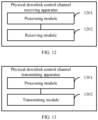
- FIG. 12 is a schematic block diagram of a physical downlink control channel receiving apparatus according to embodiments of the present disclosure.
- the physical downlink control channel receiving apparatus shown in the embodiments can be applied to a terminal.
- the terminal includes but is not limited to a communication device such as a mobile phone, a tablet, a wearable device, a sensor, or an Internet of Things (IoT) device.
- the terminal can communicate with a network side device.
- the network side device includes but not limited to a network side device (such as a base station, a core network, etc.) in a communication system such as a 4G communication system, a 5G communication system, or a 6G communication system, etc.
- the physical downlink control channel receiving apparatus may include:
- the receiving manner includes at least one of a first receiving manner or a second receiving manner.
- the first receiving manner is puncturing a second resource where the NR PDCCH is located according to a first resource corresponding to the LTE CRS.
- the second receiving manner is performing rate matching on the NR PDCCH according to a first resource corresponding to the LTE CRS.
- the processing module 1201 is configured to receive indication information transmitted by network side devices; and determine the receiving manner according to the indication information.
- the indication information is carried in at least one of: RRC signaling; or broadcast information.
- the processing module 1201 is configured to determine the receiving manner according to the support capability of the terminal for the receiving manner.
- the processing module 1201 is configured to, in a case where the terminal only supports the first receiving manner, determine the first receiving manner as the receiving manner; in a case where the terminal only supports the second receiving manner, determine the second receiving manner as the receiving manner; in a case where the terminal supports the first receiving manner and the second receiving manner, determine a default manner in the first receiving manner and the second receiving manner as the receiving manner.
- the apparatus further includes a transmitting module configured to report information of the support capability to the network side device.
- the processing module 1201 is configured to determine the aggregation level corresponding to the PDCCH candidate in the NR PDCCH; and determine the receiving manner according to the aggregation level.
- the processing module 1201 is configured to, in response to determining that the aggregation level is greater than a first preset threshold, determine the first receiving manner as the receiving manner; in response to determining that the aggregation level is less than or equal to the first preset threshold, determine the second receiving manner as the receiving manner.
- the processing module 1201 is configured to, in response to determining that the aggregation level is greater than a second preset threshold, determine the second receiving manner as the receiving manner; in response to determining that the aggregation level is less than or equal to the second preset threshold, determine the first receiving manner as the receiving manner.
- FIG. 13 is a schematic block diagram of a physical downlink control channel transmitting apparatus according to embodiments of the present disclosure.
- the physical downlink control channel transmitting apparatus shown in the embodiments can be applied to a network side device, where the network side device can communicate with a terminal.
- the network side device includes but is not limited to a base station in a communication system such as a 4G base station, a 5G base station, or a 6G base station, etc.
- the terminal includes but is not limited to a communication device such as a mobile phone, a tablet, a wearable device, a sensor, or an Internet of Things (IoT) device.
- IoT Internet of Things
- the physical downlink control channel transmitting apparatus may include:
- the receiving manner includes at least one of a first receiving manner or a second receiving manner.
- the first receiving manner is puncturing a second resource where the NR PDCCH is located according to a first resource corresponding to the LTE CRS.
- the second receiving manner is performing rate matching on the NR PDCCH according to a first resource corresponding to the LTE CRS.
- the indication information is carried in at least one of: RRC signaling; or broadcast information.
- the processing module 1301 is configured to determine a support capability of the terminal for the receiving manner; and determine the receiving manner according to a support capability of the terminal for the receiving manner.
- the processing module 1201 is configured to, in a case where the terminal only supports the first receiving manner, determine the first receiving manner as the receiving manner; in a case where the terminal only supports the second receiving manner, determine the second receiving manner as the receiving manner; in a case where the terminal supports the first receiving manner and the second receiving manner, determine a default manner in the first receiving manner and the second receiving manner as the receiving manner.
- the device further includes a receiving module configured to receive information of the support capability reported by the terminal.
- the processing module 1301 is configured to determine the aggregation level corresponding to the PDCCH candidate in the NR PDCCH; and determine the receiving manner according to the aggregation level.
- the processing module 1301 is configured to, in response to determining that the aggregation level is greater than a first preset threshold, determine the first receiving manner as the receiving manner; in response to determining that the aggregation level is less than or equal to the first preset threshold, determine the second receiving manner as the receiving manner.
- the processing module 1301 is configured to, in response to determining that the aggregation level is greater than a second preset threshold, determine the second receiving manner as the receiving manner; in response to determining that the aggregation level is less than or equal to the second preset threshold, determine the first receiving manner as the receiving manner.
- the relevant parts can refer to the partial description of the method embodiments.
- the device examples described above are merely illustrative, where the modules described as separate members may be or not be physically separated, and the members displayed as modules may be or not be physical units, i.e., may be located in one place, or may be distributed in a plurality of network modules. Part or all of the modules may be selected according to actual requirements to implement the objectives of the solutions in the examples. A person skilled in the art can understand and implement without creative work.
- the embodiments of the present disclosure further provide a communication device, including: one or more processors; and one or more memories for storing a computer program; where when the computer program is executed by the one or more processors, the physical downlink control channel receiving method according to any one of the above embodiments is implemented.
- the embodiments of the present disclosure further provide a communication device, including: one or more processors; and one or more memories for storing a computer program; where when the computer program is executed by the one or more processors, the physical downlink control channel transmitting method according to any one of the above embodiments is implemented.
- the present embodiments of the present disclosure further provide a computer-readable storage medium for storing a computer program, where when the computer program is executed by one or more processors, the physical downlink control channel receiving method according to any one of the above embodiments is implemented.
- the present embodiments of the present disclosure further provide a computer-readable storage medium for storing a computer program, where when the computer program is executed by one or more processors, the physical downlink control channel transmitting method according to any one of the above embodiments is implemented.
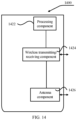
- FIG. 14 is a schematic block diagram of a device 1400 for physical downlink control channel transmission according to embodiments of the present disclosure.
- the device 1400 may be provided as a base station.
- the device 1400 includes a processing component 1422, a wireless transmitting/receiving component 1424, an antenna component 1426, and a signaling processing portion specific to a wireless interface.
- the processing component 1422 may further include one or more processors.
- One of the processors in processing component 1422 can be configured to implement the physical downlink control channel transmitting method described in any one of the above embodiments.
- FIG. 15 is a schematic block diagram of a device 1500 for physical downlink control channel reception according to embodiments of the present disclosure.
- device 1500 can be a mobile phone, a computer, a digital broadcast terminal, a message transmitting and receiving device, a gaming console, a tablet device, a medical device, a fitness device, a personal digital assistant, and the like.
- device 1500 can include one or more of the following components: processing component 1502, memory 1504, power component 1506, multimedia component 1508, audio component 1510, input/output (I/O) interface 1512, sensor component 1514, or a communication component 1516.
- processing component 1502 memory 1504
- power component 1506 multimedia component 1508, audio component 1510
- input/output (I/O) interface 1512 sensor component 1514
- communication component 1516 a communication component 1516.
- the processing component 1502 generally controls the overall operations of the electronic device 1500, such as operations associated with display, calling, data communication, camera operation and recording operation.
- the processing component 1502 may include one or more processors 1520 to execute instructions to complete all or part of the steps of the physical downlink control channel receiving method described above.
- the processing component 1502 may include one or more modules to facilitate interaction between the processing component 1502 and another component.
- the processing component 1502 may include a multimedia module to facilitate the interaction between the multimedia component 1508 and the processing component 1502.
- the memory 1504 is configured to store different types of data to support the operations of the electronic device 1500. Examples of such data include instructions of any application program or method operable on the electronic device 1500, contact data, telephone directory data, messages, pictures, videos, and the like.
- the memory 1504 may be implemented by any type of volatile or non-volatile storage devices or a combination thereof, such as a Static Random Access Memory (SRAM), an Electrically Erasable Programmable Read-Only Memory (EEPROM), an Erasable Programmable Read-Only Memory (EPROM), a Programmable Read-Only Memory (PROM), a Read-Only Memory (ROM), a magnetic memory, a flash memory, a disk or a CD.
- SRAM Static Random Access Memory
- EEPROM Electrically Erasable Programmable Read-Only Memory
- EPROM Erasable Programmable Read-Only Memory
- PROM Programmable Read-Only Memory
- ROM Read-Only Memory
- the power supply component 1506 provides power for different components of the electronic device 1500.
- the power supply component 1506 may include a power management system, one or more power sources, and other components associated with generating, managing and distributing power for the electronic device 1500.
- the multimedia component 1508 may include a screen for providing an output interface between the electronic device 1500 and a user.
- the screen may include a Liquid Crystal Display (LCD) and a Touch Panel (TP). If the screen includes a touch panel, the screen may be implemented as a touch screen for receiving an input signal from a user.
- the touch panel may include one or more touch sensors for sensing a touch, a slide and a gesture on the touch panel. The touch sensor may not only sense a boundary of a touching or sliding movement, but also detect duration and pressure related to the touching or sliding operation.
- the multimedia component 1508 may include a front camera and/or a rear camera.
- the front camera and/or the rear camera can receive external multimedia data.
- Each of the front camera and the rear camera may be a fixed optical lens system or be of a focal length and a capability of an optical zoom.
- the audio component 1510 is configured to output and/or input an audio signaling.
- the audio component 1510 may include a microphone (MIC).
- the microphone When the electronic device 1500 is in an operating mode, such as a call mode, a recording mode and a speech recognition mode, the microphone is configured to receive an external audio signal.
- the received audio signaling may be further stored in the memory 1504 or transmitted via the communication component 1516.
- the audio component 1510 also includes a loudspeaker for outputting an audio signaling.
- the I/O interface 1512 provides an interface between the processing component 1502 and a peripheral interface module which may be a keyboard, a click wheel, a button, or the like. These buttons may include but not limited to, a home button, a volume button, a start button and a lock button.
- the sensor component 1514 may include one or more sensors for providing state assessments in different aspects for the electronic device 1500.
- sensor component 1514 can detect an open/closed state of device 1500, a relative positioning of components, such as the display and keypad of device 1500, and sensor component 1514 can also detect a change in position of device 1500 or a component of device 1500, the presence or absence of user contact with device 1500, orientation or acceleration/deceleration of device 1500, and temperature change of device 1500.
- the sensor component 1514 may include a proximity sensor for detecting the existence of a nearby object without any physical touch.
- the sensor component 1514 may also include an optical sensor, such as a CMOS or CCD image sensor used in an imaging application.
- the sensor component 1514 may also include an acceleration sensor, a gyro sensor, a magnetic sensor, a pressure sensor, or a temperature sensor.
- the communication component 1516 is configured to facilitate wired or wireless communication between the electronic device 1500 and other devices.
- the device 1500 may access a wireless network according to a communication standard, such as WiFi, 2G, 3G, 4G LTE, 5G NR, or a combination thereof.
- the communication component 1516 may receive a broadcast signaling or broadcast-related information from an external broadcast management system via a broadcast channel.
- the communication component 1516 may also include a Near Field Communication (NFC) module to facilitate short-range communications.
- the NFC module may be implemented according to a Radio Frequency Identification (RFID) technology, an Infrared Data Association (IrDA) technology, an Ultra Wideband (UWB) technology, a Bluetooth ® (BT) technology and other technologies.
- RFID Radio Frequency Identification
- IrDA Infrared Data Association
- UWB Ultra Wideband
- BT Bluetooth ®
- the apparatus 1500 may be implemented by one or more Application Specific Integrated Circuits (ASICs), Digital Signal Processors (DSPs), Digital Signal Processing Devices (DSPDs), Programmable Logic Devices (PLDs), Field Programmable Gate Arrays (FPGAs), controllers, microcontrollers, microprocessors, or other electronic components for performing the physical downlink control channel receiving method described above.
- ASICs Application Specific Integrated Circuits
- DSPs Digital Signal Processors
- DSPDs Digital Signal Processing Devices
- PLDs Programmable Logic Devices
- FPGAs Field Programmable Gate Arrays
- controllers microcontrollers, microprocessors, or other electronic components for performing the physical downlink control channel receiving method described above.
- a non-transitory computer readable storage medium including instructions such as the memory 1504 including instructions.
- the above instructions may be executed by the processor 1520 of the apparatus 1500 to complete the above physical downlink control channel receiving method.
- the non-transitory computer-readable storage medium may be a ROM, a RAM, a CD-ROM, a magnetic tape, a floppy disc, an optical data storage device, and the like.
Landscapes
- Engineering & Computer Science (AREA)
- Signal Processing (AREA)
- Computer Networks & Wireless Communication (AREA)
- Mobile Radio Communication Systems (AREA)
Applications Claiming Priority (1)
| Application Number | Priority Date | Filing Date | Title |
|---|---|---|---|
| PCT/CN2021/142632 WO2023123099A1 (zh) | 2021-12-29 | 2021-12-29 | 物理下行控制信道接收、发送方法和装置 |
Publications (2)
| Publication Number | Publication Date |
|---|---|
| EP4459915A1 true EP4459915A1 (de) | 2024-11-06 |
| EP4459915A4 EP4459915A4 (de) | 2025-01-22 |
Family
ID=81771133
Family Applications (1)
| Application Number | Title | Priority Date | Filing Date |
|---|---|---|---|
| EP21969467.6A Pending EP4459915A4 (de) | 2021-12-29 | 2021-12-29 | Empfangs- und sendeverfahren und -vorrichtungen für physikalischen downlink-steuerkanal |
Country Status (4)
| Country | Link |
|---|---|
| US (1) | US20250126619A1 (de) |
| EP (1) | EP4459915A4 (de) |
| CN (1) | CN114586310B (de) |
| WO (1) | WO2023123099A1 (de) |
Families Citing this family (2)
| Publication number | Priority date | Publication date | Assignee | Title |
|---|---|---|---|---|
| CN117676547A (zh) * | 2022-08-12 | 2024-03-08 | 华为技术有限公司 | 下行控制信道传输方法、装置及系统 |
| WO2024092460A1 (zh) * | 2022-10-31 | 2024-05-10 | 北京小米移动软件有限公司 | 信息处理、信息发送方法及装置、存储介质 |
Family Cites Families (14)
| Publication number | Priority date | Publication date | Assignee | Title |
|---|---|---|---|---|
| CN104272639B (zh) * | 2012-05-11 | 2017-12-05 | 华为技术有限公司 | 用于传输控制信道信号的方法 |
| CN110224799B (zh) * | 2013-04-03 | 2022-09-20 | 交互数字专利控股公司 | 用于公共搜索空间的方法及wtru |
| KR102019540B1 (ko) * | 2013-12-18 | 2019-09-06 | 아이디에이씨 홀딩스, 인크. | 전이중 무선 시스템에서의 간섭 관리 방법, 장치 및 시스템 |
| US10790952B2 (en) * | 2015-09-08 | 2020-09-29 | Lg Electronics Inc. | Method and apparatus for receiving downlink physical broadcasting channel in radio access system that supports narrow band internet of things |
| TW201728207A (zh) * | 2015-11-10 | 2017-08-01 | Idac控股公司 | 波束成形系統下行控制頻道設計及傳訊 |
| PT3391579T (pt) * | 2015-12-18 | 2019-11-21 | Ericsson Telefon Ab L M | Transmissão e receção de sinais de sincronização de banda estreita |
| US10405332B2 (en) * | 2016-09-06 | 2019-09-03 | Samsung Electronics Co., Ltd. | Coexistence of different radio access technologies or services on a same carrier |
| EP3584981B1 (de) * | 2017-02-06 | 2021-06-16 | LG Electronics Inc. | Verfahren zum senden oder empfangen eines demodulationsreferenzsignals in einem drahtloskommunikationssystem und vorrichtung dafür |
| CN110831187B (zh) * | 2018-08-10 | 2022-04-22 | 成都华为技术有限公司 | 一种资源配置的方法及装置 |
| US11051327B2 (en) * | 2018-08-10 | 2021-06-29 | Qualcomm Incorporated | Rate-matching around CRS for NR-TDD |
| US12609793B2 (en) * | 2019-02-08 | 2026-04-21 | Lg Electronics Inc. | Method for transmitting and receiving data in wireless communication system, and device for same |
| EP3942726B1 (de) * | 2019-03-21 | 2023-10-18 | Telefonaktiebolaget Lm Ericsson (Publ) | Übertragung von nr-kontrollinformationen in einem lte-downlink-subrahmen |
| CN112533235B (zh) * | 2019-09-19 | 2023-03-21 | 维沃移动通信有限公司 | 信道监听控制方法和终端 |
| KR102820018B1 (ko) * | 2019-12-13 | 2025-06-12 | 삼성전자주식회사 | 무선통신시스템에서 통신을 수행하는 방법 및 장치 |
-
2021
- 2021-12-29 US US18/723,581 patent/US20250126619A1/en active Pending
- 2021-12-29 EP EP21969467.6A patent/EP4459915A4/de active Pending
- 2021-12-29 CN CN202180004538.8A patent/CN114586310B/zh active Active
- 2021-12-29 WO PCT/CN2021/142632 patent/WO2023123099A1/zh not_active Ceased
Also Published As
| Publication number | Publication date |
|---|---|
| US20250126619A1 (en) | 2025-04-17 |
| WO2023123099A1 (zh) | 2023-07-06 |
| EP4459915A4 (de) | 2025-01-22 |
| CN114586310A (zh) | 2022-06-03 |
| CN114586310B (zh) | 2024-11-05 |
Similar Documents
| Publication | Publication Date | Title |
|---|---|---|
| EP3799483B1 (de) | Verfahren und vorrichtung zum senden eines aufwecksignals und funkrufdemodulationsverfahren und -vorrichtung | |
| US11582793B2 (en) | Information reporting method and apparatus, and bandwidth part based operating method and apparatus | |
| US11337220B2 (en) | Information indication method and apparatus, base station, and user equipment | |
| JP7317124B2 (ja) | ディスカバリー参照信号drsの設定、送信及び受信方法並びに装置 | |
| US11350394B2 (en) | Resource configuration method, apparatus, user equipment, and base station | |
| US20210377812A1 (en) | Method, apparatus and system for acquiring control information | |
| US20250056549A1 (en) | Method and apparatus for transmitting physical downlink control channel, and method and apparatus for receiving physical downlink control channel | |
| EP3823198A1 (de) | Verfahren und vorrichtungen zum senden und empfangen eines referenzsignals, basisstation und benutzergerät | |
| KR20210044261A (ko) | 타임 슬롯 포맷 지시 방법, 장치, 기기, 시스템 및 저장 매체 | |
| US20230388070A1 (en) | Trs/csi-rs configuration method and apparatus | |
| WO2018201469A1 (zh) | 信号传输方法、装置、电子设备和计算机可读存储介质 | |
| US20250126619A1 (en) | Physical downlink control channel receiving and transmitting methods and apparatuses | |
| US12490243B2 (en) | PDCCH transmission method and apparatus, and PDCCH receiving method and apparatus | |
| EP4518483A1 (de) | Steuerkanalempfangsverfahren und -vorrichtung, steuerkanalsendeverfahren und -vorrichtung sowie kommunikationsvorrichtung und speichermedium | |
| US20250374276A1 (en) | Scheduling determination method and apparatus and downlink control information sending method and apparatus | |
| US12375972B2 (en) | Method for transmitting buffer status report, electronic device and computer-readable storage medium | |
| US20250167960A1 (en) | Method for determining resource element group bundle and method for mapping resource element group bundle | |
| US20250193854A1 (en) | Guard period determination methods and apparatuses, communication devices, and storage mediums | |
| CN109618564B (zh) | 传输方向的指示方法及装置 | |
| EP4597940A1 (de) | Verfahren und vorrichtungen zur kommunikation und kommunikationsanzeige und speichermedium | |
| US20250193061A1 (en) | Guard period determination method and apparatus, and guard period indication method and apparatus | |
| WO2024020810A1 (zh) | 测量结果上报、接收方法和装置、通信装置及存储介质 | |
| WO2023130476A1 (zh) | 搜索空间配置、确定方法和装置、通信装置和存储介质 | |
| WO2023184111A1 (zh) | 信息域确定、指示方法和装置、通信装置和存储介质 | |
| EP3735059B1 (de) | Verfahren und vorrichtung zur bestimmung von übertragungsrichtungsinformationen |
Legal Events
| Date | Code | Title | Description |
|---|---|---|---|
| STAA | Information on the status of an ep patent application or granted ep patent |
Free format text: STATUS: THE INTERNATIONAL PUBLICATION HAS BEEN MADE |
|
| PUAI | Public reference made under article 153(3) epc to a published international application that has entered the european phase |
Free format text: ORIGINAL CODE: 0009012 |
|
| STAA | Information on the status of an ep patent application or granted ep patent |
Free format text: STATUS: REQUEST FOR EXAMINATION WAS MADE |
|
| 17P | Request for examination filed |
Effective date: 20240723 |
|
| AK | Designated contracting states |
Kind code of ref document: A1 Designated state(s): AL AT BE BG CH CY CZ DE DK EE ES FI FR GB GR HR HU IE IS IT LI LT LU LV MC MK MT NL NO PL PT RO RS SE SI SK SM TR |
|
| A4 | Supplementary search report drawn up and despatched |
Effective date: 20250102 |
|
| RIC1 | Information provided on ipc code assigned before grant |
Ipc: H04W 72/23 20230101ALI20241219BHEP Ipc: H04W 72/04 20230101ALI20241219BHEP Ipc: H04L 5/00 20060101AFI20241219BHEP |
|
| DAV | Request for validation of the european patent (deleted) | ||
| DAX | Request for extension of the european patent (deleted) |