EP4459898A1 - Modellaktualisierungsverfahren und kommunikationsvorrichtung - Google Patents
Modellaktualisierungsverfahren und kommunikationsvorrichtung Download PDFInfo
- Publication number
- EP4459898A1 EP4459898A1 EP22915104.8A EP22915104A EP4459898A1 EP 4459898 A1 EP4459898 A1 EP 4459898A1 EP 22915104 A EP22915104 A EP 22915104A EP 4459898 A1 EP4459898 A1 EP 4459898A1
- Authority
- EP
- European Patent Office
- Prior art keywords
- model
- communication device
- information
- updating
- prediction
- Prior art date
- Legal status (The legal status is an assumption and is not a legal conclusion. Google has not performed a legal analysis and makes no representation as to the accuracy of the status listed.)
- Pending
Links
Images

Classifications
-
- H—ELECTRICITY
- H04—ELECTRIC COMMUNICATION TECHNIQUE
- H04B—TRANSMISSION
- H04B17/00—Monitoring; Testing
- H04B17/30—Monitoring; Testing of propagation channels
- H04B17/391—Modelling the propagation channel
- H04B17/3913—Predictive models, e.g. based on neural network models
-
- G—PHYSICS
- G06—COMPUTING OR CALCULATING; COUNTING
- G06N—COMPUTING ARRANGEMENTS BASED ON SPECIFIC COMPUTATIONAL MODELS
- G06N20/00—Machine learning
-
- G—PHYSICS
- G06—COMPUTING OR CALCULATING; COUNTING
- G06N—COMPUTING ARRANGEMENTS BASED ON SPECIFIC COMPUTATIONAL MODELS
- G06N3/00—Computing arrangements based on biological models
- G06N3/02—Neural networks
- G06N3/04—Architecture, e.g. interconnection topology
- G06N3/044—Recurrent networks, e.g. Hopfield networks
-
- G—PHYSICS
- G06—COMPUTING OR CALCULATING; COUNTING
- G06N—COMPUTING ARRANGEMENTS BASED ON SPECIFIC COMPUTATIONAL MODELS
- G06N3/00—Computing arrangements based on biological models
- G06N3/02—Neural networks
- G06N3/08—Learning methods
-
- G—PHYSICS
- G06—COMPUTING OR CALCULATING; COUNTING
- G06N—COMPUTING ARRANGEMENTS BASED ON SPECIFIC COMPUTATIONAL MODELS
- G06N5/00—Computing arrangements using knowledge-based models
- G06N5/02—Knowledge representation; Symbolic representation
- G06N5/022—Knowledge engineering; Knowledge acquisition
-
- H—ELECTRICITY
- H04—ELECTRIC COMMUNICATION TECHNIQUE
- H04W—WIRELESS COMMUNICATION NETWORKS
- H04W24/00—Supervisory, monitoring or testing arrangements
- H04W24/08—Testing, supervising or monitoring using real traffic
-
- H—ELECTRICITY
- H04—ELECTRIC COMMUNICATION TECHNIQUE
- H04B—TRANSMISSION
- H04B17/00—Monitoring; Testing
- H04B17/20—Monitoring; Testing of receivers
- H04B17/24—Monitoring; Testing of receivers with feedback of measurements to the transmitter
-
- H—ELECTRICITY
- H04—ELECTRIC COMMUNICATION TECHNIQUE
- H04B—TRANSMISSION
- H04B17/00—Monitoring; Testing
- H04B17/30—Monitoring; Testing of propagation channels
- H04B17/373—Predicting channel quality or other radio frequency [RF] parameters
Definitions
- This application belongs to the technical field of communication, and specifically relates to a method for updating a model and a communication device.
- Non-Terrestrial Network Non-Terrestrial Network
- high-speed rail high-speed rail
- other high-mobility scenarios the rapid changes in the scattering environment around communication devices result in a significant reduction in the coherence time of wireless channels.
- the detection results of wireless channels by communication devices will quickly fail, so more frequent wireless channel detection must be carried out to maintain good communication performance.
- Time series prediction is a method for communication devices to predict future communication measurements based on observations of past communication measurements. Therefore, time series prediction models are widely applied in predicting key parameters related to time series in wireless communication networks.
- Common time series prediction models include Gaussian process (Gaussian Process, GP), which achieves good prediction performance with lower model storage, computing and parameter interaction overhead.
- Embodiments of this application provide a method for updating a model and a communication device, which can solve the problem of how to update model parameters of a time series prediction model.
- this application provides a method for updating a model, including: obtaining, by a first communication device, model updating information; and updating, by the first communication device, a time series prediction model used by the first communication device according to the model updating information, the time series prediction model being used for executing a prediction task, the model updating information including at least one of the following: updating information of a kernel function; updating information of model hyper-parameters; updating information of a prediction mode; and updating information of a computing mode.
- this application provides a method for updating a model, including: transmitting, by a second communication device, model updating information to a first communication device, the model updating information being used for updating a time series prediction model used by the first communication device, the time series prediction model being used for executing a prediction task, the model updating information including at least one of the following: updating information of a kernel function; updating information of model hyper-parameters; updating information of a prediction mode; and updating information of a computing mode.
- this application provides an apparatus for updating a model, including an acquisition module and an updating module, the acquisition module being configured to obtain model updating information; the updating module being configured to update a time series prediction model used by the first communication device according to the model updating information, the time series prediction model being used for executing a prediction task, the model updating information including at least one of the following: updating information of a kernel function; updating information of model hyper-parameters; updating information of a prediction mode; and updating information of a computing mode.
- this application provides an apparatus for updating a model, including a transmitting module, the transmitting module being configured to transmit model updating information to a first communication device, the model updating information being used for updating a time series prediction model used by the first communication device, the time series prediction model being used for executing a prediction task, the model updating information including at least one of the following: updating information of a kernel function; updating information of model hyper-parameters; updating information of a prediction mode; and updating information of a computing mode.
- this application provides a communication device.
- the terminal includes a processor and a memory, the memory storing a program or an instruction executable on the processor, the program or the instruction, when executed by the processor, implementing the steps of the method for updating a model according to the first aspect or the second aspect.
- this application provides a communication device, including a processor and a communication interface, the communication interface being configured to obtain model updating information in a case that the communication device is a first communication device; the processor being configured to update a time series prediction model used by the first communication device according to the model updating information; or the communication interface being configured to transmit model updating information to a first communication device in a case that the communication device is a second communication device, the model updating information being used for updating a time series prediction model used by the first communication device, the time series prediction model being used for executing a prediction task, the model updating information including at least one of the following: updating information of a kernel function; updating information of model hyper-parameters; updating information of a prediction mode; and updating information of a computing mode.
- this application provides a communication system, including: a terminal and a network-side device, the terminal being configured to execute the steps of the method for updating a model according to the first aspect, the network-side device being configured to execute the steps of the method for updating a model according to the second aspect; or the network-side device being configured to execute the steps of the method for updating a model according to the first aspect, the terminal being configured to execute the steps of the method for updating a model according to the second aspect.
- this application provides a readable storage medium, storing a program or an instruction, the program or the instruction, when executed by a processor, implementing the steps of the method for updating a model according to the first aspect, or the steps of the -method for updating a model according to the second aspect.
- this application provides a chip, including a processor and a communication interface coupled to the processor, the processor being configured to run a program or an instruction to implement the method for updating a model according to the first aspect or the method for updating a model according to the second aspect.
- this application provides a computer program product, stored in a storage medium the computer program/program product being configured to be executed by at least one processor to implement the steps of the method for updating a model according to the first aspect or the second aspect.
- a first communication device obtains model updating information; and the first communication device updates a time series prediction model used by the first communication device according to the model updating information.
- the time series prediction model is used for executing a prediction task.
- the model updating information includes at least one of the following: updating information of a kernel function; updating information of model hyper-parameters; updating information of a prediction mode; and updating information of a computing mode.
- the first communication device can update the time series prediction model used by the first communication device according to the model updating information, so that the time series prediction model can execute a prediction task more accurately, thus enabling the first communication device to achieve good communication performance.
- LTE Long Term Evolution
- LTE-A Long Term Evolution-Advanced
- LTE-A Long Term Evolution-Advanced
- CDMA code division multiple access
- time division multiple access Time Division Multiple Access
- FDMA frequency division multiple access
- OFDMA Orthogonal Frequency Division Multiple Access
- SC-FDMA single-carrier Frequency Division Multiple Access
- system and “network” in the embodiments of this application can be usually exchanged in use.
- the technologies described not only can be applied to the systems and radio technologies mentioned above, but also can be applied to other systems and radio technologies.
- the following description describes the new radio (New Radio, NR) system for example purposes and uses NR terminology in most of the following description, although these technologies can also be applied to applications other than NR system applications, such as 6th generation (6th Generation, 6G) communication systems.
- NR New Radio
- 6G 6th generation
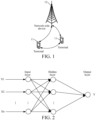
- FIG. 1 is a block diagram of a wireless communication system applicable in an embodiment of this application.
- the wireless communication system includes a terminal 11 and a network-side device 12.
- the terminal 11 may be a terminal-side device such as a mobile phone, a tablet personal computer (Tablet Personal Computer), a laptop computer (Laptop Computer) or a notebook computer, a personal digital assistant (Personal Digital Assistant, PDA), a hand-held computer, a netbook, an ultra-mobile personal computer (Ultra-Mobile Personal Computer, UMPC).
- a terminal-side device such as a mobile phone, a tablet personal computer (Tablet Personal Computer), a laptop computer (Laptop Computer) or a notebook computer, a personal digital assistant (Personal Digital Assistant, PDA), a hand-held computer, a netbook, an ultra-mobile personal computer (Ultra-Mobile Personal Computer, UMPC).
- PDA Personal Digital Assistant
- a mobile Internet device Mobile Internet Device, MID
- a robot a wearable device (Wearable Device)
- vehicle user equipment Vehicle User Equipment, VUE
- pedestrian user equipment Pedestrian User Equipment, PUE
- smart home home devices with wireless communication functions, such as refrigerators, televisions, washing machines, or furniture
- a game console a personal computers (Personal Computer, PC), an ATM or a self-service machine.
- PC Personal Computer
- the wearable device includes a smart watch, a smart bracelet, a smart headphone, smart glasses, a smart jewelry (smart bracelet, smart chain bracelet, smart ring, smart necklace, smart anklet, smart chain anklet, etc.), a smart wristband, smart clothing, etc. It is to be understood that the specific type of the terminal 11 is not limited in the embodiments of this application.
- the network-side device 12 may include an access network device or a core network device.
- the access network device 12 may also be referred to as a wireless access network device, a radio access network (Radio Access Network, RAN), a wireless access network function, or a wireless access network unit.
- Radio Access Network Radio Access Network
- the access network device 12 may include a base station, a wireless local area network (Wireless Local Area Network, WLAN) access point, a wireless fidelity (Wireless Fidelity, WiFi) node, etc.
- the base station may be referred to as node B, evolved node B (eNB), access point, base transceiver station (Base Transceiver Station, BTS), radio base station, radio transceiver, basic service set (Basic Service Set, BSS), extended service set (Extended Service Set, ESS), home node B, home evolved node B, transmission reception point (Transmission Reception Point, TRP), or some other suitable terms in the field, as long as the same technical effect is achieved.
- the base station is not limited to specific technical terms.
- the core network device may include, but not limited to, at least one of the following: a core network node, a core network function, a mobility management entity (Mobility Management Entity, MME), an access and mobility management function (Access and Mobility Management Function, AMF), a session management function (Session Management Function, SMF), a user plane function (User Plane Function, UPF), a policy control function (Policy Control Function, PCF), a policy and charging rules function (Policy and Charging Rules Function, PCRF), an edge application server discovery function (Edge Application Server Discovery Function, EASDF), unified data management (Unified Data Management, UDM), unified data repository (Unified Data Repository, UDR), a home subscription server (Home Subscription Server, HSS) centralized network configuration (Centralized Network Configuration, CNC), a network repository function (Network), a network repository function (Network), a network repository function (Network), a network repository function (Network), a network repository function (Network), a network repository function (
- Time series prediction is a method used by communication devices to predict future communication measurements based on observations of past communication measurements. Essentially, it is to explore the temporal correlation between the future and the history based on historical measurement data.
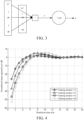
- FIG. 2 is a schematic diagram of a neural network.
- the neural network is composed of neurons.
- the schematic diagram of the neurons is as shown in FIG.
- ⁇ is an activation function.
- Common activation functions may include Sigmoid, tanh, rectified linear unit (Rectified Linear Unit, ReLU), and so on.
- Parameters of the neural networks may be optimized by using gradient optimization algorithms.
- Gradient optimization algorithms are a type of algorithms that minimize or maximize an objective function (also known as loss function).
- Loss function is often a mathematical combination of model parameters and data. For example, given data x and its corresponding label Y, after constructing a neural network model f( ), based on input x, a predicted output f(x) may be obtained, and a difference (f(x)-Y) between a predicted value and a true value may be calculated, which is called loss function.
- W and b When constructing the model, it is necessary to determine appropriate W and b to minimize the value of the loss function. The smaller the value of the loss function, the closer the model is to the real situation, that is, the higher the accuracy of the model.
- Error Back Propagation BP
- the basic idea of the BP algorithm is that the learning process is composed of two processes, i.e., forward propagation of signals and back propagation of errors.
- forward propagation input samples are passed in from an input layer, processed layer by layer by each hidden layer, and then transmitted to an output layer. If the actual output of the output layer does not match the expected output, it enters the back propagation stage of the error.
- Error back propagation is a process of transmitting an output error in a certain form through hidden layers layer by layer to the input layer, and distributing the error to all units in each layer to obtain an error signal of each unit. This error signal serves as a basis for correcting the weight of each unit.
- the process of adjusting the weight of each layer in signal forward propagation and error back propagation is repetitively carried out.
- the process of continuously adjusting the weight is the learning and training process of the neural network. This process continues until the error outputted by the network is reduced to an acceptable level, or until a predetermined number of learning iterations are reached.
- optimization algorithms may include gradient descent (Gradient Descent), stochastic gradient descent (Stochastic Gradient Descent, SGD), mini-batch gradient descent (Mini-Batch Gradient Descent), momentum (Momentum), stochastic gradient descent with momentum (Nesterov), adaptive gradient descent (ADAptive GRADient descent, Adagrad), Adadelta, root mean square prop (Root Mean Square prop RMSprop), adaptive moment estimation (Adaptive Moment Estimation, Adam), etc.
- gradient descent Gradient Descent
- stochastic gradient descent stochastic gradient descent with momentum
- ADAptive GRADient descent, Adagrad Adadelta
- root mean square prop Root Mean Square prop RMSprop
- adaptive moment estimation Adaptive Moment Estimation, Adam
- GP is a commonly used time series prediction model.
- GP is a machine learning method developed based on statistical learning theory and Bayesian theory, suitable for handling complex regression and classification problems with high dimensions, small samples and nonlinearity, and has strong generalization ability.
- GP has the advantages of easy implementation, small sample training, adaptive hyper-parameter acquisition, flexible non parametric inference, interpretability, and probabilistic output, and has the potential to solve complex time series prediction problems in future wireless communication systems.
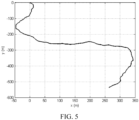
- FIG. 4 shows changes of a normalized mean squared error (normalized mean squared error, NMSE) of different training window sizes with prediction time units at moving speed of 30 km/h. Even when the training window size is only 4 time units, reliable results can still be obtained for the initial 2 time units of CSI prediction, and the prediction accuracy gradually decreases with time.
- NMSE normalized mean squared error
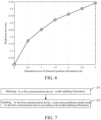
- FIG. 6 shows prediction of positions of next 5 time units (such as 200th, 210th, 220, 230th, 240th time units) at a position sampling interval of 10 time units based on positions of historical 20 time units (such as 0th, 10th, 20th, 30th,..., 190th time units).
- the predicted average position error changes with the position estimation error (the positions of historical 20 time units is estimated through the position reference signal PRS). Even if the estimation error of historical position information is 3 m, the prediction error is still less than 0.5 m.
- an embodiment of this application provides a method for updating a model.
- the method for updating a model can be applied to the wireless communication system shown in FIG. 1 .
- the method may include step 201 and step 202.
- a first communication device obtains model updating information.
- step 202 the first communication device updates a time series prediction model used by the first communication device according to the model updating information.
- the time series prediction model may be used for executing a prediction task.
- the model updating information may include at least one of the following:
- model updating information may also include any other possible updating information, which may be specifically determined according to actual use requirements and is not limited in this embodiment of this application.
- the first communication device can update a time series prediction model used by the first communication device according to the model updating information, so that the time series prediction model can execute the prediction task more accurately. In this way, the first communication device can achieve good communication performance.
- model updating information for example, at least one of updating information of a kernel function, updating information of model hyper-parameters, updating information of a prediction mode and updating information of a computing mode
- the prediction mode may include a structure of a time window for the prediction task.
- the structure of the time window may include at least one of the following:
- the prediction task may include at least one of position prediction and channel prediction (such as channel state information (Channel State Information, CSI) prediction).
- position prediction such as channel state information (Channel State Information, CSI) prediction.
- channel prediction such as channel state information (Channel State Information, CSI) prediction.
- the prediction task involved in this embodiment of this application may also include any other possible task, which may be specifically determined according to actual use requirements and is not limited in this embodiment of this application.
- the time unit may include, but not limited to, reference signal period, prediction period, time slot, half time slot, symbol (such as orthogonal frequency division multiplex (Orthogonal Frequency Division Multiplex, OFDM) symbol), sub-frame, radio frame, millisecond and second, which may be specifically determined according to actual usage requirements.
- reference signal period prediction period
- time slot half time slot
- symbol such as orthogonal frequency division multiplex (Orthogonal Frequency Division Multiplex, OFDM) symbol
- sub-frame radio frame
- millisecond and second which may be specifically determined according to actual usage requirements.
- the length of time units in a training window of the time series prediction model refers to number of consecutive time units contained in one training window.
- the length of time units in a prediction window of the time series prediction model refers to number of consecutive time units contained in one prediction window.
- the prediction task is to predict CSI, that is, to predict future M time units of CSI based on past N time units
- the length of time units in a training window of the time series prediction model is N
- the length of time units in a prediction window of the time series prediction model is M
- the interval of adjacent time units in the training window of the time series prediction model is 2
- the interval of adjacent time units in the prediction window of the time series prediction model is 2. Therefore, according to the CSI of 0, 2,..., 2N time units, the CSI of 2N+2, 2N+4,..., 2N+2M time units can be predicted.
- the model updating information may include at least one of the following:
- the first communication device may be a terminal or a network-side device, which may be specifically determined according to actual use requirements and is not limited in this embodiment of this application.
- the network-side device mentioned in this embodiment of this application may be:
- the first communication device may directly determine the model updating information according to information such as prediction task and/or prediction requirement.
- the first communication device may receive the model updating information from a second communication device.
- step 202 may be specifically implemented through step 203 and 202a.
- step 203 the second communication device transmits model updating information to the first communication device.
- step 202a the first communication device receives the model updating information from the second communication device.
- the second communication device may be a network-side device or a terminal.
- the second communication device in a case that the first communication device is a terminal, the second communication device may be a network-side device.
- the first communication device is a network-side device
- the second communication device may be a terminal. It may be specifically determined according to actual use requirements and is not limited in this embodiment of this application.
- the first communication device may store the same prediction model list as the second communication device, and the prediction model list may include identities of prediction modes. Therefore, in a case that the model updating information includes updating information of a prediction mode, the first communication device may determine the prediction mode indicated by the updating information of the prediction mode from the prediction model list.
- the second communication device may store the same prediction model list as the first communication device, and the prediction model list may include identities of prediction modes, so that the second communication device can configure an appropriate prediction mode for the first communication device according to the prediction model list.
- the second communication device may periodically transmit the model updating information to the first communication device, or non-periodically transmit the model updating information to the first communication device. It is to be understood that the first communication device may periodically update the time series prediction model or non-periodically update the time series prediction model.
- step 203 may be specifically implemented through step 203a.
- step 203a the second communication device transmits the model updating information to the first communication device according to fourth information.
- the fourth information may include at least one of the following:
- the second communication device may transmit the model updating information to the first communication device.
- the mobility information of the first communication device may include at least one of moving speed of the first communication device, beam switching information of the first communication device, and cell switching information of the first communication device.
- the second communication device may transmit the model updating information to the first communication device; and/or, in a case that the beam switching frequency of the first communication device is greater than a second preset threshold, the second communication device may transmit the model updating information to the first communication device; and/or, in a case that the first communication device has completed cell handover, the second communication device may transmit the model updating information to the first communication device.
- the prediction task may include at least one of position prediction and channel prediction.
- the statistical information of prediction results of the time series prediction model may include a mean value of prediction results and/or a variance of prediction results.
- the second communication device may transmit the model updating information to the first communication device.
- the prediction performance requirement may include at least one of prediction accuracy and computing delay.
- the prediction task may include at least one of position prediction and channel prediction.
- the prediction performance requirement and the prediction task involved in this embodiment of this application may also include any other possible performance requirement and task, which may be specifically determined according to actual use requirements and are not limited in this embodiment of this application.
- the environmental perception information may include, but not limited to, line of sight (Line Of Sight, LOS) environment, non-line of sight (Non-Line Of Sight, NLOS) environment, dense urban environment, and rural environment, which may be specifically determined according to actual use requirements.
- line of sight Line Of Sight, LOS
- non-line of sight Non-Line Of Sight, NLOS
- dense urban environment dense urban environment
- rural environment which may be specifically determined according to actual use requirements.
- the first communication device may transmit a model updating request to the second communication device to obtain the model updating information.
- the method for updating a model provided in this embodiment of this application may further include step 204 and step 205.
- step 204 the first communication device transmits model updating request information to the second communication device.
- step 205 the second communication device receives the model updating request information from the first communication device.
- the model updating request information may be used for requesting to obtain first updating information.
- the model updating information may include at least one of the following:
- the second communication device may transmit the first updating information requested to be obtained by the model updating request information to the first communication device according to the model updating request information, and/or transmit the second updating information except the first updating information to the first communication device.
- the second communication device may transmit the updating information of model hyper-parameters to the first communication device, that is, the model updating information includes the first updating information; and/or, the second communication device transmits at least one of updating information of a kernel function, updating information of a prediction mode, and updating information of a computing mode to the first communication device, that is, the model updating information includes the second updating information except the first updating information.
- the model updating request information may also indicate a condition or event that triggers the updating of the time series prediction model.
- the first communication device may periodically or non-periodically transmit a model updating request to the second communication device to obtain the model updating information.
- step 204 may be specifically implemented through step 204a.
- step 204a the first communication device transmits model updating request information to the second communication device according to first information.
- the first information may include at least one of the following:
- the first communication device may transmit the model updating request information to the second communication device; and/or, in a case that the beam switching frequency of the first communication device is greater than a second preset threshold, the first communication device may transmit the model updating request information to the second communication device; and/or, in a case that the first communication device has completed cell handover, the first communication device may transmit the model updating request information to the second communication device.
- the first communication device may transmit the model updating request information to the second communication device.
- step 204a it is updating of the time series prediction model triggered by a condition.
- step 204 may be specifically implemented through step 204b.
- step 204b the first communication device transmits the model updating request information to the second communication device in a case that a first condition is satisfied.
- the first condition may include at least one of the following:
- the model updating instruction information may be non-periodically (suddenly) transmitted to the first communication device by the second communication device. Therefore, after the first communication device receives the model updating instruction information, the first communication device may transmit the model updating request information to the second communication device, thus achieving the non-periodic updating of the time series prediction model.
- step 204b it is updating of the time series prediction model triggered by an event.
- the method for updating a model provided in this embodiment of this application may further include step 206 and step 207.
- step 206 the first communication device transmits first capacity information to the second communication device.
- step 207 the second communication device receives the first capacity information from the first communication device.
- the first capacity information may be used for indicating at least one of the following:
- the first capacity information may be used for indicating the capacity of the first communication device to update the configuration of the time series prediction model.
- the model optimizer configuration refers to a configuration of an optimizer used for updating the time series prediction model.
- the optimizer configuration may include at least one of the type and state of the optimizer.
- the optimizer configuration may also include other configuration information of the optimizer, which may be specifically determined according to actual use requirements and is not limited in this embodiment of this application.
- the model training configuration may include the storage capacity and computing capacity of the first communication device, and the second communication device may configure corresponding model updating information for the first communication device according to the model training configuration.
- the first communication device may not support a long training window size.
- the second communication device may configure the time series prediction model to the first communication device. After the first communication device receives the configuration information of the time series prediction model, the first communication device can provide feedback to the second communication device on whether the first communication device supports the time series prediction model.
- the method for updating a model provided in this embodiment of this application may further include step 208 to step 211.
- step 208 the second communication device transmits a first model configuration to the first communication device.
- step 209 the first communication device receives the first model configuration from the second communication device.
- step 210 the first communication device transmits first feedback information to the second communication device.
- step 211 the second communication device receives the first feedback information from the first communication device.
- the first feedback information may be used for indicating whether the first communication device supports the time series prediction model instructed by the first model configuration.
- the network side device may firstly configure a time series prediction model to the terminal, and then the terminal reports to the network-side device whether it supports the time series prediction model configured by the network-side device.
- the first communication device may firstly report the computing capacity of the first communication device to the second communication device, and then the second communication device may configure a time series prediction model to the first communication device according to the computing capacity.
- the method for updating a model provided in this embodiment of this application may further include step 212 to step 215.
- step 212 the first communication device transmits computing capacity information to the second communication device.
- the computing capacity information may be used for indicating the computing capacity of the first communication device.
- step 213 the second communication device receives the computing capacity information from the first communication device.
- step 214 the second communication device transmits a second model configuration to the first communication device.
- step 215 the first communication device receives the second model configuration from the second communication device.
- a time series prediction model instructed by the second model configuration may be determined according to at least one of the computing capacity of the first communication device, a processing delay, and a prediction performance requirement of the first communication device.
- the terminal may firstly report the computing capacity of the terminal to the network-side device. Then, after the network-side device receives the computing capacity information, the network-side device may determine how to configure a time series prediction model to the terminal according to the computing capacity of the terminal, the processing delay and the prediction performance requirement of the time series prediction model, so that the network-side device can transmit the second model configuration to the terminal to configure the time series prediction model to the terminal.
- the processing delay may include, but not limited to, a delay of model loading, a delay of data reading-in and reading-out, and a delay of model computing, which may be specifically determined according to actual use requirements.
- the method for updating a model provided in this embodiment of this application may further include step 216 and step 217.
- the first communication device transmits second information or updating recommendation information of the time series prediction model to the second communication device.
- the second communication device receives the second information or updating recommendation information of the time series prediction model from the first communication device.
- the model updating information is determined according to the second information.
- the updating recommendation information may include at least one of the following: recommendation information of a kernel function, recommendation information of model hyper-parameters, recommendation information of a prediction mode, and recommendation information of a computing mode.
- the second communication device may transmit corresponding model updating information to the first communication device according to the updating recommendation information.
- the updating recommendation information may also include any other possible recommendation information, which may be specifically determined according to actual use requirements.
- the second information may include at least one of the following:
- the statistical information of estimation errors of the time series prediction model may be a mean value and/or a variance of estimation errors of the time series prediction model. Since GP predicts unknown information based on known information, the estimation errors of time series prediction model may be estimation errors of known information (historical information). For example, in channel state information (Channel State Information, CSI) prediction, the CSI of past N time units is estimated based on pilot (sounding reference signal (Sounding Reference Signal, SRS)), and there is an estimation error.
- CSI Channel State Information
- SRS Sounding Reference Signal
- the statistical information of model prediction errors may be at least one of a mean value of model prediction errors and a variance of model prediction errors, which may be specifically determined according to actual use requirements.
- the statistical information of noise may include signal-to-noise ratio and signal-to-interference-plus-noise ratio. It may be specifically determined according to actual use requirements and is not limited in this embodiment of this application.
- the method for updating a model provided in this embodiment of this application may further include step 218 and step 219.
- step 218 the first communication device transmits second capacity information to the second communication device.
- step 219 the second communication device receives the second capacity information from the first communication device.
- the second capacity information may include at least one of the following:
- the second capacity information may be used for indicating the hardware capacity of the first communication device.
- the second capacity information may include at least one of the following:
- the computing mode may include the following:
- the method for updating a model provided in this embodiment of this application may further include step 220 and step 221.
- step 220 the second communication device transmits third information to the first communication device.
- step 221 the first communication device receives the third information from the second communication device.
- the third information may include at least one of the following:
- a dataset may be partitioned into N parts to train N sub-models of the time series prediction model.
- the N sub-models are trained together and have a common optimization goal or loss function.
- the process of optimizing the optimization goal is a process of training the N sub-models simultaneously.
- the first communication device can update the time series prediction model used by the first communication device according to the model updating information, so that the time series prediction model can execute a prediction task more accurately, thus enabling the first communication device to achieve good communication performance.
- the method for updating a model provided in this embodiment of this application can be executed by an apparatus for updating a model.
- the apparatus for updating a model provided in this embodiment of this application is described by taking the apparatus for updating a model executing the method for updating a model as an example.
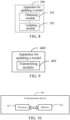
- an embodiment of this application provides an apparatus for updating a model 300.
- the apparatus for updating a model 300 may include an acquisition module 301 and an updating module 302.
- the acquisition module 301 may be configured to obtain model updating information.
- the updating module 302 may be configured to update a time series prediction model used by the first communication device according to the model updating information.
- the time series prediction model is used for executing a prediction task.
- the model updating information includes at least one of the following:
- the acquisition module may include a receiving sub-module.
- the receiving sub-module may be configured to receive model updating information from a second communication device.
- the apparatus for updating a model may further include a transmitting module.
- the transmitting module may be configured to transmit model updating request information to the second communication device.
- the model updating request information is used for requesting to obtain first updating information,
- the model updating information includes at least one of the following:
- the transmitting module may be specifically configured to transmit model updating request information to the second communication device according to first information.
- the first information includes at least one of the following:
- the transmitting module may be specifically configured to transmit the model updating request information to the second communication device in a case that a first condition is satisfied.
- the first condition includes at least one of the following:
- the prediction performance requirement includes at least one of prediction accuracy and computing delay.
- the apparatus for updating a model may further include a transmitting module.
- the transmitting module may be configured to transmit first capacity information to the second communication device.
- the first capacity information is used for indicating at least one of the following:
- the apparatus for updating a model may further include a receiving module and a transmitting module.
- the receiving module may be configured to receive a first model configuration from the second communication device.
- the transmitting module may be configured to transmit first feedback information to the second communication device.
- the first feedback information is used for indicating whether the first communication device supports a time series prediction model instructed by the first model configuration.
- the apparatus for updating a model may further include a transmitting module and a receiving module.
- the transmitting module may be configured to transmit computing capacity information to the second communication device.
- the computing capacity information is used for indicating the computing capacity of the first communication device.
- the receiving module may be configured to receive a second model configuration from the second communication device.
- a time series prediction model instructed by the second model configuration is determined according to at least one of the computing capacity, a processing delay, and a prediction performance requirement of the time series prediction model.
- the apparatus for updating a model may further include a transmitting module.
- the transmitting module may be configured to transmit second information or updating recommendation information of the time series prediction model to the second communication device.
- the model updating information is determined according to the second information.
- the second information includes at least one of the following:
- the prediction mode includes a structure of a time window for the prediction task, and the structure of the time window includes at least one of the following:
- the first communication device stores the same prediction model list as the second communication device, and the prediction model list includes identities of prediction modes.
- the model updating information includes updating information of the computing mode; the apparatus for updating a model may further include a transmitting module.
- the transmitting module may be configured to, before the receiving sub-module receives model updating information from the second communication device, transmit second capacity information to the second communication device.
- the second capacity information includes at least one of the following:
- the second capacity information further includes at least one of the following:
- the updating information of the computing mode instructs to update the computing mode of the time series prediction model to a parallel computing mode.
- the apparatus for updating a model may further include a receiving module.
- the receiving module may be configured to receive third information from the second communication device.
- the third information includes at least one of the following:
- model updating information further includes at least one of the following:
- the apparatus for updating a model can update the time series prediction model used by the first communication device according to the model updating information, so that the time series prediction model can execute a prediction task more accurately, thus enabling the first communication device to achieve good communication performance.
- an embodiment of this application provides an apparatus for updating a model 400.
- the apparatus for updating a model 400 may include a transmitting module 401.
- the transmitting module 401 may be configured to transmit model updating information to a first communication device.
- the model updating information is used for updating a time series prediction model used by the first communication device.
- the time series prediction model is used for executing a prediction task.
- the model updating information includes at least one of the following:
- the transmitting module may be specifically configured to transmit model updating information to the first communication device according to fourth information.
- the fourth information includes at least one of the following:
- the apparatus for updating a model may further include a receiving module.
- the receiving module may be configured to receive model updating request information from the first communication device.
- the model updating request information is used for requesting to obtain first updating information.
- the model updating information includes at least one of the following:
- the apparatus for updating a model may further include a receiving module.
- the receiving module may be configured to receive first capacity information from the first communication device.
- the first capacity information is used for indicating at least one of the following:
- the apparatus for updating a model may further include a receiving module.
- the transmitting module may be further configured to transmit a first model configuration to the first communication device.
- the receiving module may be configured to receive first feedback information from the first communication device. The first feedback information is used for indicating whether the first communication device supports a time series prediction model instructed by the first model configuration.
- the apparatus for updating a model may further include a receiving module.
- the receiving module may be configured to receive computing capacity information from the first communication device.
- the computing capacity information is used for indicating the computing capacity of the first communication device.
- the transmitting module may be further configured to transmit a second model configuration to the first communication device.
- a time series prediction model instructed by the second model configuration is determined according to at least one of the computing capacity, a processing delay, and a prediction performance requirement of the time series prediction model.
- the apparatus for updating a model may further include a receiving module.
- the receiving module may be configured to receive second information or updating recommendation information of the time series prediction model from the first communication device.
- the model updating information is determined according to the second information.
- the second information may include at least one of the following: statistical information of prediction results of the time series prediction model;
- the prediction mode includes a structure of a time window for the prediction task, and the structure of the time window includes at least one of the following:
- the second communication device stores the same prediction model list as the first communication device, and the prediction model list includes identities of prediction modes.
- the model updating information includes updating information of the computing mode; the apparatus for updating a model may further include a receiving module.
- the receiving module may be configured to, before the transmitting module transmits model updating information to the first communication device, receive second capacity information from the first communication device.
- the second capacity information includes at least one of the following:
- the second capacity information further includes at least one of the following:
- the updating information of the computing mode instructs to update the computing mode of the time series prediction model to a parallel computing mode
- the transmitting module is further configured to transmit third information to the first communication device.
- the third information includes at least one of the following:
- model updating information further includes at least one of the following:
- the apparatus for updating a model can transmit the model updating information to the first communication device, resulting in that the first communication device can update the time series prediction model used by the first communication device according to the model updating information, so that the time series prediction model can execute a prediction task more accurately, thus enabling the first communication device to achieve good communication performance.
- the apparatus for updating a model may be a communication device, such as a communication device with an operating system, or a component within a communication device, such as an integrated circuit or chip.
- the communication device may be a terminal or any other device except a terminal, such as a network-side device.
- the terminal may include but is not limited to the type of the terminal 11 listed above, and the other device may be a core network device or an access network device, a server, a network attached storage (Network Attached Storage, NAS) device or the like, which is not specifically limited in this embodiment of this application.
- NAS Network Attached Storage
- the apparatus for updating a model provided in this embodiment of this application can implement the various processes implemented in the embodiment of the method for updating a model and achieve the same technical effect. To avoid repetition, it will not be repeated here.
- an embodiment of this application further provides a communication device 500, which includes a processor 501 and a memory 502.
- a program or instruction executable on the processor 501 is stored on the memory 502.
- the program or instruction when executed by the processor 501, implements the various steps of the embodiment of the method for updating a model, and can achieve the same technical effect.
- the communication device 500 is a network-side device
- the program or instruction when executed by the processor 501, implements the various steps of the embodiment of the method for updating a model, and can achieve the same technical effect. To avoid repetition, it will not be repeated here.
- An embodiment of this application further provides a communication device, which includes a processor and a communication interface.
- the communication interface is configured to obtain model updating information in a case that the communication device is a first communication device.
- the processor is configured to update a time series prediction model used by the first communication device according to the model updating information.
- the communication interface is configured to transmit model updating information to a first communication device in case that the communication device is a second communication device.
- the model updating information is used for updating a time series prediction model used by the first communication device.
- the time series prediction model is used for executing a prediction task.
- the model updating information includes at least one of the following: updating information of a kernel function; updating information of model hyper-parameters; updating information of a prediction mode; and updating information of a computing mode.
- a communication device 600 includes an antenna 61, a radio frequency apparatus 62, a baseband apparatus 63, a processor 64, and a memory 65.
- the antenna 61 is connected with the radio frequency apparatus 62.
- the radio frequency apparatus 62 receives information through the antenna 61 and transmits the received information to the baseband apparatus 63 for processing.
- the baseband apparatus 63 processes the information to be transmitted and transmits it to the radio frequency apparatus 62.
- the radio frequency apparatus 62 processes the received information and transmits it out through the antenna 61.
- the method executed by the communication device (including the first communication device and the second communication device) in the above embodiments can be implemented in the baseband apparatus 63.
- the baseband apparatus 63 includes a baseband processor.
- the baseband apparatus 63 may include, for example, at least one baseband board. Multiple chips are provided on the baseband board. Referring to FIG. 11 , one chip, for example, is the baseband processor connected with the memory 65 through a bus interface and configured to call a program in the memory 65 and perform operations on the network-side device illustrated in the method embodiment.
- the communication device may further include a network interface 66.
- the interface is, for example, a common public radio interface (Common Public Radio Interface, CPRI).
- CPRI Common Public Radio Interface
- the communication device 600 in this embodiment of this application further includes: an instruction or program stored in the memory 65 and executable on the processor 64.
- the processor 64 calls the instruction or program in the memory 65 to implement the method implemented by each module illustrated in FIG. 8 or FIG. 9 and achieve the same technical effect. To avoid repetition, it will not be repeated here.
- An embodiment of this application further provides a readable storage medium.
- a program or instruction is stored on the readable storage medium.
- the program or instruction when executed by the processor, implements the various processes of the embodiment of the method for updating a model, and can achieve the same technical effect. To avoid repetition, it will not be repeated here.
- the processor is a processor in the terminal in the above embodiment.
- the readable storage medium may include a computer-readable storage medium, such as a Read-Only Memory (ROM), a Random Access Memory (RAM), a magnetic disk, an optical disc, or the like.
- An embodiment of this application further provides a chip.
- the chip includes a processor and a communication interface coupled to the processor.
- the processor is configured to run a program or instruction to implement the various processes of the embodiment of the method for updating a model, and can achieve the same technical effect. To avoid repetition, it will not be repeated here.
- chip provided in this embodiment of this application may also be referred to as system level chip, system chip, chip system, or system on chip.
- An embodiment of this application further provides a computer program/program product.
- the computer program/program product is stored on a storage medium.
- the computer program/program product when executed by at least one processor, implements the various processes of the embodiment of the method for updating a model, and can achieve the same technical effect. To avoid repetition, it will not be repeated here.
- An embodiment of this application further provides a communication, system, which includes a terminal and a network-side device.
- the terminal may be configured to execute the steps of the method for updating a model above.
- the network-side device may be configured to execute the steps of the method for updating a model above.
Landscapes
- Engineering & Computer Science (AREA)
- Theoretical Computer Science (AREA)
- Physics & Mathematics (AREA)
- Software Systems (AREA)
- Artificial Intelligence (AREA)
- Evolutionary Computation (AREA)
- General Engineering & Computer Science (AREA)
- Data Mining & Analysis (AREA)
- Computing Systems (AREA)
- General Physics & Mathematics (AREA)
- Mathematical Physics (AREA)
- Computational Linguistics (AREA)
- Signal Processing (AREA)
- Computer Networks & Wireless Communication (AREA)
- Computer Vision & Pattern Recognition (AREA)
- Medical Informatics (AREA)
- Biophysics (AREA)
- Molecular Biology (AREA)
- Electromagnetism (AREA)
- General Health & Medical Sciences (AREA)
- Biomedical Technology (AREA)
- Life Sciences & Earth Sciences (AREA)
- Health & Medical Sciences (AREA)
- Mobile Radio Communication Systems (AREA)
Applications Claiming Priority (2)
| Application Number | Priority Date | Filing Date | Title |
|---|---|---|---|
| CN202111652530.0A CN116418432A (zh) | 2021-12-30 | 2021-12-30 | 模型更新方法及通信设备 |
| PCT/CN2022/143594 WO2023125855A1 (zh) | 2021-12-30 | 2022-12-29 | 模型更新方法及通信设备 |
Publications (2)
| Publication Number | Publication Date |
|---|---|
| EP4459898A1 true EP4459898A1 (de) | 2024-11-06 |
| EP4459898A4 EP4459898A4 (de) | 2025-03-19 |
Family
ID=86998074
Family Applications (1)
| Application Number | Title | Priority Date | Filing Date |
|---|---|---|---|
| EP22915104.8A Pending EP4459898A4 (de) | 2021-12-30 | 2022-12-29 | Modellaktualisierungsverfahren und kommunikationsvorrichtung |
Country Status (4)
| Country | Link |
|---|---|
| US (1) | US20240354659A1 (de) |
| EP (1) | EP4459898A4 (de) |
| CN (1) | CN116418432A (de) |
| WO (1) | WO2023125855A1 (de) |
Families Citing this family (2)
| Publication number | Priority date | Publication date | Assignee | Title |
|---|---|---|---|---|
| WO2025035991A1 (en) * | 2023-08-14 | 2025-02-20 | Mediatek Inc. | Method and apparatus for artificial intelligence-based channel state information prediction in mobile communications |
| CN120238893A (zh) * | 2023-12-29 | 2025-07-01 | 维沃移动通信有限公司 | 信息指示方法、装置、通信设备及可读存储介质 |
Family Cites Families (11)
| Publication number | Priority date | Publication date | Assignee | Title |
|---|---|---|---|---|
| US10783452B2 (en) * | 2017-04-28 | 2020-09-22 | International Business Machines Corporation | Learning apparatus and method for learning a model corresponding to a function changing in time series |
| EP3591586A1 (de) * | 2018-07-06 | 2020-01-08 | Capital One Services, LLC | Datenmodellerzeugung mittels generativer konfliktärer netzwerke und vollautomatisches maschinenlernsystem zur erzeugung und optimierung von lösungen für einen datensatz und ein gewünschtes ergebnis |
| US10635939B2 (en) * | 2018-07-06 | 2020-04-28 | Capital One Services, Llc | System, method, and computer-accessible medium for evaluating multi-dimensional synthetic data using integrated variants analysis |
| CN110890930B (zh) * | 2018-09-10 | 2021-06-01 | 华为技术有限公司 | 一种信道预测方法、相关设备及存储介质 |
| CN111797870A (zh) * | 2019-04-09 | 2020-10-20 | Oppo广东移动通信有限公司 | 算法模型的优化方法、装置、存储介质及电子设备 |
| CN110472798A (zh) * | 2019-08-22 | 2019-11-19 | 腾讯科技(深圳)有限公司 | 时间序列数据的预测方法、装置及计算机可读存储介质 |
| CN110909884A (zh) * | 2019-11-04 | 2020-03-24 | 深圳力维智联技术有限公司 | 一种用于更新参数模型的方法、装置、产品及介质 |
| CN113570062B (zh) * | 2020-04-28 | 2023-10-10 | 大唐移动通信设备有限公司 | 机器学习模型参数传递方法及装置 |
| CN112512058B (zh) * | 2020-05-24 | 2025-07-25 | 中兴通讯股份有限公司 | 网络优化方法、服务器、客户端设备、网络设备和介质 |
| CN113052388A (zh) * | 2021-04-01 | 2021-06-29 | 北京工商大学 | 一种时间序列预测方法及装置 |
| CN113407820B (zh) * | 2021-05-29 | 2023-09-15 | 华为技术有限公司 | 利用模型进行数据处理的方法及相关系统、存储介质 |
-
2021
- 2021-12-30 CN CN202111652530.0A patent/CN116418432A/zh active Pending
-
2022
- 2022-12-29 EP EP22915104.8A patent/EP4459898A4/de active Pending
- 2022-12-29 WO PCT/CN2022/143594 patent/WO2023125855A1/zh not_active Ceased
-
2024
- 2024-06-28 US US18/757,854 patent/US20240354659A1/en active Pending
Also Published As
| Publication number | Publication date |
|---|---|
| EP4459898A4 (de) | 2025-03-19 |
| CN116418432A (zh) | 2023-07-11 |
| WO2023125855A1 (zh) | 2023-07-06 |
| US20240354659A1 (en) | 2024-10-24 |
Similar Documents
| Publication | Publication Date | Title |
|---|---|---|
| US20240354659A1 (en) | Method for Updating Model and Communication Device | |
| CN116233906B (zh) | 测量方法、装置、设备及存储介质 | |
| EP4459498A1 (de) | Modellkonstruktionsverfahren und -vorrichtung und kommunikationsvorrichtung | |
| US20250227507A1 (en) | Ai model processing method and apparatus, and communication device | |
| US20260025184A1 (en) | Method and apparatus for monitoring csi prediction performance, terminal, and network-side device | |
| WO2023179540A1 (zh) | 信道预测方法、装置及无线通信设备 | |
| WO2024083004A1 (zh) | Ai模型配置方法、终端及网络侧设备 | |
| CN118785234A (zh) | 基于ai的csi预测的数据采集方法及装置 | |
| US20240428098A1 (en) | Data Processing Method in Communication Network, and Network-Side Device | |
| WO2024169794A1 (zh) | 模型监督方法及通信设备 | |
| WO2023155839A1 (zh) | Ai模型的在线学习方法、装置、通信设备及可读存储介质 | |
| CN119485270A (zh) | 信息上报方法、信息接收方法及设备 | |
| WO2025092999A1 (zh) | 模型性能监督方法、装置及设备 | |
| WO2024235140A1 (zh) | 定位处理方法、装置及设备 | |
| CN120238453A (zh) | Csi预测方法、csi预测结果的监控方法、装置、设备及可读存储介质 | |
| CN121771794A (zh) | 信息确定方法、装置、终端及网络侧设备 | |
| CN120162207A (zh) | Ai功能的性能监督方法、装置、网络侧设备及终端设备 | |
| CN118042399A (zh) | 模型监督方法、终端及网络侧设备 | |
| CN120238833A (zh) | 信息上报方法、装置、第一设备及第二设备 | |
| WO2025214259A1 (zh) | 用于定位的人工智能ai模型的测试或监控方法及终端 | |
| CN120201410A (zh) | 传输方法、装置、终端及网络侧设备 | |
| WO2025140432A1 (zh) | 信息上报方法及装置 | |
| CN122002305A (zh) | Ai模型管理方法、装置及通信设备 | |
| CN121711621A (zh) | 无线通信方法、装置及设备 | |
| CN121510039A (zh) | 关联标识的关联范围的确定方法、装置、通信设备及介质 |
Legal Events
| Date | Code | Title | Description |
|---|---|---|---|
| STAA | Information on the status of an ep patent application or granted ep patent |
Free format text: STATUS: THE INTERNATIONAL PUBLICATION HAS BEEN MADE |
|
| PUAI | Public reference made under article 153(3) epc to a published international application that has entered the european phase |
Free format text: ORIGINAL CODE: 0009012 |
|
| STAA | Information on the status of an ep patent application or granted ep patent |
Free format text: STATUS: REQUEST FOR EXAMINATION WAS MADE |
|
| 17P | Request for examination filed |
Effective date: 20240725 |
|
| AK | Designated contracting states |
Kind code of ref document: A1 Designated state(s): AL AT BE BG CH CY CZ DE DK EE ES FI FR GB GR HR HU IE IS IT LI LT LU LV MC ME MK MT NL NO PL PT RO RS SE SI SK SM TR |
|
| A4 | Supplementary search report drawn up and despatched |
Effective date: 20250213 |
|
| RIC1 | Information provided on ipc code assigned before grant |
Ipc: G06N 3/08 20230101ALI20250207BHEP Ipc: G06N 20/00 20190101ALI20250207BHEP Ipc: H04B 17/391 20150101AFI20250207BHEP |
|
| DAV | Request for validation of the european patent (deleted) | ||
| DAX | Request for extension of the european patent (deleted) |