EP4459612A1 - Vehicle road noise control method and system based on active noise cancellation, electronic equipment and storage medium - Google Patents
Vehicle road noise control method and system based on active noise cancellation, electronic equipment and storage medium Download PDFInfo
- Publication number
- EP4459612A1 EP4459612A1 EP22913888.8A EP22913888A EP4459612A1 EP 4459612 A1 EP4459612 A1 EP 4459612A1 EP 22913888 A EP22913888 A EP 22913888A EP 4459612 A1 EP4459612 A1 EP 4459612A1
- Authority
- EP
- European Patent Office
- Prior art keywords
- reference signal
- vehicle
- matrix
- filter
- road noise
- Prior art date
- Legal status (The legal status is an assumption and is not a legal conclusion. Google has not performed a legal analysis and makes no representation as to the accuracy of the status listed.)
- Pending
Links
Images

Classifications
-
- G—PHYSICS
- G10—MUSICAL INSTRUMENTS; ACOUSTICS
- G10K—SOUND-PRODUCING DEVICES; METHODS OR DEVICES FOR PROTECTING AGAINST, OR FOR DAMPING, NOISE OR OTHER ACOUSTIC WAVES IN GENERAL; ACOUSTICS NOT OTHERWISE PROVIDED FOR
- G10K11/00—Methods or devices for transmitting, conducting or directing sound in general; Methods or devices for protecting against, or for damping, noise or other acoustic waves in general
- G10K11/16—Methods or devices for protecting against, or for damping, noise or other acoustic waves in general
- G10K11/175—Methods or devices for protecting against, or for damping, noise or other acoustic waves in general using interference effects; Masking sound
- G10K11/178—Methods or devices for protecting against, or for damping, noise or other acoustic waves in general using interference effects; Masking sound by electro-acoustically regenerating the original acoustic waves in anti-phase
- G10K11/1781—Methods or devices for protecting against, or for damping, noise or other acoustic waves in general using interference effects; Masking sound by electro-acoustically regenerating the original acoustic waves in anti-phase characterised by the analysis of input or output signals, e.g. frequency range, modes, transfer functions
- G10K11/17813—Methods or devices for protecting against, or for damping, noise or other acoustic waves in general using interference effects; Masking sound by electro-acoustically regenerating the original acoustic waves in anti-phase characterised by the analysis of input or output signals, e.g. frequency range, modes, transfer functions characterised by the analysis of the acoustic paths, e.g. estimating, calibrating or testing of transfer functions or cross-terms
- G10K11/17815—Methods or devices for protecting against, or for damping, noise or other acoustic waves in general using interference effects; Masking sound by electro-acoustically regenerating the original acoustic waves in anti-phase characterised by the analysis of input or output signals, e.g. frequency range, modes, transfer functions characterised by the analysis of the acoustic paths, e.g. estimating, calibrating or testing of transfer functions or cross-terms between the reference signals and the error signals, i.e. primary path
-
- G—PHYSICS
- G10—MUSICAL INSTRUMENTS; ACOUSTICS
- G10K—SOUND-PRODUCING DEVICES; METHODS OR DEVICES FOR PROTECTING AGAINST, OR FOR DAMPING, NOISE OR OTHER ACOUSTIC WAVES IN GENERAL; ACOUSTICS NOT OTHERWISE PROVIDED FOR
- G10K11/00—Methods or devices for transmitting, conducting or directing sound in general; Methods or devices for protecting against, or for damping, noise or other acoustic waves in general
- G10K11/16—Methods or devices for protecting against, or for damping, noise or other acoustic waves in general
- G10K11/175—Methods or devices for protecting against, or for damping, noise or other acoustic waves in general using interference effects; Masking sound
- G10K11/178—Methods or devices for protecting against, or for damping, noise or other acoustic waves in general using interference effects; Masking sound by electro-acoustically regenerating the original acoustic waves in anti-phase
- G10K11/1785—Methods, e.g. algorithms; Devices
- G10K11/17853—Methods, e.g. algorithms; Devices of the filter
- G10K11/17854—Methods, e.g. algorithms; Devices of the filter the filter being an adaptive filter
-
- B—PERFORMING OPERATIONS; TRANSPORTING
- B60—VEHICLES IN GENERAL
- B60K—ARRANGEMENT OR MOUNTING OF PROPULSION UNITS OR OF TRANSMISSIONS IN VEHICLES; ARRANGEMENT OR MOUNTING OF PLURAL DIVERSE PRIME-MOVERS IN VEHICLES; AUXILIARY DRIVES FOR VEHICLES; INSTRUMENTATION OR DASHBOARDS FOR VEHICLES; ARRANGEMENTS IN CONNECTION WITH COOLING, AIR INTAKE, GAS EXHAUST OR FUEL SUPPLY OF PROPULSION UNITS IN VEHICLES
- B60K35/00—Instruments specially adapted for vehicles; Arrangement of instruments in or on vehicles
- B60K35/10—Input arrangements, i.e. from user to vehicle, associated with vehicle functions or specially adapted therefor
-
- B—PERFORMING OPERATIONS; TRANSPORTING
- B60—VEHICLES IN GENERAL
- B60K—ARRANGEMENT OR MOUNTING OF PROPULSION UNITS OR OF TRANSMISSIONS IN VEHICLES; ARRANGEMENT OR MOUNTING OF PLURAL DIVERSE PRIME-MOVERS IN VEHICLES; AUXILIARY DRIVES FOR VEHICLES; INSTRUMENTATION OR DASHBOARDS FOR VEHICLES; ARRANGEMENTS IN CONNECTION WITH COOLING, AIR INTAKE, GAS EXHAUST OR FUEL SUPPLY OF PROPULSION UNITS IN VEHICLES
- B60K35/00—Instruments specially adapted for vehicles; Arrangement of instruments in or on vehicles
- B60K35/20—Output arrangements, i.e. from vehicle to user, associated with vehicle functions or specially adapted therefor
- B60K35/26—Output arrangements, i.e. from vehicle to user, associated with vehicle functions or specially adapted therefor using acoustic output
-
- G—PHYSICS
- G10—MUSICAL INSTRUMENTS; ACOUSTICS
- G10K—SOUND-PRODUCING DEVICES; METHODS OR DEVICES FOR PROTECTING AGAINST, OR FOR DAMPING, NOISE OR OTHER ACOUSTIC WAVES IN GENERAL; ACOUSTICS NOT OTHERWISE PROVIDED FOR
- G10K11/00—Methods or devices for transmitting, conducting or directing sound in general; Methods or devices for protecting against, or for damping, noise or other acoustic waves in general
- G10K11/16—Methods or devices for protecting against, or for damping, noise or other acoustic waves in general
- G10K11/175—Methods or devices for protecting against, or for damping, noise or other acoustic waves in general using interference effects; Masking sound
- G10K11/178—Methods or devices for protecting against, or for damping, noise or other acoustic waves in general using interference effects; Masking sound by electro-acoustically regenerating the original acoustic waves in anti-phase
- G10K11/1781—Methods or devices for protecting against, or for damping, noise or other acoustic waves in general using interference effects; Masking sound by electro-acoustically regenerating the original acoustic waves in anti-phase characterised by the analysis of input or output signals, e.g. frequency range, modes, transfer functions
- G10K11/17821—Methods or devices for protecting against, or for damping, noise or other acoustic waves in general using interference effects; Masking sound by electro-acoustically regenerating the original acoustic waves in anti-phase characterised by the analysis of input or output signals, e.g. frequency range, modes, transfer functions characterised by the analysis of the input signals only
- G10K11/17823—Reference signals, e.g. ambient acoustic environment
-
- G—PHYSICS
- G10—MUSICAL INSTRUMENTS; ACOUSTICS
- G10K—SOUND-PRODUCING DEVICES; METHODS OR DEVICES FOR PROTECTING AGAINST, OR FOR DAMPING, NOISE OR OTHER ACOUSTIC WAVES IN GENERAL; ACOUSTICS NOT OTHERWISE PROVIDED FOR
- G10K11/00—Methods or devices for transmitting, conducting or directing sound in general; Methods or devices for protecting against, or for damping, noise or other acoustic waves in general
- G10K11/16—Methods or devices for protecting against, or for damping, noise or other acoustic waves in general
- G10K11/175—Methods or devices for protecting against, or for damping, noise or other acoustic waves in general using interference effects; Masking sound
- G10K11/178—Methods or devices for protecting against, or for damping, noise or other acoustic waves in general using interference effects; Masking sound by electro-acoustically regenerating the original acoustic waves in anti-phase
- G10K11/1781—Methods or devices for protecting against, or for damping, noise or other acoustic waves in general using interference effects; Masking sound by electro-acoustically regenerating the original acoustic waves in anti-phase characterised by the analysis of input or output signals, e.g. frequency range, modes, transfer functions
- G10K11/17821—Methods or devices for protecting against, or for damping, noise or other acoustic waves in general using interference effects; Masking sound by electro-acoustically regenerating the original acoustic waves in anti-phase characterised by the analysis of input or output signals, e.g. frequency range, modes, transfer functions characterised by the analysis of the input signals only
- G10K11/17825—Error signals
-
- G—PHYSICS
- G10—MUSICAL INSTRUMENTS; ACOUSTICS
- G10K—SOUND-PRODUCING DEVICES; METHODS OR DEVICES FOR PROTECTING AGAINST, OR FOR DAMPING, NOISE OR OTHER ACOUSTIC WAVES IN GENERAL; ACOUSTICS NOT OTHERWISE PROVIDED FOR
- G10K11/00—Methods or devices for transmitting, conducting or directing sound in general; Methods or devices for protecting against, or for damping, noise or other acoustic waves in general
- G10K11/16—Methods or devices for protecting against, or for damping, noise or other acoustic waves in general
- G10K11/175—Methods or devices for protecting against, or for damping, noise or other acoustic waves in general using interference effects; Masking sound
- G10K11/178—Methods or devices for protecting against, or for damping, noise or other acoustic waves in general using interference effects; Masking sound by electro-acoustically regenerating the original acoustic waves in anti-phase
- G10K11/1785—Methods, e.g. algorithms; Devices
- G10K11/17855—Methods, e.g. algorithms; Devices for improving speed or power requirements
-
- G—PHYSICS
- G10—MUSICAL INSTRUMENTS; ACOUSTICS
- G10K—SOUND-PRODUCING DEVICES; METHODS OR DEVICES FOR PROTECTING AGAINST, OR FOR DAMPING, NOISE OR OTHER ACOUSTIC WAVES IN GENERAL; ACOUSTICS NOT OTHERWISE PROVIDED FOR
- G10K11/00—Methods or devices for transmitting, conducting or directing sound in general; Methods or devices for protecting against, or for damping, noise or other acoustic waves in general
- G10K11/16—Methods or devices for protecting against, or for damping, noise or other acoustic waves in general
- G10K11/175—Methods or devices for protecting against, or for damping, noise or other acoustic waves in general using interference effects; Masking sound
- G10K11/178—Methods or devices for protecting against, or for damping, noise or other acoustic waves in general using interference effects; Masking sound by electro-acoustically regenerating the original acoustic waves in anti-phase
- G10K11/1787—General system configurations
- G10K11/17879—General system configurations using both a reference signal and an error signal
-
- G—PHYSICS
- G10—MUSICAL INSTRUMENTS; ACOUSTICS
- G10K—SOUND-PRODUCING DEVICES; METHODS OR DEVICES FOR PROTECTING AGAINST, OR FOR DAMPING, NOISE OR OTHER ACOUSTIC WAVES IN GENERAL; ACOUSTICS NOT OTHERWISE PROVIDED FOR
- G10K11/00—Methods or devices for transmitting, conducting or directing sound in general; Methods or devices for protecting against, or for damping, noise or other acoustic waves in general
- G10K11/16—Methods or devices for protecting against, or for damping, noise or other acoustic waves in general
- G10K11/175—Methods or devices for protecting against, or for damping, noise or other acoustic waves in general using interference effects; Masking sound
- G10K11/178—Methods or devices for protecting against, or for damping, noise or other acoustic waves in general using interference effects; Masking sound by electro-acoustically regenerating the original acoustic waves in anti-phase
- G10K11/1787—General system configurations
- G10K11/17879—General system configurations using both a reference signal and an error signal
- G10K11/17881—General system configurations using both a reference signal and an error signal the reference signal being an acoustic signal, e.g. recorded with a microphone
-
- G—PHYSICS
- G10—MUSICAL INSTRUMENTS; ACOUSTICS
- G10K—SOUND-PRODUCING DEVICES; METHODS OR DEVICES FOR PROTECTING AGAINST, OR FOR DAMPING, NOISE OR OTHER ACOUSTIC WAVES IN GENERAL; ACOUSTICS NOT OTHERWISE PROVIDED FOR
- G10K11/00—Methods or devices for transmitting, conducting or directing sound in general; Methods or devices for protecting against, or for damping, noise or other acoustic waves in general
- G10K11/16—Methods or devices for protecting against, or for damping, noise or other acoustic waves in general
- G10K11/175—Methods or devices for protecting against, or for damping, noise or other acoustic waves in general using interference effects; Masking sound
- G10K11/178—Methods or devices for protecting against, or for damping, noise or other acoustic waves in general using interference effects; Masking sound by electro-acoustically regenerating the original acoustic waves in anti-phase
- G10K11/1785—Methods, e.g. algorithms; Devices
- G10K11/17857—Geometric disposition, e.g. placement of microphones
-
- G—PHYSICS
- G10—MUSICAL INSTRUMENTS; ACOUSTICS
- G10K—SOUND-PRODUCING DEVICES; METHODS OR DEVICES FOR PROTECTING AGAINST, OR FOR DAMPING, NOISE OR OTHER ACOUSTIC WAVES IN GENERAL; ACOUSTICS NOT OTHERWISE PROVIDED FOR
- G10K2210/00—Details of active noise control [ANC] covered by G10K11/178 but not provided for in any of its subgroups
- G10K2210/10—Applications
- G10K2210/128—Vehicles
- G10K2210/1282—Automobiles
- G10K2210/12821—Rolling noise; Wind and body noise
-
- G—PHYSICS
- G10—MUSICAL INSTRUMENTS; ACOUSTICS
- G10K—SOUND-PRODUCING DEVICES; METHODS OR DEVICES FOR PROTECTING AGAINST, OR FOR DAMPING, NOISE OR OTHER ACOUSTIC WAVES IN GENERAL; ACOUSTICS NOT OTHERWISE PROVIDED FOR
- G10K2210/00—Details of active noise control [ANC] covered by G10K11/178 but not provided for in any of its subgroups
- G10K2210/30—Means
- G10K2210/301—Computational
- G10K2210/3019—Cross-terms between multiple in's and out's
-
- G—PHYSICS
- G10—MUSICAL INSTRUMENTS; ACOUSTICS
- G10K—SOUND-PRODUCING DEVICES; METHODS OR DEVICES FOR PROTECTING AGAINST, OR FOR DAMPING, NOISE OR OTHER ACOUSTIC WAVES IN GENERAL; ACOUSTICS NOT OTHERWISE PROVIDED FOR
- G10K2210/00—Details of active noise control [ANC] covered by G10K11/178 but not provided for in any of its subgroups
- G10K2210/30—Means
- G10K2210/301—Computational
- G10K2210/3046—Multiple acoustic inputs, multiple acoustic outputs
-
- Y—GENERAL TAGGING OF NEW TECHNOLOGICAL DEVELOPMENTS; GENERAL TAGGING OF CROSS-SECTIONAL TECHNOLOGIES SPANNING OVER SEVERAL SECTIONS OF THE IPC; TECHNICAL SUBJECTS COVERED BY FORMER USPC CROSS-REFERENCE ART COLLECTIONS [XRACs] AND DIGESTS
- Y02—TECHNOLOGIES OR APPLICATIONS FOR MITIGATION OR ADAPTATION AGAINST CLIMATE CHANGE
- Y02T—CLIMATE CHANGE MITIGATION TECHNOLOGIES RELATED TO TRANSPORTATION
- Y02T90/00—Enabling technologies or technologies with a potential or indirect contribution to GHG emissions mitigation
Definitions
- the present disclosure directs to field of vehicle noise control, and relates to a method and system for controlling vehicle road noise based on active noise reduction, an electronic device, and a storage medium.
- noise pollution issue is increasingly attracting people's attention, and high-intensity noise signals also affect the comfort of listeners. It is needed to increase volume to achieve a higher signal-to-noise ratio and a clear audio effect due to masking of the noise. A prolonged high sound pressure will cause an irreversible hearing damage.
- vehicle intelligence level drivers and passengers have increasingly strict requirements for the acoustic environment inside the vehicle. The noise inside the vehicle may reduce the comfort of drivers and passengers, causing annoyance and fatigue among passengers inside the vehicle; it can also affect the clarity of communication and calls, and even affect the driver's perception of external signal sounds, increasing hidden troubles of traffic.
- Automotive NVH Noise, Vibration, Harshness
- the scheme such as reducing noise by modifying structural design, employing damping materials, or using devices such as shock-absorbing springs is collectively referred to as passive noise control
- this method has a good noise reduction effect on medium and high-frequency noise.
- this method has a relatively poor effect on low frequencies, especially the road noise caused by collision and friction between the road surface and tires, which is concentrated in low frequencies in most cases.
- passive noise control requires a long adjusting time and is difficult to control costs.
- the active noise reduction solution utilizes the vehicle-mounted audio system to establish a reverse signal of the noise signal, and form a secondary sound wave to cancel out the noise in a target area, reduce noise pollution, and improve subjective listening comfort, and meanwhile it almost does not add extra weight to the vehicle, which helps to reduce exhaust emissions, and is a green and energy-saving solution.
- FxLMS Fraud-x Least Mean Square
- active noise control which is widely used due to its low consumption of computing resources and good algorithm robustness.
- FxLMS algorithm has a problem of slow convergence and is often uses as a single channel (SISO, Single Input Single Output) algorithm.
- the control of road noise requires multi-channel algorithms (MIMO, Multiple Inputs Multiple Outputs), however, in the multi-channel NFxLMS algorithms described in articles such as 'A Diffusion Strategy for the Multichannel Active Noise Control System in Distributed Network, Ju-man Song, 2016 ', and ' Multichannel Feedforward Active Noise Control System with Optimal Reference Microphone Selector Based on Time Difference of Arrival, Kenta Iwai, 2018 ', it is considered that the channels are orthogonal, and the influence of coupling terms is ignored, resulting in certain errors.
- MIMO Multiple Inputs Multiple Outputs
- An object of the present disclosure is to provide a method and system for controlling vehicle road noise based on active noise reduction, which can actively reduce the road noise caused by friction between vehicle tires and road surface, reduce interior noise pollution, and has a relatively fast convergence speed and relatively high accuracy.
- Another object of the present disclosure is to provide an electronic device which can operate the vehicle road noise control method mentioned above.
- Yet another object of the present disclosure is to provide a computer readable storage medium that stores a program capable of implementing the vehicle road noise control method mentioned above.
- a first aspect of the present disclosure provides a method for controlling vehicle road noise based on active noise reduction, including the following steps:
- the reference signal in practical physics refers to the vibration or noise signal caused by the friction between the wheels and the road surface at the suspension and bodywork of the vehicle;
- the control signal can be amplified by a power amplifier and sent to a sound reproduction device (such as a voice coil of a loudspeaker) for electroacoustic conversion, to form the secondary sound wave for noise cancellation;
- e ( n ) represents an error signal in the sense of signal processing, and is actually and physically the signal collected by a sound acquisition device (for example, a microphone) in the area to be denoised inside the compartment.
- the "length of a filter” refers to the order of the filter, herein refers to the number of zeros of the filter; the higher the order is, the higher the frequency resolution of the filter is, the higher the accuracy is, and the better the effectiveness. is
- step S1 a vibration signal caused by the friction between wheels and a road surface is acquired through a vibrating sensor and is as the reference signal.
- the vibrating sensor is arranged on a bottom plate of the vehicle.
- step S1 a noise signal caused by a friction between the wheels and the road surface is acquired through a first microphone and is as the reference signal.
- the first microphone is arranged at a position adjacent to the wheels of the vehicle.
- the sound reproduction device comprises a vehicle-mounted loudspeaker arranged inside the compartment of the vehicle.
- the vehicle-mounted loudspeaker is arranged inside the compartment of the vehicle or to emit sound at least to the compartment of the vehicle, and includes but is not limited to: headrest loudspeakers, roof loudspeakers, door panel loudspeakers, etc..
- step S3 acoustical signals inside the compartment of the vehicle are acquired through a plurality of second microphones, and the plurality of second microphones is arranged at a plurality of sampling positions inside the compartment of the vehicle.
- a second aspect of the present disclosure provides a vehicle road noise control system based on active noise reduction, which includes:
- K ⁇ L such filters are provided, with an order of N ; each order i of the K ⁇ L filters is combined into an array form [ w 1,1 ( i ), ⁇ , w J,K ( i )]; all order coefficients together form w ( n ).
- the road noise acquisition device is a vibrating sensor arranged on the bottom plate of the vehicle or a first microphone arranged at a position adjacent to the wheels of the vehicle.
- the error signal acquisition device comprises a plurality of second microphones arranged at a plurality of sampling positions inside the compartment of the vehicle.
- the sound reproduction device comprises a vehicle-mounted loudspeaker.
- the vehicle-mounted loudspeaker is arranged inside the compartment of the vehicle or to emit sound at least to the compartment of the vehicle, and includes but is not limited to: headrest loudspeakers, roof loudspeakers, door panel loudspeakers, etc..
- a third purpose of the present disclosure is to provide an electronic device, which comprises a memory, a processor, and a computer program stored in the memory and capable of running on the processor, wherein the processor is configured to implement the vehicle road noise control method as described above when executing the program.
- the electronic device is a vehicle-mounted audio system.
- a fourth purpose of the present disclosure is to provide a computer readable storage medium that stores a computer program, the program, when be executed by a processor, implements the above-mentioned vehicle road noise control method.
- the present disclosure adopts the above solutions, and has the following advantages over conventional art:
- the vehicle road noise control method and system of the present disclosure is directed at the road noise caused by the friction between the tires and the road surface, adopts the improved multi-channel normalized FxLMS algorithm to normalize the convergence factor, which converges faster than the traditional FxLMS algorithms; the normalized calculation considers the coupling between channels, which is more accurate and converges faster than existing multi-channel NFxLMS algorithms.
- This embodiment provides an active noised reduction-based vehicle road noise control method, which adopts an improved multi-channel normalized FxLMS (referred to as MIMO MNFxLMS, Multiple Inputs Multiple Outputs Modified Normalized Filtered-x Least Mean Square) algorithm to actively reduce the road noise caused by friction between vehicle tires and the road surface.
- MIMO MNFxLMS Multiple Inputs Multiple Outputs Modified Normalized Filtered-x Least Mean Square
- reference signals are acquired from sensors, for example vibration signals are acquired by a vibration sensor (typically, arranged on the bottom plate of the vehicle), or sound signals are acquired by a microphone (typically, arranged on a position near the wheels of the vehicle).
- vibration signals are acquired by a vibration sensor (typically, arranged on the bottom plate of the vehicle), or sound signals are acquired by a microphone (typically, arranged on a position near the wheels of the vehicle).
- a control signal y l ( n ) is generated based on a parameter w k , l ( n ) at the current time and the reference signal obtained at the previous step, and is fed to the sound reproduction device, specifically in this embodiment, the sound reproduction device comprises a vehicle-mounted loudspeaker.
- the number of the channels of the loudspeaker is L
- the order of the adaptive filter is N .
- w k , l ( i ) represents that the input of the filter is the k -th reference signal, and the output is the l -th control sound source, namely the loudspeaker here.
- the transfer function of the secondary channel comprises a transmission path of the digital control signal y ( n ) through a DAC module, an analog filter, a power amplifier module, a loudspeaker, a spatial propagation of sound waves, a microphone, an analog filter, and an ADC module.
- M is the number of microphones.
- x ⁇ n x ⁇ 1 , 1,1 n ⁇ x ⁇ 1,1 , M n ⁇ ⁇ ⁇ x ⁇ K , L , 1 n ⁇ x ⁇ K , L , M n ⁇ R K ⁇ L ⁇ M
- X ⁇ n x ⁇ n ⁇ x ⁇ n ⁇ N + 1 ⁇ R K ⁇ L ⁇ N ⁇ M
- E R K ⁇ L ⁇ M represents a matrix with K ⁇ L rows and M columns
- ⁇ R K ⁇ L ⁇ N ⁇ M represents a matrix with K ⁇ L ⁇ N rows and M columns.
- e n e 1 n , ⁇ , e M n T ⁇ R M ⁇ 1 wherein, there are M microphone signals.
- w n + 1 w n + ⁇ X ⁇ n X ⁇ n T X ⁇ n + ⁇ I ⁇ 1 e n
- ⁇ is the regularization factor, usually taken to one decimal place based on experience.
- I is an identity matrix.
- ⁇ is a convergence factor, generally selected a number based on experience, and its value range is usually between 0 and 2.
- the vehicle road noise control system comprises:
- the road noise acquisition device 101 is electrically connected to an input end of the control device 102, and specifically comprises a vibrating sensor arranged on the bottom plate of the vehicle or a first microphone arranged at a position near the wheels of the vehicle.
- the error signal acquisition device 104 is electrically connected to an input end of the control device 102, and specifically comprises a plurality of second microphones arranged at a plurality of sampling positions inside the compartment 200.
- the sound reproduction device 103 is electrically connected to an output end of the control device 102, and specifically comprises a vehicle-mounted loudspeaker, which is arranged inside the compartment 200 of the vehicle or to emit sound at least to the compartment of the vehicle, and includes but is not limited to: headrest loudspeakers, roof loudspeakers, door panel loudspeakers, etc..
- the target noise was a broadband signal with a frequency band covering 80 Hz - 320 Hz, which is a typical frequency band distribution of road noise.
- the noise signal was a white noise signal generated through a bandpass filter.
- the transfer functions between the loudspeakers and microphones also are the transfer functions of the secondary channels mentioned above, were obtained through real vehicle acquisition.
- FIG. 4 shows the variation relationships of the residual noise signal amplitudes with iterations at the first position, and it can be seen from FIG. 4 that the traditional FxLMS algorithm has a certain denoising effect; after adopting normalization, the algorithm converges faster; using the improved normalization algorithm of the present disclosure achieves faster convergence results.
- FIG. 4 shows the variation relationships of the residual noise signal amplitudes with iterations at the first position, and it can be seen from FIG. 4 that the traditional FxLMS algorithm has a certain denoising effect; after adopting normalization, the algorithm converges faster; using the improved normalization algorithm of the present disclosure achieves faster convergence results.
- FIG. 5 shows the variation relationships of the residual noise signal amplitudes with iterations at the fifth position, and it can be seen from FIG. 5 that the traditional FxLMS algorithm has almost no denoising effect; after adopting normalization processing, there is a significant noise reduction effect, and if adopting the improved normalization algorithm of the present disclosure, which considers the coupling effect between channels, faster convergence speed and larger noise reduction can be achieved.
- “plurality” refers to two or more, and other quantifiers are similar.
- “And/or” describes the association relationship of the associated objects, indicating that there can be three types of relationships, for example, A and/or B, which can represent: the existence of A alone, the coexistence of A and B, and the existence of B alone.
- the character “/” generally indicates that the objects associated before and after are in an “or” relationship.
- the singular forms “a”, “said”, and “the” are intended to include the plural forms as well, unless the context clearly dictates otherwise.
- first, second, etc. are used to describe various information, but this information should not be limited to these terms. These terms are only used to distinguish the same type of information from each other and do not indicate a specific order or degree of importance. In fact, expressions such as “first” and “second” can be used interchangeably.
- first information can also be referred to as the second information
- second information can also be referred to as the first information.
Landscapes
- Engineering & Computer Science (AREA)
- Physics & Mathematics (AREA)
- Acoustics & Sound (AREA)
- Multimedia (AREA)
- Chemical & Material Sciences (AREA)
- Combustion & Propulsion (AREA)
- Transportation (AREA)
- Mechanical Engineering (AREA)
- Fittings On The Vehicle Exterior For Carrying Loads, And Devices For Holding Or Mounting Articles (AREA)
- Soundproofing, Sound Blocking, And Sound Damping (AREA)
Abstract
Description
- This application claims priority from Chinese Patent Application No.
CN 2021116833265 filed on December 31th, 2021 - The present disclosure directs to field of vehicle noise control, and relates to a method and system for controlling vehicle road noise based on active noise reduction, an electronic device, and a storage medium.
- As the development of modern industry, noise pollution issue is increasingly attracting people's attention, and high-intensity noise signals also affect the comfort of listeners. It is needed to increase volume to achieve a higher signal-to-noise ratio and a clear audio effect due to masking of the noise. A prolonged high sound pressure will cause an irreversible hearing damage. With the improvement of vehicle intelligence level, drivers and passengers have increasingly strict requirements for the acoustic environment inside the vehicle. The noise inside the vehicle may reduce the comfort of drivers and passengers, causing annoyance and fatigue among passengers inside the vehicle; it can also affect the clarity of communication and calls, and even affect the driver's perception of external signal sounds, increasing hidden troubles of traffic. Automotive NVH (Noise, Vibration, Harshness) is an important concern for vehicle manufacturers. The scheme such as reducing noise by modifying structural design, employing damping materials, or using devices such as shock-absorbing springs is collectively referred to as passive noise control, this method has a good noise reduction effect on medium and high-frequency noise. However, this method has a relatively poor effect on low frequencies, especially the road noise caused by collision and friction between the road surface and tires, which is concentrated in low frequencies in most cases. In addition, passive noise control requires a long adjusting time and is difficult to control costs. The active noise reduction solution utilizes the vehicle-mounted audio system to establish a reverse signal of the noise signal, and form a secondary sound wave to cancel out the noise in a target area, reduce noise pollution, and improve subjective listening comfort, and meanwhile it almost does not add extra weight to the vehicle, which helps to reduce exhaust emissions, and is a green and energy-saving solution.
- FxLMS (Filtered-x Least Mean Square) algorithm is a commonly used algorithm in active noise control, which is widely used due to its low consumption of computing resources and good algorithm robustness. However, the FxLMS algorithm has a problem of slow convergence and is often uses as a single channel (SISO, Single Input Single Output) algorithm. The control of road noise requires multi-channel algorithms (MIMO, Multiple Inputs Multiple Outputs), however, in the multi-channel NFxLMS algorithms described in articles such as 'A Diffusion Strategy for the Multichannel Active Noise Control System in Distributed Network, Ju-man Song, 2016', and 'Multichannel Feedforward Active Noise Control System with Optimal Reference Microphone Selector Based on Time Difference of Arrival, Kenta Iwai, 2018', it is considered that the channels are orthogonal, and the influence of coupling terms is ignored, resulting in certain errors.
- An object of the present disclosure is to provide a method and system for controlling vehicle road noise based on active noise reduction, which can actively reduce the road noise caused by friction between vehicle tires and road surface, reduce interior noise pollution, and has a relatively fast convergence speed and relatively high accuracy.
- Another object of the present disclosure is to provide an electronic device which can operate the vehicle road noise control method mentioned above.
- Yet another object of the present disclosure is to provide a computer readable storage medium that stores a program capable of implementing the vehicle road noise control method mentioned above.
- A first aspect of the present disclosure provides a method for controlling vehicle road noise based on active noise reduction, including the following steps:
- S1, acquiring a multi-channel reference signal of vehicle road noise, denoted by x k (n ), k = 1,2, ··· , K , K being a channel number of the reference signal, n representing a sampling time;
- S2, generating a control signal based on a coefficient of a filter at a current time and the multi-channel reference signal, and feeding to a sound reproduction device of the vehicle;
- S3, acquiring acoustical signals at a plurality of sampling positions inside a compartment of the vehicle to obtain a vector e (n) of an error signal;
- S4, filtering the reference signal to obtain a filtered reference signal x k ,l ,m (n ), as shown in the following equation,

- wherein, N is a length of the filter, L is a channel number of the sound reproduction unit, M is a number of the sampling positions, s l ,m represents a transfer function from the l -th loudspeaker to the m -th sampling position, and is a finite length filter with an order of N, s l ,m (i ) is the i -th coefficient of the filter; x k (n - i ) represents the k -th channel of reference signal at previousi sampling times;
- S5, writing the filtered reference signal in a matrix form as shown below,


- wherein, x̂ (n) represents a matrix with a size of K · L rows and M columns, of which elements are composed of the filtered reference signal x k ,l ,m (n ) at the current sampling time; X̂ (n) represents a matrix with a size of K · L · N rows and M columns, of which elements are composed of the filtered reference signals at the current sampling time and the previous sampling times, x̂ (n - N + 1) represents a matrix with a size of K · L rows and M columns, of which elements are composed of the filtered reference signal x k ,l ,m (n - N + 1) at the previous (N - 1)-th time, ∈ R K·L×M represents a matrix with K ■ L rows and M columns, ∈ R K·L·N×M represents a matrix with K · L · N rows and M columns;
- S6, updating the coefficient of the filter in step S2 according to the following equation,

- wherein, w(n + 1) represents an updated coefficient of the filter, w(n) represents a coefficient of the filter at the current time, µ is a convergence factor, δ is a regularization factor, and I is an identity matrix.
- Herein, the reference signal in practical physics refers to the vibration or noise signal caused by the friction between the wheels and the road surface at the suspension and bodywork of the vehicle; the control signal can be amplified by a power amplifier and sent to a sound reproduction device (such as a voice coil of a loudspeaker) for electroacoustic conversion, to form the secondary sound wave for noise cancellation; e (n ) represents an error signal in the sense of signal processing, and is actually and physically the signal collected by a sound acquisition device (for example, a microphone) in the area to be denoised inside the compartment.
- The "length of a filter" refers to the order of the filter, herein refers to the number of zeros of the filter; the higher the order is, the higher the frequency resolution of the filter is, the higher the accuracy is, and the better the effectiveness. is
- In an embodiment, a matrix form of the coefficient of the filter w (n) is:

- wherein, ∈ R K·L·N×1 represents a matrix with K · L · N rows and 1 column;
- in step S2, the control signal is represented as the following equation:

- wherein, w k ,l (i ) is an element in the matrix w (n), specifically represents an i -th order coefficient of the filter with an input being the k -th reference signal and an output being the l -th sound reproduction device, K · L such filters are provided, with an order of N , each order i of the K · L filters is combined into an array form [w 1,1(i), ··· , wJ,K (i)], all order coefficients together form w (n).
- In an embodiment, in step S1, a vibration signal caused by the friction between wheels and a road surface is acquired through a vibrating sensor and is as the reference signal.
- In an embodiment, the vibrating sensor is arranged on a bottom plate of the vehicle.
- In an embodiment, in step S1, a noise signal caused by a friction between the wheels and the road surface is acquired through a first microphone and is as the reference signal.
- In an embodiment, the first microphone is arranged at a position adjacent to the wheels of the vehicle.
- In an embodiment, in step S2, the sound reproduction device comprises a vehicle-mounted loudspeaker arranged inside the compartment of the vehicle. The vehicle-mounted loudspeaker is arranged inside the compartment of the vehicle or to emit sound at least to the compartment of the vehicle, and includes but is not limited to: headrest loudspeakers, roof loudspeakers, door panel loudspeakers, etc..
- In an embodiment, in step S3, acoustical signals inside the compartment of the vehicle are acquired through a plurality of second microphones, and the plurality of second microphones is arranged at a plurality of sampling positions inside the compartment of the vehicle.
- A second aspect of the present disclosure provides a vehicle road noise control system based on active noise reduction, which includes:
- a road noise acquisition device for acquiring a noise or vibration signal caused by the friction between the wheels and the road surface;
- a control device for generating a multi-channel reference signal based on the noise or vibration signal acquired by the road noise acquisition device, and generating a control signal based on a coefficient of a filter at the current time and the multi-channel reference signal;
- a sound reproduction device for generating a secondary sound wave for canceling noise in the compartment based on the control signal sent by the control device; and
- an error signal acquisition device for acquiring acoustical signals at a plurality of positions of the compartment to obtain a vector e (n) of an error signal;
- wherein, the control device is further configured to filter the reference signal and write it into a matrix form, and to update the coefficient of the filter based on the matrix form of the filtered reference signal and the vector of the error signal according to the following equation,

- wherein, w(n + 1) represents an updated coefficient of the filter, w(n) represents a coefficient of the filter at the current time, µ is a convergence factor, X̂ (n) is the matrix form of the filtered reference signal, δ is a regularization factor, and I is an identity matrix.
- In an embodiment, the reference signal is filtered to obtain a filtered reference signal x̂ k ,l ,m (n ), as shown in the following equation,

- wherein, N is the length of the filter, L is the channel number of the sound reproduction unit, M is the number of the sampling positions, s l ,m represents the transfer function from the l -th loudspeaker to the m -th sampling position, and is a finite length filter with an order of N, s l ,m (i ) is the i -th coefficient of the filter; x k (n - i ) represents the k -th channel of reference signal at the previous i sampling times;
- E, the filtered reference signal is written in a matrix form as shown below,


- wherein, x̂ (n) represents a matrix with a size of K · L rows and M columns, of which elements are composed of the filtered reference signal x̂ k ,l ,m (n ) at the current sampling time; X̂ (n) represents a matrix with a size of K · L · N rows and M columns, of which elements are composed of the filtered reference signals at the current sampling time and the historical sampling times, x̂ (n - N + 1) represents a matrix with a size of K · L rows and M columns, of which elements are composed of the filtered reference signal x̂ k ,l ,m (n - N + 1) at the previous (N - 1)-th time, ∈ R K·L×M represents a matrix with K ■ L rows and M columns, E R K·L·N×M represents a matrix with K · L · N rows and M columns.
- In an embodiment, the matrix form of the coefficient of the filter w (n) is:

- In step S2, the control signal is represented as the following equation:

wherein, w k ,l (i ) is an element in the matrix w (n), specifically represents the i -th order coefficient of the filter with an input being the k -th reference signal and an output being the l -th sound reproduction device. K · L such filters are provided, with an order of N ; each order i of the K · L filters is combined into an array form [w 1,1(i), ··· , wJ,K (i)]; all order coefficients together form w (n). - In an embodiment, the road noise acquisition device is a vibrating sensor arranged on the bottom plate of the vehicle or a first microphone arranged at a position adjacent to the wheels of the vehicle.
- In an embodiment, the error signal acquisition device comprises a plurality of second microphones arranged at a plurality of sampling positions inside the compartment of the vehicle.
- In an embodiment, the sound reproduction device comprises a vehicle-mounted loudspeaker. The vehicle-mounted loudspeaker is arranged inside the compartment of the vehicle or to emit sound at least to the compartment of the vehicle, and includes but is not limited to: headrest loudspeakers, roof loudspeakers, door panel loudspeakers, etc..
- A third purpose of the present disclosure is to provide an electronic device, which comprises a memory, a processor, and a computer program stored in the memory and capable of running on the processor, wherein the processor is configured to implement the vehicle road noise control method as described above when executing the program.
- In an embodiment, the electronic device is a vehicle-mounted audio system.
- A fourth purpose of the present disclosure is to provide a computer readable storage medium that stores a computer program, the program, when be executed by a processor, implements the above-mentioned vehicle road noise control method.
- The present disclosure adopts the above solutions, and has the following advantages over conventional art:
The vehicle road noise control method and system of the present disclosure, is directed at the road noise caused by the friction between the tires and the road surface, adopts the improved multi-channel normalized FxLMS algorithm to normalize the convergence factor, which converges faster than the traditional FxLMS algorithms; the normalized calculation considers the coupling between channels, which is more accurate and converges faster than existing multi-channel NFxLMS algorithms. - For more clearly explaining the technical solutions in the embodiments of the present disclosure, the accompanying drawings used to describe the embodiments are simply introduced in the following. Apparently, the below described drawings merely show a part of the embodiments of the present disclosure, and those skilled in the art can obtain other drawings according to the accompanying drawings without creative work.
-
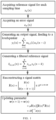
Figure 1 is a flow chart of an MIMO MNFxLMS algorithm according to an embodiment of the present disclosure. -
FIG. 2 is a block diagram of the MIMO MNFxLMS algorithm according to an embodiment of the present disclosure. -
FIG. 3 is a block diagram of a vehicle road noise control system according to an embodiment of the present disclosure. -
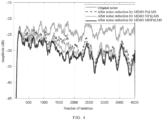
FIG. 4 is a comparison chart of the convergence performance of three algorithms, namely MIMO FxLMS, MIMO NFxLMS, and MIMO MNFxLMS algorithms atPosition 1. -
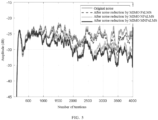
FIG. 5 is a comparison chart of the convergence performance of three algorithms, namely MIMO FxLMS, MIMO NFxLMS, and MIMO MNFxLMS algorithms at Position 2. - In the following, the preferable embodiments of the present disclosure are explained in detail combining with the accompanying drawings so that the advantages and features of the present disclosure can be easily understood by the skilled persons in the art. It should be noted that the explanation on these implementations is to help understanding of the present disclosure, and is not intended to limit the present disclosure.
- This embodiment provides an active noised reduction-based vehicle road noise control method, which adopts an improved multi-channel normalized FxLMS (referred to as MIMO MNFxLMS, Multiple Inputs Multiple Outputs Modified Normalized Filtered-x Least Mean Square) algorithm to actively reduce the road noise caused by friction between vehicle tires and the road surface. Combining with
FIG. 1 andFIG. 2 , this method is specifically described as below. - At each sampling time n , reference signals are acquired from sensors, for example vibration signals are acquired by a vibration sensor (typically, arranged on the bottom plate of the vehicle), or sound signals are acquired by a microphone (typically, arranged on a position near the wheels of the vehicle). There are K-channel reference signals, denotes as x k (n ), k = 1,2, ··· , K.
- A control signal y l (n ) is generated based on a parameter w k ,l (n ) at the current time and the reference signal obtained at the previous step, and is fed to the sound reproduction device, specifically in this embodiment, the sound reproduction device comprises a vehicle-mounted loudspeaker.

- Wherein, the number of the channels of the loudspeaker is L, and the order of the adaptive filter is N. w k ,l (i ) represents that the input of the filter is the k -th reference signal, and the output is the l -th control sound source, namely the loudspeaker here.
- An important step in the FxLMS algorithm is to filter the reference signals. It is generally believed that the transfer function of the secondary channel comprises a transmission path of the digital control signal y (n ) through a DAC module, an analog filter, a power amplifier module, a loudspeaker, a spatial propagation of sound waves, a microphone, an analog filter, and an ADC module. The transfer function S of the secondary channel is obtained through online or offline system identification methods, expressed as S', which is a digital filter of length N, represented as s l , m ,l = 1,2, ··· , L ; m = 1,2, ··· , M, represents the transfer function between the l -th loudspeaker to the m -th microphone. M is the number of microphones. The filtered reference signal obtained through calculation is:

-


-

-

- Wherein, δ is the regularization factor, usually taken to one decimal place based on experience. I is an identity matrix. µ is a convergence factor, generally selected a number based on experience, and its value range is usually between 0 and 2. Wherein, the matrix form of w (n) is

- Referring to
FIG. 3 , the vehicle road noise control system according to this embodiment comprises: - a road noise acquisition device 101, for acquiring a noise or vibration signal caused by the friction between the wheels and the road surface;
- a
control device 102, for generating a multi-channel reference signal based on the noise or vibration signal acquired by the road noise acquisition device 101, and for generating a control signal based on a coefficient of a filter at the current time and the multi-channel reference signal; - a
sound reproduction device 103, for generating a secondary sound wave for canceling noise in thecompartment 200 based on the control signal sent by thecontrol device 102; and - an error
signal acquisition device 104, for acquiring acoustical signals at a plurality of positions of thecompartment 200 to obtain a vector e (n) of an error signal; - wherein, the
control device 102 is further configured to filter the reference signal and write it into a matrix form, and to update the coefficient of the filter based on the matrix form of the filtered reference signal and the vector of the error signal according to the following equation,
- wherein, w(n + 1) represents the updated coefficient of the filter, w(n) represents the coefficient of the filter at the current time, µ is the convergence factor, X̂ (n) is the matrix form of the filtered reference signal, δ is the regularization factor, and I is an identity matrix.
- The road noise acquisition device 101 is electrically connected to an input end of the
control device 102, and specifically comprises a vibrating sensor arranged on the bottom plate of the vehicle or a first microphone arranged at a position near the wheels of the vehicle. The errorsignal acquisition device 104 is electrically connected to an input end of thecontrol device 102, and specifically comprises a plurality of second microphones arranged at a plurality of sampling positions inside thecompartment 200. Thesound reproduction device 103 is electrically connected to an output end of thecontrol device 102, and specifically comprises a vehicle-mounted loudspeaker, which is arranged inside thecompartment 200 of the vehicle or to emit sound at least to the compartment of the vehicle, and includes but is not limited to: headrest loudspeakers, roof loudspeakers, door panel loudspeakers, etc.. - The convergence performance of the algorithm was simulated. In the simulation experiment, the target noise was a broadband signal with a frequency band covering 80 Hz - 320 Hz, which is a typical frequency band distribution of road noise. The noise signal was a white noise signal generated through a bandpass filter. The number of channels of the reference signal was set as K=2, the number of loudspeakers was set as L=5, and the number of microphones for acquiring error signals was set as M=5. The transfer functions between the loudspeakers and microphones, also are the transfer functions of the secondary channels mentioned above, were obtained through real vehicle acquisition. In the simulation experiment, the variation relationships of noise energy with iteration times (corresponding to time) before and after active noise control were respectively compared, and more importantly, the traditional multi-channel FxLMS algorithm (MIMO FxLMS), the existing multi-channel normalized FxlMS algorithm (MIMO NFxLMS), and the improved normalized FxLMS algorithm (MIMO MNFxLMS) proposed in the present disclosure were compared.
FIG. 4 shows the variation relationships of the residual noise signal amplitudes with iterations at the first position, and it can be seen fromFIG. 4 that the traditional FxLMS algorithm has a certain denoising effect; after adopting normalization, the algorithm converges faster; using the improved normalization algorithm of the present disclosure achieves faster convergence results.FIG. 5 shows the variation relationships of the residual noise signal amplitudes with iterations at the fifth position, and it can be seen fromFIG. 5 that the traditional FxLMS algorithm has almost no denoising effect; after adopting normalization processing, there is a significant noise reduction effect, and if adopting the improved normalization algorithm of the present disclosure, which considers the coupling effect between channels, faster convergence speed and larger noise reduction can be achieved. - Those skilled in the art can understand that unless specifically stated, the singular forms "a", "an", "said", and "the" used herein may also include the plural form. It should be further understood that wording "comprises" used in the description of this application refers to the presence of a feature, an integer, a step, an operation, an element and/or an assembly, but does not exclude the presence or addition of one or more other features, integers, steps, operations, elements, assemblies and/or combinations thereof.
- It should be further understood that in the present disclosure, "plurality" refers to two or more, and other quantifiers are similar. "And/or" describes the association relationship of the associated objects, indicating that there can be three types of relationships, for example, A and/or B, which can represent: the existence of A alone, the coexistence of A and B, and the existence of B alone. The character "/" generally indicates that the objects associated before and after are in an "or" relationship. The singular forms "a", "said", and "the" are intended to include the plural forms as well, unless the context clearly dictates otherwise.
- It can be further understood that the terms "first", "second", etc. are used to describe various information, but this information should not be limited to these terms. These terms are only used to distinguish the same type of information from each other and do not indicate a specific order or degree of importance. In fact, expressions such as "first" and "second" can be used interchangeably. For example, without departing from the scope of the present disclosure, the first information can also be referred to as the second information, and similarly, the second information can also be referred to as the first information.
- The embodiments described above are only for illustrating the technical concepts and features of the present disclosure, are preferred embodiments, and are intended to make those skilled in the art being able to understand the present disclosure and thereby implement it, and should not be concluded to limit the protective scope of this disclosure. Any equivalent variations or modifications according to the spirit of the present disclosure should be covered by the protective scope of the present disclosure.
Claims (15)
- A method for controlling vehicle road noise based on active noise reduction, comprising the following steps:S1, acquiring a multi-channel reference signal of vehicle road noise, denoted by x k (n ), k = 1,2, ··· , K, K being a channel number of the reference signal, n representing a sampling time;S2, generating a control signal based on a coefficient of a filter at a current time and the multi-channel reference signal, and feeding to a sound reproduction device of the vehicle;characterized in that, the method for controlling vehicle road noise further comprises the following steps:S3, acquiring acoustical signals at a plurality of sampling positions inside a compartment of the vehicle to obtain a vector e (n) of an error signal;S4, filtering the reference signal to obtain a filtered reference signal x k ,l ,m (n ), as shown in the following equation,
 wherein, N is a length of the filter, L is a channel number of the sound reproduction unit, M is a number of the sampling positions, s l ,m represents a transfer function from a l -th loudspeaker to a m -th sampling position, s l ,m (i ) is an i -th coefficient of the filter; x k (n - i ) represents a k -th channel of reference signal at previous i sampling times;S4, writing the filtered reference signal in a matrix form as shown below,
 wherein, x̂ (n) represents a matrix with a size of K · L rows and M columns, of which elements are composed of the filtered reference signal x̂ k ,l ,m (n ) at the current sampling time; X̂ (n) represents a matrix with a size of K · L · N rows and M columns, of which elements are composed of the filtered reference signals at the current sampling time and previous sampling times, x̂ (n - N + 1) represents a matrix with a size of K · L rows and M columns, of which elements are composed of the filtered reference signal x k ,l ,m (n - N + 1) at previous (N - 1)-th time, ∈ R K·L×M represents a matrix with K ■ L rows and M columns, ∈ R K·L·N×M represents a matrix with K · L · N rows and M columns;S6, updating the coefficient of the filter in step S2 according to the following equation,
 wherein, w(n + 1) represents an updated coefficient of the filter, which is used to generate an output control signal by filtering at next sampling time n + 1, w(n) represents a coefficient of the filter at the current time, µ is a convergence factor, δ is a regularization factor, and I is an identity matrix.
 - The method for controlling vehicle road noise as claimed in claim 1, characterized in that, a matrix form of the coefficient of the filter w (n) is:
 wherein, ∈ R K·L·N×1 represents a matrix with K · L · N rows and 1 column; in step S2, the control signal is represented as the following equation:
 wherein, w k ,l (i ) is an element in the matrix w (n), specifically represents an i -th order coefficient of the filter with an input being a k -th reference signal and an output being a l -th sound reproduction device, K · L filters are provided, with an order of N , each order i of the K · L filters is combined into an array form [w 1,1(i), ··· , w J,K (i)], all order coefficients together form w (n).
 - The method for controlling vehicle road noise as claimed in claim 1, characterized in that, in step S1, a vibration signal caused by a friction between wheels and a road surface is acquired through a vibrating sensor and is as the reference signal.
- The method for controlling vehicle road noise as claimed in claim 3, characterized in that, the vibrating sensor is arranged on a bottom plate of the vehicle.
- The method for controlling vehicle road noise as claimed in claim 1, characterized in that, in step S1, a noise signal caused by a friction between wheels and a road surface is acquired through a first microphone and is as the reference signal.
- The method for controlling vehicle road noise as claimed in claim 5, characterized in that, the first microphone is arranged at a position adjacent to the wheels of the vehicle.
- The method for controlling vehicle road noise as claimed in claim 1, characterized in that, in step S2, the sound reproduction device comprises a vehicle-mounted loudspeaker arranged inside the compartment of the vehicle.
- The method for controlling vehicle road noise as claimed in claim 1, characterized in that, in step S3, acoustical signals inside the compartment of the vehicle are acquired through a plurality of second microphones, and the plurality of second microphones is arranged at a plurality of sampling positions inside the compartment of the vehicle.
- A system for controlling vehicle road noise based on active noise reduction, characterized in that, it comprises:a road noise acquisition device for acquiring a noise or vibration signal caused by friction between wheels and a road surface;a control device for generating a multi-channel reference signal based on the noise or vibration signal acquired by the road noise acquisition device, and generating a control signal based on a coefficient of a filter at a current time and the multi-channel reference signal;a sound reproduction device for generating a secondary sound wave for canceling noise in a compartment based on the control signal sent by the control device; andan error signal acquisition device for acquiring acoustical signals at a plurality of positions of the compartment to obtain a vector e(n) of an error signal;wherein, the control device is further configured to filter the reference signal and write it into a matrix form, and to update the coefficient of the filter based on the matrix form of the filtered reference signal and the vector of the error signal according to the following equation,
 wherein, w(n + 1) represents an updated coefficient of the filter, w(n) represents a coefficient of the filter at the current time, µ is a convergence factor, X̂ (n) is the matrix form of the filtered reference signal, δ is a regularization factor, and I is an identity matrix.
 - The vehicle road noise control system as claimed in claim 9, characterized in that, the road noise acquisition device comprises a vibrating sensor arranged on a bottom plate of the vehicle or a first microphone arranged at a position adjacent to a wheel of the vehicle; the error signal acquisition device comprises a plurality of second microphones arranged at a plurality of sampling positions inside the compartment of the vehicle.
- The vehicle road noise control system as claimed in claim 9, characterized in that, the sound reproduction device comprises a vehicle-mounted loudspeaker arranged inside the compartment of the vehicle.
- The vehicle road noise control system as claimed in claim 9, characterized in that, the control device is configured to:filter the reference signal to obtain a filtered reference signal x̂ k ,l ,m (n ), as shown in the following equation,
 wherein, N is a length of the filter, L is a channel number of the sound reproduction unit, M is a number of the sampling positions, s l ,m represents a transfer function from a l -th loudspeaker to a m -th sampling position, s l ,m (i ) is an i -th coefficient of the filter; x k (n -i ) represents a k -th channel of reference signal at previous i sampling times; andwrite the filtered reference signal in a matrix form as shown below,
 wherein, x̂ (n) represents a matrix with a size of K · L rows and M columns, of which elements are composed of the filtered reference signal x̂ k ,l ,m (n ) at the current sampling time; X̂ (n) represents a matrix with a size of K · L · N rows and M columns, of which elements are composed of the filtered reference signals at the current sampling time and the historical sampling times, x̂ (n - N + 1) represents a matrix with a size of K · L rows and M columns, of which elements are composed of the filtered reference signal x̂ k ,l ,m (n - N + 1) at previous (N - 1)-th time, E R K·L×M represents a matrix with K ■ L rows and M columns, E R K·L·N×M represents a matrix with K · L · N rows and M columns.
 - The vehicle road noise control system as claimed in claim 9, characterized in that, the control signal is represented as the following equation:

wherein, w k ,l (i ) is an element in the matrix w (n), specifically represents an i -th order coefficient of the filter with an input being a k -th reference signal and an output being a l -th sound reproduction device. K · L filters are provided, with an order of N , each order i of the K · L filters is combined into an array form [w 1,1(i), ··· , wJ,K (i)], all order coefficients together form w(n). - An electronic device, comprising a memory, a processor, and a computer program stored in the memory and capable of running on the processor, characterized in that, the processor is configured to implement the vehicle road noise control method as claimed in any one of claims 1 to 8 when executing the program.
- A computer readable storage medium, characterized in that, the computer readable storage medium stores a computer program, the program, when be executed by a processor, implements the vehicle road noise control method as claimed in any one of claims 1 to 8.
Applications Claiming Priority (2)
| Application Number | Priority Date | Filing Date | Title |
|---|---|---|---|
| CN202111683326.5A CN114566137B (en) | 2021-12-31 | 2021-12-31 | Vehicle road noise control method and system based on active noise reduction, and storage medium |
| PCT/CN2022/132881 WO2023124630A1 (en) | 2021-12-31 | 2022-11-18 | Vehicle road noise control method and system based on active noise cancellation, electronic equipment and storage medium |
Publications (2)
| Publication Number | Publication Date |
|---|---|
| EP4459612A1 true EP4459612A1 (en) | 2024-11-06 |
| EP4459612A4 EP4459612A4 (en) | 2025-11-19 |
Family
ID=81712746
Family Applications (1)
| Application Number | Title | Priority Date | Filing Date |
|---|---|---|---|
| EP22913888.8A Pending EP4459612A4 (en) | 2021-12-31 | 2022-11-18 | METHOD AND SYSTEM FOR CONTROLLING VEHICLE ROAD NOISE BASED ON ACTIVE NOISE SUPPRESSION, ELECTRONIC EQUIPMENT AND STORAGE MEDIUM |
Country Status (5)
| Country | Link |
|---|---|
| US (1) | US20250061880A1 (en) |
| EP (1) | EP4459612A4 (en) |
| JP (1) | JP7689250B2 (en) |
| CN (1) | CN114566137B (en) |
| WO (1) | WO2023124630A1 (en) |
Families Citing this family (2)
| Publication number | Priority date | Publication date | Assignee | Title |
|---|---|---|---|---|
| CN114566137B (en) * | 2021-12-31 | 2025-05-27 | 苏州茹声电子有限公司 | Vehicle road noise control method and system based on active noise reduction, and storage medium |
| CN116312448B (en) * | 2023-02-22 | 2026-04-17 | 南京大学 | A reference sensor optimization method for an active road noise control system |
Family Cites Families (18)
| Publication number | Priority date | Publication date | Assignee | Title |
|---|---|---|---|---|
| JP3278176B2 (en) * | 1991-09-25 | 2002-04-30 | マツダ株式会社 | Vehicle noise control device |
| JP4104626B2 (en) * | 2003-02-07 | 2008-06-18 | 日本電信電話株式会社 | Sound collection method and sound collection apparatus |
| EP2216774B1 (en) | 2009-01-30 | 2015-09-16 | Harman Becker Automotive Systems GmbH | Adaptive noise control system and method |
| US8600069B2 (en) | 2010-03-26 | 2013-12-03 | Ford Global Technologies, Llc | Multi-channel active noise control system with channel equalization |
| EP2657086B1 (en) * | 2010-12-21 | 2016-07-20 | Honda Motor Co., Ltd. | Active vibration noise control apparatus |
| WO2012153294A2 (en) * | 2011-05-11 | 2012-11-15 | Silentium Ltd. | Device, system and method of noise control |
| CN104471638B (en) * | 2012-07-02 | 2017-05-17 | 松下知识产权经营株式会社 | Active noise reduction device and active noise reduction method |
| EP2884488B1 (en) | 2013-12-16 | 2021-03-31 | Harman Becker Automotive Systems GmbH | Active noise control system |
| EP2996112B1 (en) | 2014-09-10 | 2018-08-22 | Harman Becker Automotive Systems GmbH | Adaptive noise control system with improved robustness |
| US9773491B2 (en) * | 2015-09-16 | 2017-09-26 | Bose Corporation | Estimating secondary path magnitude in active noise control |
| EP3182407B1 (en) * | 2015-12-17 | 2020-03-11 | Harman Becker Automotive Systems GmbH | Active noise control by adaptive noise filtering |
| US10339912B1 (en) * | 2018-03-08 | 2019-07-02 | Harman International Industries, Incorporated | Active noise cancellation system utilizing a diagonalization filter matrix |
| CN111436014B (en) * | 2019-12-03 | 2022-01-04 | 珠海市杰理科技股份有限公司 | Filtering device, filtering method and active noise-cancelling earphone for active noise-cancelling headphones |
| CN111724762B (en) * | 2020-06-15 | 2023-04-18 | 中科上声(苏州)电子有限公司 | Noise reduction method and device for vehicle |
| CN112037751A (en) * | 2020-08-05 | 2020-12-04 | 上海蔚来汽车有限公司 | Vehicle and active noise reduction control system, method, memory and control device thereof |
| WO2022031279A1 (en) * | 2020-08-05 | 2022-02-10 | Harman International Industries, Incorporated | Occupancy based active noise cancellation systems |
| CN113428157B (en) * | 2021-06-29 | 2022-08-09 | 重庆长安汽车股份有限公司 | Self-adaptive feedforward active control method and system for torsional vibration of hybrid electric vehicle transmission system |
| CN114566137B (en) * | 2021-12-31 | 2025-05-27 | 苏州茹声电子有限公司 | Vehicle road noise control method and system based on active noise reduction, and storage medium |
-
2021
- 2021-12-31 CN CN202111683326.5A patent/CN114566137B/en active Active
-
2022
- 2022-11-18 JP JP2024540549A patent/JP7689250B2/en active Active
- 2022-11-18 EP EP22913888.8A patent/EP4459612A4/en active Pending
- 2022-11-18 US US18/725,724 patent/US20250061880A1/en active Pending
- 2022-11-18 WO PCT/CN2022/132881 patent/WO2023124630A1/en not_active Ceased
Also Published As
| Publication number | Publication date |
|---|---|
| CN114566137B (en) | 2025-05-27 |
| EP4459612A4 (en) | 2025-11-19 |
| WO2023124630A1 (en) | 2023-07-06 |
| JP2024547200A (en) | 2024-12-26 |
| US20250061880A1 (en) | 2025-02-20 |
| JP7689250B2 (en) | 2025-06-05 |
| CN114566137A (en) | 2022-05-31 |
Similar Documents
| Publication | Publication Date | Title |
|---|---|---|
| EP4439550A1 (en) | Active noise reduction method and device for vehicle and storage medium | |
| KR101103794B1 (en) | Multi Beam Acoustic System | |
| CN103517185B (en) | Method for reducing noise in an acoustic signal of a multi-microphone audio device operating in a noisy environment | |
| CN105814627B (en) | Active noise control system | |
| US11862139B2 (en) | Method and system for creating a plurality of sound zones within an acoustic cavity | |
| Cheer | Active control of the acoustic environment in an automobile cabin | |
| CN114582312B (en) | Active control method and system for anti-interference adaptive road noise in vehicle | |
| EP3537431B1 (en) | Active noise cancellation system utilizing a diagonalization filter matrix | |
| US20200074978A1 (en) | Signal processing device and method, and program | |
| US20170150256A1 (en) | Audio enhancement | |
| US20250061880A1 (en) | Vehicle road noise control method and system based on active noise cancellation, electronic equipment and storage medium | |
| EP2629289B1 (en) | Feedback active noise control system with a long secondary path | |
| US11250832B2 (en) | Feedforward active noise control | |
| CN114743533B (en) | Vehicle noise reduction method, device and storage medium for broadband noise | |
| US20070053532A1 (en) | Sound reproduction systems for use by adjacent users | |
| CN113112981A (en) | Road noise active control method | |
| Cheer et al. | Mutlichannel feedback control of interior road noise | |
| CN114743534B (en) | A vehicle noise reduction method for broadband noise | |
| US12633278B2 (en) | Active noise reduction method and device for vehicle and storage medium | |
| WO2024260246A1 (en) | Active noise reduction system | |
| CN114530140A (en) | Vehicle-mounted noise reduction method and system for narrow-band noise and storage medium | |
| CN114519995B (en) | A vehicle road noise control method and device based on time-frequency domain, and storage medium | |
| Liang et al. | Active Road Noise Control Based on Data-Driven Predictions of Passenger Ear Noise Signal | |
| EP2257082A1 (en) | Background noise estimation in a loudspeaker-room-microphone system | |
| CN122024688A (en) | Multi-channel self-adaptive active wind noise reduction automobile seat and noise reduction method thereof |
Legal Events
| Date | Code | Title | Description |
|---|---|---|---|
| STAA | Information on the status of an ep patent application or granted ep patent |
Free format text: STATUS: THE INTERNATIONAL PUBLICATION HAS BEEN MADE |
|
| PUAI | Public reference made under article 153(3) epc to a published international application that has entered the european phase |
Free format text: ORIGINAL CODE: 0009012 |
|
| STAA | Information on the status of an ep patent application or granted ep patent |
Free format text: STATUS: REQUEST FOR EXAMINATION WAS MADE |
|
| 17P | Request for examination filed |
Effective date: 20240627 |
|
| AK | Designated contracting states |
Kind code of ref document: A1 Designated state(s): AL AT BE BG CH CY CZ DE DK EE ES FI FR GB GR HR HU IE IS IT LI LT LU LV MC ME MK MT NL NO PL PT RO RS SE SI SK SM TR |
|
| DAV | Request for validation of the european patent (deleted) | ||
| DAX | Request for extension of the european patent (deleted) | ||
| A4 | Supplementary search report drawn up and despatched |
Effective date: 20251022 |
|
| RIC1 | Information provided on ipc code assigned before grant |
Ipc: G10K 11/178 20060101AFI20251016BHEP |