EP4459564A1 - Kreissuchverfahren und -vorrichtung, elektronische vorrichtung und speichermedium - Google Patents
Kreissuchverfahren und -vorrichtung, elektronische vorrichtung und speichermedium Download PDFInfo
- Publication number
- EP4459564A1 EP4459564A1 EP22913502.5A EP22913502A EP4459564A1 EP 4459564 A1 EP4459564 A1 EP 4459564A1 EP 22913502 A EP22913502 A EP 22913502A EP 4459564 A1 EP4459564 A1 EP 4459564A1
- Authority
- EP
- European Patent Office
- Prior art keywords
- circle
- edge
- target
- identified
- points
- Prior art date
- Legal status (The legal status is an assumption and is not a legal conclusion. Google has not performed a legal analysis and makes no representation as to the accuracy of the status listed.)
- Pending
Links
Images


Classifications
-
- G—PHYSICS
- G06—COMPUTING OR CALCULATING; COUNTING
- G06T—IMAGE DATA PROCESSING OR GENERATION, IN GENERAL
- G06T7/00—Image analysis
- G06T7/60—Analysis of geometric attributes
- G06T7/62—Analysis of geometric attributes of area, perimeter, diameter or volume
-
- G—PHYSICS
- G06—COMPUTING OR CALCULATING; COUNTING
- G06T—IMAGE DATA PROCESSING OR GENERATION, IN GENERAL
- G06T7/00—Image analysis
- G06T7/10—Segmentation; Edge detection
- G06T7/13—Edge detection
-
- G—PHYSICS
- G06—COMPUTING OR CALCULATING; COUNTING
- G06T—IMAGE DATA PROCESSING OR GENERATION, IN GENERAL
- G06T7/00—Image analysis
- G06T7/70—Determining position or orientation of objects or cameras
- G06T7/73—Determining position or orientation of objects or cameras using feature-based methods
- G06T7/75—Determining position or orientation of objects or cameras using feature-based methods involving models
-
- G—PHYSICS
- G06—COMPUTING OR CALCULATING; COUNTING
- G06V—IMAGE OR VIDEO RECOGNITION OR UNDERSTANDING
- G06V10/00—Arrangements for image or video recognition or understanding
- G06V10/20—Image preprocessing
- G06V10/22—Image preprocessing by selection of a specific region containing or referencing a pattern; Locating or processing of specific regions to guide the detection or recognition
- G06V10/235—Image preprocessing by selection of a specific region containing or referencing a pattern; Locating or processing of specific regions to guide the detection or recognition based on user input or interaction
-
- G—PHYSICS
- G06—COMPUTING OR CALCULATING; COUNTING
- G06V—IMAGE OR VIDEO RECOGNITION OR UNDERSTANDING
- G06V10/00—Arrangements for image or video recognition or understanding
- G06V10/20—Image preprocessing
- G06V10/24—Aligning, centring, orientation detection or correction of the image
- G06V10/248—Aligning, centring, orientation detection or correction of the image by interactive preprocessing or interactive shape modelling, e.g. feature points assigned by a user
-
- G—PHYSICS
- G06—COMPUTING OR CALCULATING; COUNTING
- G06V—IMAGE OR VIDEO RECOGNITION OR UNDERSTANDING
- G06V10/00—Arrangements for image or video recognition or understanding
- G06V10/20—Image preprocessing
- G06V10/25—Determination of region of interest [ROI] or a volume of interest [VOI]
-
- G—PHYSICS
- G06—COMPUTING OR CALCULATING; COUNTING
- G06V—IMAGE OR VIDEO RECOGNITION OR UNDERSTANDING
- G06V10/00—Arrangements for image or video recognition or understanding
- G06V10/40—Extraction of image or video features
- G06V10/44—Local feature extraction by analysis of parts of the pattern, e.g. by detecting edges, contours, loops, corners, strokes or intersections; Connectivity analysis, e.g. of connected components
-
- G—PHYSICS
- G06—COMPUTING OR CALCULATING; COUNTING
- G06V—IMAGE OR VIDEO RECOGNITION OR UNDERSTANDING
- G06V10/00—Arrangements for image or video recognition or understanding
- G06V10/40—Extraction of image or video features
- G06V10/44—Local feature extraction by analysis of parts of the pattern, e.g. by detecting edges, contours, loops, corners, strokes or intersections; Connectivity analysis, e.g. of connected components
- G06V10/443—Local feature extraction by analysis of parts of the pattern, e.g. by detecting edges, contours, loops, corners, strokes or intersections; Connectivity analysis, e.g. of connected components by matching or filtering
-
- G—PHYSICS
- G06—COMPUTING OR CALCULATING; COUNTING
- G06V—IMAGE OR VIDEO RECOGNITION OR UNDERSTANDING
- G06V10/00—Arrangements for image or video recognition or understanding
- G06V10/40—Extraction of image or video features
- G06V10/46—Descriptors for shape, contour or point-related descriptors, e.g. scale invariant feature transform [SIFT] or bags of words [BoW]; Salient regional features
- G06V10/469—Contour-based spatial representations, e.g. vector-coding
- G06V10/471—Contour-based spatial representations, e.g. vector-coding using approximation functions
-
- G—PHYSICS
- G06—COMPUTING OR CALCULATING; COUNTING
- G06V—IMAGE OR VIDEO RECOGNITION OR UNDERSTANDING
- G06V10/00—Arrangements for image or video recognition or understanding
- G06V10/70—Arrangements for image or video recognition or understanding using pattern recognition or machine learning
- G06V10/77—Processing image or video features in feature spaces; using data integration or data reduction, e.g. principal component analysis [PCA] or independent component analysis [ICA] or self-organising maps [SOM]; Blind source separation
- G06V10/7715—Feature extraction, e.g. by transforming the feature space, e.g. multi-dimensional scaling [MDS]; Mappings, e.g. subspace methods
-
- G—PHYSICS
- G06—COMPUTING OR CALCULATING; COUNTING
- G06T—IMAGE DATA PROCESSING OR GENERATION, IN GENERAL
- G06T2207/00—Indexing scheme for image analysis or image enhancement
- G06T2207/20—Special algorithmic details
- G06T2207/20076—Probabilistic image processing
-
- G—PHYSICS
- G06—COMPUTING OR CALCULATING; COUNTING
- G06T—IMAGE DATA PROCESSING OR GENERATION, IN GENERAL
- G06T2207/00—Indexing scheme for image analysis or image enhancement
- G06T2207/20—Special algorithmic details
- G06T2207/20092—Interactive image processing based on input by user
- G06T2207/20101—Interactive definition of point of interest, landmark or seed
Definitions
- the present application relates to the field of information technology, particularly to a circle search method, apparatus, an electronic device, and a storage medium.
- the coordinate position of the object to be identified can be determined by using the center of the circular pattern on the identified object to be identified as a reference point.
- a first aspect of an embodiment of the present application first provides a circle search method, which includes:
- a second aspect of an embodiment of the present application provides a circle search apparatus, which includes:
- an electronic device which includes a processor, a communication interface, a memory, and a communication bus, wherein the processor, the communication interface, and the memory communicate with each other through the communication bus;
- a computer-readable storage medium which stores a computer program therein, wherein the computer program, when executed by the processor, implements any step of the above circle search method.
- a computer program product containing instructions, which when running on a computer, cause the computer to carry out any step of the above circle search method.
- the embodiments of the present application provide a circle search method, apparatus, an electronic device and a storage medium, and capable of acquiring a target reference point in a to-be-identified image, wherein the to-be-identified image includes a circular pattern, the target reference point is arranged in a preset range of an edge of the circular pattern; performing edge extraction based on the target reference point as a reference to obtain at least three target edge points; and performing circle fitting based on the at least three target edge points to obtain a fitted circle. Therefore, circle search can be achieved by a user merely inputting points near an edge of one circular pattern, thus simplifying the user operation process.
- a first aspect of an embodiment of the present application provides a circle search method, which includes:
- searching for a circle can be achieved by a user merely inputting points near an edge of one circular pattern, thereby simplifying the operation flow of the user.
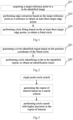
- FIG. 1 it is a schematic diagram of a flow of a circle search method provided by an embodiment of the present application, which includes: Step S 11, acquiring a target reference point in a to-be-identified image.
- the to-be-identified image in the embodiment of the present application is an image including a circular pattern.
- the target reference point is a single point, which can be manually input. Specifically, one point in the to-be-identified image can be marked as a reference point through manual touch or mouse clicking, or marked as a reference point by inputting a coordinate position of a reference point through a keyboard, and the like.
- the target reference point can also be manually selected through touching a screen, and the like.
- a user only need to input one point near an edge of one circular pattern as a target reference point. Specifically, this point can be either an point on the edge or not.
- the target reference point can be set either on the edge of the circular pattern that needs to be identified, or in a preset range of the edge of the circular pattern that needs to be identified.
- the preset range can be preset.
- the preset range can include both the target reference point and the points on the edge of the circular pattern.
- the method of the embodiment of the present application which is applied to a smart terminal, can be implemented through the smart terminal.
- the smart terminal can be a computer, a mobile phone, a server, or a smart camera, etc.
- Step S12 performing edge extraction based on the target reference point as a reference, to obtain at least three target edge points.
- the to-be-identified image contains a circular pattern
- the target reference point is arranged in a preset range of the edge of the circular pattern (i.e. the circumference of the circular pattern).
- the preset range can be a first preset range.
- performing edge extraction based on the target reference point as a reference, to obtain at least three target edge points includes: performing pixel gradient identification on individual pixel points within the first preset range around the target reference point in the to-be-identified image, to obtain a first edge point, wherein a pixel gradient of the first edge point is greater than a preset gradient threshold; performing pixel gradient identification on individual pixel points within a second preset range around the first edge point, to obtain multiple second edge points; selecting at least three target edge points from the first edge point and the multiple second edge points.
- performing edge extraction based on the target reference point as a reference, to obtain at least three target edge points includes: receiving to-be-identified region information from the user, wherein to-be-identified region information includes the size and position of the to-be-identified region input by the user; performing edge extraction in the to-be-identified region based on the target reference point as a reference, to obtain at least three target edge points.
- Pixel gradient identification is performed on individual pixel points within the first preset range around the target reference point in the to-be-identified image, to obtain the first edge point. Wherein a pixel gradient of the first edge point is greater than a preset gradient threshold.
- pixel gradient identification is performed on individual pixel points within the first preset range around the target reference point in the to-be-identified image, which can be performed by identifying a pixel value of individual pixel point within the first preset range around the target reference point in the to-be-identified image through a preset detection algorithm, and then calculating a pixel gradient corresponding to the pixel point based on the identified pixel value.
- the pixel gradients of individual pixel points can be calculated by calculating a Sobel operator.
- the preset detection algorithm can be any edge point detection algorithm, such as a canny algorithm (one kind of edge detection algorithms).
- pixel gradient identification is performed on individual pixel points within the first preset range around the target reference point in the to-be-identified image, which can be performed by sequentially searching for a pixel point with a chessboard distance of 0, 1, 2... from the target reference point, and determining whether the pixel point is an edge point until the first edge point is obtained.
- the first edge point can include multiple pixel points.
- the size of the first preset range can be set according to the actual situation.
- the smaller the range of a circle to be identified is, the smaller the first preset range should be, and the larger the range of a circle to be identified is, the larger the first preset range should be.
- the range of the to-be-identified image is large and the range of the circular pattern to be identified is small, only a small range of points around the target reference point can be identified by setting the first preset range. This can not only accelerate the search for the edge point, but also reduce working memory and computational complexity.
- a larger range should be identified around the target reference point.
- performing pixel gradient identification on individual pixel points within the first preset range around the target reference point in the to-be-identified image, to obtain the first edge point includes: performing pixel gradient identification on individual pixel points in multiple preset directions within the first preset range around the target reference point in the to-be-identified image, to obtain the first edge point.
- performing pixel gradient identification on individual pixel points on multiple preset directions within the first preset range around the target reference point in the to-be-identified image, to obtain the first edge point includes: selecting, within the first preset range around the target reference point in the to-be-identified image, a direction every preset angle span based on a preset reference direction, to obtain multiple target directions; performing pixel gradient identification on individual pixel points in the preset reference direction and multiple target directions, to obtain the first edge point.
- the preset direction can refer to one or more of eight directions, which are four directions relative to the target reference point: top, bottom, left, right, and four directions with a 45° interval between adjacent directions.
- Pixel gradient identification is performed on individual pixel points within a second preset range around the first edge point, to obtain multiple second edge points.
- the size of the second preset range can be the same or different from that of the first preset range.
- the first edge point can be used as a starting point to search for other edge points on the circumferential contour. During the search, all of edge points can be searched for so that the edge points are at various positions on the circumference of the circle.
- Pixel gradient identification can be performed on individual pixel points within a second preset range around the first edge point through any of the edge point detection algorithms mentioned above, such as the canny algorithm.
- performing pixel gradient identification on individual pixel points within a second preset range around the first edge point to obtain multiple second edge points includes: performing pixel gradient identification on individual pixel points in clockwise and counterclockwise directions within a second preset range around the first edge point, to obtain multiple second edge points.
- performing pixel gradient identification on individual pixel points in clockwise and counterclockwise directions within a second preset range around the first edge point to obtain multiple second edge points.
- At least three target edge points are selected from the first edge point and the multiple second edge points.
- the selected at least three target edge points can be the first edge point and the multiple second edge points, or at least three of the second edge points.
- three edge points can be selected from the first edge point and the multiple second edge points as target edge points by means of random selection.
- Step S 13 performing circle fitting based on the at least three target edge points, to obtain a fitted circle.
- a circle fitting is performed based on the at least three target edge points, which can be performed by using multiple preset circle fitting methods for performing the fitting, such as least squares method or RANSAC based least squares method, to obtain a fitted circle and a parameter of the fitted circle, such as a radius and a center coordinate. Then the parameter of the fitted circle is used as a parameter of the circular pattern in the to-be-identified image.
- multiple preset circle fitting methods for performing the fitting such as least squares method or RANSAC based least squares method
- a down-sampling method can be used to select at least three edge points from the first edge point and the multiple second edge points as target edge points.
- selecting at least three target edge points from the first edge point and the multiple second edge points includes: down-sampling multiple second edge points to obtain at least three third sampled edge points.
- performing the circle fitting based on the at least three target edge points to obtain a fitted circle includes: performing circle fitting based on the at least three third sampled edge points to obtain a fitted circle. Since the number of the down-sampled third edge points is smaller than that of the second edge points.
- down-sampling When down-sampling, down-sampling can be performed based on the distance between the third edge points so that the sampled third edge points are evenly distributed on the fitted circle as much as possible. Therefore, down-sampling can be used to reduce the number of second edge points that need to be calculated and saved, thereby reducing memory consumption and the amount of the subsequent computation, and improving fitting efficiency.
- the user only needs to input one target reference point, and the first edge point and the multiple second edge points can be automatically identified, so as to fit the circle by identifying the first edge point and the second edge points, to obtain a parameter of the circle in the to-be-identified image, thereby simplifying the user's operation process.
- the parameter of the fitted circle include position coordinate of the fitted circle.
- the position coordinate of the fitted circle include center coordinate of the fitted circle and the radius of the fitted circle
- generating a to-be-identified region based on the position coordinate of the fitted circle includes: performing calculation based on the radius of the fitted circle to obtain a feature parameter of a to-be-identified region to be generated with a preset shape, wherein the preset shape is a circle or a rectangle, and the feature parameter is the radius of the circle or the length and width of the rectangle; generating the to-be-identified region by using the center coordinate of the fitted circle as the center of the to-be-identified region to be generated.
- the to-be-identified region to be generated with a preset shape can include the entire fitted circle.
- the radius of the circle corresponding to the to-be-identified region with the preset shape is greater than the radius of the fitted circle.
- the radius of the fitted circle is 4, the radius of a circle corresponding to the to-be-identified region with the preset shape obtained after performing the calculation can be 5.
- the length and width of the rectangle corresponding to the to-be-identified region with the preset shape obtained after performing the calculation are both greater than twice the radius of the fitted circle.
- the length and width of the rectangle corresponding to the to-be-identified region with the preset shape can be 9 and 10, respectively.
- the above-mentioned to-be-identified region can be of various shapes.
- the to-be-identified region can be circular, annular, square, rectangular, etc.
- the range of the to-be-identified region should include the range of the circular pattern in the to-be-identified image.
- performing the circle identifying in the to-be-identified region to obtain an identification result includes: comparing the area of the to-be-identified region with that of the fitted circle; when the ratio of the area of the to-be-identified region to that of the fitted circle is greater than a preset threshold, generating an updated to-be-identified region based on the target reference point and the size of the preset region; identifying the circle in the updated to-be-identified region, to obtain the identification result.
- the smaller the range of the circle required to be identified is, the smaller the first preset range should be, and the larger the range of the circle required to be identified is, the larger the first preset range could be.
- the range of the to-be-identified image is large and the range of the circular pattern required to be identified is small, points only in a small range around the target reference point can be identified by setting the first preset range. This can not only accelerate searching for an edge point, but also reduce working memory and the amount of the computation.
- the range of the circular pattern required to be identified is large, a larger range around the target reference point should be identified.
- the above preset identification methods can be various methods for image identification, such as RANSAC, etc.
- circle search with higher precision can be performed in the ROI.
- the to-be-identified region can be generated based on the position coordinate of the fitted circle, and then the circle can be identified in the to-be-identified region to obtain the identification result, so that by identifying the circular pattern in the to-be-identified region, not only can the identification result be obtained, and the accuracy of the parameter of the identified circle be improved, but also by selecting the to-be-identified region, the circle can be searched for in the to-be-identified region without the need to search throughout the entire image, thereby reducing the amount of the computation and improving computational efficiency.
- the position coordinate of the fitted circle include center coordinate of the fitted circle and the radius of the fitted circle
- generating a to-be-identified region based on the position coordinate of the fitted circle includes:
- performing calculation based on the center coordinate of the fitted circle and the radius of the fitted circle to obtain inner and outer diameters of an annular to-be-identified region includes: calculating the sum of the radius of the fitted circle and the width of a preset annular region, to obtain the outer diameter of the to-be-identified region; calculating the difference between the radius of the fitted circle and the width of the preset annular region, to obtain the inner diameter of the to-be-identified region.
- the inner and outer diameters of the annular region to be generated are calculated, which can be performed by subtracting one preset value from the radius of the circular pattern to obtain the inner diameter of the annular region to be generated, and by adding the preset value to the radius of the circular pattern to obtain the outer diameter of the annular region to be generated.
- the preset value can be set according to the actual situation.
- the size of the preset value corresponds to the radius of the circle. The larger the radius of the circle is, the larger the preset value can be, and the smaller the radius of the circle is, the smaller the preset value can be.
- annular to-be-identified region is generated based on the inner and outer diameters of the annular to-be-identified region, with the center coordinate of the fitted circle as a center.
- the generated annular region includes all edge points of the circular pattern.
- a circle is identified in the annular to-be-identified region, to obtain the identification result, which can be performed by identifying the circular pattern in the annular to-be-identified region through the above preset identification method, to obtain the identification result. Specifically, it can be performed by identifying the circular pattern in the annular to-be-identified region through image identification method such as RANSAC.
- the identification result may include parameters such as the radius of the circle and the center coordinate of the circle. Since the annular region includes all of edge points of the circular pattern, and the area of the annular region is small, the region required to be identified is small, the identification efficiency is higher.
- the inner and outer diameters of the annular to-be-identified region can be calculated; the annular to-be-identified region is generated based on the inner and outer diameters of the annular to-be-identified region, with the center coordinate of the fitted circle as a center; identifying the circle in the annular to-be-identified region, to obtain the identification result, which can reduce the region required to be identified and improve identification efficiency.
- FIG. 5 it is another instance diagram of a circle search method provided by an embodiment of the present application, including:
- a second aspect of an embodiment of the present application provides a circle search apparatus, referring to Figure 6 , which includes:
- the edge point selecting module 602 includes:
- the parameter of the fitted circle includes position coordinate of the fitted circle
- the above apparatus further includes:
- the position coordinate of the fitted circle include center coordinate of the fitted circle and a radius of the fitted circle
- the to-be-identified region generating module includes:
- the position coordinate of the fitted circle include center coordinate of the fitted circle and the radius of the fitted circle
- the to-be-identified region generating module includes:
- the inner and outer diameters calculating submodule is specifically configured for calculating a sum of the radius of the fitted circle and the width of a preset annular region to obtain the outer diameter of the to-be-identified region; calculating a difference between the radius of the fitted circle and the width of the preset annular region to obtain the inner diameter of the to-be-identified region;
- the second edge point detecting module is specifically configured for performing pixel gradient identification on individual pixel points along clockwise and counterclockwise directions of the first edge point within the second preset range around the first edge point, to obtain the multiple second edge points.
- the first edge point detecting module is specifically configured for performing pixel gradient identification on individual pixel points in multiple preset directions within the first preset range around the target reference point in the to-be-identified image, to obtain the first edge point.
- the first edge point detecting module includes:
- the target edge point obtaining module is specifically configured for down-sampling multiple second edge points to obtain at least three third sampled edge points;
- a circle fitting module is specifically configured for performing circle fitting based on the at least three the third sampled edge points to obtain a fitted circle.
- the to-be-identified region identifying module includes:
- the edge point selecting module 602 includes:
- the circle search can be achieved by a user merely inputting a point near an edge of a circular pattern, thus simplifying the user operation process.
- An embodiment of the present application further provides an electronic device, as shown in Figure 7 , which includes a processor 701, a communication interface 702, a memory 703, and a communication bus 704, wherein the processor 701, the communication interface 702, and the memory 703 communicate with each other through a communication bus 704,
- the communication bus mentioned in the above electronic device can be a Peripheral Component Interconnect (PCI) standard bus or an Extended Industry Standard Architecture (EISA) bus, etc.
- PCI Peripheral Component Interconnect
- EISA Extended Industry Standard Architecture
- the communication bus can be divided into an address bus, a data bus, a control bus, etc. For ease of representation, only one thick line is used in the figure, but it does not mean that there is only one bus or one type of bus.
- the communication interface is configured for the communication between the above electronic device and other devices.
- the memory may include a Random Access Memory (RAM), and can also include a Non-Volatile Memory (NVM), such as at least one disk memory.
- RAM Random Access Memory
- NVM Non-Volatile Memory
- the memory may also be at least one storage device located far away from the aforementioned processor.
- the above processor can be a general-purpose processor, including a Central Processing Unit (CPU), a Network Processor (NP), etc.; it can also be a Digital Signal Processor (DSP), an Application Specific Integrated Circuit (ASIC), a Field-Programmable Gate Array (FPGA) or other programmable logic devices, discrete gates or transistor logic devices, or discrete hardware components.
- CPU Central Processing Unit
- NP Network Processor
- DSP Digital Signal Processor
- ASIC Application Specific Integrated Circuit
- FPGA Field-Programmable Gate Array
- a computer-readable storage medium which stores a computer program therein that implements any step of the circle search method above when executed by the processor.
- a computer program product containing instructions is further provided, that when running on a computer, cause the computer to carry out any one of the circle search method described in the above embodiments.
- the computer program product includes one or more computer instructions.
- the computer can be a general purpose computer, a special purpose computer, a computer network, or other programmable devices.
- the computer instructions can be stored in a computer-readable storage medium, or transferred from one computer-readable storage medium to another.
- the computer instructions can be transferred from a website, a computer, a server or data center to another website site, computer, server or data center by wire (such as coaxial cable, optical fiber, digital subscriber line (DSL)) or wireless (such as infrared, wireless, microwave, etc.).
- the computer-readable storage medium can be any available medium that can be accessed by a computer or a data storage device such as a server, a data center and the like that includes an integration of one or more available medium.
- the available media can be magnetic media (for example, floppy disk, hard disk, magnetic tape), optical media (for example, DVD), or semiconductor media (for example, solid state disk (SSD)).
Landscapes
- Engineering & Computer Science (AREA)
- Physics & Mathematics (AREA)
- Theoretical Computer Science (AREA)
- General Physics & Mathematics (AREA)
- Computer Vision & Pattern Recognition (AREA)
- Multimedia (AREA)
- Geometry (AREA)
- Software Systems (AREA)
- Artificial Intelligence (AREA)
- Computing Systems (AREA)
- Databases & Information Systems (AREA)
- Evolutionary Computation (AREA)
- General Health & Medical Sciences (AREA)
- Medical Informatics (AREA)
- Health & Medical Sciences (AREA)
- Image Analysis (AREA)
- User Interface Of Digital Computer (AREA)
- Collating Specific Patterns (AREA)
Applications Claiming Priority (2)
| Application Number | Priority Date | Filing Date | Title |
|---|---|---|---|
| CN202111683480.2A CN114359548B (zh) | 2021-12-31 | 2021-12-31 | 一种圆查找方法、装置、电子设备及存储介质 |
| PCT/CN2022/118332 WO2023124233A1 (zh) | 2021-12-31 | 2022-09-13 | 一种圆查找方法、装置、电子设备及存储介质 |
Publications (2)
| Publication Number | Publication Date |
|---|---|
| EP4459564A1 true EP4459564A1 (de) | 2024-11-06 |
| EP4459564A4 EP4459564A4 (de) | 2025-04-16 |
Family
ID=81104978
Family Applications (1)
| Application Number | Title | Priority Date | Filing Date |
|---|---|---|---|
| EP22913502.5A Pending EP4459564A4 (de) | 2021-12-31 | 2022-09-13 | Kreissuchverfahren und -vorrichtung, elektronische vorrichtung und speichermedium |
Country Status (5)
| Country | Link |
|---|---|
| EP (1) | EP4459564A4 (de) |
| JP (1) | JP7776654B2 (de) |
| KR (1) | KR20240122562A (de) |
| CN (1) | CN114359548B (de) |
| WO (1) | WO2023124233A1 (de) |
Families Citing this family (7)
| Publication number | Priority date | Publication date | Assignee | Title |
|---|---|---|---|---|
| CN114359548B (zh) * | 2021-12-31 | 2025-11-04 | 杭州海康机器人股份有限公司 | 一种圆查找方法、装置、电子设备及存储介质 |
| CN118196171B (zh) * | 2024-05-20 | 2024-09-27 | 法奥意威(苏州)机器人系统有限公司 | 一种检测圆的方法、装置、存储介质及电子设备 |
| CN118297940B (zh) * | 2024-05-30 | 2024-09-13 | 泰山石膏(宜宾)有限公司 | 一种石膏板生产线质量管控方法、装置、设备及介质 |
| CN118354010B (zh) * | 2024-06-17 | 2024-08-30 | 北京蓝耘科技股份有限公司 | 一种gpu输出数据加密方法、系统及存储介质 |
| CN118424149B (zh) * | 2024-07-05 | 2024-12-06 | 东华隆(广州)表面改质技术有限公司 | 一种压延辊轮廓检测的方法及系统 |
| CN118941711B (zh) * | 2024-07-15 | 2025-08-08 | 杭州云甲数字技术有限公司 | 特征方向信息获取方法及装置、计算机程序产品 |
| CN118799350A (zh) * | 2024-09-13 | 2024-10-18 | 昆山华恒工程技术中心有限公司 | 一种管板焊接中管孔识别方法 |
Family Cites Families (14)
| Publication number | Priority date | Publication date | Assignee | Title |
|---|---|---|---|---|
| JP2005333116A (ja) * | 2004-04-21 | 2005-12-02 | Nikon Corp | 位置検出装置及び方法、位置調整装置及び方法、並びに露光装置及び方法 |
| DE102006059663B4 (de) * | 2006-12-18 | 2008-07-24 | Fraunhofer-Gesellschaft zur Förderung der angewandten Forschung e.V. | Vorrichtung, Verfahren und Computerprogramm zum Identifizieren eines Verkehrszeichens in einem Bild |
| JP2011227748A (ja) | 2010-04-21 | 2011-11-10 | Seiko Epson Corp | 画像処理装置、画像処理方法、画像処理プログラム、及び欠陥検出装置 |
| CN102236894A (zh) * | 2010-04-30 | 2011-11-09 | 西门子公司 | 圆检测方法及装置 |
| CA2976938C (en) * | 2015-02-18 | 2023-09-26 | Siemens Healthcare Diagnostics Inc. | Image-based tube slot circle detection for a vision system |
| CN106251352B (zh) | 2016-07-29 | 2019-01-18 | 武汉大学 | 一种基于图像处理的罐盖缺陷检测方法 |
| CN106447683B (zh) * | 2016-08-09 | 2019-08-02 | 上海柏楚电子科技股份有限公司 | 一种圆的特征提取方法 |
| CN106503704B (zh) * | 2016-10-21 | 2018-03-23 | 河南大学 | 一种自然场景中圆形交通标志定位方法 |
| CN109815822B (zh) * | 2018-12-27 | 2024-05-28 | 北京航天福道高技术股份有限公司 | 基于广义Hough变换的巡检图零部件目标识别方法 |
| CN112534469B (zh) * | 2019-06-27 | 2024-07-19 | 京东方科技集团股份有限公司 | 图像检测方法、图像检测装置、图像检测设备及介质 |
| JP2021096652A (ja) * | 2019-12-17 | 2021-06-24 | 富士通株式会社 | 画像識別装置、方法、及びプログラム |
| CN112508009A (zh) * | 2020-11-23 | 2021-03-16 | 北京配天技术有限公司 | 圆形特征检测方法、装置及存储装置 |
| CN113712665B (zh) * | 2021-11-01 | 2022-04-22 | 北京柏惠维康科技有限公司 | 基于定位标志物的定位方法、装置及计算机存储介质 |
| CN114359548B (zh) * | 2021-12-31 | 2025-11-04 | 杭州海康机器人股份有限公司 | 一种圆查找方法、装置、电子设备及存储介质 |
-
2021
- 2021-12-31 CN CN202111683480.2A patent/CN114359548B/zh active Active
-
2022
- 2022-09-13 KR KR1020247025137A patent/KR20240122562A/ko active Pending
- 2022-09-13 JP JP2024539659A patent/JP7776654B2/ja active Active
- 2022-09-13 WO PCT/CN2022/118332 patent/WO2023124233A1/zh not_active Ceased
- 2022-09-13 EP EP22913502.5A patent/EP4459564A4/de active Pending
Also Published As
| Publication number | Publication date |
|---|---|
| WO2023124233A1 (zh) | 2023-07-06 |
| JP7776654B2 (ja) | 2025-11-26 |
| EP4459564A4 (de) | 2025-04-16 |
| KR20240122562A (ko) | 2024-08-12 |
| CN114359548A (zh) | 2022-04-15 |
| JP2024547167A (ja) | 2024-12-26 |
| CN114359548B (zh) | 2025-11-04 |
Similar Documents
| Publication | Publication Date | Title |
|---|---|---|
| EP4459564A1 (de) | Kreissuchverfahren und -vorrichtung, elektronische vorrichtung und speichermedium | |
| EP4290328A1 (de) | Wegoptimierungsverfahren und -vorrichtung sowie roboter und speichermedium | |
| CN109753641B (zh) | 一种更改对象位置的方法、装置、电子设备及存储介质 | |
| CN111091572A (zh) | 一种图像处理方法、装置、电子设备及存储介质 | |
| CN116958145B (zh) | 图像处理方法、装置、视觉检测系统及电子设备 | |
| CN109165657A (zh) | 一种基于改进sift的图像特征检测方法及装置 | |
| CN111340788B (zh) | 硬件木马版图检测方法、装置、电子设备和可读存储介质 | |
| CN113689526B (zh) | 地图中无效区域的划分方法及装置、电子设备 | |
| CN108648156A (zh) | 点云数据中杂散点标记方法、装置、电子设备及存储介质 | |
| CN108229583B (zh) | 一种基于主方向差分特征的快速模板匹配的方法及装置 | |
| WO2024012463A1 (zh) | 一种定位方法及装置 | |
| CN116822447A (zh) | 一种电路器件的重叠检测方法、装置、计算机设备及介质 | |
| CN111813984A (zh) | 一种利用单应矩阵实现室内定位的方法、装置及电子设备 | |
| CN116152816A (zh) | 封闭区域的识别方法、装置、电子设备和存储介质 | |
| CN112508009A (zh) | 圆形特征检测方法、装置及存储装置 | |
| CN117218100B (zh) | 工件圆拟合方法、装置、视觉检测系统及电子设备 | |
| CN111880776A (zh) | 一种层级关系获得方法、装置及电子设备 | |
| CN107734324B (zh) | 一种闪光灯照度均匀性的测量方法、系统及终端设备 | |
| CN116776412A (zh) | 一种基于bim的管路安装路径确定方法、设备及介质 | |
| CN117739809B (zh) | 一种瓶口尺寸测量方法、计算机设备及介质 | |
| CN119693454B (zh) | 基于稀疏点云的图像检测方法、装置、设备及存储介质 | |
| CN112669375B (zh) | 基于像素点查找圆形物体的方法及装置 | |
| CN115761231B (zh) | 图像裂纹条数识别及统计方法、系统及存储介质 | |
| CN119478565B (zh) | 建筑物空间布局图中的墙体识别方法、装置、及相关设备 | |
| CN111161351B (zh) | 一种目标构件坐标获取方法及其系统 |
Legal Events
| Date | Code | Title | Description |
|---|---|---|---|
| STAA | Information on the status of an ep patent application or granted ep patent |
Free format text: STATUS: THE INTERNATIONAL PUBLICATION HAS BEEN MADE |
|
| PUAI | Public reference made under article 153(3) epc to a published international application that has entered the european phase |
Free format text: ORIGINAL CODE: 0009012 |
|
| STAA | Information on the status of an ep patent application or granted ep patent |
Free format text: STATUS: REQUEST FOR EXAMINATION WAS MADE |
|
| 17P | Request for examination filed |
Effective date: 20240730 |
|
| AK | Designated contracting states |
Kind code of ref document: A1 Designated state(s): AL AT BE BG CH CY CZ DE DK EE ES FI FR GB GR HR HU IE IS IT LI LT LU LV MC MK MT NL NO PL PT RO RS SE SI SK SM TR |
|
| DAV | Request for validation of the european patent (deleted) | ||
| DAX | Request for extension of the european patent (deleted) | ||
| A4 | Supplementary search report drawn up and despatched |
Effective date: 20250313 |
|
| RIC1 | Information provided on ipc code assigned before grant |
Ipc: G06T 7/60 20170101ALI20250307BHEP Ipc: G06V 10/46 20220101ALI20250307BHEP Ipc: G06V 10/77 20220101ALI20250307BHEP Ipc: G06V 10/24 20220101ALI20250307BHEP Ipc: G06V 10/22 20220101ALI20250307BHEP Ipc: G06T 7/62 20170101ALI20250307BHEP Ipc: G06V 10/44 20220101ALI20250307BHEP Ipc: G06V 10/25 20220101AFI20250307BHEP |