EP4459542A1 - Videoverarbeitungsverfahren und elektronische vorrichtung - Google Patents
Videoverarbeitungsverfahren und elektronische vorrichtung Download PDFInfo
- Publication number
- EP4459542A1 EP4459542A1 EP23851263.6A EP23851263A EP4459542A1 EP 4459542 A1 EP4459542 A1 EP 4459542A1 EP 23851263 A EP23851263 A EP 23851263A EP 4459542 A1 EP4459542 A1 EP 4459542A1
- Authority
- EP
- European Patent Office
- Prior art keywords
- image
- hdr
- exposure manner
- exposure
- manner
- Prior art date
- Legal status (The legal status is an assumption and is not a legal conclusion. Google has not performed a legal analysis and makes no representation as to the accuracy of the status listed.)
- Pending
Links
Images










Classifications
-
- H—ELECTRICITY
- H04—ELECTRIC COMMUNICATION TECHNIQUE
- H04N—PICTORIAL COMMUNICATION, e.g. TELEVISION
- H04N23/00—Cameras or camera modules comprising electronic image sensors; Control thereof
- H04N23/70—Circuitry for compensating brightness variation in the scene
- H04N23/73—Circuitry for compensating brightness variation in the scene by influencing the exposure time
-
- G—PHYSICS
- G06—COMPUTING OR CALCULATING; COUNTING
- G06T—IMAGE DATA PROCESSING OR GENERATION, IN GENERAL
- G06T5/00—Image enhancement or restoration
- G06T5/50—Image enhancement or restoration using two or more images, e.g. averaging or subtraction
-
- G—PHYSICS
- G06—COMPUTING OR CALCULATING; COUNTING
- G06V—IMAGE OR VIDEO RECOGNITION OR UNDERSTANDING
- G06V10/00—Arrangements for image or video recognition or understanding
- G06V10/40—Extraction of image or video features
- G06V10/60—Extraction of image or video features relating to illumination properties, e.g. using a reflectance or lighting model
-
- H—ELECTRICITY
- H04—ELECTRIC COMMUNICATION TECHNIQUE
- H04N—PICTORIAL COMMUNICATION, e.g. TELEVISION
- H04N23/00—Cameras or camera modules comprising electronic image sensors; Control thereof
- H04N23/60—Control of cameras or camera modules
- H04N23/667—Camera operation mode switching, e.g. between still and video, sport and normal or high- and low-resolution modes
-
- H—ELECTRICITY
- H04—ELECTRIC COMMUNICATION TECHNIQUE
- H04N—PICTORIAL COMMUNICATION, e.g. TELEVISION
- H04N23/00—Cameras or camera modules comprising electronic image sensors; Control thereof
- H04N23/70—Circuitry for compensating brightness variation in the scene
- H04N23/71—Circuitry for evaluating the brightness variation
-
- H—ELECTRICITY
- H04—ELECTRIC COMMUNICATION TECHNIQUE
- H04N—PICTORIAL COMMUNICATION, e.g. TELEVISION
- H04N23/00—Cameras or camera modules comprising electronic image sensors; Control thereof
- H04N23/70—Circuitry for compensating brightness variation in the scene
- H04N23/741—Circuitry for compensating brightness variation in the scene by increasing the dynamic range of the image compared to the dynamic range of the electronic image sensors
-
- H—ELECTRICITY
- H04—ELECTRIC COMMUNICATION TECHNIQUE
- H04N—PICTORIAL COMMUNICATION, e.g. TELEVISION
- H04N23/00—Cameras or camera modules comprising electronic image sensors; Control thereof
- H04N23/70—Circuitry for compensating brightness variation in the scene
- H04N23/743—Bracketing, i.e. taking a series of images with varying exposure conditions
-
- H—ELECTRICITY
- H04—ELECTRIC COMMUNICATION TECHNIQUE
- H04N—PICTORIAL COMMUNICATION, e.g. TELEVISION
- H04N23/00—Cameras or camera modules comprising electronic image sensors; Control thereof
- H04N23/70—Circuitry for compensating brightness variation in the scene
- H04N23/745—Detection of flicker frequency or suppression of flicker wherein the flicker is caused by illumination, e.g. due to fluorescent tube illumination or pulsed LED illumination
-
- H—ELECTRICITY
- H04—ELECTRIC COMMUNICATION TECHNIQUE
- H04N—PICTORIAL COMMUNICATION, e.g. TELEVISION
- H04N23/00—Cameras or camera modules comprising electronic image sensors; Control thereof
- H04N23/70—Circuitry for compensating brightness variation in the scene
- H04N23/76—Circuitry for compensating brightness variation in the scene by influencing the image signals
-
- H—ELECTRICITY
- H04—ELECTRIC COMMUNICATION TECHNIQUE
- H04N—PICTORIAL COMMUNICATION, e.g. TELEVISION
- H04N25/00—Circuitry of solid-state image sensors [SSIS]; Control thereof
- H04N25/40—Extracting pixel data from image sensors by controlling scanning circuits, e.g. by modifying the number of pixels sampled or to be sampled
- H04N25/42—Extracting pixel data from image sensors by controlling scanning circuits, e.g. by modifying the number of pixels sampled or to be sampled by switching between different modes of operation using different resolutions or aspect ratios, e.g. switching between interlaced and non-interlaced mode
-
- H—ELECTRICITY
- H04—ELECTRIC COMMUNICATION TECHNIQUE
- H04N—PICTORIAL COMMUNICATION, e.g. TELEVISION
- H04N25/00—Circuitry of solid-state image sensors [SSIS]; Control thereof
- H04N25/40—Extracting pixel data from image sensors by controlling scanning circuits, e.g. by modifying the number of pixels sampled or to be sampled
- H04N25/46—Extracting pixel data from image sensors by controlling scanning circuits, e.g. by modifying the number of pixels sampled or to be sampled by combining or binning pixels
-
- H—ELECTRICITY
- H04—ELECTRIC COMMUNICATION TECHNIQUE
- H04N—PICTORIAL COMMUNICATION, e.g. TELEVISION
- H04N25/00—Circuitry of solid-state image sensors [SSIS]; Control thereof
- H04N25/50—Control of the SSIS exposure
- H04N25/57—Control of the dynamic range
- H04N25/58—Control of the dynamic range involving two or more exposures
-
- H—ELECTRICITY
- H04—ELECTRIC COMMUNICATION TECHNIQUE
- H04N—PICTORIAL COMMUNICATION, e.g. TELEVISION
- H04N25/00—Circuitry of solid-state image sensors [SSIS]; Control thereof
- H04N25/50—Control of the SSIS exposure
- H04N25/57—Control of the dynamic range
- H04N25/58—Control of the dynamic range involving two or more exposures
- H04N25/581—Control of the dynamic range involving two or more exposures acquired simultaneously
- H04N25/583—Control of the dynamic range involving two or more exposures acquired simultaneously with different integration times
-
- H—ELECTRICITY
- H04—ELECTRIC COMMUNICATION TECHNIQUE
- H04N—PICTORIAL COMMUNICATION, e.g. TELEVISION
- H04N25/00—Circuitry of solid-state image sensors [SSIS]; Control thereof
- H04N25/50—Control of the SSIS exposure
- H04N25/57—Control of the dynamic range
- H04N25/58—Control of the dynamic range involving two or more exposures
- H04N25/587—Control of the dynamic range involving two or more exposures acquired sequentially, e.g. using the combination of odd and even image fields
-
- G—PHYSICS
- G06—COMPUTING OR CALCULATING; COUNTING
- G06T—IMAGE DATA PROCESSING OR GENERATION, IN GENERAL
- G06T2207/00—Indexing scheme for image analysis or image enhancement
- G06T2207/10—Image acquisition modality
- G06T2207/10141—Special mode during image acquisition
- G06T2207/10144—Varying exposure
-
- G—PHYSICS
- G06—COMPUTING OR CALCULATING; COUNTING
- G06T—IMAGE DATA PROCESSING OR GENERATION, IN GENERAL
- G06T2207/00—Indexing scheme for image analysis or image enhancement
- G06T2207/20—Special algorithmic details
- G06T2207/20172—Image enhancement details
- G06T2207/20208—High dynamic range [HDR] image processing
-
- G—PHYSICS
- G06—COMPUTING OR CALCULATING; COUNTING
- G06T—IMAGE DATA PROCESSING OR GENERATION, IN GENERAL
- G06T2207/00—Indexing scheme for image analysis or image enhancement
- G06T2207/20—Special algorithmic details
- G06T2207/20212—Image combination
- G06T2207/20221—Image fusion; Image merging
Definitions
- This application relates to the field of terminal technologies, and in particular, to a video processing method and an electronic device.
- Exposure is a process in which entering light from a lens is received by using a photosensitive device to form an image.
- brightness intensity of a shooting background or a shooting theme changes.
- Excessively strong external light is prone to cause overexposure, and consequently an image is excessively bright and lacks layers and details; and excessively weak external light is prone to cause underexposure, and consequently an image is excessively dark and cannot reflect a real color.
- the dynamic range is a ratio between a maximum output signal and a minimum output signal that are supported by a device, or a grayscale ratio between a brightness upper limit and a brightness lower limit that are of an image. If ambient brightness is greater than an upper limit value of the dynamic range, a shot image is relatively bright; or if the ambient brightness is less than a brightness lower limit value of the dynamic range, a shot image is relatively dark.
- Embodiments of this application provide a video processing method, to perform seamless automatic switching between a plurality of exposure manners based on an actual video shooting situation, thereby implementing efficient HDR processing in a video shooting scenario and improving video picture quality.
- a video processing method is provided and is applied to an electronic device.
- the method includes:
- the dynamic range information herein may include a dynamic range and/or a dynamic range compression gain.
- seamless switching is performed between a plurality of types of HDR processing solutions based on a change in factors such as ambient brightness, a required dynamic range, and flicker detection, so that image processing can be performed by using an HDR solution that adapts to an actual shooting environment and a picture quality requirement, thereby effectively expanding a dynamic range in a video recording scenario and improving image picture quality in the video recording scenario.
- the target HDR exposure manner includes at least a first HDR exposure manner and a second HDR exposure manner, the first HDR exposure manner is a single-frame mode, and the second HDR exposure manner is a dual-frame mode; and images input in the dual-frame mode are fused when the target HDR exposure manner is the second HDR exposure manner.
- the single-frame mode may be a Binning exposure manner.
- an image sensor outputs a single-frame image after exposure.
- the dual-frame mode may be an exposure manner such as an SHDR, a DCG, or a DXG.
- two frames of images are read based on one time of exposure, and then the two frames of images are fused to adjust an HDR manner; or two frames of images are obtained through long exposure and short exposure, and the two frames of images are fused to adjust an HDR manner.
- the first HDR exposure manner is a Binning mode
- the second HDR exposure manner includes a stagger high-dynamic range SHDR mode and a DXG
- the DXG is a mode in which a dual conversion gain DCG mode and a dual analog gain DAG are used in superposition.
- the method further includes:
- the target parameter herein may include an image size, a bit depth, and the like.
- parameters of images corresponding to different exposure manners are adjusted to the target parameter, so that images in different exposure manners have a same image parameter, to prevent an image jump when switching is performed between different exposure manners.
- the electronic device includes an automatic exposure control AEC module, an image sensor, and a sensing module; and the obtaining a first image in a preset default HDR exposure manner in response to the first operation specifically includes:
- the electronic device includes the AEC module, the image sensor, and the sensing module; and the obtaining ambient brightness based on the first image, and determining a target HDR exposure manner based on a preset policy specifically includes:
- the electronic device includes the AEC module, the image sensor, the sensing module, and a fusion module; and that images input in the dual-frame mode are fused when the target HDR exposure manner is the second HDR exposure manner specifically includes:
- the fusion module when fusing the images in the dual-frame mode, separately determines a target photosensitivity ratio between a dual-frame input image in the DCG mode and a dual-frame input image in the DAG mode based on a photosensitivity ratio required in the DXG mode; and separately performs corresponding superposition on the dual-frame input image in the DCG mode and the dual-frame input image in the DAG mode based on the target photosensitivity ratio, to obtain a superposed dual-frame input image that meets the photosensitivity ratio in the DXG mode.
- the image sensor when fusing the images in the dual-frame mode, the image sensor superposes a dual-frame input image in the DCG mode and a dual-frame input image in the DAG mode based on a preset photosensitivity ratio.
- the determining a target HDR exposure manner based on a preset policy specifically includes:
- the method further includes:
- the electronic device supports the first HDR video mode, and the first HDR video mode includes HDR10 or HDR10+.
- the method when there is switching between an HDR camera and a non-HDR camera during the video shooting, the method further includes: when an exposure manner of the HDR camera is the first HDR exposure manner and an exposure manner corresponding to the non-HDR camera is the second HDR exposure manner during the switching, adjusting a first dynamic range gain corresponding to the first HDR exposure manner, so that the first dynamic range gain is closest to a second dynamic range gain corresponding to the second HDR exposure manner.
- the method further includes: displaying a first interface, where the first interface includes a first control, and the first control is configured to enable a function of automatically switching the HDR exposure manner.
- an electronic device including: one or more processors; and one or more memories.
- the one or more memories store one or more computer programs, and the one or more computer programs include instructions.
- the electronic device is enabled to perform the method according to any one of the implementations of the first aspect or the second aspect.
- a computer-readable storage medium stores computer-executable program instructions.
- the computer-executable program instructions When the computer-executable program instructions are run on a computer, the computer is enabled to perform the method according to any one of the implementations of the first aspect or the second aspect.
- a computer program product includes computer program code.
- the computer program code When the computer program code is run on a computer, the computer is enabled to perform the method according to any one of the implementations of the first aspect or the second aspect.
- first and second are used merely for the purpose of description, and shall not be construed as indicating or implying relative importance or implicitly indicating a quantity of indicated technical features. Therefore, features defined with “first” and “second” may explicitly or implicitly include one or more of the features.
- the term "user interface” in the specification, claims, and accompanying drawings of this application is a media interface for interaction and information exchange between an application or an operating system and a user.
- the user interface is usually in a representation form of a graphical user interface (graphic user interface, GUI), and the graphical user interface is a user interface that is related to a computer operation and that is displayed in a graphical manner.
- the graphical user interface may be an interface element such as an icon, a window, or a control that is displayed on a display of an electronic device.
- the control may include visible interface elements such as an icon, a button, a menu, a tab, a text box, a dialog box, a status bar, a navigation bar, and a Widget.
- HDR high dynamic range imaging
- a currently photographed object may be exposed by setting a plurality of groups of exposure values (exposure values, EV), including exposure performed by using a normal EV value obtained through current photometric calculation, and exposure separately performed by using an EV value (an EV value of EV-n) lower than the normal EV value and an EV value (an EV value of EV+n) higher than the normal EV value. Then, a plurality of exposed photos are fused, so that a local photo exposed with a high EV is used for an object in a dark part, and a local photo exposed with a low EV is used for an object in a bright part. Therefore, an entire photo scene is not excessively bright or excessively dark.
- exposure values exposure values
- a relatively complex image processing algorithm is used in the foregoing manner in which a plurality of photos are surrounded and fused by using the EV to expand the dynamic range, and a sufficient interval needs to exist between two frames as calculation time.
- an interval between time for obtaining two consecutive frames of images is relatively long, which is sufficient to expand a dynamic range in a conventional HDR exposure manner.
- an image is usually collected and processed at a specific frame rate (frame rate), and a frame spacing is very short, that is, each frame (frame) corresponds to only extremely short calculation time (for example, when the frame rate is 30 fps, calculation time corresponding to each frame is less than 33 ms on average).
- frame rate frame rate
- a frame spacing is very short, that is, each frame (frame) corresponds to only extremely short calculation time (for example, when the frame rate is 30 fps, calculation time corresponding to each frame is less than 33 ms on average).
- a dynamic range cannot be expanded in a conventional manner with relatively high complexity, and an adapted HD
- embodiments of this application provide a video processing method.
- seamless switching is performed between a plurality of types of HDR exposure manners based on a change in factors such as ambient brightness, a dynamic range, and a flicker, so that image collection and processing can be performed by using an HDR solution that adapts to an actual shooting state and a picture quality requirement, thereby effectively expanding a dynamic range in a video recording scenario and improving image picture quality in the video recording scenario.
- Stagger high-dynamic range (stagger high-dynamic range, SHDR)
- SHDR digital overlap HDR
- DOL-HDR digital overlap HDR
- An SHDR technology is a technology in which a frame rate of a sensor is increased to collect a plurality of frames of images with different exposure time in a collection cycle. Then, a corresponding long-exposure frame and a corresponding short-exposure frame are fused into one frame by using a multi-frame fusion technology, to obtain an image with a high dynamic range.
- the short-exposure frame (or referred to as a "short-exposure image”) may obtain information about a bright part
- the long-exposure frame (or referred to as a "long-exposure image”) may obtain information about a dark part
- the long-exposure frame has excellent noise control.
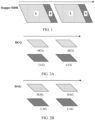
- images collected by using the SHDR technology may be shown in FIG. 1 , and include a frame of long-exposure image (a frame identified with a letter "L” in FIG. 1 ) and a frame of short-exposure image (a frame identified with a letter "S” in FIG. 1 ) that are periodically collected.
- a frame of long-exposure image a frame identified with a letter "L” in FIG. 1
- a frame of short-exposure image a frame identified with a letter “S” in FIG. 1
- the SHDR may be unable to obtain an ideal shooting effect in some scenarios.
- images under a plurality of exposure parameters for example, exposure time
- exposure time for example, exposure time
- two frames that are used to be fused into one image in the SHDR are respectively from different exposure periods, and correspond to different exposure duration.
- longer exposure time indicates that it is more likely to generate smearing (or ghosting).
- motion ghosting is inevitably generated (a relatively ideal effect can be achieved only in a high brightness scenario in which exposure time of both the two frames is very short).
- Binning is an image readout mode in which induced charges in adjacent pixels are added together and read out in a mode of one pixel. For example, in a process in which an electronic device shoots an image, light reflected by a target object is collected by a camera, so that the reflected light is transmitted to an image sensor.
- the image sensor includes a plurality of photosensitive elements. A charge collected by each photosensitive element is one pixel, and a Binning operation is performed on pixel information.
- n ⁇ n pixels may be combined into one pixel through Binning.
- adjacent 2 ⁇ 2 pixels may be synthesized into one pixel through Binning. In other words, colors of the adjacent 2 ⁇ 2 pixels are presented in a form of one pixel.
- the DCG is also an image readout manner, and may be understood as a capability of performing reading twice in one pixel cell circuit, or may be understood as that two capacitors that store photon energy exist in a photosensitive unit corresponding to one pixel.
- the DCG used in the embodiments of this application may specifically refer to performing two conversion gains on an image that is based on one exposure operation and then reading an image obtained after the two conversion gains.
- a dynamic range may be expanded by using the DCG.
- An implementation principle of the DCG is as follows: For an image sensor having a dual conversion gain DCG capability, one pixel has two potential wells, the two potential wells correspond to different full well capacities and different conversion gains CGs, a large full well capacity corresponds to a low conversion gain (low conversion gain, LCG) and a low photosensibility, and a small full well capacity corresponds to a high conversion gain (high conversion gain, HCG) and a high photosensibility.
- the senor may use two potential wells (two photosensibilities) and two conversion gains in a same scenario, to obtain two images through one time of exposure: an image in a high photosensibility mode and an image in a low photosensibility mode. Further, an electronic device synthesizes the two obtained images into one image, which is an HDR technology.
- images read by the DCG twice may be respectively shown in FIG. 2A .
- An LCG frame is a frame of image read by using an LCG gain signal, and can protect a highlight area from excessive exposure.
- An HCG frame is a frame of image read by using an HCG gain signal, and can improve shadow brightness while controlling noise. Then, the two frames of images are fused to obtain highlight and shadow gains, and obtain an image obtained after dynamic range optimization.
- the DAG also reads two frames of images based on one time of exposure by using two analog signals.
- the DCG and the DAG have different readout manners.
- the two analog gains include a low analog gain (low analog gain, LAG) and a high analog gain (high analog gain, HAG).
- LAG low analog gain
- HAG high analog gain
- images read by the DAG twice may be respectively shown in FIG. 2B .
- An LAG frame is a frame of image read by using the LAG
- an HAG frame is a frame of image read by using the HAG. Then, the two frames of images are fused to obtain highlight and shadow gains, thereby expanding a dynamic range.
- a conversion gain conversion gain, CG
- an analog gain analog gain, AG
- the foregoing DCG and DAG technologies may be further superposed to expand a dynamic range.
- a manner in which the DCG and the DAG are used in superposition is referred to as a DXG in the embodiments of this application.
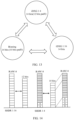
- the DCG and the DAG may be superposed based on a photosensitivity ratio. For example, if a photosensitivity ratio between an image read by using a high gain signal and an image read by using a low gain needs to be 1:16, the DCG may be used to obtain two frames of images that have a photosensitivity ratio of 1:2, and then the DAG may be used to obtain two frames of images that have a photosensitivity ratio of 1:8. After the photosensitivity ratios of the foregoing four images are multiplied, images that have a photosensitivity ratio of 1:16 are obtained.
- iDXG a manner in which two frames obtained in a DXG manner are fused into one frame in an image sensor.
- RAW image (or referred to as a RAW domain image)
- the RAW domain image namely, the raw image, includes data processed by an image sensor of a digital camera, a scanner, or a movie film scanner.
- the RAW image includes most raw information of an image, and does not undergo non-linear processing in an image signal processing (image signal processing, ISP) process.
- image signal processing image signal processing
- the HDR10 video is configured based on static metadata. For example, a PQ conversion curve of HDR10 is fixedly mapped based on reference display brightness of a display. A bit depth of the HDR10 video is 10 bits.
- the static metadata may meet a definition in SMPTE ST2086 or another standard.
- HDR10+ is a further improvement based on an HDR.
- the HDR10+ supports dynamic metadata, to be specific, the HDR10+ can adjust or enhance image brightness, contrast, color saturation, and the like based on different scenarios in a video, so that each frame of picture in the HDR10+ video has an independently adjusted HDR effect.
- a bit depth of the HDR10+ video is 12 bits.
- the dynamic metadata may meet a definition in SMPTE ST2094 or another standard.
- the brightness scenario may also be referred to as a brightness level.
- the brightness scenario may be used to determine an exposure manner (a DXG or an SHDR) for image collection.
- the brightness scenario may include a high brightness scenario, a medium brightness scenario, a dark light scenario, and the like.
- the brightness scenario may correspond to different brightness ranges, and a device may distinguish between different brightness levels based on intensity of light reflected by a photographed object.
- a brightness range corresponding to the high brightness scenario may be greater than 50000 lux (lux)
- a brightness range corresponding to the medium brightness scenario may be 50000 lux-10 lux
- a brightness range corresponding to the dark light scenario may be 10 lux-0 lux.
- the brightness level described in the embodiments of this application may not be limited to the foregoing three types.
- the brightness ranges corresponding to the three brightness scenarios are merely used as examples, and values of brightness ranges corresponding to different brightness scenarios may alternatively be other values. This is not limited in the embodiments of this application.
- FIG. 3 is a schematic diagram of a structure of an electronic device 100 according to an embodiment of this application.
- FIG. 3 is a schematic diagram of a structure of an electronic device 100.
- the electronic device 100 may include a processor 110, an external memory interface 120, an internal memory 121, a universal serial bus (universal serial bus, USB) interface 130, a charging management module 140, a power management module 141, a battery 142, an antenna 1, an antenna 2, a mobile communication module 150, a wireless communication module 160, an audio module 170, a speaker 170A, a receiver 170B, a microphone 170C, a headset jack 170D, a sensor module 180, a button 190, a motor 191, an indicator 192, a camera 193, a display 194, a subscriber identity module (subscriber identification module, SIM) card interface 195, and the like.
- SIM subscriber identity module
- the sensor module 180 may include a pressure sensor 180A, a gyroscope sensor 180B, a barometric pressure sensor 180C, a magnetic sensor 180D, an acceleration sensor 180E, a distance sensor 180F, an optical proximity sensor 180G, a fingerprint sensor 180H, a temperature sensor 180J, a touch sensor 180K, an ambient light sensor 180L, a bone conduction sensor 180M, and the like.
- the structure shown in this embodiment of the present invention does not constitute a specific limitation on the electronic device 100.
- the electronic device 100 may include more or fewer components than those shown in the figure, some components may be combined, some components may be split, or components may be arranged in different manners.
- the components shown in the figure may be implemented by using hardware, software, or a combination of software and hardware.
- the processor 110 may include one or more processing units.
- the processor 110 may include an application processor (application processor, AP), a modem processor, a graphics processing unit (graphics processing unit, GPU), an image signal processor (image signal processor, ISP), a controller, a memory, a video codec, a digital signal processor (digital signal processor, DSP), a baseband processor, a neural-network processing unit (neural-network processing unit, NPU), and/or the like.
- Different processing units may be independent devices, or may be integrated into one or more processors.
- the controller may be a nerve center and a command center of the electronic device 100.
- the controller may generate an operation control signal based on instruction operation code and a timing signal, to complete control of instruction fetching and instruction execution.
- the memory may be further disposed in the processor 110, and is configured to store instructions and data.
- the memory in the processor 110 is a cache.
- the memory may store instructions or data just used or cyclically used by the processor 110. If the processor 110 needs to use the instructions or the data again, the processor 110 may directly invoke the instructions or the data from the memory. This avoids repeated access and reduces waiting time of the processor 110, thereby improving system efficiency.
- the processor 110 may include one or more interfaces.
- the interface may include an inter-integrated circuit (inter-integrated circuit, I2C) interface, an inter-integrated circuit sound (inter-integrated circuit sound, I2S) interface, a pulse code modulation (pulse code modulation, PCM) interface, a universal asynchronous receiver/transmitter (universal asynchronous receiver/transmitter, UART) interface, a mobile industry processor interface (mobile industry processor interface, MIPI), a general-purpose input/output (general-purpose input/output, GPIO) interface, a subscriber identity module (subscriber identity module, SIM) interface, a universal serial bus (universal serial bus, USB) interface, and/or the like.
- I2C inter-integrated circuit
- I2S inter-integrated circuit sound
- PCM pulse code modulation
- PCM pulse code modulation
- UART universal asynchronous receiver/transmitter
- MIPI mobile industry processor interface
- GPIO general-purpose input/output
- a wireless communication function of the electronic device 100 may be implemented by using the antenna 1, the antenna 2, the mobile communication module 150, the wireless communication module 160, the modem processor, the baseband processor, and the like.
- the antenna 1 and the antenna 2 are configured to transmit and receive electromagnetic wave signals.
- Each antenna in the electronic device 100 may be configured to cover one or more communication frequency bands. Different antennas may be further multiplexed to improve antenna utilization.
- the antenna 1 may be multiplexed as a diversity antenna of a wireless local area network. In some other embodiments, the antenna may be used in combination with a tuning switch.
- the mobile communication module 150 may provide a solution for wireless communication including 2G/3G/4G/5G and the like applied to the electronic device 100.
- the mobile communication module 150 may include at least one filter, switch, power amplifier, low noise amplifier (low noise amplifier, LNA), and the like.
- the mobile communication module 150 may receive an electromagnetic wave through the antenna 1, perform processing such as filtering or amplification on the received electromagnetic wave, and transmit a processed electromagnetic wave to the modem processor for demodulation.
- the mobile communication module 150 may further amplify a signal obtained after modulation by the modem processor, and convert an amplified signal into an electromagnetic wave for radiation through the antenna 1.
- at least some functional modules in the mobile communication module 150 may be disposed in the processor 110.
- at least some functional modules in the mobile communication module 150 may be disposed in a same device as at least some modules in the processor 110.
- the modem processor may include a modulator and a demodulator.
- the modulator is configured to modulate a to-be-sent low-frequency baseband signal into a medium/high-frequency signal.
- the demodulator is configured to demodulate a received electromagnetic wave signal into a low-frequency baseband signal. Then, the demodulator transmits the low-frequency baseband signal obtained through demodulation to the baseband processor for processing.
- the low-frequency baseband signal is processed by the baseband processor and then transmitted to the application processor.
- the application processor outputs a sound signal by using an audio device (not limited to the speaker 170A, the receiver 170B, and the like), or displays an image or a video by using the display 194.
- the modem processor may be an independent device. In some other embodiments, the modem processor may be independent of the processor 110, and is disposed in a same device as the mobile communication module 150 or another functional module.
- the wireless communication module 160 may provide a solution for wireless communication that is applied to the electronic device 100 and that includes a wireless local area network (wireless local area networks, WLAN) (for example, a wireless fidelity (wireless fidelity, Wi-Fi) network), Bluetooth (bluetooth, BT), a global navigation satellite system (global navigation satellite system, GNSS), frequency modulation (frequency modulation, FM), near field communication (near field communication, NFC), an infrared (infrared, IR) technology, and the like.
- the wireless communication module 160 may be one or more devices integrating at least one communication processing module.
- the wireless communication module 160 receives an electromagnetic wave through the antenna 2, performs frequency modulation and filtering processing on an electromagnetic wave signal, and sends a processed signal to the processor 110.
- the wireless communication module 160 may further receive a to-be-sent signal from the processor 110, perform frequency modulation and amplification on the signal, and convert the signal into an electromagnetic wave for radiation through the antenna 2.
- the antenna 1 is coupled to the mobile communication module 150, and the antenna 2 is coupled to the wireless communication module 160, so that the electronic device 100 can communicate with a network and another device by using a wireless communication technology.
- the wireless communication technology may include a global system for mobile communications (global system for mobile communications, GSM), a general packet radio service (general packet radio service, GPRS), code division multiple access (code division multiple access, CDMA), wideband code division multiple access (wideband code division multiple access, WCDMA), time-division code division multiple access (time-division code division multiple access, TD-SCDMA), long term evolution (long term evolution, LTE), BT, a GNSS, a WLAN, NFC, FM, an IR technology, and/or the like.
- GSM global system for mobile communications
- GPRS general packet radio service
- code division multiple access code division multiple access
- CDMA wideband code division multiple access
- WCDMA wideband code division multiple access
- time-division code division multiple access time-division code
- the GNSS may include a global positioning system (global positioning system, GPS), a global navigation satellite system (global navigation satellite system, GLONASS), a BeiDou navigation satellite system (beidou navigation satellite system, BDS), a quasi-zenith satellite system (quasi-zenith satellite system, QZSS), and/or a satellite based augmentation system (satellite based augmentation systems, SBAS).
- GPS global positioning system
- GLONASS global navigation satellite system
- BeiDou navigation satellite system beidou navigation satellite system
- BDS BeiDou navigation satellite system
- QZSS quasi-zenith satellite system
- SBAS satellite based augmentation system
- the audio module 170 is configured to convert digital audio information into an analog audio signal for output, and is also configured to convert an analog audio input into a digital audio signal.
- the speaker 170A also referred to as a "loudspeaker" is configured to convert an audio electrical signal into a sound signal.
- the receiver 170B also referred to as an "earpiece" is configured to convert an audio electrical signal into a sound signal.
- the microphone 170C also referred to as a “mic” or “mike”, is configured to convert a sound signal into an electrical signal. At least one microphone 170C may be disposed in the electronic device 100.
- the headset jack 170D is configured to connect to a wired headset.
- the sensor module 180 may include one or more sensors, and these sensors may be of a same type or different types.
- the sensor module 180 may include a pressure sensor, a gyroscope sensor, an acceleration sensor, a distance sensor, an optical proximity sensor, a fingerprint sensor, a touch sensor, an ambient light sensor, and the like.
- the button 190 includes a power on/off button, a volume button, and the like.
- the button 190 may be a mechanical button, or may be a touch button.
- the electronic device 100 may receive a key input and generate a key signal input related to user settings and function control of the electronic device 100.
- the display 194 is configured to display an image, a video, and the like.
- the display 194 includes a display panel.
- the display panel may be a liquid crystal display (Liquid Crystal Display, LCD), an organic light-emitting diode (Organic Light-Emitting Diode, OLED), an active-matrix organic light emitting diode or an active-matrix organic light emitting diode (Active-Matrix Organic Light Emitting Diode, AMOLED), a flexible light-emitting diode (Flex Light-Emitting Diode, FLED), a Mini LED, a Micro LED, a Micro-OLED, a quantum dot light emitting diode (Quantum Dot Light Emitting Diodes, QLED), or the like.
- the electronic device 100 may include one or N displays 194, where N is a positive integer greater than 1.
- the electronic device 100 implements a display function by using the GPU, the display 194, the application processor, and the like.
- the GPU is a microprocessor for image processing and is connected to the display 194 and the application processor.
- the GPU is configured to perform mathematical and geometric calculation for graphics rendering.
- the processor 110 may include one or more GPUs that execute program instructions to generate or change displayed information.
- the electronic device 100 may implement a shooting function by using the ISP, the camera 193, the video codec, the GPU, the display 194, the application processor, and the like.
- the digital signal processor is configured to process a digital signal, and may process another digital signal in addition to a digital image signal. For example, when the electronic device 100 selects a frequency, the digital signal processor is configured to perform Fourier transform and the like on frequency energy.
- the video codec is configured to compress or decompress a digital video.
- the NPU is a neural-network (neural-network, NN) computing processor, which quickly processes input information by referring to a biological neural network structure, for example, by referring to a transmission mode between human brain neurons, and may further perform self-learning continuously.
- NN neural-network
- the external memory interface 120 may be configured to connect to an external storage card, for example, a Micro SD card, to expand a storage capability of the electronic device 100.
- the external storage card communicates with the processor 110 through the external memory interface 120, to implement a data storage function, for example, to store files such as music and videos in the external storage card.
- the internal memory 121 may be configured to store computer-executable program code, and the executable program code includes instructions.
- the processor 110 runs the instructions stored in the internal memory 121, to perform various function applications and data processing of the electronic device 100.
- the internal memory 121 may include a program storage area and a data storage area.
- the program storage area may store an operating system, an application required by at least one function (for example, a sound playing function or an image/video playing function), and the like.
- the data storage area may store data (for example, audio data and a phone book) and the like created during use of the electronic device 100.
- the internal memory 121 may store code related to automatic exposure control (automatic exposure control, AEC) and an exposure mode switching method.
- the processor may implement an automatic exposure control process by running the code related to AEC, and may implement switching of an exposure mode of an image sensor in a camera by running the code related to the exposure mode switching method.
- an AEC module may include an AEC algorithm module and an AEC statistics collecting module.
- the AEC statistics collecting module is configured to collect statistics about and analyze a parameter in a collected image, for example, image brightness.
- the AEC algorithm module may automatically adjust an exposure parameter of a camera based on a statistics collecting result, and the AEC algorithm module may further estimate ambient light brightness based on the statistics collecting result.
- the electronic device 100 may implement an image obtaining function by using the ISP, the camera 193, the video codec, the GPU, the display 194, the application processor, and the like.
- the ISP is configured to process data fed back by the camera 193. For example, during shooting, a shutter is opened, and light is transmitted to a photosensitive element of the camera by using a lens. An optical signal is converted into an electrical signal. The photosensitive element of the camera transmits the electrical signal to the ISP for processing, to convert the electrical signal into an image or a video visible to naked eyes.
- the ISP may further perform algorithm optimization on noise, brightness, and complexion of the image.
- the ISP may further optimize parameters such as exposure and color temperature of a shooting scenario.
- the ISP may be disposed in the camera 193.
- the camera 193 is configured to capture a still image or a video.
- An optical image is generated for an object by using the lens and is projected onto the photosensitive element.
- the photosensitive element may be a charge coupled device (Charge Coupled Device, CCD) or a complementary metal-oxide-semiconductor (Complementary Metal-Oxide-Semiconductor, CMOS) phototransistor.
- CCD Charge Coupled Device
- CMOS complementary Metal-Oxide-Semiconductor
- the photosensitive element converts an optical signal into an electrical signal, and then transmits the electrical signal to the ISP to convert the electrical signal into a digital image or a video signal.
- the ISP outputs the digital image or the video signal to the DSP for processing.
- the DSP converts the digital image or the video signal into an image or a video signal in a standard format, for example, RGB or YUV.
- the electronic device 100 may include one or N cameras 193, where N is a positive integer greater than 1.
- the electronic device 100 may obtain images of a plurality of exposure coefficients by using the N cameras 193.
- the electronic device 100 may composite an HDR image based on the images of the plurality of exposure coefficients by using a high dynamic range (High Dynamic Range, HDR) technology.
- HDR High Dynamic Range
- the video codec is configured to compress or decompress a digital video.
- the electronic device 100 may support one or more video codecs. In this way, the electronic device 100 may play or record videos in a plurality of coding formats, such as moving picture experts group (Moving Picture Experts Group, MPEG)1, MPEG2, MPEG3, and MPEG4.
- MPEG moving picture experts group
- MPEG2 Moving Picture Experts Group
- MPEG3 Moving Picture Experts Group
- the NPU is a neural-network (Neural-Network, NN) computing processor, which quickly processes input information by referring to a biological neural network structure, for example, by referring to a transmission mode between human brain neurons, and may further perform self-learning continuously.
- Applications such as intelligent cognition of the electronic device 100, for example, image recognition, face recognition, speech recognition, and text understanding, may be implemented by using the NPU.
- the SIM card interface 195 is configured to connect to a SIM card.
- the SIM card may be inserted into the SIM card interface 195 or removed from the SIM card interface 195 to implement contact with and separation from the electronic device 100.
- the electronic device 100 may support one or N SIM card interfaces, where N is a positive integer greater than 1.
- the electronic device 100 interacts with a network by using the SIM card, to implement functions such as a call and data communication.
- the electronic device 100 uses an eSIM, that is, an embedded SIM card.
- the eSIM card may be embedded in the electronic device 100 and cannot be separated from the electronic device 100.
- a software system of the electronic device 100 may use a layered architecture, an event-driven architecture, a microkernel architecture, a microservice architecture, or a cloud architecture.
- an Android system with a layered architecture is used as an example to describe a software structure of the electronic device 100.
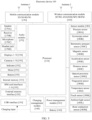
- FIG. 4 is a block diagram of a software structure of an electronic device 100 according to an embodiment of this application.
- the layered architecture software is divided into several layers, and each layer has a clear role and task.
- the layers communicate with each other through a software interface.
- the system may include an application layer, a hardware abstraction layer, and a kernel layer from top to bottom.
- An application framework layer, a system library, runtime, and the like may be further included between the application layer and the hardware abstraction layer.
- the application layer may include a series of application packages. As shown in FIG. 4 , the application package may include application (or referred to as applications) such as Camera, Gallery, Music, Video, Phone, and the like.
- application or referred to as applications
- the hardware abstraction layer shields differences between different hardware devices, and provides a standard interface for the system. As shown in FIG. 4 , the hardware abstraction layer transmits data to the kernel layer by using a standard HAL interface, and receives data uploaded by the kernel layer.
- the hardware abstraction layer may include a plurality of library modules. Each library module implements a group of interfaces for a specific type of hardware component, for example, a wireless fidelity (wireless fidelity, Wi-Fi)/Bluetooth (bluetooth) module and a camera module.
- a wireless fidelity wireless fidelity
- Wi-Fi wireless fidelity
- Bluetooth bluetooth
- the hardware abstraction layer may further include a camera module.
- the camera module may include an automatic exposure control (automatic exposure control, AEC) module and an image processing pipeline.
- AEC automatic exposure control
- the AEC module may be configured to implement automatic exposure control. Specifically, the AEC module may obtain an exposure parameter from a system configuration file, and configure the exposure parameter for an image sensor. The image sensor captures an image based on the exposure parameter.
- An AEC statistics collecting module in the AEC module may collect statistics about and analyze a parameter in a collected image, for example, image brightness.
- the AEC module may further estimate a dynamic range compression gain (adrc gain) based on the foregoing exposure parameter and image brightness that are used during image collection.
- Adrc gain dynamic range compression gain
- An exposure mode control module may be configured to control an exposure mode of an image sensor in a camera based on estimated ambient light brightness. Specifically, in a bright light scenario, the image sensor may be controlled to work in a low-photosensitivity mode to prolong exposure time, so that the exposure time meets an exposure time requirement of video shooting.
- the kernel layer is a layer between hardware and software.
- the kernel layer includes at least a display driver, a camera driver, a sensor driver, a sensor front-end processor, an image processor front-end, an image processor back-end, and the like.
- the exposure mode control module may control, by using the camera driver, the exposure mode of the image sensor in the camera, and the AEC module may configure an exposure parameter for the camera by using the camera driver.
- the following describes examples of working procedures of software and hardware of the electronic device 100 with reference to a video recording scenario.
- a corresponding hardware interrupt is sent to the kernel layer.
- the kernel layer processes the touch operation into an original input event (including information such as touch coordinates and a timestamp of the touch operation).
- the original input event is stored at the kernel layer.
- the application framework layer obtains the original input event from the kernel layer, and identifies a control corresponding to the input event.
- the touch operation is a tap operation
- a control to which the tap operation is applied is a control of a Camera application icon.
- a Camera application invokes an interface at the application framework layer to start the Camera application, then starts the camera driver by invoking the kernel layer, and captures a video image by using the camera 193.
- the display 194 displays a preview interface of a camera, and the preview interface displays the captured video image.
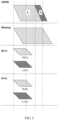
- FIG. 5 is a diagram of a time sequence in a process of respectively collecting an image in an SHDR exposure manner, a Binning exposure manner, and a DXG exposure manner according to an embodiment of this application.
- SHDR exposure manner a long frame of image and a short frame of image are obtained by changing a shutter speed (that is, an exposure condition), thereby reducing computing power of subsequent image reading and processing.
- a shutter speed that is, an exposure condition
- SHDR exposure manner easily causes ghosting in an image. Therefore, SHDR exposure manner is applicable to a scenario in which exposure time is relatively short (ambient brightness is relatively high).
- the Binning exposure manner is single-frame exposure. Compared with the DXG exposure manner, the Binning exposure manner has relatively long exposure time, for example, the exposure time may be longer than long exposure time in the SHDR exposure manner. Using the several exposure manners shown in FIG. 5 as an example, the exposure time corresponding to the Binning exposure manner may be longest. A specific exposure time value may be set based on a requirement. This is not limited in this embodiment of this application.
- the exposure manner may be applied to a scenario with medium or low ambient brightness.
- the Binning single-frame exposure manner may be used; and for a scenario with a relatively large dynamic range, it may be further determined whether a flicker exists in the current scenario, that is, flicker determining is performed. If the flicker exists, the Binning exposure manner is used because the Binning exposure manner has relatively long exposure time, which can effectively overcome a flicker phenomenon caused by a periodic change in an alternating current. If no flicker exists, it may be further determined, based on ambient brightness, whether to use the SHDR exposure manner or the DXG exposure manner. When the ambient brightness is relatively high, the SHDR exposure manner is used, and when the ambient brightness is relatively low, the DXG exposure manner is used.
- Table 1 shows examples of exposure manners corresponding to different influence factors.
- Table 1 Influence factor Exposure manner High ambient brightness+high dynamic range SHDR Medium/low ambient brightness+high dynamic range DXG Low dynamic range Binning Flicker phenomenon exists Binning Thermal escape phenomenon exists Binning
- influence factors described above are merely examples.
- a type of an influence factor may be flexibly set based on a requirement. For example, in some cases, only a dynamic range and ambient brightness in a shooting scenario may be considered, and a flicker factor and the like are ignored. This is not limited in this embodiment of this application.
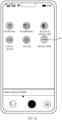
- FIG. 6A to FIG. 6D are schematic diagrams of some graphical user interfaces (graphical user interface, GUI) that may be used in a video processing method implementation process according to an embodiment of this application.
- GUI graphical user interface
- the video processing process may be triggered by inputting a tap operation on a smart HDR switch control disposed in the mobile phone.
- a smart HDR function may be enabled by default, that is, the video processing process may be triggered immediately when the mobile phone is powered on.
- FIG. 6A is a schematic diagram of a setting interface that includes a smart HDR switch control.
- the setting interface 601 includes a shooting parameter setting area, a video parameter setting area, a general setting area, and the like.
- the shooting parameter setting area may specifically include a photo ratio setting bar, a sound control shooting function setting bar, a smiling face capturing setting bar, and the like.
- the video parameter setting area may specifically include a video resolution setting bar, a video frame rate setting bar, a smart HDR setting bar, and the like.
- the general setting area may specifically include a reference line function setting bar, a level instrument function setting bar (not shown in the figure), a timed shooting function setting bar (not shown in the figure), and the like.
- the smart HDR setting bar includes a smart HDR switch control. When a user enables the smart HDR function by using the switch control, the mobile phone may intelligently enable an HDR mode based on a shooting scenario in a video recording process.
- the smart HDR switch control may alternatively be disposed in a Camera application of the mobile phone.
- FIG. 6B and FIG. 6C are schematic diagrams of GUIs that may be used when a smart HDR function is enabled by using a Camera application.
- a camera main interface 603 shown in FIG. 6B may be displayed after the mobile phone receives an enable operation (for example, a tap operation on a Camera icon in the main interface or a lock screen interface) performed by a user on the Camera application.
- the camera main interface 603 may include an image preview area, a mode setting area, a shooting control, and the like.
- the mode setting area 605 may include a viewfinder frame, an album icon, a shooting control 604, a rotation control, and the like.
- the viewfinder frame is configured to obtain and shoot a preview image and display the preview image in real time.
- the album icon is used for quickly entering an album.
- the mobile phone may display a shot photo, a shot video, or the like on a touchscreen.
- the shooting control 604 is configured to perform shooting or video recording. After the mobile phone detects that a user taps the shooting control, the mobile phone performs a photo taking operation and stores a shot picture; or when the mobile phone is in a video recording mode, after a user taps the shooting control, the mobile phone performs a video recording operation and stores a recorded video.
- the camera rotation control is configured to control switching between a front-facing camera and a rear-facing camera.
- the camera main interface 603 further includes a function control used for setting a shooting mode, for example, an APERTURE shooting mode, a NIGHT shooting mode, a PORTRAIT shooting mode, a VIDEO mode, a PHOTO mode, and MORE shown in FIG. 6B .
- MORE may further include a SLOW-MO mode, a PANORAMA mode, a BLACK & WHITE ART mode, a DUAL-SCENE video recording mode, a FILTER mode, a SMART HDR mode, and the like.
- a user when shooting a video by using the Camera application, a user may input a specific operation on a smart HDR icon shown in FIG. 6C to enable the smart HDR function.
- an artificial intelligence (artificial intelligence, AI) prompt capability may be supported in a video preview scenario (recording is not started).
- a video preview scenario (recording is not started).
- a preview interface may display prompt information: "backlight HDR”.
- a corresponding exposure manner is in a DXG state.
- the preview interface may display prompt information: "night HDR”.
- locations of the smart HDR switch controls shown in FIG. 6A to FIG. 6C are merely examples. In actual application, the smart HDR switch control is unnecessarily disposed in the Settings application and the Camera applications.
- the foregoing embodiment is described by using only an example in which a user enables the smart HDR function of the mobile phone. However, in some other embodiments, there may be a plurality of manners for enabling the smart HDR function. For example, when the mobile phone is powered on, the smart HDR function may be enabled by default. For another example, when detecting that a preset trigger event occurs, the mobile phone may automatically enable the smart HDR function. In still other embodiments, if an electronic device does not support the smart HDR function (for example, due to a hardware limitation), an HDR switch control icon may be set to be gray. This is not limited in this application.
- the electronic device may further prompt a user to enable the smart HDR function in a plurality of manners. For example, when a user photographs a cave with backlight, a brightness level of a backlight part is relatively high, and a brightness level of a cave part is relatively low, and a difference between the two brightness levels is relatively large.
- a shooting device may prompt the user to enable the smart HDR function through (artificial intelligence, AI). For example, prompt information "The currently shot picture has a relatively large brightness difference, and the smart HDR function in the "MORE" option may be tapped to improve picture quality" shown in FIG. 6D may be displayed in a shooting interface.
- AI artificial intelligence
- the mobile phone may perform exposure and image processing based on an HDR solution that matches a current actual shooting situation, to obtain a video picture with a high dynamic range.
- a shot picture obtained when the smart HDR function is enabled can more clearly present details of a bright area and a dark area, so that there is no case in which details are blurred due to excessively high brightness or excessively low brightness.
- a preset HDR solution herein refers to an HDR solution determined by the mobile phone based on factors such as a dynamic range corresponding to an actual shooting environment, a flicker status, and brightness of the shooting environment.
- a difference between different HDR solutions mainly lies in a difference between exposure manners and image processing manners.
- the mobile phone may seamlessly switch between a plurality of supported exposure manners based on an actual shooting condition.
- an exposure manner that may be provided for selection in this embodiment of this application may include, for example, an SHDR, a DXG, and Binning. It should be noted that, in different scenarios, exposure manners that are provided for selection and use may be different. For example, due to a limitation of hardware performance of a device, for a device that does not support the DXG exposure manner, an exposure manner that may be provided for selection may alternatively include only the SHDR and the Binning.
- an underlying implementation process of controlling the smart HDR switch control may include:
- the HAL reports a multi-state switching video HDR capability to distinguish between products.
- An APP configures the "smart HDR" switch based on the reported capability. Based on a mode and a scenario, the APP determines a switch status: enabled/disabled/set to be gray.
- the APP delivers an HDR capability enabling and disabling command to the HAL based on the switch status. When the "smart HDR" switch is disabled, only a Binning capability is used.
- the HAL reports an AEC HDR status tag, to support an AI prompt and recommendation.
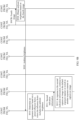
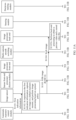
- FIG. 7 is a schematic diagram of data flow interaction between related modules during implementation of a video processing method according to an embodiment of this application.
- an electronic device 100 includes an image sensor (camera sensor), an automatic exposure control (automatic exposure control, AEC) module, a sensor front-end processor (or referred to as a fusion module), an image processor front-end, a multi-camera smooth switching module, an image processor back-end and a local tone mapping (local tone mapping, LTM) module included in the image processor back-end, and the like.
- image sensor camera sensor
- AEC automatic exposure control
- AEC automatic exposure control
- a sensor front-end processor or referred to as a fusion module
- an image processor front-end or referred to as a fusion module
- multi-camera smooth switching module or referred to as a multi-camera smooth switching module
- an image processor back-end and a local tone mapping (local tone mapping, LTM) module included in the image processor back-end, and the like.
- LTM local tone mapping
- the image sensor may correspond to the camera 193 shown in FIG. 3 , and is mainly configured to shoot a video image.
- the image sensor collects an image frame through exposure, and when reflected light of a photographed object passes through a lens, the reflected light converges on the image sensor.
- the image sensor may convert an optical signal into an analog electrical signal, and transmit the analog electrical signal to the fusion module.
- the image sensor outputs a raw digital image, that is, a raw (RAW) image, collected for the fusion module.
- the image sensor in an initial phase of shooting (when a camera is enabled), the image sensor may collect an image in a default exposure manner.
- the image sensor may perform shooting in a target manner under indication of the AEC module.
- the default exposure manner may be, for example, a Binning exposure manner. This is not limited in this embodiment of this application.
- the image sensor may output different quantities of frames for a same picture at a same moment. For example, when shooting is performed in the Binning exposure manner, the image sensor outputs a single frame (for example, a long-exposure frame in FIG. 1 ); and when shooting is performed in a DXG exposure manner, the image sensor outputs double frames.
- the image sensor may further perform image fusion.
- the image sensor may fuse the two frames of images into one frame.
- the image sensor may be further configured to adjust an image parameter (such as an image size or a bit depth), for example, adjust sizes of images obtained in different exposure manners to a same target size; or adjust bit depths of images obtained in different exposure manners to a same target bit depth, and so on.
- the sensor front-end processor (that is, the fusion module) is configured to fuse RAW image frames collected by the image sensor, to implement single-frame input and single-frame output or two-frame input and single-frame output.
- initial images input by the image sensor to the fusion module may be two frames of images with a specific frame rate (such as 30 fps) and different exposure time, that is, a dual-frame mode.
- the fusion module fuses the two frames of images with different exposure time into one frame, and adjusts a parameter of a fused image to a preset target parameter, for example, adjusts an initial format RAW10 of the input image to a target format RAW14.
- the DXG exposure manner is that two frames of images are obtained based on one time of exposure. Therefore, when shooting is performed in the DXG exposure manner, one time of exposure of the image sensor may correspondingly input two initial images to the fusion module, which is also a dual-frame mode.
- the two initial images may be images respectively read by using a high conversion gain and a low conversion gain, or the two frames of images may be images respectively read by using a high analog gain and a low analog gain, or the two frames of images may be images obtained after images read by using a conversion gain and an analog gain are superposed.
- An initial format of the input image may be, for example, RAW10, and a frame rate may be, for example, 30 fps.
- the fusion module After obtaining the initial images, the fusion module fuses the two frames of images read by using different gains into one frame, and may adjust a parameter of a fused image to a preset target parameter, for example, adjust the input initial format RAW 10 to a target format RAW 14.
- a single frame of image may be obtained in the Binning exposure manner.
- one time of exposure of the image sensor may correspondingly input a single frame of initial image to the fusion module, that is, a single-frame mode.
- the fusion module does not need to perform image fusion, but may adjust an image parameter based on a requirement, for example, adjust an input initial format RAW10 to a target format RAW14.
- a purpose of adjusting a format of an initial image is to unify images obtained in different exposure manners into a same format (a size, a bit depth, and the like), so that a picture size jumps when a video is subsequently played.
- a fused image may be input into the fusion module based on a single frame.
- the fusion module may not need to perform fusion processing on the images, or may not adjust an image size, but output the image to the image processor front-end based on a single frame for further processing.
- the image processor front-end (image processor front-end) is configured to perform front-end processing on an image to obtain an initial preview image.
- the image processor front-end may specifically include a statistics collecting (STATS) module and a GTM module.
- STATS statistics collecting
- GTM module is configured to globally brighten a dark part of an image, to improve picture quality.
- an image output by the image processor front-end may be put into the following two transmission paths:
- a manner in which the sensing module obtains the ambient brightness based on the image may include: comprehensively determining the ambient brightness based on a current status of the image sensor, an exposure parameter, and brightness channel information of an image frame.
- the AEC module may be configured to control an exposure manner
- the AEC module of the system does not have an enabling condition for determining the SHDR exposure manner and the DXG exposure manner, but needs to determine the SHDR exposure manner and the DXG exposure manner in combination with an ambient brightness detection result of the sensing module.
- the ambient brightness is greater than X
- the SHDR exposure manner is used; and when the ambient brightness is less than Y, the DXG exposure manner is used.
- X and Y may be set based on an actual requirement.
- the other transmission path is transmission from the image processor front-end to the multi-camera smooth switching module.
- the multi-camera smooth switching module is configured to implement, by using the multi-camera smooth switching algorithm (for example, a SAT (spatial alignment transform) algorithm), a process of smoothly switching one camera to another camera image.
- the multi-camera smooth switching module may transmit a processed image to the image processor back-end.
- the image processor back-end may locally brighten a dark part of an image by using the LTM module included in the image processor back-end.
- a preview video image may be output based on a specific frame rate (for example, 30 fps), or a video-type (video) file is generated and stored based on a specific frame rate (for example, 30 fps).
- a smooth switching operation performed by the multi-camera smooth switching module is mainly used to implement switching between images respectively shot by an HDR camera and a non-HDR camera.
- the multi-camera smooth switching module may be configured to smoothly switch an image of the HDR camera to an image of the non-HDR camera, or smoothly switch an image of the non-HDR camera to an image of the HDR camera, that is, implement smooth switching between images collected by two different types of cameras, so as to ensure smooth video playing to avoid an image picture jump caused by direct switching.
- the HDR camera in this embodiment of this application may be a primary camera
- the non-HDR camera may be a non-primary camera, such as a wide-angle camera.
- the HDR camera and the non-HDR camera in this embodiment of this application may not specifically refer to two different cameras, but may refer to a camera that uses an HDR mode and a camera that does not use the HDR mode. For example, when a camera uses an HDR solution to collect an image, the camera is considered as the HDR camera; and when a camera does not use the HDR solution to collect an image, the camera is considered as the non-HDR camera.
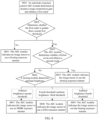
- FIG. 8 is a schematic flowchart of a video processing method according to an embodiment of this application.
- the method may be performed by the electronic device 100 described above, and may be specifically implemented by functional modules in the electronic device.
- the method may include the following steps.
- the AEC module determines dynamic range information and obtains a first result.
- the dynamic range information herein may be a dynamic range or a dynamic range compression gain.
- the dynamic range compression gain may be obtained through calculation based on a dynamic range of a current image and a preset standard dynamic range.
- the video processing method provided in this embodiment of this application may further include:
- the AEC module of the electronic device may indicate the image sensor to capture an image in a default exposure manner.
- the AEC module may obtain a dynamic range of the current image by using a histogram. For a specific process of obtaining the dynamic range of the current image based on the histogram, refer to an existing procedure. Details are not described in this embodiment of this application.
- the AEC module may obtain a current dynamic range based on a plurality of frames of images, for example, obtain an average dynamic range based on a histogram corresponding to each frame of image.
- S802 Determine whether the first result is greater than a preset first threshold.
- the first threshold may be flexibly set based on an actual situation. This is not limited in this embodiment of this application.
- a level of a current dynamic range may be determined based on a correlation relationship between the first result and the first threshold. For example, when the first result is greater than the first threshold, it indicates that a brightness difference of a current shot picture is relatively large, and the current dynamic range may be determined as a high dynamic range; and when the first result is not greater than the first threshold, it indicates that the brightness difference of the current shot picture is relatively small, and the current dynamic range may be determined as a medium/low dynamic range.
- dynamic ranges may correspond to different exposure manners. For example, when a dynamic range is a high dynamic range, it is determined that an exposure manner is Binning; or when a dynamic range is a medium/low dynamic range, an exposure manner needs to be further determined based on a flicker condition, ambient brightness, and a preset determining manner.
- a flicker in a video shooting process, because an alternating current is used in all devices, a flicker may exist in a shot picture. It may be determined, based on a flicker result, whether to use the Binning exposure manner. When a flicker exists, it is determined that the Binning exposure manner is to be used; or when no flicker exists, an SHDR exposure manner or a DXG exposure manner may be further determined based on ambient brightness.
- exposure time corresponding to the Binning exposure manner in this embodiment of this application may be greater than or equal to an alternating current cycle.
- an alternating current frequency is 50 Hz
- the exposure time of the Binning exposure manner may be 10 ms.
- the sensing module may obtain the image captured by the image sensor, and obtain the ambient brightness based on the image.
- the second threshold may be flexibly set based on an actual situation. This is not limited in this embodiment of this application.
- the third threshold is less than the second threshold.
- the third threshold and the fourth threshold may be flexibly set based on an actual situation. This is not limited in this embodiment of this application.
- seamless switching is performed between a plurality of types of HDR processing solutions based on a change in factors such as ambient brightness, a required dynamic range, and flicker detection, so that image processing can be performed by using an HDR solution that adapts to an actual shooting situation and a picture quality requirement, thereby effectively expanding a dynamic range in a video recording scenario and improving image picture quality in the video recording scenario.
- FIG. 9A and FIG. 9B are a schematic flowchart of another video processing method according to an embodiment of this application.
- FIG. 9A and FIG. 9B show a process of interaction between functional modules, and the process may specifically include the following steps.
- the automatic exposure control module sends first indication information to the image sensor.
- the automatic exposure control module may preset a default exposure manner, and the default exposure manner may be, for example, Binning.
- the video processing method provided in this embodiment of this application may further include:
- the AEC module of the electronic device may indicate the image sensor to capture an image in the default exposure manner.
- the first operation may be used to enable video recording, for example, may be an operation of tapping a recorded image in the camera main interface shown in FIG. 6C .
- the image sensor captures an image in the default exposure manner in response to the first indication information.
- the image sensor is only configured to collect a raw image, such as an image in a RAW 10 format, without performing fusion processing on the image or adjusting an image size.
- the image sensor sends the first image to the fusion module.
- the first image may be a raw image collected by the image sensor, such as an image in the RAW 10 format.
- step S904 may be further performed, that is, the fusion module performs multi-frame fusion on the first image.
- the image sensor captures an image in a single-frame mode in the Binning exposure manner
- the image may be input to the fusion module in the single-frame mode.
- the fusion module does not need to perform fusion processing, and may only adjust an image parameter.
- the fusion module sends a second image to the image processor front-end.
- the second image may be an image processed by the fusion module, and the fusion module may be configured to perform fusion processing on the obtained image, or may adjust an image size by using a part.
- the image processor front-end sends a third image to the image processor back-end.
- the third image may be an image obtained after the image processor front-end performs front-end processing on the second image.
- the image processor front-end may output the third image based on two transmission procedures.
- One transmission procedure is as follows: The third image is transmitted to the multi-camera smooth switching module, and then the multi-camera smooth switching module transmits the third image to the image processor back-end.
- the image processor back-end may perform the following step S907A.
- the other transmission procedure is as follows: The third image is transmitted to the image processor back-end, and then the image processor back-end sends the image to the sensing module, that is, performs the following step S907B.
- S907A The image processor back-end performs back-end processing to obtain a preview video and a stored video file.
- S907B The image processor back-end sends a fourth image to the sensing module.
- the fourth image may be an image obtained after the image processor performs back-end processing on the third image.
- the sensing module obtains ambient brightness based on the fourth image.
- the sensing module sends the ambient brightness to the automatic exposure control module.
- the automatic exposure control module determines an exposure manner based on a preset influence factor, where the influence factor includes the ambient brightness.
- the automatic exposure control module sends second indication information to the image sensor.
- the second indication information is used to indicate the image sensor to capture an image in a target exposure manner.
- S912 The image sensor continues to use the default exposure manner or another exposure manner in response to the second indication information.
- the image sensor may determine an exposure manner in real time based on the foregoing steps S903 to S911, and capture an image in the target exposure manner and process the image.
- a raw image for example, a RAW10 image
- seamless switching is performed between a plurality of types of HDR processing solutions based on a change in factors such as ambient brightness, a required dynamic range, and flicker detection, so that image processing can be performed by using an HDR solution that adapts to an actual shooting environment and a picture quality requirement, thereby effectively expanding a dynamic range in a video recording scenario and improving image picture quality in the video recording scenario.
- the image sensor when the image sensor has a function of fusing images and adjusting an image size, the image sensor may perform an operation of fusing a plurality of frames of images in the DXG exposure manner and adjusting an image size.
- FIG. 10 is a schematic diagram of data flow interaction between related modules during implementation of another video processing method according to an embodiment of this application.
- the automatic exposure control module may send exposure indication information to the image sensor, to indicate the image sensor to capture an image in a default exposure manner (for example, a Binning exposure manner).
- the image sensor collects images (such as RAW10) in the default exposure manner, fuses the images (in a DXG or SHDR exposure manner) and adjusts an image parameter (such as an image size or a bit depth), and then outputs an image (such as RAW 14) to the fusion module.
- the fusion module transparently transmits the obtained image to the image processor front-end, and after performing front-end processing on the image, the image processor front-end outputs an image based on two transmission paths: (1)
- One transmission path is as follows: The image processor front-end transmits the image to the image processor back-end.
- the image processor back-end may perform back-end processing on the image, and then transmits an image to the sensing module.
- the sensing module may obtain ambient brightness based on the image, and transmit the ambient brightness to a decision-making module.
- the decision-making module is configured to determine a target exposure manner based on the ambient brightness, where the target exposure manner is an exposure manner that matches an actual situation such as a current dynamic range, a flicker status, and ambient brightness.
- the decision-making module sends exposure manner indication information to the image sensor, to indicate the image sensor to switch to the target exposure manner.
- the other transmission path is as follows:
- the image processor front-end transmits the image to the multi-camera smooth switching module.
- the multi-camera smooth switching module may implement smooth switching from one camera to another camera image by using a multi-camera smooth switching algorithm. After performing smooth image switching, the multi-camera smooth switching module may transmit a processed image to the image processor back-end.
- the image processor back-end may locally brighten a dark part of the image by using the LTM module included in the image processor back-end, and then may output a preview video image based on a specific frame rate (for example, 30 fps), or generate and store a video-type (vedio) file based on a specific frame rate (for example, 30 fps).
- a specific frame rate for example, 30 fps
- a video-type file for example, 30 fps
- a smooth switching operation performed by the multi-camera smooth switching module is mainly used to implement switching between images respectively shot by an HDR camera and a non-HDR camera.
- the multi-camera smooth switching module may be configured to smoothly switch an image of the HDR camera to an image of the non-HDR camera, or smoothly switch an image of the non-HDR camera to an image of the HDR camera, that is, implement smooth switching between images collected by two different types of cameras, so as to ensure smooth video playing to avoid an image picture jump caused by direct switching.
- the HDR camera in this embodiment of this application may be a main camera
- the non-HDR camera may be a non-main camera, such as a wide-angle camera.
- the HDR camera and the non-HDR camera in this embodiment of this application may not specifically refer to two different cameras, but may refer to a camera that uses an HDR mode and a camera that does not use the HDR mode. For example, when a camera uses an HDR solution to collect an image, the camera is considered as the HDR camera; and when a camera does not use the HDR solution to collect an image, the camera is considered as the non-HDR camera.
- seamless switching is performed between a plurality of types of HDR processing solutions based on a change in factors such as ambient brightness, a required dynamic range, and flicker detection, so that image processing can be performed by using an HDR solution that adapts to an actual shooting environment and a picture quality requirement, thereby effectively expanding a dynamic range in a video recording scenario and improving image picture quality in the video recording scenario.
- FIG. 11A and FIG. 11B are a schematic flowchart of another video processing method according to an embodiment of this application.
- FIG. 11A and FIG. 11B show a process of interaction between functional modules, and the process may specifically include the following steps.
- the automatic exposure control module sends first indication information to the image sensor.
- the automatic exposure module may preset a default exposure manner, and the default exposure manner may be, for example, Binning.
- the video processing method provided in this embodiment of this application may further include:
- the AEC module of the electronic device may indicate the image sensor to capture an image in the default exposure manner.
- the first operation may be used to enable video recording, for example, may be an operation of tapping a recorded image in the camera main interface shown in FIG. 6C .
- the image sensor captures an image in the default exposure manner in response to the first indication information, and performs image processing based on a preset policy.
- the image sensor in this embodiment of this application may have a capability of fusing images and adjusting an image size, and can perform image processing based on the preset policy.
- the image sensor may fuse a dual-frame first image.
- the image sensor captures an image in a Binning exposure manner, the image is input to the fusion module in a single frame mode. In this case, the fusion module does not need to perform fusion processing, and may only adjust an image size.
- a manner that is in the image sensor and in which two frames of images are obtained in a DXG manner and are fused is denoted as iDXG.
- a manner in which the image sensor fuses dual frames of images may include: obtaining two frames of images with a preset photosensitivity ratio, and then fusing the two frames of images to obtain an image with a larger dynamic range.
- a photosensitivity ratio between two frames of images obtained in the iDXG manner may be preset, for example, may be set to several fixed values such as iDXG 1:4, iDXG 1:8, or iDXG 1:16.
- Different switching conditions may correspond to different photosensitivity ratios.
- a high dynamic scenario may correspond to iDXG 1:4 (that is, the iDXG exposure manner is used, and a photosensitivity ratio is 1:4)
- an extremely high dynamic scenario may correspond to iDXG 1: 16 (that is, the iDXG exposure manner is used, and a photosensitivity ratio is 1:16)
- a medium/low dynamic scenario may correspond to the Binning exposure manner
- a thermal escape scenario may correspond to the Binning exposure manner.
- the extremely high dynamic range, the high dynamic range, and the medium/low dynamic range may be divided based on a requirement, and each dynamic range is not specifically limited in this application.
- the fusion manner in the embodiment in FIG. 9A and FIG. 9B can conveniently adjust brightness of an image flexibly.
- the fusion manner in the embodiment in FIG. 11A and FIG. 11B can implement HDR processing on an image while ensuring performance of the image sensor.
- S1103 The image sensor sends a fifth image to the image processor front-end.
- the image sensor may first transmit the fifth image to the fusion module, and then the fusion module transparently transmits the fifth image to the image processor front-end.
- S1104 The image processor front-end sends a sixth image to the image processor back-end.
- the sixth image may be an image obtained after the image processor front-end performs front-end processing on the fifth image.
- the image processor front-end may output the sixth image based on two transmission procedures.
- One transmission procedure is as follows: The sixth image is transmitted to the multi-camera smooth switching module, and then the multi-camera smooth switching module transmits the sixth image to the image processor back-end.
- the image processor back-end may perform the following step S1105A.
- the other transmission procedure is as follows: The sixth image is directly transmitted to the image processor back-end, and then the image processor back-end sends the image to the sensing module, that is, performs the following step S1105B.
- S1105A The image processor back-end performs back-end processing to obtain a preview video and a stored video file.
- S1105B The image processor back-end sends a seventh image to the sensing module.
- the sensing module obtains ambient brightness based on the seventh image.
- the sensing module sends the ambient brightness to a decision-making module.
- the decision-making module herein may be an additionally disposed module, or may be a sub-module in the automatic exposure control module. This is not limited in this embodiment of this application.
- the sensing module determines a target exposure manner based on a preset policy.
- the preset policy is a policy for determining the target exposure manner based on a current dynamic range, whether a flicker exists, ambient brightness, and the like, and may correspond to the policy for determining the target exposure manner described in the foregoing embodiment in FIG. 8 .
- the decision-making module sends second indication information to the image sensor.
- the image sensor captures an image in the target exposure manner in response to the second indication information.
- the image sensor may determine an exposure manner in real time based on the foregoing steps S1103 to S1109, and capture an image in the target exposure manner and process the image.
- a raw image for example, a RAW10 image
- seamless switching is performed between a plurality of types of HDR processing solutions based on a change in factors such as ambient brightness, a required dynamic range, and flicker detection, so that image processing can be performed by using an HDR solution that adapts to an actual shooting environment and a picture quality requirement, thereby effectively expanding a dynamic range in a video recording scenario and improving image picture quality in the video recording scenario.
- the HDR mode is a video shooting mode in which processing is performed by using an HDR technology
- the non-HDR mode is a video shooting mode in which processing is not performed by using the HDR technology.
- a primary camera and a secondary camera of an electronic device are included in a logical camera (logical camera).
- the primary camera has an HDR capability
- the secondary camera may have another capability (such as an ultra-wide angle capability) but does not have the HDR capability. Therefore, when switching needs to be performed between the HDR mode and the non-HDR mode during video shooting, switching may be performed between the primary camera and the secondary camera to implement the switching.
- FIG. 12 is a schematic flowchart of a video processing method in a scenario in which switching is performed between a primary camera and a secondary camera according to an embodiment of this application.
- the primary camera may capture an image in a plurality of exposure manners, including SHDR, DXG, and Binning exposure manners. After capturing the image, the primary camera may transmit the raw image (for example, a RAW10 image) to a fusion module. When the image is input to the fusion module in a dual-frame mode, the fusion module performs dual-frame image fusion, and transmits a fused image (a RAW14 image) to an image processor front-end 0.
- a RAW10 image for example, a RAW10 image
- the fusion module performs dual-frame image fusion, and transmits a fused image (a RAW14 image) to an image processor front-end 0.
- the secondary camera may capture an image in the Binning exposure manner, and then transmit the captured raw image (such as a RAW image) to an image processor front-end 1.
- the image processor front-end 0 and the image processor front-end 1 may transmit, to a multi-camera smooth switching module, images that are respectively processed by the image processor front-end 0 and the image processor front-end 1.
- the multi-camera smooth switching module may process, based on a multi-camera smooth switching algorithm, images corresponding to different cameras, to implement smooth switching between images collected by two different types of cameras, so as to ensure smooth video playing and avoid an image picture jump caused by direct switching.
- the fusion module may continue to transmit the image to an image processor back-end.
- the image processor back-end may perform anti-shake processing on the image by using a preview stream anti-shake module (for example, EIS2.0 and EIS3.0), and then perform further processing on the image by using an image affine transformation module, a color conversion matrix (CCM) module, and a Gamma (Gamma) transformation module.
- a preview stream anti-shake module for example, EIS2.0 and EIS3.0
- an image affine transformation module for example, a color conversion matrix (CCM) module, and a Gamma (Gamma) transformation module.
- CCM color conversion matrix
- Gamma Gamma
- a preview image with a specific frame rate for example, 30 fps
- a video storage file with a specific frame rate for example, 30 fps
- seamless switching is performed between a plurality of types of HDR processing solutions based on a change in factors such as ambient brightness, a required dynamic range, and flicker detection, so that image processing can be performed by using an HDR solution that adapts to an actual shooting environment and a picture quality requirement, thereby effectively expanding a dynamic range in a video recording scenario and improving image picture quality in the video recording scenario.
- a plurality of HDR capabilities may be supported, for example, an HDR10+ video capability may be supported, that is, an electronic device may record or play a video by using an HDR10+ technology.
- the HDR10+ capability may be mainly applied to a back-end part of an image processor, including adjusting the color conversion matrix module to BT.2020, adjusting Gamma conversion to a PQ conversion curve, generating dynamic metadata, and so on.
- the HDR10+ technology may be used simultaneously with seamless switching between different exposure manners. For a path for switching between exposure manners by using the HDR10+ technology, refer to FIG. 9A and FIG. 9B . Details are not described herein again.
- a corresponding switch control when an electronic device supports a multi-state HDR capability, a corresponding switch control may be set.
- a switch control corresponding to HDR10+ when the electronic device supports another HDR technology (using HDR10+ as an example), a switch control corresponding to HDR10+ may also be set.
- a switch control corresponding to the multi-state HDR or HDR10+ on the electronic device may be set to be gray.
- FIG. 13 is a schematic diagram of a manner of adjusting an image parameter according to an embodiment of this application.
- the manner of adjusting an image parameter may include: 0 is padded in a least significant bit in a Pad0 manner, so that images corresponding to different exposure manners have a same bit depth. For example, as shown in FIG. 13 , for an image corresponding to an exposure manner of iDCG 1:4, 0 is padded in two least significant bits, where 1:4 is a photosensitivity ratio between two frames of images with different iDCG gains; and for an image corresponding to a Binning exposure manner, 0 is padded in four least significant bits. The images obtained in the iDCG and Binning exposure manners have a same bit depth after 0 is padded in the least significant bits.
- FIG. 14 is a schematic diagram of a manner of adjusting an image parameter according to an embodiment of this application.
- an image sensor that supports seamless switching between a plurality of exposure manners may perform setting to unify a bit depth (bit depth), for example, unify the bit depth to RAW14.For an image whose bit depth is less than 14 bits, the bit depth may be unified to RAW14 through bit padding.
- a unified bit depth may be based on a bit depth of an iDXG image, because in several exposure manners provided in this application, a bit depth of an image corresponding to the iDXG exposure manner is largest.
- the unified bit depth may be flexibly set based on a type of the exposure manner. This is not limited in this embodiment of this application.
- the unified bit depth is 14 bits.
- a manner of adjusting a bit depth may be shown in FIG. 13 , and includes: An image captured through Binning exposure is changed from 10 bits to 14bits through bit padding; two frames of fused images that are obtained in an iDXG exposure manner and whose photosensitivity ratio is 1:4 are changed from 12 bits to 14 bits through bit padding; and two frames of fused images that are obtained in the iDXG exposure manner and whose photosensitivity ratio is 1: 16 have 14 bits, and in this case, there is no need to perform bit padding.
- the photosensitivity ratio may be a combination of exposure time (exp) and a system gain (gain).
- the AEC module may indicate the image sensor to capture an image by using a gain corresponding to the exposure manner. Therefore, images captured in different exposure manners may correspond to different photosensitivities. To avoid an image brightness jump that is between images corresponding to different exposure manners and that is caused by different photosensitivities when switching is performed between different exposure modes, in the video processing method provided in this embodiment of this application, a photosensitivity ratio corresponding to an exposure manner is adjusted to resolve the foregoing problem.
- the three exposure manners and the three photosensitivity ratios in Table 4 are used as examples.
- the photosensitivity ratio corresponding to the Binning exposure manner is 1, and the photosensitivity ratio corresponding to iDXG 1:4 is 4; and when an exposure manner is switched from Binning to iDXG 1:4, the photosensitivity ratio corresponding to iDXG 1:4 may be increased to be four times the original photosensitivity ratio.
- the photosensitivity ratio corresponding to the Binning exposure manner is 1, and the photosensitivity ratio corresponding to iDXG 1: 16 is 16; and when an exposure manner is switched from Binning to iDXG 1:16, the iDXG 1: 16 exposure manner may be increased to be 16 times the original.
- the photosensitivity ratio corresponding to the iDXG 1:4 exposure manner is 4, and the photosensitivity ratio corresponding to iDXG 1: 16 is 16; and when an exposure manner is switched from the iDXG 1:4 to iDXG 1: 16, the iDXG 1:16 exposure manner may be increased to be four times the original.
- the photosensitivity ratios provided in Table 4 are merely examples. In actual application, photosensitivity ratios corresponding to different exposure manners may alternatively have other specific values. This is not limited in this embodiment of this application.
- a photosensitivity of a corresponding image is adjusted during switching between different exposure manners, to avoid an image brightness jump, so that when switching is performed between different exposure manners, a video image can also be correspondingly smoothly switched, thereby ensuring picture quality.
- FIG. 15 is a schematic flowchart of still another video processing method according to an embodiment of this application.
- the method may include the following steps.
- S1501 Receive a first operation input by a user, where the first operation is used to enable a video recording function of an electronic device.
- the first operation may correspond to the foregoing operation of tapping a VIDEO button in FIG. 6C , or the first operation may correspond to an operation of performing a tap to enable a smart HDR function.
- the electronic device may display a first interface.
- the first interface includes a first control, and the first control is configured to enable a function of automatically switching an HDR exposure manner.
- the first interface may correspond to the interface shown in FIG. 6A or FIG. 6D .
- S1502 Obtain a first image in a preset default high-dynamic range HDR exposure manner in response to the first operation.
- exposure manners may include a Binning exposure manner, an SHDR exposure manner, a DXG exposure manner, and the like.
- the exposure manners may be divided into a first HDR exposure manner and a second HDR exposure manner based on a quantity of image frames corresponding to different exposure manners.
- the first HDR exposure manner is a single-frame mode, that is, one frame of image may be obtained based on one time of exposure, and the first HDR exposure manner may be a Binning mode.
- the second HDR exposure manner is a dual-frame mode, that is, two frames of images may be read based on one time of exposure, such as a DXG mode; or two times of exposure, that is, long exposure and short exposure, are performed to obtain two frames of images, such as an SHDR mode.
- the default HDR exposure manner may be preset.
- an AEC module may indicate an image sensor to capture an image in the default HDR exposure manner.
- the default HDR exposure manner may be, for example, the Binning mode.
- S1503 Obtain ambient brightness based on the first image, and determine a target HDR exposure manner based on a preset policy, where the preset policy includes dynamic range information corresponding to video shooting, a flicker status, and a correspondence between the ambient brightness and the target HDR exposure manner.
- the preset policy includes dynamic range information corresponding to video shooting, a flicker status, and a correspondence between the ambient brightness and the target HDR exposure manner.
- Dynamic range compression information herein may include a dynamic range and/or a dynamic range compression gain.
- the dynamic range is used as an example for description.
- a manner of determining the target HDR exposure manner based on the preset policy may include: obtaining a dynamic range corresponding to the video shooting; when the dynamic range is less than a first threshold, determining that the target HDR exposure manner is the Binning mode; when the dynamic range is greater than or equal to the first threshold, detecting whether a flicker exists; when the flicker exists, determining that the target HDR exposure manner is the Binning mode; when no flicker exists, determining the target HDR exposure manner based on the ambient brightness; when the ambient brightness is greater than a second threshold, determining that the target HDR exposure manner is the SHDR mode; and when the ambient brightness is less than a third threshold and greater than a fourth threshold, determining that the target HDR exposure manner is the DXG mode, where the third threshold is less than the second threshold; and when the ambient brightness is less than the fourth threshold, determining that the target HDR exposure manner is the Binning mode.
- the exposure manner may be determined based on the dynamic range compression gain.
- a process of determining the exposure manner based on the dynamic range compression gain is similar to the foregoing process (the dynamic range may be replaced with the dynamic range compression gain), and details are not described herein again.
- a specific value of the first threshold may also change accordingly, that is, a specific value of the first threshold corresponding to the dynamic range may be different a specific value of the first threshold corresponding to the dynamic range compression gain.
- a manner of determining the target HDR exposure manner based on the preset policy may further include: detecting whether a thermal escape phenomenon exists in the video shooting; and when the thermal escape phenomenon exists, determining that the target HDR exposure manner is the Binning mode.
- the method when there is switching between an HDR camera and a non-HDR camera during the video shooting, the method further includes: when an exposure manner of the HDR camera is the first HDR exposure manner and an exposure manner corresponding to the non-HDR camera is the second HDR exposure manner during the switching, adjusting a first dynamic range gain corresponding to the first HDR exposure manner, so that the first dynamic range gain is closest to a second dynamic range gain corresponding to the second HDR exposure manner.
- the target HDR exposure manner is the second HDR exposure manner
- images in the dual-frame mode are fused.
- the image sensor when the target HDR exposure manner is the second HDR exposure manner, the image sensor transmits the images in the dual-frame mode to the fusion module, and a fusion module fuses the images in the dual-frame mode; or when the target HDR exposure manner is the second HDR exposure manner, the image sensor fuses the images in the dual-frame mode.
- the fusion module when fusing the images in the dual-frame mode, separately determines a target photosensitivity ratio between a dual-frame input image in the DCG mode and a dual-frame input image in the DAG mode based on a photosensitivity ratio required in the DXG mode; and separately performs corresponding superposition on the dual-frame input image in the DCG mode and the dual-frame input image in the DAG mode based on the target photosensitivity ratio, to obtain a superposed dual-frame input image that meets the photosensitivity ratio in the DXG mode.
- the image sensor when fusing the images in the dual-frame mode, the image sensor superposes a dual-frame input image in the DCG mode and a dual-frame input image in the DAG mode based on a preset photosensitivity ratio.
- a photosensitivity ratio is, for example, 1:4 or 1:16.
- image parameters respectively corresponding to these exposure manners may be adjusted to be consistent.
- a specific process may include: presetting a target parameter corresponding to an image obtained through the video shooting; and adjusting, to the target parameter, an initial parameter corresponding to the first image obtained in the first HDR exposure manner; and/or adjusting, to the target parameter, an initial parameter corresponding to the second image obtained in the second HDR exposure manner.
- the electronic device supports the first HDR video mode, and the first HDR video mode includes HDR10 or HDR10+.
- seamless switching is performed between a plurality of types of HDR processing solutions based on a change in factors such as ambient brightness, a required dynamic range, and flicker detection, so that image processing can be performed by using an HDR solution that adapts to an actual shooting environment and a picture quality requirement, thereby effectively expanding a dynamic range in a video recording scenario and improving image picture quality in the video recording scenario.
- an embodiment of this application further provides an electronic device, including one or more processors and one or more memories.
- the one or more memories store one or more computer programs, and the one or more computer programs include instructions.
- the instructions are executed by the one or more processors, a computer or the processor is enabled to perform one or more steps in any one of the foregoing methods.
- an embodiment of this application further provides a computer-readable storage medium.
- the computer-readable storage medium stores computer-executable program instructions.
- the computer or a processor is enabled to perform one or more steps in any one of the foregoing methods.
- an embodiment of this application further provides a computer program product including instructions.
- the computer program product includes computer program code.
- the computer program code When the computer program code is run on a computer, the computer or a processor is enabled to perform one or more steps in any one of the foregoing methods.
- All or some of the foregoing embodiments may be implemented by using software, hardware, firmware, or any combination thereof.
- the software is used for implementation, some or all of the embodiments may be implemented in a form of a computer program product.
- the computer program product includes one or more computer instructions.
- the computer may be a general-purpose computer, a dedicated computer, a computer network, or another programmable apparatus.
- the computer instructions may be stored in a computer-readable storage medium, or transmitted by using the computer-readable storage medium.
- the computer instructions may be transmitted from one website, computer, server, or data center to another website, computer, server, or data center in a wired (for example, a coaxial cable, an optical fiber, or a digital subscriber line) or wireless (for example, infrared, radio, or microwave) manner.
- the computer-readable storage medium may be any usable medium accessible by a computer, or a data storage device, such as a server or a data center, integrating one or more usable media.
- the usable medium may be a magnetic medium (for example, a floppy disk, a hard disk, or a magnetic tape), an optical medium (for example, a DVD), a semiconductor medium (for example, a solid state disk (solid state disk, SSD)), or the like.
- the procedures may be completed by a computer program instructing related hardware.
- the program may be stored in a computer-readable storage medium. When the program is executed, the procedures in the foregoing method embodiments may be included.
- the foregoing storage medium includes any medium that can store program code, for example, a ROM, a random access memory RAM, a magnetic disk, or an optical disc.
Landscapes
- Engineering & Computer Science (AREA)
- Multimedia (AREA)
- Signal Processing (AREA)
- Physics & Mathematics (AREA)
- General Physics & Mathematics (AREA)
- Theoretical Computer Science (AREA)
- Software Systems (AREA)
- Studio Devices (AREA)
Applications Claiming Priority (2)
| Application Number | Priority Date | Filing Date | Title |
|---|---|---|---|
| CN202210950356.6A CN117651221B (zh) | 2022-08-09 | 2022-08-09 | 视频处理的方法及电子设备 |
| PCT/CN2023/090835 WO2024032033A1 (zh) | 2022-08-09 | 2023-04-26 | 视频处理的方法及电子设备 |
Publications (2)
| Publication Number | Publication Date |
|---|---|
| EP4459542A1 true EP4459542A1 (de) | 2024-11-06 |
| EP4459542A4 EP4459542A4 (de) | 2025-05-28 |
Family
ID=89850584
Family Applications (1)
| Application Number | Title | Priority Date | Filing Date |
|---|---|---|---|
| EP23851263.6A Pending EP4459542A4 (de) | 2022-08-09 | 2023-04-26 | Videoverarbeitungsverfahren und elektronische vorrichtung |
Country Status (4)
| Country | Link |
|---|---|
| US (1) | US20250106525A1 (de) |
| EP (1) | EP4459542A4 (de) |
| CN (2) | CN117651221B (de) |
| WO (1) | WO2024032033A1 (de) |
Families Citing this family (3)
| Publication number | Priority date | Publication date | Assignee | Title |
|---|---|---|---|---|
| CN120568192A (zh) * | 2024-02-20 | 2025-08-29 | 荣耀终端股份有限公司 | 一种图像处理方法及电子设备 |
| CN121012900A (zh) * | 2024-05-16 | 2025-11-25 | 荣耀终端股份有限公司 | 一种视频录制方法和设备 |
| TWI898861B (zh) * | 2024-10-08 | 2025-09-21 | 宏碁股份有限公司 | 電子裝置與其高動態範圍影像產生方法 |
Family Cites Families (18)
| Publication number | Priority date | Publication date | Assignee | Title |
|---|---|---|---|---|
| US20090086074A1 (en) * | 2007-09-27 | 2009-04-02 | Omnivision Technologies, Inc. | Dual mode camera solution apparatus, system, and method |
| US9363446B2 (en) * | 2013-04-15 | 2016-06-07 | Htc Corporation | Automatic exposure control for sequential images |
| CN104144305B (zh) * | 2013-05-10 | 2017-08-11 | 江苏思特威电子科技有限公司 | 双转换增益成像装置及其成像方法 |
| CN103516984A (zh) * | 2013-09-13 | 2014-01-15 | 广东欧珀移动通信有限公司 | 相机智能切换hdr模式的方法及装置 |
| US10834400B1 (en) * | 2016-08-19 | 2020-11-10 | Fastvdo Llc | Enhancements of the AV1 video codec |
| US10431608B2 (en) * | 2017-04-13 | 2019-10-01 | Omnivision Technologies, Inc. | Dual conversion gain high dynamic range readout for comparator of double ramp analog to digital converter |
| US10447942B1 (en) * | 2018-06-07 | 2019-10-15 | Qualcomm Incorporated | Flash control for video capture |
| CN109005361A (zh) * | 2018-08-06 | 2018-12-14 | Oppo广东移动通信有限公司 | 控制方法、装置、成像设备、电子设备及可读存储介质 |
| CN112449120B (zh) * | 2019-08-30 | 2022-06-10 | 华为技术有限公司 | 高动态范围视频生成方法及装置 |
| KR102827227B1 (ko) * | 2020-02-11 | 2025-07-01 | 삼성전자주식회사 | 전자 장치 및 그의 hdr 영상 생성 방법 |
| CN113572948B (zh) * | 2020-04-29 | 2022-11-11 | 华为技术有限公司 | 视频处理方法和视频处理装置 |
| CN112616013B (zh) * | 2020-12-03 | 2022-03-04 | 上海龙旗科技股份有限公司 | 实现自动hdr的方法及设备 |
| US11671715B2 (en) * | 2021-01-14 | 2023-06-06 | Qualcomm Incorporated | High dynamic range technique selection for image processing |
| CN112738414B (zh) * | 2021-04-06 | 2021-06-29 | 荣耀终端有限公司 | 一种拍照方法、电子设备及存储介质 |
| US12394199B2 (en) * | 2021-07-08 | 2025-08-19 | Garmin International, Inc. | Enhanced flight vision system |
| CN114466134A (zh) * | 2021-08-17 | 2022-05-10 | 荣耀终端有限公司 | 生成hdr图像的方法及电子设备 |
| CN114157791B (zh) * | 2021-12-01 | 2025-04-22 | 北京紫光展锐通信技术有限公司 | 一种hdr传感器和非hdr传感器的切换方法与电子设备 |
| US12219276B2 (en) * | 2022-03-15 | 2025-02-04 | Sony Semiconductor Solutions Corporation | Single exposure high dynamic range (HDR) analog front-end for CMOS image sensors |
-
2022
- 2022-08-09 CN CN202210950356.6A patent/CN117651221B/zh active Active
-
2023
- 2023-04-26 CN CN202380056190.6A patent/CN119678179A/zh active Pending
- 2023-04-26 US US18/833,778 patent/US20250106525A1/en active Pending
- 2023-04-26 WO PCT/CN2023/090835 patent/WO2024032033A1/zh not_active Ceased
- 2023-04-26 EP EP23851263.6A patent/EP4459542A4/de active Pending
Also Published As
| Publication number | Publication date |
|---|---|
| US20250106525A1 (en) | 2025-03-27 |
| CN117651221A (zh) | 2024-03-05 |
| WO2024032033A1 (zh) | 2024-02-15 |
| CN117651221B (zh) | 2024-11-01 |
| CN119678179A (zh) | 2025-03-21 |
| EP4459542A4 (de) | 2025-05-28 |
Similar Documents
| Publication | Publication Date | Title |
|---|---|---|
| CN116055890B (zh) | 生成高动态范围视频的方法和电子设备 | |
| EP4459542A1 (de) | Videoverarbeitungsverfahren und elektronische vorrichtung | |
| CN113810600B (zh) | 终端的图像处理方法、装置和终端设备 | |
| WO2021052232A1 (zh) | 一种延时摄影的拍摄方法及设备 | |
| US12568308B2 (en) | Photographing frame rate control method, electronic device, chip system, and readable storage medium | |
| CN112532892B (zh) | 图像处理方法及电子装置 | |
| CN115526787B (zh) | 视频处理方法和装置 | |
| CN116095476B (zh) | 摄像头的切换方法、装置、电子设备及存储介质 | |
| CN116074634B (zh) | 一种曝光参数确定方法和装置 | |
| EP4318383B1 (de) | Videoverarbeitungsverfahren und -system | |
| CN116193268B (zh) | 一种拍摄视频的方法及相关设备 | |
| CN113572948B (zh) | 视频处理方法和视频处理装置 | |
| EP4465643A1 (de) | Bildverarbeitungsverfahren und elektronische vorrichtung | |
| CN116709042B (zh) | 一种图像处理方法和电子设备 | |
| WO2023077938A1 (zh) | 生成视频帧的方法、装置、电子设备及存储介质 | |
| CN115550556B (zh) | 一种曝光强度调节方法及相关装置 | |
| CN118042280B (zh) | 图像处理方法、电子设备、计算机程序产品及存储介质 | |
| CN118450275A (zh) | 一种拍摄方法及相关设备 | |
| US20260024182A1 (en) | Device-cloud collaborative image enhancement method and related apparatus | |
| WO2025146120A1 (zh) | 一种拍摄方法、电子设备及存储介质 | |
| WO2025011069A1 (zh) | 相机应用的图像处理方法及相关设备 |
Legal Events
| Date | Code | Title | Description |
|---|---|---|---|
| STAA | Information on the status of an ep patent application or granted ep patent |
Free format text: STATUS: THE INTERNATIONAL PUBLICATION HAS BEEN MADE |
|
| PUAI | Public reference made under article 153(3) epc to a published international application that has entered the european phase |
Free format text: ORIGINAL CODE: 0009012 |
|
| STAA | Information on the status of an ep patent application or granted ep patent |
Free format text: STATUS: REQUEST FOR EXAMINATION WAS MADE |
|
| 17P | Request for examination filed |
Effective date: 20240731 |
|
| AK | Designated contracting states |
Kind code of ref document: A1 Designated state(s): AL AT BE BG CH CY CZ DE DK EE ES FI FR GB GR HR HU IE IS IT LI LT LU LV MC ME MK MT NL NO PL PT RO RS SE SI SK SM TR |
|
| REG | Reference to a national code |
Ref country code: DE Ref legal event code: R079 Free format text: PREVIOUS MAIN CLASS: G06T0005000000 Ipc: G06T0005500000 |
|
| A4 | Supplementary search report drawn up and despatched |
Effective date: 20250428 |
|
| RIC1 | Information provided on ipc code assigned before grant |
Ipc: H04N 25/46 20230101ALI20250422BHEP Ipc: H04N 23/76 20230101ALI20250422BHEP Ipc: H04N 23/743 20230101ALI20250422BHEP Ipc: H04N 23/741 20230101ALI20250422BHEP Ipc: H04N 23/71 20230101ALI20250422BHEP Ipc: H04N 23/70 20230101ALI20250422BHEP Ipc: H04N 23/667 20230101ALI20250422BHEP Ipc: G06T 5/50 20060101AFI20250422BHEP |
|
| STAA | Information on the status of an ep patent application or granted ep patent |
Free format text: STATUS: EXAMINATION IS IN PROGRESS |
|
| 17Q | First examination report despatched |
Effective date: 20250910 |
|
| DAV | Request for validation of the european patent (deleted) | ||
| DAX | Request for extension of the european patent (deleted) | ||
| REG | Reference to a national code |
Ref country code: DE Ref legal event code: R079 Free format text: PREVIOUS MAIN CLASS: G06T0005500000 Ipc: H04N0023667000 |
|
| RIC1 | Information provided on ipc code assigned before grant |
Ipc: H04N 23/667 20230101AFI20251120BHEP Ipc: H04N 23/70 20230101ALI20251120BHEP Ipc: H04N 23/71 20230101ALI20251120BHEP Ipc: H04N 23/741 20230101ALI20251120BHEP Ipc: H04N 23/743 20230101ALI20251120BHEP Ipc: H04N 23/76 20230101ALI20251120BHEP Ipc: H04N 25/42 20230101ALI20251120BHEP Ipc: H04N 25/46 20230101ALI20251120BHEP Ipc: H04N 25/58 20230101ALI20251120BHEP Ipc: H04N 25/583 20230101ALI20251120BHEP Ipc: H04N 25/587 20230101ALI20251120BHEP Ipc: G06T 5/50 20060101ALI20251120BHEP |
|
| GRAP | Despatch of communication of intention to grant a patent |
Free format text: ORIGINAL CODE: EPIDOSNIGR1 |
|
| STAA | Information on the status of an ep patent application or granted ep patent |
Free format text: STATUS: GRANT OF PATENT IS INTENDED |
|
| INTG | Intention to grant announced |
Effective date: 20260112 |