EP4459504A1 - Datenverarbeitungsverfahren, netzwerktrainingsverfahren, elektronische vorrichtung und speichermedium - Google Patents
Datenverarbeitungsverfahren, netzwerktrainingsverfahren, elektronische vorrichtung und speichermedium Download PDFInfo
- Publication number
- EP4459504A1 EP4459504A1 EP22915035.4A EP22915035A EP4459504A1 EP 4459504 A1 EP4459504 A1 EP 4459504A1 EP 22915035 A EP22915035 A EP 22915035A EP 4459504 A1 EP4459504 A1 EP 4459504A1
- Authority
- EP
- European Patent Office
- Prior art keywords
- data
- sub
- deep neural
- neural network
- weights
- Prior art date
- Legal status (The legal status is an assumption and is not a legal conclusion. Google has not performed a legal analysis and makes no representation as to the accuracy of the status listed.)
- Pending
Links
Images


Classifications
-
- G—PHYSICS
- G06—COMPUTING OR CALCULATING; COUNTING
- G06N—COMPUTING ARRANGEMENTS BASED ON SPECIFIC COMPUTATIONAL MODELS
- G06N3/00—Computing arrangements based on biological models
- G06N3/02—Neural networks
- G06N3/04—Architecture, e.g. interconnection topology
- G06N3/0464—Convolutional networks [CNN, ConvNet]
-
- G—PHYSICS
- G06—COMPUTING OR CALCULATING; COUNTING
- G06N—COMPUTING ARRANGEMENTS BASED ON SPECIFIC COMPUTATIONAL MODELS
- G06N3/00—Computing arrangements based on biological models
- G06N3/02—Neural networks
- G06N3/04—Architecture, e.g. interconnection topology
- G06N3/0495—Quantised networks; Sparse networks; Compressed networks
-
- G—PHYSICS
- G06—COMPUTING OR CALCULATING; COUNTING
- G06N—COMPUTING ARRANGEMENTS BASED ON SPECIFIC COMPUTATIONAL MODELS
- G06N3/00—Computing arrangements based on biological models
- G06N3/02—Neural networks
- G06N3/08—Learning methods
- G06N3/09—Supervised learning
-
- G—PHYSICS
- G06—COMPUTING OR CALCULATING; COUNTING
- G06N—COMPUTING ARRANGEMENTS BASED ON SPECIFIC COMPUTATIONAL MODELS
- G06N3/00—Computing arrangements based on biological models
- G06N3/02—Neural networks
- G06N3/08—Learning methods
- G06N3/084—Backpropagation, e.g. using gradient descent
Definitions
- the present application relates to the field of computer technology, in particular relates to a data processing method, a network training method, an electronic device and a storage medium.
- the weight of each network layer in the deep neural network is quantized by using a uniform specification, such as 2 bit, 4 bit or 8 bit. This makes the design of deep neural network less flexible and unable to flexibly balance the efficiency and performance of the network.
- the purpose of embodiments of the present application is to provide a data processing method, a network training method, an electronic device, and a storage medium, so as to flexibly balance the efficiency and performance of the network.
- the specific technical solutions are as follows:
- an embodiment of the present application provides a data processing method, which includes:
- the sub-weight is a value obtained by multiplying a quantization weight corresponding to the sub-weight by a first scale coefficient; the step of convolving the input data with the N sub-weights respectively to obtain N intermediate data corresponding to the N sub-weights includes:
- the quantization weight consists of -1, 0 and 1; a difference between a sum of the N sub-weights and the original weight is less than a preset threshold, or, a ratio of the sum of the N sub-weights to the original weight is less than a preset ratio.
- the input data of the deep neural network is a first image
- the output data of the deep neural network is a second image
- noise level of the first image is higher than that of the second image
- an embodiment of the present application provides a network training method, which includes:
- the method further includes: adjusting a first parameter of the first deep neural network and re-executing the step of inputting the sample data into the first deep neural network to obtain first predicted data if it is determined based on the first loss value that the first deep neural network is not converged; wherein the first parameter includes the original weight.
- the method further includes:
- the sub-weight is a value obtained by multiplying a quantization weight corresponding to the sub-weight by a scale coefficient of the sub-weight, and the quantization weight consists of -1, 0 and 1; a difference between a sum of the N sub-weights and the original weight is less than a preset threshold, or, a ratio of the sum of the N sub-weights to the original weight is less than a preset ratio.
- an embodiment of the present application provides a data processing apparatus, which includes:
- the sub-weight is a value obtained by multiplying a quantization weight corresponding to the sub-weight by a first scale coefficient;
- the convolution unit is specifically configured for:
- the quantization weight consists of -1, 0 and 1; a difference between a sum of the N sub-weights and the original weight is less than a preset threshold, or, a ratio of the sum of the N sub-weights to the original weight is less than a preset ratio.
- the input data of the deep neural network is a first image
- the output data of the deep neural network is a second image
- noise level of the first image is higher than that of the second image
- an embodiment of the present application provides a network training apparatus, which includes:
- the apparatus further includes: a first adjustment unit, configured for adjusting a first parameter of the first deep neural network and re-executing the step of inputting the sample data into the first deep neural network to obtain first predicted data if it is determined based on the first loss value that the first deep neural network is not converged; wherein the first parameter includes the original weight.
- a first adjustment unit configured for adjusting a first parameter of the first deep neural network and re-executing the step of inputting the sample data into the first deep neural network to obtain first predicted data if it is determined based on the first loss value that the first deep neural network is not converged; wherein the first parameter includes the original weight.
- the apparatus further includes:
- the sub-weight is a value obtained by multiplying the quantization weight corresponding to the sub-weight by a scale coefficient of the sub-weight, and the quantization weight consists of -1, 0 and 1; a difference between a sum of the N sub-weights and the original weight is less than a preset threshold, or, a ratio of the sum of the N sub-weights to the original weight is less than a preset ratio.
- an embodiment of the present application provides an electronic device including a processor and a machine-readable storage medium, the machine-readable storage medium storing machine-executable instructions that can be executed by the processor, when executed, the machine-executable instructions causes the processor to: implement the steps of the data processing method described in any of the above aspects or the steps of the network training method described in any of the above aspects.
- an embodiment of the present application provides a computer-readable storage medium storing a computer program product therein, which, when executed by a processor, the computer program product causes the processor to implement the steps of the data processing method described in any of the above aspects or the steps of the network training method described in any of the above aspects.
- an embodiment of the present application provides a computer program product containing instructions, when running on a computer, the instructions cause the computer to carry out the steps of the data processing method described in any of the above aspects or the steps of the above-mentioned network training method described in any of the above aspects.
- the original weight of the network layer is decomposed into N sub-weights, and the N sub-weights have been quantized.
- convolving the input data of the network layer with N quantized sub-weights respectively can reduce the consumption of computing resources and expand application scenarios of the deep neural network.
- the deep neural network includes multiple network layers, and the number of sub-weights obtained by decomposing the original weight of each network layer may be different, that is, the number N of the sub-weights obtained by decomposing the original weight of each network layer can be set according to actual demands, which greatly improves the flexibility of the deep neural network design and can flexibly balance the efficiency and performance of the network.
- the weight of each network layer in the deep neural network is quantized by using a uniform specification. This makes the design of deep neural network less flexible, and unable to flexibly balance the efficiency and performance of the network.
- the weight of each network layer in a deep neural network is quantized with low-bit specifications by using a uniform specification, and the data is processed with a highly sensitive network layer, it will cause the loss of effective data; if the weight of each network layer in the deep neural network is quantized with high-bit specifications by using a uniform specification, and the data is processed with a low sensitive network layer, it will lead to a waste of computing resources.
- an embodiment of the present application provides a data processing method, which can be applied to electronic devices with deep neural networks such as servers, personal computers, mobile phones or tablets.
- electronic devices with deep neural networks such as servers, personal computers, mobile phones or tablets.
- the following description takes the electronic device as an execution entity but not limit it.
- the deep neural network may include multiple network layers, and each network layer performs the method respectively.
- the following description only takes one network layer as an example but not limit it.
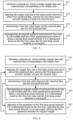
- Figure 1 is a first schematic flow chart of a data processing method provided by an embodiment of the present application.
- the data processing method includes the following steps.
- Step S11 obtaining input data of a network layer of a deep neural network, an original weight of the network layer is decomposed into N sub-weights that have been quantization processed.
- the deep neural network may be a convolutional neural network, a deep convolutional neural network, or other neural networks, which is not limited.
- the electronic device For each network layer of the deep neural network, the electronic device obtains the input data of the network layer. Since positions of the network layers in the deep neural network are different, the input data of the network layer can be input data for the deep neural network, or it can be output data of a previous network layer in this deep neural network, which is not limited.
- an original weight of one network layer is decomposed into N sub-weights that have been quantization processed.
- a single convolution of the network layer is also decomposed into N sub-convolutions.
- the electronic device can set the value of N based on sensitivity of the network layer.
- Step S12 convolving the input data with the N sub-weights respectively to obtain N intermediate data corresponding to the N sub-weights.
- the electronic device convolves the input data with this sub-weight, that is to say, the electronic device multiplies the input data and each element in this sub-weight, and adds resulting product values to obtain one intermediate data corresponding to the sub-weight.
- the original weight of the network layer is decomposed into N sub-weights. Therefore, the electronic device obtains a total of N intermediate data.
- Step S13 summing the N intermediate data to obtain output data of the network layer.
- the electronic device sums the N intermediate data to obtain the output data of the network layer. If the network layer is the last layer of the deep neural network, the output data of the network layer can be used as final output data of the deep neural network; if the network layer is the first layer or an intermediate layer of the deep neural network, the output data of the network layer can be used as input data of a next network layer of the network layer in the deep neural network.
- the flow of processing the input data by the next network layer can be referred to the description of steps S11-S13.
- the original weight of the network layer is decomposed into N sub-weights, and the N sub-weights have been quantized.
- convolving the input data of the network layer with quantized N sub-weights respectively can reduce the consumption of computing resources and expand application scenarios of the deep neural network.
- the deep neural network includes multiple network layers, and the number of sub-weights obtained by decomposing the original weight of each network layer may be different, that is, the number N of the sub-weights obtained by decomposing the original weight of each network layer can be set according to actual demands, which greatly improves the flexibility of the deep neural network design and can flexibly balance the efficiency and performance of the network.
- the technical solution provided by the embodiments of the present application can be applied to application scenarios such as image denoising or face recognition, and the technical solution provided by the embodiments of the present application applied in different application scenarios differs in that the input data and output data of the network layer are different.
- the input data of the deep neural network is a first image
- the output data of the deep neural network is a second image
- the noise level of the first image is higher than that of the second image.
- the sub-weight obtained by decomposing the original weight is a value obtained by multiplying a quantization weight corresponding to the sub-weight by a first scale coefficient.
- the quantization weight of the sub-weight i is represented by Ti
- the first scale coefficient is represented by ⁇ i
- the sub-weight i can be represented by (Ti* ⁇ i)
- the value range of i is 1 ⁇ N.
- the original weight W f can be expressed as: T1* ⁇ 1+T2* ⁇ 2+...+TN* ⁇ N.
- a difference between a sum of the N sub-weights that have been quantization processed and the original weight is less than a preset threshold, or a ratio of the sum of N sub-weights that have been quantization processed to the original weight is less than a preset ratio, etc..
- the preset threshold and the preset ratio can be set according to actual demands, as long as the negative impact of decomposition on a final output result is minimized.
- the method for decomposing the original weight is not specifically limited in the embodiments of the present application.
- the method for decomposing the original weight may be performed in such a way that the sum of the decomposed N sub-weights approximately equal to the original weight W f , that is, W f ⁇ T1* ⁇ 1+T2* ⁇ 2+...+TN* ⁇ N.
- the quantization weights of different sub-weights may be different or the same; first scale coefficients of different sub-weights may be different or the same.
- the quantization weight is an integer.
- the quantization weight may include but is not limited to -1, 1, 2, 3, or 4, etc., which is not limited.
- the first scale coefficient is a floating point number or an integer, and can be determined according to an actual situation.
- the quantization weight consists of -1, 0 and 1.
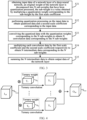
- N is 3, that is, the original weight of the network layer is decomposed into 3, and the size of the convolution kernel is 3*3, then one original weight can be decomposed into 3 sub-weights, and the quantization weights corresponding to these 3 sub-weights are as shown in the figure 2 .
- the quantization weight consists of three values, i.e., -1, 0 and 1. This quantization weight can further be referred to as a ternary weight.
- the quantization weight may consist of -1, 0 and 1.
- the electronic device uses the quantization weight to perform convolution processing.
- the process of convolution processing can effectively avoid multiplication operations, thereby improving the computing efficiency, improving the operation efficiency of hardware and reducing the consumption of computing resources.
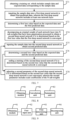
- an embodiment of the present application further provides a data processing method, as shown in Figure 3 , in this method, steps S31 and S35 are the same as steps S11 and S13. Steps S32-S34 are implementations of step S12.
- Step S32 performing a quantization processing on the input data to obtain quantized data corresponding to the input data and a second scale coefficient.
- the electronic device can perform a quantification processing on the input data to obtain the quantized data corresponding to the input data and the second scale coefficient.
- the quantization specification of the input data can be set according to the actual situation, such as 2bit, 4bit or 8bit, etc., which is not limited.
- the quantized data corresponding to the input data is represented by I int
- the second scale coefficient is represented by S in
- the input data can be expressed as I int *S in .
- Step S33 convolving the quantized data with the quantization weights corresponding to the N sub-weights to obtain N convolution data corresponding to the N sub-weights.
- the electronic device performs a convolution processing on the quantized data I int and the quantization weight corresponding to the sub-weight, and the convolution data corresponding to the sub-weight can be obtained.
- the convolution process is represented by a symbol ⁇
- the quantized data corresponding to the input data is represented by I int
- the quantization weight of the sub-weight i is represented by T i
- the convolution data corresponding to the sub-weight i can be expressed by an expression (I int ⁇ T i ).
- Step S34 multiplying each convolution data by the first scale coefficient and the second scale coefficient respectively to obtain N intermediate data corresponding to the N sub-weights.
- the intermediate data corresponding to the sub-weight i can be represented by Yi.
- (I int *S in ) represents the input data
- (T i * ⁇ i) represents the sub-weight. Therefore, the above expression can represent convolving the input data with N sub-weights respectively to obtain N intermediate data corresponding to the N sub-weights.
- the electronic device performs quantization processing on both the input data and the sub-weights, and uses the quantized data to perform convolution operations, which improves the computing efficiency of data processing, improves the operation efficiency of hardware, and reduces the consumption of computing resources.
- the original weight is decomposed into n sub-weights
- the quantization weight of the sub-weight consists of three values ⁇ -1, 0, 1 ⁇ , that is, the quantization weight is a ternary weight.
- the convolution of the network layer is decomposed into a ternary convolution.
- the convolution process is represented by a symbol ⁇ , and ⁇ represents the addition of corresponding elements.
- the electronic device quantizes the input data to obtain quantized data I int corresponding to the input data and a second scale coefficient S in .
- the electronic device performs a convolution processing (further referred to as a ternary convolution processing) on the input data after been quantized (I int *S in ) with n ternary weights (T i * ⁇ i) decomposed from the original weight.
- the electronic device performs a summation processing on n intermediate data Y i , that is, performs a ⁇ processing, to obtain output data of the network layer.
- the quantized output data is (O int *S out ), wherein O int is quantized data corresponding to the output data, S out is a third scale coefficient.
- an embodiment of the present application further provides a network training method, as shown in Figure 5 , the method may include the following steps: Step S51, obtaining a training set, wherein the training set includes sample data and expected data corresponding to the sample data.
- the number of sample data included in the training set can be set according to actual demands. For example, if the accuracy required by the network is high, the number of the sample data can be set to a larger value; if the performance of the electronic device is poor, the number of the sample data can be set to a smaller value.
- the training set may be a data set pre-stored in the electronic device, or may be a data set obtained by the electronic device from a preset database, which is not limited.
- Step S52 inputting the sample data into a first deep neural network to obtain first predicted data, wherein the first deep neural network includes at least one network layer.
- step S52 the original weight of the network layer of the first deep neural network is not decomposed.
- the electronic device inputs the sample data into the first deep neural network, and after processing the input data, the first deep neural network outputs the first predicted data.
- Step S53 determining a first loss value based on the expected data and the first predicted data.
- the electronic device can calculate the difference between the expected data corresponding to the sample data and the first predicted data, and taking the difference as the first loss value.
- the electronic device can further take a Mean Squared Error (MSE) function as a loss function, and determine the first loss value by using the expected data corresponding to the sample data and the first predicted data.
- MSE Mean Squared Error
- the electronic device may further use other algorithms to determine the first loss value, which is not limited.
- Step S54 decomposing an original weight of each network layer into N sub-weights that have been quantization processed to obtain a second deep neural network if it is determined based on the first loss value that the first deep neural network is converged.
- the electronic device can preset a loss threshold, that is, a preset loss threshold. If the determined the first loss value is less than the preset loss threshold, the electronic device can determine that the first deep neural network is converged, and end the training of the first deep neural network, and then decompose the original weight of each network layer in the first deep neural network into N sub-weights that have been quantization processed to obtain the second deep neural network.
- a loss threshold that is, a preset loss threshold. If the determined the first loss value is less than the preset loss threshold, the electronic device can determine that the first deep neural network is converged, and end the training of the first deep neural network, and then decompose the original weight of each network layer in the first deep neural network into N sub-weights that have been quantization processed to obtain the second deep neural network.
- a sub-weight is a value obtained by multiplying a quantization weight corresponding to the sub-weight by a scale coefficient (such as the first scale coefficient), the quantization weight consists of -1, 0 and 1; the difference between the sum of the N sub-weights that have been quantization processed and the original weight is less than a preset threshold, and the ratio of the sum of the N sub-weights that have been quantization processed to the original weight is less than a preset ratio.
- the electronic device trains the first deep neural network with the training set. After the training of the first deep neural network is end, the electronic device decomposes the original weight of the network layer into N sub-weights that have been quantization processed.
- the deep neural network can fully learn the data regularity of the sample data, which improves the accuracy of the data processing of the deep neural network, and since that the original weight of the network layer is not decomposed when the first deep neural network is training, only the original weight is the weight being adjusted when training the first deep neural network, rather than N sub-weights, which reduces parameters to be adjusted and improves the training efficiency.
- an embodiment of the present application further provides a network training method, as shown in Figure 6 , in this method, steps S61-S64 are the same as steps S51-S54, which will not be described again.
- Step S65 adjusting a first parameter of the first deep neural network and re-execute step S62 if it is determined based on the first loss value that the first deep neural network is not converged; wherein the first parameter includes the original weight.
- the electronic device may use a back propagation algorithm or a gradient descent algorithm to adjust the first parameter of the first deep neural network, and re-execute step S62 to continue a iterative training of the first deep neural network, until it is determined that the first deep neural network is converged.
- the first deep neural network Since the first parameter of the first deep neural network is adjusted, the first deep neural network will change after the parameter is adjusted. At this point the sample data is re-input into the first deep neural network, and the first predicted data output by the first deep neural network will change. This is a process of repeated training, and an end condition is that the first deep neural network is converged.
- the electronic device trains the first deep neural network with the training set. After the training of the first deep neural network is end, the electronic device decomposes the original weight of the network layer into N sub-weights that have been quantization processed. Since that the original weight of the network layer is not decomposed when the first deep neural network is training, only the original weight is the weight being adjusted when training the first deep neural network, rather than N sub-weights, which reduces parameters to be adjusted and improves the training efficiency.
- an embodiment of the present application further provides a network training scheme, as shown in Figure 7 , in this method, steps S71-S74 are the same as steps S51-S54.
- Step S75 inputting the sample data into the second deep neural network to obtain second predicted data.
- the specific implementation of step S75 can be referred to the relevant description of step S52.
- Step S76 determining a second loss value based on the expected data and the second predicted data.
- the specific implementation of step S76 can be referred to the relevant description of step S53.
- Step S77 ending a training of the second deep neural network if it is determined based on the second loss value that the second deep neural network is converged.
- the specific implementation of step S77 can be referred to the relevant description of step S54.
- Step S78 adjusting a second parameter of the second deep neural network, and re-executing the step of inputting the sample data into the second deep neural network to obtain the second predicted data if it is determined based on the second loss value that the second deep neural network is not converged, wherein the second parameter includes scale coefficients of the N sub-weights.
- Step S75 can be referred to the relevant description of step S65.
- steps S75 to S78 in Figure 7 is relatively simple, which can be referred to the relevant descriptions of above Figures 5-6 , and will not be described again.
- the electronic device obtains the second deep neural network after decomposing the original weight into N sub-weights, and then uses the training set to re-train the second deep neural network, and fine-tunes the sub-weights, which, in the case that the training efficiency is high, reduces the error caused by the original weight decomposition, and further improves the accuracy of data processing of the deep neural network.
- an embodiment of the present application further provide a data processing apparatus, as shown in Figure 8 , the apparatus includes:
- the sub-weight is a value obtained by multiplying a quantization weight corresponding to the sub-weight by a first scale coefficient; the convolution unit 82 can be specifically configured for:
- the quantization weight consists of -1, 0 and 1; a difference between a sum of the N sub-weights and the original weight is less than a preset threshold, or, a ratio of the sum of the N sub-weights to the original weight is less than a preset ratio.
- the input data of the deep neural network is a first image
- the output data of the deep neural network is a second image
- the noise level of the first image is higher than that of the second image
- an embodiment of the present application further provides a network training apparatus, as shown in Figure 9 , the apparatus includes:
- the above network training apparatus may further include: a first adjustment unit, configured for adjusting a first parameter of the first deep neural network and re-executing the step of inputting the sample data into the first deep neural network again to obtain the first predicted data if it is determined based on the first loss value that the first deep neural network is not converged; wherein the first parameter includes the original weight.
- a first adjustment unit configured for adjusting a first parameter of the first deep neural network and re-executing the step of inputting the sample data into the first deep neural network again to obtain the first predicted data if it is determined based on the first loss value that the first deep neural network is not converged; wherein the first parameter includes the original weight.
- the above network training apparatus may further include:
- the sub-weight is a value obtained by multiplying the quantization weight corresponding to the sub-weight by a scale coefficient of the sub-weight, and the quantization weight consists of -1, 0 and 1; a difference between a sum of the N sub-weights and the original weight is less than a preset threshold, or, a ratio of the sum of the N sub-weights to the original weight is less than a preset ratio.
- the original weight of the network layer is decomposed into N sub-weights, and the N sub-weights have been quantized.
- convolving the input data of the network layer with quantized N sub-weights respectively can reduce the consumption of computing resources and expand application scenarios of the deep neural network.
- the deep neural network includes multiple network layers, and the number of sub-weights obtained by decomposing the original weight of each network layer may be different, that is, the number N of the sub-weights obtained by decomposing the original weight of each network layer can be set according to actual demands, which greatly improves the flexibility of the deep neural network design and can flexibly balance the efficiency and performance of the network.
- embodiments of the present application further provides an electronic device, as shown in Figure 10 , including a processor 101 and a machine-readable storage medium 102, the machine-readable storage medium 102 storing machine-executable instructions that can be processed by the processor 101, when executed, the machine-executable instructions cause the processor 101 to: implement the steps of any one of the above data processing methods.
- embodiments of the present application further provides an electronic device, as shown in Figure 11 , including a processor 111 and a machine-readable storage medium 112, the machine-readable storage medium 112 storing machine-executable instructions that can be processed by the processor 111, when executed, the machine-executable instructions cause the processor 111 to: implement the steps of any one of the above network training methods.
- the machine-readable storage medium may include random a Random Access Memory (RAM) or a Non-Volatile Memory (NVM), such as at least one disk memory.
- RAM Random Access Memory
- NVM Non-Volatile Memory
- the machine-readable storage medium may further be at least one storage device located remotely from the aforementioned processor.
- the processor can be a general-purpose processor, including a Central Processing Unit (CPU), a Network Processor (NP), etc.; it can further be a Digital Signal Processor (DSP), an Application Specific Integrated Circuit (ASIC), a Field-Programmable Gate Array (FPGA) or other programmable logic devices, a discrete gate or a transistor logic device, and a discrete hardware component.
- CPU Central Processing Unit
- NP Network Processor
- DSP Digital Signal Processor
- ASIC Application Specific Integrated Circuit
- FPGA Field-Programmable Gate Array
- a computer-readable storage medium storing a computer program thereon is further provided, when executed by a processor, the computer program causes the processor to implement the steps of any one of the above data processing methods.
- a computer-readable storage medium storing a computer program thereon is further provided, when executed by a processor, the computer program causes the processor to implement the steps of any one of the above network training methods.
- a computer program product containing instructions is further provided, which, when running on a computer, the instructions cause the computer to carry out the steps of any one of the above data processing methods.
- a computer program product containing instructions is further provided, which, when running on a computer, the instructions cause the computer to carry out the steps of any one of the above network training methods.
- the above embodiments can be implemented in whole or in part by software, hardware, firmware or any combination thereof.
- software When being implemented with software, they can be implemented in whole or in part in the form of a computer program product.
- the computer program product includes one or more computer instructions. When the computer program instructions are loaded and executed on a computer, the processes or functions described in the embodiments of the present application are generated in whole or in part.
- the computer may be a general purpose computer, a special purpose computer, a computer network, or other programmable devices.
- the computer instructions may be stored in a computer-readable storage medium, or be transmitted from one computer-readable storage medium to another computer-readable storage medium, for example, the computer instructions may be transmitted from a website, computer, server or data center to another website, computer, server, or data center by wire (such as coaxial cable, fiber optic, digital subscriber line (DSL)) or wirelessly (such as infrared, wireless, microwave, etc.).
- the computer-readable storage medium may be any usable medium that can be accessed by a computer or a data storage device such as a server and a data center and the like that includes an integration of one or more available media.
- the usable media may be a magnetic media (such as a floppy disk, a hard disk, a magnetic tape), an optical media (such as DVD), or a semiconductor media (such as Solid State Disk (SSD)) and the like.
Landscapes
- Engineering & Computer Science (AREA)
- Theoretical Computer Science (AREA)
- Physics & Mathematics (AREA)
- General Health & Medical Sciences (AREA)
- Computing Systems (AREA)
- Biomedical Technology (AREA)
- Biophysics (AREA)
- Computational Linguistics (AREA)
- Data Mining & Analysis (AREA)
- Evolutionary Computation (AREA)
- Life Sciences & Earth Sciences (AREA)
- Molecular Biology (AREA)
- Artificial Intelligence (AREA)
- General Engineering & Computer Science (AREA)
- General Physics & Mathematics (AREA)
- Mathematical Physics (AREA)
- Software Systems (AREA)
- Health & Medical Sciences (AREA)
- Compression, Expansion, Code Conversion, And Decoders (AREA)
- Signal Processing For Digital Recording And Reproducing (AREA)
Applications Claiming Priority (2)
| Application Number | Priority Date | Filing Date | Title |
|---|---|---|---|
| CN202111635076.8A CN114298280A (zh) | 2021-12-29 | 2021-12-29 | 一种数据处理、网络训练方法、电子设备及存储介质 |
| PCT/CN2022/143324 WO2023125785A1 (zh) | 2021-12-29 | 2022-12-29 | 一种数据处理、网络训练方法、电子设备及存储介质 |
Publications (2)
| Publication Number | Publication Date |
|---|---|
| EP4459504A1 true EP4459504A1 (de) | 2024-11-06 |
| EP4459504A4 EP4459504A4 (de) | 2025-04-23 |
Family
ID=80971392
Family Applications (1)
| Application Number | Title | Priority Date | Filing Date |
|---|---|---|---|
| EP22915035.4A Pending EP4459504A4 (de) | 2021-12-29 | 2022-12-29 | Datenverarbeitungsverfahren, netzwerktrainingsverfahren, elektronische vorrichtung und speichermedium |
Country Status (3)
| Country | Link |
|---|---|
| EP (1) | EP4459504A4 (de) |
| CN (1) | CN114298280A (de) |
| WO (1) | WO2023125785A1 (de) |
Families Citing this family (3)
| Publication number | Priority date | Publication date | Assignee | Title |
|---|---|---|---|---|
| CN114298280A (zh) * | 2021-12-29 | 2022-04-08 | 杭州海康威视数字技术股份有限公司 | 一种数据处理、网络训练方法、电子设备及存储介质 |
| CN114707645B (zh) * | 2022-04-29 | 2025-11-04 | 江门市华恩电子研究院有限公司 | 深度神经网络的构造方法、系统及存储介质 |
| CN118278490B (zh) * | 2024-03-15 | 2024-11-19 | 广芯微电子(广州)股份有限公司 | 一种神经网络训练方法、装置及计算机设备 |
Family Cites Families (8)
| Publication number | Priority date | Publication date | Assignee | Title |
|---|---|---|---|---|
| CN110647974A (zh) * | 2018-06-27 | 2020-01-03 | 杭州海康威视数字技术股份有限公司 | 深度神经网络中的网络层运算方法及装置 |
| CN111144457B (zh) * | 2019-12-13 | 2024-02-27 | 北京达佳互联信息技术有限公司 | 图像处理方法、装置、设备及存储介质 |
| CN113222099A (zh) * | 2020-01-21 | 2021-08-06 | 北京希姆计算科技有限公司 | 卷积运算方法及芯片 |
| CN111461302B (zh) * | 2020-03-30 | 2024-04-19 | 嘉楠明芯(北京)科技有限公司 | 一种基于卷积神经网络的数据处理方法、设备及存储介质 |
| CN111612137A (zh) * | 2020-05-26 | 2020-09-01 | 中国科学院自动化研究所 | 基于软阈值三值化参数的卷积神经网络优化方法、系统 |
| CN112541159A (zh) * | 2020-09-30 | 2021-03-23 | 华为技术有限公司 | 一种模型训练方法及相关设备 |
| CN113095486B (zh) * | 2021-04-22 | 2024-11-29 | 清华大学 | 整数张量网络数据处理方法 |
| CN114298280A (zh) * | 2021-12-29 | 2022-04-08 | 杭州海康威视数字技术股份有限公司 | 一种数据处理、网络训练方法、电子设备及存储介质 |
-
2021
- 2021-12-29 CN CN202111635076.8A patent/CN114298280A/zh active Pending
-
2022
- 2022-12-29 EP EP22915035.4A patent/EP4459504A4/de active Pending
- 2022-12-29 WO PCT/CN2022/143324 patent/WO2023125785A1/zh not_active Ceased
Also Published As
| Publication number | Publication date |
|---|---|
| EP4459504A4 (de) | 2025-04-23 |
| WO2023125785A1 (zh) | 2023-07-06 |
| CN114298280A (zh) | 2022-04-08 |
Similar Documents
| Publication | Publication Date | Title |
|---|---|---|
| EP4459504A1 (de) | Datenverarbeitungsverfahren, netzwerktrainingsverfahren, elektronische vorrichtung und speichermedium | |
| US20230214659A1 (en) | Methods and systems for selecting quantisation parameters for deep neural networks using back-propagation | |
| CN113591999B (zh) | 一种端边云联邦学习模型训练系统及方法 | |
| EP3816866B1 (de) | Verfahren und vorrichtung zum betrieb einer netzwerkschicht in einem tiefen neuronalen netzwerk | |
| CN113067653B (zh) | 一种频谱感知方法、装置、电子设备及介质 | |
| CN116611495B (zh) | 深度学习模型的压缩方法、训练方法、处理方法及装置 | |
| Zhang et al. | Performance evaluation and parameter optimization of sparse Fourier transform | |
| CN112818387A (zh) | 模型参数调整的方法、设备、存储介质及程序产品 | |
| CN116702861B (zh) | 深度学习模型的压缩方法、训练方法、处理方法和装置 | |
| Alex et al. | Novel VLSI architecture for fractional-order correntropy adaptive filtering algorithm | |
| EP3985571A1 (de) | Verfahren und systeme zur auswahl von zahlenformaten für tiefe neuronale netzwerke auf der basis von netzwerkempfindlichkeit und quantisierungsfehlern | |
| CN114372553A (zh) | 一种神经网络的量化方法及装置 | |
| Parashar et al. | A polynomial time algorithm for solving the word-length optimization problem | |
| CN118410849A (zh) | 确定量化截断值的方法、设备和介质 | |
| CN108476186A (zh) | 恢复减低复杂度ds-cdma系统中的原始信号的方法 | |
| CN109815877B (zh) | 一种卫星信号的降噪处理方法及装置 | |
| CN116913407A (zh) | 一种变压器的故障识别方法、装置、设备及介质 | |
| CN115470885A (zh) | 一种基于统计分析的自适应权重位宽的量化方法及装置 | |
| CN108512529A (zh) | 一种μ律函数下的比例控制和归一化LMP滤波方法 | |
| CN114509791A (zh) | 一种缩减存储的卫星定位误差分析方法及装置 | |
| CN109766993B (zh) | 一种适合硬件的卷积神经网络压缩方法 | |
| CN116318470B (zh) | 非高斯噪声下的通信干扰信号功率估计方法和装置 | |
| Perić et al. | An Approximate Closed-Form Expression for Calculating Performance of Floating-Point Format for the Laplacian Source | |
| CN119227757B (zh) | 一种模型压缩方法、装置、电子设备、存储介质及产品 | |
| CN116679301B (zh) | 一种宽带雷达目标距离像快速超分辨重构的方法 |
Legal Events
| Date | Code | Title | Description |
|---|---|---|---|
| STAA | Information on the status of an ep patent application or granted ep patent |
Free format text: STATUS: THE INTERNATIONAL PUBLICATION HAS BEEN MADE |
|
| PUAI | Public reference made under article 153(3) epc to a published international application that has entered the european phase |
Free format text: ORIGINAL CODE: 0009012 |
|
| STAA | Information on the status of an ep patent application or granted ep patent |
Free format text: STATUS: REQUEST FOR EXAMINATION WAS MADE |
|
| 17P | Request for examination filed |
Effective date: 20240725 |
|
| AK | Designated contracting states |
Kind code of ref document: A1 Designated state(s): AL AT BE BG CH CY CZ DE DK EE ES FI FR GB GR HR HU IE IS IT LI LT LU LV MC ME MK MT NL NO PL PT RO RS SE SI SK SM TR |
|
| REG | Reference to a national code |
Ref country code: DE Ref legal event code: R079 Free format text: PREVIOUS MAIN CLASS: G06N0003040000 Ipc: G06N0003049500 |
|
| DAV | Request for validation of the european patent (deleted) | ||
| DAX | Request for extension of the european patent (deleted) | ||
| A4 | Supplementary search report drawn up and despatched |
Effective date: 20250321 |
|
| RIC1 | Information provided on ipc code assigned before grant |
Ipc: G06N 3/084 20230101ALN20250317BHEP Ipc: G06N 3/09 20230101ALI20250317BHEP Ipc: G06N 3/0464 20230101ALI20250317BHEP Ipc: G06N 3/0495 20230101AFI20250317BHEP |