EP4459503A1 - Modelltrainingsverfahren und -vorrichtung sowie kommunikationsvorrichtung - Google Patents
Modelltrainingsverfahren und -vorrichtung sowie kommunikationsvorrichtung Download PDFInfo
- Publication number
- EP4459503A1 EP4459503A1 EP22915010.7A EP22915010A EP4459503A1 EP 4459503 A1 EP4459503 A1 EP 4459503A1 EP 22915010 A EP22915010 A EP 22915010A EP 4459503 A1 EP4459503 A1 EP 4459503A1
- Authority
- EP
- European Patent Office
- Prior art keywords
- model
- network element
- training
- information
- model training
- Prior art date
- Legal status (The legal status is an assumption and is not a legal conclusion. Google has not performed a legal analysis and makes no representation as to the accuracy of the status listed.)
- Pending
Links
Images




Classifications
-
- G—PHYSICS
- G06—COMPUTING OR CALCULATING; COUNTING
- G06F—ELECTRIC DIGITAL DATA PROCESSING
- G06F18/00—Pattern recognition
- G06F18/20—Analysing
- G06F18/21—Design or setup of recognition systems or techniques; Extraction of features in feature space; Blind source separation
- G06F18/214—Generating training patterns; Bootstrap methods, e.g. bagging or boosting
-
- G—PHYSICS
- G06—COMPUTING OR CALCULATING; COUNTING
- G06N—COMPUTING ARRANGEMENTS BASED ON SPECIFIC COMPUTATIONAL MODELS
- G06N20/00—Machine learning
-
- G—PHYSICS
- G06—COMPUTING OR CALCULATING; COUNTING
- G06N—COMPUTING ARRANGEMENTS BASED ON SPECIFIC COMPUTATIONAL MODELS
- G06N3/00—Computing arrangements based on biological models
- G06N3/02—Neural networks
- G06N3/04—Architecture, e.g. interconnection topology
-
- G—PHYSICS
- G06—COMPUTING OR CALCULATING; COUNTING
- G06N—COMPUTING ARRANGEMENTS BASED ON SPECIFIC COMPUTATIONAL MODELS
- G06N3/00—Computing arrangements based on biological models
- G06N3/02—Neural networks
- G06N3/04—Architecture, e.g. interconnection topology
- G06N3/044—Recurrent networks, e.g. Hopfield networks
-
- G—PHYSICS
- G06—COMPUTING OR CALCULATING; COUNTING
- G06N—COMPUTING ARRANGEMENTS BASED ON SPECIFIC COMPUTATIONAL MODELS
- G06N3/00—Computing arrangements based on biological models
- G06N3/02—Neural networks
- G06N3/04—Architecture, e.g. interconnection topology
- G06N3/045—Combinations of networks
-
- G—PHYSICS
- G06—COMPUTING OR CALCULATING; COUNTING
- G06N—COMPUTING ARRANGEMENTS BASED ON SPECIFIC COMPUTATIONAL MODELS
- G06N3/00—Computing arrangements based on biological models
- G06N3/02—Neural networks
- G06N3/04—Architecture, e.g. interconnection topology
- G06N3/0464—Convolutional networks [CNN, ConvNet]
-
- G—PHYSICS
- G06—COMPUTING OR CALCULATING; COUNTING
- G06N—COMPUTING ARRANGEMENTS BASED ON SPECIFIC COMPUTATIONAL MODELS
- G06N3/00—Computing arrangements based on biological models
- G06N3/02—Neural networks
- G06N3/08—Learning methods
-
- G—PHYSICS
- G06—COMPUTING OR CALCULATING; COUNTING
- G06N—COMPUTING ARRANGEMENTS BASED ON SPECIFIC COMPUTATIONAL MODELS
- G06N3/00—Computing arrangements based on biological models
- G06N3/02—Neural networks
- G06N3/08—Learning methods
- G06N3/098—Distributed learning, e.g. federated learning
Definitions
- This application pertains to the field of communications technologies, and specifically, relates to a model training method and apparatus, and a communications device.
- AI Artificial Intelligence
- the communications field is used as an example.
- an AI function there is inevitably a demand for machine learning.
- a large amount of data generated in different domains, different network elements, or the like is needed for model training, to implement a more accurate service implementation.
- a problem of data isolation exists between different domains, different network elements, or the like in a network. Therefore, how to implement model training based on data in different domains or different network elements becomes a problem that urgently needs to be resolved currently.
- Embodiments of this application provide a model training method and apparatus, and a communications device, to implement model training based on data in different domains or different network elements without data sharing.
- a model training method includes: transmitting, by a first network element, a federated model training request message to at least one second network element when performing a federated model training process corresponding to a model training task, where the at least one second network element is a network element participating in the federated model training process, and samples corresponding to training data used by different second network elements for the federated model training process are different but have same sample features; receiving, by the first network element, first information transmitted by the at least one second network element, where the first information includes at least a first training result, and the first training result corresponds to training data used by the second network element for the federated model training process; and performing, by the first network element, model training based on a first model and the first training result reported by the at least one second network element, to obtain a target model and/or a second training result.
- a model training method includes: receiving, by a second network element, a federated model training request message transmitted by a first network element, where the federated model training request message is used to request the second network element to participate in a federated model training process corresponding to a model training task; performing, by the second network element, model training based on the federated model training request message to obtain a first training result; and transmitting, by the second network element, first information to the first network element, where the first information includes at least the first training result, where the first training result corresponds to training data used by the second network element for the federated model training process, a sample used by the second network element for the federated model training and a sample used by a fifth network element for the federated model training are different but have same sample features, and the fifth network element is a network element, other than the second network element, among a plurality of network elements participating in the federated model training process.
- a model training method includes: receiving, by a fourth network element, related information of a target model that is transmitted by a first network element, where the related information of the target model is used to represent at least that the target model is a horizontal federated model.
- a model training apparatus includes: a first transmitting module, configured to transmit a federated model training request message to at least one second network element in a case that a federated model training process corresponding to a model training task is performed, where the at least one second network element is a network element participating in the federated model training process, and samples corresponding to training data used by different second network elements for the federated model training process are different but have same sample features; a first receiving module, configured to receive first information transmitted by the at least one second network element, where the first information includes at least a first training result, and the first training result corresponds to training data used by the second network element for the federated model training process; and a first model training module, configured to perform model training based on a first model and the first training result reported by the at least one second network element, to obtain a target model and/or a second training result.
- a model training apparatus includes: a second receiving module, configured to receive, for a second network element, a federated model training request message transmitted by a first network element, where the federated model training request message is used to request the second network element to participate in a federated model training process corresponding to a model training task; a second model training module, configured to perform model training based on the federated model training request message to obtain a first training result; and a second transmitting module, configured to transmit first information to the first network element, where the first information includes at least the first training result, where the first training result corresponds to training data used by the second network element for the federated model training process, a sample used by the second network element for the federated model training and a sample used by a fifth network element for the federated model training are different but have same sample features, and the fifth network element is a network element, other than the second network element, among a plurality of network elements participating in the federated model training process.
- a model training apparatus includes: a third receiving module, configured to receive related information of a target model that is transmitted by a first network element, where the related information of the target model is used to represent at least that the target model is a horizontal federated model.
- a communications device includes a processor and a memory, where the memory stores a program or instructions executable on the processor, and when the program or instructions are executed by the processor, the steps of the method according to the first aspect, the second aspect, or the third aspect are implemented.
- a communications device including a processor and a communications interface, where the communications interface is coupled to the processor, and the processor is configured to run a program or instructions to implement the steps of the method according to the first aspect, or implement the steps of the method according to the second aspect, or implement the steps of the method according to the third aspect.
- a model training system includes a first network element, a second network element, and a third network element, where the first network element may be configured to perform the steps of the model training method according to the first aspect, the second network element may be configured to perform the steps of the model training method according to the second aspect, and the third network element may be configured to perform the steps of the model training method according to the third aspect.
- a readable storage medium stores a program or instructions, and when the program or instructions are executed by a processor, the steps of the method according to the first aspect are implemented, or the steps of the method according to the second aspect are implemented, or the steps of the method according to the third aspect are implemented.
- a chip includes a processor and a communications interface, the communications interface is coupled to the processor, and the processor is configured to run a program or instructions to implement the steps of the method according to the first aspect, or implement the steps of the method according to the second aspect, or implement the steps of the method according to the third aspect.
- a computer program or program product is provided, where the computer program or program product is stored in a storage medium, and the computer program or program product is executed by at least one processor to implement the steps of the method according to the first aspect, or implement the steps of the method according to the second aspect, or implement the steps of the method according to the third aspect.
- a first network element implements local distributed model training through horizontal federated model training by combining second network elements. This can ensure data privacy and data security in the second network elements and can further ensure model training effect without sharing data in the second network elements on a communications network.
- first, second, and the like in this specification and the claims of this application are used to distinguish between similar objects rather than to describe a specific order or sequence. It should be understood that terms used in this way are interchangeable in appropriate circumstances, so that embodiments of this application can be implemented in an order other than the order illustrated or described herein.
- the objects distinguished by “first” and “second” usually belong to one category, and the number of objects is not limited. For example, there may be one or more first objects.
- “and/or” represents at least one of connected objects, and the character “/” typically represents an “or” relationship between the associated objects.
- technologies described in embodiments of this application are not limited to a long term evolution (Long Term Evolution, LTE)/LTE-advanced (LTE-Advanced, LTE-A) system, and may be further used in other wireless communications systems, such as code division multiple access (Code Division Multiple Access, CDMA), time division multiple access (Time Division Multiple Access, TDMA), frequency division multiple access (Frequency Division Multiple Access, FDMA), orthogonal frequency division multiple access (Orthogonal Frequency Division Multiple Access, OFDMA), single-carrier frequency-division multiple access (Single-carrier Frequency-Division Multiple Access, SC-FDMA), and other systems.
- code division multiple access Code Division Multiple Access
- TDMA time division multiple access
- FDMA frequency division multiple access
- OFDMA Orthogonal frequency division multiple access
- SC-FDMA single-carrier Frequency-Division Multiple Access
- system and “network” in embodiments of this application are usually used interchangeably, and the technologies described herein may be used in the aforementioned systems and radio technologies, and may also be used in other systems and radio technologies.
- a new radio New Radio, NR
- NR New Radio
- 6G 6 th Generation
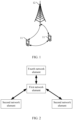
- FIG. 1 is a block diagram of a wireless communications system to which embodiments of this application are applicable.
- the wireless communications system includes a terminal 11 and a network-side device 12.
- the terminal 11 may be a terminal-side device such as a mobile phone, a tablet personal computer (Tablet Personal Computer), a laptop computer (Laptop Computer) or referred to as a notebook computer, a personal digital assistant (Personal Digital Assistant, PDA), a palmtop computer, a netbook, an ultra-mobile personal computer (ultra-mobile personal computer, UMPC), a mobile Internet device (Mobile Internet Device, MID), an augmented reality (augmented reality, AR)/virtual reality (virtual reality, VR) device, a robot, a wearable device (Wearable Device), vehicle user equipment (VUE), pedestrian user equipment (PUE), smart household (a home appliance with a wireless communication function, for example, a refrigerator, a television, a washing machine, or furniture), a game console, a personal computer (personal computer, PC), a
- the wearable device includes a smart watch, a smart band, a smart headset, smart glasses, smart jewelry (a smart bangle, a smart bracelet, a smart ring, a smart necklace, a smart anklet, a smart ankle chain, or the like), a smart wristband, smart clothing, or the like. It should be noted that a specific type of the terminal 11 is not limited in embodiments of this application.
- the network-side device 12 may include an access network device or a core network device.
- the access network device 12 may also be referred to as a radio access network device, a radio access network (Radio Access Network, RAN), a radio access network function, or a radio access network unit.
- RAN Radio Access Network
- the access network device 12 may include a base station, a wireless local area network (Wireless Local Area Network, WLAN) access point, a wireless fidelity (Wireless Fidelity, Wi-Fi) node, or the like.
- the base station may be referred to as a NodeB, an evolved NodeB (eNB), an access point, a base transceiver station (Base Transceiver Station, BTS), a radio base station, a radio transceiver, a basic service set (Basic Service Set, BSS), an extended service set (Extended Service Set, ESS), a home NodeB, a home evolved NodeB, a transmitting receiving point (Transmitting Receiving Point, TRP), or another appropriate term in the art.
- the base station is not limited to a specific technical term. It should be noted that the base station in the NR system is used only as an example for description in embodiments of this application, but a specific type of the base station is not limited. The following describes in detail technical solutions provided in embodiments of this application with reference to accompanying drawings and by using some embodiments and application scenarios thereof.
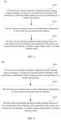
- embodiments of this application further provide a schematic structural diagram of a model training system (which may also be referred to as a horizontal federated learning system or a horizontal federated model training system).
- the model training system may include a first network element, a second network element, and a fourth network element.
- the first network element may be a network element or a device capable of providing a machine learning function on a communications network, for example, a network element or a device specially used for providing an intelligent network service, such as a network data analytics function (Network Data Analytics Function, NWDAF), a management data analytics service (management data analytics service, MDAS), or a management data analytics function (management data analytics function, MDAF).
- NWDAF Network Data Analytics Function
- MDAS management data analytics service
- MDAF management data analytics function
- the first network element may be a network element or a device that provides another communication-related service (for example, a mobility management (Mobility Management, MM) service or a session management (Session Management, SM) service) and that also has an intelligent functions, for example, an access and mobility management function (Access and Mobility Management Function, AMF), a session management function (Session Management Function, SMF), or an application function (application function, AF).
- AMF Access and Mobility Management Function
- SMF Session Management Function
- AF application function
- the AF may be an AF deployed by a communications operator or a third-party AF.
- the first network element can further accept a model training application initiated by another network element (for example, the fourth network element) or device.
- the second network element may be a network element or a device that has local data but does not want to share data, and the network element or the device has a local machine learning capability.
- the second network element may be but is not limited to an AI function network element in a radio access network (Radio Access Network, RAN) domain, an AI function network element in a core network (Core Network, CN) domain, a third-party AI application, an AI client (client) on a terminal (User Equipment, UE), a local communications service device, and the like.
- Radio Access Network, RAN Radio Access Network
- Core Network Core Network
- client AI client
- UE User Equipment
- the fourth network element may be a network element or a device, in a wireless communications system, that needs to consume a model, for example, a third-party AI application, UE, or a network-side device.
- the model training system may include the fourth network element (for example, the federated model training process may be triggered by the fourth network element), as shown in FIG. 2 , or may not include the fourth network element (for example, the federated model training process may be triggered by the first network element according to a requirement of the first network element), or the like.
- the model training system may include more or fewer network elements or devices than shown in FIG. 2 . This is not limited herein.
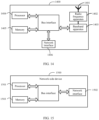
- FIG. 3 is a schematic flowchart of a model training method 300 according to an example embodiment of this application.
- the method 300 may be performed by a first network element (for example, a terminal or a network-side device) but is not limited thereto, and may be specifically performed by hardware and/or software installed in the first network element.
- the method 300 may include at least the following steps.
- the first network element transmits a federated model training request message to at least one second network element when performing a federated model training process corresponding to a model training task.
- the model training task may be an AI model training task corresponding to data analysis, an AI model training task corresponding to communications robustness learning, an AI model training task for performing model training for a moving trajectory of UE, or the like. This is not limited herein.
- the federated model training process may be triggered by the first network element based on a model training task required by the first network element, or may be triggered by a fourth network element.
- the fourth network element may transmit, to the first network element according to a requirement of the fourth network element, a model request message corresponding to the model training task, to trigger the federated model training process.
- the federated model training process may also be understood as a horizontal federated learning process, and is essentially a combination of samples and is applicable to a scenario in which participants have a same business type but different target customers, to be specific, a scenario in which features (namely, sample features) greatly overlap and users (namely, samples) less overlap, for example, a same service (for example, an MM service or an SM service, namely, a same sample feature) with different users or different user groups (for example, UEs or UE groups, namely, different samples) on different base station devices in a RAN domain.
- same sample features which may also be referred to as data features
- a model training participant namely, the second network element
- the federated model training request message transmitted by the first network element to each second network element is used to request the at least one second network element to participate in the federated model training process (to be specific, the at least one second network element is a network element participating in the federated model training process, and samples used by different second network elements for the federated model training are different but have same sample features), for example, perform local distributed model training. Therefore, local distributed model training can be implemented by combining the second network elements, without sharing raw data (or training data) in the second network elements, to ensure model training effect while ensuring data privacy and data security in the second network elements.
- the second network element may be a network element that is obtained by the first network element from a network repository function (Network Repository Function, NRF) or a unified data management (Unified Data Management, UDM) entity based on the model training task and that is able to support the federated model training process.
- NRF Network Repository Function
- UDM Unified Data Management
- the first network element queries the NRF to obtain an AMF instance (instance(s)) participating in the federated model training process.
- the first network element queries the UDM to obtain a UE instance (instance(s)) participating in the federated model training process. This is not limited herein.
- the first network element receives first information transmitted by the at least one second network element, where the first information includes at least a first training result.
- each second network element may perform model training based on the federated model training request message to obtain the first training result, and transmit the first training result to the first network element by using the first information (to be specific, the first information includes at least the first training result).
- the performing, by the second network element, model training based on the federated model training request message may be implemented based on an initial model preconfigured locally, or may be implemented based on a local training model that has been trained before the federated model training request is received, or may be implemented based on a first model indicated by the federated model training request message. This is not limited herein.
- the first training result corresponds to training data used by the second network element for the federated model training
- samples corresponding to training data used by different second network elements for the federated model training process are different but have same sample features.
- training data in a second network element A corresponds to a sample S1
- training data in a second network element B corresponds to a sample S2
- training data in a third network element C corresponds to a sample S3.
- Sample features of the sample S1, the sample S2, and the sample S3 that are used for the federated model training process are the same.
- the first network element performs model training based on the first model and the first training result reported by the at least one second network element, to obtain a target model and/or a second training result.
- the first model may be an initial model (which may also be referred to as an initialized global model) generated by the first network element for the model training task, or the first model may be an intermediate model obtained by performing, by the first network element, model training/updating on the initial model for one or more times. This is not limited herein.
- a process of performing, by the first network element, model training based on the first training result is not limited herein.
- the first network element may update the first model based on the first training result reported by the at least one second network element.
- a first training result reported by each second network element corresponds to the first model, to be specific, each second network element trains the first model and reports a first training result obtained through training to the first network element, and then the first network element performs model training/updating on the first model based on the first training results to obtain the target model.
- one or more federated model training processes may be performed in a case that the first network element obtains the target model through training based on the first model.
- the target model may be used as the intermediate model (to be specific, used as the first model again) to continue to perform a federated model training process.
- the second training result may include at least gradient information of a loss function of the target model with respect to a parameter of the target model.
- the loss function of the target model may be preconfigured by the first network element for the target model.
- target models corresponding to different degrees of training (or times of training) may correspond to different second training results. This is not limited herein.
- the first network element implements local distributed model training through horizontal federated learning by combining the second network elements. This can ensure data privacy and data security in the second network elements and can further ensure model training effect without sharing data in the second network elements on a communications network.
- FIG. 4 is a schematic flowchart of a model training method 400 according to an example embodiment of this application.
- the method 400 may be performed by a first network element (for example, a terminal or a network-side device) but is not limited thereto, and may be specifically performed by hardware and/or software installed in the first network element.
- the method 400 may include at least the following steps.
- the first network element transmits a federated model training request message to at least one second network element when performing a federated model training process corresponding to a model training task.
- the at least one second network element is a network element participating in the federated model training process, and samples corresponding to training data used by different second network elements for the federated model training process are different but have same sample features.
- the federated model training request message may include at least one of the following (11) to (19).
- Model instance identification information (model instance ID).
- the model instance identification information is used to uniquely identify a first model, an intermediate model, or a target model generated in the first network element (in other words, the model instance identification information corresponds to the first model, the intermediate model, or the target model), to facilitate identification, calling, consumption, and the like of the first model, the intermediate model, or the target model.
- the model instance identification information may be allocated by the first network element.
- the first network element correspondingly allocates, to the model training task, model instance identification information for indicating a model entity, for example, the first model, the intermediate model, or the target model, that is obtained through training by using the federated model training process.
- model instance identification information corresponds to or includes at least one of the following (111) to (114).
- Identification information Identity, ID
- Fully qualified domain name Fully Qualified Domain Name, FQDN
- name information e.g., name, or address information of the first network element.
- the first time and subsequent second time and third time each may be a time period or a time point.
- the first time may be October 11, 2021.
- first time, the second time, and the third time may be relative time or absolute time. This is not limited herein.
- Type information of the model training task may include an analytics identifier (analytics ID), a model identifier (model ID), or the like, to indicate a specific machine learning task (namely, model training task) on which model training in the federated model training process is performed.
- an analytics identifier an analytics identifier
- model ID model identifier
- the type information may alternatively be represented in a digital representation form, another coding representation form, or the like. This is not limited herein.
- Identification information of the model training task may also include an analytics ID, a model ID, or the like, to indicate a specific machine learning task (namely, model training task) on which model training in the federated model training process is performed.
- the identification information may alternatively be represented in a digital representation form, another coding representation form, or the like. This is not limited herein.
- the federated model training request message may include any one of the identification information of the model training task and the type information of the model training task.
- First indication information used to indicate that the federated model training process is a horizontal federated learning process.
- the first indication information may be an implicit or explicit indication.
- the second network element may determine that the federated model training process is a horizontal federated learning process based on information that is included in the federated model training request message and that indicates that a plurality of network elements participate in the federated model training process. This is not limited herein.
- a first filter which may also be understood as filter information (filter information) of model training.
- the related information of the first filter is used to define at least one of a target object (for example, target UE (target UE(s))), target time (for example, a target time period (target time period)), and a target area (for example, a target area of interest (target area of interest, target AOI)) that correspond to the model training task, so that each second network element can capture appropriate training data based on the related information of the first filter to perform local model training.
- a target object for example, target UE (target UE(s)
- target time for example, a target time period (target time period)
- a target area for example, a target area of interest (target area of interest, target AOI)
- the target object may be an object served by the second network element or an object correspondingly managed by the second network element
- the target area may be a service area of the second network element or an area correspondingly managed by the second network element. This is not limited herein.
- Model training configuration information is used to align model training methods and/or training parameters for the horizontal federated learning process.
- the model training configuration information is used to indicate a method or a model algorithm used by the second network element to perform local model training, a used local training model, or the like.
- the second network element may train the local training model based on the model training configuration information.
- the model training configuration information is determined by the first network element for the model training task or the federated model training process.
- the model training configuration information may include at least one of the following (161) to (166).
- Model structure information is used to indicate a specific type (for example, a neural network, a deep neural network (DNN), a convolutional neural network (CNN), a recurrent neural network (RNN), or linear structure) of a model structure used in the horizontal federal learning training process, so that all training entities use the model structure information for model training.
- a specific type for example, a neural network, a deep neural network (DNN), a convolutional neural network (CNN), a recurrent neural network (RNN), or linear structure
- the model structure information may further specifically specify neural network layers, neuron nodes, a relationship between input and output at each layer, and the like.
- each second network element may alternatively determine, based on the model structure information, a model structure that needs to be used in the federated model training process. This is not limited herein.
- Model hyperparameter information is an external configuration variable of the target model, is usually used in a model parameter training process, and may be usually directly specified by a practitioner.
- the model hyperparameter information is a parameter specified before the federal model training process starts.
- the model hyperparameter information is used to define a higher-layer concept, for example, complexity or a learning capability, of a model.
- the model hyperparameter information may include an algorithm agreed upon for model training, the number of trees or a depth of a tree, the number of latent factors in matrix decomposition, a learning rate, the number of hidden layers of a deep neural network, the number of clusters in K-means clustering, a loss function corresponding to the target model, a predetermined value (corresponding to the loss function) for determining whether the target model has converged, or the like. This is not limited herein.
- the second network element may alternatively autonomously determine the model hyperparameter information.
- each second network element may alternatively autonomously determine the model hyperparameter information.
- Type information of training data in the federated model training process may also be understood as input data and/or output data in the model training process, and is used to recommend, to the second network element, types of input data and/or output data used in the federated model training process.
- a type of the input data may be a sample feature for training, or the like. This is not limited herein.
- the type information of the training data is used to recommend, to the two AMFs, that local training models of the AMFs should be trained by using two types of input data: a UE location (location), AMF load, or the like.
- Model training condition information used to indicate to, the second network element, a condition under which the first network element starts model training (or model updating, calculation, or the like) based on the first training result reported by the second network element.
- the model training condition information may include at least any one of the following (a) and (b).
- the third time is used to indicate that model training is to start in a case that waiting time of the first network element waiting for the second network element to feed back the first training result reaches the third time.
- the first network element receives only first training results transmitted by three second network elements.
- the first network element may attempt to start to update the first model based on the currently received first training results that are transmitted by the three second network elements.
- the first threshold is used to indicate that model training is to start in a case that the number of first training results received by the first network element reaches the first threshold.
- the first network element may attempt to start to update the first model based on the currently received four first training results.
- the first network element may attempt to start to update the first model based on the currently received four first training results.
- Model training count information used to indicate the number of times of local model training that the second network element needs to perform before transmitting the first information to the first network element.
- the model training count information is used to indicate, to the second network element, information about the number of times of local model training that the second network element needs to perform before returning one first training result to the first network element.
- model training count information may further include information about the predicted total number (or total number of times) of training iterations in the federated model training process.
- Model training duration information used to indicate duration of local model training that the second network element needs to perform before transmitting the first information to the first network element.
- the model training duration information is used to indicate, to the second network element, information about available duration in which the second network element is allowed to perform local model training before returning one first training result to the first network element.
- model training count information and the model training duration information in (165) and (166) may be determined by the second network element based on training capability information (for example, information about a computing capability, a data storage capability, or duration required for each training iteration) of each second network element.
- training capability information for example, information about a computing capability, a data storage capability, or duration required for each training iteration
- the model training count information and/or the model training duration information may vary for different second network elements.
- the model training count is used as an example.
- the first network element determines the model training count information of the second network element based on the training capability information of the second network element, to ensure that a second network element with a weaker training capability performs training for fewer times and a second network element with a stronger training capability performs training for more times.
- all second network elements participating in the federated model training process synchronously return first training results, to be specific, the first network element obtains the first training results reported by all the second network elements almost simultaneously, to perform subsequent model training and update work.
- the training capability information of the second network element may be obtained by the first network element from the NRF. This is not limited herein.
- Reporting information of the first training result used to define a reporting format, a reporting condition, and other information used in a case that each second network element feeds back the first training result.
- the reporting format may be understood as model framework information, for example, an expression based on a TensorFlow or Pytorch model framework, or may be understood as a cross-framework model expression (for example, ONNX).
- the reporting format may be used to indicate the second network element to return at least one of an entire model obtained through local training, all model parameters obtained through local training, or a model parameter/gradient information that changes after local training, or the like.
- the reporting condition may include: being triggered by an event and/or being periodically triggered.
- the being triggered by an event may include any one of (171) to (173).
- the second network element reports the first training result.
- the first network element may specify different numbers of rounds of training for different second network elements. In this way, the first network element aligns paces of reporting first training results by all training entities (namely, the second network elements) in a model training iteration process, to ensure consistency between reporting paces of the training entities, prevent a training entity from falling behind, and ensure model training effect.
- the second network element Before reporting time reaches the longest waiting time (or a feedback deadline), the second network element reports the first training result. It can be understood that the longest waiting time may be understood as the model training duration information. To be specific, the second network element may report the first training result before the reporting time reaches the model training duration information.
- the second network element reports the first training result.
- the being periodically triggered means that the second network element may periodically report the first training result, for example, report one first training result every 5 minutes.
- each network element participating in the federated model training process used to indicate, to the second network element, another second network element, the first network element, and/or the like that participate in the federated model training process.
- the related information of each network element may include network element type information, identification information, address information, or the like of each second network element, or network element type information, identification information, address information, or the like of the first network element.
- the related information of the first model may be model identification information, model structure information, model parameter information, or the like of the first model. This is not limited herein.
- the related information of the first model during the 1st federated model training is related information of the initial model
- the related information of the first model during the subsequent 2nd federated model training, 3rd federated model training, and so on is related information of the intermediate model.
- information, in (11) to (19), that is specifically included in the federated model training request message may be agreed upon in a protocol, configured by a higher layer, or configured by a network side. This is not limited herein.
- content in the federated model training request message may be partially the same or partially different for the second network elements. This is not limited herein.
- the federated model training process may be triggered by the first network element or a fourth network element; or whether a first condition is met may first need to be determined, and then whether the federated model training process is to be performed is determined based on whether the first condition is met. For example, when it is determined that the first condition is met, the first network element determines to perform the federated model training process corresponding to the model training task.
- the first condition may also be understood as a factor, a trigger condition, or the like based on which the first network element determines that the federated model training process needs to be performed.
- the first condition may include at least one of the following (21) to (23).
- That all or some of training data corresponding to the model training task is not stored in the first network element or is not able to be obtained.
- some or all of training data of training entities may be absent in the first network element due to data security or data privacy issues. Therefore, the first network element needs to use the federated model training process to combine the second network elements for local distributed model training.
- That the at least one second network element is able to provide all or some of the training data corresponding to the model training task.
- That training data corresponding to the model training task and used by different second network elements has different sample with same sample features.
- a trajectory model for the users in the area A needs to be obtained, and training data required for training the trajectory model may be location data (for example, sample features) generated for different users (namely, samples) under different base stations.
- one of (21) to (23) that is included in the first condition may be agreed upon in a protocol, configured by a higher layer, or configured by a network side. This is not limited herein.
- the first network element receives first information transmitted by the at least one second network element.
- the first information includes at least a first training result.
- the first training result corresponds to training data used by the second network element for the federated model training process.
- the first training result is obtained based on the training data in the second network elements.
- each second network element may perform model training to obtain a local training model, and then perform calculation based on the local training model to generate the first training result and transmit the first training result to the first network element.
- a process of obtaining the first training result by each second network element may include the following (31) to (35).
- Content is as follows:
- the second network element determines, based on the first indication information, that a federated model training process needs to be performed. It can be understood that the first indication information may be obtained from the federated model training request message transmitted by the first network element, or the first indication information may be directly obtained from the first network element. This is not limited herein.
- the second network element obtains training data based on the model training task and the related information of the first filter.
- the second network element may determine, based on the model training task and the related information of the first filter, to capture location data of all UEs in a corresponding serving cell 1 of the second network element within a time period of 07:00 to 09:00 every Monday, and use the location data as training data.
- a type of data to be captured may be internally configured in a training entity or determined based on the type information of the training data that is included in the federated model training request message. This is not limited herein.
- the second network element determines, based on the model training configuration information and/or the related information of the first model, a local training model and a model training mode for training the local training model.
- the second network element may determine, based on the model training configuration information, a training mode, for example, a model structure, an algorithm, or a hyperparameter, for the local training model. For another example, the second network element determines, based on the related information of the first model, that the first model is the local training model.
- a training mode for example, a model structure, an algorithm, or a hyperparameter
- the local training model may alternatively be a model preconfigured in the second network element, or a model obtained by the second network element from another network element, or a model obtained by the second network element through local model training. This is not limited herein.
- the second network element trains the local training model based on the model training mode, and performs calculation on the training data based on a trained local training model to obtain the first training result.
- an i-th base station obtains a cell model L i t after t rounds of model training, and reports the model L i t to the first network element as the first training result.
- an (i+1)th base station obtains a cell model L i + 1 t after t rounds of model training, and reports the model L i + 1 t to the first network element as the first training result.
- the first training result may alternatively be first gradient information obtained by the second network element through training based on the local training model, and the first gradient information is a calculated gradient value of a loss function of the second model, obtained by the second network element through training, with respect to a parameter of the second model.
- the first information may further include model instance identification information, and the model instance identification information is used by the first network element to perform model association.
- the first network element associates, based on the model instance identification information, first training results that are obtained for a same first model and that are reported by different second network elements, to perform model training/updating on the first model.
- model instance identification information reported by the second network element may be determined based on the model instance identification information in the federated model training request message.
- the first network element performs model training based on the first model and the first training result reported by the at least one second network element, to obtain a target model and/or a second training result.
- a process of performing, by the first network element, model training based on the first model and the first training result reported by the at least one second network element to obtain the target model and/or the second training result may vary based on different model training condition information.
- Manner 1 It is assumed that all second network elements have reported first training results, waiting time of the first network element waiting for the second network element to feed back the first training result reaches the third time, or the number of first training results fed back by the second network element and received by the first network element reaches the first threshold. In this case, the first network element updates the first model based on the first training results reported by the second network elements.
- the first network element performs weighted averaging on the received first gradient information to obtain an average model gradient calculation result, and updates the first model by using the average model gradient calculation result.
- the first training result is the model information of the second model
- model information of the second model that is received by the first network element and that is reported by an i-th second network element is L i t
- model information of the second model that is reported by an (i+1)th second network element is L i + 1 t
- the first network element may update the first model based on the following formula (1), L i t , and L i + 1 t .
- G t +1 represents an updated target model
- A represents a learning rate
- Manner 2 Each time the first network element receives a first training result reported by a second network element, the first network element may update the first model based on the first training result.
- the first network element may update the first model based on a formula (2) and the first training result L i t .
- G t + 1 1 ⁇ ⁇ G t + ⁇ G t + 1
- G t +1 represents an updated target model.
- ⁇ is a hybrid hyperparameter, and ⁇ follows an attenuation policy based on a difference between parameter adjustment completion time t of the first model and a timestamp ⁇ at which the first training result is received.
- ⁇ t ⁇ * s ( t - ⁇ ) , where s is an attenuation coefficient.
- the second training result may be a gradient value of a loss function of the target model with respect to a parameter of the target model.
- the second training result includes at least second gradient information of the loss function of the target model with respect to the parameter of the target model.
- the first network element may perform a federated model training process again, until a calculation result of a loss function of a target model trained by the first network element through training meets the predetermined requirement.
- the target model may be understood as an intermediate model.
- the second training result is a gradient value of a loss function of the intermediate model with respect to a current parameter of the intermediate model.
- the first network element may transmit second information to the at least one second network element again, where the second information includes at least the second training result, so that each second network element trains a local training model again based on the second training result, to re-obtain the first training result.
- the first network element delivers a same second training result to different second network elements.
- the first network element transmits, to a RAN 1 (namely, the second network element) and a RAN 2, the second gradient information of the loss function of the target model with respect to the current parameter of the target model.
- the RAN 1 and the RAN 2 each may adjust a local model parameter based on the second training result to obtain a parameter-adjusted local model, and then re-obtain the first training result based on the parameter-adjusted local model.
- the training entity may be replaced with another training entity in a next iteration.
- training entities participating in the federated model training process may be at least partially different from those participating in a previous federated model training process.
- the first network element may re-determine a network element, for example, at least one third network element, to participate in a federated model training process, and after determining the at least one third network element to participate in this round of federated model training, the first network element transmits second information to the at least one third network element.
- the second information includes at least the second training result, and the second training result is used by the third network element to perform local model training to obtain a third training result.
- the at least one third network element and the at least one second network element may be at least partially the same or different.
- the third network element participates in the federated model training process for the first time, in addition to the information of the target model or the second gradient information, the second information transmitted to the third network element may further include some or all of information in the federated model training request other than the related information of the first model, to ensure that the third network element can successfully complete local model training.
- the first network element may transmit the second information in an incremental transmission mode or a full transmission mode.
- the incremental transmission mode means: for each second network element, transmitting specified information to the second network element, where the specified information belongs to the second information and is different from information included in the federated model training request message.
- the second information may include information of the updated target model and/or the second training result, but does not include other information repeated in the federated model training request message.
- the first network element needs to deliver only the information of the updated target model and/or the second training result without repeatedly delivering the other information in the federated model training request message. This can avoid a waste of resources or poor transmission reliability caused by an excessively large data size.
- the full transmission mode means: for each second network element, transmitting all information in the second information to the second network element.
- the second information includes the information of the updated target model and/or the second training result, and in addition, the other information in the federated model training request message may be further delivered to a newly selected training entity.
- the other information is the model instance identification information, the reporting information of the first training result, the model training configuration information, and the related information of each network element participating in the federated model training process.
- the second information may further include at least one of the following (51) to (55).
- Model instance identification information used by the second network element to perform model association.
- Information of the target model used to indicate the second network element or the third network element to perform local model training based on the target model.
- the information of the target model may include model structure information, model hyperparameter information, or the like. This is not limited herein.
- the first network element may determine, based on whether the target model has converged, whether to repeat the federated model training process, until a target model obtained in the first network element converges. That the target model converges means that a precision value of a loss function corresponding to the target model meets a predetermined requirement or reaches a predetermined value.
- FIG. 5 is a schematic flowchart of a model training method 500 according to an example embodiment of this application.
- the method 500 may be performed by a first network element (for example, a terminal or a network-side device) but is not limited thereto, and may be specifically performed by hardware and/or software installed in the first network element.
- the method 500 may include at least the following steps.
- the first network element receives a model request message transmitted by a fourth network element.
- the model request message includes at least one of the following (61) to (64).
- Model feedback-related information where the model feedback-related information may include at least one of a model feedback format and a feedback condition.
- the model feedback format may be understood as model framework information, for example, an expression based on a TensorFlow or Pytorch model framework, or may be understood as a cross-framework model expression (for example, ONNX).
- the feedback condition may include: being triggered by an event and/or being periodically triggered.
- the being triggered by an event includes at least one of (641) to (643).
- the first network element feeds back the target model.
- the being periodically triggered means that the first network element may periodically feed back the target model to the fourth network element, for example, feed back one target model every 5 minutes.
- the model feedback information may alternatively indicate the first network element to feed back the target model through one-time feedback, a plurality of continuous updates and feedbacks, a feedback deadline, periodic feedback, or the like. This is not limited herein.
- the federated model training request message transmitted by the first network element to each second network element may be determined by the first network element based on the model request message.
- the type information of the model training task and the identification information of the model training task in the federated model training request message may be the same as the type information of the model training task and the identification information of the model training task in the model request message.
- the related information of the first filter in the federated model training request message may be the same as or different from the related information of the second filter in the model request message. This is not limited herein.
- the first network element transmits a federated model training request message to at least one second network element when performing a federated model training process corresponding to a model training task.
- the at least one second network element is a network element participating in the federated model training process, and samples corresponding to training data used by different second network elements for the federated model training process are different but have same sample features.
- the first network element receives first information transmitted by the at least one second network element, where the first information includes at least a first training result, and the first training result corresponds to training data used by the second network element for the federated model training process.
- the first network element performs model training based on a first model and the first training result reported by the at least one second network element, to obtain a target model and/or a second training result.
- the first network element may transmit related information of the target model to the fourth network element for the fourth network element to perform a corresponding task based on the target model.
- the related information of the target model includes at least one of the following (71) to (74).
- Model instance identification information Refer to the foregoing descriptions of the model instance identification information. To avoid repetition, details are not described herein again.
- Model structure information is used to indicate a specific type (for example, a neural network, a deep neural network (DNN), a convolutional neural network (CNN), a recurrent neural network (RNN), or linear structure) of a model structure of the target model.
- the model structure information may further specifically specify neural network layers, neuron nodes, a relationship between input and output at each layer, and the like.
- the model parameter information is an internal configuration variable of the target model, is used to define a function of the target model, and may be obtained through data estimation or model training.
- the model parameter may include a weight in an artificial neural network, a support vector in a support vector machine, or a coefficient in linear regression or logistic regression.
- Model algorithm information may include but is not limited to a decision-making tree, a Bayes classifier, k-nearest neighbors, and a support vector machine.
- Model hyperparameter information is an external configuration variable of the target model, is usually used in a model parameter training process, and may be usually directly specified by a practitioner.
- the model hyperparameter information may include a learning rate for training a neural network, C and sigma hyperparameters of a support vector machine, or a parameter k in a k neighborhood.
- Second indication information used to indicate that the target model is a horizontal federated learning model or indicate that the model is generated through a horizontal federated learning process.
- the second indication information may be an explicit indication or implicit indication.
- implicit indication may be implemented by the model instance identification information or related information of the second network element.
- Related information of the second network element and/or a third network element for example, network element type information, identification information, FQDN information, or address information of the second network element and the third network element.
- the federated model training process is triggered, and then all second network elements are combined to perform local distributed model training to obtain the target model. This can meet a model training requirement in the fourth network element while ensuring security and privacy of data in the second network element.
- the model training method provided in this application is further described below with reference to FIG. 6a and FIG. 6b by using an example in which the federated model training process is triggered by the fourth network element.
- Content is as follows. It is assumed that two second network elements participate in the federated model training process.
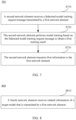
- Example 1 As shown in FIG. 6a , a model training process provided in Example 1 is as follows.
- a fourth network element transmits a model request message to a first network element.
- the first network element determines, based on the model request message, to perform a federated model training process.
- the first network element obtains, from an NRF, two second network elements, for example, a training entity A and a training entity B, that are able to participate in the federated model training process.
- the first network element transmits a federated model training request message to the training entity A and the training entity B.
- the training entity A After receiving the federated model training request message, the training entity A trains a local training model based on the federated model training request message, and then obtains a first training result based on a trained local training model.
- the training entity B trains a local training model based on the federated model training request message, and then obtains a first training result based on a trained local training model.
- the training entity A and the training entity B separately report first information to the first network element, where the first information includes at least the first training result.
- the first network element performs model training based on received first training results that are reported by the training entity A and the training entity B, to obtain a target model and/or a second training result.
- the first network element determines whether a calculation result of a loss function corresponding to the target model meets a predetermined requirement.
- the first network element transmits second information to the training entity A and the training entity B, where the second information includes at least the second training result.
- the training entity A and the training entity B perform local model training again based on the received second training result, and re-obtain the first training result.
- the first network element, the training entity A, and the training entity B repeatedly perform S605 to S610, until a calculation result of a loss function corresponding to a target model meets the predetermined requirement, that is, the target model converges, and then stop the federated model training process.
- the first network element transmits related information of the target model to the fourth network element.
- the federated model training process may include but is not limited to S601 to S611, for example, may include more or fewer steps than S601 to S611. This is not limited herein.
- Example 2 As shown in FIG. 6b , a model training process provided in Example 2 is as follows.
- a fourth network element transmits a model request message to a first network element.
- the first network element determines, based on the model request message, to perform a federated model training process.
- the first network element obtains, from an NRF, two second network elements, for example, a training entity A and a training entity B, that are able to participate in the federated model training process.
- the first network element transmits a federated model training request message to the training entity A and the training entity B.
- the training entity A After receiving the federated model training request message, the training entity A trains a local training model based on the federated model training request message, and then obtains a first training result based on a trained local training model.
- the training entity A reports first information to the first network element, where the first information includes at least the first training result.
- the first network element performs model training based on the received first training result that is transmitted by the training entity A, to obtain a target model and/or a second training result.
- the first network element determines whether a calculation result of a loss function corresponding to the target model meets a predetermined requirement.
- the first network element transmits second information to the training entity A, where the second information includes at least the second training result.
- the training entity A performs local model training again based on the received second training result to re-obtain the first training result and report the first training result, so as to implement cyclic iterations of the federated model training process.
- the training entity B After receiving the federated model training request message, the training entity B trains a local training model based on the federated model training request message, and then obtains a first training result based on a trained local training model.
- the training entity B reports first information to the first network element, where the first information includes at least the first training result.
- the first network element performs model training based on the received first training result that is transmitted by the training entity B, to obtain a target model and/or a second training result.
- the first network element determines whether a calculation result of a loss function corresponding to the target model meets a predetermined requirement.
- the first network element transmits second information to the training entity B, where the second information includes at least the second training result.
- the training entity B performs local model training again based on the received second training result to re-obtain the first training result and report the first training result, so as to implement cyclic iterations of the federated model training process.
- the first network element, the training entity A, and the training entity B repeatedly perform S605 to S610, until a calculation result of a loss function corresponding to a target model meets the predetermined requirement, that is, the target model converges, and then stop the federated model training process.
- the first network element transmits related information of the target model to the fourth network element.
- the federated model training process may include but is not limited to S621 to S637, for example, may include more or fewer steps than S621 to S637. This is not limited herein.
- FIG. 7 is a schematic flowchart of a model training method 700 according to an example embodiment of this application.
- the method 700 may be performed by a second network element (for example, a terminal or a network-side device) but is not limited thereto, and may be specifically performed by hardware and/or software installed in the second network element.
- the method 700 may include at least the following steps.
- the second network element receives a federated model training request message transmitted by a first network element, where the federated model training request message is used to request the second network element to participate in a federated model training process corresponding to a model training task.
- S720 The second network element performs model training based on the federated model training request message to obtain a first training result.
- the second network element transmits first information to the first network element, where the first information includes at least the first training result.
- the first training result corresponds to training data used by the second network element for the federated model training process.
- a sample used by the second network element for the federated model training and a sample used by a fifth network element for the federated model training are different but have same sample features.
- the fifth network element is a network element, other than the second network element, among a plurality of network elements participating in the federated model training process.
- second network elements participating in model training include a network element 1, a network element 2, a network element 3, and a network element 4, and a second network element performing the method embodiment 700 is the network element 1.
- the fifth network element is one or more of the network element 2, the network element 3, and the network element 4. This is not limited herein.
- the federated model training request message includes at least one of the following: model instance identification information, where the model instance identification information corresponds to the target model and is allocated by the first network element; type information of the model training task; identification information of the model training task; first indication information, used to indicate that the federated model training process is a horizontal federated learning process; related information of a first filter, used to define at least one of a target object, target time, and a target area that correspond to the model training task; related information of a first model, where the related information of the first model is used by each second network element to perform local model training; model training configuration information; reporting information of the first training result; and related information of each network element participating in the federated model training process.
- the model instance identification information corresponds to at least one of the following: related information of the first network element; first time, used to indicate that the model training task is performed based on training data generated within the first time; second time, used to indicate completion time of the federated model training process; and related information of each network element participating in the federated model training process.
- the model training configuration information includes at least one of the following: model structure information; model hyperparameter information; type information of training data in the federated model training process; model training condition information, used to indicate, to the second network element, a condition under which the first network element starts model training based on the first training result reported by the second network element; model training count information, used to indicate the number of times of local model training that the second network element needs to perform before transmitting the first information to the first network element; and model training duration information, used to indicate duration of local model training that the second network element is to perform before transmitting the first information to the first network element.
- the model training condition information includes at least one of the following: third time, used to indicate that model training is to start in a case that waiting time of the first network element waiting for the second network element to feed back the first training result reaches the third time; and a first threshold, used to indicate that model training is to start in a case that the number of first training results received by the first network element reaches the first threshold.
- the reporting information of the first training result includes at least one of the following: a reporting format of the first training result; and a reporting condition of the first training result.
- the first training result includes model information of a second model and/or first gradient information corresponding to the second model obtained by the second network element through training based on a local training model.
- the second network element is a network element that is obtained by the first network element from a network repository function NRF based on the model training task and that is able to support the federated model training process.
- the first information further includes at least one of the following: model instance identification information, used by the first network element to perform model association.
- the step of performing, by the second network element, model training based on the model training request message to obtain a first training result includes: determining, by the second network element based on the first indication information, that a federated model training process needs to be performed; determining, by the second network element based on the type information or the identification information of the model training task, a model training task corresponding to the federated model training; obtaining, by the second network element, training data based on the model training task and the related information of the first filter; determining, by the second network element based on the model training configuration information and/or the related information of the first model, a local training model and a model training mode for training the local training model; and training, by the second network element, the local training model based on the model training mode, and performing calculation on the training data based on a trained local training model to obtain the first training result.
- the second network element receives second information transmitted by the first network element, where the second information includes at least a second training result.
- the step of receiving, by the second network element, second information transmitted by the first network element includes any one of the following: receiving, by the second network element, specified information transmitted by the first network element, where the specified information belongs to the second information and is different from information included in the federated model training request message; or receiving, by the second network element, all information in the second information transmitted by the first network element.
- the second information is transmitted by the first network element in a case that a calculation result of a loss function of the target model does not meet a predetermined requirement.
- the second training result includes at least second gradient information of the loss function of the target model with respect to a parameter of the target model or information of the target model.
- the second information further includes at least one of the following: model instance identification information, used by the second network element to perform model association; related information of each network element participating in the federated model training process; and model training configuration information corresponding to the target model.
- FIG. 8 is a schematic flowchart of a model training method 800 according to an example embodiment of this application.
- the method 800 may be performed by a fourth network element (for example, a terminal or a network-side device) but is not limited thereto, and may be specifically performed by hardware and/or software installed in the fourth network element.
- the method 800 may include at least the following steps.
- the fourth network element receives related information of a target model that is transmitted by a first network element.
- the related information of the target model is used to represent at least that the target model is a horizontal federated model.
- the related information of the target model includes at least one of the following: model instance identification information, where the model instance identification information corresponds to the target model and is allocated by the first network element; third model information, where the third model information includes network structure information and/or model parameter information of the target model; second indication information, used to indicate that the target model is a horizontal federated learning model; and related information of a second network element and/or a third network element, where the second network element and/or the third network element are network elements participating in training of the target model.
- the related information of the target model is transmitted by the first network element in a case that a calculation result of a loss function meets a predetermined requirement.
- the method further includes: transmitting, by the fourth network element, a model request message to the first network element, where the model request message includes at least one of the following: type information of a model training task; identification information of the model training task; related information of a second filter, used to define at least one of a target object, target time, and a target area that correspond to the model training task; and model feedback-related information, where the model feedback-related information includes at least one of a model description manner and feedback time.
- the model training methods 300 to 800 provided in embodiments of this application may be performed by a model training apparatus.
- a model training apparatus provided in embodiments of this application is described by using an example in which the model training apparatus performs the model training method.
- FIG. 9 is a schematic structural diagram of a model training apparatus 900 according to an example embodiment of this application.
- the apparatus 900 includes a first transmitting module 910, configured to transmit a federated model training request message to at least one second network element in a case that a federated model training process corresponding to a model training task is performed, where the at least one second network element is a network element participating in the federated model training process, and samples corresponding to training data used by different second network elements for the federated model training process are different but have same sample features; a first receiving module 920, configured to receive first information transmitted by the at least one second network element, where the first information includes at least a first training result, and the first training result corresponds to training data used by the second network element for the federated model training process; and a first model training module 930, configured to perform model training based on a first model and the first training result reported by the at least one second network element, to obtain a target model and/or a second training result.
- the federated model training request message includes at least one of the following: model instance identification information, where the model instance identification information corresponds to the target model and is allocated by the first network element; type information of the model training task; identification information of the model training task; first indication information, used to indicate that the federated model training process is a horizontal federated learning process; related information of a first filter, used to define at least one of a target object, target time, and a target area that correspond to the model training task; related information of a first model, where the related information of the first model is used by each second network element to perform local model training; model training configuration information; reporting information of the first training result; and related information of each network element participating in the federated model training process.
- the model instance identification information corresponds to at least one of the following: related information of the first network element; first time, used to indicate that the model training task is performed based on training data generated within the first time; second time, used to indicate completion time of the federated model training process; and related information of the second network element.
- the model training configuration information includes at least one of the following: model structure information; model hyperparameter information; type information of training data in the federated model training process; model training condition information, used to indicate, to the second network element, a condition under which the first network element starts model training based on the first training result reported by the second network element; model training count information, used to indicate the number of times of local model training that the second network element needs to perform before transmitting the first information to the first network element; and model training duration information, used to indicate duration of local model training that the second network element needs to perform before transmitting the first information to the first network element.
- the model training condition information includes at least one of the following: third time, used to indicate that model training is to start in a case that waiting time of the first network element waiting for the second network element to feed back the first training result reaches the third time; and a first threshold, used to indicate that model training is to start in a case that the number of first training results received by the first network element reaches the first threshold.
- the reporting information of the first training result includes at least one of the following: a reporting format of the first training result; and a reporting condition of the first training result.
- the first training result includes model information of a second model obtained and/or first gradient information corresponding to the second model by the second network element through training based on a local training model.
- the first information further includes at least one of the following: model instance identification information, used by the first network element to perform model association.
- the second network element is a network element that is obtained by the first network element from a network repository function NRF based on the model training task and that is able to support the federated model training process.
- the first model training module 930 is further configured to determine that a first condition is met, where the first condition includes at least one of the following: that all or some of training data corresponding to the model training task is not stored in the first network element or is not able to be obtained; that the at least one second network element is able to provide all or some of the training data corresponding to the model training task; and that training data corresponding to the model training task and used by different second network elements has different samples with same sample features.
- the first transmitting module 910 is further configured to transmit second information to the at least one second network element in a case that a calculation result of a loss function of the target model does not meet a predetermined requirement, where the second information includes at least the second training result, and the second training result is used by the second network element to perform local model training again and re-obtain a first training result.
- the step of transmitting, by the first transmitting module 910, the second information to the at least one second network element includes any one of the following: for each second network element, transmitting specified information to the second network element, where the specified information belongs to the second information and is different from information included in the federated model training request message; or for each second network element, transmitting all information in the second information to the second network element.
- the first transmitting module 910 is further configured to transmit second information to at least one third network element in a case that the calculation result of the loss function of the target model does not meet the predetermined requirement, where the second information includes at least the second training result, the second training result is used by the third network element to perform local model training to obtain a third training result, and the third network element is a network element that is re-determined by the first network element and that participates in the federated model training process.
- the second training result includes at least second gradient information of the loss function with respect to a parameter of the target model or information of the target model.
- the second information further includes at least one of the following: model instance identification information, used by the second network element to perform model association; reporting information of the first training result; related information of each network element participating in the federated model training process; and model training configuration information corresponding to the target model.
- the first receiving module 920 is further configured to receive a model request message transmitted by a fourth network element, where the model request message includes at least one of the following: the type information of the model training task; the identification information of the model training task; related information of a second filter, used to define at least one of a target object, target time, and a target area that correspond to the model training task; and model feedback-related information, where the model feedback-related information includes at least one of a model feedback format and a feedback condition.
- the first transmitting module 910 is further configured to transmit related information of the target model to the fourth network element in a case that the calculation result of the loss function of the target model meets the predetermined requirement, where the related information of the target model includes at least one of the following: the model instance identification information; information of the target model; second indication information, used to indicate that the target model is a horizontal federated learning model; and related information of the second network element and/or the third network element.
- FIG. 10 is a schematic structural diagram of a model training apparatus 1000 according to an example embodiment of this application.
- the apparatus 1000 includes: a second receiving module 1010, configured to receive, for a second network element, a federated model training request message transmitted by a first network element, where the federated model training request message is used to request the second network element to participate in a federated model training process corresponding to a model training task; a second model training module 1020, configured to perform model training based on the federated model training request message to obtain a first training result; and a second transmitting module 1030, configured to transmit first information to the first network element, where the first information includes at least the first training result, where the first training result corresponds to training data used by the second network element for the federated model training process, a sample used by the second network element for the federated model training and a sample used by a fifth network element for the federated model training are different but have same sample features, and the fifth network element is a network element, other than the second network
- the federated model training request message includes at least one of the following: model instance identification information, where the model instance identification information corresponds to the target model and is allocated by the first network element; type information of the model training task; identification information of the model training task; first indication information, used to indicate that the federated model training process is a horizontal federated learning process; related information of a first filter, used to define at least one of a target object, target time, and a target area that correspond to the model training task; related information of a first model, where the related information of the first model is used by each second network element to perform local model training; model training configuration information; reporting information of the first training result; and related information of each network element participating in the federated model training process.
- the model instance identification information corresponds to at least one of the following: related information of the first network element; first time, used to indicate that the model training task is performed based on training data generated within the first time; second time, used to indicate completion time of the federated model training process; and related information of each network element participating in the federated model training process.
- the model training configuration information includes at least one of the following: model structure information; model hyperparameter information; type information of training data in the federated model training process; model training condition information, used to indicate, to the second network element, a condition under which the first network element starts model training based on the first training result reported by the second network element; model training count information, used to indicate the number of times of local model training that the second network element needs to perform before transmitting the first information to the first network element; and model training duration information, used to indicate duration of local model training that the second network element needs to perform before transmitting the first information to the first network element.
- the model training condition information includes at least one of the following: third time, used to indicate that model training is to start in a case that waiting time of the first network element waiting for the second network element to feed back the first training result reaches the third time; and a first threshold, used to indicate that model training is to start in a case that the number of first training results received by the first network element reaches the first threshold.
- the reporting information of the first training result includes at least one of the following: a reporting format of the first training result; and a reporting condition of the first training result.
- the first training result includes model information of a second model and/or first gradient information corresponding to the second model obtained by the second network element through training based on a local training model.
- the second network element is a network element that is obtained by the first network element from a network repository function NRF based on the model training task and that is able to support the federated model training process.
- the first information further includes at least one of the following: model instance identification information, used by the first network element to perform model association.
- the step of performing, by the second model training module 1020, model training based on the model training request message to obtain the first training result includes: determining, based on the first indication information, that a federated model training process needs to be performed; determining, based on the type information or the identification information of the model training task, a model training task corresponding to the federated model training; obtaining training data based on the model training task and the related information of the first filter; determining, based on the model training configuration information and/or the related information of the first model, a local training model and a model training mode for training the local training model; and training the local training model based on the model training mode, and performing calculation on the training data based on a trained local training model to obtain the first training result.
- the second receiving module 1010 is further configured to receive second information transmitted by the first network element, where the second information includes at least a second training result.
- the step of receiving, by the second receiving module 1010, the second information transmitted by the first network element includes any one of the following: receiving specified information transmitted by the first network element, where the specified information belongs to the second information and is different from information included in the federated model training request message; or receiving all information in the second information transmitted by the first network element.
- the second information is transmitted by the first network element in a case that a calculation result of a loss function of the target model does not meet a predetermined requirement.
- the second training result includes at least second gradient information of the loss function of the target model with respect to a parameter of the target model or information of the target model.
- the second information further includes at least one of the following: model instance identification information, used by the second network element to perform model association; related information of each network element participating in the federated model training process; and model training configuration information corresponding to the target model.
- FIG. 11 is a schematic structural diagram of a model training apparatus 1100 according to an example embodiment of this application.
- the apparatus 1100 includes: a third receiving module 1110, configured to receive related information of a target model that is transmitted by a first network element, where the related information of the target model is used to represent at least that the target model is a horizontal federated model.
- the related information of the target model includes at least one of the following: model instance identification information, where the model instance identification information corresponds to the target model and is allocated by the first network element; third model information, where the third model information includes network structure information and/or model parameter information of the target model; second indication information, used to indicate that the target model is a horizontal federated learning model; and related information of a second network element and/or a third network element, where the second network element and/or the third network element are network elements participating in training of the target model.
- the related information of the target model is transmitted by the first network element in a case that a calculation result of a loss function meets a predetermined requirement.
- the apparatus 1100 further includes a third transmitting module, configured to transmit a model request message to the first network element, where the model request message includes at least one of the following: type information of a model training task; identification information of the model training task; related information of a second filter, used to define at least one of a target object, target time, and a target area that correspond to the model training task; and model feedback-related information, where the model feedback-related information includes at least one of a model description manner and feedback time.
- a third transmitting module configured to transmit a model request message to the first network element, where the model request message includes at least one of the following: type information of a model training task; identification information of the model training task; related information of a second filter, used to define at least one of a target object, target time, and a target area that correspond to the model training task; and model feedback-related information, where the model feedback-related information includes at least one of a model description manner and feedback time.
- the model training apparatuses 900, 1000, and 1100 in embodiments of this application each may be a communications device, for example, a communications device with an operating system; or may be a component, for example, an integrated circuit or a chip, in a communications device.
- the communications device may be a terminal or a network-side device.
- the terminal may include but is not limited to the aforementioned types of the terminal 11
- the network-side device may include but is not limited to the aforementioned types of the network-side device 12. This is not specifically limited in embodiments of this application.
- model training apparatuses 900, 1000, and 1100 provided in embodiments of this application are capable of implementing the processes implemented in the method embodiments of FIG. 3 to FIG. 8 , with the same technical effect achieved. To avoid repetition, details are not described herein again.
- embodiments of this application further provide a communications device 1200, including a processor 1201 and a memory 1202.
- the memory 1202 stores a program or instructions executable on the processor 1201.
- the communications device 1200 is a terminal
- the program or instructions are executed by the processor 1201
- the steps of the model training method embodiments 300 to 800 are implemented, with the same technical effect achieved.
- the communications device 1200 is a network-side device
- the program or instructions are executed by the processor 1201
- the steps of the method embodiments 300 to 800 are implemented, with the same technical effect achieved. To avoid repetition, details are not described herein again.
- the communications device 1200 may be a terminal.
- the terminal may include a processor and a communications interface.
- the communications interface is coupled to the processor.
- the processor is configured to run a program or instructions to implement the steps of the methods in the method embodiments 300 to 800.
- the terminal embodiment corresponds to the foregoing terminal-side method embodiment, and all implementation processes and implementations of the foregoing method embodiment are applicable to the terminal embodiment, with the same technical effect achieved.
- FIG. 13 is a schematic diagram of a hardware structure of a terminal for implementing embodiments of this application.
- the terminal 1300 includes but is not limited to at least some of components such as a radio frequency unit 1301, a network module 1302, an audio output unit 1303, an input unit 1304, a sensor 1305, a display unit 1306, a user input unit 1307, an interface unit 1308, a memory 1309, and a processor 1310.
- the terminal 1300 may further include a power supply (for example, a battery) that supplies power to each component.
- the power supply may be logically connected to the processor 1310 by using a power management system, to implement functions such as charging management, discharging management, and power consumption management by using the power management system.
- the terminal structure shown in FIG. 13 does not constitute a limitation on the terminal.
- the terminal may include more or fewer components than shown in the figure, or some components may be combined, or there may be a different component layout. Details are not described herein again.
- the input unit 1304 may include a graphics processing unit (Graphics Processing Unit, GPU) 13041 and a microphone 13042.
- the graphics processing unit 13041 processes image data of a static picture or a video that is obtained by an image capture apparatus (for example, a camera) in a video capture mode or an image capture mode.
- the display unit 1306 may include a display panel 13061 .
- the display panel 13061 may be configured in a form of a liquid crystal display, an organic light-emitting diode, or the like.
- the user input unit 1307 includes at least one of a touch panel 13071 and other input devices 13072.
- the touch panel 13071 is also referred to as a touchscreen.
- the touch panel 13071 may include two parts: a touch detection apparatus and a touch controller.
- the other input devices 13072 may include but are not limited to a physical keyboard, a function key (such as a volume control key or an on/off key), a trackball, a mouse, and a joystick. Details are not described herein.
- the radio frequency unit 1301 may transmit the downlink data to the processor 1310 for processing.
- the radio frequency unit 1301 may transmit uplink data to the network-side device.
- the radio frequency unit 1301 includes but is not limited to an antenna, an amplifier, a transceiver, a coupler, a low noise amplifier, a duplexer, and the like.
- the memory 1309 may be configured to store software programs or instructions and various data.
- the memory 1309 may mainly include a first storage area for storing a program or instructions and a second storage area for storing data.
- the first storage area may store an operating system, an application program or instructions required by at least one function (for example, an audio play function or an image play function), and the like.
- the memory 1309 may include a volatile memory or a non-volatile memory, or the memory 1309 may include both a volatile memory and a non-volatile memory.
- the non-volatile memory may be a read-only memory (Read-Only Memory, ROM), a programmable read-only memory (Programmable ROM, PROM), an erasable programmable read-only memory (Erasable PROM, EPROM), an electrically erasable programmable read-only memory (Electrically EPROM, EEPROM), or a flash memory.
- ROM Read-Only Memory
- PROM programmable read-only memory
- Erasable PROM Erasable PROM
- EPROM electrically erasable programmable read-only memory
- EEPROM electrically erasable programmable read-only memory
- the volatile memory may be a random access memory (Random Access Memory, RAM), a static random access memory (Static RAM, SRAM), a dynamic random access memory (Dynamic RAM, DRAM), a synchronous dynamic random access memory (Synchronous DRAM, SDRAM), a double data rate synchronous dynamic random access memory (Double Data Rate SDRAM, DDRSDRAM), an enhanced synchronous dynamic random access memory (Enhanced SDRAM, ESDRAM), a synchlink dynamic random access memory (Synchlink DRAM, SLDRAM), or a direct rambus random access memory (Direct Rambus RAM, DRRAM).
- RAM Random Access Memory
- SRAM static random access memory
- DRAM dynamic random access memory
- DRAM synchronous dynamic random access memory
- SDRAM double data rate synchronous dynamic random access memory
- Enhanced SDRAM, ESDRAM enhanced synchronous dynamic random access memory
- Synchlink DRAM, SLDRAM synchlink dynamic random access memory
- Direct Rambus RAM Direct Rambus RAM
- the processor 1310 may include one or more processing units.
- the processor 1310 integrates an application processor and a modem processor.
- the application processor mainly processes operations related to an operating system, a user interface, an application program, and the like.
- the modem processor mainly processes wireless communication signals, for example, is a baseband processor. It can be understood that the modem processor may alternatively not be integrated in the processor 1310.
- the radio frequency unit 1301 is configured to: transmit a federated model training request message to at least one second network element in a case that a federated model training process corresponding to a model training task is performed, where the at least one second network element is a network element participating in the federated model training process, and samples corresponding to training data used by different second network elements for the federated model training process are different but have same sample features; and receive first information transmitted by the at least one second network element, where the first information includes at least a first training result, and the first training result corresponds to training data used by the second network element for the federated model training process.
- the processor 1310 is configured to perform model training based on a first model and the first training result reported by the at least one second network element, to obtain a target model and/or a second training result.
- local distributed model training is implemented through horizontal federated learning by combining the second network elements. This can ensure data privacy and data security in the second network elements and can further ensure model training effect without sharing data in the second network elements on a communications network.
- the communications device 1200 may alternatively be a network-side device.
- the network-side device includes a processor and a communications interface.
- the communications interface is coupled to the processor.
- the processor is configured to run a program or instructions to implement the steps of the methods in the embodiments 300 to 800.
- the network-side device embodiment corresponds to the foregoing method embodiment for the network-side device, and all implementation processes and implementations of the foregoing method embodiment are applicable to the network-side device embodiment, with the same technical effect achieved.
- FIG. 14 is a schematic structural diagram of a network-side device according to an embodiment of this application.
- the network-side device 1400 includes an antenna 1401, a radio frequency apparatus 1402, a baseband apparatus 1403, a processor 1404, and a memory 1405.
- the antenna 1401 is connected to the radio frequency apparatus 1402.
- the radio frequency apparatus 1402 receives information through the antenna 1401, and transmits the received information to the baseband apparatus 1403 for processing.
- the baseband apparatus 1403 processes to-be-transmitted information, and transmits the information to the radio frequency apparatus 1402; and the radio frequency apparatus 1402 processes the received information and then transmits the information through the antenna 1401.
- the method performed by the network-side device in the foregoing embodiment may be implemented in the baseband apparatus 1403, and the baseband apparatus 1403 includes a baseband processor.
- the baseband apparatus 1403 may include, for example, at least one baseband board, where a plurality of chips are disposed on the baseband board. As shown in FIG. 14 , one of the chips is, for example, the baseband processor, which is connected to the memory 1405 through a bus interface, to invoke a program in the memory 1405 to perform the operations of the network device shown in the foregoing method embodiments.
- the network-side device may further include a network interface 1406.
- the interface is, for example, a common public radio interface (common public radio interface, CPRI).
- the network-side device 1400 in this embodiment of the present invention further includes instructions or a program stored in the memory 1405 and executable on the processor 1404, and the processor 1404 invokes the instructions or program in the memory 1405 to perform the method performed by the modules shown in FIG. 9 to FIG. 11 , with the same technical effect achieved. To avoid repetition, details are not described herein again.
- FIG. 15 is a schematic structural diagram of a network-side device 1500 according to another example embodiment of this application.
- the network-side device 1500 includes a processor 1501, a network interface 1502, and a memory 1503.
- the network interface 1502 is, for example, a common public radio interface (common public radio interface, CPRI).
- CPRI common public radio interface
- the network-side device 1500 in this embodiment of the present invention further includes instructions or a program stored in the memory 1503 and executable on the processor 1501, and the processor 1501 invokes the instructions or program in the memory 1503 to perform the method performed by the modules shown in FIG. 9 to FIG. 11 , with the same technical effect achieved. To avoid repetition, details are not described herein again.
- Embodiments of this application further provide a readable storage medium.
- the readable storage medium stores a program or instructions.
- the program or instructions are executed by a processor, the processes of the model training method embodiments are implemented, with the same technical effect achieved. To avoid repetition, details are not described herein again.
- the processor is a processor in the terminal in the foregoing embodiments.
- the readable storage medium includes a computer-readable storage medium, for example, a computer read-only memory ROM, a random access memory RAM, a magnetic disk, or an optical disc.
- Embodiments of this application further provide a chip.
- the chip includes a processor and a communications interface.
- the communications interface is coupled to the processor.
- the processor is configured to run a program or instructions for a network-side device, to implement the processes of the model training method embodiments, with the same technical effect achieved. To avoid repetition, details are not described herein again.
- chip mentioned in embodiments of this application may also be referred to as a system-level chip, a system on chip, a chip system, a system-on-a-chip, or the like.
- Embodiments of this application further provide a computer program product.
- the computer program product includes a processor, a memory, and a program or instructions stored in the memory and executable on the processor.
- the program or instructions are executed by the processor, the processes of the model training method embodiments are implemented, with the same technical effect achieved. To avoid repetition, details are not described herein again.
- Embodiments of the application further provide a model training system, including a first network element, a second network element, and a third network element.
- the first network element may be configured to perform the steps of the methods in the method embodiments 300 to 600.
- the second network element may be configured to perform the steps of the method in the method embodiment 700.
- the third network element may be configured to perform the steps of the method in the method embodiment 800.
- the methods in the foregoing embodiments may be implemented by using software in combination with a necessary common hardware platform, or certainly may be implemented by using hardware. However, in most cases, the former is a preferred implementation.
- the technical solutions of this application essentially or the part contributing to the conventional technology may be implemented in a form of a computer software product.
- the computer software product may be stored in a storage medium (for example, a ROM/RAM, a magnetic disk, or a compact disc), and includes several instructions for instructing a terminal (which may be a mobile phone, a computer, a server, an air conditioner, a network device, or the like) to perform the methods in embodiments of this application.
Landscapes
- Engineering & Computer Science (AREA)
- Theoretical Computer Science (AREA)
- Physics & Mathematics (AREA)
- Data Mining & Analysis (AREA)
- Software Systems (AREA)
- Artificial Intelligence (AREA)
- Evolutionary Computation (AREA)
- General Engineering & Computer Science (AREA)
- General Physics & Mathematics (AREA)
- Life Sciences & Earth Sciences (AREA)
- Computing Systems (AREA)
- Mathematical Physics (AREA)
- Biomedical Technology (AREA)
- Molecular Biology (AREA)
- Health & Medical Sciences (AREA)
- General Health & Medical Sciences (AREA)
- Biophysics (AREA)
- Computational Linguistics (AREA)
- Computer Vision & Pattern Recognition (AREA)
- Medical Informatics (AREA)
- Bioinformatics & Cheminformatics (AREA)
- Bioinformatics & Computational Biology (AREA)
- Evolutionary Biology (AREA)
- Mobile Radio Communication Systems (AREA)
- Computer And Data Communications (AREA)
- Management, Administration, Business Operations System, And Electronic Commerce (AREA)
Applications Claiming Priority (2)
| Application Number | Priority Date | Filing Date | Title |
|---|---|---|---|
| CN202111662860 | 2021-12-30 | ||
| PCT/CN2022/143207 WO2023125760A1 (zh) | 2021-12-30 | 2022-12-29 | 模型训练方法、装置及通信设备 |
Publications (2)
| Publication Number | Publication Date |
|---|---|
| EP4459503A1 true EP4459503A1 (de) | 2024-11-06 |
| EP4459503A4 EP4459503A4 (de) | 2025-03-12 |
Family
ID=86998083
Family Applications (1)
| Application Number | Title | Priority Date | Filing Date |
|---|---|---|---|
| EP22915010.7A Pending EP4459503A4 (de) | 2021-12-30 | 2022-12-29 | Modelltrainingsverfahren und -vorrichtung sowie kommunikationsvorrichtung |
Country Status (5)
| Country | Link |
|---|---|
| US (1) | US20240354592A1 (de) |
| EP (1) | EP4459503A4 (de) |
| JP (1) | JP7745773B2 (de) |
| CN (1) | CN116432018A (de) |
| WO (1) | WO2023125760A1 (de) |
Families Citing this family (9)
| Publication number | Priority date | Publication date | Assignee | Title |
|---|---|---|---|---|
| CN118827402A (zh) * | 2023-08-22 | 2024-10-22 | 中国移动通信有限公司研究院 | 一种模型训练方法、装置、网络功能和存储介质 |
| CN121511621A (zh) * | 2023-11-09 | 2026-02-10 | Oppo广东移动通信有限公司 | 无线通信的方法及通信设备 |
| CN120017533A (zh) * | 2023-11-15 | 2025-05-16 | 华为技术有限公司 | 模型训练方法和装置 |
| WO2025166662A1 (zh) * | 2024-02-07 | 2025-08-14 | 北京小米移动软件有限公司 | 通信方法、通信装置、通信设备、介质及程序产品 |
| CN120455992A (zh) * | 2024-02-07 | 2025-08-08 | 华为技术有限公司 | 通信方法和通信装置 |
| CN120706505A (zh) * | 2024-03-19 | 2025-09-26 | 华为技术有限公司 | 一种通信方法及装置 |
| CN119294552A (zh) * | 2024-08-30 | 2025-01-10 | 华为技术有限公司 | 通信方法、装置和系统 |
| WO2026076649A1 (zh) * | 2024-10-10 | 2026-04-16 | 北京小米移动软件有限公司 | 通信方法、设备和存储介质 |
| CN121998033A (zh) * | 2024-11-01 | 2026-05-08 | 中国移动通信有限公司研究院 | 一种联邦学习方法、装置、网络设备、介质及程序产品 |
Family Cites Families (7)
| Publication number | Priority date | Publication date | Assignee | Title |
|---|---|---|---|---|
| WO2021193815A1 (ja) * | 2020-03-27 | 2021-09-30 | 富士フイルム株式会社 | 機械学習システムおよび方法、統合サーバ、情報処理装置、プログラムならびに推論モデルの作成方法 |
| CN111538598B (zh) * | 2020-04-29 | 2024-11-08 | 深圳前海微众银行股份有限公司 | 联邦学习建模方法、装置、设备及可读存储介质 |
| CN117320034A (zh) * | 2020-04-29 | 2023-12-29 | 华为技术有限公司 | 一种通信方法、装置及系统 |
| CN113839797B (zh) * | 2020-06-23 | 2022-11-25 | 华为技术有限公司 | 数据处理方法和装置 |
| CN113807538B (zh) * | 2021-04-09 | 2024-02-06 | 京东科技控股股份有限公司 | 联邦学习方法、装置、电子设备及存储介质 |
| CN113159289B (zh) * | 2021-04-26 | 2023-08-25 | 平安科技(深圳)有限公司 | 基于神经网络的联邦模型的训练方法、装置及计算机设备 |
| CN113516250B (zh) * | 2021-07-13 | 2023-11-03 | 北京百度网讯科技有限公司 | 一种联邦学习方法、装置、设备以及存储介质 |
-
2022
- 2022-10-09 CN CN202211228503.5A patent/CN116432018A/zh active Pending
- 2022-12-29 JP JP2024539915A patent/JP7745773B2/ja active Active
- 2022-12-29 WO PCT/CN2022/143207 patent/WO2023125760A1/zh not_active Ceased
- 2022-12-29 EP EP22915010.7A patent/EP4459503A4/de active Pending
-
2024
- 2024-06-28 US US18/758,586 patent/US20240354592A1/en active Pending
Also Published As
| Publication number | Publication date |
|---|---|
| JP7745773B2 (ja) | 2025-09-29 |
| EP4459503A4 (de) | 2025-03-12 |
| JP2025504349A (ja) | 2025-02-12 |
| CN116432018A (zh) | 2023-07-14 |
| WO2023125760A1 (zh) | 2023-07-06 |
| US20240354592A1 (en) | 2024-10-24 |
Similar Documents
| Publication | Publication Date | Title |
|---|---|---|
| US20240354592A1 (en) | Model Training Method and Apparatus, and Communication Device | |
| EP4459929A1 (de) | Modelltrainingsverfahren und -vorrichtung sowie kommunikationsvorrichtung | |
| EP4460055A1 (de) | Datenverarbeitungsverfahren und -vorrichtung sowie kommunikationsvorrichtung | |
| EP4503685A1 (de) | Verfahren zur registrierung von netzwerkelementen, modellbestimmungsverfahren, vorrichtungen, netzwerkelemente, kommunikationssystem und speichermedium | |
| US20240259988A1 (en) | Positioning Method, Terminal, and Network Side Device | |
| WO2023169523A1 (zh) | 数据采集方法、装置、终端及网络侧设备 | |
| WO2023109828A1 (zh) | 数据收集方法及装置、第一设备、第二设备 | |
| WO2023207980A1 (zh) | 模型信息获取方法、发送方法、装置、节点和储存介质 | |
| EP4503702A1 (de) | Verfahren und vorrichtung zur bestimmung von kandidatenelementen und vorrichtung | |
| US20240330776A1 (en) | Client screening method and apparatus, client, and central device | |
| US20240314045A1 (en) | Information interaction method and apparatus, and communication device | |
| WO2023134653A1 (zh) | 通信网络预测方法、终端及网络侧设备 | |
| WO2024007989A1 (zh) | 信息上报方法、装置、终端及接入网设备 | |
| US20250240345A1 (en) | Model request method and apparatus, communication device, and readable storage medium | |
| WO2023179649A1 (zh) | 人工智能模型的输入处理方法、装置及设备 | |
| WO2023174253A1 (zh) | Ai模型的处理方法及设备 | |
| CN117858071A (zh) | 数据集生成方法、信息发送方法、装置及相关设备 | |
| CN118803640A (zh) | 感知方法、装置、终端及可读存储介质 | |
| WO2024169794A1 (zh) | 模型监督方法及通信设备 | |
| WO2023197962A1 (zh) | 获取卫星辅助信息的方法、设备及可读存储介质 | |
| WO2023098586A1 (zh) | 信息交互方法、装置及通信设备 | |
| US20250363399A1 (en) | Information transmission method and apparatus, and communication device | |
| US20260089641A1 (en) | Method and apparatus for measuring cell, method and apparatus for configuration, terminal, and network side device | |
| US20260025698A1 (en) | Beam prediction method, apparatus, device, and storage medium | |
| US20250227684A1 (en) | Data collection method, data processing method, apparatuses, and related devices |
Legal Events
| Date | Code | Title | Description |
|---|---|---|---|
| STAA | Information on the status of an ep patent application or granted ep patent |
Free format text: STATUS: THE INTERNATIONAL PUBLICATION HAS BEEN MADE |
|
| PUAI | Public reference made under article 153(3) epc to a published international application that has entered the european phase |
Free format text: ORIGINAL CODE: 0009012 |
|
| STAA | Information on the status of an ep patent application or granted ep patent |
Free format text: STATUS: REQUEST FOR EXAMINATION WAS MADE |
|
| 17P | Request for examination filed |
Effective date: 20240729 |
|
| AK | Designated contracting states |
Kind code of ref document: A1 Designated state(s): AL AT BE BG CH CY CZ DE DK EE ES FI FR GB GR HR HU IE IS IT LI LT LU LV MC ME MK MT NL NO PL PT RO RS SE SI SK SM TR |
|
| A4 | Supplementary search report drawn up and despatched |
Effective date: 20250212 |
|
| RIC1 | Information provided on ipc code assigned before grant |
Ipc: G06N 20/00 20190101ALI20250206BHEP Ipc: G06N 3/098 20230101ALI20250206BHEP Ipc: G06F 18/214 20230101ALI20250206BHEP Ipc: G06N 3/08 20230101ALI20250206BHEP Ipc: G06N 3/04 20230101AFI20250206BHEP |
|
| DAV | Request for validation of the european patent (deleted) | ||
| DAX | Request for extension of the european patent (deleted) |