EP4459488B1 - Auf differenziellem pruning basierende erzeugung eines datensatzes für quellcode - Google Patents
Auf differenziellem pruning basierende erzeugung eines datensatzes für quellcode Download PDFInfo
- Publication number
- EP4459488B1 EP4459488B1 EP24169744.0A EP24169744A EP4459488B1 EP 4459488 B1 EP4459488 B1 EP 4459488B1 EP 24169744 A EP24169744 A EP 24169744A EP 4459488 B1 EP4459488 B1 EP 4459488B1
- Authority
- EP
- European Patent Office
- Prior art keywords
- source code
- vulnerability
- relevant
- hardware processor
- remediation
- Prior art date
- Legal status (The legal status is an assumption and is not a legal conclusion. Google has not performed a legal analysis and makes no representation as to the accuracy of the status listed.)
- Active
Links
Images




Classifications
-
- G—PHYSICS
- G06—COMPUTING OR CALCULATING; COUNTING
- G06F—ELECTRIC DIGITAL DATA PROCESSING
- G06F8/00—Arrangements for software engineering
- G06F8/70—Software maintenance or management
- G06F8/72—Code refactoring
-
- G—PHYSICS
- G06—COMPUTING OR CALCULATING; COUNTING
- G06F—ELECTRIC DIGITAL DATA PROCESSING
- G06F11/00—Error detection; Error correction; Monitoring
- G06F11/36—Prevention of errors by analysis, debugging or testing of software
- G06F11/3698—Environments for analysis, debugging or testing of software
-
- G—PHYSICS
- G06—COMPUTING OR CALCULATING; COUNTING
- G06F—ELECTRIC DIGITAL DATA PROCESSING
- G06F21/00—Security arrangements for protecting computers, components thereof, programs or data against unauthorised activity
- G06F21/50—Monitoring users, programs or devices to maintain the integrity of platforms, e.g. of processors, firmware or operating systems
- G06F21/57—Certifying or maintaining trusted computer platforms, e.g. secure boots or power-downs, version controls, system software checks, secure updates or assessing vulnerabilities
- G06F21/577—Assessing vulnerabilities and evaluating computer system security
-
- G—PHYSICS
- G06—COMPUTING OR CALCULATING; COUNTING
- G06F—ELECTRIC DIGITAL DATA PROCESSING
- G06F8/00—Arrangements for software engineering
- G06F8/70—Software maintenance or management
- G06F8/77—Software metrics
-
- G—PHYSICS
- G06—COMPUTING OR CALCULATING; COUNTING
- G06N—COMPUTING ARRANGEMENTS BASED ON SPECIFIC COMPUTATIONAL MODELS
- G06N20/00—Machine learning
-
- G—PHYSICS
- G06—COMPUTING OR CALCULATING; COUNTING
- G06F—ELECTRIC DIGITAL DATA PROCESSING
- G06F2221/00—Indexing scheme relating to security arrangements for protecting computers, components thereof, programs or data against unauthorised activity
- G06F2221/03—Indexing scheme relating to G06F21/50, monitoring users, programs or devices to maintain the integrity of platforms
- G06F2221/033—Test or assess software
-
- G—PHYSICS
- G06—COMPUTING OR CALCULATING; COUNTING
- G06F—ELECTRIC DIGITAL DATA PROCESSING
- G06F8/00—Arrangements for software engineering
- G06F8/70—Software maintenance or management
- G06F8/75—Structural analysis for program understanding
Definitions
- a software application may include source code that is used to perform specified functions associated with the application.
- the software application may be subject to attacks to alter an intended performance of the specified functions.
- Various techniques may be utilized to minimize vulnerability of the software application to such attacks.
- WO2022/096574A1 describes source code vulnerability remediation that may include receiving source code that includes a vulnerability, and receiving remediated code that remediates the vulnerability associated with the source code.
- a machine learning model may be trained to analyze a vulnerable code snippet of the source code.
- the vulnerable code snippet may correspond to the vulnerability associated with the source code.
- the machine learning model may be trained to generate, for the vulnerable code snippet, a remediated code snippet to remediate the vulnerability associated with the source code.
- the remediated code snippet may be validated based on an analysis of whether the remediated code snippet remediates the vulnerability associated with the source code.
- US2021/124830A1 describes a method that includes receiving code for computer programming, determining whether a portion of the code comprises a vulnerability, and comparing the portion of the code comprising the vulnerability to a knowledge base.
- the knowledge base comprises (i) code fragments comprising vulnerabilities; and (ii) solutions to prevent corresponding ones of the vulnerabilities.
- the method further includes identifying, based on the comparing, a code fragment of the code fragments matching the portion of the code comprising the vulnerability, and executing a solution of the solutions corresponding to the identified code fragment to prevent the vulnerability in the portion of the code.
- the terms “a” and “an” are intended to denote at least one of a particular element.
- the term “includes” means includes but not limited to, the term “including” means including but not limited to.
- the term “based on” means based at least in part on.
- Source code differential pruning-based dataset creation apparatuses, methods for source code differential pruning-based dataset creation, and non-transitory computer readable media having stored thereon machine readable instructions to provide source code differential pruning-based dataset creation are disclosed herein.
- the apparatuses, methods, and non-transitory computer readable media disclosed herein provide for implementation of differential pruning to segregate irrelevant data from the relevant data.
- the differential pruning as disclosed herein may represent a machine learning model-based approach that utilizes unsupervised and supervised learning.
- a dataset may be utilized to generate a K-nearest neighbor search space, where the dataset is divided into sentences and clustered.
- a score may be determined for each sentence based on a number of sentences available in an associated cluster. If the score is greater than a specified threshold, the sentence may be classified as relevant within the dataset, or otherwise, the sentence may be classified as not relevant. Based on this analysis, the data for a dataset may be classified as noise (e.g., irrelevant data) or relevant data.
- noise e.g., irrelevant data
- source code may typically include a fix (e.g., remediation) for a vulnerability, with the source code being committed to a source code repository.
- fix e.g., remediation
- a commit identification may be utilized to fix a vulnerability and to commit the source code, which leads to a possibility of extracting a vulnerability from the commits based on the commit ID and its description.
- ID a commit identification
- these attributes of a commit ID may lead to noise in a dataset, with the noise representing irrelevant data that needs to be avoided.
- more than 50% of the commit IDs may include noise.
- a supervised learning technique may utilize support from a subject matter expert (SME) in different languages to label data manually, and create a dataset that may be denoted a tagged dataset.
- SME subject matter expert
- a modified technique may initially include labelling a dataset using supervised learning, and thereafter utilizing the labeled dataset as a model to label new data.
- a quality of the resulting labeling may depend on a size and/or accuracy of the initially labeled dataset that is used to generate the model. If the size and/or accuracy of the initially labeled dataset is inadequate, the resulting model may generate low quality results with respect to subsequent labelling of a dataset.
- the apparatuses, methods, and non-transitory computer readable media disclosed herein may implement differential pruning to identify relevant source code that includes vulnerable code and remediated code, compared to irrelevant source code.
- data that occurs repeatedly may be assumed to be relevant and related to a vulnerability and remediated fix.
- a commit ID or commit description mentions a Common Vulnerabilities and Exposures (CVE) ID, or any vulnerability name or description such as Structured Query Language (SQL) Injection
- the data may be considered to include SQL Injection related data.
- the data may include some functional or other fixes. If SQL Injection related data is extracted from the source code, the data may include repeated pairs of SQL Injection related fixes.
- the elements of the apparatuses, methods, and non-transitory computer readable media disclosed herein may be any combination of hardware and programming to implement the functionalities of the respective elements.
- the combinations of hardware and programming may be implemented in a number of different ways.
- the programming for the elements may be processor executable instructions stored on a non-transitory machine-readable storage medium and the hardware for the elements may include a processing resource to execute those instructions.
- a computing device implementing such elements may include the machine-readable storage medium storing the instructions and the processing resource to execute the instructions, or the machine-readable storage medium may be separately stored and accessible by the computing device and the processing resource.
- some elements may be implemented in circuitry.
- Figure 1 illustrates a layout of an example source code differential pruning-based dataset creation apparatus (hereinafter also referred to as "apparatus 100").
- the apparatus 100 may include a source code analyzer 102 that is executed by at least one hardware processor (e.g., the hardware processor 602 of Figure 6 , and/or the hardware processor 804 of Figure 8 ) to receive source code 104 that includes at least one vulnerability 106 and at least one remediation 108 that remediates the at least one vulnerability 106.
- the source code analyzer 102 may extract, from the source code 104, at least one remediated section 110.
- the source code analyzer 102 may identify, from the extracted at least one remediated section 110, each sentence of the at least one remediated section 110.
- a cluster generator 112 that is executed by at least one hardware processor (e.g., the hardware processor 602 of Figure 6 , and/or the hardware processor 804 of Figure 8 ) may generate, based on an analysis of each identified sentence 114 of the at least one remediated section 110, a plurality of clusters 116.
- the cluster generator 112 may determine, for each identified sentence of a specified cluster of the plurality of clusters 116, a score 118 with respect to the specified cluster that includes the identified sentence.
- An auxiliary dataset generator 120 that is executed by at least one hardware processor (e.g., the hardware processor 602 of Figure 6 , and/or the hardware processor 804 of Figure 8 ) may determine, for each identified sentence of the specified cluster of the plurality of clusters 116, whether the score 118 is greater than a specified threshold 122.
- the auxiliary dataset generator 120 may designate each identified sentence of the specified cluster of the plurality of clusters 116 for which the score 118 is greater than the specified threshold 122 as a relevant sentence.
- the auxiliary dataset generator 120 may generate, based on a plurality of relevant sentences 124, an auxiliary dataset 126 that includes at least one relevant vulnerability and at least one relevant remediation that remediates the at least one relevant vulnerability.
- the cluster generator 112 may generate, based on the analysis of each identified sentence of the at least one remediated section 110, the plurality of clusters 116 by generating, based on the analysis of each identified sentence of the at least one remediated section 110, the plurality of clusters in a k-nearest neighbors (KNN) search space.
- KNN k-nearest neighbors
- a source code remediation machine learning model trainer 128 that is executed by at least one hardware processor (e.g., the hardware processor 602 of Figure 6 , and/or the hardware processor 804 of Figure 8 ) may train at least one source code remediation machine learning model 130 by analyzing, from the auxiliary dataset 126, the at least one relevant vulnerability associated with the source code 104.
- the source code remediation machine learning model trainer 128 may analyze, from the auxiliary dataset 126 and for the at least one relevant vulnerability associated with the source code, the at least one relevant remediation that remediates the at least one relevant vulnerability.
- a source code receiver 132 that is executed by at least one hardware processor (e.g., the hardware processor 602 of Figure 6 , and/or the hardware processor 804 of Figure 8 ) may receive further source code 134 that includes at least one further vulnerability.
- at least one hardware processor e.g., the hardware processor 602 of Figure 6 , and/or the hardware processor 804 of Figure 8
- a source code transformer 136 that is executed by at least one hardware processor (e.g., the hardware processor 602 of Figure 6 , and/or the hardware processor 804 of Figure 8 ) may receive, from the at least one trained source code remediation machine learning model 130, a further remediated code to remediate the at least one further vulnerability associated with the further source code 134.
- the source code transformer 136 may transform, based on the further remediated code, the further source code 134 to remediate the at least one further vulnerability associated with the further source code 134.
- remediating a vulnerable code line to a non-vulnerable code line may include transforming a sequence of tokens to another sequence of tokens.
- the transformation may be performed using a deep neural network model (e.g., the source code remediation machine learning model 130) that includes an encoder-decoder architecture with an attention mechanism.
- the deep neural network model may predict the output sequence of tokens. Before the input sequence is entered to the deep neural network model, the sequence may be abstracted. All user-defined variables and literals may be replaced with generic names such as ID1, STR1, NUM1, etc. The deep neural network model may predict the output sequence with those generic names. The generic names in the output sequence may be replaced with the original names after the prediction.
- An auxiliary dataset generation machine learning model trainer 138 that is executed by at least one hardware processor (e.g., the hardware processor 602 of Figure 6 , and/or the hardware processor 804 of Figure 8 ) may train at least one auxiliary dataset generation machine learning model 140 by analyzing, from the auxiliary dataset 126, the at least one relevant vulnerability associated with the source code 104.
- the auxiliary dataset generation machine learning model trainer 138 may analyze, from the auxiliary dataset 126 and for the at least one relevant vulnerability associated with the source code 104, the at least one relevant remediation that remediates the at least one relevant vulnerability.
- a further auxiliary dataset generation source code receiver 142 that is executed by at least one hardware processor (e.g., the hardware processor 602 of Figure 6 , and/or the hardware processor 804 of Figure 8 ) may receive further auxiliary dataset generation source code 144 that includes at least one further vulnerability.
- a further auxiliary dataset generator 146 that is executed by at least one hardware processor (e.g., the hardware processor 602 of Figure 6 , and/or the hardware processor 804 of Figure 8 ) may receive, from the at least one trained auxiliary dataset generation machine learning model 140, at least one further remediation to remediate the at least one further vulnerability associated with the further auxiliary dataset generation source code 144.
- the further auxiliary dataset generator 146 may generate, based on the at least one further remediation, a further auxiliary dataset 148 that includes the at least one further remediation associated with the at least one further vulnerability associated with the further auxiliary dataset generation source code 144.
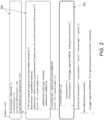
- Figure 2 illustrates relevant versus irrelevant data to illustrate operation of the apparatus 100, in accordance with an example of the present disclosure.
- the source code analyzer 102 may receive source code 104 that includes at least one vulnerability 106 and at least one remediation 108 that remediates the at least one vulnerability 106.
- the source code analyzer 102 may extract, from the source code 104, at least one remediated section 110.
- the source code analyzer 102 may identify, from the extracted at least one remediated section 110, each sentence of the at least one remediated section 110.
- the source code analyzer 102 may identify relevant data such as the data 200 for machine learning.
- the data 200 may include a fix such as "Use prepared statement and executeBatch (properly)".
- the source code analyzer 102 may identify irrelevant data such as the data 202.
- FIG. 3 illustrates further details of an architecture of the apparatus 100, in accordance with an example of the present disclosure.
- the source code 104 may include mixed data including relevant and irrelevant information.
- the source code analyzer 102 may extract, from the source code 104, at least one remediated section 110.
- the source code analyzer 102 may identify, from the extracted at least one remediated section 110, each sentence of the at least one remediated section 110.
- the source code analyzer 102 may extract a remediated section of the initial dataset and divide the data of the initial dataset sentence by sentence.
- the cluster generator 112 may generate, based on an analysis of each identified sentence 114 of the at least one remediated section 110, a plurality of clusters 116.
- the cluster generator 112 may determine, for each identified sentence of a specified cluster of the plurality of clusters 116, a score 118 with respect to the specified cluster that includes the identified sentence.
- the cluster generator 112 may generate clusters 116 to create a cluster space.
- the cluster generator 112 may implement a sentence transformer to add sentence by sentence in an encoder.
- a semantic search may be performed on the clusters to provide a score as follows: ⁇ 'corpus_id': 10, 'score': 1.0000004768371582 ⁇
- a corpus identification (ID) and score may be provided.
- the auxiliary dataset generator 120 may determine, for each identified sentence of the specified cluster of the plurality of clusters 116, whether the score 118 is greater than a specified threshold 122.
- the auxiliary dataset generator 120 may designate each identified sentence of the specified cluster of the plurality of clusters 116 for which the score 118 is greater than the specified threshold 122 as a relevant sentence.
- the auxiliary dataset generator 120 may generate, based on a plurality of relevant sentences 124, an auxiliary dataset 126 that includes at least one relevant vulnerability and at least one relevant remediation that remediates the at least one relevant vulnerability.
- the source code remediation machine learning model trainer 128 may train at least one source code remediation machine learning model 130 by analyzing, from the auxiliary dataset 126, the at least one relevant vulnerability associated with the source code 104.
- the source code remediation machine learning model trainer 128 may analyze, from the auxiliary dataset 126 and for the at least one relevant vulnerability associated with the source code, the at least one relevant remediation that remediates the at least one relevant vulnerability.
- the source code remediation machine learning model 130 may be deployed with respect to differential pruning of further source code.
- Figure 4 illustrates operation of a sentence transformer encoder of apparatus 100, in accordance with an example of the present disclosure.
- remediated code from the source code 104 is shown at 400.
- the source code 104 may be divided into a sentence transformer encoder.
- the source code analyzer 102 may extract, from the source code 104, at least one remediated section 110.
- the remediated section is dbConnection.preparedStatement (previously it was dbConnection.statement).
- the source code analyzer 102 may identify, from the extracted at least one remediated section 110, each sentence of the at least one remediated section 110.
- the source code 104 may be divided line-by-line and placed into a KNN space.
- the cluster generator 112 may generate, based on an analysis of each identified sentence 114 of the at least one remediated section 110, the plurality of clusters 116.
- the threshold 122 may be defined to segregate the score.
- the threshold 122 may be specified as a constant, and may be adjusted as needed based on the need of the dataset.
- the auxiliary dataset generator 120 may determine, for each identified sentence of the specified cluster of the plurality of clusters 116, whether the score 118 is greater than a specified threshold 122.
- the auxiliary dataset generator 120 may designate each identified sentence of the specified cluster of the plurality of clusters 116 for which the score 118 is greater than the specified threshold 122 as a relevant sentence.
- the auxiliary dataset generator 120 may generate, based on a plurality of relevant sentences 124, the auxiliary dataset 126 that includes at least one relevant vulnerability and at least one relevant remediation that remediates the at least one relevant vulnerability.
- the sentence may be identified as "action” and marked as "DO_NOTHING".
- the "DO_NOTHING" action may mean frequent data, and based on the aforementioned assumptions, frequent data may represent relevant data (e.g., vulnerable and remediated data).
- the sentence For a sentence that has a score that is less than or equal to the threshold 122, the sentence may marked as "DELETE".
- Figure 5 illustrates auxiliary dataset creation to illustrate operation of apparatus 100, in accordance with an example of the present disclosure.
- cluster 500 may represent Space A that includes 1700 sentences, with top K neighbors including 500 sentences that include a score greater than the threshold.
- Cluster 502 may represent Space B that includes 100 sentences, where a number of items in space B is less than the top K.
- an analysis of all of the sentences may be performed as follows: if result_score > threshold: return 1 or return 0.
- the further auxiliary dataset generator 146 may utilize a Convolutional Neural Network (CNN) model (e.g., the auxiliary dataset generation machine learning model 140) for classification from the auxiliary dataset 126.
- CNN Convolutional Neural Network
- Hyper parameters for the CNN model may be specified as follows.
- Hyper parameter embedding_dim for the auxiliary dataset generation machine learning model 140 may be specified as 64.
- an embedding is a relatively low-dimensional space into which high-dimensional vectors may be translated. Embeddings may make it easier to perform machine learning on large inputs such as sparse vectors representing words.
- Hyper parameter seq_length for the auxiliary dataset generation machine learning model 140 may be specified as 600.
- a sequence length may represent the length of the sequence of input data.
- Hyper parameter num_classes for the auxiliary dataset generation machine learning model 140 may be specified as 2.
- a number of possible outputs may be either 0 or 1.
- Hyper parameter kernel_size for the auxiliary dataset generation machine learning model 140 may be specified as 5.
- kernel_size may represent the size of the convolutional filter.
- Hyper parameter vocab_size for the auxiliary dataset generation machine learning model 140 may be specified as 5000.
- vocab_size may represent the size of the vocabulary.
- Hyper parameter hidden_dim for the auxiliary dataset generation machine learning model 140 may be specified as 128.
- a hidden dimension may refer to the hidden network between the input and the output layers.
- Hyper parameter dropout_keep_prob for the auxiliary dataset generation machine learning model 140 may be specified as 0.5.
- a term "dropout” may refer to dropping out of the nodes (e.g., input and hidden layer) in a neural network. All of the forward and backwards connections with a dropped node may be temporarily removed, thus creating a new network architecture out of the parent network. The nodes may be dropped by a dropout probability of p, where the probability during the training of the model may be specified as 0.5.
- Hyper parameter learning_rate for the auxiliary dataset generation machine learning model 140 may be specified as 1e-3.
- a learning rate may represent the hyperparameter in optimization algorithms that controls how much the model needs to change in response to the estimated error for each time when the model's weights are updated.
- the learning rate may determine the frequency of cross-checking with model parameters. With respect to selection of the optimized learning rate, if the learning rate is relatively less, such a rate may slow down the training process. Alternatively, if the learning rate is relatively large, such a rate may not optimize the model properly.
- Hyper parameter batch_size for the auxiliary dataset generation machine learning model 140 (as well as the source code remediation machine learning model 130) may be specified as 64.
- the training set may be divided into different subsets denoted as a batch.
- Hyper parameter num_epochs for the auxiliary dataset generation machine learning model 140 may be specified as 50.
- an epoch may be defined as the complete cycle for training a machine learning model.
- An epoch may represent an iterative learning process. The number of epochs may vary from model to model, and various models may be created with more than one epoch.
- a validation error may be taken into account. The number of epochs may be increased until there is a reduction in a validation error. If there is no improvement in reduction error for the consecutive epochs, this may be used as an indication to stop increasing the number of epochs.
- Hyper parameter print_per_batch for the auxiliary dataset generation machine learning model 140 may be specified as 100.
- print_per_batch may print logs every 100 iteration, for example, by printing the loss and the accuracy details.
- Hyper parameter save_per_batch for the auxiliary dataset generation machine learning model 140 (as well as the source code remediation machine learning model 130) may be specified as 10.
- save_per_batch may save the checkpoint of the model every 10 iteration.
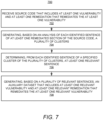
- Figures 6-8 respectively illustrate an example block diagram 600, a flowchart of an example method 700, and a further example block diagram 800 for source code differential pruning-based dataset creation, according to examples.
- the block diagram 600, the method 700, and the block diagram 800 may be implemented on the apparatus 100 described above with reference to Figure 1 by way of example and not of limitation.
- the block diagram 600, the method 700, and the block diagram 800 may be practiced in other apparatus.
- Figure 6 shows hardware of the apparatus 100 that may execute the instructions of the block diagram 600.
- the hardware may include a processor 602, and a memory 604 storing machine readable instructions that when executed by the processor cause the processor to perform the instructions of the block diagram 600.
- the memory 604 may represent a non-transitory computer readable medium.
- Figure 7 may represent an example method for source code differential pruning-based dataset creation, and the steps of the method.
- Figure 8 may represent a non-transitory computer readable medium 802 having stored thereon machine readable instructions to provide source code differential pruning-based dataset creation according to an example. The machine readable instructions, when executed, cause a processor 804 to perform the instructions of the block diagram 800 also shown in Figure 8 .
- the processor 602 of Figure 6 and/or the processor 804 of Figure 8 may include a single or multiple processors or other hardware processing circuit, to execute the methods, functions and other processes described herein. These methods, functions and other processes may be embodied as machine readable instructions stored on a computer readable medium, which may be non-transitory (e.g., the non-transitory computer readable medium 802 of Figure 8 ), such as hardware storage devices (e.g., RAM (random access memory), ROM (read only memory), EPROM (erasable, programmable ROM), EEPROM (electrically erasable, programmable ROM), hard drives, and flash memory).
- the memory 604 may include a RAM, where the machine readable instructions and data for a processor may reside during runtime.
- the memory 604 may include instructions 606 to receive source code 104 that includes at least one vulnerability 106 and at least one remediation 108 that remediates the at least one vulnerability 106.
- the processor 602 may fetch, decode, and execute the instructions 608 to extract, from the source code 104, at least one remediated section 110.
- the processor 602 may fetch, decode, and execute the instructions 610 to identify, from the extracted at least one remediated section 110, each sentence of the at least one remediated section 110.
- the processor 602 may fetch, decode, and execute the instructions 612 to generate, based on an analysis of each identified sentence 114 of the at least one remediated section 110, a plurality of clusters 116.
- the processor 602 may fetch, decode, and execute the instructions 614 to determine, for each identified sentence of a specified cluster of the plurality of clusters 116, a score 118 with respect to the specified cluster that includes the identified sentence.
- the processor 602 may fetch, decode, and execute the instructions 618 to designate each identified sentence of the specified cluster of the plurality of clusters 116 for which the score 118 is greater than the specified threshold 122 as a relevant sentence.
- the processor 602 may fetch, decode, and execute the instructions 620 to generate, based on a plurality of relevant sentences 124, an auxiliary dataset 126 that includes at least one relevant vulnerability and at least one relevant remediation that remediates the at least one relevant vulnerability.
- the method may include receiving source code 104 that includes at least one vulnerability 106 and at least one remediation 108 that remediates the at least one vulnerability 106.
- the method may include generating, based on an analysis of each identified sentence of at least one remediated section 110 of the source code 104, a plurality of clusters 116.
- the method may include determining, from each identified sentence of a specified cluster of the plurality of clusters 116, at least one relevant sentence.
- the method may include generating, based on a plurality of relevant sentences, an auxiliary dataset 126 that includes at least one relevant vulnerability and at least one relevant remediation that remediates the at least one relevant vulnerability.
- the non-transitory computer readable medium 802 may include instructions 806 to generate, based on an analysis of each identified sentence of at least one remediated section of source code 104 that includes at least one vulnerability 106 and at least one remediation 108 that remediates the at least one vulnerability, a plurality of clusters 116.
- the processor 804 may fetch, decode, and execute the instructions 808 to determine, from each identified sentence of a specified cluster of the plurality of clusters 116, at least one relevant sentence.
- the processor 804 may fetch, decode, and execute the instructions 810 to generate, based on a plurality of relevant sentences, an auxiliary dataset 126 that includes at least one relevant vulnerability 106 and at least one relevant remediation 108 that remediates the at least one relevant vulnerability.
Landscapes
- Engineering & Computer Science (AREA)
- Theoretical Computer Science (AREA)
- General Engineering & Computer Science (AREA)
- Software Systems (AREA)
- Computer Hardware Design (AREA)
- Physics & Mathematics (AREA)
- General Physics & Mathematics (AREA)
- Computer Security & Cryptography (AREA)
- Computing Systems (AREA)
- Quality & Reliability (AREA)
- Artificial Intelligence (AREA)
- Computer Vision & Pattern Recognition (AREA)
- Data Mining & Analysis (AREA)
- Evolutionary Computation (AREA)
- Medical Informatics (AREA)
- Mathematical Physics (AREA)
- Machine Translation (AREA)
Claims (9)
- Pruning-basierte Quellcode-Differenzierungs-Datensatzerzeugungsvorrichtung (100), umfassend:einen Quellcode-Analysator (102), der durch mindestens einen Hardwareprozessor (602, 804) ausgeführt wird zum:Empfangen eines Quellcodes (104), der mindestens eine Schwachstelle (106) und mindestens eine Korrektur (108) beinhaltet, die die mindestens eine Schwachstelle (106) korrigiert;Extrahieren, aus dem Quellcode (104), mindestens eines korrigierten Abschnitts (110); undIdentifizieren, von dem extrahierten mindestens einen korrigierten Abschnitt (110), jedes Satzes des mindestens einen korrigierten Abschnitts (110);einen Clustergenerator (112), der durch den mindestens einen Hardwareprozessor (602, 804) ausgeführt wird zum:Generieren, anhand einer Analyse jedes identifizierten Satzes (114) des mindestens einen korrigierten Abschnitts (110), einer Vielzahl von Clustern (116) in einem K-Nearest-Neighbors-(KNN-)Suchraum; undBestimmen, für jeden identifizierten Satz (114) eines spezifizierten Clusters der Vielzahl von Clustern (116), einer Punktzahl (118), anhand einer semantischen Suche unter der Vielzahl von Clustern (116), in Bezug auf den spezifizierten Cluster, der den identifizierten Satz (114) beinhaltet; undeinen Hilfsdatensatzgenerator (120), der durch den mindestens einen Hardwareprozessor (602, 804) ausgeführt wird zum:Bestimmen, für jeden identifizierten Satz (114) des spezifizierten Clusters der Vielzahl von Clustern (116), ob die Punktzahl (118) größer als ein spezifizierter Schwellenwert (122) ist;Kennzeichnen jedes identifizierten Satzes (114) des spezifizierten Clusters der Vielzahl von Clustern (116), für den die Punktzahl (118) größer als der spezifizierte Schwellenwert (122) ist, als relevanten Satz; undGenerieren, anhand einer Vielzahl von relevanten Sätzen (124), eines Hilfsdatensatzes (126), der mindestens eine relevante Schwachstelle und mindestens eine relevante Korrektur beinhaltet, die die mindestens eine relevante Schwachstelle korrigiert.
- Pruning-basierte Quellcode-Differenzierungs-Datensatzerzeugungsvorrichtung (100) nach Anspruch 1, ferner umfassend einen Quellcode-Korrektur-Machine-Learning-Modell-Trainer (128), der durch den mindestens einen Hardwareprozessor (602, 804) ausgeführt wird, um mindestens ein Quellcode-Korrektur-Machine-Learning-Modell (130) zu trainieren durch:Analysieren, aus dem Hilfsdatensatz (126), der mindestens einen relevanten Schwachstelle, die dem Quellcode (104) zugeordnet ist; undAnalysieren, aus dem Hilfsdatensatz (126) und für die mindestens eine relevante Schwachstelle, die dem Quellcode (104) zugeordnet ist, der mindestens einen relevanten Korrektur, die die mindestens eine relevante Schwachstelle korrigiert.
- Pruning-basierte Quellcode-Differenzierungs-Datensatzerzeugungsvorrichtung (100) nach Anspruch 2, ferner umfassend:einen Quellcode-Empfänger (132), der durch den mindestens einen Hardwareprozessor (602, 804) ausgeführt wird, um einen weiteren Quellcode (134) zu empfangen, der mindestens eine weitere Schwachstelle beinhaltet; undeinen Quellcode-Transformator (136), der durch den mindestens einen Hardwareprozessor (602, 804) ausgeführt wird zum:Empfangen, von dem mindestens einen trainierten Quellcode-Korrektur-Machine-Learning-Modell (130), eines weiteren korrigierten Codes, um die mindestens eine weitere Schwachstelle zu korrigieren, die dem weiteren Quellcode (134) zugeordnet ist; undTransformieren, anhand des weiteren korrigierten Codes, des weiteren Quellcodes (134), um die mindestens eine weitere Schwachstelle zu korrigieren, die dem weiteren Quellcode (134) zugeordnet ist.
- Pruning-basierte Quellcode-Differenzierungs-Datensatzerzeugungsvorrichtung (100) nach einem der vorhergehenden Ansprüche, ferner umfassend einen Hilfsdatensatzgenerator-Machine-Learning-Modell-Trainer (138), der durch den mindestens einen Hardwareprozessor (602, 804) ausgeführt wird, um mindestens ein Hilfsdatensatzgenerations-Machine-Learning-Modell (140) zu trainieren durch:Analysieren, aus dem Hilfsdatensatz (126), der mindestens einen relevanten Schwachstelle, die dem Quellcode (104) zugeordnet ist; undAnalysieren, aus dem Hilfsdatensatz (126) und für die mindestens eine relevante Schwachstelle, die dem Quellcode (104) zugeordnet ist, der mindestens einen relevanten Korrektur, die die mindestens eine relevante Schwachstelle korrigiert, wobei die Pruning-basierte Quellcode-Differenzierungs-Datensatzerzeugungsvorrichtung (100) optional ferner Folgendes umfasst:einen weiteren Hilfsdatensatzgenerations-Quellcode-Empfänger (142), der durch den mindestens einen Hardwareprozessor (602, 804) ausgeführt wird, um weiteren Hilfsdatensatzgenerations-Quellcode (144) zu empfangen, der mindestens eine weitere Schwachstelle beinhaltet; undeinen weiteren Hilfsdatensatzgenerator (146), der durch den mindestens einen Hardwareprozessor (602, 804) ausgeführt wird zum:Empfangen, von dem mindestens einen trainierten Hilfsdatensatzgenerations-Machine-Learning-Modell (140), mindestens einer weiteren Korrektur, um die mindestens eine weitere Schwachstelle zu korrigieren, die dem weiteren Hilfsdatensatzgenerations-Quellcode (144) zugeordnet ist; undGenerieren, anhand der mindestens einen weiteren Korrektur, eines weiteren Hilfsdatensatzes (148), der die mindestens eine weitere Korrektur beinhaltet, die der mindestens einen weiteren Schwachstelle zugeordnet ist, die dem weiteren Hilfsdatensatzgenerations-Quellcode (144) zugeordnet ist.
- Verfahren zur Pruning-basierten Quellcode-Differenzierungs-Datensatzerzeugung, wobei das Verfahren Folgendes umfasst:Empfangen, durch mindestens einen Hardwareprozessor (602, 804), von Quellcode (104), der mindestens eine Schwachstelle (106) und mindestens eine Korrektur (108) beinhaltet, die die mindestens eine Schwachstelle (106) korrigiert;Extrahieren, durch den mindestens einen Hardwareprozessor (602, 804), mindestens eines korrigierten Abschnitts (110) aus dem Quellcode (104);Identifizieren, durch den mindestens einen Hardwareprozessor (602, 804), von dem extrahierten mindestens einen korrigierten Abschnitt (110), jedes Satzes des mindestens einen korrigierten Abschnitts (110);Generieren, durch den mindestens einen Hardwareprozessor (602, 804) anhand einer Analyse jedes identifizierten Satzes (114) des mindestens einen korrigierten Abschnitts (110), einer Vielzahl von Clustern (116) in einem K-Nearest-Neighbors-, KNN-, Suchraum;Bestimmen, für jeden identifizierten Satz (114) eines spezifizierten Clusters der Vielzahl von Clustern (116), einer Punktzahl (118) anhand einer semantischen Suche unter der Vielzahl von Clustern (116), in Bezug auf den spezifizierten Cluster, der den identifizierten Satz (114) beinhaltet;Bestimmen, durch den mindestens einen Hardwareprozessor (602, 804), für jeden identifizierten Satz (114) des spezifizierten Clusters der Vielzahl von Clustern (116), ob die Punktzahl (118) größer als ein spezifizierter Schwellenwert (122) ist;Kennzeichnen, durch den mindestens einen Hardwareprozessor (602, 804), jedes identifizierten Satzes (114) des spezifizierten Clusters der Vielzahl von Clustern (116), für den die Punktzahl (118) größer als der spezifizierte Schwellenwert (122) ist, als relevanter Satz; undGenerieren, durch den mindestens einen Hardwareprozessor (602, 804) anhand einer Vielzahl von relevanten Sätzen (124), eines Hilfsdatensatzes (126), der mindestens eine relevante Schwachstelle und mindestens eine relevante Korrektur beinhaltet, die die mindestens eine relevante Schwachstelle korrigiert.
- Verfahren zur Pruning-basierten Quellcode-Differenzierungs-Datensatzerzeugung nach Anspruch 5, ferner umfassend das Trainieren des mindestens einen Quellcode-Korrektur-Machine-Learning-Modells (130) durch:Analysieren, durch den mindestens einen Hardwareprozessor (602, 804) aus dem Hilfsdatensatz (126), der mindestens einen relevanten Schwachstelle, die dem Quellcode (104) zugeordnet ist; undAnalysieren, durch den mindestens einen Hardwareprozessor (602, 804) aus dem Hilfsdatensatz (126) und für die mindestens eine relevante Schwachstelle, die dem Quellcode (104) zugeordnet ist, der mindestens einen relevanten Korrektur, die die mindestens eine relevante Schwachstelle korrigiert, wobei das Verfahren optional ferner Folgendes umfasst:Empfangen, durch den mindestens einen Hardwareprozessor (602, 804), von weiterem Quellcode, der mindestens eine weitere Schwachstelle beinhaltet;Empfangen, durch den mindestens einen Hardwareprozessor (602, 804) von dem mindestens einen trainierten Quellcode-Korrektur-Machine-Learning-Modell (130), eines weiteren korrigierten Codes, um die mindestens eine weitere Schwachstelle zu korrigieren, die dem weiteren Quellcode zugeordnet ist; undTransformieren, durch den mindestens einen Hardwareprozessor (602, 804) anhand des weiteren korrigierten Codes, des weiteren Quellcodes, um die mindestens eine weitere Schwachstelle zu korrigieren, die dem weiteren Quellcode zugeordnet ist.
- Verfahren zur Pruning-basierten Quellcode-Differenzierungs-Datensatzerzeugung nach Anspruch 5 oder 6, ferner Folgendes umfasst:Trainieren, durch den mindestens einen Hardwareprozessor (602, 804), mindestens eines Hilfsdatensatzgenerations-Machine-Learning-Modells (140) durch:Analysieren, durch den mindestens einen Hardwareprozessor (602, 804) aus dem Hilfsdatensatz (126), der mindestens einen relevanten Schwachstelle, die dem Quellcode (104) zugeordnet ist; undAnalysieren, durch den mindestens einen Hardwareprozessor (602, 804) aus dem Hilfsdatensatz (126) und für die mindestens eine relevante Schwachstelle, die dem Quellcode (104) zugeordnet ist, der mindestens einen relevanten Korrektur, die die mindestens eine relevante Schwachstelle korrigiert, wobei das Verfahren optional ferner Folgendes umfasst:Empfangen, durch den mindestens einen Hardwareprozessor (602, 804), von weiterem Hilfsdatensatzgenerations-Quellcode (144), der mindestens eine weitere Schwachstelle beinhaltet;Empfangen, durch den mindestens einen Hardwareprozessor (602, 804) von dem mindestens einen trainierten Hilfsdatensatzgenerations-Machine-Learning-Modell (140), mindestens einer weiteren Korrektur, um die mindestens eine weitere Schwachstelle zu korrigieren, die dem weiteren Hilfsdatensatzgenerations-Quellcode (144) zugeordnet ist; undGenerieren, durch den mindestens einen Hardwareprozessor (602, 804) anhand der mindestens einen weiteren Korrektur, eines weiteren Hilfsdatensatzes (126), der die mindestens eine weitere Korrektur beinhaltet, die der mindestens einen weiteren Schwachstelle zugeordnet ist, die dem weiteren Hilfsdatensatzgenerations-Quellcode (144) zugeordnet ist.
- Nicht-flüchtiges computerlesbares Medium, auf dem maschinenlesbare Anweisungen gespeichert sind, wobei die maschinenlesbaren Anweisungen, wenn sie von mindestens einem Hardwareprozessor (602, 804) ausgeführt werden, den mindestens einen Hardwareprozessor (602, 804) veranlassen zum:Empfangen eines Quellcodes (104), der mindestens eine Schwachstelle (106) und mindestens eine Korrektur (108) beinhaltet, die die mindestens eine Schwachstelle (106) korrigiert;Extrahieren, aus dem Quellcode (104), mindestens eines korrigierten Abschnitts (110);Identifizieren, von dem extrahierten mindestens einen korrigierten Abschnitt (110), jedes Satzes des mindestens einen korrigierten Abschnitts (110);Generieren, anhand einer Analyse jedes identifizierten Satzes (114) des mindestens einen korrigierten Abschnitts (110), einer Vielzahl von Clustern (116) in einem K-Nearest-Neighbors-, KNN-, Suchraum;Bestimmen, für jeden identifizierten Satz (114) eines spezifizierten Clusters der Vielzahl von Clustern (116), einer Punktzahl (118) anhand einer semantischen Suche unter der Vielzahl von Clustern (116), in Bezug auf den spezifizierten Cluster, der den identifizierten Satz (114) beinhaltet;Bestimmen, für jeden identifizierten Satz (114) des spezifizierten Clusters der Vielzahl von Clustern (116), ob die Punktzahl (118) größer als ein spezifizierter Schwellenwert (122) ist;Kennzeichnen jedes identifizierten Satzes (114) des spezifizierten Clusters der Vielzahl von Clustern (116), für den die Punktzahl (118) größer als der spezifizierte Schwellenwert (122) ist, als relevanten Satz; undGenerieren, anhand einer Vielzahl von relevanten Sätzen (124), eines Hilfsdatensatzes (126), der mindestens eine relevante Schwachstelle und mindestens eine relevante Korrektur beinhaltet, die die mindestens eine relevante Schwachstelle korrigiert.
- Nicht-flüchtiges computerlesbares Medium nach Anspruch 8, wobei die maschinenlesbaren Anweisungen, wenn sie durch den mindestens einen Hardwareprozessor (602, 804) ausgeführt werden, ferner den mindestens einen Hardwareprozessor (602, 804) veranlassen, mindestens ein Quellcode-Korrektur-Machine-Learning-Modell (130) zu trainieren durch:Analysieren, aus dem Hilfsdatensatz (126), der mindestens einen relevanten Schwachstelle, die dem Quellcode (104) zugeordnet ist; undAnalysieren, aus dem Hilfsdatensatz (126) und für die mindestens eine relevante Schwachstelle, die dem Quellcode (104) zugeordnet ist, der mindestens einen relevanten Korrektur, die die mindestens eine relevante Schwachstelle korrigiert, und wobei die maschinenlesbaren Anweisungen, wenn sie durch den mindestens einen Hardwareprozessor (602, 804) ausgeführt werden, den mindestens einen Hardwareprozessor (602, 804) optional ferner veranlassen, die mindestens eine Schwachstelle zu korrigieren zum:Empfangen eines weiteren Quellcodes, der mindestens eine weitere Schwachstelle beinhaltet;Empfangen, von dem mindestens einen trainierten Quellcode-Korrektur-Machine-Learning-Modell (130), eines weiteren korrigierten Codes, um die mindestens eine weitere Schwachstelle zu korrigieren, die dem weiteren Quellcode zugeordnet ist; undTransformieren, anhand des weiteren korrigierten Codes, des weiteren Quellcodes, um die mindestens eine weitere Schwachstelle zu korrigieren, die dem weiteren Quellcode zugeordnet ist.
Applications Claiming Priority (1)
| Application Number | Priority Date | Filing Date | Title |
|---|---|---|---|
| US18/311,018 US12524233B2 (en) | 2023-05-02 | 2023-05-02 | Source code differential pruning-based dataset creation |
Publications (3)
| Publication Number | Publication Date |
|---|---|
| EP4459488A2 EP4459488A2 (de) | 2024-11-06 |
| EP4459488A3 EP4459488A3 (de) | 2024-11-13 |
| EP4459488B1 true EP4459488B1 (de) | 2025-05-21 |
Family
ID=90721046
Family Applications (1)
| Application Number | Title | Priority Date | Filing Date |
|---|---|---|---|
| EP24169744.0A Active EP4459488B1 (de) | 2023-05-02 | 2024-04-11 | Auf differenziellem pruning basierende erzeugung eines datensatzes für quellcode |
Country Status (2)
| Country | Link |
|---|---|
| US (1) | US12524233B2 (de) |
| EP (1) | EP4459488B1 (de) |
Family Cites Families (22)
| Publication number | Priority date | Publication date | Assignee | Title |
|---|---|---|---|---|
| US8769127B2 (en) * | 2006-02-10 | 2014-07-01 | Northrop Grumman Systems Corporation | Cross-domain solution (CDS) collaborate-access-browse (CAB) and assured file transfer (AFT) |
| US10402564B2 (en) * | 2016-08-16 | 2019-09-03 | Nec Corporation | Fine-grained analysis and prevention of invalid privilege transitions |
| US10540152B1 (en) * | 2016-09-23 | 2020-01-21 | Massachusetts Mutual Life Insurance Company | Systems, devices, and methods for software coding |
| US11080406B2 (en) | 2016-12-05 | 2021-08-03 | Cylance Inc. | Detection of vulnerable code |
| US11244048B2 (en) * | 2017-03-03 | 2022-02-08 | Nippon Telegraph And Telephone Corporation | Attack pattern extraction device, attack pattern extraction method, and attack pattern extraction program |
| US10628129B2 (en) | 2017-08-08 | 2020-04-21 | Accenture Global Solutions Limited | Intellectual automated security, performance and code generation framework |
| US11720804B2 (en) | 2018-01-21 | 2023-08-08 | Microsoft Technology Licensing, Llc. | Data-driven automatic code review |
| US12474905B2 (en) | 2018-05-30 | 2025-11-18 | Nvidia Corporation | Detecting vulnerabilities to fault injection in computer code using machine learning |
| US11159564B2 (en) * | 2018-06-28 | 2021-10-26 | Google Llc | Detecting zero-day attacks with unknown signatures via mining correlation in behavioral change of entities over time |
| US11308218B2 (en) | 2018-12-20 | 2022-04-19 | Visa International Service Association | Open source vulnerability remediation tool |
| US20220188444A1 (en) * | 2019-04-22 | 2022-06-16 | Cyberark Software Ltd. | Systems and methods for securing virtualized execution instances |
| CN110245496B (zh) | 2019-05-27 | 2021-04-20 | 华中科技大学 | 一种源代码漏洞检测方法及检测器和其训练方法及系统 |
| US11514171B2 (en) | 2019-10-29 | 2022-11-29 | Dell Products L.P. | Code vulnerability detection and remediation |
| US12591686B2 (en) | 2020-11-05 | 2026-03-31 | Accenture Global Solutions Limited | Scalable source code vulnerability remediation |
| US20230032208A1 (en) * | 2021-07-30 | 2023-02-02 | Oracle International Corporation | Augmenting data sets for machine learning models |
| US12333018B2 (en) * | 2021-10-15 | 2025-06-17 | Capital One Services, Llc | Security vulnerability communication and remediation with machine learning |
| US12153684B2 (en) | 2022-07-22 | 2024-11-26 | Microsoft Technology Licensing, Llc. | Source code vulnerability detection and repair through machine learning |
| US20240119160A1 (en) * | 2022-10-10 | 2024-04-11 | Bank Of America Corporation | Generating a multi-platform remediation infrastructure based on intelligently forecasting and configuring a remediation schedule |
| US20240248995A1 (en) * | 2023-01-24 | 2024-07-25 | Microsoft Technology Licensing, Llc | Security vulnerability lifecycle scope identification |
| US20240272971A1 (en) * | 2023-02-10 | 2024-08-15 | International Business Machines Corporation | Monolothic application transformation |
| US20240303075A1 (en) * | 2023-03-09 | 2024-09-12 | Hewlett Packard Enterprise Development Lp | Clustering churn analytics to efficiently identify high-level code flaws |
| US12406072B2 (en) | 2023-06-02 | 2025-09-02 | Microsoft Technology Licensing, Llc. | Code-change based prompt for code repair |
-
2023
- 2023-05-02 US US18/311,018 patent/US12524233B2/en active Active
-
2024
- 2024-04-11 EP EP24169744.0A patent/EP4459488B1/de active Active
Also Published As
| Publication number | Publication date |
|---|---|
| EP4459488A2 (de) | 2024-11-06 |
| US20240370255A1 (en) | 2024-11-07 |
| US12524233B2 (en) | 2026-01-13 |
| EP4459488A3 (de) | 2024-11-13 |
Similar Documents
| Publication | Publication Date | Title |
|---|---|---|
| US11900261B2 (en) | Transfer learning system for automated software engineering tasks | |
| EP3918464B1 (de) | System zur vervollständigung eines erweiterten tiefenlerncodes | |
| EP4204968B1 (de) | Einheittestfallerzeugung mit transformatoren | |
| EP4272070B1 (de) | Mehrsprachige codeerzeugung mit zero-shot-inferenz | |
| Dong et al. | Learning to paraphrase for question answering | |
| US20230359441A1 (en) | Retrieval-augmented code completion | |
| US12242372B2 (en) | Performance bug repair via retrieval-augmented neural code generation model | |
| US20220398462A1 (en) | Automated fine-tuning and deployment of pre-trained deep learning models | |
| US12541449B2 (en) | Automatic generation of assert statements for unit test cases | |
| EP4104047B1 (de) | Verfahren zur auswertung von quellcode unter verwendung von numerischen array-darstellungen von quellcodeelementen | |
| Simanjuntak et al. | Research and analysis of indobert hyperparameter tuning in fake news detection | |
| US11797426B2 (en) | Automating test-driven development with transformers | |
| CN119487512A (zh) | 通过机器学习的源代码漏洞检测和修复 | |
| US11604719B2 (en) | Automated program repair using stack traces and back translations | |
| WO2024158524A1 (en) | Performance bug repair via retrieval-augmented neural code generation model | |
| EP4459488B1 (de) | Auf differenziellem pruning basierende erzeugung eines datensatzes für quellcode | |
| US20240419909A1 (en) | Semantic Frame Identification Using Transformers | |
| Berezovskiy et al. | Machine learning code snippets semantic classification | |
| CN114387111A (zh) | 金融信息识别方法、装置、电子设备及计算机存储介质 | |
| Lee et al. | Enforcing constraints on outputs with unconstrained inference | |
| Sarangi | PROGRAM REPAIR AND RETRIEVAL ON THE PRUTOR PLATFORM-II | |
| CN120911479A (zh) | 用于训练语言模型的方法、装置、设备和介质 | |
| Ou et al. | Discourse parsing of sociology dissertation abstracts using decision tree induction |
Legal Events
| Date | Code | Title | Description |
|---|---|---|---|
| PUAI | Public reference made under article 153(3) epc to a published international application that has entered the european phase |
Free format text: ORIGINAL CODE: 0009012 |
|
| STAA | Information on the status of an ep patent application or granted ep patent |
Free format text: STATUS: THE APPLICATION HAS BEEN PUBLISHED |
|
| PUAL | Search report despatched |
Free format text: ORIGINAL CODE: 0009013 |
|
| AK | Designated contracting states |
Kind code of ref document: A2 Designated state(s): AL AT BE BG CH CY CZ DE DK EE ES FI FR GB GR HR HU IE IS IT LI LT LU LV MC ME MK MT NL NO PL PT RO RS SE SI SK SM TR |
|
| AK | Designated contracting states |
Kind code of ref document: A3 Designated state(s): AL AT BE BG CH CY CZ DE DK EE ES FI FR GB GR HR HU IE IS IT LI LT LU LV MC ME MK MT NL NO PL PT RO RS SE SI SK SM TR |
|
| RIC1 | Information provided on ipc code assigned before grant |
Ipc: G06F 8/75 20180101ALN20241009BHEP Ipc: G06N 20/00 20190101ALN20241009BHEP Ipc: G06F 21/57 20130101AFI20241009BHEP |
|
| STAA | Information on the status of an ep patent application or granted ep patent |
Free format text: STATUS: REQUEST FOR EXAMINATION WAS MADE |
|
| 17P | Request for examination filed |
Effective date: 20241213 |
|
| GRAP | Despatch of communication of intention to grant a patent |
Free format text: ORIGINAL CODE: EPIDOSNIGR1 |
|
| STAA | Information on the status of an ep patent application or granted ep patent |
Free format text: STATUS: GRANT OF PATENT IS INTENDED |
|
| RIC1 | Information provided on ipc code assigned before grant |
Ipc: G06F 8/75 20180101ALN20250129BHEP Ipc: G06N 20/00 20190101ALN20250129BHEP Ipc: G06F 21/57 20130101AFI20250129BHEP |
|
| INTG | Intention to grant announced |
Effective date: 20250211 |
|
| GRAS | Grant fee paid |
Free format text: ORIGINAL CODE: EPIDOSNIGR3 |
|
| GRAA | (expected) grant |
Free format text: ORIGINAL CODE: 0009210 |
|
| STAA | Information on the status of an ep patent application or granted ep patent |
Free format text: STATUS: THE PATENT HAS BEEN GRANTED |
|
| AK | Designated contracting states |
Kind code of ref document: B1 Designated state(s): AL AT BE BG CH CY CZ DE DK EE ES FI FR GB GR HR HU IE IS IT LI LT LU LV MC ME MK MT NL NO PL PT RO RS SE SI SK SM TR |
|
| P01 | Opt-out of the competence of the unified patent court (upc) registered |
Free format text: CASE NUMBER: APP_18227/2025 Effective date: 20250415 |
|
| REG | Reference to a national code |
Ref country code: GB Ref legal event code: FG4D |
|
| REG | Reference to a national code |
Ref country code: CH Ref legal event code: EP |
|
| REG | Reference to a national code |
Ref country code: DE Ref legal event code: R096 Ref document number: 602024000139 Country of ref document: DE |
|
| REG | Reference to a national code |
Ref country code: IE Ref legal event code: FG4D |
|
| REG | Reference to a national code |
Ref country code: NL Ref legal event code: MP Effective date: 20250521 |
|
| PG25 | Lapsed in a contracting state [announced via postgrant information from national office to epo] |
Ref country code: PT Free format text: LAPSE BECAUSE OF FAILURE TO SUBMIT A TRANSLATION OF THE DESCRIPTION OR TO PAY THE FEE WITHIN THE PRESCRIBED TIME-LIMIT Effective date: 20250922 Ref country code: ES Free format text: LAPSE BECAUSE OF FAILURE TO SUBMIT A TRANSLATION OF THE DESCRIPTION OR TO PAY THE FEE WITHIN THE PRESCRIBED TIME-LIMIT Effective date: 20250521 Ref country code: FI Free format text: LAPSE BECAUSE OF FAILURE TO SUBMIT A TRANSLATION OF THE DESCRIPTION OR TO PAY THE FEE WITHIN THE PRESCRIBED TIME-LIMIT Effective date: 20250521 |
|
| REG | Reference to a national code |
Ref country code: LT Ref legal event code: MG9D |
|
| PG25 | Lapsed in a contracting state [announced via postgrant information from national office to epo] |
Ref country code: GR Free format text: LAPSE BECAUSE OF FAILURE TO SUBMIT A TRANSLATION OF THE DESCRIPTION OR TO PAY THE FEE WITHIN THE PRESCRIBED TIME-LIMIT Effective date: 20250822 Ref country code: NO Free format text: LAPSE BECAUSE OF FAILURE TO SUBMIT A TRANSLATION OF THE DESCRIPTION OR TO PAY THE FEE WITHIN THE PRESCRIBED TIME-LIMIT Effective date: 20250821 |
|
| PG25 | Lapsed in a contracting state [announced via postgrant information from national office to epo] |
Ref country code: PL Free format text: LAPSE BECAUSE OF FAILURE TO SUBMIT A TRANSLATION OF THE DESCRIPTION OR TO PAY THE FEE WITHIN THE PRESCRIBED TIME-LIMIT Effective date: 20250521 Ref country code: NL Free format text: LAPSE BECAUSE OF FAILURE TO SUBMIT A TRANSLATION OF THE DESCRIPTION OR TO PAY THE FEE WITHIN THE PRESCRIBED TIME-LIMIT Effective date: 20250521 |
|
| PG25 | Lapsed in a contracting state [announced via postgrant information from national office to epo] |
Ref country code: BG Free format text: LAPSE BECAUSE OF FAILURE TO SUBMIT A TRANSLATION OF THE DESCRIPTION OR TO PAY THE FEE WITHIN THE PRESCRIBED TIME-LIMIT Effective date: 20250521 |
|
| PG25 | Lapsed in a contracting state [announced via postgrant information from national office to epo] |
Ref country code: HR Free format text: LAPSE BECAUSE OF FAILURE TO SUBMIT A TRANSLATION OF THE DESCRIPTION OR TO PAY THE FEE WITHIN THE PRESCRIBED TIME-LIMIT Effective date: 20250521 |
|
| PG25 | Lapsed in a contracting state [announced via postgrant information from national office to epo] |
Ref country code: RS Free format text: LAPSE BECAUSE OF FAILURE TO SUBMIT A TRANSLATION OF THE DESCRIPTION OR TO PAY THE FEE WITHIN THE PRESCRIBED TIME-LIMIT Effective date: 20250821 |
|
| PG25 | Lapsed in a contracting state [announced via postgrant information from national office to epo] |
Ref country code: IS Free format text: LAPSE BECAUSE OF FAILURE TO SUBMIT A TRANSLATION OF THE DESCRIPTION OR TO PAY THE FEE WITHIN THE PRESCRIBED TIME-LIMIT Effective date: 20250921 |
|
| PG25 | Lapsed in a contracting state [announced via postgrant information from national office to epo] |
Ref country code: LV Free format text: LAPSE BECAUSE OF FAILURE TO SUBMIT A TRANSLATION OF THE DESCRIPTION OR TO PAY THE FEE WITHIN THE PRESCRIBED TIME-LIMIT Effective date: 20250521 |
|
| REG | Reference to a national code |
Ref country code: AT Ref legal event code: MK05 Ref document number: 1797382 Country of ref document: AT Kind code of ref document: T Effective date: 20250521 |
|
| PG25 | Lapsed in a contracting state [announced via postgrant information from national office to epo] |
Ref country code: AT Free format text: LAPSE BECAUSE OF FAILURE TO SUBMIT A TRANSLATION OF THE DESCRIPTION OR TO PAY THE FEE WITHIN THE PRESCRIBED TIME-LIMIT Effective date: 20250521 Ref country code: SM Free format text: LAPSE BECAUSE OF FAILURE TO SUBMIT A TRANSLATION OF THE DESCRIPTION OR TO PAY THE FEE WITHIN THE PRESCRIBED TIME-LIMIT Effective date: 20250521 Ref country code: DK Free format text: LAPSE BECAUSE OF FAILURE TO SUBMIT A TRANSLATION OF THE DESCRIPTION OR TO PAY THE FEE WITHIN THE PRESCRIBED TIME-LIMIT Effective date: 20250521 |
|
| PG25 | Lapsed in a contracting state [announced via postgrant information from national office to epo] |
Ref country code: CZ Free format text: LAPSE BECAUSE OF FAILURE TO SUBMIT A TRANSLATION OF THE DESCRIPTION OR TO PAY THE FEE WITHIN THE PRESCRIBED TIME-LIMIT Effective date: 20250521 |
|
| PG25 | Lapsed in a contracting state [announced via postgrant information from national office to epo] |
Ref country code: EE Free format text: LAPSE BECAUSE OF FAILURE TO SUBMIT A TRANSLATION OF THE DESCRIPTION OR TO PAY THE FEE WITHIN THE PRESCRIBED TIME-LIMIT Effective date: 20250521 |
|
| PG25 | Lapsed in a contracting state [announced via postgrant information from national office to epo] |
Ref country code: SK Free format text: LAPSE BECAUSE OF FAILURE TO SUBMIT A TRANSLATION OF THE DESCRIPTION OR TO PAY THE FEE WITHIN THE PRESCRIBED TIME-LIMIT Effective date: 20250521 |
|
| PG25 | Lapsed in a contracting state [announced via postgrant information from national office to epo] |
Ref country code: IT Free format text: LAPSE BECAUSE OF FAILURE TO SUBMIT A TRANSLATION OF THE DESCRIPTION OR TO PAY THE FEE WITHIN THE PRESCRIBED TIME-LIMIT Effective date: 20250521 |
|
| REG | Reference to a national code |
Ref country code: DE Ref legal event code: R097 Ref document number: 602024000139 Country of ref document: DE |
|
| PLBE | No opposition filed within time limit |
Free format text: ORIGINAL CODE: 0009261 |
|
| STAA | Information on the status of an ep patent application or granted ep patent |
Free format text: STATUS: NO OPPOSITION FILED WITHIN TIME LIMIT |
|
| REG | Reference to a national code |
Ref country code: CH Ref legal event code: L10 Free format text: ST27 STATUS EVENT CODE: U-0-0-L10-L00 (AS PROVIDED BY THE NATIONAL OFFICE) Effective date: 20260402 |
|
| PGFP | Annual fee paid to national office [announced via postgrant information from national office to epo] |
Ref country code: IE Payment date: 20260310 Year of fee payment: 3 |
|
| PGFP | Annual fee paid to national office [announced via postgrant information from national office to epo] |
Ref country code: FR Payment date: 20260309 Year of fee payment: 3 |
|
| 26N | No opposition filed |
Effective date: 20260224 |