EP4459470A1 - Arbeitsflusserzeugungsverfahren, -vorrichtung und -system, -medium und -programmprodukt - Google Patents
Arbeitsflusserzeugungsverfahren, -vorrichtung und -system, -medium und -programmprodukt Download PDFInfo
- Publication number
- EP4459470A1 EP4459470A1 EP22922907.5A EP22922907A EP4459470A1 EP 4459470 A1 EP4459470 A1 EP 4459470A1 EP 22922907 A EP22922907 A EP 22922907A EP 4459470 A1 EP4459470 A1 EP 4459470A1
- Authority
- EP
- European Patent Office
- Prior art keywords
- node
- workflow
- behavior tree
- iterative
- compositor
- Prior art date
- Legal status (The legal status is an assumption and is not a legal conclusion. Google has not performed a legal analysis and makes no representation as to the accuracy of the status listed.)
- Pending
Links
Images





Classifications
-
- G—PHYSICS
- G06—COMPUTING OR CALCULATING; COUNTING
- G06F—ELECTRIC DIGITAL DATA PROCESSING
- G06F11/00—Error detection; Error correction; Monitoring
- G06F11/36—Prevention of errors by analysis, debugging or testing of software
-
- G—PHYSICS
- G06—COMPUTING OR CALCULATING; COUNTING
- G06F—ELECTRIC DIGITAL DATA PROCESSING
- G06F3/00—Input arrangements for transferring data to be processed into a form capable of being handled by the computer; Output arrangements for transferring data from processing unit to output unit, e.g. interface arrangements
- G06F3/01—Input arrangements or combined input and output arrangements for interaction between user and computer
- G06F3/048—Interaction techniques based on graphical user interfaces [GUI]
- G06F3/0484—Interaction techniques based on graphical user interfaces [GUI] for the control of specific functions or operations, e.g. selecting or manipulating an object, an image or a displayed text element, setting a parameter value or selecting a range
-
- G—PHYSICS
- G05—CONTROLLING; REGULATING
- G05B—CONTROL OR REGULATING SYSTEMS IN GENERAL; FUNCTIONAL ELEMENTS OF SUCH SYSTEMS; MONITORING OR TESTING ARRANGEMENTS FOR SUCH SYSTEMS OR ELEMENTS
- G05B19/00—Program-control systems
- G05B19/02—Program-control systems electric
- G05B19/04—Program control other than numerical control, i.e. in sequence controllers or logic controllers
- G05B19/042—Program control other than numerical control, i.e. in sequence controllers or logic controllers using digital processors
- G05B19/0426—Programming the control sequence
-
- G—PHYSICS
- G06—COMPUTING OR CALCULATING; COUNTING
- G06F—ELECTRIC DIGITAL DATA PROCESSING
- G06F3/00—Input arrangements for transferring data to be processed into a form capable of being handled by the computer; Output arrangements for transferring data from processing unit to output unit, e.g. interface arrangements
- G06F3/01—Input arrangements or combined input and output arrangements for interaction between user and computer
- G06F3/048—Interaction techniques based on graphical user interfaces [GUI]
- G06F3/0481—Interaction techniques based on graphical user interfaces [GUI] based on specific properties of the displayed interaction object or a metaphor-based environment, e.g. interaction with desktop elements like windows or icons, or assisted by a cursor's changing behaviour or appearance
- G06F3/0482—Interaction with lists of selectable items, e.g. menus
-
- G—PHYSICS
- G06—COMPUTING OR CALCULATING; COUNTING
- G06F—ELECTRIC DIGITAL DATA PROCESSING
- G06F8/00—Arrangements for software engineering
- G06F8/30—Creation or generation of source code
- G06F8/34—Graphical or visual programming
-
- G—PHYSICS
- G06—COMPUTING OR CALCULATING; COUNTING
- G06Q—INFORMATION AND COMMUNICATION TECHNOLOGY [ICT] SPECIALLY ADAPTED FOR ADMINISTRATIVE, COMMERCIAL, FINANCIAL, MANAGERIAL OR SUPERVISORY PURPOSES; SYSTEMS OR METHODS SPECIALLY ADAPTED FOR ADMINISTRATIVE, COMMERCIAL, FINANCIAL, MANAGERIAL OR SUPERVISORY PURPOSES, NOT OTHERWISE PROVIDED FOR
- G06Q10/00—Administration; Management
- G06Q10/06—Resources, workflows, human or project management; Enterprise or organisation planning; Enterprise or organisation modelling
- G06Q10/063—Operations research, analysis or management
- G06Q10/0633—Workflow analysis
-
- G—PHYSICS
- G06—COMPUTING OR CALCULATING; COUNTING
- G06F—ELECTRIC DIGITAL DATA PROCESSING
- G06F2203/00—Indexing scheme relating to G06F3/00 - G06F3/048
- G06F2203/048—Indexing scheme relating to G06F3/048
- G06F2203/04803—Split screen, i.e. subdividing the display area or the window area into separate subareas
-
- G—PHYSICS
- G06—COMPUTING OR CALCULATING; COUNTING
- G06Q—INFORMATION AND COMMUNICATION TECHNOLOGY [ICT] SPECIALLY ADAPTED FOR ADMINISTRATIVE, COMMERCIAL, FINANCIAL, MANAGERIAL OR SUPERVISORY PURPOSES; SYSTEMS OR METHODS SPECIALLY ADAPTED FOR ADMINISTRATIVE, COMMERCIAL, FINANCIAL, MANAGERIAL OR SUPERVISORY PURPOSES, NOT OTHERWISE PROVIDED FOR
- G06Q10/00—Administration; Management
- G06Q10/06—Resources, workflows, human or project management; Enterprise or organisation planning; Enterprise or organisation modelling
Definitions
- Embodiments of the present application relate to the field of industrial technologies, and in particular, to a workflow generation method and apparatus, a system, a computer-readable storage medium, and a computer program product.
- a workflow may be simply defined as a description of a series of operational processes.
- the workflow is widely used in an automation system, artificial intelligence, robotics, and other fields.
- the workflow of a product sorting line in the automation system may be simply described as starting, photographing, sorting, and moving a product to a target location.
- a model deployment workflow in the field of artificial intelligence may be described as data collection, data annotation, model training, and model deployment.
- Embodiments of the present application provide a workflow generation method, a system, a computer-readable storage medium, and a computer program product.
- implementations of the present disclosure provide a workflow generation method.
- the method includes:
- implementations of the present disclosure realize a workflow having an iterative capability through iterator nodes having the iterative capability, thereby enriching the control capability.
- the first work link includes a function block node.
- the function block node is configured to implement a service operation in the workflow.
- function block nodes may be iterated, thereby increasing the processing speed of a workflow.
- the first work link includes a second iterator node.
- the second iterator node includes an input end adapted to receiving a second iterative item list, and a second work link.
- the second iterative item list includes a plurality of second iterative items and an execution sequence of each second iterative item.
- the workflow also indicates that each second iterative item executes the second work link based on the respective execution sequence in the second iterative item list during each execution process of the first work link.
- the first work link includes a compositor node.
- the compositor node includes a start block adapted to starting executing the compositor node, an end block adapted to ending executing the compositor node, and a plurality of work links arranged between the start block and the end block.
- the workflow also indicates that a destination work link is determined from the plurality of work links based on a type of the compositor node.
- the method further includes: deploying the workflow onto a runtime of a workcell containing the plurality of first iterative items, such that the plurality of first iterative items in the workcell execute operations according to the workflow, where the workflow is an OT domain workflow, and the workcell is an OT device.
- an OT domain workflow may be controlled.
- the method includes: selecting the first iterator node based on a selection operation performed by the user on the graphical user interface including a node library.
- the first iterator node includes a first display area.
- the first display area is adapted to displaying a type of the first iterator node.
- the first iterator node further includes a second display area.
- the second display area is adapted to displaying a tag of the first iterative item, currently being executed, of the first work link.
- implementations of the present disclosure provide a workflow generation apparatus.
- the apparatus includes:
- implementations of the present disclosure realize a workflow having an iterative capability through iterator nodes having the iterative capability, thereby enriching the control capability.
- the first work link includes a function block node.
- the function block node is configured to implement a service operation in the workflow.
- function block nodes may be iterated, thereby increasing the processing speed of a workflow.
- the first work link includes a second iterator node.
- the second iterator node includes an input end adapted to receiving a second iterative item list, and a second work link.
- the second iterative item list includes a plurality of second iterative items and an execution sequence of each second iterative item.
- the workflow also indicates that each second iterative item executes the second work link based on the respective execution sequence in the second iterative item list during an execution process of the first work link.
- the work link includes a compositor node.
- the compositor node includes a start block adapted to start executing the compositor node, an end block adapted to ending executing the compositor node, and a plurality of work links arranged between the start block and the end block.
- the workflow also indicates that a destination work link is determined from the plurality of work links based on a type of the compositor node.
- the workflow generation apparatus further includes a deployment module, configured to deploy the workflow onto a runtime of a workcell containing the plurality of first iterative items, such that the plurality of first iterative items in the workcell execute operations according to the workflow, where the workflow is an OT domain workflow, and the workcell is an OT device.
- a deployment module configured to deploy the workflow onto a runtime of a workcell containing the plurality of first iterative items, such that the plurality of first iterative items in the workcell execute operations according to the workflow, where the workflow is an OT domain workflow, and the workcell is an OT device.
- an OT domain workflow may be controlled.
- implementations of the present disclosure provide a workflow control system, including: at least one memory, configured to store computer-readable code; and at least one processor, configured to call the computer-readable code to perform the steps of the workflow generation method according to any of the foregoing.
- implementations of the present disclosure provide a computer-readable medium.
- the computer-readable medium has computer-readable instructions stored thereon.
- the computer-readable instructions when executed by a processor, cause the processor to perform the steps of the workflow generation method according to any of the foregoing.
- implementations of the present disclosure provide a computer program product.
- the computer program product is tangibly stored on a computer-readable medium and includes computer-readable instructions.
- the computer-readable instructions when executed, cause at least one processor to perform the steps of the workflow generation method according to any of the foregoing.
- the term “include” and variants thereof represent open terms, and mean “include but not limited to”.
- the term “based on” represents “at least partially based on”.
- the terms “one embodiment” and “an embodiment” represent “at least one embodiment”.
- the term “another embodiment” represents “at least one another embodiment”.
- the terms “first”, “second”, and the like may represent different objects or the same object. Other definitions may be included explicitly or implicitly in the following. Unless otherwise clearly specified, the definition of one term is consistent in the entire specification.
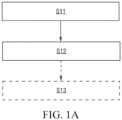
- FIG. 1A shows an exemplary flowchart of a workflow creation method according to an embodiment of the present application.
- the method may include the following steps: Step S 11: Receive a behavior tree construction operation performed by a user on a graphical user interface based on a preset behavior tree node.
- a behavior tree is configured to characterize a workflow.
- the workflow is configured to define operations to be executed by a workcell.
- the workflow may represent distributed processes within the workcell.
- the workflow here may also be divided into a main workflow and subworkflows.
- the main workflow is configured to define the start, end, and other flow controls that trigger the entire workcell process.
- the main workflow is an entry of the entire process, which is linked to at least one subworkflow.
- the subworkflows are usually major workflows. Each subworkflow corresponds to a sub-process for implementing specific service operations.
- the workcell may be a combination of resources such as systems or devices that can realize a relatively complete and independent control process and operation.
- the workflow is created using the workcell as a basic unit, which is more in line with the characteristics of industrial control, can improve the integration degree of development, and can reduce the complexity of development.
- the workcell may be defined according to actual industrial scenarios. For example: it may be defined that one procedure corresponds to one workcell, or it may be defined that one workstation in a procedure is one workcell, or it may be defined that one station in a workstation corresponds to one workcell. Different workcells have different processes.
- the behavior tree is a formal manner of graphical modeling.
- the behavior tree is widely used for various artificial types of intelligent decision-making. Since most logic is set according to rules, the judgment of behaviors is similar to a tree, with many judgment branches.
- the behaviors of the behavior tree are on leaf nodes, which are real behavior logic to be executed. Through the behavior tree mode, relevant demands of a software integration system may be clearly expressed using clearly defined symbols.
- the structure of the behavior tree is organized in the form of a tree, and each node has a corresponding node type, which carries different functions with relevant parameters.
- An intuitive and visual behavior tree editor may be provided to a user using a component editor. With the behavior tree editor, the user may quickly edit the behavior tree. For example, after starting the behavior tree editor, a new behavior tree may be created, and behavior tree node types are then selected into the behavior tree, where attributes of behavior tree nodes that form the behavior tree may be edited.
- the behavior tree nodes may include: a flow control node, a function block node, and the like.
- the nodes will be described in detail below.
- the flow control node is configured to implement logical control in a workflow, and is typically independent of a specific service operation in a workcell.
- the flow control node may include: a main control node, a compositor node (which may also be referred to as an aggregator node or a logical control node), a condition node, and the like.
- the flow control node may include: one or any combination of a main control node, a compositor node, and a condition node. The nodes will be briefly described below, respectively.
- the main control node may include some or all of a start node, an end node, a goto node, an anchor node, a stop node, and an abort node.
- the main control node in this embodiment is not a standard behavior tree element.
- the main control node may be configured to control a major process of the workflow and may be linked to a state machine of the workflow.
- the start node is mandatory, and one of the end node or the goto node may also be mandatory.
- the main control node is mainly configured to define the start and end of the workflow.
- other element nodes may control the state machine (e.g., abort and stop) or label key process steps (e.g., key nodes) that may be jumped.
- the compositor node is configured to implement the logical control in the workflow.
- the compositor node may include: some or all of a sequence (Se) node, a reactive sequence (RSe) node, a parallel (Pa) node, an in-process quality control (QC) (IPQ) node, a priority (fallback) (Pr) node, a reactive priority (fallback) (RPr) node, an if-then-else (ITE) node, and a switch (Sw) node.
- the compositor node may define how to perform branches in the behavior tree, and is configured to implement the branch logical control in the workflow, and the like.
- a typical compositor node is briefly described below:
- sequence node and the parallel node may drive most of the logic in the workflow.
- the condition node is usually a basic logical element of a check expression in the behavior tree, and is configured to perform ITE and return a judgment result. OK or failure is returned according to whether the condition is established. The condition node never returns a running state.
- condition node may also be included within a function block node.
- condition node may be a type of nodes alone.
- the function block node is configured to execute commands and implement a service operation in the workflow. Typically, if the operation is completed correctly, OK is returned. If the operation is failed, failure is returned. When the operation is being performed, running is returned.
- the function block node includes a logical node, and may further include some specific types of function block nodes, for example, some or all of a manual node, a dynamic node, a delay node, and an empty (idle) node.
- the dynamic node is configured to dynamically inject a node instance at a runtime.
- the manual node represents a manual step, stopping at a current node before obtaining an acknowledgment signal, and exiting after obtaining the acknowledgment signal.
- the delay node represents exiting the current node after a specified time delay.
- the idle node represents that no operation is performed, which is a placeholder and may be replaced by any function block node.
- Each logical node may correspond to an operation template, and each operation template predefines operations that can be executed by at least one type of resources (e.g., a device type such as a cooperative robot type or a PLC type).
- the operations may include: actions, methods, or skills.
- each operation template may be composed of an interface portion and an implementation portion.
- the implementation portion may be an application (e.g., a containerized application) containing function code and running dependencies.
- the application may run independently and be exposed to the public through a specific network communication interface.
- the interface portion may be a logical node presented as a graphical element.
- the logical node like other behavior tree nodes, may be dragged and dropped, connected, and configured in a graphical user interface.
- each logical node may have a parameter panel for configuring parameters of the logical node, for example, input and output parameters. These input and output parameters may also be preset with default values indeed.
- Each logical node may be configured and executed individually.
- an input configured by a user for the logical node will be read and transmitted to the implementation portion of the operation template, namely, a corresponding application.
- an operation result such as a transformed model, will be transformed back to an output of the logical node.
- the interface portion and the implementation portion of each operation template may be stored individually.
- only the interface portion, namely, the logical node may be stored in a node library, and the implementation portion thereof may be stored in a node service module.
- the node service module may be referred to as a runtime in this embodiment.
- the node service module may be located in a server or may also be located locally.
- the logical node follows an information model of interaction with the runtime of a main controller.
- communication between an OT domain workflow and main controllers of various OT devices can be standardized.
- the service operation corresponding to a function block node may be executed by different bodies, for example, may be a specific physical device, a certain person, or other virtualized noun resources, for convenience of description, these physical devices, personnel, virtualized noun resources, and the like are collectively referred to as resources in this specification. These resources typically refer to resources as each operation subject that can execute the workflow on site.
- a resource as an operation execution body may be used as a common configuration parameter of the function block node, and configured for the required function block node correspondingly when creating the behavior tree.
- the resource as the operation execution body is configured for the function block node. In this way, there is no need to configure the resources for the required function block node when creating the behavior tree.
- these resources may be expressed in the form of resource nodes, and these resource nodes may be stored in the form of a resource knowledge graph.
- the resource knowledge graph includes: various resource nodes, and a connecting line representing the relationship between the resource nodes.
- FIG. 1B shows an example diagram of a resource knowledge graph in one example.
- the resource knowledge graph is a factory resource knowledge graph, namely, describing a real system configuration of a factory.
- the factory (F) node has an industrial personal computer (IPC) node.
- the industrial personal computer (IPC) node has a cooperative robot (CR) node, a PLC node, and a bar code scanner (BCS) node.
- the cooperative robot (CR) node has a clamping jaw (CJ) node, a torque wrench (TW) node, and a camera (CA) node.
- the PLC node has a button (B) node and an LED alarm light node.
- there may be indeed more than one device of a certain type, such as a cooperative robot and such devices may be distinguished by a tag or model, and the like. Details are omitted herein.
- Each function block node may be instantiated as an operation of a corresponding resource by associating a resource node.
- a certain logical node may be instantiated as an operation of a corresponding device by associating a device resource node.
- a resource header may be set for the function block node, and resources associated with the function block node will be displayed in the resource header.
- each resource node may be associated with a corresponding function block node in advance.
- the function block node associated with corresponding resources may be directly pulled without temporary configuration.
- FIG. 1C shows an example diagram of function block nodes associated with resource nodes in one example.
- corresponding function block nodes are associated with the resources shown in the resource knowledge graph shown in FIG. 1B , respectively.
- the industrial personal computer (IPC) node is associated with a press button (PB) node and a display dialog box on screen (DDB) node.
- PB press button
- DDB display dialog box on screen
- the cooperative robot (CR) node is associated with a linear move (LM) node and a shutdown mobile (SM) node.
- the PLC node is associated with a read I/O (RIO) node and a write I/O (WIO) node.
- the bar code scanner (BCS) node is associated with a scan bar code (SBC) node.
- the clamping jaw (CJ) node is associated with an open (O) node and a grab (Gr) node.
- the torque wrench (TW) node is associated with a twist (T) node.
- the camera (CA) node is associated with a register (R) node, a calibration (Cb) node, a take photo (TP) node, and an object recognition (OR) node.
- the button (B) node is associated with a PB node.
- the LED alarm light node is associated with a switch on (SO) node and a switch off (SF) node.
- the corresponding resource nodes may be associated with the required function block nodes when creating the behavior tree.
- a function block node (which may be referred to as a special-purpose function block node) associated with a resource node in advance and a function block node (which may be referred to as a general-purpose function block node) not associated with a resource node may also exist at the same time.
- the general-purpose function block node is not associated with site resources, the simulation of a workflow corresponding to a behavior tree including the function block node is not affected. For example, a CR may not have been purchased yet.
- the corresponding general-purpose function block node may be used for simulation in advance, and then the purchase may be started when it is determined that the purchase is implementable.
- decorator node may be further included:
- the decorator node is mainly configured to decorate a function block node driven by a compositor node, and, for example, may be configured to determine whether a branch or even a single node in the behavior tree may be executed.
- the decorator node may include: some or all of a repeat (Rp) node, a retry (Rt) node, a one-shot (OS) node, a timeout (TO) node, a timer (Tm) node, an inverter (Iv) node, a force run (FR) node, a force OK (FO) node, a force failed (FF) node, and a guard (G) node.
- the decorator node may also be included within a flow control node.
- the flow control node may include: all or some of a main control node, a compositor node, and a decorator node.
- each behavior tree node may be listed on the graphical user interface in the form of icons, and the user may determine a node needed for creating the workflow by selecting and dragging the icons to be added to a canvas. Further, necessary parameter configurations, such as resource configuration and/or input and output parameter configuration, may also be performed on the node. If there is more than one operation to be executed by a workcell, namely, operation defined in a required workflow, a behavior tree corresponding to the workflow may include a plurality of function block nodes, and corresponding flow control nodes may be set according to the sequence and relationship of the operations, and the behavior tree corresponding to the workflow is finally generated by corresponding discharge connection to the dragged nodes.
- the behavior tree construction operation includes adding and connecting operations to behavior tree nodes. Further, operations of associating resources for the added function block nodes may also be included. Furthermore, the behavior tree construction operation may also include: configuration operations on input and output parameters of the behavior tree nodes.
- Step S12 Generate, in response to the behavior tree construction operation, a behavior tree corresponding to a workflow, where a logical node in the behavior tree is instantiated as an operation of a corresponding device.
- the behavior tree nodes in response to the behavior tree construction operation, may be instantiated, and a connection relationship between the instantiated behavior tree nodes may be established. For example, by performing this step, the added logical node may be instantiated as an operation of a corresponding device. Then, based on the connection relationship between the instantiated behavior tree nodes, a behavior tree corresponding to a workflow is generated.
- the behavior tree nodes may be stored in a node library. Furthermore, for similar application scenarios, in order to avoid the waste of manpower, time, and the like in repeatedly constructing a behavior tree, it is preferable that a behavior tree (or a behavior tree framework that is not instantiated) of a corresponding workflow or a corresponding subworkflow that is debugged or successfully run has been constructed for the user and is stored as one workflow node or subworkflow node. Accordingly, a workflow (WF) node and a subworkflow (SWF) node may be further included in the node library. When the user needs to construct a similar behavior tree or construct a behavior tree including the workflow or subworkflow, the corresponding workflow node or subworkflow node may be selected and configured as necessary to obtain the behavior tree for implementing the required workflow.
- WF workflow
- SWF subworkflow
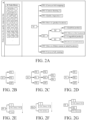
- FIG. 2A shows a schematic diagram of constructing a behavior tree of a workcell in a quality inspection line in one example.
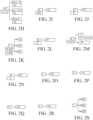
- FIG. 2B to FIG. 2S show schematic diagrams of some behavior trees constructed in one example, respectively.
- this embodiment may further include step S13 below as shown by a dotted line in FIG. 1 .
- Step S13 Parse the behavior tree, and deploy the workflow corresponding to the behavior tree to a runtime of a corresponding workcell, such that resources in the workcell execute operations according to the workflow.
- the workcell may have a main controller.
- the runtime may be located on the main controller of the workcell.
- device resources among the resources may be connected to the main controller, and the main controller controls the connected device resources to execute corresponding operations according to the workflow at the runtime.
- Manpower resources among the resources may directly execute corresponding operations according to prompts of the workflow at the runtime.
- the behavior tree may be stored in a Markup language, for example, an extensible markup language (XML) and may be verified by an XML Schema (XSD) prototype to verify that an XML format of the behavior tree is correct.
- XML extensible markup language
- XSD XML Schema
- an OT domain generally refers to an operational technology (OT), which combines hardware and software to detect or trigger changes in processes or events occurring in an enterprise by directly monitoring and/or controlling a physical device (referred to as an OT device).
- the OT utilizes a computer to monitor or change a physical state such as an industrial control system (ICS).
- ICS industrial control system
- the industrial control system is configured to remotely monitor and/or control key industrial processes based on computer-implemented facilities, systems and devices to achieve physical functions.
- the term "OT" is used for distinguishing the industrial control system from a traditional information technology (IT) system in terms of technical implementation and function.
- Some tools are aimed at usage scenarios of the Internet of things and are aimed at experienced IT engineers, while OT engineers and junior IT engineers have difficulty understanding the paradigms thereof. Some tools are more suitable for usage scenarios of IT domain low-code development, but are not well suitable for the OT domain.
- the workflow creation method in this embodiment may be used for this OT domain as an OT domain low-code development method.
- the workflow creation method shown in FIG. 1A may be implemented in the OT domain, such as an OT domain low-code development platform.
- the workflow may be an OT domain workflow.
- the workcell may be a workcell within the OT domain.
- the device may be an OT device.
- the OT device may include, but is not limited to: an Internet of things (IoT) device, a programmable logic controller (PLC), robotics, a manual process, an industrial personal computer (IPC), and the like.
- the workflow creation method in this embodiment may be used for this ITOT system as an OT domain low-code development method that may be integrated with the IT domain.
- the workflow creation method shown in FIG. 1A may be implemented in the OT domain, such as an OT domain low-code development platform.
- the workflow may be an OT domain workflow.
- the workcell may be a workcell within the OT domain.
- the method may further include: generating a micro-service based on the behavior tree, such that an IT device triggers the runtime of the main controller of the workcell to execute the OT domain workflow by calling the micro-service.
- the IT device may directly call the micro-service or call the micro-service through a knowledge middleware platform (Middel Platform).
- an API of the micro-service may be generated based on the behavior tree.
- the processing process in the API includes various operations in the OT domain workflow.
- An input parameter of the API is a parameter acquired by an input port of the OT domain workflow
- an output parameter of the API is a parameter outputted by an output port of the OT domain workflow.
- the IT domain In order for the IT domain to call the micro-service, the IT domain is required to acquire information of the micro-service.
- Specific implementations include, but are not limited to, the following two manners:
- the IT device may include, but is not limited to: a manufacturing operation management (MOM) system, a manufacturing execution system (MES), an enterprise resource planning (ERP) system, an enterprise service bus (ERP), a product lifecycle management (PLM) system, and the like.
- MOM manufacturing operation management
- MES manufacturing execution system
- ERP enterprise resource planning
- ERP enterprise service bus
- PLM product lifecycle management
- the IT domain code development tool may be programmed to realize that the IT device calls the micro-service through the knowledge middleware to trigger the runtime of the main controller of the workcell to execute the OT domain workflow
- the code development platform of the IT domain can control the OT domain process.
- the integration of the IT domain and the OT domain is realized.
- the micro-service is automatically generated by the OT domain micro-service generator based on an OT domain behavior tree.
- the IT domain code development tool There is no need for the IT domain code development tool to understand the details of the OT domain workflow, and only the identifier (e.g., name) and IP address of the micro-service are required to be acquired.
- An IT domain developer does not need to understand the OT domain device and the control process, which are easy to implement and understand.
- the applicable fields of the embodiments of the present application include, but are not limited to: industrial automation, logistics, laboratory, maritime, smart grid, electric vehicle infrastructure, electric vehicle, building automation, smart city, water treatment, garbage recycling and smart farm, and the like.
- the workflow creation method in the embodiments of the present application has been described above in detail, and a workflow creation system in the embodiments of the present application will be described in detail below.
- the workflow creation system in the embodiments of the present application may be configured to implement the workflow creation method in the embodiments of the present application. Details not disclosed in detail in the system embodiments of the present invention may be found in the corresponding description in the method embodiments of the present disclosure. The details are omitted herein.
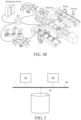
- FIG. 3 shows a structural schematic diagram of a workflow creation system according to an embodiment of the present application.
- the system may include: a node library 110, a graphical interface module 120, and an edit processing module 130.
- a behavior tree node for constructing a behavior tree is arranged in the node library 110.
- the behavior tree nodes may include: a flow control node and a function block node.
- a behavior tree is configured to characterize a workflow.
- the workflow is configured to define operations to be executed by a workcell.
- the flow control node is configured to implement the logical control in the workflow.
- the function block node is configured to implement a service operation in the workflow.
- the function block node may include: logical nodes. Each logical node corresponds to an operation template, and each operation template predefines operations that can be executed by at least one type of resources.
- the operations include: actions, methods, or skills.
- the resources are expressed in the form of resource nodes, and all resource nodes are associatively stored in the form of a resource knowledge graph.
- the resource knowledge graph includes: various resource nodes, and a connecting line representing the relationship between the resource nodes.
- the resource knowledge graph may further include: a resource library 150, configured to store various resources in the form of a resource knowledge graph. Each resource can execute at least one service operation.
- the flow control node may include: some or all of a main control node, a logical control node, and a condition node.
- the main control node may include: some or all of a start node, an end node, a goto node, an anchor node, a stop node, and an abort node.
- the logical control node includes: some or all of a sequence node, a reactive sequence node, a parallel node, an in-process quality control node, a priority node, a reactive priority node, an if-then-else node, and a switch node.
- the function block node may further include: some or all of a manual node, a dynamic node, a delay node, and an empty node.
- the behavior tree node further includes: a decorator node, which may include: some or all of a repeat node, a retry node, a one-shot node, a timeout node, a timer node, an inverter node, a force run node, a force OK node, a force failed node, and a guard node.
- a decorator node which may include: some or all of a repeat node, a retry node, a one-shot node, a timeout node, a timer node, an inverter node, a force run node, a force OK node, a force failed node, and a guard node.
- some or all of the function block nodes in the node library 110 are bound with resources for executing service operations corresponding to the function block nodes, respectively.
- the graphical interface module 120 is configured to provide a graphical user interface (GUI) for a user to construct a behavior tree based on the behavior tree node in the node library.
- GUI graphical user interface
- Each behavior tree node may be listed in the form of an icon on the graphical user interface (GUI).
- GUI graphical user interface
- the edit processing module 130 is configured to generate, in response to the behavior tree construction operation, a behavior tree corresponding to a workflow, where a logical node in the behavior tree is instantiated as an operation of a corresponding resource such as a device.
- the edit processing module 130 may instantiate the behavior tree nodes in response to the behavior tree construction operation, and establish a connection relationship between the instantiated behavior tree nodes. Based on the connection relationship between the instantiated behavior tree nodes, a behavior tree corresponding to a workflow is generated.
- Some or all of the instantiated function block nodes are associated with resources for executing corresponding service operations. For example, through the operation, the logical node is instantiated as an operation of a corresponding device such as a device.
- each behavior tree node may be listed on the graphical user interface in the form of icons, and the user may determine a node needed for creating the workflow by selecting and dragging the icons to a canvas. Further, necessary parameter configurations, such as resource configuration and/or input and output parameter configuration, may also be performed on the node. If there is more than one operation to be executed by a workcell, namely, operation defined in a required workflow, a behavior tree corresponding to the workflow may include a plurality of logical nodes, and corresponding flow control nodes may be set according to the sequence and relationship of the operations, and the behavior tree corresponding to the workflow is finally generated by corresponding discharge connection to the dragged nodes.
- the construction operation may include: an operation of adding a function block node and an operation of associating resources for the added function block node.
- the workflow creation system in this embodiment may further include: a parsing deployment module 140, configured to parse the behavior tree, and deploy the workflow corresponding to the behavior tree to a runtime of a main controller of a corresponding workcell, such that resources in the workcell connected to the main controller execute operations according to the workflow.
- a parsing deployment module 140 configured to parse the behavior tree, and deploy the workflow corresponding to the behavior tree to a runtime of a main controller of a corresponding workcell, such that resources in the workcell connected to the main controller execute operations according to the workflow.
- FIG. 4A shows an OT domain low-code development platform 100 according to an embodiment of the present application.
- the platform 100 may be configured to implement the workflow creation system shown in FIG. 3 .
- the OT domain low-code development platform 100 may include: an OT domain low-code development tool 10.
- the OT domain low-code development tool 10 may be configured to implement the graphical interface module 120 and the edit processing module 130 in the workflow creation system shown in FIG. 3 .
- the parsing deployment module 140 in the workflow creation system shown in FIG. 3 may also be implemented.
- the node library 110 in the workflow creation system shown in FIG. 3 may be stored on a memory.
- the OT domain low-code development platform 100 may further include a runtime 30 of the main controller of the workcell.
- the OT domain low-code development tool 10 may deploy the generated OT domain workflow corresponding to the behavior tree to the runtime 30 of the main controller of the workcell, such that OT devices in the workcell connected to the main controller execute operations according to the OT domain workflow.
- the composition of the OT domain low-code development platform 100 shown in FIGS. 4A and 4B relates only to the OT domain.
- the OT domain low-code development platform 100 shown in FIG. 4C solves the problem how to control the processes in the OT domain through an IT domain code development platform 300.
- the OT domain low-code development platform 100 may further include an OT domain micro-service generator 20, which may generate a micro-service 40 based on an OT domain behavior tree.
- the IT domain code development tool 301 may be programmed to realize that the IT device calls the micro-service 40 through a knowledge middleware 200 to trigger the runtime 30 of the main controller of the workcell to execute the OT domain workflow.
- the IT domain code development platform 300 can control the processes in the OT domain.
- the integration of the IT domain and the OT domain is realized.
- the micro-service 40 is automatically generated by the OT domain micro-service generator 20 based on an OT domain behavior tree.
- the IT domain code development tool 301 There is no need for the IT domain code development tool 301 to understand the details of the OT domain workflow, and only the identifier (e.g., name) and IP address of the micro-service 40 are required to be acquired.
- An IT domain developer does not need to understand the OT domain device and the control process, which are easy to implement and understand.
- implementations include, but are not limited to, the following two manners:
- the OT domain micro-service generator 20 may generate an API of the micro-service 40 based on the OT domain behavior tree, where the processing process in the API may include operations of function blocks in the OT domain workflow.
- An input parameter of the API is a parameter acquired by an input port of the OT domain workflow
- an output parameter of the API is a parameter outputted by an output port of the OT domain workflow.
- FIG. 4E An application scenario of the OT domain low-code development platform 100 according to the embodiments of the present application in the field of industrial automation is as shown in FIG. 4E .
- the low-code development tool 10 generates a behavior tree corresponding to an OT domain workflow under the operation of the user.
- the OT domain workflow defines operations to be executed by a production line as one workcell shown on the right side of FIG. 4E .
- a corresponding workflow is generated based on the behavior tree and published to the runtime 30, such that the runtime 30 can control the completion of the production line operations of the workcell.
- a corresponding micro-service may be generated by the micro-service generator 20 based on the behavior tree and registered in the knowledge middleware 200.
- the IT domain code development tool 301 may call the corresponding micro-service through the knowledge middleware 200.
- the user may edit the OT domain behavior tree by dragging and editing all the nodes including the function block node.
- the knowledge middleware 200 first acquires required data (e.g., workpiece processing parameter) from a database & server, so as to control the running of the entire workcell.
- the workcell here is a production line, which includes a machine, a conveyor belt, a robot arm, a person, PLC, AGB, and the like.
- the IT domain code development tool 301 and the low-code development tool 10 may be located on the same hardware device, for example, on the same computer.
- FIG. 5 shows another structural schematic diagram of a workflow creation system according to an embodiment of the present application.
- the system may be configured to implement the method shown in FIG. 1A , or to implement the workflow creation system shown in FIG. 3 , or to implement the workflow creation system described in any one of FIGS. 4A to 4D , namely, the OT domain low-code development platform 100.
- the OT domain low-code development tool 10, the OT domain micro-service generator 20, the runtime 30, and the third-party apparatus 60 may be implemented as individual hardware devices, for example, servers, workstations, single-chip microcomputers, or processing chips.
- these apparatuses are implemented on the same hardware device and stored as a software program in at least one memory, and the software program is called by at least one processor to implement the foregoing OT domain low-code development method.
- the node library 110 and the generated micro-services 40 may be stored in the at least one memory.
- the system may include: at least one memory 51, at least one processor 52, and at least one display 53. Furthermore, the system may further include some other components, for example, a communication port (not shown in FIG. 5 ) and the like. These components communicate via a bus 54.
- the at least one memory 51 is configured to store a computer program.
- the at least one memory 51 may include a computer-readable medium, such as a random access memory (RAM).
- the at least one memory 51 may store an operating system and the like.
- the operating system includes, but is not limited to: Android operating system, Symbian operating system, Windows operating system, Linux operating system, and the like.
- the computer storage program may include the following program modules: the node library 110, the graphical interface module 120, the edit processing module 130, and the parsing deployment module 140.
- the OT domain micro-service generator 20, the runtime 30, and the third-party apparatus 50 may be further included.
- the at least one processor 52 is configured to call a computer program stored in the at least one memory 51 to perform the workflow creation method in the embodiments of the present application.
- the at least one processor 52 may be a microprocessor, an application specific integrated circuit (ASIC), a digital signal processor (DSP), a central processing unit (CPU), a graphics processing unit (GPU), a state machine, or the like.
- the at least one processor may receive and send data through the communication port.
- the at least one display 53 is configured to display an image user interface.
- the at least one processor 52 is configured to call the computer program stored in the at least one memory 51 to cause the system to execute the operations in the workflow creation method in any of the implementations.
- the communication interface is configured to implement communication with other devices, such as communication with the knowledge middleware 200.
- the OT domain low-code development tool 10 for implementing the graphical interface module 120, the edit processing module 130, and the parsing deployment module 140 may be a lightweight web-based application, and may be implemented on an industrial site (e.g., an edge device or a local server), or may be implemented on a cloud (such as a public cloud of AWS or a private cloud of OpenStack).
- a visual engineering paradigm originates from a function block typed diagram (FBTD).
- the OT domain micro-service generator 20 may use modern translation programming languages to generate a standard API such as RESTful or RPC.
- the runtime 30 may simply implement the OT domain workflow and provide openness based on an ecosystem of an open source community (e.g., Python).
- the runtime 30 may be deployed on an embedded IoT device such as a single board computer (SBC).
- SBC single board computer
- the embodiments of the present application may include an apparatus having an architecture different from that shown in FIG. 5 .
- the architecture is merely an example, and is configured to explain the workflow construction method according to the embodiments of the present application.
- an embodiment of the present application also provides an IT domain OT domain integration system, namely, an ITOT system, which may include an IT device and a workflow creation system in any of the implementations of the present application.
- the ITOT system may further include: the IT domain code development platform 300 as shown in FIGS. 4C and 4D .
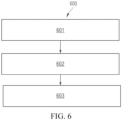
- FIG. 6 is an exemplary flowchart of a workflow control method according to various embodiments of the present application.
- the method 600 includes:
- the compositor node always occurs in pairs with the start block and the end block.
- the start block has an optional input port to provide a compositor expression, such that a destination work link may be selected based on the compositor expression. For example, the destination work link is selected according to a value of the compositor expression, or the destination work link is selected based on a work link selection rule defined by the compositor expression.
- the end block has an optional input port referred to as an end logical value, and a parallel type compositor node determines whether it is a logical AND or a logical OR using the end logical value.
- a set of compositor pair blocks may include two or more work links (i.e., branches).
- a data value block (DVB) is added ahead of each work link in the compositor pair blocks, representing a trigger value of the compositor expression of the corresponding work link.
- the data value block may be a value generated by the corresponding work link based on the compositor expression for selecting the corresponding work link.
- the data value block may also be a condition for selecting the corresponding work link, where the condition is associated with the value generated based on the compositor expression.
- At least one of the plurality of work links includes a function block node.
- the function block node is configured to implement a service operation in the workflow.
- the determining a type of a compositor node based on an operation performed by a user on a graphical user interface includes: determining the type of the compositor node based on a selection operation performed by the user on the graphical user interface including a node library, where the node library includes: a compositor node that identifies the type semantically or a compositor node that identifies the type in a presentation style.
- the type of the compositor node is directly identified in a textual manner in a visual icon of the compositor node.
- the type of the compositor node is identified accordingly by different presentation styles. For example, in an icon of the compositor node, the type of the compositor node is identified accordingly by different line types (e.g., solid lines, dotted lines, spaced lines, etc.) constituting the icon.
- line types e.g., solid lines, dotted lines, spaced lines, etc.
- the method further includes: receiving a behavior tree construction operation performed by the user on the graphical user interface, where the construction operation includes adding and connecting operations to a behavior tree node including the compositor node and the function block node, the behavior tree is configured to characterize the workflow that is configured to define operations to be executed by a workcell, the function block node includes: logical nodes each corresponding to an operation template, each operation template predefines operations that can be executed by at least one type of devices, and the operations include: actions, methods, or skills; generating, in response to the behavior tree construction operation, the behavior tree corresponding to the workflow, where the logical node in the behavior tree is instantiated as an operation of a corresponding device; parsing the behavior tree to acquire the workflow; and deploying the workflow to a runtime of a corresponding workcell, such that devices in the workcell execute operations according to the workflow, where the workflow is an OT domain workflow, and the device is an OT device.
- the method further includes: generating a micro-service based on the behavior tree, such that an IT device triggers the runtime of the main controller of the workcell to execute the OT domain workflow by calling the micro-service.
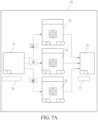
- FIG. 7A is a first schematic diagram of a low-code paradigm of an FBTD logical compositor according to various embodiments of the present application.
- the compositor node 70 includes a start block 71, an end block 72, and three work links arranged between the start block 71 and the end block 72.
- the first work link includes execution of a function block node 73
- the second work link includes execution of a function block node 74
- the third work link includes execution of a function block node 75.
- the start block 71 may include an input end for providing a compositor expression 76.
- the end block 72 may include an input end for providing an end logical value 77.
- the function block node 73, the function block node 74, and the function block node 75 have respective data block values.
- a data value block 78 of the function block node 73, a data value block 79 of the function block node 74, and a data value block 80 of the function block node 75 may be arranged ahead of the respective corresponding function block nodes.
- the type of the compositor node 70 is parallel (Pa).
- the determining a destination work link from the plurality of work links includes: determining each of the plurality of work links as the destination work link, and starting executing the destination work link.
- the method further includes: receiving an end logical value via the input end of the end block, where when the end logical value is logical AND, the execution of the compositor node is ended via the end block after the execution of the plurality of work links is completed, and when the end logical value is logical OR, the execution of the compositor node is ended via the end block after the execution of at least one of the plurality of work links is completed.
- the compositor expression 76 does not need to be provided for the compositor node 70. Accordingly, the composition data value blocks 78-80 do not need to be generated, and the end logical value 77 needs to be provided for the compositor node 70.
- the first work link, the second work link, and the third work link are all determined as the destination work links. Furthermore, the first work link, the second work link, and the third work link are executed separately (in other words, the function block node 73, the function block node 74, and the function block node 75 are executed synchronously).
- time to stop executing the compositor node 70 is determined.
- the value of the provided end logical value 77 is logical AND
- the execution of the compositor node 70 is ended via the end block 72 after the execution of the first work link, the second work link, and the third work link is completed.
- the value of the end logical value 77 is logical OR
- the execution of the compositor node 70 is ended via the end block 72 after the execution of at least one of the first work link, the second work link, and the third work link is completed.
- the type of the compositor node is switch (SW).
- the method further includes: receiving a preset compositor expression via the input end of the start block.
- the determining a destination work link from the plurality of work links includes: determining a data value block when each work link is selected; and selecting a destination work link conforming to the corresponding data value block from the plurality of work links based on a calculation result of the compositor expression.
- the composition expression 76 when the type of the compositor node 70 is switch, the composition expression 76 needs to be provided. Accordingly, the composition data value blocks 78-80 need to be generated based on the composition expression 76 or provided manually. However, the end logical value 77 does not need to be provided.
- the data value block is a condition for selecting the corresponding work link, where the data value block 78 is: "temperature is greater than 30 degrees Celsius and less than 50 degrees Celsius", the data value block 79 is: “temperature is greater than 50 degrees Celsius”, and the data value block 80 is: "temperature is less than 30 degrees Celsius”. Then, based on a specific temperature generated by the compositor expression, specific branches corresponding to the data value blocks may be selected. For example, when the generated temperature is 20 degrees Celsius, the third work link corresponding to the data value block 80 is selected.
- the type of the compositor node is if-then-else (ITE).
- the method further includes: receiving a preset composition expression via the input end of the start block, where a result of the compositor expression contains a logical true value or a logical false value.
- the determining a destination work link from the plurality of work links includes: determining a corresponding destination work link from the plurality of work links based on the result of the composition expression being the logical true value or the logical false value.
- a preset work link corresponding to the logical value is selected.
- the compositor expression 76 capable of generating a logical value (true or false) needs to be provided. It is assumed that the first work link corresponds to true and the second work link corresponds to false. Then, when the value of the compositor expression 76 is true, the first work link serving as the destination work link is selected and executed. When the value of the compositor expression 76 is false, the second work link serving as the destination work link is selected and executed.
- the type of the compositor node is priority (fallback) (Pr).
- the method further includes: receiving a preset compositor expression via the input end of the start block.
- the determining a destination work link from the plurality of work links includes: calculating a data value block of each work link based on the compositor expression; determining a priority sequence of the plurality of work links based on a sorting result of the data value block of each work link; and determining the destination work link from the plurality of work links based on the priority sequence.
- the data value block may be a value generated by the corresponding work link based on the compositor expression for selecting the corresponding work link.
- the data value block 78, the data value block 79, and the data value block 80 generated based on the compositor expression may not be the same (for example, parameters of the execution links are different).
- the priority sequence of the plurality of work links is determined based on the sorting result of the data value block of each work link.
- the destination work link is determined from the plurality of work links based on the priority sequence, where the sorting result of the data value blocks may be sorting in descending order or sorting in ascending order and the like, based on presetting. For example, in FIG. 7A , when the type of the compositor node 70 is priority, the compositor expression 76 needs to be provided.
- the data value block of the first link generated based on the compositor expression 76 is 15. It is assumed that the data value block 78 of the first link generated based on the compositor expression 76 is 18, the data value block 79 of the second link generated based on the compositor expression 76 is 20, and the data value block 80 of the third link generated based on the compositor expression 76 is 25.
- the priority sequence of the work links is determined according to a size sequence of the data value blocks. It can be seen that the third link has the maximum priority (because the data value block 80 of the third link is maximal among the data value blocks), such that the third link is determined as the destination work link, and the third link serving as the destination work link is executed.
- the type of the compositor node is reactive priority (fallback) (RPr).
- the method further includes: receiving a first compositor expression and a second compositor expression via the input end of the start block.
- the determining a destination work link from the plurality of work links includes: calculating a first data value block of each work link based on the first compositor expression; calculating a second data value block of each work link based on the second compositor expression; determining a priority sequence of the plurality of work links based on a sorting result of the first data value blocks of the plurality of work links; and determining the destination work link from the plurality of work links based on the priority sequence and the second data value block of each work link.
- the type of the compositor node may be directly identified in a textual manner in a visual icon of the compositor node (for example, the type is identified in a textual manner in boxes of the start block 71 and the end block 72).
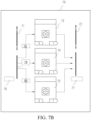
- FIG. 7B is a second schematic diagram of a low-code paradigm of an FBTD logical compositor according to various embodiments of the present application.
- the start block 71 and the end block 72 are simply identified by spacing lines having a specific shape, such that the type of the compositor node may be visually identified and presentation resources of the canvas can be saved.
- the compositor node is easy to understand, but only suitable for a limited number of branches. Therefore, implementations of the present disclosure also introduce a new compositor node paradigm, which may support a large number of branches. Folding compositors have similar functions to common compositors, but support folding.
- the compositor node is displayed in a folding manner in a folding box on the graphical user interface, where the folding box includes a first display area adapted to displaying a current display work link of the compositor node and hiding work links other than the current display work link.
- the folding box further includes a second display area, a third display area, and a switching control.
- the second display area is adapted to displaying a data value block of the current display work link.
- the third display area is adapted to displaying a tag of the current display work link.
- the switching control is adapted to switching the current display work link among the plurality of work links.
- FIG. 7C is a schematic diagram of a low-code paradigm of an FBTD logical compositor having a folding form according to various embodiments of the present application.
- the folding box 90 includes a first display area 88, a second display area 83, and a third display area 81, where the first display area 88 displays a current display work link.
- the current display work link includes a function block node 85 and a function block node 86.
- the second display area 83 displays a data value block of the current display work link.
- the third display area 81 displays a tag of the current display work link.
- the folding box 90 further includes a switching control 84 (e.g., in the shape of an arrow) that switches the current display work link among the plurality of work links.
- the first display area 88 is preferably stretchable and may be stretched based on a length of the current display work link included therein.
- folding compositors are another type of low-code paradigm of FBTD compositors.
- the data value blocks for the result of the compositor expression may be in a new column in a header row. Furthermore, left and right arrow buttons may be switched between different branches.
- the data value block of the current branch will be displayed in a data value block column.
- a current tag of the current branch of the compositor will be displayed in a work order tag index block.
- the folding compositors may be stretched for varying numbers of function blocks, and such paradigm provides a convenient manner of displaying complex logic in a limited area of a low-code canvas.
- Implementations of the present disclosure also provide an iterator node having an iteration function and a workflow generation method based on the iterator node.
- FIG. 8 is an exemplary flowchart of a workflow generation method according to an embodiment of the present application.
- the method 700 includes:
- each iterative item may execute the first work link in the first iterator node according to the respective execution sequence, thereby realizing a fast processing logic for batch execution of the work links.
- the first work link includes a function block node.
- the function block node is configured to implement a service operation in the workflow.
- the first work link includes a second iterator node.
- the second iterator node includes an input end adapted to receiving a second iterative item list, and a second work link.
- the second iterative item list includes a plurality of second iterative items and an execution sequence of each second iterative item.
- the workflow also indicates that each second iterative item executes the second work link based on the respective execution sequence in the second iterative item list during an execution process of the first work link.
- a nested iterative processing mode may be implemented, thereby enriching the control logic.
- the first work link includes a compositor node.
- the compositor node includes a start block adapted to starting executing the compositor node, an end block adapted to ending executing the compositor node, and a plurality of work links arranged between the start block and the end block.
- the workflow also indicates that a destination work link is determined from the plurality of work links based on a type of the compositor node. It can be seen that by further arranging the compositor node in the first work link, the control logic can be enriched.
- the method further includes: deploying the workflow onto a runtime of a workcell containing the plurality of first iterative items, such that the plurality of first iterative items in the workcell execute operations according to the workflow, where the workflow is an OT domain workflow, and the workcell is an OT device. It can be seen that implementations of the present disclosure can realize the control of an OT domain workflow.
- the first iterator node is selected based on a selection operation performed by the user on the graphical user interface including a node library. Therefore, through a selection operation on a node library, iterator nodes may be conveniently provided for users.
- the first iterator node includes a first display area.
- the first display area is adapted to displaying a type of the first iterator node.
- the first iterator node further includes a second display area.
- the second display area is adapted to displaying a tag of the first iterative item, currently being executed, of the first work link. It can be seen that by arranging display areas in iterator nodes, the types of the iterator nodes may be identified, and a tag of an iterative item that is currently being executed may be visualized.
- FIG. 9 is a schematic diagram of a low-code paradigm of an iterator according to an embodiment of the present application.
- an iterator node 60 includes an input end adapted to receiving an iterative item list 61.
- the iterator node 60 further includes a first display area 62, a second display area 63, and a work link.
- the work link includes a function block node 64 and a function block node 65 connected sequentially.
- the iterative item list 61 includes a plurality of iterative items and an execution sequence of each iterative item.
- the iterator node 60 further includes a pin 66 adapted to being connected to a previous node in the workflow and a pin 67 adapted to being connected to a next node in the workflow.
- the previous node may be a compositor node, a decorator node, a function block node or another iterator, and the like.
- the next node may be a compositor node, a decorator node, a function block node or another iterator, and the like.
- the function block node 64 and the function block node 65 may be replaced by a compositor node, a decorator node, a function block node, or another iterator, respectively, based on specific control demands.
- the iterative item list 61 includes 100 robots and respective execution sequences.
- the iterative item list specifically includes: execution sequence 1: robot 1; execution sequence 2: robot 2; execution sequence 3: robot 3; execution sequence 4: robot 4; and so on, execution sequence 100: robot 100.
- the function block node 64 in the work link is a camera shooting node, and the function block node 65 is an object recognition node.
- the generated workflow indicates that: in a first iteration, robot 1 executes a function of the camera shooting node to realize camera shooting, and robot 1 then executes a function of object recognition to perform object recognition on a captured image; after the first iteration is executed, a second iteration is executed; in the second iteration, robot 2 executes the function of the camera shooting node to realize camera shooting, and robot 2 then executes the function of object recognition to perform object recognition on a captured image; after the second iteration is executed, a third iteration is executed; in the third iteration, robot 3 executes the function of the camera shooting node to realize camera shooting, and robot 3 then executes the function of object recognition to perform object recognition on a captured image; and so on, after a 99th iteration is executed, a 100th iteration is executed; in the 100th iteration, robot 100 executes the function of the camera shooting node to realize camera shooting, and robot 100 then executes the function of object recognition to perform object recognition on a captured image, thereby
- FIG. 10 is an exemplary structural diagram of a workflow generation apparatus according to various embodiments of the present application.
- a workflow generation apparatus 800 includes: a receiving module 801, configured to receive a behavior tree construction operation performed by a user on a graphical user interface, where the construction operation includes an addition operation for a behavior tree node, the behavior tree node includes a first iterator node, the first iterator node includes an input end adapted to receiving a first iterative item list, and a first work link, and the first iterative item list includes a plurality of first iterative items and an execution sequence of each first iterative item; a behavior tree generation module 802, configured to generate, in response to the behavior tree construction operation, a behavior tree including the first iterator node; and a workflow generation module 803, configured to parse the behavior tree to acquire a workflow, where the workflow indicates that each first iterative item executes the first work link based on the respective execution sequence in the first iterative item list.
- the first work link includes a function block node.
- the function block node is configured to implement a service operation in the workflow.
- the first work link includes a second iterator node.
- the second iterator node includes an input end adapted to receiving a second iterative item list, and a second work link.
- the second iterative item list includes a plurality of second iterative items and an execution sequence of each second iterative item.
- the workflow also indicates that each second iterative item executes the second work link based on the respective execution sequence in the second iterative item list during an execution process of the first work link.
- the work link includes a compositor node.
- the compositor node includes a start block adapted to starting executing the compositor node, an end block adapted to ending executing the compositor node, and a plurality of work links arranged between the start block and the end block.
- the workflow also indicates that a destination work link is determined from the plurality of work links based on a type of the compositor node.
- the workflow generation apparatus further includes a deployment module 804, configured to deploy the workflow onto a runtime of a workcell containing the plurality of first iterative items, such that the plurality of first iterative items in the workcell execute operations according to the workflow, where the workflow is an OT domain workflow, and the workcell is an OT device.
- a deployment module 804 configured to deploy the workflow onto a runtime of a workcell containing the plurality of first iterative items, such that the plurality of first iterative items in the workcell execute operations according to the workflow, where the workflow is an OT domain workflow, and the workcell is an OT device.
- embodiments of the present application also provide a computer-readable storage medium.
- the computer-readable storage medium has computer-readable code stored thereon.
- the computer-readable code when executed by a processor, causes the processor to perform the foregoing workflow generation method.
- embodiments of the present application also provide a computer program product.
- the computer program product is tangibly stored on a computer-readable medium and includes computer-readable instructions.
- the computer-readable instructions when executed, cause at least one processor to perform the steps of the workflow generation method in the embodiments of the present application.
- Embodiments of the present application also provide a workflow generation system, which has a system structure similar to that in FIG. 5 .
- the system may include: at least one memory 51, at least one processor 52, and at least one display 53.
- the at least one processor 52 is configured to call a computer program stored in the at least one memory 51 to perform the workflow generation method in the embodiments of the present application.
- a system or apparatus with a storage medium may be provided.
- the storage medium has computer-readable code stored thereon, which realizes the functions of any one implementation in the above embodiments, and a computer (or a CPU or an MPU) of the system or apparatus is caused to read out and execute the computer-readable code stored in the storage medium. Furthermore, some or all of actual operations may be completed by an operating system or the like operating on the computer via instructions based on the computer-readable code.
- the computer-readable code read out from the storage medium may also be written into a memory that is arranged in an expansion board inserted into the computer or into a memory that is arranged in an expansion unit connected to the computer.
- embodiments of a computer-readable medium include, but are not limited to, floppy disks, CD-ROM, magnetic disks, optical disks (e.g., CD-ROM, CD-R, CD-RW, DVD-ROM, DVD-RAM, DVD-RW, and DVD+RW), memory chips, ROM, RAM, ASIC, configured processors, all-optical media, all magnetic tapes, or other magnetic media, or any other medium from which a computer processor may read instructions.
- various other forms of computer-readable media may send or carry instructions to the computer, including a router, a private or public network, or other wired and wireless transmission devices or channels.
- computer-readable instructions may be downloaded by a communication network from a server computer or a cloud.
- the instructions may include code in any computer programming language, including C, C++, C language, Visual Basic, java, and JavaScript.
Landscapes
- Engineering & Computer Science (AREA)
- Theoretical Computer Science (AREA)
- General Engineering & Computer Science (AREA)
- Physics & Mathematics (AREA)
- General Physics & Mathematics (AREA)
- Business, Economics & Management (AREA)
- Human Resources & Organizations (AREA)
- Software Systems (AREA)
- Human Computer Interaction (AREA)
- Entrepreneurship & Innovation (AREA)
- Strategic Management (AREA)
- Quality & Reliability (AREA)
- Economics (AREA)
- Marketing (AREA)
- General Business, Economics & Management (AREA)
- Operations Research (AREA)
- Game Theory and Decision Science (AREA)
- Automation & Control Theory (AREA)
- Educational Administration (AREA)
- Tourism & Hospitality (AREA)
- Development Economics (AREA)
- Computer Hardware Design (AREA)
- Management, Administration, Business Operations System, And Electronic Commerce (AREA)
- Stored Programmes (AREA)
Applications Claiming Priority (1)
| Application Number | Priority Date | Filing Date | Title |
|---|---|---|---|
| PCT/CN2022/075084 WO2023142077A1 (zh) | 2022-01-29 | 2022-01-29 | 工作流生成方法、装置、系统、介质及程序产品 |
Publications (2)
| Publication Number | Publication Date |
|---|---|
| EP4459470A1 true EP4459470A1 (de) | 2024-11-06 |
| EP4459470A4 EP4459470A4 (de) | 2025-10-15 |
Family
ID=87470269
Family Applications (1)
| Application Number | Title | Priority Date | Filing Date |
|---|---|---|---|
| EP22922907.5A Pending EP4459470A4 (de) | 2022-01-29 | 2022-01-29 | Arbeitsflusserzeugungsverfahren, -vorrichtung und -system, -medium und -programmprodukt |
Country Status (4)
| Country | Link |
|---|---|
| US (1) | US20250147641A1 (de) |
| EP (1) | EP4459470A4 (de) |
| CN (1) | CN118715509A (de) |
| WO (1) | WO2023142077A1 (de) |
Family Cites Families (9)
| Publication number | Priority date | Publication date | Assignee | Title |
|---|---|---|---|---|
| CN105068929B (zh) * | 2015-08-06 | 2018-02-13 | 网易(杭州)网络有限公司 | 测试脚本生成方法和装置、测试方法、测试装置以及测试系统 |
| EP3214510B1 (de) * | 2016-03-03 | 2021-06-30 | Magazino GmbH | Verfahren zum steuern von robotern mit verhaltensbaumstruktur |
| CN106647354A (zh) * | 2016-10-31 | 2017-05-10 | 遨博(北京)智能科技有限公司 | 一种控制方法、装置及系统 |
| US10795645B2 (en) * | 2017-03-27 | 2020-10-06 | Microsoft Technology Licensing, Llc | Neural network for program synthesis |
| US20210027182A1 (en) * | 2018-03-21 | 2021-01-28 | Visa International Service Association | Automated machine learning systems and methods |
| EP3712787B1 (de) * | 2019-03-18 | 2021-12-29 | Siemens Aktiengesellschaft | Verfahren zum erzeugen einer semantischen beschreibung einer zusammengesetzten interaktion |
| CN113515272A (zh) * | 2020-04-09 | 2021-10-19 | 深圳轩科华智能科技有限公司 | 一种可视化编程的方法和系统 |
| CN112799959A (zh) * | 2021-02-24 | 2021-05-14 | 网易(杭州)网络有限公司 | 接口测试方法、装置、存储介质和电子装置 |
| CN113360396A (zh) * | 2021-06-28 | 2021-09-07 | 汇付天下有限公司 | 一种软件性能压测方法及装置 |
-
2022
- 2022-01-29 CN CN202280089266.0A patent/CN118715509A/zh active Pending
- 2022-01-29 US US18/834,128 patent/US20250147641A1/en active Pending
- 2022-01-29 EP EP22922907.5A patent/EP4459470A4/de active Pending
- 2022-01-29 WO PCT/CN2022/075084 patent/WO2023142077A1/zh not_active Ceased
Also Published As
| Publication number | Publication date |
|---|---|
| CN118715509A (zh) | 2024-09-27 |
| EP4459470A4 (de) | 2025-10-15 |
| US20250147641A1 (en) | 2025-05-08 |
| WO2023142077A1 (zh) | 2023-08-03 |
Similar Documents
| Publication | Publication Date | Title |
|---|---|---|
| US20250165305A1 (en) | Workflow Generation Method and System | |
| US20080005255A1 (en) | Extensible robotic framework and robot modeling | |
| WO2023164841A1 (zh) | 工作流执行方法、装置、存储介质及程序产品 | |
| EP4459398A1 (de) | Arbeitsflusserzeugungsverfahren, -vorrichtung und -system, -medium und -programmprodukt | |
| EP4455814A1 (de) | Arbeitsflusssteuerungsverfahren, -vorrichtung und -system sowie medium und programmprodukt | |
| US20250130545A1 (en) | Workflow Construction Methods and Systems | |
| US20250190909A1 (en) | Dynamic Workflow Implementation Methods and Systems | |
| EP4459470A1 (de) | Arbeitsflusserzeugungsverfahren, -vorrichtung und -system, -medium und -programmprodukt | |
| WO2023142079A1 (zh) | 工作流创建方法、系统、介质及程序产品 | |
| EP4465614A1 (de) | Arbeitsflussausführungsverfahren und -vorrichtung, speichermedium und programmprodukt | |
| US20250165891A1 (en) | Workflow Construction and Monitoring Method and System | |
| US20250181402A1 (en) | Workflow Execution Methods and Systems | |
| US20250130556A1 (en) | Workflow Creation Method, Apparatus and Platform | |
| CN121478269B (zh) | 基于中间表示ir的数据流图dfd与plc代码双向追溯与动态映射方法、装置 | |
| Yu et al. | The implementation of IEC60870-5-104 based on UML statechart and Qt state machine framework | |
| CN118093389A (zh) | 流程模型处理方法、装置、设备和介质 | |
| CN121501627A (zh) | 一种融合stpa方法的安全关键软件测试建模方法及装置 | |
| CN121166231A (zh) | 一种基于分层有限状态机的民用无人机飞行博弈执行方法 | |
| Plasch | Model-based generation of an IEC 61499 control application for a flexible robot system |
Legal Events
| Date | Code | Title | Description |
|---|---|---|---|
| STAA | Information on the status of an ep patent application or granted ep patent |
Free format text: STATUS: THE INTERNATIONAL PUBLICATION HAS BEEN MADE |
|
| PUAI | Public reference made under article 153(3) epc to a published international application that has entered the european phase |
Free format text: ORIGINAL CODE: 0009012 |
|
| STAA | Information on the status of an ep patent application or granted ep patent |
Free format text: STATUS: REQUEST FOR EXAMINATION WAS MADE |
|
| 17P | Request for examination filed |
Effective date: 20240729 |
|
| AK | Designated contracting states |
Kind code of ref document: A1 Designated state(s): AL AT BE BG CH CY CZ DE DK EE ES FI FR GB GR HR HU IE IS IT LI LT LU LV MC MK MT NL NO PL PT RO RS SE SI SK SM TR |
|
| DAV | Request for validation of the european patent (deleted) | ||
| DAX | Request for extension of the european patent (deleted) | ||
| REG | Reference to a national code |
Ref country code: DE Ref legal event code: R079 Free format text: PREVIOUS MAIN CLASS: G06F0011360000 Ipc: G06F0008340000 |
|
| A4 | Supplementary search report drawn up and despatched |
Effective date: 20250915 |
|
| RIC1 | Information provided on ipc code assigned before grant |
Ipc: G06F 8/34 20180101AFI20250909BHEP Ipc: G05B 19/042 20060101ALI20250909BHEP Ipc: G06F 8/30 20180101ALI20250909BHEP Ipc: G06F 9/50 20060101ALI20250909BHEP Ipc: G06Q 10/0633 20230101ALI20250909BHEP Ipc: G06Q 10/06 20230101ALI20250909BHEP Ipc: G06F 9/54 20060101ALI20250909BHEP Ipc: G06F 9/455 20180101ALI20250909BHEP Ipc: G06F 30/17 20200101ALI20250909BHEP Ipc: G06F 30/12 20200101ALI20250909BHEP Ipc: G06F 9/445 20180101ALN20250909BHEP Ipc: G06F 8/36 20180101ALN20250909BHEP Ipc: G05B 19/05 20060101ALN20250909BHEP Ipc: G06F 8/41 20180101ALN20250909BHEP Ipc: G06F 8/60 20180101ALN20250909BHEP |