EP4458980A1 - Method for producing protein in baculovirus expression system - Google Patents
Method for producing protein in baculovirus expression system Download PDFInfo
- Publication number
- EP4458980A1 EP4458980A1 EP22916109.6A EP22916109A EP4458980A1 EP 4458980 A1 EP4458980 A1 EP 4458980A1 EP 22916109 A EP22916109 A EP 22916109A EP 4458980 A1 EP4458980 A1 EP 4458980A1
- Authority
- EP
- European Patent Office
- Prior art keywords
- protein
- calcium
- cell
- interest
- baculovirus
- Prior art date
- Legal status (The legal status is an assumption and is not a legal conclusion. Google has not performed a legal analysis and makes no representation as to the accuracy of the status listed.)
- Withdrawn
Links
Images

Classifications
-
- C—CHEMISTRY; METALLURGY
- C12—BIOCHEMISTRY; BEER; SPIRITS; WINE; VINEGAR; MICROBIOLOGY; ENZYMOLOGY; MUTATION OR GENETIC ENGINEERING
- C12P—FERMENTATION OR ENZYME-USING PROCESSES TO SYNTHESISE A DESIRED CHEMICAL COMPOUND OR COMPOSITION OR TO SEPARATE OPTICAL ISOMERS FROM A RACEMIC MIXTURE
- C12P21/00—Preparation of peptides or proteins
-
- C—CHEMISTRY; METALLURGY
- C12—BIOCHEMISTRY; BEER; SPIRITS; WINE; VINEGAR; MICROBIOLOGY; ENZYMOLOGY; MUTATION OR GENETIC ENGINEERING
- C12N—MICROORGANISMS OR ENZYMES; COMPOSITIONS THEREOF; PROPAGATING, PRESERVING, OR MAINTAINING MICROORGANISMS; MUTATION OR GENETIC ENGINEERING; CULTURE MEDIA
- C12N15/00—Mutation or genetic engineering; DNA or RNA concerning genetic engineering, vectors, e.g. plasmids, or their isolation, preparation or purification; Use of hosts therefor
- C12N15/09—Recombinant DNA-technology
- C12N15/63—Introduction of foreign genetic material using vectors; Vectors; Use of hosts therefor; Regulation of expression
- C12N15/79—Vectors or expression systems specially adapted for eukaryotic hosts
- C12N15/85—Vectors or expression systems specially adapted for eukaryotic hosts for animal cells
- C12N15/86—Viral vectors
-
- C—CHEMISTRY; METALLURGY
- C12—BIOCHEMISTRY; BEER; SPIRITS; WINE; VINEGAR; MICROBIOLOGY; ENZYMOLOGY; MUTATION OR GENETIC ENGINEERING
- C12N—MICROORGANISMS OR ENZYMES; COMPOSITIONS THEREOF; PROPAGATING, PRESERVING, OR MAINTAINING MICROORGANISMS; MUTATION OR GENETIC ENGINEERING; CULTURE MEDIA
- C12N5/00—Undifferentiated human, animal or plant cells, e.g. cell lines; Tissues; Cultivation or maintenance thereof; Culture media therefor
- C12N5/06—Animal cells or tissues; Human cells or tissues
- C12N5/0601—Invertebrate cells or tissues, e.g. insect cells; Culture media therefor
-
- C—CHEMISTRY; METALLURGY
- C12—BIOCHEMISTRY; BEER; SPIRITS; WINE; VINEGAR; MICROBIOLOGY; ENZYMOLOGY; MUTATION OR GENETIC ENGINEERING
- C12P—FERMENTATION OR ENZYME-USING PROCESSES TO SYNTHESISE A DESIRED CHEMICAL COMPOUND OR COMPOSITION OR TO SEPARATE OPTICAL ISOMERS FROM A RACEMIC MIXTURE
- C12P21/00—Preparation of peptides or proteins
- C12P21/02—Preparation of peptides or proteins having a known sequence of two or more amino acids, e.g. glutathione
-
- C—CHEMISTRY; METALLURGY
- C12—BIOCHEMISTRY; BEER; SPIRITS; WINE; VINEGAR; MICROBIOLOGY; ENZYMOLOGY; MUTATION OR GENETIC ENGINEERING
- C12N—MICROORGANISMS OR ENZYMES; COMPOSITIONS THEREOF; PROPAGATING, PRESERVING, OR MAINTAINING MICROORGANISMS; MUTATION OR GENETIC ENGINEERING; CULTURE MEDIA
- C12N2500/00—Specific components of cell culture medium
- C12N2500/05—Inorganic components
- C12N2500/10—Metals; Metal chelators
- C12N2500/12—Light metals, i.e. alkali, alkaline earth, Be, Al, Mg
- C12N2500/14—Calcium; Ca chelators; Calcitonin
-
- C—CHEMISTRY; METALLURGY
- C12—BIOCHEMISTRY; BEER; SPIRITS; WINE; VINEGAR; MICROBIOLOGY; ENZYMOLOGY; MUTATION OR GENETIC ENGINEERING
- C12N—MICROORGANISMS OR ENZYMES; COMPOSITIONS THEREOF; PROPAGATING, PRESERVING, OR MAINTAINING MICROORGANISMS; MUTATION OR GENETIC ENGINEERING; CULTURE MEDIA
- C12N2710/00—MICROORGANISMS OR ENZYMES; COMPOSITIONS THEREOF; PROPAGATING, PRESERVING, OR MAINTAINING MICROORGANISMS; MUTATION OR GENETIC ENGINEERING; CULTURE MEDIA dsDNA viruses
- C12N2710/00011—Details
- C12N2710/14011—Baculoviridae
- C12N2710/14041—Use of virus, viral particle or viral elements as a vector
- C12N2710/14043—Use of virus, viral particle or viral elements as a vector viral genome or elements thereof as genetic vectore
Definitions
- the present invention relates to a method for producing a protein in the baculovirus expression system.
- the baculovirus expression system is a technology for expressing a protein of interest by infecting an insect cell with a baculovirus having a gene of the protein of interest integrated therein.
- the protein expressed in the insect cell undergoes post-translational modification, with the result that a protein having the same physiological activity as in a mammalian can be obtained.
- the baculovirus expression system is superior to the protein expression system of prokaryotes such as Escherichia coli. Because of this, the baculovirus expression system has been widely used also as a technique for producing biologics such as a vaccine and a commercial-scale mass culture technique has been established.
- the baculovirus is low in risk and easy to handle. This is also a reason why a baculovirus has been widely used.
- Examples of the protein produced by the baculovirus expression system include a cervical cancer vaccine. Since it is difficult to artificially culture human papillomavirus, which is a causative virus for cervical cancer, it is impossible to proliferate the virus itself and eliminate infectivity to produce an inactivated vaccine thereof. However, it is known that when capsid protein L1 is expressed in the baculovirus expression system, it forms a virus-like particle (VLP). Since it lacks a viral genome, the VLP has no infectivity but the external structure thereof is highly analogous to that of a virus. Thus, VLP is useful as a vaccine antigen. Vaccine production using the baculovirus expression system has been applied to the production of other vaccines such as an influenza vaccine and a norovirus vaccine (under development).
- VLP virus-like particle
- Patent Literature 2 discloses omitting a cell-disruption step by extending a culture period until the number of dead cells increases and a protein of interest is released into the culture supernatant.
- the extension of the culture period extends a production period and, in addition, an adverse effect of, e.g., a protease derived from dead cells on a protein of interest is concerned.
- the present invention relates to a method for producing a protein expressed with excellent efficiency in the baculovirus expression system.
- the inventors investigated culture conditions for insect cells to efficiently express a protein of interest in the baculovirus expression system. As a result, they found that the expression level of the protein of interest increases by adding a calcium salt to a culture medium after inoculation of a recombinant baculovirus.
- the present invention relates to the following 1) to 4).
- a protein of interest can be produced without unnecessarily increasing a multiplicity of infection (MOI) and without extending the culture period.
- MOI multiplicity of infection
- the method for producing a protein of the present invention is a method for producing a protein in a baculovirus expression system, comprising a step of adding a calcium salt to a culture medium after a recombinant baculovirus is inoculated into an insect cell.
- the "baculovirus expression system” refers to an expression system, in which an inset cell is infected with a recombinant baculovirus containing the gene for a protein that is of interest (referred to also as a “protein of interest”) and in which the protein of interest is expressed.
- the "recombinant baculovirus” is a baculovirus virus (baculovirus vector) prepared by integrating the gene of a protein of interest downstream of a promoter (polyhedrin promoter) enabling expression of the gene in cultured cells of the insect.
- the type of baculovirus is not particularly limited as long as it is a virus capable of transmitting to a lepidopteran insect or a cultured cell of the insect but preferably a nucleopolyhedrovirus (NPV) or a modified virus thereof.
- NPV nucleopolyhedrovirus
- examples of such a virus include BmNPV, HycuNPV, AnpeNPV and AcNPV.
- the recombinant baculovirus can be prepared by a method known in the technical field. Examples of such a method include a method using a transfer vector which can insert a desired gene into baculovirus DNA by homologous recombination within a lepidopteran insect. In this method, cultured cells of a lepidopteran insect are cotransfected with the transfer vector having the gene of a protein of interest integrated therein and linearized baculovirus DNA with, e.g., a restriction enzyme, and infected cells are screened to obtain a recombinant baculovirus.
- a transfer vector which can insert a desired gene into baculovirus DNA by homologous recombination within a lepidopteran insect.
- cultured cells of a lepidopteran insect are cotransfected with the transfer vector having the gene of a protein of interest integrated therein and linearized baculovirus DNA with, e.g., a restriction enzyme, and infected cells are screened
- baculovirus DNA having a desired gene inserted therein by homologous recombination in a bacterium.
- bacteria previously containing a baculovirus gene are transformed with a transfer vector having the gene of a protein of interest integrated therein to obtain recombinant DNA, and then, cultured cells of the lepidopteran insect are transfected with the recombinant DNA, whereby a recombinant baculovirus can be obtained.
- examples of the bacterium to be used herein include, E. coli strain and descendent stains therefrom.
- the transfer vector to be used in such a case is not particularly limited as long as it is a vector DNA which has a promoter enabling gene expression in a lepidopteran insect or a cultured cell of the insect and to which a desired gene can be inserted downstream of the promoter.
- a transfer vector itself is commonly known in the technical field.
- the vector include pM02, pM23, pCPM, pYNG, pBM030, pBM050, pVL1392, pPSC8 and pFastBac.
- the promoter may be appropriately selected from promoters commonly known in the technical field.
- the promoter include a polyhedrin promoter, a p10 promoter and a silkworm actin promoter.
- a method using the bacmid is commercially available in a kit form.
- kit known include Bac-to-Bac system (Thermo Fisher Scientific), BaculoGold system (BD Biosciences), SuperBAC system (SHEATECH), BacPAC system (Clontech), flashBAC system (Oxford Expression), BacMagic system (Merck), BestBac system (Expression Systems) and BacuVance system (GenScript).
- examples of the commercially available baculovirus vector known in the technical field include ProFold vector (AB Vector), ProEasy vector (AB Vector), FoldHelper vector (AB Vector), pVL vector (AB Vector), pAc vector (AB Vector), pAB vector (AB Vector), pIEx vector (Merck), pBAC vector (Merck) and pTriEx vector (Merck) .
- the gene of a protein of interest to be integrated into a recombinant baculovirus is not particularly limited.
- the protein of interest may be a monomer or a protein forming a complex such as VLP.
- Examples of the protein of interest include a functional protein to be used as biopharmaceuticals such as vaccines and antibodies, clinical test reagents, foods and cosmetics.
- the "insect” refers to a lepidopteran insect suitable for expression of a recombinant protein.
- the insect include silkworm ( Bombyx mori ), Spilosoma imparilis, Antheraea pernyi, Spodoptera frugiperda and Trichoplusiani.
- the lepidopteran insect cell to be cultured is not particularly limited as long as it is a cell line established from the lepidopteran insect.
- the insect cell include silkworm cells (e.g., BmN cell, BmN4 cell and BoMo cell), Antheraea pernyi cells (Anpe cells), Spodoptera frugiperda cells (e.g., Sf9 cell and Sf21 cell), Spilosoma imparilis cells (SpIm cells) and Trichoplusiani cells (e.g., Tn-5 cell, HIGH FIVE cell and MG1 cell). Further, modified insect cell strains obtained by modifying these cells are included.
- Inoculation (infection) of a recombinant baculovirus into an insect cell is carried out after preliminarily proliferating the insect cell.
- the culture may be either adherent culture or suspension culture, preferably suspension culture.
- Examples of the culture medium to be used include mediums commonly used, such as TNM-FH medium (manufactured by Pharmingen), Express Five SFM (Thermo Fisher Scientific), Sf-900 II SFM (Thermo Fisher Scientific), Sf-900 III (Thermo Fisher Scientific), ExpiSf CD (Thermo Fisher Scientific), IS Sf Insect medium (FUJIFILM Irvine Scientific), 4Cell Insect CD medium (SARTRIUS), Insect-XPRESS medium (LONZA), ESF 921 medium (Expression Systems) and ESF SF medium (Expression Systems).
- an antibiotic substance such as penicillin, streptomycin or gentamicin may be added to the culture medium.
- the culture temperature is preferably from 25 to 30°C, more preferably from 26 to 28°C, further preferably 27°C.
- the cell concentration is preferably from 1 ⁇ 10 5 to 1 ⁇ 10 7 cells/mL, more preferably from 2 ⁇ 10 5 to 5 ⁇ 10 6 cells/mL, further preferably from 5 ⁇ 10 5 to 2 ⁇ 10 6 cells/mL.
- Infection of the cultured cells with a recombinant baculovirus is carried out by inoculation through the addition of a solution containing the recombinant baculovirus to a culture medium when the insect-cell concentration reaches a value from 1 ⁇ 10 5 to 1 ⁇ 10 7 cells/mL.
- the viral inoculum dose in terms of MOI is, for example, from 0.01 to 20 and preferably from 0.1 to 1.
- a calcium salt is added to the culture medium in the step of infecting cultured cells with a recombinant baculovirus, whereby the concentration of a calcium ion in the culture supernatant is increased.
- the "calcium salt” refers to a salt containing a calcium ion (Ca 2+ ) as a constituent ion.
- the salt include calcium chloride (CaCl 2 ), calcium fluoride (CaF 2 ), calcium bromide (CaBr 2 ), calcium iodide
- CaI 2 calcium oxide (CaO), calcium hydride (CaH 2 ), calcium hydroxide (Ca(OH) 2 ), calcium carbide (CaC 2 ), calcium phosphide (Ca 3 P 2 ), calcium carbonate (CaCO 3 ), calcium hydrogen carbonate (Ca(HCO 3 ) 2 ), calcium nitrate (Ca(NO 3 ) 2 ), calcium nitrite (Ca(NO 2 ) 2 ), calcium sulfate (CaSO 4 ), calcium sulfite (CaSOs), calcium hydrogen sulfate (Ca(HSO 4 ) 2 ), thiocalcium sulfate (CaS 2 O 3 ), calcium phosphate (Ca(PO 4 ) 2 ), calcium hypochlorite (Ca(ClO) 2 ), calcium chlorate (Ca(ClO 3 ) 2 ), calcium perchlorate (Ca(ClO 4 ) 2 ), calcium bromate (Ca
- the timing of adding a calcium salt is not particularly limited.
- a calcium salt may be added between 0 and 48 hours after the vial inoculation, preferably between 12 and 36 hours after the vial inoculation.
- the calcium salt is added so as to increase a concentration of calcium (concentration of calcium ion) in the culture supernatant by a range of 1 ⁇ M or more, preferably 10 ⁇ M or more, and more preferably 25 ⁇ M or more, and 1 000 ⁇ M or less, preferably 500 ⁇ M or less, and more preferably 250 ⁇ M or less, or by a range of from 1 to 1 000 ⁇ M, preferably from 10 to 500 ⁇ M, and more preferably from 25 to 250 ⁇ M, as a final concentration.
- the calcium salt is added in an amount within the above range, the expression of a protein can be improved without decreasing a viable cell rate.
- a protein of interest is produced in a cell by culturing the cell for from 1 to 7 days, preferably from 2 to 4 days, more preferably 4 days after infection (inoculation with a virus).
- a protease inhibitor and/or a nuclease can be appropriately added.
- the protein of interest thus produced can be isolated and purified by a method usually used for the isolation and purification of proteins.
- a method usually used for the isolation and purification of proteins For example, in a case where the protein of interest is expressed within a cell and dissolved, cells are centrifugally collected after the completion of culture, suspended in an aqueous buffer solution, and disrupted by, e.g., a sonicator, French press, a Manton Gaulin homogenizer or Dinomill, to obtain a cell-free extract. The cell-free extract is centrifuged to obtain the supernatant.
- a purified product can be obtained from the supernatant using a usual method for isolation and purification of a protein, namel, a solvent extraction method, a salting-out method, a desalination method, a precipitation method with an organic solvent, an anion exchange chromatography method, a cation exchange chromatography method, a hydrophobic chromatography method, an ultrafiltration method, a gel filtration method, an affinity chromatography method, a chromate-focusing method, electrophoresis and immunoprecipitation, alone or in combination.
- the protein of interest is expressed and forms an insoluble material in a cell, cells are collected, disrupted and centrifuged in the same manner as above.
- the insoluble material of the protein of interest was recovered as a precipitation fraction.
- the collected insoluble material of a protein of interest can be solubilized with a protein denaturant.
- a purified product of the protein of interest can be obtained by the same isolation and purification method as above.
- the cells are removed after the completion of culture by, e.g., centrifugation and filtration, to obtain the culture supernatant containing the protein of interest.
- a purified product of the protein of interest can be obtained by the same isolation and purification method as above.
- High Five cells (Thermo Fisher Scientific, Express Five TM SFM) were seeded at a seeding concentration of 1 ⁇ 10 6 cells/mL so as to satisfy a culture scale of 30 mL. Twenty-four hours after the initiation of culture, calcium chloride was added so as to increase a final concentration by 1, 10 and 100 mM. Here, a calcium chloride-free group was used as a control. From day 3 to 5, the cell culture solution was sampled and stained with a 0.2% trypan blue solution. The numbers of viable cells and dead cells were counted by a hemocytometer. From the total cell count and the viable-cell count, the rate of viable cells was calculated. The results are shown in Figure 1 .
- Example 1 Evaluation of production yield of a protein of interest when calcium chloride is added
- High Five cells (Thermo Fisher Scientific, Express Five TM SFM) were seeded at a seeding concentration of 1 ⁇ 10 6 cells/mL so as to satisfy a culture scale of 30 mL.
- Calcium chloride was added at the time points of 0, 24 and 48 hours after infection so as to increase a final concentration by 25 ⁇ M, and then, cell culture was continued. Note that, cell culture was carried out in a calcium chloride-free condition and used as a negative control.
- Benzonase (Merck) was added so as to obtain a final concentration of 50 U/mL and 30 mL of protease inhibitor tablets (Thermo Fisher Scientific) was added, and then, cell culture was continued.
- a cell culture solution was collected and centrifuged at 1 000 ⁇ g for 15 minutes, and then, the supernatant was collected. The supernatant collected was centrifuged at 11 000 ⁇ g for 60 minutes and the supernatant was collected.
- the supernatant and a sample buffer (8% SDS, 40% glycerol/250 mM Tris-HCl Buffer pH6.8) were mixed in the same amounts, and further, 1/10 volume of 1 mg/mL BPB was mixed.
- the resultant solution was reacted at 95°C for 5 minutes and used as an SDS-PAGE sample.
- the SDS-PAGE was carried out by an electrophoresis device (ATTO CORPORATION) having 12.5% polyacrylamide gel (ATTO CORPORATION) set therein.
- the device was filled with a running buffer (0.1% SDS, 192 mM glycine/25 mM Tris Buffer pH8.3), and SDS-PAGE samples were electrophoresed. After the completion of electrophoresis, the gel was stained with Bio-Safe Coomassie Stain (Bio-Rad) for one hour, decolored by ultra-pure water, and subjected to densitometric analysis by an image analyzer (Bio-Rad).
- Bio-Rad Bio-Safe Coomassie Stain
- calcium chloride was added so as to increase a final concentration by 2.5, 25, 250, 500 and 1 000 ⁇ M, and then, the cell culture was continued.
- Example 2 For Western Blotting, after electrophoresis was carried out in the same manner as in Example 1, a transfer reaction was carried out from the gel to PVDF membrane (Merck) by a semi-dry transfer device (ATTO CORPORATION). After the transfer reaction, the PVDF membrane was soaked in a 10% skim milk-containing TBS and incubated at room temperature for two hours. After the PVDF membrane was washed three times with an appropriate amount of TBS and soaked in an anti-norovirus VP1 protein antibody (manufactured by the inventors) diluted with a 1% skim milk-containing TBST and incubated at 4°C for from 18 to 20 hours.
- PVDF membrane Merck
- ATTO CORPORATION semi-dry transfer device
- the PVDF membrane was washed five times with an appropriate amount of TBST, soaked in a HRP-labeled anti-mouse antibody (Jackson Immuno Research Laboratories) diluted with 1% skim milk-containing TBST, and incubated at room temperature for one hour.
- the PVDF membrane was washed five times with an appropriate amount of TBST and allowed to develop color with Western Lightning-Plus ECL (Perkin Elmer).
- the PVDF membrane was photographed by an image analyzer (Bio-Rad) and subjected to densitometric analysis.
Landscapes
- Life Sciences & Earth Sciences (AREA)
- Health & Medical Sciences (AREA)
- Engineering & Computer Science (AREA)
- Organic Chemistry (AREA)
- Genetics & Genomics (AREA)
- Chemical & Material Sciences (AREA)
- Zoology (AREA)
- Wood Science & Technology (AREA)
- Biotechnology (AREA)
- Bioinformatics & Cheminformatics (AREA)
- Biomedical Technology (AREA)
- General Engineering & Computer Science (AREA)
- General Health & Medical Sciences (AREA)
- Microbiology (AREA)
- Biochemistry (AREA)
- Molecular Biology (AREA)
- Biophysics (AREA)
- Virology (AREA)
- Physics & Mathematics (AREA)
- Chemical Kinetics & Catalysis (AREA)
- General Chemical & Material Sciences (AREA)
- Plant Pathology (AREA)
- Cell Biology (AREA)
- Proteomics, Peptides & Aminoacids (AREA)
- Preparation Of Compounds By Using Micro-Organisms (AREA)
- Micro-Organisms Or Cultivation Processes Thereof (AREA)
Abstract
Description
- The present invention relates to a method for producing a protein in the baculovirus expression system.
- The baculovirus expression system is a technology for expressing a protein of interest by infecting an insect cell with a baculovirus having a gene of the protein of interest integrated therein. The protein expressed in the insect cell undergoes post-translational modification, with the result that a protein having the same physiological activity as in a mammalian can be obtained. For this reason, the baculovirus expression system is superior to the protein expression system of prokaryotes such as Escherichia coli. Because of this, the baculovirus expression system has been widely used also as a technique for producing biologics such as a vaccine and a commercial-scale mass culture technique has been established. Furthermore, since humans are not infected with a baculovirus, the baculovirus is low in risk and easy to handle. This is also a reason why a baculovirus has been widely used.
- Examples of the protein produced by the baculovirus expression system include a cervical cancer vaccine. Since it is difficult to artificially culture human papillomavirus, which is a causative virus for cervical cancer, it is impossible to proliferate the virus itself and eliminate infectivity to produce an inactivated vaccine thereof. However, it is known that when capsid protein L1 is expressed in the baculovirus expression system, it forms a virus-like particle (VLP). Since it lacks a viral genome, the VLP has no infectivity but the external structure thereof is highly analogous to that of a virus. Thus, VLP is useful as a vaccine antigen. Vaccine production using the baculovirus expression system has been applied to the production of other vaccines such as an influenza vaccine and a norovirus vaccine (under development).
- To increase a protein yield in the baculovirus expression system, it is commonly known that infection is carried out with an enhanced multiplicity of infection (MOI) and at high titer. However, high-MOI infection requires a large amount of a recombinant baculovirus serving as a seed. Thus, it was necessary to previously prepare a large amount of recombinant baculovirus as a seed for producing a protein. That is, efficiently obtaining a protein with a low MOI infection is an object to be accomplished in the baculovirus expression system. For example, in the method of Patent Literature 1, a protein of interest is efficiently obtained with an MOI of less than 1. However, the scale of a culture vessel in this case is as large as 2 to 250 L and thus a proper culturing facility is required.
- If a protein of interest remains within a host insect cell, the cell is sometimes disrupted to release the protein of interest into the culture supernatant. In the case, physical disruption by, e.g., a homogenizer, or a surfactant is used but there is a high possibility of denature not only the insect cell but also the high-order structure of the protein of interest expressed. As an improving means, Patent Literature 2 discloses omitting a cell-disruption step by extending a culture period until the number of dead cells increases and a protein of interest is released into the culture supernatant. However, the extension of the culture period extends a production period and, in addition, an adverse effect of, e.g., a protease derived from dead cells on a protein of interest is concerned.
-
- Patent Literature 1:
JP-A-2003-533964 - Patent Literature 2:
JP-A-2015-15931 - The present invention relates to a method for producing a protein expressed with excellent efficiency in the baculovirus expression system.
- The inventors investigated culture conditions for insect cells to efficiently express a protein of interest in the baculovirus expression system. As a result, they found that the expression level of the protein of interest increases by adding a calcium salt to a culture medium after inoculation of a recombinant baculovirus.
- That is, the present invention relates to the following 1) to 4).
- 1) A method for producing a protein in a baculovirus expression system, comprising a step of adding a calcium salt to a culture medium after a recombinant baculovirus is inoculated into an insect cell.
- 2) The method according to 1), wherein the calcium salt is added so as to increase a concentration of calcium in a culture supernatant by from 25 to 250 µM as a final concentration.
- 3) The method according to 1) or 2), wherein the calcium salt is added between 12 and 36 hours after the inoculation of the baculovirus.
- 4) The method according to any one of 1) to 3), wherein the calcium salt is calcium chloride.
- According to the present invention, it is possible to efficiently produce a protein of interest by the baculovirus expression system. That is, a protein of interest can be produced without unnecessarily increasing a multiplicity of infection (MOI) and without extending the culture period.
-
-
Figure 1 : Viable insect-cell rate when calcium chloride is added. -
Figure 2 : Evaluation of production yield of a protein of interest when calcium chloride is added. -
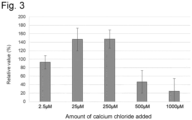
Figure 3 : Evaluation of production yield of a protein of interest depending on calcium-chloride concentration. - Now, preferred embodiments of the present invention will be described in detail. However, the present invention is by no means restricted to the following embodiments.
- The method for producing a protein of the present invention is a method for producing a protein in a baculovirus expression system, comprising a step of adding a calcium salt to a culture medium after a recombinant baculovirus is inoculated into an insect cell.
- In the present invention, the "baculovirus expression system" refers to an expression system, in which an inset cell is infected with a recombinant baculovirus containing the gene for a protein that is of interest (referred to also as a "protein of interest") and in which the protein of interest is expressed.
- The "recombinant baculovirus" is a baculovirus virus (baculovirus vector) prepared by integrating the gene of a protein of interest downstream of a promoter (polyhedrin promoter) enabling expression of the gene in cultured cells of the insect.
- Here, the type of baculovirus is not particularly limited as long as it is a virus capable of transmitting to a lepidopteran insect or a cultured cell of the insect but preferably a nucleopolyhedrovirus (NPV) or a modified virus thereof. Examples of such a virus include BmNPV, HycuNPV, AnpeNPV and AcNPV.
- The recombinant baculovirus can be prepared by a method known in the technical field. Examples of such a method include a method using a transfer vector which can insert a desired gene into baculovirus DNA by homologous recombination within a lepidopteran insect. In this method, cultured cells of a lepidopteran insect are cotransfected with the transfer vector having the gene of a protein of interest integrated therein and linearized baculovirus DNA with, e.g., a restriction enzyme, and infected cells are screened to obtain a recombinant baculovirus.
- Other than this, there is a method for preparing baculovirus DNA having a desired gene inserted therein (recombinant bacmid DNA) by homologous recombination in a bacterium. In this method, bacteria previously containing a baculovirus gene are transformed with a transfer vector having the gene of a protein of interest integrated therein to obtain recombinant DNA, and then, cultured cells of the lepidopteran insect are transfected with the recombinant DNA, whereby a recombinant baculovirus can be obtained. Here, examples of the bacterium to be used herein include, E. coli strain and descendent stains therefrom.
- The transfer vector to be used in such a case is not particularly limited as long as it is a vector DNA which has a promoter enabling gene expression in a lepidopteran insect or a cultured cell of the insect and to which a desired gene can be inserted downstream of the promoter. Such a transfer vector itself is commonly known in the technical field. Examples of the vector include pM02, pM23, pCPM, pYNG, pBM030, pBM050, pVL1392, pPSC8 and pFastBac. Here, the promoter may be appropriately selected from promoters commonly known in the technical field. Examples of the promoter include a polyhedrin promoter, a p10 promoter and a silkworm actin promoter.
- A method using the bacmid is commercially available in a kit form. Examples of the kit known include Bac-to-Bac system (Thermo Fisher Scientific), BaculoGold system (BD Biosciences), SuperBAC system (SHEATECH), BacPAC system (Clontech), flashBAC system (Oxford Expression), BacMagic system (Merck), BestBac system (Expression Systems) and BacuVance system (GenScript).
- Here, examples of the commercially available baculovirus vector known in the technical field include ProFold vector (AB Vector), ProEasy vector (AB Vector), FoldHelper vector (AB Vector), pVL vector (AB Vector), pAc vector (AB Vector), pAB vector (AB Vector), pIEx vector (Merck), pBAC vector (Merck) and pTriEx vector (Merck) .
- In the present invention, the gene of a protein of interest to be integrated into a recombinant baculovirus is not particularly limited. The protein of interest may be a monomer or a protein forming a complex such as VLP. Examples of the protein of interest include a functional protein to be used as biopharmaceuticals such as vaccines and antibodies, clinical test reagents, foods and cosmetics.
- In the present invention, the "insect" refers to a lepidopteran insect suitable for expression of a recombinant protein. Examples of the insect include silkworm (Bombyx mori), Spilosoma imparilis, Antheraea pernyi, Spodoptera frugiperda and Trichoplusiani.
- The lepidopteran insect cell to be cultured is not particularly limited as long as it is a cell line established from the lepidopteran insect. Examples of the insect cell include silkworm cells (e.g., BmN cell, BmN4 cell and BoMo cell), Antheraea pernyi cells (Anpe cells), Spodoptera frugiperda cells (e.g., Sf9 cell and Sf21 cell), Spilosoma imparilis cells (SpIm cells) and Trichoplusiani cells (e.g., Tn-5 cell, HIGH FIVE cell and MG1 cell). Further, modified insect cell strains obtained by modifying these cells are included.
- Inoculation (infection) of a recombinant baculovirus into an insect cell is carried out after preliminarily proliferating the insect cell.
- The culture may be either adherent culture or suspension culture, preferably suspension culture.
- Examples of the culture medium to be used include mediums commonly used, such as TNM-FH medium (manufactured by Pharmingen), Express Five SFM (Thermo Fisher Scientific), Sf-900 II SFM (Thermo Fisher Scientific), Sf-900 III (Thermo Fisher Scientific), ExpiSf CD (Thermo Fisher Scientific), IS Sf Insect medium (FUJIFILM Irvine Scientific), 4Cell Insect CD medium (SARTRIUS), Insect-XPRESS medium (LONZA), ESF 921 medium (Expression Systems) and ESF SF medium (Expression Systems). As a case requires, an antibiotic substance such as penicillin, streptomycin or gentamicin may be added to the culture medium.
- The culture temperature is preferably from 25 to 30°C, more preferably from 26 to 28°C, further preferably 27°C.
- The cell concentration is preferably from 1 × 10⁵ to 1 × 10⁷ cells/mL, more preferably from 2 × 10⁵ to 5 × 10⁶ cells/mL, further preferably from 5 × 10⁵ to 2 × 10⁶ cells/mL.
- Infection of the cultured cells with a recombinant baculovirus is carried out by inoculation through the addition of a solution containing the recombinant baculovirus to a culture medium when the insect-cell concentration reaches a value from 1 × 10⁵ to 1 × 10⁷ cells/mL.
- Here, the viral inoculum dose in terms of MOI is, for example, from 0.01 to 20 and preferably from 0.1 to 1.
- In the present invention, a calcium salt is added to the culture medium in the step of infecting cultured cells with a recombinant baculovirus, whereby the concentration of a calcium ion in the culture supernatant is increased.
- Here, the "calcium salt" refers to a salt containing a calcium ion (Ca2+) as a constituent ion. Examples of the salt include calcium chloride (CaCl2), calcium fluoride (CaF2), calcium bromide (CaBr2), calcium iodide
- (CaI2), calcium oxide (CaO), calcium hydride (CaH2), calcium hydroxide (Ca(OH)2), calcium carbide (CaC2), calcium phosphide (Ca3P2), calcium carbonate (CaCO3), calcium hydrogen carbonate (Ca(HCO3)2), calcium nitrate (Ca(NO3)2), calcium nitrite (Ca(NO2)2), calcium sulfate (CaSO4), calcium sulfite (CaSOs), calcium hydrogen sulfate (Ca(HSO4)2), thiocalcium sulfate (CaS2O3), calcium phosphate (Ca(PO4)2), calcium hypochlorite (Ca(ClO)2), calcium chlorate (Ca(ClO3)2), calcium perchlorate (Ca(ClO4)2), calcium bromate (Ca(BrO3)2), calcium iodate (Ca(IO3)2), calcium arsenate (Ca(AsO4)2), calcium metasilicate (CaSiO3), calcium permanganate (Ca(MnO4)2), calcium chromate (CaCrO4), calcium dichromate (CaCr2O7), calcium tetraborate (CaB4O7), calcium cyanide (Ca(CN)2), calcium carbonate magnesium (CaMg(CO3)2), calcium phosphate hydroxide (Ca5(PO4)3(OH)), calcium disodium ethylenediaminetetraacetate (CaNa2C10H12N2O8), calcium acetate (Ca(CH3COO)2), calcium citrate (Ca3(C6H5O7)2) , calcium ascorbate (CaC12H14O12), calcium gluconate (CaC12H22O14), saccharin calcium (CaC14H8N2O6S2), carboxymethylcellulose calcium (Ca.xC2H4O3. x: unspecified), calcium glutamate (CaC10H16N2O8), calcium stearate (CaC36H70O4) and calcium stearoyl lactate (CaC42H78O8). Here, the state of the calcium salt to be added is not restricted.
- The timing of adding a calcium salt is not particularly limited. For example, a calcium salt may be added between 0 and 48 hours after the vial inoculation, preferably between 12 and 36 hours after the vial inoculation.
- The calcium salt is added so as to increase a concentration of calcium (concentration of calcium ion) in the culture supernatant by a range of 1 µM or more, preferably 10 µM or more, and more preferably 25 µM or more, and 1 000 µM or less, preferably 500 µM or less, and more preferably 250 µM or less, or by a range of from 1 to 1 000 µM, preferably from 10 to 500 µM, and more preferably from 25 to 250 µM, as a final concentration. When the calcium salt is added in an amount within the above range, the expression of a protein can be improved without decreasing a viable cell rate.
- A protein of interest is produced in a cell by culturing the cell for from 1 to 7 days, preferably from 2 to 4 days, more preferably 4 days after infection (inoculation with a virus). Here, during the culture, a protease inhibitor and/or a nuclease can be appropriately added.
- The protein of interest thus produced can be isolated and purified by a method usually used for the isolation and purification of proteins. For example, in a case where the protein of interest is expressed within a cell and dissolved, cells are centrifugally collected after the completion of culture, suspended in an aqueous buffer solution, and disrupted by, e.g., a sonicator, French press, a Manton Gaulin homogenizer or Dinomill, to obtain a cell-free extract. The cell-free extract is centrifuged to obtain the supernatant. A purified product can be obtained from the supernatant using a usual method for isolation and purification of a protein, namel, a solvent extraction method, a salting-out method, a desalination method, a precipitation method with an organic solvent, an anion exchange chromatography method, a cation exchange chromatography method, a hydrophobic chromatography method, an ultrafiltration method, a gel filtration method, an affinity chromatography method, a chromate-focusing method, electrophoresis and immunoprecipitation, alone or in combination.
- Further, the protein of interest is expressed and forms an insoluble material in a cell, cells are collected, disrupted and centrifuged in the same manner as above. The insoluble material of the protein of interest was recovered as a precipitation fraction. The collected insoluble material of a protein of interest can be solubilized with a protein denaturant. After the operation, a purified product of the protein of interest can be obtained by the same isolation and purification method as above.
- If the protein of interest is released to the outside of the cells, the cells are removed after the completion of culture by, e.g., centrifugation and filtration, to obtain the culture supernatant containing the protein of interest. After the operation, a purified product of the protein of interest can be obtained by the same isolation and purification method as above.
- Now, the present invention will be more specifically described with reference to Examples, however, the present invention is by no means restricted thereto. Reference Example 1: Evaluation of toxicity of calcium chloride to insect cells
- High Five cells (Thermo Fisher Scientific, Express Five™ SFM) were seeded at a seeding concentration of 1 × 10⁶ cells/mL so as to satisfy a culture scale of 30 mL. Twenty-four hours after the initiation of culture, calcium chloride was added so as to increase a final concentration by 1, 10 and 100 mM. Here, a calcium chloride-free group was used as a control. From day 3 to 5, the cell culture solution was sampled and stained with a 0.2% trypan blue solution. The numbers of viable cells and dead cells were counted by a hemocytometer. From the total cell count and the viable-cell count, the rate of viable cells was calculated. The results are shown in
Figure 1 . - As shown in
Figure 1 , it was confirmed that the viable cell rate was the same as in the control at 1 mM from day 3 to 5, and the viable cell rate was low at 10 and 100 mM on day 3. Thus, as long as the concentration of calcium chloride is 1 mM or lower, calcium chloride is not cytotoxic, and it is considered that the protein expression is not impaired. - High Five cells (Thermo Fisher Scientific, Express Five™ SFM) were seeded at a seeding concentration of 1 × 10⁶ cells/mL so as to satisfy a culture scale of 30 mL. The culture solution was infected with a recombinant baculovirus prepared by integrating a gene sequence of a VP1 protein of norovirus at an MOI = 0.1. Calcium chloride was added at the time points of 0, 24 and 48 hours after infection so as to increase a final concentration by 25 µM, and then, cell culture was continued. Note that, cell culture was carried out in a calcium chloride-free condition and used as a negative control. On Day 3 after the viral infection, Benzonase (Merck) was added so as to obtain a final concentration of 50 U/mL and 30 mL of protease inhibitor tablets (Thermo Fisher Scientific) was added, and then, cell culture was continued. On Day 4 after the viral infection, a cell culture solution was collected and centrifuged at 1 000 × g for 15 minutes, and then, the supernatant was collected. The supernatant collected was centrifuged at 11 000 × g for 60 minutes and the supernatant was collected. The supernatant and a sample buffer (8% SDS, 40% glycerol/250 mM Tris-HCl Buffer pH6.8) were mixed in the same amounts, and further, 1/10 volume of 1 mg/mL BPB was mixed. The resultant solution was reacted at 95°C for 5 minutes and used as an SDS-PAGE sample.
- The SDS-PAGE was carried out by an electrophoresis device (ATTO CORPORATION) having 12.5% polyacrylamide gel (ATTO CORPORATION) set therein. The device was filled with a running buffer (0.1% SDS, 192 mM glycine/25 mM Tris Buffer pH8.3), and SDS-PAGE samples were electrophoresed. After the completion of electrophoresis, the gel was stained with Bio-Safe Coomassie Stain (Bio-Rad) for one hour, decolored by ultra-pure water, and subjected to densitometric analysis by an image analyzer (Bio-Rad).
- Before the densitometric analysis, a calibration curve was prepared using VP1 having a preliminarily controlled concentration as a standard. The amounts of bands corresponding to VP1 of individual samples were calculated relative to the condition in the absence of calcium chloride. From the analysis results (
Figure 2 and Table 1), when calcium chloride is added 24 hours after the initiation of culture, the yield of a protein of interest was improved by about 10%. Since the doubling time of insect cells is about 24 hours, it is considered that the insect cells are provably once divided after viral infection. In other words, when calcium chloride is added between 12 and 36 hours after viral infection during which most of the cells undergo a first cell division, it was considered that the yield of a protein of interest can be improved most efficiently.[Table 1] Specimen Negative control 0 hr 24 hr 48 hr VP1 band intensity (relative value) 100% 102% 111% 102% - Example 2 Evaluation of production yield of a protein of interest depending on calcium-chloride concentration
- A High Five cell culture solution in which cells were seeded at a seeding concentration of 1 × 10⁶ cells/mL so as to satisfy a culture scale of 30 mL, was infected with a recombinant baculovirus prepared by integrating a gene sequence of a norovirus VP1 protein, at MOI = 0.5. On Day 1 after the initiation of culture, calcium chloride was added so as to increase a final concentration by 2.5, 25, 250, 500 and 1 000 µM, and then, the cell culture was continued. On day 3, Benzonase (Merck) was added so as to be a final concentration of 50 U/mL and 30 mL of protease inhibitor tablets (Thermo Fisher Scientific) was added, and then, the cell culture was continued. On day 4, the culture supernatant was collected in the same manner as in Example 2 and subjected to Western Blotting.
- For Western Blotting, after electrophoresis was carried out in the same manner as in Example 1, a transfer reaction was carried out from the gel to PVDF membrane (Merck) by a semi-dry transfer device (ATTO CORPORATION). After the transfer reaction, the PVDF membrane was soaked in a 10% skim milk-containing TBS and incubated at room temperature for two hours. After the PVDF membrane was washed three times with an appropriate amount of TBS and soaked in an anti-norovirus VP1 protein antibody (manufactured by the inventors) diluted with a 1% skim milk-containing TBST and incubated at 4°C for from 18 to 20 hours. The PVDF membrane was washed five times with an appropriate amount of TBST, soaked in a HRP-labeled anti-mouse antibody (Jackson Immuno Research Laboratories) diluted with 1% skim milk-containing TBST, and incubated at room temperature for one hour. The PVDF membrane was washed five times with an appropriate amount of TBST and allowed to develop color with Western Lightning-Plus ECL (Perkin Elmer). The PVDF membrane was photographed by an image analyzer (Bio-Rad) and subjected to densitometric analysis.
- Densitometric analysis was carried out in the same manner as in Example 1, and the relative amount of VP1 to the condition in the absence of calcium chloride was calculated.
- From the analysis result (
Figure 3 ), it was confirmed that the yield of the recombinant protein improved by about 40% at 25 and 250 µM. Here, the yield seems to decrease at 500 and 1 000 µM. However, it is considered that the calcium-dependent protease activity is high due to the increase of calcium ions in the culture medium, and the produced protein of interest is thereby decomposed, and it is considered that the decrease of the expression level of the protein of interest does not result. That is, it is considered that the final concentration of from 25 to 250 µM at which the expression of a protein of interest remarkably increases and proteolysis reaction does not much proceed, is the condition under which a protein of interest can be most efficiently obtained.
Claims (4)
- A method for producing a protein in a baculovirus expression system, comprising a step of adding a calcium salt to a culture medium after a recombinant baculovirus is inoculated into an insect cell.
- The method according to claim 1, wherein the calcium salt is added so as to increase a concentration of calcium in a culture supernatant by from 25 to 250 µM as a final concentration.
- The method according to claim 1 or 2, wherein the calcium salt is added between 0 and 48 hours after the baculovirus is inoculated.
- The method according to any one of claims 1 to 3, wherein the calcium salt is calcium chloride.
Applications Claiming Priority (2)
| Application Number | Priority Date | Filing Date | Title |
|---|---|---|---|
| JP2021213132 | 2021-12-27 | ||
| PCT/JP2022/048243 WO2023127887A1 (en) | 2021-12-27 | 2022-12-27 | Method for producing protein in baculovirus expression system |
Publications (2)
| Publication Number | Publication Date |
|---|---|
| EP4458980A1 true EP4458980A1 (en) | 2024-11-06 |
| EP4458980A4 EP4458980A4 (en) | 2025-04-30 |
Family
ID=86999166
Family Applications (1)
| Application Number | Title | Priority Date | Filing Date |
|---|---|---|---|
| EP22916109.6A Withdrawn EP4458980A4 (en) | 2021-12-27 | 2022-12-27 | Method for producing proteins in a baculovirus expression system |
Country Status (7)
| Country | Link |
|---|---|
| US (1) | US20250051820A1 (en) |
| EP (1) | EP4458980A4 (en) |
| JP (1) | JPWO2023127887A1 (en) |
| KR (1) | KR20240104204A (en) |
| CN (1) | CN118451192A (en) |
| AU (1) | AU2022427172A1 (en) |
| WO (1) | WO2023127887A1 (en) |
Family Cites Families (4)
| Publication number | Priority date | Publication date | Assignee | Title |
|---|---|---|---|---|
| EP0924298A1 (en) | 1997-12-18 | 1999-06-23 | Stichting Instituut voor Dierhouderij en Diergezondheid (ID-DLO) | Protein expression in baculovirus vector expression systems |
| US9193759B2 (en) * | 2013-02-15 | 2015-11-24 | Intervet Inc. | Methods for the release of Virus-like Particles |
| JP2015015931A (en) | 2013-07-12 | 2015-01-29 | 株式会社Umnファーマ | Method for producing culture comprising virus-like particles |
| EP3775232A1 (en) * | 2018-04-12 | 2021-02-17 | Life Technologies Corporation | Chemically-defined baculovirus expression system and cell culture medium |
-
2022
- 2022-12-27 EP EP22916109.6A patent/EP4458980A4/en not_active Withdrawn
- 2022-12-27 JP JP2023571060A patent/JPWO2023127887A1/ja active Pending
- 2022-12-27 AU AU2022427172A patent/AU2022427172A1/en active Pending
- 2022-12-27 US US18/719,514 patent/US20250051820A1/en active Pending
- 2022-12-27 KR KR1020247021144A patent/KR20240104204A/en active Pending
- 2022-12-27 CN CN202280086197.8A patent/CN118451192A/en active Pending
- 2022-12-27 WO PCT/JP2022/048243 patent/WO2023127887A1/en not_active Ceased
Also Published As
| Publication number | Publication date |
|---|---|
| KR20240104204A (en) | 2024-07-04 |
| WO2023127887A1 (en) | 2023-07-06 |
| AU2022427172A1 (en) | 2024-07-04 |
| US20250051820A1 (en) | 2025-02-13 |
| EP4458980A4 (en) | 2025-04-30 |
| CN118451192A (en) | 2024-08-06 |
| JPWO2023127887A1 (en) | 2023-07-06 |
Similar Documents
| Publication | Publication Date | Title |
|---|---|---|
| EP2928290B1 (en) | Baculovirus system for expressing proteins forming virus-like particles | |
| JP7595371B2 (en) | Expression of recombinant proteins in Trichoplusia ni pupae | |
| US7833707B2 (en) | Methods of overexpression and recovery of porcine circovirus type 2 ORF2 | |
| Jarvis et al. | Biosynthesis and processing of the Autographa californica nuclear polyhedrosis virus gp64 protein | |
| Hsu et al. | Effects of co-expressing chaperone BiP on functional antibody production in the baculovirus system | |
| EP2858490B1 (en) | Recombinant dna elements for the expression of recombinant proteins in insects | |
| US20250051820A1 (en) | Method for producing protein in baculovirus expression system | |
| JP6063563B2 (en) | Baculovirus DNA elements for expression of recombinant proteins in host insects | |
| US20140273040A1 (en) | Method for producing recombinant prothrombin, vector dna, and reagent kit | |
| RU2648143C2 (en) | Methods for release of virus-like particles | |
| EP2970916B1 (en) | Adapted lepidopteran insect cells for the production of recombinant proteins | |
| O’Connell et al. | Production of a recombinant antibody fragment in whole insect larvae | |
| Pham et al. | The 1629-bp open reading frame of the Autographa californica multinucleocapsid nuclear polyhedrosis virus encodes a virion structural protein | |
| CN105296507B (en) | Lassa fever virus-like particle, its preparation method and application | |
| EP2784087B1 (en) | Recombinant baculovirus and use thereof | |
| Ohba et al. | In vitro enhancement of nuclear polyhedrosis virus infection by the synergistic factor of a granulosis virus of the armyworm, Pseudaletia unipuncta (Lepidoptera: Noctuidae) | |
| WO2024203942A1 (en) | Method for producing recombinant protein in baculovirus expression vector system | |
| Vaughn et al. | The Effect of Dissolution Procedures on the Infectivity of the Nuclear Polyhedrosis Polyhedra Derived Virions for Cell Cultures | |
| Singh et al. | Serological comparison of polyhedron protein and virions from four nuclear polyhedrosis viruses of plusiine larvae (Lepidoptera: Noctuidae) | |
| McIntosh et al. | A simplified and rapid method for extraction of DNA from baculovirus occlusion bodies | |
| O'Reilly | Use of Baculovims Expression Vectors |
Legal Events
| Date | Code | Title | Description |
|---|---|---|---|
| STAA | Information on the status of an ep patent application or granted ep patent |
Free format text: STATUS: THE INTERNATIONAL PUBLICATION HAS BEEN MADE |
|
| PUAI | Public reference made under article 153(3) epc to a published international application that has entered the european phase |
Free format text: ORIGINAL CODE: 0009012 |
|
| STAA | Information on the status of an ep patent application or granted ep patent |
Free format text: STATUS: REQUEST FOR EXAMINATION WAS MADE |
|
| 17P | Request for examination filed |
Effective date: 20240702 |
|
| AK | Designated contracting states |
Kind code of ref document: A1 Designated state(s): AL AT BE BG CH CY CZ DE DK EE ES FI FR GB GR HR HU IE IS IT LI LT LU LV MC ME MK MT NL NO PL PT RO RS SE SI SK SM TR |
|
| DAV | Request for validation of the european patent (deleted) | ||
| DAX | Request for extension of the european patent (deleted) | ||
| A4 | Supplementary search report drawn up and despatched |
Effective date: 20250331 |
|
| RIC1 | Information provided on ipc code assigned before grant |
Ipc: C12P 21/00 20060101AFI20250325BHEP |
|
| STAA | Information on the status of an ep patent application or granted ep patent |
Free format text: STATUS: THE APPLICATION IS DEEMED TO BE WITHDRAWN |
|
| 18D | Application deemed to be withdrawn |
Effective date: 20251018 |