EP4457791B1 - System und verfahren zur schätzung einer zukünftigen verkehrsdichte in einer umgebung - Google Patents
System und verfahren zur schätzung einer zukünftigen verkehrsdichte in einer umgebung Download PDFInfo
- Publication number
- EP4457791B1 EP4457791B1 EP23825515.2A EP23825515A EP4457791B1 EP 4457791 B1 EP4457791 B1 EP 4457791B1 EP 23825515 A EP23825515 A EP 23825515A EP 4457791 B1 EP4457791 B1 EP 4457791B1
- Authority
- EP
- European Patent Office
- Prior art keywords
- layer
- add
- environment
- particle
- prediction model
- Prior art date
- Legal status (The legal status is an assumption and is not a legal conclusion. Google has not performed a legal analysis and makes no representation as to the accuracy of the status listed.)
- Active
Links
Images







Classifications
-
- G—PHYSICS
- G08—SIGNALLING
- G08G—TRAFFIC CONTROL SYSTEMS
- G08G1/00—Traffic control systems for road vehicles
- G08G1/01—Detecting movement of traffic to be counted or controlled
- G08G1/0104—Measuring and analyzing of parameters relative to traffic conditions
- G08G1/0125—Traffic data processing
-
- G—PHYSICS
- G08—SIGNALLING
- G08G—TRAFFIC CONTROL SYSTEMS
- G08G1/00—Traffic control systems for road vehicles
- G08G1/01—Detecting movement of traffic to be counted or controlled
- G08G1/0104—Measuring and analyzing of parameters relative to traffic conditions
- G08G1/0108—Measuring and analyzing of parameters relative to traffic conditions based on the source of data
- G08G1/0116—Measuring and analyzing of parameters relative to traffic conditions based on the source of data from roadside infrastructure, e.g. beacons
-
- G—PHYSICS
- G06—COMPUTING OR CALCULATING; COUNTING
- G06N—COMPUTING ARRANGEMENTS BASED ON SPECIFIC COMPUTATIONAL MODELS
- G06N20/00—Machine learning
-
- G—PHYSICS
- G06—COMPUTING OR CALCULATING; COUNTING
- G06N—COMPUTING ARRANGEMENTS BASED ON SPECIFIC COMPUTATIONAL MODELS
- G06N3/00—Computing arrangements based on biological models
- G06N3/02—Neural networks
- G06N3/04—Architecture, e.g. interconnection topology
-
- G—PHYSICS
- G06—COMPUTING OR CALCULATING; COUNTING
- G06N—COMPUTING ARRANGEMENTS BASED ON SPECIFIC COMPUTATIONAL MODELS
- G06N3/00—Computing arrangements based on biological models
- G06N3/02—Neural networks
- G06N3/04—Architecture, e.g. interconnection topology
- G06N3/045—Combinations of networks
-
- G—PHYSICS
- G06—COMPUTING OR CALCULATING; COUNTING
- G06N—COMPUTING ARRANGEMENTS BASED ON SPECIFIC COMPUTATIONAL MODELS
- G06N7/00—Computing arrangements based on specific mathematical models
-
- G—PHYSICS
- G06—COMPUTING OR CALCULATING; COUNTING
- G06T—IMAGE DATA PROCESSING OR GENERATION, IN GENERAL
- G06T7/00—Image analysis
- G06T7/20—Analysis of motion
-
- G—PHYSICS
- G08—SIGNALLING
- G08G—TRAFFIC CONTROL SYSTEMS
- G08G1/00—Traffic control systems for road vehicles
- G08G1/01—Detecting movement of traffic to be counted or controlled
- G08G1/0104—Measuring and analyzing of parameters relative to traffic conditions
- G08G1/0125—Traffic data processing
- G08G1/0129—Traffic data processing for creating historical data or processing based on historical data
-
- G—PHYSICS
- G08—SIGNALLING
- G08G—TRAFFIC CONTROL SYSTEMS
- G08G1/00—Traffic control systems for road vehicles
- G08G1/01—Detecting movement of traffic to be counted or controlled
- G08G1/0104—Measuring and analyzing of parameters relative to traffic conditions
- G08G1/0125—Traffic data processing
- G08G1/0133—Traffic data processing for classifying traffic situation
-
- G—PHYSICS
- G08—SIGNALLING
- G08G—TRAFFIC CONTROL SYSTEMS
- G08G1/00—Traffic control systems for road vehicles
- G08G1/01—Detecting movement of traffic to be counted or controlled
- G08G1/0104—Measuring and analyzing of parameters relative to traffic conditions
- G08G1/0137—Measuring and analyzing of parameters relative to traffic conditions for specific applications
- G08G1/0141—Measuring and analyzing of parameters relative to traffic conditions for specific applications for traffic information dissemination
-
- G—PHYSICS
- G08—SIGNALLING
- G08G—TRAFFIC CONTROL SYSTEMS
- G08G1/00—Traffic control systems for road vehicles
- G08G1/01—Detecting movement of traffic to be counted or controlled
- G08G1/0104—Measuring and analyzing of parameters relative to traffic conditions
- G08G1/0137—Measuring and analyzing of parameters relative to traffic conditions for specific applications
- G08G1/0145—Measuring and analyzing of parameters relative to traffic conditions for specific applications for active traffic flow control
-
- G—PHYSICS
- G08—SIGNALLING
- G08G—TRAFFIC CONTROL SYSTEMS
- G08G1/00—Traffic control systems for road vehicles
- G08G1/01—Detecting movement of traffic to be counted or controlled
- G08G1/04—Detecting movement of traffic to be counted or controlled using optical or ultrasonic detectors
-
- G—PHYSICS
- G08—SIGNALLING
- G08G—TRAFFIC CONTROL SYSTEMS
- G08G1/00—Traffic control systems for road vehicles
- G08G1/065—Traffic control systems for road vehicles by counting the vehicles in a section of the road or in a parking area, i.e. comparing incoming count with outgoing count
-
- G—PHYSICS
- G08—SIGNALLING
- G08G—TRAFFIC CONTROL SYSTEMS
- G08G1/00—Traffic control systems for road vehicles
- G08G1/07—Controlling traffic signals
- G08G1/08—Controlling traffic signals according to detected number or speed of vehicles
-
- G—PHYSICS
- G06—COMPUTING OR CALCULATING; COUNTING
- G06T—IMAGE DATA PROCESSING OR GENERATION, IN GENERAL
- G06T2207/00—Indexing scheme for image analysis or image enhancement
- G06T2207/30—Subject of image; Context of image processing
- G06T2207/30241—Trajectory
Definitions
- the present disclosure relates generally to traffic density estimation, and more particularly to a system and a method for estimating a future traffic density in an environment.
- Prediction of traffic density in an environment is crucial for congestion prediction and route planning.
- understanding of the traffic density, in an area of a city including multiple roads has been of significant interest to transportation researchers, transportation engineers, road engineers, urban planners, policy makers, economists, vehicle manufacturers, and commuters who rely on transportation on a daily basis.
- understanding of the traffic density in an indoor space is important, for example, for determining a schedule for deployment of service robots in the indoor space.
- Model-driven methods may be used for prediction of the traffic density.
- the model-driven methods rely on a network topology that describes a system of interest.
- simulation models utilize a pre-defined network topology and system logic to simulate a traffic condition.
- the model-driven methods require a laborious tuning and calibration process, and significant human involvement to produce an optimal network topology and system logic. Therefore, there is still a need for a system and a method for predicting the traffic density in the environment.
- US2020042799A1 discloses a method for point-to-point traffic prediction, involves obtaining time-series locations of multiple vehicles respectively associated with computing devices by processor and from multiple computing devices and obtaining traffic volume.
- a partial trajectory of an object is applied as an input to the trajectory prediction model.
- the object is moving from an ingress point of the multiple ingress points to an egress point of the multiple egress points in the environment.
- the partial trajectory is represented by a location sequence, e.g., [1,3,2,0,0,0,0,0,0] of length nine. For example, there may be six different locations (1-6) in total in the environment.
- the partial trajectory may depict that a location of the object in the environment at time instant t1 is 1, the location of the object in the environment at time instant t2 is 3, and the location of the object in the environment at time instant t3 is 2.
- Such a partial trajectory is input to the trajectory prediction model to predict the location of the object at next time instant t4 (also referred to as future time instant).
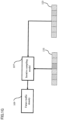
- the partial trajectory is input to the trajectory prediction model and the trajectory prediction model outputs a probability distribution of object's location over multiple locations, for example, six locations (1-6).
- the probability distribution indicates a probability of the object being at each of the six locations (1-6) at time instant t4. For example, the probability distribution indicates that the probability of the object being at location 5 at the time instant t4 is 0.6.
- the object may be represented by a number of particles, e.g., five particles, and each particle is treated independently.
- the number of particles may be specified by a user.
- Each particle may follow a different trajectory.
- a location of each particle at the time instant t4 is to be predicted.
- a location is sampled from the probability distribution and the sampled location is appended to the trajectory of the particle. For instance, for a trajectory of particle-1 of the five particles, the location of the particle-1 at the time instant t4 is predicted to be 5 by sampling the probability distribution.
- the location at the time instant t4 is predicted to determine updated trajectories corresponding to the five particles.
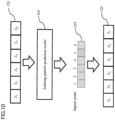
- Some embodiments are based on the realization that, for the environment with constant entering and exiting objects, the traffic density estimation model should account for objects that may initiate new trajectories at the ingress points at the next time instant, to accurately estimate the future traffic density. In other words, entering particles are to be predicted to accurately estimate the future traffic density.
- the traffic density estimation model includes the entering particle prediction model for predicting the entering particles.
- Each element of the observation vector is a binary variable with 1 indicating there is an entering particle and 0 for no observation.
- the entering particle prediction model outputs a multinomial probability vector.
- the multinomial probability vector indicates a probability of observing an entering particle at each of the ingress points at the next time instant. Further, based on the multinomial probability vector, a next observation vector is predicted and appended to the sequence of observation vectors to determine an updated sequence of observation vectors.
- the updated trajectories corresponding to the five particles and the updated sequence of observation vectors are input to the iterative sampling model. Based on the updated trajectories and the updated sequence of observation vectors, the iterative sampling model estimates the future traffic density for the next time instant.
- the multiple partial trajectories of different objects are input to the trajectory prediction model.
- a partial trajectory of object-1, a partial trajectory of object-2, and a partial trajectory of object-3 are input to the trajectory prediction model, at the first prediction step.
- the trajectory prediction model outputs a probability distribution of object-1's location over the six locations (1-6) at the next time instant, a probability distribution of object-2's location over the six locations at the next time instant, and a probability distribution of object-3's location over the six locations at the next time instant.
- the probability distribution of object-1's location, the probability distribution 129b the object-2's location, and the probability distribution 131b the object-3's location are averaged to determine an aggregated multinomial probability vector.
- the aggregated multinomial probability vector indicates final predicted probabilities of the object's location over the six locations.
- the aggregated multinomial probability vector and the multinomial probability vector are input to the iterative sampling model. Based on the multinomial probability vector and the aggregated multinomial probability vector, the iterative sampling model estimates the future traffic density for the next time instant. In particular, the iterative sampling model outputs samples of future objects from an averaged vector of the multinomial probability vector and the aggregated multinomial probability vector, which indicates the future traffic density.
- service robots may be deployed in the environment, based on the estimated future traffic density.
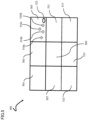
- the environment may be an indoor space including multiple cabins.
- the service robots may be deployed to one or more cabins of the multiple cabins, based on the estimated future traffic density in the one or more cabins.
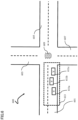
- the environment is an outdoor space including multiple roads and a traffic light at a junction of the multiple roads. The traffic light may be controlled based on the estimated future traffic density in the environment.
- one embodiment discloses a system for estimating a future traffic density in an environment according to appended claim 1.
- Another embodiment discloses a method for estimating a future traffic density in an environment according to appended claim 7.
- yet another embodiment discloses a non-transitory computer-readable storage medium according to appended claim 13.
- individual embodiments may be described as a process which is depicted as a flowchart, a flow diagram, a data flow diagram, a structure diagram, or a block diagram. Although a flowchart may describe the operations as a sequential process, many of the operations can be performed in parallel or concurrently. In addition, the order of the operations may be rearranged. A process may be terminated when its operations are completed, but may have additional steps not discussed or included in a figure. Furthermore, not all operations in any particularly described process may occur in all embodiments.
- a process may correspond to a method, a function, a procedure, a subroutine, a subprogram, etc. When a process corresponds to a function, the function's termination can correspond to a return of the function to the calling function or the main function.
- embodiments of the subject matter disclosed may be implemented, at least in part, either manually or automatically.
- Manual or automatic implementations may be executed, or at least assisted, through the use of machines, hardware, software, firmware, middleware, microcode, hardware description languages, or any combination thereof.
- the program code or code segments to perform the necessary tasks may be stored in a machine-readable medium.
- a processor(s) may perform the necessary tasks.
- embodiments of the present disclosure and the functional operations described in this specification can be implemented in digital electronic circuitry, in tangibly-embodied computer software or firmware, in computer hardware, including the structures disclosed in this specification and their structural equivalents, or in combinations of one or more of them.
- embodiments of the present disclosure can be implemented as one or more computer programs, i.e., one or more modules of computer program instructions encoded on a tangible non transitory program carrier for execution by, or to control the operation of, data processing apparatus.
- program instructions can be encoded on an artificially generated propagated signal, e.g., a machine-generated electrical, optical, or electromagnetic signal, which is generated to encode information for transmission to suitable receiver apparatus for execution by a data processing apparatus.
- the computer storage medium can be a machine-readable storage device, a machine-readable storage substrate, a random or serial access memory device, or a combination of one or more of them.
- the term "data processing apparatus” can encompass all kinds of apparatus, devices, and machines for processing data, including by way of example a programmable processor, a computer, or multiple processors or computers.
- the apparatus can include special purpose logic circuitry, e.g., an FPGA (field programmable gate array) or an ASIC (application specific integrated circuit).
- the apparatus can also include, in addition to hardware, code that creates an execution environment for the computer program in question, e.g., code that constitutes processor firmware, a protocol stack, a database management system, an operating system, or a combination of one or more of them.
- a program can be stored in a portion of a file that holds other programs or data, e.g., one or more scripts stored in a markup language document, in a single file dedicated to the program in question, or in multiple coordinated files, e.g., files that store one or more modules, sub programs, or portions of code.
- a computer program can be deployed to be executed on one computer or on multiple computers that are located at one site or distributed across multiple sites and interconnected by a communication network.
- Computers suitable for the execution of a computer program include, by way of example, can be based on general or special purpose microprocessors or both, or any other kind of central processing unit.
- a central processing unit will receive instructions and data from a read only memory or a random access memory or both.
- the essential elements of a computer are a central processing unit for performing or executing instructions and one or more memory devices for storing instructions and data.
- a computer having a display device, e.g., a CRT (cathode ray tube) or LCD (liquid crystal display) monitor, for displaying information to the user and a keyboard and a pointing device, e.g., a mouse or a trackball, by which the user can provide input to the computer.
- a display device e.g., a CRT (cathode ray tube) or LCD (liquid crystal display) monitor
- keyboard and a pointing device e.g., a mouse or a trackball
- Other kinds of devices can be used to provide for interaction with a user as well; for example, feedback provided to the user can be any form of sensory feedback, e.g., visual feedback, auditory feedback, or tactile feedback; and input from the user can be received in any form, including acoustic, speech, or tactile input.
- a computer can interact with a user by sending documents to and receiving documents from a device that is used by the user; for example, by sending web pages to a
Landscapes
- Physics & Mathematics (AREA)
- Engineering & Computer Science (AREA)
- General Physics & Mathematics (AREA)
- Theoretical Computer Science (AREA)
- Chemical & Material Sciences (AREA)
- Analytical Chemistry (AREA)
- Software Systems (AREA)
- Artificial Intelligence (AREA)
- Data Mining & Analysis (AREA)
- Evolutionary Computation (AREA)
- Mathematical Physics (AREA)
- Computing Systems (AREA)
- General Engineering & Computer Science (AREA)
- Computer Vision & Pattern Recognition (AREA)
- Computational Linguistics (AREA)
- Life Sciences & Earth Sciences (AREA)
- General Health & Medical Sciences (AREA)
- Biophysics (AREA)
- Biomedical Technology (AREA)
- Health & Medical Sciences (AREA)
- Molecular Biology (AREA)
- Multimedia (AREA)
- Computational Mathematics (AREA)
- Mathematical Optimization (AREA)
- Pure & Applied Mathematics (AREA)
- Medical Informatics (AREA)
- Mathematical Analysis (AREA)
- Algebra (AREA)
- Management, Administration, Business Operations System, And Electronic Commerce (AREA)
- Traffic Control Systems (AREA)
Claims (14)
- System (200) zum Ermitteln einer zukünftigen Verkehrsdichte (109) in einer Umgebung, wobei die Umgebung mehrere Eintrittspunkte und mehrere Austrittspunkte umfasst, wobei das System (200) umfasst: mindestens einen Prozessor (215); und einen Speicher (217) mit darauf gespeicherten Anweisungen, die den mindestens einen Prozessor (215) des Systems (200) dazu veranlassen:für mindestens ein Objekt mindestens eine Teiltrajektorie (111) und eine Sequenz von Beobachtungsvektoren (121) zu empfangen, wobei sich das mindestens eine Objekt von einem Eintrittspunkt der mehreren Eintrittspunkte zu einem Austrittspunkt der mehreren Austrittspunkte bewegt, und wobei das mindestens eine Objekt durch eine Vielzahl von Partikeln dargestellt wird;folgendes zu verabeiten: die mindestens eine Teiltrajektorie (111) mit einem Trajektorie-Vorhersagemodell (103) z, das trainiert wurde, eine probabilistische Verteilung (113) einer Position des mindestens einen Objekts über verschiedene Positionen in der Umgebung zu einem zukünftigen Zeitpunkt (t4) vorherzusagen; und(1) auf der Grundlage der vorhergesagten probabilistischen Verteilung (113), eine Position jedes Partikels der Vielzahl von Partikeln zu dem zukünftigen Zeitpunkt (t4) vorherzusagen; und(2) die Sequenz von Beobachtungsvektoren (121) mit einem Vorhersagemodell für eintretende Partikel (105), das trainiert wurde, eine Wahrscheinlichkeit für die Beobachtung eines eintretenden Partikels an jedem Eintrittspunkt zu dem zukünftigen Zeitpunkt (t4) vorherzusagen; unddie zukünftige Verkehrsdichte (109) für den zukünftigen Zeitpunkt (t4) mit einem iterativen Sampling-Modell (107) auf der Grundlage der vorhergesagten Position jedes Partikels und der vorhergesagten Wahrscheinlichkeit der Beobachtung des eintretenden Partikels an jedem Eintrittspunkt zu dem zukünftigen Zeitpunkt (t4) zu schätzen,wobei zumindest eines der Folgenden a) - b) bereitgestellt ist:a) wobei die Umgebung ein Innenraum (500) ist, der mehrere Kabinen (501-517) enthält, und wobei der mindestens eine Prozessor (215) ferner eingerichtet ist, mindestens einen Serviceroboter (519a-d) für mindestens eine Kabine der mehreren Kabinen (501-517) einzusetzen, auf der Grundlage der geschätzten zukünftigen Verkehrsdichte (109) in der Umgebung; oder wobei die Umgebung ein Außenraum (600) ist, der mehrere Straßen (601-607) und eine Lichtsignalanlage (609) an einer Kreuzung der mehreren Straßen (601-607) enthält, und wobei der mindestens eine Prozessor (215) ferner eingerichtet ist, die Lichtsignalanlage (609) auf der Grundlage der ermittelten zukünftigen Verkehrsdichte (109) in der Umgebung zu steuern;b) wobei die Sequenz von Beobachtungsvektoren (121) von in der Umgebung installierten Kameras erhalten wird.
- System (200) nach Anspruch 1, wobei, um auf der Grundlage der vorhergesagten probabilistischen Verteilung (113) die Position jedes Partikels der Vielzahl von Partikeln zu dem zukünftigen Zeitpunkt (t4) vorherzusagen, der mindestens eine Prozessor (215) ferner eingerichtet ist, eine Position jedes Partikels aus der vorhergesagten probabilistischen Verteilung (113) zu sampeln.
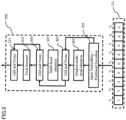
- System (200) nach Anspruch 1, wobei das Trajektorie-Vorhersagemodell (103) einen Stapel von Transformator-Dekodierern enthält, und wobei jeder Transformator-Dekodierer (300) enthält:eine Eingangseinbettungs- und Positionskodierungsschicht (301), die eingerichtet ist, eine hochdimensionale Darstellung der mindestens einen Teiltrajektorie (111) zu erzeugen;eine maskierte Multi-Head-Attention-Schicht (303), die eingerichtet ist, sicherzustellen, dass das Trajektorie-Vorhersagemodell (103) die Position des Objekts auf der Grundlage von beobachteten Positionen in der mindestens einen Teiltrajektorie (111) vorhersagt;eine erste Additions- und Normalisierungsschicht (305), die eingerichtet ist, Ausgaben der Eingangseinbettungs- und Positionskodierungsschicht (301) und der maskierten Multi-Head-Attention-Schicht (303) zu addieren, und eine resultierende Summe zu normalisieren;eine Multi-Head-Attention-Schicht (307), die eingerichtet ist, mehrere Attention-Funktionen mit unterschiedlichen gelernten Projektionen zu berechnen;eine zweite Additions- und Normalisierungsschicht (309), die eingerichtet ist, die normalisierte Summe, welche von der ersten Additions- und Normalisierungsschicht (305) ausgegeben wird, und den mehreren Attention-Funktionen, welche von der Multi-Head-Attention-Schicht (307) ausgegeben werden, zu addieren und zu normalisieren;eine Feed-Forward-Schicht (311), die eingerichtet ist, eine normalisierte Ausgabe der zweiten Additions- und Normalisierungsschicht (309) unter Verwendung einer linearen Transformation zu transformieren; undeine dritte Additions- und Normalisierungsschicht (313), die eingerichtet ist, die normalisierte Ausgabe der zweiten Additions- und Normalisierungsschicht (309) und der transformierten normalisierten Ausgabe der Feed-Forward-Schicht (311) zu addieren und zu normalisieren.
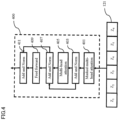
- System (200) nach Anspruch 1, wobei das Vorhersagemodell für eintretende Partikel (105) einen Stapel von Transformator-Dekodieren enthält, und wobei jeder Transformator-Dekodierer (400) enthält:eine maskierte Multi-Head-Attention-Schicht (401), die eingerichtet ist, sicherzustellen, dass das Partikel-Vorhersagemodell (105) ein eintretendes Partikel auf der Grundlage von beobachteten Positionen der Sequenz von Beobachtungsvektoren (121) vorhersagt;eine erste Additions- und Normalisierungsschicht (403), die eingerichtet ist, Ausgaben der maskierten Multi-Head-Attention-Schicht (401) zu addieren und eine resultierende Summe zu normalisieren;eine Multi-Head-Attention-Schicht (405), die eingerichtet ist, mehrere Attention-Funktionen mit unterschiedlichen gelernten Projektionen zu berechnen;eine zweite Additions- und Normalisierungsschicht (407), die eingerichtet ist, die normalisierte Summe, welche von der ersten Additions- und Normalisierungsschicht (403) ausgegeben wird, und die mehreren Attention-Funktionen, welche von der Multi-Head-Attention-Schicht (405) ausgegeben werden, zu addieren und zu normalisieren;eine Feed-Forward-Schicht (409), die eingerichtet ist, eine normalisierte Ausgabe der zweiten Additions- und Normalisierungsschicht (407) unter Verwendung einer linearen Transformation zu transformieren; undeine dritte Additions- und Normierungsschicht (411), die eingerichtet ist, die normalisierte Ausgabe der zweiten Additions- und Normalisierungsschicht (407) und die transformierte normalisierte Ausgabe der Feed-Forward-Schicht (409) zu addieren und zu normalisieren.
- System (200) nach Anspruch 1, wobei das Trajektorie-Vorhersagemodell (103) mit einer Kreuzentropie-Verlustfunktion trainiert wird, und wobei die Kreuzentropie-Verlustfunktion einen negativen Logarithmus einer vorhergesagten Position des mindestens einen Objekts für ein wahres nächstes Ziel berechnet.
- System (200) nach Anspruch 1, wobei das Vorhersagemodell für eintretende Partikel (105) mit einer Verlustfunktion des mittleren quadratischen Fehlers trainiert wird, und wobei die Verlustfunktion des mittleren quadratischen Fehlers einen Durchschnitt der quadratischen Differenzen zwischen vorhergesagten eintretenden Partikeln und korrespondierenden wahren Werten berechnet.
- Computerimplementiertes Verfahren des Ermittelns einer zukünftigen Verkehrsdichte (109) in einer Umgebung, wobei die Umgebung mehrere Eintrittspunkte und mehrere Austrittspunkte umfasst, wobei das Verfahren umfasst:Empfangen, für mindestens ein Objekt, mindestens einer Teiltrajektorie (111) und einer Sequenz von Beobachtungsvektoren (121), wobei sich das mindestens eine Objekt von einem Eintrittspunkt der mehreren Eintrittspunkte zu einem Austrittspunkt der mehreren Austrittspunkte bewegt, und wobei das mindestens eine Objekt durch eine Vielzahl von Partikeln dargestellt wird;Verarbeiten:(1) der mindestens einen Teiltrajektorie (111) mit einem Trajektorie-Vorhersagemodell (103), das trainiert wurde, um eine probabilistische Verteilung (113) einer Position des mindestens einen Objekts über verschiedene Positionen in der Umgebung zu einem zukünftigen Zeitpunkt (t4) vorherzusagen; undVorhersagen, auf der Grundlage der vorhergesagten probabilistischen Verteilung (113), einer Position jedes Partikels der Vielzahl von Partikeln zu dem zukünftigen Zeitpunkt (t4); und
(2) der Sequenz von Beobachtungsvektoren (121) mit einem Vorhersagemodell für eintretende Partikel (105), das trainiert wurde, eine Wahrscheinlichkeit für die Beobachtung eines eintretenden Partikels an jedem Eintrittspunkt zu dem zukünftigen Zeitpunkt (t4) vorherzusagen; undErmitteln der zukünftigen Verkehrsdichte (109) für den zukünftigen Zeitpunkt (t4) mit einem iterativen Sampling-Modell (107) auf der Grundlage der vorhergesagten Position jedes Partikels und der vorhergesagten Wahrscheinlichkeit der Beobachtung des eintretenden Partikels an jedem Eintrittspunkt zu dem zukünftigen Zeitpunkt (t4),wobei zumindest eines der Folgenden a) - b) bereitgestellt ist:a) wobei die Umgebung ein Innenraum (500) ist, der mehrere Kabinen (501-517) enthält, und wobei der mindestens eine Prozessor (215) ferner eingerichtet ist, mindestens einen Serviceroboter (519a-d) für mindestens eine Kabine der mehreren Kabinen (501-517) einzusetzen, auf der Grundlage der ermittelten zukünftigen Verkehrsdichte (109) in der Umgebung; oder
wobei die Umgebung ein Außenraum (600) ist, der mehrere Straßen (601-607) und eine Lichtsignalanlage (609) an einer Kreuzung der mehreren Straßen (601-607) enthält, und wobei der mindestens eine Prozessor (215) ferner eingerichtet ist, die Lichtsignalanlage (609) auf der Grundlage der ermittelten zukünftigen Verkehrsdichte (109) in der Umgebung zu steuern;b) wobei die Sequenz von Beobachtungsvektoren (121) von in der Umgebung installierten Kameras erhalten wird. - Verfahren nach Anspruch 7, wobei, um auf der Grundlage der vorhergesagten probabilistischen Verteilung (113) die Position jedes Partikels der Vielzahl von Partikeln zu dem zukünftigen Zeitpunkt (t4) vorherzusagen, das Verfahren ferner ein Sampeln einer Position jedes Partikels aus der vorhergesagten probabilistischen Verteilung (113) umfasst.
- Verfahren nach Anspruch 7, wobei das Trajektorie-Vorhersagemodell (103) einen Stapel von Transformator-Dekodierern enthält, und wobei jeder Transformator-Dekodierer (300) enthält:eine Eingangseinbettungs- und Positionskodierungsschicht (301), die eingerichtet ist, eine hochdimensionale Darstellung der mindestens einen Teiltrajektorie (111) zu erzeugen;eine maskierte Multi-Head-Attention-Schicht (303), die eingerichtet ist, sicherzustellen, dass das Trajektorie-Vorhersagemodell (103) die Position des Objekts auf der Grundlage von beobachteten Positionen in der mindestens einen Teiltrajektorie (111) vorhersagt;eine erste Additions- und Normalisierungsschicht (305), die eingerichtet ist, Ausgaben der Eingangseinbettungs- und Positionskodierungsschicht (301) und der maskierten Multi-Head-Attention-Schicht (303) zu addieren, und eine resultierende Summe zu normalisieren;eine Multi-Head-Attention-Schicht (307), die eingerichtet ist, mehrere Attention-Funktionen mit unterschiedlichen gelernten Projektionen zu berechnen;eine zweite Additions- und Normalisierungsschicht (309), die eingerichtet ist, die normalisierte Summe, welche von der ersten Additions- und Normalisierungsschicht (305) ausgegeben wird, und den mehreren Attention-Funktionen, welche von der Multi-Head-Attention-Schicht (307) ausgegeben werden, zu addieren und zu normalisieren;eine Feed-Forward-Schicht (311), die eingerichtet ist, eine normalisierte Ausgabe der zweiten Additions- und Normalisierungsschicht (309) unter Verwendung einer linearen Transformation zu transformieren; undeine dritte Additions- und Normierungsschicht (313), die eingerichtet ist, die normalisierte Ausgabe der zweiten Additions- und Normalisierungsschicht (309) und der transformierten normalisierten Ausgabe der Feed-Forward-Schicht (311) zu addieren und zu normalisieren; oder
- Verfahren nach Anspruch 7, wobei das Vorhersagemodell für eintretende Partikel (105) einen Stapel von Transformator-Dekodieren enthält, und wobei jeder Transformator-Dekodierer (400) enthält:eine maskierte Multi-Head-Attention-Schicht (401), die eingerichtet ist, sicherzustellen, dass das Partikel-Vorhersagemodell (105) ein eintretendes Partikel auf der Grundlage von beobachteten Positionen der Sequenz von Beobachtungsvektoren (121) vorhersagt;eine erste Additions- und Normalisierungsschicht (403), die eingerichtet ist, Ausgaben der maskierten Multi-Head-Attention-Schicht (401) zu addieren und eine resultierende Summe zu normalisieren;eine Multi-Head-Attention-Schicht (405), die eingerichtet ist, mehrere Attention-Funktionen mit unterschiedlichen gelernten Projektionen zu berechnen;eine zweite Additions- und Normalisierungsschicht (407), die eingerichtet ist, die normalisierte Summe, welche von der ersten Additions- und Normalisierungsschicht (403) ausgegeben wird, und die mehreren Attention-Funktionen, welche von der Multi-Head-Attention-Schicht (405) ausgegeben werden, zu addieren und zu normalisieren;eine Feed-Forward-Schicht (409), die konfiguriert ist, eine normalisierte Ausgabe der zweiten Additions- und Normalisierungsschicht (407) unter Verwendung einer linearen Transformation zu transformieren; undeine dritte Additions- und Normierungsschicht (411), die eingerichtet ist, die normalisierte Ausgabe der zweiten Additions- und Normalisierungsschicht (407) und die transformierte normalisierte Ausgabe der Feed-Forward-Schicht (409) zu addieren und zu normalisieren.
- Verfahren nach Anspruch 7, wobei das Trajektorie-Vorhersagemodell (103) mit einer Kreuzentropie-Verlustfunktion trainiert wird, und wobei die Kreuzentropie-Verlustfunktion einen negativen Logarithmus einer vorhergesagten Position des mindestens einen Objekts für ein wahres nächstes Ziel berechnet.
- Verfahren nach Anspruch 7, wobei das Vorhersagemodell für eintretende Partikel (105) mit einer Verlustfunktion des mittleren quadratischen Fehlers trainiert wird, und wobei die Verlustfunktion des mittleren quadratischen Fehlers einen Durchschnitt der quadratischen Differenzen zwischen vorhergesagten eintretenden Partikeln und korrespondierenden wahren Werten berechnet.
- Nichttransitorisches computerlesbares Speichermedium, auf dem ein Programm verkörpert ist, das, wenn es von einem Prozessor (215) ausgeführt wird, den Prozessor veranlasst, ein Verfahren durchzuführen zum:
Ermitteln einer zukünftigen Verkehrsdichte (109) in einer Umgebung, wobei die Umgebung mehrere Eintrittspunkte und mehrere Austrittspunkte umfasst, wobei das Verfahren umfasst:Empfangen, für mindestens ein Objekt, mindestens einer Teiltrajektorie (111) und einer Sequenz von Beobachtungsvektoren (121), wobei sich das mindestens eine Objekt von einem Eintrittspunkt der mehreren Eintrittspunkte zu einem Austrittspunkt der mehreren Austrittspunkte bewegt, und wobei das mindestens eine Objekt durch eine Vielzahl von Partikeln dargestellt wird;Verarbeiten:(1) der mindestens einen Teiltrajektorie (111) mit einem Trajektorie-Vorhersagemodell (103), das trainiert wurde, um eine probabilistische Verteilung (113) einer Position des mindestens einen Objekts über verschiedene Positionen in der Umgebung zu einem zukünftigen Zeitpunkt (t4) vorherzusagen; undVorhersagen, auf der Grundlage der vorhergesagten probabilistischen Verteilung (113), einer Position jedes Partikels der Vielzahl von Partikeln zu dem zukünftigen Zeitpunkt (t4); und
(2) der Sequenz von Beobachtungsvektoren (121) mit einem Vorhersagemodell für eintretende Partikel (105), das trainiert wurde, eine Wahrscheinlichkeit für die Beobachtung eines eintretenden Partikels an jedem Eintrittspunkt zu dem zukünftigen Zeitpunkt (t4) vorherzusagen; undErmitteln der zukünftigen Verkehrsdichte (109) für den zukünftigen Zeitpunkt (t4) mit einem iterativen Sampling-Modell (107) auf der Grundlage der vorhergesagten Position jedes Partikels und der vorhergesagten Wahrscheinlichkeit der Beobachtung des eintretenden Partikels an jedem Eintrittspunkt zu dem zukünftigen Zeitpunkt (t4),wobei zumindest eines der folgenden a) - b) bereitgestellt ist:a) wobei die Umgebung ein Innenraum (500) ist, der mehrere Kabinen (501-517) enthält, und wobei der mindestens eine Prozessor (215) ferner eingerichtet ist, mindestens einen Serviceroboter (519a-d) für mindestens eine Kabine der mehreren Kabinen (501-517) einzusetzen, auf der Grundlage der ermittelten zukünftigen Verkehrsdichte (109) in der Umgebung; oderwobei die Umgebung ein Außenraum (600) ist, der mehrere Straßen (601-607) und eine Lichtsignalanlage (609) an einer Kreuzung der mehreren Straßen (601-607) enthält, und wobei der mindestens eine Prozessor (215) ferner eingerichtet ist, die Lichtsignalanlage (609) auf der Grundlage der ermittelten zukünftigen Verkehrsdichte (109) in der Umgebung zu steuern;
b) wobei die Sequenz von Beobachtungsvektoren (121) von in der Umgebung installierten Kameras erhalten wird. - Nichttransitorisches computerlesbares Speichermedium nach Anspruch 13, wobei, um auf der Grundlage der vorhergesagten probabilistischen Verteilung (113) die Position jedes Partikels der Vielzahl von Partikeln zu dem zukünftigen Zeitpunkt (t4) vorherzusagen, das Verfahren ferner ein Sampeln einer Position jedes Partikels aus der vorhergesagten probabilistischen Verteilung (113) umfasst.
Applications Claiming Priority (2)
| Application Number | Priority Date | Filing Date | Title |
|---|---|---|---|
| US18/181,603 US20240304081A1 (en) | 2023-03-10 | 2023-03-10 | System and Method for Estimating a Future Traffic Density in an Environment |
| PCT/JP2023/041900 WO2024189988A1 (en) | 2023-03-10 | 2023-11-15 | System and method for estimating a future traffic density in an environment |
Publications (2)
| Publication Number | Publication Date |
|---|---|
| EP4457791A1 EP4457791A1 (de) | 2024-11-06 |
| EP4457791B1 true EP4457791B1 (de) | 2025-07-02 |
Family
ID=89224011
Family Applications (1)
| Application Number | Title | Priority Date | Filing Date |
|---|---|---|---|
| EP23825515.2A Active EP4457791B1 (de) | 2023-03-10 | 2023-11-15 | System und verfahren zur schätzung einer zukünftigen verkehrsdichte in einer umgebung |
Country Status (5)
| Country | Link |
|---|---|
| US (1) | US20240304081A1 (de) |
| EP (1) | EP4457791B1 (de) |
| JP (1) | JP2025538025A (de) |
| CN (1) | CN120917501A (de) |
| WO (1) | WO2024189988A1 (de) |
Families Citing this family (3)
| Publication number | Priority date | Publication date | Assignee | Title |
|---|---|---|---|---|
| CN119399954B (zh) * | 2024-10-31 | 2025-10-03 | 浙江大学 | 一种基于多尺度领先滞后关系建模的交通流量预测方法 |
| CN120597950B (zh) * | 2025-06-10 | 2026-03-27 | 北京人形机器人创新中心有限公司 | 一种流匹配生成模型的训练方法、推理方法及相关装置 |
| US12485924B1 (en) * | 2025-07-10 | 2025-12-02 | Imam Mohammad Ibn Saud Islamic Unviersity | Method and system for controlling autonomous vehicles |
Family Cites Families (4)
| Publication number | Priority date | Publication date | Assignee | Title |
|---|---|---|---|---|
| CN106408958A (zh) * | 2015-07-31 | 2017-02-15 | 富士通株式会社 | 路口信号灯的控制装置及方法 |
| CN112470199B (zh) * | 2018-07-31 | 2023-05-02 | 北京嘀嘀无限科技发展有限公司 | 用于点对点流量预测的系统和方法 |
| US11169531B2 (en) * | 2018-10-04 | 2021-11-09 | Zoox, Inc. | Trajectory prediction on top-down scenes |
| CN115042798B (zh) * | 2021-03-08 | 2025-07-04 | 广州汽车集团股份有限公司 | 一种交通参与者未来轨迹预测方法及系统、存储介质 |
-
2023
- 2023-03-10 US US18/181,603 patent/US20240304081A1/en active Pending
- 2023-11-15 WO PCT/JP2023/041900 patent/WO2024189988A1/en not_active Ceased
- 2023-11-15 JP JP2025550739A patent/JP2025538025A/ja active Pending
- 2023-11-15 EP EP23825515.2A patent/EP4457791B1/de active Active
- 2023-11-15 CN CN202380095537.8A patent/CN120917501A/zh active Pending
Also Published As
| Publication number | Publication date |
|---|---|
| EP4457791A1 (de) | 2024-11-06 |
| CN120917501A (zh) | 2025-11-07 |
| US20240304081A1 (en) | 2024-09-12 |
| JP2025538025A (ja) | 2025-11-20 |
| WO2024189988A1 (en) | 2024-09-19 |
| WO2024189988A8 (en) | 2025-03-20 |
Similar Documents
| Publication | Publication Date | Title |
|---|---|---|
| EP4457791B1 (de) | System und verfahren zur schätzung einer zukünftigen verkehrsdichte in einer umgebung | |
| US11159715B1 (en) | Systems and methods for model-based analysis of damage to a vehicle | |
| US10402690B2 (en) | System and method for learning random-walk label propagation for weakly-supervised semantic segmentation | |
| EP3497628B1 (de) | Steuerungsrichtlinien für robotische agenten | |
| CN111252061A (zh) | 用于自动驾驶车辆的实时决策制定 | |
| US9799225B2 (en) | Method and apparatus for building a taxiing route | |
| US12333459B2 (en) | Methods and internet of things systems for optimizing metro operation scheduling in smart city | |
| EP3563344B1 (de) | Agentennavigation unter verwendung visueller eingaben | |
| JP2020144483A (ja) | 強化学習方法、強化学習プログラム、および強化学習システム | |
| US20250368223A1 (en) | Systems and Methods for Pareto Domination-Based Learning | |
| US12572154B2 (en) | System and method for controlling motion of one or more devices | |
| US12405125B2 (en) | Image-based navigation | |
| WO2023219178A1 (en) | System and method for controlling motion of one or more devices along a calculated optimal trajectory | |
| US20250306590A1 (en) | Systems and Methods for Dynamic Object Removal from Three-Dimensional Data | |
| CN115909733A (zh) | 一种基于跨域感知与心智理论的驾驶意图预测方法 | |
| US20240378454A1 (en) | Optimizing models for open-vocabulary detection | |
| CN116558541B (zh) | 模型训练方法和装置、轨迹预测方法和装置 | |
| CN119540842A (zh) | 停车场景下的车辆轨迹预测方法、装置和可读存储介质 | |
| US12565234B2 (en) | Method and a system for generating training data for training a motion planner | |
| US11455763B2 (en) | Bounding box generation for object detection | |
| CN115630687A (zh) | 模型训练方法、交通流量预测方法和装置 | |
| US20240308813A1 (en) | System and Method for Controlling Motion of a Bank of Elevators | |
| US20210209399A1 (en) | Bounding box generation for object detection | |
| US12339129B2 (en) | Methods and servers for generating a prediction score by a machine learning algorithm | |
| US12614074B2 (en) | Method and system for predicting fuel consumption for a flight of an aircraft |
Legal Events
| Date | Code | Title | Description |
|---|---|---|---|
| STAA | Information on the status of an ep patent application or granted ep patent |
Free format text: STATUS: UNKNOWN |
|
| STAA | Information on the status of an ep patent application or granted ep patent |
Free format text: STATUS: THE INTERNATIONAL PUBLICATION HAS BEEN MADE |
|
| PUAI | Public reference made under article 153(3) epc to a published international application that has entered the european phase |
Free format text: ORIGINAL CODE: 0009012 |
|
| STAA | Information on the status of an ep patent application or granted ep patent |
Free format text: STATUS: REQUEST FOR EXAMINATION WAS MADE |
|
| 17P | Request for examination filed |
Effective date: 20240730 |
|
| AK | Designated contracting states |
Kind code of ref document: A1 Designated state(s): AL AT BE BG CH CY CZ DE DK EE ES FI FR GB GR HR HU IE IS IT LI LT LU LV MC ME MK MT NL NO PL PT RO RS SE SI SK SM TR |
|
| GRAP | Despatch of communication of intention to grant a patent |
Free format text: ORIGINAL CODE: EPIDOSNIGR1 |
|
| STAA | Information on the status of an ep patent application or granted ep patent |
Free format text: STATUS: GRANT OF PATENT IS INTENDED |
|
| INTG | Intention to grant announced |
Effective date: 20250127 |
|
| GRAS | Grant fee paid |
Free format text: ORIGINAL CODE: EPIDOSNIGR3 |
|
| GRAA | (expected) grant |
Free format text: ORIGINAL CODE: 0009210 |
|
| STAA | Information on the status of an ep patent application or granted ep patent |
Free format text: STATUS: THE PATENT HAS BEEN GRANTED |
|
| RIN1 | Information on inventor provided before grant (corrected) |
Inventor name: NIKOVSKI, DANIEL Inventor name: WANG, YINSONG Inventor name: ZHANG, JING |
|
| AK | Designated contracting states |
Kind code of ref document: B1 Designated state(s): AL AT BE BG CH CY CZ DE DK EE ES FI FR GB GR HR HU IE IS IT LI LT LU LV MC ME MK MT NL NO PL PT RO RS SE SI SK SM TR |
|
| DAV | Request for validation of the european patent (deleted) | ||
| DAX | Request for extension of the european patent (deleted) | ||
| REG | Reference to a national code |
Ref country code: GB Ref legal event code: FG4D |
|
| REG | Reference to a national code |
Ref country code: CH Ref legal event code: EP |
|
| REG | Reference to a national code |
Ref country code: DE Ref legal event code: R096 Ref document number: 602023004566 Country of ref document: DE |
|
| REG | Reference to a national code |
Ref country code: IE Ref legal event code: FG4D |
|
| PGFP | Annual fee paid to national office [announced via postgrant information from national office to epo] |
Ref country code: FR Payment date: 20250930 Year of fee payment: 3 |
|
| REG | Reference to a national code |
Ref country code: NL Ref legal event code: MP Effective date: 20250702 |
|
| PG25 | Lapsed in a contracting state [announced via postgrant information from national office to epo] |
Ref country code: PT Free format text: LAPSE BECAUSE OF FAILURE TO SUBMIT A TRANSLATION OF THE DESCRIPTION OR TO PAY THE FEE WITHIN THE PRESCRIBED TIME-LIMIT Effective date: 20251103 |
|
| PG25 | Lapsed in a contracting state [announced via postgrant information from national office to epo] |
Ref country code: NL Free format text: LAPSE BECAUSE OF FAILURE TO SUBMIT A TRANSLATION OF THE DESCRIPTION OR TO PAY THE FEE WITHIN THE PRESCRIBED TIME-LIMIT Effective date: 20250702 |
|
| REG | Reference to a national code |
Ref country code: AT Ref legal event code: MK05 Ref document number: 1810177 Country of ref document: AT Kind code of ref document: T Effective date: 20250702 |
|
| PG25 | Lapsed in a contracting state [announced via postgrant information from national office to epo] |
Ref country code: IS Free format text: LAPSE BECAUSE OF FAILURE TO SUBMIT A TRANSLATION OF THE DESCRIPTION OR TO PAY THE FEE WITHIN THE PRESCRIBED TIME-LIMIT Effective date: 20251102 |
|
| PGFP | Annual fee paid to national office [announced via postgrant information from national office to epo] |
Ref country code: DE Payment date: 20250930 Year of fee payment: 3 |
|
| PG25 | Lapsed in a contracting state [announced via postgrant information from national office to epo] |
Ref country code: NO Free format text: LAPSE BECAUSE OF FAILURE TO SUBMIT A TRANSLATION OF THE DESCRIPTION OR TO PAY THE FEE WITHIN THE PRESCRIBED TIME-LIMIT Effective date: 20251002 |
|
| REG | Reference to a national code |
Ref country code: LT Ref legal event code: MG9D |
|
| PG25 | Lapsed in a contracting state [announced via postgrant information from national office to epo] |
Ref country code: AT Free format text: LAPSE BECAUSE OF FAILURE TO SUBMIT A TRANSLATION OF THE DESCRIPTION OR TO PAY THE FEE WITHIN THE PRESCRIBED TIME-LIMIT Effective date: 20250702 |
|
| PG25 | Lapsed in a contracting state [announced via postgrant information from national office to epo] |
Ref country code: FI Free format text: LAPSE BECAUSE OF FAILURE TO SUBMIT A TRANSLATION OF THE DESCRIPTION OR TO PAY THE FEE WITHIN THE PRESCRIBED TIME-LIMIT Effective date: 20250702 |
|
| PG25 | Lapsed in a contracting state [announced via postgrant information from national office to epo] |
Ref country code: HR Free format text: LAPSE BECAUSE OF FAILURE TO SUBMIT A TRANSLATION OF THE DESCRIPTION OR TO PAY THE FEE WITHIN THE PRESCRIBED TIME-LIMIT Effective date: 20250702 |
|
| PG25 | Lapsed in a contracting state [announced via postgrant information from national office to epo] |
Ref country code: GR Free format text: LAPSE BECAUSE OF FAILURE TO SUBMIT A TRANSLATION OF THE DESCRIPTION OR TO PAY THE FEE WITHIN THE PRESCRIBED TIME-LIMIT Effective date: 20251003 |
|
| PG25 | Lapsed in a contracting state [announced via postgrant information from national office to epo] |
Ref country code: CZ Free format text: LAPSE BECAUSE OF FAILURE TO SUBMIT A TRANSLATION OF THE DESCRIPTION OR TO PAY THE FEE WITHIN THE PRESCRIBED TIME-LIMIT Effective date: 20250702 Ref country code: SE Free format text: LAPSE BECAUSE OF FAILURE TO SUBMIT A TRANSLATION OF THE DESCRIPTION OR TO PAY THE FEE WITHIN THE PRESCRIBED TIME-LIMIT Effective date: 20250702 |
|
| PG25 | Lapsed in a contracting state [announced via postgrant information from national office to epo] |
Ref country code: LV Free format text: LAPSE BECAUSE OF FAILURE TO SUBMIT A TRANSLATION OF THE DESCRIPTION OR TO PAY THE FEE WITHIN THE PRESCRIBED TIME-LIMIT Effective date: 20250702 |
|
| PG25 | Lapsed in a contracting state [announced via postgrant information from national office to epo] |
Ref country code: BG Free format text: LAPSE BECAUSE OF FAILURE TO SUBMIT A TRANSLATION OF THE DESCRIPTION OR TO PAY THE FEE WITHIN THE PRESCRIBED TIME-LIMIT Effective date: 20250702 Ref country code: PL Free format text: LAPSE BECAUSE OF FAILURE TO SUBMIT A TRANSLATION OF THE DESCRIPTION OR TO PAY THE FEE WITHIN THE PRESCRIBED TIME-LIMIT Effective date: 20250702 |
|
| PG25 | Lapsed in a contracting state [announced via postgrant information from national office to epo] |
Ref country code: RS Free format text: LAPSE BECAUSE OF FAILURE TO SUBMIT A TRANSLATION OF THE DESCRIPTION OR TO PAY THE FEE WITHIN THE PRESCRIBED TIME-LIMIT Effective date: 20251002 |
|
| PG25 | Lapsed in a contracting state [announced via postgrant information from national office to epo] |
Ref country code: ES Free format text: LAPSE BECAUSE OF FAILURE TO SUBMIT A TRANSLATION OF THE DESCRIPTION OR TO PAY THE FEE WITHIN THE PRESCRIBED TIME-LIMIT Effective date: 20250702 |
|
| PG25 | Lapsed in a contracting state [announced via postgrant information from national office to epo] |
Ref country code: RO Free format text: LAPSE BECAUSE OF FAILURE TO SUBMIT A TRANSLATION OF THE DESCRIPTION OR TO PAY THE FEE WITHIN THE PRESCRIBED TIME-LIMIT Effective date: 20250702 |
|
| PG25 | Lapsed in a contracting state [announced via postgrant information from national office to epo] |
Ref country code: SM Free format text: LAPSE BECAUSE OF FAILURE TO SUBMIT A TRANSLATION OF THE DESCRIPTION OR TO PAY THE FEE WITHIN THE PRESCRIBED TIME-LIMIT Effective date: 20250702 |
|
| PG25 | Lapsed in a contracting state [announced via postgrant information from national office to epo] |
Ref country code: DK Free format text: LAPSE BECAUSE OF FAILURE TO SUBMIT A TRANSLATION OF THE DESCRIPTION OR TO PAY THE FEE WITHIN THE PRESCRIBED TIME-LIMIT Effective date: 20250702 |
|
| PG25 | Lapsed in a contracting state [announced via postgrant information from national office to epo] |
Ref country code: IT Free format text: LAPSE BECAUSE OF FAILURE TO SUBMIT A TRANSLATION OF THE DESCRIPTION OR TO PAY THE FEE WITHIN THE PRESCRIBED TIME-LIMIT Effective date: 20250702 |
|
| PG25 | Lapsed in a contracting state [announced via postgrant information from national office to epo] |
Ref country code: EE Free format text: LAPSE BECAUSE OF FAILURE TO SUBMIT A TRANSLATION OF THE DESCRIPTION OR TO PAY THE FEE WITHIN THE PRESCRIBED TIME-LIMIT Effective date: 20250702 Ref country code: SK Free format text: LAPSE BECAUSE OF FAILURE TO SUBMIT A TRANSLATION OF THE DESCRIPTION OR TO PAY THE FEE WITHIN THE PRESCRIBED TIME-LIMIT Effective date: 20250702 |