EP4456508A1 - Richtlinienkonfigurationsverfahren und -vorrichtung - Google Patents
Richtlinienkonfigurationsverfahren und -vorrichtung Download PDFInfo
- Publication number
- EP4456508A1 EP4456508A1 EP23739972.0A EP23739972A EP4456508A1 EP 4456508 A1 EP4456508 A1 EP 4456508A1 EP 23739972 A EP23739972 A EP 23739972A EP 4456508 A1 EP4456508 A1 EP 4456508A1
- Authority
- EP
- European Patent Office
- Prior art keywords
- information
- network element
- user equipment
- policy
- traffic flow
- Prior art date
- Legal status (The legal status is an assumption and is not a legal conclusion. Google has not performed a legal analysis and makes no representation as to the accuracy of the status listed.)
- Pending
Links
- 238000000034 method Methods 0.000 title claims abstract description 233
- 230000006870 function Effects 0.000 claims description 142
- 230000015654 memory Effects 0.000 claims description 61
- 238000004590 computer program Methods 0.000 claims description 20
- 238000004891 communication Methods 0.000 description 60
- 238000012545 processing Methods 0.000 description 51
- 238000007726 management method Methods 0.000 description 47
- 238000013523 data management Methods 0.000 description 22
- 230000008569 process Effects 0.000 description 18
- 238000005516 engineering process Methods 0.000 description 10
- 238000010586 diagram Methods 0.000 description 8
- 238000013475 authorization Methods 0.000 description 7
- 230000005540 biological transmission Effects 0.000 description 5
- 230000003190 augmentative effect Effects 0.000 description 4
- 230000007246 mechanism Effects 0.000 description 4
- 238000010295 mobile communication Methods 0.000 description 4
- 230000003287 optical effect Effects 0.000 description 4
- 230000001360 synchronised effect Effects 0.000 description 4
- 230000008878 coupling Effects 0.000 description 3
- 238000010168 coupling process Methods 0.000 description 3
- 238000005859 coupling reaction Methods 0.000 description 3
- 238000013461 design Methods 0.000 description 3
- 230000003993 interaction Effects 0.000 description 2
- 230000007774 longterm Effects 0.000 description 2
- 238000012986 modification Methods 0.000 description 2
- 230000004048 modification Effects 0.000 description 2
- 230000004044 response Effects 0.000 description 2
- 230000003068 static effect Effects 0.000 description 2
- 229910000906 Bronze Inorganic materials 0.000 description 1
- 101150119040 Nsmf gene Proteins 0.000 description 1
- BQCADISMDOOEFD-UHFFFAOYSA-N Silver Chemical compound [Ag] BQCADISMDOOEFD-UHFFFAOYSA-N 0.000 description 1
- 230000006399 behavior Effects 0.000 description 1
- 230000009286 beneficial effect Effects 0.000 description 1
- 239000010974 bronze Substances 0.000 description 1
- 230000003139 buffering effect Effects 0.000 description 1
- 238000006243 chemical reaction Methods 0.000 description 1
- KUNSUQLRTQLHQQ-UHFFFAOYSA-N copper tin Chemical compound [Cu].[Sn] KUNSUQLRTQLHQQ-UHFFFAOYSA-N 0.000 description 1
- 238000013500 data storage Methods 0.000 description 1
- 238000012217 deletion Methods 0.000 description 1
- 230000037430 deletion Effects 0.000 description 1
- 238000011161 development Methods 0.000 description 1
- 230000014509 gene expression Effects 0.000 description 1
- PCHJSUWPFVWCPO-UHFFFAOYSA-N gold Chemical compound [Au] PCHJSUWPFVWCPO-UHFFFAOYSA-N 0.000 description 1
- 229910052737 gold Inorganic materials 0.000 description 1
- 239000010931 gold Substances 0.000 description 1
- 238000012544 monitoring process Methods 0.000 description 1
- 239000013307 optical fiber Substances 0.000 description 1
- 239000004065 semiconductor Substances 0.000 description 1
- 230000011664 signaling Effects 0.000 description 1
- 229910052709 silver Inorganic materials 0.000 description 1
- 239000004332 silver Substances 0.000 description 1
- XLYOFNOQVPJJNP-UHFFFAOYSA-N water Substances O XLYOFNOQVPJJNP-UHFFFAOYSA-N 0.000 description 1
Images




Classifications
-
- H—ELECTRICITY
- H04—ELECTRIC COMMUNICATION TECHNIQUE
- H04L—TRANSMISSION OF DIGITAL INFORMATION, e.g. TELEGRAPHIC COMMUNICATION
- H04L47/00—Traffic control in data switching networks
- H04L47/10—Flow control; Congestion control
- H04L47/20—Traffic policing
-
- H—ELECTRICITY
- H04—ELECTRIC COMMUNICATION TECHNIQUE
- H04L—TRANSMISSION OF DIGITAL INFORMATION, e.g. TELEGRAPHIC COMMUNICATION
- H04L12/00—Data switching networks
- H04L12/02—Details
- H04L12/14—Charging, metering or billing arrangements for data wireline or wireless communications
-
- H—ELECTRICITY
- H04—ELECTRIC COMMUNICATION TECHNIQUE
- H04L—TRANSMISSION OF DIGITAL INFORMATION, e.g. TELEGRAPHIC COMMUNICATION
- H04L12/00—Data switching networks
- H04L12/02—Details
- H04L12/14—Charging, metering or billing arrangements for data wireline or wireless communications
- H04L12/1403—Architecture for metering, charging or billing
- H04L12/1407—Policy-and-charging control [PCC] architecture
-
- H—ELECTRICITY
- H04—ELECTRIC COMMUNICATION TECHNIQUE
- H04L—TRANSMISSION OF DIGITAL INFORMATION, e.g. TELEGRAPHIC COMMUNICATION
- H04L41/00—Arrangements for maintenance, administration or management of data switching networks, e.g. of packet switching networks
- H04L41/08—Configuration management of networks or network elements
- H04L41/0889—Techniques to speed-up the configuration process
-
- H—ELECTRICITY
- H04—ELECTRIC COMMUNICATION TECHNIQUE
- H04L—TRANSMISSION OF DIGITAL INFORMATION, e.g. TELEGRAPHIC COMMUNICATION
- H04L41/00—Arrangements for maintenance, administration or management of data switching networks, e.g. of packet switching networks
- H04L41/08—Configuration management of networks or network elements
- H04L41/0894—Policy-based network configuration management
-
- H—ELECTRICITY
- H04—ELECTRIC COMMUNICATION TECHNIQUE
- H04M—TELEPHONIC COMMUNICATION
- H04M15/00—Arrangements for metering, time-control or time indication ; Metering, charging or billing arrangements for voice wireline or wireless communications, e.g. VoIP
-
- H—ELECTRICITY
- H04—ELECTRIC COMMUNICATION TECHNIQUE
- H04M—TELEPHONIC COMMUNICATION
- H04M15/00—Arrangements for metering, time-control or time indication ; Metering, charging or billing arrangements for voice wireline or wireless communications, e.g. VoIP
- H04M15/66—Policy and charging system
-
- H—ELECTRICITY
- H04—ELECTRIC COMMUNICATION TECHNIQUE
- H04M—TELEPHONIC COMMUNICATION
- H04M15/00—Arrangements for metering, time-control or time indication ; Metering, charging or billing arrangements for voice wireline or wireless communications, e.g. VoIP
- H04M15/70—Administration or customization aspects; Counter-checking correct charges
- H04M15/765—Linked or grouped accounts, e.g. of users or devices
-
- H—ELECTRICITY
- H04—ELECTRIC COMMUNICATION TECHNIQUE
- H04W—WIRELESS COMMUNICATION NETWORKS
- H04W24/00—Supervisory, monitoring or testing arrangements
- H04W24/02—Arrangements for optimising operational condition
-
- H—ELECTRICITY
- H04—ELECTRIC COMMUNICATION TECHNIQUE
- H04W—WIRELESS COMMUNICATION NETWORKS
- H04W4/00—Services specially adapted for wireless communication networks; Facilities therefor
- H04W4/24—Accounting or billing
-
- H—ELECTRICITY
- H04—ELECTRIC COMMUNICATION TECHNIQUE
- H04L—TRANSMISSION OF DIGITAL INFORMATION, e.g. TELEGRAPHIC COMMUNICATION
- H04L41/00—Arrangements for maintenance, administration or management of data switching networks, e.g. of packet switching networks
- H04L41/08—Configuration management of networks or network elements
- H04L41/0893—Assignment of logical groups to network elements
Definitions
- This application relates to the field of communication technologies, and in particular, to a policy configuration method and apparatus.
- an application function may provide a traffic flow routing control policy for a plurality of user equipments (user equipments, UEs) by using a group (group)-based mechanism.
- the AF may predefine a group and a plurality of members included in the group, and then use a group identifier (group ID) in the traffic flow routing control policy to represent the group members.
- group ID group identifier
- the AF may configure the traffic flow routing control policy for the plurality of members.
- a policy control network element policy control function, PCF
- PCF policy control function
- the group-based manner can be used to provide the traffic flow control policy for a plurality of user equipments only at a group granularity, but cannot be used to provide a traffic flow control policy for a plurality of user equipments at a finer granularity.
- members of a same group need to belong to a same public land mobile network (public land mobile network, PLMN).
- the AF cannot provide a traffic flow routing control policy for both the roaming subscriber and the non-roaming subscriber by using the group-based mechanism.
- This application provides a policy configuration method and apparatus, to configure a policy for a plurality of users.
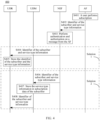
- a policy configuration method includes: A policy control network element receives traffic flow routing control information and first service type information corresponding to the traffic flow routing control information, where the first service type information includes first service category information and/or first subscriber category information; the policy control network element generates, based on the traffic flow routing control information, a policy and charging control rule for a user equipment corresponding to the first service type information; and the policy control network element sends the policy and charging control rule.
- the policy control network element may generate, based on the traffic flow routing control information, the policy and charging control rule for the user equipment corresponding to the first service type information. Therefore, in the foregoing solution, the policy may be configured for one or more users corresponding to the first service type information. For example, a policy may be configured for users belonging to different PLMNs, and users in a same group may correspond to different first service type information. Therefore, based on the first service type information, a policy may be configured for one or more users at a granularity smaller than the group, so that policy configuration efficiency can be improved and resources can be saved.
- the traffic flow routing control information corresponds to the first service type information means that the traffic flow routing control information is used to generate the policy and charging control rule for the user equipment corresponding to the first service type information.
- the user equipment corresponding to the first service type information includes a roaming user equipment and a non-roaming user equipment.
- the policy may be configured for both the roaming subscriber and the non-roaming subscriber, so that the policy configuration efficiency can be improved and the resources can be saved.
- that the policy control network element generates, based on the traffic flow routing control information, a policy and charging control rule for a user equipment corresponding to the first service type information includes: The policy control network element determines, based on subscription information of the user equipment, that the user equipment is the user equipment corresponding to the first service type information; and the policy control network element generates the policy and charging control rule for the user equipment based on the traffic flow routing control information.
- the method further includes: The policy control network element obtains the subscription information of the user equipment.
- the policy control network element obtains the subscription information of the user equipment includes: The policy control network element receives the subscription information of the user equipment from a unified data repository network element or a session management network element.
- the subscription information of the user equipment may be subscription information between the user equipment and a carrier, or may be subscription information between the user equipment and an application service provider.
- the subscription information between the user equipment and the application service provider may also be referred to as "application data".
- the subscription information of the user equipment may also be understood as information related to the user equipment, or may use another name, for example, user equipment information or user equipment association information. This is not limited herein.
- the subscription information of the user equipment may also be referred to as user equipment subscription information, user equipment subscription, or the like.
- the policy control network element may determine, based on the subscription information of the user equipment, whether the user equipment is the user equipment corresponding to the first type of service information. When determining that the user equipment is the user equipment corresponding to the first type of service information, the policy control network element generates the policy and charging control rule for the user equipment. Alternatively, more specifically, the policy control network element generates a policy and charging control rule for a protocol data unit session (PDU session) of the user equipment.
- PDU session protocol data unit session
- the policy may be configured for one or more user equipments corresponding to the first service type information. Therefore, the policy configuration efficiency can be improved and the resources can be saved.
- that the policy control network element determines, based on subscription information of the user equipment, that the user equipment is the user equipment corresponding to the first service type information includes: The policy control network element determines, when the first service type information matches second service type information, that the user equipment is the user equipment corresponding to the first service type information, where the second service type information is included in the subscription information of the user equipment, and the second service type information includes second service category information and/or second subscriber category information.
- the policy control network element may determine, based on the first service type information and the second service type information that is in the subscription information of the user equipment, whether one user equipment is the user equipment corresponding to the first service type information.
- that the policy control network element determines, when the first service type information matches second service type information, that the user equipment is the user equipment corresponding to the first service type information includes: If the second service type information includes the first service type information, the policy control network element determines, that the user equipment is the user equipment corresponding to the first service type information; or if the first service type information includes a plurality of pieces of service type information, when the second service type information includes all of the plurality of pieces of service type information, the policy control network element determines that the user equipment is the user equipment corresponding to the first service type information; or when the second service type information includes at least one of the plurality of pieces of service type information, the policy control network element determines that the user equipment is the user equipment corresponding to the first service type information, where each of the plurality of pieces of service type information includes the first service category information and/or the first subscriber category information.
- the first service type information may include only one piece of service type information, or may include a plurality of pieces of service type information. If the first service type information includes the plurality of pieces of service type information, in an implementation, when the second service type information includes all of the plurality of pieces of service type information in the first service type information, the policy control network element determines that the user equipment is the user equipment corresponding to the first service type information. In another implementation, when the second service type information includes the at least one of the plurality of pieces of service type information in the first service type information, the policy control network element determines that the user equipment is the user equipment corresponding to the first service type information.
- first service category information and/or the first subscriber category information included in each of the plurality of pieces of service type information may be the same or may be different. This is not limited in this application.
- whether the second service type information matches the first service type information may be determined in various different manners, so as to determine whether one user equipment is the user equipment corresponding to the first service type information.
- the method further includes: The policy control network element receives first application identification information and/or first application service provider identification information that correspond/corresponds to the first service type information.
- that the policy control network element determines that the user equipment is the user equipment corresponding to the first service type information includes: When the first application identification information and/or the first application service provider identification information match/matches second application identification information and/or second application service provider identification information, the policy control network element determines that the user equipment is the user equipment corresponding to the first service type information, where the second application identification information and/or the second application service provider identification information are/is included in the subscription information of the user equipment.
- the policy control network element may further determine, by using the first application identification information and/or the first application service provider identification information, that one user equipment is the user equipment corresponding to the first service type information.
- the method further includes: When the first application identification information and/or the first application service provider identification information are/is the same as the second application identification information and/or the second application service provider identification information, the policy control network element determines that the first application identification information and/or the first application service provider identification information match/matches the second application identification information or the second application service provider identification information.
- the policy control network element may determine, based on the first application identification information and/or the first application service provider identification information, and the second application identification information and/or the second application service provider identification information, that one user equipment is the user equipment corresponding to the first service type information.
- the network exposure function network element receives the traffic flow routing control information and the first service type information corresponding to the traffic flow routing control information from an application function network element, and sends the traffic flow routing control information and the first service type information corresponding to the traffic flow routing control information to the policy control network element; or after converting partial information in the traffic flow routing control information, the network exposure function network element sends the traffic flow routing control information and the first service type information corresponding to the traffic flow routing control information to the policy control network element.
- the method further includes: The policy control network element receives the subscription information of the user equipment from a unified data repository network element or a session management network element.
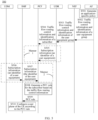
- a policy configuration method includes: A policy control network element receives traffic flow routing control information and identification information of a subscriber corresponding to the traffic flow routing control information; the policy control network element generates a policy and charging control rule for the subscriber based on the traffic flow routing control information; and the policy control network element sends the policy and charging control rule.
- the policy control network element may generate the policy and charging control rule for the subscriber based on the traffic flow routing control information. Therefore, in the foregoing solution, the policy may be configured for one or more subscribers. For example, the policy may be configured for subscribers belonging to different PLMNs. Therefore, policy configuration efficiency can be improved and resources can be saved.
- That the traffic flow routing control information corresponds to the identification information of the subscriber means that the traffic flow routing control information is associated with the identification information of the subscriber, the traffic flow routing control information is used to generate the policy and charging control rule for the user equipment corresponding to the identification information of the subscriber, or the traffic flow routing control information corresponds to a user equipment group in which the subscriber in the identification information of the subscriber is located.
- the subscriber includes a roaming subscriber and a non-roaming subscriber.
- the policy may be configured for both the roaming subscriber and the non-roaming subscriber, so that the policy configuration efficiency can be improved and the resources can be saved.
- that the policy control network element generates a policy and charging control rule for the subscriber based on the traffic flow routing control information includes: The policy control network element determines that the user equipment belongs to the subscriber; and the policy control network element generates the policy and charging control rule for the user equipment based on the traffic flow routing control information.
- the method further includes: The policy control network element obtains subscription information of the user equipment, where the subscription information of the user equipment includes an identifier of the user equipment.
- the policy control network element obtains subscription information of the user equipment includes: The policy control network element receives the subscription information of the user equipment from a unified data repository network element or a session management network element.
- the policy control network element may determine whether a user equipment is the subscriber, for example, determine, by using subscription information of the user equipment, whether the user equipment is the subscriber.
- the policy control network element may generate the policy and charging control rule for the user equipment, to improve the policy configuration efficiency and save the resources.
- that the policy control network element determines that the user equipment belongs to the subscriber includes: When the identifier of the user equipment is included in an identifier of the subscriber, the policy control network element determines that the user equipment belongs to the subscriber.
- the policy control network element may generate the policy and charging control rule for the user equipment based on policy information corresponding to the identifier of the subscriber, to configure an access control policy for a plurality of users.
- a policy control network element receives traffic flow routing control information and an identifier of a subscriber corresponding to the traffic flow routing control information includes: The policy control network element receives the traffic flow routing control information and the identifier of the subscriber corresponding to the traffic flow routing control information from an application function network element.
- a policy configuration method includes: An application function network element sends traffic flow routing control information and first service type information corresponding to the traffic flow routing control information, where the first service type information includes first service category information and/or first subscriber category information.
- the application function network element sends the traffic flow routing control information and the first service type corresponding to the traffic flow routing control information (for example, to a unified data repository network element through a network exposure function network element), so that the traffic flow routing control information may be used to configure a policy for one or more users corresponding to the first service type information.
- the policy may be configured for the one or more users corresponding to the first service type information.
- the policy may be configured for users belonging to different PLMNs. Therefore, policy configuration efficiency can be improved and resources can be saved.
- the method includes: The application function network element generates a policy, where the policy corresponds to the traffic flow routing control information and the first service type information.
- the method further includes: The application function network element sending identification information of a subscriber and the first service type information, where the identification information of the subscriber is associated with the first service type information.
- the application function network element sends the identification information of the subscriber and the first service type information to the unified data repository network element through the network exposure function network element.
- the application function network element may send the identification information of the subscriber and the first service type information, to configure the policy for the subscriber corresponding to the first service type information.
- the first service type information includes a plurality of pieces of service type information.
- the method further includes: The application function network element sends first application identification information and/or first application service provider identification information that correspond/corresponds to the first service type information.
- a policy configuration method includes: A unified data repository network element receives traffic flow routing control information and identification information of a user equipment group corresponding to the traffic flow routing control information; the unified data repository network element determines, based on the identification information of the user equipment group, identification information of a subscriber corresponding to the identification information of the user equipment group; and the unified data repository network element sends the traffic flow routing control information and the identification information of the subscriber to a policy control network element, where the traffic flow routing control is associated with the identification information of the subscriber.
- the unified data repository network element may determine, according to the identification information of the user equipment group, the identification information of the subscriber corresponding to the identification information of the user equipment group, and send the identification information of the subscriber and the traffic flow routing control information received by the unified data repository network element to the policy control network element, so that the policy control network element may configure a policy for the subscriber based on the information.
- the method before the unified data repository network element receives the traffic flow routing control information and the identification information of the user equipment group corresponding to the traffic flow routing control information from an application function network element, the method further includes: The unified data repository network element receives the identification information of the user equipment group and the identification information of the subscriber from the application function network element, where the identifier of the user equipment group is associated with the identification information of the subscriber.
- a policy configuration method includes: A unified data repository network element receives traffic flow routing control information and first service type information corresponding to the traffic flow routing control information, where the first service type information includes first service category information and/or first subscriber category information; the data management network element determines, based on the first service type information, identification information of a subscriber corresponding to the first service type information; and the unified data repository network element sends the traffic flow routing control information and the identification information of the subscriber to a policy control network element.
- the unified data repository network element may be a unified data repository function network element.
- the unified data repository network element may be a UDR.
- the unified data repository network element may determine, based on the first service type information, the identification information of the subscriber corresponding to identification information of a user equipment group, and send the identification information of the subscriber and the traffic flow routing control information received by the unified data repository network element to the policy control network element, so that the policy control network element may configure a policy for the subscriber based on the information.
- the method further includes: The unified data repository network element receives the identification information of the subscriber and the first service type information from the application function network element, where the identification information of the subscriber is associated with the first service type information.
- a policy configuration method includes: An application function network element sends traffic flow routing control information and identification information of a user equipment group corresponding to the traffic flow routing control information to a unified data repository network element, where the user equipment group includes a subscriber.
- the application function network element sends the traffic flow routing control information and the identification information of the user equipment group corresponding to the traffic flow routing control information (for example, to a unified data repository network element through a network exposure function network element), so that the traffic flow routing control information may be used to configure a policy for one or more subscribers in the user equipment group.
- the policy may be configured for the one or more subscribers in the user equipment group.
- the policy may be configured for users belonging to different PLMNs. Therefore, policy configuration efficiency can be improved and resources can be saved.
- an application function network element before that an application function network element sends traffic flow routing control information and identification information of a user equipment group corresponding to the traffic flow routing control information to a unified data repository network element, the method further includes: The application function network element sends an identifier of the user equipment group and identification information of the subscriber to the unified data repository network element, where the identification information of the user is associated with the identifier of the user equipment group.
- a policy configuration method includes: A session management network element receives subscription information of a user equipment from a unified data management network element, where the subscription information includes service type information, and the service type information includes service category information and/or subscriber category information; and the session management network element sends the subscription information to a policy control network element.
- the session management network element may send, to the policy control network element, the subscription information that is of the user equipment and that is received from the unified data management network element, so that the policy control network element may configure a policy for the user equipment.
- a session management network element before that a session management network element receives subscription information of a user equipment from a unified data management network element, the method further includes: The session management network element sends a subscription information request message to the unified data repository network element, where the subscription information request message includes an identifier of the user equipment, and the subscription information request message is used to request the subscription information of the user equipment.
- a policy configuration method includes: A unified data management network element receives subscription information and identification information of a subscriber, where the subscription information includes service type information, the service type information includes service category information and/or subscriber category information, and the subscription information is associated with the identification information of the subscriber; and the unified data management network element stores the subscription information and the identification information of the subscriber.
- the unified data management network element may pre-store the received subscription information and the identification information of the subscriber corresponding to the subscription information, to configure a policy for one or more subscribers based on the information.
- the method further includes: The unified data management network element receives a subscription information request message from a session management network element, where the subscription information request message includes identification information of a user equipment, and the subscription information request message is used to request subscription information of the user equipment; and the unified data management network element sends the subscription information to the session management network element when the identification information of the user equipment is included in the identification information of the subscriber.
- the subscription information further includes second application identification information and/or second application service provider identification information.
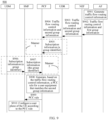
- a policy configuration method includes: A policy control network element receives traffic flow routing control information and group information corresponding to the traffic flow routing control information, where the group information includes a plurality of group identifiers; the policy control network element generates, based on the traffic flow routing control information, a policy and charging control rule for a user equipment that matches the group information; and the policy control network element sends the policy and charging control rule.
- the policy control network element may generate, based on the traffic flow routing control information, the policy and charging control rule for the user equipment that matches the group information, so that the policy may be configured for one or more subscribers.
- the policy may be configured for user equipments belonging to different PLMNs (for example, a roaming user equipment and a non-roaming user equipment). Therefore, policy configuration efficiency can be improved and resources can be saved.
- the policy control network element may receive the traffic flow routing control information and the group information corresponding to the traffic flow routing control information.
- the policy control network element may receive the traffic flow routing control information and the group information from a unified data repository network element; the policy control network element may receive the traffic flow routing control information and the group information from a network exposure function network element; or the policy control network element may receive the traffic flow routing control information and the group information from an application function network element.
- the policy control network element may generate the policy control and charging rule for the user equipment by using the traffic flow routing control information.
- a policy control network element receives traffic flow routing control information and group information corresponding to the traffic flow routing control information includes: The policy control network element receives the traffic flow routing control information and the group information corresponding to the traffic flow routing control information from the unified data repository network element.
- group information herein may be information provided by the application function network element; or may be information obtained by converting, by the network exposure function network element, information provided by the application function network element.
- the following provides descriptions with reference to examples.
- the application function network element after generating traffic flow routing control information, sends the traffic flow routing control information and group information (denoted as first group information) to the network exposure function network element, where the first group information includes a plurality of internal group identifiers.
- the network exposure function network element After receiving the traffic flow routing control information and the first group information from the application function network element, sends the traffic flow routing control information and group information (denoted as second group information) to the unified data repository network element.
- the first group information is the same as the second group information.
- the unified data repository network element After receiving the traffic flow routing control information and the second group information, sends the traffic flow routing control information and the second group information to the policy control network element.
- the application function network element after generating traffic flow routing control information, sends the traffic flow routing control information and group information (denoted as first group information) to the network exposure function network element, where the first group information includes a plurality of external group identifiers.
- the network exposure function network element After receiving the traffic flow routing control information and the first group information from the application function network element, converts the plurality of external group identifiers in the first group information into internal group identifiers to obtain new group information (denoted as a second group of information), and then the network exposure function network element sends the traffic flow routing control information and the group information (denoted as the second group information) to the unified data repository network element.
- the first group information is the same as the second group information.
- the unified data repository network element After receiving the traffic flow routing control information and the second group information, sends the traffic flow routing control information and the second group information to the policy control network element.
- the group information that corresponds to the traffic flow routing control information and that is received by the policy control network element may correspond to the second group information in the foregoing examples.
- the group information that corresponds to the traffic flow routing control information and that is received by the policy control network element may correspond to the second group information in the foregoing examples.
- that the policy control network element generates, based on the traffic flow routing control information, a policy and charging control rule for a user equipment that matches the group information includes: The policy control network element determines, based on subscription information of the user equipment, that the user equipment matches the group information; and the policy control network element generates the policy and charging control rule for the user equipment based on the traffic flow routing control information.
- the policy control network element may determine, based on the subscription information, whether the user equipment matches the group information. If the user equipment matches the group information, the policy control network element may generate the policy control and charging rule for the user equipment based on the traffic flow routing control information corresponding to the group information, so that the policy may be configured for a plurality of subscribers. Therefore, efficiency is improved and resources are saved.
- that the policy control network element determines, based on subscription information of the user equipment, that the user equipment matches the group information includes: When the subscription information of the user equipment includes the plurality of group identifiers in the group information, the policy control network element determines that the user equipment matches the group information.
- the policy control network element may generate the policy and charging control rule for the user equipments whose subscription information includes the plurality of group identifiers in the group information.
- the policy control network element may generate the policy and charging control rule for one or more different user equipments, to improve the efficiency.
- the policy control network element may generate the policy and charging control rule for the user equipment whose subscription information satisfies the logical relationship between the plurality of group identifiers in the group information, in other words, the policy control network element may generate the policy and charging control rule for one or more different user equipments, to improve the efficiency.
- a policy configuration method includes: An application function network element sends traffic flow routing control information and group information corresponding to the traffic flow routing control information, where the group information includes a plurality of group identifiers.
- the plurality of group identifiers in the group information have a logical relationship.
- the method further includes: The policy control network element receives subscription information of user equipment from a unified data repository network element or a session management network element.
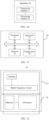
- a communication apparatus includes: a transceiver module, configured to receive traffic flow routing control information and first service type information corresponding to the traffic flow routing control information, where the first service type information includes first service category information and/or first subscriber category information; and a processing module, configured to generate a policy and charging control rule for a user equipment corresponding to the first service type information, where the policy control network element sends the policy and charging control rule.
- the processing module may be specifically configured to: determine, based on subscription information of the user equipment, that the user equipment is the user equipment corresponding to the first service type information; and generate the policy and charging control rule for the user equipment based on the traffic flow routing control information.
- the processing module may be specifically configured to determine that the user equipment is the user equipment corresponding to the first service type information, where the second service type information is included in the subscription information of the user equipment, and the second service type information includes second service category information and/or second subscriber category information.
- the processing module when the second service type information includes the first service type information, the processing module may be specifically configured to determine that the user equipment is the user equipment corresponding to the first service type information; or when the second service type information includes at least one of a plurality of pieces of service type information in the first service type information, the processing module may be specifically configured to determine that the user equipment is the user equipment corresponding to the first service type information.
- the transceiver module is further configured to receive first application identification information and/or first application service provider identification information that correspond/corresponds to the first service type information.
- the processing module may be specifically configured to: when the first application identification information and/or the first application service provider identification information match/matches second application identification information and/or second application service provider identification information, determine that the user equipment is the user equipment corresponding to the first service type information, where the second application identification information and/or the second application service provider identification information are/is included in the subscription information of the user equipment.
- the processing module is further configured to: when the first application identification information and/or the first application service provider identification information are/is the same as the second application identification information or the second application service provider identification information, determine, for the policy control network element, that the first application identification information and/or the first application service provider identification information match/matches the second application identification information or the second application service provider identification information.
- the transceiver module may be specifically configured to receive the traffic flow routing control information and the first service type information corresponding to the traffic flow routing control information from a network exposure function network element.
- the processing module may be specifically configured to generate, based on the traffic flow routing control information, the policy and charging control rule for a session of the user equipment corresponding to the first service type information.
- a communication apparatus includes: a transceiver module, configured to receive traffic flow routing control information and identification information of a subscriber corresponding to the traffic flow routing control information; and a processing module, configured to generate a policy and charging control rule for the subscriber based on the traffic flow routing control information, where the transceiver module is further configured to send the policy and charging control rule.
- the processing module may be specifically configured to: determine that a user equipment belongs to the subscriber; and generate the policy and charging control rule for the user equipment based on the traffic flow routing control information.
- the processing module may be specifically configured to: if an identifier of the user equipment is included in an identifier of the subscriber, determine that the user equipment belongs to the subscriber.
- the transceiver module may be specifically configured to receive the traffic flow routing control information and the identifier of the subscriber corresponding to the traffic flow routing control information from an application function network element.
- a policy configuration apparatus includes: a transceiver module, configured to send traffic flow routing control information and first service type information corresponding to the traffic flow routing control information, where the first service type information includes first service category information and/or first subscriber category information.
- the transceiver module is further configured to send identification information of a subscriber and the first service type information, where the identification information of the subscriber is associated with the first service type information.
- the first service type information includes a plurality of pieces of service type information.
- the transceiver module is further configured to send first application identification information and/or first application service provider identification information that correspond/corresponds to the first service type information.
- a policy configuration apparatus includes: a transceiver module, configured to receive traffic flow routing control information and identification information of a user equipment group corresponding to the traffic flow routing control information; and a processing module, configured to determine, based on the identification information of the user equipment group, identification information of a subscriber corresponding to the identification information of the user equipment group, where the transceiver module is further configured to send the traffic flow routing control information and the identification information of the subscriber to a policy control network element, where the traffic flow routing control is associated with the identification information of the subscriber.
- the transceiver module is further configured to receive the identification information of the user equipment group and the identification information of the subscriber from an application function network element, where an identifier of the user equipment group is associated with the identification information of the subscriber.
- a policy configuration apparatus includes: a transceiver module, configured to receive traffic flow routing control information and first service type information corresponding to the traffic flow routing control information, where the first service type information includes first service category information and/or first subscriber category information; and a processing module, configured to determine, based on the first service type information, identification information of a subscriber corresponding to the first service type information, where the transceiver module is further configured to send the traffic flow routing control information and the identification information of the subscriber to a policy control network element.
- the transceiver module is further configured to receive the identification information of the subscriber and the first service type information from an application function network element, where the identification information of the subscriber is associated with the first service type information.
- a policy configuration apparatus includes: a transceiver module, configured to send traffic flow routing control information and identification information of a user equipment group corresponding to the traffic flow routing control information to a unified data repository network element, where the user equipment group includes a subscriber.
- the transceiver module is further configured to send an identifier of the user equipment group and identification information of the subscriber to the unified data repository network element, where the identification information of the subscriber is associated with the identifier of the user equipment group.
- the identification information of the subscriber is associated with the identifier of the user equipment group may mean that the subscriber corresponding to the identification information of the subscriber belongs to the user equipment group corresponding to the identifier of the user equipment group.
- a policy configuration apparatus includes: a transceiver module, configured to: receive subscription information of user equipment from a unified data repository network element or a session management network element, where the subscription information includes second service type information; and send the subscription information to a policy control network element.
- the transceiver module is configured to send a subscription information request message to a unified data management network element, where the subscription information request message includes an identifier of the user equipment, and the subscription information request message is used to request the subscription information of the user equipment.
- a policy configuration apparatus configured to receive subscription information and an identifier of a subscriber, where the subscription information includes service type information, the service type information includes service category information and/or subscriber category information, and the subscription information is associated with identification information of the subscriber; and a processing module, configured to store the subscription information and identification information of one or more subscribers.
- the transceiver module is further configured to receive a subscription information request message from a session management network element, where the subscription information request message includes identification information of a user equipment, and the subscription information request message is used to request subscription information of the user equipment; and when the identification information of the user equipment is included in the identification information of the subscriber, the transceiver module is further configured to send the subscription information to the session management network element.
- the subscription information further includes second application identification information and/or second application service provider identification information.
- a communication apparatus includes: a transceiver module, configured to receive traffic flow routing control information and group information corresponding to the traffic flow routing control information, where the group information includes a plurality of group identifiers; and a processing module, configured to generate, based on the traffic flow routing control information, a policy and charging control rule for a user equipment that matches the group information, where the transceiver module is further configured to send the policy and charging control rule.
- the processing module is specifically configured to: determine, based on subscription information of the user equipment, that the user equipment matches the group information; and generate the policy and charging control rule for the user equipment based on the traffic flow routing control information.
- the processing module is specifically configured to: when the subscription information of the user equipment includes the plurality of group identifiers in the group information, determine that the user equipment matches the group information.
- the plurality of group identifiers in the group information have a logical relationship; and the processing module is specifically configured to: when the subscription information of the user equipment satisfies the logical relationship between the plurality of group identifiers, determine that the user equipment matches the group information.
- the transceiver module is further configured to receive the subscription information of the user equipment from a unified data repository network element or a session management network element.
- a communication apparatus includes: a transceiver module, configured to send traffic flow routing control information and group information corresponding to the traffic flow routing control information, where the group information includes a plurality of group identifiers.
- the plurality of group identifiers in the group information have a logical relationship.
- a communication apparatus configured to perform the methods provided in the first aspect to the tenth aspect.
- the apparatus may include units and/or modules configured to perform the methods provided in the first aspect to the tenth aspect, for example, a processing module and/or a transceiver module (which may also be referred to as a communication module).
- the apparatus is a network device.
- the apparatus is a policy control network element, an application function network element, or a unified data repository network element.
- the transceiver module may be a transceiver or an input/output interface
- the processing module may be a processor.
- the apparatus is a chip, a chip system, or a circuit used in a network device.
- the transceiver module may be an input/output interface, an interface circuit, an output circuit, an input circuit, a pin, a related circuit, or the like on the chip, the chip system, or the circuit; and the processing module may be a processor, a processing circuit, a logic circuit, or the like.
- a communication apparatus includes: a memory, configured to store a program; and a processor, configured to execute the program stored in the memory.
- the processor is configured to perform the method provided in the first aspect to the tenth aspect.
- this application provides a processor, configured to perform the method provided in the foregoing aspects.
- a process of sending the foregoing information and a process of obtaining/receiving the foregoing information in the foregoing methods may be understood as a process of outputting the foregoing information by the processor and a process of receiving the foregoing input information by the processor.
- the processor When outputting the information, the processor outputs the information to a transceiver, so that the transceiver transmits the information. After the information is outputted by the processor, other processing may further need to be performed on the information before the information arrives at the transceiver.
- the transceiver obtains/receives the foregoing information, and inputs the information into the processor. Further, after the transceiver receives the foregoing information, other processing may need to be performed on the information before the information is input into the processor.
- the request message is received mentioned in the foregoing method may be understood as that the processor receives the input information.
- all the operations may be more generally understood as operations such as outputting, receiving, and inputting of the processor, instead of operations of transmitting, sending, and receiving directly performed by a radio frequency circuit and an antenna.
- the processor may be a processor specially configured to perform the methods, or a processor, for example, a general-purpose processor, that executes computer instructions in the memory to perform the methods.
- the memory may be a non-transitory (non-transitory) memory, for example, a read-only memory (read-only memory, ROM).
- the memory and the processor may be integrated on a same chip, or may be separately disposed on different chips. A type of the memory and a manner of disposing the memory and the processor are not limited in this embodiment of this application.
- a computer-readable storage medium stores program code to be executed by a device, and the program code is used to perform the methods provided in the first aspect to the tenth aspect.
- a computer program product including instructions is provided.
- the computer program product runs on a computer, the computer is enabled to perform the methods provided in the first aspect to the tenth aspect.
- a chip is provided.
- the chip includes a processor and a communication interface.
- the processor reads, through the communication interface, instructions stored in a memory, to perform the methods provided in the first aspect to the tenth aspect.
- the chip may further include the memory.
- the memory stores instructions, and the processor is configured to execute the instructions stored in the memory.
- the processor is configured to perform the methods provided in the first aspect to the tenth aspect.
- the technical solutions provided in this application may be applied to various communication systems, for example, a 5th generation (5th generation, 5G) system or a new radio (new radio, NR) system, a long term evolution (long term evolution, LTE) system, an LTE frequency division duplex (frequency division duplex, FDD) system, and an LTE time division duplex (time division duplex, TDD) system.
- 5G 5th generation
- NR new radio
- LTE long term evolution
- LTE frequency division duplex frequency division duplex
- TDD time division duplex
- the technical solutions provided in this application may be further applicable to a future communication system, for example, a 6th generation mobile communication system.
- the technical solutions provided in this application may be further applied to device to device (device to device, D2D) communication, vehicle-to-everything (vehicle-to-everything, V2X) communication, machine to machine (machine to machine, M2M) communication, machine type communication (machine type communication, MTC), an internet of things (internet of things, IoT) communication system, or another communication system.
- D2D device to device
- V2X vehicle-to-everything
- machine to machine machine to machine
- M2M machine type communication
- MTC machine type communication
- IoT internet of things
- FIG. 1 is a schematic diagram of a 5th generation (5th generation, 5G) network architecture based on a service-oriented architecture.
- the 5G network architecture shown in FIG. 1 may include three parts: a terminal device, a data network (data network, DN), and a carrier network. The following briefly describes functions of some network elements in the 5G network architecture.
- the carrier network may include one or more of the following network elements: an authentication server function (authentication server function, AUSF) network element, a network exposure function (network exposure function, NEF) network element, a policy control function (policy control function, PCF) network element, a unified data management (unified data management, UDM) network element, a unified data repository (unified data repository, UDR), a network repository function (network repository function, NRF) network element, an application function (application function, AF) network element, an access and mobility management function (access and mobility management function, AMF) network element, a session management function (session management function, SMF) network element, a radio access network (radio access network, RAN), a user plane function (user plane function, UPF) network element, and the like.
- a part other than the radio access network may be referred to as a core network part.
- the access and mobility management network element is mainly configured to perform mobility management, access management, and the like.
- the access and mobility management network element may be configured to implement a function, for example, access authorization/authentication, other than session management in functions of an MME.
- the access and mobility management network element may be an access and mobility management function (access and mobility management function, AMF).
- AMF access and mobility management function
- an access and mobility management device may still be the AMF, or may have another name. This is not limited in this application.
- a session management function (session management function, SMF) is mainly used to perform session management, user equipment internet protocol (internet protocol, IP) address assignment and management, selection and management of a user plane function, a termination point of a policy control and charging function interface, downlink data notification, and the like.
- SMF session management function
- the session management network element may be a session management function network element.
- the session management network element may still be an SMF network element, or may have another name. This is not limited in this application.
- a policy control function (policy control function, PCF) is a unified policy framework for guiding network behavior, and provides policy rule information and the like for a control plane function network element (for example, the AMF or the SMF).
- the policy control network element may be a policy and charging rules function (policy and charging rules function, PCRF) network element.
- policy control network element may be a policy control function PCF network element.
- PCF policy control function
- the policy control network element may still be a PCF network element, or may have another name. This is not limited in this application.
- An application function (application function, AF) is used to perform applicationaffected data routing, access a network exposure function network element in a wireless manner, or interact with a policy framework to perform policy control, and the like.
- an application network element may be an application function network element.
- an application network element may still be an AF network element, or may have another name. This is not limited in this application.
- a unified data management (unified data management, UDM) is used for UE identifier processing, access authentication, registration, mobility management, and the like.
- a data management network element may be a unified data management network element.
- a data management network element may be a home subscriber server (home subscriber server, HSS) network element.
- HSS home subscriber server
- a unified data management may still be a UDM network element, or may have another name. This is not limited in this application.
- An authentication server function (authentication server function, AUSF) is used to provide an authentication service, generate a key to implement two-way authentication for a user equipment, and support a unified authentication framework.
- the authentication server may be an authentication server function network element.
- an authentication server function network element may still be an AUSF network element, or may have another name. This is not limited in this application.
- the data network is a network located outside the carrier network.
- the carrier network may access a plurality of DNs, and a plurality of services may be deployed on the DN, to provide a service such as data and/or voice for the terminal device.
- the DN is a private network of a smart factory
- a sensor installed in a workshop of the smart factory may be a terminal device
- a control server of the sensor is deployed in the DN
- the control server may serve the sensor.
- the sensor may communicate with the control server, to obtain instructions of the control server, transmit collected sensor data to the control server according to the instructions, and the like.
- the DN is an internal office network of a company
- a mobile phone or a computer of an employee of the company may be a terminal device, and the mobile phone or the computer of the employee may access information, data resources, and the like in the internal office network of the company.
- Nausf, Nnef, Npcf, Nudm, Naf, Namf, Nsmf, N1, N2, N3, N4, and N6 are interface sequence numbers.
- meanings of the interface sequence numbers refer to meanings defined in the 3GPP standard protocol. This is not limited herein.
- the network elements may communicate with each other through interfaces shown in the figure.
- the UE and the AMF may interact with each other through an N1 interface, and an interaction message may be referred to as, for example, an N1 message (N1 Message).
- the RAN and the AMF may interact with each other through an N2 interface, and the N2 interface may be for sending a non-access stratum (non-access stratum, NAS) message and the like.
- the RAN and the UPF may interact with each other through an N3 interface, and the N3 interface may be for transmitting user plane data and the like.
- the SMF and the UPF may interact with each other through an N4 interface, and the N4 interface may be for transmitting information such as tunnel identification information of an N3 connection, data buffering indication information, and a downlink data notification message.
- the UPF and the DN may interact with each other through an N6 interface, and the N6 interface may be for transmitting user plane data and the like.
- a relationship between another interface and each of the network elements is shown in FIG. 1 . For brevity, details are not described herein.
- the AMF, the SMF, the UPF, the network slice selection function network element (network slice selection function, NSSF) network element, the NEF, the AUSF, the NRF, the PCF, and the UDM shown in FIG. 1 may be understood as network elements configured to implement different functions in a core network, for example, may be combined as required to form a network slice.
- the network elements of the core network may be independent devices, or may be integrated into a same device to implement different functions. Specific forms of the foregoing network elements are not limited in this application.
- the network elements or functions may be network elements in a hardware device, may be software functions running on dedicated hardware, or may be virtualized functions instantiated on a platform (for example, a cloud platform).
- a platform for example, a cloud platform.
- the network device is an access and mobility management function AMF and the base station is a radio access network RAN is used for description.
- a network architecture and a service scenario that are described in embodiments of this application are intended to describe the technical solutions in embodiments of this application more clearly, and do not constitute any limitation on the technical solutions provided in embodiments of this application.
- a person of ordinary skill in the art may know that, with evolution of the network architecture and emergence of a new service scenario, the technical solutions provided in embodiments of this application are also applicable to a similar technical problem.
- a computer-readable medium may include but is not limited to: a magnetic storage component (for example, a hard disk, a floppy disk, or a magnetic tape), an optical disc (for example, a compact disc (compact disc, CD) or a digital versatile disc (digital versatile disc, DVD)), a smart card, and a flash memory component (for example, an erasable programmable read-only memory (erasable programmable read-only memory, EPROM), a card, a stick, or a key drive).
- a magnetic storage component for example, a hard disk, a floppy disk, or a magnetic tape
- an optical disc for example, a compact disc (compact disc, CD) or a digital versatile disc (digital versatile disc, DVD)
- a smart card for example, an erasable programmable read-only memory (erasable programmable read-only memory, EPROM), a card, a stick, or a key drive).
- EPROM erasable programmable read-only
- various storage media described in this specification may represent one or more devices and/or other machine-readable media for storing information.
- machine-readable media may include but is not limited to a wireless channel, and various other media that can store, contain, and/or carry instructions and/or data.
- An evolved packet system (evolved packet system, EPS) defined in the 3rd generation partnership project (3rd generation partnership project, 3GPP) includes a 5G network architecture based on a service-oriented interface or a 5G network architecture based on a point-to-point interface.
- a 5G network may be divided into three parts: a UE, a DN, and a carrier network.
- the carrier network may include one or more of the network elements shown in FIG. 1 other than the UE and the DN, or may further include another network element.
- the 5G network structure is not limited in this application. For details, refer to descriptions in the current related technology.
- mobile communication has created many new application fields, such as an augmented reality (augmented reality, AR) technology, a virtual reality (virtual reality, VR) technology, an internet of vehicles technology, industrial control, and an IoT.
- AR augmented reality
- VR virtual reality
- IoT IoT
- mobile communication also has higher requirements on network bandwidth and a delay. This further increases network load.
- a traditional centralized anchor deployment mode is increasingly difficult to support a fast-growing mobile service traffic model.
- increased traffic is finally concentrated in the gateways and a core equipment room. This imposes higher requirements on backhaul network bandwidth, an equipment room throughput, and gateway specifications.
- a long-distance backhaul network and a complex transmission environment from an access network to the anchor gateway cause a high delay and high jitter of user packet transmission.
- edge computing moves a user plane network element and a service processing capability downwards to a network edge, to implement distributed local processing of service traffic. This avoids excessive traffic concentration and greatly lowers requirements for specifications of the core equipment room and centralized gateway.
- edge computing also shortens the distance of the backhaul network, reduces the end-to-end transmission delay and jitter of user packets, and makes deployment of an ultra-low delay service possible.
- an edge computing platform In comparison with a DN network, an edge computing platform is deployed at a sink UPF (namely, a local UPF), and the DN network is deployed at a remote UPF.
- a path (as shown in the solid line) for a UE to access the DN
- a path (as shown in the dotted line) for the UE to access the edge computing platform is greatly shortened. Therefore, the edge computing technology can provide users with low-delay and high-bandwidth services.
- Roaming refers to a situation in which a mobile user of a carrier A accesses a network of a carrier B. For example, if a user of China Mobile accesses a network of China Unicom, the user of China Mobile is referred to as roaming to the network of China Unicom.
- a home network of a user is referred to as a hometown network of the user, and is also referred to a home public land mobile network (home public land mobile network, HPLMN).
- a network to which the user roams is referred to as a visited network of the user, and is also referred to as a visited public land mobile network (visited public land mobile network, VPLMN).
- PDU sessions there are two types of protocol data unit (protocol data unit, PDU) sessions (Sessions): a home routed PDU session (home routed PDU Session, HR PDU Session) and a local breakout PDU session (local breakout PDU Session, LBO PDU session).
- PDU protocol data unit
- HR PDU Session home routed PDU Session
- LBO PDU session local breakout PDU Session
- a group usually includes a plurality of members. Managing members in a group facilitates management.
- a group is identified by using a group identifier (group Identifier, group ID).
- group ID group Identifier
- a group may include a plurality of group members (all the members belong to a same PLMN).
- an AF When creating a group, an AF provides an external group identifier (External Group ID) to identify the group on the AF side and provides a list of UE members in the group.
- External Group ID External Group ID
- the group information provided by the AF is finally sent to a UDM.
- the UDM generates an internal group ID corresponding to the external group ID.
- the ID is used to identify the group in a 5GC network.
- the UDM stores a group member list corresponding to the internal group ID.
- a specific structure of an execution body of the method provided in embodiments of this application is not particularly limited in the following embodiments provided that communication can be performed according to the method provided in embodiments of this application by running a program that records code of the method provided in embodiments of this application.
- the method provided in embodiments of this application may be performed by a core network device, or a functional module that is in the core network device and that can invoke and execute the program.
- indicate may be understood as “enable”, and “enable” may include “directly enable” and “indirectly enable”.
- enable A When a piece of information is described to enable A, the information may directly enable A or indirectly enable A, but it does not mean that the information definitely carries A.
- the to-be-enabled information may be enabled in many manners.
- the to-be-enabled information may be directly enabled, such as the to-be-enabled information or an index of the to-be-enabled information.
- the to-be-enabled information may be indirectly enabled by enabling other information, where there is an association relationship between the other information and the to-be-enabled information.
- only a part of the to-be-enabled information may be enabled, and other parts of the to-be-enabled information are known or agreed in advance.
- specific information may be enabled through a pre-agreed (for example, specified in a protocol) sequence of all information, to reduce enabling overheads to some extent.
- a common part of all the information may be identified and enabled in a unified manner, to reduce enabling overheads caused by enabling same information separately.
- the terms “include”, “have”, and any other variants mean to cover non-exclusive inclusion, for example, a process, method, system, product, or device that includes a list of steps or units is not necessarily limited to those expressly listed steps or units, but may include other steps or units not expressly listed or inherent to such a process, method, product, or device.
- pre-configured may include “predefined”, for example, defined in a protocol.
- Predefined may be implemented in a manner of storing corresponding code, a table, or other manners for indicating related information in a device (for example, including network elements) in advance.
- a specific implementation of “predefined” is not limited in this application.
- the one or more memories may be separately disposed, or may be integrated into an encoder, a decoder, a processor, or a communication apparatus. Alternatively, a part of the one or more memories may be separately disposed, and a part of the one or more memories may be integrated into a decoder, a processor, or a communication apparatus.
- a type of the memory may be a storage medium in any form. This is not limited in this application.
- protocols in embodiments of this application may be standard protocols in the communication field, for example, may include a 5G protocol, a new radio (new radio, NR) protocol, and a related protocol applied to a future communication system. This is not limited in this application.
- the following describes a policy configuration method 200 with reference to FIG. 2 .
- the method 200 includes the following steps.
- S201 Generate an AF request.
- an AF generates an AF request message (Creation of AF request).
- the request message may include the following information elements: target UE related information (for example, a target UE identifier (Target UE Identifier)), an edge computing/application server address list (DNAIs) and information (a DNN, S-NSSAI, an Application ID, or an AF-service-Identifier) used to identify traffic, a data path QoS monitoring request, and the like.
- target UE related information for example, a target UE identifier (Target UE Identifier)
- DNAIs edge computing/application server address list
- information a DNN, S-NSSAI, an Application ID, or an AF-service-Identifier
- the target UE related information may be an individual UE (individual UE), and may be identified by using a GPSI, an IP address/prefix, or a MAC address; may be a group of UEs (a group of UEs), and may be identified by using an external group ID; or may be any UE (any UE) identified by using a combination of a DNN, S-NSSAI, and a DNAI.
- a GPSI GPSI
- IP address/prefix or a MAC address
- a group of UEs a group of UEs
- an external group ID or may be any UE (any UE) identified by using a combination of a DNN, S-NSSAI, and a DNAI.
- DNAI DNAI
- the AF may further include traffic flow routing control information in the AF request message.
- the AF may include an identifier of a group (group ID) in the AF request message, to provide an access control policy for a plurality of UEs in the group.
- S202 The AF sends the AF request message to an NEF.
- the AF invokes an Nnef_TrafficInfluence service to send generated application layer information to the NEF.
- Main operations include request creation, update, and deletion.
- S203 A UDR and the NEF store/update/remove the information.
- the NEF when the AF invokes an Nnef_TrafficInfluence_Create/Updating service, the NEF stores the received application layer information in the UDR. When the AF invokes an Nnef_TrafficInfluence_Delete service, the NEF deletes the application layer information from the UDR.
- S204 The NEF sends an AF request response message to the AF.
- the NEF sends the response message to the AF.
- S205 The UDR sends a DM notification message to a PCF.
- the UDR sends, to the PCF, an Nudr_DM_Notify notification indicating data modification.
- the PCF determines servicerelated PDU session establishment and a corresponding policy based on the application layer information and request.
- S206 The PCF sends an SM policy control update notification to an SMF.
- the PCF invokes an Npcf_SMPolicyControl_UpdateNotify service to send a policy update to the SMF/an I-SMF.
- the message may carry an ID of a group, indicating that the policy is for a plurality of UEs in the group.
- S207 The SMF and a UPF perform traffic flow routing reconfiguration (Traffic Routing Reconfiguration).
- the SMF After receiving the related policy from the PCF, the SMF performs traffic flow routing reconfiguration with the UPF according to the related policy.
- the AF may define a policy by using a group-based mechanism, to be specific, the AF may predefine a group and a group member included in the group, and then use a group ID to represent the group member.
- the group-based mechanism can only be used for a non-roaming (non-roaming) scenario in a same PLMN, in other words, the group can only include UEs in a same PLMN. Therefore, the AF cannot define a policy for UEs in different PLMNs. For example, the AF cannot perform access policy control for both a roaming subscriber and a non-roaming subscriber.
- Embodiments of this application may be applied to the network architecture shown in FIG. 1 . This is not limited.
- FIG. 3 is an example flowchart of a policy configuration method 300 according to an embodiment of this application.
- a possible implementation (denoted as a solution A) provided in an embodiment of this application is described with reference to the method 300. It can be learned from FIG. 3 that the method 300 includes the following steps.
- S301 An AF generates a policy.
- the AF generates a policy.
- the policy may be an application-specific policy, and the policy may also be referred to as an access control policy or a traffic offload policy (traffic offload policy).
- the policy may be, for example, allowing a member belonging to a group to access edge control.
- S302 The AF sends traffic flow routing control information and first service type information to an NEF.
- the AF may invoke an Nnef_TrafficInfluence service to send the traffic flow routing control information and the first service type (service type) information that correspond to the policy to the NEF, where the traffic flow routing control information corresponds to the first service type information.
- Nnef_TrafficInfluence service to send the traffic flow routing control information and the first service type (service type) information that correspond to the policy to the NEF, where the traffic flow routing control information corresponds to the first service type information.
- the traffic flow routing control information may be information used to control/influence traffic flow routing.
- the traffic flow routing control information is used to route a traffic flow to local access of a data network.
- the traffic flow routing control information may include service descriptor information (for example, an application ID, an FQDN, an IP 5-tuple), application location information (for example, a DNAI), target UE identification information (for example, a UE ID or a group ID), and N6 interface service routing requirement information.
- service descriptor information for example, an application ID, an FQDN, an IP 5-tuple
- application location information for example, a DNAI
- target UE identification information for example, a UE ID or a group ID
- N6 interface service routing requirement information for example, in different scenarios, the traffic flow routing control information may alternatively have another name.
- the traffic flow routing control information may also be referred to as access control policy information or traffic routing control information. This is not limited in this application.
- the "traffic flow” in this application may also be referred to as "traffic”.
- the "traffic flow routing control information” may also be referred to as “traffic routing control information”, and the two may be equivalently exchanged.
- the "traffic flow routing control information” may also be referred to as application function request information.
- the first service type information may be subscription information (for example, video very important person (Video VIP) subscription information) between a user equipment and a carrier (for example, a network carrier), or between the user equipment and an application service provider (for example, companies that provide various internet application services, such as Google, Facebook, and Tencent). Operators or application service providers may provide different services, policies, and the like for a subscriber based on the subscription information.
- subscription information for example, video very important person (Video VIP) subscription information
- a carrier for example, a network carrier
- an application service provider for example, companies that provide various internet application services, such as Google, Facebook, and Tencent.
- Operators or application service providers may provide different services, policies, and the like for a subscriber based on the subscription information.
- the first service type information may include information about a service or an application allowed to be used by a user, for example, service identification information, service name information, service range information, service category information, allowed service category information, allowed service name information, allowed service range information, application descriptor information (a fully qualified domain name (fully qualified domain name, FQDN), an application identifier (application identifier, App ID), a 5-tuple, and the like), subscriber level information, subscriber category information, and identification information of a group to which a user belongs.
- service identification information service name information, service range information, service category information, allowed service category information, allowed service name information, allowed service range information
- application descriptor information a fully qualified domain name (fully qualified domain name, FQDN), an application identifier (application identifier, App ID), a 5-tuple, and the like
- subscriber level information subscriber category information
- subscriber category information and identification information of a group to which a user belongs.
- the first service type information includes first category information and/or first subscriber category information.
- the first service category information may be information about a service or an application that can be used by the user equipment, for example, information about a service or an application that a user is allowed to use (for example, service identification information, service name information, service range information, service category information, allowed service category information, allowed service name information, allowed service range information, and application descriptor information (an FQDN, an App ID, or a 5-tuple)).
- the first subscriber category information may be information about a service subscribed by the user equipment, subscriber level information (for example, gold, silver, and bronze users), subscriber category information, and identification of a group to which a user belongs.
- the first service type information may be included in the traffic flow routing control information as a part of the traffic flow routing control information; or the first service type information may not be included in the traffic flow routing control information.
- the message may further include a target UE identifier (Target UE Identifier), and the AF sets the target UE identifier to any UE (any UE) or a group ID.
- a target UE identifier (Target UE Identifier)
- the AF sets the target UE identifier to any UE (any UE) or a group ID.
- the message may further include first application identification information and/or first application service provider identification information.
- the first application identification information and the first application service provider identification information correspond to the first service type information. It should be understood that the AF may send only one of the first application identification information and the first application service provider identification information.
- the first application identification information is used to identify an application, and the first application service provider identification information is used to identify an application service provider.
- the first application identification information may be, for example, an application identifier (application identifier, APP ID), FQDN information, or IP 5-tuple information.
- the application service provider identifier may be, for example, an application service provider identifier (application service provider identifier, ASP ID) or an application service provider name, and is specifically, for example, Tencent, Google, WeChat, or YouTube.
- the NEF sends the traffic flow routing control information and the first service type information to a UDR.
- the UDR receives the traffic flow routing control information and the first service type information from the NEF.
- the UDR sends the traffic flow routing control information and the first service type information to a PCF.
- the PCF receives the traffic flow routing control information and the first service type information from the UDR.
- the NEF further sends the first application identification information and/or the first application service provider identification information to the UDR.
- the UDR sends the first application identification information and/or the first application service provider identification information to the PCF.
- the NEF invokes an Nnef_TrafficInfluence service to send the traffic flow routing control information and the first service type information to the UDR, where the target UE identifier is set to any UE or a group ID.
- the message further includes the first application identification information and/or the first application service provider identification information.
- the UDR After receiving the traffic flow routing control information and the first service type information (optionally further including the first application identification information and/or the first application service provider identification information) from the NEF, the UDR sends the received traffic flow routing control information and first service type information to the PCF by using an Nudr_DM_Notify service, where the target UE identifier is set to any UE or a group ID, and optionally, the message further includes the first application identification information and/or the first application service provider identification information.
- the PCF may store the information.
- S301 to S304 may be separately performed, or may be performed in combination with subsequent steps (S305 to S310). This is not limited in this application.
- the subsequent steps may be performed immediately after S304 is performed, or may be performed after a period of time after S304 is performed. This is not limited in this application.
- the PCF obtains subscription information of the user equipment.
- the PCF obtains the subscription information of the user equipment from the UDR.
- the UDR sends the subscription information of the user equipment to the PCF, where the subscription information includes second service type information and an identifier of the user equipment (denoted as a UE ID).
- the subscription information of the user equipment may be subscription information between the user equipment and a carrier, or may be subscription information between the user equipment and an application service provider.
- the subscription information between the user equipment and the application service provider may also be referred to as "application data”.
- the second service type information includes second service category information and/or second subscriber category information.
- second service type information refers to the foregoing explanations of the first service type information. Details are not described herein again.
- the subscription information further includes second application identification information and/or second application service provider identification information.
- the UDR pre-stores the subscription information of the user equipment.
- a specific manner is not limited herein.
- the PCF obtains the subscription information of the user equipment from a UDM through an SMF.
- the SMF receives the subscription information of the user equipment from the UDM, where the subscription information includes second service category information and a UE ID of the user equipment. For example, when one user equipment accesses a network, the SMF may request, from the UDM, to obtain subscription information of the user equipment. After finding the subscription information of the user equipment based on the request of the SMF, the UDM sends the subscription information of the user equipment to the SMF. For example, the UDM receives a subscription information request message from the SMF, where the subscription information request message includes a UE ID, the UE ID may be, for example, an SUPI, and the subscription information request message is used to request the subscription information of the user equipment.
- the subscription information request message includes a UE ID
- the UE ID may be, for example, an SUPI
- the subscription information request message is used to request the subscription information of the user equipment.
- the UDM retrieves the subscription information of the user equipment in a local storage based on the UE ID. After the UDM retrieves the subscription information of the user equipment, the UDM sends the subscription information of the UE to the SMF, where the subscription information includes the second service type information of the UE.
- the subscription information further includes second application identification information and/or second application service provider identification information.
- the UDM pre-stores the subscription information of the user equipment.
- a specific manner is not limited herein.
- the SMF sends the subscription information to the PCF, where the subscription information includes the second service type information, and optionally further includes the second application identification information and/or the second application service provider identification information.
- the SMF invokes an Npcf_SMPolicyControl service to send the subscription information to the PCF.
- the PCF generates, based on the traffic flow routing control information, a PCC rule (a policy and charging control rule) for a user equipment corresponding to the first service type information.
- a PCC rule a policy and charging control rule
- the PCF determines, based on the subscription information of the user equipment, whether the user equipment is the user equipment corresponding to the first service type information. If the user equipment is the user equipment corresponding to the first service type information, the PCF generates the PCC rule for the user equipment based on the traffic flow routing control information. That the PCF generates the PCC rule for the user equipment based on the traffic flow routing control information may mean that the PCF generates the PCC rule for a session (for example, a PDU session) of the user equipment based on the traffic flow routing control information.
- a session for example, a PDU session
- user equipment corresponding to the first service type information may be user equipment that subscribes to the first service type information, or user equipment that is indicated in application data and that has a correspondence with the first service type information.
- the PCC rule is used to control routing of a traffic flow.
- the PCC rule includes traffic flow steering control information, for example, may include traffic flow identification information, DNAI information, traffic flow steering policy information, and N6 interface traffic flow routing information.
- the PCF may further need other information to generate the PCC rule. This is not limited in this application.
- the user equipment corresponding to the first service type information may be the user equipment that subscribes to the first service type information, or the user equipment that is in the application data and that has the correspondence with the first service type information.
- the user equipment that subscribes to the first service type information may be user equipment that subscribes to the first service type information from a carrier, or may be user equipment that subscribes to the first service type information from an application.
- the following describes, with reference to an example, a specific implementation in which the PCF determines whether the user equipment is the user equipment corresponding to the first service type information.
- the PCF determines whether the second service type information matches the first service type information, and if the second service type information matches the first service type information, the PCF determines that the user equipment is the user equipment corresponding to the first service type information.
- That the second service type information matches the first service type information may mean that the second service type information is included in the first service type information.
- the PCF may further determine whether the second application identification information and/or the second application service provider identification information match/matches the first application identification information and/or the first application service provider identification information, and if the second application identification information and/or the second application service provider identification information match/matches the first application identification information and/or the first application service provider identification, the PCF determines that the user equipment is the user equipment corresponding to the first service type information.
- That the second application identification information and/or the second application service provider identification information match/matches the first application identification information and/or the first application service provider identification information may mean that the second application identification information and/or the second application service provider identification information are/is the same as the first application identification information and/or the first application service provider identification information.
- the PCF After generating the PCC rule for the user equipment, the PCF sends the PCC rule to the SMF. For example, the PCF invokes an Npcf_SMPolicyControl service to send the PCC rule to the SMF. It should be understood that the message further carries the UE ID.
- the SMF configures a user plane of the UE according to the PCC rule.
- the SMF After receiving the PCC rule for the user equipment from the PCF, the SMF generates a corresponding user plane configuration, that is, executes the policy.
- a specific manner is not limited in this application.
- the AF when providing the traffic flow routing control information to the PCF through the UDR, the AF also provides service type information (namely, the first service type information) corresponding to the traffic flow routing control information. Therefore, when the PCF determines that service type information in subscription information of a user equipment is the same as the service type information corresponding to the traffic flow routing control information, the PCF may generate the PCC rule for the user equipment by using the traffic flow routing control information.
- service type information namely, the first service type information
- a network device configures the access control policy for a plurality of different users, and the plurality of different users may belong to users in different PLMNs.
- the access control policy may be configured for both a roaming subscriber and a non-roaming subscriber.
- the first service type information includes a plurality of pieces of service type information. It should be understood that, for the service type information herein, refer to the explanation of the first service type information in the foregoing embodiment, and details are not described herein again.
- the first service type information may be a set of a plurality of pieces of service type information, and each of the plurality of pieces of service type information herein may include first service category information and/or first subscriber category information.
- first service category information and/or first subscriber category information included in different service type information may be the same or different, which is not limited in this application.
- the first service type information includes a service category #1 and a service category #2; or the first service type information is a logical combination of a plurality of pieces of service type information, for example, the first service type information is the service category #1 OR the service category #2 or the service category #1 AND the service category #2.
- the PCF generates, based on the traffic flow routing control information, a policy and charging control rule for a user equipment corresponding to the first service type information.
- the PCF determines, based on the subscription information of the user equipment, whether the user equipment is the user equipment corresponding to the first service type information. If the user equipment is the user equipment corresponding to the first service type information, the PCF generates the policy and charging control rule (the PCC rule) for the user equipment based on the traffic flow routing control information. That the PCF generates the PCC rule for the user equipment based on the traffic flow routing control information may mean that the PCF generates the PCC rule for a PDU session of the user equipment based on the traffic flow routing control information.
- the PCF determines whether the second service type information matches the first service type information, and if the second service type information matches the first service type information, the PCF determines that the user equipment is the user equipment corresponding to the first service type information.
- the first service type information includes a plurality of pieces of service type information.
- that the second service type information matches the first service type information may mean that the second service type information includes the plurality of pieces of service type information in the first service type information, or the second service type information includes at least one of the plurality of pieces of service type information in the first service type information.
- the first service type information includes a service category #1 and a service category #2.
- the second service type information includes the service category #1 and the service category #2, it indicates that the second service type information matches the first service type information; or when the second service type information includes at least one or both of the service category #1 and the service category #2, it indicates that the second service type information matches the first service type information.
- the first service type information is a logical combination of a plurality of pieces of service type information.
- that the second service type information matches the first service type information may mean that the second service type information satisfies the logical combination of the plurality of pieces of service type information.
- the first service type combination information is a service category #1 AND a service category #2
- the second service type information when the second service type information includes both the service category #1 and the service category #2, it indicates that the second service type information matches the logical combination of the plurality of pieces of service type information.
- the first service type combination information is the service category #1 OR the service category #2
- the second service type information when the second service type information includes at least one of the service category #1 and a service category #3, it indicates that the second service type information matches the logical combination of the plurality of pieces of service type information.
- S309 and S310 in the solution B are similar to S309 and S310 in the solution A, and details are not described herein again.
- the policy control network element may generate, based on the traffic flow routing control information, the policy and charging control rule for the user equipment corresponding to the first service type information. Therefore, in the foregoing solution, the policy may be configured for one or more users corresponding to the first service type information. For example, the policy may be configured for users belonging to different PLMNs. Therefore, policy configuration efficiency can be improved and resources can be saved.
- the user equipment corresponding to the first service type information includes a roaming user equipment and a non-roaming user equipment.
- FIG. 4 is an example flowchart of a policy configuration method 400 according to an embodiment of this application. It can be learned from FIG. 4 that the method 400 includes the following steps.
- S401 A user performs subscription.
- a carrier or an application service provider performs application layer service subscription with one or more users.
- S402 An AF sends identification information of the subscriber and service type information to an NEF.
- the NEF receives the identification information of the subscriber and the service type information from the AF.
- the identification information of the subscriber includes one or more identifiers (Subscriber ID(s)) of one or more subscribers. For example, after one or more users subscribe to an application, the AF may invoke Nnef_ParameterProvision to send identification information of the subscriber and service type information corresponding to the subscription to the NEF.
- a “subscriber” may also be referred to as a "user equipment”, and the two are interchangeable.
- an "identifier of a subscriber” may also be referred to as an "identifier of a user equipment”
- identity information of a subscriber may also be referred to as “identification information of a user equipment”
- subscriber group may also be referred to as a "user equipment group”.
- the AF may further send application identification information (for example, an APP ID) and/or application service provider identification information (for example, an ASP ID) to the NEF.
- application identification information for example, an APP ID
- application service provider identification information for example, an ASP ID
- the AF may further send validity period information to the NEF, where a validity period may be a subscription validity period.
- S403 The NEF performs authentication and authorization on a message from the AF.
- the NEF performs authentication and authorization on the message from the AF to ensure that the AF has permission to perform related operations.
- the NEF After the NEF authenticates and authorizes the message from the AF, the NEF sends received application subscription information to a UDR or a UDM.
- a UDR User Data Management
- UDM User Data Management
- the AF sends the application subscription information to the UDR.
- the NEF sends the identification information of the subscriber and the service type information corresponding to the identification information of the subscriber to the UDR.
- the UDR receives the identification information of the subscriber and the service type information from the NEF.
- the NEF may further send the application identification information and/or the application provider identification information to the UDR.
- the NEF may further send the validity period information to the UDR.
- the UDR stores the identification information of the subscriber and the service type information.
- the UDR after receiving the identification information of the subscriber and the service type information from the NEF, the UDR locally stores the identification information of the subscriber and the service type information.
- the UDR also locally stores the information.
- the AF sends the application subscription information to the UDM.
- the NEF sends the identification information of the subscriber and the service type information corresponding to the identification information of the subscriber to the UDM.
- the UDM receives the identification information of the subscriber and the service type information from the NEF.
- the NEF may further send the application identification information and/or the application provider identification information to the UDM.
- the NEF may further send the validity period information to the UDM.
- the UDM stores the ASP ID/APP ID, the service type information, and the validity period in subscription data of the subscriber.
- the UDM After receiving the identification information of the subscriber and the service type information from the NEF, the UDM stores the service type information in the subscription data (Subscription data) of the subscriber (Subscriber(s)) corresponding to the identification information of the subscriber (Subscriber ID(s)).
- the UDM receives the application identification information and/or the application provider identification information, or the validity period information from the NEF, the UDM also stores the information in the subscription data of the subscriber corresponding to the identification information of the subscriber.
- the UDM sends the identification information of the subscriber and the service type information to the UDR.
- the UDM may send, to the UDR, the information received from the NEF, to store a parameter of the information in a database of the UDR.
- the method 400 may be independently implemented, or may be implemented in combination with the method 300.
- the method 400 may be used as a preparation solution of the method 300, and is performed before the method 300. This is not limited in this application.
- the subscription information may be sent to the UDM/UDR through the AF.
- the UDM/UDR may store the received subscription information of the user.
- a PCF may subsequently determine, based on a parameter in the subscription information of the user, whether a corresponding PCC rule can be generated for the user, to configure the policy for a plurality of users.
- FIG. 5 is an example flowchart of a policy configuration method 500 according to an embodiment of this application. It can be learned from FIG. 5 that the method 500 includes the following steps.
- S501 An AF generates an application-specific policy.
- the AF may generate the application-specific policy, and the policy may also be referred to as an access control policy or a traffic offload policy (traffic offload policy).
- the policy may be, for example, allowing a member belonging to a group to access edge control.
- S502 The AF sends traffic flow routing control information and identification information of a user equipment group to an NEF.
- the AF may invoke an Nnef_TrafficInfluence service to send, to the NEF, the traffic flow routing control information and the identification information of the user equipment group that correspond to the policy.
- the identification information of the user equipment group may include an identifier that identifies the user equipment group, the user equipment group includes one or more subscribers, and the identifier of the user equipment group may be, for example, referred to as a group identifier (group ID) or an external group identifier (external group ID).
- group ID group identifier
- external group ID external group identifier
- the identification information of the user equipment group may be used to index information in a UDR.
- a user equipment group may also be referred to as a subscriber group, and a subscriber may also be referred to as a user equipment.
- names of related terms are not limited in this application. In different scenarios, similar names may be used for mutual replacement. All expressions that can be understood or figured out by a person of ordinary skill in the art shall fall within the protection scope of embodiments of this application.
- the message may further carry first application identification information and/or first application service provider identification information.
- the first application identification information and the first application service provider identification information correspond to first service type information. It should be understood that the AF may send only one of the first application identification information and the first application service provider identification information.
- the NEF sends the traffic flow routing control information and the identification information of the user equipment group to the UDR.
- the UDR receives the traffic flow routing control information and the identification information of the user equipment group from the NEF.
- the NEF sends, to the UDR, the information received from the AF.
- the NEF invokes an Nnef_TrafficInfluence service to send the received traffic flow routing control information and identification information of the user equipment group to the UDR.
- the NEF further sends the first application identifier and/or the first application service provider identifier to the UDR.
- the UDR sends the traffic flow routing control information and identification information of a subscriber to a PCF.
- the UDR determines, based on the identification information of the user equipment group, identification information of one or more subscribers corresponding to the identification information of the user equipment group.
- the one or more subscribers may be one or more subscribers belonging to the user equipment group, and the identification information of the one or more subscribers may be a set of one or more identifiers (Subscriber ID(s)) of the one or more subscribers.
- the UDR sends the traffic flow routing control information and the identification information of the one or more subscribers to the PCF.
- the UDR sends the traffic flow routing control information and the identification information of the one or more subscribers to the PCF by using a Nudr_DM_Notify message.
- the UDR pre-stores an association relationship between the identification information of the user equipment group and the identification information of the one or more subscribers.
- the UDR may receive, from the NEF, and store the identification information of the user equipment group and the identification information of the one or more subscribers.
- a specific implementation is not specifically limited in this embodiment.
- the PCF may store the information.
- the identification information of the subscriber may correspond to the traffic flow routing control information. That the traffic flow routing control information corresponds to the identification information of the subscriber means that the traffic flow routing control information is associated with the identification information of the subscriber, the traffic flow routing control information is used to generate a policy and charging control rule for a user equipment corresponding to the identification information of the subscriber, or the traffic flow routing control information corresponds to the user equipment group in which the subscriber in the identification information of the subscriber is located.
- S501 to S504 may be separately performed, or may be performed in combination with subsequent steps (S505 to S510). This is not limited in this application.
- the subsequent steps may be performed immediately after S504 is performed, or may be performed after a period of time after S504 is performed. This is not limited in this application.
- the PCF obtains subscription information of the user equipment.
- the PCF obtains the subscription information of the user equipment from the UDR.
- the UDR sends the subscription information of the user equipment to the PCF, where the subscription information includes an identifier of the user equipment, and the identifier of the user equipment may be, for example, a GPSI of the user equipment.
- the UDR receives the subscription information of the user equipment from the PCF.
- the subscription information further includes second application identification information and/or second application service provider identification information.
- the UDR pre-stores the subscription information of the user equipment that subscribes to the ASP.
- a specific manner is not limited herein.
- the PCF obtains the subscription information of the user equipment from a UDM through an SMF.
- the SMF receives the subscription information of the user equipment from the UDM, where the subscription information includes an identifier of the user equipment (optionally, the subscription information may further include second application identification information and/or second application service provider identification information).
- the subscription information may further include second application identification information and/or second application service provider identification information.
- the UDM pre-stores the subscription information of the UE that subscribes to the ASP.
- a specific manner is not limited herein.
- the SMF sends the subscription information to the PCF, where the subscription information includes the identifier of the user equipment.
- the identifier of the user equipment may include the GPSI and/or an SUPI of the user equipment.
- the SMF invokes an Npcf_SMPolicyControl service to send the subscription information to the PCF.
- the PCF generates a PCC rule for the subscriber based on the traffic flow routing control information.
- the PCF determines, based on the identifier of the user equipment, whether the user equipment belongs to the subscriber. If the user equipment belongs to the subscriber, the PCF generates the PCC rule for the user equipment based on the traffic flow routing control information. That the PCF generates the PCC rule for the user equipment based on the traffic flow routing control information may mean that the PCF generates the PCC rule for a PDU session of the user equipment based on the traffic flow routing control information.
- the PCF After obtaining the subscription information of the user equipment, the PCF obtains the identifier of the user equipment from the subscription information of the user equipment. When the identifier of the user equipment is included in the identifier of the subscriber, the PCF determines that the user equipment belongs to the subscriber.
- the PCF may further determine whether the second application identification information and/or the second application service provider identification information match/matches the first application identification information and/or the first application service provider identification information, and if the second application identification information and/or the second application service provider identification information match/matches the first application identification information and/or the first application service provider identification, the PCF determines that the user equipment is user equipment corresponding to the first service type information.
- That the second application identification information and/or the second application service provider identification information match/matches the first application identification information and/or the first application service provider identification information may mean that the second application identification information and/or the second application service provider identification information are/is the same as the first application identification information and/or the first application service provider identification information.
- S509 and S510 are similar to S309 and S310 in the method 300, and details are not described herein again.
- the AF when providing the traffic flow routing control information for the PCF through the UDR, the AF also provides the identification information of the user equipment group corresponding to the traffic flow routing control information, and the UDR may send, based on the identification information of the user equipment group, a subscriber identifier list in the group and the traffic flow routing control information together to the PCF. Therefore, when the PCF determines that an identifier of a user equipment is included in the subscriber identifier list, the PCF may generate the PCC rule for the user equipment by using the traffic flow routing control information.
- the policy control network element may generate the policy and charging control rule for the subscriber based on the traffic flow routing control information. Therefore, in the foregoing solution, the policy may be configured for one or more subscribers. For example, the policy may be configured for subscribers belonging to different PLMNs. Therefore, policy configuration efficiency can be improved and resources can be saved.
- FIG. 6 is an example flowchart of a method 600 according to an embodiment of this application. It can be learned from FIG. 6 that the method 600 includes the following steps.
- S601 A user performs subscription.
- an application service provider performs application layer service subscription with one or more users.
- S602 An AF sends identification information of the subscriber and an identifier of a user equipment group to an NEF.
- the NEF receives the identification information of the subscriber and the identifier of the user equipment group from the AF.
- the identification information of the subscriber includes one or more identifiers (Subscriber ID(s)) of one or more subscribers, and the user equipment group includes the one or more subscribers.
- the identification information of the subscriber corresponds to the identifier of the user equipment group.
- the AF may invoke Nnef_ParameterProvision to send identification information of the one or more subscribers and an identifier of a user equipment group corresponding to the subscription to the NEF.
- the AF may further send application identification information (for example, an APP ID) and/or application service provider identification information (for example, an ASP ID) to the NEF.
- application identification information for example, an APP ID
- application service provider identification information for example, an ASP ID
- the AF may further send validity period information to the NEF, where a validity period may be a subscription validity period.
- S603 The NEF performs authentication and authorization on a message from the AF.
- the NEF performs authentication and authorization on the message from the AF to ensure that the AF has permission to perform related operations.
- the NEF After the NEF authenticates and authorizes the message from the AF, the NEF sends received application subscription information to a UDR or a UDM.
- a UDR User Data Management
- UDM User Data Management
- the AF sends the application subscription information to the UDR.
- the NEF sends the identification information of the subscriber and the identifier of the user equipment group corresponding to the identification information of the subscriber to the UDR.
- the UDR receives the identification information of the subscriber and the identifier of the user equipment group from the NEF.
- the NEF may further send the application identification information and/or the application provider identification information to the UDR.
- the NEF may further send the validity period information to the UDR.
- the UDR stores the identification information of the subscriber and the identifier of the user equipment group.
- the UDR after receiving the identification information of the subscriber and the identifier of the user equipment group from the NEF, the UDR locally stores the identification information of the subscriber and the identifier of the user equipment group.
- the UDR also locally stores the information.
- the AF sends the application subscription information to the UDM.
- the NEF sends the identification information of the subscriber and the identifier of the user equipment group corresponding to the identification information of the subscriber to the UDM.
- the UDM receives the identification information of the subscriber and the identifier of the user equipment group from the NEF.
- the NEF may further send the application identification information and/or the application provider identification information to the UDM.
- the NEF may further send the validity period information to the UDM.
- the UDM stores the ASP ID/APP ID, the identifier of the user equipment group, and the validity period in subscription data of the subscriber.
- the UDM After receiving the identification information of the subscriber and the identifier of the user equipment group from the NEF, the UDM stores the identifier of the user equipment group in the subscription data (Subscription data) of the subscriber (Subscriber(s)) corresponding to the identification information of the subscriber (Subscriber ID(s)).
- the UDM receives the application identification information and/or the application provider identification information, or the validity period information from the NEF, the UDM also stores the information in the subscription data of the subscriber corresponding to the identification information of the subscriber.
- the UDM sends the identification information of the subscriber and the identifier of the user equipment group to the UDR.
- the UDM may send, to the UDR, the information received from the NEF, to store a parameter of the information in a database of the UDR.
- the method 600 may be independently implemented, or may be implemented in combination with the method 500.
- the method 600 may be used as a preparation solution of the method 500, and is performed before the method 500. This is not limited in this application.
- the identifier of the user equipment group and the identification information of the subscriber may be sent to the UDM/UDR through the AF, so that a PCF may generate a PCC rule for the subscriber based on traffic flow routing control information, to configure the policy for a plurality of users.
- FIG. 7 is an example flowchart of a policy configuration method 700 according to an embodiment of this application. It can be learned from FIG. 7 that the method 700 includes the following steps.
- S701 An AF generates an application-specific policy.
- S702 The AF sends traffic flow routing control information and service type information to an NEF.
- the NEF sends the traffic flow routing control information and the service type information to a UDR.
- S701 to S703 are similar to S301 to S303 in the method 400. For brevity, details are not described herein again.
- the UDR sends the traffic flow routing control information and identification information of a subscriber to a PCF.
- the UDR determines, based on the service type information, the identification information of the subscriber corresponding to the service type information, and sends the identification information of the subscriber and the traffic flow routing control information together to the PCF. For example, the UDR sends the traffic flow routing control information and the identification information of the subscriber to the PCF by using a Nudr_DM_Notify message.
- the UDR pre-stores an association relationship between the service type information and the identification information of the subscriber.
- the UDR may receive and store the service type information and the identification information of the subscriber from the NEF. This is not specifically limited in this embodiment.
- the PCF may store the information.
- S701 to S704 may be separately performed, or may be performed in combination with subsequent steps (S705 to S710). This is not limited in this application.
- the subsequent steps may be performed immediately after S704 is performed, or may be performed after a period of time after S704 is performed. This is not limited in this application.
- the PCF obtains subscription information of a user equipment.
- the PCF obtains the subscription information of the user equipment from the UDR.
- the UDR sends the subscription information of the user equipment to the PCF, where the subscription information includes an identifier of the user equipment, and the identifier of the user equipment may be, for example, a GPSI of the user equipment.
- the UDR receives the subscription information of the user equipment from the PCF.
- the subscription information further includes second application identification information and/or second application service provider identification information.
- the UDR pre-stores the subscription information of the user equipment that subscribes to the ASP.
- a specific manner is not limited herein.
- the PCF obtains the subscription information of the user equipment from a UDM through an SMF.
- the SMF receives the subscription information of the user equipment from the UDM, where the subscription information includes an identifier of the user equipment.
- the subscription information further includes second application identification information and/or second application service provider identification information.
- a specific implementation is similar to S306 in the method 400, and details are not described herein again.
- the SMF sends the subscription information to the PCF, where the subscription information includes the identifier of the user equipment.
- the identifier of the user equipment may include the GPSI and/or an SUPI of the user equipment.
- the SMF invokes an Npcf_SMPolicyControl service to send the subscription information to the PCF.
- the PCF generates a PCC rule for the subscriber based on the traffic flow routing control information.
- S708 is similar to S508 in the method 500. For brevity, details are not described herein again.
- S709 and S710 are similar to S309 and S310 in the method 300, and details are not described herein again.
- the AF when providing the traffic flow routing control information to the PCF through the UDR, the AF also provides the service type information corresponding to the traffic flow routing control information, and the UDR may send, based on the service type information, an identifier of the subscriber corresponding to the service type information and the traffic flow routing control information together to the PCF. Therefore, when the PCF determines that an identifier of a user equipment is included in the identifier of the subscriber, the PCF may generate the PCC rule for the user equipment by using the traffic flow routing control information.
- the policy control network element may generate the policy and charging control rule for the subscriber based on the traffic flow routing control information. Therefore, in the foregoing solution, the policy may be configured for one or more subscribers. For example, the policy may be configured for subscribers belonging to different PLMNs. Therefore, policy configuration efficiency can be improved and resources can be saved.
- FIG. 8 is an example flowchart of a method 800 according to an embodiment of this application. It can be learned from FIG. 8 that the method 800 includes the following steps.
- S801 A user performs subscription.
- an application service provider performs application layer service subscription with one or more users.
- S802 An AF sends identification information of the subscriber and service type information to an NEF.
- the NEF receives the identification information of the subscriber and the service type information from the AF.
- the identification information of the subscriber includes one or more identifiers (Subscriber ID(s)) of one or more subscribers.
- the identification information of the subscriber corresponds to the service type information.
- the AF may invoke Nnef_ParameterProvision to send identification information of the one or more subscribers and service type information corresponding to the subscription to the NEF.
- the AF may further send application identification information (for example, an APP ID) and/or application service provider identification information (for example, an ASP ID) to the NEF.
- application identification information for example, an APP ID
- application service provider identification information for example, an ASP ID
- the AF may further send validity period information to the NEF, where a validity period may be a subscription validity period.
- S803 The NEF performs authentication and authorization on a message from the AF.
- the NEF performs authentication and authorization on the message from the AF to ensure that the AF has permission to perform related operations.
- the NEF After the NEF authenticates and authorizes the message from the AF, the NEF sends received application subscription information to a UDR or a UDM.
- a UDR User Data Management
- UDM User Data Management
- the AF sends the application subscription information to the UDR.
- the NEF sends the identification information of the subscriber and the service type information corresponding to the identification information of the subscriber to the UDR.
- the UDR receives the identification information of the subscriber and the service type information from the NEF.
- the NEF may further send the application identification information and/or the application provider identification information to the UDR.
- the NEF may further send the validity period information to the UDR.
- the UDR stores the identification information of the subscriber and the service type information.
- the UDR after receiving the identification information of the subscriber and the service type information from the NEF, the UDR locally stores the identification information of the subscriber and the service type information.
- the UDR also locally stores the information.
- the AF sends the application subscription information to the UDM.
- the NEF sends the identification information of the subscriber and the service type information corresponding to the identification information of the subscriber to the UDM.
- the UDM receives the identification information of the subscriber and the service type information from the NEF.
- the NEF may further send the application identification information and/or the application provider identification information to the UDM.
- the NEF may further send the validity period information to the UDM.
- the UDM stores the ASP ID/APP ID, the service type information, and the validity period in subscription data of the subscriber.
- the UDM After receiving the identification information of the subscriber and the service type information from the NEF, the UDM stores the service type information in the subscription data (Subscription data) of the subscriber (Subscriber(s)) corresponding to the identification information of the subscriber (Subscriber ID(s)).
- the UDM receives the application identification information and/or the application provider identification information, or the validity period information from the NEF, the UDM also stores the information in the subscription data of the subscriber corresponding to the identification information of the subscriber.
- the UDM sends the identification information of the subscriber and the service type information to the UDR.
- the UDM may send, to the UDR, the information received from the NEF, to store a parameter of the information in a database of the UDR.
- the method 800 may be independently implemented, or may be implemented in combination with the method 700.
- the method 800 may be used as a preparation solution of the method 700, and is performed before the method 700. This is not limited in this application.
- the service type information and the identification information of the subscriber may be sent to the UDM/UDR through the AF, so that a PCF may generate a PCC rule for the subscriber based on traffic flow routing control information, to configure the policy for a plurality of users.
- service type information and an identifier of the subscriber may be sent to the UDR through the AF.
- the UDR may determine the identifier of the corresponding subscriber based on the service type information, and send the identifier of the subscriber and the traffic flow routing control information to the PCF. Therefore, when the PCF determines that a user equipment belongs to the subscriber, the PCF may generate a PCC rule for the user equipment based on the traffic flow routing control information provided by the AF, to configure a policy for a plurality of users.
- the first service type information may also be referred to as first information
- the first service category information may also be referred to as second information
- the first subscriber category information may also be referred to as third information
- the traffic flow routing control information may also be referred to as traffic flow routing information, traffic flow routing influence information, traffic routing control information, traffic routing influence information, application function request information, or the like. This is not limited in this application.
- FIG. 9 is an example flowchart of a policy configuration method 900 according to an embodiment of this application.
- a possible implementation (denoted as a solution a) provided in an embodiment of this application is described with reference to the method 900. It can be learned from FIG. 9 that the method 900 includes the following steps.
- S901 An AF generates traffic flow routing control information.
- the AF may generate the traffic flow routing control information, where the traffic flow routing control information may also be referred to as an access control policy or a traffic offload policy (traffic offload policy).
- the traffic flow routing control information may be, for example, information used to control/influence traffic flow routing.
- the traffic flow routing control information is used to route a traffic flow to local access of a data network.
- S902 The AF sends the traffic flow routing control information and first group information to an NEF.
- the AF may invoke an Nnef_TrafficInfluence service to send the traffic flow routing control information and the first group information to the NEF, where the first group information corresponds to the traffic flow routing control information.
- the first group information includes a plurality of group identifiers (group IDs).
- group IDs group IDs
- the first group information includes a first group identifier (denoted as a group ID1) and a second group identifier (denoted as a group ID2), and the first group information may be denoted as a group comb 1.
- the first group information in this embodiment may be a set of a plurality of group identifiers.
- the first group information may further include other information in addition to the group identifiers. This is not limited in this application.
- group identifier in this application may also be referred to as group identification information.
- group ID herein may be an internal identifier or may be an external identifier.
- first group identifier is an internal group identifier (internal group ID)
- second group identifier is an external group identifier (external group ID)
- both the first group identifier and the second group identifier are internal group identifiers. This is not specifically limited in this application.
- That the first group information corresponds to the traffic flow routing control information means that the traffic flow routing control information is applicable to a user equipment that matches the first group information, that the traffic flow routing control information is applicable to a user equipment that simultaneously subscribes to groups corresponding to the plurality of group identifiers in the first group information, or that the traffic flow routing control information is used to generate a policy and charging control rule for a user equipment that simultaneously subscribes to groups corresponding to the plurality of group identifiers in the first group information.
- the AF may simultaneously provide a plurality of pieces of first group information.
- the traffic flow routing control information is used for a user equipment whose subscription information matches at least one of the plurality of pieces of first group information.
- first group information and the traffic flow routing control information may be two separate information elements; or the first group information may alternatively be used as a part of the traffic flow routing control information.
- S902 may be expressed as follows: The AF sends the traffic flow routing control information to the NEF, where the traffic flow routing control information includes the first group information.
- S903 The NEF sends the traffic flow routing control information and second group information to a UDR.
- the NEF may invoke an Nudr_DM_Create service to send the traffic flow routing control information and the second group information to the UDR, where the second group information may be the same as the first group information, or may be obtained by converting the first group information.
- the plurality of group identifiers included in the first group information are all internal group identifiers.
- the second group information is the same as the first group information, in other words, the NEF may directly send the received first group information to the UDR.
- the plurality of group identifiers included in the first group information are all external group identifiers. In this case, after receiving the first group information, the NEF converts the external group identifiers in the first group information into internal group identifiers to obtain the second group information, and then the NEF sends the second group information to the UDR.
- the AF may alternatively directly send the traffic flow routing control information and the first group information to the UDR. This is not limited in this application.
- the UDR sends the traffic flow routing control information and the second group information to a PCF.
- the UDR after receiving the traffic flow routing control information and the second group information from the NEF, the UDR sends the traffic flow routing control information and the second group information to the PCF. For example, the UDR sends the traffic flow routing control information and the second group information to the PCF by using a Nudr_DM_Notify message.
- the traffic flow routing control information and the second group information may be carried in a same message, or may be carried in different messages.
- the UDR may simultaneously send the traffic flow routing control information and the second group information, or may separately send the traffic flow routing control information and the second group information.
- the second group information may be used as a part of the traffic flow routing control information, or the second group information and the traffic flow routing control information may be two separate information elements. This is not limited in this application.
- the PCF may store the information.
- the second group information and the traffic flow routing control information may be two separate information elements; or the second group information may be used as a part of the traffic flow routing control information.
- S903 may be expressed as that the NEF sends the traffic flow routing control information to the UDR, where the traffic flow routing control information includes the second group information; and S904 may be expressed as that the UDR sends the traffic flow routing control information to the PCF, where the traffic flow routing control information includes the second group information.
- S901 to S904 may be separately performed, or may be performed in combination with subsequent steps (S905 to S910). This is not limited in this application.
- the subsequent steps may be performed immediately after S904 is performed, or may be performed after a period of time after S904 is performed. This is not limited in this application.
- the PCF obtains subscription information of a user equipment.
- the PCF obtains the subscription information of the user equipment from the UDR.
- S905 The UDR sends the subscription information of the user equipment to the PCF.
- the subscription information includes a group identifier (group ID) of a group to which the user equipment subscribes, or the subscription information includes a group identifier of a group to which the user equipment belongs.
- group ID group identifier
- the subscription information includes a group identifier of a group to which the user equipment belongs.
- the group identifier in the subscription information may include identification information of one or more groups.
- the UDR pre-stores the subscription information of the user equipment.
- a specific manner is not limited herein.
- the PCF obtains the subscription information of the user equipment from a UDM through an SMF.
- the SMF receives the subscription information of the user equipment from the UDM, where the subscription information includes a group identifier of a group to which the user equipment subscribes.
- the subscription information includes a group identifier of a group to which the user equipment subscribes.
- the UDM pre-stores the subscription information of the UE.
- a specific manner is not limited herein.
- the SMF sends the subscription information to the PCF, where the subscription information includes the group identifier of the group to which the user equipment subscribes.
- the SMF invokes an Npcf_SMPolicyControl service to send the subscription information to the PCF.
- the PCF generates, based on the traffic flow routing control information, a PCC rule for the user equipment that matches the second group information.
- the PCF determines, based on the group identifier carried in the subscription information, whether the user equipment matches the second group information. If the user equipment matches the second group information, the PCF generates the PCC rule for the user equipment based on the traffic flow routing control information. That the PCF generates the PCC rule for the user equipment based on the traffic flow routing control information may mean that the PCF generates the PCC rule for a PDU session of the user equipment based on the traffic flow routing control information.
- the PCF determines that the user equipment matches the second group information. In this case, the PCF generates the corresponding PCC rule for the user equipment based on the traffic flow routing control information.
- the SMF configures a user plane of the UE according to the PCC rule.
- S909 and S910 are similar to S309 and S310 in the method 300, and details are not described herein again.
- the AF when providing the traffic flow routing control information to the PCF through the UDR, the AF also provides the group information corresponding to the traffic flow routing control information.
- the PCF may generate the PCC rule for the user equipment by using the traffic flow routing control information.
- the PCF may generate, based on the traffic flow routing control information, the policy and charging control rule for the user equipment corresponding to the group information. Therefore, in the foregoing solution, the policy may be configured for one or more subscribers. For example, the policy may be configured for subscribers belonging to different PLMNs. Therefore, policy configuration efficiency can be improved and resources can be saved.
- the first group information includes a logical combination of a plurality of pieces of group identifier (group ID) information.
- group ID group ID
- the first group information includes the following information: a group ID1 AND a group ID2 NOT a group ID3; or a group ID1 AND a group ID2 AND a group ID3.
- the first group information in this embodiment may include a plurality of group identifiers, and the plurality of group identifiers have a logical relationship.
- the first group information may further include other information in addition to the group identifiers. This is not limited in this application.
- that the traffic flow routing control information corresponds to the first group information means that the traffic flow routing control information is applicable to a user equipment whose subscription data logically matches the first group information.
- the PCF generates, based on the traffic flow routing control information, a PCC rule for the user equipment that matches the second group information.
- the PCF determines, based on the group identifier carried in the subscription information, whether the user equipment matches the second group information. If the user equipment matches the second group information, the PCF generates the PCC rule for the user equipment based on the traffic flow routing control information.
- the PCF determines that the user equipment matches the second group information, where that the subscription information of the user equipment logically matches the second group information means that the group identifier included in the subscription information of the user equipment satisfies a logical combination relationship of a plurality of pieces of group identification information in the second group information.
- the second group information includes the following information: a group ID1 AND a group ID2 NOT a group ID3.
- the subscription information of the user equipment includes the group ID 1 and the group 2, but does not include the group ID 3, it indicates that the subscription information of the user equipment logically matches the second group information.
- the second group information includes the following information: a group ID1 AND a group ID2 AND a group ID3.
- the subscription information of the user equipment includes the group ID 1, the group ID 2, and the group ID 3, it indicates that the subscription information of the user equipment logically matches the second group information.
- S909 and S910 are similar to S309 and S310 in the method 300. For brevity, details are not described herein again.
- the policy control network element may generate, based on the traffic flow routing control information, the policy and charging control rule for the user equipment corresponding to the group information. Therefore, in the foregoing solution, the policy may be configured for one or more users corresponding to the first group information. For example, the policy may be configured for users belonging to different PLMNs. Therefore, policy configuration efficiency can be improved and resources can be saved.
- FIG. 10 is a schematic block diagram of a policy configuration apparatus 10 according to an embodiment of this application.
- the apparatus 10 includes a transceiver module 11 and a processing module 12.
- the transceiver module 11 may implement a corresponding communication function.
- the processing module 12 is configured to perform data processing. In other words, the transceiver module 11 is configured to perform operations related to receiving and sending.
- the processing module 12 is configured to perform an operation other than receiving and sending.
- the transceiver module 11 may also be referred to as a communication interface or a communication unit.
- the apparatus 10 may correspond to various network devices in the foregoing method embodiments, for example, a unified data management network element (for example, a UDM), a session management network element (for example, an SMF), a policy control network element (for example, a PCF), a unified data repository network element (for example, a UDR), and an application function network element (for example, an AF).
- a unified data management network element for example, a UDM
- a session management network element for example, an SMF
- a policy control network element for example, a PCF
- a unified data repository network element for example, a UDR
- an application function network element for example, an AF
- the apparatus 10 may correspond to the unified data management network element, the session management network element, the policy control network element, the unified data repository network element, or the application function network element (the UDM, the SMF, the PCF, the UDR, or the AF) in the methods 300 to 800 in embodiments of this application.
- the application function network element the UDM, the SMF, the PCF, the UDR, or the AF
- the apparatus 10 may include modules configured to perform the methods performed by the foregoing network devices in FIG. 2 to FIG. 9 .
- the units in the apparatus 10 and the foregoing other operations and/or functions are separately used to implement corresponding procedures of the methods in FIG. 2 to FIG. 9 .
- the transceiver module 11 in the apparatus 10 performs receiving and sending operations performed by the network devices in the foregoing method embodiments, and the processing module 12 performs an operation other than the receiving and sending operations.
- FIG. 11 is a schematic diagram of a policy configuration apparatus 20 according to an embodiment of this application.
- the apparatus 20 may correspond to various network devices in the foregoing method embodiments, for example, a unified data management network element (for example, a UDM), a session management network element (for example, an SMF), a policy control network element (for example, a PCF), a unified data repository network element (for example, a UDR), and an application function network element (for example, an AF).
- a unified data management network element for example, a UDM
- a session management network element for example, an SMF
- a policy control network element for example, a PCF
- a unified data repository network element for example, a UDR
- an application function network element for example, an AF
- the apparatus 20 may include a processor 21 (to be specific, an example of the processing module) and a memory 22.
- the memory 22 is configured to store instructions
- the processor 21 is configured to execute the instructions stored in the memory 22, so that the apparatus 20 implements the steps performed by the network devices in the methods corresponding to FIG. 2 to FIG. 9 .
- the apparatus 20 may further include an input port 23 (to be specific, an example of the transceiver module) and an output port 24 (to be specific, another example of the transceiver module).
- the processor 21, the memory 22, the input port 23, and the output port 24 may communicate with each other through an internal connection path, to transmit a control signal and/or a data signal.
- the memory 22 is configured to store a computer program, and the processor 21 may be configured to invoke and run the computer program in the memory 22, to control the input port 23 to receive a signal and control the output port 24 to send a signal, to complete the step performed by the terminal device or the network device in the foregoing method.
- the memory 22 may be integrated into the processor 21, or may be disposed separately from the processor 21.
- the input port 23 is a receiver
- the output port 24 is a transmitter.
- the receiver and the transmitter may be a same physical entity or different physical entities.
- the receiver and the transmitter may be collectively referred to as a transceiver.
- the input port 23 is an input interface
- the output port 24 is an output interface
- functions of the input port 23 and the output port 24 are implemented by using a transceiver circuit or a dedicated transceiver chip. It may be considered that the processor 21 is implemented by using a dedicated processing chip, a processing circuit, a processor, or a general-purpose chip.
- the communication device provided in this embodiment of this application is implemented by using a general-purpose computer.
- program code for implementing functions of the processor 21, the input port 23, and the output port 24 is stored in the memory 22, and the general-purpose processor implements the functions of the processor 21, the input port 23, and the output port 24 by executing the code in the memory 22.
- FIG. 12 is a simplified schematic diagram of a structure of a network device 30.
- the network device includes a part 31 and a part 32.
- the part 31 is mainly configured to send and receive a radio frequency signal and perform conversion between the radio frequency signal and a baseband signal.
- the part 32 is mainly configured to perform baseband processing, control the network device, and the like.
- the part 31 may be generally referred to as a transceiver module, a transceiver, a transceiver circuit, or the like.
- the part 32 is generally a control center of the network device, may be generally referred to as a processing module, and is configured to control the network device to perform a processing operation on a network device side in the foregoing method embodiments.
- the transceiver module in the part 31 may also be referred to as a transceiver machine, a transceiver, or the like, and includes an antenna and a radio frequency circuit.
- the radio frequency circuit is mainly configured to perform radio frequency processing.
- a component that is in the part 31 and that is configured to implement a receiving function may be considered as a receiving module
- a component that is configured to implement a sending function may be considered as a sending module.
- the part 31 includes a receiving module and a sending module.
- the receiving module may also be referred to as a receiver machine, a receiver, a receiving circuit, or the like.
- the sending module may be referred to as a transmitter machine, a transmitter, a transmitting circuit, or the like.
- the part 32 may include one or more boards, and each board may include one or more processors and one or more memories.
- the processor is configured to read and execute a program in the memory to implement a baseband processing function and control the network device. If there are a plurality of boards, the boards may be interconnected to enhance a processing capability. In an optional implementation, a plurality of boards may share one or more processors, a plurality of boards share one or more memories, or a plurality of boards simultaneously share one or more processors.
- the network device shown in FIG. 12 may be any network device shown in the methods shown in FIG. 2 to FIG. 9 , for example, a unified data management network element (for example, a UDM), a session management network element (for example, an SMF), a policy control network element (for example, a PCF), a unified data repository network element (for example, a UDR), or an application function network element (for example, an AF).
- a unified data management network element for example, a UDM
- a session management network element for example, an SMF
- a policy control network element for example, a PCF
- a unified data repository network element for example, a UDR
- an application function network element for example, an AF
- the transceiver module in the part 31 is configured to perform steps related to receiving and sending of any network device in the methods shown in FIG. 2 to FIG. 9 .
- the part 32 is configured to perform processing-related steps of any network device in the methods shown in FIG. 2 to FIG. 9 .
- FIG. 12 is merely an example rather than a limitation, and the foregoing network device including the transceiver module and the processing module may not depend on the structure shown in FIG. 12 .
- the chip When the apparatus 30 is a chip, the chip includes a transceiver module and a processing module.
- the transceiver module may be an input/output circuit or a communication interface.
- the processing module is a processor, a microprocessor, or an integrated circuit integrated on the chip.
- An embodiment of this application further provides a computer-readable storage medium.
- the computer-readable storage medium stores computer instructions used for implementing the method performed by the network device in the foregoing method embodiments.
- the computer program when executed by a computer, the computer can implement the method performed by the network device in the foregoing method embodiments.
- An embodiment of this application further provides a computer program product including instructions.
- the instructions When the instructions are executed by a computer, the computer implements the method performed by the first device or the method performed by the second device in the foregoing method embodiments.
- An embodiment of this application further provides a communication system.
- the communication system includes the network device in the foregoing embodiments.
- the network device may include a hardware layer, an operating system layer running above the hardware layer, and an application layer running above the operating system layer.
- the hardware layer may include hardware such as a central processing unit (central processing unit, CPU), a memory management unit (memory management unit, MMU), and a memory (which is also referred to as a main memory).
- An operating system at the operating system layer may be any one or more computer operating systems that implement service processing by using a process (process), for example, a Linux operating system, a Unix operating system, an Android operating system, an iOS operating system, or a Windows operating system.
- the application layer may include applications such as a browser, an address book, word processing software, and instant messaging software.
- a specific structure of an execution body of the method provided in embodiments of this application is not particularly limited in embodiments of this application, provided that communication can be performed according to the method provided in embodiments of this application by running a program that records code of the method provided in embodiments of this application.
- the method provided in embodiments of this application may be executed by a network device, or a function module in the network device that can invoke and execute a program.
- a computer-readable medium may include, but is not limited to: a magnetic storage component (for example, a hard disk, a floppy disk, or a magnetic tape), an optical disc (for example, a compact disc (compact disc, CD), or a digital versatile disc (digital versatile disc, DVD)), a smart card, and a flash memory component (for example, an erasable programmable read-only memory (erasable programmable read-only memory, EPROM), a card, a stick, or a key drive).
- a magnetic storage component for example, a hard disk, a floppy disk, or a magnetic tape
- an optical disc for example, a compact disc (compact disc, CD), or a digital versatile disc (digital versatile disc, DVD)
- a smart card for example, an erasable programmable read-only memory (erasable programmable read-only memory, EPROM), a card, a stick, or a key drive).
- the various storage media described in this specification may represent one or more devices and/or other machine-readable media for storing information.
- machine-readable media may include but is not limited to a wireless channel, and various other media that can store, contain, and/or carry instructions and/or data.
- the processor in embodiments of this application may be a central processing unit (central processing unit, CPU), or may be another general-purpose processor, a digital signal processor (digital signal processor, DSP), an application-specific integrated circuit (application specific integrated circuit, ASIC), a field programmable gate array (field programmable gate array, FPGA) or another programmable logic device, a discrete gate, a transistor logic device, a discrete hardware component, or the like.
- the general-purpose processor may be a microprocessor, any conventional processor, or the like.
- the memory mentioned in embodiments of this application may be a volatile memory or a nonvolatile memory, or may include a volatile memory and a nonvolatile memory.
- the nonvolatile memory may be a read-only memory (read-only memory, ROM), a programmable read-only memory (programmable ROM, PROM), an erasable programmable read-only memory (erasable PROM, EPROM), an electrically erasable programmable read-only memory (electrically EPROM, EEPROM), or a flash memory.
- the volatile memory may be a random access memory (random access memory, RAM).
- the RAM can be used as an external cache.
- the RAM may include the following plurality of forms: a static random access memory (static RAM, SRAM), a dynamic random access memory (dynamic RAM, DRAM), a synchronous dynamic random access memory (synchronous DRAM, SDRAM), a double data rate synchronous dynamic random access memory (double data rate SDRAM, DDR SDRAM), an enhanced synchronous dynamic random access memory (enhanced SDRAM, ESDRAM), a synchlink dynamic random access memory (synchlink DRAM, SLDRAM), and a direct rambus random access memory (direct rambus RAM, DR RAM).
- static random access memory static random access memory
- DRAM dynamic random access memory
- DRAM synchronous dynamic random access memory
- SDRAM double data rate synchronous dynamic random access memory
- double data rate SDRAM double data rate SDRAM
- ESDRAM enhanced synchronous dynamic random access memory
- synchlink dynamic random access memory synchlink dynamic random access memory
- direct rambus RAM direct rambus RAM, DR RAM
- the processor is a general-purpose processor, a DSP, an ASIC, an FPGA or another programmable logic device, a discrete gate or a transistor logic device, or a discrete hardware component
- the memory may be integrated into the processor.
- memory described herein is intended to include, but is not limited to, these and any other suitable type of memory.
- the disclosed apparatus and method may be implemented in other manners.
- the described apparatus embodiment is merely an example.
- division into the units is merely logical function division and may be other division in actual implementation.
- a plurality of units or components may be combined or integrated into another system, or some features may be ignored or not performed.
- the displayed or discussed mutual couplings or direct couplings or communication connections may be implemented through some interfaces.
- the indirect couplings or communication connections between the apparatuses or units may be implemented in electronic, mechanical, or other forms.
- the units described as separate parts may or may not be physically separate, and parts displayed as units may or may not be physical units, in other words, may be located in one place, or may be distributed on a plurality of network units. A part or all of the units may be selected based on actual requirements to implement the solutions provided in this application.
- All or some of the foregoing embodiments may be implemented by using software, hardware, firmware, or any combination thereof.
- software is used to implement the embodiments, all or some of the embodiments may be implemented in a form of a computer program product.
- the computer program product includes one or more computer instructions.
- the computer may be a general-purpose computer, a dedicated computer, a computer network, or other programmable apparatuses.
- the computer may be a personal computer, a server, a network device, or the like.
- the computer instructions may be stored in a computer-readable storage medium or may be transmitted from one computer-readable storage medium to another computer-readable storage medium.
- the computer instructions may be transmitted from one website, computer, server, or data center to another website, computer, server, or data center in a wired (for example, a coaxial cable, an optical fiber, or a digital subscriber line (DSL)) or wireless (for example, infrared, radio, or microwave) manner.
- the computer-readable storage medium may be any usable medium accessible by the computer, or a data storage device, for example, a server or a data center, integrating one or more usable media.
- the usable medium may be a magnetic medium (for example, a floppy disk, a hard disk, or a magnetic tape), an optical medium (for example, a DVD), a semiconductor medium (for example, a solid-state drive (solid-state drive, (SSD))), or the like.
- the usable medium may include but is not limited to any medium that can store program code, for example, a USB flash drive, a removable hard disk, a read-only memory (read-only memory, ROM), a random access memory (random access memory, RAM), a magnetic disk, or an optical disc.
Landscapes
- Engineering & Computer Science (AREA)
- Computer Networks & Wireless Communication (AREA)
- Signal Processing (AREA)
- Business, Economics & Management (AREA)
- Accounting & Taxation (AREA)
- Mobile Radio Communication Systems (AREA)
- Data Exchanges In Wide-Area Networks (AREA)
- Telephonic Communication Services (AREA)
Applications Claiming Priority (3)
| Application Number | Priority Date | Filing Date | Title |
|---|---|---|---|
| CN202210044585 | 2022-01-14 | ||
| CN202210239496.2A CN116489609A (zh) | 2022-01-14 | 2022-03-11 | 配置策略的方法和装置 |
| PCT/CN2023/071344 WO2023134630A1 (zh) | 2022-01-14 | 2023-01-09 | 配置策略的方法和装置 |
Publications (2)
| Publication Number | Publication Date |
|---|---|
| EP4456508A1 true EP4456508A1 (de) | 2024-10-30 |
| EP4456508A4 EP4456508A4 (de) | 2025-04-02 |
Family
ID=87220097
Family Applications (1)
| Application Number | Title | Priority Date | Filing Date |
|---|---|---|---|
| EP23739972.0A Pending EP4456508A4 (de) | 2022-01-14 | 2023-01-09 | Richtlinienkonfigurationsverfahren und -vorrichtung |
Country Status (3)
| Country | Link |
|---|---|
| EP (1) | EP4456508A4 (de) |
| CN (1) | CN116489609A (de) |
| WO (1) | WO2023134630A1 (de) |
Family Cites Families (5)
| Publication number | Priority date | Publication date | Assignee | Title |
|---|---|---|---|---|
| CN103490908B (zh) * | 2012-06-12 | 2019-05-31 | 中兴通讯股份有限公司 | 策略和计费规则功能的选择方法、装置及系统 |
| US11496573B2 (en) * | 2018-06-22 | 2022-11-08 | Huawei Technologies Co., Ltd. | Optimizing user equipment operation by conditioning multiple policies on information elements |
| CN112311691B (zh) * | 2019-07-26 | 2024-04-16 | 华为技术有限公司 | 策略控制方法、设备及系统 |
| CN114365518B (zh) * | 2019-09-12 | 2024-03-05 | 中兴通讯股份有限公司 | 一种通过服务应用影响核心网络中数据业务路由的方法 |
| CN113518319B (zh) * | 2020-04-09 | 2023-03-17 | 华为技术有限公司 | 一种临近服务的业务处理方法、设备及系统 |
-
2022
- 2022-03-11 CN CN202210239496.2A patent/CN116489609A/zh active Pending
-
2023
- 2023-01-09 EP EP23739972.0A patent/EP4456508A4/de active Pending
- 2023-01-09 WO PCT/CN2023/071344 patent/WO2023134630A1/zh not_active Ceased
Also Published As
| Publication number | Publication date |
|---|---|
| WO2023134630A1 (zh) | 2023-07-20 |
| EP4456508A4 (de) | 2025-04-02 |
| CN116489609A (zh) | 2023-07-25 |
Similar Documents
| Publication | Publication Date | Title |
|---|---|---|
| EP4642074A1 (de) | Kommunikationsverfahren, kommunikationsvorrichtung und kommunikationssystem | |
| JP7760698B2 (ja) | 通信方法および装置 | |
| CN113630749B (zh) | 一种获取边缘服务的方法和装置 | |
| US12262447B2 (en) | Method and apparatus for supporting edge computing service for roaming UE in wireless communication system | |
| EP3833072B1 (de) | Verfahren und vorrichtung zur verwaltung von lokaler netzwerkkommunikation | |
| WO2022179367A1 (en) | New method for external parameter provisioning for an af session | |
| JP2024521198A (ja) | ユーザ装置、ユーザ装置の方法、通信装置および通信装置の方法 | |
| US20240244107A1 (en) | Method for determining application server | |
| EP4436112A1 (de) | Kommunikationsverfahren und -vorrichtung | |
| WO2024051313A1 (zh) | 通信资源管理方法、装置、系统及存储介质 | |
| EP4207828A1 (de) | Datenkommunikationsverfahren und kommunikationsvorrichtung | |
| CN119136222A (zh) | 网络切片管理方法及存储介质 | |
| CN115623542A (zh) | 通信方法、装置和系统 | |
| WO2023143212A1 (zh) | 一种通信方法及装置 | |
| EP4456508A1 (de) | Richtlinienkonfigurationsverfahren und -vorrichtung | |
| EP4654539A1 (de) | Kommunikationsverfahren und kommunikationsvorrichtung | |
| US20240224147A1 (en) | Apparatus and method for inter-plmn handover of home routed session in wireless communication system | |
| WO2025066815A1 (zh) | 一种通信方法、装置和系统 | |
| AU2022388446A1 (en) | Method for obtaining security classification result and communication apparatus | |
| CN116866844A (zh) | 通信方法及装置 | |
| US20250338123A1 (en) | Communication method and communication apparatus | |
| US20250330795A1 (en) | Communication method and communication apparatus | |
| WO2025209303A1 (zh) | 通信方法和通信装置 | |
| WO2025167553A1 (zh) | 通信方法和相关装置 | |
| CN119729483A (zh) | 通信方法、装置和系统 |
Legal Events
| Date | Code | Title | Description |
|---|---|---|---|
| STAA | Information on the status of an ep patent application or granted ep patent |
Free format text: STATUS: THE INTERNATIONAL PUBLICATION HAS BEEN MADE |
|
| PUAI | Public reference made under article 153(3) epc to a published international application that has entered the european phase |
Free format text: ORIGINAL CODE: 0009012 |
|
| STAA | Information on the status of an ep patent application or granted ep patent |
Free format text: STATUS: REQUEST FOR EXAMINATION WAS MADE |
|
| 17P | Request for examination filed |
Effective date: 20240726 |
|
| AK | Designated contracting states |
Kind code of ref document: A1 Designated state(s): AL AT BE BG CH CY CZ DE DK EE ES FI FR GB GR HR HU IE IS IT LI LT LU LV MC ME MK MT NL NO PL PT RO RS SE SI SK SM TR |
|
| A4 | Supplementary search report drawn up and despatched |
Effective date: 20250227 |
|
| RIC1 | Information provided on ipc code assigned before grant |
Ipc: H04L 41/0893 20220101ALI20250221BHEP Ipc: H04M 15/00 20240101ALI20250221BHEP Ipc: H04W 4/24 20240101ALI20250221BHEP Ipc: H04L 41/0894 20220101ALI20250221BHEP Ipc: H04L 12/14 20240101ALI20250221BHEP Ipc: H04L 47/20 20220101AFI20250221BHEP |
|
| DAV | Request for validation of the european patent (deleted) | ||
| DAX | Request for extension of the european patent (deleted) |