EP4456502A2 - Procédé et appareil de routage de paquets de données - Google Patents
Procédé et appareil de routage de paquets de données Download PDFInfo
- Publication number
- EP4456502A2 EP4456502A2 EP24182988.6A EP24182988A EP4456502A2 EP 4456502 A2 EP4456502 A2 EP 4456502A2 EP 24182988 A EP24182988 A EP 24182988A EP 4456502 A2 EP4456502 A2 EP 4456502A2
- Authority
- EP
- European Patent Office
- Prior art keywords
- node
- computation
- computing performance
- computation task
- data packet
- Prior art date
- Legal status (The legal status is an assumption and is not a legal conclusion. Google has not performed a legal analysis and makes no representation as to the accuracy of the status listed.)
- Pending
Links
Images




Classifications
-
- H—ELECTRICITY
- H04—ELECTRIC COMMUNICATION TECHNIQUE
- H04L—TRANSMISSION OF DIGITAL INFORMATION, e.g. TELEGRAPHIC COMMUNICATION
- H04L67/00—Network arrangements or protocols for supporting network services or applications
- H04L67/01—Protocols
- H04L67/10—Protocols in which an application is distributed across nodes in the network
- H04L67/1001—Protocols in which an application is distributed across nodes in the network for accessing one among a plurality of replicated servers
- H04L67/1004—Server selection for load balancing
- H04L67/1008—Server selection for load balancing based on parameters of servers, e.g. available memory or workload
-
- H—ELECTRICITY
- H04—ELECTRIC COMMUNICATION TECHNIQUE
- H04L—TRANSMISSION OF DIGITAL INFORMATION, e.g. TELEGRAPHIC COMMUNICATION
- H04L45/00—Routing or path finding of packets in data switching networks
- H04L45/12—Shortest path evaluation
- H04L45/121—Shortest path evaluation by minimising delays
-
- H—ELECTRICITY
- H04—ELECTRIC COMMUNICATION TECHNIQUE
- H04L—TRANSMISSION OF DIGITAL INFORMATION, e.g. TELEGRAPHIC COMMUNICATION
- H04L45/00—Routing or path finding of packets in data switching networks
- H04L45/12—Shortest path evaluation
- H04L45/123—Evaluation of link metrics
-
- H—ELECTRICITY
- H04—ELECTRIC COMMUNICATION TECHNIQUE
- H04L—TRANSMISSION OF DIGITAL INFORMATION, e.g. TELEGRAPHIC COMMUNICATION
- H04L45/00—Routing or path finding of packets in data switching networks
- H04L45/70—Routing based on monitoring results
-
- H—ELECTRICITY
- H04—ELECTRIC COMMUNICATION TECHNIQUE
- H04L—TRANSMISSION OF DIGITAL INFORMATION, e.g. TELEGRAPHIC COMMUNICATION
- H04L45/00—Routing or path finding of packets in data switching networks
- H04L45/74—Address processing for routing
-
- H—ELECTRICITY
- H04—ELECTRIC COMMUNICATION TECHNIQUE
- H04L—TRANSMISSION OF DIGITAL INFORMATION, e.g. TELEGRAPHIC COMMUNICATION
- H04L45/00—Routing or path finding of packets in data switching networks
- H04L45/74—Address processing for routing
- H04L45/745—Address table lookup; Address filtering
-
- H—ELECTRICITY
- H04—ELECTRIC COMMUNICATION TECHNIQUE
- H04L—TRANSMISSION OF DIGITAL INFORMATION, e.g. TELEGRAPHIC COMMUNICATION
- H04L67/00—Network arrangements or protocols for supporting network services or applications
- H04L67/01—Protocols
- H04L67/10—Protocols in which an application is distributed across nodes in the network
- H04L67/1001—Protocols in which an application is distributed across nodes in the network for accessing one among a plurality of replicated servers
- H04L67/1004—Server selection for load balancing
- H04L67/101—Server selection for load balancing based on network conditions
-
- H—ELECTRICITY
- H04—ELECTRIC COMMUNICATION TECHNIQUE
- H04L—TRANSMISSION OF DIGITAL INFORMATION, e.g. TELEGRAPHIC COMMUNICATION
- H04L67/00—Network arrangements or protocols for supporting network services or applications
- H04L67/01—Protocols
- H04L67/10—Protocols in which an application is distributed across nodes in the network
- H04L67/1001—Protocols in which an application is distributed across nodes in the network for accessing one among a plurality of replicated servers
- H04L67/1004—Server selection for load balancing
- H04L67/1012—Server selection for load balancing based on compliance of requirements or conditions with available server resources
-
- H—ELECTRICITY
- H04—ELECTRIC COMMUNICATION TECHNIQUE
- H04L—TRANSMISSION OF DIGITAL INFORMATION, e.g. TELEGRAPHIC COMMUNICATION
- H04L67/00—Network arrangements or protocols for supporting network services or applications
- H04L67/01—Protocols
- H04L67/10—Protocols in which an application is distributed across nodes in the network
- H04L67/1001—Protocols in which an application is distributed across nodes in the network for accessing one among a plurality of replicated servers
- H04L67/1004—Server selection for load balancing
- H04L67/1014—Server selection for load balancing based on the content of a request
Definitions
- This disclosure pertains to the field of network communications technologies, and in particular, to a data packet routing method and apparatus.
- a routing node may determine a next-hop routing node based on a current network status, and forward the data packet to the next-hop routing node.
- the data packet may carry information used to indicate target data that needs to be obtained from a data node, carry instant messaging information, carry information used to indicate a computation task of a target type that needs to be executed by a computing node (where a data packet carrying this type of information may be referred to as a data packet of a computation task type), or the like.
- a data packet of a computation task type is forwarded to any computing node that can execute a corresponding computation task, the computing node can execute the computation task and output a computation result.
- a data packet of an image recognition type carries a to-be-recognized image.
- a computing node may obtain and recognize the to-be-recognized image, and return a recognition result to a task initiating node.
- computing nodes that can execute a computation task A include a computing node B and a computing node C. It is determined, based on a current network status, to forward a data packet corresponding to the computation task A to the computing node C that corresponds to a path with an optimal current network status.
- a computing node that corresponds to a path with an optimal current network status is not necessarily an optimal node for executing a computation task. If the foregoing situation arises, a node initiating a data packet of a computation task type needs to wait for a quite long time to obtain a desired result.
- a data packet routing method includes:
- a target node is determined based on computing performance of each node that can execute a computation task indicated by a data packet of a computation task type. This can ensure that the target node can rapidly complete the computation task and feed back a computation result to a node initiating the data packet, thereby reducing a wait time of the node initiating the data packet.
- the computing performance includes a computation delay
- the link status includes a data packet round-trip delay
- the determining a target node from the at least one other node based on the computing performance corresponding to the at least one other node and based on a link status between a local node and each of the at least one other node includes:
- the local node determines a node that can execute a computation task corresponding to each computation task type, a computation delay required by each node to execute the computation task of each computation task type, and a data packet round-trip delay between the node and the local node. For each of the other nodes, the sum of the computation delay corresponding to the other node and the data packet round-trip delay between the local node and the other node is determined, and the node corresponding to the smallest sum is determined from the at least one other node as the target node.
- the method further includes:
- the local node Before the local node is started, the local node does not store the first correspondence, and the first correspondence needs to be established by the local node after the local node is started.
- the other node and the local node belong to a same preset network area
- the computing performance includes load information and a computation delay
- the receiving computing performance that corresponds to the at least one computation task type returned by the other node includes:
- Historical data related to load information and a computation delay may be imported to and stored in the local node in advance.
- the local node may perform fitting on the historical data, to determine a relationship between the load information and the computation delay. In this way, when the current load information corresponding to the at least one computation task type is determined, the computation delay corresponding to the current load information can be determined, thereby determining the computation delay corresponding to the at least one computation task type.
- the other node and the local node do not belong to a same preset network area
- the computing performance includes a computation delay
- the receiving computing performance that corresponds to the at least one computation task type returned by the other node includes:
- the first correspondence further stores quantities of updates of computing performance
- the method further includes:
- the first correspondence may be established preliminarily.
- a computation delay does not remain constant, but changes dynamically with time according to a specific situation. Therefore, the computation delay needs to be updated.
- the method further includes:
- a data packet routing apparatus configured to implement the data packet routing method provided in the first aspect.
- a node includes a processor and a memory, the processor is configured to execute an instruction stored in the memory, and the processor executes the instruction to implement the data packet routing method provided in the first aspect.
- a computer-readable storage medium including an instruction, where when the computer-readable storage medium is run on a node, the node is enabled to perform the method according to the first aspect.
- a computer program product including an instruction is provided, where when the computer program product runs on a node, the node is enabled to perform the method according to the first aspect.
- a target node is determined based on computing performance of each node that can execute a computation task indicated by a data packet of a computation task type. This can ensure that the target node can rapidly complete the computation task and feed back a computation result to a node initiating the data packet, thereby reducing a wait time of the node initiating the data packet.
- An example embodiment of this disclosure provides a data packet routing method. As shown in FIG. 1 , a processing process of the method may include the following steps.
- Step S110 When a data packet of a computation task type is received, determine a first computation task type corresponding to the data packet.
- a local node may determine a task type corresponding to the received data packet.
- the data packet includes information used to indicate target data that needs to be obtained from a data node, instant messaging information, information used to indicate a computation task of a target type that needs to be executed by a computing node (where a data packet carrying this type of information may be referred to as a data packet of a computation task type), or the like.
- the local node may determine the first computation task type corresponding to the data packet.
- the local node may obtain an internet protocol address (Internet Protocol Address, IP) carried in a header of the data packet. Then, the local node may determine a type of the carried IP address. If the carried IP address is an IP address of any node, the data packet is forwarded based on the IP address of the any node. If the carried IP address corresponds to any computation task, it can be determined that the received data packet is a data packet of a computation task type.
- IP Internet Protocol Address
- the local node may obtain a computation task type identifier carried in the header of the data packet, and determine a first computation task type corresponding to the data packet. It should be noted that the local node needs to run a new routing protocol, to obtain, according to the new routing protocol, the computation task type identifier carried in the header of the data packet; and route the data packet based on the computation task type identifier.
- Step S120 Determine, based on a pre-obtained first correspondence between a computation task type, other nodes, and computing performance, at least one other node corresponding to the first computation task type and computing performance corresponding to the at least one other node.
- a new router entry including a computation task type and computing performance may be added.
- the first correspondence between a computation task type, other nodes, and computing performance may be established in the local node in advance; and the at least one other node corresponding to the first computation task type and the computing performance corresponding to the at least one other node may be determined based on the first correspondence.
- Different computing nodes may execute one or more types of computation tasks, and different computing nodes may execute same or different computation tasks. Therefore, nodes that can execute a computation task of the first computation task type may be determined first, and then an optimal node is selected from the nodes that can execute the computation task of the first computation task type.
- the user may send a data packet requesting to recognize all the persons in the target image.
- the local node may obtain a computation task type identifier from the data packet; and search, based on the computation task type identifier, for a node that can execute a computation task corresponding to the computation task type identifier, where the node includes a node A, a node B, and a node C. Then the local node may determine computing performance corresponding to each of the nodes.
- the computing performance may include parameter information, such as a computation delay, that can represent capabilities of different nodes in executing a computation task.
- Step S 130 Determine a target node from the at least one other node based on the computing performance corresponding to the at least one other node and based on a link status between the local node and each of the at least one other node.
- the router entry may further include link status corresponding to difference nodes, and the link status may include a data packet round-trip delay between the local node and another node.
- the local node may determine the at least one other node corresponding to the first computation task type, thereby determining the link status between the local node and each of the at least one other node.
- the target node is determined from the at least one other node by comprehensively considering factors such as the computing performance corresponding to the at least one other node and the link status between the local node and each of the at least one other node.
- the computing performance includes a computation delay
- the link status includes a data packet round-trip delay.
- the step S 130 may include: for each of the other nodes, determining a sum of a computation delay corresponding to the other node and a data packet round-trip delay between the local node and the other node; and determining, from the at least one other node, a node corresponding to a smallest sum as the target node.
- Table 1 Computation task type identifier Other node Computation delay Data packet round-trip delay Computation task type 1 Node A Tc1 Tn1 Node B Tc2 Tn2 Node C Tc3 Tn3 Computation task type 2 Node A Tc4 Tn4 Node D Tc5 Tn5
- a node that can execute a computation task corresponding to each computation task type, a computation delay required by each node to execute the computation task of each computation task type, and a data packet round-trip delay between the node and the local node can be determined based on Table 1. For each of the other nodes, the sum of the computation delay corresponding to the other node and the data packet round-trip delay between the local node and the other node is determined, and the node corresponding to the smallest sum is determined from the at least one other node as the target node.
- a node corresponding to each computation task type may be a computing node belonging to a same preset network area as a local node, or may be a routing node that does not belong to the same preset network area as the local node. If a node corresponding to a computation task type is a routing node M that does not belong to the same preset network area as the local node, a data packet needs to be forwarded to the routing node M. Then the routing node M forwards the data packet to a computing node belonging to a same preset network area as the routing node M.
- Step S140 Determine an address of the target node as a destination address of the data packet, and forward the data packet based on the destination address.
- the address of the target node may be queried, the address of the target node is determined as the destination address of the data packet, and the data packet is forwarded based on the destination address.
- another routing node may forward the data packet based only on a network status, to finally forward the data packet to the target node.
- the target node may forward the data packet directly to a local computing node; or may re-determine, based on the method provided in this embodiment of this disclosure, whether a sum of a computation delay and a data packet round-trip delay that correspond to the local computing node is still the smallest, and if not, re-determine a target node.
- the data packet is finally processed by the computing node, a processing result is returned to a routing node belonging to a same preset network area as the computing node, and the routing node returns the processing result to a computation task initiating node along an original path.
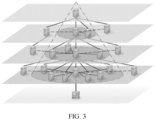
- routing nodes may be laid out in a distributed as well as centralized manner. There may be a hierarchical relationship between the routing nodes.
- An upper-level routing node is a central controller of a lower-level routing node, and the lower-level routing node may be controlled by the upper-level routing node.
- the lower-level routing node may obtain node information of routing nodes of a same level directly from the upper-level routing node, so that the lower-level routing node does not need to perform detection on the routing nodes of the same level one by one to obtain the node information. This can improve efficiency in obtaining the node information, and routing nodes of a same level can exchange routing information.
- Routing nodes in a hierarchical relationship may be laid out in a centralized structure, and routing nodes of a same level may be laid out in a distributed structure.
- a quantity of routing nodes decreases as a level gets higher, and routing nodes converge as a level gets higher.
- a whole network including the routing nodes assumes a cone shape.
- Each node, in the foregoing network, that executes the new routing protocol may function as the local node in the method provided in this embodiment of this disclosure.
- the local node Before the local node is started, the local node does not store the first correspondence, and the first correspondence needs to be established by the local node after the local node is started.
- the method provided in this embodiment of this disclosure may further include: when the local node is started, for each of the other nodes, sending a computation task type query request to the other node, receiving at least one computation task type returned by the other node, sending a computing performance query request corresponding to the at least one computation task type to the other node, and receiving computing performance that corresponds to the at least one computation task type returned by the other node; and establishing the first correspondence between a computation task type, other nodes, and computing performance based on the at least one computation task type corresponding to each of the other nodes and based on the computing performance corresponding to the at least one computation task type.
- an upper-level node of the local node may detect that the local node has been started, and the upper-level node may send, to the local node, node information of nodes of a same level as the local node, so that the local node may determine the nodes of the same level.
- the nodes of the same level include a computing node belonging to a same preset network area as the local node and a routing node that does not belong to the same preset network area as the local node.
- the nodes of the same level are the node A, the node B, the node C, and the node D in Table 1.
- the local node may establish Table 1 based on the nodes of the same level. In this case, Table 1 includes only other nodes, and initial values of other entries are all 0s.
- the local node may send the computation task type query request to the other node, receive the at least one computation task type returned by the other node, send the computing performance query request corresponding to the at least one computation task type to the other node, and receive computing performance that corresponds to the at least one computation task type returned by the other node. Then the local node may establish the first correspondence between a computation task type, other nodes, and computing performance based on the at least one computation task type corresponding to each of the other nodes and based on the computing performance corresponding to the at least one computation task type.
- computing performance may include load information and a computation delay
- the step of receiving computing performance that corresponds to the at least one computation task type returned by the other node may specifically include: receiving current load information that corresponds to the at least one computation task type returned by the other node.
- the local node may determine, based on a pre-stored second correspondence between load information and a computation delay, a computation delay corresponding to the current load information as a computation delay corresponding to the at least one computation task type.
- Historical data related to load information and a computation delay may be imported to and stored in the local node in advance.
- the local node may perform fitting on the historical data, to determine a relationship between the load information and the computation delay. In this way, when the current load information corresponding to the at least one computation task type is determined, the computation delay corresponding to the current load information can be determined, thereby determining the computation delay corresponding to the at least one computation task type.
- a computation delay can directly reflect, in a simple and clear manner, a capability of a computing node in executing a computation task. Although there are many factors affecting a computing node in executing a computation task, all these factors can be ultimately reflected in a computation delay. A shorter computation delay proves that the computing node has a stronger capability in executing the computation task.
- Factors that may affect a computing node in executing a computation task include central processing unit (Central Processing Unit, CPU) performance, graphics processing unit (Graphics Processing Unit, GPU) performance, real-time load, and the like.
- CPU Central Processing Unit
- GPU graphics processing unit
- real-time load and the like.
- some computation tasks have a relatively high requirement on CPU performance, but have a low requirement on GPU performance.
- Some computation tasks have a relatively high requirement on GPU performance, but have a low requirement on CPU performance.
- a computation task of an image recognition type has a relatively high requirement on GPU performance.
- computing performance may include a computation delay
- the step of receiving computing performance that corresponds to the at least one computation task type returned by the other node may specifically include: receiving a computation delay that corresponds to the at least one computation task type returned by the other node.
- Computing performance of a computing node N belonging to a same preset network area as the routing node M may be maintained by the routing node M.
- a routing node P that does not belong to the same preset network area as the routing node M maintains computing performance of a computing node Q belonging to a same preset network area as the routing node P. Therefore, the routing node M may detect the computing performance of the computing node Q directly from the routing node P.
- a data packet round-trip delay between the local node and another node may be determined according to a preset period in an interactive manner by using a packet internet groper (Packet Internet Groper, PING) or the like.
- a packet internet groper Packet Internet Groper, PING
- the first correspondence may be established preliminarily.
- a computation delay does not remain constant, but changes dynamically with time according to a specific situation. Therefore, the computation delay needs to be updated.
- a computing node belonging to the same preset network area as the local node determines a second computation task type corresponding to the target data packet, and forwards the target data packet to the another node belonging to the same preset network area as the local node; when a computation result that corresponds to the target data packet and that is returned by the another node belonging to the same preset network area as the local node is received, determines a computation delay between a time point at which the target data packet is forwarded and a current time point, and determines the computation delay as computing performance corresponding to the second computation task type; and replaces, with the computing performance corresponding to the second computation task type, computing performance that is in the first correspondence and corresponds to the second computation task type that corresponds to the another node belonging to the same preset network area as the local node, and after the replacement, updates a quantity of updates of the computing performance in the first correspondence.
- the local node needs to forward a data packet of a computation task type to a computing node belonging to the same preset network area as the local node.
- a current status of the computing node may be reflected.
- the local node may collect statistics on the status, and update computing performance corresponding to the computing node belonging to the same preset network area as the local node.
- the local node when forwarding a data packet requesting to execute image recognition to the computing node belonging to the same preset network area as the local node, the local node may record a forwarding time point; and when receiving a recognition result returned by the computing node, may determine a computation delay between a time point at which the recognition result is returned and the forwarding time point, thereby determining a time required by the current computing node to execute a computation task of image recognition.
- the first correspondence further stores quantities of updates of computing performance. Each time when the local node updates a computation delay of a computing node belonging to the same preset network area as the local node, a quantity of updates may increase by 1. An initial value of a quantity of updates may be set to 0.
- Table 2 shows a correspondence between a computation task type, other nodes, computation latencies, data packet round-trip latencies between the local node and the other nodes, and quantities of updates.
- Table 2 Computation task type identifier Other node Computation delay Data packet round-trip delay Quantity of updates Computation task type 1 Node A Tc1 Tn1 S1 Node B Tc2 Tn2 S2 Node C Tc3 Tn3 S3 Computation task type 2 Node A Tc4 Tn4 S4 Node D Tc5 Tn5 S5
- the local node may send a detection packet (which may also be referred to as a computing performance query request) to the routing node, to obtain computing performance that is of a node and that needs to be updated.
- the first correspondence further stores quantities of updates of computing performance.
- the method provided in this embodiment of this disclosure may further include: when a computing performance query request sent by any one of the other nodes is received, obtaining a query computation task type and a corresponding quantity of updates that are carried in the computing performance query request, where the computing performance query request is used to indicate to query computing performance of another node belonging to a same preset network area as the local node; determining, from the first correspondence, a quantity of updates of computing performance corresponding to the query computation task type; and if the determined quantity of updates is greater than the quantity of updates that is carried in the computing performance query request, sending the computing performance corresponding to the query computation task type and the determined quantity of updates to the any one of the other nodes.
- the current local node may first determine, based on a first correspondence, all computation task type identifiers and corresponding quantities of updates that are related to the any one of the other nodes; and add the computation task type identifiers and the corresponding quantities of updates that are related to the any one of the other nodes to a detection packet, and send the detection packet to the any one of the other nodes.
- the any one of the other nodes After receiving the detection packet sent by the local node, the any one of the other nodes determines a quantity of updates that corresponds to a computation task type corresponding to a computing node belonging to a same preset network area as the any one of the other nodes. If the determined quantity of updates is greater than a quantity of updates that is carried in the detection packet, it is determined that computing performance corresponding to the corresponding computation task type needs to be updated. The any one of the other nodes adds, to a detection return packet, all determined computing performance that corresponds to computation task types and that needs to be updated and quantities of updates recorded in the any one of the other nodes, and sends the detection return packet to the local node.
- the target computation task type in the any one of the other nodes is not recorded in the first correspondence in the local node, the target computation task type also needs to be sent to the local node, so that the local node adds a record about the target computation task type.
- Table 3 shows a correspondence between a computation task type, other nodes, computation latencies, data packet round-trip latencies between the local node and the other nodes, and quantities of updates.
- Table 3 Computation task type identifier Other node Computation delay (unit: ms) Data packet round-trip delay (unit: ms) Quantity of updates Computation task type 1 Node local 1 60 70 Node 2 20 30 128 Node 3 7 35 61 Node 4 12 50 1071 Computation task type 2 Node local 1 30 55 Node 2 20 20 316 Node 3 7 29 97
- UE User Equipment
- UE 1 When user equipment (User Equipment, UE) such as UE 1 initiates a data packet of a computation task type 1, the data packet arrives at a node 1 (a local node).
- the node 1 serves as a management node and routes the data packet.
- the node 1 looks up in Table 3 and determines that nodes that can execute a computation task corresponding to the computation task type 1 include a node local, a node 2, a node 3, and a node 4.
- a sum of a computation delay and a data packet round-trip delay of each node is calculated, and it is discovered that the node 3 corresponds to a smallest sum.
- the node 1 may forward the data packet to the node 3.
- the data packet arrives at the node 1.
- the node 1 looks up in Table 3 and determines that nodes that can execute a computation task corresponding to the computation task type 2 include a node local, a node 2, and a node 3.
- a sum of a computation delay and a data packet round-trip delay of each node is calculated, and it is discovered that the node local corresponds to a smallest sum.
- the node 1 may forward the data packet to the node local.
- the UE 1 After a period of time, when the UE 1 initiates a data packet of the computation task type 1 again, the data packet arrives at the node 1. At this time, the node 3 bears relatively heavy load, and a computation delay is increased to 50 ms. Therefore, this time, a sum corresponding to the node 2 is the smallest, and the node 1 may forward the data packet to the node 2.
- a target node is determined based on computing performance of each node that can execute a computation task indicated by a data packet of a computation task type. This can ensure that the target node can rapidly complete the computation task and feed back a computation result to a node initiating the data packet, thereby reducing a wait time of the node initiating the data packet.
- the apparatus includes a determining module 610 and a sending module 620.
- the determining module 610 is configured to: when a data packet of a computation task type is received, determine a first computation task type corresponding to the data packet; determine, based on a pre-obtained first correspondence between a computation task type, other nodes, and computing performance, at least one other node corresponding to the first computation task type and computing performance corresponding to the at least one other node; and determine a target node from the at least one other node based on the computing performance corresponding to the at least one other node and based on a link status between a local node and each of the at least one other node.
- the determining module 610 may specifically implement the determining functions in the foregoing steps S 110 to S130 and implement other implicit steps.
- the sending module 620 is configured to determine an address of the target node as a destination address of the data packet, and forward the data packet based on the destination address.
- the sending module 620 may specifically implement the sending function in the foregoing step S 140 and implement other implicit steps.
- the computing performance includes a computation delay
- the link status includes a data packet round-trip delay
- the determining module 610 is configured to:
- the apparatus further includes:
- the other node and the local node belong to a same preset network area
- the computing performance includes load information and a computation delay
- the receiving module is configured to receive current load information that corresponds to the at least one computation task type returned by the other node
- the determining module 610 is further configured to determine, based on a pre-stored second correspondence between load information and a computation delay, a computation delay corresponding to the current load information as a computation delay corresponding to the at least one computation task type.
- the other node and the local node do not belong to a same preset network area
- the computing performance includes a computation delay
- the receiving module is configured to: receive a computation delay that corresponds to the at least one computation task type returned by the other node.
- the first correspondence further stores quantities of updates of computing performance
- the apparatus further includes:
- the determining module 610 is further configured to: each time when a target data packet whose destination address is another node belonging to a same preset network area as the local node is received, determine a second computation task type corresponding to the target data packet, and forward the target data packet to the another node belonging to the same preset network area as the local node; and when a computation result that corresponds to the target data packet and that is returned by the another node belonging to the same preset network area as the local node is received, determine a computation delay between a time point at which the target data packet is forwarded and a current time point, and determine the computation delay as computing performance corresponding to the second computation task type; and the apparatus further includes: an updating module, configured to replace, with the computing performance corresponding to the second computation task type, computing performance that is in the first correspondence and corresponds to the second computation task type that corresponds to the another node belonging to the same preset network area as the local node, and after the replacement, update a quantity of updates of the computing performance in the first correspondence.
- determining module 610 and sending module 620 may be implemented by a processor, or implemented by a processor in combination with a memory and a transceiver.
- a target node is determined based on computing performance of each node that can execute a computation task indicated by a data packet of a computation task type. This can ensure that the target node can rapidly complete the computation task and feed back a computation result to a node initiating the data packet, thereby reducing a wait time of the node initiating the data packet.
- the data packet routing apparatus provided by the foregoing embodiment routes a data packet
- only division of the foregoing function modules is taken as an example for illustration.
- the foregoing functions can be allocated to different function modules and implemented according to a requirement, in other words, an inner structure of a node is divided into different function modules to implement all or some of the functions described above.
- the data packet routing apparatus provided in the foregoing embodiment and the embodiment of the data packet routing method are based on a same concept. For a specific implementation process of the apparatus, refer to the method embodiment. Details are not described herein again.
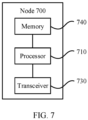
- a node 700 may include a processor 710, a memory 740, and a transceiver 730.
- the transceiver 730 may be connected to the processor 710, as shown in FIG. 7 .
- the transceiver 730 may include a receiver and a transmitter, and may be configured to receive or send a message or data.
- the transceiver 730 may be a network interface card.
- the node 700 may further include an acceleration component (which may also be referred as an accelerator). When the acceleration component is a network acceleration component, the acceleration component may be a network interface card.
- the processor 710 may be a control center of the node 700, and connects parts, such as the transceiver 730, of the whole node 700 by using various interfaces and lines.
- the processor 710 may be a central processing unit (Central Processing Unit, CPU).
- the processor 710 may include one or more processing units.
- the processor 710 may alternatively be a digital signal processor, an application-specific integrated circuit, a field programmable gate array or another programmable logic device, or the like.
- the node 700 may further include a memory 740.
- the memory 740 may be configured to store a software program and module.
- the processor 710 executes various function applications and data processing of the node 700 by reading software code or the software module stored in the memory.
Landscapes
- Engineering & Computer Science (AREA)
- Computer Networks & Wireless Communication (AREA)
- Signal Processing (AREA)
- Computer Hardware Design (AREA)
- General Engineering & Computer Science (AREA)
- Data Exchanges In Wide-Area Networks (AREA)
Applications Claiming Priority (3)
| Application Number | Priority Date | Filing Date | Title |
|---|---|---|---|
| CN201910057402.8A CN111464442B (zh) | 2019-01-22 | 2019-01-22 | 对数据包进行路由的方法和装置 |
| PCT/CN2019/129881 WO2020151461A1 (fr) | 2019-01-22 | 2019-12-30 | Procédé et dispositif de routage d'un paquet de données |
| EP19911896.9A EP3905637B1 (fr) | 2019-01-22 | 2019-12-30 | Procédé et dispositif de routage d'un paquet de données |
Related Parent Applications (2)
| Application Number | Title | Priority Date | Filing Date |
|---|---|---|---|
| EP19911896.9A Division EP3905637B1 (fr) | 2019-01-22 | 2019-12-30 | Procédé et dispositif de routage d'un paquet de données |
| EP19911896.9A Division-Into EP3905637B1 (fr) | 2019-01-22 | 2019-12-30 | Procédé et dispositif de routage d'un paquet de données |
Publications (2)
| Publication Number | Publication Date |
|---|---|
| EP4456502A2 true EP4456502A2 (fr) | 2024-10-30 |
| EP4456502A3 EP4456502A3 (fr) | 2025-01-01 |
Family
ID=71680076
Family Applications (2)
| Application Number | Title | Priority Date | Filing Date |
|---|---|---|---|
| EP19911896.9A Active EP3905637B1 (fr) | 2019-01-22 | 2019-12-30 | Procédé et dispositif de routage d'un paquet de données |
| EP24182988.6A Pending EP4456502A3 (fr) | 2019-01-22 | 2019-12-30 | Procédé et appareil de routage de paquets de données |
Family Applications Before (1)
| Application Number | Title | Priority Date | Filing Date |
|---|---|---|---|
| EP19911896.9A Active EP3905637B1 (fr) | 2019-01-22 | 2019-12-30 | Procédé et dispositif de routage d'un paquet de données |
Country Status (4)
| Country | Link |
|---|---|
| US (2) | US12074796B2 (fr) |
| EP (2) | EP3905637B1 (fr) |
| CN (1) | CN111464442B (fr) |
| WO (1) | WO2020151461A1 (fr) |
Families Citing this family (2)
| Publication number | Priority date | Publication date | Assignee | Title |
|---|---|---|---|---|
| CN111464442B (zh) * | 2019-01-22 | 2022-11-18 | 华为技术有限公司 | 对数据包进行路由的方法和装置 |
| CN120448331B (zh) * | 2025-07-14 | 2025-10-28 | 山东海量信息技术研究院 | 一致性互连控制设备、方法、电子设备、产品及计算系统 |
Family Cites Families (23)
| Publication number | Priority date | Publication date | Assignee | Title |
|---|---|---|---|---|
| CN101309201B (zh) * | 2007-05-14 | 2012-05-23 | 华为技术有限公司 | 路由处理方法、路由处理器及路由器 |
| US8059650B2 (en) * | 2007-10-31 | 2011-11-15 | Aruba Networks, Inc. | Hardware based parallel processing cores with multiple threads and multiple pipeline stages |
| US20100223364A1 (en) * | 2009-02-27 | 2010-09-02 | Yottaa Inc | System and method for network traffic management and load balancing |
| WO2011061742A2 (fr) * | 2009-11-18 | 2011-05-26 | Yissum Research Development Company Of The Hebrew University Of Jerusalem, Ltd. | Système de communication et procédé de gestion de transfert de données par l'intermédiaire d'un réseau de communication |
| CN102136989B (zh) * | 2010-01-26 | 2014-03-12 | 华为技术有限公司 | 报文传输的方法、系统和设备 |
| US8797913B2 (en) * | 2010-11-12 | 2014-08-05 | Alcatel Lucent | Reduction of message and computational overhead in networks |
| CN103188152B (zh) | 2011-12-31 | 2015-07-08 | 南京邮电大学 | 基于业务区分的认知网络QoS路由选择方法 |
| US9847948B2 (en) * | 2012-07-09 | 2017-12-19 | Eturi Corp. | Schedule and location responsive agreement compliance controlled device throttle |
| CN104348886A (zh) * | 2013-08-08 | 2015-02-11 | 联想(北京)有限公司 | 一种信息处理的方法及一种电子设备 |
| CN104767682B (zh) * | 2014-01-08 | 2018-10-02 | 腾讯科技(深圳)有限公司 | 路由方法和系统以及分发路由信息的方法和装置 |
| US9477551B1 (en) * | 2014-12-01 | 2016-10-25 | Datadirect Networks, Inc. | Method and system for data migration between high performance computing architectures and file system using distributed parity group information structures with non-deterministic data addressing |
| CN105141541A (zh) * | 2015-09-23 | 2015-12-09 | 浪潮(北京)电子信息产业有限公司 | 一种基于任务的动态负载均衡调度方法及装置 |
| US9935893B2 (en) * | 2016-03-28 | 2018-04-03 | The Travelers Indemnity Company | Systems and methods for dynamically allocating computing tasks to computer resources in a distributed processing environment |
| US10153964B2 (en) * | 2016-09-08 | 2018-12-11 | Citrix Systems, Inc. | Network routing using dynamic virtual paths in an overlay network |
| CN107846358B (zh) * | 2016-09-19 | 2020-07-10 | 北京金山云网络技术有限公司 | 一种数据传输方法、装置及网络系统 |
| CN106789661B (zh) * | 2016-12-29 | 2019-10-11 | 北京邮电大学 | 一种信息转发方法及天基信息网络系统 |
| CN107087014B (zh) * | 2017-01-24 | 2020-12-15 | 无锡英威腾电梯控制技术有限公司 | 一种负载均衡方法及其控制器 |
| PL3607453T3 (pl) * | 2017-04-07 | 2022-11-28 | Intel Corporation | Sposoby i urządzenie dla potoku wykonawczego sieci głębokiego uczenia na platformie multiprocesorowej |
| CN107634872B (zh) * | 2017-08-29 | 2021-02-26 | 深圳市米联科信息技术有限公司 | 一种快速精确计量网络链路质量的方法和装置 |
| US10459958B2 (en) * | 2017-08-29 | 2019-10-29 | Bank Of America Corporation | Automated response system using smart data |
| CA3107919A1 (fr) * | 2018-07-27 | 2020-01-30 | GoTenna, Inc. | Routage de paquets a commande nulle vine a l'aide d'une inspection de p aquets de donnees pour des reseaux mailles sans fil |
| US20200186478A1 (en) * | 2018-12-10 | 2020-06-11 | XRSpace CO., LTD. | Dispatching Method and Edge Computing System |
| CN111464442B (zh) * | 2019-01-22 | 2022-11-18 | 华为技术有限公司 | 对数据包进行路由的方法和装置 |
-
2019
- 2019-01-22 CN CN201910057402.8A patent/CN111464442B/zh active Active
- 2019-12-30 EP EP19911896.9A patent/EP3905637B1/fr active Active
- 2019-12-30 EP EP24182988.6A patent/EP4456502A3/fr active Pending
- 2019-12-30 WO PCT/CN2019/129881 patent/WO2020151461A1/fr not_active Ceased
-
2021
- 2021-07-20 US US17/380,383 patent/US12074796B2/en active Active
-
2024
- 2024-07-22 US US18/780,085 patent/US20240380695A1/en active Pending
Also Published As
| Publication number | Publication date |
|---|---|
| EP4456502A3 (fr) | 2025-01-01 |
| CN111464442A (zh) | 2020-07-28 |
| CN111464442B (zh) | 2022-11-18 |
| EP3905637B1 (fr) | 2024-07-24 |
| US20210352014A1 (en) | 2021-11-11 |
| EP3905637A1 (fr) | 2021-11-03 |
| WO2020151461A1 (fr) | 2020-07-30 |
| EP3905637A4 (fr) | 2022-02-16 |
| US12074796B2 (en) | 2024-08-27 |
| US20240380695A1 (en) | 2024-11-14 |
Similar Documents
| Publication | Publication Date | Title |
|---|---|---|
| US20240380695A1 (en) | Data packet routing method and apparatus | |
| US10581700B2 (en) | Service flow processing method, apparatus, and device | |
| RU2692042C1 (ru) | Способ определения маршрута и соответствующие устройство и система | |
| US11363675B2 (en) | Mesh network system | |
| CN110730478B (zh) | 切片关联方法、装置、端到端切片编排器及存储介质 | |
| US7352707B2 (en) | Processing method enabling each unit in stacking network device to run rapid spanning tree protocol | |
| US20180167313A1 (en) | Sdn-based arp implementation method and apparatus | |
| Scherb et al. | Resolution strategies for networking the IoT at the edge via named functions | |
| US11924103B2 (en) | Traffic processing method, apparatus, and network device | |
| CN114938334A (zh) | 网络管理方法、装置、设备及计算机可读存储介质 | |
| EP3410300B1 (fr) | Procédé et dispositif de routage de paquet dans un réseau d'accélérateurs | |
| EP4492746A1 (fr) | Procédé et système de routage et noeud | |
| US20220255831A1 (en) | Method and apparatus for detecting link status | |
| CN113791733B (zh) | 信息的存储方法、装置、设备及存储介质 | |
| CN118802743B (zh) | 一种流表更新方法、装置、网络系统及电子设备 | |
| CN113132911A (zh) | 可移动电子设备自组网方法、电子设备节点及存储介质 | |
| EP3217610B1 (fr) | Procédé et dispositif de réseau de communication et système internet | |
| US20200336385A1 (en) | BGP Logical Topology Generation Method, and Device | |
| CN111200640A (zh) | 基于客户端的上传方法以及客户端 | |
| CN112491723B (zh) | 网关报文转发方法、装置、存储介质及网关 | |
| CN113765805B (zh) | 基于调用的通信方法、装置、存储介质及设备 | |
| US20230053967A1 (en) | Group updating method, message sending method, and apparatuses | |
| CN111865776B (zh) | 路径创建方法、装置、系统及存储介质 | |
| US20220360521A1 (en) | Tunnel Segmentation Method and Apparatus, and Data Transmission System | |
| CN120711479A (zh) | 一种移动自组网的上位机之间的通信方法、装置、设备和存储介质 |
Legal Events
| Date | Code | Title | Description |
|---|---|---|---|
| PUAI | Public reference made under article 153(3) epc to a published international application that has entered the european phase |
Free format text: ORIGINAL CODE: 0009012 |
|
| STAA | Information on the status of an ep patent application or granted ep patent |
Free format text: STATUS: THE APPLICATION HAS BEEN PUBLISHED |
|
| AC | Divisional application: reference to earlier application |
Ref document number: 3905637 Country of ref document: EP Kind code of ref document: P |
|
| AK | Designated contracting states |
Kind code of ref document: A2 Designated state(s): AL AT BE BG CH CY CZ DE DK EE ES FI FR GB GR HR HU IE IS IT LI LT LU LV MC MK MT NL NO PL PT RO RS SE SI SK SM TR |
|
| REG | Reference to a national code |
Ref country code: DE Ref legal event code: R079 Free format text: PREVIOUS MAIN CLASS: H04L0045000000 Ipc: H04L0067100800 |
|
| PUAL | Search report despatched |
Free format text: ORIGINAL CODE: 0009013 |
|
| AK | Designated contracting states |
Kind code of ref document: A3 Designated state(s): AL AT BE BG CH CY CZ DE DK EE ES FI FR GB GR HR HU IE IS IT LI LT LU LV MC MK MT NL NO PL PT RO RS SE SI SK SM TR |
|
| RIC1 | Information provided on ipc code assigned before grant |
Ipc: H04L 45/12 20220101ALI20241122BHEP Ipc: H04L 67/1014 20220101ALI20241122BHEP Ipc: H04L 67/1012 20220101ALI20241122BHEP Ipc: H04L 67/101 20220101ALI20241122BHEP Ipc: H04L 45/745 20220101ALI20241122BHEP Ipc: H04L 45/74 20220101ALI20241122BHEP Ipc: H04L 67/1008 20220101AFI20241122BHEP |
|
| STAA | Information on the status of an ep patent application or granted ep patent |
Free format text: STATUS: REQUEST FOR EXAMINATION WAS MADE |
|
| 17P | Request for examination filed |
Effective date: 20250701 |
|
| STAA | Information on the status of an ep patent application or granted ep patent |
Free format text: STATUS: EXAMINATION IS IN PROGRESS |
|
| 17Q | First examination report despatched |
Effective date: 20251021 |