EP4456484A1 - Verschlüsselte interstitielle techniken für websicherheit - Google Patents
Verschlüsselte interstitielle techniken für websicherheit Download PDFInfo
- Publication number
- EP4456484A1 EP4456484A1 EP24173105.8A EP24173105A EP4456484A1 EP 4456484 A1 EP4456484 A1 EP 4456484A1 EP 24173105 A EP24173105 A EP 24173105A EP 4456484 A1 EP4456484 A1 EP 4456484A1
- Authority
- EP
- European Patent Office
- Prior art keywords
- webpage
- encrypted
- request
- server system
- client device
- Prior art date
- Legal status (The legal status is an assumption and is not a legal conclusion. Google has not performed a legal analysis and makes no representation as to the accuracy of the status listed.)
- Pending
Links
Images


Classifications
-
- H—ELECTRICITY
- H04—ELECTRIC COMMUNICATION TECHNIQUE
- H04L—TRANSMISSION OF DIGITAL INFORMATION, e.g. TELEGRAPHIC COMMUNICATION
- H04L63/00—Network architectures or network communication protocols for network security
- H04L63/04—Network architectures or network communication protocols for network security for providing a confidential data exchange among entities communicating through data packet networks
- H04L63/0428—Network architectures or network communication protocols for network security for providing a confidential data exchange among entities communicating through data packet networks wherein the data content is protected, e.g. by encrypting or encapsulating the payload
-
- H—ELECTRICITY
- H04—ELECTRIC COMMUNICATION TECHNIQUE
- H04L—TRANSMISSION OF DIGITAL INFORMATION, e.g. TELEGRAPHIC COMMUNICATION
- H04L63/00—Network architectures or network communication protocols for network security
- H04L63/14—Network architectures or network communication protocols for network security for detecting or protecting against malicious traffic
- H04L63/1408—Network architectures or network communication protocols for network security for detecting or protecting against malicious traffic by monitoring network traffic
- H04L63/1425—Traffic logging, e.g. anomaly detection
-
- G—PHYSICS
- G06—COMPUTING OR CALCULATING; COUNTING
- G06F—ELECTRIC DIGITAL DATA PROCESSING
- G06F16/00—Information retrieval; Database structures therefor; File system structures therefor
- G06F16/90—Details of database functions independent of the retrieved data types
- G06F16/95—Retrieval from the web
- G06F16/955—Retrieval from the web using information identifiers, e.g. uniform resource locators [URL]
- G06F16/9558—Details of hyperlinks; Management of linked annotations
-
- G—PHYSICS
- G06—COMPUTING OR CALCULATING; COUNTING
- G06F—ELECTRIC DIGITAL DATA PROCESSING
- G06F16/00—Information retrieval; Database structures therefor; File system structures therefor
- G06F16/90—Details of database functions independent of the retrieved data types
- G06F16/95—Retrieval from the web
- G06F16/958—Organisation or management of web site content, e.g. publishing, maintaining pages or automatic linking
-
- G—PHYSICS
- G06—COMPUTING OR CALCULATING; COUNTING
- G06F—ELECTRIC DIGITAL DATA PROCESSING
- G06F21/00—Security arrangements for protecting computers, components thereof, programs or data against unauthorised activity
- G06F21/10—Protecting distributed programs or content, e.g. vending or licensing of copyrighted material ; Digital rights management [DRM]
- G06F21/12—Protecting executable software
- G06F21/121—Restricting unauthorised execution of programs
- G06F21/128—Restricting unauthorised execution of programs involving web programs, i.e. using technology especially used in internet, generally interacting with a web browser, e.g. hypertext markup language [HTML], applets, java
-
- G—PHYSICS
- G06—COMPUTING OR CALCULATING; COUNTING
- G06F—ELECTRIC DIGITAL DATA PROCESSING
- G06F21/00—Security arrangements for protecting computers, components thereof, programs or data against unauthorised activity
- G06F21/60—Protecting data
- G06F21/602—Providing cryptographic facilities or services
-
- G—PHYSICS
- G06—COMPUTING OR CALCULATING; COUNTING
- G06F—ELECTRIC DIGITAL DATA PROCESSING
- G06F21/00—Security arrangements for protecting computers, components thereof, programs or data against unauthorised activity
- G06F21/60—Protecting data
- G06F21/62—Protecting access to data via a platform, e.g. using keys or access control rules
- G06F21/6209—Protecting access to data via a platform, e.g. using keys or access control rules to a single file or object, e.g. in a secure envelope, encrypted and accessed using a key, or with access control rules appended to the object itself
-
- H—ELECTRICITY
- H04—ELECTRIC COMMUNICATION TECHNIQUE
- H04L—TRANSMISSION OF DIGITAL INFORMATION, e.g. TELEGRAPHIC COMMUNICATION
- H04L63/00—Network architectures or network communication protocols for network security
- H04L63/04—Network architectures or network communication protocols for network security for providing a confidential data exchange among entities communicating through data packet networks
- H04L63/0428—Network architectures or network communication protocols for network security for providing a confidential data exchange among entities communicating through data packet networks wherein the data content is protected, e.g. by encrypting or encapsulating the payload
- H04L63/0435—Network architectures or network communication protocols for network security for providing a confidential data exchange among entities communicating through data packet networks wherein the data content is protected, e.g. by encrypting or encapsulating the payload wherein the sending and receiving network entities apply symmetric encryption, i.e. same key used for encryption and decryption
-
- H—ELECTRICITY
- H04—ELECTRIC COMMUNICATION TECHNIQUE
- H04L—TRANSMISSION OF DIGITAL INFORMATION, e.g. TELEGRAPHIC COMMUNICATION
- H04L63/00—Network architectures or network communication protocols for network security
- H04L63/08—Network architectures or network communication protocols for network security for authentication of entities
- H04L63/0807—Network architectures or network communication protocols for network security for authentication of entities using tickets, e.g. Kerberos
-
- H—ELECTRICITY
- H04—ELECTRIC COMMUNICATION TECHNIQUE
- H04L—TRANSMISSION OF DIGITAL INFORMATION, e.g. TELEGRAPHIC COMMUNICATION
- H04L63/00—Network architectures or network communication protocols for network security
- H04L63/10—Network architectures or network communication protocols for network security for controlling access to devices or network resources
-
- H—ELECTRICITY
- H04—ELECTRIC COMMUNICATION TECHNIQUE
- H04L—TRANSMISSION OF DIGITAL INFORMATION, e.g. TELEGRAPHIC COMMUNICATION
- H04L63/00—Network architectures or network communication protocols for network security
- H04L63/14—Network architectures or network communication protocols for network security for detecting or protecting against malicious traffic
- H04L63/1408—Network architectures or network communication protocols for network security for detecting or protecting against malicious traffic by monitoring network traffic
- H04L63/1416—Event detection, e.g. attack signature detection
-
- H—ELECTRICITY
- H04—ELECTRIC COMMUNICATION TECHNIQUE
- H04L—TRANSMISSION OF DIGITAL INFORMATION, e.g. TELEGRAPHIC COMMUNICATION
- H04L63/00—Network architectures or network communication protocols for network security
- H04L63/14—Network architectures or network communication protocols for network security for detecting or protecting against malicious traffic
- H04L63/1441—Countermeasures against malicious traffic
-
- H—ELECTRICITY
- H04—ELECTRIC COMMUNICATION TECHNIQUE
- H04L—TRANSMISSION OF DIGITAL INFORMATION, e.g. TELEGRAPHIC COMMUNICATION
- H04L63/00—Network architectures or network communication protocols for network security
- H04L63/14—Network architectures or network communication protocols for network security for detecting or protecting against malicious traffic
- H04L63/1441—Countermeasures against malicious traffic
- H04L63/1466—Active attacks involving interception, injection, modification, spoofing of data unit addresses, e.g. hijacking, packet injection or TCP sequence number attacks
-
- H—ELECTRICITY
- H04—ELECTRIC COMMUNICATION TECHNIQUE
- H04L—TRANSMISSION OF DIGITAL INFORMATION, e.g. TELEGRAPHIC COMMUNICATION
- H04L67/00—Network arrangements or protocols for supporting network services or applications
- H04L67/01—Protocols
- H04L67/02—Protocols based on web technology, e.g. hypertext transfer protocol [HTTP]
-
- G—PHYSICS
- G06—COMPUTING OR CALCULATING; COUNTING
- G06F—ELECTRIC DIGITAL DATA PROCESSING
- G06F2221/00—Indexing scheme relating to security arrangements for protecting computers, components thereof, programs or data against unauthorised activity
- G06F2221/03—Indexing scheme relating to G06F21/50, monitoring users, programs or devices to maintain the integrity of platforms
- G06F2221/033—Test or assess software
-
- G—PHYSICS
- G06—COMPUTING OR CALCULATING; COUNTING
- G06F—ELECTRIC DIGITAL DATA PROCESSING
- G06F2221/00—Indexing scheme relating to security arrangements for protecting computers, components thereof, programs or data against unauthorised activity
- G06F2221/21—Indexing scheme relating to G06F21/00 and subgroups addressing additional information or applications relating to security arrangements for protecting computers, components thereof, programs or data against unauthorised activity
- G06F2221/2125—Just-in-time application of countermeasures, e.g., on-the-fly decryption, just-in-time obfuscation or de-obfuscation
-
- G—PHYSICS
- G06—COMPUTING OR CALCULATING; COUNTING
- G06F—ELECTRIC DIGITAL DATA PROCESSING
- G06F2221/00—Indexing scheme relating to security arrangements for protecting computers, components thereof, programs or data against unauthorised activity
- G06F2221/21—Indexing scheme relating to G06F21/00 and subgroups addressing additional information or applications relating to security arrangements for protecting computers, components thereof, programs or data against unauthorised activity
- G06F2221/2133—Verifying human interaction, e.g., Captcha
-
- H—ELECTRICITY
- H04—ELECTRIC COMMUNICATION TECHNIQUE
- H04L—TRANSMISSION OF DIGITAL INFORMATION, e.g. TELEGRAPHIC COMMUNICATION
- H04L63/00—Network architectures or network communication protocols for network security
- H04L63/02—Network architectures or network communication protocols for network security for separating internal from external traffic, e.g. firewalls
- H04L63/0281—Proxies
-
- H—ELECTRICITY
- H04—ELECTRIC COMMUNICATION TECHNIQUE
- H04L—TRANSMISSION OF DIGITAL INFORMATION, e.g. TELEGRAPHIC COMMUNICATION
- H04L63/00—Network architectures or network communication protocols for network security
- H04L63/16—Implementing security features at a particular protocol layer
- H04L63/168—Implementing security features at a particular protocol layer above the transport layer
Definitions
- This technology generally relates to security techniques applicable to client and server systems and, more specifically, to encrypted interstitial techniques for web security.
- Web and mobile applications and application programming interface (API) endpoints are being subjected to a growing number of sophisticated automation attacks resulting in large scale instances of fraud.
- This unwanted or malicious automation traffic to web and mobile applications can be perpetrated, by way of example, by: a) criminals looking to steal money or other value; or b) by businesses who want to appropriate another company's data to drive their own businesses.
- businesses misappropriating a company's website data are often labeled "scrapers" because they "scrape" inventory, pricing and catalog data off of public websites. By doing this, scrapers can disrupt user experiences for legitimate human traffic and dramatically increase a website's operating costs.
- Website owners generally lack visibility into the scale of their scraping problem as well as the tools to manage and, when necessary, prevent or limit scraping.
- the size and scale of the problem with criminals and scrapers is relatively small. Between about 50% and 90% of traffic to websites is malicious or unwanted automation traffic.
- CAPTCHA is one example challenge that is often presented to stop unwanted scraping.
- CAPTCHA worked for a time, but scrapers have now learned how to technically bypass it, resulting in it being ineffective at limiting unwanted or aggressive scraping.
- the industry response to managing scraper traffic is both ineffective (e.g., scrapers can easily bypass challenges such as CAPTCHA), and it introduces painful friction for legitimate human traffic such as trying to solve challenges provided by CAPTCHAs.
- an interstitial page which loads a substantially blank page while a script gathers information about the browser environment that is used to make a determination regarding whether the browser should be allowed to access the requested resource (e.g., by determining whether the browser is being operated by an automated web scraper or a human user), and then loading the requested resource upon determining that access should be granted.
- an interstitial page can be effective at preventing unwanted web scraper attacks, this technique may also create an undesirable delay with the loading of the requested resource because the user must wait for multiple additional network requests to complete before being able to access the resource.
- a method implemented by a security server system includes intercepting a request for a webpage including a protected resource.
- the request may be sent from a client device to a server device.
- One or more link tags or other mechanisms corresponding to one or more sub-resources included in the webpage are generated.
- the webpage is encrypted.
- An interstitial page is served to the client that includes an encrypted portion, an unencrypted portion, and instrumentation code that when executed at the client device, collects telemetry data.
- the encrypted portion includes the encrypted webpage and the unencrypted portion includes the one or more link tags or other mechanisms.
- Telemetry data is received from the client device and a threat analysis is performed on the telemetry data collected in association with the request.
- a decryption key is transmitted to the client device in response to determining that the request is allowed based on the performed threat analysis.
- the decryption key is configured to allow the client device to decrypt the encrypted webpage.
- the generating of one or more link tags or other mechanisms for referencing a corresponding one or more sub-resources included in the webpage includes: scanning HTML code of the webpage to identify one or more sub-resource tags; and for each identified sub-resource tag, generating a link tag that is associated with a preload attribute.
- the unencrypted portion including the one or more link tags or other mechanisms is configured to allow the client device to download the corresponding one or more sub-resources to a cache of the client device while the telemetry data is being collected and the threat analysis is being performed.
- the method further includes responsive to determining, based on the performed threat analysis, that the request is denied, performing a mitigating action with respect to the request.
- the encrypting of the webpage is performed using symmetric key encryption.
- a security server system includes a memory including programmed instructions stored thereon, and one or more processors coupled to the memory and configured to execute the stored programmed instructions to: intercept a request for a webpage including a protected resource, wherein the request is sent from a client device to a server device; generate one or more link tags or other mechanisms for referencing a corresponding one or more sub-resources included in the webpage; encrypt the webpage to thereby generate an encrypted webpage; serve an interstitial page to the client device; receive the telemetry data from the client device; perform a threat analysis on the telemetry data collected in association with the request; and responsive to determining, based on the performed threat analysis, that the request is allowed, transmit a decryption key to the client device, wherein the decryption key is configured to allow the client device to decrypt the encrypted webpage.
- the interstitial page includes: an encrypted portion including the encrypted webpage; an unencrypted portion including the one or more link tags or other mechanisms; and instrumentation code that, when executed at the client device, collect
- the one or more processors are further configured to execute the stored programmed instructions to: scan HTML code of the webpage to identify one or more sub-resource tags; and for each identified sub-resource tag, generate a link tag that is associated with a preload attribute.
- the unencrypted portion including the one or more link tags or other mechanisms is configured to allow the client device to download the corresponding one or more sub-resources to a cache of the client device while the telemetry data is being collected and the threat analysis is being performed.
- the one or more processors are further configured to execute the stored programmed instructions to: responsive to determining, based on the performed threat analysis, that the request is denied, perform a mitigating action with respect to the request.
- the webpage is encrypted using symmetric key encryption.
- the interstitial page includes: an encrypted portion including the encrypted webpage; an unencrypted portion including the one or more link tags or other mechanisms; and instrumentation code that, when executed at the client device,
- the executable code when executed by the one or more processors, further causes the one or more processors to: scan HTML code of the webpage to identify one or more sub-resource tags; and for each identified sub-resource tag, generate a link tag that is associated with a preload attribute.
- the unencrypted portion including the one or more link tags or other mechanisms is configured to allow the client device to download the corresponding one or more sub-resources to a cache of the client device while the telemetry data is being collected and the threat analysis is being performed.
- the executable code when executed by the one or more processors further causes the one or more processors to: responsive to determining, based on the performed threat analysis, that the request is denied, perform a mitigating action with respect to the request.
- the webpage is encrypted using symmetric key encryption.
- a security system including one or more security server apparatuses, server devices, or client devices with memory including programmed instructions stored thereon and one or more processors coupled to the memory and configured to execute the stored programmed instructions to: intercept a request for a webpage including a protected resource, wherein the request is sent from a client device to a server device; generate one or more link tags or other mechanisms for referencing a corresponding one or more sub-resources included in the webpage; encrypt the webpage to thereby generate an encrypted webpage; serve an interstitial page to the client device; receive the telemetry data from the client device; perform a threat analysis on the telemetry data collected in association with the request; and responsive to determining, based on the performed threat analysis, that the request is allowed, transmit a decryption key to the client device, wherein the decryption key is configured to allow the client device to decrypt the encrypted webpage.
- the interstitial page includes: an encrypted portion including the encrypted webpage; an unencrypted portion including the one or more link tags or other mechanisms; and instrument
- the one or more processors are further configured to execute the stored programmed instructions to: scan HTML code of the webpage to identify one or more sub-resource tags; and for each identified sub-resource tag, generate a link tag that is associated with a preload attribute.
- the unencrypted portion including the one or more link tags or other mechanisms is configured to allow the client device to download the corresponding one or more sub-resources to a cache of the client device while the telemetry data is being collected and the threat analysis is being performed.
- the one or more processors are further configured to be capable of executing the stored programmed instructions to: responsive to determining, based on the performed threat analysis, that the request is denied, perform a mitigating action with respect to the request.
- the webpage is encrypted using symmetric key encryption.
- This technology provides a number of advantages including providing methods, non-transitory computer readable media, devices and systems that provide encrypted interstitial techniques for effective web security.
- Use of interstitial techniques can allow a web content provider to have effective web security while still reducing user friction for legitimate users. When friction in using a web system is too great, it may cause negative impacts such as decreased usage and/or incomplete transactions.
- Use of encrypted interstitial techniques, as disclosed herein can eliminate or reduce friction more than previously disclosed interstitial techniques by enabling a client device to begin downloading sub-resources into its cache and downloading an encrypted copy of the requested webpage while the system collects telemetry data and performs a threat analysis on the telemetry data to determine whether the client should be allowed to access the requested webpage.
- the client device will have already completed downloading some or all of the encrypted webpage HTML and sub-resources so that it can immediately load and render the webpage upon being granted authorization (e.g., after the client device receives a decryption key).
- the processes of the collection of telemetry data, performing a threat analysis, and decrypting the encrypted HTML page collectively can take less time than a conventional loading of the website would take, and the user will experience little or no additional delay in loading a webpage beyond what an unprotected system would provide.
- use of the encrypted interstitial techniques described herein can greatly reduce, if not entirely eliminate, any excess delay in rendering a protected resource (e.g., a webpage) on the client device attributable to the use of a web security system while still providing security benefits of blocking unwanted automated traffic.
- a protected resource e.g., a webpage
- a web content provider may better protect its users and itself from fraudsters and these security features may be provided relatively simply for the web content providers with minimal modification by the web content provider to hardware or software on its own server systems.
- a security code and/or system can be provided flexibly by an organization that specializes in web security, which can in turn keep the security code updated to address ever-changing security threats.
- such a security organization can also aggregate data received across many entities that operate many domains, including telemetry data and/or analyzed telemetry data and can use the aggregated data to generate countermeasures that are more effective than countermeasures that could be developed using only data from a single domain. Additional features and advantages are apparent by way of the examples of the technology illustrated and described herein.
- the term “or” may be inclusive or exclusive unless expressly stated otherwise; the term “set” may comprise zero, one, or two or more elements; the terms “first”, “second”, “certain”, and “particular” are used as naming conventions to distinguish elements from each other and does not imply an ordering, timing, or any other characteristic of the referenced items unless otherwise specified; the terms “such as”, “e.g.”, for example”, and the like describe one or more examples but are not limited to the described example/s; the terms “comprises” and/or “comprising” specify the presence of stated features, but do not preclude the presence or addition of one or more other features.
- a “computer system” refers to one or more computers, such as one or more physical computers, virtual computers, and/or computing devices.
- a computer system may be, or may include, one or more server computers, cloud-based computers, cloud-based cluster of computers, virtual machine instances or virtual machine computing elements such as virtual processors, storage and memory, data centers, storage devices, desktop computers, laptop computers, mobile devices, or any other special-purpose computing devices.
- Any reference to a "computer system” herein may mean one or more computers, unless expressly stated otherwise. When a computer system performs an action, the action is performed by one or more computers of the computer system.
- a “client” (also referred to as a “client device”) refers to a combination of integrated software components and an allocation of computational resources, such as memory, a computing device, and processes on a computing device for executing the integrated software components.
- the combination of the software and computational resources are configured to interact with one or more servers over a network, such as the Internet.
- a client may refer to either the combination of components on one or more computers, or the one or more computers.
- a “server” (also referred to as “server system”, “server computer system”, “server device” or “server apparatus”) refers to a combination of integrated software components and an allocation of computational resources, such as memory, a computing device, and processes on the computing device for executing the integrated software components.
- the combination of the software and computational resources provide a particular type of function on behalf of clients of the server.
- a server may refer to either the combination of components on one or more computers, or the one or more computers.
- a server may include multiple servers; that is a server may include a first server computing device and a second server computing device, which may provide the same or different functionality to the same or different set of clients.
- a first website may include web content hosted by a web server system, such as a first server device
- a second website may include web content hosted by a second web server system, such as a second web server device.
- the web content of a website shares a single domain name or set of related domain names that are owned or controlled by a common entity.
- a website may include web page content accessible over the Internet through a browser, and/or web content that is accessible over the Internet from another client application.
- Such applications may include web applications executing in a browser(s) and/or native application(s) installed on client computing devices (also referred to as "client devices").
- an interstitial page is served to a client device.
- the interstitial page includes an encrypted portion that includes an encrypted copy of the webpage, an unencrypted portion that includes one or more link tags that correspond to one or more sub-resources included in the webpage, and instrumentation code that collects telemetry data at the client device.
- a threat analysis is performed on the telemetry data to determine whether the request is from a potential attacker. Concurrently to the collection of telemetry data and the performance of the threat analysis, the client device can download the one or more sub-resources to its cache as well as the encrypted webpage.
- a decryption key is sent to the client device, which allows the client device to decrypt the previously downloaded encrypted webpage for rendering by the client device within the interstitial page.
- the threat analysis may be tailored to detect particular types of potential attackers.
- the threat analysis may be configured to determine whether the request at the client computing device is initiated by a human user or automated software.
- the threat analysis is configured to detect whether the request is part of an attack of one or more types.
- the threat analysis may detect whether the request is likely for scraping protected content.
- the encrypted interstitial techniques described herein are used to implement an invisible challenge to protect the protected resource from automated access without creating undue user friction for a legitimate user.
- the interstitial page may be provided in a manner that does not require a redirect in a browser application at the client computing device. For example, after an interstitial page is used to collect telemetry data that passes the threat analysis, the protected content may be written into the interstitial page. When the protected content is written into the interstitial page, a browsing history at the client computing device will include a single visit to the protected resource. In some examples, the web server system will also reflect a single visit from the client computing device to the protected resource.
- a web content provider may reduce user friction for legitimate users; in particular, the web content provider may reduce negative impacts caused by increased user friction such as decreased usage and/or incomplete transactions; the web content provider may better protect its users and itself from fraudsters; such features may be provided relatively simply for the web content providers in certain implementations; in particular implementations, such features can be added with minimal modification by the web content provider to hardware or software on its own server systems; security code and/or systems can be provided flexibly by an organization that specializes in web security, which can in turn keep the security code updated to address ever-changing security threats; such a security organization can also aggregate data received across many entities that operate many domains, including telemetry data and/or analyzed telemetry data; such a security organization can use such aggregated data to generate countermeasures that are more effective than countermeasures that could be developed using only data from a single domain; the use of an encrypted interstitial page can enhance the user experience by further reducing friction for users by reducing or
- the computer system 100 includes at least one client computing device 102, at least one web server system 112, and the security server system 140, although the system could include other types and/or numbers of other systems, devices, components, and/or other elements in other configurations.
- the client computing device 102, the web server system 112 and the security server system 140 communicate over one or more networks 150.
- the network/s 150 may include one or more local area networks (LANs) and/or one or more wide area networks, such as the Internet.
- LANs local area networks
- the network arrangement and connectivity between the client computing device 102, the web server system 112 and the security server system 140 in this and other examples may vary.
- the web server system 112 hosts web content 122, making the web content 122 available to the client computing device 102.
- the web content 122 may include one or more web pages, images, audio, video, messages, files, data, scripts, services, application content, and other content available over the network/s 150, although other types of content or other data and/or instructions may be stored.
- the web content 122 includes any data, instructions, or other content provided by the web server system 112 over the network(s), such as a response to a request from the client computing device 102.
- the security server system 140 may implement one or more encrypted interstitial techniques for web security as illustrated and described by way of the examples herein.
- the security server system 140 includes an instrumentation code component 132, a telemetry processing component 134, a telemetry database component 138, and an interstitial page creation component 136 although the security server system 140 may comprise other types and/or numbers of components and/or other elements.
- the security server system 140 and/or its components e.g., instrumentation code component 132, telemetry processing component 134, interstitial page creation component 136 and/or telemetry database component 138
- instrumentation code component 132 e.g., instrumentation code component 132
- telemetry processing component 134 e.g., telemetry processing component 134
- interstitial page creation component 136 e.g., interstitial page creation component 136 and/or telemetry database component 138
- the security server system 140 and/or its components may be implemented as one or more dependent or independent processes and may be implemented on one or multiple computers.
- a component may be implemented as a distributed system.
- multiple instances of one or more components may be implemented.
- a component shown may be implemented fully and/or partially in one or multiple programs and/or processes, and two or more components shown may be implemented fully and/or partially in the same program and/or process.
- the security server system 140 may use interstitial techniques to secure a protected resource in the web content 122 hosted by the web server system 112.
- the security server system 140 uses one or more encrypted interstitial techniques described by way of the examples herein to protect a web resource referenced by a particular Uniform Resource Locator (URL) when the client computing device 102 requests the protected resource.
- URL Uniform Resource Locator
- a request for a protected resource may, for example, be initiated by a browser application 106 executing on the client computing device 102.
- browser application refers to any client application that interacts with web servers over the Internet or other network, such as by sending requests and receiving responses using the HTTP or other protocol.
- a browser application may include a stand-alone browser for execution on a computing device, a mobile browser for execution on a mobile computing device, a native application on a computing device, such as, but not limited to, a mobile computing device, an in-app browser that is integrated into another application, a web crawler application, a headless browser, other automated bots and/or other automated software, and any other software application that interacts with web servers over the Internet or other network.
- instrumentation code component 132 provides instrumentation code to collect telemetry data about particular signals at the client computing device 102.
- instrumentation code refers to source code, bytecode, binary software, or other code that is executed on a computer to collect data at the computer.
- instrumentation code may be JavaScript that collects and/or otherwise generates data on a computing device 102 and sends that data, referred to as telemetry data, to a server such as security server system 140.
- the instrumentation code may include instructions to send collected telemetry data to a server, such as security server system 140 by way of example, over one or more requests or transactions.
- the instrumentation code may, when executed at the client computing device 102, execute an XML HTTP Request (XHR) that provides the telemetry data to the security server system 140.
- XHR XML HTTP Request
- the security server system 140 may receive the telemetry data directly from the client computing device 102 or indirectly via one or more other computers or other systems.
- the instrumentation code component 132 provides instrumentation code to the client computing device 102 when the client computing device 102 interacts with the web server system 112.
- the instrumentation code component 132 may provide instrumentation code for execution at the client computing device 102 when the client computing device 102 requests the web content 122 from the web server system 112, such as but not limited to protected content.
- the security server system 140 provides instrumentation code to collect telemetry data during one or more particular interaction types.
- the instrumentation code component 132 may provide instrumentation code to the client computing device 102 when the client computing device 102 requests to log in to the web server system 112.
- the instrumentation code may be provided in different formats.
- the instrumentation code may include JavaScript code, and/or other web code that executes in a browser or other JavaScript engine at the client computing device 102.
- the instrumentation code may include bytecode, such as JavaScript bytecode.
- the instrumentation code component 132 provides different instrumentation code in different situations. For example, the instrumentation code component 132 may provide different instrumentation code to clients of different web server systems. In some examples, the instrumentation code component 132 provides different instrumentation code for different client computing devices. For example, different instrumentation code may be provided when client computing devices are running different browsers, operating systems, or other software (including different versions thereof), or when the security server system 140 determines that client computing device or devices pose a different amount or type of security risk.
- the telemetry processing component 134 may receive and process telemetry data collected at the client computing device 102.
- the telemetry processing component 134 maintains a telemetry data set that includes telemetry data collected for a plurality of interactions between the client computing device 102 and the web server system 112.
- the telemetry processing component 134 may store the telemetry data set in a telemetry database component 138 that is accessible to other components of the security server system 140 to implement encrypted interstitial techniques, although the telemetry data may be stored at other locations.
- the instrumentation code may collect telemetry data at the client computing device 102.
- the term "signal” refers to an object used to convey telemetry data, such as a particular property and/or aspect of: a computing environment at one or more of the client computing device 102, one or more operating states of the client computing device 102, one or more operations performed at the client computing device 102, and user interaction at the client computing device 102, although other types of signals and/or other properties and/or aspects at the client computing device 102 may be collected.
- the term “signal value” refers to a value for a signal (e.g. the specific type of data) at the client computing device 102, as detected by the instrumentation code.
- a signal may be an IP address, while a signal value collected at the client computing device 102 is the IP address of the client computing device 102 (e.g. 123.456.78.9).
- Other signals may include network properties, operating system properties, browser properties, installed software properties, display size, other hardware properties, device configuration properties, information about execution of web code or other web content, information about processing of web content, information about human or software interactions with the web content, information about user inputs at the client computing device 102, and other signals that are collectable when the instrumentation code is executed at the client computing device 102.
- a different number of signals may be collected for different transactions.
- a threat analysis may be performed on the telemetry data to determine whether the request is from a potential attacker.
- an interstitial cookie may be set at the client computing device 102 that allows future requests without performance of the threat analysis.
- a valid interstitial cookie at the client computing device 102 may allow a subsequent request from that the client computing device 102 to be processed without collecting additional telemetry data in association with the subsequent request and/or performing a threat analysis on the additional telemetry data.
- the request may be automatically forwarded to the exemplary web server system112 without collecting telemetry data using an interstitial page.
- sufficient information about the original client request may in some examples be included in the subsequent response (with the interstitial page) and request (the telemetry) for the server to fully reconstruct the original client request which provides transparency.
- the threat analysis may be tailored to detect particular types of potential attackers.
- the threat analysis may be configured to determine whether the request at the client computing device 102 is initiated by a human user or automated software.
- the threat analysis is configured to detect whether the request is part of an attack of one or more types.
- the threat analysis may detect whether the request is likely for scraping protected content.
- the encrypted interstitial techniques described herein are used to implement an invisible challenge to protect the protected resource from automated access without creating undue user friction for a legitimate user.
- the threat analysis may evaluate telemetry data collected on one or more signals. For example, the threat analysis may determine whether an IP address is associated with a higher security risk, such as a blacklisted Autonomous System Number (ASN) associated with automated browser activity. In some examples, the threat analysis may be configured to detect traffic generated by automated software so that requests generated by automated software will not pass the threat analysis.
- ASN Autonomous System Number
- the interstitial page creation component 136 may create and provide an interstitial page to the client computing device 102 in response to receiving a request for a webpage that was sent from the client computing device 102 to the web server system 112.
- the interstitial page creation component 136 may fetch the Hypertext Markup Language (HTML) document that represents the requested webpage from the web server system 112 and generated an interstitial page based on the fetched HTML that includes an encrypted portion that can be downloaded but not read by the client computing device 102, an unencrypted portion that can be downloaded and read by the client computing device 102 and instrumentation code that can be downloaded and executed by the client computing device 102 to collect telemetry data.
- HTML Hypertext Markup Language
- the encrypted portion of the interstitial page may include an encrypted copy of the HTML code that represents the requested webpage.
- the interstitial page creation component may encrypt a copy of the HTML of the requested website that is received from the web server system 112 using symmetric key encryption.
- the encrypted webpage may then be decrypted by a device that has a copy of the encryption key used to encrypt the webpage.
- the unencrypted portion of the interstitial page may include one or more link tags that are generated by the interstitial page creation component 136.
- the link tags may be generated by scanning the fetched HTML code of the requested webpage to identify one or more sub-resource links that exist in the fetched HTML.
- HTML code for a webpage may commonly include links to sub-resources, which are resources (e.g., images, videos, style sheets, javascript, etc.) that can be fetched from other storage locations.
- the sub-resources may be hosted by one or more third parties and may be made up of information that does not need to be protected.
- an airline hosting a website that provides valuable information such as the availability, times, locations and prices of flights may want to prevent a web scraper from automatically obtaining this valuable commercial information but may have no interest in protecting other elements of the webpage that may be provided as a link to a sub-resource within the HTML code, such as for example, generic images of planes or airports, a flight safety video, local weather information provided by a third party, and the like.
- a preload attribute when read by the client computing device 102, will cause the client computing device 102 to automatically begin loading or downloading the linked content.
- link tags are described as being a mechanism to cause the client computing device 102 to automatically being loading or downloading sub-resources linked in the HTML code of the requested web page, it should be understood that in other examples other mechanisms known in the art can be used to perform this function, such as for example, Link HTTP response headers or other such mechanisms for referencing one or more sub-resources included in the webpage.
- the unencrypted portion of the interstitial page may include Link HTTP response headers. More generally, the unencrypted portion of the interstitial page may include any type of link element that serves to provide a link to a sub-resource and cause the client computing device 102 to automatically begin downloading and caching the linked sub-resource.
- the method 200 may be performed by one or more computing devices and/or processes thereof.
- one or more steps of method 200 may be performed by a computer system, such as but not limited to computer system 400.
- one or more steps of method 200 are performed by a security server system, which may include one or more defense server systems, companion server systems, and/or analysis server systems.
- Method 200 will be described with respect to security server system 140, but is not limited to performance by such and may be used with other types of security server systems.
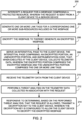
- the security server system 140 intercepts (or otherwise receives) a request for a webpage that includes a protected resource.
- the request may be a request sent from a client computing device (e.g. client computing device 102, which may also be referred to as a "client device") to a web server system (e.g. web server system 112, which may also be referred to as a "server device”).
- the request is a GET request to obtain web content (e.g. web content 122) from the web server system 112.
- the web content may include one or more protected resources, although other types of content may be requested.
- the security server system 140 may intercept the request before it reaches the web server system 112.
- the security server system 140 may act as a reverse proxy server to the web server system and intercept the request.
- the web server system 112 may receive the request and forward it to the security server system 140 and await instructions from the security server system 140 before responding to the request.
- the security server system 140 may generate one or more link tags for a corresponding one or more sub-resources included in the webpage.
- a link tag is a feature of HyperText Markup Language (HTML) that can provide a link to a sub-resource that can be accessed and downloaded using the link.
- the link tags can have an associated preload attribute that, when read by a device, will cause the device to automatically begin downloading the linked sub-resource to its cache.
- the security server system 140 may generate the one or more link tags by scanning the HTML code of the requested webpage to identify one or more sub-resource tags and for each identified sub-resource tag, generate a link tag that is associated with a preload attribute.
- the security server system 140 may either access the HTML code for the requested webpage on the web server system 112 and/or receive a copy of the HTML code of the requested webpage and scan the received HTML code for the link tags.
- the security server system 140 may generate an encrypted webpage by encrypting the webpage.
- the security server system 140 may encrypt the webpage (i.e., a copy of the HTML of the requested webpage) using symmetric key encryption.
- the security server system 140 may serve an interstitial page to the client computing device.
- the interstitial page includes an encrypted portion, an unencrypted portion and instrumentation code that, when executed at the requesting client computing device 102, collects telemetry data.
- the encrypted portion of the interstitial page includes the encrypted webpage.
- the unencrypted portion of the interstitial page includes the one or more link tags.
- the unencrypted portion including the one or more link tags may be configured to allow the client computing device 102 to download the corresponding one or more sub-resources to a cache of the client computing device 102 while the telemetry data is being collected and the threat analysis is being performed.
- the client computing device 102 may begin downloading the sub-resources based on the provided link tags and the encrypted copy of the webpage (i.e., the encrypted copy of the HTML code representing the webpage) while the instrumentation code executes to gather telemetry data and the security server system 140 operates to make a threat determination.
- the security server system 140 receives the telemetry data from the requesting client computing device 102.
- the security server system 140 performs threat analysis on the telemetry data collected in association with the request.
- the threat analysis may be configured to detect traffic generated by automated software ("bots") so that requests generated by automated software will not pass the threat analysis.
- the security server system 140 in this example transmits a decryption key to the client computing device 102 in response to determining, based on the performed threat analysis, that the request is allowed.
- the decryption key is configured to allow the client computing device 102 to decrypt the encrypted webpage.
- the client computing device 102 may quickly decrypt the previously download encrypted copy of the HTML code of the requested webpage and render the webpage.
- the client computing device 102 because the client computing device 102 had already started and possibly completed the process of downloading the sub-resources and encrypted copy of the HTML prior to the security server system 140 determining that the client computing device 102 is allowed to access the requested content, by the time the security server system 140 makes that determination and authorizes the client computing device 102 to access the webpage, the client computing device 102 will be able to render the webpage very quickly as the majority or all of the necessary data required to load it has already been previously downloaded by the client computing device 102.
- the method 200 may further include performing a mitigating action with respect to the request in response to determining, based on the performed threat analysis, that the request is (or should be) denied.
- the security server system 140 may deny the client computing device 102 access to the requested webpage and/or add the client computing device 102 to a blacklist.
- a security server system may include one or more server systems that provide instrumentation code to client computing devices (e.g. client computing device 102) and process telemetry data received from the client computing devices when the instrumentation code executes on the client computing devices.
- FIG. 3 a block diagram of an example of a computer system that includes a security server system 340 is illustrated.
- the security server system 340 that implements interstitial techniques to protect one or more web server systems 312-314 when one or more client computing devices 302 interact with web content hosted by the web server systems 312-314.
- the security server system 140 as illustrated and described in the examples in FIG. 1 may be the same in structure and operation as the security server system 340 in FIG. 3 .
- the security server system 340 may include one or more defense server systems 332-334.
- a defense server system 332-334 is associated with one or more web server systems 312-314.
- the defense server system 332-334 may perform actions relating to transactions and/or other interactions between client computing device(s) 302 and the associated web server system(s) 312-314.
- a defense server system 332 that is associated with a particular web server system 312 may perform one or more actions during interactions between client computing device 302 and the particular web server system 312.
- the defense server system 332 provides instrumentation code to the client computing device(s) 302 and processes telemetry data collected at the client computing device(s) 302 when the corresponding instrumentation code executes at the client computing device(s) 302.
- the defense server system 332 may store telemetry data corresponding to the interactions in a telemetry database component 338 of the security server system 340.
- the data stored in the telemetry database component 338 may be available across the security server system 340.
- another defense server system 334 may use the telemetry database component 338 collected based on interactions with the one web server system 312 to protect a second web server system 314.
- a defense server system 332-334 may be positioned in different network configurations with respect to the client computing device(s) 302 and an associated web server system 312-314.
- a defense server system 332-334 may be deployed in an in-line configuration, an out-of-band configuration, or another configuration that allows the defense server system 332-334 to perform actions relating to transactions and/or other interactions as they occur between client computing device(s) 302 and one or more web server systems 312-314.
- a defense server system 332-334 may act as a reverse proxy server to an associated web server system 312-314 by intercepting one or more communications between the client computing device(s) 302 and the associated web server system 312-314.
- the defense server system 332-334 retrieves resources, such as web content, on behalf of clients at client computing device(s) 302 of the associated web server systems 312-314. To the client computing device(s) 302, the resources appear to originate from the associated web server system 312-314.
- the defense server system 332-334 may be deployed locally to the web server system 312-314 or deployed over the Internet with respect to the web server system 312-314, such as in a cloud computing system managed by a security company, and/or in a computer system operated by a security company.
- the defense server system 332-334 may intercept messages to the client computing device(s) 302 and add instrumentation code for execution at the client computing device(s) 302.
- the defense server system 332-334 may intercept requests to the associated web server system 312-314 that include collected telemetry data from the client computing device(s) 302, process the telemetry data, and forward the requests to the associated web server system 312-314.
- a defense server system 332-334 may be involved in transactions and/or other interactions without intercepting communications between the client computing device(s) 302 and the associated web server system 312-314.
- a web server system 312-314 may obtain instrumentation code from the corresponding defense server system 332-334, provide the instrumentation code to the client computing device(s) 302, receive telemetry data generated at the client computing device(s) 302, and/or provide the corresponding defense server system 332-334 the telemetry data received from the client computing device(s) 302.
- the security server system 340 is operated by a security company or another entity that provides web security services.
- One or more web server systems 312-314 may be operated by security service customers, or entities that are provided security services by the security company.
- the security server system 340 may protect the web server systems 312-314 of security service customers from attacks, such as attacks by malicious automated software executing on one or more client computing devices 302.
- the defense server systems 332-334 may analyze transactions and/or other interactions between the client computing devices 302 and the associated web server systems 312-314 to detect and mitigate attacks on the associated web server systems 312-314.
- a defense server system 332-334 may collect and evaluate telemetry data corresponding to a transaction to determine whether the transaction is involved in an attack, such as whether a client computing device 302 involved in the transaction is controlled by automated malicious software.
- the defense server systems 332-334 may analyze telemetry data for an interaction to prevent an attack in real time, such as by such as blocking, redirecting, or flagging communications that correspond to the interaction.
- the defense server systems 332-334 may store the telemetry data in the telemetry database component 338.
- Telemetry data stored in the telemetry database component 338 is available for implementing encrypted interstitial techniques.
- telemetry data stored in the telemetry database component 338 is available for security analysis, such as by the security analysis server system 338.
- the security server system 340 may include a security analysis server system 338 that evaluates telemetry data collected at the client computing device(s) 302 to detect signatures or other properties of transactions initiated by malicious software executing on the client computing device(s) 302.
- the security analysis server system 338 may use the telemetry data set to learn about new attacks and/or to deploy new countermeasures for real-time attack detection and prevention.
- the security analysis server system 338 may update the defense server systems 332-334 with the new countermeasures so that the defense server systems 332-334 may use the new security countermeasures to process transactions between associated web server systems 312-314 and client computing device(s) 302 in real time.
- an interstitial cookie is set at a client-side browser application 106 based on telemetry data collected at another point in time.
- a defense server system 332-334 may add instrumentation code to, or otherwise integrate instrumentation code with web content served by the associated web server system 312-314, such as for another security purpose.
- a defense server system 332-334 may provide instrumentation code for one or more specific transaction types, such as login transactions, other authentication transactions, purchase transactions, financial transactions, data submission, account creation, and/or other transaction types.
- the instrumentation code provided for the other security purpose may collect a more comprehensive set of telemetry data in some examples.
- a defense server system 332-334 may add instrumentation code to a login page.
- the instrumentation code may execute in the background to collect the more comprehensive set of telemetry data.
- the telemetry data collected by the instrumentation code may be submitted with the login request so that the telemetry data may be used to evaluate and/or secure the login request.
- a security server system 340 may performs a threat analysis on the telemetry data collected in the background for another security purpose. Based on the threat analysis, the security server system 340 may determine whether or not to set an interstitial cookie at a client computing device 302 for later use when the client computing device 302 requests a protected resource, although this method may work for other types of content that is requested.
- the techniques described herein are implemented by one or more special-purpose computing devices.
- the special-purpose computing devices may be hard-wired to perform one or more techniques described herein, including combinations thereof.
- the one or more special-purpose computing devices may include digital electronic devices such as one or more application-specific integrated circuits (ASICs) or field programmable gate arrays (FPGAs) that are persistently programmed to perform the techniques.
- the one or more special-purpose computing devices may include one or more general purpose hardware processors programmed to perform the techniques described herein pursuant to program instructions in firmware, memory, other storage, or a combination.
- Such special-purpose computing devices may also combine custom hard-wired logic, ASICs, or FPGAs with custom programming to accomplish the techniques.
- the special-purpose computing devices may be desktop computer systems, portable computer systems, handheld devices, networking devices and/or any other device that incorporates hard-wired or program logic to implement the techniques.
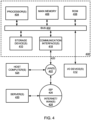
- Computer system 400 may include a bus 402 or other communication mechanism for communicating information, and one or more hardware processors 404 coupled with bus 402 for processing information, such as basic computer instructions and data.
- Hardware processor(s) 404 may include, for example, one or more general-purpose microprocessors, graphical processing units (GPUs), coprocessors, central processing units (CPUs), and/or other hardware processing units.
- Computer system 400 may also include one or more units of main memory 406 coupled to bus 402, such as random access memory (RAM) or other dynamic storage, for storing information and instructions to be executed by processor(s) 404.
- Main memory 406 may also be used for storing temporary variables or other intermediate information during execution of instructions to be executed by processor(s) 404.
- Such instructions when stored in non-transitory storage media accessible to processor(s) 404, turn computer system 400 into a special-purpose machine that is customized to perform the operations specified in the instructions.
- main memory 406 may include dynamic random-access memory (DRAM) (including but not limited to double data rate synchronous dynamic random-access memory (DDR SDRAM), thyristor random-access memory (T-RAM), zero-capacitor (Z-RAM TM )) and/or non-volatile random-access memory (NVRAM).
- DRAM dynamic random-access memory
- DDR SDRAM double data rate synchronous dynamic random-access memory
- T-RAM thyristor random-access memory
- Z-RAM TM zero-capacitor
- NVRAM non-volatile random-access memory
- Computer system 400 may further include one or more units of read-only memory (ROM) 408 or other static storage coupled to bus 402 for storing information and instructions for processor(s) 404 that are either always static or static in normal operation but reprogrammable.
- ROM 408 may store firmware for computer system 400.
- ROM 408 may include mask ROM (MROM) or other hard-wired ROM storing purely static information, programmable read-only memory (PROM), erasable programmable read-only memory (EPROM), electrically-erasable programmable read-only memory (EEPROM), another hardware memory chip or cartridge, or any other read-only memory unit.
- MROM mask ROM
- PROM programmable read-only memory
- EPROM erasable programmable read-only memory
- EEPROM electrically-erasable programmable read-only memory
- Storage device(s) 410 may include non-volatile storage media such as, for example, read-only memory, optical disks (such as but not limited to compact discs (CDs), digital video discs (DVDs), Blu-ray discs (BDs)), magnetic disks, other magnetic media such as floppy disks and magnetic tape, solid state drives, flash memory, optical disks, one or more forms of non-volatile random access-memory (NVRAM), and/or other non-volatile storage media.
- non-volatile storage media such as, for example, read-only memory, optical disks (such as but not limited to compact discs (CDs), digital video discs (DVDs), Blu-ray discs (BDs)), magnetic disks, other magnetic media such as floppy disks and magnetic tape, solid state drives, flash memory, optical disks, one or more forms of non-volatile random access-memory (NVRAM), and/or other non-volatile storage media.
- NVRAM non-volatile random access-
- Computer system 400 may be coupled via bus 402 to one or more input/output (I/O) devices 412.
- I/O device(s) 412 may include one or more displays for displaying information to a computer user, such as a cathode ray tube (CRT) display, a Liquid Crystal Display (LCD) display, a Light-Emitting Diode (LED) display, a projector, and/or any other type of display.
- CTR cathode ray tube
- LCD Liquid Crystal Display
- LED Light-Emitting Diode
- I/O device/s 412 may also include one or more input devices, such as an alphanumeric keyboard and/or any other key pad device.
- the one or more input devices may also include one or more cursor control devices, such as a mouse, a trackball, a touch input device, or cursor direction keys for communicating direction information and command selections to processor 404 and for controlling cursor movement on another I/O device (e.g., a display).
- This input device typically has at degrees of freedom in two or more axes, (e.g. a first axis x, a second axis y, and optionally one or more additional axes z ... ), that allows the device to specify positions in a plane.
- the one or more I/O device(s) 412 may include a device with combined I/O functionality, such as a touch-enabled display.
- I/O device(s) 412 may include a fingerprint reader, a scanner, an infrared (IR) device, an imaging device such as a camera or video recording device, a microphone, a speaker, an ambient light sensor, a pressure sensor, an accelerometer, a gyroscope, a magnetometer, another motion sensor, or any other device that can communicate signals, commands, and/or other information with processor(s) 404 over bus 402.
- IR infrared
- Computer system 400 may implement the techniques described herein using customized hard-wired logic, one or more ASICs or FPGAs, firmware or program logic which, in combination with the computer system causes or programs, causes computer system 400 to be a special-purpose machine. According to one example, the techniques herein are performed by computer system 400 in response to processor(s) 404 executing one or more sequences of one or more instructions contained in main memory 406. Such instructions may be read into main memory 406 from another storage medium, such as one or more storage device(s) 410. Execution of the sequences of instructions contained in main memory 406 causes processor(s) 404 to perform the method steps described herein. In alternative examples, hard-wired circuitry may be used in place of or in combination with software instructions.
- Computer system 400 may also include one or more communication interfaces 418 coupled to bus 402.
- Communication interface(s) 418 provide two-way data communication over one or more physical or wireless network links 420 that are connected to a local network 422 and/or a wide area network (WAN), such as the Internet.
- communication interface(s) 418 may include an integrated services digital network (ISDN) card, cable modem, satellite modem, or a modem to provide a data communication connection to a corresponding type of telephone line.
- ISDN integrated services digital network
- communication interface(s) 418 may include one or more of: a local area network (LAN) device that provides a data communication connection to a compatible local network 422; a wireless local area network (WLAN) device that sends and receives wireless signals (such as electrical signals, electromagnetic signals, optical signals or other wireless signals representing various types of information) to a compatible LAN; a wireless wide area network (WWAN) device that sends and receives such signals over a cellular network access a wide area network (WAN, such as the Internet 428); and other networking devices that establish a communication channel between computer system 400 and one or more LANs 422 and/or WANs.
- LAN local area network
- WLAN wireless local area network
- WWAN wireless wide area network
- Network link(s) 420 typically provides data communication through one or more networks to other data devices.
- network link(s) 420 may provide a connection through one or more local area networks 422 (LANs) to one or more host computers 424 or to data equipment operated by an Internet Service Provider (ISP) 426.
- ISP 426 in turn provides connectivity to one or more wide area networks 428, such as the Internet.
- LAN(s) 422 and WAN(s) 428 both use electrical, electromagnetic or optical signals that carry digital data streams.
- the signals through the various networks and the signals on network link(s) 420 and through communication interface(s) 418 are example forms of transmission media, or transitory media.
- storage media refers to any non-transitory media that stores data and/or instructions that cause a machine to operate in a specific fashion. Such storage media may include volatile and/or non-volatile media. Storage media is distinct from but may be used in conjunction with transmission media.
- Transmission media participates in transferring information between storage media.
- transmission media includes coaxial cables, copper wire and fiber optics, including traces and/or other physical electrically conductive components that comprise bus 402.
- Transmission media can also take the form of acoustic or light waves, such as those generated during radio-wave and infra-red data communications.
- Various forms of media may be involved in carrying one or more sequences of one or more instructions to processor 404 for execution.
- the instructions may initially be carried on a magnetic disk or solid state drive of a remote computer.
- the remote computer can load the instructions into its main memory 406 and send the instructions over a telecommunications line using a modem.
- a modem local to computer system 400 can receive the data on the telephone line and use an infra-red transmitter to convert the data to an infra-red signal.
- An infra-red detector can receive the data carried in the infra-red signal and appropriate circuitry can place the data on bus 402.
- Bus 402 carries the data to main memory 406, from which processor 404 retrieves and executes the instructions.
- the instructions received by main memory 406 may optionally be stored on storage device 410 either before or after execution by processor 404.
- Computer system 400 can send messages and receive data, including program code, through the network(s), network link 420 and communication interface 418.
- one or more servers 430 might transmit signals corresponding to data or instructions requested for an application program executed by the computer system 400 through the Internet 428, ISP 426, local network 422 and a communication interface 418.
- the received signals may include instructions and/or information for execution and/or processing by processor(s) 404.
- Processor(s) 404 may execute and/or process the instructions and/or information upon receiving the signals by accessing main memory 406, or at a later time by storing them and then accessing them from storage device(s) 410.
Landscapes
- Engineering & Computer Science (AREA)
- Computer Security & Cryptography (AREA)
- General Engineering & Computer Science (AREA)
- Computer Hardware Design (AREA)
- Computer Networks & Wireless Communication (AREA)
- Signal Processing (AREA)
- Computing Systems (AREA)
- Theoretical Computer Science (AREA)
- Software Systems (AREA)
- Physics & Mathematics (AREA)
- General Physics & Mathematics (AREA)
- Databases & Information Systems (AREA)
- Health & Medical Sciences (AREA)
- Bioethics (AREA)
- General Health & Medical Sciences (AREA)
- Data Mining & Analysis (AREA)
- Multimedia (AREA)
- Technology Law (AREA)
- Information Transfer Between Computers (AREA)
Applications Claiming Priority (1)
| Application Number | Priority Date | Filing Date | Title |
|---|---|---|---|
| US202363462903P | 2023-04-28 | 2023-04-28 |
Publications (1)
| Publication Number | Publication Date |
|---|---|
| EP4456484A1 true EP4456484A1 (de) | 2024-10-30 |
Family
ID=90924513
Family Applications (1)
| Application Number | Title | Priority Date | Filing Date |
|---|---|---|---|
| EP24173105.8A Pending EP4456484A1 (de) | 2023-04-28 | 2024-04-29 | Verschlüsselte interstitielle techniken für websicherheit |
Country Status (3)
| Country | Link |
|---|---|
| US (1) | US20250294042A1 (de) |
| EP (1) | EP4456484A1 (de) |
| CN (1) | CN118869233A (de) |
Citations (2)
| Publication number | Priority date | Publication date | Assignee | Title |
|---|---|---|---|---|
| US20160142438A1 (en) * | 2014-11-13 | 2016-05-19 | Cleafy S.r.l. | Method of identifying and counteracting internet attacks |
| US20200177592A1 (en) * | 2015-07-07 | 2020-06-04 | Shape Security, Inc. | Delayed serving of protected content |
-
2024
- 2024-04-28 CN CN202410521504.1A patent/CN118869233A/zh active Pending
- 2024-04-29 EP EP24173105.8A patent/EP4456484A1/de active Pending
- 2024-04-29 US US18/648,754 patent/US20250294042A1/en active Pending
Patent Citations (2)
| Publication number | Priority date | Publication date | Assignee | Title |
|---|---|---|---|---|
| US20160142438A1 (en) * | 2014-11-13 | 2016-05-19 | Cleafy S.r.l. | Method of identifying and counteracting internet attacks |
| US20200177592A1 (en) * | 2015-07-07 | 2020-06-04 | Shape Security, Inc. | Delayed serving of protected content |
Also Published As
| Publication number | Publication date |
|---|---|
| US20250294042A1 (en) | 2025-09-18 |
| CN118869233A (zh) | 2024-10-29 |
Similar Documents
| Publication | Publication Date | Title |
|---|---|---|
| US10193909B2 (en) | Using instrumentation code to detect bots or malware | |
| US10333924B2 (en) | Reliable selection of security countermeasures | |
| US10205742B2 (en) | Stateless web content anti-automation | |
| US12137097B1 (en) | Security measures for extended sessions using multi-domain data | |
| US11329992B2 (en) | Security measures for extended sessions | |
| US11258819B1 (en) | Security scoring based on multi domain telemetry data | |
| US11139966B2 (en) | Security code for integration with an application | |
| US11985165B2 (en) | Detecting web resources spoofing through stylistic fingerprints | |
| EP4456484A1 (de) | Verschlüsselte interstitielle techniken für websicherheit | |
| US11783087B1 (en) | Facilitating secure client data transfer | |
| HK40116820A (en) | Encrypted interstitial techniques for web security | |
| US11647036B1 (en) | Advanced interstitial techniques for web security |
Legal Events
| Date | Code | Title | Description |
|---|---|---|---|
| PUAI | Public reference made under article 153(3) epc to a published international application that has entered the european phase |
Free format text: ORIGINAL CODE: 0009012 |
|
| STAA | Information on the status of an ep patent application or granted ep patent |
Free format text: STATUS: THE APPLICATION HAS BEEN PUBLISHED |
|
| AK | Designated contracting states |
Kind code of ref document: A1 Designated state(s): AL AT BE BG CH CY CZ DE DK EE ES FI FR GB GR HR HU IE IS IT LI LT LU LV MC ME MK MT NL NO PL PT RO RS SE SI SK SM TR |
|
| STAA | Information on the status of an ep patent application or granted ep patent |
Free format text: STATUS: REQUEST FOR EXAMINATION WAS MADE |
|
| 17P | Request for examination filed |
Effective date: 20250318 |
|
| REG | Reference to a national code |
Ref country code: HK Ref legal event code: DE Ref document number: 40116820 Country of ref document: HK |
|
| GRAP | Despatch of communication of intention to grant a patent |
Free format text: ORIGINAL CODE: EPIDOSNIGR1 |
|
| STAA | Information on the status of an ep patent application or granted ep patent |
Free format text: STATUS: GRANT OF PATENT IS INTENDED |