EP4456483A1 - Erkennung beeinträchtigter funktionen in einer serverlosen cloud-umgebung - Google Patents
Erkennung beeinträchtigter funktionen in einer serverlosen cloud-umgebung Download PDFInfo
- Publication number
- EP4456483A1 EP4456483A1 EP24170789.2A EP24170789A EP4456483A1 EP 4456483 A1 EP4456483 A1 EP 4456483A1 EP 24170789 A EP24170789 A EP 24170789A EP 4456483 A1 EP4456483 A1 EP 4456483A1
- Authority
- EP
- European Patent Office
- Prior art keywords
- serverless
- function
- functions
- cloud environment
- data
- Prior art date
- Legal status (The legal status is an assumption and is not a legal conclusion. Google has not performed a legal analysis and makes no representation as to the accuracy of the status listed.)
- Pending
Links
Images
Classifications
-
- H—ELECTRICITY
- H04—ELECTRIC COMMUNICATION TECHNIQUE
- H04L—TRANSMISSION OF DIGITAL INFORMATION, e.g. TELEGRAPHIC COMMUNICATION
- H04L63/00—Network architectures or network communication protocols for network security
- H04L63/14—Network architectures or network communication protocols for network security for detecting or protecting against malicious traffic
- H04L63/1408—Network architectures or network communication protocols for network security for detecting or protecting against malicious traffic by monitoring network traffic
- H04L63/1425—Traffic logging, e.g. anomaly detection
-
- G—PHYSICS
- G06—COMPUTING OR CALCULATING; COUNTING
- G06F—ELECTRIC DIGITAL DATA PROCESSING
- G06F21/00—Security arrangements for protecting computers, components thereof, programs or data against unauthorised activity
- G06F21/50—Monitoring users, programs or devices to maintain the integrity of platforms, e.g. of processors, firmware or operating systems
- G06F21/55—Detecting local intrusion or implementing counter-measures
- G06F21/552—Detecting local intrusion or implementing counter-measures involving long-term monitoring or reporting
Definitions
- the present invention relates to the field of cyber-security. More particularly, the invention relates to a method for detecting compromised functions, in a serverless cloud environment.
- Serverless computing is an emerging cloud computing paradigm using serverless functions. Serverless computing enables organizations to build and deploy software and services without the need to maintain, provide, or scale resources, such as physical or virtual servers [21]. Serverless environments allow software developers to develop applications without the need to actively manage the underlying runtime infrastructure. However, these environments may be exposed to a wide variety of security threats that can be challenging to mitigate.
- Serverless computing in the cloud offers mainly backend-as-a-service (BaaS) and function-as-a-service (FaaS) [23] cloud usage models, of which FaaS is the primary serverless model [12].
- Serverless functions e.g., AWS Lambda, Azure functions
- Azure functions are small, stateless, single purpose units of business logic within a serverless application that are designed to be triggered by predefined events.
- Serverless applications have inherited the typical security problems associated with cloud computing (e.g., configuration mismanagement, identity management, data leakage), resulting in a larger attack surface [22,26].
- serverless functions perform a single atomic task and are able to run in parallel with other functions. Therefore, many of serverless functions may use the same resources at the same time and need to communicate with each other and with additional services, which creates a complex and wide attack surface (an organization's attack surface is the sum of vulnerabilities, pathways, or methods that hackers can use to gain unauthorized access to the network or sensitive data, or to carry out a cyberattack).
- serverless functions may be invoked by a plethora of internal and external events, thereby providing an attacker with a variety of avenues to try and exploit.
- Dynamic analysis techniques used modified versions of the functions' runtime environment to monitor and detect malicious activity [4,5,16,27].
- these methods do not address the need for threat detection solutions in a fully managed serverless environment. Their ability to control and modify the existing infrastructure is only possible when operating in a non-managed environment, which is unrealistic in the major cloud providers' settings.
- many of these solutions [4,15,16,27] aim at preventing injection attacks or the introduction of malicious code via the supply chain by blocking suspicious requests rather than identifying malicious behavior and take the "presumption of compromise" approach. In addition to the fact that prevention is usually prone to failure, this approach could also lead to a high false alarm rate, which would interfere with the application's availability.
- serverless computing In spite of the many security challenges posed by serverless computing, it also offers a new threat detection opportunity, since atomic units of serverless functions enable native function-level logging with high granularity. Among other things, high-resolution logging enables both application administrators to gain a deeper understanding of serverless applications and security teams to identify anomalies and potential threats. There are a number of challenges in developing a threat detection model for serverless functions, including challenges stemming from their dynamic nature, high volume, and the wide variety of activities that take place during their lifetimes. These create a lot of noise in the system and enable attackers to "stay below the radar".
- Serverless functions which are the main component of serverless environments, provide attackers with new opportunities to exploit their permissions and accomplish their goals [3,18,22,26]. These functions often consist of different components and services, thereby creating many potential entry points for attackers (e.g., the function's code or dependencies and the underlying infrastructure). Serverless functions are event-driven and can be invoked in response to a wide variety of events (e.g., HTTP requests, database updates, storage modifications), which increases their attack surface. Serverless functions are also stateless and short-lived. As a result, it is complicated to determine their role within the application flow and the context in which they run.
- misconfiguration errors may also play a significant role.
- a misconfigured function e.g. over-privileged, having an excessively long timeout
- vulnerabilities may result in vulnerabilities that allow an attacker to exploit the function.
- a compromised serverless function is defined as a function that acts in an unintended way, resulting from the action of a malicious actor.
- Permission misuse which is a deliberate and malicious attack pattern, occurs when a user's (either a human user or a system resource) permission is used inappropriately. In many cases, misusing permissions is possible due to excessive privileges being granted to resources and functions in violation of the "least privilege" principle [9,22].
- These over-privileged functions allow attackers to manipulate execution flows to gain advantages. For example, when permissions are granted too broadly, a function may be able to access resources or perform actions it should not be allowed to perform [26]. In turn, this can create security vulnerabilities, expose sensitive data, and/or harm the application's performance.
- Data leakage is the exposure of sensitive data outside an organization.
- Data sources are an integral component of serverless applications, and the event-driven nature of the serverless paradigm encourages transfer of data between serverless functions. This, along with misconfigured resources, can lead to the leakage of confidential data.
- AWS-based environments one of the most common data leakage scenarios in AWS-based environments occurs when an Amazon Simple Storage Service (53) "bucket" is misconfigured, and its permissions are set as public, thereby allowing public access to internal private data [8,28]. Therefore, writing sensitive and confidential information to a public access bucket by a compromised serverless function should be addressd.
- Amazon Simple Storage Service (53)
- a denial-of-wallet (DoW) attack targets cloud applications in general and serverless applications in particular. Similar to a typical DoS attack, a DoW attack attempts to exhaust a specific resource, which in this case, is the budget allocated by the cloud administrator for computational resources. Accordingly, the attacker seeks to over-utilize cloudbased resources, which results in higher cloud usage bills, exceeds the allotted budget, or even pushes the application owner into bankruptcy [26]. DoW attacks take advantage of the scalability of serverless applications to artificially increase cloud resource consumption, which may eventually inflate the application's cost and exhaust its budget [17]. DoW attacks have become a significant threat to serverless applications, requiring consideration, detection, and mitigation.
- SecLambda an architecture for securing serverless applications
- Jegan et al. [15] Their solution provides an extension that monitors and blocks requests within each serverless runtime environment, in addition to a control program that monitors the system.
- Sankaran et al. [27] proposed WILL.IAM, an access control flow model for serverless applications, which creates workflowbased policies to enforce.
- these solutions focus on signatures of previously observed legitimate flows and specific patterns of serverless applications, without aiming to obtain any knowledge of more sophisticated patterns.
- Datta et al. [5] presented ALASTOR, a framework that collects the system and application layers' information regarding functions' activity. A global data provenance graph is then created based on the information gathered. Kalium, an extensible security framework to enforce control-flow integrity for serverless functions and serverless applications, was proposed by Jegan et al. [16].
- Logging and monitoring systems' activities are essential for determining a system's state and performance and obtaining an overall picture of the system.
- the ability to debug and perform root cause analysis and anomaly detection relies on the existence of system logs (a log is a timestamped record of an event generated by an operating system, application, server, or network device. Logs can include data about user inputs, system processes, and hardware states). As the log volume increases, it becomes impossible to use conventional anomaly detection methods based primarily on manual inspection. To address this issue, extensive research has been performed in the areas of automated log analysis and anomaly detection.
- Prior methods used traditional machine learning methods for anomaly detection, such as SVM [7] and clustering [20], as well as deep learning methods, such as LSTM [6,32,33], autoencoders [34], transformers [10], and graph embedding [19].
- Other studies modeled logs generically [6,31] or modeled specific activities like network traffic [13], user activity [29], or other domains [11].
- Deep learning methods have been shown to perform better than conventional anomaly detection methods when it comes to learning feature representations and detecting anomalies based on them in real-world applications [25].
- an object of the present invention to provide a method for detecting compromised functions in a serverless cloud environment, for preventing permission misuse by exploiting misconfiguration of cloud entities to misuse their permissions.
- a method for detecting compromised functions software functions that have been infiltrated by unauthorized individuals or malicious software, allowing them to gain control or access sensitive information
- threats such as permission misuse, data leakage and compromised functions
- the model utilizes only cloud provider's native monitoring tools to detect abnormal behavior of serverless applications, while customizing the data preprocessing for the analysis of serverless application logs, thereby considering all of the unique features of the application logs.
- the model is used to detect a predefined type of threat having unique patterns and behavior.
- Log files from various sources that contain different details with different granularity levels about a specific request may be combined.
- one or more LSTM autoencoders are used to model the normal behavior of each serverless function.
- Native hyper-logging capabilities provided by the serverless platform may be used.
- the model may utilize fine-grained logging to detect both known and unknown threats.
- the unique features extracted by the threat detection model may be used to enrich the basic information provided by the activity logs, to thereby add information regarding the environment.
- the model may use graph theory features to learn the interactions between services and to detect anomalies in the interactions.
- the model may be a Compromised Function Detection model (CFD) that is adapted to:
- CFD Compromised Function Detection model
- a unique anomaly detection dataset may be provided, which contains data reflecting the activity of two distinct applications, each corresponding to a different serverless paradigm.
- Dynamic analysis may be performed, which consists of testing and evaluating an application during runtime.
- An application flow may be triggered by an action outside of the cloud environment.
- a detection pipeline may be used, which consists of the following steps:
- the Data Leakage Detection model may be adapted to:
- the Compromised Function Detection model may be adapted to:
- the compromised function detection model may be adapted to detect deviations from the normal activity of serverless functions flow.
- each function may be represented by a sequence of vectors, where each vector represents an event in the sequence.
- the raw logs containing information regarding the activity of the serverless applications may be collected and used to train the threat detection model.
- a serverless cloud environment having detection capability of compromised functions and threats comprising:
- the serverless cloud environment may further comprise a unique anomaly detection dataset containing data reflecting the activity of two distinct applications, each corresponding to a different serverless paradigm.
- Dynamic analysis consisting of testing and evaluating an application may be performed during runtime in the serverless cloud environment.
- the present invention provides an extendable serverless security threat detection model that leverages cloud providers' native monitoring tools to detect anomalous behavior in serverless applications.
- the model detects post-exploitation abnormal behavior related to different types of threats on serverless functions, and is therefore, a last line of defense.
- the model may use graph theory features to learn the interactions between services and to detect anomalies in these interactions.
- the present invention also provides serverless cloud environment with detection capability of compromised functions and threats.
- the serverless cloud environment comprise at least one processor and associated memory, for running an unsupervised deep learning anomaly detection model, which can utilize only cloud provider's native monitoring tools to detect abnormal behavior of serverless applications, while customizing the data preprocessing for the analysis of serverless application logs, thereby considering all of the unique features of said application logs and detect a predefined type of threat having unique patterns and post-exploitation abnormal behavior.
- the present invention can identify a wide variety of anomalies using deep neural networks' ability to learn hidden behavioral patterns in applications' activities. By doing so, both known and unknown attacks are detected with no need for prior knowledge of their signatures. Moreover, existing solutions are mainly preventative and handle attacks in cloud-based environments by reducing the attack surface, while the method of the present invention provides the user with the ability to assess the detected anomalies' severity and determine the proper response to them, to gain a better security posture.
- the detection model of the present invention utilizes data logs to detect anomalies, while customizing the data preprocessing for the analysis of serverless application logs (structured records of events and activities generated by software applications, which capture a wide range of information, including error messages, user interactions, system events, and application-specific data), in order to consider all of their unique features (e.g., combining log files from various sources that contain different details with different granularity levels (the level of detail at which data is collected and analyzed, which can influence the accuracy and efficiency of data analysis, machine learning, and artificial intelligence) about a specific request. Therefore, as much information as possible can be gathered).
- serverless application logs structured records of events and activities generated by software applications, which capture a wide range of information, including error messages, user interactions, system events, and application-specific data
- LSTM autoencoder an implementation of an autoencoder for sequence data using an Encoder-Decoder LSTM architecture
- LSTM Long Short-Term Memory
- the proposed method is threat-agnostic and designed to detect different types of threats, both known and unknown, across various threat categories.
- the method uses native hyper-logging capabilities provided by the serverless platform, and therefore it is self-contained and does not require any external information.
- the Compromised Functions Detection model uses high-resolution logging of the serverless functions and generates multivariate sequences to represent each serverless function instance as a flow of the function's internal operations. By analyzing these sequences, the model can detect anomalies within the functions' flows themselves, as well as within individual events in these flows. Since the model can recognize hidden patterns in the behavior of each function, it presents a generic approach, rather than targeting specific threats.
- the proposed models have been evaluated using a serverless evaluation testbed in an AWS environment that contains two open-source serverless applications. As part of the testbed, benign user activity was simulated as well as a variety of attacks. The model successfully detected all of the implemented attacks while maintaining a low false alarm rate (0.003). Such capabilities are crucial for improving the security of today's widely used serverless platforms and the performance of the security teams, responsible for defending them.
- the present invention provides a novel threat detection model for serverless functions.
- the proposed model is built on top of cloud providers' native hyper-logging and monitoring tools, and security teams can use it without the need for any external collaboration (e.g., asking a developer to change the source code or enlisting the cooperation of third-party services).
- a unique anomaly detection dataset has been collected for the serverless security field, which contains data reflecting the activity of two distinct applications, each of which was developed in a different serverless paradigm and has its own unique characteristics.
- the present invention considers the following elements of serverless computing:
- AWS Lambda has been used to implement the serverless functions, AWS Simple Storage Service (53) as a data storage service, and AWS DynamoDB as a database service.
- EventBridge A serverless bus event used to trigger event-driven functions (e.g., trigger Lambda functions on timed events).
- API Gateway A service that enables the maintenance of RESTful APIs. In the evaluation testbed, the application receives API requests from users, and the API Gateway service triggers Lambda functions in response.
- Step Function A workflow service used to orchestrate microservices, build pipelines (sets of data processing elements connected in series, where the output of one element is the input of the next one) using AWS services, and combine multiple Lambda functions in responsive serverless applications and microservices.
- the Step Function service allows to orchestrate complete application workflows.
- the following monitoring and application logging tools have been used in the AWS evaluation:
- the logs used by the proposed threat detection model contain application flows.
- An application flow is usually triggered by an action outside of the cloud environment (e.g., a REST API call or a file upload to a public storage service).
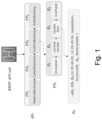
- Each application flow is constructed by sequences of function flows, where each function flow consists of a sequence of function events such as internal functions' calls or resource operations.
- Fig. 1A is an example of an application flow ( AF 5 ) in the testbed.
- the application flow is triggered by a REST API call and is composed of four function flows.
- the third function flow is of a function named ConfirmBooking (denoted by FF 3 ), which contains a sequence of four function events.
- Each function event is defined by the following properties:
- the proposed Compromised Function Detection (CFD) model focuses on serverless functions' flow and detects deviations from their normal activity.
- the events that occur during the execution of each function are represented by a sequence of vectors, where each vector represents an event in the sequence.
- This way, the high granularity of the cloud provider's logs can be used to model and detect abnormalities in the order of the events in a function's execution as well as in the events' attributes. This is done by using an LSTM autoencoder, which learns the complex patterns in the temporal order of the monitored serverless function' sequences and the characteristics of each event in these sequences, and identifies anomalous sequences based on what it learned.
- Data is collected by using the cloud provider's native monitoring tools, such as hyper-logging and monitoring tools. All major cloud providers possess such tools in their platforms 4 (i.e., AWS, Microsoft Azure, Google Cloud).
- the raw logs containing information regarding the activity of the serverless applications are collected and used to train the proposed threat detection model under the assumption that (1) the attacker is unable to control logging and (2) the logs are unmodified and reflect the real activity of the system (i.e., functions).
- the collected data consists of applicationflows representing the activities of the applications in the serverless environment.
- the functionflows of the monitored functions are used from these applicationflows.
- a sequence of n vectors has been created. Each vector represents an event that occurred as part of the functionflow.
- the relevant features of each event are extracted from the log entry associated with the event, and new features are generated based on these features.
- EventName EventType
- EventParentName EventTarget
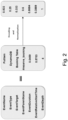
- the new features generated based on the event's log entry include the EventDuration - the difference between the event's StartTime and EndTime; RelativeStartTime - the time that passed since the StartTime of the first event in the sequence; and the depth of the event (the depth is one if the event has no EventParentName, and otherwise the depth is the depth of the parent event plus one).
- Fig. 2 presents an example of an event vector associated with a Putltem operation in DynamoDB, before and after it was encoded and normalized.
- LSTM autoencoder In order to learn the normal behavior patterns of the serverless functions, a dedicated LSTM autoencoder is trained for each monitored function. Since different attacks may be captured within different-sized time frames, for each monitored function, several autoencoders are trained, such that each autoencoder is trained on a different sequence size (i.e., window size).
- each autoencoder learns the typical patterns of its function's sequences.
- the LSTM autoencoder encodes and decodes each function instance (that defines the use of the function in a particular context) represented by a sequence of vectors.
- the reconstruction error computed using the mean square error (MSE) of each sequence is used to determine the anomaly score of the instance it represents.
- the sequences with an anomaly score that is greater than a predefined threshold, are flagged as possible attacks.
- a serverless cloud environment (serverless computing is an application development and execution model that enables developers to build and run application code without provisioning or managing servers or backend infrastructure) was constructed.
- a serverless cyber security evaluation testbed has been established (on the AWS platform), which is capable of: (1) covering several serverless development paradigms that utilize many types of serverless cloud resources, (2) generating a large amount of logging data of real-life activities, and (3) simulating the effects of common attack scenarios.
- the AWS X-Ray service which is generally used as a debugging tool for AWS services in both development and production environments, has been utilized as a native fine-grained logging tool (that enables fine-grained control over logging on a per-part basis of a program).
- AWS X-Ray can be configured to monitor specific and more critical serverless functions.
- the testbed includes two applications that represent two different serverless development approaches and allows to examine a variety of AWS's serverless services in the testbed: (1) an airline booking application, 5 and (2) a video-on-demand (VOD) application.
- an airline booking application each serverless function has a single specific use within the workflow, while the functions in the VOD application are more generic and can be used multiple times in different contexts.
- the Airline booking application contains multiple REST API endpoints that allow users to interact with it. It contains a variety of AWS services: four DynamoDB tables, four S3 buckets, SQS and SNS services (queue and notification services), the AppSync API service, and 12 Lambda functions. Some of the Lambda functions are orchestrated using the AWS Step Function service.
- the first type is an API request that fetches information from a DynamoDB table and returns the data to the user (i.e., loyalty points and the flight catalog). This type of event is short-timed and contains a single access to a data source in the system.
- the second type of process is the booking process. In this process, an API request to book a flight triggers a series of data access operations and Lambda function invocations that transfer information between them.
- This series of events is orchestrated by a step function.
- the third type of process is an event triggered by AWS EventBridge using time-based triggers.
- the VOD application decodes videos into a streaming format and stores them in a public S3 bucket as part of its activity.
- the application contains three S3 buckets, two DynamoDB tables, and 17 Lambda functions.
- the VOD application contains four step functions that are responsible for the four main business processes of the application (in contrast to the airline booking application where only one of the business processes is orchestrated by a step function).
- the fourth process is a mailing process that uses the AWS Simple Mailing Service (SES) to support video uploads through emails.
- SES AWS Simple Mailing Service
- Each application uses an individual DynamoDB table that contains the necessary configuration information for the simulation (for example, the probabilities for each implemented attack).
- the total time of the simulation is dictated by the number of iterations that were set before the script is run. To simulate real-life activity on the application, intervals that create time gaps between users' activities with respect to the time of day and the users' actions were established, to create a distributed activity load that is more aligned with users' real behavior.
- a staging S3 bucket that imitates a virtual "local drive" of a user that uploads video files to the application's source bucket has been created.
- the simulator uses the AWS SDK for Python (Boto3) in order to perform the cloud operations that trigger the application's workflow (upload files to S3 buckets).
- Boto3 Python
- the Amazon SES was configured to receive and store email from Amazon Route 53 service domain.
- the simulator also uses Python's email library to send emails to our domain.
- the Trending YouTube Video Statistics dataset from Kaggle has been used, which contains information about the upload times of popular videos in the US. The distribution of the uploads of these videos was used to simulate the activity in the VOD application.
- attack scenarios were implemented in the testbed, to demonstrate the feasibility of the proposed method, which demonstrate common threats in the serverless threat landscape. These attack scenarios illustrate the effects that real attacks can have on a serverless application, including the artifacts they leave behind in serverless activity logs.
- a third version involves adding an additional action to the function's workflow (e.g., additional access to a DynamoDB table).
- the attacker uses the serverless function in order to leak sensitive information to a public access data source.
- the attacker adds functionality that causes it to write data to an external AWS S3 bucket.
- the execution time of the VOD application simulator is based on the number of files uploaded and processed. 3,000 files were uploaded over approximately six hours in each of the training and testing phases.
- the execution time of the airline booking application is based on the number of iterations to be performed by the airline booking simulator. Each of the training and testing phases involved 800 iterations over approximately four hours.
- the invocations in the test sets of both applications contain a predefined percentage of the implemented attacks, and each invocation was randomly selected to run the anomalous or the benign code based on it.
- a grid search has been conducted to choose the best hyperparameters for each LSTM autoencoder and for the model itself, i.e., the number of epochs, size of each input sequence (the sliding window size), and threshold for the instances' classification.
- three autoencoders were trained with three different sequence sizes: 3, 5, and 10. An instance (sequence) is classified as anomalous if at least one of the autoencoders classified it as such.
- the final selected network architecture is identical for all of the functions' autoencoders, and it consists of five fully connected feed-forward hidden layers. There are 128 and 64 neurons in each of the encoder and decoder layers (from the outer layer to the inner one), and the activation function for these layers is ReLU. A middle layer containing 64 neurons replicates the inner layer of the encoder by a factor equal to the number of events in the sequence.
- the Adam optimization algorithm was used for the network.
- the precision scores obtained with the VOD application were lower than those of the airline booking application, due to the fact there was a higher number of false alarms for a specific function in the case of the VOD application.
- the permission misuse (additional operation) and data leakage attacks were implemented on this function. While there were very few cases where benign sequences were classified as anomalous. Analysis showed the vast majority of them involved cold-starting function instances. As such an event was relatively rare in the training set, the model was not sufficiently experienced with sequences that included it. Therefore, the more diverse the training set is in terms of the event sequences it contains, the more complete the model will be, and the better the results.
- the proposed model is able to highlight valuable log data for a manual inspection of the security analysts.
Landscapes
- Engineering & Computer Science (AREA)
- Computer Security & Cryptography (AREA)
- Computer Hardware Design (AREA)
- Computing Systems (AREA)
- General Engineering & Computer Science (AREA)
- Computer Networks & Wireless Communication (AREA)
- Signal Processing (AREA)
- Debugging And Monitoring (AREA)
- Computer And Data Communications (AREA)
Applications Claiming Priority (1)
| Application Number | Priority Date | Filing Date | Title |
|---|---|---|---|
| IL302222A IL302222A (en) | 2023-04-18 | 2023-04-18 | Detecting functions under risk in a serverless cloud environment |
Publications (1)
| Publication Number | Publication Date |
|---|---|
| EP4456483A1 true EP4456483A1 (de) | 2024-10-30 |
Family
ID=90789319
Family Applications (1)
| Application Number | Title | Priority Date | Filing Date |
|---|---|---|---|
| EP24170789.2A Pending EP4456483A1 (de) | 2023-04-18 | 2024-04-17 | Erkennung beeinträchtigter funktionen in einer serverlosen cloud-umgebung |
Country Status (2)
| Country | Link |
|---|---|
| EP (1) | EP4456483A1 (de) |
| IL (1) | IL302222A (de) |
Cited By (2)
| Publication number | Priority date | Publication date | Assignee | Title |
|---|---|---|---|---|
| CN119544388A (zh) * | 2025-01-22 | 2025-02-28 | 中国计量大学 | 一种基于智能感知驱动的异常检测和响应方法及系统 |
| CN119892405A (zh) * | 2024-12-13 | 2025-04-25 | 清华大学 | 面向服务器应用程序的入侵检测和取证分析方法及装置 |
Citations (1)
| Publication number | Priority date | Publication date | Assignee | Title |
|---|---|---|---|---|
| US20220129540A1 (en) * | 2020-10-22 | 2022-04-28 | Cisco Technology, Inc. | Runtime security analytics for serverless workloads |
-
2023
- 2023-04-18 IL IL302222A patent/IL302222A/en unknown
-
2024
- 2024-04-17 EP EP24170789.2A patent/EP4456483A1/de active Pending
Patent Citations (1)
| Publication number | Priority date | Publication date | Assignee | Title |
|---|---|---|---|---|
| US20220129540A1 (en) * | 2020-10-22 | 2022-04-28 | Cisco Technology, Inc. | Runtime security analytics for serverless workloads |
Non-Patent Citations (35)
| Title |
|---|
| ALPERNAS, K., FLANAGAN, C., FOULADI, S., RYZHYK, L., SAGIV, M., SCHMITZ, T., WINSTEIN, K.: "Secure serverless computing using dynamic information flow control", ARXIV PREPRINT ARXIV:1802.08984, 2018 |
| CHAWLA, R.: "Information flow control for serverless systems", INTERNATIONAL JOURNAL OF ADVANCED COMPUTER SCIENCE AND APPLICATIONS, vol. 12, no. 9, 2021 |
| DATTA, P.KUMAR, P.MORRIS, T.GRACE, M.RAHMATI, A.BATES, A.: "Valve: Securing function workflows on serverless computing platforms", PROCEEDINGS OF THE WEB CONFERENCE 2020, 2020, pages 939 - 950, XP058722940, DOI: 10.1145/3366423.3380173 |
| DATTA, P.POLINSKY, I.INAM, M.A.BATES, A.ENCK, W.: "ALASTOR}: Reconstructing the provenance of serverless intrusions", 31ST USENIX SECURITY SYMPOSIUM (USENIX SECURITY 22, 2022, pages 2443 - 2460 |
| DU, M.LI, F.ZHENG, G.SRIKUMAR, V.: "Deeplog: Anomaly detection and diagnosis from system logs through deep learning", PROCEEDINGS OF THE 2017 ACM SIGSAC CONFERENCE ON COMPUTER AND COMMUNICATIONS SECURITY, 2017, pages 1285 - 1298, XP055583401, DOI: 10.1145/3133956.3134015 |
| DUESSEL, P.LUO, S.FLEGEL, UDIETRICH, S.MEIER, M.: "2020 13th International Conference on Systematic Approaches to Digital Forensic Engineering (SADFE", 2020, IEEE, article "Tracing privilege misuse through behavioral anomaly detection in geometric spaces", pages: 22 - 31 |
| EDDY, N.: "Cloud misconfig exposes 3tb of sensitive airport data in amazon s3 bucket:", LIVES AT STAKE, July 2022 (2022-07-01) |
| GILL, P.DIETL, W.TRIPUNITARA, M.V.: "Least-privilege calls to amazon web services", IEEE TRANSACTIONS ON DEPENDABLE AND SECURE COMPUTING, 2022 |
| GUO, H.YUAN, S.WU, X.: "2021 International Joint Conference on Neural Networks (IJCNN", 2021, IEEE, article "Logbert: Log anomaly detection via bert", pages: 1 - 8 |
| HABLER, E., SHABTAI, A.: "Using Istm encoder-decoder algorithm for detecting anomalous ads-b messages.", COMPUTERS & SECURITY, vol. 78, 2018, pages 155 - 173 |
| HASSAN, H.B.BARAKAT, S.A.SARHAN, Q.I: "Survey on serverless computing", JOURNAL OF, vol. 10, no. 1, 2021, pages 1 - 29, XP021293768, DOI: 10.1186/s13677-021-00253-7 |
| HWANG, R.H., PENG, M.C., HUANG, C.W., LIN, P.C., NGUYEN, V.L.: "An unsupervised deep learning model for early network traffic anomaly detection.", IEEE ACCESS, vol. 8, 2020, pages 30387 - 30399, XP011773784, DOI: 10.1109/ACCESS.2020.2973023 |
| IBRAHIM, A.S., HAMLYN-HARRIS, J., GRUNDY, J.: " Emerging security challenges of cloud virtual infrastructure.", ARXIV, 2016, Retrieved from the Internet <URL:https://doi.org/10.48550/ARXIV.1612.09059> |
| JEGAN, D.S., WANG, L., BHAGAT, S., RISTENPART, T., SWIFT, M.: "Guarding serverless applications with seclambda.", ARXIV PREPRINT ARXIV:2011.05322, 2020 |
| JEGAN, D.S.WANG, L.BHAGAT, S.SWIFT, M., GUARDING SERVERLESS APPLICATIONS WITH KALIUM |
| KELLY, D.GLAVIN, F.G.BARRETT, E.: "Denial of wallet-defining a looming threat to serverless computing", JOURNAL OF INFORMATION SECURITY AND APPLICATIONS, vol. 60, 2021, pages 102843 |
| LI, XLENG, X.CHEN, Y.: "Securing serverless computing: Challenges, solutions, and opportunities", IEEE NETWORK, 2022 |
| LIU, F., WEN, Y., ZHANG, D., JIANG, X., XING, X., MENG, D.: "Log2vec: A heterogeneous graph embedding based approach for detecting cyber threats within enterprise.", PROCEEDINGS OF THE 2019 ACM SIGSAC CONFERENCE ON COMPUTER AND COMMUNICATIONS SECURITY, 2019, pages 1777 - 1794, XP058638163, DOI: 10.1145/3319535.3363224 |
| LIU, Z.QIN, T.GUAN, X.JIANG, H.WANG, C: "An integrated method for anomaly detection from massive system logs", IEEE ACCESS, vol. 6, 2018, pages 30602 - 30611 |
| LYNN, T.ROSATI, P.LEJEUNE, A.EMEAKAROHA, V.: "A preliminary review of enterprise serverless cloud computing (function-as-a-service) platforms", 2017 IEEE INTERNATIONAL CONFERENCE ON CLOUD COMPUTING TECHNOLOGY AND SCIENCE (CLOUDCOM, 2017, pages 162 - 169, XP033281034, Retrieved from the Internet <URL:https://doi.org/10.1109/CloudCom.2017.15> DOI: 10.1109/CloudCom.2017.15 |
| MARIN, E.PERINO, D.DI PIETRO, R.: "Serverless computing: a security perspective", JOURNAL OF CLOUD COMPUTING, vol. 11, no. 1, 2022, pages 1 - 12, XP021309295, DOI: 10.1186/s13677-022-00347-w |
| NUPPONEN, J.TAIBI, D.: "Serverless: What it is, what to do and what not to do", 2020 IEEE INTERNATIONAL CONFERENCE ON SOFTWARE ARCHITECTURE COMPANION (ICSAC, 2020, pages 49 - 50, XP033773083, Retrieved from the Internet <URL:https://doi.org/10.1109/ICSA-C50368.2020.00016> DOI: 10.1109/ICSA-C50368.2020.00016 |
| OBETZ, M.PATTERSON, S.MILANOVA, A.: "Static call graph construction in {AWS} lambda serverless applications", 11TH USENIX WORKSHOP ON HOT TOPICS IN CLOUD COMPUTING (HOTCLOUD 19, 2019 |
| PANG, GSHEN, C.CAO, L.HENGEL, A.V.D.: "Deep learning for anomaly detection: A review", ACM COMPUTING SURVEYS (CSUR, vol. 54, no. 2, 2021, pages 1 - 38 |
| PUSULURI, V.S.R., TAXONOMY OF SECURITY AND PRIVACY ISSUES IN SERVERLESS COMPUTING, 2022 |
| SAFARYAN GOR ET AL: "SLAM: SLO-Aware Memory Optimization for Serverless Applications", 2022 IEEE 15TH INTERNATIONAL CONFERENCE ON CLOUD COMPUTING (CLOUD), IEEE, 10 July 2022 (2022-07-10), pages 30 - 39, XP034174983, DOI: 10.1109/CLOUD55607.2022.00019 * |
| SANKARAN, A.DATTA, P.BATES, A.: "Workflow integration alleviates identity and access management in serverless computing", ANNUAL COMPUTER SECURITY APPLICATIONS CONFERENCE, 2020, pages 496 - 509, XP058877226, DOI: 10.1145/3427228.3427665 |
| SEALS, A.SEALS, T., MICROSOFT LEAVES 250M CUSTOMER SERVICE RECORDS OPEN TO THE WEB, January 2020 (2020-01-01), Retrieved from the Internet <URL:https://threatpost.com/microsoft-250m-customer-service-records-open/152086> |
| SHARMA, B.POKHAREL, P.JOSHI, B.: "User behavior analytics for anomaly detection using Istm autoencoder-insider threat detection", PROCEEDINGS OF THE 11TH INTERNATIONAL CONFERENCE ON ADVANCES IN INFORMATION TECHNOLOGY, 2020, pages 1 - 9, XP058464135, DOI: 10.1145/3406601.3406610 |
| SKYSCANNER: LAMBDAGUARD, 2020, Retrieved from the Internet <URL:https://github.com/Skyscanner/LambdaGuard> |
| TUOR, A.RBAERWOLF, R.KNOWLES, N.HUTCHINSON, B.NICHOLS, N.JASPER, R.: "Recurrent neural network language models for open vocabulary event-level cyber anomaly detection", WORKSHOPS AT THE THIRTY-SECOND AAAI CONFERENCE ON ARTIFICIAL INTELLIGENCE, 2018 |
| ZHANG, X.XU, Y.LIN ET AL.: "Robust log-based anomaly detection on unstable log data", PROCEEDINGS OF THE 2019 27TH ACM JOINT MEETING ON EUROPEAN SOFTWARE ENGINEERING CONFERENCE AND SYMPOSIUM ON THE FOUNDATIONS OF SOFTWARE ENGINEERING, 2019, pages 807 - 817, XP058640548, DOI: 10.1145/3338906.3338931 |
| ZHAO, Z.XU, C.LI, B.: "A Istm-based anomaly detection model for log analysis", JOURNAL OF SIGNAL PROCESSING SYSTEMS, vol. 93, no. 7, 2021, pages 745 - 751 |
| ZHOU, C., PAFFENROTH, R.C.: "Anomaly detection with robust deep autoencoders. ", PROCEEDINGS OF THE 23RD ACM SIGKDD INTERNATIONAL CONFERENCE ON KNOWLEDGE DISCOVERY AND DATA MINING, 2017, pages 665 - 674, XP058784649, DOI: 10.1145/3097983.3098052 |
| ZISSIS, D.LEKKAS, D.: "Addressing cloud computing security issues", FUTURE GENERATION COMPUTER SYSTEMS, vol. 28, no. 3, 2012, pages 583 - 592, XP055505501, DOI: 10.1016/j.future.2010.12.006 |
Cited By (2)
| Publication number | Priority date | Publication date | Assignee | Title |
|---|---|---|---|---|
| CN119892405A (zh) * | 2024-12-13 | 2025-04-25 | 清华大学 | 面向服务器应用程序的入侵检测和取证分析方法及装置 |
| CN119544388A (zh) * | 2025-01-22 | 2025-02-28 | 中国计量大学 | 一种基于智能感知驱动的异常检测和响应方法及系统 |
Also Published As
| Publication number | Publication date |
|---|---|
| IL302222A (en) | 2024-11-01 |
Similar Documents
| Publication | Publication Date | Title |
|---|---|---|
| Goyal et al. | Sometimes, you aren’t what you do: Mimicry attacks against provenance graph host intrusion detection systems | |
| Temizkan et al. | Patch release behaviors of software vendors in response to vulnerabilities: An empirical analysis | |
| EP4456483A1 (de) | Erkennung beeinträchtigter funktionen in einer serverlosen cloud-umgebung | |
| Cao et al. | Preemptive intrusion detection: Theoretical framework and real-world measurements | |
| US9600659B1 (en) | User activity modelling, monitoring, and reporting framework | |
| US20170091459A1 (en) | Machine Learning Statistical Methods Estimating Software System's Security Analysis Assessment or Audit Effort, Cost and Processing Decisions | |
| Ben-Shimol et al. | Detection of compromised functions in a serverless cloud environment | |
| Lavi et al. | Detection of compromised functions in a serverless cloud environment | |
| Annamalai et al. | FP-Fed: privacy-preserving federated detection of browser fingerprinting | |
| Jaafor et al. | Multi-layered graph-based model for social engineering vulnerability assessment | |
| EP4478227A1 (de) | Verfahren zur erkennung von erlaubnismissbrauch in einer serverlosen cloud-umgebung | |
| EP4432094B1 (de) | Anwendungsflusserkennung in verwalteten serverlosen anwendungen | |
| Mazur et al. | Mitigating cloud computing security risks using a self-monitoring defensive scheme | |
| Xosanavongsa | Heterogeneous event causal dependency definition for the detection and explanation of multi-step attacks | |
| EP4492268A1 (de) | Verfahren zur erkennung von datenlecks in einer serverlosen cloud-umgebung | |
| Mandal et al. | Comprehensive Survey of Security Issues & Framework in Data-Centric Cloud Applications. | |
| Haryanto | Cross-Comparative Study of Cloud-Native Security Platforms to Detect and Neutralize Insider Attacks in Online Retail | |
| Horan | Open-source intelligence investigations: Development and application of efficient tools | |
| Natella et al. | Federated and Generative Data Sharing for Data-Driven Security: Challenges and Approach | |
| Maule | Acquisition cybersecurity management framework | |
| Roumani | Identifying factors influencing the duration of zero-day vulnerabilities | |
| Zonouz | Game-theoretic intrusion response and recovery | |
| Webster | SIEMulate: Automating Cybersecurity Attack Simulations for SIEM Validation | |
| Yokowo | Building a Cybersecurity Maturity Guide For Small and Medium-sized Enterprises (SME) With Open Source Solutions | |
| Thakore | A quantitative methodology for evaluating and deploying security monitors |
Legal Events
| Date | Code | Title | Description |
|---|---|---|---|
| PUAI | Public reference made under article 153(3) epc to a published international application that has entered the european phase |
Free format text: ORIGINAL CODE: 0009012 |
|
| STAA | Information on the status of an ep patent application or granted ep patent |
Free format text: STATUS: THE APPLICATION HAS BEEN PUBLISHED |
|
| AK | Designated contracting states |
Kind code of ref document: A1 Designated state(s): AL AT BE BG CH CY CZ DE DK EE ES FI FR GB GR HR HU IE IS IT LI LT LU LV MC ME MK MT NL NO PL PT RO RS SE SI SK SM TR |
|
| STAA | Information on the status of an ep patent application or granted ep patent |
Free format text: STATUS: REQUEST FOR EXAMINATION WAS MADE |
|
| 17P | Request for examination filed |
Effective date: 20250430 |