EP4456480A1 - Datenverarbeitungsverfahren und -vorrichtung, computervorrichtung und lesbares speichermedium - Google Patents
Datenverarbeitungsverfahren und -vorrichtung, computervorrichtung und lesbares speichermedium Download PDFInfo
- Publication number
- EP4456480A1 EP4456480A1 EP23806672.4A EP23806672A EP4456480A1 EP 4456480 A1 EP4456480 A1 EP 4456480A1 EP 23806672 A EP23806672 A EP 23806672A EP 4456480 A1 EP4456480 A1 EP 4456480A1
- Authority
- EP
- European Patent Office
- Prior art keywords
- information
- login
- service
- token
- node
- Prior art date
- Legal status (The legal status is an assumption and is not a legal conclusion. Google has not performed a legal analysis and makes no representation as to the accuracy of the status listed.)
- Pending
Links
Images



Classifications
-
- H—ELECTRICITY
- H04—ELECTRIC COMMUNICATION TECHNIQUE
- H04L—TRANSMISSION OF DIGITAL INFORMATION, e.g. TELEGRAPHIC COMMUNICATION
- H04L63/00—Network architectures or network communication protocols for network security
- H04L63/08—Network architectures or network communication protocols for network security for authentication of entities
-
- H—ELECTRICITY
- H04—ELECTRIC COMMUNICATION TECHNIQUE
- H04L—TRANSMISSION OF DIGITAL INFORMATION, e.g. TELEGRAPHIC COMMUNICATION
- H04L63/00—Network architectures or network communication protocols for network security
- H04L63/08—Network architectures or network communication protocols for network security for authentication of entities
- H04L63/0807—Network architectures or network communication protocols for network security for authentication of entities using tickets, e.g. Kerberos
-
- H—ELECTRICITY
- H04—ELECTRIC COMMUNICATION TECHNIQUE
- H04L—TRANSMISSION OF DIGITAL INFORMATION, e.g. TELEGRAPHIC COMMUNICATION
- H04L63/00—Network architectures or network communication protocols for network security
- H04L63/08—Network architectures or network communication protocols for network security for authentication of entities
- H04L63/083—Network architectures or network communication protocols for network security for authentication of entities using passwords
-
- H—ELECTRICITY
- H04—ELECTRIC COMMUNICATION TECHNIQUE
- H04L—TRANSMISSION OF DIGITAL INFORMATION, e.g. TELEGRAPHIC COMMUNICATION
- H04L67/00—Network arrangements or protocols for supporting network services or applications
- H04L67/01—Protocols
- H04L67/10—Protocols in which an application is distributed across nodes in the network
- H04L67/1097—Protocols in which an application is distributed across nodes in the network for distributed storage of data in networks, e.g. transport arrangements for network file system [NFS], storage area networks [SAN] or network attached storage [NAS]
-
- H—ELECTRICITY
- H04—ELECTRIC COMMUNICATION TECHNIQUE
- H04L—TRANSMISSION OF DIGITAL INFORMATION, e.g. TELEGRAPHIC COMMUNICATION
- H04L67/00—Network arrangements or protocols for supporting network services or applications
- H04L67/50—Network services
- H04L67/60—Scheduling or organising the servicing of application requests, e.g. requests for application data transmissions using the analysis and optimisation of the required network resources
-
- H—ELECTRICITY
- H04—ELECTRIC COMMUNICATION TECHNIQUE
- H04L—TRANSMISSION OF DIGITAL INFORMATION, e.g. TELEGRAPHIC COMMUNICATION
- H04L9/00—Cryptographic mechanisms or cryptographic arrangements for secret or secure communications; Network security protocols
- H04L9/32—Cryptographic mechanisms or cryptographic arrangements for secret or secure communications; Network security protocols including means for verifying the identity or authority of a user of the system or for message authentication, e.g. authorization, entity authentication, data integrity or data verification, non-repudiation, key authentication or verification of credentials
- H04L9/321—Cryptographic mechanisms or cryptographic arrangements for secret or secure communications; Network security protocols including means for verifying the identity or authority of a user of the system or for message authentication, e.g. authorization, entity authentication, data integrity or data verification, non-repudiation, key authentication or verification of credentials involving a third party or a trusted authority
- H04L9/3213—Cryptographic mechanisms or cryptographic arrangements for secret or secure communications; Network security protocols including means for verifying the identity or authority of a user of the system or for message authentication, e.g. authorization, entity authentication, data integrity or data verification, non-repudiation, key authentication or verification of credentials involving a third party or a trusted authority using tickets or tokens, e.g. Kerberos
-
- H—ELECTRICITY
- H04—ELECTRIC COMMUNICATION TECHNIQUE
- H04L—TRANSMISSION OF DIGITAL INFORMATION, e.g. TELEGRAPHIC COMMUNICATION
- H04L9/00—Cryptographic mechanisms or cryptographic arrangements for secret or secure communications; Network security protocols
- H04L9/40—Network security protocols
-
- H—ELECTRICITY
- H04—ELECTRIC COMMUNICATION TECHNIQUE
- H04L—TRANSMISSION OF DIGITAL INFORMATION, e.g. TELEGRAPHIC COMMUNICATION
- H04L9/00—Cryptographic mechanisms or cryptographic arrangements for secret or secure communications; Network security protocols
- H04L9/50—Cryptographic mechanisms or cryptographic arrangements for secret or secure communications; Network security protocols using hash chains, e.g. blockchains or hash trees
Definitions
- the present disclosure relates to the field of blockchain technologies, and in particular, to a data processing method and apparatus, a computer device, and a readable storage medium.
- an identity management system may store, in a centralized server (that is, an authorization server), identity management information used for login.
- the identity management information stored in the authorization server is associated with all objects. That is, the identity management information required by all the objects for login is stored in the authorization server. Therefore, when needing to perform login through an application client, all the objects need to transmit a login request to the authorization server, to implement a login operation on the application client.
- Embodiments of the present disclosure provide a data processing method.
- the method is performed by a service node in a blockchain network.
- the service node is configured to provide an object login service and a token issuance service.
- the method includes:
- the embodiments of the present disclosure provide a data processing apparatus.
- the apparatus is applicable to a service node in a blockchain network.
- the service node is configured to provide an object login service and a token issuance service.
- the apparatus includes:
- the embodiments of the present disclosure provide a computer device, including a processor and a memory.
- the processor is connected to the memory.
- the memory is configured to store a computer program.
- the computer program When executed by the processor, the computer program causes the computer device to perform the method provided in the embodiments of the present disclosure.
- the embodiments of the present disclosure provide a computer-readable storage medium.
- the computer-readable storage medium has a computer program stored therein.
- the computer program is adapted to be loaded and executed by a processor, to cause a computer device including the processor to perform the method provided in the embodiments of the present disclosure.
- the embodiments of the present disclosure further provide a computer program product or a computer program.
- the computer program product or the computer program includes computer instructions, and the computer instructions are stored in a computer-readable storage medium.
- a processor of a computer device reads the computer instructions from the computer-readable storage medium.
- the processor executes the computer instructions, to cause the computer device to perform the method provided in the embodiments of the present disclosure.
- the embodiments of the present disclosure provide a data processing method and apparatus, a computer device, and a readable storage medium, to improve the efficiency and stability of logging in to an application client by a target object.
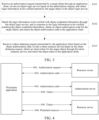
- FIG. 1 is a schematic diagram illustrating a hierarchical structure of a blockchain network according to an embodiment of the present disclosure.
- the hierarchical structure of the blockchain network shown in FIG. 1 is applicable to a blockchain system.
- the blockchain system may include a proxy node (for example, a proxy node 100b), a first blockchain system, and a second blockchain system, to form a blockchain network 2000 shown in FIG. 1 .
- Both the first blockchain system and the second blockchain system may include one or more nodes. Quantities of nodes in the first blockchain system and the second blockchain system are not limited.
- the first blockchain system may specifically include a node 110a, a node 110b, a node 110c, ..., and a node 110n.
- the second blockchain system may specifically include a node 120a, a node 120b, a node 120c, ..., and a node 120n.
- a blockchain network that the first blockchain system corresponds to may be referred to as a service network (that is, a witness network) 100a, and a node in the service network 100a may be referred to as a service node.
- the service node is mainly configured to execute an exchange service, to obtain exchange data associated with the exchange service.
- the service node herein can obtain block header data and a part of authorized-to-be-visible block data from a core consensus network through identity authentication without participating in accounting consensus.
- a blockchain network that the second blockchain system corresponds to may be referred to as a core consensus network (that is, a consensus network) 100c, and a node in the core consensus network 100c may be referred to as a consensus node (that is, a bookkeeping node).
- a blockchain consensus protocol may be run on the consensus node herein. To ensure the information exchange in the second blockchain system, there may be information connections among nodes in the second blockchain system, and the nodes may transmit information through the information connections.
- Connection manners of the information connections in the first blockchain system and the second blockchain system are not limited. Direct or indirect connections may be performed in a wired communication manner, a wireless communication manner, or another connection manner, which is not limited the present disclosure.
- the proxy node 100b shown in FIG. 1 may be configured to perform network quarantine on the service network 100a and the core consensus network 100c.
- the proxy node 100b may perform network layering on a peer-to-peer (P2P) network to form a hierarchical structure (that is, a double-layered chain structure) such as a "service network-core consensus network", which can improve the confidentiality and security of on-chain data.
- P2P peer-to-peer
- the proxy node 100b, the service node in the service network 100a, and the consensus node in the core consensus network 100c may be collectively referred to as a blockchain node in the blockchain network 2000.
- the blockchain node may be a server connected to the blockchain network 2000 or a terminal device connected to the blockchain network 2000.
- a specific form of the blockchain node is not limited herein.
- the server may be an independent physical server, or may be a server cluster or a distributed system formed by a plurality of physical servers, or may be a cloud server that provides a basic cloud computing service such as a cloud service, a cloud database, cloud computing, a cloud function, cloud storage, a network service, cloud communication, a middleware service, a domain name service, a security service, a content delivery network (CDN), big data, and an artificial intelligence platform.
- the terminal device may be a mobile phone, a tablet computer, a notebook computer, a palmtop computer, a smart speaker, a mobile Internet device (MID), a point of sale (POS) machine, a wearable device (for example, a smart watch or a smart bracelet), and the like.
- Some nodes in the blockchain network 2000 shown in FIG. 1 store a complete blockchain database, and such nodes including all exchange data may be referred to as a full node (for example, the consensus node shown in FIG. 1 ).
- Some other nodes store parts of the blockchain database, generally store only a block header and exchange data associated with themselves, rather than store complete exchange data, and may complete exchange verification in a manner of "simplified payment verification (SPV)".
- SPV simple payment verification
- Such nodes may be referred to as a lightweight node or an SPV node (for example, the service node shown in FIG. 1 ).
- the service network 100a and the core consensus network 100c shown in FIG. 1 may be located in different network environments.
- the service network 100a may be located in a public network
- the core consensus network 100c may be located in a private network. Therefore, the service node is deployed in the service network 100a of the public network, and the consensus node is deployed in the core consensus network 100c of the private network. The two may interact with each other through a routing boundary.
- a service node may be selected from a plurality of service nodes in the service network 110a shown in FIG. 1 as a target service node, and the target service node has a function of transmitting a data synchronization request to the proxy node 100b.
- the node 110a shown in FIG. 1 may be used as the target service node.
- a consensus node may be selected from a plurality of consensus nodes in the core consensus network 100c shown in FIG.
- the target consensus node has a function of returning, to the proxy node 100b, synchronization data corresponding to the data synchronization request.
- the node 120a shown in FIG. 1 may be used as the target consensus node.
- the proxy node 100b may forward, to the target consensus node, the data synchronization request transmitted by the target service node, and the proxy node 100b may forward, to the target service node, the synchronization data returned by the target consensus node.
- the core consensus network is in a relatively secure private cloud, security of mutual access to the core consensus network is already ensured by a consensus mechanism, and addition of additional identity management and network control is not needed.
- the target service node is located in a public network and may be accessed by other uncertain network terminals. Therefore, behaviors of the target service node and other possible nodes accessing the core consensus network need to be strictly controlled. In this case, the proxy node and the target consensus node need to perform verification on the target service node that transmits the data synchronization request.
- the proxy node may perform permission verification on the target service node, to obtain a permission verification result.
- the permission verification herein may include verifying whether a node identifier of the target service node is a node identifier in a list of illegal nodes.
- the list of illegal nodes may be a blacklist stored in the proxy node, and an illegal node corresponding to an illegal node identifier in the list of illegal nodes refers to a detected malicious node, a node reported by others, a node whose transmission exchange frequency is abnormal within a specific period of time, or the like.
- the proxy node may look up the list of illegal nodes for an illegal node identifier that is the same as the node identifier of the target service node, to obtain a permission verification result. If the permission verification result indicates that an illegal node identifier that is the same as the node identifier of the target node is found in the list of illegal nodes, the proxy node may determine that the permission verification result is an illegality verification result. In this case, the proxy node may determine that the target service node is an illegal node and further, does not need to forward the data synchronization request to the target consensus node in the core consensus network.
- the proxy node may determine that the permission verification result is a legality verification result. In this case, the proxy node may determine that the target service node is a legal node and further, may forward the data synchronization request to the target consensus node in the core consensus network.
- the target service node may be configured to provide an object login service, a token issuance service, and an object information operation service.
- the object login service, the token issuance service, and the object information operation service may be deployed on a server program that is on a server and that provides remote network services specifically for an application client (that is, a third-party application).
- an application client that is, a third-party application.
- the application client may specifically include clients with data processing functions such as a browser, an in-vehicle client, a smart home client, an entertainment client, a multimedia client (for example, a video client), a social client, and an information client.
- the in-vehicle client may be an application client on an in-vehicle terminal.
- a service scenario to which the foregoing hierarchical structure is applicable may be an application authorization scenario, and synchronization data in the application authorization scenario may include object management information and a user management contract (that is, an object management contract).
- the object management information is stored in a blockchain maintained by the core consensus network in a distributed manner.
- the target service node may provide a service for the application client after performing synchronization verification on the object management information.
- the object management information may represent attribute information associated with the user (that is, the object).
- the object management information may specifically include object credential information and object resource information.
- the object credential information may represent basic information (for example, an account number and a password) for login.
- the object resource information may represent basic information associated with the user indicated by the object credential information.
- the object management contract may be configured to process the object management information.
- the object management contract is a blockchain smart contract that manages user information, user registration, freezing, permission design, and the like. The object management contract may be executed through a blockchain exchange.
- the target service node may authorize, based on the object management contract, a third-party application to perform login through the object credential information, and authorize the logged-in third-party application to operate the object resource information.
- the target service node may further provide functions owned by any other SPV node, for example, exchange verification, forwarding and addition to a blockchain, state querying, and block querying.
- Table 1 is a node identifier list provided in all embodiments of the present disclosure.
- the node identifier list may store a node identifier and a node name of a node visible to specific exchange data, as shown in Table 1: Table 1 Node name Node identifier Node 1 AAAAAA Node 2 BBBBBB ... ... Node J CCCCCC
- the node identifier may be an Internet Protocol (IP) address and any other information that can be configured to identify a node.
- IP Internet Protocol
- the node 1 (for example, the node 1 may be the node 110a shown in FIG. 1 ) may transmit information (for example, a data synchronization request) to the node 2 (for example, the node 2 may be the node 120a shown in FIG. 1 ) through the node identifier BBBBBB, and the node 2 may determine, through the node identifier AAAAAA, that the information is transmitted by the node 1.
- IP Internet Protocol
- the node 2 may return information (for example, synchronization data) to the node 1 through the node identifier AAAAAA, and the node 1 may determine, through the node identifier BBBBBB, that the information is returned by the node 2.
- the proxy node 100b may forward the data synchronization request transmitted by the node 1 to the node 2, and the proxy node 100b may forward the synchronization data returned by the node 2 to the node 1.
- the node 1 herein may be a target service node, and the node 2 herein may be a target consensus node.
- the target consensus node in the core consensus network may obtain encrypted data information transmitted by the proxy node 100b.
- the encrypted data information may be obtained by the proxy node 100b by encrypting the data synchronization request and signature information through a system public key of the core consensus network.
- the signature information may be obtained by the target service node in the service network by adding a signature to the data synchronization request through a node private key of the target service node.
- the target consensus node may obtain a system private key of the core consensus network (that is, the system private key corresponding to the system public key of the core consensus network), and decrypt the encrypted data information through the system private key of the core consensus network, to obtain the data synchronization request and the signature information.
- the target consensus node may obtain a node public key of the target service node (that is, the node public key corresponding to the node private key of the target service node), and perform signature verification on the signature information based on the node public key of the target service node, to obtain a signature verification result. Further, the target consensus node may receive the data synchronization request when the signature verification result indicates that the signature verification succeeds. In all embodiments of the present disclosure, the target consensus node may reject to receive the data synchronization request when the signature verification result indicates that the signature verification fails.
- the target service node may use a hash algorithm to perform hash calculation on the data synchronization request, to obtain digest information h of the data synchronization request, and add a digital signature to the digest information h based on the node private key of the target service node, to obtain signature information corresponding to the data synchronization request.
- the target consensus node may perform signature verification on the digital signature in the signature information based on the node public key of the target service node, to obtain the digest information h of the data synchronization request, perform hash calculation on the received data synchronization request based on the hash algorithm used by the target service node, to obtain digest information H of the data synchronization request, and further, compare the digest information h obtained through the signature verification with the digest information H obtained through the hash calculation, to obtain a signature verification result.
- the digest information h is the same as the digest information H
- the signature verification result indicates that the signature verification performed by the target consensus node succeeds.
- the signature verification result indicates that the signature verification performed by the target consensus node fails.
- the proxy node 100b when forwarding the encrypted data information, may also encrypt the encrypted data information through a node private key of the proxy node 100b, to obtain encrypted encrypted data information, to cause the target consensus node to decrypt the encrypted encrypted data information through a node public key of the proxy node 100b.
- the data synchronization request and the signature information before the target service node transmits the data synchronization request and the signature information to the proxy node 100b, the data synchronization request and the signature information may be encrypted through the node public key of the proxy node 100b, to obtain encrypted request information, and further, the encrypted request information is transmitted to the proxy node 100b. In this way, when receiving the encrypted request information, the proxy node 100b may decrypt the encrypted request information through the node private key of the proxy node 100b, to obtain the data synchronization request and the signature information.
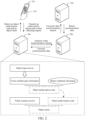
- FIG. 2 is a schematic diagram illustrating a scenario of performing data exchanging according to an embodiment of the present disclosure.
- a service node 20a shown in FIG. 2 may be any node in the service network 100a in the embodiment corresponding to FIG. 1
- the proxy node 20b shown in FIG. 2 may be the proxy node 100b in the embodiment corresponding to FIG. 1
- a consensus node 20c shown in FIG. 2 may be any node in the core consensus network 100c in the embodiment corresponding to FIG. 1 .
- the service node 20a may transmit a data synchronization request to the proxy node 20b, and the proxy node 20b may forward the data synchronization request to the consensus node 20c.
- the consensus node 20c may return the synchronization data to the proxy node 20b, and the proxy node 20b may forward the synchronization data to the service node 20a.
- an object 21b may be a target object
- a terminal device corresponding to the object 21b may be a terminal device 21a.
- An application client may be installed on the terminal device 21a. Therefore, when the object 21b needs to log in to the application client on the terminal device 21a, the object 21b may transmit an authorization request to the service node 20a through the application client on the terminal device 21a. In this way, the service node 20a may receive the authorization request transmitted by the object 21b through the application client, invoke an object login service based on the authorization request, and return an object authorization code to the terminal device 21a through the object login service.
- the service node 20a may obtain login information to-be-verified entered by the object 21b in the object login service, obtain object credential information in synchronization data, match the login information to-be-verified with the object credential information through the object login service, and in response to the login information to-be-verified matching the object credential information, obtain the object authorization code for the target object 20a, and further return the object authorization code to the terminal device 21a.
- the service node 20a if the login information to-be-verified does not match the object credential information, the service node 20a does not need to return an object authorization code to the terminal device 21a.
- the object 21b may transmit a token obtaining request to the service node 20a through the application client on the terminal device 21a.
- the token obtaining request may carry the object authorization code.
- the service node 20a may receive the token obtaining request transmitted by the object 21b through the application client, invoke a token issuance service based on the token obtaining request, and return an object token to the terminal device 21a through a token transmitting service.
- the object token is a character string generated by the service node in response to a request transmitted by the application client, to enable the application client that owns the object token to have a corresponding operation permission for corresponding resource data.
- the object token may be used to replace a password.
- the object token has the following characteristics:
- the token is short-term and automatically becomes invalid when the token expires.
- the object token may be revoked by an owner of resource data, and become invalid immediately after revocation.
- the object token has a permission range, for example, an object token with a read-only permission is more secure than an object token with a read-write permission.
- the service node 20a may perform verification on the object authorization code through the token transmitting service, and if the verification on the object authorization code succeeds, obtain an object token for the object 21b, and then return object token to the terminal device 21a. In all embodiments of the present disclosure, if the verification on the object authorization code fails, the service node 20a does not need to return the object token to the terminal device 21a.
- the object 21b may transmit a resource operation request to the service node 20a based on the object token.
- the resource operation request is configured to request to operate resource data within the scope of authority through the service node 20a.
- the resource data within the scope of authority may belong to object resource information in synchronization data.
- the resource data within the scope of authority may be object resource information belonging to the object 21b in the object resource information.
- the service node 20a may provide, based on the object token, the application client with an operation permission for the resource data within the scope of authority, that is, the object token is configured to enable access to resource data for the application client through the service node. Therefore, the resource data within the scope of authority may be object resource information that belongs to the object 21b in the object resource information and for which the object 21b has an operation permission.
- the service node 20a may further be configured to provide an object registration service.
- the object 21b may transmit an object registration request to the service node 20a through the application client.
- the service node 20a may receive the object registration request transmitted by the object 21b through the application client, and invoke an object registration service based on the object registration request, to obtain object registration information entered by the object 21b in the object registration service, and further, package the object registration information through the consensus node 20c.
- the service node 20a may obtain latest object credential information from a blockchain maintained by consensus node 20c.
- the latest object credential information may include the object registration information of the object 21b.
- the object registration information may include an object registration identifier and an object registration password.
- the service node in the blockchain network may be used as an authorization server.
- the authorization server may respond, through an object login service, to an authorization request transmitted by the application client, and respond, through the token transmitting service, to a token obtaining request transmitted by the application client, to implement a login operation on the application client.
- FIG. 3 is a schematic flowchart of a data processing method according to an embodiment of the present disclosure.
- the method may be performed by a service node in a blockchain network.
- the service node may be a server connected to a service network or a terminal device connected to the service network. A specific form of the service node is not limited herein.
- the service node is configured to provide an object login service and a token issuance service.
- the service node may be any node in the service network 100a shown in FIG. 1 , for example, the node 110a.
- the data processing method may include the following operations: Operation S101: Receive an authorization request transmitted by a target object through an application client, invoke the object login service based on the authorization request, and obtain login information to-be-verified entered by the target object in the object login service.
- the service node may receive the authorization request transmitted by the target object through the application client, invoke an object login front-end based on the authorization request, and obtain the login information to-be-verified entered by the target object in the object login front-end.
- the service node may display the object login front-end in the application client, for the target object to enter the login information to-be-verified in the object login front-end.
- the object login service includes the object login front-end (that is, a user login front-end) and an object login back-end.
- the object login front-end may represent a front-end page of the object login service
- the object login back-end may represent back-end logic of the object login service.
- the login information to-be-verified may be login information of the target object in another application client (for example, a target application client) other than a third-party application.
- the object login front-end may represent a front-end page of the target application client
- the object login back-end may represent back-end logic of the target application client. Therefore, the service node may cause the third-party application to jump to the object login front-end, and the target object interacts with the object login front-end, to implement a login operation on the third-party application through the login information in the target application client.
- the target object may directly enter the login information to-be-verified in the object login front-end, or may be authorized to obtain the login information to-be-verified in the object login front-end.
- the login information to-be-verified authorized to be obtained may be login information to-be-verified entered by the target object at a moment before the current moment.
- the service node may obtain object management information from a consensus node of the blockchain network.
- the object management information may include object credential information and object resource information.
- the service node may obtain an object management contract from the consensus node.
- the object management contract may include, but not limited to, a login determining contract, an authorization code verification contract, and a token verification contract.
- the object credential information and the login determining contract may be configured for performing operation S 102.
- the authorization code verification contract may be configured for performing operation S 103.
- the token verification contract may be configured for performing operation S205.
- the object resource information may be configured for performing operation S206.
- the service node may build an object information database (that is, a user login credential database (DB)), and store the object management information in the object information database.
- the object information database may be configured for querying the object credential information in operation S 102 and querying the object resource information in operation S206.
- the object management contract may be a blockchain smart contract stored in the service node.
- the blockchain smart contract may be published in a consensus network and synchronized to the service node for execution. Functions, such as user state verification and user login verification acceptance, are encapsulated in the object management contract.
- the object management contract may rely on the object management information in the object information database to play a role. That is, the object management contract may perform login verification based on the object credential information, and perform CURD (that is, basic atomic operations for processing data, including Create (that is, C), Update (that is, U), Read (that is, R), and Delete (that is, D)) on user information based on the object resource information.
- CURD that is, basic atomic operations for processing data, including Create (that is, C), Update (that is, U), Read (that is, R), and Delete (that is, D)
- Operation S102 Match the login information to-be-verified with object credential information through the object login service, and in response to the login information to-be-verified matching the object credential information, obtain an object authorization code for the target object, and return the object authorization code to the application client.
- the service node may invoke a login determining contract through the object login back-end, and match the login information with the object credential information through the login determining contract.
- the login determining contract is obtained by the service node from the consensus node. Further, if the login information matches the object credential information, the service node may obtain the object authorization code for the target object and return the object authorization code to the application client. In all embodiments of the present disclosure, if the login information does not match the object credential information, the service node may reject the authorization request without returning an object authorization code to the application client.
- the login information includes an object identifier to-be-verified and an object password to-be-verified.
- a specific process in which the service node matches the login information with the object credential information through the login determining contract may be described as:
- the service node may obtain the object credential information from the object information database through the login determining contract.
- the object credential information is obtained by the service node from on-chain data of the consensus node through synchronization.
- the object credential information may include object identifier credential information.
- the service node may search the object identifier credential information for the object identifier, and determine, in response to the object identifier credential information not including the object identifier, that the login information does not match the object credential information.
- the service node may determine a matching result between the login information and the object credential information based on the object password.
- the object information database does not store a plaintext password, and instead, stores a result of hashing after key salting.
- Key salting refers to adding a pre-generated character or character string to a random position in the key.
- a key is: 123456
- the system adds a character to the random position
- a result after the addition is: 1a2b3c456abcd.
- the object credential information further includes object password credential information (that is, the result of hashing after key salting) and character string credential information (that is, salt)
- one piece of object identifier credential information corresponds to one piece of object password credential information and one piece of character string credential information.
- the service node may splice the object password with character string credential information that corresponds to the object identifier and that is in the object credential information, to obtain to-be-verified spliced login information (that is, first to-be-verified spliced login information), that is, splice the object password with the character string credential information to obtain to-be-verified spliced login information.
- to-be-verified spliced login information that is, first to-be-verified spliced login information
- splice the object password with the character string credential information to obtain to-be-verified spliced login information.
- the service node may perform hash calculation on the to-be-verified spliced login information, to obtain to-be-verified hash login information (that is, first to-be-verified hash login information). Further, the service node may compare the to-be-verified hash login information with object password credential information that corresponds to the object identifier and that is in the object credential information, and generate, if the to-be-verified hash login information is the same as the object password credential information that corresponds to the object identifier and that is in the object credential information, a matching result configured to represent that the login information matches the object credential information.
- the service node may generate a matching result configured to represent that the login information does not match the object credential information.
- Salt is a randomly generated character string, and is generated by a secure random function. Different object identifier credential information corresponds to different salts.
- the hash algorithm used for the hash calculation is not limited.
- the hash algorithm may be an MD5 message-digest algorithm.
- the service node may perform hash calculation on the object password to-be-verified, to obtain a to-be-verified hash object password. Further, the service node may splice the to-be-verified hash object password with the character string credential information that corresponds to the object identifier and that is in the object credential information, to obtain to-be-verified spliced login information (that is, second to-be-verified spliced login information), that is, splice the to-be-verified hash object password with the character string credential information to obtain to-be-verified spliced login information.
- to-be-verified spliced login information that is, second to-be-verified spliced login information
- the service node may perform hash calculation on the to-be-verified spliced login information, to obtain to-be-verified hash login information (that is, second to-be-verified hash login information).
- the service node may perform hash calculation on the object password, to obtain to-be-verified hash login information (that is, third to-be-verified hash login information).
- the object information database may further store a plaintext password.
- the object credential information further includes object password credential information (that is, the plaintext password).
- object password credential information that is, the plaintext password.
- One piece of object identifier credential information corresponds to one piece of object password credential information.
- the service node may compare the object password with object password credential information that corresponds to the object identifier and that is in the object credential information, and generate, if the object password is the same as the object password credential information that corresponds to the object identifier and that is in the object credential information, a matching result configured to represent that the login information matches the object credential information.
- a matching result configured to represent that the login information does not match the object credential information.
- the object management information in the object information database may include an object state.
- the object state may represent a frozen state or a non-frozen state of the object.
- the service node may query the object information database through the object login service for an object state of the target object, and reject the authorization request if the object state of the target object is a frozen state.
- the service node may return the object authorization code to the application client after obtaining the object authorization code for the target object.
- Operation S 103 Receive a token obtaining request transmitted by the application client based on the object authorization code, invoke the token issuance service based on the token obtaining request, obtain an object token for the target object through the token issuance service, and return the object token to the application client.
- the service node may receive a token obtaining request transmitted by the application client based on the object authorization code, and invoke the token issuance service based on the token obtaining request. Further, the service node may invoke an authorization code verification contract through the token issuance service, and perform verification on the object authorization code through the authorization code verification contract.
- the authorization code verification contract is obtained by the service node from the consensus node. Further, if the verification on the object authorization code succeeds, the service node may obtain key authorization information associated with the target object, generate the object token for the target object based on the key authorization information, and return the object token to the application client, the object token being configured to enable access to resource data for the application client through the service node. In all embodiments of the present disclosure, if the verification on the object authorization code fails, the service node may reject the token obtaining request without returning an object token to the application client.
- the object authorization code may be configured to represent authorization information corresponding to the target object. That is, the service node may obtain authorization information selected by the target object in the object login service, and generate an object authorization code for the target object based on the authorization information.
- the authorization information is key authorization information of the target object, including at least one of aging information, an operation permission, or a scope of authority.
- the aging information is configured to represent a life cycle of the object token. Therefore, the service node may parse the object authorization code, to obtain the key authorization information associated with the target object.
- the object authorization code does not need to represent the key authorization information associated with the target object, and the key authorization information associated with the target object may be obtained through the object authorization code. That is, the service node may obtain the key authorization information selected by the target object in the object login service.
- the key authorization information includes at least one of the aging information, the operation permission, or the scope of authority.
- the aging information is configured to represent a life cycle of the object token. Therefore, the service node may obtain, from the object login service through the token issuance service, the key authorization information associated with the target object.
- the object token may provide an operation permission to the application client for resource data within a scope of authority. That is, the object token may have an operation permission and a scope of authority. In addition, the object token may further have aging information.
- the resource data may also be referred to as object resource information.
- the aging information, the operation permission, and the scope of authority may be selected by the target object in the object login front-end of the object login service. In all embodiments of the present disclosure, the aging information, the operation permission, and they scope of authority may also be set by default on the service node.
- the target object may select any one or more of the aging information, the operation permission, and the scope of authority in the object login front-end, or may not select the aging information, the operation permission, and the scope of authority.
- the operation permission means that the application client has a permission to operate resource data through the service node.
- the operation permission of the target object for the resource data may be a read permission, a write permission, a read-write permission, a delete permission, a modify permission, a read-delete permission, and the like.
- the read permission means that the target object can perform a read operation on the resource data.
- the scope of authority may represent that the target object has an operation permission for the resource data.
- a data type included in the scope of authority is not limited in all embodiments of the present disclosure.
- the aging information is configured to represent a life cycle of the object token. For example, the life cycle of the object token may be 1 day.
- the service node in the blockchain network receives the authorization request transmitted by the target object through the application client, obtains, through the object login service, the login information entered by the target object, further matches the login information with object credential information, and if the login information matches the object credential information, obtains an object authorization code for the target object, and returns the object authorization code to the application client. Further, the service node may receive a token obtaining request transmitted by the application client based on the object authorization code, obtain an object token for the target object through the token issuance service, and return the object token to the application client.
- the service node in the blockchain network may be used as an authorization server in an identity management system.
- the authorization server may obtain, from the consensus node of the blockchain network, the object credential information stored in a distributed manner, and respond, based on the object credential information, an authorization request and a token obtaining request (the authorization request and the token obtaining request may be referred to as a login request) transmitted by the application client.
- an authorization request and a token obtaining request (the authorization request and the token obtaining request may be referred to as a login request) transmitted by the application client.
- a plurality of service nodes may be deployed.
- a plurality of application clients may transmit login requests to different service nodes respectively.
- the plurality of service nodes can simultaneously respond to a plurality of login requests, thereby improving the efficiency of logging in to the application client by the target object.
- other service nodes may also perform login management without affecting the service logic of the login operation, thereby improving the stability of logging in to the application client by the target object.
- the service node may provide, based on the object token, the application client with an operation permission for resource data within a scope of authority. The operation permission enables the application client to operate the resource data through the service node.
- the service node can control the object token at any time while ensuring, through the object token, that the application client obtains the operation permission, thereby ensuring that the operation performed by the application client on the resource data does not endanger the security of the resource data in the identity management system.
- related data such as a data type, included in a scope of authority may be involved.
- a permission or an approval from a user needs to be obtained.
- collection, use, and processing of the related data need to comply with relevant laws, regulations, and standards of the country or region in which the data is located.
- the third-party application When the third-party application receives the object token returned by the service node, the third-party application invokes the service node to complete object login of on-chain management, and obtains an object identity indicated by the object credential information.
- the third-party application may perform a service of the third-party application in subsequent operations after obtaining the object identity indicated by the object credential information.
- the service of the third-party application represents an inherent function of the third-party application. For example, an instant messaging function is implemented through the object identity indicated by the object credential information.
- the object token means that a resource owner authorizes the third-party application to access its resource data stored on the authorization server without providing an account and a password to the third-party application.
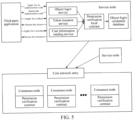
- FIG. 4 is a schematic flowchart of applying for a resource according to an embodiment of the present disclosure.
- the schematic flowchart shown in FIG. 4 is a linear procedure. Operation S41 to operation S46 may be executed linearly, operation S41 corresponds to operation S101, operation S42 corresponds to operation S 102, and operation S43 to operation S44 correspond to operation S 103.
- the third-party application may perform operation S41 and request, through operation S41, a resource from the resource owner (that is, the target object transmits an authorization request through the application client (that is, the third-party application)).
- the resource owner may represent the object indicated by the object credential information, and the resource owner herein may represent the target object indicated by the login information. Further, the resource owner may match the login information with the object credential information, and perform operation S42 if the login information matches the object credential information, to grant a permission (that is, an authorization code or an authorization grant) to the third-party application through operation S42.
- the authorization code may also be referred to as an object authorization code.
- the object authorization code is configured to identify an identity of the target object.
- the third-party application may perform operation S43, to grant, through operation S43, a permission (that is, the object authorization code) to the authorization server (that is, an authentication server or an authorization server) for authentication (that is, the target object transmits a token obtaining request through the application client).
- the authorization server herein may be the service node in all embodiments of the present disclosure.
- the authorization server may perform operation S44, and return a token (that is, an access token) to the third-party application through operation S44.
- the tokens may also be referred to as an object token.
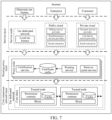
- FIG. 5 is a schematic diagram illustrating a scenario of applying for a resource according to an embodiment of the present disclosure. Applying for an authorization code shown in FIG. 5 corresponds to operation S41 in the embodiment corresponding to FIG. 4 , and returning the authorization code shown in FIG. 5 corresponds to operation S42 in the embodiment corresponding to FIG. 4 , applying for a token shown in FIG. 5 corresponds to operation S43 in the embodiment corresponding to FIG. 4 , and returning the token shown in FIG. 5 corresponds to operation S44 in the embodiment corresponding to FIG. 4 .
- a permission verification contract may be stored in the consensus node of the blockchain network, and the permission verification contract may be a smart contract deployed on the consensus node.
- the service node in the blockchain network may obtain a permission verification local contract (that is, the object management contract) and object management information from the consensus node of the blockchain network through a core network entry (that is, the proxy node), and further, store the object management information in an object login credential database (that is, the object information database).
- the permission verification local contract may include, but not limited to, the foregoing login determining contract, an authorization code verification contract, and a token verification contract.
- the object management information may include object credential information and object resource information.
- the third-party application may apply for an authorization code (that is, transmit an authorization request) from the service node.
- the service node may respond to the authorization request through an object login service, invoke a login determining contract through the object login service, and return the authorization code (that is, return the object authorization code) to the third-party application through the login determining contract and the object management information in the object login credential database.
- the third-party application may apply for a token (that is, transmit a token obtaining request) from the service node.
- the service node may respond to the token obtaining request through a token issuance service, invoke an authorization code verification contract through the token issuance service, and return the token (that is, return the object token) to the third-party application through the authorization code verification contract and the object management information in the object login credential database.
- the blockchain network may include a plurality of consensus nodes.
- a quantity of consensus nodes herein is not limited in this embodiment of the present disclosure.
- the blockchain network may include a plurality of service nodes.
- a quantity of service nodes herein is not limited in this embodiment of the present disclosure. Because a plurality of service nodes and a plurality of consensus nodes are deployed, the same service node may transmit a data synchronization request to different consensus nodes, and different application clients may transmit login requests (that is, authorization requests and token obtaining requests) to different service nodes.
- the two third-party applications may be specifically a third-party application X1 and a third-party application X2, and the plurality of service nodes may specifically include a service node J1 and a service node J2.
- the third-party application X1 may transmit a login request to the service node J1
- the third-party application X2 may transmit a login request to the service node J2.
- the third-party application X1 may transmit a login request to the service node J2
- the third-party application X2 may transmit a login request to the service node J1.
- the service node may generate local information irrelevant to the blockchain, and then, store the local information into the object information database.
- the local information may represent information generated by the service node when serving as the authorization server.
- the local information may be a login time (that is, a time at which the service node obtains the login information entered by the target object in the object login service) of the application client.
- the service node in the blockchain network may be used as an authorization server in an identity management system.
- the authorization server may obtain, from the consensus node of the blockchain network, the object credential information stored in a distributed manner, and respond, based on the object credential information, an authorization request and a token obtaining request (the authorization request and the token obtaining request may be referred to as a login request) transmitted by the application client.
- an authorization request and a token obtaining request (the authorization request and the token obtaining request may be referred to as a login request) transmitted by the application client.
- a plurality of service nodes may be deployed.
- a plurality of application clients may transmit login requests to different service nodes respectively.
- the plurality of service nodes can simultaneously respond to a plurality of login requests, thereby improving the efficiency of logging in to the application client by the target object.
- other service nodes may also perform login management without affecting the service logic of the login operation, thereby improving the stability of logging in to the application client by the target object.
- the service node may provide, based on the object token, the application client with an operation permission for resource data within a scope of authority. The operation permission enables the application client to operate the resource data through the service node.
- the service node can control the object token at any time while ensuring, through the object token, that the application client obtains the operation permission, thereby ensuring that the operation performed by the application client on the resource data does not endanger the security of the resource data in the identity management system.
- FIG. 6 is a schematic flowchart of a data processing method according to an embodiment of the present disclosure.
- the method may be performed by a service node in a blockchain network.
- the service node may be a server connected to a service network or a terminal device connected to the service network. A specific form of the service node is not limited herein.
- the service node is configured to provide an object login service, a token issuance service, and an object information operation service.
- the service node may be any node in the service network 100a shown in FIG. 1 , for example, the node 110a.
- the data processing method may include the following operations: Operation S201: Receive an authorization request transmitted by a target object through an application client, invoke the object login service based on the authorization request, and obtain login information to-be-verified entered by the target object in the object login service.
- the application client may encrypt the authorization request through the node public key of the service node, obtain an encrypted authorization request, and transmit the encrypted authorization request to the service node.
- the service node may receive the encrypted authorization request transmitted by the application client, and decrypt the encrypted authorization request through the node private key of the service node, to obtain the authorization request.
- Operation S202 Match the login information with object credential information through the object login service, and in response to the login information matching the object credential information, obtain an object authorization code for the target object, and return the object authorization code to the application client.
- the service node may encrypt the object authorization code through the node private key of the service node, to obtain an encrypted object authorization code, and return the encrypted object authorization code to the application client.
- the application client may receive the encrypted object authorization code returned by the service node, and decrypt the encrypted object authorization code through the node public key of the service node, to obtain the object authorization code.
- Operation S203 Receive a token obtaining request transmitted by the application client based on the object authorization code, invoke the token issuance service based on the token obtaining request, obtain an object token for the target object through the token issuance service, and return the object token to the application client.
- Different application clients may transmit authorization requests and token obtaining requests to different service nodes.
- the application client may determine, from the plurality of service nodes, based on distances between the application client and the service nodes, the target service node for transmitting the authorization request and the token obtaining request. For example, the application client may determine a service node with the shortest distance in the plurality of service nodes as the target service node. In all embodiments of the present disclosure, the application client may also determine, from the plurality of service nodes, according to a node scheduling algorithm, the target service node for transmitting the authorization request and the token obtaining request.
- the application client may transmit a node scheduling request to a scheduling server that performs node scheduling, to cause the scheduling server to schedule the target service node for the application client according to factors such as real-time network quality of the plurality of service nodes, thereby improving the accuracy of scheduling of the service nodes.
- the service node may store object management information associated with all objects. In all embodiments of the present disclosure, the service node does not need to store object management information associated with all objects. Likewise, the service node may store both object credential information and object resource information associated with the target object. In all embodiments of the present disclosure, the service node may also store object credential information or object resource information associated with the target object. Likewise, the service node may store all object resource information associated with the target object. In all embodiments of the present disclosure, the service node may also store partial object resource information associated with the target object.
- Operation S204 Receive a resource operation request transmitted by the application client based on the object token, and invoke the object information operation service based on the resource operation request.
- the OAuth 2.0 authorization mechanism is used in the manner of transmitting the resource operation request based on the object token used in the present disclosure.
- the authorization mechanism may be configured to authorize a third-party application (that is, the application client) to operate resource data.
- a resource owner (that is, the target object) of the resource data informs the service node of agreeing to authorize the third-party application to access the system and obtain the resource data corresponding to the target object. Therefore, the service node generates an object token that allows the third-party application to access the service node, and replaces the password with the object token for use by the third-party application.
- the object token and the password have the same function, both for accessing the system. However, there are three differences: (1) The object token is short-term. After the life cycle of the object token expires, the object token automatically becomes invalid. The target object cannot modify the aging information of the object token. The password is generally valid in a long term. If the target object does not change password, the password does not change. (2) The object token may be revoked by the resource owner at any time. If the object token is revoked by the resource owner, the object token becomes invalid immediately. The password is generally not allowed to be revoked by others. (3) The object token has an operation permission.
- a read-only token that is, an object token with a read permission
- a read-write token that is, an object token with a read-write permission
- the read permission allows the third-party application to read resource data but not write resource data.
- the password generally means full permissions (that is, the password).
- the third-party application may log, through the object token, in to a service system indicated by the service node (that is, the resource operation request transmitted to the service node based on the object token).
- the service system generally does not reconfirm the identity of the third-party application again. Therefore, the third-party application needs to keep the object token confidential.
- a consequence of leaking the object token is the same as that of leaking the password. Therefore, to ensure the security of resource data in the service system, the service node may set the aging information of the object token to a short time, for example, 1 hour.
- the resource operation request further carries an object identifier of the target object.
- the object identifier of the target object allows the target object to operate resource data corresponding to the target object, but not operate resource data corresponding to another object.
- Operation S205 Invoke a token verification contract through the object information operation service, and perform verification on the resource operation request and the object token through the token verification contract.
- the service node may obtain key authorization information associated with the object token based on the token verification contract, and determine whether the resource operation request meets the key authorization information. Further, if the resource operation request meets the key authorization information, the service node may determine that the verification on the resource operation request and the object token succeeds. In all embodiments of the present disclosure, if the resource operation request does not meet the key authorization information, the service node may determine that the verification on the resource operation request and the object token fails.
- the token verification contract may determine whether the resource operation request meets the aging information, the operation permission, and the scope of authority. If the resource operation request meets the aging information, the operation permission, and the scope of authority, the service node may determine whether the resource operation request meets the key authorization information. In all embodiments of the present disclosure, if the resource operation request does not meet the aging information, the operation permission, or the scope of authority, the service node may determine that the resource operation request does not meet the key authorization information. For example, if the resource operation request is a resource reading operation request, and the operation permission is a write permission, the service node may determine that the resource operation request does not meet the operation permission.
- the service node may determine that the resource operation request does not meet the aging information. In another example, if a data type requested by the resource operation request to be operated is different from a data type included in the scope of authority, the service node may determine that the resource operation request does not meet the scope of authority.
- the service node may query the object information database through the object information operation service for an object state of the target object, and reject the resource operation request if the object state of the target object is a frozen state.
- the service node may perform operation S206 or operation S207 based on a verification result of the resource operation request and the object token.
- the service node may perform different operations. If the verification on the resource operation request and object token succeeds, the service node may perform operation S206. In all embodiments of the present disclosure, if the verification on the resource operation request and object token fails, the service node may perform operation S207.
- Operation S206 Respond to the resource operation request through the object information operation service if the verification on the resource operation request and the object token succeeds.
- the service node may obtain, from an object information database through the object information operation service, target read data requested by the resource reading operation request to be read.
- the target read data belongs to the resource data. Further, the service node may return the target read data to the application client.
- the service node may obtain the target read data from the object information database through the object information operation service.
- a data synchronization request for the target read data is transmitted through the object information operation service to the consensus node, synchronization data is obtained from on-chain data of the consensus node based on the data synchronization request for the target read data, the synchronization data is stored into the object information database, and the target read data is obtained from the object information database through the object information operation service.
- the synchronization data includes the target read data.
- the service node may write, through the object information operation service, target write data requested by the resource writing operation request to be written.
- the target write data belongs to the resource data.
- the service node may write the target write data into the object information database.
- the service node may not respond to a resource accessing operation request.
- the service node may forward the target write data to the consensus node, to cause the consensus node to package the target write data, generate a target block (that is, a first target block), and add the target block to the blockchain network. Further, the service node may transmit a data synchronization request for the target write data to the consensus node, receive the target write data returned by the consensus node based on the data synchronization request for the target write data, and write the target write data into the object information database. The target write data is obtained by the consensus node from the target block.
- the service node may obtain, through the object information operation service, initial update data requested by the resource updating operation request to be updated. Further, if the object information database includes the initial update data, the service node may update the initial update data through target update data in the resource updating operation request. In all embodiments of the present disclosure, if the object information database does not include the initial update data, the service node may write target update data in the resource updating operation request into the object information database. In all embodiments of the present disclosure, if the object information database does not include the initial update data, the service node does not need to respond to the resource updating operation request. The initial update data and the target update data both belong to the resource data.
- the service node may forward the target update data in the resource updating operation request to the consensus node, to cause the consensus node to package the target update data, generate a target block (that is, a second target block), and add the target block to the blockchain network. Further, the service node may transmit a data synchronization request for the target update data to the consensus node, receive the target update data returned by the consensus node based on the data synchronization request for the target update data, and update the initial update data in the object information database with the target update data. The target update data is obtained by the consensus node from the target block.
- the service node may delete, through the object information operation service, target delete data requested by the resource deleting operation request to be deleted.
- the target delete data belongs to the resource data.
- the service node may delete the target delete data from the object information database.
- the service node does not need to respond to the resource deleting operation request.
- the service node may delete the target delete data through a delete function in a contract, and if the delete function in the contract is executed successfully (that is, the consensus node recognizes the contract task of deleting the target delete data), receive a delete instruction returned by the consensus node, and delete the target delete data from the object information database based on the delete instruction.
- the resource operation request may include target write data, target delete data, or target update data.
- target write data For a specific process in which the service node returns the target read data, reference may be made to the foregoing description of returning the object authorization code, and details are not described herein again.
- the target read data obtained from the on-chain data of the consensus node, the target write data obtained from the first target block, and the target update data obtained from the second target block may all be referred to as synchronization data obtained by the service node from the consensus node.
- the target read data may be obtained by the service node from a third target block stored in the consensus node, and there may be one or more first target blocks, one or more second target blocks, and one or more third target blocks. That is, the service node may obtain the target write data from the one or more first target blocks, the service node may obtain the target update data from the one or more second target blocks, and the service node may obtain the target read data from the one or more third target blocks.
- the target write data, the target update data, and the target read data may be packaged into one or more target blocks respectively.
- Block information of the target block Q may include a block header (that is, block header information) and a block body (that is, a block main body or block body information).
- the block header may include information, such as a parent block hash value (that is, parent block hashing), a block height, a version number, a timestamp, a difficulty value, a random number, and a Merkle tree root (that is, block hashing or a block hash value), of the target block Q.
- the block body may include a Merkle path constituted by exchange data packaged into the target block Q and an exchange hash value of the exchange data.
- an exchange hash value of the exchange data 1 may be an exchange hash value 1 (for example, Hash1)
- an exchange hash value of the exchange data 2 may be an exchange hash value 2 (for example, Hash2)
- an exchange hash value of the exchange data 3 may be an exchange hash value 3 (for example, Hash3)
- an exchange hash value of the exchange data 4 may be an exchange hash value 4 (for example, Hash4).
- the target write data may be the exchange data 3 and the exchange data 4 in the target block Q.
- the consensus node may obtain Merkle proof information corresponding to the target write data.
- the Merkle proof information herein may be constituted by exchange hash values in the Merkle path.
- Hash12 that is, a hash value generated based on Hash1 and Hash2 and representing a hash value obtained by hashing a result of splicing Hash1 and Hash2
- Hash1234 that is, a hash value generated based on Hash12 and Hash34, Hash34 being a hash value generated based on Hash3 and Hash4
- the consensus node may use the target write data, the Merkle proof information, and the block header of the target block Q as the synchronization data returned to the service node.
- the service node may perform verification on the synchronization data based on the target write data, the Merkle proof information, and the block header of the target block Q. Specifically, the service node may determine, based on the exchange hash value corresponding to the target write data and the Merkle proof information corresponding to the path hash values, a to-be-compared tree root corresponding to the target block Q. Further, the service node may obtain a verification result of the target block Q based on the to-be-compared tree root and the Merkle tree root in the block header of the target block Q. If the to-be-compared tree root is the same as the Merkle tree root in the block header of the target block Q, the verification result indicates that the verification succeeds. Further, if the verification result indicates that the verification succeeds, the service node may synchronize the block header of the target block Q to the block header chain of the service node, and write the target write data into the object information database.
- Operation S207 Reject the resource operation request through the object information operation service if the verification on the resource operation request and the object token fails.
- the third-party application may perform operation S45, and obtain, through operation S45, from a resource server, by using the token (that is, the object token), resource data (that is, protected resource) corresponding to the token (that is, the target object transmits a resource operation request through the application client).
- the resource server herein may be the service node in this embodiment of the present disclosure.
- the resource server may perform operation S46, and return the protected resource (for example, the target read data) to the third-party application through operation S46.
- the resource data is a resource of the resource owner, and the resource owner cannot obtain resource data of another obj ect.
- the service node may be used as the authorization server and the resource server.
- the service node may be used as the authorization server.
- the service node receives the resource operation request, the service node may be used as the resource server.
- the authorization server and the resource server that correspond to the third-party application may be the same. That is, the third-party application may transmit an authorization request, a token obtaining request, and a resource operation request to a same service node.
- the authorization server and the resource server that correspond to the third-party application may be different. That is, the third-party application may transmit an authorization request, a token obtaining request, and a resource operation request to different service nodes.
- the third-party application may apply for a resource (that is, transmit the resource operation request) from the service node.
- the service node may respond to the resource operation request through a user information reading service (that is, the object information operation service), invoke a token verification contract through the user information reading service, and return the resource (that is, return the target read data) to the third-party application through the token verification contract and the object management information in the object login credential database.
- the service node When the resource operation request is a resource reading operation request, the service node needs to return a resource to the third-party application.
- the resource operation request is a resource writing operation request, a resource updating operation request, and resource deleting operation request, the service node does not need to return a resource to the third-party application.
- FIG. 7 is a diagram of a system architecture in a blockchain electronic bill scenario according to an embodiment of the present disclosure.
- a service layer, a routing proxy layer, and a core consensus network layer in this embodiment of the present disclosure form an entire blockchain service system.
- the routing proxy layer implements a quarantine function for the service layer and the core consensus network layer.
- an example of the exchange service in this embodiment of the present disclosure may be an electronic bill transfer service, which is not limited herein.
- a hierarchical blockchain structure in this embodiment of the present disclosure may be used when data related to personal privacy, team security, or the like is involved in the blockchain system.
- the blockchain network may record exchange information generated during the entire circulation process of an electronic bill.
- the circulation process of the electronic bill includes processes such as claiming the electronic bill, issuing the electronic bill, reimbursing the electronic bill, and filing tax of the electronic bill.
- the service layer is located in a witness network and may submits service operation interaction to the core consensus network layer.
- Service nodes (for example, the first service node) in the service layer may include a terminal device corresponding to an electronic tax bureau, a terminal device corresponding to an enterprise, and a terminal device corresponding to a consumer user (that is, a consumer).
- the electronic tax bureau may be a local tax bureau in a tax bureau private network
- the enterprise may be a billing service provider, a reimbursement service provider, or a retail enterprise (for example, a KA enterprise, that is, a large retail customer and a key retail customer enterprise), or the like in a public cloud.
- the consumer user may be a payment service provider, a circulation service provider, a retail enterprise, or the like in a private cloud.
- the bill transfer service performed by the first service node may be transferring an electronic bill (for example, an electronic bill X) obtained by the consumer user when purchasing equipment to a terminal device B corresponding to an enterprise in which the consumer user is located.
- the service layer may further include a second service node.
- two bill tellers for example, an employee 1 and an employee 2 from two companies issue bills on their respective terminal devices, which generates some exchange data.
- the employee 1 may use a terminal device A1 to perform an exchange service, to generate corresponding exchange data
- the employee 2 may use a terminal device A2 to perform an exchange service, to generate corresponding exchange data.
- a proxy node in the routing proxy layer may be configured to perform network quarantine on the service layer and the core consensus network layer.
- the proxy node may have a point-to-point service (that is, a P2P service), a routing service, a certificate cache, and a certification service.
- the point-to-point service refers to a service in a P2P network.
- network states of network nodes in the P2P network do not need to be maintained by a central node, and instead, each node broadcasts to and interacts with neighboring nodes to maintain node states of the entire network or connection states of its neighboring nodes.
- the routing service is a basic function of the node, and is configured for communication between nodes.
- a certificate associated with the certificate cache may refer to a public key infrastructure (PKI).
- PKI public key infrastructure
- a certificate is an identity certificate of an owner of a public key and is issued by a certificate authority (CA).
- CA certificate authority
- the PKI herein may include a public and private key password, an x509 certificate, a CA certificate issuance center, and the like.
- the certification service may be configured to perform verification on a data format of received data, legality of a node, and the like.
- the proxy node may forward, to the consensus node (that is, the target consensus node) in the core consensus network layer, the data synchronization request transmitted by the service node (that is, the target service node) in the service layer, or may forward, to the service node in the service layer, the synchronization data returned by the consensus node in the core consensus network layer.
- the proxy node may encrypt the forwarded data.
- the core consensus network layer may include a plurality of core chains. Each core chain may include one or more consensus nodes.
- a consensus node that is, a bookkeeping node
- the consensus nodes may include a permission contract, a cache, a data block (that is, a block).
- the permission contract stores circulation logic for an entire life cycle of an electronic bill, for example, a bill state of the electronic bill, a circulation process, an access permission for data, a condition for claiming the electronic bill, and a condition for issuing the electronic bill.
- the cache and the data block may provide support for adding exchange information to the blockchain and querying for the exchange information.
- Each consensus node has a capability of packaging and producing a block, that is, may perform verification on exchange data forwarded by the proxy node and add the exchange data to the exchange pool (that is, the cache shown in FIG. 7 ) of the consensus node when the verification succeeds Further, the consensus node may package exchange data in the exchange pool thereof and produce a block, to successfully write the block into the blockchain in the core consensus network layer. In addition, when receiving the data synchronization request forwarded by the proxy node, the consensus node may determine, on the blockchain, the synchronization data for returning to the service node.
- the identity management system may extend functions of a service node in the blockchain network.
- the service node may represent, based on object credential information and object resource information, the blockchain as an authorization server and a resource server for the distributed object management, which implements an object login service, a token issuance service, and an object information operation service that are distributed, eliminates the problem of untrustworthiness brought by centralized identity management, improves the efficiency and stability of logging in to an application client by a target object, and improves the efficiency and stability of operating resource data by the target object through the application client.
- the service node When the service node is used as the authorization server, the service node may receive an authorization request and a token obtaining request transmitted by the application client, and return an object authorization code and an object token for the target object to the application client.
- the service node When the service node is used as the resource server, the service node may receive a resource operation request transmitted by the application client and respond to the resource operation request.
- on-chain management of the object credential information and the object resource information can be implemented, and synchronization and verification are performed on-chain data through the service node, to ensure the real-time, the accuracy, and the non-tamperability of the object credential information and the object resource information are synchronized from the blockchain, thereby ensuring the security of object management information.
- FIG. 8 is a schematic structural diagram of a data processing apparatus according to an embodiment of the present disclosure.
- a data processing apparatus 1 may be a computer program (including program code) run on a computer device.
- the data processing apparatus 1 may be application software.
- the data processing apparatus 1 may be configured to perform the corresponding operations in the method shown provided in the embodiments of the present disclosure.
- the data processing apparatus 1 is applicable to a service node in a blockchain network.
- the service node is configured to provide an object login service and a token issuance service.
- the service node may be the service node 20a in the embodiment corresponding to FIG. 2 .
- the data processing apparatus 1 may include a first receiving module 11, an authorization code returning module 12, and a second receiving module 13. Further, the data processing apparatus 1 may further include a third receiving module 14, a first responding module 15, and a second responding module 16.
- the first receiving module 11 is configured to receive an authorization request transmitted through an application client, invoke the object login service based on the authorization request, and obtain login information to-be-verified entered by the target object in the object login service.
- the authorization code returning module 12 is configured to match the login information with object credential information through the object login service, and in response to the login information matching the object credential information, obtain an object authorization code, and return the object authorization code to the application client.
- the object credential information is obtained by the service node from a consensus node of the blockchain network.
- the object login service includes an object login front-end and an object login back-end.
- the first receiving module 11 is specifically configured to receive the authorization request transmitted through the application client, invoke the object login front-end based on the authorization request, and obtain the login information entered in the object login front-end.
- the authorization code returning module 12 is specifically configured to invoke a login determining contract through the object login back-end, and match the login information with the object credential information through the login determining contract.
- the login determining contract is obtained by the service node from the consensus node.
- the login information includes an object identifier to-be-verified and an object password to-be-verified.
- the authorization code returning module 12 is specifically configured to obtain the object credential information from an object information database through the login determining contract.
- the object credential information is obtained by the service node from on-chain data of the consensus node through synchronization.
- the object credential information includes object identifier credential information.
- the authorization code returning module 12 is specifically configured to search the object identifier credential information for the object identifier, and determine, in response to the object identifier credential information not including the object identifier, that the login information does not match the object credential information.
- the authorization code returning module 12 is specifically configured to determine, in response to the object identifier credential information including the object identifier, a matching result between the login information and the object credential information based on the object password.
- the object credential information further includes object password credential information and character string credential information.
- One piece of object identifier credential information corresponds to one piece of object password credential information and one piece of character string credential information.
- the authorization code returning module 12 is specifically configured to splice the object password with character string credential information that corresponds to the object identifier and that is in the object credential information, to obtain to-be-verified spliced login information.
- the authorization code returning module 12 is specifically configured to perform hash calculation on the spliced login information, to obtain hash login information.
- the authorization code returning module 12 is specifically configured to compare the hash login information with object password credential information that corresponds to the object identifier and that is in the object credential information, and generate, in response to the hash login information being the same as the object password credential information that corresponds to the object identifier and that is in the object credential information, a first matching result representing that the login information matches the object credential information.
- the authorization code returning module 12 is specifically configured to generate, in response to the hash login information being different from the object password credential information that corresponds to the object identifier and that is in the object credential information, a second matching result representing that the login information does not match the object credential information.
- the second receiving module 13 is configured to receive a token obtaining request transmitted by the application client based on the object authorization code, invoke the token issuance service based on the token obtaining request, obtain an object token through the token issuance service, and return the object token to the application client.
- the object token is configured to enable access to resource data for the application client through the service node.
- the second receiving module 13 includes an authorization code verification unit 131 and a token returning unit 132.
- the authorization code verification unit 131 is configured to invoke an authorization code verification contract through the token issuance service, and perform verification on the object authorization code through the authorization code verification contract.
- the authorization code verification contract is obtained by the service node from the consensus node.
- the token returning unit 132 is configured to: in response to the verification on the object authorization code being successful, obtain associated key authorization information, generate the object token based on the key authorization information, and return the object token to the application client.
- the authorization code returning module 12 is specifically configured to obtain key authorization information selected in the object login service, and generate an object authorization code based on the key authorization information selected.
- the key authorization information includes at least one of the aging information, the operation permission, or the scope of authority.
- the aging information is configured to represent a life cycle of the object token.
- the token returning unit 132 is specifically configured to parse the object authorization code, to obtain the key authorization information associated with the target object.
- the second receiving module 13 is specifically configured to obtain key authorization information selected in the object login service.
- the key authorization information includes at least one of the aging information, the operation permission, or the scope of authority.
- the aging information is configured to represent a life cycle of the object token.
- the token returning unit 132 is specifically configured to obtain, from the object login service through the token issuance service, the key authorization information associated with the target object.
- the service node is further configured to provide an object information operation service.
- the third receiving module 14 is configured to receive a resource operation request transmitted by the application client based on the object token, and invoke the object information operation service based on the resource operation request.
- the first responding module 15 is configured to invoke a token verification contract through the object information operation service, perform verification on the resource operation request and the object token through the token verification contract, and respond to the resource operation request through the object information operation service if the verification on the resource operation request and the object token succeeds.
- the first responding module 15 is specifically configured to obtain key authorization information associated with the object token based on the token verification contract, and determine whether the resource operation request meets the key authorization information.
- the first responding module 15 is specifically configured to determine, in response to the resource operation request meets the key authorization information, that the verification on the resource operation request and the object token is successful.
- the first responding module 15 is specifically configured to determine, in response to the resource operation request not meeting the key authorization information, that the verification on the resource operation request and the object token has failed.
- the first responding module 15 is specifically configured to obtain, in response to the resource operation request being a resource reading operation request, from an object information database through the object information operation service, target read data requested by the resource reading operation request to be read.
- the target read data belongs to the resource data.
- the first responding module 15 is specifically configured to return the target read data to the application client.
- the first responding module 15 is specifically configured to obtain the target read data from the object information database through the object information operation service in response to the object information database including the target read data requested by the resource reading operation request to be read.
- the first responding module 15 is specifically configured to: in response to the object information database does not include the target read data, transmit a data synchronization request for the target read data through the object information operation service to the consensus node, obtain synchronization data from on-chain data of the consensus node based on the data synchronization request for the target read data, store the synchronization data into the object information database, and obtain the target read data from the object information database through the object information operation service.
- the synchronization data includes the target read data.
- the first responding module 15 is specifically configured to obtain, in response to the resource operation request being a resource writing operation request, through the object information operation service, target write data requested by the resource writing operation request to be written.
- the target write data belongs to the resource data.
- the first responding module 15 is specifically configured to write the target write data into the object information database in response to the object information database not including the target write data.
- the first responding module 15 is specifically configured to forward, in response to the object information database not including the target write data, the target write data to the consensus node, to cause the consensus node to package the target write data, generate a target block, and add the target block to the blockchain network.
- the first responding module 15 is specifically configured to transmit a data synchronization request for the target write data to the consensus node, receive the target write data returned by the consensus node based on the data synchronization request for the target write data, and write the target write data into the object information database.
- the second responding module 16 is configured to reject the resource operation request through the object information operation service if the verification on the resource operation request and the object token fails.
- the authorization code returning module 12 and the second receiving module 13 reference may be made to the descriptions of operation S 101 to operation S 103 in the embodiment corresponding to FIG. 3 , and details are not described herein again.
- the third receiving module 14 the first responding module 15, and the second responding module 16 reference may be made to the descriptions of operation S204 to operation S207 in the embodiment corresponding to FIG. 6 , and details are not described herein again.
- the description of beneficial effects of the same method is not described herein again.
- FIG. 9 is a schematic structural diagram of a computer device according to an embodiment of the present disclosure.
- a computer device 1000 may include a processor 1001, a network interface 1004, and a memory 1005.
- the computer device 1000 may further include a user interface 1003 and at least one communication bus 1002.
- the communication bus 1002 is configured to implement connection and communication between the components.
- the user interface 1003 may include a display and a keyboard.
- the user interface 1003 may further include a standard wired interface and a standard wireless interface.
- the network interface 1004 may include a standard wired interface and a standard wireless interface (such as a Wi-Fi interface).
- the memory 1005 may be a high-speed random access memory (RAM), or may be a non-volatile memory, for example, at least one magnetic disk memory. In all embodiments of the present disclosure, the memory 1005 may alternatively be at least one storage apparatus far away from the processor 1001. As shown in FIG. 9 , the memory 1005 used as a computer-readable storage medium may include an operating system, a network communication module, a user interface module, and a device control application.
- RAM high-speed random access memory
- the memory 1005 may alternatively be at least one storage apparatus far away from the processor 1001.
- the memory 1005 used as a computer-readable storage medium may include an operating system, a network communication module, a user interface module, and a device control application.
- the network interface 1004 may provide a network communication function.
- the user interface 1003 is mainly configured to provide an input interface for a user.
- the processor 1001 may be configured to invoke the device control application stored in the memory 1005, to implement the following operations:
- the computer device 1000 described in this embodiment of the present disclosure can implement the descriptions of the data processing method in the foregoing embodiments corresponding to FIG. 3 and FIG. 6 , and can also implement the descriptions of the data processing apparatus 1 in the foregoing embodiment corresponding to FIG. 8 . Details are not described herein again. In addition, the description of beneficial effects of the same method is not described herein again.
- the embodiments of the present disclosure further provide a computer-readable storage medium.
- the computer-readable storage medium stores a computer program executed by the data processing apparatus 1 mentioned above, and the computer program includes program instructions.
- the processor can perform the descriptions of the data processing method in the embodiments corresponding to FIG. 3 and FIG. 6 . Therefore, details are not described herein again.
- the description of beneficial effects of the same method is not described herein again.
- For technical details that are not disclosed in the embodiments of the computer-readable storage medium of the present disclosure refer to the method embodiments of the present disclosure.
- the embodiments of the present disclosure further provide a computer program product or a computer program.
- the computer program product or the computer program may include computer instructions, and the computer instructions may be stored in a computer-readable storage medium.
- a processor of a computer device reads the computer instructions from the computer-readable storage medium.
- the processor may execute the computer instructions, to cause the computer device to perform the descriptions of the data processing method in the embodiments corresponding to FIG. 3 and FIG. 6 . Therefore, details are not described herein again.
- the description of beneficial effects of the same method is not described herein again.
- For technical details that are not disclosed in the embodiment of the computer program product or computer program of the present disclosure refer to the method embodiments of the present disclosure.
- the computer program may be stored in a computer readable storage medium.
- the program may include the procedures of the embodiments of the foregoing methods.
- the foregoing storage medium may include: a magnetic disk, an optical disc, a read-only memory (ROM), or a random access memory (RAM).
Landscapes
- Engineering & Computer Science (AREA)
- Computer Security & Cryptography (AREA)
- Computer Networks & Wireless Communication (AREA)
- Signal Processing (AREA)
- Computer Hardware Design (AREA)
- Computing Systems (AREA)
- General Engineering & Computer Science (AREA)
- Storage Device Security (AREA)
Applications Claiming Priority (2)
| Application Number | Priority Date | Filing Date | Title |
|---|---|---|---|
| CN202210536186.7A CN117118640A (zh) | 2022-05-17 | 2022-05-17 | 一种数据处理方法、装置、计算机设备以及可读存储介质 |
| PCT/CN2023/089109 WO2023221719A1 (zh) | 2022-05-17 | 2023-04-19 | 一种数据处理方法、装置、计算机设备以及可读存储介质 |
Publications (2)
| Publication Number | Publication Date |
|---|---|
| EP4456480A1 true EP4456480A1 (de) | 2024-10-30 |
| EP4456480A4 EP4456480A4 (de) | 2025-06-04 |
Family
ID=88793504
Family Applications (1)
| Application Number | Title | Priority Date | Filing Date |
|---|---|---|---|
| EP23806672.4A Pending EP4456480A4 (de) | 2022-05-17 | 2023-04-19 | Datenverarbeitungsverfahren und -vorrichtung, computervorrichtung und lesbares speichermedium |
Country Status (4)
| Country | Link |
|---|---|
| US (1) | US20240333702A1 (de) |
| EP (1) | EP4456480A4 (de) |
| CN (1) | CN117118640A (de) |
| WO (1) | WO2023221719A1 (de) |
Families Citing this family (7)
| Publication number | Priority date | Publication date | Assignee | Title |
|---|---|---|---|---|
| CN117331964B (zh) * | 2023-12-01 | 2024-02-27 | 成都明途科技有限公司 | 数据查询方法、装置、设备及存储介质 |
| CN117632191B (zh) * | 2023-12-11 | 2025-05-16 | 浙江吉利控股集团有限公司 | 一种软件更新方法及信息交互系统 |
| US12468799B2 (en) * | 2024-02-20 | 2025-11-11 | Bank Of America Corporation | Systems and methods for authorizing devices using a decentralized node database |
| TWI888124B (zh) * | 2024-05-02 | 2025-06-21 | 國泰金融控股股份有限公司 | 基於去中心化身份驗證的服務系統及方法 |
| CN118659930B (zh) * | 2024-08-19 | 2024-12-27 | 中国第一汽车股份有限公司 | 应用的身份认证方法、装置、存储介质和车辆 |
| CN119781876B (zh) * | 2024-12-17 | 2025-10-28 | 中国工商银行股份有限公司 | 业务软件的调用方法和装置、存储介质及电子设备 |
| CN120017406B (zh) * | 2025-03-19 | 2025-10-28 | 中国邮政储蓄银行股份有限公司 | 基于区块链跨系统登陆的鉴权和数据存储方法、装置 |
Family Cites Families (9)
| Publication number | Priority date | Publication date | Assignee | Title |
|---|---|---|---|---|
| US10356102B2 (en) * | 2017-02-24 | 2019-07-16 | Verizon Patent And Licensing Inc. | Permissions using blockchain |
| US10642967B2 (en) * | 2017-11-28 | 2020-05-05 | American Express Travel Related Services Company, Inc. | Single sign-on solution using blockchain |
| CN108805573B (zh) * | 2018-04-21 | 2022-04-15 | 深圳市元征科技股份有限公司 | 一种信息验证方法、服务器及存储介质 |
| US11233792B2 (en) * | 2018-05-02 | 2022-01-25 | Mastercard International Incorporated | Method and system for enhanced login credential security via blockchain |
| US11108762B2 (en) * | 2018-06-05 | 2021-08-31 | The Toronto-Dominion Bank | Methods and systems for controlling access to a protected resource |
| CN109347637B (zh) * | 2018-08-01 | 2021-01-15 | 华为技术有限公司 | 一种认证方法、内容分发网络cdn和内容服务器 |
| US10896249B2 (en) * | 2018-08-31 | 2021-01-19 | Target Brands, Inc. | Secure electronic authentication of a user on an electronic device |
| CN112989426B (zh) * | 2021-04-30 | 2021-08-06 | 腾讯科技(深圳)有限公司 | 授权认证方法及装置、资源访问令牌的获取方法 |
| US11757640B2 (en) * | 2021-07-27 | 2023-09-12 | American Express Travel Related Services Company, Inc | Non-fungible token authentication |
-
2022
- 2022-05-17 CN CN202210536186.7A patent/CN117118640A/zh active Pending
-
2023
- 2023-04-19 EP EP23806672.4A patent/EP4456480A4/de active Pending
- 2023-04-19 WO PCT/CN2023/089109 patent/WO2023221719A1/zh not_active Ceased
-
2024
- 2024-06-14 US US18/744,150 patent/US20240333702A1/en active Pending
Also Published As
| Publication number | Publication date |
|---|---|
| EP4456480A4 (de) | 2025-06-04 |
| WO2023221719A1 (zh) | 2023-11-23 |
| CN117118640A (zh) | 2023-11-24 |
| US20240333702A1 (en) | 2024-10-03 |
Similar Documents
| Publication | Publication Date | Title |
|---|---|---|
| EP4456480A1 (de) | Datenverarbeitungsverfahren und -vorrichtung, computervorrichtung und lesbares speichermedium | |
| US11829494B2 (en) | Distributed privately subspaced blockchain data structures with secure access restriction management | |
| US20230316273A1 (en) | Data processing method and apparatus, computer device, and storage medium | |
| US12401531B2 (en) | Blockchain-based transaction data clearing after synchronization | |
| JP7626562B2 (ja) | 低信頼の特権アクセス管理 | |
| CN112685505B (zh) | 一种交易数据处理方法、装置、计算机设备及存储介质 | |
| US11121876B2 (en) | Distributed access control | |
| US20240054125A1 (en) | Systems and methods of transaction identification generation for transaction-based environment | |
| US20090106549A1 (en) | Method and system for extending encrypting file system | |
| CN113271311B (zh) | 一种跨链网络中的数字身份管理方法及系统 | |
| Ali et al. | Blockstack: A new decentralized internet | |
| US20250328903A1 (en) | Blockchain-based data processing method and apparatus, device, and medium | |
| US12160471B2 (en) | Distributed network nodes defining a database access gateway | |
| US20240330939A1 (en) | Transaction uploading method, associated apparatus, and medium | |
| Ali et al. | Blockstack technical whitepaper | |
| CN114116609A (zh) | 一种基于ipfs的空间权限管理方法、设备及介质 | |
| CN117407437A (zh) | 一种基于区块链的数据处理方法、设备以及可读存储介质 | |
| Zhang et al. | Decentralized authorization and authentication based on consortium blockchain | |
| HK40098427A (zh) | 一种数据处理方法、装置、计算机设备以及可读存储介质 | |
| TW202129512A (zh) | 具有混合區塊鏈之虛擬儲存架構及其方法 | |
| KR102540052B1 (ko) | 블록체인 기반 사물 인터넷 네트워크 시스템 및 그 관리 방법 | |
| Yi et al. | Blockchain-Based Identity Identification Technology: Cross-Domain Access Control in the Internet of Things | |
| Alizadeh et al. | Decentralized Identifiers Using Distributed Ledger Technologies | |
| HK40042476B (en) | Transaction data processing method and apparatus, computer device, and storage medium | |
| HK40042476A (en) | Transaction data processing method and apparatus, computer device, and storage medium |
Legal Events
| Date | Code | Title | Description |
|---|---|---|---|
| STAA | Information on the status of an ep patent application or granted ep patent |
Free format text: STATUS: THE INTERNATIONAL PUBLICATION HAS BEEN MADE |
|
| PUAI | Public reference made under article 153(3) epc to a published international application that has entered the european phase |
Free format text: ORIGINAL CODE: 0009012 |
|
| STAA | Information on the status of an ep patent application or granted ep patent |
Free format text: STATUS: REQUEST FOR EXAMINATION WAS MADE |
|
| 17P | Request for examination filed |
Effective date: 20240725 |
|
| AK | Designated contracting states |
Kind code of ref document: A1 Designated state(s): AL AT BE BG CH CY CZ DE DK EE ES FI FR GB GR HR HU IE IS IT LI LT LU LV MC ME MK MT NL NO PL PT RO RS SE SI SK SM TR |
|
| REG | Reference to a national code |
Ref country code: DE Ref legal event code: R079 Free format text: PREVIOUS MAIN CLASS: H04L0009400000 Ipc: H04L0009000000 |
|
| A4 | Supplementary search report drawn up and despatched |
Effective date: 20250508 |
|
| RIC1 | Information provided on ipc code assigned before grant |
Ipc: H04L 67/60 20220101ALI20250430BHEP Ipc: H04L 67/1097 20220101ALI20250430BHEP Ipc: H04L 9/40 20220101ALI20250430BHEP Ipc: H04L 9/32 20060101ALI20250430BHEP Ipc: H04L 9/00 20220101AFI20250430BHEP |
|
| DAV | Request for validation of the european patent (deleted) | ||
| DAX | Request for extension of the european patent (deleted) |