EP4456474A1 - Datenverarbeitungsverfahren, -vorrichtung, -einrichtung und -medium - Google Patents
Datenverarbeitungsverfahren, -vorrichtung, -einrichtung und -medium Download PDFInfo
- Publication number
- EP4456474A1 EP4456474A1 EP23185563.6A EP23185563A EP4456474A1 EP 4456474 A1 EP4456474 A1 EP 4456474A1 EP 23185563 A EP23185563 A EP 23185563A EP 4456474 A1 EP4456474 A1 EP 4456474A1
- Authority
- EP
- European Patent Office
- Prior art keywords
- elements
- shared
- participant
- homomorphic
- ciphertexts
- Prior art date
- Legal status (The legal status is an assumption and is not a legal conclusion. Google has not performed a legal analysis and makes no representation as to the accuracy of the status listed.)
- Granted
Links
Images




Classifications
-
- H—ELECTRICITY
- H04—ELECTRIC COMMUNICATION TECHNIQUE
- H04L—TRANSMISSION OF DIGITAL INFORMATION, e.g. TELEGRAPHIC COMMUNICATION
- H04L9/00—Cryptographic mechanisms or cryptographic arrangements for secret or secure communications; Network security protocols
- H04L9/008—Cryptographic mechanisms or cryptographic arrangements for secret or secure communications; Network security protocols involving homomorphic encryption
-
- H—ELECTRICITY
- H04—ELECTRIC COMMUNICATION TECHNIQUE
- H04L—TRANSMISSION OF DIGITAL INFORMATION, e.g. TELEGRAPHIC COMMUNICATION
- H04L9/00—Cryptographic mechanisms or cryptographic arrangements for secret or secure communications; Network security protocols
- H04L9/06—Cryptographic mechanisms or cryptographic arrangements for secret or secure communications; Network security protocols the encryption apparatus using shift registers or memories for block-wise or stream coding, e.g. DES systems or RC4; Hash functions; Pseudorandom sequence generators
- H04L9/0618—Block ciphers, i.e. encrypting groups of characters of a plain text message using fixed encryption transformation
-
- H—ELECTRICITY
- H04—ELECTRIC COMMUNICATION TECHNIQUE
- H04L—TRANSMISSION OF DIGITAL INFORMATION, e.g. TELEGRAPHIC COMMUNICATION
- H04L9/00—Cryptographic mechanisms or cryptographic arrangements for secret or secure communications; Network security protocols
- H04L9/08—Key distribution or management, e.g. generation, sharing or updating, of cryptographic keys or passwords
- H04L9/0816—Key establishment, i.e. cryptographic processes or cryptographic protocols whereby a shared secret becomes available to two or more parties, for subsequent use
- H04L9/085—Secret sharing or secret splitting, e.g. threshold schemes
-
- H—ELECTRICITY
- H04—ELECTRIC COMMUNICATION TECHNIQUE
- H04L—TRANSMISSION OF DIGITAL INFORMATION, e.g. TELEGRAPHIC COMMUNICATION
- H04L2209/00—Additional information or applications relating to cryptographic mechanisms or cryptographic arrangements for secret or secure communication H04L9/00
- H04L2209/46—Secure multiparty computation, e.g. millionaire problem
Definitions
- the embodiment of the disclosure relates to the technical field of computer technology, and in particular, relates to a data processing method, apparatus, device and medium.
- intersection set of the data sets of both parties is often obtained through a private set intersection technology to obtain the calculation or analysis results.
- the existing private set intersection schemes usually expose the size of private intersection to the participants.
- malicious participants can indirectly obtain data from the data sets by using the size of the obtained private intersection, for example, through member reasoning, which leads to risks on data security.
- the embodiment of the disclosure describes a data processing method and apparatus.
- a data processing method which is executed by a first participant, the method including:
- a data processing method which is executed by a second participant, the method including:
- a data processing method which is executed by a first participant, the method including:
- a data processing method which is executed by a second participant, the method including:
- a data processing apparatus deployed on a first participant including:
- a data processing apparatus deployed on a second participant including:
- a computer-readable storage medium on which a computer program is stored, which, when executed in a computer, causes the computer to execute the methods described in the first to fourth aspects.
- an electronic device which includes a memory and a processor, wherein executable codes are stored in the memory, and when the processor executes the executable codes, the methods described in the first to fourth aspects are implemented.
- Embodiments of the present disclosure provide a data processing method and apparatus. After the first participant determines a private intersection set of a client-side data set and a service-side data set, confusion elements can be added to the private intersection set and a secret-sharing-based identification can be added to the confusion elements, and the confused intersection set is sent to the second participant.
- the second participant can not obtain a real size of the intersection set, thus preventing the second participant from obtaining the data information of the first participant by using the size of the intersection set.
- the term “including” and similar terms should be understood as open inclusion, i.e., “including but not limited to”.
- the term “based on” should be understood as “at least partially based on”.
- the terms “one implementation” or “the implementation” should be understood as “at least one implementation”.
- the term “some implementations” should be understood as “at least some implementations”.
- Other explicit and implicit definitions may be included below.
- Private Set Intersection refers to the intersection set of data held by both parties without revealing any additional information.
- extra information refers to any information except the data intersection between the two parties.
- online advertising is a common advertising form at present.
- One way to measure the effectiveness of advertising is to calculate a conversion rate between browsing actions and purchase actions, i.e., how many purchase actions of corresponding goods or services are performed after the purchase actions.
- the conversion rate can be calculated by calculating the intersection set of data (owned by the media) for browsing advertisements and data (owned by advertisers, i.e., goods or services providers) for goods/services transactions without revealing the data held by both parties (such as by calculating a total transaction amount or total transaction volume, etc.).
- Some existing private intersection calculation schemes mainly ensure the security of data of both parties by not disclosing elements of the data set and their feature information entered by both parties in a private intersection calculation process, including not disclosing the intersection elements included in a private intersection calculation result (i.e., the intersection set of the two data sets) in the data set and their feature information, and not-in-intersection elements used in the operation process but not included in the intersection set and their corresponding feature information.
- intersection schemes also have the following problems: although the feature information of the intersection elements and not-in-intersection elements themselves is not disclosed, the number of the intersection elements or the size of the intersection set will be exposed.
- the information can be indirectly obtained from the data sets by using the obtained quantitative information of intersection elements, and based on the existing background knowledge in a Member Inference manner. For example, in the above example of calculating the conversion rate, for example, the intersection set obtained by a commodity provider usually does not disclose the specific feature information of the intersection elements themselves, so the commodity provider usually cannot know exact commodity purchase information, which can improve data security. However, commodity providers can indirectly obtain a part of commodity purchase information through the size of the intersection set.
- the commodity provider uses the part of commodity purchase information to have private intersection with the advertisement browsing information at the media side. According to the size of the intersection set, the commodity provider can judge whether a particular subject who browses advertisements, so as to judge whether the subject buys products by browsing advertisements.
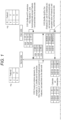
- FIG. 1 shows a flowchart of a data processing method according to an embodiment of the present disclosure.
- the first participant may, at step S101, shuffle and ID randomize the data elements in the data set of the client-side, and perform homomorphic encryption on the data features (for example, feature 1) of the data elements to obtain a processed data set (called the first set for convenience of description) and send it to the second participant (for example, a server).
- the client-side data set may be used for data sets of different specific services, and this specification does not limit this.
- the data elements in the client-side data set may include the information, such as the commodity purchase information, etc. The present disclosure does not limit the specific types and contents of the data elements in the client-side data set.
- Shuffling refers to reordering data elements (or elements for short) in a data set according to predetermined rules or algorithms, thus changing the original order of the data elements in a data set.
- the rules or algorithms on which the shuffling is based may be different, and not limited in this specification.
- the data elements in the client-side data set may be randomly ordered.
- the client-side data set is ⁇ (b,17),(c,8),(f,11) ⁇ , which includes three data elements (b,17), (c,8) and (f,11), and the original order of these elements may be changed, for example, to ⁇ (c,8),(f,11),(b,17) ⁇ .
- the former component of each element represents an element identification, or called an element ID
- the latter component of each element represents feature data of the element.
- the elements in the client-side data set may have multiple feature data, and for the convenience of explanation, one feature (feature 1) is used for description in this example.
- one feature is used for description in this example.
- the client-side data set element includes multiple features, for the processing of other features, reference can be made to the processing of feature 1.
- ID randomization means that a new ID of the data element is obtained by calculating the number of secrets of the party (unknown to other participants) and the IDs of the data elements, thus covering up the original IDs of the data elements and making it impossible for other participants involved in the intersection set to calculate the original IDs reversely.
- the specific way of ID randomization may be different.
- the new IDs of respective elements can be calculated, i.e., the respective elements in the client-side data set are ID randomized.
- ⁇ [rp]c,[rp]f,[rp]b ⁇ can be obtained by ID randomizing the above-mentioned shuffled client-side data set, herein [rp]c represents a new element ID calculated according to the number rp of the secrets and the original element ID c.
- Homomorphic Encryption is an encryption method, which is characterized by computing the homomorphic encrypted data to obtain an operation output, and decrypting the operation output. The decryption result is the same as the output result obtained by performing computation according to the unencrypted original data.
- different homomorphic encryption algorithms may be used to homomorphically encrypt the features of the respective elements.
- the features of the respective elements can be homomorphically encrypted by using a public key of the client-side to obtain the homomorphic encrypted value (or the first homomorphic ciphertext) corresponding to the features of respective elements as above. For example, as shown in FIG.
- the homomorphic encrypted value of each element is represented as ⁇ e1(8),e1(11),e1(17) ⁇ , where e1( ) represents the homomorphic encrypted value obtained by homomorphic encryption with the public key of the client-side.
- a numerical value with a twill background represents a homomorphic encrypted value of the numerical value obtained by using the public key of the client-side.
- the first set can be obtained after shuffling and ID randomizing the elements of the client-side data set and homomorphically encrypting the element features.
- the first set can be sent to the server.
- the first set obtained is, for example, ⁇ ([rp]c,e1(8)),([rp]f,e1(11)),([rp]b,e1(17)) ⁇ .
- the second participant (for example, a service-side) can construct imitation elements for the service-side set at step S102, shuffle and ID randomize the set of data elements and imitation elements in the service-side set, homomorphically encrypt the features included in respective elements in the set to obtain a second set, and send the second set to the client-side.
- the service-side data set may also be a data set for different specific services, which is not limited by this specification.
- the data elements in the service-side data set may include the service-side information, such as the advertisement click information, etc. This disclosure does not limit the specific types and contents of the data elements in the service-side data set.
- the data elements in the service-side data set may have different data features from the data features in the client-side data set. Similar to the data elements in the client-side data set, in different embodiments, the elements in the service-side data set may also have multiple feature data. For the convenience of explanation, one feature (for example, feature 2) is used for description in this example. In the embodiment where the service-side data set element includes multiple features, for the processing of other features, reference can be made to the processing of feature 2.
- the imitation elements of the service-side set may be constructed.
- imitation elements with the same ID type and feature type can be constructed according to the element ID type and feature data type of the original element.
- the number of imitation elements constructed for the service-side set may be different, ranging from 0 to multiple. For example, in one embodiment, when the number of the elements of the service-side set is less than the number of the elements in the received first set, revealing the number of the elements in the service-side set to the client-side may lead to the consequence of revealing the data of the service-side.
- imitation elements of a number equal to the difference between the number of the elements in the first set and the number of the elements in the service-side set, merge the imitation elements with the original elements in the service-side set, perform the same data security treatment, and send them to the client-side.
- the number of the elements in the set received by the client-side is the same as the number of the elements in the first set sent by the client-side, which will not lead to the consequence of revealing the data of the service-side.
- the number of the elements in the service-side set is equal to or greater than the number of the elements in the received first set, even if the client-side knows the number of the elements in the service-side set, it will usually not lead to the consequence of revealing data. Therefore, the original elements of the service-side collection set can be directly protected and sent to the client-side, and the number of the constructed imitation elements may be zero.
- the second set can be obtained and sent to the client-side by shuffling and ID randomizing the collection set of data elements and imitation elements in the service set, and homomorphically encrypting the features (such as features 2) included in respective elements in the collection set.
- the specific ways of shuffling and ID randomizing elements of the data set and homomorphically encrypting the element features are similar to the specific ways of shuffling and ID randomizing the data elements in the client-side data set and homomorphically encrypting the data features (such as features 1) of the data elements at step S101, reference can be made to the description at step S101, which will not be repeated here.
- the elements in the collection set can be shuffled, the respective elements in the collection set can be ID randomized by using the secret value (for example, rc) of the service-side, and the features (for example, features 2) included in respective elements in the collection set can be homomorphically encrypted.
- the service-side collects original elements including (a, 10) and (b, 21), for example, and constructs an imitation element (d,7).
- the imitation element ID with a specific composition such as the imitation element ID with a specific prefix or suffix and a specific length range, can be constructed to distinguish it from the IDs of other data elements, so as to obtain the collection set ⁇ (a, 10), (b, 21), (d, 7) ⁇ of original elements and imitation elements.
- the elements of the collection set are shuffled into, for example, ⁇ (b, 21), (d, 7), (a, 10) ⁇ .
- a second homomorphic ciphertext is specifically ⁇ ([rc]b, e2(21)), ([rc]d, e2(7)), ([rc]a, e2(10)) ⁇ .
- rc is the number the secrets of the service-side
- e2( ) represents the homomorphic encrypted value obtained by homomorphic encryption using the public key of the service-side.
- a numerical value with a cross-grain background represents a homomorphic encrypted value of the numerical value obtained by using the public key of the service-side.
- the client-side may, at step 103, re-shuffle the elements in the received second set, and re-ID randomize by using the secret value of the client-side, and secretly split the encrypted features of respective elements in the second set to obtain the secret shared value and shared random number corresponding to respective encrypted features, and replace each encrypted feature of each element with the corresponding secret shared value to obtain a third set and send the third set to the service-side.
- Secret splitting also known as secret sharing
- Secret splitting mainly refers to randomly splitting a number into two or more numbers that satisfy a specific relationship (for example, the sum of the split numbers is the number being split), and the split numbers can belong to different calculators, and each calculator can carry out calculations under data security according to these shared data.
- the elements in the collection set can be shuffled, respective elements in the set can be ID randomized by using the secret value of the service-side (for example, rc), and the features (for example, features 2) included in respective elements in the set collection can be homomorphically encrypted.
- the secret value of the service-side for example, rc
- the features for example, features 2 included in respective elements in the set collection can be homomorphically encrypted.
- the received second sets ⁇ ([rc] b,e2(21)),([rc]d,e2(7)), ([rc]a,e2(10)) can be shuffled, for example, to obtain ⁇ ([rc]a,e2(10)), ([rc]d,e2(7)), ([rc] b,e2(21)) ⁇ , and ID randomized by using the random number rp of the client-side to obtain ⁇ ([rp][rc]a,e2(10)), ([rp][rc]d,e2(7)), ([rp][rc]b,e2(21)) ⁇ , and then, for example, according to random numbers (for example, 6, 4, 3), the homomorphic encrypted features in the second set are secretly split and the shared ciphertexts (for example, e2(4), e2(3), e2(18)) encrypted by using the public key of the service-side and obtained by splitting are replaced with the homomorphic encrypted features
- the service-side may, at step S104, ID randomize the previously received first set again by using the secret number rc of the service-side to obtain, for example, a fourth set, for example, ⁇ ([rc][rp]c,e1(8)),( [rc][rp]f,e1(11)),( [rc][rp]b,e1(17)) as in Fig. 1 .
- the corresponding first homomorphic ciphertext can be obtained from the fourth set according to the element ID; confusion elements for the intersection set can be constructed, the IDs of confusion elements can be determined according to the IDs of not-in-intersection elements in the third set, and the number of the confusion elements can be determined according to the number of the not-in-intersection elements in the third set.
- the number of the confusion elements may be equal to the number of the not-in-intersection elements in the third set.
- the number of the confusion elements is equal to the number of the not-in-intersection elements in the third set, which can provide better data security.
- the number of the confusion elements may be less than the number of the not-in-intersection elements in the third set, and making the number of the confusion elements be less than the number of the not-in-intersection elements in the third set can save computing time and space computing resources. Then, the first homomorphic ciphertexts corresponding to the confusion elements are determined, and the first homomorphic ciphertext of each intersection element and each confusion element is secretly split into the corresponding first shared ciphertext and the first shared number. In different embodiments, the first homomorphic ciphertexts corresponding to the determined confusion elements may be different.
- a first homomorphic ciphertext corresponding to a confusion element may be, for example, a homomorphic encrypted value of 0 encrypted by the key of the service-side.
- the confusion elements constructed according to the third set ID may be ([rc][rp]a) and ([rc][rp]d), therein the first shared ciphertext and the first shared ciphertext corresponding to ([re] [rp]a) are e1(-2) and 2, and the first shared ciphertext and the first shared number corresponding to ([rc][rp]d) are e1(-1) and 1.
- the first shared number of intersection elements and confusion elements can be kept locally, and the first shared ciphertext can be sent to the client-side.
- the first shared ciphertexts can be sent to the client-side according to an arrangement order of the elements in the third set.
- the service-side can add an identification value (IfReal) to each intersection element and each confusion element to identify them as intersection elements or confusion elements (or to identify them as true elements or pseudo elements).
- secret splitting can be performed according to a first preset value to obtain third shared numbers and fourth shared numbers corresponding to respective intersection elements
- secret splitting can be performed according to a second preset value to obtain third shared numbers and fourth shared numbers corresponding to respective confusion elements, wherein the first preset value and the second preset value are used for indicating authenticity of the element.
- a homomorphic decrypted value the first shared number and the third shared number of the second shared ciphertext of each intersection element and each confusion element, a first feature union set is constructed.
- first shared ciphertexts and the fourth shared numbers corresponding to respective intersection elements and respective confusion elements are sent to the client-side.
- first preset value and the second preset value may be different specific values respectively.
- the first preset value may be 1 and the second preset value may be 0. For example, as shown in FIG.
- the intersection element may be ([rc][rp]b), and the corresponding third shared number and fourth shared number are 7 and -6, and their sum is 1 (the first preset value); the third shared number and fourth shared number corresponding to the confusion element ([rc][rp]a) are 3 and -3, and their sum is 0 (the second preset value), while the third shared number and fourth shared number corresponding to the confusion element ([rc][rp]d) are 4 and -4, and their sum is 0 (the second preset value).
- the client-side After receiving the first shared ciphertexts and the fourth shared numbers corresponding to respective intersection elements and respective confusion elements, the client-side can construct a second feature union set according to the homomorphic decrypted values, the second shared numbers and the fourth shared numbers (IfReals) of the first shared ciphertexts of the respective intersection elements and the respective confusion elements at step S107.
- the service-side and the client-side can jointly calculate according to the first feature union set and the second feature union set, for example to calculate statistical indicators.
- the authenticity of the corresponding elements in both sets can be determined according to the sum of authenticity identification values of the corresponding elements, and then statistical indicators can be determined according to feature shared values (the decrypted values of the homomorphic shared ciphertexts) and the feature shared numbers of the true elements stored in both feature sets respectively.
- this method can effectively protect the real feature data of both parties from being known by the other party during joint calculation, and at the same time ensure that the real number of intersection elements is not known by the client-side, so as to prevent the client-side from obtaining the data of the data set of the service-side.
- FIG. 2 shows a flowchart of a data processing method according to another embodiment of the present disclosure.
- the client-side may, at step S201, shuffle and ID randomize the data elements in the data set of the client-side, and homomorphically encrypt the data features (for example, features 1) of the data elements to obtain a processed data set (called the first set) and send the processed data set to the service-side.
- the specific implementation of this step is similar to the implementation of step S101. For details, please refer to the description of step S101, which will not be repeated here.
- the service-side can construct imitation elements for the service-side set at step S202, shuffle and ID randomize the collection set of data elements and imitation elements in the service-side set, homomorphically encrypt the features included in respective elements in the collection set to obtain a second set, and send the second set to the client-side.
- step S102 The specific implementation of this step is similar to the implementation of step S102. For details, please refer to the description of step S102, which will not be repeated here.
- the client-side may, at step S203, re-shuffle the elements in the received second set again, and re-ID randomize with the secret value of the client-side, and secretly split the encrypted features of the respective elements in the second set to obtain the secret shared values and the shared random numbers (second shared numbers) corresponding to respective encrypted features, and replace the respective encrypted features of the respective elements with the corresponding secret shared values to obtain a third set and send the third set to the service-side.
- the specific implementation of the above process is similar to the implementation of step S103. For details, please refer to the description of step S103, which will not be repeated here.
- the client-side may also send the homomorphic encrypted values of the second shared numbers corresponding to respective data elements in the third set to the service-side.
- the homomorphic encrypted values of the second shared numbers can be obtained by encrypting the second shared numbers with the public key of the client-side.
- the service-side can ID randomize the previously received first set again with the secret number rc of the service-side at step S204, for example, to obtain a fourth set, such as ⁇ ([rc][rp]c,e1(8)),( [rc][rp]f,e1(11)),( [rc][rp]b,e1(17)).
- the corresponding first homomorphic ciphertexts can be obtained from the fourth set according to the element IDs; confusion elements for the intersection can be constructed, the IDs of confusion elements can be determined according to the IDs of not-in-intersection elements in the third set, and the number of the confusion elements may be determined according to the number of the not-in-intersection elements in the third set. In one embodiment, the number of the confusion elements may be equal to the number of the not-in-intersection elements in the third set. In one embodiment, the number of the confusion elements may be less than the number of the not-in-intersection elements in the third set.
- the first homomorphic ciphertext corresponding to the confusion element is determined, and the first homomorphic ciphertext of each intersection element and each confusion element is secretly split into the corresponding first shared ciphertext and the first shared number.
- the first homomorphic ciphertexts corresponding to the determined confusion elements may be different.
- the first homomorphic ciphertexts can be determined according to subsequent statistical indicators.
- the statistical indicator may be a specific indicator based on sum operation
- the first homomorphic ciphertext corresponding to the confusion element may be, for example, a homomorphic encrypted value of 0 encrypted by the key of the client-side.
- the statistical indicator may be a specific indicator based on the operation of finding a maximum or minimum value
- the first homomorphic ciphertext corresponding to the confusion element may be, for example, a homomorphic encrypted value of the predetermined minimum or maximum value encrypted by the key of the client-side. For example, as shown in FIG.
- the confusion elements constructed according to the third set ID may be ([rc][rp]a) and ([rc][rp]d), the first shared ciphertext and the first shared number corresponding to ([rc] [rp]a) are e1(-2) and 2, and the first shared ciphertext and the first shared number corresponding to ([rc][rp]d) are e1(-1) and 1.
- the first shared numbers of the intersection elements and the confusion elements may be kept locally, and the first shared ciphertexts can be sent to the client-side.
- the first shared ciphertexts can be sent to the client-side according to the arrangement order of the elements in the third set.
- the service-side can perform secret splitting according to the third preset value to obtain the fifth shared number and the sixth shared number of each intersection element, and perform secret splitting according to the fourth preset value to obtain the fifth shared number and the sixth shared number of the confusion element. Then, according to the sum of the homomorphic decrypted values of the second shared ciphertexts of respective intersection elements and the fifth shared numbers of respective intersection elements, the first shared numbers of respective intersection elements, and the fifth shared numbers and the first shared numbers of respective confusion elements, a third feature union set is constructed.
- the service-side also sends the homomorphic sum of the homomorphic encrypted values of the second shared numbers of respective intersection elements and the sixth shared numbers, the first shared ciphertexts, and the sixth shared number homomorphic ciphertexts and the first shared ciphertexts of respective confusion elements to the client-side for constructing a fourth feature union set.
- the third preset value and the fourth preset value may be different specific values respectively.
- the third preset value can be determined according to the subsequent statistical indicators.
- the statistical indicator can be obtained based on the sum operation, and the third preset value and the fourth preset value may both be 0. For example, as shown in FIG.
- the fifth shared number and the sixth shared number corresponding to an intersection element ([rc][rp]b) are -2 and 2, and their sum is 0 (the third preset value);
- the fifth shared number and the sixth shared number corresponding to an confusion element ([rc][rp]a) are 4 and -4, their sum is 0 (the fourth preset value),
- the fifth shared number and the sixth shared number corresponding to the confusion element ([rc][rp]d) are 3 and -3, and their sum is 0 (the fourth preset value).
- the statistical indicator may be a specific indicator based on the operation of finding the maximum value or the minimum value
- the fourth preset value may be, for example, the minimum value or the maximum value within a predetermined value range.
- the client-side After receiving the homomorphic sum of the second shared numbers and the sixth shared numbers of the respective intersection elements, and the first shared ciphertexts of the respective intersection elements, and the homomorphic ciphertexts and the first shared ciphertexts of the sixth shared numbers of the respective confusion elements, the client-side can construct the fourth feature union set, according to the homomorphic sum of the second shared numbers and the sixth shared numbers of the respective intersection elements, and the first shared ciphertexts, and the homomorphic ciphertexts and the first shared ciphertexts of the sixth shared numbers of the respective confusion elements at step S207.
- the service-side and the client-side can jointly calculate according to the third feature union set and the fourth feature union set, for example, calculate statistical indicators.
- the corresponding features of all the corresponding elements in both sets can be summed up, and the sum of the corresponding features of pseudo elements in both sets are 0, and the sum of the corresponding features of true elements is an available value, so the number of corresponding features of pseudo elements does not affect the calculation results when statistical indicators are calculated based on the sum operation.
- the fourth preset value is the minimum value within a predetermined range
- the corresponding features of all the corresponding elements in both sets can be summed up, for example, and the maximum value can be obtained.
- the sum of the corresponding features of the pseudo elements in both sets is the minimum value within a predetermined range
- the sum of the corresponding features of the real elements is an available value, so the number of the corresponding features of the pseudo elements does not affect the calculation results when the statistical indicators are calculated based on the maximum operation.
- This method can also effectively protect the real feature data of both parties from being known by the other party during joint calculation, and at the same time ensure that the real number of intersection elements is not known by the client-side, so as to prevent the client-side from obtaining the data of the data set of the service-side.
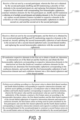
- FIG. 3 shows a flowchart of a data processing method according to an embodiment of the present disclosure. The method is executed by a first participant, and as shown in FIG. 3 , the method includes:
- a first set sent by a second participant is received, wherein the first set is obtained by the second participant shuffling and ID randomizing a plurality of first elements in the second participant set, and replacing first plaintext features of respective first elements with corresponding first homomorphic ciphertexts; imitation elements for the first participant set are constructed, a collection set of multiple second elements and imitation elements in the first participant set is shuffled and ID randomized, second plaintext features included in respective elements in the collection set are replaced with corresponding second homomorphic ciphertexts to obtain a second set, and the second set is sent to the second participant.
- homomorphic encryption can be performed according to the first plaintext features and a public key of the second participant to obtain first homomorphic ciphertexts; the first plaintext features included in respective first data elements are replaced with the first homomorphic ciphertexts.
- homomorphic encryption can be performed according to the second plaintext features and a public key of the first participant to obtain second homomorphic ciphertexts; and the second homomorphic ciphertexts are replaced with the second plaintext features included in the respective data elements in the collection set.
- imitation elements with a number of the imitation elements being a difference between the number of the elements in the first set and the number of the elements in the first participant set can be constructed; alternatively, if the number of the elements in the first set is less than or equal to the number of the elements in the first participant set, a zero number of imitation elements can be constructed.
- Step S303 a third set sent by the second participant is received, and the third set is obtained by the second participant shuffling and ID randomizing respective elements in the second set, secretly splitting the second homomorphic ciphertext of each element in the second set into a second shared ciphertext and a second shared number, and replacing the second homomorphic ciphertexts with the second shared ciphertexts.
- Step S305 respective elements in the first set are ID randomized to obtain a fourth set, the intersection set of the third set and the fourth set is determined, and the first homomorphic ciphertexts corresponding to respective intersection elements in the intersection set are obtained from the fourth set; confusion elements for the intersection set are constructed, first homomorphic ciphertexts corresponding to the confusion elements are determined, and the first homomorphic ciphertexts of respective intersection elements and respective confusion elements are secretly split into first shared ciphertexts and first shared numbers.
- confusion elements can be constructed with the number of the confusion elements being the number of the not-in-intersection elements in the third set. In one embodiment, confusion elements can be constructed with the number of the confusion elements being less than the number of the not-in-intersection elements in the third set.
- secret splitting is performed according to a first preset value to obtain third shared numbers and fourth shared numbers corresponding to respective intersection elements, and secret splitting is performed according to a second preset value to obtain third shared numbers and fourth shared numbers corresponding to respective confusion elements, wherein the first preset value and the second preset value are used for indicating authenticity of the elements;
- a first feature union set is constructed according to the homomorphic decrypted values, the first shared numbers and the third shared numbers of the second shared ciphertexts of respective intersection elements and respective confusion elements, wherein the first feature union set is used for joint calculation by the first participant; and the first shared ciphertexts and the fourth shared numbers corresponding to respective intersection elements and respective confusion elements are sent to a second participant for the second participant to construct a second feature union set, and the second feature union set is used for joint calculation by the second participant.
- the first preset value may be 1 and the second preset value may be 0.
- FIG. 4 shows a flowchart of a data processing method according to another embodiment of the present disclosure. The method is executed by the second participant, as shown in FIG. 4 , and the method at least includes the following steps:
- FIG. 5 shows a flowchart of a data processing method according to another embodiment of the present disclosure. The method is executed by the first participant, and as shown in FIG. 5 , the method at least includes the following steps:
- the third preset value may be 0 and the fourth preset value may be 0.
- FIG. 6 shows a flowchart of a data processing method according to another embodiment of the present disclosure. The method is performed by a second participant. As shown in FIG. 6 , the method at least includes the following steps:
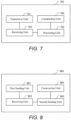
- FIG. 7 shows a schematic block diagram of a data processing apparatus according to an embodiment of the present disclosure.
- the device is deployed on a first participant and used for executing the method shown in FIG. 3 .
- the apparatus 700 includes:
- FIG. 8 shows a schematic block diagram of a data processing apparatus according to another embodiment of the present disclosure.
- the apparatus is deployed on the second participant and used for executing the method shown in FIG. 4 .
- the apparatus 800 includes:
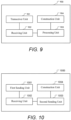
- FIG. 9 shows a schematic block diagram of a data processing apparatus according to another embodiment of the present disclosure.
- the apparatus is deployed on a first participant and used for executing the method shown in FIG. 5 .
- the apparatus 900 includes:
- FIG. 10 shows a schematic block diagram of a data processing apparatus according to another embodiment of the present disclosure.
- the apparatus is deployed on a second participant and used for executing the method shown in FIG. 6 .
- the apparatus 1000 includes:
- the embodiment of the present disclosure also provides an electronic device, which includes a memory and a processor, wherein the memory stores executable codes, and when the processor executes the executable codes, the method shown in any one of the FIG.1 to FIG. 6 is implemented.
- FIG. 11 shows a structural schematic diagram of an electronic device 1100 suitable for implementing an embodiment of the present application.
- the electronic device 1100 shown in FIG. 11 is just an example, and should not bring any restrictions on the function and application scope of the embodiment of the present application.
- the electronic device 1100 may include a processing apparatus (such as a Central Processing Unit, a graphics processor, etc.) 1101.
- the processing apparatus 1101 may be a general processor, a Digital Signal Processing (DSP), a microprocessor or a microcontroller, and may further include an Application Specific Integrated Circuit (ASIC), Field-Programmable Gate Array (FPGA) or other programmable logic devices, discrete gate or transistor logic devices, and discrete hardware components, which can perform various appropriate actions and processes according to programs stored in Read-Only Memory (ROM) 1102 or programs loaded from storage apparatus 1108 into Random Access Memory (RAM) 1103.
- a processing apparatus 1101, a ROM 1102 and a RAM 1103 are connected to each other through a bus 1104.
- An input/output (I/O) interface 1105 is also connected to the bus 1104.
- the following apparatuses can be connected to the I/O interface 1105: an input apparatus 1106 including, for example, a touch screen, a touch pad, a keyboard, a mouse, etc.; an output apparatus 1107 including, for example, a Liquid Crystal Display (LCD), a speaker, a vibrator, etc.; a storage apparatus 1108 such as a magnetic tape, a hard disk, etc.; and a communication apparatus 1109.
- the communication apparatus 1109 may allow the electronic device 1100 to communicate wirelessly or through wires with other devices to exchange data.
- FIG. 7 shows an electronic device 1100 with various apparatuses, it should be understood that it is not required to implement or have all the apparatuses shown. More or fewer apparatuses may alternatively be implemented or provided. Each block shown in FIG. 7 may represent one apparatus or a plurality of apparatuses as required.
- an embodiment of the present application includes a computer program product, which includes a computer program carried on a computer-readable medium, and the computer program contains program codes for executing the method shown in the flowchart.
- the computer program can be downloaded and installed from the network through the communication apparatus 1109, or installed from the storage apparatus 1108 or from the ROM 1102.
- the processing apparatus 1101 the above functions defined in the data processing method provided by the embodiment of the present application are executed.
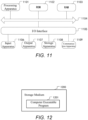
- FIG. 12 is a schematic diagram of a storage medium for implementing an embodiment of the present application.
- the storage medium 1200 may be a non-transitory computer-readable storage medium for storing non-transitory computer-executable instructions 1201.
- the data processing method provided by the embodiment of the present application can be realized when the non-transitory computer-executable instructions 1201 are executed by the processor.
- the storage medium 1200 can be applied to the above-mentioned electronic device, and for example, the storage medium 1200 may include a memory in the electronic device.
- the description of the storage medium 1200 may refer to the description of the memory in the embodiment of the electronic device, which is not repeated here.
- the specific functions and technical effects of the storage medium 1200 may refer to the description of the data processing method provided by the embodiment of the present application, and will not be repeated here.
- the computer-readable medium described in the embodiment of the present disclosure may be a computer-readable signal medium or a computer-readable storage medium or any combination of the two.
- the computer-readable storage medium may be, for example, but not limited to, an electrical, magnetic, optical, electromagnetic, infrared, or semiconductor system, apparatus or device, or a combination of any of the above.
- Computer-readable storage media may include, but are not limited to, an electrical connection with one or more wires, a memory card of a smart phone, a storage part of a tablet computer, a portable computer disk, a hard disk of a personal computer, a Random Access Memory (RAM), a Read-Only Memory (ROM), an Erasable Programmable Read-Only Memory (EPROM or flash memory), an optical fiber, a portable Compact Disk Read-Only Memory (CD-ROM), an optical storage device, and a magnetic device.
- a computer-readable storage medium may be any tangible medium containing or storing a program, which may be used by or in combination with an instruction execution system, apparatus or device.
- the computer-readable signal medium may include a data signal propagated in baseband or as a part of a carrier wave, in which computer-readable program codes are carried.
- This propagated data signal may take many forms, including but not limited to electromagnetic signals, optical signals or any suitable combination of the above.
- a computer-readable signal medium may also be any computer-readable medium other than a computer-readable storage medium, which can send, propagate or transmit a program for use by or in connection with an instruction execution system, apparatus or device.
- the program code contained in the computer-readable medium can be transmitted by any suitable medium, including but not limited to: wires, optical cables, Radio Frequency (RF), etc., or any suitable combination of the above.
- RF Radio Frequency
- the computer-readable medium may be included in the electronic device; or it may exist alone without being assembled into the electronic device.
- the computer-readable medium carries one or more programs, which, when executed by the server, enable the electronic device to realize the data processing method provided by the embodiment of the application.
- Computer program codes for performing the operations of embodiments of the present disclosure may be written in one or more programming languages or their combinations, including object-oriented programming languages such as Java, Smalltalk, C++, and conventional procedural programming languages such as "C" language or similar programming languages.
- the program code may be completely executed on the computer, partially executed on the computer, executed as an independent software package, partially executed on the computer and partially executed on a remote computer, or completely executed on a remote computer or server.
- the remote computer may be connected to a computer through any kind of network, including a Local Area Network (LAN) or a Wide Area Network (WAN), or may be connected to an external computer (for example, through the Internet using an Internet service provider).
- LAN Local Area Network
- WAN Wide Area Network
- each block in the flowchart or block diagram may represent a module, a program segment, or a part of code that contains one or more executable instructions for implementing specified logical functions.
- the functions noted in the blocks may occur in an order different from the order noted in the drawings. For example, two blocks shown in succession may actually be executed substantially in parallel, and they may sometimes be executed in the reverse order, depending on the functions involved.
- each block in the block diagrams and/or flowcharts, and combinations of blocks in the block diagrams and/or flowcharts may be implemented by a dedicated hardware-based system that performs specified functions or operations, or by a combination of dedicated hardware and computer instructions.
- the units involved in the embodiment described in the present disclosure may be realized by software or hardware. Among them, the name of the unit does not constitute the limitation of the unit itself in some cases.
- the functions described above herein may be at least partially performed by one or more hardware logic components.
- exemplary types of hardware logic components include: Field Programmable Gate Array (FPGA), Application Specific Integrated Circuit (ASIC), Application Specific Standard Product (ASSP), System on Chip (SOC), Complex Programmable Logic Device (CPLD) and so on.
- FPGA Field Programmable Gate Array
- ASIC Application Specific Integrated Circuit
- ASSP Application Specific Standard Product
- SOC System on Chip
- CPLD Complex Programmable Logic Device
Landscapes
- Engineering & Computer Science (AREA)
- Computer Security & Cryptography (AREA)
- Computer Networks & Wireless Communication (AREA)
- Signal Processing (AREA)
- Information Retrieval, Db Structures And Fs Structures Therefor (AREA)
- Management, Administration, Business Operations System, And Electronic Commerce (AREA)
Applications Claiming Priority (1)
| Application Number | Priority Date | Filing Date | Title |
|---|---|---|---|
| CN202310443647.0A CN116488789B (zh) | 2023-04-23 | 2023-04-23 | 一种数据处理方法、装置、设备和介质 |
Publications (3)
| Publication Number | Publication Date |
|---|---|
| EP4456474A1 true EP4456474A1 (de) | 2024-10-30 |
| EP4456474C0 EP4456474C0 (de) | 2025-12-10 |
| EP4456474B1 EP4456474B1 (de) | 2025-12-10 |
Family
ID=87216247
Family Applications (1)
| Application Number | Title | Priority Date | Filing Date |
|---|---|---|---|
| EP23185563.6A Active EP4456474B1 (de) | 2023-04-23 | 2023-07-14 | Datenverarbeitungsverfahren, -vorrichtung, -einrichtung und -medium |
Country Status (3)
| Country | Link |
|---|---|
| US (1) | US20240356724A1 (de) |
| EP (1) | EP4456474B1 (de) |
| CN (1) | CN116488789B (de) |
Families Citing this family (4)
| Publication number | Priority date | Publication date | Assignee | Title |
|---|---|---|---|---|
| CN117171779B (zh) * | 2023-11-02 | 2024-02-27 | 闪捷信息科技有限公司 | 基于交集保护的数据处理装置 |
| CN117579273B (zh) * | 2024-01-12 | 2024-04-30 | 蓝象智联(杭州)科技有限公司 | 一种不暴露交集id的隐私集合求交方法和系统 |
| CN119652600B (zh) * | 2024-12-04 | 2025-10-21 | 中国银联股份有限公司 | 数据处理方法、装置、设备及计算机可读存储介质 |
| CN119628922B (zh) * | 2024-12-04 | 2025-10-21 | 中国银联股份有限公司 | 交集确定方法和相关设备 |
Family Cites Families (14)
| Publication number | Priority date | Publication date | Assignee | Title |
|---|---|---|---|---|
| CN112580072B (zh) * | 2020-12-09 | 2021-07-30 | 深圳前海微众银行股份有限公司 | 一种数据集合求交方法及装置 |
| CN113065155A (zh) * | 2021-03-26 | 2021-07-02 | 杭州宇链科技有限公司 | 一种基于可信执行环境辅助的隐私集合求交方法 |
| CN113127916B (zh) * | 2021-05-18 | 2023-07-28 | 腾讯科技(深圳)有限公司 | 数据集合处理方法、数据处理方法、装置及存储介质 |
| CN113032840B (zh) * | 2021-05-26 | 2021-07-30 | 腾讯科技(深圳)有限公司 | 一种数据处理方法、装置、设备及计算机可读存储介质 |
| CN113434888B (zh) * | 2021-07-06 | 2022-08-26 | 建信金融科技有限责任公司 | 数据共享方法、装置、设备及系统 |
| US11687667B2 (en) * | 2021-08-06 | 2023-06-27 | Amazon Technologies, Inc. | Privacy-preserving computing with third-party service |
| CN113806795B (zh) * | 2021-08-10 | 2024-03-01 | 中国科学院信息工程研究所 | 一种两方隐私集合并集计算方法和装置 |
| CN113761563B (zh) * | 2021-11-05 | 2022-02-08 | 深圳致星科技有限公司 | 数据交集计算方法、装置及电子设备 |
| CN114091067A (zh) * | 2021-11-24 | 2022-02-25 | 中国银联股份有限公司 | 一种样本对齐方法、装置、设备及存储介质 |
| CN114580012B (zh) * | 2022-02-10 | 2025-01-17 | 杭州博盾习言科技有限公司 | 基于隐私安全求交和秘密分享的联邦分组统计量计算方法 |
| CN114996752A (zh) * | 2022-05-25 | 2022-09-02 | 华控清交信息科技(北京)有限公司 | 一种多方隐私求交方法、装置和用于多方隐私求交的装置 |
| CN115473707A (zh) * | 2022-08-29 | 2022-12-13 | 贵州华云信安科技有限公司 | 一种隐私交集求和的方法和装置 |
| CN115967491B (zh) * | 2023-03-07 | 2023-05-23 | 华控清交信息科技(北京)有限公司 | 一种隐私求交方法、系统和可读存储介质 |
| US11874950B1 (en) * | 2023-04-07 | 2024-01-16 | Lemon Inc. | Protecting membership for secure computation and communication |
-
2023
- 2023-04-23 CN CN202310443647.0A patent/CN116488789B/zh active Active
- 2023-07-14 US US18/352,660 patent/US20240356724A1/en active Pending
- 2023-07-14 EP EP23185563.6A patent/EP4456474B1/de active Active
Non-Patent Citations (2)
| Title |
|---|
| PRASAD BUDDHAVARAPU ET AL: "Private Matching for Compute", vol. 20200522:151524, 21 May 2020 (2020-05-21), pages 1 - 20, XP061035885, Retrieved from the Internet <URL:http://eprint.iacr.org/2020/599.pdf> [retrieved on 20200521] * |
| YANG YANG ET AL: "A Comprehensive Survey on Secure Outsourced Computation and Its Applications", IEEE ACCESS, vol. 7, 19 September 2019 (2019-09-19), pages 159426 - 159465, XP011754120, DOI: 10.1109/ACCESS.2019.2949782 * |
Also Published As
| Publication number | Publication date |
|---|---|
| US20240356724A1 (en) | 2024-10-24 |
| EP4456474C0 (de) | 2025-12-10 |
| CN116488789A (zh) | 2023-07-25 |
| EP4456474B1 (de) | 2025-12-10 |
| CN116488789B (zh) | 2024-06-07 |
Similar Documents
| Publication | Publication Date | Title |
|---|---|---|
| EP4456474B1 (de) | Datenverarbeitungsverfahren, -vorrichtung, -einrichtung und -medium | |
| CN110990857B (zh) | 保护隐私安全的多方联合进行特征评估的方法及装置 | |
| EP3380979B1 (de) | Systeme und verfahren zur erkennung sensibler informationslecks unter wahrung der privatsphäre | |
| WO2022247576A1 (zh) | 一种数据处理方法、装置、设备及计算机可读存储介质 | |
| Erickson et al. | What you do not expect when you are expecting: Privacy analysis of Femtech | |
| US8204929B2 (en) | Hiding sensitive information | |
| US11354437B2 (en) | System and methods for providing data analytics for secure cloud compute data | |
| EP2743842A1 (de) | Sicheres Suchverarbeitungssystem und sicheres Suchverarbeitungsverfahren | |
| CN108681676B (zh) | 数据管理方法和装置、系统、电子设备、程序和存储介质 | |
| CN110955914A (zh) | 一种待脱敏数据的处理方法、系统、终端设备和存储介质 | |
| CN114124343A (zh) | 保护隐私的风险评分信息查询方法、装置、系统及设备 | |
| US11194922B2 (en) | Protecting study participant data for aggregate analysis | |
| JP2012129993A (ja) | 暗号装置の保護方法及び保護システム | |
| CN110933063A (zh) | 数据加密方法、数据解密方法及设备 | |
| CN113645025A (zh) | 数据加密存储方法、存储设备、用户设备及存储介质 | |
| Usama et al. | An efficient construction of key-dependent substitution box based on chaotic sine map | |
| CN110598427B (zh) | 数据的处理方法、系统和存储介质 | |
| CN110048830B (zh) | 一种数据加密解密方法和加密解密装置 | |
| CN115118520A (zh) | 数据处理方法、装置和服务器 | |
| CN111931221B (zh) | 数据处理方法、装置和服务器 | |
| EP4262135A1 (de) | Batch-verschlüsselungsverfahren, zugehörige vorrichtungen, systeme, vorrichtungen, medien und programmprodukte | |
| CN117033012A (zh) | 接口调用黑名单的查询方法及装置、电子设备及存储介质 | |
| CN118210631A (zh) | 用于边缘计算的集群负载均衡方法、服务器和电子设备 | |
| JP2023166107A (ja) | 機械学習装置、機械学習システム、機械学習方法、および機械学習プログラム | |
| CN110297687A (zh) | 基于虚拟主机的数据交互方法、装置及系统 |
Legal Events
| Date | Code | Title | Description |
|---|---|---|---|
| PUAI | Public reference made under article 153(3) epc to a published international application that has entered the european phase |
Free format text: ORIGINAL CODE: 0009012 |
|
| STAA | Information on the status of an ep patent application or granted ep patent |
Free format text: STATUS: THE APPLICATION HAS BEEN PUBLISHED |
|
| AK | Designated contracting states |
Kind code of ref document: A1 Designated state(s): AL AT BE BG CH CY CZ DE DK EE ES FI FR GB GR HR HU IE IS IT LI LT LU LV MC ME MK MT NL NO PL PT RO RS SE SI SK SM TR |
|
| STAA | Information on the status of an ep patent application or granted ep patent |
Free format text: STATUS: REQUEST FOR EXAMINATION WAS MADE |
|
| 17P | Request for examination filed |
Effective date: 20250430 |
|
| GRAP | Despatch of communication of intention to grant a patent |
Free format text: ORIGINAL CODE: EPIDOSNIGR1 |
|
| STAA | Information on the status of an ep patent application or granted ep patent |
Free format text: STATUS: GRANT OF PATENT IS INTENDED |
|
| INTG | Intention to grant announced |
Effective date: 20250703 |
|
| GRAS | Grant fee paid |
Free format text: ORIGINAL CODE: EPIDOSNIGR3 |
|
| GRAA | (expected) grant |
Free format text: ORIGINAL CODE: 0009210 |
|
| STAA | Information on the status of an ep patent application or granted ep patent |
Free format text: STATUS: THE PATENT HAS BEEN GRANTED |
|
| AK | Designated contracting states |
Kind code of ref document: B1 Designated state(s): AL AT BE BG CH CY CZ DE DK EE ES FI FR GB GR HR HU IE IS IT LI LT LU LV MC ME MK MT NL NO PL PT RO RS SE SI SK SM TR |
|
| REG | Reference to a national code |
Ref country code: CH Ref legal event code: F10 Free format text: ST27 STATUS EVENT CODE: U-0-0-F10-F00 (AS PROVIDED BY THE NATIONAL OFFICE) Effective date: 20251210 Ref country code: GB Ref legal event code: FG4D |
|
| REG | Reference to a national code |
Ref country code: DE Ref legal event code: R096 Ref document number: 602023009473 Country of ref document: DE |
|
| REG | Reference to a national code |
Ref country code: IE Ref legal event code: FG4D |
|
| U01 | Request for unitary effect filed |
Effective date: 20251211 |
|
| U07 | Unitary effect registered |
Designated state(s): AT BE BG DE DK EE FI FR IT LT LU LV MT NL PT RO SE SI Effective date: 20251218 |