EP4456273A2 - Connector, battery, battery pack, and electricity-consumption device - Google Patents
Connector, battery, battery pack, and electricity-consumption device Download PDFInfo
- Publication number
- EP4456273A2 EP4456273A2 EP24171570.5A EP24171570A EP4456273A2 EP 4456273 A2 EP4456273 A2 EP 4456273A2 EP 24171570 A EP24171570 A EP 24171570A EP 4456273 A2 EP4456273 A2 EP 4456273A2
- Authority
- EP
- European Patent Office
- Prior art keywords
- connector
- battery
- functional layer
- laser
- metal complex
- Prior art date
- Legal status (The legal status is an assumption and is not a legal conclusion. Google has not performed a legal analysis and makes no representation as to the accuracy of the status listed.)
- Pending
Links
Images


Classifications
-
- H—ELECTRICITY
- H01—ELECTRIC ELEMENTS
- H01M—PROCESSES OR MEANS, e.g. BATTERIES, FOR THE DIRECT CONVERSION OF CHEMICAL ENERGY INTO ELECTRICAL ENERGY
- H01M50/00—Constructional details or processes of manufacture of the non-active parts of electrochemical cells other than fuel cells, e.g. hybrid cells
- H01M50/50—Current conducting connections for cells or batteries
- H01M50/528—Fixed electrical connections, i.e. not intended for disconnection
-
- H—ELECTRICITY
- H01—ELECTRIC ELEMENTS
- H01M—PROCESSES OR MEANS, e.g. BATTERIES, FOR THE DIRECT CONVERSION OF CHEMICAL ENERGY INTO ELECTRICAL ENERGY
- H01M50/00—Constructional details or processes of manufacture of the non-active parts of electrochemical cells other than fuel cells, e.g. hybrid cells
- H01M50/50—Current conducting connections for cells or batteries
- H01M50/531—Electrode connections inside a battery casing
- H01M50/536—Electrode connections inside a battery casing characterised by the method of fixing the leads to the electrodes, e.g. by welding
-
- B—PERFORMING OPERATIONS; TRANSPORTING
- B23—MACHINE TOOLS; METAL-WORKING NOT OTHERWISE PROVIDED FOR
- B23K—SOLDERING OR UNSOLDERING; WELDING; CLADDING OR PLATING BY SOLDERING OR WELDING; CUTTING BY APPLYING HEAT LOCALLY, e.g. FLAME CUTTING; WORKING BY LASER BEAM
- B23K26/00—Working by laser beam, e.g. welding, cutting or boring
- B23K26/20—Bonding
- B23K26/21—Bonding by welding
- B23K26/211—Bonding by welding with interposition of special material to facilitate connection of the parts
-
- H—ELECTRICITY
- H01—ELECTRIC ELEMENTS
- H01M—PROCESSES OR MEANS, e.g. BATTERIES, FOR THE DIRECT CONVERSION OF CHEMICAL ENERGY INTO ELECTRICAL ENERGY
- H01M4/00—Electrodes
- H01M4/02—Electrodes composed of, or comprising, active material
- H01M4/64—Carriers or collectors
- H01M4/66—Selection of materials
- H01M4/665—Composites
- H01M4/667—Composites in the form of layers, e.g. coatings
-
- H—ELECTRICITY
- H01—ELECTRIC ELEMENTS
- H01M—PROCESSES OR MEANS, e.g. BATTERIES, FOR THE DIRECT CONVERSION OF CHEMICAL ENERGY INTO ELECTRICAL ENERGY
- H01M4/00—Electrodes
- H01M4/02—Electrodes composed of, or comprising, active material
- H01M4/64—Carriers or collectors
- H01M4/66—Selection of materials
- H01M4/668—Composites of electroconductive material and synthetic resins
-
- H—ELECTRICITY
- H01—ELECTRIC ELEMENTS
- H01M—PROCESSES OR MEANS, e.g. BATTERIES, FOR THE DIRECT CONVERSION OF CHEMICAL ENERGY INTO ELECTRICAL ENERGY
- H01M50/00—Constructional details or processes of manufacture of the non-active parts of electrochemical cells other than fuel cells, e.g. hybrid cells
- H01M50/10—Primary casings; Jackets or wrappings
- H01M50/102—Primary casings; Jackets or wrappings characterised by their shape or physical structure
- H01M50/107—Primary casings; Jackets or wrappings characterised by their shape or physical structure having curved cross-section, e.g. round or elliptic
-
- H—ELECTRICITY
- H01—ELECTRIC ELEMENTS
- H01M—PROCESSES OR MEANS, e.g. BATTERIES, FOR THE DIRECT CONVERSION OF CHEMICAL ENERGY INTO ELECTRICAL ENERGY
- H01M50/00—Constructional details or processes of manufacture of the non-active parts of electrochemical cells other than fuel cells, e.g. hybrid cells
- H01M50/50—Current conducting connections for cells or batteries
- H01M50/531—Electrode connections inside a battery casing
-
- H—ELECTRICITY
- H01—ELECTRIC ELEMENTS
- H01M—PROCESSES OR MEANS, e.g. BATTERIES, FOR THE DIRECT CONVERSION OF CHEMICAL ENERGY INTO ELECTRICAL ENERGY
- H01M50/00—Constructional details or processes of manufacture of the non-active parts of electrochemical cells other than fuel cells, e.g. hybrid cells
- H01M50/50—Current conducting connections for cells or batteries
- H01M50/531—Electrode connections inside a battery casing
- H01M50/534—Electrode connections inside a battery casing characterised by the material of the leads or tabs
-
- H—ELECTRICITY
- H01—ELECTRIC ELEMENTS
- H01M—PROCESSES OR MEANS, e.g. BATTERIES, FOR THE DIRECT CONVERSION OF CHEMICAL ENERGY INTO ELECTRICAL ENERGY
- H01M50/00—Constructional details or processes of manufacture of the non-active parts of electrochemical cells other than fuel cells, e.g. hybrid cells
- H01M50/50—Current conducting connections for cells or batteries
- H01M50/543—Terminals
- H01M50/552—Terminals characterised by their shape
- H01M50/559—Terminals adapted for cells having curved cross-section, e.g. round, elliptic or button cells
-
- Y—GENERAL TAGGING OF NEW TECHNOLOGICAL DEVELOPMENTS; GENERAL TAGGING OF CROSS-SECTIONAL TECHNOLOGIES SPANNING OVER SEVERAL SECTIONS OF THE IPC; TECHNICAL SUBJECTS COVERED BY FORMER USPC CROSS-REFERENCE ART COLLECTIONS [XRACs] AND DIGESTS
- Y02—TECHNOLOGIES OR APPLICATIONS FOR MITIGATION OR ADAPTATION AGAINST CLIMATE CHANGE
- Y02E—REDUCTION OF GREENHOUSE GAS [GHG] EMISSIONS, RELATED TO ENERGY GENERATION, TRANSMISSION OR DISTRIBUTION
- Y02E60/00—Enabling technologies; Technologies with a potential or indirect contribution to GHG emissions mitigation
- Y02E60/10—Energy storage using batteries
Definitions
- This disclosure relates to the field of batteries, and in particular, to a connector, a battery, a battery pack, and an electricity-consumption device.
- the lithium ion battery has advantages such as a large specific capacitance, no memory effect, a high operating voltage, a high charging speed, a wide operating-temperature range, a long cycle life, a small volume, and a light weight compared with other types of batteries such as lead-acid batteries and nickelcadmium batteries.
- the lithium ion batteries are widely applicable in mobile phones, notebook computers, electric automobiles, energy-storage cabinets, and other fields, and have found increasingly wide utilization.
- a connector is an important connecting bridge between a tab of a battery and an electrode terminal of the battery, and connection between the connector and the tab and connection between the connector and the electrode terminal are usually realized through laser welding.
- a connector has low absorption intensity for a laser, and thus poor welding such as inveracious solder and empty solder may easily occur during laser welding, resulting in poor intensity of welding the connector to the tab and the electrode terminal, and accordingly significantly affecting a safety performance and use reliability of the battery.
- a connector in embodiments of the disclosure.
- the connector is applied to a battery, where the battery includes an electrolyte.
- the connector includes a current collecting layer and a functional layer.
- the functional layer is disposed on at least part of a surface of the current collecting layer.
- An absorption rate of the functional layer for a laser is greater than an absorption rate of the current collecting layer for the laser, and the functional layer is partially soluble in the electrolyte.
- a battery in embodiments of the disclosure.
- the battery includes an electrolyte, an electrode assembly, and a connector.
- the connector includes a current collecting layer and a functional layer.
- the functional layer is disposed on at least part of a surface of the current collecting layer.
- An absorption rate of the functional layer for a laser is greater than an absorption rate of the current collecting layer for the laser, and the functional layer is partially soluble in the electrolyte.
- the electrode assembly is at least partially immersed in the electrolyte, and the electrode assembly is electrically connected to the connector.
- a battery pack in embodiments of the disclosure.
- the battery pack includes a box and multiple batteries.
- the multiple batteries are received in the box and electrically connected in series and/or in parallel.
- the battery includes an electrolyte, an electrode assembly, and a connector.
- the connector includes a current collecting layer and a functional layer.
- the functional layer is disposed on at least part of a surface of the current collecting layer.
- An absorption rate of the functional layer for a laser is greater than an absorption rate of the current collecting layer for the laser, and the functional layer is partially soluble in the electrolyte.
- the electrode assembly is at least partially immersed in the electrolyte, and the electrode assembly is electrically connected to the connector.
- an electricity-consumption device in embodiments of the disclosure.
- the electricity-consumption device includes an electricity-consumption device body and a battery.
- the battery is configured to power the electricity-consumption device body.
- the battery includes an electrolyte, an electrode assembly, and a connector.
- the connector includes a current collecting layer and a functional layer.
- the functional layer is disposed on at least part of a surface of the current collecting layer.
- An absorption rate of the functional layer for a laser is greater than an absorption rate of the current collecting layer for the laser, and the functional layer is partially soluble in the electrolyte.
- the electrode assembly is at least partially immersed in the electrolyte, and the electrode assembly is electrically connected to the connector.
- the lithium ion battery has advantages such as a large specific capacitance, no memory effect, a high operating voltage, a high charging speed, a wide operating-temperature range, a long cycle life, a small volume, and a light weight compared with other types of batteries such as lead-acid batteries and nickelcadmium batteries.
- the lithium ion batteries are widely applicable in mobile phones, notebook computers, electric automobiles, energy-storage cabinets, and other fields, and have found increasingly wide utilization.
- a connector is an important connecting bridge between a tab of a battery and an electrode terminal of the battery, and connection between the connector and the tab and connection between the connector and the electrode terminal are usually realized through laser welding.
- a connector has low absorption intensity for a laser, and thus poor welding such as inveracious solder and empty solder may easily occur during laser welding, resulting in poor intensity of welding the connector to the tab and the electrode terminal, and accordingly significantly affecting a safety performance and use reliability of the battery.
- a metal conductor material such as copper, aluminum, nickel, or a composite material thereof, which has a relatively low resistivity and a relatively good electrical conductivity, is generally used as a connector of the battery.
- a standing wave refers to two waves having the same frequency and moving in opposite directions; and a standing wave node is a location in a standing wave where the wave has a minimum amplitude
- free electrons may generate secondary waves by being subject to forced vibration of a light wave electromagnetic field, and intense reflected waves are caused due to these secondary waves, and thus most lasers are reflected.
- the connector is generally manufactured by a process such as stamping, and thus a surface of the connector is generally smooth.
- the material of the connector and the smooth surface of the connector lead to a very low absorption rate of the connector for the laser, and absorbed heat is quickly conducted and diffused to the surroundings, so that poor welding such as inveracious solder and empty solder may easily occur, and thus both intensity and efficiency of welding the connector to the tab and the like may be affected.
- the internal resistance of the battery is relatively high, and in the case of a large current, the battery may easily generate heat due to an excessive temperature rise at a connection position between the connector and the tab, so that a safety performance and use reliability of the battery may be significantly affected.
- a connector has low absorption intensity for a laser, and thus poor welding such as inveracious solder and empty solder may easily occur during laser welding, resulting in poor intensity of welding the connector to the tab and the electrode terminal, and accordingly significantly affecting a safety performance and use reliability of the battery.
- the connector the battery, the battery pack, and the electricity-consumption device provided in embodiments of the disclosure, the above technical problems may be solved.
- a connector in embodiments of the disclosure.
- the connector is applied to a battery, where the battery includes an electrolyte.
- the connector includes a current collecting layer and a functional layer.
- the functional layer is disposed on at least part of a surface of the current collecting layer.
- An absorption rate of the functional layer for a laser is greater than an absorption rate of the current collecting layer for the laser, and the functional layer is partially soluble in the electrolyte.
- the absorption rate of the functional layer for the laser is greater than the absorption rate of the current collecting layer for the laser. Therefore, a reflectivity of the connector for the laser may be reduced, and absorption of laser energy by the welding area may be improved.
- intensity of welding the connector to a tab and the like may be increased after laser welding, connection intensity between the connector and the tab may be ensured, and a resistance of the battery may be reduced, thereby ensuring that the battery may have a relatively high capacity and a good cycle life.
- the functional layer is soluble in the electrolyte.
- the functional layer provides for the connector a relatively good absorption rate for the laser during laser welding, so that a good connection effect between the connector and the tab may be realized.
- the functional layer is soluble in the electrolyte, and the functional layer is infiltrated by the electrolyte after the battery is injected with the electrolyte. Therefore, the coating may be prevented from falling directly into the battery and prevented from being in a battery system in the form of a solid impurity, and thus self-discharge may less occur in the battery, and an internal short circuit of the battery may be avoided, thereby ensuring a safety performance and use reliability of the battery.
- a thickness D of the functional layer satisfies: 0.2 ⁇ m ⁇ D ⁇ 2 ⁇ m.
- the connector may have a relatively high absorption rate for the laser, and intensity of welding the connector to the tab may be increased, thereby ensuring current transmission efficiency of the battery and reducing an internal resistance of the battery.
- a concentration of a metal cation introduced is within a controllable range, thereby ensuring that the battery may have a relatively high capacity and a good cycle life.
- a material of the functional layer comprises a metal complex and resin, where the metal complex is dispersed in the resin, and the metal complex is soluble in the electrolyte.
- the metal complex in the functional layer covers the welding area of the connector, and the metal complex plays a major role in improving the absorption rate of the connector for the laser.
- the connector may reflect less lasers and increase absorption intensity for the laser, so that intensity of welding the connector to the tab and the like may be increased after laser welding, and a resistance of the battery may be reduced, thereby ensuring that the battery may have a relatively high capacity and a good cycle life.
- the battery is injected with the electrolyte, and the metal complex is soluble in the electrolyte, so that the coating may be prevented from falling directly into the battery and prevented from being in a battery system in the form of a solid impurity, and thus self-discharge may less occur in the battery, and an internal short circuit of the battery may be avoided, thereby ensuring a safety performance and use reliability of the battery.
- the resin in the functional layer may be used for dispersing the metal complex, so that not only can the metal complex be carried on the current collecting layer to increase the connection intensity between the metal complex and the current collecting layer, but also the functional layer may be uniformly coated to better ensure adhesion intensity and coating uniformity of the metal complex in the connector. In this case, the connection intensity between the connector and the tab may be further ensured after laser welding, thereby further ensuring that the battery may have a relatively high capacity and a good cycle life.
- a mass percentage W 1 of the metal complex in the functional layer satisfies: 80% ⁇ W 1 ⁇ 99%; and a mass percentage W 2 of the resin in the functional layer satisfies: 1% ⁇ W 2 ⁇ 20%.
- the mass percentage W 1 of the metal complex in the functional layer is set to satisfy: 80% ⁇ W 1 ⁇ 99%, and the mass percentage W 2 of the resin in the functional layer is set to satisfy: 1% ⁇ W 2 ⁇ 20%.
- the connector may reflect less lasers and increase absorption intensity for the laser, and the connection intensity between the connector and the tab may be further ensured after laser welding, thereby further ensuring that the battery may have a relatively high capacity and a good cycle life.
- the metal complex is uniformly dispersed in the resin and the functional layer may be uniformly coated on the connector, and thus adhesion intensity and coating uniformity of the metal complex in the connector may be ensured, thereby reducing the resistance of the battery and improving use reliability of the connector.
- the metal complex includes a metal cation and a ligand, where the metal cation includes at least one of a chromium ion, an iron ion, a titanium ion, or a zinc ion; and the ligand includes at least one of phthalocyanine, a thiodiene-type polymer, polyurethane, or mordant black.
- the metal complex is a transition metal complex.
- the inventors have found through research that, in the transition metal complex, d-orbitals of a transition metal cation originally have the same energy, energy level splitting may occur to the d-orbitals of the transition metal cation under the action of a ligand field formed by ligands, an orbital obtained after splitting is not filled with an electron, and an electron can perform energy level transition between different orbitals obtained after splitting, so that an absorption spectrum may be generated.
- the metal complex includes the metal cation and the ligand and the metal cation includes at least one of a chromium ion, an iron ion, a titanium ion, or a zinc ion
- a d-orbital that is not filled with an electron in the metal complex can perform laser absorption, and transition between different orbitals may be realized. Therefore, during laser welding, the absorption intensity of the connector for the laser may be increased, and the reflectivity of the connector for the laser may be reduced.
- an average particle size D 50 of the metal complex satisfies: 5 nm ⁇ D 50 ⁇ 20 nm.
- the metal complex has a moderate particle size, so that not only can dispersion uniformity of the metal complex in the resin be ensured, but also it is conducive to controlling the thickness of the functional layer and distribution uniformity of the metal complex.
- more active sites for laser absorption may be provided, difficulty in uniformly adhering the coating (i.e., the functional layer) to the current collecting layer may be reduced, and absorption intensity of the connector for the laser may be ensured. Therefore, connection intensity between the connector and the tab may be improved, and accordingly it is ensured that the battery may have a relatively high capacity and a good cycle life.
- a reflectivity R of the functional layer for the laser satisfies: 5% ⁇ R ⁇ 70%
- an absorption rate A of the functional layer for the laser satisfies: 30% ⁇ A ⁇ 95%.
- the functional layer mainly absorbs a laser and reflects a laser and substantially does not transmit a laser. That is, the sum of the absorption rate A of the functional layer for the laser and the reflectivity R of the functional layer for the laser is approximately equal to 100%.
- the absorption rate A of the functional layer for the laser satisfies: 30% ⁇ A ⁇ 95% and the reflectivity R of the functional layer for the laser satisfies: 5% ⁇ R ⁇ 70%, absorption intensity of the functional layer for the laser may be ensured, and the reflectivity of the connector for the laser may be reduced.
- the connector and the tab may be partially melted to form a firm welding point and a firm welding seam, and accordingly connection intensity between the connector and the tab may be ensured, thereby ensuring that the battery may have a relatively high capacity and a good cycle life.
- the resin includes at least one of rosin ester, ketone resin, xylene resin, acrylic resin, polyamide resin, ethylene resin, alkyl phenol resin, maleic acid resin, or cellulose resin.
- connection intensity between the connector and the tab may be better ensured after laser welding, thereby better ensuring that the battery may have a relatively high capacity and a good cycle life.
- a battery in embodiments of the disclosure.
- the battery includes an electrolyte, an electrode assembly, and the connector in embodiments of the disclosure.
- the electrode assembly is at least partially immersed in the electrolyte, and the electrode assembly is electrically connected to the connector.
- a material of the functional layer comprises a metal complex and resin.
- the metal complex is soluble in the electrolyte, the metal complex includes a metal cation and a ligand, and a mass content C of a metal cation in the electrolyte satisfies: 1 ppm ⁇ C ⁇ 70 ppm.
- the mass content C of the metal cation in the electrolyte when the mass content C of the metal cation in the electrolyte is greater than 70 ppm, a concentration of the metal cation in the electrolyte is relatively high. In this case, during charge-and-discharge cycling of the battery, the metal cation may react with other substances in the battery system, and excessive side reactions and byproducts may affect a cycling performance of the battery.
- the mass content C of the metal cation in the electrolyte satisfies: 1 ppm ⁇ C ⁇ 70 ppm, it may be ensured that the connector may have a relatively high absorption rate for the laser, and intensity of welding the connector to the tab may be increased, thereby ensuring current transmission efficiency of the battery and reducing the internal resistance of the battery.
- a concentration of a metal cation introduced is within a controllable range, thereby ensuring that the battery may have a relatively high capacity and a good cycle life.
- a battery pack in embodiments of the disclosure.
- the battery pack includes a box and multiple batteries in embodiments of the disclosure.
- the multiple batteries are received in the box and electrically connected in series and/or in parallel.
- an electricity-consumption device in embodiments of the disclosure.
- the electricity-consumption device includes an electricity-consumption device body and the battery in embodiments of the disclosure.
- the battery is configured to power the electricity-consumption device body.
- a connector 100 is provided in embodiments of the disclosure.
- the connector 100 is applied to a battery, where the battery includes an electrolyte.
- the connector 100 includes a current collecting layer 110 and a functional layer 120.
- the functional layer 120 is disposed on at least part of a surface of the current collecting layer 110.
- An absorption rate of the functional layer 120 for a laser is greater than an absorption rate of the current collecting layer 110 for the laser, and the functional layer 120 is partially soluble in the electrolyte.
- FIG. 1 is a schematic structural view of a connector 100 in an embodiment of the disclosure
- FIG. 2 is a schematic cross-sectional structural view of the connector 100 in FIG. 1 , taken along line C-C.
- the connector 100 in embodiments of the disclosure includes the current collecting layer 110 and the functional layer 120.
- the current collecting layer 110 includes a body 111 and a welding area 112, where the welding area 112 is connected to the body 111. In a thickness direction of the body 111, the welding area 112 exceeds the body 111, and the functional layer 120 is disposed on a surface of the welding area 112.
- the absorption rate of the functional layer 120 for the laser is greater than the absorption rate of the current collecting layer 110 for the laser, and the functional layer 120 is partially soluble in the electrolyte.
- the functional layer 120 may be coated on the surface of the current collecting layer 110 by means of roll coating, spray coating, brushing coating, etc.
- FIG. 3 is a schematic structural view of a connector 100 in another embodiment of the disclosure
- FIG. 4 is a schematic cross-sectional view of the connector 100 in FIG. 3 , taken along line C-C.
- the functional layer 120 is disposed on the entire surface of the connector 100, that is, the functional layer 120 may be further disposed on a surface of the body 111 besides the surface of the welding area 112.
- the absorption rate of the functional layer 120 for the laser is greater than the absorption rate of the current collecting layer 110 to for the laser, so that a reflectivity of the connector 100 for the laser may be reduced, and absorption of laser energy by the welding area 112 may be improved.
- intensity of welding the connector 100 and a tab and the like may be increased after laser welding, connection intensity between the connector 100 and the tab may be ensured, and a resistance of the battery may be reduced, thereby ensuring that the battery may have a relatively high capacity and a good cycle life.
- the functional layer 120 is soluble in the electrolyte.
- the functional layer 120 provides for the connector 100 a relatively good absorption rate for the laser during laser welding, so that a good connection effect between the connector 100 and the tab may be realized.
- the functional layer 120 is soluble in the electrolyte, and the functional layer 120 is infiltrated by the electrolyte after the battery is injected with the electrolyte. Therefore, the coating may be prevented from falling directly into the battery and prevented from being in a battery system in the form of a solid impurity, and thus self-discharge may less occur in the battery, and an internal short circuit of the battery may be avoided, thereby ensuring a safety performance and use reliability of the battery.
- a thickness D of the functional layer 120 satisfies: 0.2 ⁇ m ⁇ D ⁇ 2 ⁇ m.
- the thickness of the functional layer 120 may be, but is not limited to, 0.2 ⁇ m, 0.3 ⁇ m, 0.4 ⁇ m, 0.5 ⁇ m, 0.6 ⁇ m, 0.7 ⁇ m, 0.8 ⁇ m, 0.9 ⁇ m, 1.0 ⁇ m, 1.2 ⁇ m, 1.3 ⁇ m, 1.4 ⁇ m, 1.5 ⁇ m, 1.6 ⁇ m, 1.7 ⁇ m, 1.8 ⁇ m, 1.9 ⁇ m, or 2.0 ⁇ m.
- the thickness D of the functional layer 120 is less than 0.2 ⁇ m, the functional layer 120 covering the current collecting layer 110 is too thin.
- the absorption rate of the connector 100 for the laser is relatively low, leading to a risk of poor welding and a relatively high internal resistance of the battery, thereby affecting intensity of welding the connector 100 to the tab and the like and affecting the performance of the battery.
- the thickness D of the functional layer 120 is greater than 2 ⁇ m, the functional layer 120 covering the current collecting layer 110 is too thick.
- the functional layer 120 is located between the current collecting layer 110 and the tab, and thus a relatively thick functional layer 120 may affect not only intensity of welding the current collecting layer 110 to the tab but also current transmission efficiency between the tab and the current collector 110, resulting in a relatively high resistance of the battery.
- a concentration of the metal cation in the electrolyte is too high, so that many side reactions may occur in a battery system, and thus a cycling performance of the battery may be deteriorated.
- the connector 100 may have a relatively high absorption rate for the laser, and intensity of welding the connector 100 to the tab may be increased, thereby ensuring current transmission efficiency of the battery and reducing the internal resistance of the battery. In this case, it may also be ensured that after the functional layer 120 is dissolved in the electrolyte, a concentration of a metal cation introduced is within a controllable range, thereby ensuring that the battery may have a relatively high capacity and a good cycle life.
- the thickness D of the functional layer 120 satisfies: 0.5 ⁇ m ⁇ D ⁇ 1 ⁇ m.
- the connector 100 may have a relatively high absorption rate for the laser, and intensity of welding the connector 100 to the tab may be further improved, thereby better ensuring current transmission efficiency of the battery and reducing the internal resistance of the battery.
- a material of the functional layer 120 comprises a metal complex and resin, where the metal complex is dispersed in the resin, and the metal complex is soluble in the electrolyte.
- the metal complex in the functional layer 120 covers the welding area 112 of the connector 100, and the metal complex plays a major role in improving the absorption rate of the connector 100 for the laser.
- the connector 100 may reflect less lasers and increase absorption intensity for the laser. Therefore, intensity of welding the connector 100 to the tab and the like may be increased after laser welding, and a resistance of the battery may be reduced, thereby ensuring that the battery may have a relatively high capacity and a good cycle life.
- the battery is injected with the electrolyte, and the metal complex is soluble in the electrolyte, so that the coating may be prevented from falling directly into the battery and prevented from being in a battery system in the form of a solid impurity, and thus self-discharge may less occur in the battery, and an internal short circuit of the battery may be avoided, thereby ensuring a safety performance and use reliability of the battery.
- the resin in the functional layer 120 may be used for dispersing the metal complex, so that not only can the metal complex be carried on the current collecting layer 110 to increase the connection intensity between the metal complex and the current collecting layer 110, but also the functional layer 120 may be uniformly coated to better ensure adhesion intensity and coating uniformity of the metal complex in the connector 100. In this case, the connection intensity between the connector 100 and the tab may be further ensured after laser welding, thereby further ensuring that the battery may have a relatively high capacity and a good cycle life.
- a mass percentage W 1 of the metal complex in the functional layer 120 satisfies: 80% ⁇ W 1 ⁇ 99%; and a mass percentage W 2 of the resin in the functional layer 120 satisfies: 1% ⁇ W 2 ⁇ 20%.
- the mass percentage W 1 of the metal complex in the functional layer 120 may be, but is not limited to, 80%, 81%, 82%, 83%, 84%, 85%, 86%, 87%, 88%, 89%, 90%, 91%, 92%, 93%, 94%, 95%, 96%, 97%, 98%, 99%.
- the mass percentage W 2 of the resin in the functional layer 120 may be, but is not limited to, 1%, 2%, 3%, 4%, 5%, 6%, 7%, 8%, 9%, 10%, 11%, 12%, 13%, 14%, 15%, 16%, 17%, 18%, 19%, or 20%.
- the mass percentage W 1 of the metal complex in the functional layer 120 is less than 80% and the mass percentage W 2 of the resin in the functional layer 120 is greater than 20%, a proportion of the metal complex in the functional layer 120 is too small, and a proportion of the resin in the functional layer 120 is too large.
- the mass percentage W 1 of the metal complex in the functional layer 120 is greater than 99% and the mass percentage W 2 of the resin in the functional layer 120 is less than 1%, there is relatively great difficulty for the resin to disperse the metal complex, and it is disadvantageous for the functional layer 120 to be uniformly coated on the connector 100.
- the mass percentage W 1 of the metal complex in the functional layer 120 is set to satisfy: 80% ⁇ W 1 ⁇ 99%, and the mass percentage W 2 of the resin in the functional layer 120 is set to satisfy: 1% ⁇ W 2 ⁇ 20%.
- the connector 100 may reflect less lasers and increase absorption intensity for the laser, and the connection intensity between the connector 100 and the tab may be further ensured after laser welding, thereby further ensuring that the battery may have a relatively high capacity and a good cycle life.
- the metal complex is uniformly dispersed in the resin and the functional layer 120 may be uniformly coated on the connector 100, and thus adhesion intensity and coating uniformity of the metal complex in the connector 100 may be ensured, thereby reducing the resistance of the battery and improving use reliability of the connector 100.
- the mass percentage W 1 of the metal complex in the functional layer 120 satisfies: 95% ⁇ W 1 ⁇ 99%
- the mass percentage W 2 of the resin in the functional layer 120 satisfies: 1% ⁇ W 2 ⁇ 5%.
- the connector 100 may further reflect less lasers and further increase the absorption intensity for the laser, and the connection intensity between the connector 100 and the tab may be better ensured after laser welding, thereby further ensuring that the battery may have a relatively high capacity and a good cycle life.
- a content of the resin may be further reduced in the case of ensuring adhesion intensity and coating uniformity of the metal complex in the connector 100. Therefore, the contact resistance between the current collecting layer 110 and the tab may be further reduced, and thus current transmission efficiency of the battery may be improved, thereby further ensuring that the battery may have a relatively high capacity and a good cycle life.
- the metal complex includes a metal cation and a ligand, where the metal cation includes at least one of a chromium ion, an iron ion, a titanium ion, or a zinc ion.
- the metal cation is a transition metal cation and the metal cation is at least one of a chromium ion, an iron ion, a titanium ion, or a zinc ion
- the metal complex is a transition metal complex.
- the inventors have found through research that, in the transition metal complex, d-orbitals of a transition metal cation originally have the same energy, energy level splitting may occur to the d-orbitals of the transition metal cation under the action of a ligand field formed by ligands, an orbital obtained after splitting is not filled with an electron, and an electron can perform energy level transition between different orbitals obtained after splitting, so that an absorption spectrum may be generated.
- the metal complex includes the metal cation and the ligand and the metal cation includes at least one of a chromium ion, an iron ion, a titanium ion, or a zinc ion
- a d-orbital that is not filled with an electron in the metal complex can perform laser absorption, and transition between different orbitals may be realized. Therefore, during laser welding, the absorption intensity of the connector 100 for the laser may be increased, and the reflectivity of the connector 100 for the laser may be reduced.
- energy absorbed by the functional layer 120 is less likely to be conducted and diffused to the surroundings compared with that absorbed by the current collecting layer 110, and it may be ensured that a heat source area in which energy is highly concentrated may be formed at a welded position in the welding area 112 in a relatively short time. Therefore, the connector 100 and the tab may be partially melted to form a firm welding point and a firm welding seam, and thus connection intensity between the connector 100 and the tab may be ensured, thereby ensuring that the battery may have a relatively high capacity and a good cycle life.
- the ligand includes at least one of phthalocyanine, a thiodiene-type polymer, polyurethane, or mordant black.
- a number-average molecular weight M 1 of the thiodiene-typed polymer satisfies: 500 ⁇ M 1 ⁇ 5000.
- a number-average molecular weight M 2 of the polyurethane satisfies: 500 ⁇ M 2 ⁇ 5000.
- the mordant black may be at least one of acid mordant black A, mordant black 3, acid mordant black P2B, acid mordant black PV, acid mordant black T, or mordant black 17.
- the metal complex When the above substances each are used as the ligand for the metal cation, a color of a metal complex formed by coordination between the ligand and the metal cation is dark. Furthermore, a substance which can coordinate with the metal cation to form a metal complex in black is used as a ligand.
- the color of the metal complex is black, it indicates that an energy level of an electron of the metal complex is relatively low, and thus energy level transition can be realized with only relatively low photon energy. That is, the metal complex may better absorb incident laser energy, so that absorption intensity of the connector 100 for the laser may be further increased, and the reflectivity of the connector 100 for the laser may be reduced.
- an average particle size D 50 of the metal complex satisfies: 5 nm ⁇ D 50 ⁇ 20 nm.
- the average particle size D 50 of the metal complex may be, but is not limited to, 5 nm, 6 nm, 7 nm, 8 nm, 9 nm, 10 nm, 11 nm, 12 nm, 13 nm, 14 nm, 15 nm, 16 nm, 17 nm, 18 nm, 19 nm, or 20 nm.
- the average particle diameter D 50 of the metal complex is less than 5 nm, a particle of the metal complex is too small.
- the metal complex is prone to agglomeration, resulting in that there is relatively great difficulty for the resin to disperse the metal complex, and the metal complex in the functional layer 120 has relatively poor distribution uniformity. Therefore, a binding force between the functional layer 120 and the current collecting layer 110 and the absorption intensity of the functional layer 120 for the laser may be affected, and thus the connection intensity between the connector 100 and the tab is relatively low, thereby affecting the performance and use reliability of the battery.
- the average particle diameter D 50 of the metal complex is greater than 20 nm, the particle of the metal complex is too large. In this case, it is not conducive to controlling the thickness of the functional layer 120, resulting in a relatively high contact resistance between the connector 100 and the tab.
- the metal complex has few active sites for laser absorption, so that the absorption intensity of the functional layer 120 for the laser is relatively low, and the connection intensity between the connector 100 and the tab is affected, thereby affecting the performance and use reliability of the battery.
- the average particle size D 50 of the metal complex satisfies: 5 nm ⁇ D 50 ⁇ 20 nm
- the metal complex has a moderate particle size, so that not only can dispersion uniformity of the metal complex in the resin be ensured, but also it is conducive to controlling the thickness of the functional layer 120 and distribution uniformity of the metal complex.
- connection intensity between the connector 100 and the tab may be improved, and accordingly it is ensured that the battery may have a relatively high capacity and a good cycle life.
- a reflectivity R of the functional layer 120 for the laser satisfies: 5% ⁇ R ⁇ 70%
- an absorption rate A of the functional layer 120 for the laser satisfies: 30% ⁇ A ⁇ 95%.
- the reflectivity R of the functional layer 120 for the laser may be, but is not limited to, 5%, 8%, 10%, 12%, 15%, 18%, 20%, 22%, 25%, 28%, 30%, 32%, 35%, 38%, 40%, 42%, 45%, 48%, 50%, 52%, 55%, 58%, 60%, 62%, 65%, 68%, or 70%.
- the absorption rate A of the functional layer 120 for the laser may be, but is not limited to, 30%, 32%, 35%, 38%, 40%, 42%, 45%, 48%, 50%, 52%, 55%, 58%, 60%, 62%, 65%, 68%, 70%, 72%, 75%, 78%, 80%, 82%, 85%, 88%, 90%, 92%, or 95%.
- the functional layer 120 mainly absorbs a laser and reflects a laser and substantially does not transmit a laser. That is, the sum of the absorption rate A of the functional layer 120 for the laser and the reflectivity R of the functional layer 120 for the laser is approximately equal to 100%.
- absorption intensity of the functional layer 120 for the laser may be ensured, and the reflectivity of the connector 100 for the laser may be reduced.
- energy absorbed by the functional layer 120 is less likely to be conducted and diffused to the surroundings compared with that absorbed by the current collecting layer 110. Therefore, the connector 100 and the tab may be partially melted to form a firm welding point and a firm welding seam, and accordingly connection intensity between the connector 100 and the tab may be ensured, thereby ensuring that the battery may have a relatively high capacity and a good cycle life.
- a wavelength ⁇ of the laser satisfies: 1050 nm ⁇ ⁇ 1070 nm, and specifically, the wavelength ⁇ of the laser is 1064 nm.
- Welding power P of the laser satisfies: 1500 W ⁇ P ⁇ 4000 W, and a welding speed v of the laser satisfies: 50 mm/s ⁇ v ⁇ 200 mm/s.
- the welding power P of the laser satisfies: 1500 W ⁇ P ⁇ 4000 W, it may be ensured that relatively high power may bring relatively high welding energy during laser welding, and a heat source area in which energy is highly concentrated may be formed at a welded position in the welding area 112 in a relatively short time. Therefore, the connector 100 and the tab may be partially melted to form a firm welding point and a firm welding seam, and low welding intensity due to excessively low welding power may be avoided, or an increase in energy consumption due to excessive welding power may be avoided, thereby ensuring connection intensity and welding efficiency of the connector 100 to the tab.
- the welding speed v of the laser satisfies: 50 mm/s ⁇ v ⁇ 200 mm/s, a time for the laser to weld the connector 100 to the tab during laser welding may be ensured. Therefore, excessively low welding efficiency due to an excessively slow welding speed may be avoided, or poor welding such as inveracious solder or empty solder due to an excessively fast welding speed, thereby ensuring the connection intensity and welding efficiency of the connector 100 to the tab.
- the resin includes at least one of rosin ester, ketone resin, xylene resin, acrylic resin, polyamide resin, ethylene resin, alkyl phenol resin, maleic acid resin, or cellulose resin.
- a time for uniformly dispersing the metal complex may be reduced, film-forming uniformity of a coating slurry may be improved, and adhesion intensity of the functional layer 120 may be ensured, and thus absorption intensity of the connector 100 for the laser may be further improved.
- connection intensity between the connector 100 and the tab may be better ensured after laser welding, thereby better ensuring that the battery may have a relatively high capacity and a good cycle life.
- a mass content C of a metal cation in the electrolyte satisfies: 1 ppm ⁇ C ⁇ 70 ppm.
- the mass content C of the metal cation in the electrolyte may be, but is not limited to, 1 ppm, 5 ppm, 8 ppm, 10 ppm, 15 ppm, 18 ppm, 20 ppm, 25 ppm, 28 ppm, 30 ppm, 35 ppm, 38 ppm, 40 ppm, 45 ppm, 48 ppm, 50 ppm, 55 ppm, 58 ppm, 60 ppm, 65 ppm, 68 ppm, or 70 ppm.
- the mass content C of the metal cation in the electrolyte is greater than 70 ppm, a concentration of the metal cation in the electrolyte is relatively high.
- the metal cation may react with other substances in the battery system, and excessive side reactions and byproducts may affect a cycling performance of the battery.
- a concentration of a metal cation introduced is within a controllable range, thereby ensuring that the battery may have a relatively high capacity and a good cycle life.
- the connector 100 of the disclosure may be further described below through specific embodiments.
- a substrate of the connector 100 is made of aluminium. 1,2-butanediol is used as an organic solvent, resin of a certain mass percentage is mixed with the organic solvent, a metal complex of a certain mass percentage is added after the resin and the organic solvent are uniformly stirred, and a coating slurry is obtained after stirring the metal complex, the resin, and the organic solvent at a stirring speed of 800 r/min for 60 min to be mixed uniformly.
- the coating slurry is coated to a surface of a welding area 112 of a positive-electrode connector 100, and the positive-electrode connector 100 with the functional layer 120 is obtained after drying.
- a difference in thicknesses of functional layers 120, a difference in mass percentages of metal complexes, and a difference in materials of the metal complexes are illustrated in detail in Table 1.
- the functional layer 120 is not coated on the connector 100.
- Batteries in embodiments 1 to 17 and comparative embodiment 1 are manufactured through the following operations.
- Coating dissolution test the connectors 100 in embodiments 1 to 17 are respectively immersed in the electrolyte weighting 100 g for 12 hours, the electrolyte with the immersed connectors 100 is analyzed and tested by using a Thermo Scientific TM iCAP TM 7400 inductively coupled plasma-optical emission spectrometer, and a concentration of a metal cation obtained after coating dissolution (i.e., a mass content of the metal cation in the electrolyte) in each of embodiments 1 to 17 is analyzed.
- a concentration of a metal cation obtained after coating dissolution i.e., a mass content of the metal cation in the electrolyte
- Welding test observe, by using a metallographic microscope, whether the welding area 112 of the connector 100 has defects such as lack of penetration, a crack, or an air hole.
- Dividing capacity testing a discharge capacity of the battery after being subject to a charge-and-discharge cycle is calibrated as a dividing capacity.
- Table 1 illustrates parameter control and performance comparison in embodiments and the comparative embodiment.
- Table 1 includes sub-table 1 and sub-table 2.
- Sub-table 1 illustrates parameter control in embodiments and the comparative embodiment
- sub-table 2 illustrates performance comparison in embodiments and the comparative embodiment.
- Performance comparison in embodiments and the comparative embodiment illustrated in sub-table 2 are based on parameter control in embodiments and the comparative embodiment illustrated in sub-table 1.
- Sub-table 1 Serial number Thickness of functional layer ( ⁇ m) mass percentage of metal complex
- Type of metal complex embodiment 1 0.03 95% acid mordant black T-chromium embodiment 2 0.2 95% acid mordant black T-chromium embodiment 3 0.5 95% acid mordant black T-chromium embodiment 4 1 95% acid mordant black T-chromium embodiment 5 2 95% acid mordant black T-chromium embodiment 6 3 95% acid mordant black T-chromium embodiment 7 1 50% acid mordant black T-chromium embodiment 8 1 80% acid mordant black T-chromium embodiment 9 1 97% acid mordant black T-chromium embodiment 10 1 99.5% acid mordant black T-chromium embodiment 11 1 97% iron phthalocyanine embodiment 12 1 97% zinc phthalocyanine embodiment 13 1 97% chromium phthalocyanine embodiment 14 1 97% Thiodiene chromium embodiment 15 1 97% thiodiene titanium embodiment 16 1 97% acid mordant black T-iron embodiment
- the reflectivity of the connector 100 for the laser is 16%
- the internal resistance of the battery is 0.61 m ⁇
- the dividing capacity of the battery is equal to 50.4 Ah
- the capacity retention rate of the battery in embodiment 13 is 91%.
- the battery in embodiment 13 has the best overall performance. It may be seen therefrom that when the thickness of the functional layer 120 and the mass percentage of the metal complex in the functional layer 120 are constant, the type of the metal cation has an important impact on the laser welding effect of the connector 100 and the performance of the battery.
- chromium phthalocyanine as the metal complex is more conducive to improving the laser welding effect of the connector 100 and the performance of the battery. That is, when phthalocyanine is used as a ligand of the metal complex, compared with an iron ion and a zinc ion, using a chromium ion as the metal cation of the metal complex is more conducive to improving the laser welding effect of the connector 100 and the performance of the battery.
- the reflectivity of the connector 100 for the laser is 19%
- the internal resistance of the battery is 0.64 m ⁇
- the dividing capacity of the battery is equal to 50.3 Ah
- the capacity retention rate of the battery is 90%.
- the reflectivity of the connector 100 for the laser is up to 69%
- the internal resistance of the battery is 0.75 m ⁇
- the dividing capacity of the battery is only 49.4 Ah
- the capacity retention rate of the battery is only 83%.
- the overall performance of the battery in embodiment 14 is obviously superior to that of the battery in embodiment 15.
- the type of the metal cation has an important impact on the laser welding effect of the connector 100 and the performance of the battery.
- using thiodiene chromium as the metal complex is more conducive to improving the laser welding effect of the connector 100 and the performance of the battery. That is, when the thiodiene-typed polymer is used as the ligand of the metal complex, compared with a titanium ion, using a chromium ion as the metal cation of the metal complex is more conducive to improving the laser welding effect of the connector 100 and the performance of the battery.
- the reflectivity of the connector 100 in embodiment 9 for the laser is 12%, which is lower than the reflectivity of the connector 100 in embodiment 16 for the laser, and the reflectivity of the connector 100 in embodiment 16 for the laser is 17%.
- the internal resistance of the battery is 0.59 m ⁇
- the dividing capacity of the battery is equal to 50.5 Ah
- after 500 times of cycling, the capacity retention rate of the battery is 96%.
- the internal resistance of the battery is 0.63 mQ
- the dividing capacity of the battery is 50.4 Ah
- the capacity retention rate of the battery is 91%.
- the type of the metal cation has an important impact on the laser welding effect of the connector 100 and the performance of the battery.
- using acid mordant black T-chromium as the metal complex is more conducive to improving the laser welding effect of the connector 100 and the performance of the battery. That is, when acid mordant black T is used as the ligand of the metal complex, compared with an iron ion, using a chromium ion as the metal cation of the metal complex is more conducive to improving the laser welding effect of the connector 100 and the performance of the battery.
- the battery in embodiment 9 had the best overall performance among the battery in embodiment 9, the battery in embodiment 13, the battery in embodiment 14, and the battery in embodiment 17. It may be seen therefrom that, when the thickness of the functional layer 120 and the mass percentage of the metal complex in the functional layer 120 are constant, the type of the ligand has an important impact on the laser welding effect of the connector 100 and the performance of the battery. Compared with chromium phthalocyanine, thiodiene chromium, and chromium polyurethane, using acid mordant black T-chromium as the metal complex is more conducive to improving the laser welding effect of the connector 100 and the performance of the battery.
- a battery 200 is further provided in embodiments of the disclosure.
- the battery 200 includes an end cover assembly 210, a connector 100, an electrode assembly 220, an electrolyte 240, and a housing 230.
- the electrode assembly 220 is located in the housing 230 and is at least partially immersed in the electrolyte, and the electrode assembly 220 is electrically connected to the connector 100.
- the end cover assembly 210 is electrically connected to the electrode assembly 220 via the connector 100 and seals the housing 230.
- a shape of the battery 200 of the disclosure may be a cylinder, a rectangle, or other structures.
- a cylinder structure is taken as an example for illustration, and may not be construed as a limitation to the battery 200 of the disclosure.
- the battery 200 in embodiments of the disclosure may be applied to an electricity-consumption device such as a vehicle, a mobile phone, a computer, a tablet computer, a toy, or a household appliance, and the battery 200 is configured to power the electricity-consumption device.
- an electricity-consumption device such as a vehicle, a mobile phone, a computer, a tablet computer, a toy, or a household appliance, and the battery 200 is configured to power the electricity-consumption device.
- a battery pack 300 is further provided in embodiments of the disclosure.
- the battery pack 300 includes a box 310 and multiple batteries 200 in embodiments of the disclosure.
- the multiple batteries 200 are received in the box 310 and electrically connected in series and/or in parallel.
- the term "multiple" or "a plurality of” means greater than or equal to two.
- the multiple batteries 200 of the battery pack 300 may be connected in parallel with each other, or connected in series with each other, or partially connected in parallel and partially connected in series (i.e., in series-parallel connection), where a connection manner of the multiple batteries 200 of the battery pack 300 is not specifically limited in the disclosure.
- each accommodation cavity 311 receives one battery 200. In other embodiments, each accommodation cavity 311 receives multiple batteries 200.
- the battery pack 300 in the embodiment is only one form of the battery pack 300 to which the battery 200 is applied, which may not be understood as a limitation to the battery pack 300 provided in the disclosure and may not be understood as a limitation to the battery 200 provided in embodiments of the disclosure.
- an electricity-consumption device 400 is further provided in embodiments of the disclosure.
- the electricity-consumption device 400 includes an electricity-consumption device body 410 and the battery 200 described in embodiments of the disclosure.
- the battery 200 is configured to power the electricity-consumption device body 410.
- the electricity-consumption device 400 in embodiments of the disclosure may be, but is not limited to, a portable electronic device such as a mobile phone, a tablet computer, a notebook computer, a desktop computer, an intelligent toy, an intelligent bracelet, an intelligent watch, an electronic reader, a game machine, or a toy, or the electricity-consumption device 400 may be a large device such as an electromobile, an electric car, a ship, or a spacecraft.
- a portable electronic device such as a mobile phone, a tablet computer, a notebook computer, a desktop computer, an intelligent toy, an intelligent bracelet, an intelligent watch, an electronic reader, a game machine, or a toy
- the electricity-consumption device 400 may be a large device such as an electromobile, an electric car, a ship, or a spacecraft.
- the electricity-consumption device 400 in the embodiment is only one form of the electricity-consumption device 400 to which the battery 300 is applied, which may not be understood as a limitation to the electricity-consumption device 400 provided in the disclosure and may not be understood as a limitation to the battery 200 provided in embodiments of the disclosure.
Landscapes
- Chemical & Material Sciences (AREA)
- Chemical Kinetics & Catalysis (AREA)
- Electrochemistry (AREA)
- General Chemical & Material Sciences (AREA)
- Engineering & Computer Science (AREA)
- Composite Materials (AREA)
- Materials Engineering (AREA)
- Optics & Photonics (AREA)
- Physics & Mathematics (AREA)
- Plasma & Fusion (AREA)
- Mechanical Engineering (AREA)
- Sealing Battery Cases Or Jackets (AREA)
- Battery Mounting, Suspending (AREA)
- Secondary Cells (AREA)
- Connection Of Batteries Or Terminals (AREA)
Abstract
Description
- This disclosure relates to the field of batteries, and in particular, to a connector, a battery, a battery pack, and an electricity-consumption device.
- With continuous development of technologies of lithium ion batteries, the lithium ion battery has advantages such as a large specific capacitance, no memory effect, a high operating voltage, a high charging speed, a wide operating-temperature range, a long cycle life, a small volume, and a light weight compared with other types of batteries such as lead-acid batteries and nickelcadmium batteries. At present, the lithium ion batteries are widely applicable in mobile phones, notebook computers, electric automobiles, energy-storage cabinets, and other fields, and have found increasingly wide utilization. A connector is an important connecting bridge between a tab of a battery and an electrode terminal of the battery, and connection between the connector and the tab and connection between the connector and the electrode terminal are usually realized through laser welding. However, at present, a connector has low absorption intensity for a laser, and thus poor welding such as inveracious solder and empty solder may easily occur during laser welding, resulting in poor intensity of welding the connector to the tab and the electrode terminal, and accordingly significantly affecting a safety performance and use reliability of the battery.
- In a first aspect, a connector is provided in embodiments of the disclosure. The connector is applied to a battery, where the battery includes an electrolyte. The connector includes a current collecting layer and a functional layer. The functional layer is disposed on at least part of a surface of the current collecting layer. An absorption rate of the functional layer for a laser is greater than an absorption rate of the current collecting layer for the laser, and the functional layer is partially soluble in the electrolyte.
- In a second aspect, a battery is provided in embodiments of the disclosure. The battery includes an electrolyte, an electrode assembly, and a connector. The connector includes a current collecting layer and a functional layer. The functional layer is disposed on at least part of a surface of the current collecting layer. An absorption rate of the functional layer for a laser is greater than an absorption rate of the current collecting layer for the laser, and the functional layer is partially soluble in the electrolyte. The electrode assembly is at least partially immersed in the electrolyte, and the electrode assembly is electrically connected to the connector.
- In a third aspect, a battery pack is provided in embodiments of the disclosure. The battery pack includes a box and multiple batteries. The multiple batteries are received in the box and electrically connected in series and/or in parallel. The battery includes an electrolyte, an electrode assembly, and a connector. The connector includes a current collecting layer and a functional layer. The functional layer is disposed on at least part of a surface of the current collecting layer. An absorption rate of the functional layer for a laser is greater than an absorption rate of the current collecting layer for the laser, and the functional layer is partially soluble in the electrolyte. The electrode assembly is at least partially immersed in the electrolyte, and the electrode assembly is electrically connected to the connector.
- In a fourth aspect, an electricity-consumption device is provided in embodiments of the disclosure. The electricity-consumption device includes an electricity-consumption device body and a battery. The battery is configured to power the electricity-consumption device body. The battery includes an electrolyte, an electrode assembly, and a connector. The connector includes a current collecting layer and a functional layer. The functional layer is disposed on at least part of a surface of the current collecting layer. An absorption rate of the functional layer for a laser is greater than an absorption rate of the current collecting layer for the laser, and the functional layer is partially soluble in the electrolyte. The electrode assembly is at least partially immersed in the electrolyte, and the electrode assembly is electrically connected to the connector.
- In order to describe technical solutions in embodiments of the disclosure more clearly, the following will give a brief introduction to accompanying drawings required for describing embodiments. Apparently, the accompanying drawings hereinafter described merely illustrate some embodiments of the disclosure. Based on these drawings, those of ordinary skill in the art can also obtain other drawings without creative effort.
-
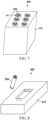
FIG. 1 is a schematic structural view of a connector in an embodiment of the disclosure. -
FIG. 2 is a schematic cross-sectional structural view of the connector inFIG. 1 , taken along line C-C. -
FIG. 3 is a schematic structural view of a connector in another embodiment of the disclosure. -
FIG. 4 is a schematic cross-sectional view of the connector inFIG. 3 , taken along line C-C. -
FIG. 5 is a schematic structural view of a battery in an embodiment of the disclosure. -
FIG. 6 is a schematic exploded view of a battery in an embodiment of the disclosure. -
FIG 7 is a schematic structural view of a battery pack in an embodiment of the disclosure. -
FIG. 8 is a schematic structural view of an electricity-consumption device in an embodiment of the disclosure in the case where an electricity-consumption device body and a battery are not assembled together. - Description of reference signs of the accompanying drawings:
100 - connector, 110 - current collecting layer, 111 - body, 112 - welding area, 120 - functional layer, 200 - battery, 210 - end cover assembly, 220 - electrode assembly, 230 - housing, 240-electrolyte, 300 - battery pack, 310 - box, 311 - receiving cavity, 400 - electricity-consumption device, 410 - electricity-consumption device body. - In order to facilitate better understanding of solution of the disclosure by those skilled in the art, the following will illustrate clearly and completely technical solutions of embodiments of the disclosure with reference to accompanying drawings of embodiments of the disclosure. Apparently, embodiments illustrated herein are merely some, rather than all, of the disclosure. Based on the embodiments of the disclosure, all other embodiments obtained by those of ordinary skill in the art without creative effort shall fall within the protection scope of the disclosure.
- The terms "first", "second", and the like used in the specification, the claims, and the accompany drawings of the disclosure are used to distinguish different objects rather than describe a particular order. The terms "include", "comprise", and "have" as well as variations thereof are intended to cover non-exclusive inclusion. For example, a process, method, system, product, or apparatus including a series of steps or units is not limited to the listed steps or units, on the contrary, it can optionally include other steps or units that are not listed; alternatively, other steps or units inherent to the process, method, product, or device can be included either.
- The following will illustrate technical solutions in embodiments of the disclosure with reference to the accompanying drawings.
- It needs to be noted that, for convenience of illustration, the same reference sign of the accompanying drawings represents the same component in embodiments of the disclosure, and for sake of simplicity, detailed illustration of the same component is omitted in different embodiments.
- With continuous development of technologies of lithium ion batteries, the lithium ion battery has advantages such as a large specific capacitance, no memory effect, a high operating voltage, a high charging speed, a wide operating-temperature range, a long cycle life, a small volume, and a light weight compared with other types of batteries such as lead-acid batteries and nickelcadmium batteries. At present, the lithium ion batteries are widely applicable in mobile phones, notebook computers, electric automobiles, energy-storage cabinets, and other fields, and have found increasingly wide utilization. A connector is an important connecting bridge between a tab of a battery and an electrode terminal of the battery, and connection between the connector and the tab and connection between the connector and the electrode terminal are usually realized through laser welding. However, at present, a connector has low absorption intensity for a laser, and thus poor welding such as inveracious solder and empty solder may easily occur during laser welding, resulting in poor intensity of welding the connector to the tab and the electrode terminal, and accordingly significantly affecting a safety performance and use reliability of the battery.
- The inventors have found through research that, generally, at the same temperature, a smaller resistivity of a material leads to a lower absorption rate for a laser. In order to reduce an internal resistance of the battery, a metal conductor material such as copper, aluminum, nickel, or a composite material thereof, which has a relatively low resistivity and a relatively good electrical conductivity, is generally used as a connector of the battery. Since light waves on an electric field of a surface of a metal conductor always form a standing wave node (a standing wave refers to two waves having the same frequency and moving in opposite directions; and a standing wave node is a location in a standing wave where the wave has a minimum amplitude), free electrons may generate secondary waves by being subject to forced vibration of a light wave electromagnetic field, and intense reflected waves are caused due to these secondary waves, and thus most lasers are reflected. In addition, the connector is generally manufactured by a process such as stamping, and thus a surface of the connector is generally smooth. The material of the connector and the smooth surface of the connector lead to a very low absorption rate of the connector for the laser, and absorbed heat is quickly conducted and diffused to the surroundings, so that poor welding such as inveracious solder and empty solder may easily occur, and thus both intensity and efficiency of welding the connector to the tab and the like may be affected. When the connector is welded poorly to the tab, the internal resistance of the battery is relatively high, and in the case of a large current, the battery may easily generate heat due to an excessive temperature rise at a connection position between the connector and the tab, so that a safety performance and use reliability of the battery may be significantly affected. Meanwhile, when lasers irradiate onto these highly reflective materials, most energy may be reflected back, and a reflected laser may return to the interior of a laser device. As a result, during processing, light may be emitted unstably or stopped to be emitted, and even the laser device may be damaged, and thus a service life of the laser device may be shortened and use reliability of the battery may be reduced.
- In view of the above problems, a connector, a battery, a battery pack, and an electricity-consumption device are provided in embodiments of the disclosure. In the related art, a connector has low absorption intensity for a laser, and thus poor welding such as inveracious solder and empty solder may easily occur during laser welding, resulting in poor intensity of welding the connector to the tab and the electrode terminal, and accordingly significantly affecting a safety performance and use reliability of the battery. With the aid of the connector, the battery, the battery pack, and the electricity-consumption device provided in embodiments of the disclosure, the above technical problems may be solved.
- In a first aspect, a connector is provided in embodiments of the disclosure. The connector is applied to a battery, where the battery includes an electrolyte. The connector includes a current collecting layer and a functional layer. The functional layer is disposed on at least part of a surface of the current collecting layer. An absorption rate of the functional layer for a laser is greater than an absorption rate of the current collecting layer for the laser, and the functional layer is partially soluble in the electrolyte.
- It may be understood that, by disposing the functional layer on a surface of a welding area of the current collecting layer, the absorption rate of the functional layer for the laser is greater than the absorption rate of the current collecting layer for the laser. Therefore, a reflectivity of the connector for the laser may be reduced, and absorption of laser energy by the welding area may be improved. In this case, intensity of welding the connector to a tab and the like may be increased after laser welding, connection intensity between the connector and the tab may be ensured, and a resistance of the battery may be reduced, thereby ensuring that the battery may have a relatively high capacity and a good cycle life. The functional layer is soluble in the electrolyte. In this case, on the one hand, the functional layer provides for the connector a relatively good absorption rate for the laser during laser welding, so that a good connection effect between the connector and the tab may be realized. On the other hand, the functional layer is soluble in the electrolyte, and the functional layer is infiltrated by the electrolyte after the battery is injected with the electrolyte. Therefore, the coating may be prevented from falling directly into the battery and prevented from being in a battery system in the form of a solid impurity, and thus self-discharge may less occur in the battery, and an internal short circuit of the battery may be avoided, thereby ensuring a safety performance and use reliability of the battery.
- Furthermore, a thickness D of the functional layer satisfies: 0.2 µm≤D≤2 µm.
- It may be understood that, by setting that the thickness D of the functional layer satisfies: 0.2 µm≤D≤2 µm, the connector may have a relatively high absorption rate for the laser, and intensity of welding the connector to the tab may be increased, thereby ensuring current transmission efficiency of the battery and reducing an internal resistance of the battery. In this case, it may also be ensured that after the functional layer is dissolved in the electrolyte, a concentration of a metal cation introduced is within a controllable range, thereby ensuring that the battery may have a relatively high capacity and a good cycle life.
- Furthermore, a material of the functional layer comprises a metal complex and resin, where the metal complex is dispersed in the resin, and the metal complex is soluble in the electrolyte.
- It may be understood that, the metal complex in the functional layer covers the welding area of the connector, and the metal complex plays a major role in improving the absorption rate of the connector for the laser. During laser welding, with the aid of the metal complex, the connector may reflect less lasers and increase absorption intensity for the laser, so that intensity of welding the connector to the tab and the like may be increased after laser welding, and a resistance of the battery may be reduced, thereby ensuring that the battery may have a relatively high capacity and a good cycle life. The battery is injected with the electrolyte, and the metal complex is soluble in the electrolyte, so that the coating may be prevented from falling directly into the battery and prevented from being in a battery system in the form of a solid impurity, and thus self-discharge may less occur in the battery, and an internal short circuit of the battery may be avoided, thereby ensuring a safety performance and use reliability of the battery. The resin in the functional layer may be used for dispersing the metal complex, so that not only can the metal complex be carried on the current collecting layer to increase the connection intensity between the metal complex and the current collecting layer, but also the functional layer may be uniformly coated to better ensure adhesion intensity and coating uniformity of the metal complex in the connector. In this case, the connection intensity between the connector and the tab may be further ensured after laser welding, thereby further ensuring that the battery may have a relatively high capacity and a good cycle life.
- Furthermore, a mass percentage W1 of the metal complex in the functional layer satisfies: 80%≤W1≤99%; and a mass percentage W2 of the resin in the functional layer satisfies: 1%≤W2≤20%.
- It may be understood that, the mass percentage W1 of the metal complex in the functional layer is set to satisfy: 80%≤W1≤99%, and the mass percentage W2 of the resin in the functional layer is set to satisfy: 1%≤W2≤20%. In this case, on the one hand, with the aid of the metal complex in the functional layer, the connector may reflect less lasers and increase absorption intensity for the laser, and the connection intensity between the connector and the tab may be further ensured after laser welding, thereby further ensuring that the battery may have a relatively high capacity and a good cycle life. On the other hand, it may be ensured that the metal complex is uniformly dispersed in the resin and the functional layer may be uniformly coated on the connector, and thus adhesion intensity and coating uniformity of the metal complex in the connector may be ensured, thereby reducing the resistance of the battery and improving use reliability of the connector.
- Furthermore, the metal complex includes a metal cation and a ligand, where the metal cation includes at least one of a chromium ion, an iron ion, a titanium ion, or a zinc ion; and the ligand includes at least one of phthalocyanine, a thiodiene-type polymer, polyurethane, or mordant black.
- It may be understood that, when the metal cation is at least one of a chromium ion, an iron ion, a titanium ion, or a zinc ion, the metal complex is a transition metal complex. The inventors have found through research that, in the transition metal complex, d-orbitals of a transition metal cation originally have the same energy, energy level splitting may occur to the d-orbitals of the transition metal cation under the action of a ligand field formed by ligands, an orbital obtained after splitting is not filled with an electron, and an electron can perform energy level transition between different orbitals obtained after splitting, so that an absorption spectrum may be generated. By setting that the metal complex includes the metal cation and the ligand and the metal cation includes at least one of a chromium ion, an iron ion, a titanium ion, or a zinc ion, during laser welding, a d-orbital that is not filled with an electron in the metal complex can perform laser absorption, and transition between different orbitals may be realized. Therefore, during laser welding, the absorption intensity of the connector for the laser may be increased, and the reflectivity of the connector for the laser may be reduced. In this case, energy absorbed by the functional layer is less likely to be conducted and diffused to the surroundings compared with that absorbed by the current collecting layer, and it may be ensured that a heat source area in which energy is highly concentrated may be formed at a welded position in the welding area in a relatively short time. Therefore, the connector and the tab may be partially melted to form a firm welding point and a firm welding seam, and thus connection intensity between the connector and the tab may be ensured, thereby ensuring that the battery may have a relatively high capacity and a good cycle life.
- Furthermore, an average particle size D50 of the metal complex satisfies: 5 nm ≤ D50 ≤ 20 nm.
- It may be understood that, by setting that the average particle size D50 of the metal complex satisfies: 5 nm ≤ D50 ≤ 20 nm, the metal complex has a moderate particle size, so that not only can dispersion uniformity of the metal complex in the resin be ensured, but also it is conducive to controlling the thickness of the functional layer and distribution uniformity of the metal complex. In this case, more active sites for laser absorption may be provided, difficulty in uniformly adhering the coating (i.e., the functional layer) to the current collecting layer may be reduced, and absorption intensity of the connector for the laser may be ensured. Therefore, connection intensity between the connector and the tab may be improved, and accordingly it is ensured that the battery may have a relatively high capacity and a good cycle life.
- Furthermore, a reflectivity R of the functional layer for the laser satisfies: 5%≤R≤70%, and an absorption rate A of the functional layer for the laser satisfies: 30%≤A≤95%.
- It may be understood that, by using a metal complex whose color is dark or even black, the functional layer mainly absorbs a laser and reflects a laser and substantially does not transmit a laser. That is, the sum of the absorption rate A of the functional layer for the laser and the reflectivity R of the functional layer for the laser is approximately equal to 100%. By setting that the absorption rate A of the functional layer for the laser satisfies: 30%≤A≤95% and the reflectivity R of the functional layer for the laser satisfies: 5%≤R≤70%, absorption intensity of the functional layer for the laser may be ensured, and the reflectivity of the connector for the laser may be reduced. In this case, energy absorbed by the functional layer is less likely to be conducted and diffused to the surroundings compared with that absorbed by the current collecting layer. Therefore, the connector and the tab may be partially melted to form a firm welding point and a firm welding seam, and accordingly connection intensity between the connector and the tab may be ensured, thereby ensuring that the battery may have a relatively high capacity and a good cycle life.
- Furthermore, the resin includes at least one of rosin ester, ketone resin, xylene resin, acrylic resin, polyamide resin, ethylene resin, alkyl phenol resin, maleic acid resin, or cellulose resin.
- It may be understood that, when the above substances each are used as the resin for dispersing the metal complex, a time for uniformly dispersing the metal complex may be reduced, film-forming uniformity of a coating slurry may be improved, and adhesion intensity of the functional layer may be ensured, and thus absorption intensity of the connector for the laser may be further improved. In this case, connection intensity between the connector and the tab may be better ensured after laser welding, thereby better ensuring that the battery may have a relatively high capacity and a good cycle life.
- In a second aspect, a battery is provided in embodiments of the disclosure. The battery includes an electrolyte, an electrode assembly, and the connector in embodiments of the disclosure. The electrode assembly is at least partially immersed in the electrolyte, and the electrode assembly is electrically connected to the connector.
- Furthermore, a material of the functional layer comprises a metal complex and resin. The metal complex is soluble in the electrolyte, the metal complex includes a metal cation and a ligand, and a mass content C of a metal cation in the electrolyte satisfies: 1 ppm≤C≤70 ppm.
- It may be understood that, when the mass content C of the metal cation in the electrolyte is greater than 70 ppm, a concentration of the metal cation in the electrolyte is relatively high. In this case, during charge-and-discharge cycling of the battery, the metal cation may react with other substances in the battery system, and excessive side reactions and byproducts may affect a cycling performance of the battery. By setting that the mass content C of the metal cation in the electrolyte satisfies: 1 ppm≤C≤70 ppm, it may be ensured that the connector may have a relatively high absorption rate for the laser, and intensity of welding the connector to the tab may be increased, thereby ensuring current transmission efficiency of the battery and reducing the internal resistance of the battery. In this case, it may also be ensured that after the functional layer is dissolved in the electrolyte, a concentration of a metal cation introduced is within a controllable range, thereby ensuring that the battery may have a relatively high capacity and a good cycle life.
- In a third aspect, a battery pack is provided in embodiments of the disclosure. The battery pack includes a box and multiple batteries in embodiments of the disclosure. The multiple batteries are received in the box and electrically connected in series and/or in parallel.
- In a fourth aspect, an electricity-consumption device is provided in embodiments of the disclosure. The electricity-consumption device includes an electricity-consumption device body and the battery in embodiments of the disclosure. The battery is configured to power the electricity-consumption device body.
- Referring to
FIGs. 1 to 4 , aconnector 100 is provided in embodiments of the disclosure. Theconnector 100 is applied to a battery, where the battery includes an electrolyte. Theconnector 100 includes acurrent collecting layer 110 and afunctional layer 120. Thefunctional layer 120 is disposed on at least part of a surface of thecurrent collecting layer 110. An absorption rate of thefunctional layer 120 for a laser is greater than an absorption rate of thecurrent collecting layer 110 for the laser, and thefunctional layer 120 is partially soluble in the electrolyte. - Exemplarily, refer to
FIG. 1 and FIG. 2 , whereFIG. 1 is a schematic structural view of aconnector 100 in an embodiment of the disclosure, andFIG. 2 is a schematic cross-sectional structural view of theconnector 100 inFIG. 1 , taken along line C-C. InFIG. 2 , theconnector 100 in embodiments of the disclosure includes thecurrent collecting layer 110 and thefunctional layer 120. Thecurrent collecting layer 110 includes abody 111 and awelding area 112, where thewelding area 112 is connected to thebody 111. In a thickness direction of thebody 111, thewelding area 112 exceeds thebody 111, and thefunctional layer 120 is disposed on a surface of thewelding area 112. The absorption rate of thefunctional layer 120 for the laser is greater than the absorption rate of thecurrent collecting layer 110 for the laser, and thefunctional layer 120 is partially soluble in the electrolyte. Thefunctional layer 120 may be coated on the surface of thecurrent collecting layer 110 by means of roll coating, spray coating, brushing coating, etc. - Exemplarily, refer to
FIG. 3 and FIG. 4 , whereFIG. 3 is a schematic structural view of aconnector 100 in another embodiment of the disclosure, andFIG. 4 is a schematic cross-sectional view of theconnector 100 inFIG. 3 , taken along line C-C. In order to simplify the operation of coating thefunctional layer 120 onto thecurrent collecting layer 110, inFIG. 3 , thefunctional layer 120 is disposed on the entire surface of theconnector 100, that is, thefunctional layer 120 may be further disposed on a surface of thebody 111 besides the surface of thewelding area 112. - By disposing the
functional layer 120 on the surface of thewelding area 112 of thecurrent collecting layer 110, the absorption rate of thefunctional layer 120 for the laser is greater than the absorption rate of thecurrent collecting layer 110 to for the laser, so that a reflectivity of theconnector 100 for the laser may be reduced, and absorption of laser energy by thewelding area 112 may be improved. In this case, intensity of welding theconnector 100 and a tab and the like may be increased after laser welding, connection intensity between theconnector 100 and the tab may be ensured, and a resistance of the battery may be reduced, thereby ensuring that the battery may have a relatively high capacity and a good cycle life. Thefunctional layer 120 is soluble in the electrolyte. In this case, on the one hand, thefunctional layer 120 provides for the connector 100 a relatively good absorption rate for the laser during laser welding, so that a good connection effect between theconnector 100 and the tab may be realized. On the other hand, thefunctional layer 120 is soluble in the electrolyte, and thefunctional layer 120 is infiltrated by the electrolyte after the battery is injected with the electrolyte. Therefore, the coating may be prevented from falling directly into the battery and prevented from being in a battery system in the form of a solid impurity, and thus self-discharge may less occur in the battery, and an internal short circuit of the battery may be avoided, thereby ensuring a safety performance and use reliability of the battery. - In some embodiments, a thickness D of the
functional layer 120 satisfies: 0.2 µm≤D≤2 µm. Specifically, the thickness of thefunctional layer 120 may be, but is not limited to, 0.2 µm, 0.3 µm, 0.4 µm, 0.5 µm, 0.6 µm, 0.7 µm, 0.8 µm, 0.9 µm, 1.0 µm, 1.2 µm, 1.3 µm, 1.4 µm, 1.5 µm, 1.6 µm, 1.7 µm, 1.8 µm, 1.9 µm, or 2.0 µm. When the thickness D of thefunctional layer 120 is less than 0.2 µm, thefunctional layer 120 covering thecurrent collecting layer 110 is too thin. In this case, when the laser irradiates on theconnector 100, most laser energy may be reflected back by thecurrent collecting layer 110. As a result, the absorption rate of theconnector 100 for the laser is relatively low, leading to a risk of poor welding and a relatively high internal resistance of the battery, thereby affecting intensity of welding theconnector 100 to the tab and the like and affecting the performance of the battery. When the thickness D of thefunctional layer 120 is greater than 2 µm, thefunctional layer 120 covering thecurrent collecting layer 110 is too thick. In this case, during laser welding, thefunctional layer 120 is located between thecurrent collecting layer 110 and the tab, and thus a relatively thickfunctional layer 120 may affect not only intensity of welding thecurrent collecting layer 110 to the tab but also current transmission efficiency between the tab and thecurrent collector 110, resulting in a relatively high resistance of the battery. Meanwhile, when the metal complex is dissolved in the electrolyte, a concentration of the metal cation in the electrolyte is too high, so that many side reactions may occur in a battery system, and thus a cycling performance of the battery may be deteriorated. By setting that the thickness D of thefunctional layer 120 satisfies: 0.2 µm≤D≤2 µm, theconnector 100 may have a relatively high absorption rate for the laser, and intensity of welding theconnector 100 to the tab may be increased, thereby ensuring current transmission efficiency of the battery and reducing the internal resistance of the battery. In this case, it may also be ensured that after thefunctional layer 120 is dissolved in the electrolyte, a concentration of a metal cation introduced is within a controllable range, thereby ensuring that the battery may have a relatively high capacity and a good cycle life. - Furthermore, the thickness D of the
functional layer 120 satisfies: 0.5 µm ≤ D ≤ 1 µm. By setting that the thickness D of thefunctional layer 120 satisfies: 0.5 µm ≤ D ≤ 1 µm, it may be further ensured that theconnector 100 may have a relatively high absorption rate for the laser, and intensity of welding theconnector 100 to the tab may be further improved, thereby better ensuring current transmission efficiency of the battery and reducing the internal resistance of the battery. In this case, current transmission efficiency between theconnector 100 and the tab may be further reduced, and it may be further ensured that after thefunctional layer 120 is dissolved in the electrolyte, the concentration of the metal cation introduced is within the controllable range, thereby better ensuring that the battery may have a relatively high capacity and a good cycle life. - In some embodiments, a material of the
functional layer 120 comprises a metal complex and resin, where the metal complex is dispersed in the resin, and the metal complex is soluble in the electrolyte. It may be understood that, the metal complex in thefunctional layer 120 covers thewelding area 112 of theconnector 100, and the metal complex plays a major role in improving the absorption rate of theconnector 100 for the laser. During laser welding, with the aid of the metal complex, theconnector 100 may reflect less lasers and increase absorption intensity for the laser. Therefore, intensity of welding theconnector 100 to the tab and the like may be increased after laser welding, and a resistance of the battery may be reduced, thereby ensuring that the battery may have a relatively high capacity and a good cycle life. The battery is injected with the electrolyte, and the metal complex is soluble in the electrolyte, so that the coating may be prevented from falling directly into the battery and prevented from being in a battery system in the form of a solid impurity, and thus self-discharge may less occur in the battery, and an internal short circuit of the battery may be avoided, thereby ensuring a safety performance and use reliability of the battery. The resin in thefunctional layer 120 may be used for dispersing the metal complex, so that not only can the metal complex be carried on thecurrent collecting layer 110 to increase the connection intensity between the metal complex and thecurrent collecting layer 110, but also thefunctional layer 120 may be uniformly coated to better ensure adhesion intensity and coating uniformity of the metal complex in theconnector 100. In this case, the connection intensity between theconnector 100 and the tab may be further ensured after laser welding, thereby further ensuring that the battery may have a relatively high capacity and a good cycle life. - In some embodiments, a mass percentage W1 of the metal complex in the
functional layer 120 satisfies: 80%≤W1≤99%; and a mass percentage W2 of the resin in thefunctional layer 120 satisfies: 1%≤W2≤20%. Specifically, the mass percentage W1 of the metal complex in thefunctional layer 120 may be, but is not limited to, 80%, 81%, 82%, 83%, 84%, 85%, 86%, 87%, 88%, 89%, 90%, 91%, 92%, 93%, 94%, 95%, 96%, 97%, 98%, 99%. The mass percentage W2 of the resin in thefunctional layer 120 may be, but is not limited to, 1%, 2%, 3%, 4%, 5%, 6%, 7%, 8%, 9%, 10%, 11%, 12%, 13%, 14%, 15%, 16%, 17%, 18%, 19%, or 20%. When the mass percentage W1 of the metal complex in thefunctional layer 120 is less than 80% and the mass percentage W2 of the resin in thefunctional layer 120 is greater than 20%, a proportion of the metal complex in thefunctional layer 120 is too small, and a proportion of the resin in thefunctional layer 120 is too large. In this case, not only does too small amount of the metal complex have a limited contribution to increasing of the absorption intensity of theconnector 100 for the laser, but also the excessive amount of the resin may increase a contact resistance between thecurrent collecting layer 110 and the tab. Therefore, current transmission efficiency between thecurrent collecting layer 110 and the tab may be affected, and the internal resistance of the battery may be relatively high, thereby affecting a specific capacity and the cycle life of the battery. When the mass percentage W1 of the metal complex in thefunctional layer 120 is greater than 99% and the mass percentage W2 of the resin in thefunctional layer 120 is less than 1%, there is relatively great difficulty for the resin to disperse the metal complex, and it is disadvantageous for thefunctional layer 120 to be uniformly coated on theconnector 100. As a result, a binding force between thefunctional layer 120 and thecurrent collecting layer 110 and the absorption intensity of thefunctional layer 120 for the laser may be affected, and thus the connection intensity between theconnector 100 and the tab may be affected, thereby affecting the performance and use reliability of the battery. The mass percentage W1 of the metal complex in thefunctional layer 120 is set to satisfy: 80%≤W1≤99%, and the mass percentage W2 of the resin in thefunctional layer 120 is set to satisfy: 1%≤W2≤20%. In this case, on the one hand, with the aid of the metal complex in thefunctional layer 120, theconnector 100 may reflect less lasers and increase absorption intensity for the laser, and the connection intensity between theconnector 100 and the tab may be further ensured after laser welding, thereby further ensuring that the battery may have a relatively high capacity and a good cycle life. On the other hand, it may be ensured that the metal complex is uniformly dispersed in the resin and thefunctional layer 120 may be uniformly coated on theconnector 100, and thus adhesion intensity and coating uniformity of the metal complex in theconnector 100 may be ensured, thereby reducing the resistance of the battery and improving use reliability of theconnector 100. - Furthermore, the mass percentage W1 of the metal complex in the
functional layer 120 satisfies: 95%≤W1≤99%, and the mass percentage W2 of the resin in thefunctional layer 120 satisfies: 1%≤W2≤5%. By setting that the mass percentage W1 of the metal complex in thefunctional layer 120 satisfies: 95%≤W1≤99% and the mass percentage W2 of the resin in thefunctional layer 120 satisfies: 1%≤W2≤5%, theconnector 100 may further reflect less lasers and further increase the absorption intensity for the laser, and the connection intensity between theconnector 100 and the tab may be better ensured after laser welding, thereby further ensuring that the battery may have a relatively high capacity and a good cycle life. A content of the resin may be further reduced in the case of ensuring adhesion intensity and coating uniformity of the metal complex in theconnector 100. Therefore, the contact resistance between thecurrent collecting layer 110 and the tab may be further reduced, and thus current transmission efficiency of the battery may be improved, thereby further ensuring that the battery may have a relatively high capacity and a good cycle life. - In some embodiments, the metal complex includes a metal cation and a ligand, where the metal cation includes at least one of a chromium ion, an iron ion, a titanium ion, or a zinc ion. Optionally, when the metal cation is a transition metal cation and the metal cation is at least one of a chromium ion, an iron ion, a titanium ion, or a zinc ion, the metal complex is a transition metal complex. The inventors have found through research that, in the transition metal complex, d-orbitals of a transition metal cation originally have the same energy, energy level splitting may occur to the d-orbitals of the transition metal cation under the action of a ligand field formed by ligands, an orbital obtained after splitting is not filled with an electron, and an electron can perform energy level transition between different orbitals obtained after splitting, so that an absorption spectrum may be generated. By setting that the metal complex includes the metal cation and the ligand and the metal cation includes at least one of a chromium ion, an iron ion, a titanium ion, or a zinc ion, during laser welding, a d-orbital that is not filled with an electron in the metal complex can perform laser absorption, and transition between different orbitals may be realized. Therefore, during laser welding, the absorption intensity of the
connector 100 for the laser may be increased, and the reflectivity of theconnector 100 for the laser may be reduced. In this case, energy absorbed by thefunctional layer 120 is less likely to be conducted and diffused to the surroundings compared with that absorbed by thecurrent collecting layer 110, and it may be ensured that a heat source area in which energy is highly concentrated may be formed at a welded position in thewelding area 112 in a relatively short time. Therefore, theconnector 100 and the tab may be partially melted to form a firm welding point and a firm welding seam, and thus connection intensity between theconnector 100 and the tab may be ensured, thereby ensuring that the battery may have a relatively high capacity and a good cycle life. - In some embodiments, the ligand includes at least one of phthalocyanine, a thiodiene-type polymer, polyurethane, or mordant black. A number-average molecular weight M1 of the thiodiene-typed polymer satisfies: 500 ≤ M1 ≤ 5000. A number-average molecular weight M2 of the polyurethane satisfies: 500 ≤ M2 ≤ 5000. The mordant black may be at least one of acid mordant black A, mordant black 3, acid mordant black P2B, acid mordant black PV, acid mordant black T, or mordant black 17. When the above substances each are used as the ligand for the metal cation, a color of a metal complex formed by coordination between the ligand and the metal cation is dark. Furthermore, a substance which can coordinate with the metal cation to form a metal complex in black is used as a ligand. When the color of the metal complex is black, it indicates that an energy level of an electron of the metal complex is relatively low, and thus energy level transition can be realized with only relatively low photon energy. That is, the metal complex may better absorb incident laser energy, so that absorption intensity of the
connector 100 for the laser may be further increased, and the reflectivity of theconnector 100 for the laser may be reduced. In this case, energy absorbed by thefunctional layer 120 is less likely to be conducted and diffused to the surroundings compared with that absorbed by thecurrent collecting layer 110, and theconnector 100 and the tab may be partially melted to form a firm welding point and a firm welding seam, and thus connection intensity between theconnector 100 and the tab may be further ensured, thereby further ensuring that the battery may have a relatively high capacity and a good cycle life. - In some embodiments, an average particle size D50 of the metal complex satisfies: 5 nm ≤ D50 ≤ 20 nm. The average particle size D50 of the metal complex may be, but is not limited to, 5 nm, 6 nm, 7 nm, 8 nm, 9 nm, 10 nm, 11 nm, 12 nm, 13 nm, 14 nm, 15 nm, 16 nm, 17 nm, 18 nm, 19 nm, or 20 nm. When the average particle diameter D50 of the metal complex is less than 5 nm, a particle of the metal complex is too small. In this case, the metal complex is prone to agglomeration, resulting in that there is relatively great difficulty for the resin to disperse the metal complex, and the metal complex in the
functional layer 120 has relatively poor distribution uniformity. Therefore, a binding force between thefunctional layer 120 and thecurrent collecting layer 110 and the absorption intensity of thefunctional layer 120 for the laser may be affected, and thus the connection intensity between theconnector 100 and the tab is relatively low, thereby affecting the performance and use reliability of the battery. When the average particle diameter D50 of the metal complex is greater than 20 nm, the particle of the metal complex is too large. In this case, it is not conducive to controlling the thickness of thefunctional layer 120, resulting in a relatively high contact resistance between theconnector 100 and the tab. In addition, the metal complex has few active sites for laser absorption, so that the absorption intensity of thefunctional layer 120 for the laser is relatively low, and the connection intensity between theconnector 100 and the tab is affected, thereby affecting the performance and use reliability of the battery. By setting that the average particle size D50 of the metal complex satisfies: 5 nm ≤ D50 ≤ 20 nm, the metal complex has a moderate particle size, so that not only can dispersion uniformity of the metal complex in the resin be ensured, but also it is conducive to controlling the thickness of thefunctional layer 120 and distribution uniformity of the metal complex. In this case, more active sites for laser absorption may be provided, difficulty in uniformly adhering the coating to thecurrent collecting layer 110 may be reduced, and absorption intensity of theconnector 100 for the laser may be ensured. Therefore, connection intensity between theconnector 100 and the tab may be improved, and accordingly it is ensured that the battery may have a relatively high capacity and a good cycle life. - In some embodiments, a reflectivity R of the
functional layer 120 for the laser satisfies: 5%≤R≤70%, and an absorption rate A of thefunctional layer 120 for the laser satisfies: 30%≤A≤95%. Specifically, the reflectivity R of thefunctional layer 120 for the laser may be, but is not limited to, 5%, 8%, 10%, 12%, 15%, 18%, 20%, 22%, 25%, 28%, 30%, 32%, 35%, 38%, 40%, 42%, 45%, 48%, 50%, 52%, 55%, 58%, 60%, 62%, 65%, 68%, or 70%. The absorption rate A of thefunctional layer 120 for the laser may be, but is not limited to, 30%, 32%, 35%, 38%, 40%, 42%, 45%, 48%, 50%, 52%, 55%, 58%, 60%, 62%, 65%, 68%, 70%, 72%, 75%, 78%, 80%, 82%, 85%, 88%, 90%, 92%, or 95%. By using a metal complex whose color is dark or even black, thefunctional layer 120 mainly absorbs a laser and reflects a laser and substantially does not transmit a laser. That is, the sum of the absorption rate A of thefunctional layer 120 for the laser and the reflectivity R of thefunctional layer 120 for the laser is approximately equal to 100%. By setting that the absorption rate A of thefunctional layer 120 for the laser satisfies: 30%≤A≤95% and the reflectivity R of thefunctional layer 120 for the laser satisfies: 5%≤R≤70%, absorption intensity of thefunctional layer 120 for the laser may be ensured, and the reflectivity of theconnector 100 for the laser may be reduced. In this case, energy absorbed by thefunctional layer 120 is less likely to be conducted and diffused to the surroundings compared with that absorbed by thecurrent collecting layer 110. Therefore, theconnector 100 and the tab may be partially melted to form a firm welding point and a firm welding seam, and accordingly connection intensity between theconnector 100 and the tab may be ensured, thereby ensuring that the battery may have a relatively high capacity and a good cycle life. - In some embodiments, when the
connector 100 is welded by a laser, a wavelength λ of the laser satisfies: 1050 nm ≤ λ≤ 1070 nm, and specifically, the wavelength λ of the laser is 1064 nm. Welding power P of the laser satisfies: 1500 W ≤ P ≤ 4000 W, and a welding speed v of the laser satisfies: 50 mm/s ≤ v ≤ 200 mm/s. By setting that the welding power P of the laser satisfies: 1500 W ≤ P ≤ 4000 W, it may be ensured that relatively high power may bring relatively high welding energy during laser welding, and a heat source area in which energy is highly concentrated may be formed at a welded position in thewelding area 112 in a relatively short time. Therefore, theconnector 100 and the tab may be partially melted to form a firm welding point and a firm welding seam, and low welding intensity due to excessively low welding power may be avoided, or an increase in energy consumption due to excessive welding power may be avoided, thereby ensuring connection intensity and welding efficiency of theconnector 100 to the tab. By setting that the welding speed v of the laser satisfies: 50 mm/s ≤ v ≤ 200 mm/s, a time for the laser to weld theconnector 100 to the tab during laser welding may be ensured. Therefore, excessively low welding efficiency due to an excessively slow welding speed may be avoided, or poor welding such as inveracious solder or empty solder due to an excessively fast welding speed, thereby ensuring the connection intensity and welding efficiency of theconnector 100 to the tab. - In some embodiments, the resin includes at least one of rosin ester, ketone resin, xylene resin, acrylic resin, polyamide resin, ethylene resin, alkyl phenol resin, maleic acid resin, or cellulose resin. When the above substances each are used as the resin for dispersing the metal complex, a time for uniformly dispersing the metal complex may be reduced, film-forming uniformity of a coating slurry may be improved, and adhesion intensity of the
functional layer 120 may be ensured, and thus absorption intensity of theconnector 100 for the laser may be further improved. In this case, connection intensity between theconnector 100 and the tab may be better ensured after laser welding, thereby better ensuring that the battery may have a relatively high capacity and a good cycle life. - In some embodiments, a mass content C of a metal cation in the electrolyte satisfies: 1 ppm≤C≤70 ppm. Specifically, the mass content C of the metal cation in the electrolyte may be, but is not limited to, 1 ppm, 5 ppm, 8 ppm, 10 ppm, 15 ppm, 18 ppm, 20 ppm, 25 ppm, 28 ppm, 30 ppm, 35 ppm, 38 ppm, 40 ppm, 45 ppm, 48 ppm, 50 ppm, 55 ppm, 58 ppm, 60 ppm, 65 ppm, 68 ppm, or 70 ppm. When the mass content C of the metal cation in the electrolyte is greater than 70 ppm, a concentration of the metal cation in the electrolyte is relatively high. In this case, during charge-and-discharge cycling of the battery, the metal cation may react with other substances in the battery system, and excessive side reactions and byproducts may affect a cycling performance of the battery. By setting that the mass content C of the metal cation in the electrolyte satisfies: 1 ppm≤C≤70 ppm, it may be ensured that the
connector 100 may have a relatively high absorption rate for the laser, and intensity of welding theconnector 100 to the tab may be increased, thereby ensuring current transmission efficiency of the battery and reducing the internal resistance of the battery. In this case, it may also be ensured that after thefunctional layer 120 is dissolved in the electrolyte, a concentration of a metal cation introduced is within a controllable range, thereby ensuring that the battery may have a relatively high capacity and a good cycle life. - The
connector 100 of the disclosure may be further described below through specific embodiments. - 1. Manufacturing of
connectors 100 inembodiments 1 to 17 andcomparative embodiment 1 is as follows. - A substrate of the
connector 100 is made of aluminium. 1,2-butanediol is used as an organic solvent, resin of a certain mass percentage is mixed with the organic solvent, a metal complex of a certain mass percentage is added after the resin and the organic solvent are uniformly stirred, and a coating slurry is obtained after stirring the metal complex, the resin, and the organic solvent at a stirring speed of 800 r/min for 60 min to be mixed uniformly. The coating slurry is coated to a surface of awelding area 112 of a positive-electrode connector 100, and the positive-electrode connector 100 with thefunctional layer 120 is obtained after drying. Inembodiments 1 to 17, a difference in thicknesses offunctional layers 120, a difference in mass percentages of metal complexes, and a difference in materials of the metal complexes are illustrated in detail in Table 1. - Unlike
embodiments 1 to 17, incomparative embodiment 1, thefunctional layer 120 is not coated on theconnector 100. - 2. Batteries in
embodiments 1 to 17 andcomparative embodiment 1 are manufactured through the following operations. - 1) Manufacturing of a positive electrode sheet: a positive-electrode active material, a conductive agent, and a binder are dispersed into a solvent and mixed uniformly to obtain a positive electrode slurry. The positive electrode slurry is coated on a current collector, e.g., aluminum foil, and the current collector, e.g., the aluminum foil, coated with the positive electrode slurry is subject to drying, cold pressing, slitting, and cutting to obtain a positive electrode sheet.
- 2) Manufacturing of a negative electrode sheet: a positive-electrode active material, a conductive agent, and a binder are dispersed into a solvent and mixed uniformly to obtain a positive electrode slurry. The positive electrode slurry is coated on a current collector, e.g., copper foil, and the current collector, e.g., the copper foil, coated with the positive electrode slurry is subject to drying, cold pressing, slitting, and cutting to obtain a negative electrode sheet.
- 3) Manufacturing of a separator: a polypropylene (PP) film having a thickness of 16 µm is used as a separator.
- 4) Manufacturing of an electrolyte: in an argon gas glove box with a water content less than or equal to 1 ppm, a lithium salt, e.g., lithium hexafluorophosphate, is used as a solute, and an ester-based organic solvent is used as a solvent. The dry solute is dissolved in the solvent, the dry solute and the solvent are stirred until the solute is completely and uniformly dissolved, and an electrolyte is obtained.
- 5) Assembly of a battery: the positive electrode sheet, the separator, and the negative electrode sheet are stacked in sequence, so that the separator is located between the positive electrode sheet and the negative electrode sheet to achieve separation. The positive electrode sheet, the separator, and the negative electrode sheet as a whole are wound to form an electrode assembly. The positive-
electrode connector 100 and a positive electrode tab of the electrode assembly are welded by a laser, and the negative-electrode connector 100 and a negative electrode tab of the electrode assembly are welded by the laser. A wavelength of the laser is 1064 nm, welding power of the laser is 2200 W, and a welding speed of the laser is 120 mm/s. The electrode assembly is placed in an outer packaging housing. After drying, the electrolyte is injected. After vacuum packaging, standing, forming, shaping, etc., a battery is finally obtained. Theconnectors 100 inembodiments 1 to 17 andcomparative embodiment 1 each serve as the positive-electrode connector 100, and a conventional copper-basedconnector 100 serves as the negative-electrode connector 100. After assembly, batteries inembodiments 1 to 17 andcomparative embodiment 1 are obtained. - Coating dissolution test: the
connectors 100 inembodiments 1 to 17 are respectively immersed in the electrolyte weighting 100 g for 12 hours, the electrolyte with the immersedconnectors 100 is analyzed and tested by using a Thermo Scientific™ iCAP™ 7400 inductively coupled plasma-optical emission spectrometer, and a concentration of a metal cation obtained after coating dissolution (i.e., a mass content of the metal cation in the electrolyte) in each ofembodiments 1 to 17 is analyzed. - Welding test: observe, by using a metallographic microscope, whether the
welding area 112 of theconnector 100 has defects such as lack of penetration, a crack, or an air hole. - Charge-and-discharge cycling performance test: the batteries obtained in foregoing
embodiments 1 to 17 andcomparative embodiment 1 are subject to a constant-current charge-and-discharge cycle test on a charge-and-discharge meter, where a test temperature is 25°C, a charge-and-discharge rate is 0.5C (a magnitude of a charge-and-discharge current is usually represented by a charge-and-discharge rate), a calculation formula of the charge-and-discharge current is: charge-and-discharge current = charge-and-discharge rate × rated capacity of battery, a charge-and-discharge voltage window ranges from 2.0V to 3.65V (i.e., a charge cut-off voltage of the battery is 3.65V, and a discharge cut-off voltage of the battery is 2.0V), and generally a complete charge-and-discharge process is referred to as a charge-and-discharge cycle. That is, the battery is charged to 3.65 V and stood, and then discharged from 3.65 V to 2.0 V, so that a charge-and-discharge cycle is formed. N times of cycling is to repeat the above operations N times. - Internal resistance test of a battery: after a charge-and-discharge cycle of the battery, a state of charge (SOC) of the battery is adjusted to 27%, the test temperature is 25°C, the discharge rate is 1C, a discharge time is 30s, and voltage U1 of the battery before discharge and voltage U2 of the battery after discharge are recorded respectively. An internal resistance calculation formula of the battery is: direct current resistance (DCR) = (U1-U2)/I.
- Dividing capacity testing: a discharge capacity of the battery after being subject to a charge-and-discharge cycle is calibrated as a dividing capacity.
- A calculation formula of a capacity retention rate is: capacity retention rate = capacity of the battery after N times of cycling/initial capacity of the battery × 100%.
- Table 1 illustrates parameter control and performance comparison in embodiments and the comparative embodiment. Table 1 includes sub-table 1 and sub-table 2. Sub-table 1 illustrates parameter control in embodiments and the comparative embodiment, and sub-table 2 illustrates performance comparison in embodiments and the comparative embodiment. Performance comparison in embodiments and the comparative embodiment illustrated in sub-table 2 are based on parameter control in embodiments and the comparative embodiment illustrated in
sub-table 1.Sub-table 1: Serial number Thickness of functional layer (µm) mass percentage of metal complex Type of metal complex embodiment 1 0.03 95% acid mordant black T-chromium embodiment 2 0.2 95% acid mordant black T-chromium embodiment 3 0.5 95% acid mordant black T-chromium embodiment 4 1 95% acid mordant black T-chromium embodiment 5 2 95% acid mordant black T-chromium embodiment 6 3 95% acid mordant black T-chromium embodiment 7 1 50% acid mordant black T-chromium embodiment 8 1 80% acid mordant black T-chromium embodiment 9 1 97% acid mordant black T-chromium embodiment 10 1 99.5% acid mordant black T-chromium embodiment 11 1 97% iron phthalocyanine embodiment 12 1 97% zinc phthalocyanine embodiment 13 1 97% chromium phthalocyanine embodiment 14 1 97% Thiodiene chromium embodiment 15 1 97% thiodiene titanium embodiment 16 1 97% acid mordant black T-iron embodiment 17 1 97% Polyurethane chromium comparative embodiment 1 / / / Sub-table 2: Serial number Reflectivity for laser whether there is welding defect internal resistance of battery (mΩ) concentration of metal cation (ppm) dividing capacity (Ah) capacity retention rate after 500 times of cycling embodiment 1 67% no 0.74 4 49.5 82% embodiment 2 21% no 0.62 10 50.5 94% embodiments 15% no 0.61 17 50.4 93% embodiment4 12% no 0.60 31 50.5 95% embodiments 10% no 0.63 65 50.5 92% embodiment6 10% no 0.71 106 50.1 78% embodiment7 47% no 0.72 13 49.4 81% embodiments 22% no 0.63 26 50.3 90% embodiment9 12% no 0.59 32 50.5 96% embodiment 10 26% no 0.65 35 50.1 89% embodiment 11 41% no 0.69 34 50.0 82% embodiment 12 45% no 0.72 31 49.5 83% embodiment 13 16% no 0.61 36 50.4 91% embodiment 14 19% no 0.64 38 50.3 90% embodiment 15 69% no 0.75 27 49.4 83% embodiment 16 17% no 0.63 31 50.4 91% embodiment 17 53% no 0.72 0 49.6 80% comparative embodiment 1 76% yes 0.78 0 49.2 74% - The following may be seen from table 1.
- 1) The
connector 100 in each ofembodiments 1 to 17 is provided with thefunctional layer 120, and theconnector 100 incomparative embodiment 1 is not provided with thefunctional layer 120. It may be seen from the test results that, the reflectivity of theconnector 100 in each ofembodiments 1 to 17 for the laser is less than 70%, and thewelding area 112 of theconnector 100 is free from defects such as lack of penetration, a crack, or an air hole. In each ofembodiments 1 to 17, the internal resistance of the battery is lower than 0.75 mΩ, and the dividing capacity of the battery is higher than 49.4 Ah. After 500 times of cycling, the capacity retention rate of the battery in each ofembodiments 1 to 17 is greater than or equal to 80%. However, incomparative embodiment 1, the reflectivity of theconnector 100 for the laser is 76%, and thewelding area 112 of theconnector 100 has defects such as lack of penetration, a crack, or an air hole. Incomparative embodiment 1, the internal resistance of the battery is 0.78 mΩ, and the dividing capacity of the battery is only 49.2 Ah. After 500 times of cycling, the capacity retention rate of the battery incomparative embodiment 1 is only 74%. It may be seen therefrom that arrangement of thefunctional layer 120 for theconnector 100 has an important impact on the laser welding effect of theconnector 100 and the performance of the battery. By disposing thefunctional layer 120 on the surface of thewelding area 112 of thecurrent collecting layer 110, the absorption rate of thefunctional layer 120 for the laser is greater than the absorption rate of thecurrent collecting layer 110 for the laser. Therefore, the reflectivity of theconnector 100 for the laser may be reduced, and absorption of the laser energy by thewelding area 112 may be improved. In this case, intensity of welding theconnector 100 to a tab and the like may be increased after laser welding, connection intensity between theconnector 100 and the tab may be ensured, and a resistance of the battery may be reduced, thereby ensuring that the battery may have a relatively high capacity and a good cycle life. - 2) It may be seen from
embodiments 1 to 6 that, the thickness D of thefunctional layer 120 in each of embodiments 2 to 5 satisfies: 0.2 µm ≤ D ≤ 2 µm, the thickness D of thefunctional layer 120 inembodiment 1 is less than 0.2 µm, and the thickness D of thefunctional layer 120 in embodiment 6 is greater than 2 µm. It may be seen from the test results that, the reflectivity of theconnector 100 in each of embodiments 2 to 5 for the laser is lower than 25%, the internal resistance of the battery in each of embodiments 2 to 5 is lower than 0.65 mΩ, and the dividing capacity of the battery in each of embodiments 2 to 5 is higher than 50.3 Ah. After 500 times of cycling, the capacity retention rate of the battery in each of embodiments 2 to 5 is greater than or equal to 92%. Among batteries in embodiments 2 to 5, the battery in embodiment 4 has a best overall performance. However, inembodiment 1, the reflectivity of theconnector 100 for the laser is up to 67%, the internal resistance of the battery is 0.74 mΩ, the dividing capacity of the battery is only 49.5 Ah, and after 500 times of cycling, the capacity retention rate of the battery is only 82%. In embodiment 6, the internal resistance of the battery is 0.71 mΩ, the dividing capacity of the battery is only 50.1 Ah, the concentration of the metal cation in the electrolyte is up to 106 ppm, and after 500 times of cycling, the capacity retention rate of the battery is only 78%. It may be seen therefrom that, when the mass percentage of the metal complex in thefunctional layer 120 and the type of the metal complex are constant, the thickness of thefunctional layer 120 has an important impact on the laser welding effect of theconnector 100 and the performance of the battery. When the thickness D of thefunctional layer 120 is less than 0.2 µm, thefunctional layer 120 covering thecurrent collecting layer 110 is too thin. In this case, when the laser irradiates on theconnector 100, most laser energy may be reflected back by thecurrent collecting layer 110. As a result, the absorption rate of theconnector 100 for the laser is relatively low, leading to a risk of poor welding and a relatively high internal resistance of the battery, thereby affecting intensity of welding theconnector 100 to the tab and the like and affecting the performance of the battery. When the thickness D of thefunctional layer 120 is greater than 2 µm, thefunctional layer 120 covering thecurrent collecting layer 110 is too thick. In this case, during laser welding, thefunctional layer 120 is located between thecurrent collecting layer 110 and the tab, and thus a relatively thickfunctional layer 120 may affect not only intensity of welding thecurrent collecting layer 110 to the tab but also current transmission efficiency between the tab and thecurrent collector 110, resulting in a relatively high resistance of the battery. Meanwhile, when the metal complex is dissolved in the electrolyte, a concentration of the metal cation in the electrolyte is too high, so that many side reactions may occur in a battery system, and thus a cycling performance of the battery may be deteriorated. By setting that the thickness D of thefunctional layer 120 satisfies: 0.2 µm≤D≤2 µm, theconnector 100 may have a relatively high absorption rate for the laser, and intensity of welding theconnector 100 to the tab may be increased, thereby ensuring current transmission efficiency of the battery and reducing the internal resistance of the battery. In this case, it may also be ensured that after thefunctional layer 120 is dissolved in the electrolyte, a concentration of a metal cation introduced is within a controllable range, thereby ensuring that the battery may have a relatively high capacity and a good cycle life. - 3) It may be seen from embodiment 4, and embodiments 7 to 10 that the mass percentage W1 of the metal complex in the
functional layer 120 in each of embodiment 4, embodiment 8, and embodiment 9 satisfies: 80%≤W1≤99%, the mass percentage W1 of the metal complex in thefunctional layer 120 in embodiment 7 is less than 80%, and the mass percentage W1 of the metal complex in thefunctional layer 120 in embodiment 10 is greater than 99%. From the test results, it may be seen that in each of embodiment 4, embodiment 8, and embodiment 9, the reflectivity of theconnector 100 for the laser is less than 25%, the internal resistance of the battery is lower than 0.64 mΩ, the dividing capacity of the battery is greater than or equal to 50.3 Ah, and after 500 times of cycling, the capacity retention rate of the battery is greater than or equal to 90%. Among the battery in embodiment 4, the battery in embodiment 8, and the battery in embodiment 9, the battery in embodiment 9 has the best overall performance. However, in embodiment 7, the reflectivity of theconnector 100 for the laser is 47%, the internal resistance of the battery is 0.72 mΩ, the dividing capacity of the battery is only 49.4 Ah, and after 500 times of cycling, the capacity retention rate of the battery is only 81%. In embodiment 10, the internal resistance of the battery is 0.65 mΩ, the dividing capacity of the battery is only 50.1 Ah, and after 500 times of cycling, the capacity retention rate of the battery is only 89%. It may be seen therefrom that, when the thickness of thefunctional layer 120 and the type of the metal complex are constant, the mass percentage of the metal complex in thefunctional layer 120 has an important impact on the laser welding effect of theconnector 100 and the performance of the battery. When the mass percentage W1 of the metal complex in thefunctional layer 120 is less than 80% and the mass percentage W2 of the resin in thefunctional layer 120 is greater than 20%, a proportion of the metal complex in thefunctional layer 120 is too small, and a proportion of the resin in thefunctional layer 120 is too large. In this case, not only does too small amount of the metal complex have a limited contribution to increasing of the absorption intensity of theconnector 100 for the laser, but also the excessive amount of the resin may increase a contact resistance between thecurrent collecting layer 110 and the tab. Therefore, current transmission efficiency between thecurrent collecting layer 110 and the tab may be affected, and the internal resistance of the battery may be relatively high, thereby affecting the specific capacity and the cycle life of the battery. When the mass percentage W1 of the metal complex in thefunctional layer 120 is greater than 99% and the mass percentage W2 of the resin in thefunctional layer 120 is less than 1%, there is relatively great difficulty for the resin to disperse the metal complex, and it is disadvantageous for thefunctional layer 120 to be uniformly coated on theconnector 100. As a result, a binding force between thefunctional layer 120 and thecurrent collecting layer 110 and the absorption intensity of thefunctional layer 120 for the laser may be affected, and thus the connection intensity between theconnector 100 and the tab may be affected, thereby affecting the performance and use reliability of the battery. The mass percentage W1 of the metal complex in thefunctional layer 120 is set to satisfy: 80%≤W1≤99%, and the mass percentage W2 of the resin in thefunctional layer 120 is set to satisfy: 1%≤W2≤20%. In this case, on the one hand, with the aid of the metal complex in thefunctional layer 120, theconnector 100 may reflect less lasers and increase absorption intensity for the laser, and the connection intensity between theconnector 100 and the tab may be further ensured after laser welding, thereby further ensuring that the battery may have a relatively high capacity and a good cycle life. On the other hand, it may be ensured that the metal complex is uniformly dispersed in the resin and thefunctional layer 120 may be uniformly coated on theconnector 100, and thus adhesion intensity and coating uniformity of the metal complex in theconnector 100 may be ensured, thereby reducing the resistance of the battery and improving use reliability of theconnector 100. - 4) It may be seen from embodiment 9, and embodiments 11 to 17 that, when the thickness of the
functional layer 120 and the mass percentage of the metal complex in thefunctional layer 120 are constant, the type of the metal complex has an important impact on the laser welding effect of theconnector 100 and the performance of the battery as follows. - It may be seen from embodiments 11 to 13 that, in embodiment 13, the reflectivity of the
connector 100 for the laser is 16%, the internal resistance of the battery is 0.61 mΩ, the dividing capacity of the battery is equal to 50.4 Ah, and after 500 times of cycling, the capacity retention rate of the battery in embodiment 13 is 91%. Among batteries in embodiments 11 to 13, the battery in embodiment 13 has the best overall performance. It may be seen therefrom that when the thickness of thefunctional layer 120 and the mass percentage of the metal complex in thefunctional layer 120 are constant, the type of the metal cation has an important impact on the laser welding effect of theconnector 100 and the performance of the battery. Compared with zinc phthalocyanine and iron phthalocyanine, using chromium phthalocyanine as the metal complex is more conducive to improving the laser welding effect of theconnector 100 and the performance of the battery. That is, when phthalocyanine is used as a ligand of the metal complex, compared with an iron ion and a zinc ion, using a chromium ion as the metal cation of the metal complex is more conducive to improving the laser welding effect of theconnector 100 and the performance of the battery. - It may be seen from embodiment 14 and embodiment 15 that, in embodiment 14, the reflectivity of the
connector 100 for the laser is 19%, the internal resistance of the battery is 0.64 mΩ, the dividing capacity of the battery is equal to 50.3 Ah, and after 500 times of cycling, the capacity retention rate of the battery is 90%. However, in embodiment 15, the reflectivity of theconnector 100 for the laser is up to 69%, the internal resistance of the battery is 0.75 mΩ, the dividing capacity of the battery is only 49.4 Ah, and after 500 times of cycling, the capacity retention rate of the battery is only 83%. The overall performance of the battery in embodiment 14 is obviously superior to that of the battery in embodiment 15. It may be seen therefrom that, when the thickness of thefunctional layer 120 and the mass percentage of the metal complex in thefunctional layer 120 are constant, the type of the metal cation has an important impact on the laser welding effect of theconnector 100 and the performance of the battery. Compared with thiodiene titanium, using thiodiene chromium as the metal complex is more conducive to improving the laser welding effect of theconnector 100 and the performance of the battery. That is, when the thiodiene-typed polymer is used as the ligand of the metal complex, compared with a titanium ion, using a chromium ion as the metal cation of the metal complex is more conducive to improving the laser welding effect of theconnector 100 and the performance of the battery. - It may be seen from embodiment 9 and embodiment 16 that, the reflectivity of the
connector 100 in embodiment 9 for the laser is 12%, which is lower than the reflectivity of theconnector 100 in embodiment 16 for the laser, and the reflectivity of theconnector 100 in embodiment 16 for the laser is 17%. Furthermore, in embodiment 9, the internal resistance of the battery is 0.59 mΩ, the dividing capacity of the battery is equal to 50.5 Ah, and after 500 times of cycling, the capacity retention rate of the battery is 96%. However, in embodiment 16, the internal resistance of the battery is 0.63 mQ, the dividing capacity of the battery is 50.4 Ah, and after 500 times of cycling, the capacity retention rate of the battery is 91%. It may be seen therefrom that when the thickness of thefunctional layer 120 and the mass percentage of the metal complex in thefunctional layer 120 are constant, the type of the metal cation has an important impact on the laser welding effect of theconnector 100 and the performance of the battery. Compared with acid mordant black T-iron, using acid mordant black T-chromium as the metal complex is more conducive to improving the laser welding effect of theconnector 100 and the performance of the battery. That is, when acid mordant black T is used as the ligand of the metal complex, compared with an iron ion, using a chromium ion as the metal cation of the metal complex is more conducive to improving the laser welding effect of theconnector 100 and the performance of the battery. - It may be seen from embodiment 9, embodiment 13, embodiment 14, and embodiment 17 that, the battery in embodiment 9 had the best overall performance among the battery in embodiment 9, the battery in embodiment 13, the battery in embodiment 14, and the battery in embodiment 17. It may be seen therefrom that, when the thickness of the
functional layer 120 and the mass percentage of the metal complex in thefunctional layer 120 are constant, the type of the ligand has an important impact on the laser welding effect of theconnector 100 and the performance of the battery. Compared with chromium phthalocyanine, thiodiene chromium, and chromium polyurethane, using acid mordant black T-chromium as the metal complex is more conducive to improving the laser welding effect of theconnector 100 and the performance of the battery. That is, when a chromium ion is used as the metal cation of the metal complex, compared with phthalocyanine, a thiodiene-typed polymer, and polyurethane, using acid mordant black T as the ligand of the metal complex is more conducive to improving the laser welding effect of theconnector 100 and the performance of the battery. - Referring to
FIG. 5 and FIG. 6 , abattery 200 is further provided in embodiments of the disclosure. Thebattery 200 includes anend cover assembly 210, aconnector 100, anelectrode assembly 220, anelectrolyte 240, and ahousing 230. Theelectrode assembly 220 is located in thehousing 230 and is at least partially immersed in the electrolyte, and theelectrode assembly 220 is electrically connected to theconnector 100. Theend cover assembly 210 is electrically connected to theelectrode assembly 220 via theconnector 100 and seals thehousing 230. It may be understood that, a shape of thebattery 200 of the disclosure may be a cylinder, a rectangle, or other structures. In the drawings of embodiments of the disclosure, a cylinder structure is taken as an example for illustration, and may not be construed as a limitation to thebattery 200 of the disclosure. - The
battery 200 in embodiments of the disclosure may be applied to an electricity-consumption device such as a vehicle, a mobile phone, a computer, a tablet computer, a toy, or a household appliance, and thebattery 200 is configured to power the electricity-consumption device. - Referring to
FIG. 7 , abattery pack 300 is further provided in embodiments of the disclosure. Thebattery pack 300 includes abox 310 andmultiple batteries 200 in embodiments of the disclosure. Themultiple batteries 200 are received in thebox 310 and electrically connected in series and/or in parallel. The term "multiple" or "a plurality of" means greater than or equal to two. - It may be understood that the
multiple batteries 200 of thebattery pack 300 may be connected in parallel with each other, or connected in series with each other, or partially connected in parallel and partially connected in series (i.e., in series-parallel connection), where a connection manner of themultiple batteries 200 of thebattery pack 300 is not specifically limited in the disclosure. - It may be understood that the
box 310 defines anaccommodation cavity 311, and themultiple batteries 200 are received in theaccommodation cavity 311. In some embodiments, eachaccommodation cavity 311 receives onebattery 200. In other embodiments, eachaccommodation cavity 311 receivesmultiple batteries 200. - It may be understood that the
battery pack 300 in the embodiment is only one form of thebattery pack 300 to which thebattery 200 is applied, which may not be understood as a limitation to thebattery pack 300 provided in the disclosure and may not be understood as a limitation to thebattery 200 provided in embodiments of the disclosure. - Referring to
FIG. 8 , an electricity-consumption device 400 is further provided in embodiments of the disclosure. The electricity-consumption device 400 includes an electricity-consumption device body 410 and thebattery 200 described in embodiments of the disclosure. Thebattery 200 is configured to power the electricity-consumption device body 410. - The electricity-
consumption device 400 in embodiments of the disclosure may be, but is not limited to, a portable electronic device such as a mobile phone, a tablet computer, a notebook computer, a desktop computer, an intelligent toy, an intelligent bracelet, an intelligent watch, an electronic reader, a game machine, or a toy, or the electricity-consumption device 400 may be a large device such as an electromobile, an electric car, a ship, or a spacecraft. - It may be understood that the electricity-
consumption device 400 in the embodiment is only one form of the electricity-consumption device 400 to which thebattery 300 is applied, which may not be understood as a limitation to the electricity-consumption device 400 provided in the disclosure and may not be understood as a limitation to thebattery 200 provided in embodiments of the disclosure. - The term "embodiment" or "implementation" referred to herein means that a particular feature, structure, or feature described in conjunction with the embodiment or implementation may be contained in at least one embodiment of the disclosure. The phrase appearing in various places in the specification does not necessarily refer to the same embodiment, nor does it refer to an independent or alternative embodiment that is mutually exclusive with other embodiments. It is explicitly and implicitly understood by those skilled in the art that an embodiment described herein may be combined with other embodiments. In addition, it can be further understood that, the features, structures, or characteristics described in embodiments of the disclosure may be combined arbitrarily without contradiction therebetween to form another embodiment that does not depart from the spirit and scope of the technical solutions of the disclosure.
- Finally, it may be noted that the foregoing embodiments are merely intended to illustrate but not limit the technical solutions of the disclosure. Although the disclosure is described in detail with reference to the foregoing optimal embodiments, those of ordinary skill in the art may understand that modifications or equivalent replacements can be made to the technical solutions of the disclosure without departing from the spirit and scope of the technical solutions of the disclosure.
Claims (15)
- A connector (100), wherein the connector (100) is applied to a battery (200), the battery (200) comprises an electrolyte (240), and the connector (100) comprises:a current collecting layer (110); anda functional layer (120) disposed on at least part of a surface of the current collecting layer (110), wherein an absorption rate of the functional layer (120) for a laser is greater than an absorption rate of the current collecting layer (110) for the laser, and the functional layer (120) is partially soluble in the electrolyte (240).
- The connector (100) of claim 1, wherein the current collecting layer (110) comprises a body (111) and a welding area (112), the welding area (112) is connected to the body (111), in a thickness direction of the body (111), the welding area (112) exceeds the body 111, and the functional layer (120) is disposed on a surface of the welding area (112).
- The connector (100) of claim 1, wherein a thickness D of the functional layer (120) satisfies: 0.2 µm≤D≤2 µm.
- The connector (100) of claim 1, wherein a thickness D of the functional layer (120) satisfies: 0.5 µm≤D≤1 µm.
- The connector (100) of claim 1, wherein a material of the functional layer (120) comprises a metal complex and resin, wherein the metal complex is dispersed in the resin, and the metal complex is soluble in the electrolyte (240).
- The connector (100) of claim 5, wherein a mass percentage W1 of the metal complex in the functional layer (120) satisfies: 80%≤W1≤99%; and a mass percentage W2 of the resin in the functional layer (120) satisfies: 1%≤W2≤20%.
- The connector (100) of claim 5, wherein a mass percentage W1 of the metal complex in the functional layer (120) satisfies: 95%≤W1≤99%; and a mass percentage W2 of the resin in the functional layer (120) satisfies: 1%≤W2≤5%.
- The connector (100) of any of claims 5 to 7, wherein the metal complex comprises a metal cation and a ligand, wherein the metal cation comprises at least one of a chromium ion, an iron ion, a titanium ion, or a zinc ion; and the ligand comprises at least one of phthalocyanine, a thiodiene-type polymer, polyurethane, or mordant black.
- The connector (100) of any of claims 5 to 8, wherein an average particle size D50 of the metal complex satisfies: 5 nm ≤ D50 ≤ 20 nm.
- The connector (100) of claim 1, wherein a reflectivity R of the functional layer (120) for the laser satisfies: 5%≤R≤70%, and an absorption rate A of the functional layer (120) for the laser satisfies: 30%≤A≤95%.
- The connector (100) of claim 5, wherein the resin comprises at least one of rosin ester, ketone resin, xylene resin, acrylic resin, polyamide resin, ethylene resin, alkyl phenol resin, maleic acid resin, or cellulose resin.
- A battery (200), comprising:an electrolyte (240);an electrode assembly (220); andthe connector (100) of any of claims 1 to 11;wherein the electrode assembly (220) is at least partially immersed in the electrolyte (240), and the electrode assembly (220) is electrically connected to the connector (100).
- The battery of claim 12, wherein a material of the functional layer (120) comprises a metal complex and resin, wherein the metal complex is soluble in the electrolyte (240), the metal complex comprises a metal cation and a ligand, and a mass content C of a metal cation in the electrolyte (240) satisfies: 1 ppm≤C≤70 ppm.
- A battery pack (300), comprising:a box (310); anda plurality of batteries (200) of claim 12 or 13, wherein the plurality of batteries (200) are received in the box (310) and electrically connected in series and/or in parallel.
- An electricity-consumption device (400), comprising:an electricity-consumption device body (410); anda battery (200) of claim 12 or 13, wherein the battery (200) is configured to power the electricity-consumption device body (410).
Applications Claiming Priority (1)
| Application Number | Priority Date | Filing Date | Title |
|---|---|---|---|
| CN202310482958.8A CN116632251A (en) | 2023-04-28 | 2023-04-28 | Connection piece, battery package and consumer |
Publications (2)
| Publication Number | Publication Date |
|---|---|
| EP4456273A2 true EP4456273A2 (en) | 2024-10-30 |
| EP4456273A3 EP4456273A3 (en) | 2025-02-05 |
Family
ID=87640801
Family Applications (1)
| Application Number | Title | Priority Date | Filing Date |
|---|---|---|---|
| EP24171570.5A Pending EP4456273A3 (en) | 2023-04-28 | 2024-04-22 | Connector, battery, battery pack, and electricity-consumption device |
Country Status (4)
| Country | Link |
|---|---|
| US (1) | US20240363979A1 (en) |
| EP (1) | EP4456273A3 (en) |
| CN (1) | CN116632251A (en) |
| WO (1) | WO2024222079A1 (en) |
Families Citing this family (1)
| Publication number | Priority date | Publication date | Assignee | Title |
|---|---|---|---|---|
| CN116632251A (en) * | 2023-04-28 | 2023-08-22 | 厦门海辰储能科技股份有限公司 | Connection piece, battery package and consumer |
Family Cites Families (9)
| Publication number | Priority date | Publication date | Assignee | Title |
|---|---|---|---|---|
| JP2005119239A (en) * | 2003-10-20 | 2005-05-12 | Kuraray Co Ltd | Laser welding method for vehicle lamp member |
| KR100589347B1 (en) * | 2004-04-27 | 2006-06-14 | 삼성에스디아이 주식회사 | Secondary battery |
| JP5802387B2 (en) * | 2010-12-24 | 2015-10-28 | サン電子工業株式会社 | Chip capacitor and method of manufacturing the same |
| JP2014165263A (en) * | 2013-02-22 | 2014-09-08 | Seiren Co Ltd | Method of manufacturing transparent electrode material |
| CN209312876U (en) * | 2018-12-07 | 2019-08-27 | 东莞塔菲尔新能源科技有限公司 | A kind of power battery switching chip architecture and power battery |
| CN209312884U (en) * | 2018-12-07 | 2019-08-27 | 东莞塔菲尔新能源科技有限公司 | A kind of power battery switching chip architecture and power battery |
| CN109967872B (en) * | 2019-04-23 | 2021-05-07 | 苏州福唐智能科技有限公司 | Semiconductor laser welding method and welding structure thereof |
| CN216903008U (en) * | 2021-11-18 | 2022-07-05 | 珠海冠宇电池股份有限公司 | Pole piece and battery |
| CN116632251A (en) * | 2023-04-28 | 2023-08-22 | 厦门海辰储能科技股份有限公司 | Connection piece, battery package and consumer |
-
2023
- 2023-04-28 CN CN202310482958.8A patent/CN116632251A/en active Pending
-
2024
- 2024-01-22 WO PCT/CN2024/073487 patent/WO2024222079A1/en not_active Ceased
- 2024-04-16 US US18/636,786 patent/US20240363979A1/en active Pending
- 2024-04-22 EP EP24171570.5A patent/EP4456273A3/en active Pending
Also Published As
| Publication number | Publication date |
|---|---|
| WO2024222079A1 (en) | 2024-10-31 |
| CN116632251A (en) | 2023-08-22 |
| EP4456273A3 (en) | 2025-02-05 |
| US20240363979A1 (en) | 2024-10-31 |
Similar Documents
| Publication | Publication Date | Title |
|---|---|---|
| US20250343223A1 (en) | All-solid-state battery using lithium metal for negative electrode | |
| US9666858B2 (en) | Negative electrode for secondary battery, and process for production thereof | |
| CN117878384A (en) | Battery cell, battery and electricity utilization device | |
| EP4411880A1 (en) | Positive electrode sheet, lithium-ion secondary battery, battery module, battery pack, and electrical apparatus | |
| KR101264485B1 (en) | Positive electrode of lithium secondary battery and method for producing the same | |
| US20100216030A1 (en) | Positive electrode for all-solid secondary battery and all-solid secondary battery employing same | |
| US8974550B2 (en) | Manufacturing method of negative electrode plate for non-aqueous secondary battery and manufacturing method of non-aqueous secondary battery | |
| CN101262078A (en) | Rapidly chargeable lithium-ion battery and preparation method thereof | |
| US20230395787A1 (en) | Electrochemical device and electronic device | |
| WO1998042037A1 (en) | Electrochemical cell having a polymer blend electrolyte | |
| EP4456273A2 (en) | Connector, battery, battery pack, and electricity-consumption device | |
| CN113013414A (en) | Cobalt-free positive electrode slurry, preparation method thereof, positive plate and lithium ion battery | |
| JP2005340165A (en) | Positive electrode material for lithium secondary battery | |
| CN115764161A (en) | Modified functional separator for lithium metal battery and preparation method thereof | |
| EP3913718B1 (en) | Secondary battery and device containing same | |
| CN217387475U (en) | Pole piece, battery device and electronic equipment | |
| CA2629498A1 (en) | Fabricating method of electrode adhesive bicell | |
| EP4167326A1 (en) | Positive electrode collector, secondary battery and electrical apparatus | |
| CN117497761B (en) | Negative electrode sheet, secondary battery, and electricity utilization device | |
| KR102733686B1 (en) | Current collector-free lithium secondary battery and method for preparing the same | |
| CN118099434A (en) | Dispersing agent for lithium ion battery and preparation method thereof | |
| EP4273987A1 (en) | Secondary battery, battery module, battery pack and electric apparatus | |
| CN1268026C (en) | High-energy polymer lithium secondary battery and preparation method | |
| CN115207277A (en) | Negative plate and battery | |
| JP2000243376A (en) | Lithium secondary battery |
Legal Events
| Date | Code | Title | Description |
|---|---|---|---|
| PUAI | Public reference made under article 153(3) epc to a published international application that has entered the european phase |
Free format text: ORIGINAL CODE: 0009012 |
|
| STAA | Information on the status of an ep patent application or granted ep patent |
Free format text: STATUS: THE APPLICATION HAS BEEN PUBLISHED |
|
| AK | Designated contracting states |
Kind code of ref document: A2 Designated state(s): AL AT BE BG CH CY CZ DE DK EE ES FI FR GB GR HR HU IE IS IT LI LT LU LV MC ME MK MT NL NO PL PT RO RS SE SI SK SM TR |
|
| REG | Reference to a national code |
Ref country code: DE Ref legal event code: R079 Free format text: PREVIOUS MAIN CLASS: H01M0050107000 Ipc: H01M0050528000 |
|
| PUAL | Search report despatched |
Free format text: ORIGINAL CODE: 0009013 |
|
| AK | Designated contracting states |
Kind code of ref document: A3 Designated state(s): AL AT BE BG CH CY CZ DE DK EE ES FI FR GB GR HR HU IE IS IT LI LT LU LV MC ME MK MT NL NO PL PT RO RS SE SI SK SM TR |
|
| RIC1 | Information provided on ipc code assigned before grant |
Ipc: B23K 26/211 20140101ALI20250102BHEP Ipc: B23K 26/18 20060101ALI20250102BHEP Ipc: H01M 50/559 20210101ALI20250102BHEP Ipc: H01M 50/536 20210101ALI20250102BHEP Ipc: H01M 50/107 20210101ALI20250102BHEP Ipc: H01M 50/528 20210101AFI20250102BHEP |
|
| RAP1 | Party data changed (applicant data changed or rights of an application transferred) |
Owner name: HITHIUM TECH HK LIMITED |
|
| STAA | Information on the status of an ep patent application or granted ep patent |
Free format text: STATUS: REQUEST FOR EXAMINATION WAS MADE |
|
| 17P | Request for examination filed |
Effective date: 20250701 |