EP4455945A1 - Dynamische modellkompression für tiefe neuronale netzwerke - Google Patents
Dynamische modellkompression für tiefe neuronale netzwerke Download PDFInfo
- Publication number
- EP4455945A1 EP4455945A1 EP23170174.9A EP23170174A EP4455945A1 EP 4455945 A1 EP4455945 A1 EP 4455945A1 EP 23170174 A EP23170174 A EP 23170174A EP 4455945 A1 EP4455945 A1 EP 4455945A1
- Authority
- EP
- European Patent Office
- Prior art keywords
- early
- early exit
- exit
- output
- deep neural
- Prior art date
- Legal status (The legal status is an assumption and is not a legal conclusion. Google has not performed a legal analysis and makes no representation as to the accuracy of the status listed.)
- Ceased
Links
Images




Classifications
-
- G—PHYSICS
- G06—COMPUTING OR CALCULATING; COUNTING
- G06N—COMPUTING ARRANGEMENTS BASED ON SPECIFIC COMPUTATIONAL MODELS
- G06N3/00—Computing arrangements based on biological models
- G06N3/02—Neural networks
- G06N3/04—Architecture, e.g. interconnection topology
- G06N3/045—Combinations of networks
-
- G—PHYSICS
- G06—COMPUTING OR CALCULATING; COUNTING
- G06N—COMPUTING ARRANGEMENTS BASED ON SPECIFIC COMPUTATIONAL MODELS
- G06N3/00—Computing arrangements based on biological models
- G06N3/02—Neural networks
- G06N3/04—Architecture, e.g. interconnection topology
- G06N3/0464—Convolutional networks [CNN, ConvNet]
-
- G—PHYSICS
- G06—COMPUTING OR CALCULATING; COUNTING
- G06N—COMPUTING ARRANGEMENTS BASED ON SPECIFIC COMPUTATIONAL MODELS
- G06N3/00—Computing arrangements based on biological models
- G06N3/02—Neural networks
- G06N3/08—Learning methods
- G06N3/082—Learning methods modifying the architecture, e.g. adding, deleting or silencing nodes or connections
-
- G—PHYSICS
- G06—COMPUTING OR CALCULATING; COUNTING
- G06N—COMPUTING ARRANGEMENTS BASED ON SPECIFIC COMPUTATIONAL MODELS
- G06N3/00—Computing arrangements based on biological models
- G06N3/02—Neural networks
- G06N3/08—Learning methods
- G06N3/096—Transfer learning
-
- G—PHYSICS
- G06—COMPUTING OR CALCULATING; COUNTING
- G06N—COMPUTING ARRANGEMENTS BASED ON SPECIFIC COMPUTATIONAL MODELS
- G06N3/00—Computing arrangements based on biological models
- G06N3/02—Neural networks
- G06N3/08—Learning methods
- G06N3/0985—Hyperparameter optimisation; Meta-learning; Learning-to-learn
Definitions
- This invention relates to deep neural networks, and more specifically to compressing deep learning models to dynamically adapt to the real-time demands.
- Deep learning (DL) models have proven to be successful in many applications. However, they require a significant number of computations to be performed in a short time. Many portable devices, such as Internet of Things (loT) devices and smartphones, possess only limited computing and memory resources, and deploying these DL models in resource constrained environments is a challenge. In addition, the runtime latencies and power consumption would be unacceptable when large DL models are deployed in such environments. Even for resource-rich systems such as data centers, some concerns, like the huge energy consumption, remain. Therefore, optimizing model complexity is essential for deploying DL techniques on practical systems.
- LoT Internet of Things
- model compression and optimization techniques have been proposed to address the complexity issue. Such techniques usually involve reducing computational precision by quantizing weights or feature maps with fewer bits, pruning inconsequential network connections to reduce computations, creating a smaller model by distilling knowledge from a larger model, developing newer model architectures with lower complexity etc. While all of them are successful at varying levels, they do not consider the 'input data difficulty' while optimizing the overall model complexity. In practice, the input data have differences in difficulty. A 'difficult' input case may require deep models to obtain acceptable results, but ⁇ easy' cases only need smaller (shallower) DL models. However, most existing applications use the same fixed data path for all inputs and waste computation on ⁇ easy' inputs.
- model compression techniques generate fixed model variants before the deployment, which necessitate the creation of multiple variants of the same model to support different compression rates for varied real-time performance requirements.
- performance demands can vary over time, and if fixed data path models are used, entire models need to be replaced every time performance targets are changed. This means that the hardware device must store multiple compressed variants of the same model and spend considerable resources to reload different models into memory while applying different compression rates. Storing multiple versions require large space and hot switching between models is difficult.
- a method of dynamically compressing and scaling a deep neural network that includes dividing the deep neural network into a plurality of segments, and a final early exit connected to a last segment of the plurality of segments, connecting at least one early exit to an output of each segment during run-time, based on an early exit configuration that is determined dynamically during the run-time based on a target accuracy and complexity, and ending the run-time and exiting the deep neural network from an early exit, and setting an output of said early exit as a final output of the deep neural network, when said early exit reports a confidence value higher than an associated threshold.
- each early exit comprises an early exit function for receiving an output of a previous segment and generating an output in a format compatible with the deep neural network, and a decision function for deciding whether to exit early or not by comparing a confidence value from an output of the early exit function with an associated threshold, passing the output of the previous segment to a next segment, when the confidence value is less than the associated threshold, and exit the computing from the deep neural network with the output of the early exit function when the confidence value is greater than or equal to the associated threshold.
- the early exit configuration enumerates early exit function and associated threshold value to be used at output of each segment of the deep neural network, and wherein the early exit configuration is dynamically selected from a set of candidate early exit configurations based on the target accuracy and complexity.
- the set of candidate early exit configurations is formulated based on a plurality of combinations of a plurality of candidate early exit functions of each segment, and a plurality of candidate threshold values of each early exit function.
- the method comprises setting the threshold value of the last early exit as zero, and forcing an exit at the last early exit for all data samples that haven't previously exited early.
- the method comprises searching the set of candidate early exit configurations by experimenting with different trade-off factors, wherein the trade-off factor is a parameter to control weighting of accuracy and complexity.
- the method includes employing a circular search for dynamically determining the early exit configuration, by modifying early exit function and associated threshold value of each early exit position iteratively to obtain an early exit configuration whose trade-off factor is not optimizable further.
- the method includes employing a singular search for dynamically determining the early exit configuration, by modifying early exit function and associated threshold value of first to last early exit positions sequentially to obtain an early exit configuration with optimized trade-off factor.
- the method includes comprising switching to another early exit configuration during run-time, based on the demand of the deep neural network.
- a dynamically compressible and scalable deep neural network that includes a plurality of segments; a final early exit connected to a last segment of the plurality of segments; and at least one early exit attachable to an output of each segment during run-time, based on an early exit configuration that is determined dynamically during the run-time based on a target accuracy and complexity, wherein the run-time ends and the deep neural network is exited from an early exit, when said early exit reports a confidence value higher than an associated threshold.
- a non-transitory computer readable medium having stored thereon computer-executable instructions which, when executed by a processor, cause the processor to divide the deep neural network into a plurality of segments, and a final early exit connected to a last segment of the plurality of segments, connect at least one early exit to an output of each segment during run-time, based on an early exit configuration that is determined dynamically during the run-time based on a target accuracy and complexity, and end the run-time and exit the deep neural network from an early exit, and setting an output of said early exit as a final output of the deep neural network, when said early exit reports a confidence value higher than an associated threshold.
- Various embodiments of the present invention provide a dynamic model compression and dynamic complexity scaling technique using early exits.
- the present invention provides a groups of early exit networks to an existing deep learning model to achieve dynamical model compression in fine grain, satisfying the real-time demand.
- the dynamic compression method performs optimized approaches for organizing multiple early exits for arbitrary targets and therefore enabling dynamic model scaling during the inference phase.
- the early exit configurations are generated based on arbitrary trade-offs between performance and computational complexity to provide a nearly continuous set of fine-grained performance-tuning options.
- the exit condition can be varied during inference to achieve complexity scaling while meeting real-time performance requirements. This makes the DL model fully flexible, supporting on-demand performance, and the original performance fully restorable if and when required.
- the dynamic model compression method includes a systematic approach to employ groups of exits to achieve arbitrary compression levels, which includes storing smalling early exit networks instead of storing multiple versions of a model.
- the configuration switching which involves loading early exits or even changing thresholds only is much easier than reloading the whole network.
- the dynamic compression method enables dynamic inference data paths based on the difficulty of the input sample.
- the inference of an input sample would exit early if the early exit from an intermediate layer generates an acceptable result.
- ⁇ simpler' inputs only pass through a partial network, saving all remaining computations on the rest of the network.
- the dynamic compression method enables dynamic model scaling to address real-time changes in performance-complexity demands by changing the configuration of early exits.
- the dynamic compression method not only use less computation to achieve similar performance, but the compression scale is configurable during the run-time.
- the users can choose the configuration to suit their real-time demand with the minimum complexity exactly. This method can reduce the huge power consumption caused by deep networks while satisfying the real-time demand for different applications, from battery powered mobile devices to energy-hungry data centres.
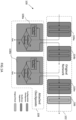
- FIG. 1A illustrates an overview of a dynamic model compression system 100, in accordance with an embodiment of the present invention.
- the dynamic model compression system 100 includes an original deep neural network 102 that is formed of first through last backbone segments 104a till 104n and a final exit 106 connected to the last backbone segment 104n.
- the first through last backbone segments 104a till 104n form a backbone for feature extraction and the final exit 106 forms a small network at the end for the final output.
- the backbone part is typically stacked as multiple dividable hidden layers. Therefore, the backbone of the original deep neural network 102 is divided into N segments. The nature of this segmentation could be fine or granular.
- the dynamic model compression system 100 further includes a plurality of early exits 108a and 108b, each attached to an end of corresponding backbone segment.
- a first exit 108a is attached to an end of the first backbone segment 104a
- a second exit 108b is attached to an end of the second backbone segment 104b, and so on.
- two early exits 108a and 108b are being shown herein, it would be apparent to one of ordinary skill in the art, that there may be more than two early exits, such that ends of each of first through ( N - 1) th backbone segments are connected to respective exits.
- the exits 108a and 108b (hereinafter collectively referred to as early exits 108) are attached to hidden layers of the original network 102 for producing an early estimate of the final result.
- the output of corresponding backbone segment is processed through an early exit function to generate a confidence level of the output.
- the confidence level driven from the output of the early exit function is greater than or equal to its associated threshold, the inference will exit immediately. Else, it passes the output of the previous backbone segment to the next backbone segment.
- the early exit functions and their thresholds are configurable to adapt to varying performance-complexity targets.
- the early exiting is a fast inference technique that uses acceptable intermediate outputs as estimates of final results and terminates the model inference in the early layers of the deep learning model 102.
- the inference process would be concluded at an early layer if the output generated from an early exit is acceptable. This approach saves computations in the remaining layers and results in a smaller, lower complexity model for 'easier' to process input data. For more 'difficult' to process input data, inference computations at further layers would be activated until an acceptable result is obtained at a later exit or completely executes all model layers.
- the proposed system 100 is compatible and can be used in conjunction with other compression techniques.
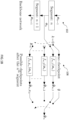
- FIG. 1B illustrates a backbone network 102 and a set of early exits 108 attached to the backbone network 102 in detail, in accordance with an embodiment of the present invention.
- the backbone network 102 is shown to include an n th backbone segment and an ( n + 1) th backbone segment, and a set of k th possible candidate early exits after the n th backbone segment.
- the output of the n th and ( n + 1) th backbone segments may be referred to as o n and o n+1 respectively.
- K n candidate early exit functions indexed by k, can be applied to the output of the n th backbone segment, whose task is to make an early estimate of the output of the network 102.
- Each of the early exit functions may be designed and trained offline independently of any other and may be fixed at run-time. Note that ⁇ n , k may be compatible with the original network's output but not necessarily in exactly the same format. It could for example be shorter, providing classification results for a sub-set of classes, or perhaps some clustering of classes.
- the output of the k th early exit for n th segment may be referred to as ⁇ n .
- the pretrained small network 106 at the end of the original backbone network which is the final 'early exit' may be denoted as f N, 1 .
- the samples that do not exit early would eventually pass through the final exit 106.
- a confidence value may be determined for each output ( ⁇ n , k ) of each check point function.
- the confidence value of an output may be an estimate of correctness of the output.
- the confidence may be the maximum value of the predicted class probability, i.e.: max ( ⁇ n , k ).
- a threshold t may be applied to each confidence value, in order to make an early-exit decision. A high threshold limits an exit such that only highly confident samples exit early, and a lower threshold would allow more samples to exit early. Accordingly, the threshold t can be adjusted to obtain different complexity/accuracy trade-offs.
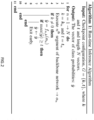
- FIG.2 illustrates a run-time inference algorithm for dynamic model compression of the deep neural network 102, in accordance with an embodiment of the present invention.
- the early exits may be applied to the backbone segments based on pre-defined configuration groups, that enumerate which early exit function and what threshold value to be used at the output of each segment.
- the model confidence means an estimate of result correctness from the model itself.
- the confidence can be interpreted as the maximum value of the predicted probabilities, which is max ( ⁇ n,k ). This confidence is then compared against corresponding threshold t n in order to make an early-exit decision.
- the threshold t is a pre-defined value that controls which samples should exit. A high threshold limits an early exit to exit high confident samples only, and a low threshold would exit most samples. If the confidence is greater than or equal to corresponding threshold value, i.e.
- the design of an early exit is based on the trade-off between complexity and performance. Although more complex networks have higher stand-alone performance, they would introduce more overhead and can affect the system's overall performance.
- One of the simplest forms of an early exit is the multilayer perceptron. However, any functions that can generate a compatible output are eligible early exit functions. Meanwhile, since every early exit is independent of others, there is no requirement for all early exits to have the same architecture. They can be designed and trained separately. It is also possible to design multiple candidate early exits for the same position. The searching algorithm (discussed later) may find the most suitable one for different targets.
- small Multilayer Perceptrons MLPs
- An average pooling layer may be employed before the first MLP layer to reduce the feature map's height and width to 1.
- the original backbone network 102 is frozen, and only the early exit network 108 is trained.
- the freezing the original network 102 ensures that the system can restore full performance at any time since the original model is left untouched. It also ensures that all early exits are independent of each other and the original network 102 because they do not share any region of the network. Since the training of each early exit is isolated, multiple early exits may be trained together or separately with the same or different training methods. Meanwhile, as the design and positions are different, some exits may need longer training than others. In the context of the present invention, the training of those exits is stopped whose loss is no longer reducing and let the other training continue until a maximum epoch limit.
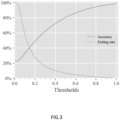
- FIG.3 illustrates accuracy and predictions having higher confidence than the threshold by an early exit. As the threshold increases, fewer samples exit at this point, while the accuracy rises.
- the stand-alone performance of an early exit might be not high because it may be attached to an initial segment and prior backbone segments (layers) may not be originally designed to support this exit.
- the cooperation of early exits can avoid a large art of incorrect predictions.
- an early exit would exit fewer samples within the increasing threshold, but these predictions are more accurate. This observation indicates that though the early exits' stand-alone accuracy may not be satisfying, their high-confidence predictions are still trustworthy.
- samples may be exited by either a highly confident early exit or the final exit. In this case, the overall accuracy may be maintained at a high level while some complexity has been saved.
- the configuration searching consider two aspects, performance and complexity. In the present approach, they are defined as the overall accuracy, and relative value of MAC operations to the original network. In this invention, the accuracy and complexity are measured relative to the original model.
- the overall accuracy of a configuration relative to the accuracy of original model may be defined as A ( G ) and the overall number of MAC (multiply-accumulate) operations relative to the MAC of original model may be defined as C(G).
- This system may consider the trade-off between performance and complexity in a fine grain.
- the trade-off factor ⁇ may be defined to control the weight between performance and complexity.
- this invention can provide nearly continuous options of performance and complexity.
- the overall accuracy may be basically computed by summarizing correct predictions of any early exits dividing by the dataset size.
- the backbone network 102 includes N segments and a dataset includes M samples.
- the set W n ( k,t ) is defined to be including indices of samples that have higher confidence than the corresponding threshold t n at n th early exit.
- U n ( k,t ) is W n ( k,t ) excluding any previously exited samples, i.e., indices of samples which are exited by n th early exit.
- V n ( k , t ) is a subset of U n ( k , t ) where every prediction is correct.
- the accuracy may be measured by the corrected predictions over the total, i.e., EC n k , t E n k , t .
- the threshold of an early exit is high, and it only exits a few samples, the sample mean estimation of accuracy may be unreliable as the number of samples is too small. For example, in FIG. 3 , there may be a sudden increase of accuracy to 100% when the threshold is close to 1. Therefore, the sampled mean may be replaced with a conservative value as the estimation of an early exit. It may be assumed that the accuracy of an early exit in a specific configuration A n ( k,t ) obeys the Beta distribution.
- the probability of A n ( k,t ) may not be greater than x by the cumulative distribution function (CDF) I x of the Beta distribution.
- CDF cumulative distribution function
- a conservative estimation of A n ( k,t ) is computed by the inverse Beta CDF I P ⁇ 1 such that the true value is most likely (90%) being higher than it.
- a n k t I 0.1 ⁇ 1 1 + a , 1 + b ⁇ a
- FIG.4 illustrates accuracy and exiting rate with respect to different thresholds by the first early exit (located at 1 st connection's output) of a deep neural network, in accordance with an embodiment of the present invention.
- the lower estimated accuracy excludes the unreliable accuracy when the threshold is high. There is a huge fluctuation in the directly measured accuracy when the threshold is higher than 0.9. However, this area cannot represent the true performance in practice as it is observed from a very limited number of samples. The lower estimation of accuracy can penalize these less significant results such that the irregular high accuracy would not mislead the search algorithm.
- the number of MAC operations in a given functional block with respect to the total number of MAC operations in the original network is referred to as complexity.
- the following normalised complexity measures are defined.
- the model compression takes into account of both performance and complexity.
- 0 ⁇ ⁇ ⁇ 1 is a user-controlled parameter to adjust the relative importance of accuracy and complexity, i.e., as ⁇ ⁇ 1, a minimization process would maximize the accuracy with no consideration to the complexity cost. Conversely, as ⁇ ⁇ 0, solutions with minimal complexity would be found at the cost of accuracy. This function may be used as the target of a minimization algorithm.
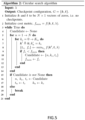
- FIG.5 illustrates a circular search algorithm for searching an early exit configuration, in accordance with an embodiment of the present invention.
- the circular search starts with searching with an empty early exit configuration. For every iteration, every possible early exit at every position is gone through, and one modification is updated with the lowest object value f min to the current configuration. The iteration would continue until it cannot find any modifications to make f min lower, where min min t n f k ′ , t , ⁇ is bounded by minimization algorithm to find a t c ⁇ (0, 1) and make the function value minimized to f c .
- FIG.6 illustrates a single search algorithm for searching early exit configuration, in accordance with an embodiment of the present invention.
- the circular search algorithm might be time-consuming when the dataset is large.
- the single search algorithm may only pass once from the first segment to the last.
- the single-pass algorithm dramatically reduces the searching time, and the present experiment indicates that the single-pass algorithm can usually finish in minutes without negatively impacting results.
- the search algorithm's result is a specific configuration with a complexity/performance trade-off determined by the parameter ⁇ .
- This searching process can be repeated with various values of ⁇ to yield other configurations having different trade-off characteristics.
- a device which finally uses this model for inference, can store several pre-defined configurations and switch among them at run-time to implement a dynamical model compression depending on the real-time situation.
- FIG. 7 is a flowchart illustrating a method of applying dynamic model compression to a deep learning model, in accordance with an embodiment of the present invention.
- an existing deep learning model is divided into a first number of segments.
- the deep learning model is pre-trained.
- a set of early exits are designed for each segment, and connected to the output of each segment.
- the existing deep learning model is frozen, the set of early exits of the given segment are trained, and the outputs of all early exits are recorded on the training dataset.
- the early exits may be grouped into various early exit configurations to obtain the required trade-off. Each early exit configuration guide which early exits are enabled, and the condition of exiting at those early exits.
- step 708 the early exit configurations with different trade-off factors are searched according to the training record.
- step 710 the performance and complexity information of each configuration is collected.
- the early exit configuration which has suitable performance and complexity is being selected during inference run time.
- the configuration is exited during run-time once an enabled early exit reports high confidence than corresponding threshold. More computations may be spent on those inputs that cause the early exits to have less confidence regarding early-exit decisions, i.e. difficult inputs, while easy inputs are mostly exited at early stages.
- step 716 another early exit configuration is chosen if the demand has changed.
- the demand constitutes computational complexity(energy consumption) and accuracy.
- the demand changes based on the application, for example, the user may choose a low complexity configuration when the battery is running out and a high accuracy one if the accuracy is very important.
- FIG.8 shows a table illustrating required MACs (indicative of complexity) when a certain Accuracy drop is allowed, while implementing dynamic model compression on different networks with different datasets.
- dynamic model compression has the ability to save computation with minor cost.
- Table I shows, the proposed system only needs 85.22%, 81.55% and 77.67% of MACs to maintain the same level of accuracy (drop ⁇ 0.5%) for three database variants on a deep learning model such as ImageNet.
- that model is more redundant to, CIFAR-10, it only requires 56.95%, 58.74% and 32.41% of MACs for achieving similar accuracy. If more accuracy drops are allowed, the dynamic compression model can further reduce the computation by about 15% to 20% within 5% loss in accuracy.
- FIGs.9A , 9B and 9C illustrate performance of searched configuration and stand-alone early exits for three different types of neural networks ResNet 34, ResNet 50 and ResNet 152 respectively on dataset such as CIFAR-10.
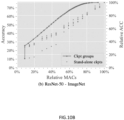
- FIGs.10A , 10B and 10C illustrate performance of searched configuration and stand-alone early exits for three different types of neural networks ResNet 34, ResNet 50 and ResNet 152 respectively on dataset such as ImageNet.
- Dynamic compression model is supporting the dynamic scaling, as different ⁇ would result in configurations with varying compression preferences.
- the top curves in FIGs. 9A-9C and 10A-10C represent configurations that the user can choose during the run-time. Each curve is generated by different ⁇ with 0.01 interval, but more configurations can be created with more dense ⁇ so the system can configure its trade-off in a nearly continuous schema. Also, an attempt has been made to demonstrate the ability of many early exits working together (the top curve) to out-perform individual stand-alone exits (bottom dots). To obtain the stand-alone performance, a configuration is simulated with just one early exit enabled and its threshold is set to zero so as to always exit at that point.
- the ResNet152's complexity is scaled from 16.74-32.41% on CIFAR-10 and 58.06-77.67% on ImageNet, with the accuracy loss of 5.0 ⁇ 0.5%. that would yield the required accuracy with only 40% complexity. This demonstrates that an early exit configuration's performance is not just a weighted sum of all its enabled early exits' performances.
- the performance curves have illustrated that the first term, i.e., the extra computation, is negligible compared to the overall reduction.
- the additional memory, the second term, is necessary to store early exit networks. While its amount can also be limited in practice as applications may not require the full range of performance or the high density of configurations. On the other hand, storing some small networks is still saving compared with storing other model variants for a system requiring varying performance.
- DyCE dynamic compression
- a part of the backbone with an early exit network can be considered a smaller version of the original model. Early exits and the final exit match the student and teacher model concepts in knowledge distillation. Therefore, instead of choosing ground truth labels as the target, early exits can be trained to minimize the differences between early predictions and the final for any inputs. This would allow building or finetuning the dynamic compression model (DyCE) system without a labelled dataset if the pretrained model exists. Using unlabelled data means much easy to acquire data, and early exits can keep learning from any inputs to this system.
- DyCE dynamic compression model
- this system can be modified to assign different tasks for each early exit, such as face recognition, object detection, and image-to-text.
- These early exits with different tasks can be organized in a logical order for specific applications. For the example of the face recognition task, coarse-grained classifies may be assigned for the first few exit positions telling if there are objects in front of the camera. The next few early exits may be fine-grained classifies to confirm a human face in sight. After that, the last few early exits may run the regular recognition task. Having a high performance for a small network is difficult, but it is still possible to get rough answers with limited computation. The early exits attached to the shallow layers may focus on easy but usual sub-tasks.
- the early-exit system treats the model in a hierarchy.
- the feature of each early-exit network that can output independently makes it possible to store the model in parts and execute the inference on different devices.
- the use case could be running the first few layers on a local device while hosting the rest of model remotely. In this case, most simple jobs can be done locally to have fast response, reduce communications and alleviate privacy issues.
- a deep network may split into multiple parts and store its initial part only on the end device with minimal memory or computing capability.
- the inference may exit with a very short latency if the early exit network of that part is enough to give an acceptable result.
- the end device may transmit that sample to edge devices or cloud servers for further inferences. This scheme deals with most samples locally to provide real-time feedback but also tackles complex events by using large networks on remote servers.
- all early exits are required to have the same output format as the original network. However, they are not necessarily the same as every exit is independent from each other.
- the different early exits can be trained for different tasks sharing the same backbone. For example, for face recognition problem, an early exit can use a small part of backbone to determine whether a person is in front of the camera and a late early exit can use more layers to determine who he/she is.
Landscapes
- Engineering & Computer Science (AREA)
- Theoretical Computer Science (AREA)
- Physics & Mathematics (AREA)
- General Health & Medical Sciences (AREA)
- Computing Systems (AREA)
- Biomedical Technology (AREA)
- Biophysics (AREA)
- Computational Linguistics (AREA)
- Data Mining & Analysis (AREA)
- Evolutionary Computation (AREA)
- Life Sciences & Earth Sciences (AREA)
- Molecular Biology (AREA)
- Artificial Intelligence (AREA)
- General Engineering & Computer Science (AREA)
- General Physics & Mathematics (AREA)
- Mathematical Physics (AREA)
- Software Systems (AREA)
- Health & Medical Sciences (AREA)
- Management, Administration, Business Operations System, And Electronic Commerce (AREA)
- Image Analysis (AREA)
Priority Applications (2)
| Application Number | Priority Date | Filing Date | Title |
|---|---|---|---|
| EP23170174.9A EP4455945A1 (de) | 2023-04-26 | 2023-04-26 | Dynamische modellkompression für tiefe neuronale netzwerke |
| PCT/EP2024/061699 WO2024223921A1 (en) | 2023-04-26 | 2024-04-26 | Dynamical model compression for deep neural networks |
Applications Claiming Priority (1)
| Application Number | Priority Date | Filing Date | Title |
|---|---|---|---|
| EP23170174.9A EP4455945A1 (de) | 2023-04-26 | 2023-04-26 | Dynamische modellkompression für tiefe neuronale netzwerke |
Publications (1)
| Publication Number | Publication Date |
|---|---|
| EP4455945A1 true EP4455945A1 (de) | 2024-10-30 |
Family
ID=86226914
Family Applications (1)
| Application Number | Title | Priority Date | Filing Date |
|---|---|---|---|
| EP23170174.9A Ceased EP4455945A1 (de) | 2023-04-26 | 2023-04-26 | Dynamische modellkompression für tiefe neuronale netzwerke |
Country Status (2)
| Country | Link |
|---|---|
| EP (1) | EP4455945A1 (de) |
| WO (1) | WO2024223921A1 (de) |
Citations (3)
| Publication number | Priority date | Publication date | Assignee | Title |
|---|---|---|---|---|
| US20190362269A1 (en) * | 2019-08-12 | 2019-11-28 | Intel Corporation | Methods and apparatus to self-generate a multiple-output ensemble model defense against adversarial attacks |
| EP3996054A2 (de) * | 2020-11-09 | 2022-05-11 | Samsung Electronics Co., Ltd. | Verfahren und vorrichtung zur bildsegmentierung |
| US20220358358A1 (en) * | 2021-05-04 | 2022-11-10 | International Business Machines Corporation | Accelerating inference of neural network models via dynamic early exits |
-
2023
- 2023-04-26 EP EP23170174.9A patent/EP4455945A1/de not_active Ceased
-
2024
- 2024-04-26 WO PCT/EP2024/061699 patent/WO2024223921A1/en not_active Ceased
Patent Citations (3)
| Publication number | Priority date | Publication date | Assignee | Title |
|---|---|---|---|---|
| US20190362269A1 (en) * | 2019-08-12 | 2019-11-28 | Intel Corporation | Methods and apparatus to self-generate a multiple-output ensemble model defense against adversarial attacks |
| EP3996054A2 (de) * | 2020-11-09 | 2022-05-11 | Samsung Electronics Co., Ltd. | Verfahren und vorrichtung zur bildsegmentierung |
| US20220358358A1 (en) * | 2021-05-04 | 2022-11-10 | International Business Machines Corporation | Accelerating inference of neural network models via dynamic early exits |
Non-Patent Citations (3)
| Title |
|---|
| BENJAMIN BIGGS ET AL: "ATHEENA: A Toolflow for Hardware Early-Exit Network Automation", ARXIV.ORG, CORNELL UNIVERSITY LIBRARY, 201 OLIN LIBRARY CORNELL UNIVERSITY ITHACA, NY 14853, 17 April 2023 (2023-04-17), XP091487598 * |
| KOURIS ALEXANDROS ET AL: "Multi-Exit Semantic Segmentation Networks", ARXIV.ORG, 24 June 2022 (2022-06-24), Ithaca, pages 1 - 25, XP093011033, Retrieved from the Internet <URL:https://arxiv.org/pdf/2106.03527v2.pdf> [retrieved on 20230102] * |
| ODEMA MOHANAD MODEMA@UCI EDU ET AL: "EExNAS", PROCEEDINGS OF THE ACM/IEEE INTERNATIONAL SYMPOSIUM ON LOW POWER ELECTRONICS AND DESIGN, IEEE PRESSPUB767, PISCATAWAY, NJ, USA, 26 July 2021 (2021-07-26), pages 1 - 6, XP058652427, DOI: 10.1109/ISLPED52811.2021.9502503 * |
Also Published As
| Publication number | Publication date |
|---|---|
| WO2024223921A1 (en) | 2024-10-31 |
Similar Documents
| Publication | Publication Date | Title |
|---|---|---|
| US11803744B2 (en) | Neural network learning apparatus for deep learning and method thereof | |
| US11941523B2 (en) | Stochastic gradient boosting for deep neural networks | |
| US11263524B2 (en) | Hierarchical machine learning system for lifelong learning | |
| Tjandra et al. | Compressing recurrent neural network with tensor train | |
| KR102788531B1 (ko) | 고정 소수점 뉴럴 네트워크를 생성하는 방법 및 장치 | |
| US20200265301A1 (en) | Incremental training of machine learning tools | |
| US7058550B2 (en) | Selectively resampling particle filter | |
| US12614057B2 (en) | Training-support-based machine learning classification and regression augmentation | |
| US11475236B2 (en) | Minimum-example/maximum-batch entropy-based clustering with neural networks | |
| US20170228638A1 (en) | Augmenting neural networks with sparsely-accessed external memory | |
| WO2017176356A2 (en) | Partitioned machine learning architecture | |
| EP4081953A1 (de) | Domänengeneralisierung mittels batchnormalisierungsstatistik | |
| US20230334320A1 (en) | Latency-Aware Neural Network Pruning and Applications Thereof | |
| US11687730B1 (en) | Automated conversation goal discovery using neural networks and deep multi-view clustering | |
| US20220121927A1 (en) | Providing neural networks | |
| JP7668905B2 (ja) | 機械学習モデルのハードウェアを意識したプログレッシブトレーニング | |
| US20250148280A1 (en) | Techniques for learning co-engagement and semantic relationships using graph neural networks | |
| US20250209362A1 (en) | Method and system for quantum computing based pre-training of artificial intelligence (ai) data models | |
| US20220138425A1 (en) | Acronym definition network | |
| CN120354954B (zh) | 动态模型切换框架用于边缘设备的ai推理优化方法及系统 | |
| EP4455945A1 (de) | Dynamische modellkompression für tiefe neuronale netzwerke | |
| CN118673994B (zh) | 模型压缩方法以及相关装置 | |
| US20250094801A1 (en) | Neural network critical neuron selection | |
| WO2025101527A1 (en) | Techniques for learning co-engagement and semantic relationships using graph neural networks | |
| US20240330826A1 (en) | Machine learning-based targeting model based on historical and device telemetry data |
Legal Events
| Date | Code | Title | Description |
|---|---|---|---|
| PUAI | Public reference made under article 153(3) epc to a published international application that has entered the european phase |
Free format text: ORIGINAL CODE: 0009012 |
|
| STAA | Information on the status of an ep patent application or granted ep patent |
Free format text: STATUS: THE APPLICATION HAS BEEN PUBLISHED |
|
| AK | Designated contracting states |
Kind code of ref document: A1 Designated state(s): AL AT BE BG CH CY CZ DE DK EE ES FI FR GB GR HR HU IE IS IT LI LT LU LV MC ME MK MT NL NO PL PT RO RS SE SI SK SM TR |
|
| STAA | Information on the status of an ep patent application or granted ep patent |
Free format text: STATUS: THE APPLICATION HAS BEEN REFUSED |
|
| 18R | Application refused |
Effective date: 20241107 |