EP4455872A1 - Verfahren und vorrichtung zum laden von behältern - Google Patents
Verfahren und vorrichtung zum laden von behältern Download PDFInfo
- Publication number
- EP4455872A1 EP4455872A1 EP23742768.7A EP23742768A EP4455872A1 EP 4455872 A1 EP4455872 A1 EP 4455872A1 EP 23742768 A EP23742768 A EP 23742768A EP 4455872 A1 EP4455872 A1 EP 4455872A1
- Authority
- EP
- European Patent Office
- Prior art keywords
- function
- container
- thread
- working
- template
- Prior art date
- Legal status (The legal status is an assumption and is not a legal conclusion. Google has not performed a legal analysis and makes no representation as to the accuracy of the status listed.)
- Pending
Links
Images



Classifications
-
- G—PHYSICS
- G06—COMPUTING OR CALCULATING; COUNTING
- G06F—ELECTRIC DIGITAL DATA PROCESSING
- G06F9/00—Arrangements for program control, e.g. control units
- G06F9/06—Arrangements for program control, e.g. control units using stored programs, i.e. using an internal store of processing equipment to receive or retain programs
- G06F9/44—Arrangements for executing specific programs
- G06F9/455—Emulation; Interpretation; Software simulation, e.g. virtualisation or emulation of application or operating system execution engines
- G06F9/45533—Hypervisors; Virtual machine monitors
- G06F9/45558—Hypervisor-specific management and integration aspects
-
- G—PHYSICS
- G06—COMPUTING OR CALCULATING; COUNTING
- G06F—ELECTRIC DIGITAL DATA PROCESSING
- G06F21/00—Security arrangements for protecting computers, components thereof, programs or data against unauthorised activity
- G06F21/50—Monitoring users, programs or devices to maintain the integrity of platforms, e.g. of processors, firmware or operating systems
- G06F21/52—Monitoring users, programs or devices to maintain the integrity of platforms, e.g. of processors, firmware or operating systems during program execution, e.g. stack integrity ; Preventing unwanted data erasure; Buffer overflow
- G06F21/53—Monitoring users, programs or devices to maintain the integrity of platforms, e.g. of processors, firmware or operating systems during program execution, e.g. stack integrity ; Preventing unwanted data erasure; Buffer overflow by executing in a restricted environment, e.g. sandbox or secure virtual machine
-
- G—PHYSICS
- G06—COMPUTING OR CALCULATING; COUNTING
- G06F—ELECTRIC DIGITAL DATA PROCESSING
- G06F9/00—Arrangements for program control, e.g. control units
- G06F9/06—Arrangements for program control, e.g. control units using stored programs, i.e. using an internal store of processing equipment to receive or retain programs
- G06F9/44—Arrangements for executing specific programs
- G06F9/445—Program loading or initiating
- G06F9/44521—Dynamic linking or loading; Link editing at or after load time, e.g. Java class loading
-
- G—PHYSICS
- G06—COMPUTING OR CALCULATING; COUNTING
- G06F—ELECTRIC DIGITAL DATA PROCESSING
- G06F9/00—Arrangements for program control, e.g. control units
- G06F9/06—Arrangements for program control, e.g. control units using stored programs, i.e. using an internal store of processing equipment to receive or retain programs
- G06F9/44—Arrangements for executing specific programs
- G06F9/448—Execution paradigms, e.g. implementations of programming paradigms
- G06F9/4482—Procedural
-
- G—PHYSICS
- G06—COMPUTING OR CALCULATING; COUNTING
- G06F—ELECTRIC DIGITAL DATA PROCESSING
- G06F9/00—Arrangements for program control, e.g. control units
- G06F9/06—Arrangements for program control, e.g. control units using stored programs, i.e. using an internal store of processing equipment to receive or retain programs
- G06F9/44—Arrangements for executing specific programs
- G06F9/448—Execution paradigms, e.g. implementations of programming paradigms
- G06F9/4488—Object-oriented
- G06F9/449—Object-oriented method invocation or resolution
-
- G—PHYSICS
- G06—COMPUTING OR CALCULATING; COUNTING
- G06F—ELECTRIC DIGITAL DATA PROCESSING
- G06F9/00—Arrangements for program control, e.g. control units
- G06F9/06—Arrangements for program control, e.g. control units using stored programs, i.e. using an internal store of processing equipment to receive or retain programs
- G06F9/46—Multiprogramming arrangements
- G06F9/48—Program initiating; Program switching, e.g. by interrupt
- G06F9/4806—Task transfer initiation or dispatching
- G06F9/4843—Task transfer initiation or dispatching by program, e.g. task dispatcher, supervisor, operating system
- G06F9/485—Task life-cycle, e.g. stopping, restarting, resuming execution
-
- G—PHYSICS
- G06—COMPUTING OR CALCULATING; COUNTING
- G06F—ELECTRIC DIGITAL DATA PROCESSING
- G06F9/00—Arrangements for program control, e.g. control units
- G06F9/06—Arrangements for program control, e.g. control units using stored programs, i.e. using an internal store of processing equipment to receive or retain programs
- G06F9/46—Multiprogramming arrangements
- G06F9/50—Allocation of resources, e.g. of the central processing unit [CPU]
- G06F9/5061—Partitioning or combining of resources
- G06F9/5077—Logical partitioning of resources; Management or configuration of virtualized resources
-
- G—PHYSICS
- G06—COMPUTING OR CALCULATING; COUNTING
- G06F—ELECTRIC DIGITAL DATA PROCESSING
- G06F9/00—Arrangements for program control, e.g. control units
- G06F9/06—Arrangements for program control, e.g. control units using stored programs, i.e. using an internal store of processing equipment to receive or retain programs
- G06F9/44—Arrangements for executing specific programs
- G06F9/455—Emulation; Interpretation; Software simulation, e.g. virtualisation or emulation of application or operating system execution engines
- G06F9/45533—Hypervisors; Virtual machine monitors
- G06F9/45558—Hypervisor-specific management and integration aspects
- G06F2009/4557—Distribution of virtual machine instances; Migration and load balancing
-
- G—PHYSICS
- G06—COMPUTING OR CALCULATING; COUNTING
- G06F—ELECTRIC DIGITAL DATA PROCESSING
- G06F9/00—Arrangements for program control, e.g. control units
- G06F9/06—Arrangements for program control, e.g. control units using stored programs, i.e. using an internal store of processing equipment to receive or retain programs
- G06F9/44—Arrangements for executing specific programs
- G06F9/455—Emulation; Interpretation; Software simulation, e.g. virtualisation or emulation of application or operating system execution engines
- G06F9/45533—Hypervisors; Virtual machine monitors
- G06F9/45558—Hypervisor-specific management and integration aspects
- G06F2009/45587—Isolation or security of virtual machine instances
-
- Y—GENERAL TAGGING OF NEW TECHNOLOGICAL DEVELOPMENTS; GENERAL TAGGING OF CROSS-SECTIONAL TECHNOLOGIES SPANNING OVER SEVERAL SECTIONS OF THE IPC; TECHNICAL SUBJECTS COVERED BY FORMER USPC CROSS-REFERENCE ART COLLECTIONS [XRACs] AND DIGESTS
- Y02—TECHNOLOGIES OR APPLICATIONS FOR MITIGATION OR ADAPTATION AGAINST CLIMATE CHANGE
- Y02D—CLIMATE CHANGE MITIGATION TECHNOLOGIES IN INFORMATION AND COMMUNICATION TECHNOLOGIES [ICT], I.E. INFORMATION AND COMMUNICATION TECHNOLOGIES AIMING AT THE REDUCTION OF THEIR OWN ENERGY USE
- Y02D10/00—Energy efficient computing, e.g. low power processors, power management or thermal management
Definitions
- the present invention relates to the field of communication technologies, and in particular, to a container loading method and an apparatus.
- Serverless computing is also referred to as function as a service (Function-as-Service, FaaS), and is a new programming paradigm in the cloud computing field.
- a user decouples application logic at a granularity of a function, and submits generated function code to a cloud service provider.
- the cloud service provider is responsible for function deployment and computing. After submitting the function code to the cloud service provider, the user can send a function call request with a parameter to the cloud service provider.
- the function code submitted by the user is usually not trusted by a serverless computing apparatus. Therefore, when executing a function call, the serverless computing apparatus needs to isolate a running environment of a function, so that the function runs in a complete isolation environment.
- an implementation of the isolation environment includes a Linux container, Firecracker, and the like.
- Running of the function in the serverless computing apparatus depends on a function instance.
- the serverless computing apparatus receives the function request sent by the user, if the serverless computing apparatus does not have an available function instance, the serverless computing apparatus needs to initialize an entire instance environment to support the function call request.
- Such a start is referred to as a "cold start”.
- the serverless computing has characteristics of high cold start frequency and a high proportion of a total start latency to a total end-to-end latency. Therefore, the start latency is critical to an overall performance of the serverless computing.
- Embodiments of this application provide a container loading method and an apparatus.
- a pre-prepared function container is used as a container isolation environment of a function, so that overheads of initializing the container isolation environment are reduced, and a language runtime status corresponding to an initialized function is reused by using a fork method, thereby optimizing initialization time of a language runtime.
- an embodiment of this application provides a multi-thread container loading method.
- the method includes: receiving a function call request sent by a user, where the function call request includes information of a function; obtaining a process number of a corresponding function container based on the information of the function, where the function is deployed in the function container; forking a main thread of a language runtime process in a template container based on the process number of the function container, to obtain a target child process, where both the language runtime process in the template container and the target child process are language runtime processes corresponding to the function, and a namespace of the target child process is located in the function container; switching a control group of the target child process to a control group of the function container based on the process number of the target child process, to migrate the target child process to the function container; and loading the function in the function container.
- a pre-prepared function container is used as a final running environment of the function. Then, a language runtime status of an initialized function is copied to the function container by using a fork method, to initialize the running environment of the function.
- the pre-initialized language runtime status is reused, so that a critical path in a process of initializing a language runtime corresponding to the function is skipped, thereby significantly optimizing initialization time of the language runtime.
- the pre-prepared function container is used as the final running environment of a function instance, and initialization overheads of a container isolation environment are further reduced.
- the method before the receiving function call sent by a user, the method further includes: receiving function code and a functional dependency that are sent by the user; and deploying the function code and the functional dependency of the function in the function container.
- the information of the function includes at least one of a function name, a function type, and a function ID.
- a language runtime of the function that needs to be called and the function container on which the function that needs to be called is deployed may be further determined.
- the method before the forking a main thread of a language runtime process in a template container based on the process number of the function container, to obtain a target child process, the method further includes: obtaining a template container corresponding to the function; when the template container corresponding to the function does not exist, creating, based on a language runtime corresponding to the function, a template container corresponding to the function; and storing the template container.
- a template container corresponding to a language runtime of a function is stored in a serverless computing apparatus in advance. After receiving the function call request, the serverless computing apparatus may directly fork the template container corresponding to the function call request.
- the serverless computing apparatus may determine, based on the received function call request, the language runtime of the function that needs to be called, then the serverless computing apparatus generates a corresponding template container based on the language runtime, and stores the template container.
- a template container corresponding to each language runtime needs to be created for only once. The created template container is stored in the serverless computing apparatus.
- the serverless computing apparatus can copy an initialized language runtime status (template container), thereby significantly improving initialization time of the language runtime.
- the method before the forking a main thread of a language runtime process in a template container based on the process number of the function container, to obtain a target child process, the method further includes: when the language runtime of the function is multi-threaded, obtaining status information of each working thread in at least one working thread; when the status information of each working thread in the at least one working thread is a first state, disabling each working thread in the at least one working thread, where the first state includes: a state in which the working thread is blocked because of waiting for a task, a state in which the working thread does not need to store context, and a state in which the working thread has no logical interaction with the main thread; and when status information of at least one working thread in at least two working threads is not the first state, suspending a working thread whose status information is the first state in the at least two working threads, and when status information of each working thread in the at least two working threads is the first state, disabling each working thread in the at least two working threads,
- the forking a main thread of a language runtime process in a template container based on the process number of the function container, to obtain a target child process includes: forking the main thread for the first time, to obtain a first child process; switching a namespace of the first child process to the function container based on the process number of the function container; and forking the first child process to obtain the target child process, where the namespace of the target child process is located in the function container.
- the namespace of the first child process generated through fork for the first time further needs to be switched to the function container based on the process number of the function container.
- the namespace of the first child process may be switched to the function container by performing a system call by using setns and chroot of Linux.
- the method further includes: initializing a data structure used to manage a working thread, and creating a working thread of the target child process.
- status storage and status recovery are respectively performed on a plurality of threads of a multi-thread language runtime in the template container, so that the main thread of the template container can directly call the fork operation to copy a status of the main thread, and recover statuses of the plurality of threads after the fork operation, to create a multi-thread language runtime process through the fork operation.
- an embodiment of this application provides a serverless computing apparatus.
- the serverless computing apparatus is configured to load a multi-thread container in a serverless computing process, and the apparatus includes:
- the receiving module is further configured to:
- the information of the function includes at least one of a function name, a function type, and a function ID.
- processing module is further configured to:
- the processing module before forking the main thread in the template container based on the process number of the function container, to obtain the target child process, the processing module is further configured to:
- processing module is further configured to:
- the processing module is further configured to: initialize a data structure used to manage a working thread, and create a working thread of the target child process.
- an embodiment of this application provides a serverless computing apparatus, including:
- an embodiment of this application provides a serverless computing system, including the serverless computing apparatus according to the second aspect.
- an embodiment of this application provides a computer-readable medium.
- the computer storage medium stores instructions, and when the instructions are run on a computer, the computer is enabled to perform the method according to the first aspect.
- an embodiment of this application provides a computer program product including instructions. When the instructions are run on a computer, the computer is enabled to perform the method according to the first aspect.
- an embodiment of this application provides a chip.
- the chip includes a memory and a processor, the memory is configured to store computer instructions, and the processor is configured to: call the computer instructions from the memory and run the computer instructions, to perform the method according to the first aspect.
- a term "and/or" describes only an association relationship for describing associated objects and indicates that three relationships may exist.
- a and/or B may indicate the following three cases: Only A exists, both A and B exist, and only B exists.
- a term "plurality" means two or more.
- a plurality of systems means two or more systems
- a plurality of screen terminals mean two or more screen terminals.
- first and second are merely intended for description, and shall not be understood as an indication or implication of relative importance or implicit indication of an indicated technical feature. Therefore, a feature limited by “first” or “second” may explicitly or implicitly include one or more features.
- Terms “include”, “have”, and their variants all mean “include but are not limited to”, unless otherwise specifically emphasized in another manner.
- Language runtime is a runtime environment provided by a high-level language like Python.
- Function instance is an entire isolation environment of a function in serverless computing.
- the function instance is a container isolation environment that includes a complete running environment of the function.
- Functional dependency is a constraint between relationships of different attributes (or attribute sets) in a database, which can also be regarded as a mapping between the attributes.
- Instance cold start is a process of recreating a complete function instance in serverless computing.
- Container isolation technology A serverless computing provider usually chooses a container or a virtual machine as a sandbox for running a serverless function.
- a Linux container uses a cgroup (cgroup) and a namespace (namespace) to control and isolate operating system resources (such as a file system, a process number, and a network) and computing resources (such as a CPU and a memory) used by the container.
- a system call of a container process needs to be performed by reusing a kernel of a host operating system.
- an idle process can be started, and a new namespace and cgroup group are set for the process.
- a process number of the idle process is a process number of the empty container.
- an idle process in the empty container can be determined by obtaining the process number of the empty container, and a namespace and a cgroup group of the empty container can be determined by using the idle process.
- Main thread is a thread used to implement a main function of a corresponding program.
- Working thread is a thread other than the main thread in a process.
- the POSIX interface includes a fork-based system call, which is a basic method for generating a new process.
- a fork operation creates a new address space as an address space of a child process (a new process generated by the fork operation).
- the new address space has a same memory segment as a parent process (a process used to be forked in the fork operation).
- the fork-based system call uses a copy-on-write (Copy-on-Write) method.
- Copy-on-write Copy-on-Write
- copy is not performed in the new address space. Instead, the two address spaces first point to a same physical memory segment, a copy-on-write mark is set, and a physical memory page is copied when a write operation occurs.
- the copy-on-write mechanism improves performance of the fork operation.
- the fork-based system call is used to fork a new instance from an initialized "template" process. This can greatly improve start performance of the serverless instance.
- a serverless computing apparatus includes a container engine, a container runtime, and a language runtime.
- the container engine is responsible for processing a function call request of a user. After receiving the function call request from the user, the container engine manages and mounts a container image, and calls the container runtime.
- the container runtime creates a container isolation environment through namespace (namespace) and control group (cgroup) interfaces of Linux.
- An execution process of the first solution is shown in FIG. 1b , and includes step S101 to step S103.
- Step S101 The container engine obtains the container image based on a function requested in the function call request of the user, mounts the container image, and calls the container runtime.
- Step S102 The container runtime creates an isolation environment of a function instance through the namespace and cgroup interfaces of Linux.
- Step S103 After the isolation environment is created, a container process completely initializes a language runtime environment.
- the container isolation environment of the function can be well loaded, and the loaded container isolation environment can establish a connection to the serverless computing apparatus for use.
- a cold start of this solution requires loading of a complete function isolation environment and initialization of a complete language runtime. Time consumed for an entire process is long.
- a similarity between same function instances is not fully used, but initialization work is repeated a plurality of times.
- the second solution fork needs to be implemented at an operating system (OS) layer based on a virtualization technology, which is not a method based on a user mode, and has a high usage threshold.
- OS operating system
- the second solution is mainly performed on a virtualization-based isolation sandbox and cannot be directly compatible with an existing container isolation method.
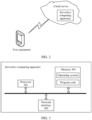
- FIG. 2 is a diagram of an application scenario according to an embodiment of this application of the present invention.
- a serverless computing (Serverless Computing) apparatus is deployed on a cloud server, and is configured to provide serverless computing for user equipment.
- the user equipment decouples application logic at a granularity of a function, and uploads, to the cloud server, function code and a functional dependency that are generated based on the application logic. Then, the user equipment may send a function call request to the cloud server, where the function call request carries parameter information that needs to be used for the function call.
- the serverless computing apparatus deployed on the cloud server deploys and computes the pre-received function code based on the received function call request. Further, the function code submitted by the user is not trusted by the serverless computing apparatus. Therefore, the serverless computing apparatus needs to isolate a running environment of a function of the user, so that the function runs in a complete isolation environment.
- FIG. 3 is a diagram of a structure of a serverless computing apparatus according to an embodiment of this application.
- the apparatus includes a processor 301, a network interface 302, and a memory 303.
- the processor 301, the network interface 302, and the memory 303 may be connected through a bus or in another manner.
- the memory 303 is a storage device of the serverless computing apparatus, and is configured to store a program and data, for example, store function code and a functional dependency sent by a user.
- the memory 303 provides storage space, where the storage space stores an operating system of a server and program instructions used to implement a multi-thread container loading method.
- the operating system includes but is not limited to a Windows system (an operating system), a Linux system (an operating system), HarmonyOS (an operating system), or the like. This is not limited herein.
- the processor 301 (or referred to as a central processing unit (central processing unit, CPU)) is a computing core and a control core of the serverless computing apparatus.
- the processor 301 reads the program instructions and the data that are stored in the memory 303, to execute the multi-thread container loading method. After reading the program instructions stored in the memory 303, the processor 301 stores the received function code and functional dependency.
- the network interface 302 may include a standard wired interface and wireless interface (for example, Wi-Fi and a mobile communication interface).
- the network interface 302 is controlled by the processor 301 and is configured to receive and send data, for example, receive the function code and the functional dependency that are sent by the user.
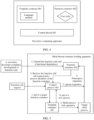
- FIG. 4 is a diagram of a structure of another serverless computing apparatus according to an embodiment of this application. It should be noted that, the diagram of the structure of the serverless computing apparatus provided in FIG. 4 is a diagram of a structure of a specific state in a process in which after the serverless computing apparatus receives a function call request sent by a user, the serverless computing apparatus generates a corresponding function instance based on the function call request, and migrates the function instance to a corresponding isolation environment (function container). As shown in FIG. 4 , the apparatus includes a template container 401, a function container 402, and a control thread 403. The template container 401 includes a language runtime process of a corresponding function.
- the language runtime process in the template container 401 serves as a "parent" instance of all child instances.
- a new instance is generated by using a multi-thread fork method.
- the function container 402 is an isolation environment in which a function finally runs.
- the control thread 403 is configured to manage a process of generating the new instance through fork.
- the serverless computing apparatus provides complete function request call logic externally.
- the user uploads, to the serverless computing apparatus, function code and a functional dependency that are written in advance.
- the serverless computing apparatus deploys the received function code and functional dependency in the function container 402.
- the serverless computing apparatus creates a template container 401 based on a language runtime of a received function.
- the serverless computing apparatus receives the function call request sent by the user
- the serverless computing apparatus forwards the received function call request to the template container 401 by using the control thread 403.
- the serverless computing apparatus further needs to send a process number (pid) of the function container 402 to the template container 401 by using the control process.
- the template container 401 starts to perform fork-based function instance creation.
- a serverless developer After developing the function code, a serverless developer uploads the function code and the functional dependency to the serverless computing apparatus. After receiving the function code and the functional dependency that are uploaded by the user, the serverless computing apparatus deploys the function code and the functional dependency in a corresponding function container.
- the function container in the serverless computing apparatus may be an empty container pre-existing in the serverless computing apparatus, or may be a function container newly created by the serverless computing apparatus after the serverless computing apparatus receives the function code and the functional dependency that are uploaded by the user.
- the empty container is a group of namespace and cgroup group that exists in the serverless computing apparatus, and the namespace and cgroup group include an idle process.
- the serverless computing apparatus determines whether an empty container exists in the serverless computing apparatus. When an empty function container exists in the serverless computing apparatus, the serverless computing apparatus uses the empty container as the function container, and deploys the received function code and functional dependency in the function container. When no empty container exists in the serverless computing apparatus, the serverless computing apparatus regenerates an empty container as the function container. Then, the serverless computing apparatus deploys the received functional dependency and function code in the function container.
- the control process receives a function call request sent by the user and obtains a process number of the function container.
- the serverless computing apparatus after receiving the function call request sent by the user, the serverless computing apparatus further needs to obtain the process number of the function container by using the control process in the serverless computing apparatus.
- a function that needs to be called by the function call request is deployed in the function container.
- the function call request sent by the user includes information of the function.
- the information of the function includes at least one of a function name, a function type, and a function ID.
- the control process determines the function container based on the information of the function, and further obtains the process number of the function container.
- the function name is a name of the function when the user uploads the written function to the serverless computing apparatus.
- the function ID is an identifier generated by the serverless computing apparatus for the function after the user uploads the function to the serverless computing apparatus. Specifically, a hash value of the function is calculated by using the serverless computing apparatus, and the corresponding identifier is generated for the function based on the hash value obtained through calculation.
- the function container actively sends the process number of the function container to the control process.
- the control process forwards the process number of the function container to a corresponding template container based on the received function call request.
- the control process After receiving the function call request, the control process determines, based on a language runtime of the function that needs to be called by the function call request, the template container corresponding to the function.
- the template container includes a language runtime process of the function. Then, the control process sends the received function call request and the process number of the function container to the template container.
- the control process triggers a main thread of the template container to call a fork operation, to obtain a target child process.
- a language runtime of the template container Before calling the fork operation for the template container, whether a language runtime of the template container is multi-threaded further needs to be determined. When the language runtime of the template container is not multi-threaded, the template container directly calls the fork operation.
- multi-thread fork is performed on the template container based on a POSIX Fork technology, to obtain a target child process.
- a status of a working thread of the template container further needs to be determined, to determine whether the working thread of the template container can be directly disabled.
- the template container obtains status information of each working thread.
- the template container disables the working thread of the template container.
- the first state includes: a state in which the working thread is blocked because of waiting for a task, a state in which the working thread does not need to store context, and a state in which the working thread has no logical interaction with the main thread.
- the template container suspends a working thread whose status information is the first state in at least two working threads, and when status information of each working thread in the at least two working threads is the first state, the template container then disables the working thread of the template container, or stores context of a working thread whose status information is not the first state, and the template container disables the working thread of the template container.
- the template container "disables" the working thread, and the action of "disabling” does not really exist.
- fork is performed on the main thread of the template container, for a parent process of the plurality of threads, fork is performed only on a thread that actually calls fork (the main thread of a language runtime process in the template container in this embodiment of this application), and another process disappears from the child process generated after fork.
- the template container migrates a namespace of the generated process to the function container based on the process number of the function container.
- the template container When the template container performs the multi-thread fork, a container isolation environment of the newly generated process needs to be migrated. Specifically, the template container needs to perform the multi-thread fork twice to switch the namespace of the newly generated process to a namespace of the function container.
- the template container performs a multi-thread fork operation for the first time, to obtain a first child process. Then, the template container performs a system call on the first child process, and switches a namespace of the first child process to the function container. Although the namespace of the first child process is switched to the function container, the switching operation does not take effect in the first child process.
- the multi-thread fork operation needs to be performed on the first child process for the second time, to obtain the target child process. In this case, a namespace of the obtained target child process is switched to the function container.
- the template container forwards an obtained process number of the target child process to the control process.
- the control process switches a cgroup of the target child process to a cgroup of the function container based on the received process number of the target child process.
- the pid of the target child process needs to be sent to the control process.
- the control process switches the cgroup of the target child process to the cgroup of the function container based on the pid of the target child process, so that the target child process is migrated to the function container.
- the target child process After the target child process is migrated to the function container, the target child process initializes a data structure that is in a memory and that is used to manage a working thread, reuses the process during the initialization of the language runtime process, and re-creates various working threads. In this case, the target child process recovers running statuses of the plurality of threads.
- the template container after receiving the function call request, performs the multi-thread fork operation to generate a new process.
- processes such as multi-thread pause and multi-thread status recovery further need to be performed on the plurality of threads of the template container.
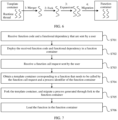
- FIG. 6 is a diagram of a thread status change in a multi-thread fork operation based on a template container according to an embodiment of this application. Next, the multi-thread fork in this solution is described in detail with reference to FIG. 6 .
- the fork operation is performed on a plurality of threads of a language runtime in a user mode.
- the fork operation of POSIX cannot be directly applied to processes of the plurality of threads.
- fork is performed only on a thread that actually calls fork, and another process disappears from a child process after fork.
- an existing language runtime for example, NodeJS
- NodeJS an existing language runtime
- a serverless computing apparatus a corresponding template container is created in advance for each language runtime (that is, the template container includes a language runtime process). Therefore, the plurality of threads of the template container need to be processed in the user mode, to avoid a mutual exclusion problem after the fork operation is performed on the template container.
- the template container After the template container receives a function call request of a user, the template container obtains status information of a plurality of working threads of the template container. Then, the template container processes the plurality of working threads based on the obtained working status information of the plurality of working threads.
- the template container obtains working status information of each working thread.
- the working status information of each working thread is a first state
- a control thread triggers a main thread of the template container to call the fork operation, and disables the working thread of the template container in a process of performing the fork operation.
- the first state includes: a state in which the working thread is blocked because of waiting for a task, a state in which the working thread does not need to store context, and a state in which the working thread has no logical interaction with the main thread.
- the template container obtains the working status information of each working thread, and when status information of at least one working thread in the working thread of the template container is not the first state, the template container synchronizes a status of the working thread of the template container, so that status information of all working threads of the template container is the first state. Then, the control thread triggers the main thread of the template container to call the fork operation, and disables the working thread of the template container in the process of performing the fork operation.
- the template container obtains the working status information of each working thread.
- the template container stores context of the working thread whose status information is not the first state. Then, the control thread triggers the main thread of the template container to call the fork operation, and disables the working thread of the template container in the process of performing the fork operation.
- the control thread controls the main thread of the template container to call POSIX fork, to generate a target child process.
- POSIX fork needs to be called twice.
- the control thread triggers the main thread of the template container to perform the fork operation for the first time, to generate a first child process.
- the template container performs a system call by using setns and chroot of Linux based on a received pid of a function container, to switch a namespace of the first child process to a namespace of the function container.
- the namespace of the generated first child process is switched to the namespace of the function container in a process of performing fork for the first time, a setting of the namespace of the first child process in the process of performing fork for the first time does not take effect immediately. Therefore, the fork operation needs to be performed on the generated first child process for the second time.
- the control thread uses the first child process as the parent process, and triggers the first child process to perform the fork operation for the second time, to generate the target child process.
- a namespace of the target child process is switched to the function container.
- the target child process initializes a data structure that is in a memory and that is used to manage a working thread, reuses the process during the initialization of the language runtime process, and re-creates various working threads. In this case, the newly generated target child process recovers running statuses of the plurality of threads.
- the target child process when the target child process creates the working thread, it further needs to be determined whether the context of the working thread of the template container is stored in the serverless computing apparatus. If the context of the working thread of the template container is stored in the serverless computing apparatus, when creating the working thread, the target child process needs to recover, based on the context stored in the serverless computing apparatus, the working thread that is disabled during the fork operation for the first time.
- the template container After the fork operation is performed twice on the main thread of the template container, to obtain the target child process, the template container further needs to return a process number of the target process to the control process.
- the control process migrates a control group (cgroup) of the target child process to the function container based on the process number of the target process, so that a finally generated target child process instance is completely located in an isolation environment of the function container.
- the plurality of threads of the language runtime are processed in the user mode, so that a multi-thread language runtime can create the target child process through POSIX fork.
- the POSIX interface includes a fork-based system call, and a child process that is exactly the same as the parent process can be generated by using the fork-based system call.
- the fork operation creates a new address space as an address space of the child process.
- the new address space has a same memory segment as the parent process.
- the fork-based system call uses a copy-on-write (Copy-on-Write) method.
- copy is not performed in the new address space. Instead, the two address spaces first point to a same physical memory segment, a copy-on-write mark is set, and a physical memory page is copied when a write operation occurs.
- the copy-on-write mechanism improves performance of the fork operation.
- the fork-based system call is used to fork a new instance from an initialized "template" process (template container). This can greatly improve start performance of the serverless instance.
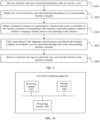
- an embodiment of this application further provides a schematic flowchart of a multi-thread container loading method.
- the method is performed by a serverless computing apparatus, and the method includes step S701 to step S705.
- Step S701 Receive function code and a functional dependency that are sent by a user.
- a serverless function developer After developing the function code, a serverless function developer packages the function code and the functional dependency of the function, and uploads the function code and the functional dependency of the function to the serverless computing apparatus.
- the functional dependency is a constraint between relationships of different attributes (or attribute sets) in a database, which can also be regarded as a mapping between the attributes.
- the serverless function developer can write the function code in Python or NodeJS. It should be noted that a language runtime of Python has only one main thread. Therefore, when the serverless function developer uses Python to write the function code, a template container corresponding to a language runtime of the function has only one main thread, and has no working thread.
- Step S702 Deploy the received function code and functional dependency in a function container.
- the serverless computing apparatus After receiving the function code and the functional dependency that are sent by the user, the serverless computing apparatus stores the function code and the functional dependency in the function container. Specifically, after receiving the function code and the functional dependency that are sent by the user, the serverless computing apparatus determines whether an empty function container exists in the serverless computing apparatus. When an empty function container exists in the serverless computing apparatus, the serverless computing apparatus uses the empty function container as the function container, and deploys the received function code and functional dependency in the function container. When no empty function container exists in the serverless computing apparatus, the serverless computing apparatus regenerates an empty function container as the function container. Then, the serverless computing apparatus deploys the received functional dependency and function code in the function container.
- a process number of the idle process is a process number of the function container.
- an idle process in the function container can be determined by obtaining the process number of the function container, and a namespace and a cgroup group of the function container can be determined by using the idle process.
- Step S703 Receive a function call request sent by the user.
- a control process sends the function call request to a template container corresponding to a language runtime of a function that needs to be called by the function call request.
- the serverless computing apparatus determines whether the template container corresponding to the language runtime of the function that needs to be called in the function call request exists in the serverless computing apparatus. If the template container corresponding to the language runtime of the function that needs to be called exists in the serverless computing apparatus, the control process directly forwards the function call request to the template container. If the template container corresponding to the language runtime of the function that needs to be called does not exist in the serverless computing apparatus, the serverless computing apparatus creates a corresponding template container based on the language runtime of the function that needs to be called, that is, the newly generated template container is a language runtime process of the function. Then, the control process forwards the function call request of the user to the newly created template container.
- a template container corresponding to each language runtime needs to be created for only once.
- the newly created template container is stored in the serverless computing apparatus for subsequent use.
- Step S704 Obtain the template container corresponding to the function that needs to be called by the function call request and the process number of the function container.
- the template container is the language runtime process of the function that includes function as a service logic.
- the control process further needs to send, to the template container, the pid of the corresponding function container in which the function that needs to be called in the function call request is deployed.
- the control process after receiving the function call request of the user, the control process obtains, based on the function that needs to be called in the function call request, the process number of the function container in which the function is deployed.
- the serverless computing apparatus deploys the received function code and functional dependency in the function container, and sends the pid of the function container to the control process.
- the control process sends the pid of the function container to the corresponding template container.
- Step S705 Fork the template container, and migrate a process generated through fork to the function container.
- the template container After receiving the function call request and the process number of the target container in which the function that needs to be called by the function call request is deployed that are forwarded by the control process, the template container starts to perform fork.
- the template container Before the template container calls the fork operation, whether the language runtime of the template container is multi-threaded further needs to be determined. When the language runtime of the template container is not multi-threaded, the template container directly calls the fork operation.
- step S7051 to step S7056 are included.
- Step S7051 Obtain a plurality of threads of the template container.
- the plurality of threads of the obtained template container usually include one main thread and a plurality of working threads.
- Step S7052 Obtain working status information of each thread in the plurality of threads of the template container, and process the plurality of threads based on the obtained working status information, to obtain a main thread in the plurality of threads.
- the template container obtains working status information of each working thread.
- the control thread triggers the main thread of the template container to call the fork operation, and disables the working thread of the template container in a process of performing the fork operation.
- the first state includes: a state in which the working thread is blocked because of waiting for a task, a state in which the template container does not need to store context, and a state in which the template container has no logical interaction with the main thread.
- the template container obtains the working status information of each working thread, and when status information of at least one working thread in the working thread of the template container is not the first state, the template container synchronizes a status of the working thread of the template container, so that status information of all working threads of the template container is the first state. Then, the control thread triggers the main thread of the template container to call the fork operation, and disables the working thread of the template container in the process of performing the fork operation.
- the template container obtains the working status information of each working thread.
- the template container stores context of the working thread whose status information is not the first state. Then, the control thread triggers the main thread of the template container to call the fork operation, and disables the working thread of the template container in the process of performing the fork operation.
- Step S7053 Perform the multi-thread fork on the main thread for the first time, to generate a first child process.
- Step S7054 Based on the process number of the function container, perform a system call on the first child process, and switch a namespace of the first child process to a namespace of the function container.
- the template container After receiving the function call request sent by the user, the template container performs the fork operation on the main thread for the first time, to obtain the first child process. Then, the template container determines, based on the received pid of the function container, the namespace corresponding to the function container. Then, the namespace of the first child process is switched to the function container by performing a system call by using setns and chroot of the Linux system. Specifically, the template container switches a root directory of the first child process to a root directory of the function container by calling a chroot (change root) command. Then, the template container calls a setns function to add the first child process to the namespace of the function container.
- Step S7055 Perform the multi-thread fork on the first child process for the second time, to generate a target child process.
- the switching operation does not take effect immediately. Therefore, the multi-thread fork needs to be performed on the first child process for the second time.
- the fork operation is performed on the first child process for the second time, to obtain the target child process.
- a namespace environment of the target child process is already in the function container.
- the target child process After the fork operation is completed for the second time, and the target child process is obtained, the working thread disabled in step S3052 further needs to be recovered.
- the target child process initializes a data structure that is in a memory and that is used to manage a working thread, reuses the process during the initialization of the runtime process of NodeJS, and re-creates various working threads, so that the newly generated target child process can recover running statuses of the plurality of threads.
- the target child process when the target child process creates the working thread, whether the context of the working thread of the template container is stored in the serverless computing apparatus further needs to be determined. If the context of the working thread of the template container is stored in the serverless computing apparatus, when creating the working thread, the target child process needs to recover, based on the context stored in the serverless computing apparatus, the working thread that is disabled during the fork operation for the first time.
- Step S7056 Switch a control group of the target child process to a control group of the function container based on a process number of the target child process.
- the template container After the fork operation is completed for the second time, the template container further needs to return the pid of the target child process to the control process.
- the control process After receiving the pid of the target child process, the control process is responsible for migration of the cgroup of the target child process, so that the generated target child process is completely located in an isolation environment of the function container.
- Step S706 Load the function in the function container.
- the newly generated process further needs to initialize the data structure that is in the memory and that is used to manage the working thread, reuse the process during the initialization of the current language runtime process, and re-create the various working threads, so that the newly generated process recovers the running statuses of the plurality of threads.
- statuses of the plurality of threads of a multi-thread language runtime are stored, so that the main thread of the template container can directly call POSIX fork to copy a status of the main thread.
- the statuses of the plurality of threads are then recovered after the fork operation, and creation of a multi-thread language runtime process is implemented through fork. Further, in this embodiment of this application, an initialized language runtime process status can be reused through the multi-thread fork operation, to skip most initialization processes, and quickly create a new multi-thread language runtime process.
- a copy-on-write mechanism of fork is used, so that containers of a same function can share some statues, thereby reducing a proportional set size (Proportional Set Size, PSS) actually used after a shared library is proportionally allocated.
- PSS proportional Set Size
- FIG. 9 is a schematic flowchart of another multi-thread container loading method according to an embodiment of this application. Refer to FIG. 9 . The method is performed by a serverless computing apparatus, and the method includes step S901 to step S905.
- Step S901 Receive function code and a functional dependency that are sent by a user.
- Step S902 Deploy the received function code and functional dependency in a corresponding function container.
- step S901 and step S902 are the same as the implementations of step S701 and step S702. Details are not described herein again.
- Step S903 Obtain a template container corresponding to the function and a process number of the function container corresponding to the function, where the template container includes a language runtime process of the function.
- Step S904 Fork a main thread of the language runtime process included in the template container, and migrate a process generated through fork to the function container.
- a process of performing multi-thread fork on the template container is the same as step S7051 to step S7056. Details are not described herein again.
- Step S905 Receive a function call request sent by the user, and load the function in the function container.
- the serverless computing apparatus After the serverless computing apparatus receives the function code and the functional dependency that are sent by the user, the serverless computing apparatus starts to generate a function instance of the function.
- the function instance of the function is generated in the serverless computing apparatus before the serverless computing apparatus receives the function call request sent by the user, thereby reducing waiting time for the user to perform a function call.
- FIG. 10 is a diagram of a structure of a serverless computing apparatus according to an embodiment of this application.
- the serverless computing apparatus shown in FIG. 10 is configured to load a multi-thread container in a serverless computing process.
- the serverless computing apparatus shown in FIG. 10 includes a receiving module 1001, a processing module 1002, and a storage module 1003.
- the receiving module 1001 is configured to receive function code and a functional dependency that are sent by a user. Then, the receiving module 1001 deploys the received function code and functional dependency in a function container.
- the receiving module 1001 is further configured to receive a function call request sent by the user. Then, the receiving module 1001 forwards, to a template container corresponding to the function, the function call request and a process number of the corresponding function container in which a function that needs to be called by the function call request is deployed.
- the processing module 1002 is configured to perform a fork operation on the template container for the first time, to obtain a first child process. Then, based on the process number of the function container, the processing module 1002 performs a system call on the first child process, and switches a namespace of the first child process to a namespace of the function container. After the processing module 1002 switches the namespace of the first child process to the namespace of the function container, the processing module 1002 performs multi-thread fork on the first child process for the second time, to obtain a target child process. Then, the processing module 1002 switches a control group of the target child process to a control group of the function container based on a process number of the target child process.
- the storage module 1003 is configured to store the function code and the functional dependency that are received by the receiving module 1001.
- the serverless computing apparatus After the serverless computing apparatus receives the function call request sent by the user, the serverless computing apparatus generates a new function instance based on the function call request, and migrates the function instance to a target isolation environment (function container).
- a target isolation environment function container
- the apparatus embodiment described in FIG. 10 is merely an example.
- division into the modules is merely logical function division, and may be other division in an actual implementation.
- a plurality of modules or components may be combined or integrated into another system, or some features may be ignored or not performed.
- Functional modules in embodiments of this application may be integrated into one processing module, each of the modules may exist alone physically, or two or more modules are integrated into one module.
- the modules in FIG. 10 may be implemented in a form of hardware, or may be implemented in a form of a software functional module.
- the processing module 1002 may be implemented by a software functional module generated after the at least one processor 301 in FIG. 3 reads the program code stored in the memory 303.
- the modules in FIG. 10 may alternatively be separately implemented by different hardware in the serverless computing apparatus.
- the processing module 1002 is implemented by some processing resources (for example, a core in a multi-core processor) in the at least one processor 301 in FIG. 3
- the receiving module 1001 is implemented by other processing resources (for example, another core in a multi-core processor) in the network interface 302 and the at least one processor 301 in FIG.
- the functional modules may alternatively be implemented by a combination of software and hardware.
- the receiving module 801 is implemented by a hardware programmable device
- the processing module 1002 is a software functional module generated after a CPU reads the program code stored in the memory.
- An embodiment of this application further provides a serverless computing system, including at least one serverless computing apparatus (as shown in FIG. 3 and FIG. 10 ).
- Table 1 shows that the start latency that needs to be consumed for starting a container instance by using the conventional container engine method is 85.5 ms.
- a complete container instance needs to be created, including steps such as creating namespace and cgroup isolation environments of the container and initializing the language runtime.
- the PSS memory overheads do not change with a quantity of instances.
- the PSS overheads of each container are 14.66 MB.
- an initialized language runtime process status can be reused through the multi-thread fork, to skip most initialization processes, and quickly create a new multi-thread language runtime process. Therefore, when the container instance is started based on the fork method in this solution, it takes only 8.4 ms to start a new instance.
- a copy-on-write (Copy-on-Write, COW) mechanism of fork enables containers of a same function to share some statuses, thereby reducing the PSS overheads. In this embodiment of this application, when the 8 same container instances are started, the PSS overheads of each container is 7.25 MB.
- Embodiments in this specification are all described in a progressive manner, for same or similar parts in embodiments, refer to these embodiments, and each embodiment focuses on a difference from other embodiments.
- a system embodiment is basically similar to a method embodiment, and therefore is described briefly; for related parts, refer to partial descriptions in the method embodiment.
- each aspect of this application or a possible implementation of each aspect may be specifically implemented as a computer program product.
- the computer program product is computer-readable program code stored in a computer-readable medium.
- the computer-readable medium may be a computer-readable signal medium or a computer-readable storage medium.
- the computer-readable storage medium includes but is not limited to an electronic, magnetic, optical, electromagnetic, infrared, or semiconductor system, device, or apparatus, or any suitable combination thereof.
- the computer-readable storage medium is a random access memory (RAM), a read-only memory (ROM), an erasable programmable read-only memory (EPROM), or a portable read-only memory (CD-ROM).
Landscapes
- Engineering & Computer Science (AREA)
- Software Systems (AREA)
- Theoretical Computer Science (AREA)
- Physics & Mathematics (AREA)
- General Engineering & Computer Science (AREA)
- General Physics & Mathematics (AREA)
- Computer Security & Cryptography (AREA)
- Computer Hardware Design (AREA)
- Stored Programmes (AREA)
Applications Claiming Priority (2)
| Application Number | Priority Date | Filing Date | Title |
|---|---|---|---|
| CN202210062563.8A CN116501438A (zh) | 2022-01-19 | 2022-01-19 | 一种容器加载方法及装置 |
| PCT/CN2023/071747 WO2023138453A1 (zh) | 2022-01-19 | 2023-01-10 | 一种容器加载方法及装置 |
Publications (2)
| Publication Number | Publication Date |
|---|---|
| EP4455872A1 true EP4455872A1 (de) | 2024-10-30 |
| EP4455872A4 EP4455872A4 (de) | 2025-04-23 |
Family
ID=87318911
Family Applications (1)
| Application Number | Title | Priority Date | Filing Date |
|---|---|---|---|
| EP23742768.7A Pending EP4455872A4 (de) | 2022-01-19 | 2023-01-10 | Verfahren und vorrichtung zum laden von behältern |
Country Status (4)
| Country | Link |
|---|---|
| US (1) | US20240370291A1 (de) |
| EP (1) | EP4455872A4 (de) |
| CN (1) | CN116501438A (de) |
| WO (1) | WO2023138453A1 (de) |
Families Citing this family (5)
| Publication number | Priority date | Publication date | Assignee | Title |
|---|---|---|---|---|
| CN115943365A (zh) | 2020-08-17 | 2023-04-07 | 埃索拓宁公司 | 用于实例化和透明地迁移执行中的容器化进程的方法和系统 |
| US12517715B2 (en) | 2020-08-17 | 2026-01-06 | Exotanium, Inc. | Methods and systems for instantiating and transparently migrating executing containerized processes |
| WO2025171372A1 (en) * | 2024-02-09 | 2025-08-14 | Exostellar, Inc. | Methods and systems for dynamically optimizing and modifying allocation of virtual resources to processes |
| CN119149129B (zh) * | 2024-08-26 | 2026-02-10 | 天津大学合肥创新发展研究院 | 面向服务器无感知计算场景的沙箱快速创建方法及系统 |
| CN119917179B (zh) * | 2025-01-02 | 2025-10-24 | 广东工业大学 | 无服务器边缘云中基于Zygote容器的服务快速启动方法及系统 |
Family Cites Families (6)
| Publication number | Priority date | Publication date | Assignee | Title |
|---|---|---|---|---|
| US9100401B2 (en) * | 2013-02-26 | 2015-08-04 | Red Hat, Inc. | Shared application store for a platform-as-a-service (PaaS) system |
| CN110427248B (zh) * | 2019-07-12 | 2021-10-01 | 中国人民解放军国防科技大学 | 一种基于容器的轻量级用户环境构建方法、系统及介质 |
| CN111475235B (zh) * | 2020-04-13 | 2023-09-12 | 北京字节跳动网络技术有限公司 | 函数计算冷启动的加速方法、装置、设备及存储介质 |
| CN113672343A (zh) * | 2021-08-04 | 2021-11-19 | 浪潮云信息技术股份公司 | 一种基于轻量安全容器的函数计算冷启动加速的方法 |
| CN113703867B (zh) * | 2021-08-26 | 2024-01-30 | 哈尔滨工业大学 | 一种无服务计算中加速启动方法及系统 |
| CN113934435A (zh) * | 2021-09-29 | 2022-01-14 | 光大科技有限公司 | 一种函数冷启动方法及装置 |
-
2022
- 2022-01-19 CN CN202210062563.8A patent/CN116501438A/zh active Pending
-
2023
- 2023-01-10 WO PCT/CN2023/071747 patent/WO2023138453A1/zh not_active Ceased
- 2023-01-10 EP EP23742768.7A patent/EP4455872A4/de active Pending
-
2024
- 2024-07-18 US US18/776,515 patent/US20240370291A1/en active Pending
Also Published As
| Publication number | Publication date |
|---|---|
| CN116501438A (zh) | 2023-07-28 |
| US20240370291A1 (en) | 2024-11-07 |
| EP4455872A4 (de) | 2025-04-23 |
| WO2023138453A1 (zh) | 2023-07-27 |
Similar Documents
| Publication | Publication Date | Title |
|---|---|---|
| EP4455872A1 (de) | Verfahren und vorrichtung zum laden von behältern | |
| CN109144679B (zh) | 中断请求的处理方法、装置及虚拟化设备 | |
| CN102707990B (zh) | 基于容器的处理方法和装置 | |
| CN108459898B (zh) | 一种资源回收方法及装置 | |
| EP3842938A1 (de) | Funktionssprungimplementierungsverfahren, vorrichtung und computerspeichermedium | |
| US20210294623A1 (en) | Data processing method and apparatus, and server | |
| US20100049960A1 (en) | Operating system startup control method and information processing apparatus | |
| CN113190282B (zh) | 安卓运行环境构建的方法及装置 | |
| US12299487B2 (en) | Data processing method and computer device | |
| CN114168255A (zh) | 容器云平台中异构指令集容器的运行方法和装置 | |
| KR102315102B1 (ko) | 가상 머신을 부팅하기 위한 방법, 장치, 기기 및 매체 | |
| CN110990133A (zh) | 边缘计算服务迁移方法、装置、电子设备及介质 | |
| EP3719645B1 (de) | Mechanismen zur anwendungserweiterung in intraprozessbetriebssystemen | |
| CN104714821A (zh) | 操作系统实例创建方法及装置 | |
| CN117707721B (zh) | 任务提交方法、电子设备及存储介质 | |
| KR20260003793A (ko) | 파이썬 스크립트들의 실행을 위한 클라우드 기반 시스템 및 방법 | |
| US20240152371A1 (en) | Dynamic re-execution of parts of a containerized application pipeline | |
| US20190250994A1 (en) | Backup control method and backup control system | |
| CN113239347B (zh) | 一种适用于tee安全应用实例的启动方法及装置 | |
| CN119149129B (zh) | 面向服务器无感知计算场景的沙箱快速创建方法及系统 | |
| US20250306792A1 (en) | Information Restoration Method and Related Device | |
| EP4290376A1 (de) | Verringerung der einsatzzeit für container-klone in rechnerumgebungen | |
| US12554523B2 (en) | Reducing deployment time for container clones in computing environments | |
| CN112596741B (zh) | 一种视频监控服务部署方法及装置 | |
| CN119201340A (zh) | 虚拟机启动的大页内存预分配方法和装置 |
Legal Events
| Date | Code | Title | Description |
|---|---|---|---|
| STAA | Information on the status of an ep patent application or granted ep patent |
Free format text: STATUS: THE INTERNATIONAL PUBLICATION HAS BEEN MADE |
|
| PUAI | Public reference made under article 153(3) epc to a published international application that has entered the european phase |
Free format text: ORIGINAL CODE: 0009012 |
|
| STAA | Information on the status of an ep patent application or granted ep patent |
Free format text: STATUS: REQUEST FOR EXAMINATION WAS MADE |
|
| 17P | Request for examination filed |
Effective date: 20240723 |
|
| AK | Designated contracting states |
Kind code of ref document: A1 Designated state(s): AL AT BE BG CH CY CZ DE DK EE ES FI FR GB GR HR HU IE IS IT LI LT LU LV MC ME MK MT NL NO PL PT RO RS SE SI SK SM TR |
|
| A4 | Supplementary search report drawn up and despatched |
Effective date: 20250321 |
|
| DAV | Request for validation of the european patent (deleted) | ||
| DAX | Request for extension of the european patent (deleted) | ||
| RIC1 | Information provided on ipc code assigned before grant |
Ipc: G06F 21/53 20130101ALI20250317BHEP Ipc: G06F 9/448 20180101ALI20250317BHEP Ipc: G06F 9/54 20060101ALI20250317BHEP Ipc: G06F 9/455 20180101AFI20250317BHEP |