EP4454864A1 - Verpackungsmaschine und verpackungsmaschine zum formen von mit einem fliessfähigen produkt gefüllten verpackungen - Google Patents
Verpackungsmaschine und verpackungsmaschine zum formen von mit einem fliessfähigen produkt gefüllten verpackungen Download PDFInfo
- Publication number
- EP4454864A1 EP4454864A1 EP24171099.5A EP24171099A EP4454864A1 EP 4454864 A1 EP4454864 A1 EP 4454864A1 EP 24171099 A EP24171099 A EP 24171099A EP 4454864 A1 EP4454864 A1 EP 4454864A1
- Authority
- EP
- European Patent Office
- Prior art keywords
- operative
- group
- operative group
- along
- cam
- Prior art date
- Legal status (The legal status is an assumption and is not a legal conclusion. Google has not performed a legal analysis and makes no representation as to the accuracy of the status listed.)
- Pending
Links
Images







Classifications
-
- B—PERFORMING OPERATIONS; TRANSPORTING
- B29—WORKING OF PLASTICS; WORKING OF SUBSTANCES IN A PLASTIC STATE IN GENERAL
- B29C—SHAPING OR JOINING OF PLASTICS; SHAPING OF MATERIAL IN A PLASTIC STATE, NOT OTHERWISE PROVIDED FOR; AFTER-TREATMENT OF THE SHAPED PRODUCTS, e.g. REPAIRING
- B29C65/00—Joining or sealing of preformed parts, e.g. welding of plastics materials; Apparatus therefor
- B29C65/02—Joining or sealing of preformed parts, e.g. welding of plastics materials; Apparatus therefor by heating, with or without pressure
-
- B—PERFORMING OPERATIONS; TRANSPORTING
- B29—WORKING OF PLASTICS; WORKING OF SUBSTANCES IN A PLASTIC STATE IN GENERAL
- B29C—SHAPING OR JOINING OF PLASTICS; SHAPING OF MATERIAL IN A PLASTIC STATE, NOT OTHERWISE PROVIDED FOR; AFTER-TREATMENT OF THE SHAPED PRODUCTS, e.g. REPAIRING
- B29C66/00—General aspects of processes or apparatus for joining preformed parts
- B29C66/01—General aspects dealing with the joint area or with the area to be joined
- B29C66/05—Particular design of joint configurations
- B29C66/10—Particular design of joint configurations particular design of the joint cross-sections
- B29C66/11—Joint cross-sections comprising a single joint-segment, i.e. one of the parts to be joined comprising a single joint-segment in the joint cross-section
- B29C66/112—Single lapped joints
- B29C66/1122—Single lap to lap joints, i.e. overlap joints
-
- B—PERFORMING OPERATIONS; TRANSPORTING
- B29—WORKING OF PLASTICS; WORKING OF SUBSTANCES IN A PLASTIC STATE IN GENERAL
- B29C—SHAPING OR JOINING OF PLASTICS; SHAPING OF MATERIAL IN A PLASTIC STATE, NOT OTHERWISE PROVIDED FOR; AFTER-TREATMENT OF THE SHAPED PRODUCTS, e.g. REPAIRING
- B29C66/00—General aspects of processes or apparatus for joining preformed parts
- B29C66/40—General aspects of joining substantially flat articles, e.g. plates, sheets or web-like materials; Making flat seams in tubular or hollow articles; Joining single elements to substantially flat surfaces
- B29C66/41—Joining substantially flat articles ; Making flat seams in tubular or hollow articles
- B29C66/43—Joining a relatively small portion of the surface of said articles
- B29C66/431—Joining the articles to themselves
- B29C66/4312—Joining the articles to themselves for making flat seams in tubular or hollow articles, e.g. transversal seams
-
- B—PERFORMING OPERATIONS; TRANSPORTING
- B29—WORKING OF PLASTICS; WORKING OF SUBSTANCES IN A PLASTIC STATE IN GENERAL
- B29C—SHAPING OR JOINING OF PLASTICS; SHAPING OF MATERIAL IN A PLASTIC STATE, NOT OTHERWISE PROVIDED FOR; AFTER-TREATMENT OF THE SHAPED PRODUCTS, e.g. REPAIRING
- B29C66/00—General aspects of processes or apparatus for joining preformed parts
- B29C66/80—General aspects of machine operations or constructions and parts thereof
- B29C66/82—Pressure application arrangements, e.g. transmission or actuating mechanisms for joining tools or clamps
- B29C66/822—Transmission mechanisms
- B29C66/8226—Cam mechanisms; Wedges; Eccentric mechanisms
-
- B—PERFORMING OPERATIONS; TRANSPORTING
- B29—WORKING OF PLASTICS; WORKING OF SUBSTANCES IN A PLASTIC STATE IN GENERAL
- B29C—SHAPING OR JOINING OF PLASTICS; SHAPING OF MATERIAL IN A PLASTIC STATE, NOT OTHERWISE PROVIDED FOR; AFTER-TREATMENT OF THE SHAPED PRODUCTS, e.g. REPAIRING
- B29C66/00—General aspects of processes or apparatus for joining preformed parts
- B29C66/80—General aspects of machine operations or constructions and parts thereof
- B29C66/82—Pressure application arrangements, e.g. transmission or actuating mechanisms for joining tools or clamps
- B29C66/822—Transmission mechanisms
- B29C66/8226—Cam mechanisms; Wedges; Eccentric mechanisms
- B29C66/82263—Follower pin or roller cooperating with a groove
-
- B—PERFORMING OPERATIONS; TRANSPORTING
- B29—WORKING OF PLASTICS; WORKING OF SUBSTANCES IN A PLASTIC STATE IN GENERAL
- B29C—SHAPING OR JOINING OF PLASTICS; SHAPING OF MATERIAL IN A PLASTIC STATE, NOT OTHERWISE PROVIDED FOR; AFTER-TREATMENT OF THE SHAPED PRODUCTS, e.g. REPAIRING
- B29C66/00—General aspects of processes or apparatus for joining preformed parts
- B29C66/80—General aspects of machine operations or constructions and parts thereof
- B29C66/83—General aspects of machine operations or constructions and parts thereof characterised by the movement of the joining or pressing tools
- B29C66/832—Reciprocating joining or pressing tools
- B29C66/8322—Joining or pressing tools reciprocating along one axis
- B29C66/83221—Joining or pressing tools reciprocating along one axis cooperating reciprocating tools, each tool reciprocating along one axis
-
- B—PERFORMING OPERATIONS; TRANSPORTING
- B29—WORKING OF PLASTICS; WORKING OF SUBSTANCES IN A PLASTIC STATE IN GENERAL
- B29C—SHAPING OR JOINING OF PLASTICS; SHAPING OF MATERIAL IN A PLASTIC STATE, NOT OTHERWISE PROVIDED FOR; AFTER-TREATMENT OF THE SHAPED PRODUCTS, e.g. REPAIRING
- B29C66/00—General aspects of processes or apparatus for joining preformed parts
- B29C66/80—General aspects of machine operations or constructions and parts thereof
- B29C66/83—General aspects of machine operations or constructions and parts thereof characterised by the movement of the joining or pressing tools
- B29C66/834—General aspects of machine operations or constructions and parts thereof characterised by the movement of the joining or pressing tools moving with the parts to be joined
- B29C66/8351—Jaws mounted on rollers, cylinders, drums, bands, belts or chains; Flying jaws
- B29C66/83541—Jaws mounted on rollers, cylinders, drums, bands, belts or chains; Flying jaws flying jaws, e.g. jaws mounted on crank mechanisms or following a hand over hand movement
- B29C66/83543—Jaws mounted on rollers, cylinders, drums, bands, belts or chains; Flying jaws flying jaws, e.g. jaws mounted on crank mechanisms or following a hand over hand movement cooperating flying jaws
-
- B—PERFORMING OPERATIONS; TRANSPORTING
- B29—WORKING OF PLASTICS; WORKING OF SUBSTANCES IN A PLASTIC STATE IN GENERAL
- B29C—SHAPING OR JOINING OF PLASTICS; SHAPING OF MATERIAL IN A PLASTIC STATE, NOT OTHERWISE PROVIDED FOR; AFTER-TREATMENT OF THE SHAPED PRODUCTS, e.g. REPAIRING
- B29C66/00—General aspects of processes or apparatus for joining preformed parts
- B29C66/80—General aspects of machine operations or constructions and parts thereof
- B29C66/84—Specific machine types or machines suitable for specific applications
- B29C66/849—Packaging machines
-
- B—PERFORMING OPERATIONS; TRANSPORTING
- B65—CONVEYING; PACKING; STORING; HANDLING THIN OR FILAMENTARY MATERIAL
- B65B—MACHINES, APPARATUS OR DEVICES FOR, OR METHODS OF, PACKAGING ARTICLES OR MATERIALS; UNPACKING
- B65B51/00—Devices for, or methods of, sealing or securing package folds or closures; Devices for gathering or twisting wrappers, or necks of bags
- B65B51/10—Applying or generating heat or pressure or combinations thereof
- B65B51/14—Applying or generating heat or pressure or combinations thereof by reciprocating or oscillating members
- B65B51/144—Closing paperboard containers
-
- B—PERFORMING OPERATIONS; TRANSPORTING
- B65—CONVEYING; PACKING; STORING; HANDLING THIN OR FILAMENTARY MATERIAL
- B65B—MACHINES, APPARATUS OR DEVICES FOR, OR METHODS OF, PACKAGING ARTICLES OR MATERIALS; UNPACKING
- B65B51/00—Devices for, or methods of, sealing or securing package folds or closures; Devices for gathering or twisting wrappers, or necks of bags
- B65B51/10—Applying or generating heat or pressure or combinations thereof
- B65B51/26—Devices specially adapted for producing transverse or longitudinal seams in webs or tubes
- B65B51/30—Devices, e.g. jaws, for applying pressure and heat, e.g. for subdividing filled tubes
-
- B—PERFORMING OPERATIONS; TRANSPORTING
- B29—WORKING OF PLASTICS; WORKING OF SUBSTANCES IN A PLASTIC STATE IN GENERAL
- B29C—SHAPING OR JOINING OF PLASTICS; SHAPING OF MATERIAL IN A PLASTIC STATE, NOT OTHERWISE PROVIDED FOR; AFTER-TREATMENT OF THE SHAPED PRODUCTS, e.g. REPAIRING
- B29C65/00—Joining or sealing of preformed parts, e.g. welding of plastics materials; Apparatus therefor
- B29C65/02—Joining or sealing of preformed parts, e.g. welding of plastics materials; Apparatus therefor by heating, with or without pressure
- B29C65/08—Joining or sealing of preformed parts, e.g. welding of plastics materials; Apparatus therefor by heating, with or without pressure using ultrasonic vibrations
-
- B—PERFORMING OPERATIONS; TRANSPORTING
- B29—WORKING OF PLASTICS; WORKING OF SUBSTANCES IN A PLASTIC STATE IN GENERAL
- B29C—SHAPING OR JOINING OF PLASTICS; SHAPING OF MATERIAL IN A PLASTIC STATE, NOT OTHERWISE PROVIDED FOR; AFTER-TREATMENT OF THE SHAPED PRODUCTS, e.g. REPAIRING
- B29C65/00—Joining or sealing of preformed parts, e.g. welding of plastics materials; Apparatus therefor
- B29C65/02—Joining or sealing of preformed parts, e.g. welding of plastics materials; Apparatus therefor by heating, with or without pressure
- B29C65/34—Joining or sealing of preformed parts, e.g. welding of plastics materials; Apparatus therefor by heating, with or without pressure using heated elements which remain in the joint, e.g. "verlorenes Schweisselement"
- B29C65/36—Joining or sealing of preformed parts, e.g. welding of plastics materials; Apparatus therefor by heating, with or without pressure using heated elements which remain in the joint, e.g. "verlorenes Schweisselement" heated by induction
- B29C65/3604—Joining or sealing of preformed parts, e.g. welding of plastics materials; Apparatus therefor by heating, with or without pressure using heated elements which remain in the joint, e.g. "verlorenes Schweisselement" heated by induction characterised by the type of elements heated by induction which remain in the joint
- B29C65/3656—Joining or sealing of preformed parts, e.g. welding of plastics materials; Apparatus therefor by heating, with or without pressure using heated elements which remain in the joint, e.g. "verlorenes Schweisselement" heated by induction characterised by the type of elements heated by induction which remain in the joint being a layer of a multilayer part to be joined, e.g. for joining plastic-metal laminates
-
- B—PERFORMING OPERATIONS; TRANSPORTING
- B29—WORKING OF PLASTICS; WORKING OF SUBSTANCES IN A PLASTIC STATE IN GENERAL
- B29C—SHAPING OR JOINING OF PLASTICS; SHAPING OF MATERIAL IN A PLASTIC STATE, NOT OTHERWISE PROVIDED FOR; AFTER-TREATMENT OF THE SHAPED PRODUCTS, e.g. REPAIRING
- B29C65/00—Joining or sealing of preformed parts, e.g. welding of plastics materials; Apparatus therefor
- B29C65/02—Joining or sealing of preformed parts, e.g. welding of plastics materials; Apparatus therefor by heating, with or without pressure
- B29C65/34—Joining or sealing of preformed parts, e.g. welding of plastics materials; Apparatus therefor by heating, with or without pressure using heated elements which remain in the joint, e.g. "verlorenes Schweisselement"
- B29C65/36—Joining or sealing of preformed parts, e.g. welding of plastics materials; Apparatus therefor by heating, with or without pressure using heated elements which remain in the joint, e.g. "verlorenes Schweisselement" heated by induction
- B29C65/3672—Joining or sealing of preformed parts, e.g. welding of plastics materials; Apparatus therefor by heating, with or without pressure using heated elements which remain in the joint, e.g. "verlorenes Schweisselement" heated by induction characterised by the composition of the elements heated by induction which remain in the joint
- B29C65/3676—Joining or sealing of preformed parts, e.g. welding of plastics materials; Apparatus therefor by heating, with or without pressure using heated elements which remain in the joint, e.g. "verlorenes Schweisselement" heated by induction characterised by the composition of the elements heated by induction which remain in the joint being metallic
- B29C65/368—Joining or sealing of preformed parts, e.g. welding of plastics materials; Apparatus therefor by heating, with or without pressure using heated elements which remain in the joint, e.g. "verlorenes Schweisselement" heated by induction characterised by the composition of the elements heated by induction which remain in the joint being metallic with a polymer coating
-
- B—PERFORMING OPERATIONS; TRANSPORTING
- B29—WORKING OF PLASTICS; WORKING OF SUBSTANCES IN A PLASTIC STATE IN GENERAL
- B29C—SHAPING OR JOINING OF PLASTICS; SHAPING OF MATERIAL IN A PLASTIC STATE, NOT OTHERWISE PROVIDED FOR; AFTER-TREATMENT OF THE SHAPED PRODUCTS, e.g. REPAIRING
- B29C66/00—General aspects of processes or apparatus for joining preformed parts
- B29C66/70—General aspects of processes or apparatus for joining preformed parts characterised by the composition, physical properties or the structure of the material of the parts to be joined; Joining with non-plastics material
- B29C66/71—General aspects of processes or apparatus for joining preformed parts characterised by the composition, physical properties or the structure of the material of the parts to be joined; Joining with non-plastics material characterised by the composition of the plastics material of the parts to be joined
-
- B—PERFORMING OPERATIONS; TRANSPORTING
- B29—WORKING OF PLASTICS; WORKING OF SUBSTANCES IN A PLASTIC STATE IN GENERAL
- B29C—SHAPING OR JOINING OF PLASTICS; SHAPING OF MATERIAL IN A PLASTIC STATE, NOT OTHERWISE PROVIDED FOR; AFTER-TREATMENT OF THE SHAPED PRODUCTS, e.g. REPAIRING
- B29C66/00—General aspects of processes or apparatus for joining preformed parts
- B29C66/70—General aspects of processes or apparatus for joining preformed parts characterised by the composition, physical properties or the structure of the material of the parts to be joined; Joining with non-plastics material
- B29C66/72—General aspects of processes or apparatus for joining preformed parts characterised by the composition, physical properties or the structure of the material of the parts to be joined; Joining with non-plastics material characterised by the structure of the material of the parts to be joined
- B29C66/723—General aspects of processes or apparatus for joining preformed parts characterised by the composition, physical properties or the structure of the material of the parts to be joined; Joining with non-plastics material characterised by the structure of the material of the parts to be joined being multi-layered
- B29C66/7232—General aspects of processes or apparatus for joining preformed parts characterised by the composition, physical properties or the structure of the material of the parts to be joined; Joining with non-plastics material characterised by the structure of the material of the parts to be joined being multi-layered comprising a non-plastics layer
- B29C66/72321—General aspects of processes or apparatus for joining preformed parts characterised by the composition, physical properties or the structure of the material of the parts to be joined; Joining with non-plastics material characterised by the structure of the material of the parts to be joined being multi-layered comprising a non-plastics layer consisting of metals or their alloys
-
- B—PERFORMING OPERATIONS; TRANSPORTING
- B29—WORKING OF PLASTICS; WORKING OF SUBSTANCES IN A PLASTIC STATE IN GENERAL
- B29C—SHAPING OR JOINING OF PLASTICS; SHAPING OF MATERIAL IN A PLASTIC STATE, NOT OTHERWISE PROVIDED FOR; AFTER-TREATMENT OF THE SHAPED PRODUCTS, e.g. REPAIRING
- B29C66/00—General aspects of processes or apparatus for joining preformed parts
- B29C66/70—General aspects of processes or apparatus for joining preformed parts characterised by the composition, physical properties or the structure of the material of the parts to be joined; Joining with non-plastics material
- B29C66/72—General aspects of processes or apparatus for joining preformed parts characterised by the composition, physical properties or the structure of the material of the parts to be joined; Joining with non-plastics material characterised by the structure of the material of the parts to be joined
- B29C66/723—General aspects of processes or apparatus for joining preformed parts characterised by the composition, physical properties or the structure of the material of the parts to be joined; Joining with non-plastics material characterised by the structure of the material of the parts to be joined being multi-layered
- B29C66/7232—General aspects of processes or apparatus for joining preformed parts characterised by the composition, physical properties or the structure of the material of the parts to be joined; Joining with non-plastics material characterised by the structure of the material of the parts to be joined being multi-layered comprising a non-plastics layer
- B29C66/72327—General aspects of processes or apparatus for joining preformed parts characterised by the composition, physical properties or the structure of the material of the parts to be joined; Joining with non-plastics material characterised by the structure of the material of the parts to be joined being multi-layered comprising a non-plastics layer consisting of natural products or their composites, not provided for in B29C66/72321 - B29C66/72324
- B29C66/72328—Paper
-
- B—PERFORMING OPERATIONS; TRANSPORTING
- B29—WORKING OF PLASTICS; WORKING OF SUBSTANCES IN A PLASTIC STATE IN GENERAL
- B29C—SHAPING OR JOINING OF PLASTICS; SHAPING OF MATERIAL IN A PLASTIC STATE, NOT OTHERWISE PROVIDED FOR; AFTER-TREATMENT OF THE SHAPED PRODUCTS, e.g. REPAIRING
- B29C66/00—General aspects of processes or apparatus for joining preformed parts
- B29C66/70—General aspects of processes or apparatus for joining preformed parts characterised by the composition, physical properties or the structure of the material of the parts to be joined; Joining with non-plastics material
- B29C66/72—General aspects of processes or apparatus for joining preformed parts characterised by the composition, physical properties or the structure of the material of the parts to be joined; Joining with non-plastics material characterised by the structure of the material of the parts to be joined
- B29C66/723—General aspects of processes or apparatus for joining preformed parts characterised by the composition, physical properties or the structure of the material of the parts to be joined; Joining with non-plastics material characterised by the structure of the material of the parts to be joined being multi-layered
- B29C66/7234—General aspects of processes or apparatus for joining preformed parts characterised by the composition, physical properties or the structure of the material of the parts to be joined; Joining with non-plastics material characterised by the structure of the material of the parts to be joined being multi-layered comprising a barrier layer
-
- B—PERFORMING OPERATIONS; TRANSPORTING
- B29—WORKING OF PLASTICS; WORKING OF SUBSTANCES IN A PLASTIC STATE IN GENERAL
- B29C—SHAPING OR JOINING OF PLASTICS; SHAPING OF MATERIAL IN A PLASTIC STATE, NOT OTHERWISE PROVIDED FOR; AFTER-TREATMENT OF THE SHAPED PRODUCTS, e.g. REPAIRING
- B29C66/00—General aspects of processes or apparatus for joining preformed parts
- B29C66/70—General aspects of processes or apparatus for joining preformed parts characterised by the composition, physical properties or the structure of the material of the parts to be joined; Joining with non-plastics material
- B29C66/72—General aspects of processes or apparatus for joining preformed parts characterised by the composition, physical properties or the structure of the material of the parts to be joined; Joining with non-plastics material characterised by the structure of the material of the parts to be joined
- B29C66/723—General aspects of processes or apparatus for joining preformed parts characterised by the composition, physical properties or the structure of the material of the parts to be joined; Joining with non-plastics material characterised by the structure of the material of the parts to be joined being multi-layered
- B29C66/7234—General aspects of processes or apparatus for joining preformed parts characterised by the composition, physical properties or the structure of the material of the parts to be joined; Joining with non-plastics material characterised by the structure of the material of the parts to be joined being multi-layered comprising a barrier layer
- B29C66/72341—General aspects of processes or apparatus for joining preformed parts characterised by the composition, physical properties or the structure of the material of the parts to be joined; Joining with non-plastics material characterised by the structure of the material of the parts to be joined being multi-layered comprising a barrier layer for gases
-
- B—PERFORMING OPERATIONS; TRANSPORTING
- B29—WORKING OF PLASTICS; WORKING OF SUBSTANCES IN A PLASTIC STATE IN GENERAL
- B29K—INDEXING SCHEME ASSOCIATED WITH SUBCLASSES B29B, B29C OR B29D, RELATING TO MOULDING MATERIALS OR TO MATERIALS FOR MOULDS, REINFORCEMENTS, FILLERS OR PREFORMED PARTS, e.g. INSERTS
- B29K2705/00—Use of metals, their alloys or their compounds, for preformed parts, e.g. for inserts
- B29K2705/02—Aluminium
Definitions
- the present invention relates to a package forming apparatus for a packaging machine for forming packages filled with a pourable product, preferentially a pourable food product.
- the present invention also relates to a packaging machine for forming packages filled with a pourable product, preferentially a pourable food product.
- liquid or pourable food products such as fruit juice, UHT (ultra-high-temperature treated) milk, wine, tomato sauce, etc.
- UHT ultra-high-temperature treated milk
- wine tomato sauce
- etc. are sold in packages made of sterilized packaging material.
- a typical example is the parallelepiped-shaped package for liquid or pourable food products known as Tetra Brik Aseptic (registered trademark), which is made by sealing and folding laminated strip packaging material.
- the packaging material has a multilayer structure comprising a base layer, e.g. of paper, covered on both sides with layers of heat-seal plastic material, e.g. polyethylene.
- the packaging material also comprises a layer of oxygen-barrier material (an oxygen-barrier layer), e.g. an aluminum foil, which is superimposed on a layer of heat-seal plastic material, and is in turn covered with another layer of heat-seal plastic material forming the inner face of the package eventually contacting the food product.
- Packages of this sort are normally produced on fully automatic packaging machines, which advance a web of packaging material through a sterilization apparatus for sterilizing the web of packaging material at a sterilization station and to an isolation chamber (a closed and sterile environment) in which the sterilized web of packaging material is maintained and advanced.
- an isolation chamber a closed and sterile environment
- the web of packaging material is folded and sealed longitudinally at a tube forming station to form a tube having a longitudinal seam portion, the tube being further fed along a vertical advancing direction.
- the tube is filled with a pourable product, in particular a pourable food product, and is transversally sealed and subsequently cut along equally spaced transversal cross sections within a package forming apparatus of the packaging machine during advancement along the vertical advancing direction.
- a pourable product in particular a pourable food product
- Pillow packages are so obtained, each pillow package having a longitudinal sealing band, a top transversal sealing band and a bottom transversal sealing band.
- a typical packaging machine comprises a conveying device for advancing the web of packaging material along a web advancement path and the tube formed from the web of packaging material along a tube advancement path, the sterilization apparatus for sterilizing the web of packaging material prior to its formation into the tube, a tube forming and sealing device at least partially arranged within the isolation chamber and being configured to form the tube from the advancing web of packaging material and to longitudinally seal the tube, a filling device for filling the tube with the pourable product and the package forming apparatus adapted to form, transversally seal and cut individual packages from the tube of packaging material.
- the package forming apparatus comprises at least one operative device, typically at least two operative devices, each having at least a first operative group and a second operative group configured to at least partially form and to transversally seal and cut in cooperation the, in use, advancing tube.
- each operative device comprises a support group movably coupled to a first guide and a second guide and cyclically moving up and down, in use, along the first guide and the second guide, thereby also inducing a respective movement of the respective first operative group and the respective second operative group.
- each first operative group and the respective second operative group comprise a respective support portion, a respective connection bar laterally extending from the respective support portion and a respective active portion connected to the respective connection bar and being configured to interact with the tube.
- Each support portion is angularly movable about a respective rotation axis so as to move each active portion between a respective first end position in which the respective active portion is configured to be detached from the tube and a respective second end position in which the respective active portion is configured to engage and manipulate the tube.
- Number 1 indicates as a whole a packaging machine for producing sealed packages 2 of a pourable product, in particular a pourable food product, such as milk, milk drinks, yoghurt, yoghurt drinks, fruit juice, wine, tomato sauce, emulsions, beverages containing pulp, salt, sugar, etc.
- a pourable food product such as milk, milk drinks, yoghurt, yoghurt drinks, fruit juice, wine, tomato sauce, emulsions, beverages containing pulp, salt, sugar, etc.
- packaging machine 1 may be configured to produce packages 2 from a multilayer packaging material; preferentially, the multilayer packaging material may have heat-seal properties (i.e. portions of the multilayer packaging material can be sealed to one another).
- the multilayer packaging material may comprise at least one layer of fibrous material, such as e.g. paper or cardboard, and at least two layers of heat-seal plastic material, e.g. polyethylene, interposing the layer of fibrous material in between one another.
- the multilayer packaging material may comprise at least one layer of fibrous material, such as e.g. paper or cardboard, and at least two layers of heat-seal plastic material, e.g. polyethylene, interposing the layer of fibrous material in between one another.
- one of these two layers of heat-seal plastic material may define the inner face of packages 2 contacting the pourable product.
- the multilayer packaging material may also comprise a layer of gas- and light-barrier material, e.g. aluminum foil or ethylene vinyl alcohol (EVOH) film, preferentially being arranged between one of the layers of heat-seal plastic material and the layer of fibrous material.
- gas- and light-barrier material e.g. aluminum foil or ethylene vinyl alcohol (EVOH) film
- the packaging material may also comprise a further layer of heat-seal plastic material being interposed between the layer of gas- and light-barrier material and the layer of fibrous material.
- the multilayer packaging material may be provided in the form of a web 3.
- packaging machine 1 may be configured to produce packages 2 by forming a tube 4 from web 3, longitudinally sealing tube 4, filling tube 4 with the pourable product and by transversally sealing, and preferentially transversally cutting tube 4.
- tube 4 may extend along a central axis A.
- each package 2 may extend along a longitudinal axis B.
- each package 2 may comprise at least a first transversal sealing band 5, and preferentially also a second transversal sealing band arranged at opposite ends of package 2.
- each first transversal sealing band 5 may be substantially spaced apart from the respective second transversal sealing band along the respective longitudinal axis B.
- each first transversal sealing band 5 may define a top transversal sealing band and each second transversal sealing band may define a bottom transversal sealing band.
- each package 2 may also comprise a longitudinal seam portion 6.
- each first transversal sealing band 5 and/or each second transversal sealing band may be transversal, preferentially perpendicular, to the respective longitudinal seam portion 6.
- packaging machine 1 may comprise a package forming apparatus 10 configured to manipulate, preferentially to transversally seal and/or to transversally cut and/or to at least partially form, tube 4 for obtaining packages 2.
- package forming apparatus 10 may comprise an advancement space within which, in use, tube 4 advances.
- packaging machine 1 may also comprise:
- packaging machine 1 may also comprise an isolation chamber 14, preferentially delimiting an inner environment 15 from an outer environment 16.
- inner environment 15 may be a sterile environment, preferably containing a controlled atmosphere.
- tube forming and sealing device 12 may be at least partially arranged within isolation chamber 14, in particular inner environment 15, and being configured to fold and longitudinally seal tube 4 within isolation chamber 14, in particular inner environment 15.
- packaging machine 1 may also comprise a sterilization unit configured to sterilize the, in use, advancing web 3, preferentially the sterilization unit being arranged upstream of tube forming and sealing device 12 along web advancement path P.
- conveying device 11 may be configured to advance tube 4 and any intermediates of tube 4 along tube advancement path Q, preferentially from tube forming and sealing device 12 to and/or at least partially within package forming apparatus 10.
- any configuration of web 3 is meant prior to obtaining the tube structure and after folding of web 3 by tube forming and sealing device 12 has started.
- the intermediates of tube 4 are a result of the gradual folding of web 3 so as to obtain tube 4, preferentially by overlapping the (longitudinal) edges of web 3 with one another.
- tube forming and sealing device 12 may be arranged such that tube 4 may have a vertical orientation.
- tube forming and sealing device 12 may comprise at least two forming ring assemblies 17, preferentially arranged within isolation chamber 14, even more preferentially arranged within inner environment 15, being configured to gradually fold in cooperation with one another web 3 into tube 4, preferentially by overlapping the edges of web 3 with one another. Thereby, in use, seam portion 6 of tube 4 may be formed.
- tube forming and sealing device 12 may comprise a sealing head 18, preferentially arranged within isolation chamber 14, even more preferentially within inner environment 15, and configured to longitudinally seal tube 4, preferentially along longitudinal seam portion 6.
- tube forming and sealing device 12 may also comprise a pressure assembly configured to exert a mechanical force on longitudinal seam portion 6 to ensure sealing of tube 4 along longitudinal seam portion 6.
- filling device 13 may comprise a filling pipe 19 being configured to direct, in use, the pourable product into tube 4.
- filling pipe 19 may, in use, be at least partially placed within tube 4 for feeding, in use, the pourable product into tube 4.
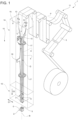
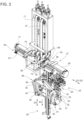
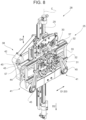
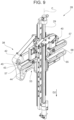
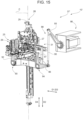
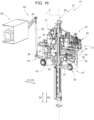
- package forming apparatus 10 may comprise one or more, preferentially a plurality of, operative devices 25, each one configured to manipulate, preferentially to at least transversally seal and/or transversally cut tube 4 and/or to form (shape), the, in use, advancing tube 4.
- package forming apparatus 10 may be configured to control each operative device 25 such to transversally seal and transversally cut tube 4 along equally spaced transversal cross sections, preferentially thereby forming the respective first transversal sealing bands 5 and/or the respective second transversal sealing bands.
- package forming apparatus 10 may comprise at least two operative devices 25, preferentially exactly two.
- each operative device 25 may comprise at least a first operative group 26 and a second operative group 27 configured to cooperate with one another so as to manipulate tube 4, preferentially so as to transversally seal and/or transversally cut and/or to at least partially form, tube 4.
- each first operative group 26 and the respective second operative group 27 may be movable with respect to one another, preferentially so as to move each first operative group 26 and the respective second operative group 27 towards and away from one another.
- each operative device 25 may be controllable between an active configuration, in which the respective first operative group 26 and the respective second operative group 27 are moved towards one another for manipulating, preferentially transversally sealing and/or transversally cutting and/or for at least partially forming, tube 4 and a rest configuration, in which the respective first operative group 26 and the respective second operative group 27 are withdrawn from one another.
- Each operative device 25, preferentially the respective first operative group 26 and the respective second operative group 27, may compress, preferentially squeeze and flat-lay, tube 4 along a respective cross-section, preferentially to also transversally seal and/or transversally cut tube 4 along the respective cross-section.
- each first operative group 26 and/or the respective second operative group 27 may be positioned in a respective first position and a respective second position, different from the respective first position, with the respective operative device 25 being controlled, respectively, in the respective active configuration and the respective rest configuration.
- each first operative group 26 and/or each second operative group 27 cyclically moves between the respective first position and the respective second position so as to cyclically control the respective operative device 25 between the respective active configuration and the respective rest configuration.
- each first operative group 26 and/or the respective second operative group 27 may be linearly movable along a respective direction D1, preferentially back and forth, so as to move between the first position and the second position.
- each operative device 25 may be configured such that control between the respective active configuration and the respective rest configuration occurs by linearly moving the respective first operative group 26 and/or the respective second operative group 27 along direction D1.
- each first operative group 26 and the linear movement of the respective second operative group 27 may be independent and/or different from one another.
- Each first operative group 26 may linearly move with a different motion profile and/or at a different speed and/or at a different distance and/or during a different time compared to the respective second operative group 27.
- each first operative group 26 and the respective second operative group 27 may both be linearly movable between the respective first position and the respective second position so as to control the respective operative device 25 between the respective active configuration and the respective rest configuration.
- direction D1 is transversal, preferentially perpendicular, to central axis A.
- package forming apparatus 10 may comprise a support structure 28 movably carrying operative devices 25.
- support structure 28 may comprise one or more support columns 29, each one movably carrying at least one, preferentially exactly one, respective operative device 25.
- package forming apparatus 10 may comprise at least two, preferentially exactly two, operative devices 25, and support structure 28 may comprise at least two, preferentially exactly two, support columns 29.
- each support column 29 may extend along a respective longitudinal axis C, more preferentially defining a respective longitudinal extension of support structure 28.
- Each longitudinal axis C may have a (substantially) vertical orientation.
- each operative device 25 may comprise a respective support group 30 movably carrying the respective first operative group 26 and the respective second operative group 27.
- each support group 30 may be movably coupled to one respective support structure 28, preferentially to one respective support column 29, and preferably may be movable along the respective support column 29.
- package forming apparatus 10 may also comprise a conveying unit 34 configured to advance each first operative group 26 and each second operative group 27 along a respective first advancement path and a respective second advancement path, respectively.
- conveying unit 34 may be connected to each support group 30 and may move support group 30 along a respective path, preferentially back and forth along the respective support column 29, so as to actuate a movement of the respective first operative groups 26 and the respective second operative groups 27 along respectively the respective first advancement path and the respective second advancement path.
- conveying unit 34 may be configured to move support groups 30 along a respective advancement direction D2, in particular during control of the respective operative device 25 from the respective rest configuration to the respective active configuration.
- advancement direction D2 is parallel to a direction of advancement of tube 4.
- direction D1 is transversal, preferentially perpendicular, to advancement direction D2.
- each first advancement path and each second advancement path may comprise an operative portion along which each first operative group 26 and the respective second operative group 27 advance, in use, in a direction of advancement of tube 4, and a return portion along which each first operative group 26 and each second operative group 27 advance, in use, in a direction opposite to the direction of advancement of tube 4 so as to bring each first operative group 26 and each second operative group 27 back to the respective operative portion.
- each operative portion and the respective return portion are substantially coincident, the respective first operative group 26 and the respective second operative group 27 moving in opposite directions when advancing, in use, along the respective operation portion and the respective return portion.
- each operative device 25 may be controlled from the respective rest configuration to the respective active configuration during advancement of the respective first operative group 26 and the respective second operative group 27 along the respective operative portion, preferentially to transversally seal, to transversally cut and to at least partially form tube 4.
- a first passage is defined between the respective first operative group 26 and the respective second operative group 27 of the first operative device 25.
- the respective first operative group 26 and the respective second operative group 27 of a second operative device 25 which are arranged close to each other (i.e. the second operative device 25 being in the active configuration), can pass through the first passage.
- the respective first operative group 26 and the respective second operative group 27 of the second operative device 25 are spaced apart from one another (i.e.
- a second passage is defined between the respective first operative group 25 and the respective second operative group 27 of the respective second operative device 25.
- the respective first operative group 26 and the respective second operative group 27 of the respective first operative device 25 which are arranged close to each other (i.e. the first operative device 25 being in the active configuration), can pass through the second passage.
- each support group 30 comprises a linear guide system 31 movably carrying the respective first operative group 26 and the respective second operative group 27.
- Each linear guide system 31 is configured such that the respective operative device 25 is controllable between the respective rest configuration and the respective active configuration by linearly moving the respective first operative group 26 and/or the respective second operative group 27, preferentially between the respective first position and the respective second position.
- each first operative group 26 and/or the respective second operative group 27 is/are linearly movably connected to the respective linear guide system 31 such that the respective operative device 25 is controllable between the rest configuration and the respective active configuration.
- each linear guide system 31 allows to move the respective first operative group 26 and/or the respective second operative group 27 along direction D1.
- linear guide system 31 may comprise at least one, preferentially at least two, (rectilinear) guiding bars 32. More preferentially, the respective guiding bars 32 may be parallel to one another.
- each first operative group 26 and the respective second operative group 27 may be movably coupled to the respective guiding bars 32.
- guiding bars 32 may define direction D1.
- guiding bars 32 may be transversal, preferentially perpendicular, to central axis A and/or longitudinal axes C.
- each support group 30 may comprise a support plate 33, preferentially movably coupled to support structure 28, preferentially the respective support column 29.
- the respective guide bars 32 may be mounted on the respective support plate 33.
- package forming apparatus 10 may further comprise an actuation unit 37 configured to selectively actuate the respective linear movement of the respective first operative group 26 and/or of the respective second operative group 27 along the respective linear guide system 31 so as to selectively control each operative device 25 between the respective rest configuration and the respective active configuration.
- actuation unit 37 configured to selectively actuate the respective linear movement of the respective first operative group 26 and/or of the respective second operative group 27 along the respective linear guide system 31 so as to selectively control each operative device 25 between the respective rest configuration and the respective active configuration.
- actuation unit 37 may be configured to control each first operative group 26 and the respective second operative group 27 between the respective first position and the respective second position.
- control of each operative device 25 in the respective active configuration is such that the respective first operative group 26 and the respective second operative group 27 form the respective cross-section being laterally displaced from central axis A.
- each cross-section may lie in a respective central plane being (substantially) parallel to central axis A.
- control of each operative device 25 in the respective active configuration is such that the respective first operative group 26 and the respective second operative group 27 form the respective cross-section being parallel to and comprising a portion of central axis A.
- packages 2 comprises the respective top panel being formed by two portions having different dimensions from one another, the respective first transversal sealing band 5 being interposed between the two portions.
- actuation unit 37 may be also configured to linearly move each operative device 25 along the respective linear guide system 31, preferentially the respective one or more guide bars 32, after control of operative device 25 in the respective active configuration, and in particular maintaining thereby operative device 25 in the respective active configuration.
- actuation unit 37 may be configured to simultaneously move each first operative group 26 and the respective second operative group 27 along the respective linear guide system 31, preferentially the respective one or more guide bars 32, after having moved each first operative group 26 and the respective second operative group 27 towards one another and while maintaining each first operative group 26 and the respective second operative group 27 approached to one another.
- actuation unit 37 may be configured to move each first operative group 26 and the respective second operative group 27 in the respective second position, and afterwards to contemporaneously move each first operative group 26 and the respective second operative group 27 along the one or more guide bars 32.
- Such a solution allows to laterally displace the respective cross-sections away from central axis A, thereby allowing to produce packages 2 having e.g. the respective first transversal sealing band 5 displaced from the respective longitudinal axis B.
- the respective cross-section is further laterally distanced from central axis A.
- such a solution may be of advantage when producing packages having a slanted top panel.
- the respective cross-section is - during its formation - laterally displaced from the respective central axis A.
- actuation unit 37 may comprise:
- Each actuator 39 may be, for example, a motor, preferentially an electrical motor.
- each cam mechanism 38 may comprise one or more cam profiles 40, in the specific case shown two, and one or more cam follower systems 41, in the specific case shown two, each one coupled to and configured to interact with one respective cam profile 40.
- one cam follower system 41 may be coupled to the respective first operative group 26 and another cam follower system 41 may be coupled to the respective second operative group 27.
- one cam follower system 41 may be coupled to one of the respective first operative group 26 and the respective second operative group 27.
- each cam follower system 41 may couple the respective cam profile 40 to the respective first operative group 26 or to the respective second operative group 27.
- each actuator 39 may be coupled to the respective cam profile(s) 40 of the respective cam mechanism 38 and is configured to actuate a relative movement between the respective support group 30 and the respective cam profile(s) 40 so as to control the respective operative device 25 between the respective rest configuration and the respective active configuration due to interaction of the respective cam follower system 41 with the respective cam profile 40, preferentially leading, in use, to linear movement of the respective first operative group 26 and/or the respective second operative group 27 along the respective guide system 31, preferentially the respective one or more guide bars 32.
- each actuator 39 may be configured to actuate a relative movement so as to actuate a linear movement, preferentially along direction D1, of the respective first operative group 26 and of the respective second operative group 27 towards or away from one another.
- each cam profile 40 may comprise and/or be realized in the form of a channel, preferentially provided on a respective carrier structure 42 of the respective cam mechanism 38 and being, delimited between at least two engagement surfaces 43.
- each cam follower system 41 may be configured to engage with the respective two engagement surfaces 43.
- each cam follower system 41 may have a respective cam roller 44, which is positioned within the respective channel, preferentially engaging the respective two engagement surfaces 43.
- each cam follower system 41 may have a transmission mechanism 45 carrying the respective cam roller 44 and being connected to the respective first operative group 26 or the respective second operative group 27.
- each transmission mechanism 45 is configured to transfer a respective movement of the respective cam roller 44 along the respective cam profile 40, preferentially the respective two engagement surfaces 43, preferentially as a result of the respective actuator 39 moving carrier structure 42, to the respective first operative group 26 or the respective second operative group 27 resulting in the respective linear movement.
- cam mechanism 38 may comprise two cam profiles 40.
- the two cam profiles 40 may be symmetric with respect to a mirror axis S interposed between the two cam profiles 40.
- mirror axis S may be parallel to longitudinal axis C and/or central axis A.
- the two cam profiles 40 may be asymmetric with respect to the respective mirror axis S.
- such a solution may also allow to apply different motion profiles to the respective first operative group 26 and the respective second operative group 27 during control of the respective operative device 25 from the respective rest configuration to the respective active configuration.
- each actuation unit 37 may comprise one or more coupling bars 46, in the specific case shown two, coupling the respective actuator 39 to the respective cam mechanism 38, preferentially the respective carrier structure 42.
- each actuation unit 37 may also comprise an endless belt 47 coupled to the respective actuator 39 and carrying the respective coupling bar 46 such that actuation of actuator 39 leads to advancement of the respective endless belt 47, which again leads to a linear movement of the respective coupling bar 46, which then results in movement of the respective carrier structure 42.
- each first operative group 26 may comprise a first half-shell 51 and the respective second operative group 27 may comprise a second half-shell 52 configured to at least partially form in cooperation with the respective first half-shell 51 tube 4.
- each first half-shell 51 and each respective second half-shell 52 may be movable between a respective first limit position and a respective second limit position, preferentially when the respective operative device 25 is controlled in, respectively, the respective rest configuration and the respective active configuration.
- each first half-shell 51 and each respective second half-shell 52 may be moved in the respective second limit position with the respective first operative group 26 and the respective second operative group 27 being moved between the respective first position towards the respective second position.
- each first half-shell 51 and each respective second half-shell 52 may engage with and exert a force on tube 4 for at least partially forming tube 4 while being positioned in the respective second limit position.
- each first half-shell 51 and each second half-shell 52 are subjected to an angular movement when moving between the first limit position and the second limit position.
- each first half-shell 51 is rotatably coupled to a portion of the first operative group 36 and each second half-shell 52 is rotatably coupled to a portion of the second operative group 37.
- package forming apparatus 10 may also comprise one or more control devices 53, each one configured to selectively control one respective first half-shell 51 and the respective second half-shell 52 between the respective first limit position and the respective second limit position.
- control devices 53 each one configured to selectively control one respective first half-shell 51 and the respective second half-shell 52 between the respective first limit position and the respective second limit position.
- each control device 53 may comprise:
- each cam following element 55 may be coupled to the respective engagement surface profile 54 such that movement of the respective engagement surface profile 54 along direction D4 also leads to movement of the respective cam following element 55 in direction D4.
- each cam following element 55 is coupled to the respective first half-shell 51 or the respective second half-shell 52 such that movement of the respective cam following element 55 along direction D4 leads to movement of the respective first half-shell 51 or the respective second half-shell 52 between the respective first limit position and the respective second limit position.
- direction D4 is parallel to direction D2 and/or central axis A.
- one engagement surface profile 54 and one respective cam following element 55 may be associated to the respective first half-shell 51 and the other respective engagement surface profile 54 and the other respective cam following element 55, such as another cam roller, may be associated to the respective second half-shell 52.
- each engagement surface profile 54 may be movably connected to the respective support group 30, preferentially the respective carrier structure 42.
- each engagement surface profile 54 may be configured to be subject to a relative movement with respect to the respective carrier structure 42.
- each engagement surface profile 54 By having each engagement surface profile 54 extending along direction D3 it is possible to linearly move the respective first operative group 26 and/or the respective second operative group 27 along the respective linear guide system 31 by operation of actuation unit 37 without inducing a movement of the respective first half-shell 51 and the respective second half-shell 52. Movement of the respective first half-shell 51 and the respective second half-shell 52 between the respective first limit position and the respective second limit position is obtained only by operation of the respective actuator member 56.
- each actuator member 56 may be configured such to induce a relative movement of the respective engagement surface profiles 54 with respect to the respective support group 30.
- Each control device 53 may comprise one or more cam members 57, each having a respective groove and each cam following element 55 may be arranged within one respective groove.
- each groove may comprise the respective engagement surface profile 54.
- each groove defines the respective engagement surface profile 54.
- each control device 53 may comprise a control bar 58 coupled to the respective actuator member 56, preferentially by means of an endless belt 59, and to the respective cam members 57.
- each operative device 25 may comprises a pair of movable interaction tabs 63, each pair of interaction tabs 63 being configured to interact, in use, with tube 4 from opposite sides thereof and being configured to move with respect to one another.
- one of the respective first operative group 26 and the respective second operative group 27, in the specific case shown the respective second operative group 27, may comprise the respective pair of interaction tabs 63.
- Package forming apparatus 10 may also comprise one or more actuation devices 64, each one operatively coupled to one respective pair of interaction tabs 63 and being configured to modify the relative position of the respective interaction tabs 63 of the respective pair of interaction tabs 63.
- each actuation device 64 may comprise:
- each cam follower 66 may be arranged such that movement of the respective interaction surface profile 65 along direction D4 also results in movement of the respective cam follower 64 along direction D4.
- each cam follower 66 may be coupled to the respective pair of interaction tabs 63 such that movement of the respective cam follower 66 along direction D4 leads to a modification of the relative position of the respective pair of interaction tabs 63.
- each actuation device 64 may comprise a cam element 68 having a groove and each cam follower 66 may be arranged within the respective groove.
- each groove may comprise the respective interaction surface profile 65.
- each groove defines the respective interaction surface profile 65.
- actuating system 67 may be coupled to cam element 68 so as to move the respective interaction surface profile 65 along direction D4.
- each interaction surface profiles 65 By having each interaction surface profiles 65 extending along direction D3 it is possible to linearly move the respective first operative group 26 and/or the respective second operative group 27 along the respective linear guide system 31 by operation of actuation unit 37 without inducing a movement of the respective pair of interaction tabs 63 with respect to one another. Movement of the respective first operative group 26 and/or the respective second operative group 27 along the respective linear guide system 31 does not lead to any movement of the respective pair of interaction tabs 63 as the respective cam follower 66 moves along interaction surface profile 65, preferentially within the respective groove.
- each actuating system 67 may be configured such to induce a relative movement of the respective interaction surface profiles 65 with respect to the respective support group 30.
- each cam element 68 may be movably connected to a respective pillar 69 of support structure 28, preferentially each pillar 69 being parallel to support columns 29.
- each actuation device 64 may comprise a control bar 70 coupled to the respective actuating system 67, preferentially by means of an endless belt 71, and to the respective cam element 68.
- each operative device 25 may comprise a respective sealing element 75 and a respective counter-sealing element 76 configured to transversally seal in cooperation with one another tube 4, preferentially along the respective cross-section.
- first operative group 26 may comprise the respective sealing element 75 and the respective second operative group 27 may comprise the respective counter-sealing element 76.
- each sealing element 75 and the respective counter-sealing element 76 may be configured to at least transversally compress, in particular flat-lay and squeeze, and to transversally seal tube 4, in particular during advancement of tube 4 along tube advancement path Q and while the respective operative device 25 is controlled in the respective active configuration.
- each sealing element 75 and the respective counter-sealing element 76 may be configured to engage tube 4 from opposite sides thereof.
- each sealing element 75 may comprise a source configured to generate the energy needed to obtain the sealing effect.
- sealing element 75 may be a sonotrode having ultrasound-emitters or sealing element 75 may have an electromagnetic induction source.
- Each counter-sealing element 76 may be a passive element (i.e. not having an active source).
- counter-sealing element 47 may be a metal anvil or a deformable pad.
- each operative device 25 may comprise at least one cutting element configured to transversally cut tube 4.
- each cutting element may be configured to transversally cut tube 4 after sealing of tube 4 by means of the respective sealing assembly.
- conveying unit 34 may comprise one or more actuators 77, one or more control bars 78, each one coupled to one respective actuator 77 and to one respective support group 30, in particular by means of a respective endless belt 79.
- each actuator 39 and/or each actuator member 56 and/or each actuating system 67 and/or each actuator 77 may comprise and/or may consist of a respective (electrical) motor, preferentially a respective servomotor.
- packaging machine 1 produces packages 2 filled with the pourable product.
- conveying device 11 advances web 3 along web advancement path P.
- Tube forming and sealing device 12 forms tube 4 from the advancing web 3 and longitudinally seals tube 4.
- filling device 13 fills tube 4 with the pourable product and package forming apparatus 10 forms, transversally seals and transversally cuts tube 4 so as to obtain packages 2.
- operative devices 25 manipulate, preferentially transversally seal, transversally cut and at least partially form tube 4.
- each operative device 25 the respective first operative group 26 and the respective second operative group 27 are cyclically and linearly moved towards and away from one another so as to cyclically control the respective operative device 25 between the respective rest configuration and the respective active configuration.
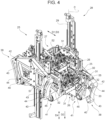
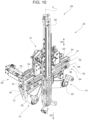
- number 10' indicates an alternative embodiment of a package forming apparatus according to the present invention.
- package forming apparatus 10' is similar to packaging apparatus 10, the following description is limited to the differences between them, and using the same references, where possible, for identical or corresponding parts.
- Package forming apparatus 10' differs from package forming apparatus 10 in comprising actuation unit 37' .
- actuation unit 37' is similar to actuation unit 37, the following description is limited to the differences between them, and using the same references, where possible, for identical or corresponding parts.
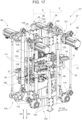
- Actuation unit 37' differs from actuation unit 37 in comprising for each operative device 25 a respective first actuator coupled to the respective first operative group 26 and a respective second actuator 86 coupled to the respective second operative group 27.
- each first actuator and each second actuator 86 can comprise, even more particular consist of, an electrical motor.
- Each one of the first actuator and the respective second actuator 86 are configured to linearly move, respectively, the respective first operative group 26 and the respective second operative group 27 along linear guide system 31, in particular so as to selectively control each operative device 25 between the respective rest configuration and the respective active configuration, and in particular to also linearly move the respective operative device 25 along linear guide system 31 after control of the respective operative device 25 in the respective active configuration.
- actuation unit 37 comprises for each operative device 25 two actuators (namely the respective first actuator and the respective second actuator 86), each one being configured to solely control the linear movement of the respective first operative group 26 or the respective second operative group 27. In this way, it is possible to obtain further increased production velocities.
- actuation unit 37' comprises for each operative group 25 one first lever mechanism 87 coupling the respective first operative group 26 and the respective first actuator with one another and a respective second lever mechanism 88 coupling the respective second operative group 27 and the respective second actuator 86 with one another.
- each first lever mechanism 87 differs from the working principle of the respective second lever mechanism 88. This is due to the specific positioning of the respective first actuator and the respective second actuator 86.
- a position of the first actuator corresponds to the position of actuator 39 of actuation unit 37. Additionally, each first actuator is coupled to the respective first lever mechanism 87 in the same manner as each actuator 39 is coupled to the respective cam mechanism 38.
- the first actuator corresponds to actuator 39 of the actuation unit 37.
- actuation unit 37' comprises for each operative device 25 one respective coupling bar 46 coupling the respective first actuator with the respective first lever mechanism 87.
- actuation unit 37' comprises for each operative device 25 one respective endless belt 47 carrying the respective coupling bar 46.
- each first lever mechanism 87 comprises a carrier structure 42' connected to the respective coupling bar 46.
- each first lever mechanism 87 comprises a first lever bar 89 angularly movably connected to the respective carrier structure 42' and a transmission group 90 angularly movably connected to first lever bar 89 and being connected to the respective first operative group 26.
- each transmission group 90 comprises a first bar 91 angularly movably connected to the respective first lever bar 89, a second bar 92 connected to the respective first operative group 26, in particular through a further connection lever, and a coupling element connecting first bar 91 with second bar 92.
- each first bar 91 and the respective second bar 92 are fixed to opposite end portions of the respective coupling element.
- each coupling element extends along an axis and is angularly movably connected to the respective support plate 33.
- actuation of the first actuator leads to advancement of the respective endless belt 47, which again leads to a linear movement of the respective coupling bar 46, which then results in movement of the respective carrier structure 42'.
- movement of the respective carrier structure 42' can induce an angular movement of the respective first lever bar 89, which again induces a movement of the respective transmission group 90, which then leads to the linear movement of the respective first operative group 26.
- movement of first lever bar 89 induces an angular movement of the respective coupling element about the respective axis.
- each second lever mechanism 88 comprises a first arm 93 connected to second actuator 86, in particular an axle of second actuator 86, a second arm 94 connected to the respective second operative group 27 and a transmission bar 95 connected, in particular hinged, to first arm 93 and second arm 94.
- each second arm 94 is angularly movably mounted to the respective support group 30, in particular the respective support plate 33.
- each second arm 94 comprises a first portion 96 connected to the respective transmission bar 95 and a second portion 97 connected to the respective second operative group 27, in particular through a further connection lever.
- each first portion 96 and the respective second portion 97 are transversally arranged with respect to one another, e.g. so as to define a V-shape.
- each first portion 96 and the respective second portion 97 are formed in a single piece.
- each second actuator 86 induces a movement of the respective transmission bar 95 through the first arm 93. Movement of the transmission bar 95 induces an angular movement of the respective second arm 94, which again leads to movement of the respective second operative group 27.
- package forming apparatus 10' Operation of package forming apparatus 10' is similar to the use of package forming apparatus 10. In the following, we describe the difference between the use of package forming unit 10 and package forming unit 10'.
- each first operative group 26 and the respective second operative group 27 is controlled.
- the linear movement of each first operative group 26 and the respective second operative group 27 is controlled by one single actuator 39 acting on the respective cam mechanism 38, while in the case of package forming apparatus 10' the linear movement of each first operative group 26 and the respective second operative group 27 is controlled by, respectively, the corresponding first actuator and the corresponding second actuator 86.
- each first operative group 26 is controlled by the respective first actuator and the linear movement of each second operative group 27 is controlled by the respective second actuator 86.
- each first actuator controls movement of the respective first operative group 26 through the respective first lever mechanism 87 and each second actuator 86 controls movement of the respective second operative group 86 through the respective second lever mechanism 88.
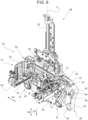
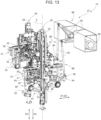
- number 10" indicates an alternative embodiment of a package forming apparatus according to the present invention.
- package forming apparatus 10'' is similar to packaging apparatus 10', the following description is limited to the differences between them, and using the same references, where possible, for identical or corresponding parts.
- Package forming apparatus 10'' differs from package forming apparatus 10' in comprising actuation unit 37".
- Actuation unit 37" is similar to actuation unit 37' but differs from actuation unit 37' in the arrangement of first actuators 85 and second actuators 86.
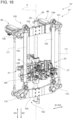
- actuation unit 37" comprises for each operative device 25 at least one first coupling mechanism 100 coupling first operative group 26 and the respective first actuator 85 with one another and a second coupling mechanism 101 coupling second operative group 27 and the respective second actuator 86 with one another.
- actuation unit 37" comprises for each operative device 25 a support 102 coupled to, in particular moveably coupled to, the respective support structure 28, in particular the respective support pillar 29.
- each support 102 comprises a first plate 103 and a second plate 104 coupled to, in particular moveably coupled to, the respective support structure 28, in particular the respective support pillar 29. Even more specifically, each first plate 103 and the respective second plate 104 interpose the respective support group 30, in particular the respective support plate 33, between one another.
- each support group 30, in particular support plate 33 moves between the respective first plate 103 and the respective second plate 104.
- each support 102 in particular the respective first plate 103, carries the respective first actuator 85 and the respective second actuator 86. Additionally, each support 102, in particular the respective first plate 103 and the respective second plate 104, carry at least portions of first coupling mechanism 101 and second coupling mechanism 102.
- each first actuator 85 and each second actuator 86 are mounted to the respective first plate 103.
- each first actuator 85 and the respective second actuator 86 are mounted to opposite portions of the respective first plate 103.
- each first coupling mechanism 100 and each second coupling mechanism 102 comprises a respective control bar 105, e.g. parallel to longitudinal axis A and/or longitudinal axis C, coupled to, respectively, the respective first actuator 85 and the respective second actuator 86 and a respective coupling group 106 connected to, respectively, the respective first operative group 26 and the respective second operative group 27.
- each control bar 105 is configured to interact with the respective coupling group 106 so as to control the linear movement of the respective first operative group 26 or the respective second operative group 27.
- each control bar 105 by means of the respective first actuator 85 or the respective second actuator 86 results in a movement of the respective coupling group 106, which again leads to movement of the respective first operative device 26 or the respective second operative device 27.
- each coupling group 106 comprises a respective passage and the respective coupling bar 105 extends through the respective passage.
- each coupling group 106 comprises at least two abutment elements 108, in the specific case shown, rollers, partially delimiting the respective passage.
- a portion of each coupling bar 105 is interposed between the respective abutment elements 108 and is configured to abut against at least one of the abutment elements 108 when being moved by actuation of the respective first actuator 85 or the respective second actuator 86 and so as to linearly move the respective first operative group 26 or the respective second operative group 27.
- each first actuator 85 and each second actuator 86 are configured to actuate a movement of the respective coupling bar 105 along an auxiliary direction having a component parallel to direction D1 and such that interaction of coupling bar 105 with the respective coupling group 106, in particular at least one of the respective abutment elements 108, leads to the linear movement of coupling group 106 along direction D1 and therewith also to the linear movement of the respective first operative group 26 or the respective second operative group 27 along direction D1.
- each first coupling mechanism 100 and each second coupling mechanism 101 comprises a respective first arm 109 rotatably connected to the respective first plate 103 and connected to the respective first actuator 85 or the respective second actuator 86, more specifically a respective axle thereof, and a second arm 110 rotatably connected to the respective second plate 104.
- each first arm 109 and each second arm 110 have a V-shape.
- Each coupling bar 105 is connected to the respective first arm 109 and the respective second arm 110.
- each first coupling mechanism 100 and each second coupling mechanism 101 comprises an auxiliary bar 111, in particular parallel to the respective coupling bar 105, connected to the respective first arm 109 and the respective second arm 110.
- each coupling bar 105 and the respective auxiliary bar 111 are connected to opposite portions of the respective first arm 109 and to opposite portions of the respective second arm 110.
- Operation of package forming apparatus 10" is similar to operation of package forming apparatus 10'.
- first operative devices 26 and second operative devices 27 are induced.
- each first operative device 26 and of each second operative device 27 is controlled by controlling movement of the respective control bar 105.
- package forming apparatus 10, 10', 10'' comes along with a simple structure and kinematics.
- package forming apparatus 10, 10', 10"' comes along with reduced weight with respect to the package forming apparatuses known in the art.
Landscapes
- Engineering & Computer Science (AREA)
- Mechanical Engineering (AREA)
- Containers And Plastic Fillers For Packaging (AREA)
Applications Claiming Priority (1)
| Application Number | Priority Date | Filing Date | Title |
|---|---|---|---|
| IT102023000008181A IT202300008181A1 (it) | 2023-04-26 | 2023-04-26 | Apparato per formare pacchetti per una macchina di confezionamento e macchina di confezionamento per formare pacchetti riempiti con un prodotto versabile |
Publications (1)
| Publication Number | Publication Date |
|---|---|
| EP4454864A1 true EP4454864A1 (de) | 2024-10-30 |
Family
ID=88097394
Family Applications (1)
| Application Number | Title | Priority Date | Filing Date |
|---|---|---|---|
| EP24171099.5A Pending EP4454864A1 (de) | 2023-04-26 | 2024-04-18 | Verpackungsmaschine und verpackungsmaschine zum formen von mit einem fliessfähigen produkt gefüllten verpackungen |
Country Status (4)
| Country | Link |
|---|---|
| EP (1) | EP4454864A1 (de) |
| CN (1) | CN120957861A (de) |
| IT (1) | IT202300008181A1 (de) |
| WO (1) | WO2024223414A1 (de) |
Citations (3)
| Publication number | Priority date | Publication date | Assignee | Title |
|---|---|---|---|---|
| US20090013654A1 (en) * | 2006-02-07 | 2009-01-15 | Roberto Talacci | Bag Packaging Machine With Vertical Intermittent Operation |
| ES2318993B1 (es) * | 2005-10-21 | 2010-02-05 | T.M.E. S.R.L. | "dispositivo para llenar, cerrar y separar envases que contienen material a granel". |
| ITGE20110058A1 (it) * | 2011-05-26 | 2012-11-27 | Gianluigi Rossi | " dispositivo di saldatura dei pacchi con azionamento a doppia leva per macchine impacchettatrici " . |
-
2023
- 2023-04-26 IT IT102023000008181A patent/IT202300008181A1/it unknown
-
2024
- 2024-04-18 WO PCT/EP2024/060617 patent/WO2024223414A1/en active Pending
- 2024-04-18 EP EP24171099.5A patent/EP4454864A1/de active Pending
- 2024-04-18 CN CN202480022643.8A patent/CN120957861A/zh active Pending
Patent Citations (3)
| Publication number | Priority date | Publication date | Assignee | Title |
|---|---|---|---|---|
| ES2318993B1 (es) * | 2005-10-21 | 2010-02-05 | T.M.E. S.R.L. | "dispositivo para llenar, cerrar y separar envases que contienen material a granel". |
| US20090013654A1 (en) * | 2006-02-07 | 2009-01-15 | Roberto Talacci | Bag Packaging Machine With Vertical Intermittent Operation |
| ITGE20110058A1 (it) * | 2011-05-26 | 2012-11-27 | Gianluigi Rossi | " dispositivo di saldatura dei pacchi con azionamento a doppia leva per macchine impacchettatrici " . |
Also Published As
| Publication number | Publication date |
|---|---|
| IT202300008181A1 (it) | 2024-10-26 |
| CN120957861A (zh) | 2025-11-14 |
| WO2024223414A1 (en) | 2024-10-31 |
Similar Documents
| Publication | Publication Date | Title |
|---|---|---|
| EP3254980B1 (de) | Verpackungsvorrichtung zur formung versiegelter pakete aus schlauchförmigem verpackungsmaterial | |
| EP3725689B1 (de) | Verpackungsmaschine und verfahren zum herstellen von versiegelten verpackungen | |
| EP3943400B1 (de) | Verpackungsformungseinheit, verpackungsvorrichtung mit einer verpackungsformungseinheit und verfahren zur formung von verpackungen | |
| US20050028496A1 (en) | Forming unit for producing sealed packages from a tube of sheet packaging material filled with a pourable food product | |
| EP4454864A1 (de) | Verpackungsmaschine und verpackungsmaschine zum formen von mit einem fliessfähigen produkt gefüllten verpackungen | |
| EP4265533A1 (de) | Zuführförderer für eine falzvorrichtung, falzvorrichtung mit einem zuführförderer und verpackungsmaschine mit einer falzvorrichtung | |
| EP3498616A1 (de) | Verpackungsformungseinheit zur formung von versiegelten verpackungen | |
| EP4410522A1 (de) | Verpackungsmaschine und verpackungsmaschine zum formen von mit einem fliessfähigen produkt gefüllten verpackungen | |
| EP4410523A1 (de) | Verpackungsmaschine und verpackungsmaschine zum formen von mit einem fliessfähigen produkt gefüllten verpackungen | |
| EP4410692A1 (de) | Verpackungsmaschine und verpackungsmaschine zum formen von mit einem fliessfähigen produkt gefüllten verpackungen | |
| EP4410690B1 (de) | Verpackungsmaschine und verpackungsmaschine zum formen von mit einem fliessfähigen produkt gefüllten verpackungen | |
| EP4410524A1 (de) | Verpackungsmaschine und verpackungsmaschine zum formen von mit einem fliessfähigen produkt gefüllten verpackungen | |
| EP4458689A1 (de) | Verpackungsmaschine für eine verpackungsmaschine, verpackungsmaschine zum formen von mit einem fliessfähigen produkt gefüllten verpackungen und verfahren zum formen von verpackungen | |
| EP4410520A1 (de) | Verpackungsmaschine und verpackungsmaschine zum formen von mit einem fliessfähigen produkt gefüllten verpackungen | |
| EP4474299A1 (de) | Verpackungsmaschine und vorrichtung zum herstellen von verpackungen | |
| EP4506270A1 (de) | Formungseinheit zur formung versiegelter verpackungen mit einem giessbaren produkt und verfahren zur formung versiegelter verpackungen mit einem giessbaren produkt |
Legal Events
| Date | Code | Title | Description |
|---|---|---|---|
| PUAI | Public reference made under article 153(3) epc to a published international application that has entered the european phase |
Free format text: ORIGINAL CODE: 0009012 |
|
| STAA | Information on the status of an ep patent application or granted ep patent |
Free format text: STATUS: THE APPLICATION HAS BEEN PUBLISHED |
|
| AK | Designated contracting states |
Kind code of ref document: A1 Designated state(s): AL AT BE BG CH CY CZ DE DK EE ES FI FR GB GR HR HU IE IS IT LI LT LU LV MC ME MK MT NL NO PL PT RO RS SE SI SK SM TR |
|
| STAA | Information on the status of an ep patent application or granted ep patent |
Free format text: STATUS: REQUEST FOR EXAMINATION WAS MADE |
|
| 17P | Request for examination filed |
Effective date: 20250430 |