EP4454235B1 - Orchestrierung der erfassung von trainingsdaten - Google Patents
Orchestrierung der erfassung von trainingsdaten Download PDFInfo
- Publication number
- EP4454235B1 EP4454235B1 EP22757897.8A EP22757897A EP4454235B1 EP 4454235 B1 EP4454235 B1 EP 4454235B1 EP 22757897 A EP22757897 A EP 22757897A EP 4454235 B1 EP4454235 B1 EP 4454235B1
- Authority
- EP
- European Patent Office
- Prior art keywords
- communication network
- data
- network data
- model
- orchestration
- Prior art date
- Legal status (The legal status is an assumption and is not a legal conclusion. Google has not performed a legal analysis and makes no representation as to the accuracy of the status listed.)
- Active
Links
Images





Classifications
-
- H—ELECTRICITY
- H04—ELECTRIC COMMUNICATION TECHNIQUE
- H04L—TRANSMISSION OF DIGITAL INFORMATION, e.g. TELEGRAPHIC COMMUNICATION
- H04L41/00—Arrangements for maintenance, administration or management of data switching networks, e.g. of packet switching networks
- H04L41/16—Arrangements for maintenance, administration or management of data switching networks, e.g. of packet switching networks using machine learning or artificial intelligence
-
- H—ELECTRICITY
- H04—ELECTRIC COMMUNICATION TECHNIQUE
- H04L—TRANSMISSION OF DIGITAL INFORMATION, e.g. TELEGRAPHIC COMMUNICATION
- H04L43/00—Arrangements for monitoring or testing data switching networks
- H04L43/08—Monitoring or testing based on specific metrics, e.g. QoS, energy consumption or environmental parameters
-
- G—PHYSICS
- G06—COMPUTING OR CALCULATING; COUNTING
- G06N—COMPUTING ARRANGEMENTS BASED ON SPECIFIC COMPUTATIONAL MODELS
- G06N3/00—Computing arrangements based on biological models
- G06N3/02—Neural networks
- G06N3/04—Architecture, e.g. interconnection topology
- G06N3/045—Combinations of networks
- G06N3/0455—Auto-encoder networks; Encoder-decoder networks
-
- G—PHYSICS
- G06—COMPUTING OR CALCULATING; COUNTING
- G06N—COMPUTING ARRANGEMENTS BASED ON SPECIFIC COMPUTATIONAL MODELS
- G06N3/00—Computing arrangements based on biological models
- G06N3/02—Neural networks
- G06N3/04—Architecture, e.g. interconnection topology
- G06N3/0475—Generative networks
-
- G—PHYSICS
- G06—COMPUTING OR CALCULATING; COUNTING
- G06N—COMPUTING ARRANGEMENTS BASED ON SPECIFIC COMPUTATIONAL MODELS
- G06N3/00—Computing arrangements based on biological models
- G06N3/02—Neural networks
- G06N3/08—Learning methods
- G06N3/092—Reinforcement learning
-
- G—PHYSICS
- G06—COMPUTING OR CALCULATING; COUNTING
- G06N—COMPUTING ARRANGEMENTS BASED ON SPECIFIC COMPUTATIONAL MODELS
- G06N7/00—Computing arrangements based on specific mathematical models
- G06N7/01—Probabilistic graphical models, e.g. probabilistic networks
Definitions
- the present disclosure relates to a method for orchestrating acquisition of a quantity of communication network data for training a target Machine Learning model for use by a communication network node.
- the method may be performed by an orchestration node.
- the present disclosure also relates to an orchestration node, and to a computer program product configured, when run on a computer, to carry out a method for orchestrating acquisition of a quantity of communication network data.
- Al/ML for traffic steering is one example of the use cases being introduced, and may encompass: capacity improvements and increased energy efficiency, quality of service (QoS) prediction, and improved radio resource management (RRM).
- QoS quality of service
- RRM radio resource management
- AI/ML use cases are poised to bring significant improvements in the manner that communication networks operate.
- it is necessary to collect large volumes of data. This data is required to train the relevant Al/ML models to be able to capture, in an accurate manner, valid associations between data inputs and output target variables, and to sustain a reasonable performance of Al/ML techniques over time.
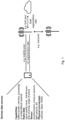
- Figure 1 is a schematic illustration of information that may potentially be collected by wireless devices (UEs) in a communication network in order to support Al/ML use cases. Collection and transfer of data as illustrated in Figure 1 , and as required for the training of AI/ML models, can be problematic for several reasons. In particular, transferring the volume of data that is needed to implement useful Al/ML techniques can come at the expense of using communication network bandwidth which would otherwise be reserved to transport information needed for the regular operation of the network. For example, the network bandwidth required to transfer useful data may already be used by a user equipment (UE) of the network for regular operation of the network (control plane messaging) and/or user plane traffic.
- UE user equipment
- the processing of relevant data and/or information may take place at a data center which is located outside of the country where the relevant data is collected. This can be problematic, as certain countries may restrict the movement of such data beyond their geographical borders.
- Generative models can assist with some of the above mentioned challenges.
- Generative models are designed to learn a data distribution ( ⁇ , ⁇ ) of a dataset and then generate new data based on the learned data distribution.
- ⁇ , ⁇ data distribution
- real data e.g. data not generated by a generative model
- the resource cost associated with obtaining and transferring such real data can be prohibitively high.
- generating data using a generative model can require a significant amount of computational resources which may not always be available when needed.
- Throttling is another technique which may be used to reduce the volume of data that is transferred in a network. Throttling techniques can include, for example, capping data traffic at a particular limit once a threshold is exceeded. However, throttling techniques do not reduce the total amount of data that is transferred in the network, but instead act to lower the data transfer rate in order to make the data load more tolerable for available consumers and/or resources in the network.
- US 2021/201208 A1 discloses using results of a simulation performed using a gradually trained machine learning model to determine an amount of training data sufficient to train other machine learning models.
- a method for orchestrating acquisition of a quantity of communication network data for training a target Machine Learning (ML) model for use by a communication network node is performed by an orchestration node.
- the method comprises obtaining a representation of a data acquisition state for the communication network data.
- the method further comprises using an orchestration ML model to map the representation of the data acquisition state to a first amount of the communication network data to be collected from sources of the communication network data, and a remaining amount of the communication network data to be generated using a generative model.
- the method further comprises causing at least the first amount of the communication network data to be collected from sources of the communication network data.
- the method further comprises, when the collected communication network data fulfils an availability criterion for training of a generative model, causing a generative model for the communication network data to be trained using the collected communication network data.
- the method further comprises causing the remaining amount of the communication network data to be generated using the trained generative model.
- the method further comprises causing the quantity of communication network data, comprising the first amount of collected data and the remaining amount of generated data, to be provided to the communication network node for training of the target ML model.
- a representation of a data acquisition state for the communication network data comprises: a number of target ML models to be trained using the dataset; availability of resources for collection of the communication network data from data sources; and a cost of resources for generating the communication network data.
- a computer program product comprising a computer readable medium, the computer readable medium having computer readable code embodied therein, the computer readable code being configured such that, on execution by a suitable computer or processor, the computer or processor is caused to perform a method according to any one of the aspects or examples of the present disclosure.
- an orchestration node for orchestrating acquisition of a quantity of communication network data for training a target ML model for use by a communication network node.
- the orchestration node comprises processing circuitry configured to cause the orchestration node to obtain a representation of a data acquisition state for the communication network data.
- the processing circuitry is further configured to use an orchestration ML model to map the representation of the data acquisition state to a first amount of the communication network data to be collected from sources of the communication network data, and a remaining amount of the communication network data to be generated using a generative model.
- the processing circuitry is further configured to cause at least the first amount of the communication network data to be collected from sources of the communication network data.
- the processing circuitry is further configured to, when the collected communication network data fulfils an availability criterion for training of a generative model, cause a generative model for the communication network data to be trained using the collected communication network data.
- the processing circuitry is further configured to cause the remaining amount of the communication network data to be generated using the trained generative model.
- the processing circuitry is further configured to cause the communication network data, comprising the first amount of collected data and the remaining amount of generated data, to be provided to the communication network node for training of the target ML model.
- a representation of a data acquisition state for the communication network data comprises: a number of target ML models to be trained using the dataset; a cost of resources for collection of the communication network data from data sources; and a cost of resources for generating the communication network data.
- aspects and examples of the present disclosure thus provide a method, an orchestration node, and a computer readable medium to orchestrate the acquisition of a quantity of communication network data for training a target ML model for use by a communication network node.
- an orchestration ML model may be used to determine an amount of the communication network data to be collected from sources of the communication network data, and a remaining amount of the communication network data to be generated using a generative model.
- the aspects and examples of the present disclosure provide a technique for determining an optimal split, between collected data and generated data, for acquiring the quantity of communication network data for training a target ML model.
- ML model encompasses within its scope the following concepts:
- Examples of the present disclose thus propose an orchestration node that may be privacy-aware, and which monitors factors such as network footprint and availability of computational resources to orchestrate collection of data from various data sources (such as UEs) as well as generation of data.
- the node may use optimization techniques (such as Reinforcement Learning) to determine an optimal "split" between collecting communication network data from sources of the data, and generating synthetic data, given factors such as available bandwidth and available computational resources.
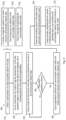
- Figure 2 is a flow chart illustrating process steps in a computer implemented method 200 for orchestrating acquisition of a quantity of communication network data for training a target Machine Learning (ML) model for use by a communication network node.
- the quantity of communication network data may for example comprise a dataset, or may comprise a stream or a batch of data.
- the communication network data may be data gathered by communication network nodes or available to communication network nodes, for example having been acquired by communication network nodes or being locally available to the communication network nodes.
- Such data may comprise data from the communication network, such as performance or other operational data, or may comprise data relating to a service or operation external to the communication network, but which is collected and/or stored by communication network nodes, including for example monitoring data such as environment or machine/equipment sensor data.
- the method 200 is performed by an orchestration node, which may comprise a physical or virtual node, and may be implemented in a computing device, server apparatus and/or in a virtualized environment, for example in a cloud, edge cloud or fog deployment.
- the orchestration node may comprise or be instantiated in any part of a network, for example in a logical core network node of a communication network, network management centre, network operations centre, radio access network node etc.
- a radio access network node may comprise a base station, eNodeB, gNodeB, or any other current or future implementation of functionality facilitating the exchange of radio network signals between nodes and/or users of a communication network.
- Any communication network node may itself be divided between several logical and/or physical functions, and any one or more parts of the orchestration node may be instantiated in one or more logical or physical functions of a communication network node.
- the orchestration node may therefore encompass multiple logical entities, as discussed in greater detail below.
- the method 200 comprises obtaining a representation of a data acquisition state for the communication network data.
- the data acquisition state for the communication network data comprises the current situation of the communication network with regard to the acquisition of the communication network data. This state may be described by multiple parameters, quantifying different aspects of the current situation with regard to acquisition of this particular data. These parameters may include for example demand for acquisition of the data (for example some representation of the quantity of tasks for which the data is required, the number of entities requesting the data etc.), and the current cost to the communication network of acquiring the data. Current cost may include the availability of sources of the data, availability of resources for acquiring the data, some quantification of the relative importance of other tasks for which such resources may be needed, etc.
- the data acquisition state for the communication network data may thus be characterized by a wide range of parameters.
- a representation of the data acquisition state comprises values of at least some of these parameters.
- the representation may for example comprise a vector, matrix, or other tensor of values for one or more parameters that characterize the current situation with regard to acquisition of the communication network data.
- the representation of a data acquisition state for the communication network data comprises a number of target ML models to be trained using the communication network data; a cost of resources for collection of the communication network data from data sources; and a cost of resources for generating the communication network data.
- the cost of resources for collection and generation of the communication network data may encompass the availability of such resources (for example, if no resources are available the cost may be infinitely or prohibitively high), as well as priority of the task of data acquisition. For example, if resources are available but other high priority or higher value tasks also require those resources, then the cost may be increased.
- a value for the number of target ML models to be trained using the communication network data, and values or vectors of values representing the cost of resources for collection and generation of the communication network data may be assembled into a matrix that comprises the obtained representation of the data acquisition state for the communication network data.
- the method 200 comprises using an orchestration ML model to map the representation of the data acquisition state to a first amount of the communication network data to be collected from sources of the communication network data, and a remaining amount of the communication network data to be generated using a generative model.
- mapping refers to the use of the orchestration ML model to transform the representation of the data acquisition state to the first and remaining amounts.
- this may for example comprise submitting the representation of the data acquisition state to the orchestration ML model as model input data, allowing the orchestration ML model to process this input data in accordance with current values of its model parameters, and obtaining from the orchestration ML model a model output, which may for example comprise a value for either or both of the first and remaining amounts. If only one of the first or remaining amount is output by the model, then the other of the first and remaining amount may be obtained by subtracting the model output form the total amount of data.
- the method 200 comprises causing at least the first amount of the communication network data to be collected from sources of the communication network data.
- the method 200 then comprises identifying whether the collected communication network data fulfils an availability criterion for training of a generative model. As also illustrated at step 240, if the collected communication network data does not fulfil the availability criterion, the method 200 may return to step 230. As further illustrated at step 240, if the collected communication network data does fulfil the availability criterion, the method 200 proceeds to step 250. In step 250, the method 200 comprises causing a generative model for the communication network data to be trained using the collected communication network data. In step 260, the method 200 comprises causing the remaining amount of the communication network data to be generated using the trained generative model. In step 270, the method comprises causing the quantity of communication network data, comprising the first amount of collected data and the remaining amount of generated data, to be provided to the communication network node for training of the target ML model
- the method 200 may be carried out during a learning phase, an operational phase, and/or may encompass elements of learning during online operation.
- the step of using the orchestration ML model to map the representation to amounts of the dataset to be collected and to be generated may comprise using the output of the ML model directly, or using a randomization process to balance exploitation (using the model output directly) and exploration of the state action space.
- the method 200 takes account of the amount of data to be acquired and the cost of resources for data collection and for data generation in order to determine an optimal split between data to be collected and data to be generated.
- collection of "at least" the first amount of communication network data may encompass collecting greater than the first amount of data, for example the first amount determined by the orchestration ML model is not actually enough to train a generative model. This might be the case for example if the ML model outputs a first amount corresponding to a very small percentage of the data to be collected, with the majority to be generated. This small percentage may not be sufficient, or sufficiently diverse etc., to train the generative model.
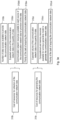
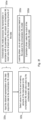
- Figures 3a to 3f show a flow chart illustrating process steps in another example of a method 300 for orchestrating acquisition of a quantity of communication network data for training a target Machine Learning (ML) model for use by a communication network node.
- the method 300 provides various examples of how the steps of the method 200 may be implemented and supplemented to achieve the above discussed and additional functionality.
- the method 300 may be performed by a request management function and an orchestration function of the orchestration node that performs the method 200.
- the request management function may in some examples comprise a data catalogue.
- the request management function of the orchestration node may receive a request for the communication network data from the communication node.
- the request management function of the orchestration node may determine whether the request can be fulfilled from communication network data available to the request management function.
- determining whether the request can be fulfilled from communication network data available to the request management function may comprise determining whether communication network data available to the request management function fulfils an availability criterion for satisfying the request.
- the availability criterion for satisfying the request comprises a threshold value of a function of parameters describing the communication network data available to the request management function. These parameters may include at least one of:
- the request management function of the orchestration node may determine whether the request can be fulfilled from communication network data available to the request management function. As illustrated at step 304, if the request can be fulfilled from communication network data available to the request management function, the request management function of the orchestration node may fulfil the request using data available to the request management function. As illustrated at step 305, if the request cannot be fulfilled from communication network data available to the request management function, the request management function of the orchestration node may forward the request for the communication network data to a data acquisition orchestration function of the orchestration node. The remaining steps of the method 300 may be performed by the data acquisition orchestration function of the orchestration node.
- the term “orchestration node” is used below to refer to the logical entity conducting the remaining method steps of the method 300. However, it will be appreciated that the remaining method steps may in fact be performed specifically by the data acquisition orchestration function of the orchestration node.
- the orchestration node may receive a request from the request management function.
- the orchestration node may obtain a representation of a data acquisition state for the communication network data.
- a cost of resources for collection of the communication network data from data sources may comprise: a number of data sources available to provide the communication network data (as illustrated at 310bi); an expected volume of the communication network data in the quantity of communication network data to be acquired (as illustrated at 310bii); communication network resources available to each source of the communication network data for provision of the communication network data (as illustrated at 310biii); and/or a priority of the task of acquiring the communication network data (as illustrated at 310biv).
- Communication network resources available to each source of the communication network data for provision of the communication network data could be represented or analysed as sufficient latency, throughput and/or other network related KPIs (absence of packet loss etc).
- a cost of resources for generating the communication network data may comprise: an expected volume of the communication network data in the quantity of communication network data to be acquired (as illustrated at 310ci); computational and memory resources available for running a generative model to generate the communication network data (as illustrated at 310cii), and/or a priority of the task of acquiring the communication network data (as illustrated at 310ciii).
- the cost of resources may thus encompass both their availability and implications for the communication network of allocating such resources to the task of acquiring communication network data for this purpose, as opposed to allocating the resources to other tasks that may also be seeking access to the resources.
- the orchestration node uses an orchestration ML model to map the representation of the data acquisition state to a first amount of the communication network data to be collected from sources of the communication network data, and a remaining amount of the communication network data to be generated using a generative model.
- an orchestration ML model to map the representation of the data acquisition state to a first amount of the communication network data to be collected from sources of the communication network data, and a remaining amount of the communication network data to be generated using a generative model.
- a variety of different ML model types and architectures may be suitable for the orchestration ML model, as discussed in greater detail below with reference to implementation of the methods 200, 300.
- the orchestration node may input the obtained representation of the data acquisition state to the orchestration ML model.
- the orchestration ML model may process the representation in accordance with its parameters, and can output an orchestration ML model value for at least one of the first or remaining amounts of the communication network data.
- the orchestration node may select values for the first and remaining amounts of the communication network data based on the orchestration ML model value output by the orchestration ML model.
- selecting values for the first and remaining amounts of the communication network data based on the orchestration ML model value output by the orchestration ML model may comprise using a randomisation process to balance selection of a random value for at least one of the first and remaining amounts with selection of the orchestration ML model value for at least one of the first and remaining amounts.
- exploitation of the knowledge embodied in the orchestration ML model may be balanced with the advantages to be gained from exploration of the state-action space represented by the possible data acquisition states and the possible splits between data to be collected and data to be generated.
- the orchestration node may select a random value for at least one of the first and remaining amounts with a probability of epsilon, and to select the orchestration ML model value for at least one of the first and remaining amounts with a probability of one minus epsilon.
- the value of epsilon may be set and adjusted according to relative priorities for selecting an optimal action (according to current experience) and building a diverse and useful experience buffer for training the orchestration ML model, as discussed in greater detail below.
- selecting values for the first and remaining amounts of the communication network data based on the orchestration ML model value output by the orchestration ML model may comprise selecting the orchestration ML model value for at least one of the first and remaining amounts.
- the orchestration node causes at least the first amount of the communication network data to be collected from sources of the communication network data.
- the orchestration node may select sources collection of the communication network data according to a selection criterion.
- the selection criterion may relate to specific features required for the data, including for example data sources that are located in a particular position, etc. A full discussion of features that may be taken into account in the selection criterion is provided below with reference to implementation of the methods 200 and 300.
- causing at least the first amount of the communication network data to be collected from sources of the communication network data may comprise identifying features of the communication network data that are subject to privacy requirements.
- causing at least the first amount of the communication network data to be collected from sources of the communication network data may comprise, for identified data features, causing values for the identified data features to be collected using a privacy aware technique. Examples of such techniques include differential privacy, secure aggregation, and other secure multi-party computation techniques.
- the orchestration node may identify whether the collected communication network data fulfils an availability criterion for training of a generative model.
- the availability criterion for training of a generative model can comprise a threshold value of a function of parameters describing the collected communication network data. These parameters can include at least one of:
- the method 300 refers to two availability criteria: the availability criterion for satisfying a request, discussed with reference to step 302a, and the availability criterion for training of a generative model.
- the availability criterion for satisfying a request is used to determine whether a received data request can be fulfilled from data that is already available, for example being stored in a memory that is accessible to the request management function.
- the availability criterion for training of a generative model is used to determine whether enough data has been collected to train a generative model.
- the criterion for determining whether a request can be fulfilled also takes account of whether the available data is synthetic (i.e., generated) or collected, whether the network has undergone changes since the data was collected or generated, and performance of models previously trained using the data.
- step 340 if the orchestration node identifies that the collected communication network data does not fulfil the availability criterion for training of a generative model, the method may proceed back to step 330. Alternatively, if the orchestration node identifies that the collected communication network data does fulfil the availability criterion for training of a generative model, the method may proceed to step 350, as illustrated in Figure 3c .
- the orchestration node may cause a generative model for the communication network data to be trained using the collected communication network data.
- the orchestration node may cause the remaining amount of the communication network data to be generated using the trained generative model.
- the orchestration node may cause the quantity of communication network data, comprising the first amount of collected data and the remaining amount of generated data, to be provided to the communication network node for training of the target ML model.
- the orchestration model may provide the quantity of communication network data to a request management function of the orchestration node, for provision to other communication network nodes.
- the orchestration node may calculate a reward value for the communication network data acquisition. As illustrated at 374a, 374b and 374c, the reward value calculated at step 374 may be calculated as a function of at least one of: time efficiency of communication network data acquisition; energy efficiency of communication network data acquisition; communication network impact of communication network data acquisition, respectively.
- Time efficiency may be a function of a time taken to collect at least the first amount of communication network data from sources of the communication network data, and a time taken to generate the remaining amount of the communication network data, where time to collect data includes time to measure, assemble and upload.
- Energy efficiency may be a function of energy consumption for transmission of collected data and energy consumption for generation of data.
- Communication network impact may be a function of transmission interference caused by transmission of collected data, and processing interference caused by generation of data.
- the orchestration node may obtain an updated representation of the data acquisition state following collection of at least the first amount of communication network data and generation of the remaining amount of communication network data.
- the orchestration node may add the obtained representation of the data acquisition state for the communication network data; the obtained updated representation of the data acquisition state for the communication network data; at least one of the first or remaining amounts of the communication network data; and the calculated reward value to an experience buffer for the orchestration ML model.
- the orchestration node may use the contents of the experience buffer to update parameters of the orchestration ML model such that the orchestration ML model will map a representation of a data acquisition state to a first or remaining amount of a communication network data that will generate maximum reward value.
- An example of this updating may include inputting representations from the experience buffer to the orchestration ML model, wherein the orchestration ML model processes the representations in accordance with current values of its trainable parameters and outputs an orchestration ML model value for the first or remaining amount, and updating the values of the trainable parameters so as to minimise a loss function based on a difference between the reward associated with the ML model value and a maximum available reward.
- the orchestration node may obtain a performance measure for the target ML model following training with the provided communication network data.
- the methods 200 and 300 may be performed by an orchestration node, and the present disclosure provides an orchestration node that is adapted to perform any or all of the steps of the above discussed methods.
- the orchestration node may be a physical or virtual node, and may for example comprise a virtualised function that is running in a cloud, edge cloud or fog deployment.
- the orchestration node may for example comprise or be instantiated in any part of a logical core network node, network management centre, network operations centre, radio access node, etc. Any such communication network node may itself be divided between several logical and/or physical functions.
- FIG 4 is a block diagram illustrating an example orchestration node 400 which may implement the method 200 and/or 300, as illustrated in Figures 2 to 3f , according to examples of the present disclosure, for example on receipt of suitable instructions from a computer program 450.
- the orchestration node 400 comprises a processor or processing circuitry 402, and may comprise a memory 404 and interfaces 406.
- the processing circuitry 402 is operable to perform some or all of the steps of the method 200 and/or 300 as discussed above with reference to Figures 2 to 3f .
- the memory 404 may contain instructions executable by the processing circuitry 402 such that the orchestration node 400 is operable to perform some or all of the steps of the method 200 and/or 300, as illustrated in Figures 2 to 3f .
- the instructions may also include instructions for executing one or more telecommunications and/or data communications protocols.
- the instructions may be stored in the form of the computer program 450.
- the processor or processing circuitry 402 may include one or more microprocessors or microcontrollers, as well as other digital hardware, which may include digital signal processors (DSPs), special-purpose digital logic, etc.
- DSPs digital signal processors
- the processor or processing circuitry 402 may be implemented by any type of integrated circuit, such as an Application Specific Integrated Circuit (ASIC), Field Programmable Gate Array (FPGA), etc.
- the memory 404 may include one or several types of memory suitable for the processor, such as read-only memory (ROM), random-access memory, cache memory, flash memory devices, optical storage devices, solid state disk, hard disk drive, etc.
- Figure 5 illustrates functional modules in another example of orchestration node 500 which may execute examples of the methods 200 and/or 300 of the present disclosure, for example according to computer readable instructions received from a computer program.
- the modules illustrated in Figure 5 are functional modules, and may be realised in any appropriate combination of hardware and/or software.
- the modules may comprise one or more processors and may be integrated to any degree.
- the orchestration node 500 is for orchestrating acquisition of a quantity of communication network data for training a target ML model for use by a communication network node.
- the orchestration node 500 comprises a data acquisition orchestration function 510 configured to obtain a representation of a data acquisition state for the communication network data.
- the data acquisition orchestration function 510 is further configured to use an orchestration ML model to map the representation of the data acquisition state to a first amount of the communication network data to be collected from sources of the communication network data, and a remaining amount of the communication network data to be generated using a generative model.
- the data acquisition orchestration function 510 is further configured to cause at least the first amount of the communication network data to be collected from sources of the communication network data.
- the data acquisition orchestration function 510 is further configured to, when the collected communication network data fulfils an availability criterion for training of a generative model, cause a generative model for the communication network data to be trained using the collected communication network data.
- the data acquisition orchestration function 510 is further configured to cause the remaining amount of the communication network data to be generated using the trained generative model.
- the data acquisition orchestration function 510 is further configured to cause the communication network data, comprising the first amount of collected data and the remaining amount of generated data, to be provided to the communication network node for training of the target ML model.
- a representation of a data acquisition state for the communication network data comprises: a number of target ML models to be trained using the dataset; a cost of resources for collection of the communication network data from data sources; and a cost of resources for generating the communication network data.
- the orchestration node 500 may further comprise interfaces 520 which may be operable to facilitate communication with computing and/or other network nodes over suitable communication channels.
- Figures 2 to 3f discussed above provide an overview of methods which may be performed according to different examples of the present disclosure. These methods may be performed by an orchestration node as illustrated in Figures 4 and 5 , and enable orchestration of acquisition of communication network data such that costs of collecting and generating the data are taken into account in identifying an optimal split between an amount of the data to be collected and an amount of the data to be generated.
- An example architecture for implementing the methods 200, 300 may comprise the orchestration node, a data consumer, a data source, and a data generator.
- the orchestration node may, as discussed above, comprise a request management function and a data acquisition orchestration function. Each of these logical elements is discussed in greater detail below:
- the data acquisition orchestration function also referred to herein as a data_catalogue_orchestrator, is the functional component or module that determines how much data should be collected from each data source and how much data should be generated.
- the data consumer also referred to herein as data_consumer, is a placeholder for any node in a communication network (such as a 3GPP network) that is responsible for training a machine learning model and then performing inference.
- a communication network such as a 3GPP network
- Such nodes may for example include Network Data Analysis Function (NWDAF) nodes or Operations and Maintenance (OAM) nodes.
- NWDAAF Network Data Analysis Function
- OAM Operations and Maintenance
- the data source also referred to herein as data_source, is a placeholder for any node in a communication network (such as a 3GPP network), or outside of such a network, that is used for collecting data.
- nodes include UEs and other 3GPP nodes, including gNBs/eNBs, Mobiliyt Management Entity (MME), Packet Gateways etc.
- MME Mobiliyt Management Entity
- the request management function also referred to herein as data_catalogue, is the functional component or module that is responsible for knowing the different features that need to be collected for a given data request, and where they are located (in which data source they reside).
- data_catalogue can be implemented as a distributed key value store.
- the data generator also referred to herein as data_generator, is the functional component or module that is responsible for generating new or synthetic data using input data from data sources and different techniques such as variational autoencoders and/or generate adversarial networks.
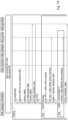
- An example interaction between a data_consumer, data_catalogue and data_catalogue_orchestrator is illustrated in the signaling exchange of Figure 6 .
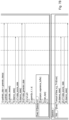
- An example interaction between a data_catalogue_orchestrator, data_source, and data_generator is illustrated in the signaling exchange of Figure 7 .
- a decision is made to which data_source node a request should be sent.
- a request may be sent to data sources fulfilling a criterion.
- the criterion may encompass any one or more of the features below:
- a decision may then be taken as to whether the collected data should be used to update one or more data generation models used by the data_generator.
- a request is sent to the data_generator entity.
- FIGS 6 and 7 are described below with reference to an example use case of QoS prediction, in which a UE is attached to a network (or a specific network slice) and is operating at a certain QoS Level.
- a Radio Access Network (RAN) node is tasked to monitor how the UE interacts with the network.
- the RAN node uses a predictive model to predict whether the quality of service for the given UE is going to degrade, remain the same or improve in the next t timesteps.
- the RAN node needs to exchange a lot of information with the UE for two reasons: to collect enough data to train the prediction model, and to monitor the UE.
- an Operations, Administration and Maintenance (OAM) node may be tasked with using the QoS prediction that is produced by the RAN node, with the RAN node simply hosting the model. Based on the prediction, the OAM node will either:
- the main goal of the Data Catalogue Orchestrator is to address the question of whether data should be collected from data sources (such as UEs) or not, and also whether and to what extent any proportion of that data (for example, 30%) should be collected in a privacy aware manner.
- the Data Catalogue Orchestrator can then initiate generation of the remaining data using a generative model.
- the optimal split between collection and generation of data can change over time depending on the bandwidth availability in the network, which is determined by its utilization, other tasks requiring that bandwidth, and the availability and cost of computation resources for running a generative model. Examples of the present disclosure propose to use Reinforcement Learning (RL) to find an optimal split for current network conditions.
- RL Reinforcement Learning
- the problem of determining an optimal split between collection and generation of data can first be formalized as a Markov Decision Process (MDP), comprising a state space, action space and a reward function.
- MDP Markov
- the state space for the RL problem may comprise, inter alia, the number of subscribers (how many machine learning tasks are interested in the feature set), the available uplink/downlink for each data source (for example, UE) that can produce those features, the number of data sources (for example, UEs), the expected volume of data and the available resources for running a generative model (CPU/memory).
- the state space can be further subdivided into a data collection state space and a data generation state space.
- the action space comprises the possible splits between collection and generation of data.
- the reward function may be designed to reward the model (higher reward value) for causing data to be generated when the data sources have little bandwidth and there are spare computation resources to train a generative model, and to impose a penalty on the model (lower reward value) if the model causes data to be collected directly from the data sources when there is spare computational capacity to run a generative model.
- Steps 8-19 then repeat in a loop, and are used for training the DQN model.
- Mobility procedures e.g., Handover: ML models used in connection with mobility procedures typically require information as to how users move in space/time.
- Example methods according to the present disclosure can be used to determine to what extent a generative model that produces trajectories of UE can be trained and used to provide synthetic data for training instead of collecting data from each UE.
- RLF detection models are trained with alarm data either collected from the UE or from the network equipment.
- Example methods according to the present disclosure can be used determine to what extent generative models can be used to mimic the way alarms are generated, and thus produce a dataset to train an ML model for the purpose of preventive maintenance.
- Precoding matrices are used to reduce any potential corruption in a communication channel. However, expected corruption is not known in advance, as at this stage there is very little CSI information. To compensate for this problem generative models can be used from historical communication data, which models can learn the corruption of channels and so guide appropriate tuning of the pre-coder matrix. Example methods according to the present disclosure can be used to determine how much synthetic data to generate and use for training.
- RRM Multi-User Radio Resources Management
- a generative model can be used to model the way resources are allocated for different uses given the Channel Quality Indicator (CQI) for each UE at a different time and location, and moving at different speeds.
- CQI Channel Quality Indicator
- Instead of using real data example methods according to the present disclosure can guide collection of a seed of such data, and generation of synthetic data for training a resource allocation model.
- Examples of the present disclosure thus propose an orchestration node that may comprise a request management function, for example implemented as a data catalogue, and a data acquisition orchestration function, for example implemented as a data catalogue orchestrator.
- the orchestration node may keep track of the different features that are needed for different machine learning models and may determine, using reinforcement learning (RL) or other optimization techniques, how much raw data to collect from UEs (or other data sources) and how much synthetic data to generate using generative models. This determination may be made in the basis of cost, including availability, of computational resources and network bandwidth.
- RL reinforcement learning
- the orchestration node can apply a privacy aware data extraction technique (for example, differential privacy) when collecting data. Generating data from private data yields private-generated data.
- Advantages afforded by example methods according to the present disclosure include reduced network footprint, as when the cost of collecting data is high, a version of a digital twin of this data (the product of a generative model) can be used to train ML models for use by a communication network node.
- Adaptive privacy can be used according to different regulations, as differential privacy aware techniques can be used when collecting data from the UEs.
- a generative model can then be trained on data which contain noise (as a consequence of the use of differential privacy). Consequently, the new data that is produced by the generative model is also private.
- examples of the present disclosure determine dynamically how to mix raw data with synthetic, generated data, allowing the system to learn from real data and then use the real data distribution to generate the remaining samples.
- the methods of the present disclosure may be implemented in hardware, or as software modules running on one or more processors. The methods may also be carried out according to the instructions of a computer program, and the present disclosure also provides a computer readable medium having stored thereon a program for carrying out any of the methods described herein.
- a computer program embodying the disclosure may be stored on a computer readable medium, or it could, for example, be in the form of a signal such as a downloadable data signal provided from an Internet website, or it could be in any other form.
Landscapes
- Engineering & Computer Science (AREA)
- Computer Networks & Wireless Communication (AREA)
- Signal Processing (AREA)
- Artificial Intelligence (AREA)
- Computer Vision & Pattern Recognition (AREA)
- Databases & Information Systems (AREA)
- Evolutionary Computation (AREA)
- Medical Informatics (AREA)
- Software Systems (AREA)
- Environmental & Geological Engineering (AREA)
- Data Exchanges In Wide-Area Networks (AREA)
Claims (15)
- Verfahren (200) zur Orchestrierung der Erfassung einer Menge von Kommunikationsnetzwerkdaten zum Trainieren eines Zielmodells für maschinelles Lernen, ML, zur Verwendung durch einen Kommunikationsnetzwerkknoten, wobei das Verfahren, das von einem Orchestrierungsknoten durchgeführt wird, Folgendes umfasst:Erhalten (210) einer Darstellung eines Datenerfassungszustands für die Kommunikationsnetzwerkdaten;Verwenden (220) eines ML-Orchestrierungsmodells zum Zuordnen des Datenerfassungszustands zu einem ersten Betrag der Kommunikationsnetzwerkdaten, der aus Quellen der Kommunikationsnetzwerkdaten gesammelt werden soll, und einem restlichen Betrag der Kommunikationsnetzwerkdaten, der unter Verwendung eines generativen Modells erzeugt werden soll;Veranlassen (230), dass zumindest der erste Betrag der Kommunikationsnetzwerkdaten aus Quellen der Kommunikationsnetzwerkdaten gesammelt wird;wenn die gesammelten Kommunikationsnetzwerkdaten ein Verfügbarkeitskriterium zum Trainieren (240) eines generativen Modells erfüllen, Veranlassen (250), dass ein generatives Modell für die Kommunikationsnetzwerkdaten unter Verwendung der gesammelten Kommunikationsnetzwerkdaten trainiert wird;Veranlassen (260), dass der restliche Betrag der Kommunikationsnetzwerkdaten unter Verwendung des trainierten generativen Modells erzeugt wird;Veranlassen (270), dass die Menge von Kommunikationsnetzwerkdaten, die den ersten Betrag von gesammelten Daten und den restlichen Betrag von erzeugten Daten umfasst, für den Kommunikationsnetzwerkknoten bereitgestellt wird, um das ML-Zielmodell zu trainieren;wobei eine Darstellung eines Datenerfassungszustands für die Kommunikationsnetzwerkdaten Folgendes umfasst:eine Anzahl von ML-Zielmodellen, die unter Verwendung der Kommunikationsnetzwerkdaten trainiert werden soll (210a);Kosten von Ressourcen zur Sammlung der Kommunikationsnetzwerkdaten aus Datenquellen (210b); undKosten von Ressourcen zum Erzeugen der Kommunikationsnetzwerkdaten (210c).
- Verfahren nach Anspruch 1, ferner umfassend:
Auswählen (330) von Quellen zur Sammlung der Kommunikationsnetzwerkdaten gemäß einem Auswahlkriterium. - Verfahren nach Anspruch 1 oder 2, wobei Kosten von Ressourcen zur Sammlung der Kommunikationsnetzwerkdaten aus Datenquellen Folgendes umfassen:eine Anzahl von Datenquellen, die verfügbar ist, um die Kommunikationsnetzwerkdaten bereitzustellen (310bi);ein erwartetes Volumen der Kommunikationsnetzwerkdaten in der Menge von zu erfassenden Kommunikationsnetzwerkdaten (310bii);Kommunikationsnetzwerkressourcen, die für jede Quelle der Kommunikationsnetzwerkdaten zur Bereitstellung der Kommunikationsnetzwerkdaten verfügbar sind (310biii); undeine Priorität der Aufgabe des Erfassens der Kommunikationsnetzwerkdaten (310biv).
- Verfahren nach einem der Ansprüche 1 bis 3, wobei Kosten von Ressourcen zum Erzeugen der Kommunikationsnetzwerkdaten Folgendes umfassen:ein erwartetes Volumen der Kommunikationsnetzwerkdaten in der Menge von zu erfassenden Kommunikationsnetzwerkdaten (310ci);Rechen-, Software- und Speicherressourcen, die zum Ausführen eines generativen Modells verfügbar sind, um die Kommunikationsnetzwerkdaten zu erzeugen (310cii); undeine Priorität der Aufgabe des Erfassens der Kommunikationsnetzwerkdaten (310ciii).
- Verfahren nach einem der vorhergehenden Ansprüche, wobei das Verwenden eines ML-Orchestrierungsmodells zum Zuordnen des Datenerfassungszustands zu einem ersten Betrag der Kommunikationsnetzwerkdaten, der aus Quellen der Kommunikationsnetzwerkdaten gesammelt werden soll, und einem restlichen Betrag der Kommunikationsnetzwerkdaten, der unter Verwendung eines generativen Modells erzeugt werden soll, Folgendes umfasst:Eingeben (320a) der erhaltenen Darstellung des Datenerfassungszustands in das ML-Orchestrierungsmodell, wobei das ML-Orchestrierungsmodell die Darstellung gemäß seinen Parametern verarbeitet und einen ML-Orchestrierungsmodellwert für mindestens einen des ersten oder des restlichen Betrags der Kommunikationsnetzwerkdaten ausgibt (320ai); undAuswählen (320b) von Werten für den ersten und den restlichen Betrag der Kommunikationsnetzwerkdaten basierend auf dem von dem ML-Orchestrierungsmodell ausgegebenen ML-Orchestrierungsmodellwert.
- Verfahren nach Anspruch 5, wobei während einer Lernphase das Auswählen von Werten für den ersten und den restlichen Betrag der Kommunikationsnetzwerkdaten basierend auf dem von dem ML-Orchestrierungsmodell ausgegebenen ML-Orchestrierungsmodellwert Verwenden für einen Randomisierungsprozess zum Ausgleichen der Auswahl eines Zufallswerts für mindestens einen des ersten und des restlichen Betrags mit der Auswahl des ML-Orchestrierungsmodellwerts für mindestens einen des ersten und des restlichen Betrags umfasst (320bi).
- Verfahren nach Anspruch 5 oder 6, wobei während einer Nutzungsphase das Auswählen von Werten für den ersten und den restlichen Betrag der Kommunikationsnetzwerkdaten basierend auf dem von dem ML-Orchestrierungsmodell ausgegebenen ML-Orchestrierungsmodellwert Auswählen des ML-Orchestrierungsmodellwerts für mindestens einen des ersten und des restlichen Betrags umfasst (320bii).
- Verfahren nach einem der vorhergehenden Ansprüche, ferner umfassend:
Berechnen (374) eines Belohnungswerts für die Kommunikationsnetzwerkdatenerfassung als eine Funktion von mindestens einem von Folgenden:Zeiteffizienz der Kommunikationsnetzwerkdatenerfassung (374a);Energieeffizienz der Kommunikationsnetzwerkdatenerfassung (374b);Auswirkung der Kommunikationsnetzwerkdatenerfassung auf das Kommunikationsnetzwerk (374c). - Verfahren nach einem der vorhergehenden Ansprüche, ferner umfassend:
Erhalten (376) einer aktualisierten Darstellung des Datenerfassungszustands nach der Sammlung zumindest des ersten Betrags von Kommunikationsnetzwerkdaten und der Erzeugung der restlichen Betrags von Kommunikationsnetzwerkdaten. - Verfahren nach Anspruch 9, wenn von Anspruch 8 abhängig, ferner umfassend Hinzufügen (378):der erhaltenen Darstellung des Datenerfassungszustands für die Kommunikationsnetzwerkdaten;der erhaltenen aktualisierten Darstellung des Datenerfassungszustands für die Kommunikationsnetzwerkdaten;mindestens eines des ersten oder des restlichen Betrags der Kommunikationsnetzwerkdaten unddes berechneten Belohnungswertszu einem Erfahrungspuffer für das ML-Orchestrierungsmodell.
- Verfahren nach Anspruch 10, ferner umfassend während der Lernphase:
Verwenden (380) der Inhalte des Erfahrungspuffers zum Aktualisieren von Parametern des ML-Orchestrierungsmodells, sodass das ML-Orchestrierungsmodell eine Darstellung eines Datenerfassungszustands zu einem ersten oder einem restlichen Betrag der Kommunikationsnetzwerkdaten zuordnet, der den maximalen Belohnungswert erzeugt. - Verfahren nach einem der vorhergehenden Ansprüche, wobei das Veranlassen, dass der erste Betrag der Kommunikationsnetzwerkdaten aus Quellen der Kommunikationsnetzwerkdaten gesammelt wird, Folgendes umfasst:Identifizieren (330a) von Merkmalen der Kommunikationsnetzwerkdaten, die Datenschutzanforderungen unterliegen; undfür identifizierte Datenmerkmale:
Veranlassen (330b), das Werte für die identifizierten Datenmerkmale unter Verwendung einer datenschutzbewussten Technik gesammelt werden. - Computerprogrammprodukt, umfassend ein computerlesbares Medium, wobei das computerlesbare Medium computerlesbarem Code darauf enthalten aufweist, wobei der computerlesbare Code derart konfiguriert ist, dass bei Ausführung durch einen geeigneten Computer oder Prozessor der Computer oder Prozessor zum Durchführen des Verfahrens nach einem der Ansprüche 1 bis 12 veranlasst wird.
- Orchestrierungsknoten (400) zum Orchestrieren der Erfassung einer Menge von Kommunikationsnetzwerkdaten von Kommunikationsnetzwerkdaten zum Trainieren eines Zielmodells für maschinelles Lernen, ML, zur Verwendung durch einen Kommunikationsnetzwerkknoten, wobei der Orchestrierungsknoten Verarbeitungsschaltungsanordnung (402) umfasst, die den Orchestrierungsknoten zu Folgendem veranlasst:Erhalten einer Darstellung eines Datenerfassungszustands für die Kommunikationsnetzwerkdaten;Verwenden eines ML-Orchestrierungsmodells zum Zuordnen des Datenerfassungszustands zu einem ersten Betrag der Kommunikationsnetzwerkdaten, der aus Quellen der Kommunikationsnetzwerkdaten gesammelt werden soll, und einem restlichen Betrag der Kommunikationsnetzwerkdaten, der unter Verwendung eines generativen Modells erzeugt werden soll;Veranlassen, dass zumindest der erste Betrag der Kommunikationsnetzwerkdaten aus Quellen der Kommunikationsnetzwerkdaten gesammelt wird;wenn die gesammelten Kommunikationsnetzwerkdaten ein Verfügbarkeitskriterium zum Trainieren eines generativen Modells erfüllen, Veranlassen, dass ein generatives Modell für die Kommunikationsnetzwerkdaten unter Verwendung der gesammelten Kommunikationsnetzwerkdaten trainiert wird;Veranlassen, dass der restliche Betrag der Kommunikationsnetzwerkdaten unter Verwendung des trainierten generativen Modells erzeugt wird;Veranlassen, dass die Menge von Kommunikationsnetzwerkdaten, die den ersten Betrag von gesammelten Daten und den restlichen Betrag von erzeugten Daten umfasst, für den Kommunikationsnetzwerkknoten bereitgestellt wird, um das ML-Zielmodell zu trainieren;wobei eine Darstellung eines Datenerfassungszustands für die Kommunikationsnetzwerkdaten Folgendes umfasst:eine Anzahl von ML-Zielmodellen, die unter Verwendung der Kommunikationsnetzwerkdaten trainiert werden soll;Kosten von Ressourcen zur Sammlung der Kommunikationsnetzwerkdaten aus Datenquellen; undKosten von Ressourcen zum Erzeugen der Kommunikationsnetzwerkdaten.
- Orchestrierungsknoten nach Anspruch 14, wobei die Verarbeitungsschaltungsanordnung ferner so konfiguriert ist, dass sie den Orchestrierungsknoten zum Durchführen des Verfahrens nach einem der Ansprüche 2 bis 12 veranlasst.
Applications Claiming Priority (2)
| Application Number | Priority Date | Filing Date | Title |
|---|---|---|---|
| GR20210100904 | 2021-12-22 | ||
| PCT/EP2022/070979 WO2023011992A1 (en) | 2021-12-22 | 2022-07-26 | Orchestrating acquisition of training data |
Publications (2)
| Publication Number | Publication Date |
|---|---|
| EP4454235A1 EP4454235A1 (de) | 2024-10-30 |
| EP4454235B1 true EP4454235B1 (de) | 2025-07-09 |
Family
ID=83006202
Family Applications (1)
| Application Number | Title | Priority Date | Filing Date |
|---|---|---|---|
| EP22757897.8A Active EP4454235B1 (de) | 2021-12-22 | 2022-07-26 | Orchestrierung der erfassung von trainingsdaten |
Country Status (2)
| Country | Link |
|---|---|
| EP (1) | EP4454235B1 (de) |
| WO (1) | WO2023011992A1 (de) |
Families Citing this family (2)
| Publication number | Priority date | Publication date | Assignee | Title |
|---|---|---|---|---|
| US11924054B1 (en) * | 2022-09-27 | 2024-03-05 | Schneider Electric (Australia) Pty Ltd. | Managing remote terminal communications |
| CN120238220A (zh) * | 2023-12-29 | 2025-07-01 | 维沃移动通信有限公司 | 模型更新方法、装置、终端、网络侧设备及介质 |
Family Cites Families (2)
| Publication number | Priority date | Publication date | Assignee | Title |
|---|---|---|---|---|
| US20220051139A1 (en) * | 2018-12-28 | 2022-02-17 | Telefonaktiebolaget Lm Ericsson (Publ) | Wireless device, a network node and methods therein for training of a machine learning model |
| US11521134B2 (en) * | 2019-12-31 | 2022-12-06 | Google Llc | System and methods for machine learning training data selection |
-
2022
- 2022-07-26 WO PCT/EP2022/070979 patent/WO2023011992A1/en not_active Ceased
- 2022-07-26 EP EP22757897.8A patent/EP4454235B1/de active Active
Also Published As
| Publication number | Publication date |
|---|---|
| WO2023011992A1 (en) | 2023-02-09 |
| EP4454235A1 (de) | 2024-10-30 |
Similar Documents
| Publication | Publication Date | Title |
|---|---|---|
| Thantharate et al. | ADAPTIVE6G: Adaptive resource management for network slicing architectures in current 5G and future 6G systems | |
| WO2022015221A1 (en) | Managing a wireless device that is operable to connect to a communication network | |
| US12301429B2 (en) | Method and devices for transfer learning for inductive tasks in radio access network | |
| US20240135247A1 (en) | Method and Apparatus for Selecting Machine Learning Model for Execution in a Resource Constraint Environment | |
| EP4454235B1 (de) | Orchestrierung der erfassung von trainingsdaten | |
| Chua et al. | Resource allocation for mobile metaverse with the Internet of Vehicles over 6G wireless communications: A deep reinforcement learning approach | |
| WO2021249648A1 (en) | Grouping nodes in a system | |
| CN114500561B (zh) | 电力物联网网络资源分配决策方法、系统、设备及介质 | |
| CN111491312A (zh) | 无线资源预测分配、获取、训练神经网络的方法及设备 | |
| Dangi et al. | 5G network traffic control: a temporal analysis and forecasting of cumulative network activity using machine learning and deep learning technologies | |
| Liu et al. | QoE assessment model based on continuous deep learning for video in wireless networks | |
| Ntassah et al. | User classification and traffic steering in o-ran | |
| Koudouridis et al. | An architecture and performance evaluation framework for artificial intelligence solutions in beyond 5G radio access networks | |
| Wakgra et al. | Ratio-based offloading optimization for edge and vehicular-fog federated systems: A multi-agent TD3 approach | |
| US20230156520A1 (en) | Coordinated load balancing in mobile edge computing network | |
| CN119046564B (zh) | 一种基于领域自适应的异步聚合联邦学习智能巡检方法及系统 | |
| US20250061338A1 (en) | Orchestrating acquisition of training data | |
| Basaran et al. | Next-Gen AI-on-RAN: AI-native, Interoperable, and GPU-Accelerated Testbed Towards 6G Open-RAN | |
| Koursioumpas et al. | Distinqt: A distributed privacy aware learning framework for qos prediction for future mobile and wireless networks | |
| US12144061B2 (en) | Clustering of user entities in a cellular network | |
| Reddy et al. | 6G Self‐Evolution Network for IoT Using Rainbow Deep Q‐Network Based on Decision‐Making | |
| Thantharate | GREEN6G: Chameleon federated learning for energy-efficient network slicing in beyond 5G systems | |
| Matinfar et al. | FABLSTM: an optimal resource allocation in SDVN networks with contextual variables integration | |
| Peñaherrera-Pulla et al. | Towards KQI/ML-based management: Optimizing radio resource allocation for next-generation networks | |
| Chukhno et al. | Traffic-aware dnn inference task offloading in the mobile device-edge continuum |
Legal Events
| Date | Code | Title | Description |
|---|---|---|---|
| STAA | Information on the status of an ep patent application or granted ep patent |
Free format text: STATUS: UNKNOWN |
|
| STAA | Information on the status of an ep patent application or granted ep patent |
Free format text: STATUS: THE INTERNATIONAL PUBLICATION HAS BEEN MADE |
|
| PUAI | Public reference made under article 153(3) epc to a published international application that has entered the european phase |
Free format text: ORIGINAL CODE: 0009012 |
|
| STAA | Information on the status of an ep patent application or granted ep patent |
Free format text: STATUS: REQUEST FOR EXAMINATION WAS MADE |
|
| 17P | Request for examination filed |
Effective date: 20240718 |
|
| AK | Designated contracting states |
Kind code of ref document: A1 Designated state(s): AL AT BE BG CH CY CZ DE DK EE ES FI FR GB GR HR HU IE IS IT LI LT LU LV MC MK MT NL NO PL PT RO RS SE SI SK SM TR |
|
| GRAP | Despatch of communication of intention to grant a patent |
Free format text: ORIGINAL CODE: EPIDOSNIGR1 |
|
| STAA | Information on the status of an ep patent application or granted ep patent |
Free format text: STATUS: GRANT OF PATENT IS INTENDED |
|
| DAV | Request for validation of the european patent (deleted) | ||
| DAX | Request for extension of the european patent (deleted) | ||
| INTG | Intention to grant announced |
Effective date: 20250211 |
|
| RIC1 | Information provided on ipc code assigned before grant |
Ipc: G06N 7/01 20230101ALN20250203BHEP Ipc: G06N 3/0475 20230101ALN20250203BHEP Ipc: G06N 3/092 20230101ALN20250203BHEP Ipc: G06N 3/0455 20230101ALN20250203BHEP Ipc: H04L 43/08 20220101ALI20250203BHEP Ipc: H04L 41/16 20220101AFI20250203BHEP |
|
| GRAS | Grant fee paid |
Free format text: ORIGINAL CODE: EPIDOSNIGR3 |
|
| GRAA | (expected) grant |
Free format text: ORIGINAL CODE: 0009210 |
|
| STAA | Information on the status of an ep patent application or granted ep patent |
Free format text: STATUS: THE PATENT HAS BEEN GRANTED |
|
| AK | Designated contracting states |
Kind code of ref document: B1 Designated state(s): AL AT BE BG CH CY CZ DE DK EE ES FI FR GB GR HR HU IE IS IT LI LT LU LV MC MK MT NL NO PL PT RO RS SE SI SK SM TR |
|
| REG | Reference to a national code |
Ref country code: GB Ref legal event code: FG4D |
|
| REG | Reference to a national code |
Ref country code: CH Ref legal event code: EP |
|
| REG | Reference to a national code |
Ref country code: IE Ref legal event code: FG4D |
|
| REG | Reference to a national code |
Ref country code: DE Ref legal event code: R096 Ref document number: 602022017393 Country of ref document: DE |
|
| PGFP | Annual fee paid to national office [announced via postgrant information from national office to epo] |
Ref country code: NL Payment date: 20250726 Year of fee payment: 4 |
|
| REG | Reference to a national code |
Ref country code: NL Ref legal event code: FP |
|
| PGFP | Annual fee paid to national office [announced via postgrant information from national office to epo] |
Ref country code: DE Payment date: 20250729 Year of fee payment: 4 |
|
| PGFP | Annual fee paid to national office [announced via postgrant information from national office to epo] |
Ref country code: AT Payment date: 20251020 Year of fee payment: 4 |
|
| PG25 | Lapsed in a contracting state [announced via postgrant information from national office to epo] |
Ref country code: PT Free format text: LAPSE BECAUSE OF FAILURE TO SUBMIT A TRANSLATION OF THE DESCRIPTION OR TO PAY THE FEE WITHIN THE PRESCRIBED TIME-LIMIT Effective date: 20251110 |
|
| REG | Reference to a national code |
Ref country code: AT Ref legal event code: MK05 Ref document number: 1812931 Country of ref document: AT Kind code of ref document: T Effective date: 20250709 |
|
| PG25 | Lapsed in a contracting state [announced via postgrant information from national office to epo] |
Ref country code: IS Free format text: LAPSE BECAUSE OF FAILURE TO SUBMIT A TRANSLATION OF THE DESCRIPTION OR TO PAY THE FEE WITHIN THE PRESCRIBED TIME-LIMIT Effective date: 20251109 |
|
| PG25 | Lapsed in a contracting state [announced via postgrant information from national office to epo] |
Ref country code: NO Free format text: LAPSE BECAUSE OF FAILURE TO SUBMIT A TRANSLATION OF THE DESCRIPTION OR TO PAY THE FEE WITHIN THE PRESCRIBED TIME-LIMIT Effective date: 20251009 |
|
| REG | Reference to a national code |
Ref country code: LT Ref legal event code: MG9D |
|
| PG25 | Lapsed in a contracting state [announced via postgrant information from national office to epo] |
Ref country code: AT Free format text: LAPSE BECAUSE OF FAILURE TO SUBMIT A TRANSLATION OF THE DESCRIPTION OR TO PAY THE FEE WITHIN THE PRESCRIBED TIME-LIMIT Effective date: 20250709 |
|
| PG25 | Lapsed in a contracting state [announced via postgrant information from national office to epo] |
Ref country code: FI Free format text: LAPSE BECAUSE OF FAILURE TO SUBMIT A TRANSLATION OF THE DESCRIPTION OR TO PAY THE FEE WITHIN THE PRESCRIBED TIME-LIMIT Effective date: 20250709 |
|
| PG25 | Lapsed in a contracting state [announced via postgrant information from national office to epo] |
Ref country code: HR Free format text: LAPSE BECAUSE OF FAILURE TO SUBMIT A TRANSLATION OF THE DESCRIPTION OR TO PAY THE FEE WITHIN THE PRESCRIBED TIME-LIMIT Effective date: 20250709 |
|
| PG25 | Lapsed in a contracting state [announced via postgrant information from national office to epo] |
Ref country code: GR Free format text: LAPSE BECAUSE OF FAILURE TO SUBMIT A TRANSLATION OF THE DESCRIPTION OR TO PAY THE FEE WITHIN THE PRESCRIBED TIME-LIMIT Effective date: 20251010 |
|
| PG25 | Lapsed in a contracting state [announced via postgrant information from national office to epo] |
Ref country code: SE Free format text: LAPSE BECAUSE OF FAILURE TO SUBMIT A TRANSLATION OF THE DESCRIPTION OR TO PAY THE FEE WITHIN THE PRESCRIBED TIME-LIMIT Effective date: 20250709 |
|
| PG25 | Lapsed in a contracting state [announced via postgrant information from national office to epo] |
Ref country code: LV Free format text: LAPSE BECAUSE OF FAILURE TO SUBMIT A TRANSLATION OF THE DESCRIPTION OR TO PAY THE FEE WITHIN THE PRESCRIBED TIME-LIMIT Effective date: 20250709 |
|
| PG25 | Lapsed in a contracting state [announced via postgrant information from national office to epo] |
Ref country code: BG Free format text: LAPSE BECAUSE OF FAILURE TO SUBMIT A TRANSLATION OF THE DESCRIPTION OR TO PAY THE FEE WITHIN THE PRESCRIBED TIME-LIMIT Effective date: 20250709 Ref country code: PL Free format text: LAPSE BECAUSE OF FAILURE TO SUBMIT A TRANSLATION OF THE DESCRIPTION OR TO PAY THE FEE WITHIN THE PRESCRIBED TIME-LIMIT Effective date: 20250709 |
|
| PG25 | Lapsed in a contracting state [announced via postgrant information from national office to epo] |
Ref country code: RS Free format text: LAPSE BECAUSE OF FAILURE TO SUBMIT A TRANSLATION OF THE DESCRIPTION OR TO PAY THE FEE WITHIN THE PRESCRIBED TIME-LIMIT Effective date: 20251009 |
|
| PG25 | Lapsed in a contracting state [announced via postgrant information from national office to epo] |
Ref country code: ES Free format text: LAPSE BECAUSE OF FAILURE TO SUBMIT A TRANSLATION OF THE DESCRIPTION OR TO PAY THE FEE WITHIN THE PRESCRIBED TIME-LIMIT Effective date: 20250709 |
|
| REG | Reference to a national code |
Ref country code: CH Ref legal event code: H13 Free format text: ST27 STATUS EVENT CODE: U-0-0-H10-H13 (AS PROVIDED BY THE NATIONAL OFFICE) Effective date: 20260224 |
|
| PG25 | Lapsed in a contracting state [announced via postgrant information from national office to epo] |
Ref country code: RO Free format text: LAPSE BECAUSE OF FAILURE TO SUBMIT A TRANSLATION OF THE DESCRIPTION OR TO PAY THE FEE WITHIN THE PRESCRIBED TIME-LIMIT Effective date: 20250709 Ref country code: LU Free format text: LAPSE BECAUSE OF NON-PAYMENT OF DUE FEES Effective date: 20250726 |