EP4451649A1 - Service processing method and system, and computer-readable storage medium - Google Patents
Service processing method and system, and computer-readable storage medium Download PDFInfo
- Publication number
- EP4451649A1 EP4451649A1 EP22909469.3A EP22909469A EP4451649A1 EP 4451649 A1 EP4451649 A1 EP 4451649A1 EP 22909469 A EP22909469 A EP 22909469A EP 4451649 A1 EP4451649 A1 EP 4451649A1
- Authority
- EP
- European Patent Office
- Prior art keywords
- service
- terminal device
- request
- identifier
- file
- Prior art date
- Legal status (The legal status is an assumption and is not a legal conclusion. Google has not performed a legal analysis and makes no representation as to the accuracy of the status listed.)
- Granted
Links
Images



Classifications
-
- H—ELECTRICITY
- H04—ELECTRIC COMMUNICATION TECHNIQUE
- H04W—WIRELESS COMMUNICATION NETWORKS
- H04W12/00—Security arrangements; Authentication; Protecting privacy or anonymity
- H04W12/06—Authentication
-
- H—ELECTRICITY
- H04—ELECTRIC COMMUNICATION TECHNIQUE
- H04L—TRANSMISSION OF DIGITAL INFORMATION, e.g. TELEGRAPHIC COMMUNICATION
- H04L63/00—Network architectures or network communication protocols for network security
- H04L63/08—Network architectures or network communication protocols for network security for authentication of entities
-
- H—ELECTRICITY
- H04—ELECTRIC COMMUNICATION TECHNIQUE
- H04L—TRANSMISSION OF DIGITAL INFORMATION, e.g. TELEGRAPHIC COMMUNICATION
- H04L12/00—Data switching networks
- H04L12/02—Details
- H04L12/14—Charging, metering or billing arrangements specially adapted for data communications, e.g. authentication, authorisation and accounting [AAA] framework
-
- H—ELECTRICITY
- H04—ELECTRIC COMMUNICATION TECHNIQUE
- H04L—TRANSMISSION OF DIGITAL INFORMATION, e.g. TELEGRAPHIC COMMUNICATION
- H04L67/00—Network arrangements or protocols for supporting network services or applications
- H04L67/01—Protocols
- H04L67/02—Protocols based on web technology, e.g. hypertext transfer protocol [HTTP]
-
- H—ELECTRICITY
- H04—ELECTRIC COMMUNICATION TECHNIQUE
- H04L—TRANSMISSION OF DIGITAL INFORMATION, e.g. TELEGRAPHIC COMMUNICATION
- H04L67/00—Network arrangements or protocols for supporting network services or applications
- H04L67/01—Protocols
- H04L67/06—Protocols specially adapted for file transfer, e.g. file transfer protocol [FTP]
-
- H—ELECTRICITY
- H04—ELECTRIC COMMUNICATION TECHNIQUE
- H04L—TRANSMISSION OF DIGITAL INFORMATION, e.g. TELEGRAPHIC COMMUNICATION
- H04L67/00—Network arrangements or protocols for supporting network services or applications
- H04L67/01—Protocols
- H04L67/10—Protocols in which an application is distributed across nodes in the network
- H04L67/1095—Replication or mirroring of data, e.g. scheduling or transport for data synchronisation between network nodes
-
- H—ELECTRICITY
- H04—ELECTRIC COMMUNICATION TECHNIQUE
- H04L—TRANSMISSION OF DIGITAL INFORMATION, e.g. TELEGRAPHIC COMMUNICATION
- H04L9/00—Cryptographic mechanisms or cryptographic arrangements for secret or secure communications; Network security protocols
- H04L9/40—Network security protocols
-
- H—ELECTRICITY
- H04—ELECTRIC COMMUNICATION TECHNIQUE
- H04M—TELEPHONIC COMMUNICATION
- H04M15/00—Arrangements for metering, time-control or time indication ; Metering, charging or billing arrangements for voice wireline or wireless communications, e.g. VoIP
-
- H—ELECTRICITY
- H04—ELECTRIC COMMUNICATION TECHNIQUE
- H04M—TELEPHONIC COMMUNICATION
- H04M15/00—Arrangements for metering, time-control or time indication ; Metering, charging or billing arrangements for voice wireline or wireless communications, e.g. VoIP
- H04M15/41—Billing record details, i.e. parameters, identifiers, structure of call data record [CDR]
-
- H—ELECTRICITY
- H04—ELECTRIC COMMUNICATION TECHNIQUE
- H04M—TELEPHONIC COMMUNICATION
- H04M15/00—Arrangements for metering, time-control or time indication ; Metering, charging or billing arrangements for voice wireline or wireless communications, e.g. VoIP
- H04M15/44—Augmented, consolidated or itemized billing statement or bill presentation
-
- H—ELECTRICITY
- H04—ELECTRIC COMMUNICATION TECHNIQUE
- H04M—TELEPHONIC COMMUNICATION
- H04M15/00—Arrangements for metering, time-control or time indication ; Metering, charging or billing arrangements for voice wireline or wireless communications, e.g. VoIP
- H04M15/48—Secure or trusted billing, e.g. trusted elements or encryption
-
- H—ELECTRICITY
- H04—ELECTRIC COMMUNICATION TECHNIQUE
- H04M—TELEPHONIC COMMUNICATION
- H04M15/00—Arrangements for metering, time-control or time indication ; Metering, charging or billing arrangements for voice wireline or wireless communications, e.g. VoIP
- H04M15/61—Arrangements for metering, time-control or time indication ; Metering, charging or billing arrangements for voice wireline or wireless communications, e.g. VoIP based on the service used
-
- H—ELECTRICITY
- H04—ELECTRIC COMMUNICATION TECHNIQUE
- H04W—WIRELESS COMMUNICATION NETWORKS
- H04W4/00—Services specially adapted for wireless communication networks; Facilities therefor
- H04W4/12—Messaging; Mailboxes; Announcements
-
- H—ELECTRICITY
- H04—ELECTRIC COMMUNICATION TECHNIQUE
- H04W—WIRELESS COMMUNICATION NETWORKS
- H04W4/00—Services specially adapted for wireless communication networks; Facilities therefor
- H04W4/24—Accounting or billing
Definitions
- the present disclosure relates to the technical field of data processing, and in particular, to a service processing method and system, and a computer-readable storage medium.
- 5G message services have also been launched. Users can receive and send multimedia and messages in various formats such as text, pictures, audio, and video through 5G messages, to realize service search, discovery, interaction, payment, and other services. Therefore, with the continuous promotion of 5G message services, the types of services are becoming more and more abundant. In related technologies, the identification of services corresponding to 5G messages has limitations, and it is difficult to monitor 5G messages of various service types, affecting the accuracy of processing 5G messages of different service types.
- Embodiments of the present disclosure provide a service processing method and system, and a computer-readable storage medium.
- an embodiment provides a service processing method, including acquiring a first service request sent by a terminal device having passed a Generic Bootstrapping Architecture, GBA, authentication; and sending a 5G message service bill to the terminal device according to the first service request.
- GBA Generic Bootstrapping Architecture
- an embodiment provides a service processing method, including sending a first service request to a Hypertext Transfer Protocol, HTTP, server in response to a terminal device having passed a GBA authentication; and receiving a 5G message service bill sent by the HTTP server according to the first service request.
- HTTP Hypertext Transfer Protocol
- an embodiment provides a service processing system, including a memory, a processor, and a computer program stored in the memory and executable by the processor, where the computer program, when executed by the processor, causes the processor to implement the service processing method in accordance with the first aspect or implement the service processing method in accordance with the second aspect.
- an embodiment provides a computer-readable storage medium, storing a computer program which, when executed by a processor, causes the processor to implement the service processing method in accordance with the first aspect or implement the service processing method in accordance with the second aspect.
- the present disclosure provides a service processing method.
- a first service request sent by a terminal device is acquired over an HTTP protocol, where the terminal device has passed a GBA authentication, and the first service request sent is a 5G message.
- the first service request sent is a 5G message.
- different HTTP service types of the first service request are identified.
- the monitoring of the service type of the 5G message is realized, and a corresponding 5G message service bill can be sent to the terminal device according to the HTTP service type, thereby improving the accuracy of processing 5G messages of different service types.
- FIG. 1 shows an application scenario of a service processing method, which may be applied to a 5G message network monitoring system.
- the 5G message network monitoring system may be arranged between an HTTP server and a terminal device.
- a 5G message is constructed according to a general standard specified by the Global System for Mobile Communications Association (GSMA) for the Rich Communication Suite (RCS).
- GSMA Global System for Mobile Communications Association
- RCS Rich Communication Suite
- a service acquisition point is arranged between the HTTP server and the terminal device.
- the service acquisition point may be an acquisition point of a Deep Packet Inspection (DPI) system in a 5G message network, for example, a 5Gm-02 port, and uses the HTTP protocol to perform file-related operations, such as file uploading and downloading, authentication, verification, etc.
- DPI Deep Packet Inspection
- the 5G message network monitoring system may acquire a service request sent from a terminal device, analyze an eigenvalue and a protocol behavior in the service request, identify a service type of the service request, and output a corresponding 5G message service bill, to realize the inspection, monitoring, analysis, and service identification of 5G messages.
- a port imaging is arranged on the acquisition point to copy a 5G message transmitted between the HTTP server and the terminal device into the 5G message network monitoring system, thus acquiring the 5G message transmitted between the HTTP server and the terminal device.
- the 5G message network monitoring system may also use an optical splitter to perform optical replication on the physical layer to acquire 5G messages. The use of mirroring or the optical splitter to acquire data has no impact on the message transmission service between the HTTP server and the terminal device even if the 5G message network monitoring system fails, ensuring high network stability.
- the 5G message network monitoring system and application scenarios described in the embodiments of the present disclosure are for the purpose of illustrating the technical schemes of the embodiments of the present disclosure more clearly, and do not constitute a limitation on the technical schemes provided in the embodiments of the present disclosure.
- Those having ordinary skills in the art may know that with the evolution of the 5G message network monitoring system and the emergence of new application scenarios, the technical schemes provided in the embodiments of the present disclosure are also applicable to similar technical problems.
- the 5G message network monitoring system shown in FIG. 1 do not constitute a limitation to the embodiments of the present disclosure, and more or fewer components than those shown in the figure may be included, or some components may be combined, or a different component arrangement may be used.
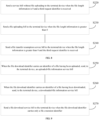
- FIG. 2 is a flowchart of a service processing method according to an embodiment of the present disclosure.
- the service processing method includes, but not limited to, the following steps.
- a first service request sent by a terminal device having passed a GBA authentication is acquired.
- a 5G message service bill is sent to the terminal device according to the first service request.
- GBA is a mobile communication network-based, lightweight security infrastructure defined by the 3rd Generation Partnership Project (3GPP). It can provide a unified authentication mechanism for existing and future services, and solve the security authentication problem of services in a consistent way.
- 3GPP 3rd Generation Partnership Project
- a 5G message network monitoring system may acquire the first service request through mirroring or an optical splitter.
- the first service request corresponds to a service type of a file-related operation, including file uploading, file downloading, authentication, verification, etc.
- Service requests of different service types carry different HTTP protocol eigenvalues. Therefore, an HTTP protocol eigenvalue in the first service request can be checked and analyzed, and a service type corresponding to the first service request can be identified through HTTP service identification, to improve the integrity of 5G message service identification.
- a corresponding 5G message service bill and corresponding signaling backtracking can be sent to the terminal device according to each service type, so that services used by the terminal device can be analyzed, which is conducive to the promotion of 5G message services.
- the method further includes, but not limited to, the following steps.
- a second service request sent by the terminal device is acquired, where the second service request includes a request identifier and identification information.
- a third service request sent by the terminal device is received when the second service request satisfies an authentication condition.
- an authentication bill is sent to the terminal device according to the third service request.
- the authentication condition is that the request identifier is a first request identifier, and the identification information is a GBA identifier.
- the authentication/verification process between the terminal device and the HTTP server includes two request-response interactions.
- the terminal device fails the authentication/verification the terminal device needs to send an authentication/verification request and a secondary authentication request to the HTTP server. Because the terminal device and the HTTP server communicate with each other via the HTTP protocol, whether an authentication condition is satisfied may be determined according to an HTTP protocol eigenvalue carried in the authentication/verification request.
- the terminal device sends a second service request for authentication/verification.
- the second service request includes a request identifier and identification information.
- the third service request sent by the terminal device is received, i.e., the secondary authentication request is received.
- the third service request it is determined whether the terminal device has passed the authentication/verification, and a corresponding authentication bill is sent to the terminal device.
- the request identifier in the service request may be a request line method, and the first request identifier may be POST, i.e., the first request identifier may be expressed as a method for the terminal device to submit data to the HTTP server, such that the HTTP server creates a new resource or update an existing resource according to the received service request.
- the identification information in the service request may include field content in the request message.
- the request line method in the received second service request is POST, and content of a header field User-Agent in the request message carries information "3gpp-gba" as the GBA identifier, it is determined that the second service request satisfies the authentication condition, the third service request is received as a secondary authentication request, and a corresponding authentication bill is sent to the terminal device according to content of the HTTP protocol eigenvalue carried in the third service request.
- the authentication bill may include a GBA authentication timeout bill and a GBA authentication success bill.
- the GBA authentication timeout bill is sent to the terminal device, it may be considered that the GBA authentication/verification of the terminal device fails.
- the authentication condition may also include that the identification information in the service request carries authorization information.
- the identification information carries an Authorization field.
- the request method in the service request is POST
- the User-Agent field in the service request contains "3gpp-gba" and carries the Authorization field, it is determined that the service type of the service request is a GBA authentication service.
- S500 in the embodiment shown in FIG. 3 includes, but not limited to, one of the following steps.
- a GBA authentication success bill is sent to the terminal device when the third service request satisfies the authentication condition.
- the request identifier in the third service request is the first request identifier, and the identification information carries the GBA identifier, or the identification information carries the GBA identifier and the authorization information, it is determined that the third service request satisfies the authentication condition. Therefore, when both the second service request and the third service request satisfy the authentication condition, the terminal device is considered to have passed the authentication/verification with the HTTP server, so the GBA authentication success bill is sent to the terminal device.
- the terminal device When the third service request satisfies the authentication condition, and the identification information further includes a TID, it is considered that the terminal device has passed the authentication/verification with the HTTP server, and at the same time, initiates a file transfer service request to the HTTP server, i.e., the GBA authentication service and a file transfer service are performed simultaneously. Therefore, a GBA authentication success bill and a file transfer service bill are sent to the terminal device.
- the received third service request does not satisfy the authentication condition, it is determined that the authentication/verification between the terminal device and the HTTP server times out, so the GBA authentication timeout bill is sent to the terminal device.
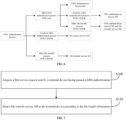
- FIG. 5 is a schematic flowchart of integration of a GBA authentication service and a file transfer service.
- FIG. 6 is a schematic flowchart of outputting bills by main and auxiliary processes in a GBA authentication process.
- a complete GBA authentication service includes two message interactions between the terminal device and the HTTP server.
- the terminal device may simultaneously send service content to be uploaded and GBA authentication service content to the HTTP server. Therefore, it may be considered that the GBA authentication process may include a main GBA authentication process and an auxiliary GBA authentication process, or may include the main GBA authentication process and a main file transfer process, or may include only the main GBA authentication process.
- the main GBA authentication process may be characterized as that the second service request satisfies the authentication condition.
- the auxiliary GBA authentication process may be characterized as that the third service request satisfies the authentication condition and the identification information does not carry the TID.
- the main file transfer process may be characterized as that the third service request satisfies the authentication condition and the identification information carries the TID.
- the GBA authentication process includes only the main GBA authentication process
- the GBA authentication timeout bill is sent.
- the GBA authentication process includes the main GBA authentication process and the auxiliary GBA authentication process
- the GBA authentication success bill is sent.
- the GBA authentication process includes the main GBA authentication process and the main file transfer process
- the GBA authentication success bill and the file transfer service bill are sent.
- the GBA authentication process includes only the main file transfer process
- the file transfer service bill is sent.
- no 5G message service bill is sent.
- S200 in the embodiment shown in FIG. 2 includes, but not limited to, a following step.
- a file transfer service bill is sent to the terminal device according to the file length information.
- the request identifier in the received first service request is the first request identifier, and the identification information carries a TID and file length information
- the service type of the first service request is a file transfer service
- a file transfer service bill is sent to the terminal device according to the file length information in the first service request.
- the file transfer service bill may include a file uploading bill and a bill without file uploading.
- S530 in the embodiment shown in FIG. 4 or S210 in the embodiment shown in FIG. 7 includes, but not limited to, one of the following steps.
- a service bill without file uploading is sent to the terminal device when the file length information is 0 and a third request identifier is received.
- the file transfer service includes determining whether the terminal device has a file service, a file uploading service, a service without file uploading, or a file transfer resumption service.
- the file length information carried in the first service request is 0, it is determined whether the terminal device has a file service, and a service request initiated by the terminal device is re-acquired.
- the request identifier in the re-acquired service request is the third request identifier, it is considered that the service type is a service without file uploading, and a service bill without file uploading is sent to the terminal device.
- the third request identifier may be a PUT request method, and a resource is uploaded to the HTTP server by utilizing the PUT request method.
- the service type is a file uploading service, so a file uploading bill is sent to the terminal device.
- the request identifier carried in the re-acquired service request is the third request identifier, it is considered that the service type is a file transfer resumption service, so a file transfer resumption service bill is sent to the terminal device.
- a file transfer service request including identification information carrying a TID is received, a secondary service request sent by the terminal device may be re-acquired. Information carried in the secondary service request is checked based on the HTTP protocol.
- a specific service type is determined according to the file length information in the file transfer service request and the request identifier in the secondary service request. As such, the integrity and accuracy of 5G message service identification are improved, so that corresponding 5G message service bills can be sent when receiving service requests of different service types, thereby facilitating the analysis and management of the usage statuses of services.
- S200 in the embodiment shown in FIG. 2 includes, but not limited to, one of the following steps.
- an uploaded-file information service bill is sent to the terminal device.
- the request identifier includes a second request identifier, which may be a GET request method in a request line, i.e., the second request identifier may be expressed as a request method that can request to acquire a resource without any other impact on the server.
- the terminal device When the terminal device needs to acquire a resource, such as file information, from the HTTP server, it may send a service request carrying the second request identifier and a file download identifier to the HTTP server.
- file download identifiers such as an identifier of a file having been uploaded, an identifier of a file having been downloaded, and a file extension identifier.
- the identifier of the file having been uploaded may be a get_upload_info identifier in a request line.
- the identifier of the file having been downloaded may be a get_download_info identifier in a request line.
- the file extension identifier may be an extension in a File Identifier Descriptor (FID) carried in a request line, such as txt, jpg, wav, etc.
- the service type is a service of acquiring information of a file having been uploaded, and the terminal device requests to acquire information of a file having been uploaded, so an uploaded-file information service bill is sent to the terminal device.
- the service type is a service of acquiring information of a file having been downloaded, and the terminal device requests to acquire information of a file having been downloaded, so a downloaded-file information service bill is returned to the terminal device.
- the request line does not contain the get_upload_info identifier and the get_download_info identifier, and the FID of the request line contains a file extension name such as txt, jpg, wav, etc.
- the service type is a file download service, so a file download service bill is sent to the terminal device.
- a specific file transfer service type is determined according to the request identifier and different types of file download identifiers, such that different service bills can be sent according to different types of downloaded files, thereby improving the integrity of 5G message service identification and facilitating the management and analysis of 5G messages.
- S200 in the embodiment shown in FIG. 2 includes, but not limited to, a following step.
- a GBA authentication service bill is sent to the terminal device when the request identifier is a first request identifier or a second request identifier and the identification information carries a GBA identifier and authorization information.
- the terminal device may send an authentication request to the HTTP server through a POST request method or a GET request method.
- the first service request carries the first request identifier or the second request identifier, and the identification information carries a GBA identifier and authorization information
- the service type of the service request is a GBA authentication service
- a GBA authentication service bill is sent to the terminal device.
- the received first service request carries the first request identifier or the second request identifier, but does not carry the GBA identifier, it may be considered that the service type of the service request is not a GBA authentication service.
- the authorization information carried in the identification information may be an Authorization field in the request message. Therefore, when an HTTP request method in a 5G message acquired based on the HTTP protocol is POST or GET, and the User-Agent field in the request message contains "3gpp-gba" and the request message carries the Authorization field, it is considered that the 5G message belongs to the GBA authentication service. According to HTTP protocol eigenvalues in the 5G message, such as the request identifier, the GBA identifier, and the authorization information, the service type of the 5G message can be identified, and a corresponding service bill can be sent according to the service type.
- FIG. 11 is a flowchart of a service processing method according to another embodiment of the present disclosure.
- the service processing method includes, but not limited to, the following steps.
- a first service request is sent to an HTTP server when a terminal device has passed a GBA authentication.
- a 5G message service bill sent by the HTTP server according to the first service request is received.
- the terminal device may send a first service request to the HTTP server.
- a 5G message network monitoring system may acquire the first service request through mirroring or an optical splitter, and send the first service request to the HTTP server.
- the HTTP server checks HTTP protocol eigenvalues carried in the first service request, such as a request identifier and identification information, identify a service type of the first service request, execute a corresponding service process, and return a corresponding 5G message service bill.
- the 5G message network monitoring system may acquire the 5G message service bill through mirroring or an optical splitter, analyze and manage the 5G message service bill, and then send the 5G message service bill to the terminal device.
- the 5G message network monitoring system may acquire and identify the first service request and obtain a corresponding 5G message service bill, or may acquire the 5G message service bill from the HTTP server, and output a 5G message service bill and corresponding signaling backtracking to the terminal device according to the service type of the service request, allowing an operator to analyze the usage of the service by the terminal device.
- the terminal device may send a second service request to the HTTP server, and the 5G message network monitoring system may acquire the second service request by copying and send the second service request to the HTTP server.
- the HTTP server may return an unauthorized authentication response to the terminal device.
- the terminal device receives the unauthorized authentication response, the terminal device sends a third service request to the HTTP server, and the 5G message network monitoring system may further acquire the third service request by copying and send the third service request to the HTTP server.
- the 5G message network monitoring system may further determine whether the terminal device has passed the authentication/verification with the HTTP server and whether to execute a file transfer service i.e., identify a service type of the service request.
- the 5G message network monitoring system may further cooperate with the HTTP server to send a 5G message service bill according to the service type.
- the identification of the 5G message service based on the HTTP protocol is realized, and a corresponding bill and signaling backtracking can be output according to the service request.
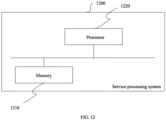
- FIG. 12 shows a service processing system 1200 according to an embodiment of the present disclosure.
- the service processing system 1200 may include a terminal device, an HTTP server, and the 5G message network monitoring system shown in FIG. 1 .
- the service processing system 1200 includes a memory 1210, a processor 1220, and a computer program stored in the memory 1210 and executable by the processor 1220.
- the computer program when executed by the processor 1220, causes the processor 1220 to implement the service processing method in the above embodiments.
- the memory 1210 may be configured for storing a non-transitory software program and a non-transitory computer-executable program, for example, the service processing method in the embodiments of the present disclosure.
- the processor 1220 runs the non-transitory software program and the non-transitory computer-executable program stored in the memory 1210, to implement the service processing method in the embodiments of the present disclosure.
- the memory 1210 may include a program storage area and a data storage area.
- the program storage area may store an operating system, and an application required by at least one function.
- the data storage area may store data and the like required for executing the service processing method in the above embodiments.
- the memory 1210 may include a high-speed random access memory, and may also include a non-transitory memory, e.g., at least one magnetic disk storage device, flash memory device, or other non-transitory solid-state storage device.
- the memory 1210 may include memories located remotely from the processor 1220, and the remote memories may be connected to the terminal via a network. Examples of the network include, but not limited to, the Internet, an intranet, a local area network, a mobile communication network, and combinations thereof.
- the non-transitory software program and the non-transitory computer-executable program required for implementing the service processing method in the embodiments are stored in the memory which, when executed by one or more processors, cause the one or more processors to implement the service processing method in the embodiments, for example, implement at least one of the method steps S100 to S200 in FIG. 2 , the method steps S300 to S500 in FIG. 3 , the method steps S510 to S530 in FIG. 4 , the method step S210 in FIG. 7 , the method steps S220 to S240 in FIG. 8 , the method steps S250 to S270 in FIG. 9 , the method step S280 in FIG. 10 , or the method steps S600 to S700 in FIG. 11 .
- the present disclosure further provides a computer-readable storage medium, storing a computer-executable instruction which, when executed by a computer, causes the computer to implement the service processing method in the embodiments, for example, implement at least one of the method steps S100 to 5200 in FIG. 2 , the method steps S300 to 5500 in FIG. 3 , the method steps S510 to S530 in FIG. 4 , the method step S210 in FIG. 7 , the method steps S220 to S240 in FIG. 8 , the method steps S250 to S270 in FIG. 9 , the method step S280 in FIG. 10 , or the method steps S600 to S700 in FIG. 11 .
- the embodiments of the present disclosure include: acquiring a first service request sent by a terminal device having passed a GBA authentication; and sending a 5G message service bill to the terminal device according to the first service request.
- a first service request sent by a terminal device is acquired based on the HTTP protocol, i.e., a 5G message sent by a terminal device having passed a GBA authentication is acquired.
- different HTTP protocol contents carried in the first service request different HTTP service types of the first service request can be identified.
- the monitoring of 5G messages of various service types is realized, and a corresponding 5G message service bill can be sent to the terminal device according to the HTTP service type, thereby improving the accuracy of processing 5G messages of different service types.
- the apparatus embodiments described above are merely examples.
- the units described as separate components may or may not be physically separated, i.e., they may be located in one place or may be distributed over a plurality of network units. Some or all of the modules may be selected according to actual needs to achieve the objects of the scheme of this embodiment.
- the term "computer storage medium” includes volatile and nonvolatile, removable and non-removable media implemented in any method or technology for storage of information (such as computer-readable instructions, data structures, program modules, or other data).
- the computer storage medium includes, but not limited to, a Random Access Memory (RAM), a Read-Only Memory (ROM), an Electrically Erasable Programmable Read-Only Memory (EEPROM), a flash memory or other memory technology, a Compact Disc Read-Only Memory (CD-ROM), a Digital Versatile Disc (DVD) or other optical storage, a cassette, a magnetic tape, a magnetic disk storage or other magnetic storage device, or any other medium which can be used to store the desired information and which can be accessed by a computer.
- the communication medium typically includes computer-readable instructions, data structures, program modules, or other data in a modulated data signal such as a carrier or other transport mechanism, and can include any information delivery medium.
Landscapes
- Engineering & Computer Science (AREA)
- Computer Networks & Wireless Communication (AREA)
- Signal Processing (AREA)
- Computer Security & Cryptography (AREA)
- Business, Economics & Management (AREA)
- Accounting & Taxation (AREA)
- Computer Hardware Design (AREA)
- Computing Systems (AREA)
- General Engineering & Computer Science (AREA)
- Information Transfer Between Computers (AREA)
- Computer And Data Communications (AREA)
- Mobile Radio Communication Systems (AREA)
- Telephonic Communication Services (AREA)
Abstract
Description
- The present disclosure is filed on the basis of
Chinese patent application No. 202111578549.5 filed December 22, 2021 - The present disclosure relates to the technical field of data processing, and in particular, to a service processing method and system, and a computer-readable storage medium.
- With the development of mobile Internet, conventional short messaging services have been upgraded to rich media messaging services, and 5th Generation (5G) message services have also been launched. Users can receive and send multimedia and messages in various formats such as text, pictures, audio, and video through 5G messages, to realize service search, discovery, interaction, payment, and other services. Therefore, with the continuous promotion of 5G message services, the types of services are becoming more and more abundant. In related technologies, the identification of services corresponding to 5G messages has limitations, and it is difficult to monitor 5G messages of various service types, affecting the accuracy of processing 5G messages of different service types.
- The following is a summary of the subject matter set forth in this description. This summary is not intended to limit the scope of protection of the claims.
- Embodiments of the present disclosure provide a service processing method and system, and a computer-readable storage medium.
- In accordance with a first aspect of the present disclosure, an embodiment provides a service processing method, including acquiring a first service request sent by a terminal device having passed a Generic Bootstrapping Architecture, GBA, authentication; and sending a 5G message service bill to the terminal device according to the first service request.
- In accordance with a second aspect of the present disclosure, an embodiment provides a service processing method, including sending a first service request to a Hypertext Transfer Protocol, HTTP, server in response to a terminal device having passed a GBA authentication; and receiving a 5G message service bill sent by the HTTP server according to the first service request.
- In accordance with a third aspect of the present disclosure, an embodiment provides a service processing system, including a memory, a processor, and a computer program stored in the memory and executable by the processor, where the computer program, when executed by the processor, causes the processor to implement the service processing method in accordance with the first aspect or implement the service processing method in accordance with the second aspect.
- In accordance with a fourth aspect of the present disclosure, an embodiment provides a computer-readable storage medium, storing a computer program which, when executed by a processor, causes the processor to implement the service processing method in accordance with the first aspect or implement the service processing method in accordance with the second aspect.
- Additional features and advantages of the present disclosure will be set forth in the description which follows, and in part will be obvious from the description, or may be learned by the practice of the present disclosure. The objects and other advantages of the present disclosure can be realized and obtained by the structures particularly pointed out in the description, claims and drawings.
- The drawings are provided for a further understanding of the technical schemes of the present disclosure, and constitute a part of the description. The drawings and the embodiments of the present disclosure are used to illustrate the technical schemes of the present disclosure, and are not intended to limit the technical schemes of the present disclosure.
-
FIG. 1 is a schematic diagram of an application scenario of a service processing method according to an embodiment of the present disclosure; -
FIG. 2 is a flowchart of a service processing method according to an embodiment of the present disclosure; -
FIG. 3 is a schematic diagram of a specific implementation process of steps that the method further includes beforeS 100 inFIG. 2 ; -
FIG. 4 is a schematic diagram of a specific implementation process of S500 inFIG. 3 ; -
FIG. 5 is a schematic flowchart of integration of a GBA authentication service and a file transfer service according to an embodiment of the present disclosure; -
FIG. 6 is a schematic flowchart of outputting bills by main and auxiliary processes in a GBA authentication process according to an embodiment of the present disclosure; -
FIG. 7 is a schematic diagram of a specific implementation process of S200 inFIG. 2 ; -
FIG. 8 is a schematic diagram of a specific implementation process of S530 inFIG. 4 or S210 inFIG. 7 ; -
FIG. 9 is a schematic diagram of a specific implementation process of S200 inFIG. 2 ; -
FIG. 10 is a schematic diagram of a specific implementation process of S200 inFIG. 2 ; -
FIG. 11 is a flowchart of a service processing method according to another embodiment of the present disclosure; and -
FIG. 12 is a schematic structural diagram of a service processing system according to an embodiment of the present disclosure. - To make the objects, technical schemes, and advantages of the present disclosure clear, the present disclosure is described in further detail in conjunction with accompanying drawings and examples. It should be understood that the specific embodiments described herein are merely used for illustrating the present disclosure, and are not intended to limit the present disclosure.
- It is to be noted, although functional modules have been divided in the schematic diagrams of apparatuses and logical orders have been shown in the flowcharts, in some cases, the modules may be divided in a different manner, or the steps shown or described may be executed in an order different from the orders as shown in the flowcharts. The terms such as "first", "second" and the like in the description, the claims, and the accompanying drawings are used to distinguish similar objects, and are not necessarily used to describe a specific sequence or a precedence order
- The present disclosure provides a service processing method. In the method, a first service request sent by a terminal device is acquired over an HTTP protocol, where the terminal device has passed a GBA authentication, and the first service request sent is a 5G message. According to an HTTP protocol content carried in the first service request, different HTTP service types of the first service request are identified. As such, the monitoring of the service type of the 5G message is realized, and a corresponding 5G message service bill can be sent to the terminal device according to the HTTP service type, thereby improving the accuracy of processing 5G messages of different service types.
- For ease of understanding, application scenarios of the service processing method provided in the embodiments of the present disclosure will be described below in conjunction with the accompanying drawings.
-
FIG. 1 shows an application scenario of a service processing method, which may be applied to a 5G message network monitoring system. The 5G message network monitoring system may be arranged between an HTTP server and a terminal device. - A 5G message is constructed according to a general standard specified by the Global System for Mobile Communications Association (GSMA) for the Rich Communication Suite (RCS). A user can receive and send multimedia and messages in various formats such as text, pictures, audio, and video through a message entrance on the terminal device without having to download a client.
- In the 5G message network monitoring system, a service acquisition point is arranged between the HTTP server and the terminal device. The service acquisition point may be an acquisition point of a Deep Packet Inspection (DPI) system in a 5G message network, for example, a 5Gm-02 port, and uses the HTTP protocol to perform file-related operations, such as file uploading and downloading, authentication, verification, etc. The 5G message network monitoring system may acquire a service request sent from a terminal device, analyze an eigenvalue and a protocol behavior in the service request, identify a service type of the service request, and output a corresponding 5G message service bill, to realize the inspection, monitoring, analysis, and service identification of 5G messages.
- For the acquisition and parsing of 5G messages, a port imaging is arranged on the acquisition point to copy a 5G message transmitted between the HTTP server and the terminal device into the 5G message network monitoring system, thus acquiring the 5G message transmitted between the HTTP server and the terminal device. In addition, the 5G message network monitoring system may also use an optical splitter to perform optical replication on the physical layer to acquire 5G messages. The use of mirroring or the optical splitter to acquire data has no impact on the message transmission service between the HTTP server and the terminal device even if the 5G message network monitoring system fails, ensuring high network stability.
- The 5G message network monitoring system and application scenarios described in the embodiments of the present disclosure are for the purpose of illustrating the technical schemes of the embodiments of the present disclosure more clearly, and do not constitute a limitation on the technical schemes provided in the embodiments of the present disclosure. Those having ordinary skills in the art may know that with the evolution of the 5G message network monitoring system and the emergence of new application scenarios, the technical schemes provided in the embodiments of the present disclosure are also applicable to similar technical problems.
- Those having ordinary skills in the art may understand that the 5G message network monitoring system shown in
FIG. 1 do not constitute a limitation to the embodiments of the present disclosure, and more or fewer components than those shown in the figure may be included, or some components may be combined, or a different component arrangement may be used. - Based on the structure of the above-mentioned 5G message network monitoring system, various embodiments of the optical fiber connection method of the present disclosure are proposed.
-
FIG. 2 is a flowchart of a service processing method according to an embodiment of the present disclosure. The service processing method includes, but not limited to, the following steps. - In a step of 5100, a first service request sent by a terminal device having passed a GBA authentication is acquired.
- In a step of S200, a 5G message service bill is sent to the terminal device according to the first service request.
- It can be understood that to ensure the legitimate use of services, login authentication is required between terminal devices and servers. GBA is a mobile communication network-based, lightweight security infrastructure defined by the 3rd Generation Partnership Project (3GPP). It can provide a unified authentication mechanism for existing and future services, and solve the security authentication problem of services in a consistent way.
- When a terminal device that has passed the GBA authentication sends a 5G message, i.e., a first service request, to an HTTP server, a 5G message network monitoring system may acquire the first service request through mirroring or an optical splitter. The first service request corresponds to a service type of a file-related operation, including file uploading, file downloading, authentication, verification, etc. Service requests of different service types carry different HTTP protocol eigenvalues. Therefore, an HTTP protocol eigenvalue in the first service request can be checked and analyzed, and a service type corresponding to the first service request can be identified through HTTP service identification, to improve the integrity of 5G message service identification. As such, a corresponding 5G message service bill and corresponding signaling backtracking can be sent to the terminal device according to each service type, so that services used by the terminal device can be analyzed, which is conducive to the promotion of 5G message services.
- Referring to
FIG. 3 , before S100 in the embodiment shown inFIG. 2 , the method further includes, but not limited to, the following steps. - In a step of S300, a second service request sent by the terminal device is acquired, where the second service request includes a request identifier and identification information.
- In a step of S400, a third service request sent by the terminal device is received when the second service request satisfies an authentication condition.
- In a step of S500, an authentication bill is sent to the terminal device according to the third service request.
- The authentication condition is that the request identifier is a first request identifier, and the identification information is a GBA identifier.
- It can be understood that login authentication is required between the terminal device and the HTTP server. The authentication/verification process between the terminal device and the HTTP server includes two request-response interactions. When the terminal device fails the authentication/verification, the terminal device needs to send an authentication/verification request and a secondary authentication request to the HTTP server. Because the terminal device and the HTTP server communicate with each other via the HTTP protocol, whether an authentication condition is satisfied may be determined according to an HTTP protocol eigenvalue carried in the authentication/verification request. When no authentication/verification is performed between the terminal device and the HTTP server, the terminal device sends a second service request for authentication/verification. The second service request includes a request identifier and identification information. When the second service request satisfies the authentication condition, i.e., the request identifier in the second service request is the first request identifier and the identification information is the GBA identifier, the third service request sent by the terminal device is received, i.e., the secondary authentication request is received. According to an HTTP protocol eigenvalue carried in the third service request, it is determined whether the terminal device has passed the authentication/verification, and a corresponding authentication bill is sent to the terminal device. The request identifier in the service request may be a request line method, and the first request identifier may be POST, i.e., the first request identifier may be expressed as a method for the terminal device to submit data to the HTTP server, such that the HTTP server creates a new resource or update an existing resource according to the received service request. The identification information in the service request may include field content in the request message. Therefore, when the request line method in the received second service request is POST, and content of a header field User-Agent in the request message carries information "3gpp-gba" as the GBA identifier, it is determined that the second service request satisfies the authentication condition, the third service request is received as a secondary authentication request, and a corresponding authentication bill is sent to the terminal device according to content of the HTTP protocol eigenvalue carried in the third service request. For example, the authentication bill may include a GBA authentication timeout bill and a GBA authentication success bill. When the GBA authentication timeout bill is sent to the terminal device, it may be considered that the GBA authentication/verification of the terminal device fails. When the GBA authentication success bill is sent to the terminal device, it may be considered that the GBA authentication/verification of the terminal device is successful. Therefore, service types of 5G messages can be identified based on the HTTP protocol, to improve the integrity of 5G message service identification, thereby improving the accuracy of
processing 5G messages of different service types. - It should be noted that the authentication condition may also include that the identification information in the service request carries authorization information. For example, the identification information carries an Authorization field. When the request method in the service request is POST, and the User-Agent field in the service request contains "3gpp-gba" and carries the Authorization field, it is determined that the service type of the service request is a GBA authentication service.
- Referring to
FIG. 4 , S500 in the embodiment shown inFIG. 3 includes, but not limited to, one of the following steps. - In a step of S510, a GBA authentication success bill is sent to the terminal device when the third service request satisfies the authentication condition.
or, - in a step of S520, a GBA authentication timeout bill is sent to the terminal device when the third service request does not satisfy the authentication condition.
or, - in a step of S530, when the third service request satisfies the authentication condition and the identification information includes a Task Identifier (TID) and file length information, a GBA authentication success bill is sent to the terminal device and a file transfer service bill is sent to the terminal device according to the file length information.
- It can be understood that when the request identifier in the third service request is the first request identifier, and the identification information carries the GBA identifier, or the identification information carries the GBA identifier and the authorization information, it is determined that the third service request satisfies the authentication condition. Therefore, when both the second service request and the third service request satisfy the authentication condition, the terminal device is considered to have passed the authentication/verification with the HTTP server, so the GBA authentication success bill is sent to the terminal device. When the third service request satisfies the authentication condition, and the identification information further includes a TID, it is considered that the terminal device has passed the authentication/verification with the HTTP server, and at the same time, initiates a file transfer service request to the HTTP server, i.e., the GBA authentication service and a file transfer service are performed simultaneously. Therefore, a GBA authentication success bill and a file transfer service bill are sent to the terminal device. When the received third service request does not satisfy the authentication condition, it is determined that the authentication/verification between the terminal device and the HTTP server times out, so the GBA authentication timeout bill is sent to the terminal device.
- Refer to
FIG. 5 andFIG. 6 .FIG. 5 is a schematic flowchart of integration of a GBA authentication service and a file transfer service.FIG. 6 is a schematic flowchart of outputting bills by main and auxiliary processes in a GBA authentication process. - It can be understood that a complete GBA authentication service includes two message interactions between the terminal device and the HTTP server. During the second message interaction process, the terminal device may simultaneously send service content to be uploaded and GBA authentication service content to the HTTP server. Therefore, it may be considered that the GBA authentication process may include a main GBA authentication process and an auxiliary GBA authentication process, or may include the main GBA authentication process and a main file transfer process, or may include only the main GBA authentication process. The main GBA authentication process may be characterized as that the second service request satisfies the authentication condition. The auxiliary GBA authentication process may be characterized as that the third service request satisfies the authentication condition and the identification information does not carry the TID. The main file transfer process may be characterized as that the third service request satisfies the authentication condition and the identification information carries the TID. When the GBA authentication process includes only the main GBA authentication process, the GBA authentication timeout bill is sent. When the GBA authentication process includes the main GBA authentication process and the auxiliary GBA authentication process, the GBA authentication success bill is sent. When the GBA authentication process includes the main GBA authentication process and the main file transfer process, the GBA authentication success bill and the file transfer service bill are sent. In addition, when the GBA authentication process includes only the main file transfer process, the file transfer service bill is sent. When the GBA authentication process includes only the auxiliary GBA authentication process, no 5G message service bill is sent.
- When a file uploading service request is initiated simultaneously during the GBA authentication service, i.e., when the second service request and the third service request both satisfy the authentication condition and the identification information in the third service request carries a TID, the authentication/verification between the HTTP server and the terminal device is successful and a file uploading service is completed, so a GBA authentication success bill and a file transfer service bill are sent to the terminal device. Therefore, through the use of the main process and the auxiliary process in combination, a case where the GBA authentication service and the file transfer service are performed simultaneously can be identified, thereby improving the integrity of 5G message service identification. In addition, corresponding 5G message service bills are respectively sent in a case where multiple services are performed at the same time, thereby improving the accuracy of
processing 5G messages of different service types. - Referring to
FIG. 7 , S200 in the embodiment shown inFIG. 2 includes, but not limited to, a following step. - In a step of S210, a file transfer service bill is sent to the terminal device according to the file length information.
- It can be understood that when the request identifier in the received first service request is the first request identifier, and the identification information carries a TID and file length information, it is considered that the service type of the first service request is a file transfer service, so a file transfer service bill is sent to the terminal device according to the file length information in the first service request. As the file length information varies, the file transfer service bill may include a file uploading bill and a bill without file uploading.
- Referring to
FIG. 8 , S530 in the embodiment shown inFIG. 4 or S210 in the embodiment shown inFIG. 7 includes, but not limited to, one of the following steps. - In a step of S220, a service bill without file uploading is sent to the terminal device when the file length information is 0 and a third request identifier is received.
or, - in a step of S230, a file uploading bill is sent to the terminal device when the file length information is greater than 0.
or, - in a step of S240, a file transfer resumption service bill is sent to the terminal device when the file length information is greater than 0 and the third request identifier is received.
- It can be understood that the file transfer service includes determining whether the terminal device has a file service, a file uploading service, a service without file uploading, or a file transfer resumption service. When the file length information carried in the first service request is 0, it is determined whether the terminal device has a file service, and a service request initiated by the terminal device is re-acquired. When the request identifier in the re-acquired service request is the third request identifier, it is considered that the service type is a service without file uploading, and a service bill without file uploading is sent to the terminal device. The third request identifier may be a PUT request method, and a resource is uploaded to the HTTP server by utilizing the PUT request method. When the file length information carried in the first service request is greater than 0, it is considered that the service type is a file uploading service, so a file uploading bill is sent to the terminal device. When the file length information is greater than 0, and the request identifier carried in the re-acquired service request is the third request identifier, it is considered that the service type is a file transfer resumption service, so a file transfer resumption service bill is sent to the terminal device. When a file transfer service request including identification information carrying a TID is received, a secondary service request sent by the terminal device may be re-acquired. Information carried in the secondary service request is checked based on the HTTP protocol. A specific service type is determined according to the file length information in the file transfer service request and the request identifier in the secondary service request. As such, the integrity and accuracy of 5G message service identification are improved, so that corresponding 5G message service bills can be sent when receiving service requests of different service types, thereby facilitating the analysis and management of the usage statuses of services.
- Referring to
FIG. 9 , S200 in the embodiment shown inFIG. 2 includes, but not limited to, one of the following steps. - In a step of S250, when a file download identifier carries an identifier of a file having been uploaded, an uploaded-file information service bill is sent to the terminal device.
or, - in a step of S260, when the file download identifier carries an identifier of a file having been downloaded, a downloaded-file information service bill is sent to the terminal device.
or, - in a step of S270, a file download service bill is sent to the terminal device when the file download identifier carries only a file extension identifier.
- It can be understood that, the request identifier includes a second request identifier, which may be a GET request method in a request line, i.e., the second request identifier may be expressed as a request method that can request to acquire a resource without any other impact on the server. When the terminal device needs to acquire a resource, such as file information, from the HTTP server, it may send a service request carrying the second request identifier and a file download identifier to the HTTP server. There are a variety of file download identifiers, such as an identifier of a file having been uploaded, an identifier of a file having been downloaded, and a file extension identifier. The identifier of the file having been uploaded may be a get_upload_info identifier in a request line. The identifier of the file having been downloaded may be a get_download_info identifier in a request line. The file extension identifier may be an extension in a File Identifier Descriptor (FID) carried in a request line, such as txt, jpg, wav, etc.
- When the first service request includes the second request identifier, and the file download identifier carries an identifier of a file having been uploaded, i.e., the request line contains the get_upload_info identifier, it is considered that the service type is a service of acquiring information of a file having been uploaded, and the terminal device requests to acquire information of a file having been uploaded, so an uploaded-file information service bill is sent to the terminal device. When the file download identifier carries an identifier of a file having been downloaded, i.e., the request line contains the get_download_info identifier, it is considered that the service type is a service of acquiring information of a file having been downloaded, and the terminal device requests to acquire information of a file having been downloaded, so a downloaded-file information service bill is returned to the terminal device. When the file download identifier does not contain an identifier of a file having been uploaded and an identifier of a file having been downloaded and contains only a file extension identifier, i.e., the request line does not contain the get_upload_info identifier and the get_download_info identifier, and the FID of the request line contains a file extension name such as txt, jpg, wav, etc., it is considered that the service type is a file download service, so a file download service bill is sent to the terminal device. A specific file transfer service type is determined according to the request identifier and different types of file download identifiers, such that different service bills can be sent according to different types of downloaded files, thereby improving the integrity of 5G message service identification and facilitating the management and analysis of 5G messages.
- Referring to
FIG. 10 , S200 in the embodiment shown inFIG. 2 includes, but not limited to, a following step. - In a step of S280, a GBA authentication service bill is sent to the terminal device when the request identifier is a first request identifier or a second request identifier and the identification information carries a GBA identifier and authorization information.
- It can be understood that during the authentication/verification process between the terminal device and the HTTP server, the terminal device may send an authentication request to the HTTP server through a POST request method or a GET request method. To be specific, when the first service request carries the first request identifier or the second request identifier, and the identification information carries a GBA identifier and authorization information, it is considered that the service type of the service request is a GBA authentication service, so a GBA authentication service bill is sent to the terminal device. In addition, when the received first service request carries the first request identifier or the second request identifier, but does not carry the GBA identifier, it may be considered that the service type of the service request is not a GBA authentication service. The authorization information carried in the identification information may be an Authorization field in the request message. Therefore, when an HTTP request method in a 5G message acquired based on the HTTP protocol is POST or GET, and the User-Agent field in the request message contains "3gpp-gba" and the request message carries the Authorization field, it is considered that the 5G message belongs to the GBA authentication service. According to HTTP protocol eigenvalues in the 5G message, such as the request identifier, the GBA identifier, and the authorization information, the service type of the 5G message can be identified, and a corresponding service bill can be sent according to the service type.
-
FIG. 11 is a flowchart of a service processing method according to another embodiment of the present disclosure. The service processing method includes, but not limited to, the following steps. - In a step of S600, a first service request is sent to an HTTP server when a terminal device has passed a GBA authentication.
- In a step of S700, a 5G message service bill sent by the HTTP server according to the first service request is received.
- It can be understood that when the terminal device has passed the GBA authentication, the terminal device may send a first service request to the HTTP server. A 5G message network monitoring system may acquire the first service request through mirroring or an optical splitter, and send the first service request to the HTTP server. After receiving the first service request, the HTTP server checks HTTP protocol eigenvalues carried in the first service request, such as a request identifier and identification information, identify a service type of the first service request, execute a corresponding service process, and return a corresponding 5G message service bill. The 5G message network monitoring system may acquire the 5G message service bill through mirroring or an optical splitter, analyze and manage the 5G message service bill, and then send the 5G message service bill to the terminal device. In addition, the 5G message network monitoring system may acquire and identify the first service request and obtain a corresponding 5G message service bill, or may acquire the 5G message service bill from the HTTP server, and output a 5G message service bill and corresponding signaling backtracking to the terminal device according to the service type of the service request, allowing an operator to analyze the usage of the service by the terminal device.
- It should be noted that when the terminal device does not pass the GBA authentication, the terminal device may send a second service request to the HTTP server, and the 5G message network monitoring system may acquire the second service request by copying and send the second service request to the HTTP server. When the second service request satisfies an authentication condition, the HTTP server may return an unauthorized authentication response to the terminal device. When the terminal device receives the unauthorized authentication response, the terminal device sends a third service request to the HTTP server, and the 5G message network monitoring system may further acquire the third service request by copying and send the third service request to the HTTP server. In addition, according to an HTTP protocol eigenvalue carried in the third service request, the 5G message network monitoring system may further determine whether the terminal device has passed the authentication/verification with the HTTP server and whether to execute a file transfer service i.e., identify a service type of the service request. The 5G message network monitoring system may further cooperate with the HTTP server to send a 5G message service bill according to the service type. As such, the identification of the 5G message service based on the HTTP protocol is realized, and a corresponding bill and signaling backtracking can be output according to the service request.
-
FIG. 12 shows aservice processing system 1200 according to an embodiment of the present disclosure. Theservice processing system 1200 may include a terminal device, an HTTP server, and the 5G message network monitoring system shown inFIG. 1 . Theservice processing system 1200 includes amemory 1210, aprocessor 1220, and a computer program stored in thememory 1210 and executable by theprocessor 1220. The computer program, when executed by theprocessor 1220, causes theprocessor 1220 to implement the service processing method in the above embodiments. - The
memory 1210, as a non-transitory computer-readable storage medium, may be configured for storing a non-transitory software program and a non-transitory computer-executable program, for example, the service processing method in the embodiments of the present disclosure. Theprocessor 1220 runs the non-transitory software program and the non-transitory computer-executable program stored in thememory 1210, to implement the service processing method in the embodiments of the present disclosure. - The
memory 1210 may include a program storage area and a data storage area. The program storage area may store an operating system, and an application required by at least one function. The data storage area may store data and the like required for executing the service processing method in the above embodiments. In addition, thememory 1210 may include a high-speed random access memory, and may also include a non-transitory memory, e.g., at least one magnetic disk storage device, flash memory device, or other non-transitory solid-state storage device. It should be noted that thememory 1210 may include memories located remotely from theprocessor 1220, and the remote memories may be connected to the terminal via a network. Examples of the network include, but not limited to, the Internet, an intranet, a local area network, a mobile communication network, and combinations thereof. - The non-transitory software program and the non-transitory computer-executable program required for implementing the service processing method in the embodiments are stored in the memory which, when executed by one or more processors, cause the one or more processors to implement the service processing method in the embodiments, for example, implement at least one of the method steps S100 to S200 in
FIG. 2 , the method steps S300 to S500 inFIG. 3 , the method steps S510 to S530 inFIG. 4 , the method step S210 inFIG. 7 , the method steps S220 to S240 inFIG. 8 , the method steps S250 to S270 inFIG. 9 , the method step S280 inFIG. 10 , or the method steps S600 to S700 inFIG. 11 . - The present disclosure further provides a computer-readable storage medium, storing a computer-executable instruction which, when executed by a computer, causes the computer to implement the service processing method in the embodiments, for example, implement at least one of the method steps S100 to 5200 in
FIG. 2 , the method steps S300 to 5500 inFIG. 3 , the method steps S510 to S530 inFIG. 4 , the method step S210 inFIG. 7 , the method steps S220 to S240 inFIG. 8 , the method steps S250 to S270 inFIG. 9 , the method step S280 inFIG. 10 , or the method steps S600 to S700 inFIG. 11 . - The embodiments of the present disclosure include: acquiring a first service request sent by a terminal device having passed a GBA authentication; and sending a 5G message service bill to the terminal device according to the first service request. According to the scheme provided in the embodiments of the present disclosure, a first service request sent by a terminal device is acquired based on the HTTP protocol, i.e., a 5G message sent by a terminal device having passed a GBA authentication is acquired. According to different HTTP protocol contents carried in the first service request, different HTTP service types of the first service request can be identified. As such, the monitoring of 5G messages of various service types is realized, and a corresponding 5G message service bill can be sent to the terminal device according to the HTTP service type, thereby improving the accuracy of
processing 5G messages of different service types. - The apparatus embodiments described above are merely examples. The units described as separate components may or may not be physically separated, i.e., they may be located in one place or may be distributed over a plurality of network units. Some or all of the modules may be selected according to actual needs to achieve the objects of the scheme of this embodiment.
- Those having ordinary skills in the art can understand that all or some of the steps in the methods disclosed above and the functional modules/units in the system and the apparatus can be implemented as software, firmware, hardware, and appropriate combinations thereof. Some or all physical components may be implemented as software executed by a processor, such as a central processing unit, a digital signal processor, or a microprocessor, or as hardware, or as an integrated circuit, such as an application-specific integrated circuit. Such software may be distributed on a computer-readable medium, which may include a computer storage medium (or non-transitory medium) and a communication medium (or transitory medium). As is known to those having ordinary skills in the art, the term "computer storage medium" includes volatile and nonvolatile, removable and non-removable media implemented in any method or technology for storage of information (such as computer-readable instructions, data structures, program modules, or other data). The computer storage medium includes, but not limited to, a Random Access Memory (RAM), a Read-Only Memory (ROM), an Electrically Erasable Programmable Read-Only Memory (EEPROM), a flash memory or other memory technology, a Compact Disc Read-Only Memory (CD-ROM), a Digital Versatile Disc (DVD) or other optical storage, a cassette, a magnetic tape, a magnetic disk storage or other magnetic storage device, or any other medium which can be used to store the desired information and which can be accessed by a computer. In addition, as is known to those having ordinary skills in the art, the communication medium typically includes computer-readable instructions, data structures, program modules, or other data in a modulated data signal such as a carrier or other transport mechanism, and can include any information delivery medium.
- The embodiments of the present disclosure have been described in detail above with reference to the accompanying drawings, but the present disclosure is not limited to the above embodiments, and various changes may be made within the knowledge of those having ordinary skills in the art without departing from the protection scope of the present disclosure.
Claims (10)
- A service processing method, comprising:acquiring a first service request sent by a terminal device having passed a General Bootstrapping Architecture, GBA, authentication; andsending a 5th Generation, 5G, message service bill to the terminal device according to the first service request.
- The service processing method of claim 1, wherein before acquiring a first service request sent by a terminal device having passed a GBA authentication, the method comprises:acquiring a second service request sent by the terminal device, wherein the second service request comprises a request identifier and identification information;receiving a third service request sent by the terminal device, in response to the second service request satisfying an authentication condition; andsending an authentication bill to the terminal device according to the third service request,wherein the authentication condition is that the request identifier is a first request identifier, and the identification information is a GBA identifier.
- The service processing method of claim 2, wherein the third service request comprises a request identifier and identification information, and sending an authentication bill to the terminal device according to the third service request comprises:sending a GBA authentication success bill to the terminal device in response to the third service request satisfying the authentication condition;
orsending a GBA authentication timeout bill to the terminal device in response to the third service request not satisfying the authentication condition;
orin response to the third service request satisfying the authentication condition and the identification information comprising a Task Identifier, TID, and file length information, sending a GBA authentication success bill to the terminal device and sending a file transfer service bill to the terminal device according to the file length information. - The service processing method of claim 1, wherein the first service request comprises a request identifier and identification information, and in response to the request identifier being a first request identifier and the identification information carrying a TID and file length information, sending a 5G message service bill to the terminal device according to the first service request comprises:
sending a file transfer service bill to the terminal device according to the file length information. - The service processing method of claim 3 or 4, wherein sending a file transfer service bill to the terminal device according to the file length information comprises:sending a service bill without file uploading to the terminal device, in response to the file length information being 0 and receiving a third request identifier;
orsending a file uploading bill to the terminal device in response to the file length information being greater than 0;
orsending a file transfer resumption service bill to the terminal device in response to the file length information being greater than 0 and receiving the third request identifier. - The service processing method of claim 1, wherein the first service request comprises a request identifier and identification information, and in response to the request identifier being a second request identifier and the identification information carrying a file download identifier, sending a 5G message service bill to the terminal device according to the first service request comprises:in response to the file download identifier carrying an identifier of a file having been uploaded, sending, to the terminal device, an uploaded-file information service bill;
orin response to the file download identifier carrying an identifier of a file having been downloaded, sending, to the terminal device, a downloaded-file information service bill;
orsending a file download service bill to the terminal device in response to the file download identifier carrying only a file extension identifier. - The service processing method of claim 1, wherein the first service request comprises a request identifier and identification information, and sending a 5G message service bill to the terminal device according to the first service request comprises:
sending a GBA authentication service bill to the terminal device in response to the request identifier being a first request identifier or a second request identifier and the identification information carrying a GBA identifier and authorization information. - A service processing method, comprising:sending a first service request to a Hypertext Transfer Protocol, HTTP, server in response to a terminal device having passed a Generic Bootstrapping Architecture, GBA, authentication; andreceiving a 5th Generation, 5G, message service bill sent by the HTTP server according to the first service request.
- A service processing system, comprising a memory, a processor, and a computer program stored in the memory and executable by the processor, wherein the computer program, when executed by the processor, causes the processor to perform the service processing method of any one of claims 1 to 7 or the service processing method of claim 8.
- A computer-readable storage medium, storing a computer program which, when executed by a processor, causes the processor to perform the service processing method of any one of claims 1 to 7 or the service processing method of claim 8.
Applications Claiming Priority (2)
| Application Number | Priority Date | Filing Date | Title |
|---|---|---|---|
| CN202111578549.5A CN116346923A (en) | 2021-12-22 | 2021-12-22 | Business processing method, system, and computer-readable storage medium |
| PCT/CN2022/125988 WO2023116151A1 (en) | 2021-12-22 | 2022-10-18 | Service processing method and system, and computer-readable storage medium |
Publications (3)
| Publication Number | Publication Date |
|---|---|
| EP4451649A1 true EP4451649A1 (en) | 2024-10-23 |
| EP4451649A4 EP4451649A4 (en) | 2025-03-19 |
| EP4451649B1 EP4451649B1 (en) | 2026-04-08 |
Family
ID=86889872
Family Applications (1)
| Application Number | Title | Priority Date | Filing Date |
|---|---|---|---|
| EP22909469.3A Active EP4451649B1 (en) | 2021-12-22 | 2022-10-18 | Service processing method and system, and computer-readable storage medium |
Country Status (5)
| Country | Link |
|---|---|
| US (1) | US20250056225A1 (en) |
| EP (1) | EP4451649B1 (en) |
| JP (1) | JP7787999B2 (en) |
| CN (1) | CN116346923A (en) |
| WO (1) | WO2023116151A1 (en) |
Family Cites Families (14)
| Publication number | Priority date | Publication date | Assignee | Title |
|---|---|---|---|---|
| CN101754163A (en) * | 2008-12-08 | 2010-06-23 | 中国移动通信集团吉林有限公司 | Value-added service charging method, system and device |
| TWI584668B (en) * | 2011-09-29 | 2017-05-21 | 內數位專利控股公司 | Application method and device for enabling access and integration with guest network |
| EP2842288A1 (en) * | 2012-04-27 | 2015-03-04 | Interdigital Patent Holdings, Inc. | Systems and methods for personalizing and/or tailoring a service interface |
| CN103269479B (en) * | 2013-05-07 | 2016-03-30 | 华为技术有限公司 | A kind of call bill processing method, device and system |
| CN104780519A (en) * | 2014-01-10 | 2015-07-15 | 中国移动通信集团四川有限公司 | Phone bill query method and system |
| CN106412866A (en) * | 2015-07-30 | 2017-02-15 | 三亚中兴软件有限责任公司 | Phone bill generation method and apparatus |
| CN108243015B (en) * | 2016-12-27 | 2021-07-02 | 中国移动通信集团内蒙古有限公司 | A method for extracting bill information, a bill server and a network management server |
| CN111224831B (en) * | 2018-11-26 | 2022-03-29 | 中国电信股份有限公司 | Method and system for generating call ticket |
| CN111385754B (en) * | 2018-12-29 | 2022-05-31 | 华为技术有限公司 | Charging method, device and system |
| CN113055535B (en) * | 2019-12-26 | 2022-06-24 | 中国电信股份有限公司 | Method and system for generating 5G end-to-end call ticket |
| CN112118565B (en) * | 2020-08-14 | 2023-07-25 | 金蝶医疗软件科技有限公司 | Multi-tenant service gray level publishing method, device, computer equipment and storage medium |
| CN113518349B (en) * | 2020-10-23 | 2024-12-31 | 中国移动通信有限公司研究院 | Business management method, device, system and storage medium |
| CN112291724B (en) * | 2020-10-28 | 2022-07-15 | 电信科学技术第十研究所有限公司 | 5G signaling visualization method and device |
| US12348573B2 (en) * | 2021-04-16 | 2025-07-01 | Samsung Electronics Co., Ltd. | Wireless communication apparatus supporting rich communication suite (RCS) and wireless communication method thereof |
-
2021
- 2021-12-22 CN CN202111578549.5A patent/CN116346923A/en active Pending
-
2022
- 2022-10-18 WO PCT/CN2022/125988 patent/WO2023116151A1/en not_active Ceased
- 2022-10-18 US US18/722,989 patent/US20250056225A1/en active Pending
- 2022-10-18 JP JP2024537496A patent/JP7787999B2/en active Active
- 2022-10-18 EP EP22909469.3A patent/EP4451649B1/en active Active
Also Published As
| Publication number | Publication date |
|---|---|
| JP7787999B2 (en) | 2025-12-17 |
| EP4451649A4 (en) | 2025-03-19 |
| US20250056225A1 (en) | 2025-02-13 |
| EP4451649B1 (en) | 2026-04-08 |
| WO2023116151A1 (en) | 2023-06-29 |
| CN116346923A (en) | 2023-06-27 |
| JP2025501559A (en) | 2025-01-22 |
Similar Documents
| Publication | Publication Date | Title |
|---|---|---|
| EP4161012A1 (en) | Authentication method and apparatus, electronic device, server, program, and storage medium | |
| CN116097691B (en) | Service request handling | |
| US12452242B2 (en) | Cloud platform binding method and system for internet of things card, and device and medium | |
| EP4236409A1 (en) | Data information acquisition methods and apparatus, related device, and medium | |
| CN101227489A (en) | Network storage data sharing method and sharing system | |
| WO2019001562A1 (en) | Model loading method and apparatus, storage medium, and computer device | |
| CN120281832B (en) | KCP protocol reliable transmission proxy method and system based on digital networking | |
| EP4208990B1 (en) | A method of supporting packet flow descriptor management in a service based architecture based telecommunication network | |
| CN116647589B (en) | Vehicle diagnosis communication method, device, equipment and medium | |
| WO2023059234A1 (en) | Charging functions and methods for updating charging resources | |
| EP4451649A1 (en) | Service processing method and system, and computer-readable storage medium | |
| CN114461425A (en) | Data processing method, device, equipment and computer readable storage medium | |
| US9723436B2 (en) | Mobile device location | |
| CN117834611A (en) | File transmission method, device and system, electronic device, and storage medium | |
| US20240380617A1 (en) | Timeliness in remote attestation procedures | |
| CN119520646B (en) | Message splitting method and device based on HTTP protocol | |
| KR102249697B1 (en) | System and method for communicating using content delivery network and edge computing in a complex network environment | |
| CN110225507B (en) | Cell locking method for terminal equipment and terminal equipment | |
| WO2026045266A1 (en) | User data analysis and reasoning method, electronic apparatus and computer program product | |
| CN120474795A (en) | A token synchronization method, device, equipment and storage medium based on microservices | |
| HK40048351A (en) | Artificial intelligence engine testing method, platform and terminal, computing device and storage medium | |
| CN119835521A (en) | Camera management and control method, system, platform server and intermediate proxy module | |
| CN121166216A (en) | File processing method, apparatus, device, storage medium, and program product | |
| CN121418821A (en) | Identification management methods, devices, equipment, media and products | |
| CN121792510A (en) | Interface-based adaptive transmission method, electronic equipment and system |
Legal Events
| Date | Code | Title | Description |
|---|---|---|---|
| STAA | Information on the status of an ep patent application or granted ep patent |
Free format text: STATUS: THE INTERNATIONAL PUBLICATION HAS BEEN MADE |
|
| PUAI | Public reference made under article 153(3) epc to a published international application that has entered the european phase |
Free format text: ORIGINAL CODE: 0009012 |
|
| STAA | Information on the status of an ep patent application or granted ep patent |
Free format text: STATUS: REQUEST FOR EXAMINATION WAS MADE |
|
| 17P | Request for examination filed |
Effective date: 20240717 |
|
| AK | Designated contracting states |
Kind code of ref document: A1 Designated state(s): AL AT BE BG CH CY CZ DE DK EE ES FI FR GB GR HR HU IE IS IT LI LT LU LV MC ME MK MT NL NO PL PT RO RS SE SI SK SM TR |
|
| REG | Reference to a national code |
Ref legal event code: R079 Free format text: PREVIOUS MAIN CLASS: H04L0067600000 Ref country code: DE Ref document number: 602022034351 Country of ref document: DE Ipc: H04W0004240000 |
|
| A4 | Supplementary search report drawn up and despatched |
Effective date: 20250218 |
|
| RIC1 | Information provided on ipc code assigned before grant |
Ipc: H04L 67/02 20220101ALI20250212BHEP Ipc: H04L 9/40 20220101ALI20250212BHEP Ipc: H04W 4/24 20240101AFI20250212BHEP |
|
| DAV | Request for validation of the european patent (deleted) | ||
| DAX | Request for extension of the european patent (deleted) | ||
| GRAP | Despatch of communication of intention to grant a patent |
Free format text: ORIGINAL CODE: EPIDOSNIGR1 |
|
| STAA | Information on the status of an ep patent application or granted ep patent |
Free format text: STATUS: GRANT OF PATENT IS INTENDED |
|
| RIC1 | Information provided on ipc code assigned before grant |
Ipc: H04W 4/24 20240101AFI20260109BHEP Ipc: H04L 9/40 20220101ALI20260109BHEP Ipc: H04L 67/02 20220101ALI20260109BHEP Ipc: H04L 12/14 20240101ALI20260109BHEP Ipc: H04M 15/00 20240101ALI20260109BHEP |
|
| INTG | Intention to grant announced |
Effective date: 20260127 |
|
| GRAS | Grant fee paid |
Free format text: ORIGINAL CODE: EPIDOSNIGR3 |
|
| GRAA | (expected) grant |
Free format text: ORIGINAL CODE: 0009210 |
|
| STAA | Information on the status of an ep patent application or granted ep patent |
Free format text: STATUS: THE PATENT HAS BEEN GRANTED |
|
| AK | Designated contracting states |
Kind code of ref document: B1 Designated state(s): AL AT BE BG CH CY CZ DE DK EE ES FI FR GB GR HR HU IE IS IT LI LT LU LV MC ME MK MT NL NO PL PT RO RS SE SI SK SM TR |
|
| REG | Reference to a national code |
Ref country code: CH Ref legal event code: F10 Free format text: ST27 STATUS EVENT CODE: U-0-0-F10-F00 (AS PROVIDED BY THE NATIONAL OFFICE) Effective date: 20260408 Ref country code: GB Ref legal event code: FG4D |
|
| REG | Reference to a national code |
Ref country code: DE Ref legal event code: R096 Ref document number: 602022034351 Country of ref document: DE |