EP4451404A2 - An electrolyte solvent with adjustable solvation properties, production method, and applications thereof - Google Patents
An electrolyte solvent with adjustable solvation properties, production method, and applications thereof Download PDFInfo
- Publication number
- EP4451404A2 EP4451404A2 EP24171209.0A EP24171209A EP4451404A2 EP 4451404 A2 EP4451404 A2 EP 4451404A2 EP 24171209 A EP24171209 A EP 24171209A EP 4451404 A2 EP4451404 A2 EP 4451404A2
- Authority
- EP
- European Patent Office
- Prior art keywords
- formula
- metal
- battery
- adjustable
- electrolyte solvent
- Prior art date
- Legal status (The legal status is an assumption and is not a legal conclusion. Google has not performed a legal analysis and makes no representation as to the accuracy of the status listed.)
- Pending
Links
- 239000002904 solvent Substances 0.000 title claims abstract description 55
- 239000003792 electrolyte Substances 0.000 title claims abstract description 49
- 238000007614 solvation Methods 0.000 title claims abstract description 30
- 238000004519 manufacturing process Methods 0.000 title claims description 12
- 229910052751 metal Inorganic materials 0.000 claims abstract description 23
- 239000002184 metal Substances 0.000 claims abstract description 23
- 229910052744 lithium Inorganic materials 0.000 claims abstract description 17
- 229910021645 metal ion Inorganic materials 0.000 claims abstract description 12
- WHXSMMKQMYFTQS-UHFFFAOYSA-N Lithium Chemical compound [Li] WHXSMMKQMYFTQS-UHFFFAOYSA-N 0.000 claims abstract description 11
- 239000000126 substance Substances 0.000 claims description 27
- 125000000018 nitroso group Chemical group N(=O)* 0.000 claims description 20
- 239000011669 selenium Substances 0.000 claims description 20
- 229910052760 oxygen Inorganic materials 0.000 claims description 13
- QVGXLLKOCUKJST-UHFFFAOYSA-N atomic oxygen Chemical compound [O] QVGXLLKOCUKJST-UHFFFAOYSA-N 0.000 claims description 11
- 229910052736 halogen Inorganic materials 0.000 claims description 11
- 150000002367 halogens Chemical class 0.000 claims description 11
- 239000001301 oxygen Substances 0.000 claims description 11
- JCXJVPUVTGWSNB-UHFFFAOYSA-N Nitrogen dioxide Chemical compound O=[N]=O JCXJVPUVTGWSNB-UHFFFAOYSA-N 0.000 claims description 10
- BUGBHKTXTAQXES-UHFFFAOYSA-N Selenium Chemical compound [Se] BUGBHKTXTAQXES-UHFFFAOYSA-N 0.000 claims description 10
- NINIDFKCEFEMDL-UHFFFAOYSA-N Sulfur Chemical compound [S] NINIDFKCEFEMDL-UHFFFAOYSA-N 0.000 claims description 10
- 150000001412 amines Chemical class 0.000 claims description 10
- 150000002825 nitriles Chemical class 0.000 claims description 10
- 125000000449 nitro group Chemical group [O-][N+](*)=O 0.000 claims description 10
- 229910052711 selenium Inorganic materials 0.000 claims description 10
- 125000001424 substituent group Chemical group 0.000 claims description 10
- 229910052717 sulfur Inorganic materials 0.000 claims description 10
- 239000011593 sulfur Substances 0.000 claims description 10
- 229910052714 tellurium Inorganic materials 0.000 claims description 10
- PORWMNRCUJJQNO-UHFFFAOYSA-N tellurium atom Chemical compound [Te] PORWMNRCUJJQNO-UHFFFAOYSA-N 0.000 claims description 10
- 125000000524 functional group Chemical group 0.000 claims description 7
- 125000001495 ethyl group Chemical group [H]C([H])([H])C([H])([H])* 0.000 claims description 5
- DGAQECJNVWCQMB-PUAWFVPOSA-M Ilexoside XXIX Chemical compound C[C@@H]1CC[C@@]2(CC[C@@]3(C(=CC[C@H]4[C@]3(CC[C@@H]5[C@@]4(CC[C@@H](C5(C)C)OS(=O)(=O)[O-])C)C)[C@@H]2[C@]1(C)O)C)C(=O)O[C@H]6[C@@H]([C@H]([C@@H]([C@H](O6)CO)O)O)O.[Na+] DGAQECJNVWCQMB-PUAWFVPOSA-M 0.000 claims description 2
- FYYHWMGAXLPEAU-UHFFFAOYSA-N Magnesium Chemical compound [Mg] FYYHWMGAXLPEAU-UHFFFAOYSA-N 0.000 claims description 2
- HCHKCACWOHOZIP-UHFFFAOYSA-N Zinc Chemical compound [Zn] HCHKCACWOHOZIP-UHFFFAOYSA-N 0.000 claims description 2
- 229910052782 aluminium Inorganic materials 0.000 claims description 2
- XAGFODPZIPBFFR-UHFFFAOYSA-N aluminium Chemical compound [Al] XAGFODPZIPBFFR-UHFFFAOYSA-N 0.000 claims description 2
- 239000011777 magnesium Substances 0.000 claims description 2
- 229910052749 magnesium Inorganic materials 0.000 claims description 2
- 239000011734 sodium Substances 0.000 claims description 2
- 229910052708 sodium Inorganic materials 0.000 claims description 2
- 239000011701 zinc Substances 0.000 claims description 2
- 229910052725 zinc Inorganic materials 0.000 claims description 2
- 150000001450 anions Chemical class 0.000 abstract description 5
- 238000005516 engineering process Methods 0.000 abstract description 5
- 230000002349 favourable effect Effects 0.000 abstract description 3
- 230000007773 growth pattern Effects 0.000 abstract description 2
- 229910052799 carbon Inorganic materials 0.000 description 19
- 229910052739 hydrogen Inorganic materials 0.000 description 12
- 239000001257 hydrogen Substances 0.000 description 12
- OKTJSMMVPCPJKN-UHFFFAOYSA-N Carbon Chemical compound [C] OKTJSMMVPCPJKN-UHFFFAOYSA-N 0.000 description 11
- YMWUJEATGCHHMB-UHFFFAOYSA-N Dichloromethane Chemical compound ClCCl YMWUJEATGCHHMB-UHFFFAOYSA-N 0.000 description 9
- UFHFLCQGNIYNRP-UHFFFAOYSA-N Hydrogen Chemical compound [H][H] UFHFLCQGNIYNRP-UHFFFAOYSA-N 0.000 description 8
- ZMANZCXQSJIPKH-UHFFFAOYSA-N Triethylamine Chemical compound CCN(CC)CC ZMANZCXQSJIPKH-UHFFFAOYSA-N 0.000 description 8
- 238000006243 chemical reaction Methods 0.000 description 8
- 230000000052 comparative effect Effects 0.000 description 7
- -1 Bis(2,2-diiodoethyl) succinate Chemical compound 0.000 description 6
- 229910003002 lithium salt Inorganic materials 0.000 description 6
- 159000000002 lithium salts Chemical class 0.000 description 6
- 238000010586 diagram Methods 0.000 description 5
- 150000003839 salts Chemical class 0.000 description 5
- 239000007784 solid electrolyte Substances 0.000 description 5
- 239000000243 solution Substances 0.000 description 5
- XLYOFNOQVPJJNP-UHFFFAOYSA-N water Chemical compound O XLYOFNOQVPJJNP-UHFFFAOYSA-N 0.000 description 5
- OIFBSDVPJOWBCH-UHFFFAOYSA-N Diethyl carbonate Chemical compound CCOC(=O)OCC OIFBSDVPJOWBCH-UHFFFAOYSA-N 0.000 description 4
- KMTRUDSVKNLOMY-UHFFFAOYSA-N Ethylene carbonate Chemical compound O=C1OCCO1 KMTRUDSVKNLOMY-UHFFFAOYSA-N 0.000 description 4
- 230000009286 beneficial effect Effects 0.000 description 4
- 230000015572 biosynthetic process Effects 0.000 description 4
- 238000007599 discharging Methods 0.000 description 4
- 125000004435 hydrogen atom Chemical group [H]* 0.000 description 4
- 229910001416 lithium ion Inorganic materials 0.000 description 4
- 230000014759 maintenance of location Effects 0.000 description 4
- BVKZGUZCCUSVTD-UHFFFAOYSA-L Carbonate Chemical compound [O-]C([O-])=O BVKZGUZCCUSVTD-UHFFFAOYSA-L 0.000 description 3
- CSNNHWWHGAXBCP-UHFFFAOYSA-L Magnesium sulfate Chemical compound [Mg+2].[O-][S+2]([O-])([O-])[O-] CSNNHWWHGAXBCP-UHFFFAOYSA-L 0.000 description 3
- 125000004429 atom Chemical group 0.000 description 3
- 229910052731 fluorine Inorganic materials 0.000 description 3
- 229910052740 iodine Inorganic materials 0.000 description 3
- CSCPPACGZOOCGX-UHFFFAOYSA-N Acetone Chemical compound CC(C)=O CSCPPACGZOOCGX-UHFFFAOYSA-N 0.000 description 2
- XKRFYHLGVUSROY-UHFFFAOYSA-N Argon Chemical compound [Ar] XKRFYHLGVUSROY-UHFFFAOYSA-N 0.000 description 2
- HBBGRARXTFLTSG-UHFFFAOYSA-N Lithium ion Chemical compound [Li+] HBBGRARXTFLTSG-UHFFFAOYSA-N 0.000 description 2
- 239000000460 chlorine Substances 0.000 description 2
- 150000001875 compounds Chemical class 0.000 description 2
- 238000009826 distribution Methods 0.000 description 2
- 238000005421 electrostatic potential Methods 0.000 description 2
- 230000003993 interaction Effects 0.000 description 2
- QSZMZKBZAYQGRS-UHFFFAOYSA-N lithium;bis(trifluoromethylsulfonyl)azanide Chemical compound [Li+].FC(F)(F)S(=O)(=O)[N-]S(=O)(=O)C(F)(F)F QSZMZKBZAYQGRS-UHFFFAOYSA-N 0.000 description 2
- 238000001878 scanning electron micrograph Methods 0.000 description 2
- 239000000725 suspension Substances 0.000 description 2
- VOGSDFLJZPNWHY-UHFFFAOYSA-N 2,2-difluoroethanol Chemical compound OCC(F)F VOGSDFLJZPNWHY-UHFFFAOYSA-N 0.000 description 1
- ZCYVEMRRCGMTRW-UHFFFAOYSA-N 7553-56-2 Chemical compound [I] ZCYVEMRRCGMTRW-UHFFFAOYSA-N 0.000 description 1
- WKBOTKDWSSQWDR-UHFFFAOYSA-N Bromine atom Chemical compound [Br] WKBOTKDWSSQWDR-UHFFFAOYSA-N 0.000 description 1
- ZAMOUSCENKQFHK-UHFFFAOYSA-N Chlorine atom Chemical compound [Cl] ZAMOUSCENKQFHK-UHFFFAOYSA-N 0.000 description 1
- PXGOKWXKJXAPGV-UHFFFAOYSA-N Fluorine Chemical compound FF PXGOKWXKJXAPGV-UHFFFAOYSA-N 0.000 description 1
- 238000005481 NMR spectroscopy Methods 0.000 description 1
- 230000004075 alteration Effects 0.000 description 1
- 229910052786 argon Inorganic materials 0.000 description 1
- 239000012267 brine Substances 0.000 description 1
- GDTBXPJZTBHREO-UHFFFAOYSA-N bromine Substances BrBr GDTBXPJZTBHREO-UHFFFAOYSA-N 0.000 description 1
- 229910052794 bromium Inorganic materials 0.000 description 1
- BVKZGUZCCUSVTD-UHFFFAOYSA-N carbonic acid Chemical compound OC(O)=O BVKZGUZCCUSVTD-UHFFFAOYSA-N 0.000 description 1
- 230000015556 catabolic process Effects 0.000 description 1
- 150000001768 cations Chemical class 0.000 description 1
- 229910052801 chlorine Inorganic materials 0.000 description 1
- 238000006731 degradation reaction Methods 0.000 description 1
- 239000008367 deionised water Substances 0.000 description 1
- 229910021641 deionized water Inorganic materials 0.000 description 1
- 210000001787 dendrite Anatomy 0.000 description 1
- 238000004090 dissolution Methods 0.000 description 1
- 230000000694 effects Effects 0.000 description 1
- 238000003487 electrochemical reaction Methods 0.000 description 1
- 238000004146 energy storage Methods 0.000 description 1
- 239000011737 fluorine Substances 0.000 description 1
- 230000012010 growth Effects 0.000 description 1
- 239000011630 iodine Substances 0.000 description 1
- 150000002500 ions Chemical class 0.000 description 1
- 239000007788 liquid Substances 0.000 description 1
- 229910052943 magnesium sulfate Inorganic materials 0.000 description 1
- 230000007246 mechanism Effects 0.000 description 1
- 238000001465 metallisation Methods 0.000 description 1
- 238000000034 method Methods 0.000 description 1
- 239000000203 mixture Substances 0.000 description 1
- 238000012986 modification Methods 0.000 description 1
- 230000004048 modification Effects 0.000 description 1
- 238000007747 plating Methods 0.000 description 1
- 238000002360 preparation method Methods 0.000 description 1
- 238000000425 proton nuclear magnetic resonance spectrum Methods 0.000 description 1
- 239000002994 raw material Substances 0.000 description 1
- URGAHOPLAPQHLN-UHFFFAOYSA-N sodium aluminosilicate Chemical class [Na+].[Al+3].[O-][Si]([O-])=O.[O-][Si]([O-])=O URGAHOPLAPQHLN-UHFFFAOYSA-N 0.000 description 1
- HPALAKNZSZLMCH-UHFFFAOYSA-M sodium;chloride;hydrate Chemical compound O.[Na+].[Cl-] HPALAKNZSZLMCH-UHFFFAOYSA-M 0.000 description 1
- 239000007787 solid Substances 0.000 description 1
- 238000003756 stirring Methods 0.000 description 1
- KDYFGRWQOYBRFD-UHFFFAOYSA-L succinate(2-) Chemical compound [O-]C(=O)CCC([O-])=O KDYFGRWQOYBRFD-UHFFFAOYSA-L 0.000 description 1
- 238000003786 synthesis reaction Methods 0.000 description 1
- 238000004448 titration Methods 0.000 description 1
- 238000010200 validation analysis Methods 0.000 description 1
- 238000005303 weighing Methods 0.000 description 1
Images



Classifications
-
- H—ELECTRICITY
- H01—ELECTRIC ELEMENTS
- H01M—PROCESSES OR MEANS, e.g. BATTERIES, FOR THE DIRECT CONVERSION OF CHEMICAL ENERGY INTO ELECTRICAL ENERGY
- H01M10/00—Secondary cells; Manufacture thereof
- H01M10/05—Accumulators with non-aqueous electrolyte
- H01M10/056—Accumulators with non-aqueous electrolyte characterised by the materials used as electrolytes, e.g. mixed inorganic/organic electrolytes
- H01M10/0564—Accumulators with non-aqueous electrolyte characterised by the materials used as electrolytes, e.g. mixed inorganic/organic electrolytes the electrolyte being constituted of organic materials only
- H01M10/0566—Liquid materials
- H01M10/0569—Liquid materials characterised by the solvents
-
- C—CHEMISTRY; METALLURGY
- C07—ORGANIC CHEMISTRY
- C07C—ACYCLIC OR CARBOCYCLIC COMPOUNDS
- C07C255/00—Carboxylic acid nitriles
- C07C255/01—Carboxylic acid nitriles having cyano groups bound to acyclic carbon atoms
- C07C255/19—Carboxylic acid nitriles having cyano groups bound to acyclic carbon atoms containing cyano groups and carboxyl groups, other than cyano groups, bound to the same saturated acyclic carbon skeleton
-
- C—CHEMISTRY; METALLURGY
- C07—ORGANIC CHEMISTRY
- C07C—ACYCLIC OR CARBOCYCLIC COMPOUNDS
- C07C69/00—Esters of carboxylic acids; Esters of carbonic or haloformic acids
- C07C69/34—Esters of acyclic saturated polycarboxylic acids having an esterified carboxyl group bound to an acyclic carbon atom
- C07C69/40—Succinic acid esters
-
- C—CHEMISTRY; METALLURGY
- C07—ORGANIC CHEMISTRY
- C07C—ACYCLIC OR CARBOCYCLIC COMPOUNDS
- C07C69/00—Esters of carboxylic acids; Esters of carbonic or haloformic acids
- C07C69/96—Esters of carbonic or haloformic acids
-
- H—ELECTRICITY
- H01—ELECTRIC ELEMENTS
- H01M—PROCESSES OR MEANS, e.g. BATTERIES, FOR THE DIRECT CONVERSION OF CHEMICAL ENERGY INTO ELECTRICAL ENERGY
- H01M10/00—Secondary cells; Manufacture thereof
- H01M10/05—Accumulators with non-aqueous electrolyte
- H01M10/052—Li-accumulators
-
- H—ELECTRICITY
- H01—ELECTRIC ELEMENTS
- H01M—PROCESSES OR MEANS, e.g. BATTERIES, FOR THE DIRECT CONVERSION OF CHEMICAL ENERGY INTO ELECTRICAL ENERGY
- H01M10/00—Secondary cells; Manufacture thereof
- H01M10/05—Accumulators with non-aqueous electrolyte
- H01M10/054—Accumulators with insertion or intercalation of metals other than lithium, e.g. with magnesium or aluminium
-
- H—ELECTRICITY
- H01—ELECTRIC ELEMENTS
- H01M—PROCESSES OR MEANS, e.g. BATTERIES, FOR THE DIRECT CONVERSION OF CHEMICAL ENERGY INTO ELECTRICAL ENERGY
- H01M10/00—Secondary cells; Manufacture thereof
- H01M10/05—Accumulators with non-aqueous electrolyte
- H01M10/058—Construction or manufacture
- H01M10/0585—Construction or manufacture of accumulators having only flat construction elements, i.e. flat positive electrodes, flat negative electrodes and flat separators
-
- H—ELECTRICITY
- H01—ELECTRIC ELEMENTS
- H01M—PROCESSES OR MEANS, e.g. BATTERIES, FOR THE DIRECT CONVERSION OF CHEMICAL ENERGY INTO ELECTRICAL ENERGY
- H01M10/00—Secondary cells; Manufacture thereof
- H01M10/36—Accumulators not provided for in groups H01M10/05-H01M10/34
-
- H—ELECTRICITY
- H01—ELECTRIC ELEMENTS
- H01M—PROCESSES OR MEANS, e.g. BATTERIES, FOR THE DIRECT CONVERSION OF CHEMICAL ENERGY INTO ELECTRICAL ENERGY
- H01M10/00—Secondary cells; Manufacture thereof
- H01M10/42—Methods or arrangements for servicing or maintenance of secondary cells or secondary half-cells
- H01M10/4235—Safety or regulating additives or arrangements in electrodes, separators or electrolyte
-
- H—ELECTRICITY
- H01—ELECTRIC ELEMENTS
- H01M—PROCESSES OR MEANS, e.g. BATTERIES, FOR THE DIRECT CONVERSION OF CHEMICAL ENERGY INTO ELECTRICAL ENERGY
- H01M4/00—Electrodes
- H01M4/02—Electrodes composed of, or comprising, active material
- H01M4/04—Processes of manufacture in general
- H01M4/0438—Processes of manufacture in general by electrochemical processing
- H01M4/044—Activating, forming or electrochemical attack of the supporting material
- H01M4/0445—Forming after manufacture of the electrode, e.g. first charge, cycling
- H01M4/0447—Forming after manufacture of the electrode, e.g. first charge, cycling of complete cells or cells stacks
-
- H—ELECTRICITY
- H01—ELECTRIC ELEMENTS
- H01M—PROCESSES OR MEANS, e.g. BATTERIES, FOR THE DIRECT CONVERSION OF CHEMICAL ENERGY INTO ELECTRICAL ENERGY
- H01M4/00—Electrodes
- H01M4/02—Electrodes composed of, or comprising, active material
- H01M4/13—Electrodes for accumulators with non-aqueous electrolyte, e.g. for lithium-accumulators; Processes of manufacture thereof
-
- H—ELECTRICITY
- H01—ELECTRIC ELEMENTS
- H01M—PROCESSES OR MEANS, e.g. BATTERIES, FOR THE DIRECT CONVERSION OF CHEMICAL ENERGY INTO ELECTRICAL ENERGY
- H01M2300/00—Electrolytes
- H01M2300/0017—Non-aqueous electrolytes
- H01M2300/0025—Organic electrolyte
- H01M2300/0028—Organic electrolyte characterised by the solvent
-
- Y—GENERAL TAGGING OF NEW TECHNOLOGICAL DEVELOPMENTS; GENERAL TAGGING OF CROSS-SECTIONAL TECHNOLOGIES SPANNING OVER SEVERAL SECTIONS OF THE IPC; TECHNICAL SUBJECTS COVERED BY FORMER USPC CROSS-REFERENCE ART COLLECTIONS [XRACs] AND DIGESTS
- Y02—TECHNOLOGIES OR APPLICATIONS FOR MITIGATION OR ADAPTATION AGAINST CLIMATE CHANGE
- Y02E—REDUCTION OF GREENHOUSE GAS [GHG] EMISSIONS, RELATED TO ENERGY GENERATION, TRANSMISSION OR DISTRIBUTION
- Y02E60/00—Enabling technologies; Technologies with a potential or indirect contribution to GHG emissions mitigation
- Y02E60/10—Energy storage using batteries
Definitions
- An electrolyte solvent particularly an electrolyte solvent applied to electrochemical devices.
- the electrolyte solvent described in the present invention is mainly used in various electrochemical batteries and will be described and illustrated below as the main application.
- the present invention is not limited to use in electrochemical batteries, but other possible and applicable electrochemical devices are covered by the present invention.
- LMBs Lithium metal batteries
- the most efficient solution is to use electrolyte solvent technology to form a strong, uniform, and conductive SEI on the anode surface, which can potentially improve the electrochemical performance of LMBs, realize fast charging and wide operating temperature range, and meet various market demands in the future.
- the present invention provides an electrolyte solvent with adjustable solvation properties comprising a chemical structure of Formula (1) as follows: wherein A is oxygen (O), sulfur (S), selenium (Se), tellurium (Te), or combinations thereof; B comprises 1, 2 or 3 substituent(s) of halogen, nitrile (CN), hydrogen (H), nitro (NO 2 ), nitroso (NO), amine (NH 2 ), or combinations thereof.
- the present invention also applies the electrolyte solvent with the aforementioned adjustable solvation properties to various electrochemical devices, such as various metal batteries.
- the so-called dissolution or solvation of the present invention refers to a series of chemical reactions generated by the solvent in a chemical solution, which will affect the reaction rate, reaction equilibrium, solubility, stability, and even the reaction mechanism of the chemical reaction. Therefore, the present invention is an electrolyte solvent with adjustable properties for the overall reaction in the solution.
- An electrolyte solvent with adjustable solvation properties of the present invention Embodiment 1 has a chemical structure formula shown in Formula (1) as follows: wherein A is oxygen (O), sulfur (S), selenium (Se), tellurium (Te) or combinations thereof; B comprises 1, 2 or 3 substituent(s) of halogen, nitrile (CN), hydrogen (H), nitro (NO 2 ), nitroso (NO), amine (NH 2 ) or combinations thereof.
- the element not shown in Formula (1) is a carbon (C).
- the foregoing halogens include fluorine (F), chlorine (Cl), bromine (Br), iodine (I), or atom (At).
- the element not shown in Formula (1) is carbon (C), which is not specifically shown to be bonded to hydrogen (H), and which may be bonded to other elements or functional groups by carbon single bonds, carbon double bonds, or carbon triple bonds without affecting the properties of the present invention, without limitation herein.
- An electrolyte solvent with adjustable solvation properties of the present invention Embodiment 2 has a chemical structure formula shown in Formula (2) as follows: wherein A is oxygen (O), sulfur (S), selenium (Se), tellurium (Te), or combinations thereof; B comprises 1, 2 or 3 substituent(s) of halogen, nitrile (CN), hydrogen (H), nitro (NO 2 ), nitroso (NO), amine (NH 2 ), or combinations thereof.
- the element not shown in Formula (2) is a carbon (C), which is not specifically shown to be bonded to hydrogen (H), and which may be bonded to other elements or functional groups by carbon single bonds, carbon double bonds, or carbon triple bonds without affecting the properties of the present invention, without limitation herein.
- An electrolyte solvent with adjustable solvation properties of the present invention Embodiment 3 has a chemical structure formula shown in Formula (3) as follows: wherein A is oxygen (O), sulfur (S), selenium (Se), tellurium (Te), or combinations thereof; B comprises 1, 2 or 3 substituent(s) of halogen, nitrile (CN), hydrogen (H), nitro (NO 2 ), nitroso (NO), amine (NH 2 ), or combinations thereof.
- the element not shown in Formula (3) is a carbon (C), which is not specifically shown to be bonded to hydrogen (H), and which may be bonded to other elements or functional groups by carbon single bonds, carbon double bonds, or carbon triple bonds without affecting the properties of the present invention, without limitation herein.
- the electrolyte solvents with the aforementioned adjustable solvation properties are shown in Embodiment 2 and Embodiment 3, and the names of several preferred chemically structured embodiments.
- the element not shown is carbon (C), which is not specifically shown to be bonded to hydrogen (H), and which may be bonded to other elements or functional groups by carbon single bonds, carbon double bonds, or carbon triple bonds without affecting the properties of the present invention, without limitation herein.
- C carbon
- H hydrogen
- Embodiment Chemical Formula Name Embodiment 2-1 Bis(2,2-difluoroethy 1) succinate (DFES) Embodiment 2-2 Bis(2,2-diiodoethyl) succinate (DIES) Embodiment 2-3 Bis(2,2-dicyanoethyl ) succinate (DCES) Embodiment 3-1 2,2-diiodoethyl methyl carbonate (DIEMC) Embodiment 3-2 2,2-dicyanoethyl methyl carbonate (DCEMC)
- a preferred embodiment of the synthetic production method of the preferred Embodiment 1 of the present invention the steps of which comprise:
- A is oxygen (O), sulfur (S), selenium (Se), tellurium (Te), or combinations thereof;
- B comprises 1, 2 or 3 substituent(s) of halogen, nitrile (CN), hydrogen (H), nitro (NO 2 ), nitroso (NO), amine (NH 2 ) or combinations thereof; and the element not shown at the single bond is carbon (C).
- the AH group in Formula (5) is a functional group formed by an element of the preceding code A with hydrogen (H).
- a preferred embodiment of the synthetic production method of the preferred Embodiment 2 of the present invention the steps of which comprise:
- the present invention could also obtain the embodiment by: 12 g DES, 10.05 g 2,2-difluoroethanol, 2.75 g triethylamine (TEA, Et3N) and 20 ml anhydrous acetone were added in to a 250 ml round bottom flask, and the solution was cooled to 0 °C by ice bath to stir for 10 min. The mixture was mixed with 10 ml anhydrous Dichloromethane (DCM) and was added dropwise into the flask. After completing the addition, the ice bath was removed to allow the suspension to warm up to room temperature. The reaction was stirred at room temperature for 48 h.
- DCM Dichloromethane
- the electrolyte solvent with adjustable solvation properties provided by the present invention can be preferably used in electrochemical devices, such as the solvent for electrolytes in electrochemical batteries.
- FIGS. 3A and 3B are the Electrostatic Potential Distribution (ESP) diagrams for each atom of the chemical structure corresponding to Embodiments 2-1 and 2-2 in Table 1 above.
- the darkest area in FIG. 3 (blue area in the colored diagram) is a positive potential position, such as CH 3 , which has a good interaction with the negative charge of the metal salts in the electrolyte, such as lithium salts, and helps stabilize the cathode electrode interface (CEI) at the positive electrode.
- the present invention can help to deposit metal on the negative electrode surface of the electrochemical device and form a beneficial solid electrolyte interface (SEI), and also interact well with the anions of the metal salt in the electrolyte to inhibit the formation of an undesirable cathode electrode interface (CEI) at the positive electrode.
- SEI solid electrolyte interface
- FIG. 4 which is the 1H-NMR spectrum of the present invention corresponding to Embodiment 2-1 (DFES) in the preceding Table 1, it can be seen from FIG. 4 that the chemical structures of the Embodiment of the present invention show corresponding chemical shift peaks for the structures marked X, Y, and Z. Therefore, it can be confirmed that the present invention is indeed successfully synthesized by the aforementioned synthetic preparation method and possesses the claimed chemical structures.
- the electrolyte solvent with adjustable solvation properties corresponding to Embodiment 2-1 in the preceding Table 1 and a solvent with ethylene carbonate (EC) and diethyl carbonate (DEC) as a Comparative Example were applied to the anode-free battery Cu ⁇ NMC lithium metal battery, in which the lithium salt in the electrolyte was lithium bis(trifluoromethanesulphonyl)imide (LiTFSI), and tested with overcharge (4.5V) to obtain the results of coulombic efficiency and capacitance retention.
- LiTFSI lithium bis(trifluoromethanesulphonyl)imide
- the average coulombic efficiency (ACE) of the Embodiment 2-1 still maintains nearly 100% after 40 cycles of charging and discharging, even under the more severe test conditions of overcharging, compared to the Comparative Example, which has dropped to less than 90%.
- the capacitance retention (CR) of the present invention Embodiment still remains significantly at least 55% after 40 cycles of charging and discharging, compared to the 0% capacity of the Comparative Example, indicating that the present invention is indeed able to maintain the electrical properties of the lithium metal battery.
- Embodiment 2-1 the cycle life performance of Li ⁇ NMC lithium metal semi-battery with the lithium salt of lithium bis(trifluoromethanesulphonyl)imide (LiTFSI) in the electrolyte has been applied to overcharge (4.5V) using the electrolyte solvent with adjustable solvation properties of Embodiment 2-1 of the present invention corresponding to the aforementioned Table 1.
- Embodiment 2-1 under the severe conditions of 4.5V overcharge, Embodiment 2-1 still maintains 99.78% average coulombic efficiency (ACE) after 200 cycles and 77.54% capacitance retention (CR) at the 195 th cycle, indicating that the present invention can indeed extend or maintain the electrical properties of the battery.
- ACE average coulombic efficiency
- CR capacitance retention
- FIGS. 7A and 7B are scanning electron micrographs (SEM) of the negative electrode surface observed after charging and discharging using the electrolyte solvent with adjustable solvation properties of the present invention corresponding to Embodiment 2-1 in Table 1 above, and a solvent of ethylene carbonate (EC) and diethyl carbonate (DEC) as a Comparative Example, corresponding to the Cu ⁇ NMC battery of FIG. 5 above.
- FIG. 7A shows a flat and dense surface of the negative electrode of Embodiment 2-1, indicating the formation of a dense Li metal plating with solid electrolyte interface (SEI), which is beneficial to enhance the electrical properties and lifetime performance of the battery.
- SEI solid electrolyte interface
- the surface of the Comparative Example in FIG. 7B is rough and loose, indicating the formation of a large number of lithium dendrites or dead lithium, which cannot be used in the electrochemical reaction and will eventually reduce the electrical properties and lifetime performance of the battery.
- the electrolyte solvent with adjustable solvation properties provided by the present invention can be preferably used in an electrochemical device, such as electrolyte solvent in electrochemical battery.
- the electrochemical battery that can be applied include a lithium battery, a sodium battery, a magnesium battery, a zinc battery, an aluminum battery, etc., and preferably include the aforementioned metal, metal-ion, and hybrid battery.
Landscapes
- Chemical & Material Sciences (AREA)
- Engineering & Computer Science (AREA)
- Chemical Kinetics & Catalysis (AREA)
- Electrochemistry (AREA)
- General Chemical & Material Sciences (AREA)
- Manufacturing & Machinery (AREA)
- Organic Chemistry (AREA)
- Materials Engineering (AREA)
- Condensed Matter Physics & Semiconductors (AREA)
- General Physics & Mathematics (AREA)
- Inorganic Chemistry (AREA)
- Physics & Mathematics (AREA)
- Secondary Cells (AREA)
Abstract
Description
- An electrolyte solvent, particularly an electrolyte solvent applied to electrochemical devices.
- The electrolyte solvent described in the present invention is mainly used in various electrochemical batteries and will be described and illustrated below as the main application. However, the present invention is not limited to use in electrochemical batteries, but other possible and applicable electrochemical devices are covered by the present invention.
- Lithium metal batteries (LMBs) have become an important research direction for next-generation electric vehicles and energy storage devices due to their high energy density. However, uncontrollable dendritic lithium growth, irreversibility of lithium layer peeling, and interfacial incompatibility, which rapidly lead to poor cycle life and reduced coulombic efficiency, have hindered the practical use of LMBs.
- In conventional carbonic acid-based electrolyte solvents for LMBs, such as carbonate solvents, the lithium-ions can coordinate with the carbonate solvent molecules for solvation. However, too much free solvent in the carbonate solvent will form a solvent-separated ion pair (SSIP), which will form a poor solid electrolyte interface (SEI) with the organic oxide on the negative electrode surface, resulting in serious degradation of the subsequent LMBs performance. If the concentration of lithium salt is increased to reduce the free solvent, this will undoubtedly increase the cost of the electrolyte and cause additional problems associated with high electrolyte concentration.
- In light of the above, there is an urgent need for a solution to the problem of electrical dissipation in electrochemical batteries caused by excessive free solvents in existing electrolyte solvents.
- In light of this, to solve the above problems and extend the cycle time of LMBs, the most efficient solution is to use electrolyte solvent technology to form a strong, uniform, and conductive SEI on the anode surface, which can potentially improve the electrochemical performance of LMBs, realize fast charging and wide operating temperature range, and meet various market demands in the future.
- The present invention provides an electrolyte solvent with adjustable solvation properties comprising a chemical structure of Formula (1) as follows:

- The present invention also applies the electrolyte solvent with the aforementioned adjustable solvation properties to various electrochemical devices, such as various metal batteries.
- From the above description, it is clear that the present invention has the following beneficial effects and advantages:
- 1. The present invention develops and synthesizes a solvent with weak solvation properties by electrolyte technology and adjusts anion-rich solvents with favorable solvation effect so that the battery performance is greatly improved and the solvent is of low production cost. The technology of the present invention can control the growth pattern of lithium and help improve the safety of lithium batteries during fast charging and can be extended to various electrochemical devices such as metal/metal-ion/metal and metal-ion hybrid batteries.
- 2. The electrolyte solvent provided in the present invention not only helps to deposit metal on the negative electrode surface and form a favorable solid electrolyte interface but also has a good interaction with the anion of metal salt and inhibits the formation of undesirable cathode electrode interface (CEI) at the positive electrode. It can significantly extend the life and safety of metal/metal-ion/metal-metal-ion hybrid batteries without increasing the metal salts' concentration, reducing the overall electrolyte cost.
- Many of the attendant features and advantages of the present invention will become better understood with reference to the following detailed description considered in connection with the accompanying figures and drawings
- The steps and the technical means adopted by the present invention to achieve the above and other objects can be best understood by referring to the following detailed description of the preferred embodiments and the accompanying drawings.
-
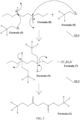
FIG. 1 is a schematic diagram of the flow of a preferred embodiment of the synthetic manufacturing method of apreferred Embodiment 1 of the present invention; -
FIG. 2 is a schematic diagram of the flow of a preferred embodiment of the synthetic manufacturing method of apreferred Embodiment 2 of the present invention; -
FIGS. 3A and 3B are the Electrostatic Potential Distribution (ESP) of each atom of the chemical structure corresponding to Embodiments 2-1 and 2-2, respectively; -
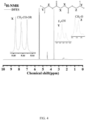
FIG. 4 is a hydrogen Nuclear Magnetic Resonance (NMR) spectroscopy of Embodiment 2-1 of the present invention; -
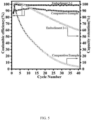
FIG. 5 is a coulombic efficiency and capacitance retention results of Embodiment 2-1 of the present invention and the Comparative Example applied to an anode-free lithium metal battery; -
FIG. 6 is a cycle life performance of the Li||NMC lithium metal semi-battery applied to Embodiment 2-1 of the present invention; and -
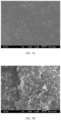
FIGS. 7A and 7B are scanning electron microscopes of the negative electrode surface of the Cu∥NMC battery corresponding toFIG. 5 after charging and discharging using Embodiment 2-1 of the present invention and the Comparative Example. - Reference will now be made in detail to the present preferred embodiments of the invention, examples of which are illustrated in the accompanying drawings. Wherever possible, the same reference numbers are used in the drawings and the description to refer to the same or like parts. It is not intended to limit the method by the exemplary embodiments described herein. In the following detailed description, for purposes of explanation, numerous specific details are set forth in order to attain a thorough understanding of the disclosed embodiments. It will be apparent, however, that one or more embodiments may be practiced without these specific details. As used in the description herein and throughout the claims that follow, the meaning of "a", "an", and "the" may include reference to the plural unless the context clearly dictates otherwise. Also, as used in the description herein and throughout the claims that follow, the terms "comprise or comprising", "include or including", "have or having", "contain or containing" and the like are to be understood to be open-ended, i.e., to mean including but not limited to.
- The so-called dissolution or solvation of the present invention refers to a series of chemical reactions generated by the solvent in a chemical solution, which will affect the reaction rate, reaction equilibrium, solubility, stability, and even the reaction mechanism of the chemical reaction. Therefore, the present invention is an electrolyte solvent with adjustable properties for the overall reaction in the solution.
- An electrolyte solvent with adjustable solvation properties of the
present invention Embodiment 1 has a chemical structure formula shown in Formula (1) as follows:
- The element not shown in Formula (1) is a carbon (C). The foregoing halogens include fluorine (F), chlorine (Cl), bromine (Br), iodine (I), or atom (At). The element not shown in Formula (1) is carbon (C), which is not specifically shown to be bonded to hydrogen (H), and which may be bonded to other elements or functional groups by carbon single bonds, carbon double bonds, or carbon triple bonds without affecting the properties of the present invention, without limitation herein.
- An electrolyte solvent with adjustable solvation properties of the
present invention Embodiment 2 has a chemical structure formula shown in Formula (2) as follows:
- The element not shown in Formula (2) is a carbon (C), which is not specifically shown to be bonded to hydrogen (H), and which may be bonded to other elements or functional groups by carbon single bonds, carbon double bonds, or carbon triple bonds without affecting the properties of the present invention, without limitation herein.
- An electrolyte solvent with adjustable solvation properties of the
present invention Embodiment 3 has a chemical structure formula shown in Formula (3) as follows:
- The element not shown in Formula (3) is a carbon (C), which is not specifically shown to be bonded to hydrogen (H), and which may be bonded to other elements or functional groups by carbon single bonds, carbon double bonds, or carbon triple bonds without affecting the properties of the present invention, without limitation herein.
- Referring to Table 1 below, it is illustrated that the electrolyte solvents with the aforementioned adjustable solvation properties are shown in
Embodiment 2 andEmbodiment 3, and the names of several preferred chemically structured embodiments. In the following embodiments, the element not shown is carbon (C), which is not specifically shown to be bonded to hydrogen (H), and which may be bonded to other elements or functional groups by carbon single bonds, carbon double bonds, or carbon triple bonds without affecting the properties of the present invention, without limitation herein.Table 1. Embodiment Chemical Formula Name Embodiment 2-1 
Bis(2,2-difluoroethy 1) succinate (DFES) Embodiment 2-2 
Bis(2,2-diiodoethyl) succinate (DIES) Embodiment 2-3 
Bis(2,2-dicyanoethyl ) succinate (DCES) Embodiment 3-1 
2,2-diiodoethyl methyl carbonate (DIEMC) Embodiment 3-2 
2,2-dicyanoethyl methyl carbonate (DCEMC) - A preferred embodiment of the synthetic production method of the
preferred Embodiment 1 of the present invention, the steps of which comprise: - Step S1-1), with reference to
FIG. 1 , reacting a chemical structure of Formula (4) with a chemical structure of Formula (5), wherein the negatively charged A- in Formula (5) reacts with the positively charged double bond in Formula (4) to cause the positively charged double bond in Formula (4) to form a single bond, and causing the bonding of Formula (5) to Formula (4) to obtain the chemical structure as in a Formula (6);


- Step S1-2), the original Formula (5) and Formula (4) again form a double bond at the bonding point in Formula (6), and a chemical structure of Formula (7) is formed by removing an ethyl group and a functional group A- to obtain the compound of the present invention as in the
preferred Embodiment 1 of Formula (1). - C2H5A-...Formula (7). Wherein A is oxygen (O), sulfur (S), selenium (Se), tellurium (Te), or combinations thereof; B comprises 1, 2 or 3 substituent(s) of halogen, nitrile (CN), hydrogen (H), nitro (NO2), nitroso (NO), amine (NH2) or combinations thereof; and the element not shown at the single bond is carbon (C). The AH group in Formula (5) is a functional group formed by an element of the preceding code A with hydrogen (H).
- A preferred embodiment of the synthetic production method of the
preferred Embodiment 2 of the present invention, the steps of which comprise: - Step S2-1), with reference to
FIG. 2 , reacting a chemical structure of Formula (8) with two chemical structures of Formula (5), wherein the two negatively charged A- in Formulas (5) react with the two positively charged double bonds in Formula (8) to cause the two positively charged double bonds in Formula (8) to form a single bond, and causing the bonding of Formula (8) to Formulas (5) to obtain a chemical structure as in Formula (9);

- Step S2-2), the original Formula (8) and Formulas (5) again form a double bond at the bonding point in Formula (9), and the chemical structure of Formula (7) is formed by removing two ethyl groups and A- to obtain the compound of the present invention as in the
preferred Embodiment 2 of Formula (2).Similarly, in each chemical formula of this Embodiment, A is oxygen (O), sulfur (S), selenium (Se), tellurium (Te), or combinations thereof; B comprises 1, 2 or 3 substituent(s) of halogen, nitrile (CN), hydrogen (H), nitro (NO2), nitroso (NO), amine (NH2) or combinations thereof, and the element not shown at the single bond is carbon (C). - To practice the above mention preferred embodiment of production methods, the present invention could also obtain the embodiment by:
12 g DES, 10.05g 2,2-difluoroethanol, 2.75 g triethylamine (TEA, Et3N) and 20 ml anhydrous acetone were added in to a 250 ml round bottom flask, and the solution was cooled to 0 °C by ice bath to stir for 10 min. The mixture was mixed with 10 ml anhydrous Dichloromethane (DCM) and was added dropwise into the flask. After completing the addition, the ice bath was removed to allow the suspension to warm up to room temperature. The reaction was stirred at room temperature for 48 h. After the completion of reaction, 5 ml deionized water was slowly added into the suspension to dissolve all solids. The DCM layer was separated and washed with brine, dried by anhydrous Magnesium sulfate (MgSO4), and the solvents were removed under vacuum. A colorless liquid weighing approximately 19.62 g and yielding 89% was obtained by distilling the raw material three times at a temperature of about 80 °C. After the syntheses, the present invention were mixed with 10 wt% activated molecular sieves and stored in argon-filled glove box (Vigor, oxygen <0.5 ppm, water <0.1 ppm) at room temperature. The water contents of the present invention measured by Karl-Fisher titration were roughly 70 ppm. - The electrolyte solvent with adjustable solvation properties provided by the present invention can be preferably used in electrochemical devices, such as the solvent for electrolytes in electrochemical batteries. Referring to
FIGS. 3A and 3B are the Electrostatic Potential Distribution (ESP) diagrams for each atom of the chemical structure corresponding to Embodiments 2-1 and 2-2 in Table 1 above. The light and dark colored areas (red area in the colored diagram) inFIGS. 3A and 3B have negative potential positions, such as C=O and F, I, and the best positions are between C=O and F, I, which is the metal salt in the solvation and the electrolyte, such as the solvation coordination of lithium-ion (Li+) in the lithium salt, which can help the metal-ion to form a dense and conductive beneficial solid electrolyte interface (SEI) at the negative electrode and facilitate the metal deposition. The darkest area inFIG. 3 (blue area in the colored diagram) is a positive potential position, such as CH3, which has a good interaction with the negative charge of the metal salts in the electrolyte, such as lithium salts, and helps stabilize the cathode electrode interface (CEI) at the positive electrode. Similarly, the cation (Li+) and the corresponding anion of other lithium salts can be stabilized in the positive and negative potentials of the solvent molecules of the present invention, respectively. Through the appropriate selection of A and B elements, the present invention can help to deposit metal on the negative electrode surface of the electrochemical device and form a beneficial solid electrolyte interface (SEI), and also interact well with the anions of the metal salt in the electrolyte to inhibit the formation of an undesirable cathode electrode interface (CEI) at the positive electrode. - Referring to
FIG. 4 , which is the 1H-NMR spectrum of the present invention corresponding to Embodiment 2-1 (DFES) in the preceding Table 1, it can be seen fromFIG. 4 that the chemical structures of the Embodiment of the present invention show corresponding chemical shift peaks for the structures marked X, Y, and Z. Therefore, it can be confirmed that the present invention is indeed successfully synthesized by the aforementioned synthetic preparation method and possesses the claimed chemical structures. - Referring to
FIG. 5 , the electrolyte solvent with adjustable solvation properties corresponding to Embodiment 2-1 in the preceding Table 1 and a solvent with ethylene carbonate (EC) and diethyl carbonate (DEC) as a Comparative Example were applied to the anode-free battery Cu∥NMC lithium metal battery, in which the lithium salt in the electrolyte was lithium bis(trifluoromethanesulphonyl)imide (LiTFSI), and tested with overcharge (4.5V) to obtain the results of coulombic efficiency and capacitance retention. As shown inFIG. 5 , it can be seen that the average coulombic efficiency (ACE) of the Embodiment 2-1 still maintains nearly 100% after 40 cycles of charging and discharging, even under the more severe test conditions of overcharging, compared to the Comparative Example, which has dropped to less than 90%. The capacitance retention (CR) of the present invention Embodiment still remains significantly at least 55% after 40 cycles of charging and discharging, compared to the 0% capacity of the Comparative Example, indicating that the present invention is indeed able to maintain the electrical properties of the lithium metal battery. - Referring to
FIG. 6 , the cycle life performance of Li∥NMC lithium metal semi-battery with the lithium salt of lithium bis(trifluoromethanesulphonyl)imide (LiTFSI) in the electrolyte has been applied to overcharge (4.5V) using the electrolyte solvent with adjustable solvation properties of Embodiment 2-1 of the present invention corresponding to the aforementioned Table 1. As can be seen fromFIG. 5 , under the severe conditions of 4.5V overcharge, Embodiment 2-1 still maintains 99.78% average coulombic efficiency (ACE) after 200 cycles and 77.54% capacitance retention (CR) at the 195th cycle, indicating that the present invention can indeed extend or maintain the electrical properties of the battery. - Referring to
FIGS. 7A and 7B , which are scanning electron micrographs (SEM) of the negative electrode surface observed after charging and discharging using the electrolyte solvent with adjustable solvation properties of the present invention corresponding to Embodiment 2-1 in Table 1 above, and a solvent of ethylene carbonate (EC) and diethyl carbonate (DEC) as a Comparative Example, corresponding to the Cu∥NMC battery ofFIG. 5 above. Wherein,FIG. 7A shows a flat and dense surface of the negative electrode of Embodiment 2-1, indicating the formation of a dense Li metal plating with solid electrolyte interface (SEI), which is beneficial to enhance the electrical properties and lifetime performance of the battery. On the contrary, the surface of the Comparative Example inFIG. 7B is rough and loose, indicating the formation of a large number of lithium dendrites or dead lithium, which cannot be used in the electrochemical reaction and will eventually reduce the electrical properties and lifetime performance of the battery. - The electrolyte solvent with adjustable solvation properties provided by the present invention can be preferably used in an electrochemical device, such as electrolyte solvent in electrochemical battery. The electrochemical battery that can be applied include a lithium battery, a sodium battery, a magnesium battery, a zinc battery, an aluminum battery, etc., and preferably include the aforementioned metal, metal-ion, and hybrid battery.
- The above specification, examples, and data provide a complete description of the present disclosure and use of exemplary embodiments. Although various embodiments of the present disclosure have been described above with a certain degree of particularity, or with reference to one or more individual embodiments, those with ordinary skill in the art could make numerous alterations or modifications to the disclosed embodiments without departing from the spirit or scope of this disclosure.
Claims (10)
- An electrolyte solvent with adjustable solvation properties, characterized in that: the electrolyte solvent comprises a chemical structure of Formula (1) as follows:

- An electrolyte solvent with adjustable solvation properties characterized in that the electrolyte solvent comprises a chemical structure of Formula (2) as follows:

- A production method of the electrolyte solvent with adjustable solvation properties, characterized in that: the production method comprises the steps of:the Formula (5) combines Formula (4) by a double bond and forms Formula (6) with removing an ethyl group and a functional group A- to obtain the electrolyte solvent with adjustable solvation properties as described in Formula (1) of claim 1;the original Formula (5) combines Formula (4) at the double bond and forms Formula (6).Formula (7) is produced by removing an ethyl group and A to obtain the electrolyte solvent with adjustable solvation properties as described in Formula (1) of claim 1;


 C2H5A-... Formula (7); wherein each A is independently oxygen (O), sulfur (S), selenium (Se), or tellurium (Te); B comprises 1, 2 or 3 substituent(s) of halogen, nitrile (CN), nitro (NO2), nitroso (NO), amine (NH2), or combinations thereof.
 - A production method of the electrolyte solvent with adjustable solvation properties according to claim 2, which comprises:reacting a following chemical structure of Formula (8) with two chemical structures of Formula (5) as defined in claim 3, and bonding Formula (8) to Formulas (5) to obtain a chemical structure as in Formula (9);the original Formula (8) and Formulas (5) again forming a double bond at the bonding point in Formula (9), and forming the chemical structure of Formula (7) as defined in claim 3 by removing two ethyl groups and A- to obtain a chemical structure as described in Formula (2) of claim 2;


- An electrochemical device, characterized in that: it comprises the electrolyte solvent with adjustable solvation properties as described in claim 1 or 2.
- The electrochemical device according to claim 5, wherein the electrochemical device includes a metal battery.
- The electrochemical device according to claim 6, wherein the metal battery includes a lithium battery, a sodium battery, a magnesium battery, a zinc battery, or an aluminum battery.
- The electrochemical device according to claim 6, wherein the metal battery includes a metal, a metal-ion, and a metal and metal-ion hybrid battery.
- The electrochemical device according to claim 7, wherein the metal battery includes a metal, a metal-ion, and a metal and metal-ion hybrid battery.
- The electrochemical device according to claim 5, wherein the electrochemical device comprises an anode-free battery.
Applications Claiming Priority (1)
| Application Number | Priority Date | Filing Date | Title |
|---|---|---|---|
| TW112114510A TWI890996B (en) | 2023-04-19 | 2023-04-19 | A solvent of electrolyte with modifiable solvation ability, production method and applications thereof |
Publications (2)
| Publication Number | Publication Date |
|---|---|
| EP4451404A2 true EP4451404A2 (en) | 2024-10-23 |
| EP4451404A3 EP4451404A3 (en) | 2025-04-30 |
Family
ID=90810632
Family Applications (1)
| Application Number | Title | Priority Date | Filing Date |
|---|---|---|---|
| EP24171209.0A Pending EP4451404A3 (en) | 2023-04-19 | 2024-04-19 | An electrolyte solvent with adjustable solvation properties, production method, and applications thereof |
Country Status (6)
| Country | Link |
|---|---|
| US (1) | US20240356084A1 (en) |
| EP (1) | EP4451404A3 (en) |
| JP (1) | JP2024155803A (en) |
| KR (1) | KR20240155131A (en) |
| CN (1) | CN118825416A (en) |
| TW (1) | TWI890996B (en) |
Family Cites Families (11)
| Publication number | Priority date | Publication date | Assignee | Title |
|---|---|---|---|---|
| US2584846A (en) * | 1948-04-13 | 1952-02-05 | Searle & Co | Trihaloethyl esters of dibasic aliphatic acids and the production thereof |
| JP5103766B2 (en) * | 2006-03-24 | 2012-12-19 | 三菱化学株式会社 | Non-aqueous electrolyte and non-aqueous electrolyte battery |
| WO2011051275A1 (en) * | 2009-10-27 | 2011-05-05 | Solvay Fluor Gmbh | Lithium sulfur battery |
| JP6178317B2 (en) * | 2011-09-02 | 2017-08-09 | イー・アイ・デュポン・ドウ・ヌムール・アンド・カンパニーE.I.Du Pont De Nemours And Company | Lithium ion battery |
| CN106349071B (en) * | 2016-08-26 | 2019-01-22 | 武汉理工大学 | Method for preparing fatty acid trifluoroethyl ester without catalyst and condensing agent |
| KR102115602B1 (en) * | 2017-06-21 | 2020-05-26 | 주식회사 엘지화학 | Lithium secondary battery |
| JP6963194B2 (en) * | 2017-10-25 | 2021-11-05 | ダイキン工業株式会社 | Electrolytes, electrochemical devices, lithium-ion secondary batteries and modules |
| JP2022191981A (en) * | 2021-06-16 | 2022-12-28 | 株式会社豊田自動織機 | lithium anode battery |
| EP4383282A4 (en) * | 2021-08-06 | 2025-11-12 | Idemitsu Kosan Co | MANUFACTURING PROCESS FOR SULFIDE SOLID ELECTROLYTE AND SULFIDE SOLID ELECTROLYTE |
| WO2023053631A1 (en) * | 2021-09-30 | 2023-04-06 | 三洋電機株式会社 | Negative electrode active material for nonaqueous electrolyte secondary battery, and nonaqueous electrolyte secondary battery |
| CN115799631B (en) * | 2022-11-18 | 2025-07-11 | 广州天赐高新材料股份有限公司 | An electrolyte for lithium iron phosphate battery and lithium iron phosphate battery |
-
2023
- 2023-04-19 TW TW112114510A patent/TWI890996B/en active
-
2024
- 2024-04-15 US US18/636,157 patent/US20240356084A1/en active Pending
- 2024-04-16 JP JP2024066385A patent/JP2024155803A/en active Pending
- 2024-04-17 CN CN202410460663.5A patent/CN118825416A/en active Pending
- 2024-04-19 KR KR1020240052966A patent/KR20240155131A/en active Pending
- 2024-04-19 EP EP24171209.0A patent/EP4451404A3/en active Pending
Also Published As
| Publication number | Publication date |
|---|---|
| TWI890996B (en) | 2025-07-21 |
| EP4451404A3 (en) | 2025-04-30 |
| CN118825416A (en) | 2024-10-22 |
| KR20240155131A (en) | 2024-10-28 |
| JP2024155803A (en) | 2024-10-31 |
| TW202442626A (en) | 2024-11-01 |
| US20240356084A1 (en) | 2024-10-24 |
Similar Documents
| Publication | Publication Date | Title |
|---|---|---|
| Qiu et al. | Metal-coordination chemistry guiding preferred crystallographic orientation for reversible zinc anode | |
| Cao et al. | Stabilizing zinc anode via a chelation and desolvation electrolyte additive | |
| Park et al. | Toward maximum energy density enabled by anode‐free lithium metal batteries: Recent progress and perspective | |
| US11817558B2 (en) | Magnesium salts | |
| US10720668B2 (en) | Non-aqueous electrolytes for lithium-ion batteries comprising asymmetric borates | |
| US20230395861A1 (en) | Method for making magnesium salt electrolyte and electrolyte | |
| CN114497741B (en) | High-voltage electrolyte and lithium ion battery | |
| JP2010177030A (en) | Surface treating agent of lithium based composite oxide, surface treating liquid of lithium based composite oxide, electrolyte for lithium-ion secondary battery, positive electrode active material for surface-treated lithium-ion secondary battery and method of manufacturing the same, negative electrode active material for surface-treated lithium-ion secondary battery and method of manufacturing the same, and lithium-ion secondary battery and method of manufacturing the same | |
| US20080254358A1 (en) | Rechargeable lithium battery | |
| CN114583280A (en) | Lithium metal battery electrolyte and preparation method thereof | |
| JP2018035059A (en) | Lithium bis(fluorosulfonyl) imide composition | |
| CN109659620A (en) | A kind of electrolyte and secondary cell | |
| US11444326B2 (en) | Heterocyclic sulfonyl fluoride additives for electrolyte composition for lithium batteries | |
| CN113416178B (en) | Lithium battery additive amido vinyl sulfate, and preparation method and application thereof | |
| KR102911354B1 (en) | Anode electrode, method of fabricating of the same using electrochemical deposition, and apparatus for fabricating of the same | |
| Wang et al. | Kinetic modulation enabling densely oriented electrodeposition of Zn anodes in aqueous batteries | |
| CN114914544B (en) | A kind of sodium metal battery electrolyte and preparation method thereof | |
| EP4451404A2 (en) | An electrolyte solvent with adjustable solvation properties, production method, and applications thereof | |
| EP3618167A1 (en) | Electrolyte for lithium secondary battery, and lithium secondary battery comprising same | |
| Rao et al. | A triflate porous layer stabilizing Zn anodes for high-performance Zn-ion batteries | |
| EP4621911A1 (en) | Non-aqueous electrolyte, secondary battery, and electrical apparatus | |
| CN117558997A (en) | Lithium ion battery electrolyte, preparation method thereof and battery | |
| US11342589B2 (en) | Calcium salt for calcium batteries | |
| CN111969242A (en) | Lithium metal battery and preparation method thereof | |
| CN116768751B (en) | Electrolyte additive, rechargeable battery electrolyte and rechargeable battery |
Legal Events
| Date | Code | Title | Description |
|---|---|---|---|
| PUAI | Public reference made under article 153(3) epc to a published international application that has entered the european phase |
Free format text: ORIGINAL CODE: 0009012 |
|
| STAA | Information on the status of an ep patent application or granted ep patent |
Free format text: STATUS: REQUEST FOR EXAMINATION WAS MADE |
|
| 17P | Request for examination filed |
Effective date: 20240913 |
|
| AK | Designated contracting states |
Kind code of ref document: A2 Designated state(s): AL AT BE BG CH CY CZ DE DK EE ES FI FR GB GR HR HU IE IS IT LI LT LU LV MC ME MK MT NL NO PL PT RO RS SE SI SK SM TR |
|
| REG | Reference to a national code |
Ref country code: DE Ref legal event code: R079 Free format text: PREVIOUS MAIN CLASS: H01M0010052500 Ipc: H01M0010052000 |
|
| PUAL | Search report despatched |
Free format text: ORIGINAL CODE: 0009013 |
|
| AK | Designated contracting states |
Kind code of ref document: A3 Designated state(s): AL AT BE BG CH CY CZ DE DK EE ES FI FR GB GR HR HU IE IS IT LI LT LU LV MC ME MK MT NL NO PL PT RO RS SE SI SK SM TR |
|
| RIC1 | Information provided on ipc code assigned before grant |
Ipc: H01M 4/04 20060101ALI20250327BHEP Ipc: H01M 12/00 20060101ALI20250327BHEP Ipc: H01M 10/36 20100101ALI20250327BHEP Ipc: H01M 10/0569 20100101ALI20250327BHEP Ipc: H01M 10/054 20100101ALI20250327BHEP Ipc: H01M 10/052 20100101AFI20250327BHEP |