EP4451104A1 - Datenverarbeitungsverfahren, vorrichtung, elektronische vorrichtung und speichermedium - Google Patents
Datenverarbeitungsverfahren, vorrichtung, elektronische vorrichtung und speichermedium Download PDFInfo
- Publication number
- EP4451104A1 EP4451104A1 EP24167746.7A EP24167746A EP4451104A1 EP 4451104 A1 EP4451104 A1 EP 4451104A1 EP 24167746 A EP24167746 A EP 24167746A EP 4451104 A1 EP4451104 A1 EP 4451104A1
- Authority
- EP
- European Patent Office
- Prior art keywords
- data
- feature data
- target
- target feature
- file
- Prior art date
- Legal status (The legal status is an assumption and is not a legal conclusion. Google has not performed a legal analysis and makes no representation as to the accuracy of the status listed.)
- Pending
Links
Images

Classifications
-
- G—PHYSICS
- G06—COMPUTING OR CALCULATING; COUNTING
- G06F—ELECTRIC DIGITAL DATA PROCESSING
- G06F3/00—Input arrangements for transferring data to be processed into a form capable of being handled by the computer; Output arrangements for transferring data from processing unit to output unit, e.g. interface arrangements
- G06F3/06—Digital input from, or digital output to, record carriers, e.g. RAID, emulated record carriers or networked record carriers
- G06F3/0601—Interfaces specially adapted for storage systems
- G06F3/0602—Interfaces specially adapted for storage systems specifically adapted to achieve a particular effect
- G06F3/061—Improving I/O performance
-
- G—PHYSICS
- G06—COMPUTING OR CALCULATING; COUNTING
- G06F—ELECTRIC DIGITAL DATA PROCESSING
- G06F7/00—Methods or arrangements for processing data by operating upon the order or content of the data handled
- G06F7/06—Arrangements for sorting, selecting, merging, or comparing data on individual record carriers
- G06F7/08—Sorting, i.e. grouping record carriers in numerical or other ordered sequence according to the classification of at least some of the information they carry
-
- G—PHYSICS
- G06—COMPUTING OR CALCULATING; COUNTING
- G06F—ELECTRIC DIGITAL DATA PROCESSING
- G06F16/00—Information retrieval; Database structures therefor; File system structures therefor
- G06F16/10—File systems; File servers
- G06F16/11—File system administration, e.g. details of archiving or snapshots
- G06F16/116—Details of conversion of file system types or formats
-
- G—PHYSICS
- G06—COMPUTING OR CALCULATING; COUNTING
- G06F—ELECTRIC DIGITAL DATA PROCESSING
- G06F3/00—Input arrangements for transferring data to be processed into a form capable of being handled by the computer; Output arrangements for transferring data from processing unit to output unit, e.g. interface arrangements
- G06F3/06—Digital input from, or digital output to, record carriers, e.g. RAID, emulated record carriers or networked record carriers
- G06F3/0601—Interfaces specially adapted for storage systems
- G06F3/0628—Interfaces specially adapted for storage systems making use of a particular technique
- G06F3/0638—Organizing or formatting or addressing of data
-
- G—PHYSICS
- G06—COMPUTING OR CALCULATING; COUNTING
- G06F—ELECTRIC DIGITAL DATA PROCESSING
- G06F3/00—Input arrangements for transferring data to be processed into a form capable of being handled by the computer; Output arrangements for transferring data from processing unit to output unit, e.g. interface arrangements
- G06F3/06—Digital input from, or digital output to, record carriers, e.g. RAID, emulated record carriers or networked record carriers
- G06F3/0601—Interfaces specially adapted for storage systems
- G06F3/0628—Interfaces specially adapted for storage systems making use of a particular technique
- G06F3/0655—Vertical data movement, i.e. input-output transfer; data movement between one or more hosts and one or more storage devices
- G06F3/0661—Format or protocol conversion arrangements
-
- G—PHYSICS
- G06—COMPUTING OR CALCULATING; COUNTING
- G06F—ELECTRIC DIGITAL DATA PROCESSING
- G06F3/00—Input arrangements for transferring data to be processed into a form capable of being handled by the computer; Output arrangements for transferring data from processing unit to output unit, e.g. interface arrangements
- G06F3/06—Digital input from, or digital output to, record carriers, e.g. RAID, emulated record carriers or networked record carriers
- G06F3/0601—Interfaces specially adapted for storage systems
- G06F3/0668—Interfaces specially adapted for storage systems adopting a particular infrastructure
- G06F3/067—Distributed or networked storage systems, e.g. storage area networks [SAN], network attached storage [NAS]
-
- G—PHYSICS
- G06—COMPUTING OR CALCULATING; COUNTING
- G06F—ELECTRIC DIGITAL DATA PROCESSING
- G06F7/00—Methods or arrangements for processing data by operating upon the order or content of the data handled
- G06F7/06—Arrangements for sorting, selecting, merging, or comparing data on individual record carriers
- G06F7/14—Merging, i.e. combining at least two sets of record carriers each arranged in the same ordered sequence to produce a single set having the same ordered sequence
-
- G—PHYSICS
- G06—COMPUTING OR CALCULATING; COUNTING
- G06N—COMPUTING ARRANGEMENTS BASED ON SPECIFIC COMPUTATIONAL MODELS
- G06N20/00—Machine learning
-
- Y—GENERAL TAGGING OF NEW TECHNOLOGICAL DEVELOPMENTS; GENERAL TAGGING OF CROSS-SECTIONAL TECHNOLOGIES SPANNING OVER SEVERAL SECTIONS OF THE IPC; TECHNICAL SUBJECTS COVERED BY FORMER USPC CROSS-REFERENCE ART COLLECTIONS [XRACs] AND DIGESTS
- Y02—TECHNOLOGIES OR APPLICATIONS FOR MITIGATION OR ADAPTATION AGAINST CLIMATE CHANGE
- Y02D—CLIMATE CHANGE MITIGATION TECHNOLOGIES IN INFORMATION AND COMMUNICATION TECHNOLOGIES [ICT], I.E. INFORMATION AND COMMUNICATION TECHNOLOGIES AIMING AT THE REDUCTION OF THEIR OWN ENERGY USE
- Y02D10/00—Energy efficient computing, e.g. low power processors, power management or thermal management
Definitions
- the present disclosure relates to the technical field of data storage, in particular to a data processing method, an apparatus, an electronic device, and a storage medium.
- the embodiment of the present disclosure at least provides a data processing method, an apparatus, an electronic device and a storage medium.
- the embodiment of the disclosure provides a data processing method, which includes:
- the target storage system stores a plurality of data files, and each of the plurality of data files corresponds to one metadata
- the determining the target feature data from a data file stored in a target storage system based on the data reading task and metadata corresponding to the target storage system comprises: determining a plurality of target data files from the plurality of data files based on the data reading task and metadata corresponding to each data file, and determining the target feature data from the plurality of target data files.
- the reading the target feature data from the data file based on operation semantic information corresponding to the target feature data, and determining the read target feature data as the first target feature data comprises: reading respectively the target feature data from the plurality of target data files based on the operation semantic information corresponding to the target feature data, and determining the read target feature data as the first target feature data.
- the reading the target feature data from the data file based on operation semantic information corresponding to the target feature data, and determining the read target feature data as the first target feature data comprises:
- the merging the first target feature data to acquire target merged feature data in the case that a size of data volume of the read first target feature data meets a preset condition comprises:
- the reading respectively the target feature data from the plurality of target data files based on the operation semantic information corresponding to the target feature data, and determining the read target feature data as the first target feature data comprises: reading respectively the target feature data from the plurality of target data files in a multi-core parallel mode, based on the operation semantic information corresponding to the target feature data, and determining the read target feature data as the first target feature data.
- the metadata of each data file comprises a primary key corresponding to each feature data
- the reading respectively the target feature data from the plurality of target data files based on the operation semantic information corresponding to the target feature data, and determining the read target feature data as the first target feature data comprises:
- the metadata of each data file further comprises a writing time of each feature data
- the sorting a primary key of the target feature data in each target data file to acquire a sorting result comprises: in the case that target feature data having the same primary key exists, sorting the target feature data having the same primary key based on a sequence of writing times of the target feature data to acquire the sorting result.
- the reading the target feature data from the plurality of target data files according to a plurality of sorting results based on the operation semantic information corresponding to the target feature data, and determining the read target feature data as the first target feature data comprises:
- the method further comprises: in the case that the baseline data corresponding to the current target feature data does not exist and the operation semantic information of the current target feature data is the insertion semantics or the insertion-update semantics, determining the current target feature data as the baseline data.
- the baseline data corresponding to the current target feature data exists and the operation semantic information of the current target feature data is the deletion semantics, deleting the baseline data and the current target feature.
- the metadata of each data file comprises a primary key corresponding to each feature data, the in the case that the size of data volume of the read first target feature data meets the preset condition, merging the first target feature data to acquire first merged feature data, comprises:
- the metadata of each data file further comprises a writing time of each feature data and a version number corresponding to each data file, and in the case that the first target feature data having the same primary key is same feature data, the merging the first target feature data having the same primary key based on a preset merging rule to acquire the first sub-merged feature data corresponding to each primary key, comprises:
- the metadata of each data file further comprises file attribute information corresponding to each data file
- the determining a plurality of target feature data from the plurality of target data files comprises:
- the metadata of the data file further comprises file attribute information corresponding to the data file
- the method further comprises: reading the target feature data from the data file in the case that the file attribute information of the data file indicates that the data file is a merged data file.
- the embodiment of the present disclosure also provides a data processing apparatus, which includes an acquiring module, a determining module, a reading module, and a merging module.
- the acquiring module is configured to acquire data reading task.
- the data reading task is used for indicating target feature data to be read currently.
- the determining module is configured to determine the target feature data from a data file stored in a target storage system based on the data reading task and metadata corresponding to the target storage system, and feature data in the data file is stored in columns.
- the reading module is configured to read the target feature data from the data file based on operation semantic information corresponding to the target feature data, and determining the read target feature data as the first target feature data.
- the operation semantic information comprises one of update semantics, insertion semantics, deletion semantics, and insertion-update semantics.
- the merging module is configured to merge the first target feature data to acquire target merged feature data in the case that the size of data volume of the read first target feature data meets a preset condition, and repeat a process of reading and merging the first target feature data until a completion of reading of the target feature data in the data file.
- the target storage system stores a plurality of data files, and each of the plurality of data files corresponds to one metadata
- the determining module is configured to: determine a plurality of target data files from the plurality of data files based on the data reading task and metadata corresponding to each data file, and determine the target feature data from the plurality of target data files.
- the reading module is configured to: read respectively the target feature data from the plurality of target data files based on the operation semantic information corresponding to the target feature data, and determine the read target feature data as the first target feature data.
- the reading module is configured to:
- the merging module is configured to:
- the reading module is configured to: read respectively the target feature data from the plurality of target data files in a multi-core parallel mode, based on the operation semantic information corresponding to the target feature data, and determine the read target feature data as the first target feature data.
- the metadata of each data file comprises a primary key corresponding to each feature data
- the reading module is configured to:
- the metadata of each data file further comprises a writing time of each feature data
- the reading module is configured to: in the case that target feature data having the same primary key exists, sort the target feature data having the same primary key based on a sequence of writing times of the target feature data to acquire the sorting result.
- the reading module is configured to:
- the reading module is configured to: in the case that the baseline data corresponding to the current target feature data does not exist and the operation semantic information of the current target feature data is the insertion semantics or the insertion-update semantics, determine the current target feature data as the baseline data.
- the reading module is configured to: in the case that the baseline data corresponding to the current target feature data exists and the operation semantic information of the current target feature data is the deletion semantics, delete the baseline data and the current target feature.
- the metadata of each data file comprises a primary key corresponding to each feature data
- the merging module is configured to:
- the metadata of each data file further comprises a writing time of each feature data and a version number corresponding to each data file, and in the case that the first target feature data having the same primary key is the same feature data, the merging module is configured to:
- the metadata of each data file further comprises file attribute information corresponding to each data file, and the determining module is configured to:
- the metadata of the data file further comprises file attribute information corresponding to the data file
- the reading module is configured to: read the target feature data from the data file in the case that the file attribute information of the data file indicates that the data file is a merged data file.
- the embodiment of the present disclosure further provides an electronic device, which includes a processor, a memory and a bus.
- the memory stores machine-readable requests executable by the processor, the processor communicates with the memory via the bus when the electronic device is in operation, and the machine-readable requests, when executed by the processor, cause the processor to perform the steps of the data processing method described in any possible embodiment.
- the embodiment of the present disclosure further provides a computer-readable storage medium.
- the computer programs are stored on the computer-readable storage medium, and the computer programs, when executed by a processor, cause the processor to perform the steps of the data processing method described in any possible embodiment.
- a and/or B merely describes an associative relationship, indicating that three relationships can exist, e.g., A and/or B, which may mean: A alone, both A and B, or B alone.
- at least one herein denotes any one of a plurality or any combination of at least two of a plurality, e.g., including at least one of A, B, and C, which may denote the inclusion of any one or more elements selected from the set consisting of A, B, and C.
- the present disclosure provides a data processing method, apparatus, electronic device, and storage medium. Firstly, acquiring a data reading task, in which the data reading task is configured to indicate target feature data to be read currently; secondly, determining the target feature data from a data file stored in a target storage system based on the data reading task and metadata corresponding to the target storage system, in which the feature data in the data file is stored in columns; then reading the target feature data from the data file based on the operation semantic information corresponding to the target feature data, and determining the read target feature data as the first target feature data, in which the operation semantic information comprises one of update semantics, insertion semantics, deletion semantics, and insertion-update semantics; finally, in the case that the size of data volume of the read first target feature data meets a preset condition, merging the first target feature data to acquire target merged feature data, and repeating the process of reading and merging the first target feature data until the completion of reading of the target feature data in the data file.
- the embodiment in the present disclosure is not necessary to load all the target feature data into the memory at one time, and the target feature data is loaded and merged in batches, thus avoiding the data overflowing to the disk and further avoiding performance degradation.
- the execution subject of the data processing method provided by the embodiment of the present disclosure is electronic device.
- the electronic device is a server, which may be an independent physical server, a server cluster or a distributed system composed of multiple physical servers, and a cloud server that provides basic cloud computing services such as cloud services, cloud databases, cloud computing, cloud storage, big data, and artificial intelligence platforms.
- the electronic device can also be a terminal device, and the terminal device may be a mobile device, a user terminal, a handheld device, a computing device, a wearable device and the like.
- the data processing method can also be implemented by the processor invoking the computer-readable instructions stored in the memory.
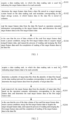
- FIG 1 it is a flowchart of a data processing method provided by an embodiment of the present disclosure, which includes steps S101-S104.
- the data reading task refers to reading the target feature data from a target storage system.
- the target storage system is provided with a preset number of bucket partitions, each of the bucket partitions corresponds to a sub-storage space of the target storage system, and the data file is stored in the sub-storage space corresponding to a bucket partition, that is, the data reading task is to determine the target feature data from the data file in the bucket partition in the target storage system.
- the data file includes multiple feature data stored in columns, that is, each data file is a file in a column-storage format.
- the format of the data file is Parquet format, and in other embodiments, the format of the data file may also be ORC format, which is not limited here.
- the feature data included in the data file may include the usage behavior data of a user in the process of using a target application, and the usage behavior data includes sample data and/or sample tag data.
- the sample data and the sample tag data are used to train a model, and the trained model can be used to predict the user's target usage behavior, and display a content matching the target usage behavior to the user based on the target usage behavior.
- the data file stored in the target storage system may also be the user data that needs to be retained based on the compliance requirements of the General Data Protection Regulation (GDPR).
- GDPR General Data Protection Regulation
- the target applications can be short video applications, news applications, shopping applications, and etc., which are not specifically limited here.
- the sample data refers to the data used to characterize the user behavior
- the sample tag data refers to the data used to characterize user behavior results.
- the content of the sample data and the content of the sample tag data are different.
- the sample data may be the related data such as a browsing content and a browsing duration for browsing news by users, and accordingly, the sample tag data may be collection, praise, or click data for a certain news content.
- the sample data may be consumption data for searching or watching a certain shopping content by users, and accordingly, the sample tag data may be related data indicating whether the user places an order to buy or adds a certain commodity to a shopping cart.
- the sample data may be the duration data or frequency data for watching a certain type of videos or a certain video by users, and the sample tag data may be the data indicating whether the user is interested in the video or not.
- the occurrence time of the sample data is usually earlier than the occurrence time of the sample tag data.
- the above examples about the sample data and the sample tag data are only schematic. In other embodiments, for different types of applications, the sample data and the sample tag data may also be determined according to actual application requirements.
- the classification of the above-mentioned target applications is only an example, and some applications may correspond to several different categories, for example, some short video applications actually have the shopping functions, and may also be shopping applications.
- the metadata also known as intermediate data or relay data, refers to the information describing data attributes, which can indicate data storage location, historical data, resource search, or file records, and etc.
- the metadata corresponding to the target storage system indicates that the data file in the target storage system has the metadata which is used to indicate the feature data included in the data file, the operation semantic information of the feature data, and the data type of the feature data.
- the operation semantic information includes one of update semantics, insertion semantics, deletion semantics, and insertion-update semantics.
- the metadata of the data file also includes a primary key corresponding to each feature data.
- the primary key also known as a primary keyword, is one or more fields in a table, the value of which is used to uniquely identify one record in the table.
- the target feature data can be determined from the data file stored in the target storage system based on the data reading task and the metadata corresponding to the target storage system. That is, it can be determined that in which data files the target feature data that needs to be read currently exists.
- the data in the target storage system is loaded from some data sources (such as the distributed file system HDFS, Object Store) in the form of data streams
- the data in the data sources can be pre-cached to the target storage system, so that the target storage system can provide the cached data at the first time during the subsequent data reading and data merging, thereby reducing the delay caused by the factors such as the network, and improving the efficiency of data processing.
- the target feature data After determining the target feature data from the data file stored in the target storage system, the target feature data can be read from the data file based on the operation semantic information corresponding to the target feature data.
- the detailed process of feature data reading is described in following embodiments.
- the preset condition may refer to the preset data volume, and the preset data volume may be determined according to the size of storage space of the memory. For example, when the target feature data includes 1000 lines and the preset condition indicates that the preset data volume is 200 lines, 200 lines are read for merging at a time, and then another 200 lines are read for merging, and so on, until the reading for all 1000 lines of the target feature data is completed.
- the target feature data 1 contained in the data file is Zhang San and the height is 180 and the target feature data 2 is Zhang San and the height is 170, it is necessary to merge the target feature data 1 and the target feature data 2.
- the target feature data 1 is Zhang San and the height is 180, and the target feature data 2 is Zhang San and the gender is male, then it is necessary to merge the target feature data 1 and the target feature data 2 to ensure the integrity of the feature data.
- the first target feature data is merged to acquire the target merged feature data, so that the data in the memory does not overflow to the disk, and the performance degradation of data reading can be avoided.
- the target storage system may include a plurality of data files.
- FIG 2 is a flowchart of another data processing method provided by an embodiment of the present disclosure. The method includes steps S201-S204.
- Step S201 is similar to step S101 in the above embodiment. Please refer to step S101 for the detailed description, which is not repeated here.
- the determination can be made by partition filtering or predicate filtering.
- the partition filtering refers to the filtering according to the date or time, for example, determining the data files within a week
- the predicate filtering refers to the filtering by setting some filtering conditions.
- the target feature data currently to be read may be distributed in different data files, thus, it is necessary to determine the plurality of target data files from the plurality of data files based on the data reading task and the corresponding metadata of each data file, and determine the target feature data from the plurality of target data files, so that the integrity of target feature data can be improved and the data omission can be avoided.
- Step S203 is similar to step S103 in the above embodiment, please refer to step S 103 for the detailed description, which is not repeated here.
- the memory view of the feature data stored in columns in each target data file can be converted into the memory view stored in rows, and then the target feature data can be read from the plurality of target data files respectively based on the operation semantic information corresponding to the target feature data, and the read target feature data can be determined as the first target feature data.
- the first target feature data is merged to acquire the first merged feature data.
- the memory view stored in rows for the first merged feature data is converted into the memory view stored in columns to acquire the target merged feature data.
- the multi-core parallel mode can be adopted to read the target feature data from the plurality of target data files, and the read target feature data is determined as the first target feature data.
- the multi-core mode indicates that reading a batch of data per one data reading instruction, that is, one data reading instruction can read the target feature data from multiple target data files.
- the multi-core mode can be implemented by the SIMD instruction set of CPU (such as SSE, AVX2, and AVX2 under x86 architecture) , so that the efficiency of data reading can be improved.
- Steps S203-S204 are similar to steps S103-S104 in the above embodiment. Please refer to the detailed description of steps S103-S104 for details, which is not repeated here.
- the first target feature data having the same primary key can be merged based on a preset merging rule to acquire the first sub-merged feature data corresponding to each primary key, and then the first merged feature data can be acquired based on the first sub-merged feature data corresponding to each primary key.
- the preset merging rule can be a user-defined rule, and in some embodiments, the feature data can be merged according to the writing time of the feature data. For example, the feature data having the latest change time can be taken as a final output, or the feature data having the earliest change time can be taken as the final output.
- the first target feature data having the same primary key may include the first target feature data 1 and the first target feature data 2.
- the first target feature data 1 is Zhang San and the height 180
- the first target feature data 2 is Zhang San and the height 175
- the writing time of the first target feature data 2 is later than the writing time of the first target feature data 1, so the first target feature data 2 can be used as the first sub-merged feature data.
- the first target feature data 1 is Zhang San and the height 180
- the first target feature data 2 is Zhang San
- the weight is 150.
- the two first target feature data can be directly merged to acquire the first sub-merged feature of Zhang San, the height 180, and the weight 150.
- the first target feature data can be merged according to the version number of the target data file to which each first target feature data having the same primary key belongs. For example, from the first target feature data, the third target feature data belonging to the target data file having the latest version number is determined, and the third target feature data is determined as the first sub-merged feature data corresponding to the primary key. It is also possible to determine the target feature data belonging to the target data file having the latest version number as the first sub-merged data corresponding to the primary key.
- the event-type feature data can be written into the data file, and multiple event-type feature data belonging to the same primary key can be spliced in the same data file. For numerical feature data, the operations such as summation can also be performed on the feature data.
- the operations of reading respectively the target feature data from the plurality of target data files based on the operation semantic information corresponding to the target feature data, and determining the read target feature data as the first target feature data may include the following steps S203 1-S2032, please refer to FIG 3 .
- the metadata of each data file further includes the writing time of each feature data.
- the target feature data having the same primary key can be sorted based on the order of the writing time of the target feature data to acquire the sorting result.
- the metadata of each data file includes the primary key corresponding to each feature data.
- the primary key of the target feature data in each target data file can be sorted to acquire the sorting result, so that the target feature data can be read from the plurality of target data files according to the sorting result corresponding to each target data file, thus avoiding data omission in the data reading process.
- a row of feature data may be determined from the above three target data files in sequence according to the sorting results, that is, the row of the feature data may be determined from the target data file 1, the row of the feature data may be determined from the target data file 2, and the row of the feature data may be determined from the target data file 3, and then the next row of the feature data may be determined from the target data file 1, and the next row of feature data may be determined from the target data file 2, and so forth, so as to implement the reading of the target feature data.
- the operations of reading the target feature data from the plurality of target data files according to a plurality of sorting results based on the operation semantic information corresponding to the target feature data, and determining the read target feature data as the first target feature data may include the following steps (a) ⁇ (b).
- Step (a) determining whether baseline data corresponding to the current target feature data exists in the target feature data that has been read, according to the current target feature data read by the sorting result, in which the baseline data is the feature data that has the same primary key of the target feature data and is processed for the first time.
- Step (b) in the case that the baseline data corresponding to the current target feature data exists and the operation semantic information of the current target feature data is one of the update semantics, the insertion semantics, and the insertion-update semantics, determining the current target feature data as change data, and in the case that reading of the target feature data corresponding to the primary key of the current target feature data is completed, storing the baseline data and the change data into a container, and determining the baseline data and the change data as the first target feature data.
- the current target feature data "a” has a row primary key 001
- the baseline data indicates whether, before determining the current target feature data "a”, the feature data that has the same row primary key 001 of the current target feature data "a” and is processed for the first time is determined from each target data file.
- the current target feature data "a” is determined to be change data, so that, each of the determined target feature data is determined in accordance with the above process, so that the baseline data and the change data having the same primary key 001 are acquired.
- the existing baseline data (the target feature data "b") and the determined change data (the target feature data "a") corresponding to the baseline data can be temporarily stored in a container, and the baseline data and the change data can be determined as the first target feature data.
- the current target feature data is taken as the baseline data.
- the baseline data corresponding to the current target feature data exists and the operation semantic information of the current target feature data is the deletion semantics
- the baseline data and the current target feature are deleted, so that, the invalid merging of the feature data having the deletion semantics as the operation semantic information can be avoided.
- the metadata of each data file further includes the file attribute information corresponding to each data file.
- the determining the target feature data from the plurality of target data files may include the following steps:
- Table 1 includes the feature data in target data file 1, the feature data includes the column of row primary keys, the column of names, and the column of scores.
- Table 2 includes the feature data in target data file 2, the target data file 2 is an updated data file (or a backfilled data file), that is, the target data file 2 is the first target data file, and the target data file 2 includes the column of row primary keys and the column of subjects.
- Table 1 row primary key name score 1 name 1 95 2 name 2 100 3 name 3 93 4 name 4 97
- the data that meets the first filtering requirement can be determined from the target data file 1 and the target data file 2, respectively. That is, the first target feature data with the score ⁇ 97 is determined from the target data file 1, since the row primary key is also required to be read during the merge-on-read, the data read out includes the feature data with the score ⁇ 97 and the corresponding row primary key 4. Then, based on the currently determined data, other feature data with row primary key 4 is determined from the target data file 1 and the target data file 2 respectively.
- the feature data corresponding to the row primary key 4 is read from the target data file 1, for example, name 4, and the feature data corresponding to the row primary key 4 is read from the target data file 2, for example, subject 3, so that the name 4 and the subject 3 can be taken as the target feature data.
- the determined target feature data can be merged to acquire the merged data file as shown in Table 3, which includes primary key 4, name 4, score 97 and subject 3, so that the pre-filtering of the feature data is implemented and the target merged feature data is acquired.
- Table 3 row primary key name score subject 4 name 4 97 subject 3
- the metadata of each data file further includes the file attribute information corresponding to each data file, and the target feature data is read from the data file in the case that the file attribute information of the data file indicates that the data file is a merged data file.
- the Parquet file can be composed of one or more Row Group, that is, the data file includes a plurality of sub-data files, and the merged data file can be filtered in the manner similar to SQL (Structured Query Language) filtering.
- SQL Structured Query Language
- the feature data is distributed in different sub-data files.
- Some of the sub-data files include positive examples, and some of the sub-data files include negative examples.
- the at least one target sub-data file including positive examples can be determined from the plurality of sub-data files by means of the second filtering requirement, and the feature data is read from the at least one target sub-data file, so that, the feature data that does not satisfy the second filtering requirement can be filtered out, which is conducive to improving the efficiency of data reading.
- the data file when the user backfills a data file (e.g., adding new feature data) into the target storage system, the data file can be tagged (e.g., which columns are updated), and when performing the merge-on-read, only feature columns that are tagged as updated can be processed.
- embodiments of the present disclosure further support expressing whether the null value (NULL) in the feature column is valid or invalid by the column of meta-information.
- the tag when backfilling the feature data, in the case where only the feature is backfilled and the tag is not backfilled, the tag may be assigned the NULL to indicate that the data in the column is invalid (i.e., no processing is required), or, in the case that the feature data is non-compliant, the feature data may be assigned by the NULL to indicate that the feature data is overwritten (or deleted).
- the embodiment of the present disclosure also provides a data processing apparatus corresponding to the data processing method. Since the principle of solving problems by the apparatus in the embodiment of the present disclosure is similar to the above data processing method in the embodiment of the present disclosure, the implementation of the apparatus can refer to the implementation of the method, and the repetition will not be repeated.
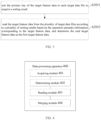
- the data processing apparatus 400 includes: an acquiring module 401, a determining module 402, a reading module 403, and a merging module 404.
- the acquiring module 401 is configured to acquire a data reading task.
- the data reading task is used for indicating target feature data to be read currently.
- the determining module 402 is configured to determine the target feature data from a data file stored in a target storage system based on the data reading task and metadata corresponding to the target storage system.
- the feature data in the data file is stored in columns.
- the reading module 403 is configured to read the target feature data from the data file based on operation semantic information corresponding to the target feature data, and determine the read target feature data as the first target feature data.
- the operation semantic information comprises one of update semantics, insertion semantics, deletion semantics, and insertion-update semantics.
- the merging module 404 is configured to merge the first target feature data to acquire target merged feature data in the case that the size of data volume of the read first target feature data meets a preset condition, and repeat the process of reading and merging the first target feature data until the completion of reading of the target feature data in the data file.
- the target storage system stores a plurality of data files, and each of the plurality of data files corresponds to one metadata
- the determining module 402 is configured to: determine a plurality of target data files from the plurality of data files based on the data reading task and metadata corresponding to each data file, and determine the target feature data from the plurality of target data files.
- the reading module 403 is configured to: read respectively the target feature data from the plurality of target data files based on the operation semantic information corresponding to the target feature data, and determine the read target feature data as the first target feature data.
- the reading module 403 is configured to:
- the merging module 404 is configured to:
- the reading module 403 is configured to: read respectively the target feature data from the plurality of target data files in a multi-core parallel mode, based on the operation semantic information corresponding to the target feature data, and determine the read target feature data as the first target feature data.
- the metadata of each data file comprises a primary key corresponding to each feature data
- the reading module 403 is configured to:
- the metadata of each data file further comprises a writing time of each feature data
- the reading module 403 is configured to: in the case that target feature data having the same primary key exists, sort the target feature data having the same primary key based on a sequence of writing times of the target feature data to acquire the sorting result.
- the reading module 403 is configured to:
- the reading module 403 is configured to: in the case that the baseline data corresponding to the current target feature data does not exist and the operation semantic information of the current target feature data is the insertion semantics or the insertion-update semantics, determine the current target feature data as the baseline data.
- the reading module 403 is configured to: in the case that the baseline data corresponding to the current target feature data exists and the operation semantic information of the current target feature data is the deletion semantics, delete the baseline data and the current target feature.
- the metadata of each data file comprises a primary key corresponding to each feature data
- the merging module 404 is configured to:
- the metadata of each data file further comprises a writing time of each feature data and a version number corresponding to each data file, and in the case that the first target feature data having the same primary key is the same feature data, the merging module 404 is configured to:
- the metadata of each data file further comprises file attribute information corresponding to each data file
- the determining module 402 is configured to:
- the metadata of the data file further comprises file attribute information corresponding to the data file
- the reading module 403 is configured to: read the target feature data from the data file in the case that the file attribute information of the data file indicates that the data file is a merged data file.
- the embodiment of the disclosure also provides an electronic device.
- the structural diagram of the electronic device 500 provided by an embodiment of the present disclosure includes a processor 501, a memory 502, and a bus 503.
- the memory 502 is configured to store execution instructions, including an internal memory 5021 and an external memory 5022.
- the internal memory 5021 here is also referred as to the internal storage, which is configured to temporarily store the operation data in the processor 501 and the data exchanged with the external memory 5022 such as a hard disk.
- the processor 501 exchanges data with the external memory 5022 through the internal memory 5021.
- the memory 502 is configured to store application program code for executing the schemes of the present disclosure, and the execution is controlled by the processor 501. That is, when the electronic device 500 is in operation, the processor 501 communicates with the memory 502 through the bus 503, so that the processor 501 executes the application code stored in the memory 502, and then performs the method described in any of the aforementioned embodiments.
- the memory 502 may be, but is not limited to, a Random Access Memory (RAM), a Read Only Memory (ROM), a Programmable Read-Only Memory (PROM), an Erasable programmable read-only memory (EPROM), an electrically erasable programmable read-only memory (EEPROM), etc.
- RAM Random Access Memory
- ROM Read Only Memory
- PROM Programmable Read-Only Memory
- EPROM Erasable programmable read-only memory
- EEPROM electrically erasable programmable read-only memory
- the processor 501 may be an integrated circuit chip with signal processing capability.
- the processor described above may be a general processor, including a Central Processing Unit (CPU) and a Network Processor (NP). It may also be a digital signal processor (DSP), an application specific integrated circuit (ASIC), a field programmable gate array (FPGA) or other programmable logic devices, discrete gate or transistor logic devices, and discrete hardware components.
- DSP digital signal processor
- ASIC application specific integrated circuit
- FPGA field programmable gate array
- the methods, steps and logic blocks disclosed in the embodiments of the present disclosure can be realized or executed.
- the general processor may be a microprocessor or any conventional processor, and etc.
- the schematic structure of the embodiment of the present disclosure does not constitute a specific limitation to the electronic device 500.
- the electronic device 500 may include more or fewer components than shown, or combine some components, or split some components, or have different component arrangements.
- the illustrated components may be implemented in hardware, software or a combination of software and hardware.
- the embodiment of the present disclosure also provides a computer-readable storage medium, and computer programs are stored on the computer-readable storage medium.
- computer programs are executed by a processor, the steps of data processing method in the above method embodiment are executed.
- the storage medium may be a volatile or nonvolatile computer-readable storage medium.
- the embodiment of the present disclosure also provides a computer program product.
- the computer program product carries program code, and the program code includes instructions that can be used to execute the steps of the data processing method in the above-mentioned method embodiment.
- the program code includes instructions that can be used to execute the steps of the data processing method in the above-mentioned method embodiment.
- the computer program products may be realized by hardware, software or their combination.
- the computer program product is embodied as a computer storage medium, and in another alternative embodiment, the computer program product is embodied as a software product, such as a Software Development Kit (SDK) and the like.
- SDK Software Development Kit
- the module described as separate components may or may not be physically separated, and the components displayed as module may or may not be physical units, that is, they may be located in one place or distributed to multiple network units. Some or all of the units can be selected according to actual needs to achieve the purpose of this embodiment.
- each functional module in each embodiment of the present disclosure may be integrated into one processing module, or each module may exist physically alone, or two or more modules may be integrated into one module.
- the functions are realized in the form of software functional modules and sold or used as independent products, they can be stored in a processor-executable nonvolatile computer-readable storage medium.
- the technical solution of the present disclosure can be embodied in the form of a software product, which is stored in a storage medium and includes several instructions to make an electronic device (which can be a personal computer, a server, a network device, etc.) execute all or part of the steps of the method described in various embodiments of the present disclosure.
- the aforementioned storage media include: U disk, mobile hard disk, read-only memory, random access memory, magnetic disk or optical disk and other media that can store program codes.
Landscapes
- Engineering & Computer Science (AREA)
- Theoretical Computer Science (AREA)
- Physics & Mathematics (AREA)
- General Engineering & Computer Science (AREA)
- General Physics & Mathematics (AREA)
- Human Computer Interaction (AREA)
- Data Mining & Analysis (AREA)
- Databases & Information Systems (AREA)
- Information Retrieval, Db Structures And Fs Structures Therefor (AREA)
Applications Claiming Priority (1)
| Application Number | Priority Date | Filing Date | Title |
|---|---|---|---|
| CN202310331865.5A CN116820326A (zh) | 2023-03-30 | 2023-03-30 | 数据处理方法、装置、电子设备及存储介质 |
Publications (1)
| Publication Number | Publication Date |
|---|---|
| EP4451104A1 true EP4451104A1 (de) | 2024-10-23 |
Family
ID=88126458
Family Applications (1)
| Application Number | Title | Priority Date | Filing Date |
|---|---|---|---|
| EP24167746.7A Pending EP4451104A1 (de) | 2023-03-30 | 2024-03-28 | Datenverarbeitungsverfahren, vorrichtung, elektronische vorrichtung und speichermedium |
Country Status (3)
| Country | Link |
|---|---|
| US (1) | US12498901B2 (de) |
| EP (1) | EP4451104A1 (de) |
| CN (1) | CN116820326A (de) |
Citations (3)
| Publication number | Priority date | Publication date | Assignee | Title |
|---|---|---|---|---|
| US20190005407A1 (en) * | 2017-06-30 | 2019-01-03 | Theodore D. Harris | Gpu enhanced graph model build and scoring engine |
| US20200019331A1 (en) * | 2017-03-22 | 2020-01-16 | Huawei Technologies Co., Ltd. | File Merging Method and Controller |
| CN111190895A (zh) * | 2018-11-15 | 2020-05-22 | 百度在线网络技术(北京)有限公司 | 列式存储数据的组织方法、装置及存储介质 |
Family Cites Families (7)
| Publication number | Priority date | Publication date | Assignee | Title |
|---|---|---|---|---|
| US10860533B1 (en) * | 2017-06-23 | 2020-12-08 | Amazon Technologies, Inc. | File size as an indicator of file properties |
| CN109033295B (zh) | 2018-07-13 | 2021-07-02 | 成都亚信网络安全产业技术研究院有限公司 | 超大数据集的合并方法及装置 |
| US11693855B2 (en) * | 2019-12-20 | 2023-07-04 | International Business Machines Corporation | Automatic creation of schema annotation files for converting natural language queries to structured query language |
| CN113031864B (zh) * | 2021-03-19 | 2024-02-02 | 上海众源网络有限公司 | 一种数据处理方法、装置、电子设备及存储介质 |
| US11899680B2 (en) * | 2022-03-09 | 2024-02-13 | Oracle International Corporation | Techniques for metadata value-based mapping during data load in data integration job |
| US12174845B1 (en) * | 2022-09-30 | 2024-12-24 | Amazon Technologies, Inc. | Analytic query processing using a backup of a database |
| US12105600B1 (en) * | 2023-10-06 | 2024-10-01 | Dell Products, L.P. | Leveraging file-system block cloning for efficient file-based backup and recovery operations |
-
2023
- 2023-03-30 CN CN202310331865.5A patent/CN116820326A/zh active Pending
-
2024
- 2024-03-26 US US18/617,630 patent/US12498901B2/en active Active
- 2024-03-28 EP EP24167746.7A patent/EP4451104A1/de active Pending
Patent Citations (3)
| Publication number | Priority date | Publication date | Assignee | Title |
|---|---|---|---|---|
| US20200019331A1 (en) * | 2017-03-22 | 2020-01-16 | Huawei Technologies Co., Ltd. | File Merging Method and Controller |
| US20190005407A1 (en) * | 2017-06-30 | 2019-01-03 | Theodore D. Harris | Gpu enhanced graph model build and scoring engine |
| CN111190895A (zh) * | 2018-11-15 | 2020-05-22 | 百度在线网络技术(北京)有限公司 | 列式存储数据的组织方法、装置及存储介质 |
Also Published As
| Publication number | Publication date |
|---|---|
| CN116820326A (zh) | 2023-09-29 |
| US20240329925A1 (en) | 2024-10-03 |
| US12498901B2 (en) | 2025-12-16 |
Similar Documents
| Publication | Publication Date | Title |
|---|---|---|
| CN111046034B (zh) | 管理内存数据及在内存中维护数据的方法和系统 | |
| CN110162522B (zh) | 一种分布式数据搜索系统及方法 | |
| CN108509547B (zh) | 一种信息管理方法、信息管理系统及电子设备 | |
| US7552130B2 (en) | Optimal data storage and access for clustered data in a relational database | |
| CN113821573A (zh) | 海量数据快速检索服务构建方法、系统、终端及存储介质 | |
| CN112434015B (zh) | 数据存储的方法、装置、电子设备及介质 | |
| CN109669925B (zh) | 非结构化数据的管理方法及装置 | |
| CN110442585B (zh) | 数据更新方法、数据更新装置、计算机设备及存储介质 | |
| CN105373541A (zh) | 数据库的数据操作请求的处理方法和系统 | |
| CN113609128B (zh) | 生成数据库实体类的方法、装置、终端设备及存储介质 | |
| CN111858581A (zh) | 一种分页查询的方法、装置、存储介质和电子设备 | |
| US20120197925A1 (en) | Optimization of Database Driver Performance | |
| WO2023197865A1 (zh) | 一种信息存储方法及装置 | |
| EP4418137A1 (de) | Datenspeicherungsverfahren und -vorrichtung, elektronische vorrichtung und speichermedium | |
| CN113722296A (zh) | 一种农业信息处理方法、装置、电子设备及存储介质 | |
| CN115357628B (zh) | 一种数据报表生成方法、装置、计算机设备及存储介质 | |
| CN113553320B (zh) | 数据质量监控方法及装置 | |
| CN119357334B (zh) | 生产数据处理方法、装置、存储介质及程序产品 | |
| EP4451104A1 (de) | Datenverarbeitungsverfahren, vorrichtung, elektronische vorrichtung und speichermedium | |
| CN117708384B (zh) | 基于JanusGraph的图数据存储方法、装置、设备及存储介质 | |
| WO2019010277A2 (en) | HIGHLY ATOMIZED INTERVIEWABLE AND SEGMENTED DATA SYSTEMS (HASIDS) | |
| CN116628042B (zh) | 数据处理方法、装置、设备及介质 | |
| CN115422198B (zh) | 大数据拉链表处理方法、装置、设备及存储介质 | |
| Kvet et al. | Relational pre-indexing layer supervised by the DB_index_consolidator Background Process | |
| CN117171129A (zh) | 数据处理方法、装置、电子设备及计算机可读存储介质 |
Legal Events
| Date | Code | Title | Description |
|---|---|---|---|
| PUAI | Public reference made under article 153(3) epc to a published international application that has entered the european phase |
Free format text: ORIGINAL CODE: 0009012 |
|
| STAA | Information on the status of an ep patent application or granted ep patent |
Free format text: STATUS: REQUEST FOR EXAMINATION WAS MADE |
|
| 17P | Request for examination filed |
Effective date: 20240328 |
|
| AK | Designated contracting states |
Kind code of ref document: A1 Designated state(s): AL AT BE BG CH CY CZ DE DK EE ES FI FR GB GR HR HU IE IS IT LI LT LU LV MC ME MK MT NL NO PL PT RO RS SE SI SK SM TR |
|
| STAA | Information on the status of an ep patent application or granted ep patent |
Free format text: STATUS: EXAMINATION IS IN PROGRESS |
|
| 17Q | First examination report despatched |
Effective date: 20250612 |