EP4450667A1 - Cold-rolled steel sheet and galvanized steel sheet with excellent press formability and method of manufacturing thereof - Google Patents
Cold-rolled steel sheet and galvanized steel sheet with excellent press formability and method of manufacturing thereof Download PDFInfo
- Publication number
- EP4450667A1 EP4450667A1 EP22908023.9A EP22908023A EP4450667A1 EP 4450667 A1 EP4450667 A1 EP 4450667A1 EP 22908023 A EP22908023 A EP 22908023A EP 4450667 A1 EP4450667 A1 EP 4450667A1
- Authority
- EP
- European Patent Office
- Prior art keywords
- steel sheet
- cold
- rolled steel
- hot
- manufacturing
- Prior art date
- Legal status (The legal status is an assumption and is not a legal conclusion. Google has not performed a legal analysis and makes no representation as to the accuracy of the status listed.)
- Pending
Links
Images
Classifications
-
- C—CHEMISTRY; METALLURGY
- C21—METALLURGY OF IRON
- C21D—MODIFYING THE PHYSICAL STRUCTURE OF FERROUS METALS; GENERAL DEVICES FOR HEAT TREATMENT OF FERROUS OR NON-FERROUS METALS OR ALLOYS; MAKING METAL MALLEABLE, e.g. BY DECARBURISATION OR TEMPERING
- C21D9/00—Heat treatment, e.g. annealing, hardening, quenching or tempering, adapted for particular articles; Furnaces therefor
- C21D9/46—Heat treatment, e.g. annealing, hardening, quenching or tempering, adapted for particular articles; Furnaces therefor for sheet metals
-
- B—PERFORMING OPERATIONS; TRANSPORTING
- B21—MECHANICAL METAL-WORKING WITHOUT ESSENTIALLY REMOVING MATERIAL; PUNCHING METAL
- B21C—MANUFACTURE OF METAL SHEETS, WIRE, RODS, TUBES, PROFILES OR LIKE SEMI-MANUFACTURED PRODUCTS OTHERWISE THAN BY ROLLING; AUXILIARY OPERATIONS USED IN CONNECTION WITH METAL-WORKING WITHOUT ESSENTIALLY REMOVING MATERIAL
- B21C47/00—Winding-up, coiling or winding-off metal wire, metal band or other flexible metal material characterised by features relevant to metal processing only
- B21C47/02—Winding-up or coiling
-
- B—PERFORMING OPERATIONS; TRANSPORTING
- B32—LAYERED PRODUCTS
- B32B—LAYERED PRODUCTS, i.e. PRODUCTS BUILT-UP OF STRATA OF FLAT OR NON-FLAT, e.g. CELLULAR OR HONEYCOMB, FORM
- B32B15/00—Layered products comprising a layer of metal
- B32B15/01—Layered products comprising a layer of metal all layers being exclusively metallic
- B32B15/013—Layered products comprising a layer of metal all layers being exclusively metallic one layer being formed of an iron alloy or steel, another layer being formed of a metal other than iron or aluminium
-
- C—CHEMISTRY; METALLURGY
- C21—METALLURGY OF IRON
- C21D—MODIFYING THE PHYSICAL STRUCTURE OF FERROUS METALS; GENERAL DEVICES FOR HEAT TREATMENT OF FERROUS OR NON-FERROUS METALS OR ALLOYS; MAKING METAL MALLEABLE, e.g. BY DECARBURISATION OR TEMPERING
- C21D8/00—Modifying the physical properties of ferrous metals or ferrous alloys by deformation combined with, or followed by, heat treatment
- C21D8/02—Modifying the physical properties of ferrous metals or ferrous alloys by deformation combined with, or followed by, heat treatment during manufacturing of plates or strips
-
- C—CHEMISTRY; METALLURGY
- C21—METALLURGY OF IRON
- C21D—MODIFYING THE PHYSICAL STRUCTURE OF FERROUS METALS; GENERAL DEVICES FOR HEAT TREATMENT OF FERROUS OR NON-FERROUS METALS OR ALLOYS; MAKING METAL MALLEABLE, e.g. BY DECARBURISATION OR TEMPERING
- C21D8/00—Modifying the physical properties of ferrous metals or ferrous alloys by deformation combined with, or followed by, heat treatment
- C21D8/02—Modifying the physical properties of ferrous metals or ferrous alloys by deformation combined with, or followed by, heat treatment during manufacturing of plates or strips
- C21D8/0221—Modifying the physical properties of ferrous metals or ferrous alloys by deformation combined with, or followed by, heat treatment during manufacturing of plates or strips characterised by the working steps
- C21D8/0226—Hot rolling
-
- C—CHEMISTRY; METALLURGY
- C21—METALLURGY OF IRON
- C21D—MODIFYING THE PHYSICAL STRUCTURE OF FERROUS METALS; GENERAL DEVICES FOR HEAT TREATMENT OF FERROUS OR NON-FERROUS METALS OR ALLOYS; MAKING METAL MALLEABLE, e.g. BY DECARBURISATION OR TEMPERING
- C21D8/00—Modifying the physical properties of ferrous metals or ferrous alloys by deformation combined with, or followed by, heat treatment
- C21D8/02—Modifying the physical properties of ferrous metals or ferrous alloys by deformation combined with, or followed by, heat treatment during manufacturing of plates or strips
- C21D8/0221—Modifying the physical properties of ferrous metals or ferrous alloys by deformation combined with, or followed by, heat treatment during manufacturing of plates or strips characterised by the working steps
- C21D8/0236—Cold rolling
-
- C—CHEMISTRY; METALLURGY
- C21—METALLURGY OF IRON
- C21D—MODIFYING THE PHYSICAL STRUCTURE OF FERROUS METALS; GENERAL DEVICES FOR HEAT TREATMENT OF FERROUS OR NON-FERROUS METALS OR ALLOYS; MAKING METAL MALLEABLE, e.g. BY DECARBURISATION OR TEMPERING
- C21D8/00—Modifying the physical properties of ferrous metals or ferrous alloys by deformation combined with, or followed by, heat treatment
- C21D8/02—Modifying the physical properties of ferrous metals or ferrous alloys by deformation combined with, or followed by, heat treatment during manufacturing of plates or strips
- C21D8/0247—Modifying the physical properties of ferrous metals or ferrous alloys by deformation combined with, or followed by, heat treatment during manufacturing of plates or strips characterised by the heat treatment
- C21D8/0263—Modifying the physical properties of ferrous metals or ferrous alloys by deformation combined with, or followed by, heat treatment during manufacturing of plates or strips characterised by the heat treatment following hot rolling
-
- C—CHEMISTRY; METALLURGY
- C21—METALLURGY OF IRON
- C21D—MODIFYING THE PHYSICAL STRUCTURE OF FERROUS METALS; GENERAL DEVICES FOR HEAT TREATMENT OF FERROUS OR NON-FERROUS METALS OR ALLOYS; MAKING METAL MALLEABLE, e.g. BY DECARBURISATION OR TEMPERING
- C21D8/00—Modifying the physical properties of ferrous metals or ferrous alloys by deformation combined with, or followed by, heat treatment
- C21D8/02—Modifying the physical properties of ferrous metals or ferrous alloys by deformation combined with, or followed by, heat treatment during manufacturing of plates or strips
- C21D8/0247—Modifying the physical properties of ferrous metals or ferrous alloys by deformation combined with, or followed by, heat treatment during manufacturing of plates or strips characterised by the heat treatment
- C21D8/0273—Final recrystallisation annealing
-
- C—CHEMISTRY; METALLURGY
- C22—METALLURGY; FERROUS OR NON-FERROUS ALLOYS; TREATMENT OF ALLOYS OR NON-FERROUS METALS
- C22C—ALLOYS
- C22C38/00—Ferrous alloys, e.g. steel alloys
- C22C38/001—Ferrous alloys, e.g. steel alloys containing N
-
- C—CHEMISTRY; METALLURGY
- C22—METALLURGY; FERROUS OR NON-FERROUS ALLOYS; TREATMENT OF ALLOYS OR NON-FERROUS METALS
- C22C—ALLOYS
- C22C38/00—Ferrous alloys, e.g. steel alloys
- C22C38/002—Ferrous alloys, e.g. steel alloys containing In, Mg, or other elements not provided for in one single group C22C38/001 - C22C38/60
-
- C—CHEMISTRY; METALLURGY
- C22—METALLURGY; FERROUS OR NON-FERROUS ALLOYS; TREATMENT OF ALLOYS OR NON-FERROUS METALS
- C22C—ALLOYS
- C22C38/00—Ferrous alloys, e.g. steel alloys
- C22C38/04—Ferrous alloys, e.g. steel alloys containing manganese
-
- C—CHEMISTRY; METALLURGY
- C22—METALLURGY; FERROUS OR NON-FERROUS ALLOYS; TREATMENT OF ALLOYS OR NON-FERROUS METALS
- C22C—ALLOYS
- C22C38/00—Ferrous alloys, e.g. steel alloys
- C22C38/06—Ferrous alloys, e.g. steel alloys containing aluminium
-
- C—CHEMISTRY; METALLURGY
- C22—METALLURGY; FERROUS OR NON-FERROUS ALLOYS; TREATMENT OF ALLOYS OR NON-FERROUS METALS
- C22C—ALLOYS
- C22C38/00—Ferrous alloys, e.g. steel alloys
- C22C38/60—Ferrous alloys, e.g. steel alloys containing lead, selenium, tellurium, or antimony, or more than 0.04% by weight of sulfur
-
- C—CHEMISTRY; METALLURGY
- C23—COATING METALLIC MATERIAL; COATING MATERIAL WITH METALLIC MATERIAL; CHEMICAL SURFACE TREATMENT; DIFFUSION TREATMENT OF METALLIC MATERIAL; COATING BY VACUUM EVAPORATION, BY SPUTTERING, BY ION IMPLANTATION OR BY CHEMICAL VAPOUR DEPOSITION, IN GENERAL; INHIBITING CORROSION OF METALLIC MATERIAL OR INCRUSTATION IN GENERAL
- C23C—COATING METALLIC MATERIAL; COATING MATERIAL WITH METALLIC MATERIAL; SURFACE TREATMENT OF METALLIC MATERIAL BY DIFFUSION INTO THE SURFACE, BY CHEMICAL CONVERSION OR SUBSTITUTION; COATING BY VACUUM EVAPORATION, BY SPUTTERING, BY ION IMPLANTATION OR BY CHEMICAL VAPOUR DEPOSITION, IN GENERAL
- C23C2/00—Hot-dipping or immersion processes for applying the coating material in the molten state without affecting the shape; Apparatus therefor
- C23C2/04—Hot-dipping or immersion processes for applying the coating material in the molten state without affecting the shape; Apparatus therefor characterised by the coating material
- C23C2/06—Zinc or cadmium or alloys based thereon
-
- C—CHEMISTRY; METALLURGY
- C21—METALLURGY OF IRON
- C21D—MODIFYING THE PHYSICAL STRUCTURE OF FERROUS METALS; GENERAL DEVICES FOR HEAT TREATMENT OF FERROUS OR NON-FERROUS METALS OR ALLOYS; MAKING METAL MALLEABLE, e.g. BY DECARBURISATION OR TEMPERING
- C21D2211/00—Microstructure comprising significant phases
- C21D2211/004—Dispersions; Precipitations
-
- C—CHEMISTRY; METALLURGY
- C21—METALLURGY OF IRON
- C21D—MODIFYING THE PHYSICAL STRUCTURE OF FERROUS METALS; GENERAL DEVICES FOR HEAT TREATMENT OF FERROUS OR NON-FERROUS METALS OR ALLOYS; MAKING METAL MALLEABLE, e.g. BY DECARBURISATION OR TEMPERING
- C21D2211/00—Microstructure comprising significant phases
- C21D2211/005—Ferrite
Definitions
- the present disclosure is used in a steel sheet for parts of electronic products and frames, and more particularly, relates to a cold-rolled steel sheet and a galvanized steel sheet having excellent press workability, and a manufacturing method thereof.
- Materials used for parts such as parts of home appliances, for example, refrigerator doors, washing machine frames, and TV back-panels are low carbon-based steel materials having a carbon content of 200 to 400 ppm, and are generally press-worked and subjected to forming of an embossing part, a bending part, and the like. Since the formed material as such serves to support a product, it requires strength at or above a certain level, and requires high formability for integrated forming.
- the present disclosure attempts to provide a galvanized steel sheet having the above merits.
- the present disclosure attempts to provide methods of manufacturing the cold-rolled steel sheet and the galvanized steel sheet having the above merits.
- the cold-rolled steel sheet may satisfy the following Equation 1: 100,00 ⁇ min B / 10.8 , N / 14 > 9.25 wherein min (a, b) is a smaller value between a and b, and [B] and [N] are contents (wt%) of B and N.
- the cold-rolled steel sheet may satisfy the following Equation 2: N ⁇ 1.3 ⁇ B ⁇ 9.643 ⁇ 0.015 wherein [B] and [N] are contents (wt%) of B and N.
- the precipitate may have an average particle diameter of 40 to 250 nm.
- ferrite may have an average particle diameter of 10 to 40 ⁇ m.
- the cold-rolled steel sheet may have an elongation rate of 35 to 48%.
- Another exemplary embodiment of the present disclosure provides a galvanized steel sheet which is obtained by hot-dip galvanizing the cold-rolled steel sheet described above.
- Another exemplary embodiment of the present disclosure provides a method of manufacturing a cold-rolled steel sheet including: reheating a slab including, by weight: 0.010 to 0.025% of carbon (C), 0.10 to 0.25% of manganese (Mn), 0.002 to 0.011% of sulfur (S), 0.0006 to 0.0026% of boron (B), 0.0010 to 0.0034% of nitrogen (N), and 0.006 to 0.028% of aluminum (Al) with a balance of Fe and unavoidable impurities at 1,100°C or higher and lower than 1,250°C; hot rolling the heated slab to manufacture a hot-rolled steel sheet; winding the hot-rolled steel sheet at a winding temperature in a range of 450 to 700°C; cold rolling the wound hot-rolled steel sheet to manufacture a cold-rolled steel sheet; annealing the cold-rolled steel sheet; and temper rolling the cold-rolled steel sheet at a rolling rate of more than 0.5% and less than 1.5%.
- the slab including, by weight: 0.010 to 0.02
- a finish rolling temperature may be Ar 3 or higher.
- the manufacturing of a cold-rolled steel sheet may be performed by cold rolling at a reduction rate of 50 to 95% to manufacture the cold-rolled steel sheet.
- galvanizing a surface of the cold-rolled steel sheet may be further included.
- the galvanized steel sheet according to another exemplary embodiment of the present disclosure may have the merits described above.
- the cold-rolled steel sheet and the galvanized steel sheet according to another exemplary embodiment of the present disclosure may have the merits described above.
- first, second, and third are used for describing various parts, components, areas, layers, and/or sections, but are not limited thereto. These terms are used only for distinguishing one part, component, area, layer, or section from other parts, components, areas, layers, or sections. Therefore, a first part, component, area, layer, or section described below may be mentioned as a second part, component, area, layer, or section without departing from the scope of the present disclosure.
- % refers to wt%, and 1 ppm is 0.0001 wt%.
- the meaning of further including an additional element in an exemplary embodiment of the present disclosure is including the additional element by replacing iron (Fe) as a balance by the additional amount of the additional element.
- a cold-rolled steel sheet includes, by weight: 0.010 to 0.025% of carbon (C), 0.10 to 0.25% of manganese (Mn), 0.002 to 0.011% of sulfur (S), 0.0006 to 0.0026% of boron (B), 0.0010 to 0.0034% of nitrogen (N), and 0.006 to 0.028% of aluminum (Al) with a balance of Fe and unavoidable impurities.
- Carbon (C) is an element which is solid-solubilized in steel and favorably improves strength, and since a carbide in a steel material is precipitated at a content of carbon from 0.020 wt%, as the C content increases in a range of 0.010 to 0.025 wt%, specifically 0.011 to 0.024 wt%, a section in which steel material quality changes occurs.
- Manganese (Mn) is an element which serves to improve the strength of a steel material by solid solution strengthening in steel and is bonded to sulfur (S) to form a MnS precipitate.
- a content of manganese (Mn) may be 0.10 to 0.25 wt%. Specifically, the content of manganese may be 0.12 to 0.24 wt%.
- the manganese is added at 0.10 wt% or more for securing strength by the manganese.
- the content of manganese is excessively high, a center segregation zone is formed so that there is a concern about defects occurring during hot rolling, and an excessively coarse MnS precipitate is formed so that it is difficult to expect a composite precipitation effect with a BN precipitate, which may result in a decrease in strength of a steel material.
- S is an element for forming a MnS precipitate with manganese (Mn). Since sulfur is less contained than the manganese, a content of S may dominate the entire MnS in the precipitation of MnS.
- the content of manganese may be 0.002 to 0.011 wt%. Specifically, the content of manganese may be 0.003 to 0.010 wt% (30 to 100 ppm).
- Boron (B) is an element which reacts with nitrogen (N) in steel to form a BN precipitate, and has an effect of reducing nitrogen which is solid-solubilized in steel and an action of forming the size of final crystal grains to be coarse.
- a content of boron may be 0.0006 to 0.0026 wt%. Specifically, the content of boron may be 0.0011 to 0.0025 wt%.
- Nitrogen (N) is an element which reacts with boron (B) to form a BN precipitate.
- a content of nitrogen may be 0.0010 to 0.0034 wt%. Specifically, the content of nitrogen may be 0.0014 to 0.0030 wt%.
- Aluminum (Al) is an element added for a deoxidation effect.
- a content of aluminum may be 0.006 to 0.028 wt%. Specifically, the content of aluminum may be 0.010 to 0.028 wt%.
- the deoxidation effect may be reduced to form inclusion defects which bind to a composition such as manganese (Mn) and calcium (Ca).
- the aluminum may be added for the purpose of inducing AlN formation at a low temperature in order to be solid-solubilized with nitrogen (N) and prevent aging. Since much nitrogen is removed in the form of BN using the boron in the present disclosure, there is no need to add a high content of aluminum (Al), as in a common cold-rolled steel sheet. Even in the case of adding only the aluminum within a content range of aluminum, solid-solubilized nitrogen which causes aging occurrence may be minimized.
- a content of an alloy such as B, Mn, and S which are lower-priced elements is optimized by excluding higher-priced elements such as Nb, Ti, P, and Mn, and thus, a yield strength of the steel material used in press forming is lowered and ductility thereof is increased, thereby securing excellent press workability.
- higher-priced elements such as Nb, Ti, P, and Mn
- 0.01 wt% or less of Nb and Ti, respectively, 0.015 wt% or less of P, and 0.025 wt% or less of Mn may be included.
- the cold-rolled steel sheet includes iron (Fe) as a balance.
- unavoidable impurities may be included.
- the unavoidable impurities refer to impurities which are inevitably incorporated in steel making and the manufacturing process of the cold-rolled steel sheet. Since the unavoidable impurities are well known in the art, detailed description thereof will be omitted.
- addition of elements other than the alloy components described above is not excluded, and various elements may be included within a range hindering the technical ideas. When an addition element is further included, it replaces Fe as the balance.
- the cold-rolled steel sheet according to an exemplary embodiment of the present disclosure satisfies the following Equation 1: 100,000 ⁇ min B / 10.8 , N / 14 > 9.25 wherein min (a, b) is a smaller value between a and b, and [B] and [N] are contents (wt%) of B and N.
- Equation 1 may be more than 9.25. Specifically, the value of Equation 1 may be more than 9.8 and less than 19.3.
- Equation 1 may refer to minimum contents of boron (B) and nitrogen (N) of which the precipitation temperature is higher than the heating temperature with precipitate coarsening. Equation 1 relates to the minimum contents of boron (B) and nitrogen (N) for forming precipitates in order to control a yield strength low, by forming a BN precipitate to form a coarse precipitate. Since the boron and the nitrogen are met in an atom state, an atomic ratio may be, for example, 1:1. However, when some of the atoms are present in more amounts, other atoms present in small amounts may determine the amount of precipitate and the precipitation temperature of BN.
- the cold-rolled steel sheet according to an exemplary embodiment of the present disclosure satisfies the following Equation 2: N ⁇ 1.3 ⁇ B ⁇ 9.643 ⁇ 0.015 wherein [B] and [N] are contents (wt%) of B and N.
- the value of Equation 2 may be less than 0.015. Specifically, the value of Equation 2 may be less than 0.009. More specifically, the value of Equation 2 may be more than -0.02 and less than 0.006.
- Equation 2 relates to a minimum content of Al required for nitrogen (N) scavenging.
- the nitrogen is not scavenged, for example, not removed by boron (B) and the atomic ratio of the nitrogen is higher, it is designed that the aluminum is not more than 0.015 wt% which is the lower limit for deoxidizing action.
- the cold-rolled steel sheet satisfies Equation 2 to control the content of aluminum (Al) low, thereby providing the cold-rolled steel sheet having excellent economic feasibility.
- the cold-rolled steel sheet according to an exemplary embodiment of the present disclosure satisfies the following Equation 3: 0 ⁇ T MnS ⁇ T BN ⁇ 100 wherein T BN is 573,198 ⁇ min ([B]/10.8, [N]/14) +1142, min (a, b) is a smaller value between a and b, T MnS is 15000 ⁇ [S] +1170, and [B], [N], and [S] are contents (wt%) of B, N, and S.
- T MnS - T BN of Equation 3 when the value of T MnS - T BN of Equation 3 is less than the lower limit, re-solid solubilization occurs, so that it may be difficult to expect a composite precipitation effect of MnS and BN.
- T MnS - T BN of Equation 3 When the value of T MnS - T BN of Equation 3 is more than the upper limit, MnS is formed in a coarse state, and since the coarse MnS does not act as a nucleus of the BN precipitation, it may be difficult to expect the composite precipitation effect.
- the cold-rolled steel sheet includes at least one precipitate of MnS and BN, and an area fraction of the precipitate may be 1 to 10%. Specifically, the area fraction may be 1.5 to 7%.
- the area fraction is lower than the lower limit, precipitation strengthening occurs due to refinement of the formed precipitate, and thus, it is difficult to secure strength and workability to be desired.
- the area fraction is higher than the upper limit, a strength increase effect due to precipitation strengthening occurs more than a crystal grain coarsening effect due to a coarse precipitate.
- an average particle diameter of the precipitate may be 40 to 250 nm. Specifically, the average particle diameter of the precipitate may be 50 to 200 nm.
- the average particle diameter of the precipitate is excessively small, the crystal grain coarsening effect intended in the present disclosure is not obtained by formation of fine precipitate, and when the average particle diameter of the precipitate is excessively large, the total number of MnS produced is small, so that it may not serve as a precipitation nucleus of BN, and thus, formability of a steel material may be deteriorated.
- the yield strength of the cold-rolled steel sheet may be 150 to 220 MPa. Specifically, the yield strength of the cold-rolled steel sheet may be 160 to 220 MPa.
- the yield strength of the cold-rolled steel sheet is based on that measured by a 0.2% off-set method, and when the yield strength of the cold-rolled steel sheet is excessively low, strength is too low, so that performance supporting a product when used for the intended purpose in the present disclosure may be deteriorated.
- the yield strength of the cold-rolled steel sheet is excessively high, distortion of a product may occur, and cracks are highly likely to occur in an embossing area or a bending area.
- an elongation rate of the cold-rolled steel sheet may be 35 to 48%. Specifically, the elongation rate of the cold-rolled steel sheet may be 39 to 46%.
- the elongation rate of the cold-rolled steel sheet is excessively low, cracks are highly likely to occur during forming.
- the excessively high elongation rate of the cold-rolled steel sheet means excessive decline in strength, there is a problem of stiffness deterioration.
- the cold-rolled steel sheet may include some carbides in a ferrite single phase structure as a microstructure.
- a fraction of the carbide may be, for example, 5% or less as an area fraction.
- the fraction of the carbide is out of the range, it may be a starting point of crack occurrence in a steel material, and deterioration of the steel material may occur during a heat treatment.
- a ferrite single phase structure refers to that composed of a ferrite structure other than precipitates and carbides. That is, the ferrite structure may be 85% or more as an area fraction with respect to the entire steel sheet. More specifically, it may be 85 to 99%.
- a crystal grain size of the ferrite may be 10 to 40 ⁇ m.
- crystal grain sizes when the cold-rolled steel sheet satisfies (A, Example 1 of Table 1 described later) or does not satisfies (B and C, Comparative Examples 6 and 8 of Table 1 described later, respectively) the composition range of the present disclosure may be confirmed.
- the crystal grain size is excessively small, the strength is excessively increased as compared with the strength of the steel material to be desired in the present disclosure.
- the crystal grain size is excessively large, defects such as orange peel are likely to occur in a worked area after working.
- the cold-rolled steel sheet described above may be galvanized to obtain a galvanized steel sheet. Detailed description thereof will be described later for a method of manufacturing a cold-rolled steel sheet.
- a method of manufacturing a cold-rolled steel sheet includes: reheating a slab including, by weight: 0.010 to 0.025% of carbon (C), 0.10 to 0.25% of manganese (Mn), 0.002 to 0.011% of sulfur (S), 0.0006 to 0.0026% of boron (B), 0.0010 to 0.0034% of nitrogen (N), and 0.006 to 0.028% of aluminum (Al) with a balance of Fe and unavoidable impurities; hot rolling the heated slab to manufacture a hot-rolled steel sheet; winding the hot-rolled steel sheet at a winding temperature in a range of 450 to 700°C; cold rolling the wound hot-rolled steel sheet to manufacture a cold-rolled steel sheet; and annealing the cold-rolled steel sheet.
- the alloy composition of the slab is the same as the cold-rolled steel sheet described above, overlapping description will be omitted. Since the alloy component is not changed in the manufacturing process of the cold-rolled steel sheet, the alloy compositions of the slab and the cold-rolled steel sheet are substantially the same.
- the reheating of a slab is a step of heating a slab at a low temperature at which at least one precipitate of BN and MnS is not re-solid-solubilized.
- the step of reheating a slab may be heating to a temperature of 1,150°C or higher. Since most of the precipitates present in steel should be re-solid-solubilized, a temperature of 1,150°C or higher may be needed.
- heating may be performed at a temperature of 1,200°C or higher, more specifically 1,200 to 1,250°C.
- a temperature may be sufficiently secured during hot rolling. When it is out of the upper limit of the temperature range, a fraction of the precipitate in the cold-rolled steel is excessively small and the particle size of the precipitate is small, so that the precipitate may be re-solid-solubilized.
- the slowly cooled slab is hot-rolled at a temperature of Ar 3 or higher to manufacture a hot-rolled steel sheet.
- the reason for defining the finish temperature of the hot rolling is defined as Ar 3 or higher is for carrying out rolling in a single phase area.
- the finish temperature of the hot rolling may be Ar 3 to 1,200°C, specifically Ar 3 to 1,000°C.
- the Ar 3 temperature may be, for example, 880 to 900°C.
- the manufactured hot-rolled steel sheet may be wound.
- the hot-rolled steel sheet may be wound in a temperature range of 500 to 700°C. Specifically, the temperature range may be 600 to 700°C.
- the hot-rolled structure is coarsened and it is difficult to secure cold-rollability after hot rolling.
- the hot-rolled steel sheet is wound in a temperature range higher than the temperature range, oxygen of scale produced on the surface of steel during winding and carbon in steel react to produce scale of which the surface is not pickled well, and thus, crystal orientation may be finally affected during galvanizing.
- the wound hot-rolled steel sheet may be 2.0 to 5.0 mm as a non-limiting example.
- the wound hot-rolled steel sheet may be cold-rolled at a reduction rate of 50%, specifically at reduction rate of 50 to 90% to manufacture a cold-rolled steel sheet.
- the reduction rate is lower than the lower limit, it is difficult to secure the thickness of the cold-rolled steel sheet to be desired.
- the reduction rate is higher than the upper limit, steel is excessively hardened to deteriorate rollability.
- the annealing of the cold-rolled steel sheet is batch-annealing or continuously annealing the cold-rolled steel sheet in an annealing line, and for example, the continuous annealing may be performed in a temperature range of 600 to 800°C.
- the steel material is not sufficiently recrystallized, so that strength and ductility may be deteriorated due to high potential density.
- a problem such as heat buckle may easily occur during thin rolling.
- the steel material is temper rolled.
- a rolling rate may be in a range of 0.5 to 1.5%.
- the final steel material has an increased yield strength, when a yield point elongation occurs due to the presence of solid-solubilized C and N. Therefore, by controlling the rolling rate, occurrence of the yield point elongation may be suppressed.
- the material When the rolling rate is too low, the material may be hardened by occurrence of the yield point elongation. When the rolling rate is too high, material hardening and an elongation decrease may occur by work hardening.
- the final thickness of the steel material after temper rolling may be in a range of 0.5 to 3.0 mm.
- the method of manufacturing a cold-rolled steel sheet may include galvanizing after the cold rolling of the hot-rolled sheet to manufacture a cold-rolled steel sheet.
- the meaning of "after the cold rolling” may be after cold rolling and before annealing, after cold rolling and annealing and before temper rolling, or any time after temper rolling.
- galvanizing may be performed after the temper rolling.
- the galvanizing may use various plating methods such as, for example, hot dip galvanizing or electrogalvanizing.
- the hot-dip galvanizing may be performed in a plating bath in a temperature range of 400 to 500°C, specifically 420 to 480°C.
- the hot-dip galvanizing is performed at a temperature lower than the lower limit of the temperature range, zinc is not sufficiently dissolved and not uniformly plated.
- the plating bath volatilizes, the plating bath is sufficiently bound to a steel sheet during cooling to prevent formation of a sound structure, and the steel sheet melts during the plating process.
- anti-fingerprint resin coating may be performed after the electrogalvanizing.
- the coating may be performed in a temperature range of 100 to 200°C.
- the resin may be unevenly dried.
- the temperature is higher than the upper limit of the temperature range, aging occurs in the drying process, so that a yield point increase due to yield point elongation may occur.
- Inventive Steel 1 as a standard was reheated at 1,200°C and hot rolled at 920°C, the hot-rolled steel sheet was wound and cold-rolled, the cold-rolled steel sheet was annealed, its temper rolling rate was controlled, and the precipitate, the crystal grain size, the material quality, and the defects of the steel materials as shown in Table 2 were confirmed.
- the fraction and particle size of the precipitate, the hot-rolled material crystal grain size, the cold-rolled material crystal grain size, the yield strength, the elongation rate, and whether the surface defects and working defects occurred, in the inventive steels and the comparative steels were confirmed, by referring to Table 2.
- the surface defects were determined depending on whether the surface defects of the steel material having a length of 5 mm or more occurred, and the working defects were determined depending on whether cracks having a length of 2 mm or more occurred in a working area after a V-bending working test.
- the V-bending working test was performed under normal conditions, and the steel material was placed on a V-shaped die and a moving speed of the die was controlled within 5 mm/min.
- Comparative Examples 4 and 5 an influence of the content of aluminum (Al) was reviewed.
- the content of aluminum was excessively low, the aluminum did not have sufficient deoxidizing ability, so that many calcium (Ca) and manganese (Mn)-based inclusions occurred to cause cracks.
- Comparative Example 5 in which the aluminum was present in an excessively large amount, economic feasibility was poor. Since in the present disclosure, the content of aluminum only needs to be secured to a deoxidation level, the aluminum does not need to be excessively added. Therefore, lowering the content of aluminum to a required range level was not consistent with the direction of the present disclosure to provide an extremely thin steel material which secures economic feasibility, has excellent press workability, has no defect occurrence such as cracks during forming, and has high strength.
- Comparative Example 10 in which the content of nitrogen was excessively low, the BN precipitation temperature was lowered as in the content of boron, so that the coarsening effect did not occur.
- Comparative Example 11 in which the content of nitrogen was excessively high, AlN was not sufficiently formed with nitrogen within the content of aluminum according to an exemplary embodiment of the present disclosure, which caused strength increase due to aging.
- Comparative Example 12 is for reviewing an influence of a slab reheating temperature (SRT).
- SRT slab reheating temperature
- the slab reheating temperature was as high as 1,250°C, precipitates such as BN and MnS were re-solid-solubilized, and thus, it was difficult to produce coarse precipitates such as BN and MnS at a cooling rate in a hot rolling level and there was no strength reduction effect.
- Comparative Examples 13 and 14 an influence of the winding temperature was reviewed.
- Comparative Example 13 in which the winding temperature was excessively high, it was confirmed that crystal grain coarsening occurred due to the high winding temperature to have a strength reduction effect, but surface defects occurred due to oxidation of carbon (C) on the surface.
- Comparative Example 14 in which the winding temperature was excessively low, it was difficult to secure the strength reduction effect due to the reduction of hot-rolled crystal grain size and the reduction of cold-rolled crystal grain size.
- Comparative Examples 15 and 16 an influence of the temper rolling rate was reviewed. Since the steel material of the present disclosure included the C content, aging was prevented only by forming operation potential by elongation through a temper rolling mill (Skin Pass Mill, SPM). In Comparative Example 15 in which the temper rolling rate was excessively low, the elongation rate of the steel material was increased due to aging occurrence. In Comparative Example 16 in which the temper rolling rate was excessively high, the elongation rate was increased due to work hardening, and thus, the temper rolling reduction rate of the present disclosure was limited to ⁇ 0.5% or less.
- the present disclosure is not limited by the exemplary embodiments and/or the examples and may be manufactured in various forms different from each other, and it may be understood that a person with ordinary skill in the art to which the present disclosure pertains may carry out the present disclosure in another specific form without modifying the technical idea or essential feature of the present disclosure. Therefore, it should be understood that the exemplary embodiments and/or the examples described above are illustrative and are not restrictive in all aspects.
Landscapes
- Chemical & Material Sciences (AREA)
- Engineering & Computer Science (AREA)
- Mechanical Engineering (AREA)
- Materials Engineering (AREA)
- Metallurgy (AREA)
- Organic Chemistry (AREA)
- Physics & Mathematics (AREA)
- Thermal Sciences (AREA)
- Crystallography & Structural Chemistry (AREA)
- Chemical Kinetics & Catalysis (AREA)
- Heat Treatment Of Sheet Steel (AREA)
Abstract
Description
- The present disclosure is used in a steel sheet for parts of electronic products and frames, and more particularly, relates to a cold-rolled steel sheet and a galvanized steel sheet having excellent press workability, and a manufacturing method thereof.
- Materials used for parts such as parts of home appliances, for example, refrigerator doors, washing machine frames, and TV back-panels are low carbon-based steel materials having a carbon content of 200 to 400 ppm, and are generally press-worked and subjected to forming of an embossing part, a bending part, and the like. Since the formed material as such serves to support a product, it requires strength at or above a certain level, and requires high formability for integrated forming.
- Thinning of the materials for parts of home appliances is currently in progress, and as a more complicated forming method than before begins to be applied, forming problems such as crack occurrence during forming a conventional low-carbon-based steel material or distortion after forming are arising. In order to solve the problems, there is a demand to develop a steel material having excellent formability.
- As one method for meeting the needs, a method which secures both strength and formability by using solid solution strengthening and precipitation strengthening of components such as manganese (Mn), silicon (Si), phosphorus (P), and titanium (tin) of an extremely low-carbon-based material having a carbon content of 40 ppm or less was suggested, but it complicated a manufacturing process and reduced material cost competitiveness. In addition, since various surface defects occur during product production by addition, there is a strong demand for a method of increasing press formability in an existing low-carbon-based material, not an extremely low-carbon based material.
- The present disclosure attempts to provide a cold-rolled steel sheet having excellent press workability to have no defect such as cracks during forming and having high strength.
- In addition, the present disclosure attempts to provide a galvanized steel sheet having the above merits.
- In addition, the present disclosure attempts to provide methods of manufacturing the cold-rolled steel sheet and the galvanized steel sheet having the above merits.
- An exemplary embodiment of the present disclosure provides a cold-rolled steel sheet including, by weight: 0.010 to 0.025% of carbon (C), 0.10 to 0.25% of manganese (Mn), 0.002 to 0.011 % of sulfur (S), 0.0006 to 0.0026% of boron (B), 0.0010 to 0.0034% of nitrogen (N), and 0.006 to 0.028% of aluminum (Al) with a balance of Fe and unavoidable impurities, and including a precipitate of at least one of MnS and BN, wherein an area fraction of the precipitate in the cold-rolled steel sheet is 1 to 10% and the cold-rolled steel sheet has a yield strength of 150 to 220 MPa.
- In an exemplary embodiment, the cold-rolled steel sheet may satisfy the following Equation 1:

- In an exemplary embodiment, the cold-rolled steel sheet may satisfy the following Equation 2:

- In an exemplary embodiment, the cold-rolled steel sheet may satisfy the following Equation 3:

- In an exemplary embodiment, the precipitate may have an average particle diameter of 40 to 250 nm. In an exemplary embodiment, ferrite may have an average particle diameter of 10 to 40 µm. In an exemplary embodiment, the cold-rolled steel sheet may have an elongation rate of 35 to 48%.
- Another exemplary embodiment of the present disclosure provides a galvanized steel sheet which is obtained by hot-dip galvanizing the cold-rolled steel sheet described above.
- Another exemplary embodiment of the present disclosure provides a method of manufacturing a cold-rolled steel sheet including: reheating a slab including, by weight: 0.010 to 0.025% of carbon (C), 0.10 to 0.25% of manganese (Mn), 0.002 to 0.011% of sulfur (S), 0.0006 to 0.0026% of boron (B), 0.0010 to 0.0034% of nitrogen (N), and 0.006 to 0.028% of aluminum (Al) with a balance of Fe and unavoidable impurities at 1,100°C or higher and lower than 1,250°C; hot rolling the heated slab to manufacture a hot-rolled steel sheet; winding the hot-rolled steel sheet at a winding temperature in a range of 450 to 700°C; cold rolling the wound hot-rolled steel sheet to manufacture a cold-rolled steel sheet; annealing the cold-rolled steel sheet; and temper rolling the cold-rolled steel sheet at a rolling rate of more than 0.5% and less than 1.5%. In an exemplary embodiment, in the heating of a slab, the slab may be heated to 1 ,200°C or higher.
- In an exemplary embodiment, in the manufacturing of a hot-rolled steel sheet, a finish rolling temperature may be Ar3 or higher. In an exemplary embodiment, the manufacturing of a cold-rolled steel sheet may be performed by cold rolling at a reduction rate of 50 to 95% to manufacture the cold-rolled steel sheet. In an exemplary embodiment, after the manufacturing of a cold-rolled steel sheet, galvanizing a surface of the cold-rolled steel sheet may be further included.
- The cold-rolled steel sheet according to an exemplary embodiment of the present disclosure may produce an extremely thin cold-rolled steel sheet which has excellent workability from securing high strength and elongation rate and from which surface defects are removed, by minimizing a content of aluminum in steel and controlling contents of essential components such as boron and nitrogen, and may suppress defect occurrence in a bending part during bending working.
- The galvanized steel sheet according to another exemplary embodiment of the present disclosure may have the merits described above.
- The cold-rolled steel sheet and the galvanized steel sheet according to another exemplary embodiment of the present disclosure may have the merits described above.
-
-
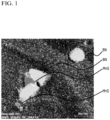
FIG. 1 illustrates composite precipitates of MnS and BN according to an exemplary embodiment of the present disclosure. -
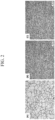
FIG. 2 illustrates a crystal grain size depending on whether a composition content range is included, according to an exemplary embodiment of the present disclosure. -
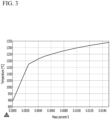
FIG. 3 is a graph of changes in precipitation temperature of BN and MnS corresponding to changes in a content of sulfur (S), according to an exemplary embodiment of the present disclosure. - The terms such as first, second, and third are used for describing various parts, components, areas, layers, and/or sections, but are not limited thereto. These terms are used only for distinguishing one part, component, area, layer, or section from other parts, components, areas, layers, or sections. Therefore, a first part, component, area, layer, or section described below may be mentioned as a second part, component, area, layer, or section without departing from the scope of the present disclosure.
- The terminology used herein is only for mentioning a certain example, and is not intended to limit the present disclosure. Singular forms used herein also include plural forms unless otherwise stated clearly to the contrary. The meaning of "comprising" used in the specification is embodying certain characteristics, areas, integers, steps, operations, elements, and/or components, but is not excluding the presence or addition of other characteristics, areas, integers, steps, operations, elements, and/or components.
- When it is mentioned that a part is "on" or "above" the other part, it means that the part is directly on or above the other part or another part may be interposed therebetween. In contrast, when it is mentioned that a part is "directly on" the other part, it means that nothing is interposed therebetween.
- Though not defined otherwise, all terms including technical terms and scientific terms used herein have the same meaning as commonly understood by a person with ordinary skill in the art to which the present disclosure pertains. Terms defined in commonly used dictionaries are further interpreted as having a meaning consistent with the related technical literatures and the currently disclosed description, and unless otherwise defined, they are not interpreted as having an ideal or very formal meaning.
- In addition, unless particularly mentioned, % refers to wt%, and 1 ppm is 0.0001 wt%.
- The meaning of further including an additional element in an exemplary embodiment of the present disclosure is including the additional element by replacing iron (Fe) as a balance by the additional amount of the additional element.
- Hereinafter, an exemplary embodiment of the present disclosure will be described in detail so that those skilled in the art to which the present disclosure pertains may easily carry out the disclosure. As those skilled in the art would realize, the described embodiments may be modified in various different ways, all without departing from the spirit or scope of the present disclosure.
- A cold-rolled steel sheet according to an exemplary embodiment of the present disclosure includes, by weight: 0.010 to 0.025% of carbon (C), 0.10 to 0.25% of manganese (Mn), 0.002 to 0.011% of sulfur (S), 0.0006 to 0.0026% of boron (B), 0.0010 to 0.0034% of nitrogen (N), and 0.006 to 0.028% of aluminum (Al) with a balance of Fe and unavoidable impurities.
- Hereinafter, the reason for limiting alloy components will be described.
- Carbon (C) is an element which is solid-solubilized in steel and favorably improves strength, and since a carbide in a steel material is precipitated at a content of carbon from 0.020 wt%, as the C content increases in a range of 0.010 to 0.025 wt%, specifically 0.011 to 0.024 wt%, a section in which steel material quality changes occurs.
- When the content of carbon is excessively small, the content of C which is solid-solubilized in steel is low, so that a solid solution strengthening effect becomes small and strength of a steel material is lowered. When the content of carbon is excessively high, solid solution strengthening restarts after the carbide is precipitated to the maximum, so that strength may be excessively increased and an age index may be increased.
- Manganese (Mn) is an element which serves to improve the strength of a steel material by solid solution strengthening in steel and is bonded to sulfur (S) to form a MnS precipitate. A content of manganese (Mn) may be 0.10 to 0.25 wt%. Specifically, the content of manganese may be 0.12 to 0.24 wt%.
- In the present disclosure, it is preferred that the manganese is added at 0.10 wt% or more for securing strength by the manganese. When the content of manganese is excessively high, a center segregation zone is formed so that there is a concern about defects occurring during hot rolling, and an excessively coarse MnS precipitate is formed so that it is difficult to expect a composite precipitation effect with a BN precipitate, which may result in a decrease in strength of a steel material.
- Sulfur (S) is an element for forming a MnS precipitate with manganese (Mn). Since sulfur is less contained than the manganese, a content of S may dominate the entire MnS in the precipitation of MnS. The content of manganese may be 0.002 to 0.011 wt%. Specifically, the content of manganese may be 0.003 to 0.010 wt% (30 to 100 ppm).
- When the content of sulfur is excessively low, the MnS precipitate is not sufficiently formed, so that it is difficult to expect a composite precipitation effect with the BN precipitate, and also, precipitates may be formed at a precipitation temperature of 1,200°C which is an average heating temperature or lower. When the content of sulfur is excessively high, a precipitation starting temperature is too high, and it may be difficult to expect a composite precipitation effect with the BN precipitate.
- Boron (B) is an element which reacts with nitrogen (N) in steel to form a BN precipitate, and has an effect of reducing nitrogen which is solid-solubilized in steel and an action of forming the size of final crystal grains to be coarse. A content of boron may be 0.0006 to 0.0026 wt%. Specifically, the content of boron may be 0.0011 to 0.0025 wt%.
- When the content of boron is excessively low, an amount of the BN precipitate formed is very small, a precipitation temperature of the BN precipitate becomes 1,200°C or lower, and thus, BN which is formed in a hot rolling step in a heating temperature section is re-solid-solubilized to decrease an effect of reducing crystal grain boundary pinning. When the content of boron is excessively high, boron is segregated in a grain boundary of B remaining after being bonded to N in steel, so that it is highly likely to be present as free boron (free B), and in this case, a problem such as scab grooves may arise during steel making-soft cast, and finally boron is segregated in a grain boundary of the steel material to cause an adverse effect of excessively increasing strength.
- Nitrogen (N) is an element which reacts with boron (B) to form a BN precipitate. A content of nitrogen may be 0.0010 to 0.0034 wt%. Specifically, the content of nitrogen may be 0.0014 to 0.0030 wt%.
- When the content of nitrogen is excessively low, an amount of BN to be precipitated is decreased, so that is may be difficult to express the BN coarse precipitation effect of the present disclosure. When the content of nitrogen is excessively high, nitrogen remaining after forming the BN precipitate is present in a solid-solubilized state, and causes excessive improvement of strength of steel and may increase an aging index.
- Aluminum (Al) is an element added for a deoxidation effect. A content of aluminum may be 0.006 to 0.028 wt%. Specifically, the content of aluminum may be 0.010 to 0.028 wt%. When the content of aluminum is excessively low, the deoxidation effect may be reduced to form inclusion defects which bind to a composition such as manganese (Mn) and calcium (Ca).
- The aluminum may be added for the purpose of inducing AlN formation at a low temperature in order to be solid-solubilized with nitrogen (N) and prevent aging. Since much nitrogen is removed in the form of BN using the boron in the present disclosure, there is no need to add a high content of aluminum (Al), as in a common cold-rolled steel sheet. Even in the case of adding only the aluminum within a content range of aluminum, solid-solubilized nitrogen which causes aging occurrence may be minimized.
- In the present disclosure, a content of an alloy such as B, Mn, and S which are lower-priced elements is optimized by excluding higher-priced elements such as Nb, Ti, P, and Mn, and thus, a yield strength of the steel material used in press forming is lowered and ductility thereof is increased, thereby securing excellent press workability. Specifically, 0.01 wt% or less of Nb and Ti, respectively, 0.015 wt% or less of P, and 0.025 wt% or less of Mn may be included.
- In an exemplary embodiment, the cold-rolled steel sheet includes iron (Fe) as a balance. In addition, unavoidable impurities may be included. The unavoidable impurities refer to impurities which are inevitably incorporated in steel making and the manufacturing process of the cold-rolled steel sheet. Since the unavoidable impurities are well known in the art, detailed description thereof will be omitted. In an exemplary embodiment of the present disclosure, addition of elements other than the alloy components described above is not excluded, and various elements may be included within a range hindering the technical ideas. When an addition element is further included, it replaces Fe as the balance.
- The cold-rolled steel sheet according to an exemplary embodiment of the present disclosure satisfies the following Equation 1:

- In an exemplary embodiment, the value of Equation 1 may be more than 9.25. Specifically, the value of Equation 1 may be more than 9.8 and less than 19.3. In an exemplary embodiment, Equation 1 may refer to minimum contents of boron (B) and nitrogen (N) of which the precipitation temperature is higher than the heating temperature with precipitate coarsening. Equation 1 relates to the minimum contents of boron (B) and nitrogen (N) for forming precipitates in order to control a yield strength low, by forming a BN precipitate to form a coarse precipitate. Since the boron and the nitrogen are met in an atom state, an atomic ratio may be, for example, 1:1. However, when some of the atoms are present in more amounts, other atoms present in small amounts may determine the amount of precipitate and the precipitation temperature of BN.
- The cold-rolled steel sheet according to an exemplary embodiment of the present disclosure satisfies the following Equation 2:

- In an exemplary embodiment, the value of Equation 2 may be less than 0.015. Specifically, the value of Equation 2 may be less than 0.009. More specifically, the value of Equation 2 may be more than -0.02 and less than 0.006.
- ([N] - 1.3 × [B]) × 9.643 of Equation 2 relates to a minimum content of Al required for nitrogen (N) scavenging. Specifically, when the nitrogen is not scavenged, for example, not removed by boron (B) and the atomic ratio of the nitrogen is higher, it is designed that the aluminum is not more than 0.015 wt% which is the lower limit for deoxidizing action. In an exemplary embodiment, the cold-rolled steel sheet satisfies Equation 2 to control the content of aluminum (Al) low, thereby providing the cold-rolled steel sheet having excellent economic feasibility.
- The cold-rolled steel sheet according to an exemplary embodiment of the present disclosure satisfies the following Equation 3:

- In Equation 3, TBN is a precipitation temperature of BN and TMnS is a precipitation temperature of MnS, and since the starting points of the precipitation temperature of MnS and the precipitation temperature of BN are similar to each other, the principle of formation of coarse precipitates included in the cold-rolled steel sheet is based on the fact that as MnS precipitates, the precipitated MnS acts as a precipitation nucleus for the BN.
- In an exemplary embodiment, when the value of TMnS - TBN of Equation 3 is less than the lower limit, re-solid solubilization occurs, so that it may be difficult to expect a composite precipitation effect of MnS and BN. When the value of TMnS - TBN of Equation 3 is more than the upper limit, MnS is formed in a coarse state, and since the coarse MnS does not act as a nucleus of the BN precipitation, it may be difficult to expect the composite precipitation effect.
- Referring to
FIG. 1 , in an exemplary embodiment, the cold-rolled steel sheet includes at least one precipitate of MnS and BN, and an area fraction of the precipitate may be 1 to 10%. Specifically, the area fraction may be 1.5 to 7%. When the area fraction is lower than the lower limit, precipitation strengthening occurs due to refinement of the formed precipitate, and thus, it is difficult to secure strength and workability to be desired. When the area fraction is higher than the upper limit, a strength increase effect due to precipitation strengthening occurs more than a crystal grain coarsening effect due to a coarse precipitate. - In an exemplary embodiment, an average particle diameter of the precipitate may be 40 to 250 nm. Specifically, the average particle diameter of the precipitate may be 50 to 200 nm. When the average particle diameter of the precipitate is excessively small, the crystal grain coarsening effect intended in the present disclosure is not obtained by formation of fine precipitate, and when the average particle diameter of the precipitate is excessively large, the total number of MnS produced is small, so that it may not serve as a precipitation nucleus of BN, and thus, formability of a steel material may be deteriorated.
- In an exemplary embodiment, the yield strength of the cold-rolled steel sheet may be 150 to 220 MPa. Specifically, the yield strength of the cold-rolled steel sheet may be 160 to 220 MPa. The yield strength of the cold-rolled steel sheet is based on that measured by a 0.2% off-set method, and when the yield strength of the cold-rolled steel sheet is excessively low, strength is too low, so that performance supporting a product when used for the intended purpose in the present disclosure may be deteriorated. When the yield strength of the cold-rolled steel sheet is excessively high, distortion of a product may occur, and cracks are highly likely to occur in an embossing area or a bending area.
- In an exemplary embodiment, an elongation rate of the cold-rolled steel sheet may be 35 to 48%. Specifically, the elongation rate of the cold-rolled steel sheet may be 39 to 46%. When the elongation rate of the cold-rolled steel sheet is excessively low, cracks are highly likely to occur during forming. However, since the excessively high elongation rate of the cold-rolled steel sheet means excessive decline in strength, there is a problem of stiffness deterioration.
- In an exemplary embodiment, the cold-rolled steel sheet may include some carbides in a ferrite single phase structure as a microstructure. A fraction of the carbide may be, for example, 5% or less as an area fraction. When the fraction of the carbide is out of the range, it may be a starting point of crack occurrence in a steel material, and deterioration of the steel material may occur during a heat treatment. In an exemplary embodiment of the present disclosure, a ferrite single phase structure refers to that composed of a ferrite structure other than precipitates and carbides. That is, the ferrite structure may be 85% or more as an area fraction with respect to the entire steel sheet. More specifically, it may be 85 to 99%.
- Referring to
FIG. 2 , in an exemplary embodiment, a crystal grain size of the ferrite may be 10 to 40 µm. InFIG. 2 , crystal grain sizes when the cold-rolled steel sheet satisfies (A, Example 1 of Table 1 described later) or does not satisfies (B and C, Comparative Examples 6 and 8 of Table 1 described later, respectively) the composition range of the present disclosure may be confirmed. When the crystal grain size is excessively small, the strength is excessively increased as compared with the strength of the steel material to be desired in the present disclosure. When the crystal grain size is excessively large, defects such as orange peel are likely to occur in a worked area after working. - In an exemplary embodiment of the present disclosure, the cold-rolled steel sheet described above may be galvanized to obtain a galvanized steel sheet. Detailed description thereof will be described later for a method of manufacturing a cold-rolled steel sheet.
- A method of manufacturing a cold-rolled steel sheet according to an exemplary embodiment of the present disclosure includes: reheating a slab including, by weight: 0.010 to 0.025% of carbon (C), 0.10 to 0.25% of manganese (Mn), 0.002 to 0.011% of sulfur (S), 0.0006 to 0.0026% of boron (B), 0.0010 to 0.0034% of nitrogen (N), and 0.006 to 0.028% of aluminum (Al) with a balance of Fe and unavoidable impurities; hot rolling the heated slab to manufacture a hot-rolled steel sheet; winding the hot-rolled steel sheet at a winding temperature in a range of 450 to 700°C; cold rolling the wound hot-rolled steel sheet to manufacture a cold-rolled steel sheet; and annealing the cold-rolled steel sheet. Since the alloy composition of the slab is the same as the cold-rolled steel sheet described above, overlapping description will be omitted. Since the alloy component is not changed in the manufacturing process of the cold-rolled steel sheet, the alloy compositions of the slab and the cold-rolled steel sheet are substantially the same.
- The reheating of a slab is a step of heating a slab at a low temperature at which at least one precipitate of BN and MnS is not re-solid-solubilized. In an exemplary embodiment, the step of reheating a slab may be heating to a temperature of 1,150°C or higher. Since most of the precipitates present in steel should be re-solid-solubilized, a temperature of 1,150°C or higher may be needed. Specifically, in order to solid-solubilize the precipitate well, heating may be performed at a temperature of 1,200°C or higher, more specifically 1,200 to 1,250°C. By heating within the temperature range, a temperature may be sufficiently secured during hot rolling. When it is out of the upper limit of the temperature range, a fraction of the precipitate in the cold-rolled steel is excessively small and the particle size of the precipitate is small, so that the precipitate may be re-solid-solubilized.
- In the hot rolling of the slab to manufacture a hot-rolled steel sheet, the slowly cooled slab is hot-rolled at a temperature of Ar3 or higher to manufacture a hot-rolled steel sheet. The Ar3 temperature is a third transformation temperature, which is a temperature of phase transformation of iron from ferrite or cementite to austenite, and may be calculated by the following equation:
Ar3 temperature = wt% of 914.57 - 95.24 × C - wt% of 43.5 × Mn - wt% of 21.15 × C × wt% of Mn - wt%1/2 of 128.6 × C. - The reason for defining the finish temperature of the hot rolling is defined as Ar3 or higher is for carrying out rolling in a single phase area. Specifically, the finish temperature of the hot rolling may be Ar3 to 1,200°C, specifically Ar3 to 1,000°C. The Ar3 temperature may be, for example, 880 to 900°C.
- In the hot rolling of the slab to manufacture a hot-rolled steel sheet, the manufactured hot-rolled steel sheet may be wound. In an exemplary embodiment, the hot-rolled steel sheet may be wound in a temperature range of 500 to 700°C. Specifically, the temperature range may be 600 to 700°C.
- When the hot-rolled is wound in a temperature range lower than the above temperature range, the hot-rolled structure is coarsened and it is difficult to secure cold-rollability after hot rolling. When the hot-rolled steel sheet is wound in a temperature range higher than the temperature range, oxygen of scale produced on the surface of steel during winding and carbon in steel react to produce scale of which the surface is not pickled well, and thus, crystal orientation may be finally affected during galvanizing. In an exemplary embodiment, the wound hot-rolled steel sheet may be 2.0 to 5.0 mm as a non-limiting example.
- In the hot rolling of the hot-rolled sheet to manufacture a cold-rolled steel sheet, the wound hot-rolled steel sheet may be cold-rolled at a reduction rate of 50%, specifically at reduction rate of 50 to 90% to manufacture a cold-rolled steel sheet. When the reduction rate is lower than the lower limit, it is difficult to secure the thickness of the cold-rolled steel sheet to be desired. When the reduction rate is higher than the upper limit, steel is excessively hardened to deteriorate rollability.
- The annealing of the cold-rolled steel sheet is batch-annealing or continuously annealing the cold-rolled steel sheet in an annealing line, and for example, the continuous annealing may be performed in a temperature range of 600 to 800°C. When it is lower than the lower limit of the temperature range, the steel material is not sufficiently recrystallized, so that strength and ductility may be deteriorated due to high potential density. When it is higher than the upper limit of the temperature range, a problem such as heat buckle may easily occur during thin rolling.
- After the annealing, the steel material is temper rolled. In an exemplary embodiment, in the temper rolling, a rolling rate may be in a range of 0.5 to 1.5%. The final steel material has an increased yield strength, when a yield point elongation occurs due to the presence of solid-solubilized C and N. Therefore, by controlling the rolling rate, occurrence of the yield point elongation may be suppressed.
- When the rolling rate is too low, the material may be hardened by occurrence of the yield point elongation. When the rolling rate is too high, material hardening and an elongation decrease may occur by work hardening. In an exemplary embodiment, the final thickness of the steel material after temper rolling may be in a range of 0.5 to 3.0 mm.
- In an exemplary embodiment, the method of manufacturing a cold-rolled steel sheet may include galvanizing after the cold rolling of the hot-rolled sheet to manufacture a cold-rolled steel sheet. The meaning of "after the cold rolling" may be after cold rolling and before annealing, after cold rolling and annealing and before temper rolling, or any time after temper rolling. Specifically, galvanizing may be performed after the temper rolling.
- The galvanizing may use various plating methods such as, for example, hot dip galvanizing or electrogalvanizing.
- In an exemplary embodiment, the hot-dip galvanizing may be performed in a plating bath in a temperature range of 400 to 500°C, specifically 420 to 480°C. When the hot-dip galvanizing is performed at a temperature lower than the lower limit of the temperature range, zinc is not sufficiently dissolved and not uniformly plated. When the temperature is higher than the upper limit of the temperature range, the plating bath volatilizes, the plating bath is sufficiently bound to a steel sheet during cooling to prevent formation of a sound structure, and the steel sheet melts during the plating process.
- In an exemplary embodiment, anti-fingerprint resin coating may be performed after the electrogalvanizing. The coating may be performed in a temperature range of 100 to 200°C. For example, when the temperature is lower than the lower limit of the temperature range, the resin may be unevenly dried. When the temperature is higher than the upper limit of the temperature range, aging occurs in the drying process, so that a yield point increase due to yield point elongation may occur.
- Hereinafter, the specific examples of the present disclosure will be described. However, the following examples is only a specific example of the present disclosure, and the present disclosure is not limited to the following examples.
- Slab steels which had the compositions of the following Table 1 and included Fe and unavoidable impurities as the balance were manufactured, and the components were indicated as actual values.
(Table 1) Classific ation Alloy component (wt%) Equ atio n 1 Equ atio n 2 TBN TMnS Equ atio n 3 Remar ks Compon ent C Mn S B N Al Inventiv e Steel 1 0.01 5 0.15 0.00 6 0.00 2 0.00 21 0.02 15.0 - 0.00 5 122 8 126 0 32.0 Examp le 1 Inventiv e Steel 2 0.01 1 0.15 0.00 6 0.00 2 0.00 21 0.02 15.0 - 0.00 5 122 8 126 0 32.0 Examp le 2 Inventiv e Steel 3 0.02 4 0.15 0.00 6 0.00 2 0.00 21 0.02 15.0 - 0.00 5 122 8 126 0 32.0 Examp le 3 Inventiv e Steel 4 0.01 5 0.12 0.00 6 0.00 2 0.00 2 0.02 14.3 - 0.00 6 122 4 126 0 36.1 Examp le 4 Inventiv e Steel 5 0.01 5 0.24 0.00 6 0.00 2 0.00 2 0.02 14.3 - 0.00 6 122 4 126 0 36.1 Examp le 5 Inventiv e Steel 6 0.01 5 0.15 0.00 6 0.00 2 0.00 2 0.02 8 14.3 - 0.00 6 122 4 126 0 36.1 Examp le6 Inventiv e Steel 7 0.01 5 0.15 0.00 6 0.00 2 0.00 2 0.01 1 14.3 - 0.00 6 122 4 126 0 36.1 Examp le 7 Inventiv e Steel 8 0.01 5 0.15 0.00 37 0.00 2 0.00 2 0.02 14.3 - 0.00 6 122 4 122 5 0.4 Examp le 8 Inventiv e Steel 9 0.01 5 0.15 0.00 9 0.00 2 0.00 2 0.02 14.3 - 0.00 6 122 4 130 5 81.1 Examp le 9 Inventiv e Steel 10 0.01 5 0.15 0.00 6 0.00 11 0.00 2 0.02 10.2 0.00 5 120 0 126 0 59.6 Examp le 10 Inventiv e Steel 11 0.01 5 0.15 0.00 6 0.00 25 0.00 2 0.02 14.3 - 0.01 2 122 4 126 0 36.1 Examp le 11 Inventiv e Steel 12 0.01 5 0.15 0.00 6 0.00 25 0.00 14 0.02 10.0 - 0.01 8 120 0 126 0 60.7 Examp le 12 Inventiv e Steel 13 0.01 5 0.15 0.00 6 0.00 2 0.00 3 0.02 18.5 0.00 4 124 8 126 0 11.9 Examp le 13 Compar ative Steel 1 0.03 0.15 0.00 6 0.00 2 0.00 21 0.02 15.0 - 0.00 5 122 8 126 0 32.0 Compa rative Examp le 1 Compar ative Steel 2 0.01 5 0.05 0.00 6 0.00 2 0.00 21 0.02 15.0 - 0.00 5 122 8 126 0 32.0 Compa rative Examp le 2 Compar ative Steel 3 0.01 5 0.27 0.00 6 0.00 2 0.00 21 0.02 15.0 - 0.00 5 122 8 126 0 32.0 Compa rative Examp le 3 Compar ative Steel 4 0.01 5 0.15 0.00 6 0.00 2 0.00 21 0.00 5 15.0 - 0.00 5 122 8 126 0 32.0 Compa rative Examp le 4 Compar ative Steel 5 0.01 5 0.15 0.00 6 0.00 2 0.00 21 0.03 2 15.0 - 0.00 5 122 8 126 0 32.0 Compa rative Examp le 5 Compar ative Steel 6 0.01 5 0.15 0.00 15 0.00 2 0.00 21 0.02 15.0 - 0.00 5 122 8 119 3 - 35.5 Compa rative Examp le 6 Compar ative Steel 7 0.01 5 0.15 0.01 2 0.00 2 0.00 21 0.02 15.0 - 0.00 5 122 8 135 0 122. 0 Compa rative Examp le 7 Compar ative Steel 8 0.01 5 0.15 0.00 6 0.00 05 0.00 21 0.02 4.6 0.01 4 116 9 126 0 91.5 Compa rative Examp le 8 Compar ative Steel 9 0.01 5 0.15 0.00 6 0.00 27 0.00 21 0.02 15.0 - 0.01 4 122 8 126 0 32.0 Compa rative Examp le 9 Compar ative Steel 10 0.01 5 0.15 0.00 6 0.00 2 0.00 09 0.02 6.4 - 0.01 6 117 9 126 0 81.2 Compa rative Examp le 10 Compar ative Steel 11 0.01 5 0.15 0.00 6 0.00 2 0.00 35 0.02 18.5 0.00 9 124 8 126 0 11.9 Compa rative Examp le 11 - Among the steel slabs having the compositions of Table 1, Inventive Steel 1 as a standard was reheated at 1,200°C and hot rolled at 920°C, the hot-rolled steel sheet was wound and cold-rolled, the cold-rolled steel sheet was annealed, its temper rolling rate was controlled, and the precipitate, the crystal grain size, the material quality, and the defects of the steel materials as shown in Table 2 were confirmed.
(Table 2) Classifica tion Precipitates Ferrite grain size (µm) Material Defects Remarks compone nt Fract ion (%) Partic le size (nm) Grain size of hot-rolled material Grain size of cold-rolled material Yield strengt h (MPa) Elong ation rate (%) Surfa ce defe cts Wor king defe cts Inventive Steel 1 1.9 120 28.3 20.2 180 45 X X Example 1 Inventive Steel 2 1.8 110 29.2 19.5 195 43 X X Example 2 Inventive Steel 3 1.7 105 27.5 18.3 218 41.2 X X Example 3 Inventive Steel 4 1.5 85 21.5 15.6 196 43 X X Example 4 Inventive Steel 5 1.6 92 22.5 17.4 215 41 X X Example 5 Inventive Steel 6 1.9 120 28.2 20 181 45 X X Example 6 Inventive Steel 7 2 122 30.2 21.2 179 46 X X exemplary embodime nt 7 Inventive Steel 8 2.1 130 32 22 168 46 X X Example 8 Inventive Steel 9 1.5 79 22 16.8 219 39 X X Example 9 Inventive Steel 10 1.6 90 24 17.3 210 42 X X Example 10 Inventive Steel 11 1.9 120 27.6 21.5 175 45 X X Example 11 Inventive Steel 12 1.5 85 19 16.5 210 41 X X Example 12 Inventive Steel 13 2 120 27.6 19.5 190 43 X X Example 13 Compara tive Steel 1 1.9 120 28.3 20.2 225 42 X X Comparati ve Example 1 Compara tive Steel 2 1.9 120 28.3 20.2 155 48 X X Comparati ve Example 2 Compara tive Steel 3 1.9 120 28.3 20.2 230 41 X O Comparati ve Example 3 Compara tive Steel 4 1.9 120 28.3 20.2 180 45 X O Comparati ve Example 4 Compara tive Steel 5 1.9 120 28.3 20.2 180 45 X X Comparati ve Example 5 Compara tive Steel 6 0.5 40 13.2 10.5 235 39 X O Comparati ve Example 6 Compara tive Steel 7 0.4 42 13.8 10.9 231 41 X O Comparati ve Example 7 Compara tive Steel 8 0.4 43 12.3 8.4 229 39 X X Comparati ve Example 8 Compara tive Steel 9 0.3 35 9.5 9.3 242 35 X O Comparati ve Example 9 Compara tive Steel 10 0.5 40 12.6 8.6 250 32 X O Comparati ve Example 10 Compara tive Steel 11 1.9 65 15.6 14 235 39 X O Comparati ve Example 11 - The fraction and particle size of the precipitate, the hot-rolled material crystal grain size, the cold-rolled material crystal grain size, the yield strength, the elongation rate, and whether the surface defects and working defects occurred, in the inventive steels and the comparative steels were confirmed, by referring to Table 2. The surface defects were determined depending on whether the surface defects of the steel material having a length of 5 mm or more occurred, and the working defects were determined depending on whether cracks having a length of 2 mm or more occurred in a working area after a V-bending working test. The V-bending working test was performed under normal conditions, and the steel material was placed on a V-shaped die and a moving speed of the die was controlled within 5 mm/min.
- In Examples 1 to 13, as a result of confirming the material quality of the upper/lower limits, it was confirmed that the yield strength satisfied 220 MPa or less and surface defects and working defects did not occurred, by referring to Table 2. In Comparative Example 1, it was confirmed that when the content of carbon (C) was increased, the yield strength was increased.
- In Comparative Examples 2 and 3, an influence of the content of manganese (Mn) was reviewed. In Comparative Example 2 in which manganese (Mn) was present in an excessively small amount, the yield strength was decreased due to a decrease in solid solution strengthening effect of the manganese, and in Comparative Example 3 in which the manganese was present in an excessively large amount, the yield strength was excessively increased, and thus, distortion occurrence of the steel material was confirmed.
- In Comparative Examples 4 and 5, an influence of the content of aluminum (Al) was reviewed. In Comparative Example 4 in which the content of aluminum was excessively low, the aluminum did not have sufficient deoxidizing ability, so that many calcium (Ca) and manganese (Mn)-based inclusions occurred to cause cracks. In Comparative Example 5 in which the aluminum was present in an excessively large amount, economic feasibility was poor. Since in the present disclosure, the content of aluminum only needs to be secured to a deoxidation level, the aluminum does not need to be excessively added. Therefore, lowering the content of aluminum to a required range level was not consistent with the direction of the present disclosure to provide an extremely thin steel material which secures economic feasibility, has excellent press workability, has no defect occurrence such as cracks during forming, and has high strength.
- In Comparative Examples 6 and 7, an influence of the content of sulfur (S) was reviewed. In Comparative Example 6 in which the amount of sulfur added was excessively small, the amount of the precipitate of MnS was low, and also its precipitation temperature became lower than that of BN, so that the precipitation effect did not occur, and the effects of crystal grain refinement and strength reduction did not occur. In Comparative Example 7 in which the amount of sulfur added was excessively large, the precipitation temperature of MnS rose, so that MnS was coarsely precipitated, and thus, the composite precipitation with BN did not occur and there was no effect of strength reduction. In addition, referring to
FIG. 3 , it is confirmed that BN and MnS precipitation temperatures changed depending on the change in the content of S, in 0.015 wt% C - 0.15 wt% Mn - 0.02 wt% Al - 20 ppm B, N base calculated by a Thermocalc. program. Therefore, it is confirmed from the calculation results that in the base of the component system, the precipitation temperatures of BN and MnS were reversed from the content of S of 0.003% as a starting point. - In Comparative Examples 8 to 11, an influence of the contents of boron (B) and nitrogen (N) which are the main factors of BN precipitation was reviewed. Since the contents of boron and nitrogen were present at similar levels, precipitation was controlled by the component having a lower content between the two as an atomic ratio. As in Equation 1, it was important to have minimum atomic weights of boron and nitrogen, and as in Equation 3, at the contents of boron and nitrogen, a difference in precipitation temperature was 0 to 100°C or less. In Comparative Example 8 in which the content of boron was excessively low, the precipitation temperature of BN was low, so that BN was re-solid-solubilized in a heating furnace, and thus, the precipitation strengthening effect did not occur. In Comparative Example 9 in which the content of boron was excessively high, the boron was segregated as Free B at the grain boundary to cause a pinning effect, and also deteriorate hot rollability and increase strength.
- In Comparative Example 10 in which the content of nitrogen was excessively low, the BN precipitation temperature was lowered as in the content of boron, so that the coarsening effect did not occur. In Comparative Example 11 in which the content of nitrogen was excessively high, AlN was not sufficiently formed with nitrogen within the content of aluminum according to an exemplary embodiment of the present disclosure, which caused strength increase due to aging.
- In the following Tables 3 and 4, changes in steel material characteristics depending on the manufacturing conditions based on the component system of Example 1 among the steel slabs having the compositions of Table 1 are observed. In the following Table 3, the reheating temperature, the finish rolling temperature, the winding temperature, the cold reduction rate, the annealing temperature, and the temper rolling rate were changed among the manufacturing conditions, and in the following Table 4, the fraction, the particle size, the crystal grain size, the yield strength, the elongation rate, and the defects such as surface defects and working defects of the precipitate of the steel materials manufactured according to the conditions of Table 3 may be confirmed.
(Table 3) Classificati on Reheating temperature (°C) Finish rolling temperatur e (°C) Winding temperatur e (°C) Cold reduction rate (%) Annealing temperatur e (°C) Temper rolling rate (%) Manufactu ring Method 1 1200 920 660 75 700 1.0 Manufactu ring Method 2 1250 920 660 75 700 1.0 Manufactu ring Method 3 1200 920 730 75 820 1.0 Manufactu ring Method 4 1200 920 400 75 820 1.0 Manufactu ring Method 5 1200 920 660 75 820 0.5 Manufactu 1200 920 660 75 820 2.0 ring Method 6 (Table 4) Classif ication Manuf acturin g metho d Precipitate Ferrite grain size [µm] Material Defects Comp onent Manuf acturin g metho d Fractio n [%] Particl e size [nm] Hot-rolled materi al grain size Cold-rolled materi al grain size Yield strengt h [MPa] Elonga tion rate [%] Surfac e defect s Workin g defect s Remar ks Inventi ve Steel 1 Manuf acturin g Metho d 1 1.9 120 28.3 20.2 180 45 X X Examp le 1 Inventi ve Steel 1 Manuf acturin g 0.5 40 12.6 9.8 245 38 X O Comp arative Examp Metho d 2 le 12 Inventi ve Steel 1 Manuf acturin g Metho d 3 1.9 120 28.3 20.2 180 45 O X Comp arative Examp le 13 Inventi ve Steel 1 Manuf acturin g Metho d4 1.9 120 14.9 12.2 245 39 X O Comp arative Examp le 14 Inventi ve Steel 1 Manuf acturin g Metho d 5 1.9 120 28.3 20.2 225 42 O X Comp arative Examp le 15 Inventi ve Steel 1 Manuf acturin g Metho d6 1.9 120 28.3 20.2 235 38 O O Comp arative Examp le 16 - In Tables 3 and 4, Comparative Example 12 is for reviewing an influence of a slab reheating temperature (SRT). When the slab reheating temperature was as high as 1,250°C, precipitates such as BN and MnS were re-solid-solubilized, and thus, it was difficult to produce coarse precipitates such as BN and MnS at a cooling rate in a hot rolling level and there was no strength reduction effect.
- In Comparative Examples 13 and 14, an influence of the winding temperature was reviewed. In Comparative Example 13 in which the winding temperature was excessively high, it was confirmed that crystal grain coarsening occurred due to the high winding temperature to have a strength reduction effect, but surface defects occurred due to oxidation of carbon (C) on the surface. In Comparative Example 14 in which the winding temperature was excessively low, it was difficult to secure the strength reduction effect due to the reduction of hot-rolled crystal grain size and the reduction of cold-rolled crystal grain size.
- In Comparative Examples 15 and 16, an influence of the temper rolling rate was reviewed. Since the steel material of the present disclosure included the C content, aging was prevented only by forming operation potential by elongation through a temper rolling mill (Skin Pass Mill, SPM). In Comparative Example 15 in which the temper rolling rate was excessively low, the elongation rate of the steel material was increased due to aging occurrence. In Comparative Example 16 in which the temper rolling rate was excessively high, the elongation rate was increased due to work hardening, and thus, the temper rolling reduction rate of the present disclosure was limited to ± 0.5% or less. The present disclosure is not limited by the exemplary embodiments and/or the examples and may be manufactured in various forms different from each other, and it may be understood that a person with ordinary skill in the art to which the present disclosure pertains may carry out the present disclosure in another specific form without modifying the technical idea or essential feature of the present disclosure. Therefore, it should be understood that the exemplary embodiments and/or the examples described above are illustrative and are not restrictive in all aspects.
Claims (13)
- A cold-rolled steel sheet comprising, by weight: 0.010 to 0.025% of carbon (C), 0.10 to 0.25% of manganese (Mn), 0.002 to 0.011% of sulfur (S), 0.0006 to 0.0026% of boron (B), 0.0010 to 0.0034% of nitrogen (N), and 0.006 to 0.028% of aluminum (Al) with a balance of Fe and unavoidable impurities, andcomprising a precipitate of at least one of MnS and BN,wherein an area fraction of the precipitate in the cold-rolled steel sheet is 1 to 10% andthe cold-rolled steel sheet has a yield strength of 150 to 220 MPa.
- The cold-rolled steel sheet of claim 1, wherein:the cold-rolled steel sheet satisfies the following Equation 1:
 wherein min (a, b) is a smaller value between a and b, and [B] and [N] are contents (wt%) of B and N.
 - The cold-rolled steel sheet of claim 1, wherein:the cold-rolled steel sheet satisfies the following Equation 2:
 wherein [B] and [N] are contents (wt%) of B and N.
 - The cold-rolled steel sheet of claim 1, wherein:the cold-rolled steel sheet satisfies the following Equation 3:
 wherein TBN is 573,198 × min ([B]/10.8, [N]/14) +1142, min (a, b) is a smaller value between a and b, TMnS is 15000 × [S] +1170, and [B], [N], and [S] are contents (wt%) of B, N, and S.
 - The cold-rolled steel sheet of claim 1, wherein:
an average particle diameter of the precipitate is 40 to 250 nm. - The cold-rolled steel sheet of claim 1, wherein:
an average particle diameter of ferrite is 10 to 40 µm. - The cold-rolled steel sheet of claim 1, wherein:
the cold-rolled steel sheet has an elongation rate of 35 to 48%. - A galvanized steel sheet which is obtained by hot-dip galvanizing the cold-rolled steel sheet of any one of claims 1 to 7.
- A method of manufacturing a cold-rolled steel sheet, the method comprising:reheating a slab including, by weight: 0.010 to 0.025% of carbon (C), 0.10 to 0.25% of manganese (Mn), 0.002 to 0.011% of sulfur (S), 0.0006 to 0.0026% of boron (B), 0.0010 to 0.0034% of nitrogen (N), and 0.006 to 0.028% of aluminum (Al) with a balance of Fe and unavoidable impurities at 1,100°C or higher and lower than 1,250°C;hot rolling the heated slab to manufacture a hot-rolled steel sheet;winding the hot-rolled steel sheet at a winding temperature in a range of 450 to 700°C;cold rolling the wound hot-rolled steel sheet to manufacture a cold-rolled steel sheet;annealing the cold-rolled steel sheet; andtemper rolling the cold-rolled steel sheet at a rolling rate of more than 0.5% and less than 1.5%.
- The method of manufacturing a cold-rolled steel sheet of claim 9, wherein:in the heating of a slab,the slab is heated to 1,200°C or higher.
- The method of manufacturing a cold-rolled steel sheet of claim 9, wherein:in the manufacturing of a hot-rolled steel sheet,a finish rolling temperature is Ar3 or higher.
- The method of manufacturing a cold-rolled steel sheet of claim 9, wherein:the manufacturing of a cold-rolled steel sheet isperformed by cold rolling at a reduction rate of 50 to 95%.
- The method of manufacturing a cold-rolled steel sheet of claim 9, further comprising:after the manufacturing of a cold-rolled steel sheet,galvanizing a surface of the cold-rolled steel sheet.
Applications Claiming Priority (2)
| Application Number | Priority Date | Filing Date | Title |
|---|---|---|---|
| KR1020210180588A KR20230091460A (en) | 2021-12-16 | 2021-12-16 | Cold-rolled steel sheet and hot dip galvanized steel sheet with excellent formability and method of manufacturing thereof |
| PCT/KR2022/020640 WO2023113558A1 (en) | 2021-12-16 | 2022-12-16 | Cold-rolled steel sheet and galvanized steel sheet with excellent press formability and method of manufacturing thereof |
Publications (2)
| Publication Number | Publication Date |
|---|---|
| EP4450667A1 true EP4450667A1 (en) | 2024-10-23 |
| EP4450667A4 EP4450667A4 (en) | 2025-05-14 |
Family
ID=86773185
Family Applications (1)
| Application Number | Title | Priority Date | Filing Date |
|---|---|---|---|
| EP22908023.9A Pending EP4450667A4 (en) | 2021-12-16 | 2022-12-16 | COLD-ROLLED STEEL SHEET AND GALVANIZED STEEL SHEET WITH EXCELLENT PRESS FORMABILITY AND MANUFACTURING METHOD THEREOF |
Country Status (7)
| Country | Link |
|---|---|
| US (1) | US20250043379A1 (en) |
| EP (1) | EP4450667A4 (en) |
| JP (1) | JP2024545506A (en) |
| KR (1) | KR20230091460A (en) |
| CN (1) | CN118401690A (en) |
| MX (1) | MX2024007326A (en) |
| WO (1) | WO2023113558A1 (en) |
Family Cites Families (9)
| Publication number | Priority date | Publication date | Assignee | Title |
|---|---|---|---|---|
| JP2776203B2 (en) * | 1993-06-17 | 1998-07-16 | 住友金属工業株式会社 | Manufacturing method of cold rolled steel sheet excellent in non-aging at normal temperature |
| JP2000158888A (en) * | 1998-11-25 | 2000-06-13 | Okamoto Ind Inc | Mat |
| JP3821036B2 (en) * | 2002-04-01 | 2006-09-13 | 住友金属工業株式会社 | Hot rolled steel sheet, hot rolled steel sheet and cold rolled steel sheet |
| JP3760888B2 (en) * | 2002-04-30 | 2006-03-29 | Jfeスチール株式会社 | High-tensile cold-rolled steel sheet with excellent workability, manufacturing method and processing method thereof |
| JP5135868B2 (en) * | 2007-04-26 | 2013-02-06 | Jfeスチール株式会社 | Steel plate for can and manufacturing method thereof |
| KR101353805B1 (en) * | 2011-12-19 | 2014-01-22 | 주식회사 포스코 | Soft tempered black plate steel sheet having excellent antiaging property and weldability and manufacturing method thereof |
| KR101518581B1 (en) * | 2013-09-13 | 2015-05-07 | 주식회사 포스코 | Cold-rolled steel sheet and galvanized steel sheet with excellent press formability and manufacturing method thereof |
| KR20150072751A (en) * | 2013-12-20 | 2015-06-30 | 주식회사 포스코 | Low-carbon cold rolled steel sheet having excellent press formability and manufacturing method the same |
| CN112795731A (en) * | 2019-11-13 | 2021-05-14 | 上海梅山钢铁股份有限公司 | Cold-rolled steel plate for lampshade and production method thereof |
-
2021
- 2021-12-16 KR KR1020210180588A patent/KR20230091460A/en active Pending
-
2022
- 2022-12-16 CN CN202280082175.4A patent/CN118401690A/en active Pending
- 2022-12-16 MX MX2024007326A patent/MX2024007326A/en unknown
- 2022-12-16 EP EP22908023.9A patent/EP4450667A4/en active Pending
- 2022-12-16 US US18/716,475 patent/US20250043379A1/en active Pending
- 2022-12-16 JP JP2024534504A patent/JP2024545506A/en active Pending
- 2022-12-16 WO PCT/KR2022/020640 patent/WO2023113558A1/en not_active Ceased
Also Published As
| Publication number | Publication date |
|---|---|
| CN118401690A (en) | 2024-07-26 |
| EP4450667A4 (en) | 2025-05-14 |
| WO2023113558A1 (en) | 2023-06-22 |
| US20250043379A1 (en) | 2025-02-06 |
| JP2024545506A (en) | 2024-12-09 |
| MX2024007326A (en) | 2024-06-26 |
| KR20230091460A (en) | 2023-06-23 |
Similar Documents
| Publication | Publication Date | Title |
|---|---|---|
| EP1979500B1 (en) | High manganese steel strips with excellent coatability and superior surface property, coated steel strips using steel strips and method for manufacturing the steel strips | |
| KR102153194B1 (en) | Ultra high strength and high ductility cold rolled steel sheet with superior resistance to liquid metal embrittlment(lme) cracking, plated steel sheet and method for manufacturing the same | |
| KR101560944B1 (en) | High strength hot rolled steel sheet having excellent surface property and method for manufacturing the same | |
| JP6079726B2 (en) | Manufacturing method of high-strength steel sheet | |
| EP2762581A1 (en) | Hot-rolled steel sheet and method for producing same | |
| WO2012060294A1 (en) | High-strength cold-rolled steel sheet having excellent deep-drawability and bake hardenability, and method for manufacturing same | |
| EP3647452A1 (en) | Steel sheet having excellent resistance to liquid metal embrittlement cracks and method for manufacturing same | |
| CN115461482B (en) | Steel sheet, component, and method for manufacturing same | |
| JP2022515107A (en) | High-strength steel plate with excellent ductility and workability, and its manufacturing method | |
| KR102020404B1 (en) | Steel sheet having ultra high strength and superior ductility and method of manufacturing the same | |
| KR100711475B1 (en) | Manufacturing method of high workability high strength steel plate with excellent hot dip galvanizing properties | |
| CN107406932A (en) | High-strength steel sheet and its manufacture method | |
| JPH03277741A (en) | Dual-phase cold roller steel sheet excellent in workability, cold nonaging properties and baking hardenability and its manufacture | |
| EP3388541B1 (en) | High-strength steel sheet for warm working, and method for producing same | |
| EP3708691B1 (en) | Manufacturing method for ultrahigh-strength and high-ductility steel sheet having excellent cold formability | |
| JP5310920B2 (en) | High strength cold-rolled steel sheet with excellent aging resistance and seizure hardening | |
| KR102606996B1 (en) | High strength cold rolled steel sheet having excellent bending workability, galva-annealed steel sheet and method of manufacturing the same | |
| US20250043379A1 (en) | Cold-rolled steel sheet and galvanized steel sheet with excellent press formability and method of manufacturing thereof | |
| KR20150073005A (en) | Austenitic galvanized steel sheet having excellent resistance crack of welding point and method for manufacturing the same | |
| KR102201438B1 (en) | Steel plate and method of manufacturing the same | |
| KR20220125755A (en) | Ultra high strength cold rolled steel sheet having high elongation and local formality and method of manufacturing the same | |
| EP4079903A2 (en) | Cold-rolled steel sheet having excellent thermal-resistance and moldability, and method for manufacturing same | |
| KR101988763B1 (en) | High-strength steel sheet having excellent formability and quality of surface, and method for manufacturing thereof | |
| JP4507364B2 (en) | Manufacturing method of high strength hot-rolled steel sheet | |
| JP2023547090A (en) | High-strength steel plate with excellent thermal stability and its manufacturing method |
Legal Events
| Date | Code | Title | Description |
|---|---|---|---|
| STAA | Information on the status of an ep patent application or granted ep patent |
Free format text: STATUS: THE INTERNATIONAL PUBLICATION HAS BEEN MADE |
|
| PUAI | Public reference made under article 153(3) epc to a published international application that has entered the european phase |
Free format text: ORIGINAL CODE: 0009012 |
|
| STAA | Information on the status of an ep patent application or granted ep patent |
Free format text: STATUS: REQUEST FOR EXAMINATION WAS MADE |
|
| 17P | Request for examination filed |
Effective date: 20240701 |
|
| AK | Designated contracting states |
Kind code of ref document: A1 Designated state(s): AL AT BE BG CH CY CZ DE DK EE ES FI FR GB GR HR HU IE IS IT LI LT LU LV MC ME MK MT NL NO PL PT RO RS SE SI SK SM TR |
|
| DAV | Request for validation of the european patent (deleted) | ||
| DAX | Request for extension of the european patent (deleted) | ||
| A4 | Supplementary search report drawn up and despatched |
Effective date: 20250411 |
|
| RIC1 | Information provided on ipc code assigned before grant |
Ipc: C21D 9/46 20060101ALI20250407BHEP Ipc: C23C 2/06 20060101ALI20250407BHEP Ipc: C21D 8/02 20060101ALI20250407BHEP Ipc: C22C 38/06 20060101ALI20250407BHEP Ipc: C22C 38/00 20060101ALI20250407BHEP Ipc: C22C 38/04 20060101AFI20250407BHEP |