EP4450488A1 - Crystalline form of aromatic ring derivative, and preparation method therefor and application thereof - Google Patents
Crystalline form of aromatic ring derivative, and preparation method therefor and application thereof Download PDFInfo
- Publication number
- EP4450488A1 EP4450488A1 EP22906676.6A EP22906676A EP4450488A1 EP 4450488 A1 EP4450488 A1 EP 4450488A1 EP 22906676 A EP22906676 A EP 22906676A EP 4450488 A1 EP4450488 A1 EP 4450488A1
- Authority
- EP
- European Patent Office
- Prior art keywords
- crystal form
- ray powder
- powder diffraction
- present disclosure
- diffraction pattern
- Prior art date
- Legal status (The legal status is an assumption and is not a legal conclusion. Google has not performed a legal analysis and makes no representation as to the accuracy of the status listed.)
- Pending
Links
Images



Classifications
-
- A—HUMAN NECESSITIES
- A61—MEDICAL OR VETERINARY SCIENCE; HYGIENE
- A61P—SPECIFIC THERAPEUTIC ACTIVITY OF CHEMICAL COMPOUNDS OR MEDICINAL PREPARATIONS
- A61P17/00—Drugs for dermatological disorders
- A61P17/06—Antipsoriatics
-
- C—CHEMISTRY; METALLURGY
- C07—ORGANIC CHEMISTRY
- C07D—HETEROCYCLIC COMPOUNDS
- C07D209/00—Heterocyclic compounds containing five-membered rings, condensed with other rings, with one nitrogen atom as the only ring hetero atom
- C07D209/02—Heterocyclic compounds containing five-membered rings, condensed with other rings, with one nitrogen atom as the only ring hetero atom condensed with one carbocyclic ring
- C07D209/04—Indoles; Hydrogenated indoles
- C07D209/10—Indoles; Hydrogenated indoles with substituted hydrocarbon radicals attached to carbon atoms of the hetero ring
- C07D209/18—Radicals substituted by carbon atoms having three bonds to hetero atoms with at the most one bond to halogen, e.g. ester or nitrile radicals
-
- A—HUMAN NECESSITIES
- A61—MEDICAL OR VETERINARY SCIENCE; HYGIENE
- A61K—PREPARATIONS FOR MEDICAL, DENTAL OR TOILETRY PURPOSES
- A61K31/00—Medicinal preparations containing organic active ingredients
- A61K31/33—Heterocyclic compounds
- A61K31/395—Heterocyclic compounds having nitrogen as a ring hetero atom, e.g. guanethidine or rifamycins
- A61K31/40—Heterocyclic compounds having nitrogen as a ring hetero atom, e.g. guanethidine or rifamycins having five-membered rings with one nitrogen as the only ring hetero atom, e.g. sulpiride, succinimide, tolmetin, buflomedil
- A61K31/403—Heterocyclic compounds having nitrogen as a ring hetero atom, e.g. guanethidine or rifamycins having five-membered rings with one nitrogen as the only ring hetero atom, e.g. sulpiride, succinimide, tolmetin, buflomedil condensed with carbocyclic rings, e.g. carbazole
- A61K31/404—Indoles, e.g. pindolol
- A61K31/405—Indole-alkanecarboxylic acids; Derivatives thereof, e.g. tryptophan, indomethacin
-
- A—HUMAN NECESSITIES
- A61—MEDICAL OR VETERINARY SCIENCE; HYGIENE
- A61P—SPECIFIC THERAPEUTIC ACTIVITY OF CHEMICAL COMPOUNDS OR MEDICINAL PREPARATIONS
- A61P31/00—Antiinfectives, i.e. antibiotics, antiseptics, chemotherapeutics
-
- A—HUMAN NECESSITIES
- A61—MEDICAL OR VETERINARY SCIENCE; HYGIENE
- A61P—SPECIFIC THERAPEUTIC ACTIVITY OF CHEMICAL COMPOUNDS OR MEDICINAL PREPARATIONS
- A61P37/00—Drugs for immunological or allergic disorders
-
- C—CHEMISTRY; METALLURGY
- C07—ORGANIC CHEMISTRY
- C07B—GENERAL METHODS OF ORGANIC CHEMISTRY; APPARATUS THEREFOR
- C07B2200/00—Indexing scheme relating to specific properties of organic compounds
- C07B2200/13—Crystalline forms, e.g. polymorphs
Definitions
- the present disclosure relates to a crystal form, a salt form, a pharmaceutical composition of a compound of formula (I), and a use thereof as an SIP1 agonist.
- the S1P1 agonist Fingolimod Fingolimod (FTY720) was approved by the FDA for the treatment of Multiple Scleorosis (MS), which had developed a new therapeutic field for the treatment of immune diseases.
- FTY720 has clinical efficacy, it is a non-selective S1P receptor agonist.
- the combination of FTY720 with S1P3 in vivo often leads to a series of important side effects, such as bradycardia, which greatly limits its use in the treatment of immune diseases. Therefore, the discovery of second-generation of highly selective S1P1 agonists with better efficacy, less side effects and wider range of uses in the treatment of immune diseases has become one of the hot topics in drug research.
- An S1P1 agonist is provided in the application with the application number PCT/CN2019/123485 (filing date: December 6, 2019 ), with the structure shown as follows:
- the present disclosure provides a calcium salt of a compound of formula (I),
- the calcium salt is N-(2-aminoethyl)-2-aminoethyl-N-(2-aminoethyl)-2-aminoethyl-N-(2-aminoethyl)-2-aminoethyl-N-(2-aminoethyl)-2-aminoethyl-N-(2-aminoethyl)-2-aminoethyl-N-N-N-(2-aminoethyl)-2-aminoethyl-N-(2-aminoethyl)-2-aminoethyl-N-(2-aminoethyl)-2-aminoethyl-N-(2-aminoethyl)-2-aminoethyl-N-(2-aminoethyl)-2-aminoethyl-N-(2-aminoethyl)-2-aminoethyl
- the present disclosure further provides a crystal form G of a calcium salt of a compound of formula (II), wherein the crystal form G has an X-ray powder diffraction pattern comprising characteristic peaks at the following 2 ⁇ angles: 8.98 ⁇ 0.2°, 10.12 ⁇ 0.2°, 13.56 ⁇ 0.2°, 14.66 ⁇ 0.2°, 15.22 ⁇ 0.2°, 18.48 ⁇ 0.2°.
- the X-ray powder diffraction pattern of the crystal form G comprises characteristic peaks at the following 2 ⁇ angles: 8.98 ⁇ 0.2°, 10.12 ⁇ 0.2°, 13.56 ⁇ 0.2°, 14.66 ⁇ 0.2°, 15.22 ⁇ 0.2°, 16.34 ⁇ 0.2°, 16.92 ⁇ 0.2°, 18.48 ⁇ 0.2°, 22.67 ⁇ 0.2°, 23.06 ⁇ 0.2°.
- the X-ray powder diffraction pattern of the crystal form G is an X-ray powder diffraction pattern basically as shown in Fig. 7 .
- analytical data for the X-ray powder diffraction pattern of the crystal form G is as shown in Table 7.
- the crystal form G further comprises water and a solvent
- the content of the solvent ranges from 1.0% to 5.5%
- the content of water ranges from 3.0% to 4.5%.
- the solvent is ethanol
- the content of ethanol ranges from 1.0% to 5.5%
- the content of water ranges from 3.0% to 4.5%.
- the content of the solvent ranges from 1.64% to 4.77%, and the content of water ranges from 3.09% to 4.37%.
- the solvent is ethanol
- the content of ethanol ranges from 1.64% to 4.77%
- the content of water ranges from 3.09% to 4.37%.
- the solvent is ethanol, wherein the content of ethanol is 4.77%, and the content of water is 3.09%.
- the solvent is ethanol, wherein the content of ethanol is 3.05%, and the content of water is 3.89%.
- the solvent is ethanol, wherein the content of ethanol is 1.97%, and the content of water is 4.37%.
- the solvent is ethanol, wherein the content of ethanol is 1.64%, and the content of water is 3.75%.
- the characteristic diffraction peaks used in this specification are selected from peaks in the observed diffraction patterns. When distinguishing a plurality of crystalline solids, compared to the size of the peak, a peak that is visible in the crystalline solid but not visible in other crystalline solids becomes a preferred characteristic peak for identifying the crystalline solid. Even one or two such characteristic peaks can characterize the crystalline solid.
- the crystal form G can be distinguished from other crystal forms (e.g., anhydrous substance, etc.) disclosed in this specification by the presence of characteristic diffraction peaks. Additionally, comparing the measured charts, if their characteristic peaks are consistent, the powder X-ray diffraction patterns can be considered to be substantially identical.
- the crystal form G can exhibit changes in solvent hydration state due to changes in solvent and water content.
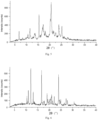
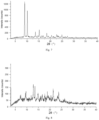
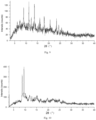
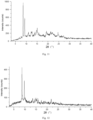
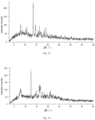
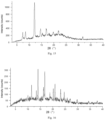
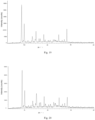
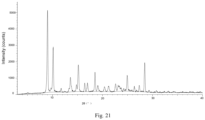
- the crystal form G with different solvent hydration contents has common characteristic peaks, as shown in Figs. 1 and 18-21 .
- the common characteristic peaks are at least three peaks selected from diffraction angles (2 ⁇ ): 8.98 ⁇ 0.2°, 10.12 ⁇ 0.2°, 13.56 ⁇ 0.2°, 14.66 ⁇ 0.2°, 15.22 ⁇ 0.2°, 18.48 ⁇ 0.2°.
- the common characteristic peaks are at least three peaks selected from the diffraction angles (2 ⁇ ): 8.98 ⁇ 0.2°, 10.12 ⁇ 0.2°, 13.56 ⁇ 0.2°, 14.66 ⁇ 0.2°, 15.22 ⁇ 0.2°, 16.34 ⁇ 0.2°, 16.92 ⁇ 0.2°, 18.48 ⁇ 0.2°, 22.67 ⁇ 0.2°, and 23.06 ⁇ 0.2°.
- the content (%) in the present disclosure represents the mass ratio, with the unit expressed as g/g.
- the present disclosure further provides a method for preparing the crystal form G.
- the method comprises: dissolving the compound of formula (I) in a sodium ethoxide solution, followed by stirring in the presence of calcium chloride, filtering, and drying under reduced pressure to obtain the crystal form G.
- This method differs from general methods for forming calcium salt crystal forms in the prior art. Specifically, the method of the present disclosure utilizes conditions with calcium chloride instead of calcium hydroxide, and the crystal form G can only be obtained after drying.
- the method comprises: heating the compound of formula (I) and anhydrous ethanol to 35-45°C, stirring for 5-30 minutes, adding a sodium ethoxide solution, stirring for 2-3 hours, adding dropwise a calcium chloride solution, stirring and reacting for 1-3 hours, cooling to 20-30°C, stirring for 4-6 hours, filtering, rinsing a filter cake with purified water and ethanol, and drying the filter cake under reduced pressure at 25-35°C to obtain the crystal form G.
- the mass ratio of sodium ethoxide to anhydrous ethanol in the sodium ethoxide solution is (0.01-0.05):(0.40-0.80).
- the mass ratio of sodium ethoxide to anhydrous ethanol in the sodium ethoxide solution is 0.035:0.631.
- the mass ratio of calcium chloride to pure water in the calcium chloride solution is (0.01-0.08):(0.20-1.00).
- the mass ratio of calcium chloride to pure water in the calcium chloride solution is 0.040:0.847.
- the present disclosure further provides a crystal form A of a compound of formula (I), wherein the crystal form A has an X-ray powder diffraction pattern comprising characteristic peaks at the following 2 ⁇ angles: 5.25 ⁇ 0.2°, 6.28 ⁇ 0.2°, 10.5 ⁇ 0.2°, 12.69 ⁇ 0.2°, 15.45 ⁇ 0.2°, 16.02 ⁇ 0.2°.
- the X-ray powder diffraction pattern of the crystal form A comprises characteristic peaks at the following 2 ⁇ angles: 5.25 ⁇ 0.2°, 6.28 ⁇ 0.2°, 10.5 ⁇ 0.2°, 12.69 ⁇ 0.2°, 15.45 ⁇ 0.2°, 16.02 ⁇ 0.2°, 16.60 ⁇ 0.2°, 20.66 ⁇ 0.2°, 21.39 ⁇ 0.2°, 22.28 ⁇ 0.2°.
- the X-ray powder diffraction pattern of the crystal form A is an X-ray powder diffraction pattern basically as shown in Fig. 1 .
- analytical data for the X-ray powder diffraction pattern of the crystal form A is as shown in Table 1.
- Table 1 Pos. [°2Th.] Height [cts] FWHM Left [°2Th.] d-spacing [ ⁇ ] Rel. Int.
- the present disclosure further provides a crystal form B of the compound of formula (I), wherein the crystal form B has an X-ray powder diffraction pattern comprising characteristic peaks at the following 2 ⁇ angles: 6.96 ⁇ 0.2°, 11.71 ⁇ 0.2°, 15.55 ⁇ 0.2°, 17.35 ⁇ 0.2°, 20.62 ⁇ 0.2°, 21.16 ⁇ 0.2°.
- the X-ray powder diffraction pattern of the crystal form B comprises characteristic peaks at the following 2 ⁇ angles: 6.96 ⁇ 0.2°, 10.80 ⁇ 0.2°, 11.71 ⁇ 0.2°, 13.39 ⁇ 0.2°, 15.55 ⁇ 0.2°, 17.35 ⁇ 0.2°, 18.45 ⁇ 0.2°, 20.62 ⁇ 0.2°, 21.16 ⁇ 0.2°, 21.81 ⁇ 0.2°.
- the X-ray powder diffraction pattern of the crystal form B is an X-ray powder diffraction pattern basically as shown in Fig. 2 .
- analytical data for the X-ray powder diffraction pattern of the crystal form B is as shown in Table 2.
- Table 2 Pos. [°2Th.] Height [cts] FWHM Left [°2Th.] d-spacing [ ⁇ ] Rel. Int.
- the present disclosure further provides a crystal form C of the compound of formula (I), wherein the crystal form C has an X-ray powder diffraction pattern comprising characteristic peaks at the following 2 ⁇ angles: 12.69 ⁇ 0.2°, 14.38 ⁇ 0.2°, 16.23 ⁇ 0.2°, 17.40 ⁇ 0.2°, 18.61 ⁇ 0.2°, 19.74 ⁇ 0.2°.
- the X-ray powder diffraction pattern of the crystal form C comprises characteristic peaks at the following 2 ⁇ angles: 12.69 ⁇ 0.2°, 14.38 ⁇ 0.2°, 16.23 ⁇ 0.2°, 17.40 ⁇ 0.2°, 18.61 ⁇ 0.2°, 19.74 ⁇ 0.2°, 20.46 ⁇ 0.2°, 20.94 ⁇ 0.2°, 21.75 ⁇ 0.2°, 25.44 ⁇ 0.2°.
- the X-ray powder diffraction pattern of the crystal form C is an X-ray powder diffraction pattern basically as shown in Fig. 3 .
- analytical data for the X-ray powder diffraction pattern of the crystal form C is as shown in Table 3.
- Table 3 Pos. [°2Th.] Height [cts] FWHM Left [°2Th.] d-spacing [ ⁇ ] Rel. Int.
- the present disclosure further provides a crystal form D of the compound of formula (I), wherein the crystal form D has an X-ray powder diffraction pattern comprising characteristic peaks at the following 2 ⁇ angles: 9.33 ⁇ 0.2°, 13.94 ⁇ 0.2°, 18.82 ⁇ 0.2°, 22.76 ⁇ 0.2°, 24.24 ⁇ 0.2°, 27.90 ⁇ 0.2°.
- the X-ray powder diffraction pattern of the crystal form D is an X-ray powder diffraction pattern basically as shown in Fig. 4 .
- analytical data for the X-ray powder diffraction pattern of the crystal form D is as shown in Table 4.
- Table 4 Pos. [°2Th.] Height [cts] FWHM Left [°2Th.] d-spacing [ ⁇ ] Rel. Int. [%] 4.65 8.44 0.94 19.01 4.53 9.33 61.21 0.12 9.48 32.85 13.94 45.87 0.16 6.35 24.61 17.19 6.60 0.79 5.16 3.54 18.82 186.36 0.12 4.71 100.00 22.76 49.61 0.16 3.91 26.62 24.24 13.02 0.94 3.67 6.98 27.90 14.03 0.47 3.20 7.53
- the present disclosure further provides a crystal form E of the compound of formula (I), wherein the crystal form E has an X-ray powder diffraction pattern comprising characteristic peaks at the following 2 ⁇ angles: 6.84 ⁇ 0.2°, 10.65 ⁇ 0.2°, 11.53 ⁇ 0.2°, 15.41 ⁇ 0.2°, 17.29 ⁇ 0.2°, 20.65 ⁇ 0.2°.
- the X-ray powder diffraction pattern of the crystal form E comprises characteristic peaks at the following 2 ⁇ angles: 6.84 ⁇ 0.2°, 10.65 ⁇ 0.2°, 11.53 ⁇ 0.2°, 13.78 ⁇ 0.2°, 15.41 ⁇ 0.2°, 17.29 ⁇ 0.2°, 20.22 ⁇ 0.2°, 20.65 ⁇ 0.2°, 23.90 ⁇ 0.2°, 25.26 ⁇ 0.2°.
- the X-ray powder diffraction pattern of the crystal form E is an X-ray powder diffraction pattern basically as shown in Fig. 5 .
- analytical data for the X-ray powder diffraction pattern of the crystal form E is as shown in Table 5.
- Table 5 Pos. [°2Th.] Height [cts] FWHM Left [°2Th.] d-spacing [ ⁇ ] Rel. Int.
- the present disclosure further provides a diethylamine salt of the compound of formula (I).
- the present disclosure further provides a crystal form F of the diethylamine salt of the compound of formula (I), wherein the crystal form F has an X-ray powder diffraction pattern comprising characteristic peaks at the following 2 ⁇ angles: 10.36 ⁇ 0.2°, 10.96 ⁇ 0.2°, 12.01 ⁇ 0.2°, 13.05 ⁇ 0.2°, 16.66 ⁇ 0.2°, 18.99 ⁇ 0.2°.
- the X-ray powder diffraction pattern of the crystal form F comprises characteristic peaks at the following 2 ⁇ angles: 10.36 ⁇ 0.2°, 10.96 ⁇ 0.2°, 12.01 ⁇ 0.2°, 13.05 ⁇ 0.2°, 16.66 ⁇ 0.2°, 18.99 ⁇ 0.2°, 20.42 ⁇ 0.2°, 20.98 ⁇ 0.2°, 22.11 ⁇ 0.2°, 23.93 ⁇ 0.2°.
- the X-ray powder diffraction pattern of the crystal form F is an X-ray powder diffraction pattern basically as shown in Fig. 6 .
- analytical data for the X-ray powder diffraction pattern of the crystal form F is as shown in Table 6.
- Table 6 Pos. [°2Th.] Height [cts] FWHM Left [°2Th.] d-spacing [ ⁇ ] Rel. Int.
- the present disclosure further provides a crystal form H of the calcium salt of the compound of formula (I), wherein the crystal form H has an X-ray powder diffraction pattern comprising characteristic peaks at the following 2 ⁇ angles: 7.32 ⁇ 0.2°, 9.57 ⁇ 0.2°, 11.83 ⁇ 0.2°, 12.76 ⁇ 0.2°, 13.48 ⁇ 0.2°, 14.83 ⁇ 0.2°.
- the X-ray powder diffraction pattern of the crystal form H comprises characteristic peaks at the following 2 ⁇ angles: 7.32 ⁇ 0.2°, 9.57 ⁇ 0.2°, 11.83 ⁇ 0.2°, 12.76 ⁇ 0.2°, 13.48 ⁇ 0.2°, 14.83 ⁇ 0.2°, 16.64 ⁇ 0.2°, 17.69 ⁇ 0.2°, 18.91 ⁇ 0.2°, 21.33 ⁇ 0.2°.
- the X-ray powder diffraction pattern of the crystal form H is an X-ray powder diffraction pattern basically as shown in Fig. 8 .
- analytical data for the X-ray powder diffraction pattern of the crystal form H is as shown in Table 8.
- Table 8 Pos. [°2Th.] Height [cts] FWHM Left [°2Th.] d-spacing [ ⁇ ] Rel. Int.
- the present disclosure further provides a crystal form I of the calcium salt of the compound of formula (I), wherein the crystal form I has an X-ray powder diffraction pattern comprising characteristic peaks at the following 2 ⁇ angles: 7.27 ⁇ 0.2°, 8.93 ⁇ 0.2°, 11.23 ⁇ 0.2°, 12.34 ⁇ 0.2°, 13.66 ⁇ 0.2°, 16.06 ⁇ 0.2°.
- the X-ray powder diffraction pattern of the crystal form I comprises characteristic peaks at the following 2 ⁇ angles: 7.27 ⁇ 0.2°, 8.93 ⁇ 0.2°, 11.23 ⁇ 0.2°, 12.34 ⁇ 0.2°, 13.66 ⁇ 0.2°, 16.06 ⁇ 0.2°, 17.97 ⁇ 0.2°, 20.82 ⁇ 0.2°, 23.42 ⁇ 0.2°, 24.38 ⁇ 0.2°.
- the X-ray powder diffraction pattern of the crystal form I is an X-ray powder diffraction pattern basically as shown in Fig. 9 .
- the present disclosure further provides a crystal form J of the calcium salt of the compound of formula (I), wherein the crystal form J has an X-ray powder diffraction pattern comprising characteristic peaks at the following 2 ⁇ angles: 8.73 ⁇ 0.2°, 9.49 ⁇ 0.2°, 11.99 ⁇ 0.2°, 12.89 ⁇ 0.2°, 15.16 ⁇ 0.2°, 19.58 ⁇ 0.2°.
- the X-ray powder diffraction pattern of the crystal form J comprises characteristic peaks at the following 2 angles: 4.52 ⁇ 0.2°, 8.73 ⁇ 0.2°, 9.49 ⁇ 0.2°, 11.99 ⁇ 0.2°, 12.89 ⁇ 0.2°, 15.16 ⁇ 0.2°, 19.58 ⁇ 0.2°, 21.96 ⁇ 0.2°, 24.84 ⁇ 0.2°, 26.66 ⁇ 0.2°.
- the X-ray powder diffraction pattern of the crystal form J is an X-ray powder diffraction pattern basically as shown in Fig. 10 .
- analytical data for the X-ray powder diffraction pattern of the crystal form J is as shown in Table 10.
- Table 10 Pos. [°2Th.] Height [cts] FWHM Left [°2Th.] d-spacing [ ⁇ ] Rel. Int. [%] 4.52 6.35 0.94 19.54 1.85 8.73 230.64 0.14 10.13 67.36 9.49 342.39 0.18 9.32 100.00 11.99 52.90 0.63 7.38 15.45 12.89 39.80 0.24 6.87 11.63 15.16 51.84 0.47 5.85 15.14 19.58 33.83 0.47 4.53 9.88 21.96 30.00 0.94 4.05 8.76 24.84 26.40 0.63 3.58 7.71 26.66 11.47 0.94 3.34 3.35
- the X-ray powder diffraction pattern of the crystal form K comprises characteristic peaks at the following 2 ⁇ angles: 7.66 ⁇ 0.2°, 8.57 ⁇ 0.2°, 9.32 ⁇ 0.2°, 11.06 ⁇ 0.2°, 12.65 ⁇ 0.2°, 14.08 ⁇ 0.2°, 14.71 ⁇ 0.2°, 15.08 ⁇ 0.2°, 15.79 ⁇ 0.2°, 19.29 ⁇ 0.2°.
- the X-ray powder diffraction pattern of the crystal form K is an X-ray powder diffraction pattern basically as shown in Fig. 11 .
- the present disclosure further provides a crystal form L of the calcium salt of the compound of formula (I), wherein the crystal form L has an X-ray powder diffraction pattern comprising characteristic peaks at the following 2 ⁇ angles: 8.69 ⁇ 0.2°, 9.78 ⁇ 0.2°, 13.46 ⁇ 0.2°, 14.72 ⁇ 0.2°, 15.40 ⁇ 0.2°, 15.98 ⁇ 0.2°.
- the X-ray powder diffraction pattern of the crystal form L is an X-ray powder diffraction pattern basically as shown in Fig. 12 .
- analytical data for the X-ray powder diffraction pattern of the crystal form L is as shown in Table 12.
- Table 12 Pos. [°2Th.] Height [cts] FWHM Left [°2Th.] d-spacing [ ⁇ ] Rel. Int. [%] 8.69 352.70 0.12 10.17 100.00 9.78 232.10 0.12 9.04 65.80 13.46 39.74 0.28 6.58 11.27 14.72 50.20 0.16 6.02 14.23 15.40 42.16 0.24 5.75 11.95 15.98 36.71 0.24 5.55 10.41 17.47 21.47 0.24 5.08 6.09 18.68 20.43 0.24 4.75 5.79 21.91 39.27 0.24 4.06 11.13
- the present disclosure further provides a crystal form M of the calcium salt of the compound of formula (I), wherein the crystal form M has an X-ray powder diffraction pattern comprising characteristic peaks at the following 2 ⁇ angles: 8.09 ⁇ 0.2°, 10.87 ⁇ 0.2°, 13.62 ⁇ 0.2°, 14.55 ⁇ 0.2°, 15.77 ⁇ 0.2°, 16.39 ⁇ 0.2°.
- the X-ray powder diffraction pattern of the crystal form M is an X-ray powder diffraction pattern basically as shown in Fig. 13 .
- analytical data for the X-ray powder diffraction pattern of the crystal form M is as shown in Table 13.
- the present disclosure further provides a crystal form N of the calcium salt of the compound of formula (I), wherein the crystal form N has an X-ray powder diffraction pattern comprising characteristic peaks at the following 2 ⁇ angles: 7.79 ⁇ 0.2°, 12.44 ⁇ 0.2°, 14.94 ⁇ 0.2°, 16.11 ⁇ 0.2°, 17.50 ⁇ 0.2°, 20.98 ⁇ 0.2°.
- the X-ray powder diffraction pattern of the crystal form N is an X-ray powder diffraction pattern basically as shown in Fig. 14 .
- analytical data for the X-ray powder diffraction pattern of the crystal form N is as shown in Table 14.
- the present disclosure further provides a crystal form O of the calcium salt of the compound of formula (I), wherein the crystal form O has an X-ray powder diffraction pattern comprising characteristic peaks at the following 2 ⁇ angles: 7.40 ⁇ 0.2°, 8.52 ⁇ 0.2°, 12.01 ⁇ 0.2°, 12.24 ⁇ 0.2°, 14.67 ⁇ 0.2°, 16.86 ⁇ 0.2°.
- the X-ray powder diffraction pattern of the crystal form O comprises characteristic peaks at the following 2 ⁇ angles: 7.40 ⁇ 0.2°, 8.52 ⁇ 0.2°, 12.01 ⁇ 0.2°, 12.24 ⁇ 0.2°, 14.67 ⁇ 0.2°, 15.35 ⁇ 0.2°, 16.86 ⁇ 0.2°, 18.05 ⁇ 0.2°, 19.77 ⁇ 0.2°, 22.02 ⁇ 0.2°.
- the X-ray powder diffraction pattern of the crystal form O is an X-ray powder diffraction pattern basically as shown in Fig. 15 .
- analytical data for the X-ray powder diffraction pattern of the crystal form O is as shown in Table 15.
- the present disclosure further provides a crystal form P of the calcium salt of the compound of formula (I), wherein the crystal form P has an X-ray powder diffraction pattern comprising characteristic peaks at the following 2 ⁇ angles: 11.49 ⁇ 0.2°, 13.38 ⁇ 0.2°, 14.04 ⁇ 0.2°, 16.28 ⁇ 0.2°, 16.78 ⁇ 0.2°, 20.22 ⁇ 0.2°, 20.86 ⁇ 0.2°.
- the X-ray powder diffraction pattern of the crystal form P comprises characteristic peaks at the following 2 ⁇ angles: 11.49 ⁇ 0.2°, 13.38 ⁇ 0.2°, 14.04 ⁇ 0.2°, 16.28 ⁇ 0.2°, 16.78 ⁇ 0.2°, 18.81 ⁇ 0.2°, 20.22 ⁇ 0.2°, 20.86 ⁇ 0.2°, 23.16 ⁇ 0.2°, 24.66 ⁇ 0.2°, 25.87 ⁇ 0.2°.
- the X-ray powder diffraction pattern of the crystal form P is an X-ray powder diffraction pattern basically as shown in Fig. 16 .
- analytical data for the X-ray powder diffraction pattern of the crystal form P is as shown in Table 16.
- Table 16 Pos. [°2Th.] Height [cts] FWHM Left [°2Th.] d-spacing [ ⁇ ] Rel. Int.
- the present disclosure further provides a strontium salt of the compound of formula (I).
- a crystal form Q of the strontium salt of the compound of formula (I) is provided, wherein the crystal form Q has an X-ray powder diffraction pattern comprising characteristic peaks at the following 2 ⁇ angles: 5.01 ⁇ 0.2°, 8.96 ⁇ 0.2°, 10.08 ⁇ 0.2°, 13.54 ⁇ 0.2°, 14.84 ⁇ 0.2°, 24.67 ⁇ 0.2°.
- the X-ray powder diffraction pattern of the crystal form Q comprises characteristic peaks at the following 2 ⁇ angles: 5.01 ⁇ 0.2°, 8.96 ⁇ 0.2°, 10.08 ⁇ 0.2°, 13.54 ⁇ 0.2°, 14.84 ⁇ 0.2°, 18.43 ⁇ 0.2°, 21.10 ⁇ 0.2°, 22.10 ⁇ 0.2°, 23.80 ⁇ 0.2°, 24.67 ⁇ 0.2°.
- the X-ray powder diffraction pattern of the crystal form Q is an X-ray powder diffraction pattern basically as shown in Fig. 17 .
- analytical data for the X-ray powder diffraction pattern of the crystal form Q is as shown in Table 17.
- Table 17 Pos. [°2Th.] Height [cts] FWHM Left [°2Th.] d-spacing [ ⁇ ] Rel. Int.
- the present disclosure further provides a pharmaceutical composition, the pharmaceutical composition comprising the aforementioned crystal form A, crystal form B, crystal form C, crystal form D, crystal form E, diethylamine salt, crystal from F, calcium salt, crystal form G, crystal form H, crystal form I, crystal form J, crystal form K, crystal form L, crystal form M, crystal form N, crystal form O, crystal form P, strontium salt, or crystal form Q.
- the pharmaceutical composition further comprises a pharmaceutically acceptable carrier, an excipient, a diluent, an adjuvant, a vehicle, or a combination thereof.
- the present disclosure further provides a use of the aforementioned crystal form A, crystal form B, crystal form C, crystal form D, crystal form E, diethylamine salt, crystal from F, calcium salt, crystal form G, crystal form H, crystal form I, crystal form J, crystal form K, crystal form L, crystal form M, crystal form N, crystal form O, crystal form P, strontium salt, crystal form Q, or pharmaceutical composition in the manufacture of a medicament for an S1P1 receptor-related disease.
- the S1P1 receptor-related disease is selected from ulcerative colitis, Crohn's disease, multiple sclerosis, systemic lupus erythematosus, lupus nephritis, rheumatoid arthritis, primary biliary cholangitis, atopic dermatitis, intracerebral hemorrhage, graft-versus-host disease, psoriasis, type I diabetes, acne, microbial infections or microbial diseases, and viral infections or viral diseases.
- Crystal form or “crystalline form” refers to a solid with a highly regular chemical structure, including but not limited to, a single-component or multi-component crystal, and/or a polymorph, solvate, hydrate, clathrate, co-crystal, salt, solvate of salt, and hydrate of salt of the compound.
- the crystalline form of a substance can be obtained by numerous methods known in the art.
- melt crystallization melt cooling, solvent crystallization, crystallization in a defined space, e.g., in a nanopore or capillary, crystallization on a surface or a template, e.g., on a polymer, crystallization in the presence of an additive such as a co-crystallized antimolecule, desolvation, dehydration, rapid evaporation, rapid cooling, slow cooling, vapor diffusion, sublimation, reactive crystallization, anti-solvent addition, grinding, and solvent-drop grinding.
- an additive such as a co-crystallized antimolecule, desolvation, dehydration, rapid evaporation, rapid cooling, slow cooling, vapor diffusion, sublimation, reactive crystallization, anti-solvent addition, grinding, and solvent-drop grinding.
- Amorphous or “amorphous form” refers to a substance formed when the particles (molecules, atoms, and ions) of the substance are arranged in three-dimensional space without periodicity, which is characterized by a diffuse X-ray powder diffraction pattern without sharp peaks. Amorphous is a specific physical form of solid matter, with locally ordered structural features suggesting intricate links to crystalline substances.
- the amorphous form of a substance can be obtained by numerous methods known in the art. These methods include, but are not limited to, quenching, anti-solvent flocculation, ball milling, spray drying, freeze drying, wet granulation, and solid dispersion techniques.
- solvent refers to a substance (typically a liquid) that can fully or partially dissolve another substance (typically a solid).
- the solvents used in the embodiments of the present disclosure include, but are not limited to, water, acetic acid, acetone, acetonitrile, benzene, chloroform, carbon tetrachloride, dichloromethane, dimethyl sulfoxide, 1,4-dioxane, ethanol, ethyl acetate, butanol, tert -butanol, N,N -dimethylacetamide, N , N -dimethylformamide, formamide, formic acid, heptane, hexane, isopropanol, methanol, methyl ethyl ketone, 1-methyl-2-pyrrolidone, mesitylene, nitromethane, polyethylene glycol, propanol, 2-propanone, pyridine, tetrahydrofuran, to
- Antisolvent refers to a fluid that promotes the precipitation of a product (or product precursor) from a solvent.
- the antisolvent can include a cold gas, a fluid that promotes precipitation through a chemical reaction, or a fluid that reduces the solubility of the product in the solvent; it may be the same liquid as the solvent but at a different temperature, or it may be a different liquid from the solvent.
- Solvate refers to a crystal that has a solvent on its surface, within its lattice, or both on its surface and within its lattice, wherein the solvent can be water, acetic acid, acetone, acetonitrile, benzene, chloroform, carbon tetrachloride, dichloromethane, dimethyl sulfoxide, 1,4-dioxane, ethanol, ethyl acetate, butanol, tert -butanol, N , N -dimethylacetamide, N,N- dimethylformamide, formamide, formic acid, heptane, hexane, isopropanol, methanol, methyl ethyl ketone, N-methylpyrrolidone, mesitylene, nitromethane, polyethylene glycol, propanol, 2-propanone, pyridine, tetrahydrofuran, toluene, xylene
- a specific example of a solvate is a hydrate, in which the solvent on the surface, within the lattice, or both on the surface and within the lattice is water.
- a hydrate may have, or may not have, solvents other than water on the surface, within the lattice, or both on the surface and within the lattice.
- Crystal forms or amorphous forms can be identified using various techniques, such as X-ray powder diffraction (XRPD), infrared absorption spectroscopy (IR), melting point method, differential scanning calorimetry (DSC), thermogravimetric analysis (TGA), nuclear magnetic resonance (NMR), Raman spectroscopy, single-crystal X-ray diffraction, solution calorimetry, scanning electron microscopy (SEM), quantitative analysis, solubility, and dissolution rate, among others.
- XRPD X-ray powder diffraction
- IR infrared absorption spectroscopy
- melting point method melting point method
- DSC differential scanning calorimetry
- TGA thermogravimetric analysis
- NMR nuclear magnetic resonance
- Raman spectroscopy single-crystal X-ray diffraction
- solution calorimetry scanning electron microscopy (SEM), quantitative analysis, solubility, and dissolution rate, among others.
- SEM scanning electron microscopy
- X-ray powder diffraction can detect changes in crystal forms, crystallinity, crystal structure state, and other information, and is a commonly used method for identifying crystal forms.
- the peak positions in XRPD patterns primarily depend on the structure of the crystal form and are relatively insensitive to experimental details. In contrast, the relative peak heights depend on many factors related to sample preparation and instrument geometry. Therefore, in some examples, the crystal forms of the present disclosure are characterized by XRPD patterns with specific peak positions, which are basically as shown in the XRPD patterns provided in the accompanying figures of the present disclosure. At the same time, the measurement of 2 ⁇ of XRPD patterns may have experimental error.
- the measurement of 2 ⁇ of the XRPD patterns may vary slightly between different instruments and samples, and thus the 2 ⁇ values should not be considered absolute. According to the instrument conditions used in the experiments of the present disclosure, the diffraction peaks have an error tolerance of ⁇ 0.2°.
- DSC Differential scanning calorimetry
- an inert reference material commonly ⁇ -Al 2 O 3
- the height of the melting peak in a DSC curve depends on many factors related to sample preparation and instrument geometry, while the peak position is relatively insensitive to experimental details. Therefore, in some examples, the crystal forms of the present disclosure are characterized by DSC patterns with characteristic peak positions, which are basically as shown in the DSC patterns provided in the accompanying figures of the present disclosure. At the same time, DSC patterns may have experimental errors.
- the peak positions and peak values in DSC patterns may vary slightly between different instruments and samples, and thus the peak positions or numerical values of the peak values of the DSC endothermic peaks should not be considered absolute. According to the instrument conditions used in the experiments of the present disclosure, the melting peaks have an error tolerance of ⁇ 3°C.
- Solids with the same chemical composition often form polymorph, with different crystal structures under different thermodynamic conditions, also known as variants.
- This phenomenon is referred to as polymorphism or polytypism.
- variants can undergo mutual transformation, a phenomenon known as transformation of crystal form. Due to crystal form transformation, the mechanical, electrical, and magnetic properties of the crystal can change significantly.
- DSC differential scanning calorimetry
- the temperature of the crystal form transformation is within the measurable range, this transformation process can be observed on the differential scanning calorimetry (DSC) pattern, which is characterized by the presence of an exothermic peak reflecting this transformation process and simultaneously two or more endothermic peaks, which are characteristic endothermic peaks of different crystal forms before and after the transformation.
- DSC differential scanning calorimetry
- the crystal forms or amorphous forms of the compounds in the present disclosure can undergo crystal form transformation under appropriate conditions.
- Thermogravimetric analysis is a technique that determines the mass change of a substance as a function of temperature under the control of a program. It is suitable for examining the loss of solvents in crystals, or the sublimation and decomposition processes of samples, and can infer the presence of crystal water or crystallization solvents in the crystals.
- the mass change displayed on the TGA curve depends on many factors such as sample preparation and the instrument.
- the mass change detected by TGA may vary slightly between different instruments and samples.
- the crystal form A of the calcium salt of the present disclosure shows a weight loss of approximately 5.1% at a temperature of about 150°C. According to the instrument conditions used in the experiments of the present disclosure, the mass change has an error tolerance of ⁇ 0.3%.
- the 2 ⁇ values in the X-ray powder diffraction patterns are expressed in degrees (°).
- the term “basically as shown in the figure” means that at least 50%, or at least 60%, or at least 70%, or at least 80%, or at least 90%, or at least 95%, or at least 99% of the peaks in the X-ray powder diffraction pattern, DSC pattern, or TGA results are shown in the figure.
- peak refers to a feature that can be recognized by those skilled in the art and is not attributable to background noise.
- the salt form, crystal form, or pharmaceutical composition of the present disclosure can be used in the manufacture of a medicament for the S1P1 receptor-related disease.
- the S1P1 receptor-related disease is selected from ulcerative colitis, Crohn's disease, multiple sclerosis, systemic lupus erythematosus, lupus nephritis, rheumatoid arthritis, primary biliary cholangitis, atopic dermatitis, intracerebral hemorrhage, graft-versus-host disease, psoriasis, type I diabetes, acne, microbial infections or microbial diseases, and viral infections or viral diseases.
- the X-ray powder diffraction analysis method used in the present disclosure is as follows: X-ray powder diffraction testing was conducted at room temperature using a Bruker D2 PHASER diffractometer (300W low-power X-ray emitter). During the test, a silicon wafer was used to sustain the sample powder, and an X-ray Cu (Ka) tube was used, with a K ⁇ 2/K ⁇ 1 intensity ratio of 0.50 (1.54439 ⁇ /1.5406 ⁇ ). The instrument was set to 30 kV and 10 mA, with a step size of 0.02° (2 ⁇ ), a scanning time of 0.15 s per step, for a total of 1837 steps.
- the differential scanning calorimetry (DSC) analysis method used in the present disclosure is as follows: DSC data were collected using a TA Discovery DSC. The specific method involves weighing several milligrams of the sample into a Tzero aluminum pan, and sealing it with the corresponding Tzero aluminum pan lid. The sealed sample was then heated from room temperature to 300°C at a heating rate of 10°C/min under a nitrogen atmosphere.
- thermogravimetric analysis (TGA) method used in the present disclosure is as follows: TGA data were collected using a TA Discovery TGA. The specific method involves heating several milligrams of the sample from room temperature to 350°C at a heating rate of 10°C/min under a nitrogen atmosphere.
- the polarized light microscopy (PLM) analysis method used in the present disclosure is as follows: the sample morphology was analyzed using an Olympus BX53M polarized light microscope at room temperature.
- HPLC high-performance liquid chromatography
- the hygroscopicity analysis method used in the present disclosure is as follows: the hygroscopicity of the sample was evaluated using an SMS ADVENTURE DVS at 25°C in a nitrogen atmosphere. Approximately 30 milligrams of the sample were used for the test.
- the testing methods are as follows:
- the analytical method for determining the moisture content in the present disclosure is as follows: the moisture content data of the sample were collected using a Karl Fischer (KF) moisture titrator, Metrohm 870/803 from Metrohm, Switzerland. The measurement was performed using the volumetric method, with HYDRANAL Composite-2 (Sigma-Aldrich, P/N: 34806) as the titrant and anhydrous methanol as the solvent. The stirring time was 30 seconds. The specific procedure involves weighing approximately 50 mg of the sample (accurate to 0.001 g), testing the moisture content using the KF moisture titrator, performing two parallel determinations, and taking the average value.
- Liquid-state nuclear magnetic resonance (1H NMR) in the present disclosure the sample analysis was performed using a Bruker 400M NMR spectrometer, with DMSO-d6 as the solvent.
- Solid-state nuclear magnetic resonance (ssNMR) in the present disclosure the data were collected using a Bruker 500 MHz wide-bore solid-state nuclear magnetic resonance spectrometer with a 4 mm dual resonance magic angle spinning probe.
- the cross-polarization/magic angle spinning (CP/MAS) method was utilized.
- sideband suppression techniques (TOSS) were simultaneously integrated to collect the 13C fingerprint spectrum of the sample.
- the cross-polarization matching conditions were optimized using adamantane, and the chemical shift was corrected using the high-field signal of adamantane (29.5 ppm).
- the magic angle spinning speed was 8 kHz
- the 1H 90-degree pulse was 3.45 ⁇ s
- the decoupling method was TPPM.
- the specific experimental conditions are as follows:
- the compound of formula (I) was stirred in a mixture of anisole/n-heptane (4:3, v/v) to precipitate a solid.
- the solid was then filtered and dried under vacuum at 45°C for 36 hours to obtain the crystal form A.
- the crystal form D was heated to 137°C to obtain the crystal form C.
- the compound of formula (I) was stirred in a mixture of CPME/Heptane (2:3, v/v) to precipitate a solid.
- the solid was then filtered and dried under vacuum at 45°C for 36 hours to obtain the crystal form E.
- Method 1 The compound of formula (I) (0.2651 kg, 0.595 mol) and anhydrous ethanol (0.9488 kg) were added to a reactor, and the mixture was heated to 35-45°C with stirring for 5-30 minutes.
- Sodium ethoxide solution sodium ethoxide: 0.035 kg, 0.514 mol; anhydrous ethanol: 0.6310 kg
- Calcium chloride solution calcium chloride solution (calcium chloride: 0.040 kg, 0.357 mol; purified water: 0.847 kg) was added dropwise thereto and stirred for 1-3 hours.
- the mixture was cooled to 20-30°C and stirred for 4-6 hours, then filtered.
- the filter cake was rinsed with purified water and ethanol.
- the filter cake was dried under reduced pressure at 25-35°C to obtain 0.2185 kg of the compound of formula (II) as the crystal form G, with a yield of 79.1%.
- Method 2 10.72 g of the compound of formula (I) was weighed into a single-neck flask and 105 mL of EtOH was added thereto. The mixture was stirred with a magnetic stirrer for about 0.5 hours, then 1.64 g of C 2 H 5 Ona was added, and the resulting mixture was stirred at room temperature for 1.5 hours. Anhydrous CaCh (1.5 g) was dissolved in EtOH/H 2 O (2:1, v/v, 45 mL), and added to 1% solution of seed crystal (crystal form G) in calcium chloride. The calcium chloride solution was then added dropwise thereto and stirred for 16 hours. The suspension was taken, and the XRPD of the sample was determined, showing as the crystal form D.
- the suspension was filtered, and the filter cake was washed twice each with H 2 O and EtOH.
- the XRPD of wet sample was determined, showing as the crystal form J. After drying under reduced pressure at 50°C for 4 hours, the XRPD was determined again, showing the crystal form G.
- Method 3 21 mg of the compound of formula (I) was added with 2 mg of Ca(OH) 2 and 0.2 mL of EtOH/H 2 O (9:1, v/v). The mixture was stirred with a magnetic stirrer at room temperature for 3 days, then filtered and dried under vacuum at 50°C for 2 hours to obtain the crystal form G.
- Method 4 21 mg of the compound of formula (I) was added with 2 mg of Ca(OH) 2 and 0.2 mL of IPA/H 2 O (9:1, v/v). The mixture was stirred with a magnetic stirrer at room temperature for 4 days, then filtered and dried under vacuum at 50°C for 2 hours to obtain the crystal form G.
- the crystal form G (50 mg) was added to 0.5 mL of MeOH. The mixture was stirred with a magnetic stirrer at room temperature for 4 days, then filtered to obtain the crystal form H.
- the crystal form G (50 mg) was added to an HPLC, and 0.5 mL of MeOH was added thereto. The mixture was stirred with a magnetic stirrer at 50°C for 7 days to obtain a suspension. The suspension was then filtered to obtain the crystal form I.
- Method 1 The crystal form G (50 mg) was added to 0.5 mL of solvent (the solvent may be 2-butanol or toluene). The mixture was stirred with a magnetic stirrer at room temperature for 4 days, then filtered to obtain the crystal form J.
- solvent may be 2-butanol or toluene
- Method 2 The crystal form G (50 mg) was added to an HPLC vial, and 0.5 mL of IPA was added thereto. The mixture was stirred with a magnetic stirrer at 50°C for 7 days to obtain a suspension. The suspension was then filtered to obtain the crystal form J.
- Method 3 The crystal form G (50 mg) was added to an HPLC vial, and 0.5 mL of a mixture of EtOAc/n-Heptane (1/2, v/v) as added thereto. The mixture was stirred with a magnetic stirrer at 50°C for 7 days to obtain a suspension. The suspension was then filtered to obtain the crystal form J.
- Method 4 Approximately 21 mg of the compound of formula (I) from Example 1 (purity of 93 area%) and approximately 2 mg of Ca(OH) 2 were weighed into an HPLC vial; 0.2 mL of a mixture of EtOH/H 2 O (9: 1, v/v) was added thereto, and the mixture was stirred with a magnetic stirrer at room temperature. After stirring for 3 days, the mixture was centrifuged, and the XRPD of wet sample was tested, which was the crystal form J.
- the crystal form G (50 mg) was added to an HPLC vial, and 0.5 mL of a mixture of 2-MeTHF/n-Heptane (1/2, v/v) was added thereto. The mixture was stirred with a magnetic stirrer at 50°C for 7 days to obtain a suspension. The suspension was then filtered to obtain the crystal form K.
- the crystal form K was heated to 80°C and then cooled to room temperature to obtain the crystal form L.
- the crystal form G (15 mg) was added to a 20 mL glass vial, DMF was added, and the mixture was stirred at room temperature until dissolved. H 2 O was gradually added to the vial until a solid appeared. The mixture was then filtered to obtain the crystal form M.
- the crystal form G (15 mg) was added to a 4 mL glass vial, and DMF was added to dissolve it clearly. If dissolved clarification was not achieved, the suspension was subjected to membrane filtration (nylon membrane, pore size 0.22 ⁇ m). The resulting solution was respectively added into a 20 mL glass vial containing 4 mL of H 2 O. The 20 mL glass vial was tightly capped and left at room temperature until a solid precipitated. The mixture was then filtered to obtain the crystal form N.
- the crystal form G was dissolved in acetone and left to stand for approximately 10 minutes until a solid precipitated. The solid was then filtered to obtain the crystal form O.
- the crystal form G (15 mg) was added to a 20 mL glass vial, acetone was added thereto, and the mixture was stirred at room temperature until dissolved. MTBE was gradually added to the vial until a solid appeared. The mixture was then filtered to obtain the crystal form P.
- crystal forms A to Q had poor reproducibility in preparation or could not be purified. Consequently, the inventors selected four crystal forms with good reproducibility and ease of purification: crystal forms A, B, G, and Q. These crystal forms were subjected to stability tests under identical conditions of high temperature, high humidity, and light exposure. The test protocols and results are shown in Table 25, and the changes in shape are shown in Table 26.
- the crystal form G exhibits higher stability under high temperature, high humidity, and light exposure conditions compared to the other crystal forms.
- the crystal form G exhibits higher stability when stored at 25°C and 40°C for 90 days.
Landscapes
- Health & Medical Sciences (AREA)
- Chemical & Material Sciences (AREA)
- Organic Chemistry (AREA)
- Medicinal Chemistry (AREA)
- Pharmacology & Pharmacy (AREA)
- Life Sciences & Earth Sciences (AREA)
- Animal Behavior & Ethology (AREA)
- General Health & Medical Sciences (AREA)
- Public Health (AREA)
- Veterinary Medicine (AREA)
- Nuclear Medicine, Radiotherapy & Molecular Imaging (AREA)
- Chemical Kinetics & Catalysis (AREA)
- General Chemical & Material Sciences (AREA)
- Bioinformatics & Cheminformatics (AREA)
- Engineering & Computer Science (AREA)
- Immunology (AREA)
- Communicable Diseases (AREA)
- Oncology (AREA)
- Dermatology (AREA)
- Epidemiology (AREA)
- Pharmaceuticals Containing Other Organic And Inorganic Compounds (AREA)
- Organic Low-Molecular-Weight Compounds And Preparation Thereof (AREA)
- Analysing Materials By The Use Of Radiation (AREA)
Abstract
Description
- The present application claims the right of the following priority:
CN 202111555458.X, filed on December 17, 2021 - The present disclosure relates to a crystal form, a salt form, a pharmaceutical composition of a compound of formula (I), and a use thereof as an SIP1 agonist.
- Sphingosine-1-phosphate (S1P) is an amphoteric biological signal molecule belonging to lysophospholipid (LP). S1P can activate complex downstream signals by acting on five G protein-coupled receptor subtypes-sphingosine-1-phosphate receptor (S1PR1-5), thereby regulating important physiological and biochemical functions. S1P binds to different S1P receptors to regulate different physiological functions and plays an important role in maintaining the health of the body and in the occurrence of diseases.
- S1P1 receptor agonists interfere with lymphocyte trafficking, sequestering them in lymph nodes and other secondary lymphoid tissues. This leads to a decrease in peripheral circulating lymphocytes, and the clinical value of lymphocyte isolation is to exclude them from the visual field of inflammation and/or autoimmune response in surrounding tissues. This isolation of lymphocytes (e.g., in lymph nodes) is considered to be the result of the following simultaneous actions: agonist-driven functional antagonism of S1P1 receptors on T cells (thus reducing the ability of S1P to mobilize T cells out of lymph nodes) and continuous agonism of S1P1 receptors on lymph node endothelium (thus enhancing barrier function against lymphocyte migration). Therefore, S1P1 receptor agonists can reduce human autoimmune ability by preventing lymphocyte transportation, so they can be used as immunosuppressants to treat various autoimmune diseases.
- Among them, the S1P1 agonist Fingolimod (FTY720) was approved by the FDA for the treatment of Multiple Scleorosis (MS), which had developed a new therapeutic field for the treatment of immune diseases. Although FTY720 has clinical efficacy, it is a non-selective S1P receptor agonist. The combination of FTY720 with S1P3 in vivo often leads to a series of important side effects, such as bradycardia, which greatly limits its use in the treatment of immune diseases. Therefore, the discovery of second-generation of highly selective S1P1 agonists with better efficacy, less side effects and wider range of uses in the treatment of immune diseases has become one of the hot topics in drug research.
- An S1P1 agonist is provided in the application with the application number
PCT/CN2019/123485 (filing date: December 6, 2019 
- The present disclosure provides a calcium salt of a compound of formula (I),

- In some embodiments of the present disclosure, the calcium salt is

- The present disclosure further provides a crystal form G of a calcium salt of a compound of formula (II), wherein the crystal form G has an X-ray powder diffraction pattern comprising characteristic peaks at the following 2Θ angles: 8.98 ± 0.2°, 10.12 ± 0.2°, 13.56 ± 0.2°, 14.66 ± 0.2°, 15.22 ± 0.2°, 18.48 ± 0.2°.
- In some embodiments of the present disclosure, the X-ray powder diffraction pattern of the crystal form G comprises characteristic peaks at the following 2Θ angles: 8.98 ± 0.2°, 10.12 ± 0.2°, 13.56 ± 0.2°, 14.66 ± 0.2°, 15.22 ± 0.2°, 16.34 ± 0.2°, 16.92 ± 0.2°, 18.48 ± 0.2°, 22.67 ± 0.2°, 23.06 ± 0.2°.
- In some embodiments of the present disclosure, the X-ray powder diffraction pattern of the crystal form G is an X-ray powder diffraction pattern basically as shown in
Fig. 7 . - In some embodiments of the present disclosure, analytical data for the X-ray powder diffraction pattern of the crystal form G is as shown in Table 7.
Table 7 Pos. [°2Th.] Height [cts] FWHM Left [°2Th.] d-spacing [Å] Rel. Int. [%] 8.98 1219.24 0.12 9.84 100.00 10.12 903.05 0.14 8.74 74.07 13.56 187.67 0.14 6.53 15.39 14.66 63.10 0.12 6.04 5.18 15.22 265.12 0.10 5.82 21.74 16.34 70.68 0.16 5.42 5.80 16.92 70.96 0.14 5.24 5.82 18.48 144.72 0.14 4.80 11.87 19.13 47.76 0.24 4.64 3.92 20.44 75.91 0.16 4.34 6.23 21.18 28.48 0.39 4.19 2.34 22.67 89.34 0.18 3.92 7.33 23.06 68.88 0.14 3.86 5.65 24.90 99.38 0.16 3.58 8.15 26.32 37.92 0.16 3.39 3.11 27.24 56.07 0.16 3.27 4.60 30.88 27.23 0.24 2.90 2.23 - In some embodiments of the present disclosure, the crystal form G further comprises water and a solvent;
wherein - the solvent is selected from ethanol and isopropanol;
- the content of the solvent ranges from 0.1% to 6.0%;
- the content of water ranges from 0.1 to 4.0%.
- In some embodiments of the present disclosure, the content of the solvent ranges from 1.0% to 5.5%, and the content of water ranges from 3.0% to 4.5%.
- In some embodiments of the present disclosure, the solvent is ethanol, the content of ethanol ranges from 1.0% to 5.5%, and the content of water ranges from 3.0% to 4.5%.
- In some embodiments of the present disclosure, the content of the solvent ranges from 1.64% to 4.77%, and the content of water ranges from 3.09% to 4.37%.
- In some embodiments of the present disclosure, the solvent is ethanol, the content of ethanol ranges from 1.64% to 4.77%, and the content of water ranges from 3.09% to 4.37%.
- In some embodiments of the present disclosure, the solvent is ethanol, wherein the content of ethanol is 4.77%, and the content of water is 3.09%.
- In some embodiments of the present disclosure, the solvent is ethanol, wherein the content of ethanol is 3.05%, and the content of water is 3.89%.
- In some embodiments of the present disclosure, the solvent is ethanol, wherein the content of ethanol is 1.97%, and the content of water is 4.37%.
- In some embodiments of the present disclosure, the solvent is ethanol, wherein the content of ethanol is 1.64%, and the content of water is 3.75%.
- The characteristic diffraction peaks used in this specification are selected from peaks in the observed diffraction patterns. When distinguishing a plurality of crystalline solids, compared to the size of the peak, a peak that is visible in the crystalline solid but not visible in other crystalline solids becomes a preferred characteristic peak for identifying the crystalline solid. Even one or two such characteristic peaks can characterize the crystalline solid.
- Particularly, the crystal form G can be distinguished from other crystal forms (e.g., anhydrous substance, etc.) disclosed in this specification by the presence of characteristic diffraction peaks. Additionally, comparing the measured charts, if their characteristic peaks are consistent, the powder X-ray diffraction patterns can be considered to be substantially identical. The crystal form G can exhibit changes in solvent hydration state due to changes in solvent and water content. The crystal form G with different solvent hydration contents has common characteristic peaks, as shown in
Figs. 1 and18-21 . - In some embodiments of the present disclosure, the common characteristic peaks are at least three peaks selected from diffraction angles (2θ): 8.98 ± 0.2°, 10.12 ± 0.2°, 13.56 ± 0.2°, 14.66 ± 0.2°, 15.22 ± 0.2°, 18.48 ± 0.2°.
- In some embodiments of the present disclosure, the common characteristic peaks are at least three peaks selected from the diffraction angles (2θ): 8.98 ± 0.2°, 10.12 ± 0.2°, 13.56 ± 0.2°, 14.66 ± 0.2°, 15.22 ± 0.2°, 16.34 ± 0.2°, 16.92 ± 0.2°, 18.48 ± 0.2°, 22.67 ± 0.2°, and 23.06 ± 0.2°.
- It is to be noted that the content (%) in the present disclosure represents the mass ratio, with the unit expressed as g/g.
- In yet another aspect of the present disclosure, the present disclosure further provides a method for preparing the crystal form G. According to the embodiments of the present disclosure, the method comprises: dissolving the compound of formula (I) in a sodium ethoxide solution, followed by stirring in the presence of calcium chloride, filtering, and drying under reduced pressure to obtain the crystal form G. This method differs from general methods for forming calcium salt crystal forms in the prior art. Specifically, the method of the present disclosure utilizes conditions with calcium chloride instead of calcium hydroxide, and the crystal form G can only be obtained after drying.
- In some embodiments of the present disclosure, the method comprises: heating the compound of formula (I) and anhydrous ethanol to 35-45°C, stirring for 5-30 minutes, adding a sodium ethoxide solution, stirring for 2-3 hours, adding dropwise a calcium chloride solution, stirring and reacting for 1-3 hours, cooling to 20-30°C, stirring for 4-6 hours, filtering, rinsing a filter cake with purified water and ethanol, and drying the filter cake under reduced pressure at 25-35°C to obtain the crystal form G.
- In some embodiments of the present disclosure, the mass ratio of sodium ethoxide to anhydrous ethanol in the sodium ethoxide solution is (0.01-0.05):(0.40-0.80).
- In some embodiments of the present disclosure, the mass ratio of sodium ethoxide to anhydrous ethanol in the sodium ethoxide solution is 0.035:0.631.
- In some embodiments of the present disclosure, the mass ratio of calcium chloride to pure water in the calcium chloride solution is (0.01-0.08):(0.20-1.00).
- In some embodiments of the present disclosure, the mass ratio of calcium chloride to pure water in the calcium chloride solution is 0.040:0.847.
- The present disclosure further provides a crystal form A of a compound of formula (I),

- In some embodiments of the present disclosure, the X-ray powder diffraction pattern of the crystal form A comprises characteristic peaks at the following 2θ angles: 5.25 ± 0.2°, 6.28 ± 0.2°, 10.5 ± 0.2°, 12.69 ± 0.2°, 15.45 ± 0.2°, 16.02 ± 0.2°, 16.60 ± 0.2°, 20.66 ± 0.2°, 21.39 ± 0.2°, 22.28 ± 0.2°.
- In some embodiments of the present disclosure, the X-ray powder diffraction pattern of the crystal form A is an X-ray powder diffraction pattern basically as shown in
Fig. 1 . - In some embodiments of the present disclosure, analytical data for the X-ray powder diffraction pattern of the crystal form A is as shown in Table 1.
Table 1 Pos. [°2Th.] Height [cts] FWHM Left [°2Th.] d-spacing [Å] Rel. Int. [%] 5.25 957 0.26 16.82 54.9 6.28 647 0.24 14.07 37.1 8.31 391 0.25 10.63 22.4 9.71 403 0.18 9.10 23.1 10.50 789 0.39 8.42 45.3 11.96 394 0.12 7.39 22.6 12.69 1033 0.38 6.97 59.3 13.03 533 0.44 6.79 30.6 13.40 375 0.15 6.60 21.5 15.45 1743 0.34 5.73 100 16.02 987 0.37 5.53 56.6 16.60 825 0.30 5.34 47.3 17.50 532 0.16 5.06 30.5 19.12 1052 0.34 4.64 60.4 20.66 1196 0.65 4.30 68.6 21.39 1317 0.71 4.15 75.6 22.28 1422 0.50 3.99 81.6 22.75 931 0.45 3.90 53.4 24.13 589 0.27 3.68 33.8 24.93 740 0.19 3.57 42.5 25.26 633 1.16 3.52 36.3 25.95 613 0.54 3.43 35.2 27.13 540 0.33 3.28 31 - The present disclosure further provides a crystal form B of the compound of formula (I), wherein the crystal form B has an X-ray powder diffraction pattern comprising characteristic peaks at the following 2Θ angles: 6.96 ± 0.2°, 11.71 ± 0.2°, 15.55 ± 0.2°, 17.35 ± 0.2°, 20.62 ± 0.2°, 21.16 ± 0.2°.
- In some embodiments of the present disclosure, the X-ray powder diffraction pattern of the crystal form B comprises characteristic peaks at the following 2Θ angles: 6.96 ± 0.2°, 10.80 ± 0.2°, 11.71 ± 0.2°, 13.39 ± 0.2°, 15.55 ± 0.2°, 17.35 ± 0.2°, 18.45 ± 0.2°, 20.62 ± 0.2°, 21.16 ± 0.2°, 21.81 ± 0.2°.
- In some embodiments of the present disclosure, the X-ray powder diffraction pattern of the crystal form B is an X-ray powder diffraction pattern basically as shown in
Fig. 2 . - In some embodiments of the present disclosure, analytical data for the X-ray powder diffraction pattern of the crystal form B is as shown in Table 2.
Table 2 Pos. [°2Th.] Height [cts] FWHM Left [°2Th.] d-spacing [Å] Rel. Int. [%] 5.90 56.28 0.31 14.97 10.12 6.96 133.17 0.31 12.69 23.94 8.43 62.90 0.31 10.49 11.31 10.80 110.78 0.24 8.19 19.92 11.71 202.82 0.39 7.56 36.47 13.39 125.43 0.39 6.61 22.55 15.55 256.69 0.20 5.70 46.15 17.35 323.49 0.87 5.11 58.16 18.45 131.46 0.24 4.81 23.64 20.62 556.17 0.28 4.31 100.00 21.16 530.27 0.35 4.20 95.34 21.81 266.83 0.39 4.08 47.98 23.15 130.52 0.47 3.84 23.47 24.49 250.34 0.24 3.64 45.01 25.49 250.04 0.39 3.49 44.96 33.11 11.62 0.94 2.71 2.09 - The present disclosure further provides a crystal form C of the compound of formula (I), wherein the crystal form C has an X-ray powder diffraction pattern comprising characteristic peaks at the following 2θ angles: 12.69 ± 0.2°, 14.38 ± 0.2°, 16.23 ± 0.2°, 17.40 ± 0.2°, 18.61 ± 0.2°, 19.74 ± 0.2°.
- In some embodiments of the present disclosure, the X-ray powder diffraction pattern of the crystal form C comprises characteristic peaks at the following 2θ angles: 12.69 ± 0.2°, 14.38 ± 0.2°, 16.23 ± 0.2°, 17.40 ± 0.2°, 18.61 ± 0.2°, 19.74 ± 0.2°, 20.46 ± 0.2°, 20.94 ± 0.2°, 21.75 ± 0.2°, 25.44 ± 0.2°.
- In some embodiments of the present disclosure, the X-ray powder diffraction pattern of the crystal form C is an X-ray powder diffraction pattern basically as shown in
Fig. 3 . - In some embodiments of the present disclosure, analytical data for the X-ray powder diffraction pattern of the crystal form C is as shown in Table 3.
Table 3 Pos. [°2Th.] Height [cts] FWHM Left [°2Th.] d-spacing [Å] Rel. Int. [%] 10.34 20.18 0.47 8.56 4.56 12.69 142.83 0.14 6.97 32.30 14.38 266.87 0.12 6.16 60.35 16.23 249.54 0.10 5.46 56.44 17.40 166.61 0.14 5.10 37.68 17.86 138.54 0.12 4.97 31.33 18.61 158.32 0.12 4.77 35.80 19.74 442.17 0.14 4.50 100.00 20.46 146.85 0.20 4.34 33.21 20.94 158.72 0.12 4.24 35.90 21.29 131.16 0.12 4.17 29.66 21.75 336.65 0.12 4.09 76.14 23.09 80.23 0.16 3.85 18.15 23.80 91.72 0.12 3.74 20.74 25.44 144.65 0.28 3.50 32.71 26.41 81.60 0.12 3.37 18.45 27.74 26.82 0.39 3.22 6.07 - The present disclosure further provides a crystal form D of the compound of formula (I), wherein the crystal form D has an X-ray powder diffraction pattern comprising characteristic peaks at the following 2θ angles: 9.33 ± 0.2°, 13.94 ± 0.2°, 18.82 ± 0.2°, 22.76 ± 0.2°, 24.24 ± 0.2°, 27.90 ± 0.2°.
- In some embodiments of the present disclosure, the X-ray powder diffraction pattern of the crystal form D is an X-ray powder diffraction pattern basically as shown in
Fig. 4 . - In some embodiments of the present disclosure, analytical data for the X-ray powder diffraction pattern of the crystal form D is as shown in Table 4.
Table 4 Pos. [°2Th.] Height [cts] FWHM Left [°2Th.] d-spacing [Å] Rel. Int. [%] 4.65 8.44 0.94 19.01 4.53 9.33 61.21 0.12 9.48 32.85 13.94 45.87 0.16 6.35 24.61 17.19 6.60 0.79 5.16 3.54 18.82 186.36 0.12 4.71 100.00 22.76 49.61 0.16 3.91 26.62 24.24 13.02 0.94 3.67 6.98 27.90 14.03 0.47 3.20 7.53 - The present disclosure further provides a crystal form E of the compound of formula (I), wherein the crystal form E has an X-ray powder diffraction pattern comprising characteristic peaks at the following 2θ angles: 6.84 ± 0.2°, 10.65 ± 0.2°, 11.53 ± 0.2°, 15.41 ± 0.2°, 17.29 ± 0.2°, 20.65 ± 0.2°.
- In some embodiments of the present disclosure, the X-ray powder diffraction pattern of the crystal form E comprises characteristic peaks at the following 2Θ angles: 6.84 ± 0.2°, 10.65 ± 0.2°, 11.53 ± 0.2°, 13.78 ± 0.2°, 15.41 ± 0.2°, 17.29 ± 0.2°, 20.22 ± 0.2°, 20.65 ± 0.2°, 23.90 ± 0.2°, 25.26 ± 0.2°.
- In some embodiments of the present disclosure, the X-ray powder diffraction pattern of the crystal form E is an X-ray powder diffraction pattern basically as shown in
Fig. 5 . - In some embodiments of the present disclosure, analytical data for the X-ray powder diffraction pattern of the crystal form E is as shown in Table 5.
Table 5 Pos. [°2Th.] Height [cts] FWHM Left [°2Th.] d-spacing [Å] Rel. Int. [%] 6.84 213.57 0.12 12.93 24.96 8.34 46.17 0.24 10.60 5.40 10.65 131.82 0.12 8.31 15.41 11.53 275.98 0.08 7.67 32.26 13.78 130.09 0.55 6.42 15.21 15.41 568.65 0.18 5.75 66.47 17.29 317.03 0.16 5.13 37.06 18.12 193.21 0.12 4.90 22.58 20.22 441.18 0.12 4.39 51.57 20.65 855.52 0.08 4.30 100.00 21.85 173.38 0.24 4.07 20.27 22.64 159.84 0.24 3.93 18.68 23.90 347.11 0.14 3.72 40.57 25.26 309.61 0.24 3.53 36.19 27.65 44.83 0.24 3.23 5.24 - The present disclosure further provides a diethylamine salt of the compound of formula (I).
- The present disclosure further provides a crystal form F of the diethylamine salt of the compound of formula (I), wherein the crystal form F has an X-ray powder diffraction pattern comprising characteristic peaks at the following 2θ angles: 10.36 ± 0.2°, 10.96 ± 0.2°, 12.01 ± 0.2°, 13.05 ± 0.2°, 16.66 ± 0.2°, 18.99 ± 0.2°.
- In some embodiments of the present disclosure, the X-ray powder diffraction pattern of the crystal form F comprises characteristic peaks at the following 2θ angles: 10.36 ± 0.2°, 10.96 ± 0.2°, 12.01 ± 0.2°, 13.05 ± 0.2°, 16.66 ± 0.2°, 18.99 ± 0.2°, 20.42 ± 0.2°, 20.98 ± 0.2°, 22.11 ± 0.2°, 23.93 ± 0.2°.
- In some embodiments of the present disclosure, the X-ray powder diffraction pattern of the crystal form F is an X-ray powder diffraction pattern basically as shown in
Fig. 6 . - In some embodiments of the present disclosure, analytical data for the X-ray powder diffraction pattern of the crystal form F is as shown in Table 6.
Table 6 Pos. [°2Th.] Height [cts] FWHM Left [°2Th.] d-spacing [Å] Rel. Int. [%] 10.36 119.43 0.10 8.54 22.45 10.96 200.05 0.10 8.07 37.60 12.01 532.05 0.10 7.37 100.00 13.05 168.95 0.12 6.79 31.75 16.66 514.45 0.10 5.32 96.69 17.86 57.46 0.14 4.97 10.80 18.99 161.92 0.12 4.67 30.43 19.27 74.44 0.12 4.61 13.99 19.96 80.73 0.12 4.45 15.17 20.42 85.76 0.14 4.35 16.12 20.98 140.17 0.12 4.23 26.35 21.43 61.04 0.12 4.15 11.47 22.11 122.11 0.14 4.02 22.95 23.93 446.60 0.14 3.72 83.94 24.88 82.80 0.16 3.58 15.56 26.38 27.06 0.24 3.38 5.09 27.20 96.56 0.16 3.28 18.15 27.73 74.63 0.14 3.22 14.03 30.64 45.36 0.16 2.92 8.53 35.71 12.05 0.47 2.51 2.26 39.02 6.96 0.31 2.31 1.31 - The present disclosure further provides a crystal form H of the calcium salt of the compound of formula (I), wherein the crystal form H has an X-ray powder diffraction pattern comprising characteristic peaks at the following 2θ angles: 7.32 ± 0.2°, 9.57 ± 0.2°, 11.83 ± 0.2°, 12.76 ± 0.2°, 13.48 ± 0.2°, 14.83 ± 0.2°.
- In some embodiments of the present disclosure, the X-ray powder diffraction pattern of the crystal form H comprises characteristic peaks at the following 2θ angles: 7.32 ± 0.2°, 9.57 ± 0.2°, 11.83 ± 0.2°, 12.76 ± 0.2°, 13.48 ± 0.2°, 14.83 ± 0.2°, 16.64 ± 0.2°, 17.69 ± 0.2°, 18.91 ± 0.2°, 21.33 ± 0.2°.
- In some embodiments of the present disclosure, the X-ray powder diffraction pattern of the crystal form H is an X-ray powder diffraction pattern basically as shown in
Fig. 8 . - In some embodiments of the present disclosure, analytical data for the X-ray powder diffraction pattern of the crystal form H is as shown in Table 8.
Table 8 Pos. [°2Th.] Height [cts] FWHM Left [°2Th.] d-spacing [Å] Rel. Int. [%] 7.32 31.92 0.47 12.07 27.57 9.57 72.38 0.12 9.24 62.52 11.83 42.53 0.24 7.48 36.73 12.76 115.78 0.28 6.94 100.00 13.48 104.78 0.10 6.57 90.51 14.83 56.68 0.31 5.97 48.96 16.64 42.14 0.31 5.33 36.40 17.69 40.85 0.47 5.01 35.28 18.91 71.48 0.16 4.69 61.74 21.33 92.62 0.16 4.17 80.00 23.78 67.60 0.12 3.74 58.39 - The present disclosure further provides a crystal form I of the calcium salt of the compound of formula (I), wherein the crystal form I has an X-ray powder diffraction pattern comprising characteristic peaks at the following 2θ angles: 7.27 ± 0.2°, 8.93 ± 0.2°, 11.23 ± 0.2°, 12.34 ± 0.2°, 13.66 ± 0.2°, 16.06 ± 0.2°.
- In some embodiments of the present disclosure, the X-ray powder diffraction pattern of the crystal form I comprises characteristic peaks at the following 2θ angles: 7.27 ± 0.2°, 8.93 ± 0.2°, 11.23 ± 0.2°, 12.34 ± 0.2°, 13.66 ± 0.2°, 16.06 ± 0.2°, 17.97 ± 0.2°, 20.82 ± 0.2°, 23.42 ± 0.2°, 24.38 ± 0.2°.
- In some embodiments of the present disclosure, the X-ray powder diffraction pattern of the crystal form I is an X-ray powder diffraction pattern basically as shown in
Fig. 9 . - In some embodiments of the present disclosure, analytical data for the X-ray powder diffraction pattern of the crystal form I is as shown in Table 9.
Table 9 Pos. [°2Th.] Height [cts] FWHM Left [°2Th.] d-spacing [Å] Rel. Int. [%] 7.27 21.18 0.24 12.16 23.93 8.93 67.89 0.12 9.90 76.70 11.23 80.80 0.16 7.88 91.29 12.34 37.44 0.20 7.17 42.30 13.66 88.51 0.12 6.48 100.00 16.06 37.63 0.16 5.52 42.52 17.97 42.64 0.20 4.94 48.17 20.82 9.74 0.94 4.27 11.00 23.42 36.68 0.12 3.80 41.44 24.38 23.10 0.24 3.65 26.10 - The present disclosure further provides a crystal form J of the calcium salt of the compound of formula (I), wherein the crystal form J has an X-ray powder diffraction pattern comprising characteristic peaks at the following 2θ angles: 8.73 ± 0.2°, 9.49 ± 0.2°, 11.99 ± 0.2°, 12.89 ± 0.2°, 15.16 ± 0.2°, 19.58 ± 0.2°.
- In some embodiments of the present disclosure, the X-ray powder diffraction pattern of the crystal form J comprises characteristic peaks at the following 2 angles: 4.52 ± 0.2°, 8.73 ± 0.2°, 9.49 ± 0.2°, 11.99 ± 0.2°, 12.89 ± 0.2°, 15.16 ± 0.2°, 19.58 ± 0.2°, 21.96 ± 0.2°, 24.84 ± 0.2°, 26.66 ± 0.2°.
- In some embodiments of the present disclosure, the X-ray powder diffraction pattern of the crystal form J is an X-ray powder diffraction pattern basically as shown in
Fig. 10 . - In some embodiments of the present disclosure, analytical data for the X-ray powder diffraction pattern of the crystal form J is as shown in Table 10.
Table 10 Pos. [°2Th.] Height [cts] FWHM Left [°2Th.] d-spacing [Å] Rel. Int. [%] 4.52 6.35 0.94 19.54 1.85 8.73 230.64 0.14 10.13 67.36 9.49 342.39 0.18 9.32 100.00 11.99 52.90 0.63 7.38 15.45 12.89 39.80 0.24 6.87 11.63 15.16 51.84 0.47 5.85 15.14 19.58 33.83 0.47 4.53 9.88 21.96 30.00 0.94 4.05 8.76 24.84 26.40 0.63 3.58 7.71 26.66 11.47 0.94 3.34 3.35 - The present disclosure further provides a crystal form K of the calcium salt of the compound of formula (I), wherein the crystal form K has an X-ray powder diffraction pattern comprising characteristic peaks at the following 2θ angles: 8.57 ± 0.2°, 9.32 ± 0.2°, 11.06 ± 0.2°, 12.65 ± 0.2°, 14.08 ± 0.2°, 14.71 ± 0.2°.
- In some embodiments of the present disclosure, the X-ray powder diffraction pattern of the crystal form K comprises characteristic peaks at the following 2θ angles: 7.66 ± 0.2°, 8.57 ± 0.2°, 9.32 ± 0.2°, 11.06 ± 0.2°, 12.65 ± 0.2°, 14.08 ± 0.2°, 14.71 ± 0.2°, 15.08 ± 0.2°, 15.79 ± 0.2°, 19.29 ± 0.2°.
- In some embodiments of the present disclosure, the X-ray powder diffraction pattern of the crystal form K is an X-ray powder diffraction pattern basically as shown in
Fig. 11 . - In some embodiments of the present disclosure, analytical data for the X-ray powder diffraction pattern of the crystal form K is as shown in Table 11.
Table 11 Pos. [°2Th.] Height [cts] FWHM Left [°2Th.] d-spacing [Å] Rel. Int. [%] 6.82 53.61 0.16 12.96 5.97 7.66 67.14 0.24 11.54 7.48 8.57 897.97 0.16 10.31 100.00 9.32 472.14 0.16 9.49 52.58 11.06 129.01 0.35 8.00 14.37 12.65 138.66 0.55 7.00 15.44 14.08 119.10 0.24 6.29 13.26 14.71 176.56 0.16 6.02 19.66 15.08 232.49 0.12 5.87 25.89 15.79 112.77 0.12 5.61 12.56 17.85 38.97 0.47 4.97 4.34 19.29 107.59 0.31 4.60 11.98 21.31 83.59 0.24 4.17 9.31 24.67 107.77 0.16 3.61 12.00 - The present disclosure further provides a crystal form L of the calcium salt of the compound of formula (I), wherein the crystal form L has an X-ray powder diffraction pattern comprising characteristic peaks at the following 2θ angles: 8.69 ± 0.2°, 9.78 ± 0.2°, 13.46 ± 0.2°, 14.72 ± 0.2°, 15.40 ± 0.2°, 15.98 ± 0.2°.
- In some embodiments of the present disclosure, the X-ray powder diffraction pattern of the crystal form L is an X-ray powder diffraction pattern basically as shown in
Fig. 12 . - In some embodiments of the present disclosure, analytical data for the X-ray powder diffraction pattern of the crystal form L is as shown in Table 12.
Table 12 Pos. [°2Th.] Height [cts] FWHM Left [°2Th.] d-spacing [Å] Rel. Int. [%] 8.69 352.70 0.12 10.17 100.00 9.78 232.10 0.12 9.04 65.80 13.46 39.74 0.28 6.58 11.27 14.72 50.20 0.16 6.02 14.23 15.40 42.16 0.24 5.75 11.95 15.98 36.71 0.24 5.55 10.41 17.47 21.47 0.24 5.08 6.09 18.68 20.43 0.24 4.75 5.79 21.91 39.27 0.24 4.06 11.13 - The present disclosure further provides a crystal form M of the calcium salt of the compound of formula (I), wherein the crystal form M has an X-ray powder diffraction pattern comprising characteristic peaks at the following 2θ angles: 8.09 ± 0.2°, 10.87 ± 0.2°, 13.62 ± 0.2°, 14.55 ± 0.2°, 15.77 ± 0.2°, 16.39 ± 0.2°.
- In some embodiments of the present disclosure, the X-ray powder diffraction pattern of the crystal form M is an X-ray powder diffraction pattern basically as shown in
Fig. 13 . - In some embodiments of the present disclosure, analytical data for the X-ray powder diffraction pattern of the crystal form M is as shown in Table 13.
Table 13 Pos. [°2Th.] Height [cts] FWHM Left [°2Th.] d-spacing [Å] Rel. Int. [%] 8.09 62.44 0.12 10.93 35.92 10.87 41.97 0.24 8.14 24.14 13.62 173.83 0.14 6.50 100.00 14.55 63.24 0.16 6.09 36.38 15.77 31.49 0.16 5.62 18.12 16.39 55.45 0.16 5.41 31.90 18.44 39.68 0.16 4.81 22.83 19.19 52.13 0.24 4.63 29.99 30.42 11.82 0.63 2.94 6.80 - The present disclosure further provides a crystal form N of the calcium salt of the compound of formula (I), wherein the crystal form N has an X-ray powder diffraction pattern comprising characteristic peaks at the following 2θ angles: 7.79 ± 0.2°, 12.44 ± 0.2°, 14.94 ± 0.2°, 16.11 ± 0.2°, 17.50 ± 0.2°, 20.98 ± 0.2°.
- In some embodiments of the present disclosure, the X-ray powder diffraction pattern of the crystal form N is an X-ray powder diffraction pattern basically as shown in
Fig. 14 . - In some embodiments of the present disclosure, analytical data for the X-ray powder diffraction pattern of the crystal form N is as shown in Table 14.
Table 14 Pos. [°2Th.] Height [cts] FWHM Left [°2Th.] d-spacing [Å] Rel. Int. [%] 7.79 45.29 0.47 11.34 24.17 12.44 187.41 0.14 7.12 100.00 14.48 14.97 0.94 6.12 7.99 14.94 40.33 0.16 5.93 21.52 16.11 73.38 0.16 5.50 39.15 16.58 62.66 0.31 5.35 33.43 17.50 34.62 0.20 5.07 18.47 20.98 30.52 0.24 4.23 16.29 - The present disclosure further provides a crystal form O of the calcium salt of the compound of formula (I), wherein the crystal form O has an X-ray powder diffraction pattern comprising characteristic peaks at the following 2θ angles: 7.40 ± 0.2°, 8.52 ± 0.2°, 12.01 ± 0.2°, 12.24 ± 0.2°, 14.67 ± 0.2°, 16.86 ± 0.2°.
- In some embodiments of the present disclosure, the X-ray powder diffraction pattern of the crystal form O comprises characteristic peaks at the following 2θ angles: 7.40 ± 0.2°, 8.52 ± 0.2°, 12.01 ± 0.2°, 12.24 ± 0.2°, 14.67 ± 0.2°, 15.35 ± 0.2°, 16.86 ± 0.2°, 18.05 ± 0.2°, 19.77 ± 0.2°, 22.02 ± 0.2°.
- In some embodiments of the present disclosure, the X-ray powder diffraction pattern of the crystal form O is an X-ray powder diffraction pattern basically as shown in
Fig. 15 . - In some embodiments of the present disclosure, analytical data for the X-ray powder diffraction pattern of the crystal form O is as shown in Table 15.
Table 15 Pos. [°2Th.] Height [cts] FWHM Left [°2Th.] d-spacing [Å] Rel. Int. [%] 7.40 215.39 0.16 11.94 25.21 8.52 219.73 0.16 10.38 25.72 12.01 740.02 0.08 7.37 86.62 12.24 854.29 0.16 7.23 100.00 14.67 240.13 0.14 6.04 28.11 15.35 132.30 0.39 5.77 15.49 16.86 270.37 0.20 5.26 31.65 18.05 121.69 0.24 4.91 14.25 19.77 169.85 0.31 4.49 19.88 22.02 184.58 0.18 4.04 21.61 23.52 105.48 0.79 3.78 12.35 25.72 48.75 0.39 3.46 5.71 31.80 68.93 0.24 2.81 8.07 - The present disclosure further provides a crystal form P of the calcium salt of the compound of formula (I), wherein the crystal form P has an X-ray powder diffraction pattern comprising characteristic peaks at the following 2θ angles: 11.49 ± 0.2°, 13.38 ± 0.2°, 14.04 ± 0.2°, 16.28 ± 0.2°, 16.78 ± 0.2°, 20.22 ± 0.2°, 20.86 ± 0.2°.
- In some embodiments of the present disclosure, the X-ray powder diffraction pattern of the crystal form P comprises characteristic peaks at the following 2θ angles: 11.49 ± 0.2°, 13.38 ± 0.2°, 14.04 ± 0.2°, 16.28 ± 0.2°, 16.78 ± 0.2°, 18.81 ± 0.2°, 20.22 ± 0.2°, 20.86 ± 0.2°, 23.16 ± 0.2°, 24.66 ± 0.2°, 25.87 ± 0.2°.
- In some embodiments of the present disclosure, the X-ray powder diffraction pattern of the crystal form P is an X-ray powder diffraction pattern basically as shown in
Fig. 16 . - In some embodiments of the present disclosure, analytical data for the X-ray powder diffraction pattern of the crystal form P is as shown in Table 16.
Table 16 Pos. [°2Th.] Height [cts] FWHM Left [°2Th.] d-spacing [Å] Rel. Int. [%] 9.98 36.08 0.24 8.86 13.70 11.49 124.53 0.10 7.70 47.30 13.38 81.27 0.12 6.62 30.87 14.04 263.29 0.10 6.31 100.00 16.28 99.48 0.14 5.45 37.78 16.78 248.41 0.12 5.28 94.35 18.81 70.34 0.12 4.72 26.72 20.22 113.07 0.10 4.39 42.95 20.86 139.00 0.12 4.26 52.79 23.16 109.05 0.16 3.84 41.42 24.66 77.38 0.14 3.61 29.39 25.87 31.41 0.24 3.44 11.93 27.06 29.62 0.35 3.29 11.25 29.72 21.75 0.24 3.01 8.26 34.38 13.56 0.47 2.61 5.15 - The present disclosure further provides a strontium salt of the compound of formula (I).
- In some embodiments of the present disclosure, a crystal form Q of the strontium salt of the compound of formula (I) is provided, wherein the crystal form Q has an X-ray powder diffraction pattern comprising characteristic peaks at the following 2θ angles: 5.01 ± 0.2°, 8.96 ± 0.2°, 10.08 ± 0.2°, 13.54 ± 0.2°, 14.84 ± 0.2°, 24.67 ± 0.2°.
- In some embodiments of the present disclosure, the X-ray powder diffraction pattern of the crystal form Q comprises characteristic peaks at the following 2θ angles: 5.01 ± 0.2°, 8.96 ± 0.2°, 10.08 ± 0.2°, 13.54 ± 0.2°, 14.84 ± 0.2°, 18.43 ± 0.2°, 21.10 ± 0.2°, 22.10 ± 0.2°, 23.80 ± 0.2°, 24.67 ± 0.2°.
- In some embodiments of the present disclosure, the X-ray powder diffraction pattern of the crystal form Q is an X-ray powder diffraction pattern basically as shown in
Fig. 17 . - In some embodiments of the present disclosure, analytical data for the X-ray powder diffraction pattern of the crystal form Q is as shown in Table 17.
Table 17 Pos. [°2Th.] Height [cts] FWHM Left [°2Th.] d-spacing [Å] Rel. Int. [%] 5.01 2170 0.27 17.62 63.6 5.41 370 0.25 16.33 5.6 8.96 4088 0.23 9.86 100 10.08 1837 0.23 8.77 42.6 11.55 317 0.20 7.66 2.4 13.05 329 0.44 6.78 5.9 13.54 894 0.25 6.54 19.6 14.84 900 0.46 5.96 35.7 15.20 696 0.70 5.83 37 16.46 577 0.33 5.38 12.5 16.95 435 0.31 5.23 6.6 18.43 782 0.27 4.81 15.8 18.89 401 0.60 4.69 9.9 20.35 454 0.19 4.36 3.1 21.10 575 0.40 4.21 12.8 22.10 411 0.40 4.02 4.2 22.52 612 0.54 3.95 18.3 23.15 450 0.78 3.84 7.5 23.70 435 0.13 3.75 1.3 24.67 958 0.27 3.61 19.9 25.81 403 0.36 3.45 4.7 26.19 454 0.38 3.40 7.4 27.15 438 0.39 3.28 7.7 29.25 293 0.29 3.05 1.8 30.51 267 0.47 2.93 2.9 34.40 253 0.60 2.61 3.6 - The present disclosure further provides a pharmaceutical composition, the pharmaceutical composition comprising the aforementioned crystal form A, crystal form B, crystal form C, crystal form D, crystal form E, diethylamine salt, crystal from F, calcium salt, crystal form G, crystal form H, crystal form I, crystal form J, crystal form K, crystal form L, crystal form M, crystal form N, crystal form O, crystal form P, strontium salt, or crystal form Q.
- In some embodiments of the present disclosure, the pharmaceutical composition further comprises a pharmaceutically acceptable carrier, an excipient, a diluent, an adjuvant, a vehicle, or a combination thereof.
- The present disclosure further provides a use of the aforementioned crystal form A, crystal form B, crystal form C, crystal form D, crystal form E, diethylamine salt, crystal from F, calcium salt, crystal form G, crystal form H, crystal form I, crystal form J, crystal form K, crystal form L, crystal form M, crystal form N, crystal form O, crystal form P, strontium salt, crystal form Q, or pharmaceutical composition in the manufacture of a medicament for an S1P1 receptor-related disease.
- In some embodiments of the present disclosure, the S1P1 receptor-related disease is selected from ulcerative colitis, Crohn's disease, multiple sclerosis, systemic lupus erythematosus, lupus nephritis, rheumatoid arthritis, primary biliary cholangitis, atopic dermatitis, intracerebral hemorrhage, graft-versus-host disease, psoriasis, type I diabetes, acne, microbial infections or microbial diseases, and viral infections or viral diseases.
- Unless otherwise specified, all technical and scientific terms used herein have the same meaning as commonly understood by one of ordinary skill in the art to which the present disclosure belongs. All patents and publications mentioned herein are incorporated by reference in their entireties. Although any methods and materials similar or equivalent to those described herein can be used in the practice or testing of the present disclosure, the preferred methods, devices, and materials are described in the present disclosure.
- "Crystal form" or "crystalline form" refers to a solid with a highly regular chemical structure, including but not limited to, a single-component or multi-component crystal, and/or a polymorph, solvate, hydrate, clathrate, co-crystal, salt, solvate of salt, and hydrate of salt of the compound. The crystalline form of a substance can be obtained by numerous methods known in the art. These methods include, but are not limited to, melt crystallization, melt cooling, solvent crystallization, crystallization in a defined space, e.g., in a nanopore or capillary, crystallization on a surface or a template, e.g., on a polymer, crystallization in the presence of an additive such as a co-crystallized antimolecule, desolvation, dehydration, rapid evaporation, rapid cooling, slow cooling, vapor diffusion, sublimation, reactive crystallization, anti-solvent addition, grinding, and solvent-drop grinding.
- "Amorphous" or "amorphous form" refers to a substance formed when the particles (molecules, atoms, and ions) of the substance are arranged in three-dimensional space without periodicity, which is characterized by a diffuse X-ray powder diffraction pattern without sharp peaks. Amorphous is a specific physical form of solid matter, with locally ordered structural features suggesting intricate links to crystalline substances. The amorphous form of a substance can be obtained by numerous methods known in the art. These methods include, but are not limited to, quenching, anti-solvent flocculation, ball milling, spray drying, freeze drying, wet granulation, and solid dispersion techniques.
- "Solvent" refers to a substance (typically a liquid) that can fully or partially dissolve another substance (typically a solid). The solvents used in the embodiments of the present disclosure include, but are not limited to, water, acetic acid, acetone, acetonitrile, benzene, chloroform, carbon tetrachloride, dichloromethane, dimethyl sulfoxide, 1,4-dioxane, ethanol, ethyl acetate, butanol, tert-butanol, N,N-dimethylacetamide, N,N-dimethylformamide, formamide, formic acid, heptane, hexane, isopropanol, methanol, methyl ethyl ketone, 1-methyl-2-pyrrolidone, mesitylene, nitromethane, polyethylene glycol, propanol, 2-propanone, pyridine, tetrahydrofuran, toluene, xylene, and mixtures thereof.
- "Antisolvent" refers to a fluid that promotes the precipitation of a product (or product precursor) from a solvent. The antisolvent can include a cold gas, a fluid that promotes precipitation through a chemical reaction, or a fluid that reduces the solubility of the product in the solvent; it may be the same liquid as the solvent but at a different temperature, or it may be a different liquid from the solvent.
- "Solvate" refers to a crystal that has a solvent on its surface, within its lattice, or both on its surface and within its lattice, wherein the solvent can be water, acetic acid, acetone, acetonitrile, benzene, chloroform, carbon tetrachloride, dichloromethane, dimethyl sulfoxide, 1,4-dioxane, ethanol, ethyl acetate, butanol, tert-butanol, N,N-dimethylacetamide, N,N-dimethylformamide, formamide, formic acid, heptane, hexane, isopropanol, methanol, methyl ethyl ketone, N-methylpyrrolidone, mesitylene, nitromethane, polyethylene glycol, propanol, 2-propanone, pyridine, tetrahydrofuran, toluene, xylene, and mixtures thereof. A specific example of a solvate is a hydrate, in which the solvent on the surface, within the lattice, or both on the surface and within the lattice is water. A hydrate may have, or may not have, solvents other than water on the surface, within the lattice, or both on the surface and within the lattice.
- Crystal forms or amorphous forms can be identified using various techniques, such as X-ray powder diffraction (XRPD), infrared absorption spectroscopy (IR), melting point method, differential scanning calorimetry (DSC), thermogravimetric analysis (TGA), nuclear magnetic resonance (NMR), Raman spectroscopy, single-crystal X-ray diffraction, solution calorimetry, scanning electron microscopy (SEM), quantitative analysis, solubility, and dissolution rate, among others.
- X-ray powder diffraction (XRPD) can detect changes in crystal forms, crystallinity, crystal structure state, and other information, and is a commonly used method for identifying crystal forms. The peak positions in XRPD patterns primarily depend on the structure of the crystal form and are relatively insensitive to experimental details. In contrast, the relative peak heights depend on many factors related to sample preparation and instrument geometry. Therefore, in some examples, the crystal forms of the present disclosure are characterized by XRPD patterns with specific peak positions, which are basically as shown in the XRPD patterns provided in the accompanying figures of the present disclosure. At the same time, the measurement of 2Θ of XRPD patterns may have experimental error. The measurement of 2Θ of the XRPD patterns may vary slightly between different instruments and samples, and thus the 2Θ values should not be considered absolute. According to the instrument conditions used in the experiments of the present disclosure, the diffraction peaks have an error tolerance of ± 0.2°.
- Differential scanning calorimetry (DSC) is a technique that measures the energy difference between a sample and an inert reference material (commonly α-Al2O3) as a function of temperature by continuously heating or cooling under the control of a program. The height of the melting peak in a DSC curve depends on many factors related to sample preparation and instrument geometry, while the peak position is relatively insensitive to experimental details. Therefore, in some examples, the crystal forms of the present disclosure are characterized by DSC patterns with characteristic peak positions, which are basically as shown in the DSC patterns provided in the accompanying figures of the present disclosure. At the same time, DSC patterns may have experimental errors. The peak positions and peak values in DSC patterns may vary slightly between different instruments and samples, and thus the peak positions or numerical values of the peak values of the DSC endothermic peaks should not be considered absolute. According to the instrument conditions used in the experiments of the present disclosure, the melting peaks have an error tolerance of ± 3°C.
- Solids with the same chemical composition often form polymorph, with different crystal structures under different thermodynamic conditions, also known as variants. This phenomenon is referred to as polymorphism or polytypism. When temperature and pressure conditions change, variants can undergo mutual transformation, a phenomenon known as transformation of crystal form. Due to crystal form transformation, the mechanical, electrical, and magnetic properties of the crystal can change significantly. When the temperature of the crystal form transformation is within the measurable range, this transformation process can be observed on the differential scanning calorimetry (DSC) pattern, which is characterized by the presence of an exothermic peak reflecting this transformation process and simultaneously two or more endothermic peaks, which are characteristic endothermic peaks of different crystal forms before and after the transformation. The crystal forms or amorphous forms of the compounds in the present disclosure can undergo crystal form transformation under appropriate conditions.
- Thermogravimetric analysis (TGA) is a technique that determines the mass change of a substance as a function of temperature under the control of a program. It is suitable for examining the loss of solvents in crystals, or the sublimation and decomposition processes of samples, and can infer the presence of crystal water or crystallization solvents in the crystals. The mass change displayed on the TGA curve depends on many factors such as sample preparation and the instrument. The mass change detected by TGA may vary slightly between different instruments and samples. In some examples, the crystal form A of the calcium salt of the present disclosure shows a weight loss of approximately 5.1% at a temperature of about 150°C. According to the instrument conditions used in the experiments of the present disclosure, the mass change has an error tolerance of ± 0.3%.
- In the context of the present disclosure, the 2Θ values in the X-ray powder diffraction patterns are expressed in degrees (°).
- The term "basically as shown in the figure" means that at least 50%, or at least 60%, or at least 70%, or at least 80%, or at least 90%, or at least 95%, or at least 99% of the peaks in the X-ray powder diffraction pattern, DSC pattern, or TGA results are shown in the figure.
- When referring to a pattern or data appearing in the figure, "peak" refers to a feature that can be recognized by those skilled in the art and is not attributable to background noise.
- In the context of the present disclosure, when or whether the words "about" or "approximately" are used, it indicates within 10% of a given value or range, suitably within 5%, and particularly within 1%. Alternatively, for those skilled in the art, the terms "about" or "approximately" indicate within an acceptable standard error range of the mean value. Whenever a number with a value of N is disclosed, any number with a value of N+/-1%, N+/-2%, N+/-3%, N+/-5%, N+/-7%, N+/-8%, or N+/-10% or less is expressly disclosed, where "+/" means plus or minus.
- The term "comprising" is an open-ended expression, indicating that the specified elements are included but do not exclude other elements.
- The salt form, crystal form, or pharmaceutical composition of the present disclosure can be used in the manufacture of a medicament for the S1P1 receptor-related disease. Herein, the S1P1 receptor-related disease is selected from ulcerative colitis, Crohn's disease, multiple sclerosis, systemic lupus erythematosus, lupus nephritis, rheumatoid arthritis, primary biliary cholangitis, atopic dermatitis, intracerebral hemorrhage, graft-versus-host disease, psoriasis, type I diabetes, acne, microbial infections or microbial diseases, and viral infections or viral diseases.
-
-
Fig. 1 is the X-ray powder diffraction (XRPD) pattern of the crystal form A. -
Fig. 2 is the X-ray powder diffraction (XRPD) pattern of the crystal form B. -
Fig. 3 is the X-ray powder diffraction (XRPD) pattern of the crystal form C. -
Fig. 4 is the X-ray powder diffraction (XRPD) pattern of the crystal form D. -
Fig. 5 is the X-ray powder diffraction (XRPD) pattern of the crystal form E. -
Fig. 6 is the X-ray powder diffraction (XRPD) pattern of the crystal form F. -
Fig. 7 is the X-ray powder diffraction (XRPD) pattern of the crystal form G. -
Fig. 8 is the X-ray powder diffraction (XRPD) pattern of the crystal form H. -
Fig. 9 is the X-ray powder diffraction (XRPD) pattern of the crystal form I. -
Fig. 10 is the X-ray powder diffraction (XRPD) pattern of the crystal form J. -
Fig. 11 is the X-ray powder diffraction (XRPD) pattern of the crystal form K. -
Fig. 12 is the X-ray powder diffraction (XRPD) pattern of the crystal form L. -
Fig. 13 is the X-ray powder diffraction (XRPD) pattern of the crystal form M. -
Fig. 14 is the X-ray powder diffraction (XRPD) pattern of the crystal form N. -
Fig. 15 is the X-ray powder diffraction (XRPD) pattern of the crystal form O. -
Fig. 16 is the X-ray powder diffraction (XRPD) pattern of the crystal form P. -
Fig. 17 is the X-ray powder diffraction (XRPD) pattern of the crystal form Q. -
Fig. 18 is the X-ray powder diffraction (XRPD) pattern of the crystal form G. -
Fig. 19 is the X-ray powder diffraction (XRPD) pattern of the crystal form G. -
Fig. 20 is the X-ray powder diffraction (XRPD) pattern of the crystal form G. -
Fig. 21 is the X-ray powder diffraction (XRPD) pattern of the crystal form G. - The present disclosure is described in detail by the examples below, but it does not mean that there are any adverse restrictions on the present disclosure. The present disclosure has been described in detail herein, and its specific embodiments have also been disclosed; for one skilled in the art, it is obvious to make various modifications and improvements to the embodiments of the present disclosure without departing from the spirit and scope of the present disclosure.
- The X-ray powder diffraction analysis method used in the present disclosure is as follows: X-ray powder diffraction testing was conducted at room temperature using a Bruker D2 PHASER diffractometer (300W low-power X-ray emitter). During the test, a silicon wafer was used to sustain the sample powder, and an X-ray Cu (Ka) tube was used, with a Kα2/Kα1 intensity ratio of 0.50 (1.54439 Å/1.5406 Å). The instrument was set to 30 kV and 10 mA, with a step size of 0.02° (2θ), a scanning time of 0.15 s per step, for a total of 1837 steps.
- The differential scanning calorimetry (DSC) analysis method used in the present disclosure is as follows: DSC data were collected using a TA Discovery DSC. The specific method involves weighing several milligrams of the sample into a Tzero aluminum pan, and sealing it with the corresponding Tzero aluminum pan lid. The sealed sample was then heated from room temperature to 300°C at a heating rate of 10°C/min under a nitrogen atmosphere.
- The thermogravimetric analysis (TGA) method used in the present disclosure is as follows: TGA data were collected using a TA Discovery TGA. The specific method involves heating several milligrams of the sample from room temperature to 350°C at a heating rate of 10°C/min under a nitrogen atmosphere.
- The polarized light microscopy (PLM) analysis method used in the present disclosure is as follows: the sample morphology was analyzed using an Olympus BX53M polarized light microscope at room temperature.
- The high-performance liquid chromatography (HPLC) analysis method used in the present disclosure is as follows: an Agilent 1260 was used to test the purity and stability of the sample under the conditions shown in Table 18.
Table 18: HPLC Purity Method Instrument Agilent 1260 HPLC Column Poroshell 120 EC-C18 2.7 µm, 4.6 × 150 mm, P/N: 693975-902 (T) Mobile Phase A: 0.1% phosphoric acid aqueous solution; B: ACN Elution Program Time (min) A (%) B (%) 0.0 90 10 2.0 90 10 8.0 20 80 18.0 10 90 25.0 10 90 25.1 90 10 30.0 90 10 Run Time 30 minutes Flow Rate 1.0 mL/min Detector UV 230 nm Injection Volume 5.0 µL Sample Room Temperature Room Temperature Column Temperature 30°C Needle Wash Solvent ACN - The hygroscopicity analysis method used in the present disclosure is as follows: the hygroscopicity of the sample was evaluated using an SMS ADVENTURE DVS at 25°C in a nitrogen atmosphere. Approximately 30 milligrams of the sample were used for the test. The testing methods are as follows:
- Method 1 (for anhydrous crystal form):
- increasing from 0% RH to 95% RH in an increment of 10% RH per stage (increasing from 90% RH to 95% RH in an increment of 5% RH);
- decreasing from 95% RH to 0% RH in an increment of 10% RH per stage (decreasing from 95% RH to 90% RH in an increment of 5% RH).
- Method 2 (for aqueous co-solvate):
- increasing from ambient humidity to 95% RH in an increment of 10% RH per stage (increasing from 90% RH to 95% RH in an increment of 5% RH);
- decreasing from 95% RH to 0% RH in an increment of 10% RH per stage (decreasing from 95% RH to 90% RH in an increment of 5% RH);
- increasing from 0% RH to 95% RH in an increment of 10% RH per stage (increasing from 90% RH to 95% RH in an increment of 5% RH).
- The analytical method for determining the moisture content in the present disclosure is as follows: the moisture content data of the sample were collected using a Karl Fischer (KF) moisture titrator, Metrohm 870/803 from Metrohm, Switzerland. The measurement was performed using the volumetric method, with HYDRANAL Composite-2 (Sigma-Aldrich, P/N: 34806) as the titrant and anhydrous methanol as the solvent. The stirring time was 30 seconds. The specific procedure involves weighing approximately 50 mg of the sample (accurate to 0.001 g), testing the moisture content using the KF moisture titrator, performing two parallel determinations, and taking the average value.
- Liquid-state nuclear magnetic resonance (1H NMR) in the present disclosure: the sample analysis was performed using a Bruker 400M NMR spectrometer, with DMSO-d6 as the solvent.
- Solid-state nuclear magnetic resonance (ssNMR) in the present disclosure: the data were collected using a
Bruker 500 MHz wide-bore solid-state nuclear magnetic resonance spectrometer with a 4 mm dual resonance magic angle spinning probe. The cross-polarization/magic angle spinning (CP/MAS) method was utilized. To avoid the influence of spinning sidebands, sideband suppression techniques (TOSS) were simultaneously integrated to collect the 13C fingerprint spectrum of the sample. The cross-polarization matching conditions were optimized using adamantane, and the chemical shift was corrected using the high-field signal of adamantane (29.5 ppm). The magic angle spinning speed was 8 kHz, the 1H 90-degree pulse was 3.45 µs, and the decoupling method was TPPM. The specific experimental conditions are as follows: - Experiment 2#: pulse delay: 8 s; contact time: 2 ms; number of accumulations: 1500.
- Experiment 3#: pulse delay: 2 s; contact time: 2 ms; number of accumulations: 1500.
- Experiment 4#: pulse delay: 2 s; contact time: 0.2 ms; number of accumulations: 3100.
- The Chinese meanings of the solvent abbreviations or English used in the present disclosure are shown in Table 19 below:
Table 19 Solvents in Chinese and English English Chinese English Chinese MeOH Methanol EtOH Ethanol IPA Isopropanol 2-Butanol sec-Butanol Acetone Dimethyl ketone MEK Methyl ethyl ketone MIBK Methyl isobutyl ketone EtOAc Ethyl acetate IPAc Isopropyl acetate MTBE Methyl tert-butyl ether CPME Cyclopentyl methyl ether THF Tetrahydrofuran 1,4-Dioxane 1,4-Dioxane DMSO Dimethyl sulfoxide DMF Dimethylformamide DCM Dichloromethane CHCl3 Trichloromethane n-Heptane n-Heptane 2-MeTHF 2-Methyltetrahydrofuran Toluene Toluene H2O Water ACN Acetonitrile Butyl acetate n-Butyl acetate Methyl acetate MeOAc Cumene Isopropylbenzene Anisole Methoxybenzine Hexane Hexane -- -- - To enable those skilled in the art to better understand the present disclosure, the following specific examples of the present disclosure are described.
- At room temperature, the compound of formula (I) was stirred in a mixture of anisole/n-heptane (4:3, v/v) to precipitate a solid. The solid was then filtered and dried under vacuum at 45°C for 36 hours to obtain the crystal form A.
- 2.0 g of the compound of formula (I) was dissolved in 10 mL of IPAC and heated to 60°C. Heptane (40 mL) was added dropwise, and the mixture was cooled to 40°C, resulting in the precipitation of a large amount of solid. An additional 10 mL of heptane was added, and the mixture was stirred for 2 hours, filtered, and dried under vacuum at 45°C for 36 hours to obtain the crystal form B.
- At room temperature, the compound of formula (I) was stirred in a mixture of MeOH/H2O (9:2, v/v) to precipitate a solid. The solid was then filtered and dried under vacuum at 45°C for 36 hours to obtain the crystal form D.
- The crystal form D was heated to 137°C to obtain the crystal form C.
- At room temperature, the compound of formula (I) was stirred in a mixture of CPME/Heptane (2:3, v/v) to precipitate a solid. The solid was then filtered and dried under vacuum at 45°C for 36 hours to obtain the crystal form E.
- 0.4 g of the compound of formula (I) was dissolved in 3.0 mL of EtOH at room temperature, with stirring until dissolved. An ethanolic solution of diethylamine (diethylamine: 69.4 mg; ethanol: 0.8 mL) was slowly added thereto, and the mixture was stirred at room temperature for 19 hours to precipitate a solid. The solid was filtered and dried under vacuum at 30°C for 3 hours to obtain the crystal form F.
-

- Method 1: The compound of formula (I) (0.2651 kg, 0.595 mol) and anhydrous ethanol (0.9488 kg) were added to a reactor, and the mixture was heated to 35-45°C with stirring for 5-30 minutes. Sodium ethoxide solution (sodium ethoxide: 0.035 kg, 0.514 mol; anhydrous ethanol: 0.6310 kg) was added thereto and stirred for 2-3 hours. Calcium chloride solution (calcium chloride: 0.040 kg, 0.357 mol; purified water: 0.847 kg) was added dropwise thereto and stirred for 1-3 hours. The mixture was cooled to 20-30°C and stirred for 4-6 hours, then filtered. The filter cake was rinsed with purified water and ethanol. The filter cake was dried under reduced pressure at 25-35°C to obtain 0.2185 kg of the compound of formula (II) as the crystal form G, with a yield of 79.1%.
- Method 2: 10.72 g of the compound of formula (I) was weighed into a single-neck flask and 105 mL of EtOH was added thereto. The mixture was stirred with a magnetic stirrer for about 0.5 hours, then 1.64 g of C2H5Ona was added, and the resulting mixture was stirred at room temperature for 1.5 hours. Anhydrous CaCh (1.5 g) was dissolved in EtOH/H2O (2:1, v/v, 45 mL), and added to 1% solution of seed crystal (crystal form G) in calcium chloride. The calcium chloride solution was then added dropwise thereto and stirred for 16 hours. The suspension was taken, and the XRPD of the sample was determined, showing as the crystal form D. The suspension was filtered, and the filter cake was washed twice each with H2O and EtOH. The XRPD of wet sample was determined, showing as the crystal form J. After drying under reduced pressure at 50°C for 4 hours, the XRPD was determined again, showing the crystal form G.
- Method 3: 21 mg of the compound of formula (I) was added with 2 mg of Ca(OH)2 and 0.2 mL of EtOH/H2O (9:1, v/v). The mixture was stirred with a magnetic stirrer at room temperature for 3 days, then filtered and dried under vacuum at 50°C for 2 hours to obtain the crystal form G.
- Method 4: 21 mg of the compound of formula (I) was added with 2 mg of Ca(OH)2 and 0.2 mL of IPA/H2O (9:1, v/v). The mixture was stirred with a magnetic stirrer at room temperature for 4 days, then filtered and dried under vacuum at 50°C for 2 hours to obtain the crystal form G.
- For the product obtained by filtration in Method 3, different drying times, temperatures, or vacuum levels were adopted and the water and solvent content was respectively measured, and XRPD was detected. The results are shown in Table 20 below.
Table 20 Solvent (Ethanol) Content Water Content Analytical Table Figure 4.77% 3.09% Table 21 Fig. 18 3.05% 3.89% Table 22 Fig. 19 1.97% 4.37% Table 23 Fig. 20 1.64% 3.75% Table 24 Fig. 21 Analytical Table 21 Pos. [°2Th.] Height [cts] FWHM Left [°2Th.] d-spacing [Å] Rel. Int. [%] 9.02 5227 0.17 9.80 100.00 10.17 3060 0.18 8.69 58.50 13.62 949 0.22 6.49 18.20 14.83 374 0.23 5.97 7.20 15.18 1478 0.23 5.83 28.30 16.48 440 0.19 5.38 8.40 17.01 449 0.19 5.21 8.60 18.51 1032 0.17 4.79 19.70 19.10 307 0.26 4.64 5.90 20.46 272 0.25 4.34 5.20 21.27 251 0.28 4.17 4.80 22.63 319 0.26 3.93 6.10 23.26 221 0.16 3.82 4.20 24.95 913 0.18 3.57 17.50 26.41 223 0.21 3.37 4.30 27.35 333 0.17 3.26 6.40 30.82 64.2 0.36 2.90 1.20 Analytical Table 22 Pos. [°2Th.] Height [cts] FWHM Left [°2Th.] d-spacing [Å] Rel. Int. [%] 9.04 5672 0.18 9.78 100.00 10.17 2803 0.20 8.69 49.40 13.60 872 0.29 6.50 15.40 14.83 425 0.16 5.97 7.50 15.19 1551 0.24 5.83 27.30 16.50 517 0.18 5.37 9.10 17.03 503 0.21 5.20 8.90 18.52 1135 0.19 4.79 20.00 19.13 320 0.22 4.64 5.60 20.47 260 0.27 4.34 4.60 21.24 276 0.29 4.18 4.90 22.60 369 0.28 3.93 6.50 23.23 222 0.43 3.83 3.90 24.96 1106 0.19 3.56 19.50 26.41 294 0.19 3.37 5.20 27.35 363 0.18 3.26 6.40 30.80 67.1 0.39 2.90 1.20 Analytical Table 23 Pos. [°2Th.] Height [cts] FWHM Left [°2Th.] d-spacing [Å] Rel. Int. [%] 9.00 4460 0.22 9.82 100.00 10.11 1992 0.23 8.74 44.70 13.57 732 0.25 6.52 16.40 14.76 462 0.16 6.00 10.40 15.15 1576 0.25 5.84 35.30 16.43 522 0.22 5.39 11.70 16.97 512 0.26 5.22 11.50 18.47 1244 0.22 4.80 27.90 19.03 364 0.28 4.66 8.20 20.38 293 0.26 4.35 6.60 21.18 307 0.27 4.19 6.90 22.58 573 0.25 3.93 12.80 23.21 313 0.47 3.83 7.00 24.92 1092 0.25 3.57 24.50 26.33 368 0.18 3.38 8.30 27.28 436 0.23 3.27 9.80 30.76 128 0.26 2.90 2.90 Analytical Table 24 Pos. [°2Th.] Height [cts] FWHM Left [°2Th.] d-spacing [Å] Rel. Int. [%] 9.01 5007 0.19 9.80 100.00 10.11 2643 0.19 8.74 52.80 13.59 884 0.21 6.51 17.70 14.79 427 0.20 5.98 8.50 15.18 1628 0.23 5.83 32.50 16.45 512 0.18 5.38 10.20 17.01 525 0.20 5.21 10.50 18.50 1178 0.19 4.79 23.50 19.07 368 0.23 4.65 7.30 20.41 289 0.24 4.35 5.80 21.25 325 0.26 4.18 6.50 22.61 471 0.24 3.93 9.40 23.25 260 0.48 3.82 5.20 24.95 925 0.21 3.57 18.50 26.37 302 0.18 3.38 6.00 27.34 373 0.18 3.26 7.50 30.79 116 0.25 2.90 2.30 - Stability verification of crystal form G in different solvents:
- Method 1: The crystal form G (50 mg) was added to 0.5 mL of the corresponding solvent (the solvent may be EtOH, H2O, or a mixture of EtOH/H2O in the ratios of 970/30, 927/73, 855/145, 704/296, v/v). The mixture was stirred with a magnetic stirrer at room temperature for 4 days, filtered, dried under vacuum at 50°C for 2 hours to obtain the crystal form G.
- Method 2: The crystal form G (15 mg) was placed in a 4 mL glass vial, which was then placed inside a 20 mL glass vial containing 3 mL of a volatile solvent (which may be MeOH or EtOH). The 20 mL glass vial was tightly capped and left to stand at room temperature for approximately one week. The sample was then filtered and dried under vacuum at 50°C for 2 hours to obtain the crystal form G.
- The crystal form G (50 mg) was added to 0.5 mL of MeOH. The mixture was stirred with a magnetic stirrer at room temperature for 4 days, then filtered to obtain the crystal form H.
- The crystal form G (50 mg) was added to an HPLC, and 0.5 mL of MeOH was added thereto. The mixture was stirred with a magnetic stirrer at 50°C for 7 days to obtain a suspension. The suspension was then filtered to obtain the crystal form I.
- Method 1: The crystal form G (50 mg) was added to 0.5 mL of solvent (the solvent may be 2-butanol or toluene). The mixture was stirred with a magnetic stirrer at room temperature for 4 days, then filtered to obtain the crystal form J.
- Method 2: The crystal form G (50 mg) was added to an HPLC vial, and 0.5 mL of IPA was added thereto. The mixture was stirred with a magnetic stirrer at 50°C for 7 days to obtain a suspension. The suspension was then filtered to obtain the crystal form J.
- Method 3: The crystal form G (50 mg) was added to an HPLC vial, and 0.5 mL of a mixture of EtOAc/n-Heptane (1/2, v/v) as added thereto. The mixture was stirred with a magnetic stirrer at 50°C for 7 days to obtain a suspension. The suspension was then filtered to obtain the crystal form J.
- Method 4: Approximately 21 mg of the compound of formula (I) from Example 1 (purity of 93 area%) and approximately 2 mg of Ca(OH)2 were weighed into an HPLC vial; 0.2 mL of a mixture of EtOH/H2O (9: 1, v/v) was added thereto, and the mixture was stirred with a magnetic stirrer at room temperature. After stirring for 3 days, the mixture was centrifuged, and the XRPD of wet sample was tested, which was the crystal form J.
- The crystal form G (50 mg) was added to an HPLC vial, and 0.5 mL of a mixture of 2-MeTHF/n-Heptane (1/2, v/v) was added thereto. The mixture was stirred with a magnetic stirrer at 50°C for 7 days to obtain a suspension. The suspension was then filtered to obtain the crystal form K.
- Under a nitrogen atmosphere, the crystal form K was heated to 80°C and then cooled to room temperature to obtain the crystal form L.
- The crystal form G (15 mg) was added to a 20 mL glass vial, DMF was added, and the mixture was stirred at room temperature until dissolved. H2O was gradually added to the vial until a solid appeared. The mixture was then filtered to obtain the crystal form M.
- The crystal form G (15 mg) was added to a 4 mL glass vial, and DMF was added to dissolve it clearly. If dissolved clarification was not achieved, the suspension was subjected to membrane filtration (nylon membrane, pore size 0.22 µm). The resulting solution was respectively added into a 20 mL glass vial containing 4 mL of H2O. The 20 mL glass vial was tightly capped and left at room temperature until a solid precipitated. The mixture was then filtered to obtain the crystal form N.
- The crystal form G was dissolved in acetone and left to stand for approximately 10 minutes until a solid precipitated. The solid was then filtered to obtain the crystal form O.
- The crystal form G (15 mg) was added to a 20 mL glass vial, acetone was added thereto, and the mixture was stirred at room temperature until dissolved. MTBE was gradually added to the vial until a solid appeared. The mixture was then filtered to obtain the crystal form P.
- 110 mg of the compound of formula (I) was added to a 20 mL single-neck flask, and 1 mL of EtOH was added. The mixture was stirred with a magnetic stirrer until clear, followed by the addition of sodium ethoxide (16 mg). The mixture was stirred with a magnetic stirrer at 40°C for 1 hour, and then 0.1 mL of a strontium chloride aqueous solution (300 mg/mL) was added dropwise thereto. The reaction mixture was stirred and reacted at 28°C for 12 hours, filtered, and dried to obtain the crystal form Q.
- The inventors found that some of the disclosed crystal forms A to Q had poor reproducibility in preparation or could not be purified. Consequently, the inventors selected four crystal forms with good reproducibility and ease of purification: crystal forms A, B, G, and Q. These crystal forms were subjected to stability tests under identical conditions of high temperature, high humidity, and light exposure. The test protocols and results are shown in Table 25, and the changes in shape are shown in Table 26.
Table 25 Condition Crystal form A Crystal form B Crystal form G Crystal form Q Initial purity 99.28% 99.44% 99.60% 96.52% After 30 days at high temperature (60°C) 94.57% 97.21% 99.12% 95.32% After 30 days at a temperature of 25°C with a relative humidity of 90% ± 5% 98.49% 98.50% 98.78% 95.26% After 30 days at a light intensity of 4500 Lx ± 500 Lx 94.45% 94.55% 96.02% 93.15% Table 26 Condition Crystal form A Crystal form B Crystal form G Crystal form Q Initial State Off-white solid Off-white solid Off-white solid Off-white solid High Temperature (60°C) 5 Days Off-white solid Off-white solid Off-white solid Off-white solid 10 Days Pale yellow solid Off-white solid Off-white solid Off-white solid 30 Days Yellow solid Off-white solid Off-white solid Off-white solid Temperature of 25°C, relative humidity of 90% ± 5% 5 Days Off-white solid Off-white solid Off-white solid Off-white solid 10 Days Off-white solid Off-white solid Off-white solid Off-white solid 30 Days Off-white solid Off-white solid Off-white solid Off-white solid Light intensity of 4500 Lx ± 500 Lx 5 Days Off-white solid Off-white solid Off-white solid Off-white solid 10 Days Pale yellow solid Pale yellow solid Pale yellow solid Pale yellow solid 30 Days Yellow solid Yellow solid Yellow solid Yellow solid - It can be seen from Tables 25 and 26 above that the crystal form G exhibits higher stability under high temperature, high humidity, and light exposure conditions compared to the other crystal forms.
- The purity of crystal forms A, B, G, and Q, under identical mass and packaging conditions, was investigated at storage conditions of 25°C and 40°C, as shown in Table 27.
Table 27 Days Crystal form A Crystal form B Crystal form G Crystal form Q 25° C 40° C 25° C 40° C 25° C 40° C 25° C 40° C 0 Days 99.03% 99.03% 99.14% 99.14% 99.48% 99.48% 96.21% 96.21% 15 Days 98.91% 98.73% 99.05% 98.88% 99.42% 99.28% 96.24% 96.07% 30 Days 98.93% 98.42% 99.00% 98.73% 99.43% 99.27% 96.31% 95.99% 45 Days 98.87% 98.30% 98.93% 98.68% 99.43% 99.24% 96.29% 95.90% 60 Days 98.85% 98.15% 98.94% 98.66% 99.41% 99.16% 96.25% 95.76% 90 Days 98.73% 97.69% 98.86% 98.40% 99.36% 99.01% 96.18% 95.61% - As can be seen from Table 27 above, the crystal form G exhibits higher stability when stored at 25°C and 40°C for 90 days.
Claims (10)
- A calcium salt of a compound of formula (I),

- The calcium salt according to claim 1, which is
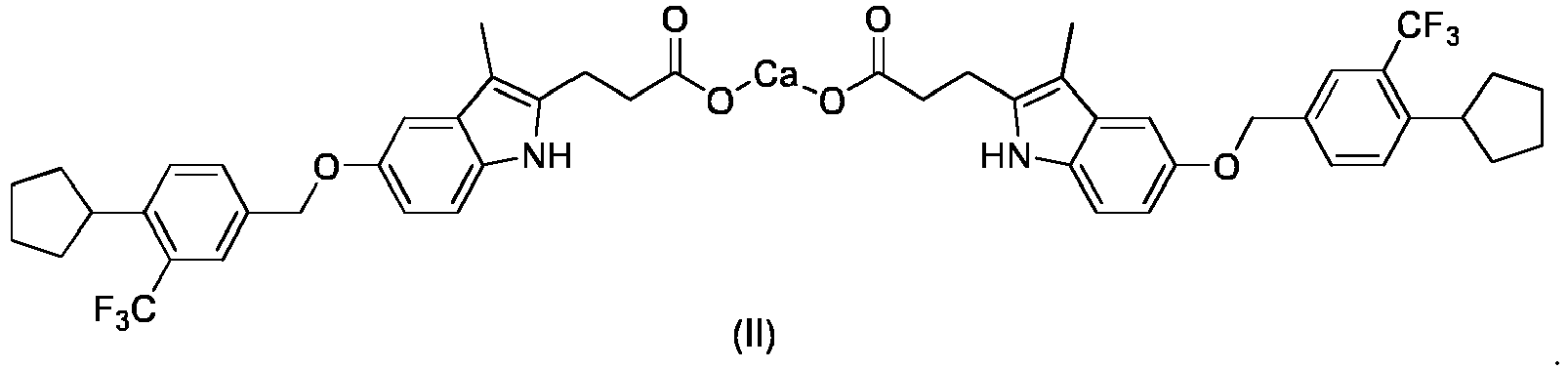
- A crystal form G of a compound of formula (II), wherein the crystal form G has an X-ray powder diffraction pattern comprising characteristic peaks at the following 2θ angles: 8.98 ± 0.2°, 10.12 ± 0.2°, 13.56 ± 0.2°, 14.66 ± 0.2°, 15.22 ± 0.2°, 18.48 ± 0.2°.
- The crystal form G according to claim 3, wherein the X-ray powder diffraction pattern of the crystal form G comprises characteristic peaks at the following 2Θ angles: 8.98 ± 0.2°, 10.12 ± 0.2°, 13.56 ± 0.2°, 14.66 ± 0.2°, 15.22 ± 0.2°, 16.34 ± 0.2°, 16.92 ± 0.2°, 18.48 ± 0.2°, 22.67 ± 0.2°, 23.06 ± 0.2°.
- The crystal form G according to claim 3 or 4, wherein the X-ray powder diffraction pattern of the crystal form G is an X-ray powder diffraction pattern basically as shown in Fig. 7.
- The crystal form G according to claim 3 or 4, wherein the crystal form G further comprises water and a solvent;
whereinthe solvent is selected from ethanol and isopropanol;the content of the solvent ranges from 0.1% to 6.0%;the content of water ranges from 0.1% to 4.0%. - A method for preparing a crystal form G, comprising: dissolving a compound of formula (I) in a sodium ethoxide solution, followed by stirring in the presence of calcium chloride, filtering, and drying under reduced pressure to obtain the crystal form G.
- A pharmaceutical composition, comprising the calcium salt according to claim 1 or 2, or the crystal form G according to any one of claims 3 to 6.
- A use of the calcium salt according to claim 1 or 2, the crystal form G according to any one of claims 3 to 6, or the pharmaceutical composition according to claim 8 in the manufacture of a medicament for an S1P1 receptor-related disease.
- The use according to claim 9, wherein the S1P1 receptor-related disease is selected from ulcerative colitis, Crohn's disease, multiple sclerosis, systemic lupus erythematosus, lupus nephritis, rheumatoid arthritis, primary biliary cholangitis, atopic dermatitis, intracerebral hemorrhage, graft-versus-host disease, psoriasis, type I diabetes, acne, microbial infections or microbial diseases, and viral infections or viral diseases.
Applications Claiming Priority (2)
| Application Number | Priority Date | Filing Date | Title |
|---|---|---|---|
| CN202111555458 | 2021-12-17 | ||
| PCT/CN2022/139461 WO2023109931A1 (en) | 2021-12-17 | 2022-12-16 | Crystalline form of aromatic ring derivative, and preparation method therefor and application thereof |
Publications (2)
| Publication Number | Publication Date |
|---|---|
| EP4450488A1 true EP4450488A1 (en) | 2024-10-23 |
| EP4450488A4 EP4450488A4 (en) | 2025-03-26 |
Family
ID=86774882
Family Applications (1)
| Application Number | Title | Priority Date | Filing Date |
|---|---|---|---|
| EP22906676.6A Pending EP4450488A4 (en) | 2021-12-17 | 2022-12-16 | Crystalline form of aromatic ring derivative, and preparation method therefor and application thereof |
Country Status (6)
| Country | Link |
|---|---|
| US (1) | US20250051281A1 (en) |
| EP (1) | EP4450488A4 (en) |
| JP (1) | JP7727855B2 (en) |
| CN (1) | CN118382615A (en) |
| TW (1) | TW202327577A (en) |
| WO (1) | WO2023109931A1 (en) |
Family Cites Families (3)
| Publication number | Priority date | Publication date | Assignee | Title |
|---|---|---|---|---|
| JP2007262009A (en) * | 2006-03-29 | 2007-10-11 | Dai Ichi Seiyaku Co Ltd | Heteroaryl lower carboxylic acid derivative |
| CN104311472B9 (en) * | 2008-07-23 | 2020-03-17 | 艾尼纳制药公司 | Substituted 1,2,3, 4-tetrahydrocyclopenta [ b ] indol-3-yl acetic acid derivatives |
| WO2020114475A1 (en) * | 2018-12-06 | 2020-06-11 | 上海济煜医药科技有限公司 | Aromatic ring derivative as immunoregulation and preparation method and application of aromatic ring derivative |
-
2022
- 2022-12-16 TW TW111148589A patent/TW202327577A/en unknown
- 2022-12-16 US US18/720,635 patent/US20250051281A1/en active Pending
- 2022-12-16 CN CN202280083100.8A patent/CN118382615A/en active Pending
- 2022-12-16 JP JP2024535944A patent/JP7727855B2/en active Active
- 2022-12-16 EP EP22906676.6A patent/EP4450488A4/en active Pending
- 2022-12-16 WO PCT/CN2022/139461 patent/WO2023109931A1/en not_active Ceased
Also Published As
| Publication number | Publication date |
|---|---|
| US20250051281A1 (en) | 2025-02-13 |
| JP7727855B2 (en) | 2025-08-21 |
| WO2023109931A1 (en) | 2023-06-22 |
| EP4450488A4 (en) | 2025-03-26 |
| CN118382615A (en) | 2024-07-23 |
| TW202327577A (en) | 2023-07-16 |
| JP2024544717A (en) | 2024-12-03 |
Similar Documents
| Publication | Publication Date | Title |
|---|---|---|
| EP3710465B1 (en) | Salts and crystal forms of gabaa positive allosteric modulator | |
| CN110494423B (en) | Novel crystal form of lenvatinib mesylate and preparation method thereof | |
| AU2017373239B2 (en) | Crystalline forms of a bromodomain and extraterminal protein inhibitor drug, processes for preparation thereof, and use thereof | |
| AU2020328534A1 (en) | Salt and crystal forms of an activin receptor-like kinase inhibitor | |
| EP3247711B1 (en) | Novel salts and polymorphs of scy-078 | |
| CN115974863B (en) | Malic acid salt of Xanomeline derivative, crystal form A, and preparation method and use thereof | |
| CN117736176A (en) | Pharmaceutically acceptable salts of androgen receptor antagonists and polymorphs thereof, methods of preparation and use | |
| US20250051281A1 (en) | Crystalline form of aromatic ring derivative, and preparation method therefor and application thereof | |
| EP4630418B1 (en) | Salts of 2-bromolysergic acid diethylamide | |
| EP4134369B1 (en) | Solid forms of tetrahydropyranyl amino-pyrrolopyrimidinone compounds | |
| CN117327066A (en) | Novel polymorphic form, preparation method thereof and application of novel polymorphic form in preparation of medicines | |
| CA2596754C (en) | Crystalline 1h-imidazo[4,5-b]pyridin-5-amine,7-[5-[(cyclohexylmethylamino)-methyl]-1h-indol-2-yl]-2-methyl, sulfate (1:1), trihydrate and its uses for the treatment of inflammatory, autoimmune and proliferative diseases and disorders | |
| US20250059202A1 (en) | Crystal form of fused ring derivative, and preparation method therefor and use thereof | |
| HK40118203A (en) | Salts and crystal forms of gabaa positive allosteric modulator | |
| WO2024255833A1 (en) | Co-crystal of pyridine oxynitride and fumaric acid, composition comprising same, use thereof and preparation method therefor | |
| EP4230625A1 (en) | Crystal form of multi-substituted benzene ring compound maleate, and preparation method therefor and use thereof | |
| HK40037178B (en) | Salts and crystal forms of gabaa positive allosteric modulator | |
| HK40037178A (en) | Salts and crystal forms of gabaa positive allosteric modulator | |
| WO2024172778A1 (en) | Novel polymorph of ruxolitinib hemifumarate and method of preparation | |
| WO2025160320A1 (en) | Crystalline forms of 3-(5-(2-hydroxy-2-methylpropoxy)-6-methylpyrazin-2-yl)-1h-indole-7-carbonitrile | |
| JP2023532217A (en) | Crystal forms of SHP2 inhibitors, compositions thereof, methods of preparation and applications thereof | |
| HK1247196B (en) | Novel salts and polymorphs of scy-078 | |
| WO2018209667A1 (en) | Crystal form of polycyclic heterocyclic compound, preparation method therefor, applications thereof and composition thereof |
Legal Events
| Date | Code | Title | Description |
|---|---|---|---|
| STAA | Information on the status of an ep patent application or granted ep patent |
Free format text: STATUS: THE INTERNATIONAL PUBLICATION HAS BEEN MADE |
|
| PUAI | Public reference made under article 153(3) epc to a published international application that has entered the european phase |
Free format text: ORIGINAL CODE: 0009012 |
|
| STAA | Information on the status of an ep patent application or granted ep patent |
Free format text: STATUS: REQUEST FOR EXAMINATION WAS MADE |
|
| 17P | Request for examination filed |
Effective date: 20240712 |
|
| AK | Designated contracting states |
Kind code of ref document: A1 Designated state(s): AL AT BE BG CH CY CZ DE DK EE ES FI FR GB GR HR HU IE IS IT LI LT LU LV MC ME MK MT NL NO PL PT RO RS SE SI SK SM TR |
|
| A4 | Supplementary search report drawn up and despatched |
Effective date: 20250220 |
|
| DAV | Request for validation of the european patent (deleted) | ||
| DAX | Request for extension of the european patent (deleted) | ||
| RIC1 | Information provided on ipc code assigned before grant |
Ipc: A61P 37/00 20060101ALI20250214BHEP Ipc: A61P 31/00 20060101ALI20250214BHEP Ipc: A61P 17/06 20060101ALI20250214BHEP Ipc: A61K 31/405 20060101ALI20250214BHEP Ipc: C07D 209/18 20060101AFI20250214BHEP |
|
| RAP3 | Party data changed (applicant data changed or rights of an application transferred) |
Owner name: SHANGHAI JEYOU PHARMACEUTICAL CO., LTD. |