EP4446419A1 - Recombinant adeno-associated virus vector for treatment of iron-accumulating neurodegenerative diseases - Google Patents
Recombinant adeno-associated virus vector for treatment of iron-accumulating neurodegenerative diseases Download PDFInfo
- Publication number
- EP4446419A1 EP4446419A1 EP22904189.2A EP22904189A EP4446419A1 EP 4446419 A1 EP4446419 A1 EP 4446419A1 EP 22904189 A EP22904189 A EP 22904189A EP 4446419 A1 EP4446419 A1 EP 4446419A1
- Authority
- EP
- European Patent Office
- Prior art keywords
- amino acid
- iron
- promoter
- sequence
- associated virus
- Prior art date
- Legal status (The legal status is an assumption and is not a legal conclusion. Google has not performed a legal analysis and makes no representation as to the accuracy of the status listed.)
- Pending
Links
Images


Classifications
-
- A—HUMAN NECESSITIES
- A61—MEDICAL OR VETERINARY SCIENCE; HYGIENE
- A61K—PREPARATIONS FOR MEDICAL, DENTAL OR TOILETRY PURPOSES
- A61K48/00—Medicinal preparations containing genetic material which is inserted into cells of the living body to treat genetic diseases; Gene therapy
- A61K48/005—Medicinal preparations containing genetic material which is inserted into cells of the living body to treat genetic diseases; Gene therapy characterised by an aspect of the 'active' part of the composition delivered, i.e. the nucleic acid delivered
-
- A—HUMAN NECESSITIES
- A61—MEDICAL OR VETERINARY SCIENCE; HYGIENE
- A61K—PREPARATIONS FOR MEDICAL, DENTAL OR TOILETRY PURPOSES
- A61K38/00—Medicinal preparations containing peptides
- A61K38/16—Peptides having more than 20 amino acids; Gastrins; Somatostatins; Melanotropins; Derivatives thereof
- A61K38/17—Peptides having more than 20 amino acids; Gastrins; Somatostatins; Melanotropins; Derivatives thereof from animals; from humans
- A61K38/1703—Peptides having more than 20 amino acids; Gastrins; Somatostatins; Melanotropins; Derivatives thereof from animals; from humans from vertebrates
- A61K38/1709—Peptides having more than 20 amino acids; Gastrins; Somatostatins; Melanotropins; Derivatives thereof from animals; from humans from vertebrates from mammals
-
- A—HUMAN NECESSITIES
- A61—MEDICAL OR VETERINARY SCIENCE; HYGIENE
- A61K—PREPARATIONS FOR MEDICAL, DENTAL OR TOILETRY PURPOSES
- A61K48/00—Medicinal preparations containing genetic material which is inserted into cells of the living body to treat genetic diseases; Gene therapy
- A61K48/0075—Medicinal preparations containing genetic material which is inserted into cells of the living body to treat genetic diseases; Gene therapy characterised by an aspect of the delivery route, e.g. oral, subcutaneous
-
- A—HUMAN NECESSITIES
- A61—MEDICAL OR VETERINARY SCIENCE; HYGIENE
- A61P—SPECIFIC THERAPEUTIC ACTIVITY OF CHEMICAL COMPOUNDS OR MEDICINAL PREPARATIONS
- A61P25/00—Drugs for disorders of the nervous system
- A61P25/28—Drugs for disorders of the nervous system for treating neurodegenerative disorders of the central nervous system, e.g. nootropic agents, cognition enhancers, drugs for treating Alzheimer's disease or other forms of dementia
-
- C—CHEMISTRY; METALLURGY
- C07—ORGANIC CHEMISTRY
- C07K—PEPTIDES
- C07K14/00—Peptides having more than 20 amino acids; Gastrins; Somatostatins; Melanotropins; Derivatives thereof
- C07K14/005—Peptides having more than 20 amino acids; Gastrins; Somatostatins; Melanotropins; Derivatives thereof from viruses
-
- C—CHEMISTRY; METALLURGY
- C12—BIOCHEMISTRY; BEER; SPIRITS; WINE; VINEGAR; MICROBIOLOGY; ENZYMOLOGY; MUTATION OR GENETIC ENGINEERING
- C12N—MICROORGANISMS OR ENZYMES; COMPOSITIONS THEREOF; PROPAGATING, PRESERVING, OR MAINTAINING MICROORGANISMS; MUTATION OR GENETIC ENGINEERING; CULTURE MEDIA
- C12N15/00—Mutation or genetic engineering; DNA or RNA concerning genetic engineering, vectors, e.g. plasmids, or their isolation, preparation or purification; Use of hosts therefor
- C12N15/09—Recombinant DNA-technology
- C12N15/63—Introduction of foreign genetic material using vectors; Vectors; Use of hosts therefor; Regulation of expression
- C12N15/79—Vectors or expression systems specially adapted for eukaryotic hosts
- C12N15/85—Vectors or expression systems specially adapted for eukaryotic hosts for animal cells
- C12N15/86—Viral vectors
-
- C—CHEMISTRY; METALLURGY
- C12—BIOCHEMISTRY; BEER; SPIRITS; WINE; VINEGAR; MICROBIOLOGY; ENZYMOLOGY; MUTATION OR GENETIC ENGINEERING
- C12Q—MEASURING OR TESTING PROCESSES INVOLVING ENZYMES, NUCLEIC ACIDS OR MICROORGANISMS; COMPOSITIONS OR TEST PAPERS THEREFOR; PROCESSES OF PREPARING SUCH COMPOSITIONS; CONDITION-RESPONSIVE CONTROL IN MICROBIOLOGICAL OR ENZYMOLOGICAL PROCESSES
- C12Q1/00—Measuring or testing processes involving enzymes, nucleic acids or microorganisms; Compositions therefor; Processes of preparing such compositions
- C12Q1/68—Measuring or testing processes involving enzymes, nucleic acids or microorganisms; Compositions therefor; Processes of preparing such compositions involving nucleic acids
- C12Q1/6809—Methods for determination or identification of nucleic acids involving differential detection
-
- C—CHEMISTRY; METALLURGY
- C12—BIOCHEMISTRY; BEER; SPIRITS; WINE; VINEGAR; MICROBIOLOGY; ENZYMOLOGY; MUTATION OR GENETIC ENGINEERING
- C12Q—MEASURING OR TESTING PROCESSES INVOLVING ENZYMES, NUCLEIC ACIDS OR MICROORGANISMS; COMPOSITIONS OR TEST PAPERS THEREFOR; PROCESSES OF PREPARING SUCH COMPOSITIONS; CONDITION-RESPONSIVE CONTROL IN MICROBIOLOGICAL OR ENZYMOLOGICAL PROCESSES
- C12Q1/00—Measuring or testing processes involving enzymes, nucleic acids or microorganisms; Compositions therefor; Processes of preparing such compositions
- C12Q1/68—Measuring or testing processes involving enzymes, nucleic acids or microorganisms; Compositions therefor; Processes of preparing such compositions involving nucleic acids
- C12Q1/6844—Nucleic acid amplification reactions
- C12Q1/686—Polymerase chain reaction [PCR]
-
- G—PHYSICS
- G01—MEASURING; TESTING
- G01N—INVESTIGATING OR ANALYSING MATERIALS BY DETERMINING THEIR CHEMICAL OR PHYSICAL PROPERTIES
- G01N33/00—Investigating or analysing materials by specific methods not covered by groups G01N1/00 - G01N31/00
- G01N33/48—Biological material, e.g. blood, urine; Haemocytometers
- G01N33/50—Chemical analysis of biological material, e.g. blood, urine; Testing involving biospecific ligand binding methods; Immunological testing
- G01N33/5005—Chemical analysis of biological material, e.g. blood, urine; Testing involving biospecific ligand binding methods; Immunological testing involving human or animal cells
-
- G—PHYSICS
- G01—MEASURING; TESTING
- G01N—INVESTIGATING OR ANALYSING MATERIALS BY DETERMINING THEIR CHEMICAL OR PHYSICAL PROPERTIES
- G01N33/00—Investigating or analysing materials by specific methods not covered by groups G01N1/00 - G01N31/00
- G01N33/48—Biological material, e.g. blood, urine; Haemocytometers
- G01N33/50—Chemical analysis of biological material, e.g. blood, urine; Testing involving biospecific ligand binding methods; Immunological testing
- G01N33/68—Chemical analysis of biological material, e.g. blood, urine; Testing involving biospecific ligand binding methods; Immunological testing involving proteins, peptides or amino acids
-
- A—HUMAN NECESSITIES
- A61—MEDICAL OR VETERINARY SCIENCE; HYGIENE
- A61K—PREPARATIONS FOR MEDICAL, DENTAL OR TOILETRY PURPOSES
- A61K35/00—Medicinal preparations containing materials or reaction products thereof with undetermined constitution
- A61K35/66—Microorganisms or materials therefrom
- A61K35/76—Viruses; Subviral particles; Bacteriophages
-
- C—CHEMISTRY; METALLURGY
- C12—BIOCHEMISTRY; BEER; SPIRITS; WINE; VINEGAR; MICROBIOLOGY; ENZYMOLOGY; MUTATION OR GENETIC ENGINEERING
- C12N—MICROORGANISMS OR ENZYMES; COMPOSITIONS THEREOF; PROPAGATING, PRESERVING, OR MAINTAINING MICROORGANISMS; MUTATION OR GENETIC ENGINEERING; CULTURE MEDIA
- C12N2750/00—MICROORGANISMS OR ENZYMES; COMPOSITIONS THEREOF; PROPAGATING, PRESERVING, OR MAINTAINING MICROORGANISMS; MUTATION OR GENETIC ENGINEERING; CULTURE MEDIA ssDNA viruses
- C12N2750/00011—Details
- C12N2750/14011—Parvoviridae
- C12N2750/14111—Dependovirus, e.g. adenoassociated viruses
- C12N2750/14122—New viral proteins or individual genes, new structural or functional aspects of known viral proteins or genes
-
- C—CHEMISTRY; METALLURGY
- C12—BIOCHEMISTRY; BEER; SPIRITS; WINE; VINEGAR; MICROBIOLOGY; ENZYMOLOGY; MUTATION OR GENETIC ENGINEERING
- C12N—MICROORGANISMS OR ENZYMES; COMPOSITIONS THEREOF; PROPAGATING, PRESERVING, OR MAINTAINING MICROORGANISMS; MUTATION OR GENETIC ENGINEERING; CULTURE MEDIA
- C12N2750/00—MICROORGANISMS OR ENZYMES; COMPOSITIONS THEREOF; PROPAGATING, PRESERVING, OR MAINTAINING MICROORGANISMS; MUTATION OR GENETIC ENGINEERING; CULTURE MEDIA ssDNA viruses
- C12N2750/00011—Details
- C12N2750/14011—Parvoviridae
- C12N2750/14111—Dependovirus, e.g. adenoassociated viruses
- C12N2750/14141—Use of virus, viral particle or viral elements as a vector
- C12N2750/14143—Use of virus, viral particle or viral elements as a vector viral genome or elements thereof as genetic vector
-
- C—CHEMISTRY; METALLURGY
- C12—BIOCHEMISTRY; BEER; SPIRITS; WINE; VINEGAR; MICROBIOLOGY; ENZYMOLOGY; MUTATION OR GENETIC ENGINEERING
- C12N—MICROORGANISMS OR ENZYMES; COMPOSITIONS THEREOF; PROPAGATING, PRESERVING, OR MAINTAINING MICROORGANISMS; MUTATION OR GENETIC ENGINEERING; CULTURE MEDIA
- C12N2830/00—Vector systems having a special element relevant for transcription
- C12N2830/48—Vector systems having a special element relevant for transcription regulating transport or export of RNA, e.g. RRE, PRE, WPRE, CTE
-
- C—CHEMISTRY; METALLURGY
- C12—BIOCHEMISTRY; BEER; SPIRITS; WINE; VINEGAR; MICROBIOLOGY; ENZYMOLOGY; MUTATION OR GENETIC ENGINEERING
- C12Q—MEASURING OR TESTING PROCESSES INVOLVING ENZYMES, NUCLEIC ACIDS OR MICROORGANISMS; COMPOSITIONS OR TEST PAPERS THEREFOR; PROCESSES OF PREPARING SUCH COMPOSITIONS; CONDITION-RESPONSIVE CONTROL IN MICROBIOLOGICAL OR ENZYMOLOGICAL PROCESSES
- C12Q2600/00—Oligonucleotides characterized by their use
- C12Q2600/158—Expression markers
-
- G—PHYSICS
- G01—MEASURING; TESTING
- G01N—INVESTIGATING OR ANALYSING MATERIALS BY DETERMINING THEIR CHEMICAL OR PHYSICAL PROPERTIES
- G01N2333/00—Assays involving biological materials from specific organisms or of a specific nature
- G01N2333/435—Assays involving biological materials from specific organisms or of a specific nature from animals; from humans
- G01N2333/46—Assays involving biological materials from specific organisms or of a specific nature from animals; from humans from vertebrates
- G01N2333/47—Assays involving proteins of known structure or function as defined in the subgroups
- G01N2333/4701—Details
- G01N2333/4703—Regulators; Modulating activity
Definitions
- the present invention relates to a gene recombinant adeno-associated virus (rAAV) vector for treating iron metabolic disorders in the central nervous system, a pharmaceutical composition comprising the same, and the like.
- rAAV adeno-associated virus
- a neurodegenerative disease with brain iron accumulation is a progressive disease characterized by iron accumulation primarily in the basal ganglia, resulting in intellectual disability and motor dysfunction beginning in infancy or adulthood. In addition, this disease is characterized by dystonia or Parkinson-like symptoms, and intellectual regression.
- SENDA/BPAN static encephalopathy of childhood with neurodegeneration in adulthood/Beta-propeller protein-associated neurodegeneration
- NBIA brain iron accumulation
- SENDA brain iron accumulation
- WDR45 WDR45 gene
- WIPI4 WDR45
- the inventors of the present application further analyzed the expression of various molecules involved in iron metabolism in detail using cells derived from patients with SENDA/BPAN and it was found, commonly in the patients' cells, that iron components in the form of ferritin were accumulated, that the expression level of NCOA4, which is essential for iron metabolism, was greatly reduced, and that this reduction in the expression level of NCOA4 was a factor in the iron accumulation in the cells in the central nervous system.
- the present inventors further found that intracellular ferritin degradation was suppressed when NCOA4 was reduced or disappeared, and that this was a factor in the intracellular iron accumulation of this disease.
- the WDR45 gene was actually expressed in patient-derived cells using an AAV vector to restore the expression level of NCOA4 in the cells and thus correct ferritin accumulation, and thereby the present invention has been achieved.
- the present application provides, for example, an adeno-associated virus vector, a pharmaceutical composition comprising the same, and the like described below.
- a vector according to the present invention can provide a therapeutic means useful for an iron-accumulating neurodegenerative disease by regulating iron metabolism in the central nervous system.
- the method of the present invention may also be used to diagnose patients at risk for an iron-accumulating neurodegenerative disease or patients with such a disease.
- the present application provides an rAAV vector for treating an iron-accumulating neurodegenerative disease by restoring iron metabolism to normal level in the central nervous system of an organism to inhibit iron accumulation.
- the iron content is generally said to be about 60 mg in the adult brain.
- extrapyramidal systems including the globus pallidus, red nucleus, substantia nigra, and putamen contain more iron contents.
- the iron content is high in the oligodendrocytes, followed by the neurons and microglia, and low in the astrocytes.
- the iron content in the brain generally increases with age ( Clinical Neurology 2012; 52: 943-946 ).
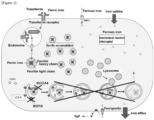
- Iron in the brain is varied. Iron is also contained in the iron-sulfur centers of complexes I-III and cytochromes, which are major components of the mitochondrial electron-transfer system. Iron, in the form of an iron-containing enzyme (or coenzyme), is also involved in maintenance of TCA cycle functions, myelin formation, nucleic acid biosynthesis, and biosynthesis and metabolism of various neurotransmitters.
- ferrous iron ions in the free state and ferric iron ions in the form of holotransferrin bound to an apotransferrin protein or in other form are transported to various sites in the organism.
- Holotransferrin in blood can be taken up into the cell via transferrin receptor on the cell membrane.
- Ferrous iron ions can be taken up via DMT1 on the cell membrane.
- ferric iron accumulate in ferritin particles in the cell.
- Ferritin is composed of 24 subunits, which contain two types of proteins, a heavy chain of about 21 kDa and a light chain of about 19 kDa.
- the ferritin heavy chain oxidizes ferrous iron to less reactive and less toxic ferric iron, and the ferric iron is stored in the ferritin light chain ( Biasiotto G, et al., Mol Neurobiol. 2016 Oct; 53(8): 5542-74 ; Yutaka Kohgo, Takaaki Otake, The Japanese Journal of Surgical Metabolism and Nutrition 2015; 49. 59-65 ; Kazuhiro Iwai, Ryo Ueta, The Journal of Japanese Biochemical Society 79, 1021-1031, 2007 ). Ferric iron accumulated in ferritin undergo lysosomal uptake and others.
- ferrous iron can be taken up from outside the cell or can arise from ferric iron during endosomal degradation or are released by ferritin degradation by lysosomes within the cell. This ferrous iron is taken up by mitochondria and plays a role in reduction/oxidation reactions, etc., or is transported to the endoplasmic reticulum.
- Iron that is not utilized in the neuron is either stored as ferritin iron in the cell or effluxed from the cell via ferroportin.
- the effluxed iron binds apotransferrin and travels through the blood in the form of holotransferrin.
- NBIA Neurodegenerative diseases
- Common neurological syndromes of the diseases include progressive dystonia, ataxia, and parkinsonism, with specific symptoms including gait disturbance, dysarthria, and cognitive impairment (Non-patent literature 2).
- NBIA can be classified into two major categories. One is diseases related to iron efflux from the inside to the outside of the cell, iron storage, and the like, and the other is diseases related to lipid metabolism, energy production, and autophagy in neurons.
- the process of autophagy involves a step in which a phagophore that appears in the cytoplasm engulfs cytoplasmic materials to form a vesicle (autophagosome), and a step in which the formed autophagosome fuses with a lysosome to degrade the engulfed cytoplasmic materials.
- autophagosomal membrane involves a variety of membrane components derived from the endoplasmic reticulum, mitochondria, Golgi apparatus, plasma membrane, and even recycling endosome, and their formation and the degradation of their contents are regulated by Agt protein encoded by an autophagy-related gene (ATG) and the like ( The Journal of Japanese Biochemical Society 2018; Vol. 90, No. 3: 272-278 ).
- SENDA is an example of the autophagy-related neurodegenerative diseases included in NBIA.
- the pathophysiology of SENDA includes non-progressive intellectual disability beginning in childhood, as well as dystonia, Parkinson-like symptoms, and dementia that progress rapidly in adulthood. Iron accumulation in the substantia nigra and globus pallidus in the brain as well as cerebral atrophy are observed in SENDA patients.
- the treatment of SENDA include use of a dopamine formulation and intrathecal baclofen therapy (ITB therapy). However, a highly effective treatment has not been established (Non-patent literature 2).
- a lymphoblastoid cell line from a patient with SENDA showed significantly decreased WDR45 expression, decreased autophagy activity, and impaired autophagosome formation.
- Human WDR45 (WR repeat-containing protein 45) (also referred to herein as "WIPI4") encoded by the gene is a protein that has multiple isoforms, for example, in the case of human, isoform 1 with 361 amino acid residues (GenBank: NP_009006.2) and isoform 2 with 360 amino acid residues (GenBank: NP_001025067.1). WDR45 is one of four human homologs (WIPI1-WIPI4) of the budding yeast autophagy-related gene ATG18.
- ATG18 As a more detailed function of ATG18 in budding yeast, it is thought to be involved in the process of autophagosome formation in the cell by binding to intracellularly generated phosphatidylinositol 3-phosphate (PI3P) ( Ryo-iki Yugo Review (Reviews in Fused Fields) by Leading Author's 2014; 3, e006, 1-11 ). It was later reported that it is involved, along with ATG2, in supplying lipids such as phospholipids for the formation of phagophore from the endoplasmic reticulum ( Osawa T. et al., Nat Struct Mol Biol 26, 281-288 (2019 )).
- P3P phosphatidylinositol 3-phosphate
- WDR45 examples include GenBank accession number NM_007075.4.
- the amino acid sequences of human WDR45 used in the present invention are represented by SEQ ID NO: 1 (isoform 1) and SEQ ID NO: 2 (isoform 2) (in which the first methionine residues are excluded).
- WDR45 can be detected by a means known in the art, such as Western blotting using anti-WDR45 antibody (Cat# 19194-1-AP) provided by Proteintech, or RT-PCR using primers appropriately designed based on the coding sequence.
- a means known in the art such as Western blotting using anti-WDR45 antibody (Cat# 19194-1-AP) provided by Proteintech, or RT-PCR using primers appropriately designed based on the coding sequence.
- NCOA4 Nuclear receptor coactivator 4
- NCOA4 functions as a coactivator of nuclear receptors (androgen receptor, estrogen receptor, glucocorticoid receptor, etc.) ( Kollara, A. et al., (2010), J.
- NCOA4 A more specific role of NCOA4 in the intracellular iron transport is as follows. Ferritin is engulfed by a phagophore by binding to NCOA4. The phagophore closes to form an autophagosome, and when a lysosome fuses with it, it becomes an autolysosome. When the contents are degraded by hydrolase in the lysosome, the ferric iron encapsulated in ferritin is reduced to ferrous iron and released into the cytoplasm. This ferrous iron is taken up by the intracellular organelles and used for various cellular activities.
- NCOA4 Overexpression of the NCOA4 in cells has been reported to promote ferroptosis and cause cell death ( Hou, W., et al., AUTOPHAGY 2016, VOL. 12, NO. 8, 1425-1428 ). Therefore, an optimal NCOA4 expression level is considered to be important for normal intracellular iron metabolism, and appropriate gene transfer of the NCOA4 gene is expected to enable the establishment of a treatment for iron-accumulating neurodegeneration.
- NOCA4 protein can be detected directly by immunostaining such as Western blotting using a commercially available antibody such as anti-ARA70 antibody (#Cat no. A302-272A) provided by Bethyl Laboratories, or can be detected indirectly by RT-PCR (or quantitative RT-PCR (qRT-PCR)), or the like.
- immunostaining such as Western blotting using a commercially available antibody such as anti-ARA70 antibody (#Cat no. A302-272A) provided by Bethyl Laboratories, or can be detected indirectly by RT-PCR (or quantitative RT-PCR (qRT-PCR)), or the like.
- Heterologous sequences corresponding to the human sequences represented by SEQ ID NOs: 1-6 above can also be used as the amino acid sequence of the protein to be expressed by the vector of the present invention.
- Examples of such amino acid sequences include those derived from mammals such as mice, rats, monkeys, dogs, pigs, cows, and horses.
- a vector according to the present invention contains a polynucleotide encoding the amino acid sequence represented by SEQ ID NO: 1 or SEQ ID NO: 2, and optionally a polynucleotide encoding any of the amino acid sequences represented by SEQ ID NOs: 3-6 or its corresponding amino acid sequence derived from a non-human animal which has about 90% or more identity to said sequence.
- a vector of the present invention contains a polynucleotide encoding the amino acid sequence represented by SEQ ID NO: 1 or SEQ ID NO: 2, and optionally a polynucleotide encoding any of the amino acid sequences represented by SEQ ID NOs: 3-6.
- the protein used in the present invention also includes proteins which have an amino acid sequence with about 85% or more, about 90% or more, 91% or more, 92% or more, 93% or more, 94% or more, 95% or more, 96% or more, 97% or more, 98% or more, 99% or more, 99.1% or more, 99.2% or more, 99.3% or more, 99.4% or more, 99.5% or more, 99.6% or more, 99.7% or more, 99.8% or more, and 99.9% or more identity to any of the amino acid sequences represented by SEQ ID NOs: 1-6, and which have the same function as the original protein under a physiological condition. In general, the higher the value above, the better.
- a protein with the above identity has the same function as the original protein, it will preferably function to the same extent.
- “function to the same extent” means that the specific activity is in the range of, for example, but not limited to, about 0.01-100, preferably about 0.5-20, and more preferably about 0.5-2 under a physiological condition.
- the protein used in the present invention includes proteins which contain an amino acid sequence in which one or more amino acids are deleted, substituted, inserted and/or added in any of the amino acid sequences represented by SEQ ID NOS: 1-6 or in an amino acid sequence having the above identity, and which have the same function as the original protein under a physiological condition. Two or more of the above-mentioned amino acid deletions, substitutions, insertions, and additions may occur simultaneously.
- proteins include, for example, proteins which contain an amino acid sequence in which 1-50, 1-40, 1-39, 1-38, 1-37, 1-36, 1-35, 1-34, 1-33, 1-32, 1-31, 1-30, 1-29, 1-28, 1-27, 1-26, 1-25, 1-24, 1-23, 1-22, 1-21, 1-20, 1-19, 1-18, 1-17, 1-16, 1-15, 1-14, 1-13, 1-12, 1-11, 1-10, 1-9 (one to several), 1-8, 1-7, 1-6, 1-5, 1-4, 1-3, 1-2, or 1 amino acid residue in the amino acid sequence represented by SEQ ID NO: 1 or SEQ ID NO: 2 is deleted, substituted, inserted and/or added, and which have the original function under a physiological condition.
- the smaller the number of the above-mentioned amino acid residues deleted, substituted, inserted and/or added the better.
- amino acid residues which are replaceable with each other in the protein (polypeptide) of the present invention are listed below. Amino acid residues belonging to the same group are replaceable with each other.
- a protein having a substituted amino acid residue can be prepared according to a method known to those skilled in the art, such as a common genetic engineering technique.
- a genetic engineering procedure refer to, for example, Molecular Cloning 3rd Edition, J. Sambrook et al., Cold Spring Harbor Lab. Press. 2001 , Current Protocols in Molecular Biology, John Wiley and Sons 1987-1997 , and the like.
- examples of the preferred polynucleotide used in the present invention include polynucleotides which have one or more (e.g., 1-50, 1-40, 1-30, 1-25, 1-20, 1-15, 1-10, 1-9 (one to several), 1-8, 1-7, 1-6, 1-5, 1-4, 1-3, 1-2, 1, etc.) nucleotides deleted, substituted, inserted, and/or added in a polynucleotide sequence encoding any of the amino acid sequences represented by SEQ ID NOs: 1-6, and which encode a protein containing any of the amino acid sequences represented by SEQ ID NOs: 1-6 or which encode a protein containing an amino acid sequence in which one or more of the above-mentioned amino acids in any of the amino acid sequences represented by SEQ ID NOs: 1-6 are deleted, substituted, inserted, and/or added and having the same function as the original protein.
- one or more e.g., 1-50, 1-40, 1-30, 1-25, 1
- a preferred polynucleotide according to the present invention is, for example, a polynucleotide which can hybridize with a complementary sequence of a polynucleotide encoding any of the amino acid sequences represented by SEQ ID NOs: 1-6 under a stringent hybridization condition, and which encodes any of the amino acid sequences represented by SEQ ID NOs: 1-6 or which encodes a protein containing an amino acid sequence having one or more of the above-mentioned amino acids for deletion, substitution, insertion, and/or addition in any of the amino acid sequences represented by SEQ ID NOs: 1-6 and having the same function as the original (wild-type) protein, preferably a protein that functions to the same extent as described above.
- Hybridization can be carried out according to a known method or a method corresponding thereto, for example, according to a method described in Molecular Cloning ( Molecular Cloning 3rd Edition, J. Sambrook et al., Cold Spring Harbor Lab. Press. 2001 ). In a case of using a commercially available library, hybridization can be performed according to, for example, the method described in the instructions provided by the manufacturer.
- a "stringent condition” may be any of low, moderate or high stringent conditions.
- the "low stringent condition” refers to conditions of, for example, 5x SSC, 5x Denhardt's solution, 0.5% SDS, and 50% formamide at 32°C.
- the “moderate stringent condition” refers to conditions of, for example, 5x SSC, 5x Denhardt's solution, 0.5% SDS, and 50% formamide at 42°C.
- the “high stringent condition” refers to conditions of, for example, 5x SSC, 5x Denhardt's solution, 0.5% SDS, and 50% formamide at 50°C. Under these conditions, the higher the temperature, the more efficiently DNA with higher homology can be expected to be obtained. Note that multiple factors including the temperature, the probe concentration, the probe length, the ionic strength, the time, the salt concentration, and the like are considered to affect the stringency of hybridization, while those skilled in the art can appropriately select these factors to achieve similar stringency.
- hybridizable polynucleotides include polynucleotides having, for example, 70% or more, 80% or more, 90% or more, 91% or more, 92% or more, 93% or more, 94% or more, 95% or more, 96% or more, 97% or more, 98% or more, 99% or more, 99.1% or more, 99.2% or more, 99.3% or more, 99.4% or more, 99.5% or more, 99.6% or more, 99.7% or more, 99.8% or more, or 99.9% or more identity to a polynucleotide sequence encoding any of the amino acid sequences represented by SEQ ID NOs: 1-6, as calculated by a homology search software such as FASTA and BLAST using default parameters. In general, the higher the homology mentioned above, the better.
- the identity or the homology of the amino acid sequence or the polynucleotide sequence can be determined using the BLAST algorithm of Karlin and Altschul (Proc. Natl. Acad. Sci. USA 872264-2268, 1990; Proc. Natl. Acad. Sci USA 90: 5873, 1993).
- Recombinant adeno-associated virus (rAAV) vector of the present invention is adeno-associated virus (rAAV) vector of the present invention.
- Gene therapies in which a therapeutic gene is delivered to the nervous system cells, have been investigated for the treatment of various genetic diseases.
- the therapeutic vector known in the art include an adenovirus vector, an adeno-associated virus vector, and a lentivirus vector.
- an expression vector such as mRNA, a plasmid, or an artificial chromosome, can also be used directly or in combination with a liposome, or the like.
- the present invention primarily uses a recombinant adeno-associated virus (rAAV) vector as a means of delivering a therapeutic gene to nervous system cells.
- rAAV adeno-associated virus
- Such rAAVs are described, for example, in International Publications WO2012/057363 , WO2008/124724 , WO2003/093479 , etc.
- the vector for delivering a gene encoding the above-mentioned WDR45 protein and/or a gene encoding NCOA4 as a therapeutic gene to nervous system cells can be a mutant recombinant adeno-associated virus vector described in WO2012/057363 , or a recombinant adeno-associated virus vector described in WO2008/124724 , etc.
- the rAAV vector used in the present invention is capable of passing through the blood-brain barrier of an organism, and thus can introduce a desired therapeutic gene into the nervous system cells in a patient's brain, spinal cord, etc. by a means of administration for delivery to the brain through the blood-brain barrier, such as peripheral administration or intrathecal administration to the patient.
- the rAAV vector used in the present invention is also capable of highly efficient gene transfer when administered directly to or near the target site in the brain.
- the rAAV vectors of the present invention can be prepared preferably from, but are not limited to, native adeno-associated virus serotype 1 (AAV1), serotype 2 (AAV2), serotype 3 (AAV3), serotype 4 (AAV4), serotype 5 (AAV5), serotype 6 (AAV6), serotype 7 (AAV7), serotype 8 (AAV8), serotype 9 (AAV9), and serotype AAVrh10.
- native adeno-associated virus serotype 1 AAV1
- AAV2 serotype 2
- AAV3 serotype 3
- AAV4 serotype 4
- serotype 5 AAV5
- serotype 6 AAV6
- serotype 7 AAV7
- serotype 8 AAV8
- serotype 9 AAV9
- Nucleotide sequences of these adeno-associated viral genomes are known and reference can be made, for example, to the nucleotide sequences registered under GenBank accession numbers: AF063497.1 (AAV1), AF043303 (AAV2), NC_001729 (AAV3), NC_001829.1 (AAV4), NC_006152.1 (AAV5), AF028704.1 (AAV6), NC_006260.1 (AAV7), NC_006261.1 (AAV8), AY530579 (AAV9), and JC105350.1 (AAVrh10) ( WO2013174760 ), respectively.
- serotypes 2, 3, 5 and 9 are of human origin.
- capsid proteins derived from AAV1, AAV2, AAV9 or AA Vrh10 VP1, VP2, VP3, etc.
- the capsid protein contained in the rAAV vector of the present invention is, preferably as described in WO2012/057363 or WO2008/124724 , a mutant protein having an amino acid sequence in which at least one tyrosine is replaced by another amino acid such as phenylalanine compared to its wild-type amino acid sequence.
- Examples include a mutant protein which has the amino acid sequence in which tyrosine at position 445 in the amino acid sequence of wild-type AAV1 capsid protein is replaced by phenylalanine (SEQ ID NO: 7), the amino acid sequence in which tyrosine at position 444 in the amino acid sequence of wild-type AAV2 capsid protein is replaced by phenylalanine (SEQ ID NO: 8), or the amino acid sequence in which a tyrosine residue at position 446 in the amino acid sequence of wild-type AAV9 capsid protein is replaced by a phenylalanine residue (SEQ ID NO: 9), and which is capable of forming a capsomere or viral vector ( WO2012/057363 , WO2008/124724 , in which the first methionine residues (Met) are deleted).
- the capsid protein contained in the rAAV vector of the present invention may include proteins which have an amino acid sequence having about 90% or more, 91% or more, 92% or more, 93% or more, 94% or more, 95% or more, 96% or more, 97% or more, 98% or more, 99% or more, 99.1% or more, 99.2% or more, 99.3% or more, 99.4% or more, 99.5% or more, 99.6% or more, 99.7% or more, 99.8% or more, or 99.9% or more identity to any of the above-mentioned amino acid sequences represented by SEQ ID NOs: 7-9, and which are capable of forming a capsomere.
- examples include proteins which contain an amino acid sequence in which, for example, 1-50, 1-40, 1-35, 1-30, 1-25, 1-20, 1-15, 1-14, 1-13, 1-12, 1-11, 1-10, 1-9 (one to several), 1-8, 1-7, 1-6, 1-5, 1-4, 1-3, 1-2, or 1 amino acid residue in any of the amino acid sequence represented by SEQ ID NOs: 7-9 is deleted, substituted, inserted and/or added, and which are capable of forming a capsomere. A combination of two or more of these deletions, substitutions, insertions, and additions may be contained simultaneously.
- the capsid protein used in the present invention has the function of forming a capsomere alone or with other capsid protein member (e.g., VP2, VP3, etc.).
- a polynucleotide containing a desired therapeutic gene to be delivered to the nervous system cells, and the like is packaged in the capsomere.
- nervous system cells as the target of gene transfer include at least neurons in the central nervous system, such as the brain and spinal cord, and may also include glial cells, microglia, astrocytes, oligodendrocytes, cerebral ventricular ependymal cells, cerebral vascular endothelial cells, and the like.
- the percentage of neurons among the nervous system cells to be genetically transduced is preferably 70% or more, 80% or more, 85% or more, 90% or more, 91% or more, 92% or more, 93% or more, 94% or more, 95% or more, 96% or more, 97% or more, 98% or more, 99% or more, 99.1% or more, 99.2% or more, 99.3% or more, 99.4% or more, 99.5% or more, 99.6% or more, 99.7% or more, 99.8% or more, 99.9% or more, or 100%.
- a Rep protein used in the rAAV vector of the present invention may have a similar percentage of amino acid sequence identity as mentioned above, and may contain a similar number of amino acid residues for deletion, substitution, insertion, and/or addition as mentioned above, as long as it has the known functions, including the function of recognizing ITR sequences and performing genome replication depending on said sequences, the function of recruiting and packaging the wild-type AAV genome (or rAAV genome) into the viral vector, and the function of forming the rAAV vector according to the present invention, to the same extent.
- the scope of ⁇ functionally the same extent' may include the extent that is described in the explanation of the specific activity above.
- a Rep protein from a known AAV3 is preferably used.
- a polynucleotide encoding the Rep protein used in the preparation of the rAAV vector of the present invention may have a similar percentage of identity as mentioned above, or may contain a similar number of nucleotides for deletion, substitution, insertion, and/or addition as mentioned above, as long as it codes for a Rep protein that has the known functions, including the function of recognizing ITR sequences and performing genome replication in a sequence-dependent manner, the function of packaging the wild-type AAV genome (or rAAV genome) into the viral vector, and the function of forming the rAAV vector of the present invention, to the same extent.
- the scope of ⁇ functionally the same extent' may refer to the extent that is described in the description of the specific activity above.
- rep gene derived from AAV2 or AAV3 is preferably used.
- the above-described capsid protein VP1, etc. (VP1, VP2 and/or VP3) and Rep protein encoded in the internal domain of the wild-type AAV genome are used by incorporating polynucleotides coding for these proteins into an AAV helper plasmid.
- the capsid protein (VP1, VP2 and/or VP3) and the Rep protein used in the present invention may be incorporating into one, two, three or more of plasmids. In some cases, one or more of these capsid proteins and Rep proteins may be contained in the AAV genome.
- the capsid protein (VP1, VP2 and/or VP3) and the Rep protein are preferably all encoded together by a single polynucleotide to be provided as an AAV helper plasmid.
- a polynucleotide to be packaged in the AAV vector of the present invention i.e., the polynucleotide
- the polynucleotide can be prepared by substituting the polynucleotide of an internal domain (i.e., either or both rep gene and cap gene) located between the ITRs on the 5' and 3' sides of the wild-type genome with a gene cassette containing a polynucleotide encoding the desired protein (the therapeutic gene), a promoter sequence for transcribing said polynucleotide, and the like.
- the ITRs on the 3' and 5' sides are located at the 5' and 3' ends of the AAV genome, respectively.
- the ITRs at the 5' and 3' ends of the rAAV genome of the present invention comprise the 5' ITR and the 3' ITR contained in the genome of AAV1, AAV2, AAV3, AAV4, AAV8, AAV9 or AAVrh10. Since the ITR parts generally have easily altered complementary sequences (flip and flop structure), the orientation of the 5' and 3' ITRs contained in the rAAV genome of the present invention may be inverted.
- the polynucleotide namely, the therapeutic gene
- the internal domain preferably has a practical length that is substantially equal to the length of the original polynucleotide.
- the total length of the rAAV genome of the present invention is substantially equal to the total length of the wild-type, i.e., 5 kb, for example, about 2-6 kb, preferably about 4-6 kb.
- the length of the therapeutic gene incorporated into the rAAV genome of the present invention excluding the length of the transcriptional regulatory region including the promoter, the polyadenylation site and the like (assuming, for example, about 1-1.5 kb), is preferably, but not limited to, about 0.01-3.7 kb, more preferably about 0.01-2.5 kb, and still more preferably 0.01-2 kb.
- the polynucleotide (viral genome) packaged in the recombinant adeno-associated viral vector may take time (several days) to express the desired therapeutic protein.
- the therapeutic gene to be transduced can be designed to take an sc (self-complementary) structure, so that it can exert its effect in a shorter period of time. Specific details are described, for example, in Foust K.D. et al., (Nat Biotechnol., 2009 Jan; 27(1): 59-65 ), etc.
- the polynucleotide packaged in the AAV vector of the present invention may have either a non-sc structure or an sc structure.
- the rAAV vector of the present invention preferably comprises a polynucleotide containing a promoter sequence specific for the cells in the central nervous system and a therapeutic gene operably linked to said promoter sequence (in other words, such a polynucleotide is packaged in a viral vector).
- the promoter sequence used in the present invention includes, but is not limited to, those derived from neurons, glial cells, oligodendrocytes, cerebral vascular endothelial cells, microglia, and cerebral ventricular epithelial cells.
- promoter sequences specifically include, but are not limited to, synapsin I promoter sequence, glutamate decarboxylase (GAD65/GAD67) promoter sequence, Tie2 promoter sequence (brain capillary-specific promoter), myelin basic protein promoter sequence, neuron-specific enolase promoter sequence, glial fibrillary acidic protein promoter sequence, L7 promoter sequence (cerebellar Purkinje cell-specific promoter), glutamate receptor delta 2 promoter (cerebellar Purkinje cell-specific promoter), and oligodendrocyte-specific promoter (2',3'-cyclic nucleotide 3'-phosphodiesterase (CNP) promoter) sequence.
- CNP oligodendrocyte-specific promoter
- promoter sequences such as WDR45 promoter (NM_001029896.2, NM_007075.4), NCOA4 promoter (NM_001145260.2, NM_001145261.2, NM_001145263.2, NM_001145262. 2, NM_005437.4), calcium/calmodulin-dependent protein kinase II (CMKII) promoter, ⁇ I-tubulin promoter, and platelet-derived growth factor ⁇ -chain promoter can also be used.
- CMKII calcium/calmodulin-dependent protein kinase II
- ⁇ I-tubulin promoter ⁇ I-tubulin promoter
- platelet-derived growth factor ⁇ -chain promoter platelet-derived growth factor ⁇ -chain promoter
- promoter sequence used in the present invention powerful promoter sequences commonly used in the art, such as cytomegalovirus (CMV) promoter, CAG promoter, EF1- ⁇ promoter, and SV40 promoter, and enhancer sequences may also be used alone or in combination with the other promoter.
- CMV cytomegalovirus
- CAG CAG promoter
- EF1- ⁇ promoter EF1- ⁇ promoter
- SV40 promoter SV40 promoter
- enhancer sequences may also be used alone or in combination with the other promoter.
- Examples of the particularly preferred promoter sequence used in the present invention include myelin basic protein promoter sequence, oligodendrocyte-specific promoter sequence, synapsin Ipromoter sequence, myelin basic protein promoter sequence, L7 promoter sequence (cerebellar Purkinje cell-specific promoter), glutamate receptor delta 2 promoter (cerebellar Purkinje cell-specific promoter), WDR45 promoter, NCOA4 promoter, CMV promoter, and CAG promoter.
- sequences used in the rAAV vector of the present invention may include known sequences such as an enhancer sequence, an untranslated region sequence, Kozak sequence, and a suitable polyadenylation signal sequence, which can assist mRNA transcription, translation into protein, and the like.
- the desired therapeutic gene incorporated into the viral genome to be packaged in the rAAV vector of the present invention, is delivered to the nervous system cells in a highly efficient manner.
- the rAAV vector of the present invention is capable of gene transfer into about 10 times or greater, about 20 times or greater, about 30 times or greater, about 40 times or greater, or about 50 times or greater number of neurons than conventional rAAV vectors.
- the number of gene transferred neurons can be counted, for example, by creating an rAAV vector packaging an rAAV vector genome incorporating any marker gene, then administering the rAAV vector to a test animal, and counting the number of nervous system cells expressing the marker gene (or marker protein) incorporated in the rAAV vector genome.
- the marker gene used can be a known marker gene. Examples of such marker genes include LacZ gene, green fluorescent protein (GFP) gene, and luminescent protein gene (such as firefly luciferase).
- a means for suppressing the expression or function of the endogenous de novo mutant WDR45 protein can also be used.
- a vector or polynucleotide that targets the mutated portion of mutant WDR45 and cause gene disruption or reduced expression such as an antisense molecule, a ribozyme, interfering RNA (iRNA), microRNA (miRNA), CRISPR-Cas9, etc., may be used.
- the length of the antisense nucleic acids is preferably 10 nucleotides or more, 15 nucleotides or more, or 20 nucleotides or more, preferably 100 nucleotides or more, and more preferably 500 nucleotides or more.
- the length of the antisense nucleic acids is shorter than 5 kb, preferably shorter than 2.5 kb.
- a ribozyme of interest can be designed by referring to various known literature (see, for example, FEBS Lett. 228: 228, 1988 ; FEBS Lett. 239: 285, 1988 ; Nucl. Acids. Res. 17: 7059, 1989 ; Nature 323: 349, 1986 , etc.).
- RNAi refers to the phenomenon in which the expressions of both introduced foreign gene and target endogenous gene are suppressed when double-stranded RNA having a sequence identical or similar to the target gene sequence is introduced into a cell.
- RNA used herein is, for example, a double-stranded RNA of 21-25 nucleotides in length that causes RNA interference, such as dsRNA (double-stranded RNA), siRNA (small interfering RNA), shRNA (short hairpin RNA), or miRNA (microRNA).
- dsRNA double-stranded RNA
- siRNA small interfering RNA
- shRNA small hairpin RNA
- miRNA miRNA
- dsRNA double-stranded RNA
- siRNA siRNA
- shRNA shRNA
- miRNA double-stranded RNA
- a known internal ribosome entry site (IRES) sequence can be inserted into the polynucleotide carried by the vector of the present invention.
- ITR internal ribosome entry site
- the promoter length and the target gene can be selected from a wider range, and it is possible to use multiple genes of interest.
- the total length of the polynucleotide packaged in the rAAV vector of the present invention is preferably about 5 kb or less (about 4.7 kb or less excluding the ITR region).
- a general method can be employed as the method for preparing the rAAV vector of the present invention.
- the method may include a step of transfecting (a) a first polynucleotide encoding a capsid protein (generally referred to as an AAV helper plasmid), and (b) a second polynucleotide (containing a desired therapeutic gene) to be packaged in the rAAV vector of the present invention into cultured cells.
- the preparation method of the present invention may further include a step of transfecting (c) a plasmid encoding an adenovirus-derived factor, referred to as an adenovirus (AdV) helper plasmid, into cultured cells, or a step of infecting cultured cells with the adenovirus.
- the method can further include the steps of culturing the above transfected cultured cells and collecting the recombinant adeno-associated virus vector from the culture supernatant. Such a method is already known and is employed in the examples herein.
- the nucleotides encoding the capsid protein of the present invention are preferably operably linked to a known promoter sequence that is operable in the cultured cells.
- a promoter sequence for example, cytomegalovirus (CMV) promoter, EF-1 ⁇ promoter, SV40 promoter, or the like may be used appropriately.
- CMV cytomegalovirus
- EF-1 ⁇ promoter EF-1 ⁇ promoter
- SV40 promoter SV40 promoter
- Known enhancer sequence, untranslated region (UTR) sequence, Kozak sequence, polyA-addition signal sequences, etc. can also be contained appropriately.
- the second polynucleotide (b) contains a therapeutic gene at a position operable with a promoter sequence such as the nervous system cell-specific promoter described above.
- a promoter sequence such as the nervous system cell-specific promoter described above.
- Known enhancer sequence, Kozak sequence, polyA-addition signal sequences, etc. can also be contained appropriately.
- This first polynucleotide may also contain, downstream of the nervous system cell-specific promoter sequence, a cloning site that can be cleaved by various known restriction enzymes. A multiple cloning site containing multiple restriction enzyme recognition sites is more preferred.
- Those skilled in the art can incorporate a desired therapeutic gene downstream of the nervous system cell-specific promoter by following a known genetic engineering procedure. For such a genetic engineering procedure, see, for example, Molecular Cloning ( Molecular Cloning 3rd Edition, J. Sambrook et al., Cold Spring Harbor Lab. Press. 2001 ), and the like.
- a helper virus plasmid e.g., adenovirus, herpesvirus, or vaccinia
- the preparation method of the present invention further includes a step of introducing an adenovirus (AdV) helper plasmid.
- AdV helper is preferably derived from the same species of virus as the cultured cells. For example, if 293T human cultured cells are used, a helper virus vector derived from human AdV can be used.
- AdV helper vector may be a commercially available AdV helper vector (e.g., AAV Helper-Free System (catalog no. 240071) provided by Agilent Technologies).
- rAAV vector of the present invention various known methods such as calcium phosphate method, lipofection method, and electroporation method can be used as the method for transfecting one or more of the plasmids above into cultured cells.
- methods are described, for example, in Molecular Cloning 3rd Ed., Current Protocols in Molecular Biology, John Wiley and Sons 1987 -1997, and the like.
- composition containing rAAV vector of the present invention is provided.
- the rAAV vector of the present invention can contain a gene that is useful for the treatment of an iron metabolism disease (e.g., iron-accumulating neurodegenerative disease, etc.) caused by WDR45 and NCOA4 dysfunction.
- an iron metabolism disease e.g., iron-accumulating neurodegenerative disease, etc.
- the vector of the present invention containing these genes can pass through the blood-brain barrier to be incorporated into neurons in the brain, spinal cord, etc.
- Such rAAV vectors containing a therapeutic gene are included in the pharmaceutical composition of the present invention. The administration of such an rAAV vector to patients is expected to treat a neurological disease associated with an iron metabolic disorder.
- an active ingredient of the pharmaceutical composition of the present invention may be added alone or in combination, a pharmaceutically acceptable carrier or additive for formulation may be added thereto to provide the active ingredient in a form of a formulation.
- a pharmaceutically acceptable carrier or additive for formulation may be added thereto to provide the active ingredient in a form of a formulation.
- the content of the active ingredient of the present invention in the formulation may be, for example, 0.1-99.9% by weight.
- the pharmaceutically acceptable carrier or additive for example, an excipient, a disintegrant, a disintegration aid, a binder, a lubricant, a coating agent, a colorant, a diluent, a dissolution agent, a dissolution aid, a tonicity-adjusting agent, a pH regulator, a stabilizer, and the like may be used.
- the active ingredient such as microcrystalline cellulose, sodium citrate, or calcium carbonate, starch, a disintegrant such as alginic acid, a granule-forming binder such as polyvinylpyrrolidone, a lubricant, and the like, can be used with excipients that are commonly used in the art
- Examples of the formulation suitable for parenteral administration may include an injection, an intrathecal injection solution, and a suppository.
- a solution obtained by dissolving the active ingredient of the present invention in either sesame oil or peanut oil or in an aqueous propylene glycol solution can be used.
- the aqueous solution must first be appropriately buffered as needed (preferably, pH 8 or higher) so that the liquid diluent is isotonic.
- physiological saline can be used as such a liquid diluent.
- the prepared aqueous solution is suitable for intravenous injection whereas the oily solutions are suitable for intra-articular injection, intramuscular injection, and subcutaneous injection.
- the active ingredient may be used in combination with any sweetener or flavoring agent, a coloring agent or dye, and, if necessary, an emulsifier and/or suspending agent, together with a diluent such as water, ethanol, propylene glycol, glycerin, or a combination thereof.
- a diluent such as water, ethanol, propylene glycol, glycerin, or a combination thereof.
- examples of the formulation suitable for oral administration include powder, a tablet, a capsule, fine granules, granules, a liquid agent, and a syrup. All of these solutions can be produced readily under aseptic conditions by standard pharmaceutical techniques well known to those skilled in the art.
- the dose of the pharmaceutical composition of the present invention is not particularly limited, and a suitable dose can be selected depending on various conditions including the type of the disease, age and symptoms of the patient, the administration route, the therapeutic goal, the presence of medicine used in combination therewith, and the like.
- a daily dose of the pharmaceutical composition of the present invention is, for example, but not limited to, 1-5,000 mg, preferably 10-1,000 mg, per adult (e.g., body weight 60 kg). The daily dose may be given in two to four divided doses.
- the dosage unit can be selected from, but is not limited to, a range of 10 9 -10 14 vg, preferably 10 10 -10 13 vg, and more preferably 10 10 -10 12 vg per kg body weight.
- peripheral administration of the rAAV of the present invention to a living body allows for gene delivery to nervous system cells in the brain, spinal cord, etc.
- the rAAV vector used in the present invention can target neurons in the brain, spinal cord, etc. of an adult.
- peripheral administration refers to an administration route generally recognized as peripheral administration by those skilled in the art, such as intravenous administration, intra-arterial administration, intraperitoneal administration, intracardiac administration, intramuscular administration, and intra-umbilical administration (for example, when targeting a fetus).
- a method of administration via fluid connected to the brain (other than blood), such as intrathecal administration can also be used for the rAAV vector of the present invention.
- the rAAV vector of the present invention can also be administered topically to a target site in the brain, such as the striatum and hippocampus.
- the rAAV of the present invention can be administered into the spinal fluid by intrathecal administration, into the cisterna magna by insertion of a fine catheter into the medullary cavity, or into the blood by peripheral administration.
- a kit for preparing rAAV of the present invention comprises, for example, (a) a first polynucleotide for expressing a capsid protein VP1, etc., and (b) a second polynucleotide to be packaged in the rAAV vector.
- the first polynucleotide comprises, for example, a polynucleotide coding for the amino acids represented by SEQ ID NO: .
- the second polynucleotide for example, may or may not contain a desired therapeutic gene, but preferably contains various restriction enzyme cleavage sites for incorporating such a desired therapeutic gene.
- the kit for preparing a rAAV vector of the present invention may further comprise any component described herein (e.g., AdV helper, etc.).
- the kit of the present invention may further comprise instructions describing the protocol for preparing a rAAV vector using the kit of the present invention.
- the therapeutic effects of the rAAV vector of the present invention can be determined by monitoring the restoration of iron metabolism and the reduction of iron accumulation in the brain over time in a patient (or animal) administered with the vector of the present invention, for example, using MRI.
- brain MRI is the easiest and most sensitive method to detect iron in the central nervous system and is also suitable for evaluation over time.
- the iron metabolic capacity of a living body can be estimated by measuring serum ferritin and serum iron, which are general serum biochemical tests, and it can be determined by measuring serum ferritin and serum iron in the living body over time.
- the cell type used may usually be dermal fibroblasts or lymphoid cells. In some cases, cells that have differentiated from pluripotent stem cells can be used.
- Berlin Blue stain Prussian Blue stain
- the present invention also provides a method for identifying cells derived from patients with an iron-accumulating neurodegenerative disease (or individuals at risk thereof) by comparing the expression level of NCOA4 (protein or nucleotide) in a cell sample with that in control cells derived from a healthy individual.
- the cell sample is preferably one derived from a patient.
- the cell sample may also be obtained by growing cells derived from a patient in vitro in culture. Examples of a preferred cell types as a cell sample include, but are not limited to, cells derived from oligodendrocytes, neurons, astrocytes, glial cells, lymphoid cells, and dermal fibroblasts.
- cells such as oligodendrocytes, neurons, astrocytes, glial cells, lymphoid cells, dermal fibroblasts or the like obtained from a patient (or animal) administered with the rAAV vector of the present invention may be used as a sample.
- a method may be used, in which, instead of NCOA4 or in addition to NCOA4, the expression level of ferroportin, the expression level of ferritin heavy chain, the expression level of ferritin light chain, the expression level of DMT1, the expression level of transferrin receptor, and/or the expression level of hepcidin in the above cells is compared with their expression levels in control cells obtained from a healthy individual (e.g., a healthy person).
- a healthy individual e.g., a healthy person.
- regulation of the intracellular iron metabolism refers to the ability to improve or reduce the iron metabolic capacity in cell samples such as cells derived from a living body or cultured cells with reduced iron metabolic capacity, and preferably refers to the ability to increase the activity involved in iron metabolism.
- ferrous iron has toxic effects such as the production of reactive oxygen species, a deficiency of ferrous iron also has adverse effects on the living body, such as reduced mitochondrial function. Therefore strict regulation is required.
- ferric iron which is produced by oxidation of ferrous iron, is stored in ferritin and becomes nontoxic.
- evaluation of iron metabolic capacity include, for example, measurements of intracellular iron ion content (ferrous iron and ferric iron) and ferritin content, and the capacity of stored iron degradation.
- the intracellular iron ion content is measured by measuring the total amount of ferrous and ferric iron ions, or by indirectly measuring the amount of ferric iron by measuring ferritin.
- iron ion content for example, a means known in the art can be used, such as an iron ion measurement kit (Sigma MAK025 https://www.sigmaaldrich.com/JP/ja/product/sigma/mak025), or the like.
- the ferric iron content can be quantified based on the color intensity obtained, for example, by Berlin Blue staining (or Prussian Blue staining; https://labchem-wako.fujifilm.com/jp/product/detail/W01W0129-2154.html), or the like.
- the iron metabolic capacity (or the indicator of iron accumulation) based on the results obtained by the means above is in the range of 50-200%, preferably 55% or more, 60% or more, 65% or more, 70% or more, 75% or more, 80% or more, 85% or more, 90% or more, or 95% or more, and 200% or less, 190% or less, 180% or less, 170% or less, 160% or less, 150% or less, 140% or less, 130% or less, 120% or less, 110% or less, or 100% or less, compared to the capacity of the healthy individuals or control cells derived from the healthy individuals.
- Quantification of each iron ion by staining may only be an approximate indicator.
- a degradation ability for iron can be determined from the increase or decrease in ferritin content compared to a control.
- a known means such as Western blotting or quantitative RT-PCR (qRT-PCR) can be used.
- qRT-PCR quantitative RT-PCR
- the increase or decrease in the ferritin content obtained is assumed to be directly related to a degradation ability for stored iron, and a decrease in the ferritin content is considered to indicate the progress of iron degradation ( Figure 1 ).
- the ferritin content in this case may be the ferritin heavy chain content, the ferritin light chain content, or the sum of both.
- the expression level of ferritin heavy chain can be measured based on the oxidation of ferrous iron to ferric iron.
- NCOA1 expression level a means of measuring the expression levels of NCOA4, ferroportin, DMT1, transferrin receptor, hepcidin, and the like mentioned above
- any means known to those skilled in the art such as Western blotting using an antibody against each protein, and RT-PCR and Northern blotting for mRNA of each protein, can be used.
- the increase or decrease in the expression levels of NCOA4, ferroportin, DMT1, transferrin receptor, and/or hepcidin is assumed to be related to the degradation ability for the stored iron.
- restoration of the expression level of the protein of interest in the cells used means that the expression level detected in terms of the protein level is in the range of about 50-200%, preferably 55% or more, 60% or more, 65% or more, 70% or more, 75% or more, 80% or more, 85% or more, 90% or more, or 95% or more, and 200% or less, 190% or less, 180% or less, 170% or less, 160% or less, 150% or less, 140% or less, 130% or less, 120% or less, 110% or less, or 100% or less, compared to the expression level in normal control cells (e.g., cells derived from healthy individuals).
- normal control cells e.g., cells derived from healthy individuals.
- immunoblotting e.g., Western blotting
- color intensity obtained by direct staining of the protein component e.g., Coomassie staining
- quantitative RT-PCR e.g., quantitative RT-PCR
- the patient, from whom the cells identified by the above method have been derived, may be further evaluated for iron accumulation using the above means of evaluation, such as MRI or the like, to confirm iron accumulation in the brain, motor abilities, and the like.
- the autophagy activity or the expression level of an autophagy-related factor in the cells can be determined to indirectly predict, determine and/or evaluate iron accumulation in a living body.
- an autophagy-related factor include LC3-II, and the increase or decrease in LC3-II can be determined as an indicator of autophagy activity, for example, by using Flux-assay (https://proteolysis.jp/autophagy/protocol/protocol%20files/LC3%20flux% 20assay.pdf).
- a fluorescent probe (GFP-LC3-RFP) for measuring autophagy activity may be transferred into target cells using retrovirus to evaluate the degradation efficiency by the GFP/RFP ratio ( Kaizuka, T. et al., (2016). Mol Cell 64(4): 835-849 ). More specifically, the GFP/RFP ratio after incubation for a certain period of time under an autophagy induction condition (amino acid starvation condition) or an inhibition condition (addition of Bafilomycin A1) can be evaluated, where the difference between the induction condition and the inhibition condition allows comparison of autophagy activity between the cells.
- an autophagy induction condition amino acid starvation condition
- an inhibition condition additional of Bafilomycin A1
- the activity or expression level obtained from the sample of interest is in the range of about 50-200%, preferably 55% or more, 60% or more, 65% or more, 70% or more, 75% or more, 80% or more, 85% or more, 90% or more, or 95% or more, and 200% or less, 190% or less, 180% or less, 170% or less, 160% or less, 150% or less, 140% or less, 130% or less, 120% or less, 110% or less, or 100% or less, compared to that of the control.
- the present invention also provides methods for screening substances for restoring iron metabolism.
- This screening method is, for example, a method for obtaining a candidate substance that increases the expression level of NCOA4 (protein or polynucleotide).
- This method may comprise the steps of: contacting a test substance with a target cell (e.g., a patient-derived cell); measuring an expression level of NCOA4 in the target cell in the presence of the test substance; comparing the obtained expression level of NCOA4 with an expression level of NCOA4 in the target cell in the absence of the test substance; and obtaining a candidate substance that increases the expression level of NCOA4 in the target cell.
- the method may also include a step of comparing the expression level of NCOA4 with that in a control cell (e.g., cells derived from healthy individuals).
- a substance that acts on the promoter of NCOA4 may be used.
- Various substances known in the art for example, a low molecular weight compound and an organic substance such as a peptide, a protein or a lipid can be used as such a substance.
- cell samples derived from patients include, but are not limited to, oligodendrocytes, neurons, astrocytes, glial cells, lymphoid cells, and dermal fibroblasts for example.
- the above method may further include a step of comparing the expression level of ferroportin, the expression level of ferritin heavy chain, and/or the expression level of ferritin light chain in the above cells with these expression levels in healthy control cells.
- the expression levels of these substances can be measured using an antibody against each substance, RT-PCR, or other means known to those skilled in the art.
- the method may further comprise a step of applying the candidate substance obtained as the result of screening in the above method to a model cell or a model animal with an iron-accumulating neurodegenerative disease to verify the candidate substance's capacity related to iron metabolism. For this verification, the above-described procedure for assessing iron accumulation capacity can be used.
- viral vector As used herein, unless otherwise stated, the terms "viral vector”, “virus particle”, and “viral virion” are used interchangeably.
- the term “nervous system” refers to an organ system composed of nervous tissue.
- the term “nervous system cells” includes at least neurons in the central nervous system such as the brain and spinal cord and may also include glial cells, microglia, astrocytes, oligodendrocytes, cerebral ventricular ependymal cells, cerebral vascular endothelial cells, and the like.
- nucleic acid sequence is used interchangeably with “nucleic acid sequence” or “base sequence” and is represented by a sequence of deoxyribonucleotides (abbreviated as A, G, C, and T).
- a "polynucleotide comprising the nucleotide sequence represented by SEQ ID NO: 1 or a fragment thereof' is intended to refer to a polynucleotide comprising the sequence represented by the respective deoxynucleotides A, G, C and/or T of SEQ ID NO: 1, or a fragment thereof.
- the "viral genome” and “polynucleotide” according to the present invention may exist in a form of DNA (e.g., cDNA or genomic DNA) or, in some cases, in a form of RNA (e.g., mRNA).
- the viral genome and the polynucleotide as used herein may be a double-stranded or single-stranded DNA.
- a single-stranded DNA or RNA it may be a coding strand (also known as a sense strand) or a non-coding strand (also known as an antisense strand).
- a promoter, a gene of interest, a polyadenylation signal, and the others encoded by the rAAV genome are described herein with respect to their locations in the gene, the strand itself is described if the rAAV genome is a sense strand and its complementary strand is described if it is an antisense strand.
- polypeptide As used herein, the terms “protein” and “polypeptide” are used interchangeably and intended to refer to a polymer of amino acids.
- a polypeptide as used herein is represented in accordance with a conventional peptide designation, in which the N-terminal (amino terminal) is shown on the left and the C-terminal (carboxyl terminal) on the right.
- a partial peptide of the polypeptide of the present invention (which, may be simply referred to herein as a "partial peptide of the present invention”) includes a partial peptide of the polypeptide of the present invention described above, and preferably has the same property as said polypeptide of the present invention.
- plasmid refers to any of various known gene elements, for example, a plasmid, a phage, a transposon, a cosmid, a chromosome, etc.
- a plasmid can replicate in a specific host and can transport a gene sequence between cells.
- a plasmid includes various known nucleotides (DNA, RNA, PNA, and a mixture thereof) and may be a single strand or a double strand, preferably a double strand.
- rAAV vector plasmid is intended to include a double strand formed of a rAAV vector genome and its complementary strand.
- the plasmid used in the present invention may be either linear or cyclic.
- packaging refers to events including preparation of a single-stranded viral genome, assembly of a coat (capsid) protein, enclosure of the viral genome within the capsid (encapsidation), etc.
- an appropriate plasmid vector generally, multiple plasmids
- recombinant viral particles i.e., virus virions, virus vectors
- Human dermal fibroblasts were cultured using Dulbecco's modified Eagle's medium (Gibco, 11885) with 10% fetal bovine serum (Gibco), and 1% streptomycin/penicillin (Gibco, 15140) under the conditions of 37°C, 100% humidity, and 5% CO 2 concentration.
- Cell lysis buffer MPER (Thermo Fisher, 78503) containing protease inhibitor (Roche, 11873580001) and phosphatase inhibitor (Roche, 04906845001) was used for protein extraction. After aspirating the medium from the cell culture dish, cells were washed twice with PBS, and incubated with the cell lysis buffer on ice for 5 minutes. Then, the cells were collected in a tube with a cell scraper. After vortexing, the sample was centrifuged at 4°C, 14,000 x g, for 10 minutes, and the supernatant was collected in a new tube.
- Equal amounts of protein were separated by SDS-PAGE on 4-12% gels (Thermo Fisher, WG1403BX10) and transferred to a PVDF membrane (Thermo Fisher, IB24001) using iBlot2 (Thermo Fisher). After transfer, the membrane was blocked in a blocking buffer (5% skim milk in PBS-T) at room temperature for 1 hour. After washing with PBS-T, the cells were incubated overnight at 4°C in an antibody diluent (1% skim milk in PBS-T) added with a primary antibody. After washing, the cells were incubated in an antibody diluent containing an HRP-labeled secondary antibody at room temperature for 1 hour.
- PCR reaction solution A total of 20 ⁇ L per well of PCR reaction solution was prepared with 10 ⁇ L of TaqMan Gene Expression Master Mix (Thermo Fisher, 4369016), 1 ⁇ L each of TaqMan Gene Expression Assay (see table for details of the probe), 1 ⁇ L of synthesized cDNA, and 7 ⁇ L of RNase-free water (Takara, 9012). QuantStrdio 3 (Thermo Fisher) was used for the measurement. PCR reaction conditions were as follows: 50°C for 2 minutes and 95°C for 10 minutes, followed by 40 cycles of 95°C for 15 seconds and 60°C for 1 minute, and then Melt Curve was determined.
- AAV.GTX The vector used in this example (hereinafter also referred to as "AAV.GTX”) was obtained by inserting an expression cassette consisting of human cytomegalovirus immediate-early (CMV) promoter, cDNA of WDR45 (NM_007075.4), and simian virus 40 polyadenylation signal sequence into AAV9/3 (a viral vector having a tyrosine mutation (Y446 -> F) in the capsid of AAV9 (SEQ ID NO: 9) and an ITR sequence derived from AAV3), as described in WO2012/057363 .
- CMV human cytomegalovirus immediate-early
- NM_007075.4 cDNA of WDR45
- simian virus 40 polyadenylation signal sequence into AAV9/3 (a viral vector having a tyrosine mutation (Y446 -> F) in the capsid of AAV9 (SEQ ID NO: 9) and an ITR sequence derived from AAV3)
- the fibroblasts were seeded to reach 20-30% confluence the next day, and the medium was replaced the next day (day 0) with a medium supplemented with AAV.GTX-CMV-WDR45-WPRE at 5 x 10 5 vg/cell.
- the next day (day 1) the same volume of medium as the day before was added.
- the next day (day 3), cells were used for downstream analysis.
- Sample cells were lysed to extract proteins to perform SDS-PAGE and Western blotting to determine whether the cells were normalized in terms of an increase or decrease in the iron-related factors compared to cells derived from a healthy individual.
- RNAs were extracted from the cells and subjected to reverse transcription to produce cDNAs, and normalization was determined by an increase or decrease in gene expression by qRT-PCR compared to cells derived from a healthy individual.
- Berlin Blue staining or Prussian Blue staining; https://labchem-wako.fujifilm.com/jp/product/detail/WO1 WO129-2154 .html was used to stain ferric iron contained within ferritin, and FerroOrange staining was used to stain ferrous iron. More specific methods will be described below.
- the fibroblasts were cultured on a coverslip (Matsunami Glass Ind., Ltd., C012001) to 70-80% confluence and fixed with 4% PFA at room temperature for 15 minutes. After washing with PBS, 50 ⁇ g/mL digitonin (Wako, 043-21376) in PBS was added to cause perforation at room temperature for 5 minutes. After washing with PBS, a mixture of 2% potassium ferrocyanide and 2% hydrogen chloride (Wako, 25985-50) was added and reacted at room temperature for 6 hours.
- the fibroblasts were cultured on a coverslip to 70-80% confluence, to which a culture medium containing 1 ⁇ M FerroOrange (DOJINDO, F374) was added and incubated at 37°C and 5% CO 2 concentration for 30 minutes. The medium was aspirated and fixed with 4% PFA at room temperature for 15 minutes. After washing with PBS, the coverslips were sealed in a glass slide with ProLong Glass (ThermoFisher, P36980). Fluorescence was observed with BZ-X810 fluorescence microscope (KEYENCE) using TRITC and DAPI filters. The integrated brightness of FerroOrange was divided by the number of nuclei to determine the relative content of ferrous iron in each sample.
- a culture medium containing 1 ⁇ M FerroOrange DOJINDO, F374
- the medium was aspirated and fixed with 4% PFA at room temperature for 15 minutes.
- the coverslips were sealed in a glass slide with ProLong Glass (ThermoFis
- the fibroblasts were seeded into 96-well plates and cultured to 90% confluence.
- the cells were washed twice with PBS, and 80 ⁇ L/well of HBSS (Wako, 085-09355) supplemented with 1 ⁇ M FerroOrange (DOJINDO, F374) and 1 ⁇ g/mL Hoechst 33342
- the vector of the present invention was administered to a subject, for example, via a direct route, i.e., to the central nervous system by inserting a fine catheter into the subject's medullary cavity and allowing the apex to reach the cisterna magna, and/or by transvenous systemic administration.
- a direct route i.e., to the central nervous system by inserting a fine catheter into the subject's medullary cavity and allowing the apex to reach the cisterna magna, and/or by transvenous systemic administration.
- the effect of the introduction of the vector of the present invention was verified by monitoring states of iron accumulation by MRI measurement in the brain of the living body, or by measuring the expression levels of WDR45, ferritin heavy chain, ferritin light chain, NCOA4, transferrin receptor, DMT1, ferroportin, and/or LC3 in sample cells (lymphoid cells, dermal fibroblasts, etc.) over time.
- the rAAV vector of the present invention is expected to treat (alleviate, ameliorate, recovery, etc.) iron-accumulating neurodegenerative diseases.
- Iron accumulation in the central nervous system is observed not only in NBIA, but also in neurodegenerative diseases such as Alzheimer's disease, Parkinson's disease, and amyotrophic lateral sclerosis. Therefore, if iron accumulation in the central nervous system can be reduced by normalizing iron metabolism with the vector of the present invention, the present invention is also expected to be applicable to the treatment of these diseases.
Landscapes
- Health & Medical Sciences (AREA)
- Life Sciences & Earth Sciences (AREA)
- Chemical & Material Sciences (AREA)
- Engineering & Computer Science (AREA)
- Organic Chemistry (AREA)
- Genetics & Genomics (AREA)
- General Health & Medical Sciences (AREA)
- Molecular Biology (AREA)
- Biomedical Technology (AREA)
- Bioinformatics & Cheminformatics (AREA)
- Biotechnology (AREA)
- Zoology (AREA)
- Medicinal Chemistry (AREA)
- Wood Science & Technology (AREA)
- Immunology (AREA)
- Proteomics, Peptides & Aminoacids (AREA)
- Biochemistry (AREA)
- Pharmacology & Pharmacy (AREA)
- Animal Behavior & Ethology (AREA)
- Public Health (AREA)
- Veterinary Medicine (AREA)
- General Engineering & Computer Science (AREA)
- Microbiology (AREA)
- Physics & Mathematics (AREA)
- Biophysics (AREA)
- Analytical Chemistry (AREA)
- Chemical Kinetics & Catalysis (AREA)
- Epidemiology (AREA)
- Neurology (AREA)
- Neurosurgery (AREA)
- Urology & Nephrology (AREA)
- Hematology (AREA)
- Virology (AREA)
- Gastroenterology & Hepatology (AREA)
- Plant Pathology (AREA)
- Hospice & Palliative Care (AREA)
- General Chemical & Material Sciences (AREA)
- Nuclear Medicine, Radiotherapy & Molecular Imaging (AREA)
- Psychiatry (AREA)
- Cell Biology (AREA)
Applications Claiming Priority (2)
| Application Number | Priority Date | Filing Date | Title |
|---|---|---|---|
| JP2021197789 | 2021-12-06 | ||
| PCT/JP2022/044719 WO2023106261A1 (ja) | 2021-12-06 | 2022-12-05 | 鉄蓄積性神経変性疾患の治療のための組換えアデノ随伴ウイルスベクター |
Publications (1)
| Publication Number | Publication Date |
|---|---|
| EP4446419A1 true EP4446419A1 (en) | 2024-10-16 |
Family
ID=86730357
Family Applications (1)
| Application Number | Title | Priority Date | Filing Date |
|---|---|---|---|
| EP22904189.2A Pending EP4446419A1 (en) | 2021-12-06 | 2022-12-05 | Recombinant adeno-associated virus vector for treatment of iron-accumulating neurodegenerative diseases |
Country Status (4)
| Country | Link |
|---|---|
| US (1) | US20250312484A1 (https=) |
| EP (1) | EP4446419A1 (https=) |
| JP (1) | JPWO2023106261A1 (https=) |
| WO (1) | WO2023106261A1 (https=) |
Family Cites Families (6)
| Publication number | Priority date | Publication date | Assignee | Title |
|---|---|---|---|---|
| US6506559B1 (en) | 1997-12-23 | 2003-01-14 | Carnegie Institute Of Washington | Genetic inhibition by double-stranded RNA |
| ES2336887T5 (es) | 2000-03-30 | 2019-03-06 | Whitehead Inst Biomedical Res | Mediadores de interferencia por ARN específicos de secuencias de ARN |
| WO2003093479A1 (en) | 2002-05-01 | 2003-11-13 | University Of Florida Research Foundation, Inc. | Improved raav expression systems and methods for enhancing transduction of mammalian neural cells |
| ES2714007T3 (es) | 2007-04-09 | 2019-05-24 | Univ Florida | Composiciones de vectores rAAV que tienen proteínas de la cápside modificadas en tirosina y métodos para su uso |
| WO2012057363A1 (ja) | 2010-10-27 | 2012-05-03 | 学校法人自治医科大学 | 神経系細胞への遺伝子導入のためのアデノ随伴ウイルスビリオン |
| WO2013174760A1 (en) | 2012-05-25 | 2013-11-28 | Deutsches Krebsforschungszentrum | Optimized aav-vectors for high transduction rates in dendritic cells |
-
2022
- 2022-12-05 JP JP2023566309A patent/JPWO2023106261A1/ja active Pending
- 2022-12-05 US US18/716,379 patent/US20250312484A1/en active Pending
- 2022-12-05 WO PCT/JP2022/044719 patent/WO2023106261A1/ja not_active Ceased
- 2022-12-05 EP EP22904189.2A patent/EP4446419A1/en active Pending
Also Published As
| Publication number | Publication date |
|---|---|
| JPWO2023106261A1 (https=) | 2023-06-15 |
| US20250312484A1 (en) | 2025-10-09 |
| WO2023106261A1 (ja) | 2023-06-15 |
Similar Documents
| Publication | Publication Date | Title |
|---|---|---|
| US12263231B2 (en) | Adeno-associated virus virions for treatment of epilepsy | |
| US12516298B2 (en) | Gene therapies for lysosomal disorders | |
| CN105408486B (zh) | 衣壳修饰的raav3载体组合物以及在人肝癌基因治疗中的用途 | |
| KR102398039B1 (ko) | 선택적 유전자 치료 발현 시스템 | |
| IL300409A (en) | Gene therapies for neurodegenerative disorders | |
| JP2025118768A (ja) | ニューロン細胞興奮性の正常化およびドラベ症候群の処置のための介在ニューロン特異的治療剤 | |
| US20230295657A1 (en) | Gene therapy using nucleic acid constructs comprising methyl cpg binding protein 2 (mecp2) promoter sequences | |
| Lee et al. | AAV-aMTD-Parkin, a therapeutic gene delivery cargo, enhances motor and cognitive functions in Parkinson's and Alzheimer’s diseases | |
| EP4446419A1 (en) | Recombinant adeno-associated virus vector for treatment of iron-accumulating neurodegenerative diseases | |
| US20240102022A1 (en) | Modulating bone morphogenic protein (bmp) signaling in the treatment of alzheimer's disease | |
| US20240131192A1 (en) | Gene therapy for trem2-associated diseases and disorders | |
| HK40032412A (en) | Capsid-modified, raav3 vector compositions and uses in gene therapy of human liver cancer | |
| JP2026509301A (ja) | 遺伝子治療 | |
| JP2025523399A (ja) | 変異型又は病原性kcnq3発現に関連する疾患又は状態を治療するための生成物及び方法 | |
| EA049748B1 (ru) | Виды генной терапии нейродегенеративных нарушений | |
| EA046777B1 (ru) | Генная терапия лизосомальных нарушений | |
| HK40052708B (zh) | 用於肌萎缩性侧索硬化疗法中的胆固醇24-羟化酶的表达载体 | |
| NZ710497A (en) | Methods and pharmaceutical composition for the treatment and the prevention of cardiomyopathy due to energy failure |
Legal Events
| Date | Code | Title | Description |
|---|---|---|---|
| STAA | Information on the status of an ep patent application or granted ep patent |
Free format text: STATUS: THE INTERNATIONAL PUBLICATION HAS BEEN MADE |
|
| PUAI | Public reference made under article 153(3) epc to a published international application that has entered the european phase |
Free format text: ORIGINAL CODE: 0009012 |
|
| STAA | Information on the status of an ep patent application or granted ep patent |
Free format text: STATUS: REQUEST FOR EXAMINATION WAS MADE |
|
| 17P | Request for examination filed |
Effective date: 20240704 |
|
| AK | Designated contracting states |
Kind code of ref document: A1 Designated state(s): AL AT BE BG CH CY CZ DE DK EE ES FI FR GB GR HR HU IE IS IT LI LT LU LV MC ME MK MT NL NO PL PT RO RS SE SI SK SM TR |
|
| DAV | Request for validation of the european patent (deleted) | ||
| DAX | Request for extension of the european patent (deleted) | ||
| RIC1 | Information provided on ipc code assigned before grant |
Ipc: C12N 15/864 20060101AFI20260130BHEP Ipc: A61K 35/76 20150101ALI20260130BHEP Ipc: A61P 25/28 20060101ALI20260130BHEP Ipc: C12Q 1/6874 20180101ALI20260130BHEP Ipc: C12Q 1/6883 20180101ALI20260130BHEP Ipc: G01N 33/53 20060101ALI20260130BHEP |