EP4446343A1 - Antibody or antigen-binding fragment thereof - Google Patents
Antibody or antigen-binding fragment thereof Download PDFInfo
- Publication number
- EP4446343A1 EP4446343A1 EP22904212.2A EP22904212A EP4446343A1 EP 4446343 A1 EP4446343 A1 EP 4446343A1 EP 22904212 A EP22904212 A EP 22904212A EP 4446343 A1 EP4446343 A1 EP 4446343A1
- Authority
- EP
- European Patent Office
- Prior art keywords
- seq
- amino acid
- acid sequence
- sequence represented
- antibody
- Prior art date
- Legal status (The legal status is an assumption and is not a legal conclusion. Google has not performed a legal analysis and makes no representation as to the accuracy of the status listed.)
- Pending
Links
Images



Classifications
-
- C—CHEMISTRY; METALLURGY
- C07—ORGANIC CHEMISTRY
- C07K—PEPTIDES
- C07K14/00—Peptides having more than 20 amino acids; Gastrins; Somatostatins; Melanotropins; Derivatives thereof
- C07K14/435—Peptides having more than 20 amino acids; Gastrins; Somatostatins; Melanotropins; Derivatives thereof from animals; from humans
-
- A—HUMAN NECESSITIES
- A61—MEDICAL OR VETERINARY SCIENCE; HYGIENE
- A61K—PREPARATIONS FOR MEDICAL, DENTAL OR TOILETRY PURPOSES
- A61K39/00—Medicinal preparations containing antigens or antibodies
- A61K39/395—Antibodies; Immunoglobulins; Immune serum, e.g. antilymphocytic serum
-
- A—HUMAN NECESSITIES
- A61—MEDICAL OR VETERINARY SCIENCE; HYGIENE
- A61K—PREPARATIONS FOR MEDICAL, DENTAL OR TOILETRY PURPOSES
- A61K45/00—Medicinal preparations containing active ingredients not provided for in groups A61K31/00 - A61K41/00
-
- A—HUMAN NECESSITIES
- A61—MEDICAL OR VETERINARY SCIENCE; HYGIENE
- A61K—PREPARATIONS FOR MEDICAL, DENTAL OR TOILETRY PURPOSES
- A61K47/00—Medicinal preparations characterised by the non-active ingredients used, e.g. carriers or inert additives; Targeting or modifying agents chemically bound to the active ingredient
- A61K47/50—Medicinal preparations characterised by the non-active ingredients used, e.g. carriers or inert additives; Targeting or modifying agents chemically bound to the active ingredient the non-active ingredient being chemically bound to the active ingredient, e.g. polymer-drug conjugates
- A61K47/51—Medicinal preparations characterised by the non-active ingredients used, e.g. carriers or inert additives; Targeting or modifying agents chemically bound to the active ingredient the non-active ingredient being chemically bound to the active ingredient, e.g. polymer-drug conjugates the non-active ingredient being a modifying agent
- A61K47/68—Medicinal preparations characterised by the non-active ingredients used, e.g. carriers or inert additives; Targeting or modifying agents chemically bound to the active ingredient the non-active ingredient being chemically bound to the active ingredient, e.g. polymer-drug conjugates the non-active ingredient being a modifying agent the modifying agent being an antibody, an immunoglobulin or a fragment thereof, e.g. an Fc-fragment
-
- A—HUMAN NECESSITIES
- A61—MEDICAL OR VETERINARY SCIENCE; HYGIENE
- A61P—SPECIFIC THERAPEUTIC ACTIVITY OF CHEMICAL COMPOUNDS OR MEDICINAL PREPARATIONS
- A61P29/00—Non-central analgesic, antipyretic or antiinflammatory agents, e.g. antirheumatic agents; Non-steroidal antiinflammatory drugs [NSAID]
-
- A—HUMAN NECESSITIES
- A61—MEDICAL OR VETERINARY SCIENCE; HYGIENE
- A61P—SPECIFIC THERAPEUTIC ACTIVITY OF CHEMICAL COMPOUNDS OR MEDICINAL PREPARATIONS
- A61P35/00—Antineoplastic agents
-
- A—HUMAN NECESSITIES
- A61—MEDICAL OR VETERINARY SCIENCE; HYGIENE
- A61P—SPECIFIC THERAPEUTIC ACTIVITY OF CHEMICAL COMPOUNDS OR MEDICINAL PREPARATIONS
- A61P43/00—Drugs for specific purposes, not provided for in groups A61P1/00-A61P41/00
-
- A—HUMAN NECESSITIES
- A61—MEDICAL OR VETERINARY SCIENCE; HYGIENE
- A61P—SPECIFIC THERAPEUTIC ACTIVITY OF CHEMICAL COMPOUNDS OR MEDICINAL PREPARATIONS
- A61P9/00—Drugs for disorders of the cardiovascular system
-
- A—HUMAN NECESSITIES
- A61—MEDICAL OR VETERINARY SCIENCE; HYGIENE
- A61P—SPECIFIC THERAPEUTIC ACTIVITY OF CHEMICAL COMPOUNDS OR MEDICINAL PREPARATIONS
- A61P9/00—Drugs for disorders of the cardiovascular system
- A61P9/14—Vasoprotectives; Antihaemorrhoidals; Drugs for varicose therapy; Capillary stabilisers
-
- C—CHEMISTRY; METALLURGY
- C07—ORGANIC CHEMISTRY
- C07K—PEPTIDES
- C07K16/00—Immunoglobulins [IG], e.g. monoclonal or polyclonal antibodies
-
- C—CHEMISTRY; METALLURGY
- C07—ORGANIC CHEMISTRY
- C07K—PEPTIDES
- C07K16/00—Immunoglobulins [IG], e.g. monoclonal or polyclonal antibodies
- C07K16/18—Immunoglobulins [IG], e.g. monoclonal or polyclonal antibodies against material from animals or humans
-
- C—CHEMISTRY; METALLURGY
- C07—ORGANIC CHEMISTRY
- C07K—PEPTIDES
- C07K16/00—Immunoglobulins [IG], e.g. monoclonal or polyclonal antibodies
- C07K16/18—Immunoglobulins [IG], e.g. monoclonal or polyclonal antibodies against material from animals or humans
- C07K16/28—Immunoglobulins [IG], e.g. monoclonal or polyclonal antibodies against material from animals or humans against receptors, cell surface antigens or cell surface determinants
-
- C—CHEMISTRY; METALLURGY
- C12—BIOCHEMISTRY; BEER; SPIRITS; WINE; VINEGAR; MICROBIOLOGY; ENZYMOLOGY; MUTATION OR GENETIC ENGINEERING
- C12N—MICROORGANISMS OR ENZYMES; COMPOSITIONS THEREOF; PROPAGATING, PRESERVING, OR MAINTAINING MICROORGANISMS; MUTATION OR GENETIC ENGINEERING; CULTURE MEDIA
- C12N15/00—Mutation or genetic engineering; DNA or RNA concerning genetic engineering, vectors, e.g. plasmids, or their isolation, preparation or purification; Use of hosts therefor
- C12N15/09—Recombinant DNA-technology
- C12N15/63—Introduction of foreign genetic material using vectors; Vectors; Use of hosts therefor; Regulation of expression
- C12N15/74—Vectors or expression systems specially adapted for prokaryotic hosts other than E. coli, e.g. Lactobacillus, Micromonospora
-
- C—CHEMISTRY; METALLURGY
- C12—BIOCHEMISTRY; BEER; SPIRITS; WINE; VINEGAR; MICROBIOLOGY; ENZYMOLOGY; MUTATION OR GENETIC ENGINEERING
- C12N—MICROORGANISMS OR ENZYMES; COMPOSITIONS THEREOF; PROPAGATING, PRESERVING, OR MAINTAINING MICROORGANISMS; MUTATION OR GENETIC ENGINEERING; CULTURE MEDIA
- C12N15/00—Mutation or genetic engineering; DNA or RNA concerning genetic engineering, vectors, e.g. plasmids, or their isolation, preparation or purification; Use of hosts therefor
- C12N15/09—Recombinant DNA-technology
- C12N15/63—Introduction of foreign genetic material using vectors; Vectors; Use of hosts therefor; Regulation of expression
- C12N15/79—Vectors or expression systems specially adapted for eukaryotic hosts
- C12N15/80—Vectors or expression systems specially adapted for eukaryotic hosts for fungi
-
- C—CHEMISTRY; METALLURGY
- C12—BIOCHEMISTRY; BEER; SPIRITS; WINE; VINEGAR; MICROBIOLOGY; ENZYMOLOGY; MUTATION OR GENETIC ENGINEERING
- C12N—MICROORGANISMS OR ENZYMES; COMPOSITIONS THEREOF; PROPAGATING, PRESERVING, OR MAINTAINING MICROORGANISMS; MUTATION OR GENETIC ENGINEERING; CULTURE MEDIA
- C12N15/00—Mutation or genetic engineering; DNA or RNA concerning genetic engineering, vectors, e.g. plasmids, or their isolation, preparation or purification; Use of hosts therefor
- C12N15/09—Recombinant DNA-technology
- C12N15/63—Introduction of foreign genetic material using vectors; Vectors; Use of hosts therefor; Regulation of expression
- C12N15/79—Vectors or expression systems specially adapted for eukaryotic hosts
- C12N15/80—Vectors or expression systems specially adapted for eukaryotic hosts for fungi
- C12N15/81—Vectors or expression systems specially adapted for eukaryotic hosts for fungi for yeasts
-
- C—CHEMISTRY; METALLURGY
- C12—BIOCHEMISTRY; BEER; SPIRITS; WINE; VINEGAR; MICROBIOLOGY; ENZYMOLOGY; MUTATION OR GENETIC ENGINEERING
- C12N—MICROORGANISMS OR ENZYMES; COMPOSITIONS THEREOF; PROPAGATING, PRESERVING, OR MAINTAINING MICROORGANISMS; MUTATION OR GENETIC ENGINEERING; CULTURE MEDIA
- C12N5/00—Undifferentiated human, animal or plant cells, e.g. cell lines; Tissues; Cultivation or maintenance thereof; Culture media therefor
- C12N5/10—Cells modified by introduction of foreign genetic material
-
- A—HUMAN NECESSITIES
- A61—MEDICAL OR VETERINARY SCIENCE; HYGIENE
- A61K—PREPARATIONS FOR MEDICAL, DENTAL OR TOILETRY PURPOSES
- A61K39/00—Medicinal preparations containing antigens or antibodies
- A61K2039/505—Medicinal preparations containing antigens or antibodies comprising antibodies
-
- C—CHEMISTRY; METALLURGY
- C07—ORGANIC CHEMISTRY
- C07K—PEPTIDES
- C07K2317/00—Immunoglobulins specific features
- C07K2317/20—Immunoglobulins specific features characterized by taxonomic origin
- C07K2317/24—Immunoglobulins specific features characterized by taxonomic origin containing regions, domains or residues from different species, e.g. chimeric, humanized or veneered
-
- C—CHEMISTRY; METALLURGY
- C07—ORGANIC CHEMISTRY
- C07K—PEPTIDES
- C07K2317/00—Immunoglobulins specific features
- C07K2317/30—Immunoglobulins specific features characterized by aspects of specificity or valency
- C07K2317/33—Crossreactivity, e.g. for species or epitope, or lack of said crossreactivity
-
- C—CHEMISTRY; METALLURGY
- C07—ORGANIC CHEMISTRY
- C07K—PEPTIDES
- C07K2317/00—Immunoglobulins specific features
- C07K2317/30—Immunoglobulins specific features characterized by aspects of specificity or valency
- C07K2317/34—Identification of a linear epitope shorter than 20 amino acid residues or of a conformational epitope defined by amino acid residues
-
- C—CHEMISTRY; METALLURGY
- C07—ORGANIC CHEMISTRY
- C07K—PEPTIDES
- C07K2317/00—Immunoglobulins specific features
- C07K2317/50—Immunoglobulins specific features characterized by immunoglobulin fragments
- C07K2317/56—Immunoglobulins specific features characterized by immunoglobulin fragments variable (Fv) region, i.e. VH and/or VL
- C07K2317/565—Complementarity determining region [CDR]
-
- C—CHEMISTRY; METALLURGY
- C07—ORGANIC CHEMISTRY
- C07K—PEPTIDES
- C07K2317/00—Immunoglobulins specific features
- C07K2317/70—Immunoglobulins specific features characterized by effect upon binding to a cell or to an antigen
- C07K2317/73—Inducing cell death, e.g. apoptosis, necrosis or inhibition of cell proliferation
-
- C—CHEMISTRY; METALLURGY
- C07—ORGANIC CHEMISTRY
- C07K—PEPTIDES
- C07K2317/00—Immunoglobulins specific features
- C07K2317/70—Immunoglobulins specific features characterized by effect upon binding to a cell or to an antigen
- C07K2317/76—Antagonist effect on antigen, e.g. neutralization or inhibition of binding
Definitions
- the present invention relates to an antibody or antigen-binding fragment thereof.
- Periostin is an extracellular matrix protein composed of a polypeptide of a molecular weight of about 90,000.
- the polypeptide chain contains a signal sequence, a cysteine-rich domain, a four-fold repeated domain, and a C-terminal domain. It has been suggested that periostin gene expression is associated with vascular restenosis conditions, cancer, inflammation, and angiogenesis conditions.
- Patent Literature 1 reports an antibody against exon 21 of periostin, and states that the antibody can inhibit periostin, which has cell adhesion activity; inhibit the action of a specific periostin variant that is increasingly expressed in intimal hypertrophy, cancer, inflammations including inflammatory colitis, diseases involving angiogenesis etc.; and limit the exacerbation of disease conditions to treat the diseases.
- Patent Literature 1 WO2014/136910A
- An object of the present invention is to provide a novel antibody against exon 21 of human periostin or an antigen-binding fragment thereof.
- the present inventors conducted extensive research and found that the object can be achieved by an antibody or antigen-binding fragment thereof that is bindable to a conformational epitope on human periostin that contains the amino acid sequence A represented by SEQ ID NO: 61 and the amino acid sequence B represented by any one of SEQ ID NOs: 62 to 64.
- the inventors conducted further research based on this finding and completed the present invention.
- the present invention includes the following subject matter.
- the present invention provides a novel antibody or antigen-binding fragment thereof against exon 21 of human periostin.
- the present invention relates to an antibody or antigen-binding fragment thereof bindable to a conformational epitope on human periostin, the epitope comprising the amino acid sequence A represented by SEQ ID NO: 61 and the amino acid sequence B represented by any one of SEQ ID NOs: 62 to 64 (which may be referred to as "the antibody or fragment thereof of the present invention” in the present specification).
- the epitope comprising the amino acid sequence A represented by SEQ ID NO: 61 and the amino acid sequence B represented by any one of SEQ ID NOs: 62 to 64 (which may be referred to as "the antibody or fragment thereof of the present invention” in the present specification).
- SEQ ID NOs: 62 to 64 which may be referred to as "the antibody or fragment thereof of the present invention” in the present specification.
- the following describes the antibody or antigen-binding fragment thereof.
- the human periostin can be any human periostin that contains exon 21 (SEQ ID NO: 65) out of several existing splice variants.
- the human periostin is preferably a human periostin that lacks exon 17 but has exon 21, and more preferably a human periostin composed of the amino acid sequence represented by SEQ ID NO: 66 (PN-2).
- the human periostin also encompasses variants that occur within the human species, as long as the structure and sequence of the conformational epitope, described below, are unchanged.
- the human periostin is at least one human periostin selected from the group consisting of the following protein (a) and protein (b):
- proteins (b) and (d) the identity is more preferably at least 90%, still more preferably at least 95%, and yet more preferably at least 98%.
- the "identity" of amino acid sequences refers to the degree to which two or more contrastable amino acid sequences match each other. Thus, the higher the degree of match between two amino acid sequences, the higher the identity or similarity of those sequences.
- the level of amino acid sequence identity is determined, for example, by using FASTA, which is a tool for sequence analysis, with default parameters.
- FASTA is a tool for sequence analysis, with default parameters.
- the level of amino acid sequence identity can be determined by using the BLAST algorithm by Karlin and Altschul ( Karlin S, Altschul SF. Methods for assessing the statistical significance of molecular sequence features by using general scoring schemes, Proc Natl Acad Sci USA. 87: 2264-2268 (1990 ); Karlin S, Altschul SF.
- proteins (b) and (d) include the following:
- multiple amino acids means, for example, 2 to 20 amino acids, preferably 2 to 10 amino acids, more preferably 2 to 5 amino acids, and still more preferably 2 or 3 amino acids.
- conservative substitution means the substitution of an amino acid residue with another amino acid residue having a similar side chain.
- substitution between amino acid residues having a basic side chain, such as lysine, arginine, or histidine is considered to be a conservative substitution.
- substitutions between other amino acid residues are also considered to be a conservative substitution: the substitution between amino acid residues having an acidic side chain such as aspartic acid and glutamic acid; the substitution between amino acid residues having an uncharged polar side chain such as glycine, asparagine, glutamine, serine, threonine, tyrosine, or cysteine; the substitution between amino acid residues having a nonpolar side chain such as alanine, valine, leucine, isoleucine, proline, phenylalanine, methionine, or tryptophan; the substitution between amino acid residues having a ⁇ -branched side chain such as threonine, valine, or isoleucine; and the substitution between amino acid residues having an aromatic side chain such as tyrosine, phenylalanine, tryptophan, or histidine.
- an acidic side chain such as aspartic acid and glutamic acid
- the human periostin is preferably a human periostin secreted from a human cell.
- the human periostin secreted from a human cell can be any human periostin that has been generated based on mRNA transcribed from the human periostin gene in a human cell and secreted extracellularly.
- the "human periostin secreted from a human cell” does not include recombinant human periostin that has been expressed by non-human cells (e.g., bacteria) and purified.
- the human cell can be any cell capable of secreting human periostin.
- human cells include cancer cells.
- the cancer from which cancer cells are originated is, for example, brain tumor, leukemia, osteosarcoma, breast cancer, large intestine cancer, malignant melanoma, bone cancer, stomach cancer, lung cancer, liver cancer, kidney cancer, pancreas cancer, gallbladder cancer, skin cancer, uterus cancer, ovarian cancer, rectal cancer, colon cancer, fallopian tube cancer, esophageal cancer, small intestine cancer, thyroid cancer, parathyroid cancer, adrenal cancer, prostate cancer, bladder cancer, or malignant lymphoma, preferably breast cancer, large intestine cancer, lung cancer, or malignant melanoma, and particularly preferably breast cancer.
- the antibody or a fragment thereof of the present invention is bindable to a conformational epitope on human periostin.
- the conformational epitope on human periostin is not particularly limited as long as the epitope has a three-dimensional structure containing the amino acid sequence A represented by SEQ ID NO: 61 and the amino acid sequence B represented by any one of SEQ ID NOs: 62 to 64.
- the term "bindable” means that the antibody or fragment thereof of the present invention can recognize a three-dimensional structure on human periostin or bind to the three-dimensional structure.
- the antibody or fragment thereof of the present invention is preferably specifically bindable to a conformational epitope on human periostin.
- the amino acid sequence B is preferably SEQ ID NO: 62.
- the antibody or fragment thereof of the present invention may be an antibody or fragment thereof comprising
- amino acid sequences represented by an odd sequence number are CDR sequences defined by the Kabat numbering scheme
- amino acid sequences represented by an even sequence number are CDR sequences defined by the IMGT numbering scheme.
- the antibody or fragment thereof of the present invention may be an antibody or antigen-binding fragment comprising the following (A), (B), (C), (D), or (E) :
- the antibody or fragment thereof of the present invention is more preferably the antibody or antigen-binding fragment thereof described in (A) or (B), and particularly preferably the antibody or antigen-binding fragment thereof described in (A).
- the antibody or fragment thereof of the present invention is more preferably the antibody or antigen-binding fragment thereof described in (A) or (E), and particularly preferably the antibody or antigen-binding fragment thereof described in (E).
- the antibody or fragment thereof of the present invention may be an antibody or antigen-binding fragment thereof comprising
- the antibody or fragment thereof of the present invention is more preferably the antibody or antigen-binding fragment thereof described in (A1), (A2), (B1), or (B2), and particularly preferably the antibody or antigen-binding fragment thereof described in (A1) or (A2).
- the antibody or fragment thereof of the present invention is more preferably the antibody or antigen-binding fragment thereof described in (A1), (A2), (E1), or (E2), and particularly preferably the antibody or antigen-binding fragment thereof described in (E1) or (E2).
- the antibody or antigen-binding fragment thereof described in (A) preferably contains a heavy-chain variable region containing the amino acid sequence AH1 represented by SEQ ID NO: 67, an amino acid sequence AH2 with at least 85% (preferably at least 90%, more preferably at least 95%, still more preferably at least 98%, and yet more preferably at least 99%) identity to the amino acid sequence AH1, or the amino acid sequence AH3, which is a humanized sequence of the amino acid sequence AH1 and/or a light-chain variable region containing the amino acid sequence AL1 represented by SEQ ID NO: 68, an amino acid sequence AL2 with at least 85% (preferably at least 90%, more preferably at least 95%, still more preferably at least 98%, and yet more preferably at least 99%) identity to the amino acid sequence AL1, or the amino acid sequence AL3, which is a humanized sequence of the amino acid sequence AL1.
- the antibody or antigen-binding fragment thereof described in (B) preferably contains a heavy-chain variable region containing the amino acid sequence BH1 represented by SEQ ID NO: 69, an amino acid sequence BH2 with at least 85% (preferably at least 90%, more preferably at least 95%, still more preferably at least 98%, and yet more preferably at least 99%) identity to the amino acid sequence BH1, or the amino acid sequence BH3, which is a humanized sequence of the amino acid sequence BH1 and/or a light-chain variable region containing the amino acid sequence BL1 represented by SEQ ID NO: 70, an amino acid sequence BL2 with at least 85% (preferably at least 90%, more preferably at least 95%, still more preferably at least 98%, and yet more preferably at least 99%) identity to the amino acid sequence BL1, or the amino acid sequence BL3, which is a humanized sequence of the amino acid sequence BL1.
- the antibody or antigen-binding fragment thereof described in (C) preferably contains a heavy-chain variable region containing the amino acid sequence CH1 represented by SEQ ID NO: 71, an amino acid sequence CH2 with at least 85% (preferably at least 90%, more preferably at least 95%, still more preferably at least 98%, and yet more preferably at least 99%) identity to the amino acid sequence CH1, or the amino acid sequence CH3, which is a humanized sequence of the amino acid sequence CH1 and/or a light-chain variable region containing the amino acid sequence CL1 represented by SEQ ID NO: 72, the amino acid sequence CL2 with at least 85% (preferably at least 90%, more preferably at least 95%, still more preferably at least 98%, and yet more preferably at least 99%) identity to the amino acid sequence CL1, or the amino acid sequence CL3, which is a humanized sequence of the amino acid sequence CL1.
- the antibody or antigen-binding fragment thereof described in (D) preferably contains a heavy-chain variable region containing the amino acid sequence DH1 represented by SEQ ID NO: 73, an amino acid sequence DH2 with at least 85% (preferably at least 90%, more preferably at least 95%, still more preferably at least 98%, and yet more preferably at least 99%) identity to the amino acid sequence DH1, or the amino acid sequence DH3, which is a humanized sequence of the amino acid sequence DH1 and/or a light-chain variable region containing the amino acid sequence DL1 represented by SEQ ID NO: 74, an amino acid sequence DL2 with at least 85% (preferably at least 90%, more preferably at least 95%, still more preferably at least 98%, and yet more preferably at least 99%) identity to the amino acid sequence DL1, or the amino acid sequence DL3, which is a humanized sequence of the amino acid sequence DL1.
- the antibody or antigen-binding fragment thereof described in (E) preferably contains a heavy-chain variable region containing the amino acid sequence EH1 represented by SEQ ID NO: 75, an amino acid sequence EH2 with at least 85% (preferably at least 90%, more preferably at least 95%, still more preferably at least 98%, and yet more preferably at least 99%) identity to the amino acid sequence EH1, or the amino acid sequence EH3, which is a humanized sequence of the amino acid sequence EH1 and/or a light-chain variable region containing the amino acid sequence EL1 represented by SEQ ID NO: 76, an amino acid sequence EL2 with at least 85% (preferably at least 90%, more preferably at least 95%, still more preferably at least 98%, and yet more preferably at least 99%) identity to the amino acid sequence EL1, or the amino acid sequence EL3, which is a humanized sequence of the amino acid sequence EL1.
- the term "antibody” is used in the meaning including monoclonal antibodies and polyclonal antibodies.
- the antibody may be any isotype, such as IgG (e.g., IgG1, IgG2, IgG3, and IgG4), IgA (e.g., IgA1 and IgA2), IgD, IgE, or IgM.
- the antibody may be a human antibody or a non-human antibody. Examples of non-human antibodies include, but are not limited to, mouse antibodies, rat antibodies, rabbit antibodies, monkey antibodies, and chimpanzee antibodies.
- the antibody may be a chimeric antibody, such as mouse-human chimeric antibodies.
- the antibody may be a partially or fully humanized antibody.
- the antibody of the present invention is preferably a monoclonal antibody.
- the antigen-binding fragment of the antibody can be any fragment that contains heavy-chain CDRs 1 to 3 and light-chain CDRs 1 to 3, such as Fab, F(ab') 2 , minibody, scFv-Fc, Fv, scFv, diabody, triabody, or tetrabody.
- Fab contains a fragment of a heavy chain containing the heavy-chain variable region and CH1 in the heavy-chain constant region and a light chain containing the light-chain variable region and the light-chain constant region (CL), and the heavy-chain variable region and the light-chain variable region are aggregated by non-covalent, intermolecular interaction described above, or bound to each other through the disulfide bond.
- CH1 and CL may be disulfide-bonded by the thiol groups of the respective cysteine residues.
- F(ab') 2 refers to the structure that contains a pair of Fabs in which CH1 of one Fab is disulfide-bonded to CH1 of another Fab by thiol groups of the respective cysteine residues.
- Standard refers to the structure in which two fragments each containing CH3 bound to a heavy-chain variable region constituting scFV are aggregated between CH3-CH3 by non-covalent, intermolecular interaction.
- scFv-Fc refers to the structure in which two antibody fragments each containing scFv, CH2, and CH3 are aggregated between CH3-CH3 by non-covalent, intermolecular interaction, as with the minibody, and the fragments are disulfide-bonded through thiol groups of the cysteine residues contained in respective CH3.
- Fv is considered to be the smallest structure unit of an antibody and has the heavy-chain variable region and the light-chain variable region that are aggregated by non-covalent, intermolecular interaction.
- a thiol group of the cysteine residue present in the heavy-chain variable region and a thiol group of the cysteine residue present in the light-chain variable region may be disulfide bonded.
- scFv has the structure in which the C-terminus of the heavy-chain variable region and the N-terminus of the light-chain variable region are bound through a linker or the structure in which the N-terminus of the heavy-chain variable region and the C-terminus of the light-chain variable region are bound through a linker, and is also referred to as a "single-chain antibody.”
- diabody trimer, and tetrabody respectively refer to a dimer, a trimer, and a tetramer formed by scFv described above and are each an aggregated and structurally stabilized structure, for example, due to non-covalent, intermolecular interaction between the variable regions, as with Fv.
- the antibody or fragment thereof of the present invention may be bound or fused to another peptide, oligopeptide, or protein.
- other peptides, oligopeptides, or proteins include albumin (e.g., serum albumin), protein tags (e.g., biotin, His tag, FLAG tag, Halo tag, MBP tag, HA tag, Myc tag, V5 tag, and PA tag), fluorescent proteins (e.g., GFP, Azami-Green, ZsGreen, GFP2, HyPer, Sirius, BFP, CFP, Turquoise, Cyan, TFP1, YFP, Venus, ZsYellow, Banana, KusabiraOrange, RFP, DsRed, AsRed, Strawberry, Jred, KillerRed, Cherry, HcRed, and mPlum), photoproteins (e.g., luciferase, ⁇ -galactosidase, chloramphenicol acetyltransferase, and ⁇
- the multimeric domain may further be bound or fused to an antibody or antigen-binding fragment thereof that is of the same type as or different type from the antibody or fragment thereof of the present invention to form a multimer (homomultimer or heteromultimer).
- the antibody or fragment thereof of the present invention may be chemically modified to the extent that the binding properties to human periostin are not significantly impaired.
- the antibody or fragment thereof of the present invention may have a carboxyl group (-COOH), carboxylate (-COO - ), an amide group (-CONH 2 ), or an ester group (-COOQ) at the C-terminus.
- Q in the ester group may be, for example, a C 1-6 alkyl group, such as methyl, ethyl, n-propyl, isopropyl, or n-butyl; a C 3-8 cycloalkyl group, such as cyclopentyl or cyclohexyl; a C 6-12 aryl group, such as phenyl or ⁇ -naphthyl; a phenyl-C 1-2 alkyl group, such as benzyl or phenethyl; a C 7-14 aralkyl group, such as an ⁇ -naphthyl-C 1-2 alkyl group, including ⁇ -naphthylmethyl; or
- the antibody or fragment thereof of the present invention may have an amidated or esterified carboxyl group (or carboxylate) at a site other than the C-terminus.
- the ester in this case may be, for example, the esters of the C-terminus described above.
- the antibody or fragment thereof of the present invention includes those having the amino group of the N-terminal amino acid residue protected by a protective group (e.g., a C 1-6 acyl group, including a C 1-6 alkanoyl, such as a formyl group and an acetyl group); those having the N-terminal glutamine residue (which are formed due to cleavage in vivo) pyroglutamated; those having a substituent (e.g., -OH, -SH, an amino group, an imidazole group, an indole group, and a guanidino group) on the side chain of an amino acid in the molecule protected by an appropriate protective group (e.g., a C 1-6 acyl group, including a C 1-6 alkanoyl group, such as a formyl group and an acetyl group); and complex proteins, such as glycoproteins to which a carbohydrate chain is attached.
- a protective group e.g., a C
- the antibody or fragment thereof of the present invention can be produced according to various methods.
- the antibody or fragment thereof of the present invention can be produced, for example, according to a method including selecting an antibody that is bindable to human periostin secreted from a human breast cancer cell from among antibodies produced by a hybridoma obtained from an animal immunized with at least one protein or peptide selected from the group consisting of:
- the antibody or fragment thereof of the present invention may be an antibody obtained according to a method including selecting an antibody that is bindable to human periostin secreted from a human breast cancer cell from among antibodies produced by a hybridoma obtained from an animal immunized with at least one protein or peptide selected from the group consisting of:
- the antibody or fragment thereof of the present invention may be an antibody that is produced by a hybridoma obtained from an animal immunized with at least one protein or peptide selected from the group consisting of the following (e) and (f), and that is bindable to human periostin secreted from a human breast cancer cell:
- proteins and peptides described in (e) and (f) are those as described in (a) and (b).
- the animal to be immunized can be any animal from which a hybridoma can be prepared, and is preferably an animal with an autoimmune disease (in the case of mice, for example, BXSB mice). Immunization and preparation of a hybridoma can be performed according to a known method (e.g., Current protocols in Molecular Biology edit. Ausubel et al. (1987) publish. John Wiley and Sons. Sections 11.4 to 11.11 ).
- the evaluation method for the method for selecting antibodies bindable to human periostin secreted from human breast cancer cells is not particularly limited as long as the method uses an antigen-antibody reaction by using human periostin secreted from human breast cancer cells. For example, the method described in Test Example 2, described below, may be used.
- the binding of the antibody or a fragment thereof to the target can be measured according to the surface plasmon resonance (SRP) method.
- the dissociation constant (K D value) between the antibody or fragment thereof of the present invention and their target is, for example, 9 ⁇ 10 -6 M or less, preferably 9 ⁇ 10 -8 M or less, and more preferably 9 ⁇ 10 -10 M or less.
- the lower limit of the dissociation constant is not particularly limited and may be, for example, 1 ⁇ 10 -14 M, 1 ⁇ 10 -13 M, 1 ⁇ 10 -12 M, or 1 ⁇ 10 -11 M.
- the antibody or fragment thereof of the present invention may be produced, for example, according to a method including culturing a host transformed with a polynucleotide containing the coding sequence of the antibody or fragment thereof of the present invention (the polynucleotide of the invention) and collecting a fraction containing the antibody of the present invention.
- the polynucleotide of the present invention can be any polynucleotide that contains the coding sequence of the antibody or fragment thereof of the present invention.
- the polynucleotide of the present invention contains the coding sequence in such a manner that the antibody or fragment thereof of the present invention can be expressed.
- the polynucleotide of the present invention may contain other sequences in addition to the coding sequence. Other sequences include a secretory signal peptide coding sequence, a promoter sequence, an enhancer sequence, a repressor sequence, an insulator sequence, origin of replication, and a coding sequence of a drug-resistant gene, which are arranged adjacent to the coding sequence of the antibody of the present invention.
- the polynucleotide of the present invention may be a linear polynucleotide or a cyclic polynucleotide (e.g., a vector).
- polynucleotide of the present invention examples include (I) a polynucleotide containing a base sequence encoding at least one member selected from the group consisting of the heavy chain, the heavy-chain variable region, and heavy-chain CDRs 1-3 of the antibody of the present invention, (II) a polynucleotide containing a base sequence encoding at least one member selected from the group consisting of the light chain, the light-chain variable region, and light-chain CDRs 1-3 of the antibody of the present invention, and (III) a polynucleotide containing a nucleic acid containing a base sequence encoding at least one member selected from the group consisting of the heavy chain, the heavy-chain variable region, and heavy-chain CDRs 1-3 of the antibody of the present invention; and a base sequence encoding at least one member selected from the group consisting of the light chain, the light-chain variable region, and light-chain CDRs 1-3 of the antibody of the present invention.
- the host is not particularly limited, and examples of hosts include insect cells, eukaryotic cells, and mammal cells.
- examples of hosts include insect cells, eukaryotic cells, and mammal cells.
- mammal cells such as HEK cells, CHO cells, NS0 cells, and SP2/O cells are preferable.
- the methods for transformation, culture, and collection are not particularly limited, and methods known in antibody production can be used.
- the antibody of the present invention may optionally be purified. Purification can be performed according to methods known in antibody production, such as chromatography and dialysis.
- Polynucleotides such as DNA and RNA may be chemically modified as in the examples described below.
- the phosphate residue (phosphate) of each nucleotide can be replaced with a chemically modified phosphate residue, such as phosphorothioate (PS), methylphosphonate, or phosphorodithionate.
- PS phosphorothioate
- the hydroxyl group at position 2 of the ribose of each ribonucleotide may be replaced with -OR (R represents, for example, -CH 3 , -CH 2 CH 2 OCH 3 , -CH 2 CH 2 NHC(NH)NH 2 , -CH 2 CONHCH 3 , or -CH 2 CH 2 CN).
- the base moiety (pyrimidine, purine) may be chemically modified by, for example, introduction of a methyl group or a cationic functional group into position 5 of the pyrimidine base, or replacement of the carbonyl group at position 2 with thiocarbonyl.
- the polynucleotide of the present invention also includes, but is not limited to, those in which the phosphate moiety or hydroxyl moiety is modified with biotin, an amino group, a lower alkyl amine group, an acetyl group, or the like.
- the antibody of the present invention is obtained as a humanized antibody
- the antibody can be prepared based on the following information, and optionally in accordance with or pursuant to other known information.
- Immunoglobulin G (simply “IgG” below) is composed of two light polypeptide chains with a molecular weight of about 23000 (“light chain” below) and two heavy polypeptide chains with a molecular weight of about 50000 (“heavy chain” below).
- the heavy chains and light chains both have a repeating structure of the region of a conserved amino acid sequence of about 110 residues, and these are the basic unit of the three-dimensional structure of IgG ("domain” below).
- the heavy chains and light chains consist of 4 and 2 successive domains, respectively.
- the amino terminal domains of the heavy and light chains are more variable in amino acid sequence between antibody molecules than other domains, and thus the amino terminal domains are referred to as "variable domains" ("V domain” below).
- the heavy-chain V domain and the light-chain V domain complementarily associate to form a variable region.
- the remaining domains collectively form a constant region.
- the sequence of the constant region is divergent between animal species.
- the constant region of mouse IgG differs from the constant region of human IgG, and thus mouse IgG is recognized as a foreign matter by the human immune system, resulting in a Human Anti-Mouse Antibody ("HAMA" below) response ( Schroff R. W. et al. Cancer Res. (1985) 45, 879-85 ).
- HAMA Human Anti-Mouse Antibody
- Mouse antibodies thus cannot be repeatedly administered to a human. In order to administer such antibodies to a human, the antibody molecules must be modified to prevent the HAMA response without losing the specificity of the antibodies.
- these domains are generally in the form of a long cylindrical structure made up of a two-layered anti-parallel ⁇ sheets composed of 3 to 5 ⁇ chains.
- variable regions three loops are assembled to form an antigen-binding site in each of the V domains of the heavy and light chains.
- CDRs complementarity determining regions
- the parts of the variable region other than the CDRs play a role in maintaining the structure of the CDRs and are referred to as "frameworks.” Kabatt et al.
- the frameworks were further classified into a plurality of subgroups based on shared amino acid sequence patterns. The existence of corresponding frameworks between humans and mice was also found.
- Such studies on the structural features of IgG led to the development of the methods for producing humanized antibodies described below.
- chimeric antibodies having a variable region from a mouse antibody fused to a constant region from a human antibody were proposed ( Morrison S. L. et al. Proc Natl Acad Sci USA. (1984) 81, 6851-5 ).
- the antibodies may induce the HAMA response, especially when they are administered for a long period of time ( Begent et al., Br. J. Cancer, (1990) 62, 487 ).
- the amino acid sequences of the CDRs contain the sites that directly bind to an antigen and the sites that maintain the structures of the CDRs, and possible three-dimensional structures of the CDRs are classified into several typical patterns (canonical structures); and (b) the canonical structure classes are determined by not only the CDRs but also the types of the amino acids located at specific positions in the frameworks ( Chothia C. et al. J. Mol. Biol. (1987) 196, 901-17 ).
- an antibody derived from a non-human mammal having CDRs to be grafted to a human antibody is defined as "donor,” and the human antibody into which the CDRs are to be grafted is defined as "acceptor.”
- donor an antibody derived from a non-human mammal having CDRs to be grafted to a human antibody
- acceptor the human antibody into which the CDRs are to be grafted
- the structure of the CDRs should be conserved as much as possible to maintain the activity of the immunoglobulin molecule. To achieve this, two points to note are: (a) from which subgroup the acceptor should be selected, and (b) which amino acid residues should be selected from the donor frameworks.
- Queen et al. proposed a method for designing a humanized antibody by grafting amino acid residues from donor frameworks together with the CDR sequences into an acceptor when the amino acid residues from the donor frameworks satisfy at least one of the following criteria ( JPH04-502408A ):
- the antibody of the present invention is to be obtained as a human antibody, the antibody can be produced based on the following information, and in accordance with or pursuant to other known information, as necessary.
- human antibody or "human immunoglobulin” in the present invention refers to an immunoglobulin in which its constituent regions including the heavy-chain variable regions (VH), the heavy-chain constant regions (CH), the light-chain variable regions (VL), and the light-chain constant regions (CL) are all derived from a gene encoding a human immunoglobulin.
- VH heavy-chain variable regions
- CH heavy-chain constant regions
- VL light-chain variable regions
- CL light-chain constant regions
- a human antibody can be produced in a manner similar to the method for producing a monoclonal antibody according to a commonly used method, for example, by incorporating at least a human immunoglobulin gene into the locus of a gene of a non-human mammal (e.g., a mouse) to create a transgenic animal, and subjecting the transgenic animal to immune sensitization with an antigen.
- Transgenic mice producing human antibodies can be created, for example, according to the methods previously reported ( Mendez M. J. et al. Nature Genetics (1997) 15, 146-56 ; Green L. L. et al. Nature Genetics (1994) 7, 13-21 ; JPH04-504365A ; WO94/25585 ; Nikkei Science, June, pp. 40-50, 1995 ; Nils Lonberg et al. Nature (1994) 368, 856-9 ; and JPH06-500233A ).
- the present invention relates to a cell containing the polynucleotide of the present invention.
- the cell includes, for example, cells transfected with the polynucleotide of the present invention
- the cell is preferably an isolated cell.
- the cell may be a cultured cell, a primary cultured cell, or a subcultured cell.
- the cell may be a strain cell.
- the cell may be an iPS cell.
- Examples of the cell include Escherichia coli such as Escherichia coli K12; bacteria of the genus Bacillus, such as Bacillus subtilis MI114; yeast, such as Saccharomyces cerevisiae AH22; Sf cell lines derived from Spodoptera frugiperda or HighFive cell lines derived from Trichoplusia ni; insect cells, such as olfactory nerve cells; and animal cells.
- Animal cells are preferably cultured cells of mammalian origin, specifically such as COS7 cells, CHO cells, HEK293 cells, HEK293FT cells, HeLa cells, PC12 cells, N1E-115 cells, and SH-SY5Y cells.
- the present invention relates to a conjugate of the antibody or fragment thereof of the present invention with a drug.
- the drug can be any drug that has physiological activity.
- examples of drugs include proteins, peptides, low-molecular compounds, nucleic acids, and sugar chains.
- the method for conjugating the antibody or fragment thereof of the present invention with a drug is not particularly limited and can be any known method.
- the conjugate of the present invention is formed by direct binding or indirect binding via a linker between the antibody of the present invention and a drug.
- the binding mode is not particularly limited and can be, for example, a covalent bond, coordination bond, or ionic bond.
- the antibody of the present invention and a drug can be bonded in accordance with or pursuant to a known method, depending on the binding mode.
- the covalent bond is formed, for example, by allowing a functional group of the antibody of the present invention or its optionally introduced functional group to react with a functional group of a drug or its optionally introduced functional group.
- combinations of such functional groups include a combination between an amino group and a carboxyl group, a combination between a carboxyl group and a hydroxyl group, a combination between a maleimide group and a thiol group, a combination between a thiol group and a thiol group, a combination between a hydrazide group and a ketone group, a combination between a hydrazide group and an aldehyde group, a combination between an amino group and an aldehyde group, a combination between a thiol group and a carboxyl group, a combination between an amino group and a squaric acid derivative, a combination between a dienyl aldehyde group and an amino group, a combination between a halo este
- the present invention relates to a pharmaceutical composition, a reagent, or the like, containing at least one member selected from the group consisting of the antibody or fragment thereof of the present invention and the conjugate of the present invention.
- the pharmaceutical composition of the present invention is suitable for use in the prevention or treatment of cancer, for use in the inhibition of vasculogenic mimicry in cancer, for use in the inhibition of periostin, for use in the prevention or treatment of inflammation-related diseases, for use in the inhibition of intimal hypertrophy, for use in the inhibition of angiogenesis, or for use in the prevention or treatment of aneurysm.
- the antibody or fragment thereof of the present invention and the conjugate of the present invention can be used to prevent or treat inflammation-related diseases that involve periostin having cell adhesion activity.
- inflammation-related diseases that involve periostin having cell adhesion activity refer to diseases that exhibit high expression levels of the gene of periostin having cell adhesion activity and increased production of the protein encoded by the gene in pathological conditions.
- the inflammation-related diseases also refer to diseases the condition of which is aggravated by an increase in the gene or protein.
- Such inflammation-related diseases with cell adhesion activity include, but are not particularly limited to, diseases of which the primary cause is intimal hypertrophy, cancers, and other inflammation-related diseases.
- diseases of which the primary cause is intimal hypertrophy include arteriosclerosis, and restenosis primarily caused by intimal hypertrophy observed after coronary angioplasty.
- cancers to which the antibody or fragment thereof of the present invention and/or the conjugate of the present invention can be applied include, but are not limited to, brain tumor, leukemia, osteosarcoma, breast cancer, large intestine cancer, malignant melanoma, bone cancer, stomach cancer, lung cancer, liver cancer, kidney cancer, pancreas cancer, gallbladder cancer, skin cancer, uterus cancer, ovarian cancer, rectal cancer, colon cancer, fallopian tube cancer, esophageal cancer, small intestine cancer, thyroid cancer, parathyroid cancer, adrenal cancer, prostate cancer, bladder cancer, and malignant lymphoma; in particular, preferable examples include breast cancer, large intestine cancer, lung cancer, and malignant melanoma.
- inflammation-related diseases include autoimmune arthritis, atopic dermatitis, asthma, emphysema, Behcet's disease, multiple sclerosis, spinocerebellar degeneration, uveitis, Guillain-Barre syndrome, Miller-Fisher syndrome, chronic inflammatory demyelinating polyneuropathy, polymyositis, scleroderma, autoimmune hepatitis, sarcoidosis, chronic pancreatitis, inflammatory enteritis, Crohn's disease, solid cancer, multiple myeloma, angiofibroma, atherosclerosis, arteriovenous malformation, granuloma, hemangioma, hypertrophic scar, keloid, progeria, psoriasis, pyrogenic granuloma, verruca, hemarthrosis, ununited fracture, rheumatoid arthritis (e.g., malignant rheumatoid arthritis), osteoarthritis
- Another embodiment of the present invention provides a diagnostic agent for inflammation-related diseases that involve periostin having cell adhesion activity, and the diagnostic agent is produced by labeling the antibody described above with a marker.
- the marker is not particularly limited, and examples thereof include enzymes, radioisotopes, and fluorescent dyes.
- the enzyme for use can be any enzyme that satisfies conditions such as having a high turnover number, remaining stable even after conjugation with an enzyme, and specifically reacting with their substrates to develop color. Enzymes for use in common enzyme immunoassay (EIA) are usable.
- Examples of preferred enzymes include peroxidases, ⁇ -galactosidases, alkaline phosphatases, glucose oxidase, acetylcholine esterase, glucose-6-phosphate dehydrogenase, and malate dehydrogenase. Enzyme inhibitors and coenzymes are also usable.
- the enzymes can be conjugated with an antibody according to a known method using a known crosslinking agent, such as a maleimide compound.
- the substrate for use can be a known substance that is selected according to the enzyme for use.
- a peroxidase as an enzyme 3,3',5,5'-tetramethylbenzidine can be used.
- an alkaline phosphatase as an enzyme paranitrophenol can be used.
- the radioisotope for use as a marker can be those used in common radioimmunoassay (RIA), such as 125 I and 3 H.
- RIA radioimmunoassay
- the fluorescent dye for use can be those used in common fluorescence antibody techniques such as fluorescent isothiocyanate (FITC) and tetramethylrhodamine isothiocyanate (TRITC).
- the diagnostic agent can also be used in immunohistochemical staining that specifically stains cancer cells and surrounding fibroblasts.
- a diagnostic agent labeled with a radioisotope can be administered in vivo and used for imaging lesions of cancer etc.
- Another embodiment of the present invention provides a method for detecting or quantifying periostin having cell adhesion activity in a biological sample (i.e., serum) prepared from human or animal blood, by using the antibody or fragment thereof of the present invention or the conjugate of the present invention.
- Another embodiment of the present invention further provides a method for diagnosing an inflammation-related disease in which periostin having cell adhesion activity is involved (e.g., heart failure), by detecting or quantifying periostin.
- the present methods can detect periostin having cell adhesion activity by using "sandwich ELISA" (enzyme-linked immunosorbent assay).
- a sample is first brought into contact with a plate on which an anti-periostin primary antibody is immobilized to conjugate the sample with the anti-periostin primary antibody, and then an anti-periostin secondary antibody labeled with a marker is allowed to bind to the conjugate.
- the signal intensity of the marker in the conjugate of these three components is measured to detect or quantify periostin having cell adhesion activity. Because periostin having cell adhesion activity is a splice variant that is specifically expressed in a pathological condition such as cancer, diagnosis of a pathological condition such as cancer can be made by monitoring the production of periostin.
- the antibody of the present invention can be labeled and used as a secondary antibody.
- Another embodiment of the present invention provides a pharmaceutical composition containing the antibody or fragment thereof of the present invention or the conjugate of the present invention as an active ingredient for inhibiting periostin having cell adhesion activity. Because the antibody, a fragment thereof, and/or a derivative thereof has inhibitory activity on periostin having cell adhesion activity, the pharmaceutical composition inhibits angiogenesis, inhibits intimal hypertrophy, treats cancer, or prevents or treats aneurysm. More specifically, the present invention provides a composition containing an anti-periostin antibody that recognizes a periostin splice variant having cell adhesion action, for inhibiting intimal hypertrophy, treating cancer, inhibiting angiogenesis, or preventing or treating aneurysm.
- composition of the present invention can be used to treat and prevent restenosis that is primarily caused by intimal hypertrophy observed after coronary angioplasty, to prevent or treat cancer, to treat or prevent diseases accompanied by angiogenesis, and to prevent or treat aneurysm.
- Another embodiment of the present invention provides a pharmaceutical composition containing the antibody of the present invention, a fragment thereof and/or a derivative thereof as an active ingredient for preventing or treating an inflammation-related disease that involves periostin having cell adhesion activity.
- An embodiment of the present invention provides, for example, a pharmaceutical composition containing the antibody, a fragment thereof, and/or a derivative thereof as an active ingredient for inhibiting intimal hypertrophy; a pharmaceutical composition containing the antibody, a fragment thereof, and/or a derivative thereof as an active ingredient for treating cancer; a pharmaceutical composition containing the antibody, a fragment thereof, and/or a derivative thereof as an active ingredient for inhibiting angiogenesis; and a pharmaceutical composition containing the antibody, a fragment thereof, and/or a derivative thereof as an active ingredient for preventing or treating aneurysm.
- composition of the present invention for treating cancer has the effects of inhibiting the growth of cancer foci and of inhibiting the metastasis of cancer.
- the composition can be used for a purpose of inhibiting the growth of cancer foci or of inhibiting the metastasis of cancer, or inhibiting both.
- the pharmaceutical composition containing the antibody or fragment thereof of the present invention, or containing the conjugate of the present invention as an active ingredient is prepared by using known pharmacologically acceptable additives that are commonly used in a typical drug preparation method, including a carrier, an excipient, and other additives.
- the active ingredient of the pharmaceutical composition according to the present invention is preferably mixed with known pharmacologically acceptable additives such as a carrier, an excipient, and a diluent and administered according to a method commonly used for pharmaceuticals (e.g., oral administration methods or parenteral administration methods such as intravenous, intramuscular, or subcutaneous administration).
- the pharmaceutical composition of the present invention can be produced, for example, by mixing the active ingredient with pharmacologically acceptable additives such as a carrier, a flavor, an excipient, a stabilizer, a diluent, an emulsifier, a solution, a suspension, and a syrup.
- Examples of dosage forms of the pharmaceutical composition of the present invention include, but are not particularly limited to, tablets, powders, granules, and solutions.
- additives that can be incorporated into tablets or the like include binders, such as gelatin, and lubricants, such as cornstarch.
- the pharmaceutical composition may be coated with sugar or a gastric soluble or enteric film. If the dosage form is a capsule, the composition may further contain a liquid carrier.
- the composition can also be prepared into an injectable sterile composition in accordance with a common pharmaceutical formula.
- Injectable aqueous vehicles include isotonic solutions containing glucose etc. Such isotonic solutions may be used in combination with an appropriate solubilizing agent, such as polyethylene glycol.
- the pharmaceutical composition may also be blended with a buffer, a stabilizer, a preservative, an antioxidant, a soothing agent, or the like. If the active ingredient is susceptible to degradation in the gastrointestinal tract in oral administration, the composition may be administered orally as a formulation that is less susceptible to degradation in the gastrointestinal tract (e.g., a liposome microcapsule containing the active ingredient).
- the pharmaceutical composition may also be administered by absorption through mucous membranes other than the gastrointestinal tract, such as in the rectum, nasal cavity, sublingual, and lungs. In this case, the composition may be administered in the form of a suppository, nasal spray, sublingual tablet, or transpulmonary formulation.
- the dosage of the pharmaceutical composition of the present invention for use in treatment can be determined so as to be therapeutically effective. Because the therapeutically effective dosage varies, for example, according to the age, body weight and severity of the symptoms of a subject to which the composition is administered and the route of administration, the dosage is determined on an individual basis. In general, the daily dosage for an adult by oral administration is about 0.1 to 1000 mg, and the dosage may be given as a single dose or several divided doses (e.g., two or three times). In continuous intravenous administration, the composition can be administered at a dose of 0.01 ⁇ g/kg/min to 1.0 ⁇ g/kg/min, and preferably 0.025 ⁇ g/kg/min to 0.1 ⁇ g/kg/min.
- Another embodiment of the present invention provides "a method for inhibiting periostin having cell adhesion activity by using an antibody against periostin” or "a method for preventing or treating an inflammation-related disease that involves periostin having cell adhesion activity by administering a therapeutically effective amount of an anti-periostin antibody that recognizes a periostin splice variant having cell adhesion action to a cancer patient.”
- Another embodiment of the present invention provides "use of an antibody against periostin in the production of a pharmaceutical composition for inhibiting periostin having cell adhesion activity” or "use of an antibody against periostin in the production of a pharmaceutical composition for preventing or treating an inflammation-related disease that involves periostin having cell adhesion activity.”
- the anti-periostin antibody includes the antibody, fragment thereof, and/or derivative thereof described above.
- the inflammation-related disease includes the inflammation-related diseases described above.
- the reagent of the present invention may be in the form of a composition containing at least one member selected from the group consisting of the antibody or fragment thereof of the present invention and the conjugate of the present invention.
- the composition may optionally contain other components. Examples of other components include bases, carriers, solvents, dispersants, emulsifiers, buffers, stabilizers, excipients, binders, disintegrants, lubricants, thickeners, humectants, colorants, aroma components, and chelating agents.
- the reagent of the present invention may be in the form of a kit containing at least one member selected from the group consisting of the antibody of the present invention and the conjugate of the present invention.
- the kit may contain instruments, reagents, etc. that are usable in detection or separation of human periostin. Examples of such instruments and reagents include test tubes, microtiter plates, agarose particles, latex particles, purification columns, labeling antibodies, and standard samples (positive and negative controls).
- Test Example 1 Preparation of Monoclonal Antibody against Human Periostin
- a peptide having a Cys residue added to the N-terminus of the amino acid sequence constituting human periostin exon 21 (SEQ ID: 65: EVTKVTKFIEGGDGHLFEDEEIKRLLQG) was chemically synthesized according to the Fmoc method to obtain 10 mg of an antigen peptide with a purity of 90% or higher. Then, 5 mg of a carrier protein KLH (CALBIOCHEM) was conjugated to 5 mg of the antigen peptide to obtain an antigen solution.
- a carrier protein KLH CABIOCHEM
- KLH was dissolved in PBS (0.01 M) to adjust the concentration to 3.3 mg/mL, and a 0.2524 mg/mL MBS solution (GE Healthcare BioSciences) was added dropwise thereto, followed by reacting the mixture with stirring at room temperature for 60 minutes. Free MBS was removed by using dichloromethane to obtain KLH-MB. Then, 5 mg of KLH-MB was mixed with a solution of 5 mg of the antigen peptide in 0.01 M sodium phosphate buffer (pH: 7.2), and the mixture was reacted with stirring at 4°C for 12 hours to obtain an antigen solution.
- PBS 0.01 M
- MBS solution GE Healthcare BioSciences
- the lymph nodes were crushed with feeding of an RPMI medium (Kohjin Bio Co., Ltd.) and passed through a mesh with a pore diameter of about 10 um to obtain lymph node cells suspending in the RPMI medium.
- the suspension was subjected to centrifugation at 1000 rpm for 10 minutes to obtain a precipitation fraction of lymph node cells.
- 20 mM HEPES buffer (pH: 7.4) was added to a 0.84% ammonium chloride solution, and 1 ml of this solution was added to the precipitation fraction to hemolyze the fraction. After the red blood cells were removed, centrifugation was performed at 1,000 rpm for 5 minutes.
- the obtained precipitation fraction (cell fraction) was washed several times with an RPMI medium and used for cell fusion.
- P3X63Ag8U.1 which is a 8-azaguanine-resistant and immunoglobulin-nonsecreting mouse myeloma cell line (P3U1 line), was cultured in an RPMI medium containing 20% fetal calf serum (FCS) in an incubator with 10% CO 2 at 37°C, and cells in the logarithmic growth phase were collected and centrifuged at 1,000 rpm for 5 minutes to obtain only cells as a precipitation fraction, followed by suspending the cells in an RPMI medium.
- FCS fetal calf serum
- the RPMI medium containing 1 ⁇ 10 8 to 3 ⁇ 10 8 immunized lymph node cells obtained in section (2) was mixed with the RPMI medium containing 10 8 myeloma cells obtained in section (3) and then subjected to centrifugation at 1,000 rpm for 10 minutes. The supernatant was gently removed to obtain a precipitation fraction of cells, and 1 ml of 25% (w/v) polyethylene glycol 1500 (PEG 1500, Boehringer Ingelheim Co., Ltd.) was added thereto, followed by further adding an RPMI medium slowly to make the total volume 10 ml.
- PEG 1500 polyethylene glycol 1500
- the antigen solution used for the assay was a conjugate prepared by binding 2 mg of the antigen peptide obtained in section (1), human periostin PN1 (full length), or mouse periostin PN2 (exon 17 deficient) to ovalbumin (OVA) as a carrier protein.
- Each well of a 96-well microtiter plate (Falcon 353912) was coated with 1 ug/ml of the conjugate and left overnight at 4°C. After the plate was washed, 50 ⁇ l of the culture supernatant (containing a monoclonal antibody) of section (4) was added dropwise to each well, and the plate was left in an incubator at 37°C for 2 hours, followed by washing with PBS (-) (phosphate buffer). Alkaline phosphatase-conjugated sheep anti-mouse IgG antibody (Zymed) was added to the plate, which was then left in an incubator at 37°C for 1 hour and washed with PBS (-).
- a chromogenic substrate agent (ALP) was added to allow color to develop for 20 minutes, and the absorbance (antibody titer) at OD 490 nm in each well was measured with a plate reader (Bio-Rad, Model 680 Micro Plate Reader) to confirm reactivity with the antigen peptide and to determine the positive wells in which the culture supernatant reacted with the antigen peptide.
- ALP chromogenic substrate agent
- Antibody-producing cell lines were cloned according to a limiting dilution method from cells in wells confirmed to be positive for reactivity with the antigen peptide by ELISA in section (5). Specifically, cells in positive wells were seeded into each well of a 96-well culture plate and cultured for two weeks in 5% CO 2 at 37°C in an incubator. As with the method described in section (5), the reactivity of the culture supernatant of each well with the antigen peptide, human periostin PN1 (full length), or mouse periostin PN2 (exon 17 deletion) was confirmed according to ELISA.
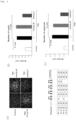
- Fig. 1 shows the results. Whereas antibody #8 did not recognize periostin-exon 21 secreted from the supernatant of human breast cancer cells at all, antibodies A and B strongly recognized periostin-exon 21 ( Fig. 1(A) ). After western blotting, CBB staining was performed to confirm that there was no bias in the antibody amount of each lane ( Fig. 1(B) ). The same test was performed on antibodies C to E, and antibodies C to E were also found to be able to recognize periostin-exon 21 secreted from the supernatant of human breast cancer cells.
- the amino acid sequences were compared with databases of the amino acid sequences of known antibodies (website: https://www.ncbi.nlm.nih.gov/igblast/ (IgBLAST) and website: http://www.imgt.org/ (IMGT)) to examine the homology, thereby determining the amino acid sequences of CDRs.
- the "CDR sequences defined by the Kabat numbering scheme” were determined according to a comparison with the database in the website of IgBLAST
- the "CDR sequences defined by the IMGT numbering scheme” were determined according to a comparison with the database in the website of IMGT.
- Tables 1 to 5 show the CDR sequences defined by the Kabat numbering scheme (Kabat) and the CDR sequences defined by the IMGT numbering scheme (IMGT) of antibodies A to E.
- Polypeptides each having 10 amino acids from the N-terminus of the amino acid sequence of human periostin exon 21, were made.
- the polypeptides were arrayed on a glass slide. After blocking the array, primary antibodies A to E and Alexa Fluor 647-labeled secondary antibody were added sequentially to the peptide array and incubated. Antibodies bound to the epitope after a washing operation were detected by an Axon GenePix Scanner 4300 SL50. The fluorescence of each peptide spot was captured with a laser scanner, and positive peptides emitting a strong signal were analyzed with GenePix spot-recognition software.
- Mouse breast cancer cells 4T07 were seeded onto a ⁇ -Slide angiogenesis plate coated with Matrigel (Corning Matrigel Matrix Growth Factor Reduced 5 ml Cat. #356230) to induce vasculogenic mimicry.
- the culture medium for use was serum-free RPMI-1640, and the number of cells seeded was 3 ⁇ 10 5 cells/ml.
- Mouse periostin (PN2) and periostin antibodies (antibody #8 and antibody A) were used as a drug to add.
- PN2 with a final concentration of 10 ug/ml and antibodies with a final concentration of 20 ug/ml were used, and these were incubated with 4T07 cells overnight. Thereafter, vasculogenic mimicry was analyzed. Analysis was performed with an Imaged Angiogenesis
- Fig. 2 shows the results.
- the administration of PN2 markedly induced vasculogenic mimicry in breast cancer cells (P ⁇ 0.05). Whereas the administration of antibody #8 in addition to PN2 did not decrease the indicators of lumen formation, such as the number of nodes and the number of segments, the use of antibody A in addition to PN2 significantly decreased these indicators (P ⁇ 0.01).
- Mouse breast cancer cells 4T07 were seeded in tissue culture treated 10 cm dishes (Greiner) by using RPMI 1640 (Gibco) supplemented with 10% bovine serum albumin (Invitrogen) and Penicillin-Streptomycin Mixed Solution (Nacalai Tesque), and incubated at 37°C in an incubator for 24 hours. Thereafter, the culture supernatant was removed, and the dishes were washed with PBS, after which the cells were allowed to float with trypsin /EDTA. The cells were then collected and centrifuged for 5 minutes, and counted to make 1 ⁇ 10 6 breast cancer cells per animal, followed by suspending the cells in 100 ⁇ l of PBS.
- Fig. 3 shows the results. Whereas the group administered with antibody #8 showed no tumor shrinkage compared with the control group, the group administered with antibody A showed a marked tumor growth suppression effect (P ⁇ 0.01).
- a binding assay for human periostin secreted from human cells was performed with antibodies A to E in the same manner as in Test Example 2.
- Fig. 4 shows the results. As shown in Fig. 4 , the results indicate that not only antibodies A and B but also antibodies C to E can recognize periostin-exon 21 secreted from cells. This makes it even more understandable that the antibody of the present invention can recognize periostin-exon 21 secreted from cells.
- Antibodies A, B, C, and D were evaluated in terms of the lumen formation by cancer cells in vasculogenic mimicry models in the same manner as in Test Example 5. However, the total master segments length was measured as an indicator of lumen formation.
- Fig. 5 shows the results. As shown in Fig. 5 , the results indicate that not only antibody A but also antibodies B, C, and D can suppress the lumen formation by cancer cells in vasculogenic mimicry models. This makes it even more understandable that the antibody of the present invention has action of inhibiting vasculogenic mimicry.
- Antibodies A, B, C, and D were evaluated in terms of the lumen formation by cancer cells in vasculogenic mimicry models in the same manner as in Test Example 5. However, the total mesh area (the total area of formed lumina) was measured as an indicator of lumen formation.
- Fig. 6 shows the results. As shown in Fig. 6 , the results indicate that not only antibody A but also antibody E can suppress the lumen formation by cancer cells in vasculogenic mimicry models.
Landscapes
- Health & Medical Sciences (AREA)
- Chemical & Material Sciences (AREA)
- Life Sciences & Earth Sciences (AREA)
- Organic Chemistry (AREA)
- General Health & Medical Sciences (AREA)
- Genetics & Genomics (AREA)
- Medicinal Chemistry (AREA)
- Engineering & Computer Science (AREA)
- Bioinformatics & Cheminformatics (AREA)
- Animal Behavior & Ethology (AREA)
- Pharmacology & Pharmacy (AREA)
- Veterinary Medicine (AREA)
- Public Health (AREA)
- Biochemistry (AREA)
- Nuclear Medicine, Radiotherapy & Molecular Imaging (AREA)
- General Chemical & Material Sciences (AREA)
- Chemical Kinetics & Catalysis (AREA)
- Molecular Biology (AREA)
- Biophysics (AREA)
- Zoology (AREA)
- Immunology (AREA)
- Biotechnology (AREA)
- Biomedical Technology (AREA)
- Wood Science & Technology (AREA)
- Proteomics, Peptides & Aminoacids (AREA)
- General Engineering & Computer Science (AREA)
- Microbiology (AREA)
- Mycology (AREA)
- Cardiology (AREA)
- Heart & Thoracic Surgery (AREA)
- Pain & Pain Management (AREA)
- Rheumatology (AREA)
- Epidemiology (AREA)
- Plant Pathology (AREA)
- Physics & Mathematics (AREA)
- Cell Biology (AREA)
- Gastroenterology & Hepatology (AREA)
- Toxicology (AREA)
- Vascular Medicine (AREA)
- Peptides Or Proteins (AREA)
Abstract
Description
- The present invention relates to an antibody or antigen-binding fragment thereof.
- Periostin is an extracellular matrix protein composed of a polypeptide of a molecular weight of about 90,000. The polypeptide chain contains a signal sequence, a cysteine-rich domain, a four-fold repeated domain, and a C-terminal domain. It has been suggested that periostin gene expression is associated with vascular restenosis conditions, cancer, inflammation, and angiogenesis conditions.
-
Patent Literature 1 reports an antibody againstexon 21 of periostin, and states that the antibody can inhibit periostin, which has cell adhesion activity; inhibit the action of a specific periostin variant that is increasingly expressed in intimal hypertrophy, cancer, inflammations including inflammatory colitis, diseases involving angiogenesis etc.; and limit the exacerbation of disease conditions to treat the diseases. - Patent Literature 1:
WO2014/136910A - In the course of research, the present inventors found that existing antibodies against
exon 21 of periostin have a very limited binding ability to human periostin secreted from human cells. Thus, they focused on the need to develop novel antibodies that would improve this problem. - An object of the present invention is to provide a novel antibody against
exon 21 of human periostin or an antigen-binding fragment thereof. - The present inventors conducted extensive research and found that the object can be achieved by an antibody or antigen-binding fragment thereof that is bindable to a conformational epitope on human periostin that contains the amino acid sequence A represented by SEQ ID NO: 61 and the amino acid sequence B represented by any one of SEQ ID NOs: 62 to 64. The inventors conducted further research based on this finding and completed the present invention. Specifically, the present invention includes the following subject matter.
-
Item 1. An antibody or antigen-binding fragment thereof bindable to a conformational epitope on human periostin,
the epitope comprising the amino acid sequence A represented by SEQ ID NO: 61 and the amino acid sequence B represented by any one of SEQ ID NOs: 62 to 64. -
Item 2. The antibody or antigen-binding fragment thereof according toItem 1, wherein the human periostin is human periostin secreted from a human cell. -
Item 3. The antibody or antigen-binding fragment thereof according toItem -
Item 4. The antibody or antigen-binding fragment thereof according to any one ofItems 1 to 3, which is a monoclonal antibody or antigen-binding fragment thereof. - Item 5. The antibody or antigen-binding fragment thereof according to any one of
Items 1 to 4, comprising- heavy-
chain CDR 1 comprising the amino acid sequence represented by SEQ ID NO: 1 and/or 2, SEQ ID NO: 13 and/or 14, SEQ ID NO: 25 and/or 26, SEQ ID NO: 37 and/or 38, or SEQ ID NO: 49 and/or 50, - heavy-
chain CDR 2 comprising the amino acid sequence represented by SEQ ID NO: 3 and/or 4, SEQ ID NO: 15 and/or 16, SEQ ID NO: 27 and/or 28, SEQ ID NO: 39 and/or 40, or SEQ ID NO: 51 and/or 52, - heavy-
chain CDR 3 comprising the amino acid sequence represented by SEQ ID NO: 5 and/or 6, SEQ ID NO: 17 and/or 18, SEQ ID NO: 29 and/or 30, SEQ ID NO: 41 and/or 42, or SEQ ID NO: 53 and/or 54, - light-
chain CDR 1 comprising the amino acid sequence represented by SEQ ID NO: 7 and/or 8, SEQ ID NO: 19 and/or 20, SEQ ID NO: 31 and/or 32, SEQ ID NO: 43 and/or 44, or SEQ ID NO: 55 and/or 56, - light-
chain CDR 2 comprising the amino acid sequence represented by SEQ ID NO: 9 and/or 10, SEQ ID NO: 21 and/or 22, SEQ ID NO: 33 and/or 34, SEQ ID NO: 45 and/or 46, or SEQ ID NO: 57 and/or 58, and - light-
chain CDR 3 comprising the amino acid sequence represented by SEQ ID NO: 11 and/or 12, SEQ ID NO: 23 and/or 24, SEQ ID NO: 35 and/or 36, SEQ ID NO: 47 and/or 48, or SEQ ID NO: 59 and/or 60.
- heavy-
- Item 6. The antibody or antigen-binding fragment thereof according to any one of
Items 1 to 5, comprising the following (A), (B), (C), (D), or (E) :- (A) heavy-
chain CDR 1 comprising the amino acid sequence represented by SEQ ID NO: 1 and/or 2,- heavy-
chain CDR 2 comprising the amino acid sequence represented by SEQ ID NO: 3 and/or 4, - heavy-
chain CDR 3 comprising the amino acid sequence represented by SEQ ID NO: 5 and/or 6, - light-
chain CDR 1 comprising the amino acid sequence represented by SEQ ID NO: 7 and/or 8, - light-
chain CDR 2 comprising the amino acid sequence represented by SEQ ID NO: 9 and/or 10, and - light-
chain CDR 3 comprising the amino acid sequence represented by SEQ ID NO: 11 and/or 12;
- heavy-
- (B) heavy-
chain CDR 1 comprising the amino acid sequence represented by SEQ ID NO: 13 and/or 14,- heavy-
chain CDR 2 comprising the amino acid sequence represented by SEQ ID NO: 15 and/or 16, - heavy-
chain CDR 3 comprising the amino acid sequence represented by SEQ ID NO: 17 and/or 18, - light-
chain CDR 1 comprising the amino acid sequence represented by SEQ ID NO: 19 and/or 20, - light-
chain CDR 2 comprising the amino acid sequence represented by SEQ ID NO: 21 and/or 22, and - light-
chain CDR 3 comprising the amino acid sequence represented by SEQ ID NO: 23 and/or 24;
- heavy-
- (C) heavy-
chain CDR 1 comprising the amino acid sequence represented by SEQ ID NO: 25 and/or 26,- heavy-
chain CDR 2 comprising the amino acid sequence represented by SEQ ID NO: 27 and/or 28, - heavy-
chain CDR 3 comprising the amino acid sequence represented by SEQ ID NO: 29 and/or 30, - light-
chain CDR 1 comprising the amino acid sequence represented by SEQ ID NO: 31 and/or 32, - light-
chain CDR 2 comprising the amino acid sequence represented by SEQ ID NO: 33 and/or 34, and - light-
chain CDR 3 comprising the amino acid sequence represented by SEQ ID NO: 35 and/or 36;
- heavy-
- (D) heavy-
chain CDR 1 comprising the amino acid sequence represented by SEQ ID NO: 37 and/or 38,- heavy-
chain CDR 2 comprising the amino acid sequence represented by SEQ ID NO: 39 and/or 40, - heavy-
chain CDR 3 comprising the amino acid sequence represented by SEQ ID NO: 41 and/or 42, - light-
chain CDR 1 comprising the amino acid sequence represented by SEQ ID NO: 43 and/or 44, - light-
chain CDR 2 comprising the amino acid sequence represented by SEQ ID NO: 45 and/or 46, and - light-
chain CDR 3 comprising the amino acid sequence represented by SEQ ID NO: 47 and/or 48; or
- heavy-
- (E) heavy-
chain CDR 1 comprising the amino acid sequence represented by SEQ ID NO: 49 and/or 50,- heavy-
chain CDR 2 comprising the amino acid sequence represented by SEQ ID NO: 51 and/or 52, - heavy-
chain CDR 3 comprising the amino acid sequence represented by SEQ ID NO: 53 and/or 54, - light-
chain CDR 1 comprising the amino acid sequence represented by SEQ ID NO: 55 and/or 56, - light-
chain CDR 2 comprising the amino acid sequence represented by SEQ ID NO: 57 and/or 58, and - light-
chain CDR 3 comprising the amino acid sequence represented by SEQ ID NO: 59 and/or 60.
- heavy-
- (A) heavy-
-
Item 7. The antibody or antigen-binding fragment thereof according to any one ofItems 1 to 6, comprising- (A)
- heavy-
chain CDR 1 comprising the amino acid sequence represented by SEQ ID NO: 1 and/or 2, - heavy-
chain CDR 2 comprising the amino acid sequence represented by SEQ ID NO: 3 and/or 4, - heavy-
chain CDR 3 comprising the amino acid sequence represented by SEQ ID NO: 5 and/or 6, - light-
chain CDR 1 comprising the amino acid sequence represented by SEQ ID NO: 7 and/or 8, - light-
chain CDR 2 comprising the amino acid sequence represented by SEQ ID NO: 9 and/or 10, and - light-
chain CDR 3 comprising the amino acid sequence represented by SEQ ID NO: 11 and/or 12.
- heavy-
- (A)
-
Item 8. An antibody obtained by a method comprising selecting an antibody bindable to human periostin secreted from a human breast cancer cell from among antibodies produced by a hybridoma obtained from an animal immunized with at least one protein or peptide selected from the group consisting of:- (e) a protein or peptide containing the amino acid sequence represented by SEQ ID NO: 65, and
- (f) a protein or peptide containing an amino acid sequence X with at least 85% identity to the amino acid sequence represented by SEQ ID NO: 65 and containing the amino acid sequence A represented by SEQ ID NO: 61 and the amino acid sequence B represented by any one of SEQ ID NOs: 62 to 64 within the amino acid sequence X.
- Item 9. An antibody produced from a hybridoma obtained from an animal immunized with at least one protein or peptide selected from the group consisting of:
- (e) a protein or peptide containing the amino acid sequence represented by SEQ ID NO: 65, and
- (f) a protein or peptide containing an amino acid sequence X with at least 85% identity to the amino acid sequence represented by SEQ ID NO: 65 and containing the amino acid sequence A represented by SEQ ID NO: 61 and the amino acid sequence B represented by any one of SEQ ID NOs: 62 to 64 within the amino acid sequence X,
- the antibody being bindable to human periostin secreted from a human breast cancer cell.
- Item 10. A polynucleotide comprising a coding sequence of the antibody or antigen-binding fragment thereof of any one of
Items 1 to 9. - Item 11. A cell comprising the polynucleotide of Item 10.
-
Item 12. A conjugate of the antibody or antigen-binding fragment thereof of any one ofItems 1 to 9 with a drug. - Item 13. A pharmaceutical composition comprising at least one member selected from the group consisting of the antibody or antigen-binding fragment thereof of any one of
Items 1 to 9 and the conjugate ofItem 12. -
Item 14. The pharmaceutical composition according to Item 13, for use in the prevention or treatment of cancer, for use in the inhibition of vasculogenic mimicry in cancer, for use in the inhibition of periostin, for use in the prevention or treatment of inflammation-related diseases, for use in the inhibition of intimal hypertrophy, for use in the inhibition of angiogenesis, or for use in the prevention or treatment of aneurysm. -
Item 15. A reagent comprising at least one member selected from the group consisting of the antibody or antigen-binding fragment thereof of any one ofItems 1 to 9 and the conjugate ofItem 12. - The present invention provides a novel antibody or antigen-binding fragment thereof against
exon 21 of human periostin. -
-
Fig. 1 shows the results of a human periostin-exon 21 recognition test with each antibody (Test Example 2).Fig. 1(A) shows the results of western blotting of a sample after immunoprecipitation.Fig. 1(B) shows a CBB-stained gel after western blotting. The antibody used is indicated at the top of each photograph, and the molecular weight of each band of molecular weight markers is indicated on the left. -
Fig. 2 shows the results of Test Example 5, which examined the effect of each antibody on vasculogenic mimicry.Fig. 2(A) shows fluorescent photographic images of vasculogenic mimicry models of a cultured cell line. The fluorescent areas indicate 4T07 mouse breast cancer cells.Fig. 2(B) shows the results of measurement of the number of nodes, which is an indicator of lumen formation.Fig. 2(C) shows the results of measurement of the number of segments, which is an indicator of lumen formation. -
Fig. 3 shows the results of Test Example 6, which examined the effect of each antibody on tumor growth. The vertical axis represents tumor volume, and the horizontal axis represents the number of days elapsed since tumor transplant. -
Fig. 4 shows the results of a human periostin-exon 21 recognition test with each antibody (Test Example 7). InFig. 4 , A to E denote immunoprecipitation samples of antibodies A to E. IgG denotes an immunoprecipitation sample of a negative control antibody (IgG). Beads indicate beads for antibodies in immunoprecipitation with no antibody bound (control). -
Fig. 5 shows the results of Test Example 8, which examined the effect of each antibody on vasculogenic mimicry. The vertical axis represents total master segments length, which is an indicator of lumen formation. InFig. 5 , "mPN2" denotes a sample to which mouse periostin was added. "#8," "A," "B," "C," and "D" denote samples to whichantibody # 8, A, B, C, and D were respectively added. "(-)" denotes a sample to which no antibody was added. "Cont." denotes a sample to which neither mouse periostin nor any antibody was added. -
Fig. 6 shows the results of Test Example 9, which examined the effect of each antibody on vasculogenic mimicry. The vertical axis represents total mesh area (the total area of formed lumina), which is an indicator of lumen formation. InFig. 6 , "PN2" denotes a sample to which mouse periostin was added. "#8," "Antibody A," and "Antibody E" denote samples to whichantibody # 8, antibody A, and antibody E were respectively added. "(-)" denotes a sample to which no antibody was added. "Cont." denotes a sample to which neither mouse periostin nor any antibody was added. - In the present specification, the term "comprise" includes the concepts of consisting essentially of and consisting of.
- In an embodiment, the present invention relates to an antibody or antigen-binding fragment thereof bindable to a conformational epitope on human periostin, the epitope comprising the amino acid sequence A represented by SEQ ID NO: 61 and the amino acid sequence B represented by any one of SEQ ID NOs: 62 to 64 (which may be referred to as "the antibody or fragment thereof of the present invention" in the present specification). The following describes the antibody or antigen-binding fragment thereof.
- The human periostin can be any human periostin that contains exon 21 (SEQ ID NO: 65) out of several existing splice variants. The human periostin is preferably a human periostin that lacks exon 17 but has
exon 21, and more preferably a human periostin composed of the amino acid sequence represented by SEQ ID NO: 66 (PN-2). - The human periostin also encompasses variants that occur within the human species, as long as the structure and sequence of the conformational epitope, described below, are unchanged. In this regard, the human periostin is at least one human periostin selected from the group consisting of the following protein (a) and protein (b):
- (a) a protein containing the amino acid sequence represented by SEQ ID NO: 65, and
- (b) a protein containing an amino acid sequence X with at least 85% identity to the amino acid sequence represented by SEQ ID NO: 65, and containing the amino acid sequence A represented by SEQ ID NO: 61 and the amino acid sequence B represented by any one of SEQ ID NOs: 62 to 64 both within the amino acid sequence X; and preferably at least one human periostin selected from the group consisting of the following protein (c) and protein (d):
- (c) a protein containing the amino acid sequence represented by SEQ ID NO: 66, and
- (d) a protein containing an amino acid sequence with at least 85% identity to the amino acid sequence represented by SEQ ID NO: 66 and the amino acid sequence represented by SEQ ID NO: 65.
- In proteins (b) and (d), the identity is more preferably at least 90%, still more preferably at least 95%, and yet more preferably at least 98%.
- The "identity" of amino acid sequences refers to the degree to which two or more contrastable amino acid sequences match each other. Thus, the higher the degree of match between two amino acid sequences, the higher the identity or similarity of those sequences. The level of amino acid sequence identity is determined, for example, by using FASTA, which is a tool for sequence analysis, with default parameters. Alternatively, the level of amino acid sequence identity can be determined by using the BLAST algorithm by Karlin and Altschul (Karlin S, Altschul SF. Methods for assessing the statistical significance of molecular sequence features by using general scoring schemes, Proc Natl Acad Sci USA. 87: 2264-2268 (1990); Karlin S, Altschul SF. Applications and statistics for multiple high-scoring segments in molecular sequences, Proc Natl Acad Sci USA. 90: 5873-7 (1993)). A program called "BLASTX," based on this BLAST algorithm, has been developed. The specific techniques of these analysis methods are known and can be found on the website of the National Center of Biotechnology Information (NCBI) (http://www.ncbi.nlm.nih.gov/). The "identity" of base sequences is also defined in the same manner as above.
- Examples of proteins (b) and (d) include the following:
- (b') a protein containing an amino acid sequence X that has the substitution, deletion, addition, or insertion (preferably substitution, and more preferably conservative substitution) of one or multiple amino acids in the amino acid sequence of SEQ ID NO: 65, and containing the amino acid sequence A represented by SEQ ID NO: 61 and the amino acid sequence B represented by any one of SEQ ID NOs: 62 to 64 both within the amino acid sequence X; and
- (d') a protein containing an amino acid sequence that has the substitution, deletion, addition, or insertion (preferably substitution, and more preferably conservative substitution) of one or multiple amino acids in the amino acid sequence of SEQ ID NO: 66 and containing the amino acid sequence represented by SEQ ID NO: 65.
- In proteins (b') and (d'), "multiple amino acids" means, for example, 2 to 20 amino acids, preferably 2 to 10 amino acids, more preferably 2 to 5 amino acids, and still more preferably 2 or 3 amino acids.
- The phrase "conservative substitution" means the substitution of an amino acid residue with another amino acid residue having a similar side chain. For example, the substitution between amino acid residues having a basic side chain, such as lysine, arginine, or histidine, is considered to be a conservative substitution. The following substitutions between other amino acid residues are also considered to be a conservative substitution: the substitution between amino acid residues having an acidic side chain such as aspartic acid and glutamic acid; the substitution between amino acid residues having an uncharged polar side chain such as glycine, asparagine, glutamine, serine, threonine, tyrosine, or cysteine; the substitution between amino acid residues having a nonpolar side chain such as alanine, valine, leucine, isoleucine, proline, phenylalanine, methionine, or tryptophan; the substitution between amino acid residues having a β-branched side chain such as threonine, valine, or isoleucine; and the substitution between amino acid residues having an aromatic side chain such as tyrosine, phenylalanine, tryptophan, or histidine.
- The human periostin is preferably a human periostin secreted from a human cell. The human periostin secreted from a human cell can be any human periostin that has been generated based on mRNA transcribed from the human periostin gene in a human cell and secreted extracellularly. Thus, the "human periostin secreted from a human cell" does not include recombinant human periostin that has been expressed by non-human cells (e.g., bacteria) and purified.
- The human cell can be any cell capable of secreting human periostin. Examples of human cells include cancer cells. The cancer from which cancer cells are originated is, for example, brain tumor, leukemia, osteosarcoma, breast cancer, large intestine cancer, malignant melanoma, bone cancer, stomach cancer, lung cancer, liver cancer, kidney cancer, pancreas cancer, gallbladder cancer, skin cancer, uterus cancer, ovarian cancer, rectal cancer, colon cancer, fallopian tube cancer, esophageal cancer, small intestine cancer, thyroid cancer, parathyroid cancer, adrenal cancer, prostate cancer, bladder cancer, or malignant lymphoma, preferably breast cancer, large intestine cancer, lung cancer, or malignant melanoma, and particularly preferably breast cancer.
- The antibody or a fragment thereof of the present invention is bindable to a conformational epitope on human periostin. The conformational epitope on human periostin is not particularly limited as long as the epitope has a three-dimensional structure containing the amino acid sequence A represented by SEQ ID NO: 61 and the amino acid sequence B represented by any one of SEQ ID NOs: 62 to 64. In other words, the term "bindable" means that the antibody or fragment thereof of the present invention can recognize a three-dimensional structure on human periostin or bind to the three-dimensional structure. The antibody or fragment thereof of the present invention is preferably specifically bindable to a conformational epitope on human periostin. The amino acid sequence B is preferably SEQ ID NO: 62.
- In a preferable embodiment, the antibody or fragment thereof of the present invention may be an antibody or fragment thereof comprising
- heavy-
chain CDR 1 comprising the amino acid sequence represented by SEQ ID NO: 1 and/or 2, SEQ ID NO: 13 and/or 14, SEQ ID NO: 25 and/or 26, SEQ ID NO: 37 and/or 38, or SEQ ID NO: 49 and/or 50, - heavy-
chain CDR 2 comprising the amino acid sequence represented by SEQ ID NO: 3 and/or 4, SEQ ID NO: 15 and/or 16, SEQ ID NO: 27 and/or 28, SEQ ID NO: 39 and/or 40, or SEQ ID NO: 51 and/or 52, - heavy-
chain CDR 3 comprising the amino acid sequence represented by SEQ ID NO: 5 and/or 6, SEQ ID NO: 17 and/or 18, SEQ ID NO: 29 and/or 30, SEQ ID NO: 41 and/or 42, or SEQ ID NO: 53 and/or 54, - light-
chain CDR 1 comprising the amino acid sequence represented by SEQ ID NO: 7 and/or 8, SEQ ID NO: 19 and/or 20, SEQ ID NO: 31 and/or 32, SEQ ID NO: 43 and/or 44, or SEQ ID NO: 55 and/or 56, - light-
chain CDR 2 comprising the amino acid sequence represented by SEQ ID NO: 9 and/or 10, SEQ ID NO: 21 and/or 22, SEQ ID NO: 33 and/or 34, SEQ ID NO: 45 and/or 46, or SEQ ID NO: 57 and/or 58, and - light-
chain CDR 3 comprising the amino acid sequence represented by SEQ ID NO: 11 and/or 12, SEQ ID NO: 23 and/or 24, SEQ ID NO: 35 and/or 36, SEQ ID NO: 47 and/or 48, or SEQ ID NO: 59 and/or 60. - In the preferable embodiment above, the amino acid sequences represented by an odd sequence number are CDR sequences defined by the Kabat numbering scheme, and the amino acid sequences represented by an even sequence number are CDR sequences defined by the IMGT numbering scheme.
- In a more preferable embodiment, the antibody or fragment thereof of the present invention may be an antibody or antigen-binding fragment comprising the following (A), (B), (C), (D), or (E) :
- (A)
- heavy-
chain CDR 1 comprising the amino acid sequence represented by SEQ ID NO: 1 and/or 2, - heavy-
chain CDR 2 comprising the amino acid sequence represented by SEQ ID NO: 3 and/or 4, - heavy-
chain CDR 3 comprising the amino acid sequence represented by SEQ ID NO: 5 and/or 6, - light-
chain CDR 1 comprising the amino acid sequence represented by SEQ ID NO: 7 and/or 8, - light-
chain CDR 2 comprising the amino acid sequence represented by SEQ ID NO: 9 and/or 10, and - light-
chain CDR 3 comprising the amino acid sequence represented by SEQ ID NO: 11 and/or 12;
- heavy-
- (B)
- heavy-
chain CDR 1 comprising the amino acid sequence represented by SEQ ID NO: 13 and/or 14, - heavy-
chain CDR 2 comprising the amino acid sequence represented by SEQ ID NO: 15 and/or 16, - heavy-
chain CDR 3 comprising the amino acid sequence represented by SEQ ID NO: 17 and/or 18, - light-
chain CDR 1 comprising the amino acid sequence represented by SEQ ID NO: 19 and/or 20, - light-
chain CDR 2 comprising the amino acid sequence represented by SEQ ID NO: 21 and/or 22, and - light-
chain CDR 3 comprising the amino acid sequence represented by SEQ ID NO: 23 and/or 24;
- heavy-
- (C)
- heavy-
chain CDR 1 comprising the amino acid sequence represented by SEQ ID NO: 25 and/or 26, - heavy-
chain CDR 2 comprising the amino acid sequence represented by SEQ ID NO: 27 and/or 28, - heavy-
chain CDR 3 comprising the amino acid sequence represented by SEQ ID NO: 29 and/or 30, - light-
chain CDR 1 comprising the amino acid sequence represented by SEQ ID NO: 31 and/or 32, - light-
chain CDR 2 comprising the amino acid sequence represented by SEQ ID NO: 33 and/or 34, and - light-
chain CDR 3 comprising the amino acid sequence represented by SEQ ID NO: 35 and/or 36;
- heavy-
- (D)
- heavy-
chain CDR 1 comprising the amino acid sequence represented by SEQ ID NO: 37 and/or 38, - heavy-
chain CDR 2 comprising the amino acid sequence represented by SEQ ID NO: 39 and/or 40, - heavy-
chain CDR 3 comprising the amino acid sequence represented by SEQ ID NO: 41 and/or 42, - light-
chain CDR 1 comprising the amino acid sequence represented by SEQ ID NO: 43 and/or 44, - light-
chain CDR 2 comprising the amino acid sequence represented by SEQ ID NO: 45 and/or 46, and - light-
chain CDR 3 comprising the amino acid sequence represented by SEQ ID NO: 47 and/or 48; or
- heavy-
- (E)
- heavy-
chain CDR 1 comprising the amino acid sequence represented by SEQ ID NO: 49 and/or 50, - heavy-
chain CDR 2 comprising the amino acid sequence represented by SEQ ID NO: 51 and/or 52, - heavy-
chain CDR 3 comprising the amino acid sequence represented by SEQ ID NO: 53 and/or 54, - light-
chain CDR 1 comprising the amino acid sequence represented by SEQ ID NO: 55 and/or 56, - light-
chain CDR 2 comprising the amino acid sequence represented by SEQ ID NO: 57 and/or 58, and - light-
chain CDR 3 comprising the amino acid sequence represented by SEQ ID NO: 59 and/or 60.
- heavy-
- Of the antibodies or antigen-binding fragments thereof described in (A) to (E), the antibody or fragment thereof of the present invention is more preferably the antibody or antigen-binding fragment thereof described in (A) or (B), and particularly preferably the antibody or antigen-binding fragment thereof described in (A). In another embodiment, the antibody or fragment thereof of the present invention is more preferably the antibody or antigen-binding fragment thereof described in (A) or (E), and particularly preferably the antibody or antigen-binding fragment thereof described in (E).
- In a more preferable embodiment, the antibody or fragment thereof of the present invention may be an antibody or antigen-binding fragment thereof comprising
- (A1)
- heavy-
chain CDR 1 comprising the amino acid sequence represented by SEQ ID NO: 1, - heavy-
chain CDR 2 comprising the amino acid sequence represented by SEQ ID NO: 3, - heavy-
chain CDR 3 comprising the amino acid sequence represented by SEQ ID NO: 5, - light-
chain CDR 1 comprising the amino acid sequence represented by SEQ ID NO: 7, - light-
chain CDR 2 comprising the amino acid sequence represented by SEQ ID NO: 9, and - light-
chain CDR 3 comprising the amino acid sequence represented by SEQ ID NO: 11; or
- heavy-
- (A2)
- heavy-
chain CDR 1 comprising the amino acid sequence represented by SEQ ID NO: 2, - heavy-
chain CDR 2 comprising the amino acid sequence represented by SEQ ID NO: 4, - heavy-
chain CDR 3 comprising the amino acid sequence represented by SEQ ID NO: 6, - light-
chain CDR 1 comprising the amino acid sequence represented by SEQ ID NO: 8, - light-
chain CDR 2 comprising the amino acid sequence represented by SEQ ID NO: 10, and - light-
chain CDR 3 comprising the amino acid sequence represented by SEQ ID NO: 12; or
- heavy-
- (B1)
- heavy-
chain CDR 1 comprising the amino acid sequence represented by SEQ ID NO: 13, - heavy-
chain CDR 2 comprising the amino acid sequence represented by SEQ ID NO: 15, - heavy-
chain CDR 3 comprising the amino acid sequence represented by SEQ ID NO: 17, - light-
chain CDR 1 comprising the amino acid sequence represented by SEQ ID NO: 19, - light-
chain CDR 2 comprising the amino acid sequence represented by SEQ ID NO: 21, and - light-
chain CDR 3 comprising the amino acid sequence represented by SEQ ID NO: 23; or
- heavy-
- (B2)
- heavy-
chain CDR 1 comprising the amino acid sequence represented by SEQ ID NO: 14, - heavy-
chain CDR 2 comprising the amino acid sequence represented by SEQ ID NO: 16, - heavy-
chain CDR 3 comprising the amino acid sequence represented by SEQ ID NO: 18, - light-
chain CDR 1 comprising the amino acid sequence represented by SEQ ID NO: 20, - light-
chain CDR 2 comprising the amino acid sequence represented by SEQ ID NO: 22, and - light-
chain CDR 3 comprising the amino acid sequence represented by SEQ ID NO: 24; or
- heavy-
- (C1)
- heavy-
chain CDR 1 comprising the amino acid sequence represented by SEQ ID NO: 25, - heavy-
chain CDR 2 comprising the amino acid sequence represented by SEQ ID NO: 27, - heavy-
chain CDR 3 comprising the amino acid sequence represented by SEQ ID NO: 29, - light-
chain CDR 1 comprising the amino acid sequence represented by SEQ ID NO: 31, - light-
chain CDR 2 comprising the amino acid sequence represented by SEQ ID NO: 33, and - light-
chain CDR 3 comprising the amino acid sequence represented by SEQ ID NO: 35; or
- heavy-
- (C2)
- heavy-
chain CDR 1 comprising the amino acid sequence represented by SEQ ID NO: 26, - heavy-
chain CDR 2 comprising the amino acid sequence represented by SEQ ID NO: 28, - heavy-
chain CDR 3 comprising the amino acid sequence represented by SEQ ID NO: 30, - light-
chain CDR 1 comprising the amino acid sequence represented by SEQ ID NO: 32, - light-
chain CDR 2 comprising the amino acid sequence represented by SEQ ID NO: 34, and - light-
chain CDR 3 comprising the amino acid sequence represented by SEQ ID NO: 36; or
- heavy-
- (D1)
- heavy-
chain CDR 1 comprising the amino acid sequence represented by SEQ ID NO: 37 and/or 38, - heavy-
chain CDR 2 comprising the amino acid sequence represented by SEQ ID NO: 39 and/or 40, - heavy-
chain CDR 3 comprising the amino acid sequence represented by SEQ ID NO: 41 and/or 42, - light-
chain CDR 1 comprising the amino acid sequence represented by SEQ ID NO: 43 and/or 44, - light-
chain CDR 2 comprising the amino acid sequence represented by SEQ ID NO: 45 and/or 46, and - light-
chain CDR 3 comprising the amino acid sequence represented by SEQ ID NO: 47 and/or 48; or
- heavy-
- (D2)
- heavy-
chain CDR 1 comprising the amino acid sequence represented by SEQ ID NO: 38, - heavy-
chain CDR 2 comprising the amino acid sequence represented by SEQ ID NO: 40, - heavy-
chain CDR 3 comprising the amino acid sequence represented by SEQ ID NO: 42, - light-
chain CDR 1 comprising the amino acid sequence represented by SEQ ID NO: 44, - light-
chain CDR 2 comprising the amino acid sequence represented by SEQ ID NO: 46, and - light-
chain CDR 3 comprising the amino acid sequence represented by SEQ ID NO: 48; or
- heavy-
- (E1)
- heavy-
chain CDR 1 comprising the amino acid sequence represented by SEQ ID NO: 49, - heavy-
chain CDR 2 comprising the amino acid sequence represented by SEQ ID NO: 51, - heavy-
chain CDR 3 comprising the amino acid sequence represented by SEQ ID NO: 53, - light-
chain CDR 1 comprising the amino acid sequence represented by SEQ ID NO: 55, - light-
chain CDR 2 comprising the amino acid sequence represented by SEQ ID NO: 57, and - light-
chain CDR 3 comprising the amino acid sequence represented by SEQ ID NO: 59; or
- heavy-
- (E2)
- heavy-
chain CDR 1 comprising the amino acid sequence represented by SEQ ID NO: 50, - heavy-
chain CDR 2 comprising the amino acid sequence represented by SEQ ID NO: 52, - heavy-
chain CDR 3 comprising the amino acid sequence represented by SEQ ID NO: 54, - light-
chain CDR 1 comprising the amino acid sequence represented by SEQ ID NO: 56, - light-
chain CDR 2 comprising the amino acid sequence represented by SEQ ID NO: 58, and - light-
chain CDR 3 comprising the amino acid sequence represented by SEQ ID NO: 60.
- heavy-
- Of the antibodies or antigen-binding fragments thereof described in (A1) to (E2), the antibody or fragment thereof of the present invention is more preferably the antibody or antigen-binding fragment thereof described in (A1), (A2), (B1), or (B2), and particularly preferably the antibody or antigen-binding fragment thereof described in (A1) or (A2). In another embodiment, the antibody or fragment thereof of the present invention is more preferably the antibody or antigen-binding fragment thereof described in (A1), (A2), (E1), or (E2), and particularly preferably the antibody or antigen-binding fragment thereof described in (E1) or (E2).
- The antibody or antigen-binding fragment thereof described in (A) preferably contains a heavy-chain variable region containing the amino acid sequence AH1 represented by SEQ ID NO: 67, an amino acid sequence AH2 with at least 85% (preferably at least 90%, more preferably at least 95%, still more preferably at least 98%, and yet more preferably at least 99%) identity to the amino acid sequence AH1, or the amino acid sequence AH3, which is a humanized sequence of the amino acid sequence AH1 and/or a light-chain variable region containing the amino acid sequence AL1 represented by SEQ ID NO: 68, an amino acid sequence AL2 with at least 85% (preferably at least 90%, more preferably at least 95%, still more preferably at least 98%, and yet more preferably at least 99%) identity to the amino acid sequence AL1, or the amino acid sequence AL3, which is a humanized sequence of the amino acid sequence AL1.
- The antibody or antigen-binding fragment thereof described in (B) preferably contains a heavy-chain variable region containing the amino acid sequence BH1 represented by SEQ ID NO: 69, an amino acid sequence BH2 with at least 85% (preferably at least 90%, more preferably at least 95%, still more preferably at least 98%, and yet more preferably at least 99%) identity to the amino acid sequence BH1, or the amino acid sequence BH3, which is a humanized sequence of the amino acid sequence BH1 and/or a light-chain variable region containing the amino acid sequence BL1 represented by SEQ ID NO: 70, an amino acid sequence BL2 with at least 85% (preferably at least 90%, more preferably at least 95%, still more preferably at least 98%, and yet more preferably at least 99%) identity to the amino acid sequence BL1, or the amino acid sequence BL3, which is a humanized sequence of the amino acid sequence BL1.
- The antibody or antigen-binding fragment thereof described in (C) preferably contains a heavy-chain variable region containing the amino acid sequence CH1 represented by SEQ ID NO: 71, an amino acid sequence CH2 with at least 85% (preferably at least 90%, more preferably at least 95%, still more preferably at least 98%, and yet more preferably at least 99%) identity to the amino acid sequence CH1, or the amino acid sequence CH3, which is a humanized sequence of the amino acid sequence CH1 and/or a light-chain variable region containing the amino acid sequence CL1 represented by SEQ ID NO: 72, the amino acid sequence CL2 with at least 85% (preferably at least 90%, more preferably at least 95%, still more preferably at least 98%, and yet more preferably at least 99%) identity to the amino acid sequence CL1, or the amino acid sequence CL3, which is a humanized sequence of the amino acid sequence CL1.
- The antibody or antigen-binding fragment thereof described in (D) preferably contains a heavy-chain variable region containing the amino acid sequence DH1 represented by SEQ ID NO: 73, an amino acid sequence DH2 with at least 85% (preferably at least 90%, more preferably at least 95%, still more preferably at least 98%, and yet more preferably at least 99%) identity to the amino acid sequence DH1, or the amino acid sequence DH3, which is a humanized sequence of the amino acid sequence DH1 and/or a light-chain variable region containing the amino acid sequence DL1 represented by SEQ ID NO: 74, an amino acid sequence DL2 with at least 85% (preferably at least 90%, more preferably at least 95%, still more preferably at least 98%, and yet more preferably at least 99%) identity to the amino acid sequence DL1, or the amino acid sequence DL3, which is a humanized sequence of the amino acid sequence DL1.
- The antibody or antigen-binding fragment thereof described in (E) preferably contains a heavy-chain variable region containing the amino acid sequence EH1 represented by SEQ ID NO: 75, an amino acid sequence EH2 with at least 85% (preferably at least 90%, more preferably at least 95%, still more preferably at least 98%, and yet more preferably at least 99%) identity to the amino acid sequence EH1, or the amino acid sequence EH3, which is a humanized sequence of the amino acid sequence EH1 and/or a light-chain variable region containing the amino acid sequence EL1 represented by SEQ ID NO: 76, an amino acid sequence EL2 with at least 85% (preferably at least 90%, more preferably at least 95%, still more preferably at least 98%, and yet more preferably at least 99%) identity to the amino acid sequence EL1, or the amino acid sequence EL3, which is a humanized sequence of the amino acid sequence EL1.
- The term "antibody" is used in the meaning including monoclonal antibodies and polyclonal antibodies. The antibody may be any isotype, such as IgG (e.g., IgG1, IgG2, IgG3, and IgG4), IgA (e.g., IgA1 and IgA2), IgD, IgE, or IgM. The antibody may be a human antibody or a non-human antibody. Examples of non-human antibodies include, but are not limited to, mouse antibodies, rat antibodies, rabbit antibodies, monkey antibodies, and chimpanzee antibodies. The antibody may be a chimeric antibody, such as mouse-human chimeric antibodies. The antibody may be a partially or fully humanized antibody. The antibody of the present invention is preferably a monoclonal antibody.
- In the present specification, the antigen-binding fragment of the antibody can be any fragment that contains heavy-
chain CDRs 1 to 3 and light-chain CDRs 1 to 3, such as Fab, F(ab')2, minibody, scFv-Fc, Fv, scFv, diabody, triabody, or tetrabody. - "Fab" contains a fragment of a heavy chain containing the heavy-chain variable region and CH1 in the heavy-chain constant region and a light chain containing the light-chain variable region and the light-chain constant region (CL), and the heavy-chain variable region and the light-chain variable region are aggregated by non-covalent, intermolecular interaction described above, or bound to each other through the disulfide bond. In Fab, CH1 and CL may be disulfide-bonded by the thiol groups of the respective cysteine residues.
- "F(ab')2" refers to the structure that contains a pair of Fabs in which CH1 of one Fab is disulfide-bonded to CH1 of another Fab by thiol groups of the respective cysteine residues.
- "Minibody" refers to the structure in which two fragments each containing CH3 bound to a heavy-chain variable region constituting scFV are aggregated between CH3-CH3 by non-covalent, intermolecular interaction.
- "scFv-Fc" refers to the structure in which two antibody fragments each containing scFv, CH2, and CH3 are aggregated between CH3-CH3 by non-covalent, intermolecular interaction, as with the minibody, and the fragments are disulfide-bonded through thiol groups of the cysteine residues contained in respective CH3.
- "Fv" is considered to be the smallest structure unit of an antibody and has the heavy-chain variable region and the light-chain variable region that are aggregated by non-covalent, intermolecular interaction. In Fv, a thiol group of the cysteine residue present in the heavy-chain variable region and a thiol group of the cysteine residue present in the light-chain variable region may be disulfide bonded.
- "scFv" has the structure in which the C-terminus of the heavy-chain variable region and the N-terminus of the light-chain variable region are bound through a linker or the structure in which the N-terminus of the heavy-chain variable region and the C-terminus of the light-chain variable region are bound through a linker, and is also referred to as a "single-chain antibody."
- The "diabody," "triabody," and "tetrabody" respectively refer to a dimer, a trimer, and a tetramer formed by scFv described above and are each an aggregated and structurally stabilized structure, for example, due to non-covalent, intermolecular interaction between the variable regions, as with Fv.
- The antibody or fragment thereof of the present invention may be bound or fused to another peptide, oligopeptide, or protein. Examples of such other peptides, oligopeptides, or proteins include albumin (e.g., serum albumin), protein tags (e.g., biotin, His tag, FLAG tag, Halo tag, MBP tag, HA tag, Myc tag, V5 tag, and PA tag), fluorescent proteins (e.g., GFP, Azami-Green, ZsGreen, GFP2, HyPer, Sirius, BFP, CFP, Turquoise, Cyan, TFP1, YFP, Venus, ZsYellow, Banana, KusabiraOrange, RFP, DsRed, AsRed, Strawberry, Jred, KillerRed, Cherry, HcRed, and mPlum), photoproteins (e.g., luciferase, β-galactosidase, chloramphenicol acetyltransferase, and β-glucuronidase), secretory signal sequences (e.g., Igκ signal sequence), protease recognition sequences (e.g., TEV protease recognition sequence), expression-enhancing sequences, solubilization sequences, multimeric domains (e.g., cartilage oligomer matrix protein domain, leucine zipper domain, collagen-like domain, cholera toxin B subunit domain, tetrabrachion coiled core domain, reovirus σ1 protein domain, and hepatitis delta antigen domain). If the antibody or fragment thereof of the present invention is bound or fused to a multimeric domain, the multimeric domain may further be bound or fused to an antibody or antigen-binding fragment thereof that is of the same type as or different type from the antibody or fragment thereof of the present invention to form a multimer (homomultimer or heteromultimer).
- The antibody or fragment thereof of the present invention may be chemically modified to the extent that the binding properties to human periostin are not significantly impaired.
- The antibody or fragment thereof of the present invention may have a carboxyl group (-COOH), carboxylate (-COO-), an amide group (-CONH2), or an ester group (-COOQ) at the C-terminus. Q in the ester group may be, for example, a C1-6 alkyl group, such as methyl, ethyl, n-propyl, isopropyl, or n-butyl; a C3-8 cycloalkyl group, such as cyclopentyl or cyclohexyl; a C6-12 aryl group, such as phenyl or α-naphthyl; a phenyl-C1-2 alkyl group, such as benzyl or phenethyl; a C7-14 aralkyl group, such as an α-naphthyl-C1-2 alkyl group, including α-naphthylmethyl; or a pivaloyloxymethyl group.
- The antibody or fragment thereof of the present invention may have an amidated or esterified carboxyl group (or carboxylate) at a site other than the C-terminus. The ester in this case may be, for example, the esters of the C-terminus described above.
- The antibody or fragment thereof of the present invention includes those having the amino group of the N-terminal amino acid residue protected by a protective group (e.g., a C1-6 acyl group, including a C1-6 alkanoyl, such as a formyl group and an acetyl group); those having the N-terminal glutamine residue (which are formed due to cleavage in vivo) pyroglutamated; those having a substituent (e.g., -OH, -SH, an amino group, an imidazole group, an indole group, and a guanidino group) on the side chain of an amino acid in the molecule protected by an appropriate protective group (e.g., a C1-6 acyl group, including a C1-6 alkanoyl group, such as a formyl group and an acetyl group); and complex proteins, such as glycoproteins to which a carbohydrate chain is attached.
- The antibody or fragment thereof of the present invention can be produced according to various methods.
- The antibody or fragment thereof of the present invention can be produced, for example, according to a method including selecting an antibody that is bindable to human periostin secreted from a human breast cancer cell from among antibodies produced by a hybridoma obtained from an animal immunized with at least one protein or peptide selected from the group consisting of:
- (e) a protein or peptide containing the amino acid sequence represented by SEQ ID NO: 65, and
- (f) a protein or peptide containing an amino acid sequence X with at least 85% identity to the amino acid sequence represented by SEQ ID NO: 65, and containing the amino acid sequence A represented by SEQ ID NO: 61 and the amino acid sequence B represented by any one of SEQ ID NOs: 62 to 64 both within the amino acid sequence X.
- From this viewpoint, in an embodiment of the present invention, the antibody or fragment thereof of the present invention may be an antibody obtained according to a method including selecting an antibody that is bindable to human periostin secreted from a human breast cancer cell from among antibodies produced by a hybridoma obtained from an animal immunized with at least one protein or peptide selected from the group consisting of:
- (e) a protein or peptide containing the amino acid sequence represented by SEQ ID NO: 65, and
- (f) a protein or peptide containing an amino acid sequence X with at least 85% identity to the amino acid sequence represented by SEQ ID NO: 65 and containing the amino acid sequence A represented by SEQ ID NO: 61 and the amino acid sequence B represented by any one of SEQ ID NOs: 62 to 64 both within the amino acid sequence X.
- From this viewpoint, in an embodiment of the present invention, the antibody or fragment thereof of the present invention may be an antibody that is produced by a hybridoma obtained from an animal immunized with at least one protein or peptide selected from the group consisting of the following (e) and (f), and that is bindable to human periostin secreted from a human breast cancer cell:
- (e) a protein or peptide containing the amino acid sequence represented by SEQ ID NO: 65, and
- (f) a protein or peptide containing an amino acid sequence X with at least 85% identity to the amino acid sequence represented by SEQ ID NO: 65, and containing the amino acid sequence A represented by SEQ ID NO: 61 and the amino acid sequence B represented by any one of SEQ ID NOs: 62 to 64 both within the amino acid sequence X.
- The proteins and peptides described in (e) and (f) are those as described in (a) and (b).
- The animal to be immunized can be any animal from which a hybridoma can be prepared, and is preferably an animal with an autoimmune disease (in the case of mice, for example, BXSB mice). Immunization and preparation of a hybridoma can be performed according to a known method (e.g., Current protocols in Molecular Biology edit. Ausubel et al. (1987) publish. John Wiley and Sons. Sections 11.4 to 11.11). The evaluation method for the method for selecting antibodies bindable to human periostin secreted from human breast cancer cells is not particularly limited as long as the method uses an antigen-antibody reaction by using human periostin secreted from human breast cancer cells. For example, the method described in Test Example 2, described below, may be used.
- In the present specification, the binding of the antibody or a fragment thereof to the target (e.g., human periostin secreted from human breast cancer cells) can be measured according to the surface plasmon resonance (SRP) method. In an embodiment of the present invention, the dissociation constant (KD value) between the antibody or fragment thereof of the present invention and their target (e.g., human periostin secreted from human breast cancer cells) is, for example, 9×10⁻⁶ M or less, preferably 9×10⁻⁸ M or less, and more preferably 9×10⁻¹⁰ M or less. The lower limit of the dissociation constant is not particularly limited and may be, for example, 1×10-14 M, 1×10-13 M, 1×10-12 M, or 1×10-11 M.
- In another embodiment, the antibody or fragment thereof of the present invention may be produced, for example, according to a method including culturing a host transformed with a polynucleotide containing the coding sequence of the antibody or fragment thereof of the present invention (the polynucleotide of the invention) and collecting a fraction containing the antibody of the present invention.
- The polynucleotide of the present invention can be any polynucleotide that contains the coding sequence of the antibody or fragment thereof of the present invention. Preferably, the polynucleotide of the present invention contains the coding sequence in such a manner that the antibody or fragment thereof of the present invention can be expressed. The polynucleotide of the present invention may contain other sequences in addition to the coding sequence. Other sequences include a secretory signal peptide coding sequence, a promoter sequence, an enhancer sequence, a repressor sequence, an insulator sequence, origin of replication, and a coding sequence of a drug-resistant gene, which are arranged adjacent to the coding sequence of the antibody of the present invention. The polynucleotide of the present invention may be a linear polynucleotide or a cyclic polynucleotide (e.g., a vector).
- Specific examples of the polynucleotide of the present invention include (I) a polynucleotide containing a base sequence encoding at least one member selected from the group consisting of the heavy chain, the heavy-chain variable region, and heavy-chain CDRs 1-3 of the antibody of the present invention, (II) a polynucleotide containing a base sequence encoding at least one member selected from the group consisting of the light chain, the light-chain variable region, and light-chain CDRs 1-3 of the antibody of the present invention, and (III) a polynucleotide containing a nucleic acid containing a base sequence encoding at least one member selected from the group consisting of the heavy chain, the heavy-chain variable region, and heavy-chain CDRs 1-3 of the antibody of the present invention; and a base sequence encoding at least one member selected from the group consisting of the light chain, the light-chain variable region, and light-chain CDRs 1-3 of the antibody of the present invention.
- The host is not particularly limited, and examples of hosts include insect cells, eukaryotic cells, and mammal cells. In particular, from the viewpoint of efficiently expressing an antibody, mammal cells such as HEK cells, CHO cells, NS0 cells, and SP2/O cells are preferable.
- The methods for transformation, culture, and collection are not particularly limited, and methods known in antibody production can be used.
- After collection, the antibody of the present invention may optionally be purified. Purification can be performed according to methods known in antibody production, such as chromatography and dialysis.
- Polynucleotides such as DNA and RNA may be chemically modified as in the examples described below. To prevent degradation by hydrolases, such as nucleases, the phosphate residue (phosphate) of each nucleotide can be replaced with a chemically modified phosphate residue, such as phosphorothioate (PS), methylphosphonate, or phosphorodithionate. The hydroxyl group at
position 2 of the ribose of each ribonucleotide may be replaced with -OR (R represents, for example, -CH3, -CH2CH2OCH3, -CH2CH2NHC(NH)NH2, -CH2CONHCH3, or -CH2CH2CN). Additionally, the base moiety (pyrimidine, purine) may be chemically modified by, for example, introduction of a methyl group or a cationic functional group into position 5 of the pyrimidine base, or replacement of the carbonyl group atposition 2 with thiocarbonyl. Additionally, the polynucleotide of the present invention also includes, but is not limited to, those in which the phosphate moiety or hydroxyl moiety is modified with biotin, an amino group, a lower alkyl amine group, an acetyl group, or the like. - If the antibody of the present invention is obtained as a humanized antibody, the antibody can be prepared based on the following information, and optionally in accordance with or pursuant to other known information.
- Immunoglobulin G (simply "IgG" below) is composed of two light polypeptide chains with a molecular weight of about 23000 ("light chain" below) and two heavy polypeptide chains with a molecular weight of about 50000 ("heavy chain" below). The heavy chains and light chains both have a repeating structure of the region of a conserved amino acid sequence of about 110 residues, and these are the basic unit of the three-dimensional structure of IgG ("domain" below). The heavy chains and light chains consist of 4 and 2 successive domains, respectively. The amino terminal domains of the heavy and light chains are more variable in amino acid sequence between antibody molecules than other domains, and thus the amino terminal domains are referred to as "variable domains" ("V domain" below). At each amino terminus of IgG, the heavy-chain V domain and the light-chain V domain complementarily associate to form a variable region. The remaining domains collectively form a constant region. The sequence of the constant region is divergent between animal species. For example, the constant region of mouse IgG differs from the constant region of human IgG, and thus mouse IgG is recognized as a foreign matter by the human immune system, resulting in a Human Anti-Mouse Antibody ("HAMA" below) response (Schroff R. W. et al. Cancer Res. (1985) 45, 879-85). Mouse antibodies thus cannot be repeatedly administered to a human. In order to administer such antibodies to a human, the antibody molecules must be modified to prevent the HAMA response without losing the specificity of the antibodies.
- According to the results of X-ray crystallography, these domains are generally in the form of a long cylindrical structure made up of a two-layered anti-parallel β sheets composed of 3 to 5 β chains. In the variable regions, three loops are assembled to form an antigen-binding site in each of the V domains of the heavy and light chains. These loops are referred to as "complementarity determining regions" ("CDRs" below), which are most variable in amino acid sequence. The parts of the variable region other than the CDRs play a role in maintaining the structure of the CDRs and are referred to as "frameworks." Kabatt et al. collected a large number of the primary sequences of heavy-chain and light-chain variable regions, and created a table in which the primary sequences are classified into CDRs and frameworks on the basis of sequence conservation (Kabat et al. Sequences of Proteins of Immunological Interest, 5th edition, NIH publication, No. 91-3242, E.A.).
- The frameworks were further classified into a plurality of subgroups based on shared amino acid sequence patterns. The existence of corresponding frameworks between humans and mice was also found. Such studies on the structural features of IgG led to the development of the methods for producing humanized antibodies described below. At an early stage of the studies, chimeric antibodies having a variable region from a mouse antibody fused to a constant region from a human antibody were proposed (Morrison S. L. et al. Proc Natl Acad Sci USA. (1984) 81, 6851-5). However, since such chimeric antibodies still contain many non-human amino acid residues, the antibodies may induce the HAMA response, especially when they are administered for a long period of time (Begent et al., Br. J. Cancer, (1990) 62, 487).
- To further reduce amino acid residues derived from a non-human mammal that may induce the HAMA response in humans, a method that incorporates only CDRs into an antibody of human origin (Peter T. et al. Nature, (1986) 321, 522-5) was proposed. In general, however, grafting only CDRs was insufficient to maintain immunoglobulin activity against an antigen. In 1987, Chothia et al. used the data of X-ray crystallography to find the following: (a) the amino acid sequences of the CDRs contain the sites that directly bind to an antigen and the sites that maintain the structures of the CDRs, and possible three-dimensional structures of the CDRs are classified into several typical patterns (canonical structures); and (b) the canonical structure classes are determined by not only the CDRs but also the types of the amino acids located at specific positions in the frameworks (Chothia C. et al. J. Mol. Biol. (1987) 196, 901-17). These findings suggested that in CDR grafting, some amino acid residues in the frameworks, in addition to the CDR sequences, should also be grafted into a human antibody (
JPH04-502408A - In general, an antibody derived from a non-human mammal having CDRs to be grafted to a human antibody is defined as "donor," and the human antibody into which the CDRs are to be grafted is defined as "acceptor." In CDR grafting, the structure of the CDRs should be conserved as much as possible to maintain the activity of the immunoglobulin molecule. To achieve this, two points to note are: (a) from which subgroup the acceptor should be selected, and (b) which amino acid residues should be selected from the donor frameworks.
- Queen et al. proposed a method for designing a humanized antibody by grafting amino acid residues from donor frameworks together with the CDR sequences into an acceptor when the amino acid residues from the donor frameworks satisfy at least one of the following criteria (
JPH04-502408A - (a) the amino acids to be substituted are rare for their positions in the acceptor framework region, and the corresponding amino acids from the donor are common for their positions in the acceptor framework region;
- (b) the amino acids are immediately adjacent to one of the CDRs; and
- (c) the amino acids are predicted to have a side chain atom within about 3Å (angstrom) of the CDRs in a three-dimensional immunoglobulin model and to be capable of interacting with an antigen or with the CDRs of the humanized antibody.
- If the antibody of the present invention is to be obtained as a human antibody, the antibody can be produced based on the following information, and in accordance with or pursuant to other known information, as necessary.
- The term "human antibody" or "human immunoglobulin" in the present invention refers to an immunoglobulin in which its constituent regions including the heavy-chain variable regions (VH), the heavy-chain constant regions (CH), the light-chain variable regions (VL), and the light-chain constant regions (CL) are all derived from a gene encoding a human immunoglobulin. In other words, the term refers to an antibody in which the heavy chains are derived from a human immunoglobulin heavy-chain gene and the light chains are derived from a human immunoglobulin light-chain gene.
- A human antibody can be produced in a manner similar to the method for producing a monoclonal antibody according to a commonly used method, for example, by incorporating at least a human immunoglobulin gene into the locus of a gene of a non-human mammal (e.g., a mouse) to create a transgenic animal, and subjecting the transgenic animal to immune sensitization with an antigen. Transgenic mice producing human antibodies can be created, for example, according to the methods previously reported (Mendez M. J. et al. Nature Genetics (1997) 15, 146-56; Green L. L. et al. Nature Genetics (1994) 7, 13-21;
JPH04-504365A WO94/25585 JPH06-500233A - In an embodiment, the present invention relates to a cell containing the polynucleotide of the present invention.
- The cell includes, for example, cells transfected with the polynucleotide of the present invention
- The cell is preferably an isolated cell. The cell may be a cultured cell, a primary cultured cell, or a subcultured cell. The cell may be a strain cell. The cell may be an iPS cell.
- Examples of the cell include Escherichia coli such as Escherichia coli K12; bacteria of the genus Bacillus, such as Bacillus subtilis MI114; yeast, such as Saccharomyces cerevisiae AH22; Sf cell lines derived from Spodoptera frugiperda or HighFive cell lines derived from Trichoplusia ni; insect cells, such as olfactory nerve cells; and animal cells. Animal cells are preferably cultured cells of mammalian origin, specifically such as COS7 cells, CHO cells, HEK293 cells, HEK293FT cells, HeLa cells, PC12 cells, N1E-115 cells, and SH-SY5Y cells.
- In an embodiment, the present invention relates to a conjugate of the antibody or fragment thereof of the present invention with a drug.
- The drug can be any drug that has physiological activity. Examples of drugs include proteins, peptides, low-molecular compounds, nucleic acids, and sugar chains.
- The method for conjugating the antibody or fragment thereof of the present invention with a drug is not particularly limited and can be any known method.
- The conjugate of the present invention is formed by direct binding or indirect binding via a linker between the antibody of the present invention and a drug. The binding mode is not particularly limited and can be, for example, a covalent bond, coordination bond, or ionic bond. The antibody of the present invention and a drug can be bonded in accordance with or pursuant to a known method, depending on the binding mode.
- The covalent bond is formed, for example, by allowing a functional group of the antibody of the present invention or its optionally introduced functional group to react with a functional group of a drug or its optionally introduced functional group. Examples of combinations of such functional groups include a combination between an amino group and a carboxyl group, a combination between a carboxyl group and a hydroxyl group, a combination between a maleimide group and a thiol group, a combination between a thiol group and a thiol group, a combination between a hydrazide group and a ketone group, a combination between a hydrazide group and an aldehyde group, a combination between an amino group and an aldehyde group, a combination between a thiol group and a carboxyl group, a combination between an amino group and a squaric acid derivative, a combination between a dienyl aldehyde group and an amino group, a combination between a halo ester and a thiol group, and a combination between azido and alkyne.
- In an embodiment, the present invention relates to a pharmaceutical composition, a reagent, or the like, containing at least one member selected from the group consisting of the antibody or fragment thereof of the present invention and the conjugate of the present invention.
- The pharmaceutical composition of the present invention is suitable for use in the prevention or treatment of cancer, for use in the inhibition of vasculogenic mimicry in cancer, for use in the inhibition of periostin, for use in the prevention or treatment of inflammation-related diseases, for use in the inhibition of intimal hypertrophy, for use in the inhibition of angiogenesis, or for use in the prevention or treatment of aneurysm.
- In an embodiment of the present invention, the antibody or fragment thereof of the present invention and the conjugate of the present invention can be used to prevent or treat inflammation-related diseases that involve periostin having cell adhesion activity.
- The "inflammation-related diseases that involve periostin having cell adhesion activity" refer to diseases that exhibit high expression levels of the gene of periostin having cell adhesion activity and increased production of the protein encoded by the gene in pathological conditions. The inflammation-related diseases also refer to diseases the condition of which is aggravated by an increase in the gene or protein.
- Such inflammation-related diseases with cell adhesion activity include, but are not particularly limited to, diseases of which the primary cause is intimal hypertrophy, cancers, and other inflammation-related diseases. Examples of diseases of which the primary cause is intimal hypertrophy include arteriosclerosis, and restenosis primarily caused by intimal hypertrophy observed after coronary angioplasty.
- Examples of cancers to which the antibody or fragment thereof of the present invention and/or the conjugate of the present invention can be applied include, but are not limited to, brain tumor, leukemia, osteosarcoma, breast cancer, large intestine cancer, malignant melanoma, bone cancer, stomach cancer, lung cancer, liver cancer, kidney cancer, pancreas cancer, gallbladder cancer, skin cancer, uterus cancer, ovarian cancer, rectal cancer, colon cancer, fallopian tube cancer, esophageal cancer, small intestine cancer, thyroid cancer, parathyroid cancer, adrenal cancer, prostate cancer, bladder cancer, and malignant lymphoma; in particular, preferable examples include breast cancer, large intestine cancer, lung cancer, and malignant melanoma.
- Other inflammation-related diseases include autoimmune arthritis, atopic dermatitis, asthma, emphysema, Behcet's disease, multiple sclerosis, spinocerebellar degeneration, uveitis, Guillain-Barre syndrome, Miller-Fisher syndrome, chronic inflammatory demyelinating polyneuropathy, polymyositis, scleroderma, autoimmune hepatitis, sarcoidosis, chronic pancreatitis, inflammatory enteritis, Crohn's disease, solid cancer, multiple myeloma, angiofibroma, atherosclerosis, arteriovenous malformation, granuloma, hemangioma, hypertrophic scar, keloid, progeria, psoriasis, pyrogenic granuloma, verruca, hemarthrosis, ununited fracture, rheumatoid arthritis (e.g., malignant rheumatoid arthritis), osteoarthritis, follicular cyst, ovarian hypertrophy syndrome, polycystic ovary syndrome, age-related macular degeneration, diabetic retinopathy, neovascular glaucoma, trachoma, emphysema, chronic bronchitis, obesity, periodontal disease, angiogenesis associated with corneal graft, and aneurysm. Angiogenesis is involved in many of these inflammation-related diseases.
- Another embodiment of the present invention provides a diagnostic agent for inflammation-related diseases that involve periostin having cell adhesion activity, and the diagnostic agent is produced by labeling the antibody described above with a marker. The marker is not particularly limited, and examples thereof include enzymes, radioisotopes, and fluorescent dyes. The enzyme for use can be any enzyme that satisfies conditions such as having a high turnover number, remaining stable even after conjugation with an enzyme, and specifically reacting with their substrates to develop color. Enzymes for use in common enzyme immunoassay (EIA) are usable. Examples of preferred enzymes include peroxidases, β-galactosidases, alkaline phosphatases, glucose oxidase, acetylcholine esterase, glucose-6-phosphate dehydrogenase, and malate dehydrogenase. Enzyme inhibitors and coenzymes are also usable.
- These enzymes can be conjugated with an antibody according to a known method using a known crosslinking agent, such as a maleimide compound. The substrate for use can be a known substance that is selected according to the enzyme for use. For example, for a peroxidase as an enzyme, 3,3',5,5'-tetramethylbenzidine can be used. For example, for an alkaline phosphatase as an enzyme, paranitrophenol can be used. The radioisotope for use as a marker can be those used in common radioimmunoassay (RIA), such as 125I and 3H. The fluorescent dye for use can be those used in common fluorescence antibody techniques such as fluorescent isothiocyanate (FITC) and tetramethylrhodamine isothiocyanate (TRITC). The diagnostic agent can also be used in immunohistochemical staining that specifically stains cancer cells and surrounding fibroblasts. A diagnostic agent labeled with a radioisotope can be administered in vivo and used for imaging lesions of cancer etc.
- Another embodiment of the present invention provides a method for detecting or quantifying periostin having cell adhesion activity in a biological sample (i.e., serum) prepared from human or animal blood, by using the antibody or fragment thereof of the present invention or the conjugate of the present invention. Another embodiment of the present invention further provides a method for diagnosing an inflammation-related disease in which periostin having cell adhesion activity is involved (e.g., heart failure), by detecting or quantifying periostin. The present methods can detect periostin having cell adhesion activity by using "sandwich ELISA" (enzyme-linked immunosorbent assay). In using a diagnostic kit of the present invention, a sample is first brought into contact with a plate on which an anti-periostin primary antibody is immobilized to conjugate the sample with the anti-periostin primary antibody, and then an anti-periostin secondary antibody labeled with a marker is allowed to bind to the conjugate. The signal intensity of the marker in the conjugate of these three components is measured to detect or quantify periostin having cell adhesion activity. Because periostin having cell adhesion activity is a splice variant that is specifically expressed in a pathological condition such as cancer, diagnosis of a pathological condition such as cancer can be made by monitoring the production of periostin.
- As described above, the antibody of the present invention can be labeled and used as a secondary antibody.
- Another embodiment of the present invention provides a pharmaceutical composition containing the antibody or fragment thereof of the present invention or the conjugate of the present invention as an active ingredient for inhibiting periostin having cell adhesion activity. Because the antibody, a fragment thereof, and/or a derivative thereof has inhibitory activity on periostin having cell adhesion activity, the pharmaceutical composition inhibits angiogenesis, inhibits intimal hypertrophy, treats cancer, or prevents or treats aneurysm. More specifically, the present invention provides a composition containing an anti-periostin antibody that recognizes a periostin splice variant having cell adhesion action, for inhibiting intimal hypertrophy, treating cancer, inhibiting angiogenesis, or preventing or treating aneurysm. The composition of the present invention can be used to treat and prevent restenosis that is primarily caused by intimal hypertrophy observed after coronary angioplasty, to prevent or treat cancer, to treat or prevent diseases accompanied by angiogenesis, and to prevent or treat aneurysm.
- Another embodiment of the present invention provides a pharmaceutical composition containing the antibody of the present invention, a fragment thereof and/or a derivative thereof as an active ingredient for preventing or treating an inflammation-related disease that involves periostin having cell adhesion activity. An embodiment of the present invention provides, for example, a pharmaceutical composition containing the antibody, a fragment thereof, and/or a derivative thereof as an active ingredient for inhibiting intimal hypertrophy; a pharmaceutical composition containing the antibody, a fragment thereof, and/or a derivative thereof as an active ingredient for treating cancer; a pharmaceutical composition containing the antibody, a fragment thereof, and/or a derivative thereof as an active ingredient for inhibiting angiogenesis; and a pharmaceutical composition containing the antibody, a fragment thereof, and/or a derivative thereof as an active ingredient for preventing or treating aneurysm.
- The composition of the present invention for treating cancer has the effects of inhibiting the growth of cancer foci and of inhibiting the metastasis of cancer. Thus, the composition can be used for a purpose of inhibiting the growth of cancer foci or of inhibiting the metastasis of cancer, or inhibiting both.
- The pharmaceutical composition containing the antibody or fragment thereof of the present invention, or containing the conjugate of the present invention as an active ingredient is prepared by using known pharmacologically acceptable additives that are commonly used in a typical drug preparation method, including a carrier, an excipient, and other additives.
- The active ingredient of the pharmaceutical composition according to the present invention is preferably mixed with known pharmacologically acceptable additives such as a carrier, an excipient, and a diluent and administered according to a method commonly used for pharmaceuticals (e.g., oral administration methods or parenteral administration methods such as intravenous, intramuscular, or subcutaneous administration). The pharmaceutical composition of the present invention can be produced, for example, by mixing the active ingredient with pharmacologically acceptable additives such as a carrier, a flavor, an excipient, a stabilizer, a diluent, an emulsifier, a solution, a suspension, and a syrup. Examples of dosage forms of the pharmaceutical composition of the present invention include, but are not particularly limited to, tablets, powders, granules, and solutions. Examples of additives that can be incorporated into tablets or the like include binders, such as gelatin, and lubricants, such as cornstarch. The pharmaceutical composition may be coated with sugar or a gastric soluble or enteric film. If the dosage form is a capsule, the composition may further contain a liquid carrier. The composition can also be prepared into an injectable sterile composition in accordance with a common pharmaceutical formula. Injectable aqueous vehicles include isotonic solutions containing glucose etc. Such isotonic solutions may be used in combination with an appropriate solubilizing agent, such as polyethylene glycol. The pharmaceutical composition may also be blended with a buffer, a stabilizer, a preservative, an antioxidant, a soothing agent, or the like. If the active ingredient is susceptible to degradation in the gastrointestinal tract in oral administration, the composition may be administered orally as a formulation that is less susceptible to degradation in the gastrointestinal tract (e.g., a liposome microcapsule containing the active ingredient). The pharmaceutical composition may also be administered by absorption through mucous membranes other than the gastrointestinal tract, such as in the rectum, nasal cavity, sublingual, and lungs. In this case, the composition may be administered in the form of a suppository, nasal spray, sublingual tablet, or transpulmonary formulation.
- The dosage of the pharmaceutical composition of the present invention for use in treatment can be determined so as to be therapeutically effective. Because the therapeutically effective dosage varies, for example, according to the age, body weight and severity of the symptoms of a subject to which the composition is administered and the route of administration, the dosage is determined on an individual basis. In general, the daily dosage for an adult by oral administration is about 0.1 to 1000 mg, and the dosage may be given as a single dose or several divided doses (e.g., two or three times). In continuous intravenous administration, the composition can be administered at a dose of 0.01 µg/kg/min to 1.0 µg/kg/min, and preferably 0.025 µg/kg/min to 0.1 µg/kg/min.
- Another embodiment of the present invention provides "a method for inhibiting periostin having cell adhesion activity by using an antibody against periostin" or "a method for preventing or treating an inflammation-related disease that involves periostin having cell adhesion activity by administering a therapeutically effective amount of an anti-periostin antibody that recognizes a periostin splice variant having cell adhesion action to a cancer patient." Another embodiment of the present invention provides "use of an antibody against periostin in the production of a pharmaceutical composition for inhibiting periostin having cell adhesion activity" or "use of an antibody against periostin in the production of a pharmaceutical composition for preventing or treating an inflammation-related disease that involves periostin having cell adhesion activity." The anti-periostin antibody includes the antibody, fragment thereof, and/or derivative thereof described above. The inflammation-related disease includes the inflammation-related diseases described above.
- The reagent of the present invention may be in the form of a composition containing at least one member selected from the group consisting of the antibody or fragment thereof of the present invention and the conjugate of the present invention. The composition may optionally contain other components. Examples of other components include bases, carriers, solvents, dispersants, emulsifiers, buffers, stabilizers, excipients, binders, disintegrants, lubricants, thickeners, humectants, colorants, aroma components, and chelating agents.
- The reagent of the present invention may be in the form of a kit containing at least one member selected from the group consisting of the antibody of the present invention and the conjugate of the present invention. The kit may contain instruments, reagents, etc. that are usable in detection or separation of human periostin. Examples of such instruments and reagents include test tubes, microtiter plates, agarose particles, latex particles, purification columns, labeling antibodies, and standard samples (positive and negative controls).
- The following describes the present invention in detail with reference to Examples. However, the present invention is not limited to these Examples.
- A peptide having a Cys residue added to the N-terminus of the amino acid sequence constituting human periostin exon 21 (SEQ ID: 65: EVTKVTKFIEGGDGHLFEDEEIKRLLQG) was chemically synthesized according to the Fmoc method to obtain 10 mg of an antigen peptide with a purity of 90% or higher. Then, 5 mg of a carrier protein KLH (CALBIOCHEM) was conjugated to 5 mg of the antigen peptide to obtain an antigen solution. Specifically, KLH was dissolved in PBS (0.01 M) to adjust the concentration to 3.3 mg/mL, and a 0.2524 mg/mL MBS solution (GE Healthcare BioSciences) was added dropwise thereto, followed by reacting the mixture with stirring at room temperature for 60 minutes. Free MBS was removed by using dichloromethane to obtain KLH-MB. Then, 5 mg of KLH-MB was mixed with a solution of 5 mg of the antigen peptide in 0.01 M sodium phosphate buffer (pH: 7.2), and the mixture was reacted with stirring at 4°C for 12 hours to obtain an antigen solution.
- The entirety of an emulsion mixture of 50 µl of the antigen solution containing 100 µg of the KLH-conjugated antigen peptide obtained in section (1) and 50 µl of FCA (Freund's complete adjuvant) was injected subcutaneously into both legs of three 6-week-old female BALB/c mice. Thereafter, an emulsion mixture of the antigen solution and FIA (Freund's incomplete adjuvant) was prepared on demand and administered to both legs twice at a 2-week interval. The mice were then killed by cervical dislocation, and the leg lymph nodes were aseptically harvested.
- The lymph nodes were crushed with feeding of an RPMI medium (Kohjin Bio Co., Ltd.) and passed through a mesh with a pore diameter of about 10 um to obtain lymph node cells suspending in the RPMI medium. The suspension was subjected to centrifugation at 1000 rpm for 10 minutes to obtain a precipitation fraction of lymph node cells. 20 mM HEPES buffer (pH: 7.4) was added to a 0.84% ammonium chloride solution, and 1 ml of this solution was added to the precipitation fraction to hemolyze the fraction. After the red blood cells were removed, centrifugation was performed at 1,000 rpm for 5 minutes. The obtained precipitation fraction (cell fraction) was washed several times with an RPMI medium and used for cell fusion.
- P3X63Ag8U.1, which is a 8-azaguanine-resistant and immunoglobulin-nonsecreting mouse myeloma cell line (P3U1 line), was cultured in an RPMI medium containing 20% fetal calf serum (FCS) in an incubator with 10% CO2 at 37°C, and cells in the logarithmic growth phase were collected and centrifuged at 1,000 rpm for 5 minutes to obtain only cells as a precipitation fraction, followed by suspending the cells in an RPMI medium.
- The RPMI medium containing 1 × 10⁸ to 3 × 10⁸ immunized lymph node cells obtained in section (2) was mixed with the RPMI medium containing 108 myeloma cells obtained in section (3) and then subjected to centrifugation at 1,000 rpm for 10 minutes. The supernatant was gently removed to obtain a precipitation fraction of cells, and 1 ml of 25% (w/v) polyethylene glycol 1500 (
PEG 1500, Boehringer Ingelheim Co., Ltd.) was added thereto, followed by further adding an RPMI medium slowly to make the total volume 10 ml. To this, 10 ml of an RPMI medium containing 20% FCS was added, and the mixture was allowed to stand for a short time, followed by centrifugation at 1,000 rpm for 5 minutes. A cell suspension prepared by adding an RPMI medium containing 20% FCS to the obtained precipitation fraction (cell fraction) to adjust the cell concentration to 106 cells/ml was dispensed into a 96-well culture plate (Corning Incorporated) in an amount of 200 µL/well. After incubation in an incubator with 5% CO2 at 37°C for 24 hours, a HAT solution (Invitrogen Corporation) was added, and the cells were incubated for another 2 weeks. - Screening was performed for wells positive for reaction between the culture supernatant and an antigen peptide. The antigen solution used for the assay was a conjugate prepared by binding 2 mg of the antigen peptide obtained in section (1), human periostin PN1 (full length), or mouse periostin PN2 (exon 17 deficient) to ovalbumin (OVA) as a carrier protein.
- Each well of a 96-well microtiter plate (Falcon 353912) was coated with 1 ug/ml of the conjugate and left overnight at 4°C. After the plate was washed, 50 µl of the culture supernatant (containing a monoclonal antibody) of section (4) was added dropwise to each well, and the plate was left in an incubator at 37°C for 2 hours, followed by washing with PBS (-) (phosphate buffer). Alkaline phosphatase-conjugated sheep anti-mouse IgG antibody (Zymed) was added to the plate, which was then left in an incubator at 37°C for 1 hour and washed with PBS (-). Thereafter, a chromogenic substrate agent (ALP) was added to allow color to develop for 20 minutes, and the absorbance (antibody titer) at OD 490 nm in each well was measured with a plate reader (Bio-Rad, Model 680 Micro Plate Reader) to confirm reactivity with the antigen peptide and to determine the positive wells in which the culture supernatant reacted with the antigen peptide.
- Antibody-producing cell lines were cloned according to a limiting dilution method from cells in wells confirmed to be positive for reactivity with the antigen peptide by ELISA in section (5). Specifically, cells in positive wells were seeded into each well of a 96-well culture plate and cultured for two weeks in 5% CO2 at 37°C in an incubator. As with the method described in section (5), the reactivity of the culture supernatant of each well with the antigen peptide, human periostin PN1 (full length), or mouse periostin PN2 (exon 17 deletion) was confirmed according to ELISA. The cells in positive wells were cloned again according to the limiting dilution method to obtain cells that exhibited high reactivity with the antigen peptide and good development of cell colonies. These cells were transferred to a 24-well culture plate and cultured for 2 weeks in 5% CO2 at 37°C in an incubator. From these cells, cells in 5 wells (i.e., 5 hybridoma cell lines A, B, C, D, and E) were selected. The selection was performed by using an immunoprecipitation test according to Test Example 2, described below.
- 0.5 ml of pristane (2,6,10,14-tetramethylpentadecane, Fujifilm Wako Pure Chemical Corporation) was administered into the abdominal cavity of BALB/c mice, and the mice were reared for 2 to 3 weeks. Monoclonal antibody-producing hybridomas A to E that were maintained in the logarithmic growth phase beforehand were collected, and an FCS-free RPMI medium was added to the cells of the precipitation fraction, from which the culture supernatant was removed, to prepare a cell solution with a cell count of 1 × 10⁷/ml. The cell solution was injected into the abdominal cavity of the BALB/c mice to which pristane was pre-administered. Around 3 weeks later, leaked ascites was collected from the abdomen with a syringe. After filtration of the collected ascites with a filter with a pore diameter of 0.22 um, the filtrate was purified by affinity chromatography with a Protein G-Sepharose column (Millipore, 11511324) according to a common method, thereby preparing five anti-human-periostin-
exon 21 monoclonal antibodies (antibodies A to E). - The monoclonal antibodies (antibodies A and B) obtained from hybridoma A and hybridoma B and
antibody # 8 reported to have been created in PTL 1 (antibody produced from an antibody-producing cell line (hybridoma) No. 8 (internationally deposited with the NITE Patent Microorganisms Depositary (NPMD), deposition date: February 26, 2013, accession number: NITE BP-01546, identification: KS-0259#8, 080611 Kohjin Bio) were used to perform a binding assay for human periostin secreted from human cells. The details of the assay are as follows. - After culturing Hs578t human breast cancer cells for 3 days in 0% FBS, immunoprecipitation was performed by using 1.0 ml of the supernatant. Antibody A, antibody B,
antibody # 8, and control (mouse IgG antibody) each in an amount of 5 µg were conjugated with immunoprecipitation beads (Invitrogen immunoprecipitation kit - Dynabeads Protein G Cat. #10007D), and incubated with the culture supernatant at 4°C overnight. Thereafter, the protein bound to each antibody was extracted, and western blotting was performed by using an antibody against periostin-exon 12 antigen (N-terminal antigen of periostin) as a primary antibody to confirm the binding of eachexon 21 antibody to periostin. -
Fig. 1 shows the results. Whereasantibody # 8 did not recognize periostin-exon 21 secreted from the supernatant of human breast cancer cells at all, antibodies A and B strongly recognized periostin-exon 21 (Fig. 1(A) ). After western blotting, CBB staining was performed to confirm that there was no bias in the antibody amount of each lane (Fig. 1(B) ). The same test was performed on antibodies C to E, and antibodies C to E were also found to be able to recognize periostin-exon 21 secreted from the supernatant of human breast cancer cells. - From the genome information of the hybridomas (A to E) cloned in Test Example 1, the amino acid sequences of antibodies A to E were determined. The amino acid sequences of the heavy-chain variable region and the light-chain variable region of antibodies A to E are as shown below (the sequence number is indicated in the parenthesis at the end of each sequence).
-


-


-

-

-

-

-

-

- The amino acid sequences were compared with databases of the amino acid sequences of known antibodies (website: https://www.ncbi.nlm.nih.gov/igblast/ (IgBLAST) and website: http://www.imgt.org/ (IMGT)) to examine the homology, thereby determining the amino acid sequences of CDRs. Specifically, the "CDR sequences defined by the Kabat numbering scheme" were determined according to a comparison with the database in the website of IgBLAST, and the "CDR sequences defined by the IMGT numbering scheme" were determined according to a comparison with the database in the website of IMGT. Tables 1 to 5 show the CDR sequences defined by the Kabat numbering scheme (Kabat) and the CDR sequences defined by the IMGT numbering scheme (IMGT) of antibodies A to E.
Table 1 Definition of CDR Sequence Amino Acid Sequence SEQ ID NO Definition of CDR Sequence Amino Acid Sequence SEQ ID NO Antibody A Heavy Chain CDR1 Kabat EYIIH 1 Light Chain CDR1 Kabat RSSQSLLHSNG NTYLH 7 IMGT GYTFTEYI 2 IMGT QSLLHSNGNTY 8 Heavy Chain CDR2 Kabat WFYPGRGIIKYN EKFKD 3 Light Chain CDR2 Kabat KVSNRFS 9 IMGT FYPGRGII 4 IMGT KVS 10 Heavy CDR3 Kabat HGITTATGAMDY 5 Light Chain CDR3 Kabat SQSTHVPFT 11 IMGT ARHGITTATGAM DY 6 IMGT SQSTHVPFT 12 Table 2 Definition of CDR Sequence Amino Acid Sequence SEQ ID NO Definition of CDR Sequence Amino Acid Sequence SEQ ID NO Antibody B Heavy Chain CDR1 Kabat SYAMS 13 Light Chain CDR1 Kabat RSGQSLVHSNG KTYLH 19 IMGT GITFSSYA 14 IMGT QSLVHSNGKTY 20 Heavy Chain CDR2 Kabat SISSGGSTYYPD SVKG 15 Light Chain CDR2 Kabat KVSNRFS 21 IMGT ISSGGST 16 IMGT KVS 22 Heavy Chain CDR3 Kabat IWDGSSYGY 17 Light Chain CDR3 Kabat SQSTHVPFT 23 IMGT VAIWDGSSYGY 18 IMGT SQSTHVPFT 24 Table 3 Definition of CDR Sequence Amino Acid Sequence SEQ ID NO Definition of CDR Sequence Amino Acid Sequence SEQ ID NO Antibody C Heavy Chain CDR1 Kabat SYAMS 25 Light Chain CDR1 Kabat RSSQNLVHSNG NTYLH 31 IMGT GFIFSSYA 26 IMGT QNLVHSNGNTY 32 Heavy Chain CDR2 Kabat SIGSGGTTYYPD SVRG 27 Light Chain CDR2 Kabat KVSNRFS 33 IMGT IGSGGTT 28 IMGT KVS 34 Heavy Chain CDR3 Kabat IWDGSSHGY 29 Light Chain CDR3 Kabat SQSTHVPYT 35 IMGT AAIWDGSSHGY 30 IMGT SQSTHVPYT 36 Table 4 Definition of CDR Sequence Amino Acid Sequence SEQ ID NO Definition of CDR Sequence Amino Acid Sequence SEQ ID NO Antibody D Heavy Chain CDR1 Kabat SYAMS 37 Light Chain CDR1 Kabat RSSQSLVHSNG NTYLH 43 IMGT GFTFSSYA 38 IMGT QSLVHSNGNTY 44 Heavy Chain CDR2 Kabat SINSGGVTTYYP DSVKG 39 Light Chain CDR2 Kabat KVSNRFS 45 IMGT INSGGVTT 40 IMGT KVS 46 Heavy Chain CDR3 Kabat IWDGSSHGY 41 Light Chain CDR3 Kabat SQSTHVPYT 47 IMGT AAIWDGSSHGY 42 IMGT SQSTHVPYT 48 Table 5 Definition of CDR Sequence Amino Acid Sequence SEQ ID NO Definition of CDR Sequence Amino Acid Sequence SEQ ID NO Antibody E Heavy Chain CDR1 Kabat DAWMD 49 Light Chain CDR1 Kabat RSSQSLVRNGIT YLH 55 IMGT GFTFSDAW 50 IMGT QSLVRNGITY 56 Heavy Chain CDR2 Kabat EIRNKANNHATY FTESVKG 51 Light Chain CDR2 Kabat KVSNRFS 57 IMGT IRNKANNHAT 52 IMGT KVS 58 Heavy Chain CDR3 Kabat ATFVY 53 Light Chain CDR3 Kabat SQTPHVPYT 59 IMGT TTATFVY 54 IMGT SQTPHVPYT 60 - For each of antibodies A to E, the epitope in human periostin-
exon 21 was determined. The details are as follows. - Polypeptides, each having 10 amino acids from the N-terminus of the amino acid sequence of
human periostin exon 21, were made. The polypeptides were arrayed on a glass slide. After blocking the array, primary antibodies A to E and Alexa Fluor 647-labeled secondary antibody were added sequentially to the peptide array and incubated. Antibodies bound to the epitope after a washing operation were detected by an Axon GenePix Scanner 4300 SL50. The fluorescence of each peptide spot was captured with a laser scanner, and positive peptides emitting a strong signal were analyzed with GenePix spot-recognition software. - The results indicated that antibodies A to E recognize the three-dimensional structure on human periostin-
exon 21 containing the amino acid sequence A and the amino acid sequence B described in the following table.Table 6 Amino Acid Sequence A (SEQ ID NO) Amino Acid Sequence B (SEQ ID NO) Antibody A TKVTKF (61) EIKRL (62) Antibody B TKVTKF (61) DEEIKR (63) Antibody C TKVTKF (61) DEEIKR (63) Antibody D TKVTKF (61) DEEIKR (63) Antibody E TKVTKF (61) IKRLLQ (64) - Research reports a phenomenon in which a tumor in cancer cells mimics blood vessels and allows blood flow in and out of the tumor. This phenomenon is called "vasculogenic mimicry" (Hendrix et al. Nature. 520, pp. 300-302 (2015)). This phenomenon has been observed in clinical cases such as breast cancer and reported as a poor prognostic factor. Research also reports the evaluation of lumen formation by cancer cells in a vasculogenic mimicry model of this cultured cell line. Thus, this culture model was used to compare antibodies.
- Mouse breast cancer cells 4T07 were seeded onto a µ-Slide angiogenesis plate coated with Matrigel (Corning Matrigel Matrix Growth Factor Reduced 5 ml Cat. #356230) to induce vasculogenic mimicry. The culture medium for use was serum-free RPMI-1640, and the number of cells seeded was 3 × 10⁵ cells/ml. Mouse periostin (PN2) and periostin antibodies (
antibody # 8 and antibody A) were used as a drug to add. PN2 with a final concentration of 10 ug/ml and antibodies with a final concentration of 20 ug/ml were used, and these were incubated with 4T07 cells overnight. Thereafter, vasculogenic mimicry was analyzed. Analysis was performed with an Imaged Angiogenesis -
Fig. 2 shows the results. The administration of PN2 markedly induced vasculogenic mimicry in breast cancer cells (P<0.05). Whereas the administration ofantibody # 8 in addition to PN2 did not decrease the indicators of lumen formation, such as the number of nodes and the number of segments, the use of antibody A in addition to PN2 significantly decreased these indicators (P<0.01). - Mouse breast cancer cells 4T07 were seeded in tissue culture treated 10 cm dishes (Greiner) by using RPMI 1640 (Gibco) supplemented with 10% bovine serum albumin (Invitrogen) and Penicillin-Streptomycin Mixed Solution (Nacalai Tesque), and incubated at 37°C in an incubator for 24 hours. Thereafter, the culture supernatant was removed, and the dishes were washed with PBS, after which the cells were allowed to float with trypsin /EDTA. The cells were then collected and centrifuged for 5 minutes, and counted to make 1 × 10⁶ breast cancer cells per animal, followed by suspending the cells in 100 µl of PBS. The conditioned cells were transplanted into the mammary gland of 8-week-old female BALB/c nude mice by using a 25G injection needle. From one week after transplantation, the diameter (mm) and short diameter (mm) of the mammary gland site where the cells had grown were measured with a caliper, and the tumor volume was calculated according to the following formula: tumor volume = diameter × short diameter2 × 0.5. When the volume reached 100 mm3, the mice were divided into three groups: a control group, a group administered with
antibody # 8, and a group administered with antibody A (6 mice for each group). Subsequently, the antibodies were administered via tail vein by using a 30G injection needle at 10 mg/kg, twice per week. Thereafter, the tumor volume was compared. -
Fig. 3 shows the results. Whereas the group administered withantibody # 8 showed no tumor shrinkage compared with the control group, the group administered with antibody A showed a marked tumor growth suppression effect (P<0.01). - A binding assay for human periostin secreted from human cells was performed with antibodies A to E in the same manner as in Test Example 2.
-
Fig. 4 shows the results. As shown inFig. 4 , the results indicate that not only antibodies A and B but also antibodies C to E can recognize periostin-exon 21 secreted from cells. This makes it even more understandable that the antibody of the present invention can recognize periostin-exon 21 secreted from cells. - Antibodies A, B, C, and D were evaluated in terms of the lumen formation by cancer cells in vasculogenic mimicry models in the same manner as in Test Example 5. However, the total master segments length was measured as an indicator of lumen formation.
-
Fig. 5 shows the results. As shown inFig. 5 , the results indicate that not only antibody A but also antibodies B, C, and D can suppress the lumen formation by cancer cells in vasculogenic mimicry models. This makes it even more understandable that the antibody of the present invention has action of inhibiting vasculogenic mimicry. - Antibodies A, B, C, and D were evaluated in terms of the lumen formation by cancer cells in vasculogenic mimicry models in the same manner as in Test Example 5. However, the total mesh area (the total area of formed lumina) was measured as an indicator of lumen formation.
-
Fig. 6 shows the results. As shown inFig. 6 , the results indicate that not only antibody A but also antibody E can suppress the lumen formation by cancer cells in vasculogenic mimicry models.
Claims (15)
- An antibody or antigen-binding fragment thereof bindable to a conformational epitope on human periostin,
the epitope comprising the amino acid sequence A represented by SEQ ID NO: 61 and the amino acid sequence B represented by any one of SEQ ID NOs: 62 to 64. - The antibody or antigen-binding fragment thereof according to claim 1, wherein the human periostin is human periostin secreted from a human cell.
- The antibody or antigen-binding fragment thereof according to claim 1 or 2, wherein the human cell is a human breast cancer cell.
- The antibody or antigen-binding fragment thereof according to any one of claims 1 to 3, which is a monoclonal antibody or antigen-binding fragment thereof.
- The antibody or antigen-binding fragment thereof according to any one of claims 1 to 4, comprisingheavy-chain CDR 1 comprising the amino acid sequence represented by SEQ ID NO: 1 and/or 2, SEQ ID NO: 13 and/or 14, SEQ ID NO: 25 and/or 26, SEQ ID NO: 37 and/or 38, or SEQ ID NO: 49 and/or 50,heavy-chain CDR 2 comprising the amino acid sequence represented by SEQ ID NO: 3 and/or 4, SEQ ID NO: 15 and/or 16, SEQ ID NO: 27 and/or 28, SEQ ID NO: 39 and/or 40, or SEQ ID NO: 51 and/or 52,heavy-chain CDR 3 comprising the amino acid sequence represented by SEQ ID NO: 5 and/or 6, SEQ ID NO: 17 and/or 18, SEQ ID NO: 29 and/or 30, SEQ ID NO: 41 and/or 42, or SEQ ID NO: 53 and/or 54,light-chain CDR 1 comprising the amino acid sequence represented by SEQ ID NO: 7 and/or 8, SEQ ID NO: 19 and/or 20, SEQ ID NO: 31 and/or 32, SEQ ID NO: 43 and/or 44, or SEQ ID NO: 55 and/or 56,light-chain CDR 2 comprising the amino acid sequence represented by SEQ ID NO: 9 and/or 10, SEQ ID NO: 21 and/or 22, SEQ ID NO: 33 and/or 34, SEQ ID NO: 45 and/or 46, or SEQ ID NO: 57 and/or 58, andlight-chain CDR 3 comprising the amino acid sequence represented by SEQ ID NO: 11 and/or 12, SEQ ID NO: 23 and/or 24, SEQ ID NO: 35 and/or 36, SEQ ID NO: 47 and/or 48, or SEQ ID NO: 59 and/or 60.
- The antibody or antigen-binding fragment thereof according to any one of claims 1 to 5, comprising the following (A), (B), (C), (D), or (E) :(A)heavy-chain CDR 1 comprising the amino acid sequence represented by SEQ ID NO: 1 and/or 2,heavy-chain CDR 2 comprising the amino acid sequence represented by SEQ ID NO: 3 and/or 4,heavy-chain CDR 3 comprising the amino acid sequence represented by SEQ ID NO: 5 and/or 6,light-chain CDR 1 comprising the amino acid sequence represented by SEQ ID NO: 7 and/or 8,light-chain CDR 2 comprising the amino acid sequence represented by SEQ ID NO: 9 and/or 10, andlight-chain CDR 3 comprising the amino acid sequence represented by SEQ ID NO: 11 and/or 12;(B)heavy-chain CDR 1 comprising the amino acid sequence represented by SEQ ID NO: 13 and/or 14,heavy-chain CDR 2 comprising the amino acid sequence represented by SEQ ID NO: 15 and/or 16,heavy-chain CDR 3 comprising the amino acid sequence represented by SEQ ID NO: 17 and/or 18,light-chain CDR 1 comprising the amino acid sequence represented by SEQ ID NO: 19 and/or 20,light-chain CDR 2 comprising the amino acid sequence represented by SEQ ID NO: 21 and/or 22, andlight-chain CDR 3 comprising the amino acid sequence represented by SEQ ID NO: 23 and/or 24;(C)heavy-chain CDR 1 comprising the amino acid sequence represented by SEQ ID NO: 25 and/or 26,heavy-chain CDR 2 comprising the amino acid sequence represented by SEQ ID NO: 27 and/or 28,heavy-chain CDR 3 comprising the amino acid sequence represented by SEQ ID NO: 29 and/or 30,light-chain CDR 1 comprising the amino acid sequence represented by SEQ ID NO: 31 and/or 32,light-chain CDR 2 comprising the amino acid sequence represented by SEQ ID NO: 33 and/or 34, andlight-chain CDR 3 comprising the amino acid sequence represented by SEQ ID NO: 35 and/or 36;(D)heavy-chain CDR 1 comprising the amino acid sequence represented by SEQ ID NO: 37 and/or 38,heavy-chain CDR 2 comprising the amino acid sequence represented by SEQ ID NO: 39 and/or 40,heavy-chain CDR 3 comprising the amino acid sequence represented by SEQ ID NO: 41 and/or 42,light-chain CDR 1 comprising the amino acid sequence represented by SEQ ID NO: 43 and/or 44,light-chain CDR 2 comprising the amino acid sequence represented by SEQ ID NO: 45 and/or 46, andlight-chain CDR 3 comprising the amino acid sequence represented by SEQ ID NO: 47 and/or 48; or(E)heavy-chain CDR 1 comprising the amino acid sequence represented by SEQ ID NO: 49 and/or 50,heavy-chain CDR 2 comprising the amino acid sequence represented by SEQ ID NO: 51 and/or 52,heavy-chain CDR 3 comprising the amino acid sequence represented by SEQ ID NO: 53 and/or 54,light-chain CDR 1 comprising the amino acid sequence represented by SEQ ID NO: 55 and/or 56,light-chain CDR 2 comprising the amino acid sequence represented by SEQ ID NO: 57 and/or 58, andlight-chain CDR 3 comprising the amino acid sequence represented by SEQ ID NO: 59 and/or 60.
- The antibody or antigen-binding fragment thereof according to any one of claims 1 to 6, comprising (A)heavy-chain CDR 1 comprising the amino acid sequence represented by SEQ ID NO: 1 and/or 2,heavy-chain CDR 2 comprising the amino acid sequence represented by SEQ ID NO: 3 and/or 4,heavy-chain CDR 3 comprising the amino acid sequence represented by SEQ ID NO: 5 and/or 6,light-chain CDR 1 comprising the amino acid sequence represented by SEQ ID NO: 7 and/or 8,light-chain CDR 2 comprising the amino acid sequence represented by SEQ ID NO: 9 and/or 10, andlight-chain CDR 3 comprising the amino acid sequence represented by SEQ ID NO: 11 and/or 12.
- An antibody obtained by a method comprising selecting an antibody bindable to human periostin secreted from a human breast cancer cell from among antibodies produced by a hybridoma obtained from an animal immunized with at least one protein or peptide selected from the group consisting of:(e) a protein or peptide containing the amino acid sequence represented by SEQ ID NO: 65, and(f) a protein or peptide containing an amino acid sequence X with at least 85% identity to the amino acid sequence represented by SEQ ID NO: 65 and containing the amino acid sequence A represented by SEQ ID NO: 61 and the amino acid sequence B represented by any one of SEQ ID NOs: 62 to 64 within the amino acid sequence X.
- An antibody produced from a hybridoma obtained from an animal immunized with at least one protein or peptide selected from the group consisting of:(e) a protein or peptide containing the amino acid sequence represented by SEQ ID NO: 65, and(f) a protein or peptide containing an amino acid sequence X with at least 85% identity to the amino acid sequence represented by SEQ ID NO: 65 and containing the amino acid sequence A represented by SEQ ID NO: 61 and the amino acid sequence B represented by any one of SEQ ID NOs: 62 to 64 within the amino acid sequence X,the antibody being bindable to human periostin secreted from a human breast cancer cell.
- A polynucleotide comprising a coding sequence of the antibody or antigen-binding fragment thereof of any one of claims 1 to 9.
- A cell comprising the polynucleotide of claim 10.
- A conjugate of the antibody or antigen-binding fragment thereof of any one of claims 1 to 9 with a drug.
- A pharmaceutical composition comprising at least one member selected from the group consisting of the antibody or antigen-binding fragment thereof of any one of claims 1 to 9 and the conjugate of claim 12.
- The pharmaceutical composition according to claim 13, for use in the prevention or treatment of cancer, for use in the inhibition of vasculogenic mimicry in cancer, for use in the inhibition of periostin, for use in the prevention or treatment of inflammation-related diseases, for use in the inhibition of intimal hypertrophy, for use in the inhibition of angiogenesis, or for use in the prevention or treatment of aneurysm.
- A reagent comprising at least one member selected from the group consisting of the antibody or antigen-binding fragment thereof of any one of claims 1 to 9 and the conjugate of claim 12.
Applications Claiming Priority (2)
| Application Number | Priority Date | Filing Date | Title |
|---|---|---|---|
| JP2021198818A JP7235262B1 (en) | 2021-12-07 | 2021-12-07 | Antibody or antigen-binding fragment thereof |
| PCT/JP2022/044857 WO2023106284A1 (en) | 2021-12-07 | 2022-12-06 | Antibody or antigen-binding fragment thereof |
Publications (2)
| Publication Number | Publication Date |
|---|---|
| EP4446343A1 true EP4446343A1 (en) | 2024-10-16 |
| EP4446343A4 EP4446343A4 (en) | 2026-03-11 |
Family
ID=85475729
Family Applications (1)
| Application Number | Title | Priority Date | Filing Date |
|---|---|---|---|
| EP22904212.2A Pending EP4446343A4 (en) | 2021-12-07 | 2022-12-06 | ANTIBODIES OR ANTIGEN-BINDING FRAGMENTS THEREOF |
Country Status (11)
| Country | Link |
|---|---|
| US (1) | US20250042982A1 (en) |
| EP (1) | EP4446343A4 (en) |
| JP (3) | JP7235262B1 (en) |
| KR (1) | KR20240113587A (en) |
| CN (1) | CN118369347A (en) |
| AU (1) | AU2022406341A1 (en) |
| CA (1) | CA3242041A1 (en) |
| IL (1) | IL313186A (en) |
| MX (1) | MX2024006545A (en) |
| WO (1) | WO2023106284A1 (en) |
| ZA (1) | ZA202404394B (en) |
Families Citing this family (4)
| Publication number | Priority date | Publication date | Assignee | Title |
|---|---|---|---|---|
| JP7509095B2 (en) * | 2021-07-13 | 2024-07-02 | 株式会社三洋物産 | Gaming Machines |
| JP7509094B2 (en) * | 2021-07-13 | 2024-07-02 | 株式会社三洋物産 | Gaming Machines |
| JP7509093B2 (en) * | 2021-07-13 | 2024-07-02 | 株式会社三洋物産 | Gaming Machines |
| JP7235262B1 (en) * | 2021-12-07 | 2023-03-08 | 国立大学法人大阪大学 | Antibody or antigen-binding fragment thereof |
Family Cites Families (6)
| Publication number | Priority date | Publication date | Assignee | Title |
|---|---|---|---|---|
| IL162181A (en) | 1988-12-28 | 2006-04-10 | Pdl Biopharma Inc | A method of producing humanized immunoglubulin, and polynucleotides encoding the same |
| ES2284161T3 (en) | 1990-01-12 | 2007-11-01 | Amgen Fremont Inc. | GENERATION OF XENOGENIC ANTIBODIES. |
| AU8507191A (en) | 1990-08-29 | 1992-03-30 | Genpharm International, Inc. | Transgenic non-human animals capable of producing heterologous antibodies |
| AU6819494A (en) | 1993-04-26 | 1994-11-21 | Genpharm International, Inc. | Transgenic non-human animals capable of producing heterologous antibodies |
| JP6218088B2 (en) | 2013-03-08 | 2017-11-01 | 国立大学法人大阪大学 | Antibody against peptide encoded by Exon-21 site of periostin and pharmaceutical composition for prevention or treatment of inflammation-related disease comprising the antibody |
| JP7235262B1 (en) * | 2021-12-07 | 2023-03-08 | 国立大学法人大阪大学 | Antibody or antigen-binding fragment thereof |
-
2021
- 2021-12-07 JP JP2021198818A patent/JP7235262B1/en active Active
-
2022
- 2022-11-09 JP JP2022179915A patent/JP7656835B2/en active Active
- 2022-12-06 EP EP22904212.2A patent/EP4446343A4/en active Pending
- 2022-12-06 IL IL313186A patent/IL313186A/en unknown
- 2022-12-06 MX MX2024006545A patent/MX2024006545A/en unknown
- 2022-12-06 AU AU2022406341A patent/AU2022406341A1/en active Pending
- 2022-12-06 WO PCT/JP2022/044857 patent/WO2023106284A1/en not_active Ceased
- 2022-12-06 US US18/717,136 patent/US20250042982A1/en active Pending
- 2022-12-06 KR KR1020247022229A patent/KR20240113587A/en active Pending
- 2022-12-06 CA CA3242041A patent/CA3242041A1/en active Pending
- 2022-12-06 CN CN202280080942.8A patent/CN118369347A/en active Pending
-
2024
- 2024-06-05 ZA ZA2024/04394A patent/ZA202404394B/en unknown
- 2024-12-25 JP JP2024228667A patent/JP2025036549A/en active Pending
Also Published As
| Publication number | Publication date |
|---|---|
| JP2023084671A (en) | 2023-06-19 |
| JP2023084565A (en) | 2023-06-19 |
| CN118369347A (en) | 2024-07-19 |
| US20250042982A1 (en) | 2025-02-06 |
| WO2023106284A1 (en) | 2023-06-15 |
| CA3242041A1 (en) | 2023-06-15 |
| MX2024006545A (en) | 2024-06-12 |
| AU2022406341A1 (en) | 2024-06-20 |
| ZA202404394B (en) | 2025-09-25 |
| KR20240113587A (en) | 2024-07-22 |
| JP2025036549A (en) | 2025-03-14 |
| IL313186A (en) | 2024-07-01 |
| JP7235262B1 (en) | 2023-03-08 |
| JP7656835B2 (en) | 2025-04-04 |
| EP4446343A4 (en) | 2026-03-11 |
Similar Documents
| Publication | Publication Date | Title |
|---|---|---|
| US20250042982A1 (en) | Antibody or antigen-binding fragment thereof | |
| CN105579471B (en) | Antibodies that bind human programmed death ligand 1(PD-L1) | |
| US11939383B2 (en) | B7-H4 antibodies and methods and use thereof | |
| EP3029069B1 (en) | Anti-human cd26 monoclonal antibody or antigen-binding fragment thereof | |
| CN109988240B (en) | Anti-GPC-3 antibody and its use | |
| CN114729038A (en) | High affinity antibodies to CD39 and uses thereof | |
| JP5876833B2 (en) | Anti-single-chain type IV collagen polypeptide antibody, medicament containing the antibody, and diagnostic, preventive or therapeutic agent for tumor | |
| WO2025067386A1 (en) | Binding part for binding claudin 18.2 and use thereof | |
| HK40117312A (en) | Antibody or antigen-binding fragment thereof | |
| EP4269588A1 (en) | Anti-epha4 antibody | |
| HK40108520A (en) | Antibody or antigen-binding fragment thereof | |
| TWI703155B (en) | Antibody specifically binding to pauf protein and use thereof | |
| US20240228604A1 (en) | Anti-unc5c antibodies | |
| US20220403047A1 (en) | Antibody specifically recognizing itih1, and pharmaceutical composition containing same for improving insulin resistance in diseases accompanied by impaired glucose tolerance | |
| HK40025609B (en) | Antibody specifically binding to pauf protein and use thereof | |
| HK40025609A (en) | Antibody specifically binding to pauf protein and use thereof |
Legal Events
| Date | Code | Title | Description |
|---|---|---|---|
| STAA | Information on the status of an ep patent application or granted ep patent |
Free format text: STATUS: THE INTERNATIONAL PUBLICATION HAS BEEN MADE |
|
| PUAI | Public reference made under article 153(3) epc to a published international application that has entered the european phase |
Free format text: ORIGINAL CODE: 0009012 |
|
| STAA | Information on the status of an ep patent application or granted ep patent |
Free format text: STATUS: REQUEST FOR EXAMINATION WAS MADE |
|
| 17P | Request for examination filed |
Effective date: 20240705 |
|
| AK | Designated contracting states |
Kind code of ref document: A1 Designated state(s): AL AT BE BG CH CY CZ DE DK EE ES FI FR GB GR HR HU IE IS IT LI LT LU LV MC ME MK MT NL NO PL PT RO RS SE SI SK SM TR |
|
| DAV | Request for validation of the european patent (deleted) | ||
| DAX | Request for extension of the european patent (deleted) | ||
| REG | Reference to a national code |
Ref country code: HK Ref legal event code: DE Ref document number: 40117312 Country of ref document: HK |
|
| REG | Reference to a national code |
Ref country code: DE Ref legal event code: R079 Free format text: PREVIOUS MAIN CLASS: C07K0016280000 Ipc: C07K0016180000 |
|
| RIC1 | Information provided on ipc code assigned before grant |
Ipc: C07K 16/18 20060101AFI20251117BHEP Ipc: C07K 16/28 20060101ALI20251117BHEP Ipc: C07K 14/435 20060101ALI20251117BHEP Ipc: A61K 39/395 20060101ALI20251117BHEP Ipc: A61P 9/14 20060101ALI20251117BHEP Ipc: A61P 29/00 20060101ALI20251117BHEP Ipc: A61P 35/00 20060101ALI20251117BHEP Ipc: A61P 43/00 20060101ALI20251117BHEP Ipc: C12N 1/15 20060101ALI20251117BHEP Ipc: C12N 1/19 20060101ALI20251117BHEP Ipc: C12N 1/21 20060101ALI20251117BHEP Ipc: C12N 5/10 20060101ALI20251117BHEP Ipc: C12N 15/12 20060101ALI20251117BHEP Ipc: C12N 15/13 20060101ALI20251117BHEP |
|
| A4 | Supplementary search report drawn up and despatched |
Effective date: 20260211 |
|
| RIC1 | Information provided on ipc code assigned before grant |
Ipc: C07K 16/18 20060101AFI20260205BHEP Ipc: C07K 16/28 20060101ALI20260205BHEP Ipc: C07K 14/435 20060101ALI20260205BHEP Ipc: A61K 39/395 20060101ALI20260205BHEP Ipc: A61P 9/14 20060101ALI20260205BHEP Ipc: A61P 29/00 20060101ALI20260205BHEP Ipc: A61P 35/00 20060101ALI20260205BHEP Ipc: A61P 43/00 20060101ALI20260205BHEP Ipc: C12N 1/15 20060101ALI20260205BHEP Ipc: C12N 1/19 20060101ALI20260205BHEP Ipc: C12N 1/21 20060101ALI20260205BHEP Ipc: C12N 5/10 20060101ALI20260205BHEP Ipc: C12N 15/12 20060101ALI20260205BHEP Ipc: C12N 15/13 20060101ALI20260205BHEP |