EP4446329A1 - A phosphazene derivative, composition, and an electrochemical device comprising the same - Google Patents
A phosphazene derivative, composition, and an electrochemical device comprising the same Download PDFInfo
- Publication number
- EP4446329A1 EP4446329A1 EP24169282.1A EP24169282A EP4446329A1 EP 4446329 A1 EP4446329 A1 EP 4446329A1 EP 24169282 A EP24169282 A EP 24169282A EP 4446329 A1 EP4446329 A1 EP 4446329A1
- Authority
- EP
- European Patent Office
- Prior art keywords
- composition
- formula
- present disclosure
- alkyl
- electrolyte
- Prior art date
- Legal status (The legal status is an assumption and is not a legal conclusion. Google has not performed a legal analysis and makes no representation as to the accuracy of the status listed.)
- Granted
Links
Images






Classifications
-
- H—ELECTRICITY
- H01—ELECTRIC ELEMENTS
- H01M—PROCESSES OR MEANS, e.g. BATTERIES, FOR THE DIRECT CONVERSION OF CHEMICAL ENERGY INTO ELECTRICAL ENERGY
- H01M10/00—Secondary cells; Manufacture thereof
- H01M10/42—Methods or arrangements for servicing or maintenance of secondary cells or secondary half-cells
- H01M10/4235—Safety or regulating additives or arrangements in electrodes, separators or electrolyte
-
- C—CHEMISTRY; METALLURGY
- C07—ORGANIC CHEMISTRY
- C07F—ACYCLIC, CARBOCYCLIC OR HETEROCYCLIC COMPOUNDS CONTAINING ELEMENTS OTHER THAN CARBON, HYDROGEN, HALOGEN, OXYGEN, NITROGEN, SULFUR, SELENIUM OR TELLURIUM
- C07F9/00—Compounds containing elements of Groups 5 or 15 of the Periodic Table
- C07F9/02—Phosphorus compounds
- C07F9/547—Heterocyclic compounds, e.g. containing phosphorus as a ring hetero atom
- C07F9/6564—Heterocyclic compounds, e.g. containing phosphorus as a ring hetero atom having phosphorus atoms, with or without nitrogen, oxygen, sulfur, selenium or tellurium atoms, as ring hetero atoms
- C07F9/6581—Heterocyclic compounds, e.g. containing phosphorus as a ring hetero atom having phosphorus atoms, with or without nitrogen, oxygen, sulfur, selenium or tellurium atoms, as ring hetero atoms having phosphorus and nitrogen atoms with or without oxygen or sulfur atoms, as ring hetero atoms
- C07F9/65812—Cyclic phosphazenes [P=N-]n, n>=3
- C07F9/65815—Cyclic phosphazenes [P=N-]n, n>=3 n = 3
-
- C—CHEMISTRY; METALLURGY
- C07—ORGANIC CHEMISTRY
- C07F—ACYCLIC, CARBOCYCLIC OR HETEROCYCLIC COMPOUNDS CONTAINING ELEMENTS OTHER THAN CARBON, HYDROGEN, HALOGEN, OXYGEN, NITROGEN, SULFUR, SELENIUM OR TELLURIUM
- C07F9/00—Compounds containing elements of Groups 5 or 15 of the Periodic Table
- C07F9/02—Phosphorus compounds
- C07F9/547—Heterocyclic compounds, e.g. containing phosphorus as a ring hetero atom
- C07F9/6564—Heterocyclic compounds, e.g. containing phosphorus as a ring hetero atom having phosphorus atoms, with or without nitrogen, oxygen, sulfur, selenium or tellurium atoms, as ring hetero atoms
- C07F9/6581—Heterocyclic compounds, e.g. containing phosphorus as a ring hetero atom having phosphorus atoms, with or without nitrogen, oxygen, sulfur, selenium or tellurium atoms, as ring hetero atoms having phosphorus and nitrogen atoms with or without oxygen or sulfur atoms, as ring hetero atoms
- C07F9/659—Heterocyclic compounds, e.g. containing phosphorus as a ring hetero atom having phosphorus atoms, with or without nitrogen, oxygen, sulfur, selenium or tellurium atoms, as ring hetero atoms having phosphorus and nitrogen atoms with or without oxygen or sulfur atoms, as ring hetero atoms having three phosphorus atoms as ring hetero atoms in the same ring
-
- H—ELECTRICITY
- H01—ELECTRIC ELEMENTS
- H01G—CAPACITORS; CAPACITORS, RECTIFIERS, DETECTORS, SWITCHING DEVICES, LIGHT-SENSITIVE OR TEMPERATURE-SENSITIVE DEVICES OF THE ELECTROLYTIC TYPE
- H01G11/00—Hybrid capacitors, i.e. capacitors having different positive and negative electrodes; Electric double-layer [EDL] capacitors; Processes for the manufacture thereof or of parts thereof
- H01G11/54—Electrolytes
- H01G11/58—Liquid electrolytes
- H01G11/62—Liquid electrolytes characterised by the solute, e.g. salts, anions or cations therein
-
- H—ELECTRICITY
- H01—ELECTRIC ELEMENTS
- H01G—CAPACITORS; CAPACITORS, RECTIFIERS, DETECTORS, SWITCHING DEVICES, LIGHT-SENSITIVE OR TEMPERATURE-SENSITIVE DEVICES OF THE ELECTROLYTIC TYPE
- H01G11/00—Hybrid capacitors, i.e. capacitors having different positive and negative electrodes; Electric double-layer [EDL] capacitors; Processes for the manufacture thereof or of parts thereof
- H01G11/54—Electrolytes
- H01G11/58—Liquid electrolytes
- H01G11/64—Liquid electrolytes characterised by additives
-
- H—ELECTRICITY
- H01—ELECTRIC ELEMENTS
- H01M—PROCESSES OR MEANS, e.g. BATTERIES, FOR THE DIRECT CONVERSION OF CHEMICAL ENERGY INTO ELECTRICAL ENERGY
- H01M10/00—Secondary cells; Manufacture thereof
- H01M10/05—Accumulators with non-aqueous electrolyte
- H01M10/052—Li-accumulators
-
- H—ELECTRICITY
- H01—ELECTRIC ELEMENTS
- H01M—PROCESSES OR MEANS, e.g. BATTERIES, FOR THE DIRECT CONVERSION OF CHEMICAL ENERGY INTO ELECTRICAL ENERGY
- H01M10/00—Secondary cells; Manufacture thereof
- H01M10/05—Accumulators with non-aqueous electrolyte
- H01M10/052—Li-accumulators
- H01M10/0525—Rocking-chair batteries, i.e. batteries with lithium insertion or intercalation in both electrodes; Lithium-ion batteries
-
- H—ELECTRICITY
- H01—ELECTRIC ELEMENTS
- H01M—PROCESSES OR MEANS, e.g. BATTERIES, FOR THE DIRECT CONVERSION OF CHEMICAL ENERGY INTO ELECTRICAL ENERGY
- H01M10/00—Secondary cells; Manufacture thereof
- H01M10/05—Accumulators with non-aqueous electrolyte
- H01M10/056—Accumulators with non-aqueous electrolyte characterised by the materials used as electrolytes, e.g. mixed inorganic/organic electrolytes
- H01M10/0564—Accumulators with non-aqueous electrolyte characterised by the materials used as electrolytes, e.g. mixed inorganic/organic electrolytes the electrolyte being constituted of organic materials only
- H01M10/0566—Liquid materials
- H01M10/0567—Liquid materials characterised by the additives
-
- H—ELECTRICITY
- H01—ELECTRIC ELEMENTS
- H01M—PROCESSES OR MEANS, e.g. BATTERIES, FOR THE DIRECT CONVERSION OF CHEMICAL ENERGY INTO ELECTRICAL ENERGY
- H01M10/00—Secondary cells; Manufacture thereof
- H01M10/05—Accumulators with non-aqueous electrolyte
- H01M10/056—Accumulators with non-aqueous electrolyte characterised by the materials used as electrolytes, e.g. mixed inorganic/organic electrolytes
- H01M10/0564—Accumulators with non-aqueous electrolyte characterised by the materials used as electrolytes, e.g. mixed inorganic/organic electrolytes the electrolyte being constituted of organic materials only
- H01M10/0566—Liquid materials
- H01M10/0568—Liquid materials characterised by the solutes
-
- H—ELECTRICITY
- H01—ELECTRIC ELEMENTS
- H01M—PROCESSES OR MEANS, e.g. BATTERIES, FOR THE DIRECT CONVERSION OF CHEMICAL ENERGY INTO ELECTRICAL ENERGY
- H01M10/00—Secondary cells; Manufacture thereof
- H01M10/05—Accumulators with non-aqueous electrolyte
- H01M10/056—Accumulators with non-aqueous electrolyte characterised by the materials used as electrolytes, e.g. mixed inorganic/organic electrolytes
- H01M10/0564—Accumulators with non-aqueous electrolyte characterised by the materials used as electrolytes, e.g. mixed inorganic/organic electrolytes the electrolyte being constituted of organic materials only
- H01M10/0566—Liquid materials
- H01M10/0569—Liquid materials characterised by the solvents
-
- H—ELECTRICITY
- H01—ELECTRIC ELEMENTS
- H01M—PROCESSES OR MEANS, e.g. BATTERIES, FOR THE DIRECT CONVERSION OF CHEMICAL ENERGY INTO ELECTRICAL ENERGY
- H01M50/00—Constructional details or processes of manufacture of the non-active parts of electrochemical cells other than fuel cells, e.g. hybrid cells
- H01M50/30—Arrangements for facilitating escape of gases
- H01M50/383—Flame arresting or ignition-preventing means
-
- H—ELECTRICITY
- H01—ELECTRIC ELEMENTS
- H01G—CAPACITORS; CAPACITORS, RECTIFIERS, DETECTORS, SWITCHING DEVICES, LIGHT-SENSITIVE OR TEMPERATURE-SENSITIVE DEVICES OF THE ELECTROLYTIC TYPE
- H01G11/00—Hybrid capacitors, i.e. capacitors having different positive and negative electrodes; Electric double-layer [EDL] capacitors; Processes for the manufacture thereof or of parts thereof
- H01G11/04—Hybrid capacitors
- H01G11/06—Hybrid capacitors with one of the electrodes allowing ions to be reversibly doped thereinto, e.g. lithium ion capacitors [LIC]
-
- H—ELECTRICITY
- H01—ELECTRIC ELEMENTS
- H01G—CAPACITORS; CAPACITORS, RECTIFIERS, DETECTORS, SWITCHING DEVICES, LIGHT-SENSITIVE OR TEMPERATURE-SENSITIVE DEVICES OF THE ELECTROLYTIC TYPE
- H01G11/00—Hybrid capacitors, i.e. capacitors having different positive and negative electrodes; Electric double-layer [EDL] capacitors; Processes for the manufacture thereof or of parts thereof
- H01G11/54—Electrolytes
- H01G11/58—Liquid electrolytes
- H01G11/60—Liquid electrolytes characterised by the solvent
-
- H—ELECTRICITY
- H01—ELECTRIC ELEMENTS
- H01M—PROCESSES OR MEANS, e.g. BATTERIES, FOR THE DIRECT CONVERSION OF CHEMICAL ENERGY INTO ELECTRICAL ENERGY
- H01M2300/00—Electrolytes
- H01M2300/0017—Non-aqueous electrolytes
- H01M2300/0025—Organic electrolyte
-
- Y—GENERAL TAGGING OF NEW TECHNOLOGICAL DEVELOPMENTS; GENERAL TAGGING OF CROSS-SECTIONAL TECHNOLOGIES SPANNING OVER SEVERAL SECTIONS OF THE IPC; TECHNICAL SUBJECTS COVERED BY FORMER USPC CROSS-REFERENCE ART COLLECTIONS [XRACs] AND DIGESTS
- Y02—TECHNOLOGIES OR APPLICATIONS FOR MITIGATION OR ADAPTATION AGAINST CLIMATE CHANGE
- Y02E—REDUCTION OF GREENHOUSE GAS [GHG] EMISSIONS, RELATED TO ENERGY GENERATION, TRANSMISSION OR DISTRIBUTION
- Y02E60/00—Enabling technologies; Technologies with a potential or indirect contribution to GHG emissions mitigation
- Y02E60/10—Energy storage using batteries
Definitions
- the present disclosure relates to a composition used in an electrochemical device, especially to a phosphazene derivatives-based additive in the composition applied in the electrochemical device.
- lithium-ion batteries have been used broadly in the electronic, energy storing, biochemical, electric vehicles, and other devices and equipment.
- the batteries correspondingly used therefore are expected to have high energy densities and great safeties, as well as the ability to maintain the advantages such as high charge and discharge capacities after long-term usage.
- lithium-ion batteries meeting the characteristic requirements are of increasing interest in the associated academics and industries.
- Lithium-ion batteries have been used in high power products including electric tools, electric vehicles, and so on, due to their advantages of light mass, high energy density, good cycle properties, high power, and the like.
- the selection of solid electrolytes, colloidal electrolytes, and fire retardant electrolytes has become a focus of attention for improving the safety of lithium-ion batteries, based on the safety and cost considerations of electric vehicles for a battery as the power source.
- a solid/colloidal electrolyte material can address the risk of electrolyte leakage, it has an issue of the interface resistance still needed to be addressed in various fields and is not a product technique capable of being commercialized in the near future. Therefore, the selection of a suitable fire-retarding electrolyte is one of the options of interest to a manufacturer currently.
- a fire-retarding agent containing organic phosphate compounds triphenyl phosphate (TPP) and tributyl phosphate (TBP) has been described in a literature ( Journal of Power Source, Volume 119-121, 1 June 2003, Pages 383-387 ) and provides excellent thermal safety for a lithium-ion battery in a completely charged state.
- TPP triphenyl phosphate
- TBP tributyl phosphate
- a highly efficient fire-retarding additive (ethoxy)pentafluorocyclotriphosphazene (N 3 P 3 F 5 OCH 2 CH 3 , PFPN), has been described in another literature ( Journal of Power Source, Volume 278, 15 March 2015, Pages 190-196 ) and has been synthesized and used as a safety protective additive in a rechargeable lithium-ion battery. It is believed that the PFPN additive is one of the most efficient fire-retarding additives reported in all literature up to date. The PFPN additive has exhibited good electrochemical compatibility with a graphite anode and a LiCoO 2 cathode, as demonstrated by the charge-discharge test. Meanwhile, the PFPN additive incorporated can improve the cycle performance of the LiCoO 2 electrode at a high voltage cutoff of 4.5 V, suggesting its highly promising application in a high pressure lithium-ion battery.
- the PFPN additive a fluorine-containing phosphazene derivative
- the present disclosure provides an electrolyte additive with a high electrochemical stability, a low addition amount of additives, and an ability to improve safety of a lithium-ion battery in a good cycle state, without an increase in complexity of process.
- the present disclosure provides a phosphazene derivative having a structure of Formula (I): wherein n is an integer of 3 to 6, R 1 and R 2 are independently selected from a group represented by Formula (I-1) or Formula (I-2), wherein A is -R 3 -O-R 4 , -R 3 -CH 3-m (OR 4 ) m , -CH 3-m (OR 4 ) m or R 3 is unsubstituted C 1 -C 8 alkylene or C 1 -C 8 alkylene substituted with C 1 -C 8 alkyl, R 4 is C 1 -C 8 alkyl, R 5 is C 1 -C 3 alkyl, R 6 is C 1 -C 3 alkylene, R 7 is C 1 -C 3 alkyl, x is 1 or 2, m is 2 or 3, p is a number of the Abonded to a carbon in a benzene ring to which the A is attached, and p is an integer of 0
- n 3
- R 1 and R 2 are groups represented by Formula (I-1), A is -R 3 -O-R 4 , R 3 is C 1 -C 8 alkylene, R 4 is C 1 -C 8 alkyl, and p is 0 or 1; B is C 1 -C 8 alkoxy, and q is 0 or 1; and 0 ⁇ p + q ⁇ 2.
- the phosphazene derivative when the R 1 and R 2 are selected from groups shown in Formula (I-1), the phosphazene derivative is one selected from the group consisting of compounds of (1-1) to (1-4):
- the present disclosure further provides a composition for an electrochemical device, and the composition comprises an electrolyte, a non-aqueous solvent and an additive comprising the phosphazene derivative of the present disclosure.
- n 3
- R 1 and R 2 are groups showed in Formula (I-1), A is -R 3 -O-R 4 , R 3 is C 1 -C 8 alkylene, R 4 is C 1 -C 8 alkyl, and p is 0 or 1; B is C 1 -C 8 alkoxy, and q is 0 or 1; and 0 ⁇ p + q ⁇ 2.
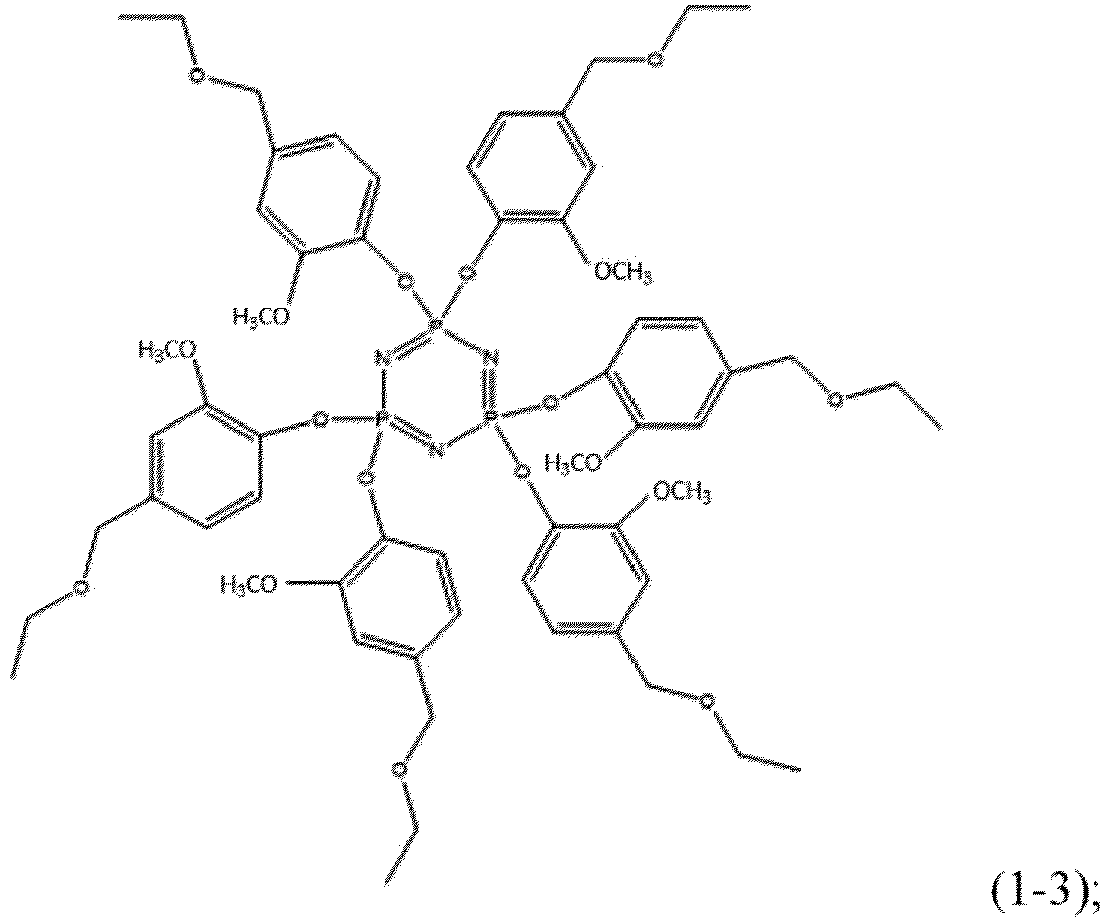
- the phosphazene derivative is one selected from the group consisting of compounds of (1-1) to (1-4):
- the electrolyte is present at an amount of 9.95 to 19.95 wt.% based on a total weight of the composition.
- the additive is present at an amount of 0.05 to 20.0 wt.% based on a total weight of the composition.
- the electrolyte comprises at least one selected from lithium hexafluorophosphate (LiPF 6 ), lithium fluoroborate (LiBF 4 ), lithium bis(trifluoromethanesulfonyl)imide (LiN(CF 3 SO 2 ) 2 ), and lithium trifluoromethanesulfonate (LiCF 3 SO 3 ).
- the non-aqueous solvent comprises at least one selected from the group consisting of carbonates, furans, ethers, sulfides, and nitriles.
- the non-aqueous solvent comprises at least one selected from the group consisting of ether-based polymers, polymethacrylate-based polymers, polyacrylated polymers, and fluoropolymers.
- the present disclosure further provides an electrochemical device, comprising an anode, a cathode, and the composition of the present disclosure configured between the anode and the cathode.
- the electrochemical device of the present disclosure it is a lithium-ion secondary battery.
- composition used in an electrochemical device of the present disclosure comprises a novel phosphazene derivative-based additive, and the defect in the safety of the conventional lithium-ion battery can be improved by the use of the additive.
- the present disclosure is directed to a phosphazene derivative having a structure of Formula (I): wherein n is an integer of 3 to 6, R 1 and R 2 are independently selected from a group represented by Formula (I-1) or Formula (I-2), wherein A is -R 3 -O-R 4 , -R 3 -CH 3-m (OR 4 ) m , -CH 3-m (OR 4 ) m or R 3 is unsubstituted Ci-Cs alkylene or C 1 -C 8 alkylene substituted with C 1 -C 8 alkyl, R 4 is C 1 -C 8 alkyl, R 5 is C 1 -C 3 alkyl, R 6 is C 1 -C 3 alkylene, R 7 is C 1 -C 3 alkyl, x is 1 or 2, m is 2 or 3, p is a number of the A bonded to a carbon in a benzene ring to which the A is attached, and p is an integer of 0 to 3;
- a range of the number of carbon atoms of the present disclosure can extend from a lower limit to an upper limit, for example, C 1 -C 8 refers to a number of the carbon atom(s) of 1, 2, 3, 4, 5, 6, 7, or 8.
- the compound of the phosphazene derivative having the structure of Formula (I) of the present disclosure is selected from Table 1, but not limited thereto.
- Table 1 Compound of Formula 1-1 Compound of Formula 1-2 Compound of Formula 1-3 Compound of Formula 1-4
- the compound of the phosphazene derivative having the structure of Formula (I) of the present disclosure is preferably the following compound:
- the present disclosure provides a composition for an electrochemical device, which comprises the novel phosphazene derivative-based additive of the present disclosure.
- the defect of the electrochemical device of poor safety can be improved by the use of the additive.
- the composition of the present disclosure comprises an electrolyte, a non-aqueous solvent and an additive.
- the additive comprises the phosphazene derivative having the structure of Formula (I) of the present disclosure: wherein n is an integer of 3 to 6, R 1 and R 2 are independently selected from a group represented by Formula (I-1) or Formula (I-2), wherein A is -R 3 -O-R 4 , -R 3 -CH 3-m (OR 4 ) m , -CH 3-m (OR 4 ) m or R 3 is unsubstituted C 1 -C 8 alkylene or C 1 -C 8 alkylene substituted with C 1 -C 8 alkyl, R 4 is C 1 -C 8 alkyl, R 5 is C 1 -C 3 alkyl, R 6 is C 1 -C 3 alkylene, R 7 is C 1 -C 3 alkyl, x is 1 or 2, m is 2 or 3, p is a number of the Abonded to a carbon in a benzene ring to which the A is attached, and p is an integer of 0 to 3;
- a range of the number of carbon atoms of the present disclosure can extend from a lower limit to an upper limit, for example, C 1 -C 8 refers to a number of carbon atoms of 1, 2, 3, 4, 5, 6, 7, or 8.
- the phosphazene derivative having the structure of Formula (I) contained in the additive of the composition of the present disclosure is selected from Table 1 aforementioned, but not limited thereto.
- the phosphazene derivative having the structure of Formula (I) contained in the additive of the composition of the present disclosure is preferably the following compound:
- composition of the present disclosure the contents of each component can vary depending on the actual application and is not limited to the contents described herein.
- the amount of the electrolyte contained in the composition of the present application is about 9.95 to 19.95 wt.%, e.g., 9.95, 10.0, 11.0, 12.0, 13.0, 14.0, 15.0, 16.0, 17.0, 18.0, 19.0 or 19.95 wt.%, based on the total weight of the composition.
- the amount of the additive contained in the composition of the present application is about 0.05 to 20.0 wt.%, e.g., 0.05, 0.1, 0.2, 0.3, 0.4, 0.5, 0.6, 0.7, 0.8, 0.9, 1.0, 2.0, 3.0, 4.0, 5.0, 6.0, 7.0, 8.0, 9.0, 10.0, 11.0, 12.0, 13.0, 14.0, 15.0, 16.0, 17.0, 18.0, 19.0 or 20.0 wt.%, based on the total weight of the composition.
- the content of the non-aqueous solvent can vary corresponding to changes in the contents of other components in the composition, provided that the total amount of the non-aqueous solvent and the other components in the composition is 100 wt.% That is, one of the uses of the non-aqueous solvent is to complement the composition to 100 wt.%.
- the non-aqueous solvent contained in the composition of the present disclosure is at an amount of about 65.0 to 90.0 wt.%, e.g., 65, 66, 67, 68, 69, 70, 71, 72, 73, 74, 75, 76, 77, 78, 79, 80, 81, 82, 83, 84, 85, 86, 87, 88, 89 or 90 wt.%.
- the composition of the present disclosure contains the non-aqueous solvent at an amount of about 80.0 to 90.0 wt.%.
- the electrolyte comprises at least one selected from the group consisting of lithium hexafluorophosphate (LiPF 6 ), lithium fluoroborate (LiBF 4 ), lithium bis(trifluoromethanesulfonyl)imide (LiN(CF 3 SO 2 ) 2 ), and lithium trifluoromethanesulfonate (LiCF 3 SO 3 ).
- the non-aqueous solvent in the composition of the present disclosure can be in a liquid or non- liquid form such as solid or gel, but not limited thereto.
- non-aqueous solvents in the liquid form those commonly used in the art can be selected, such as at least one selected from the group consisting of carbonates (e.g., ethylene carbonate, propylene carbonate, dimethyl carbonate, diethyl carbonate, or methylethyl carbonate), furans (e.g., tetrahydrofuran), ethers (e.g., diethyl ether), sulfides (e.g., methyl-sulfolane) and nitriles (e.g., acetonitrile, propionitrile).
- the non-aqueous solvent comprises at least one selected from the group consisting of carbonates, furans, ethers, sulfides and nitriles.
- the non-aqueous solvents in the non-liquid form can be a polymer compound, e.g., at least one selected from the group consisting of ether-based polymers (e.g., polyethyleneoxide or a cross-linked product thereof), polymethacrylate-based polymers, polyacrylate-based polymers, fluoropolymers (e.g., polyvinylidene fluoride (PVDF) and vinylidene fluoride-hexafluoro propylene polymer).
- the non-aqueous solvent comprises at least one selected from the group consisting of ether-based polymers, polymethacrylate-based polymers, polyacrylated polymers, and fluoropolymers.
- composition of the present disclosure can be obtained either by dissolving the aforementioned electrolyte and the phosphazene derivative-based additive of the present disclosure in a liquid non-aqueous solvent described above or by dissolving the electrolyte and the phosphazene derivative-based additive in liquid non-aqueous solvents, respectively, followed by mixing.
- the electrolyte, the phosphazene derivative-based additive and the solid non-aqueous solvent are first dissolved with organic solvents (e.g., alkanes, ketones, aldehydes, alcohols, ethers, benzene, toluene, xylene, kerosene, or the combination thereof), mixed thoroughly, and heated to evaporate the organic solvents to yield the composition of the present disclosure.
- organic solvents e.g., alkanes, ketones, aldehydes, alcohols, ethers, benzene, toluene, xylene, kerosene, or the combination thereof
- the electrochemical device different from the conventional devices is provided by applying the aforementioned composition therein.
- the present disclosure also provides an electrochemical device, comprising an anode, a cathode, and the composition of the present disclosure configured between the anode and the cathode.
- the electrochemical device of the present disclosure is a lithium-ion secondary battery.
- the compound of Formula 1-1 of the present disclosure can be prepared by the following Scheme 1. Specifically, hexachlorophosphazene (1 g, 2.87 mmol, 1 eq) was mixed with acetone (20 mL) to form Solution a; 4-(2-methoxyethyl)phenol (3.94 g, 25.9 mmol, 9 eq) was mixed with acetone (60 mL) to form Solution b. Afterwards, K 2 CO 3 (3.58 g, 25.9 mmol, 9 eq) was added to the Solution b to form Solution c. The Solution c was poured into the Solution a to perform a condensation and reflux reaction in an oil bath at 70°C for 4 days.
- Ethylene carbonate (EC) was dissolved in diethyl carbonate (DEC) or dimethyl carbonate (DMC) at an equal weight ratio, to give a mixed solution of EC:DEC:DMC (1:1:1) or EC:DEC (1:1). Thereafter, 11.8 wt.% of LiPF 6 electrolyte was added to the mixed solution aforementioned, after calculated based on the weight molar concentration. Finally, 5 wt.% or 7 wt.% of the additive (compound of Formula 1-1 prepared by the method described) was added and stirred to mix thoroughly, thereby forming the composition for the electrochemical device.
- DEC diethyl carbonate
- DMC dimethyl carbonate
- the compounds were prepared by the same procedures described in the preparation of the compound of Formula 1-1 in the Preparation Example 1, except that 4-(2-methoxyethyl)phenol is replaced with vanillyl butyl ether, vanillyl ethyl ether and 4-methoxyphenol), respectively, to prepare each compound of Formula 1-2, Formula 1-3, and Formula 1-4.
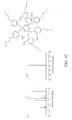
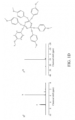
- the NMR spectra of the compounds of Formula 1-2 to Formula 1-4 were shown in FIGs. 1B-1D , respectively.
- Results of tests The results of the fire-retarding tests were summarized in Table 2 below. It can be seen from the addition concentrations and the self-extinguishing times, the compound of Formula 1-1 did have the effect of improving the fire-retarding capability of the electrolyte, with the fire-retarding effect at an amount of 5% being better than that of PFPN, a commercially available fire-retardant.
- Coin cells were assembled by using LiFePO 4 as the cathode, lithium as the anode, and a commercial separator (Celgard ® 2325) and an electrolyte (1 M LiPF6 in EC/DEC (1:1)).
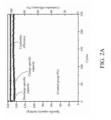
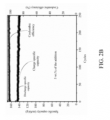
- Coin cells were charged and discharged by repeating (1) charging to 4.0V with 1C constant current and (2) discharging to 2.5V under the discharge condition of 1C constant current by using an electrolyte without the addition (0%, as a control group) or with the addition of 5%, 10%, 15% and 20% of the compound of Formula 1-1, under an environmental temperature of 25°C, and the degradation of capacitance in the first 250 cycles was recorded (Charge Discharge Test Instrument: Actech Systems BAT-750B). The results of the tests were shown in FIGs. 2A-2E , it can be seen that neither the addition nor the addition amount of the compound of Formula 1-1 showed an obvious effect on the cycle life of the battery within 250 cycles.
- Electric capacities during the first 5 cycles and the last 5 cycles as well as the electric capacity retention rates in the 250 cycles tests were recorded in Table 3 below, with different addition ratio of the compound of Formula 1-1.
- Table 3 Electric capacities during the first/last 5 cycles as well as the electric capacity retention rates in the 250 cycles tests with different addition ratio of the compound of Formula 1-1 Content of the compound of Formula 1-1 (%) 0 5 10 15 20 Electric capacity during the first 5 cycles (mAh/g) 144.6 ⁇ 0. 09 144.58 ⁇ 0 .26 133.69 ⁇ 0 .64 123.89 ⁇ 0. 30 130.57 ⁇ 0. 3 Electric capacity during the last 5 cycles (mAh/g) 145.2 ⁇ 0. 35 139.96 ⁇ 0 .24 135.42 ⁇ 0 .12 119.16 ⁇ 0. 12 128.16 ⁇ 0. 11 Electric capacity retention rate (%) >100 96.8 >100 96.2 98.2
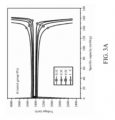
- Charge-discharge tests were performed on the coin cells assembled in Example 2 by using an electrolyte without the addition (0%, as the control group) or with the addition of 5%, 10%, 15% and 20% of the compound of Formula 1-1 aforementioned at an environmental temperature of 25 °C with different rates of 0.1 C, 0.2 C, 0.3 C, 0.5 C and 1 C (charge-discharge tester:Acutech Systems BAT-750B). The results of the tests were shown in FIGs. 3A-3E , it can be seen that there was no obvious difference in the specific capacity at the same charge-discharge rate, regardless of the addition and the addition amount of the compound of Formula 1-1.
- the type of batteries in the tests are punch cells employed with the cathode of LiNi 0.6 Mn 0.2 Co 0.2 O 2 and the anode of artificial graphite (simplified as NMC622 lithium ion batteries), which were designed as shown in Table 5 below.
- the device for the nail penetration tests was customized by disposing of steel needles and the controller in the metal case and providing temperature and voltage monitors outside the case, with the sensing wiring inserted into the device.
- the nail penetration tests complied with the specifications for needle diameter and nail penetrating rate in standards such as IEC60086-4:2000, UL1642-2007, and UL2054.
- the phosphazene derivative of the present disclosure is an inventive substance having excellent efficacies and can be utilized broadly.
Landscapes
- Chemical & Material Sciences (AREA)
- Engineering & Computer Science (AREA)
- Chemical Kinetics & Catalysis (AREA)
- Electrochemistry (AREA)
- General Chemical & Material Sciences (AREA)
- Manufacturing & Machinery (AREA)
- Organic Chemistry (AREA)
- Condensed Matter Physics & Semiconductors (AREA)
- General Physics & Mathematics (AREA)
- Inorganic Chemistry (AREA)
- Physics & Mathematics (AREA)
- Power Engineering (AREA)
- Materials Engineering (AREA)
- Biochemistry (AREA)
- General Health & Medical Sciences (AREA)
- Molecular Biology (AREA)
- Life Sciences & Earth Sciences (AREA)
- Health & Medical Sciences (AREA)
- Microelectronics & Electronic Packaging (AREA)
- Secondary Cells (AREA)
- Electric Double-Layer Capacitors Or The Like (AREA)
Abstract
Description
- The present disclosure relates to a composition used in an electrochemical device, especially to a phosphazene derivatives-based additive in the composition applied in the electrochemical device.
- Currently, lithium-ion batteries have been used broadly in the electronic, energy storing, biochemical, electric vehicles, and other devices and equipment. The batteries correspondingly used therefore are expected to have high energy densities and great safeties, as well as the ability to maintain the advantages such as high charge and discharge capacities after long-term usage. Thus, lithium-ion batteries meeting the characteristic requirements are of increasing interest in the associated academics and industries.
- Lithium-ion batteries have been used in high power products including electric tools, electric vehicles, and so on, due to their advantages of light mass, high energy density, good cycle properties, high power, and the like. The selection of solid electrolytes, colloidal electrolytes, and fire retardant electrolytes has become a focus of attention for improving the safety of lithium-ion batteries, based on the safety and cost considerations of electric vehicles for a battery as the power source. Although a solid/colloidal electrolyte material can address the risk of electrolyte leakage, it has an issue of the interface resistance still needed to be addressed in various fields and is not a product technique capable of being commercialized in the near future. Therefore, the selection of a suitable fire-retarding electrolyte is one of the options of interest to a manufacturer currently.
- A fire-retarding agent containing organic phosphate compounds, triphenyl phosphate (TPP) and tributyl phosphate (TBP), has been described in a literature (Journal of Power Source, Volume 119-121, 1 June 2003, Pages 383-387) and provides excellent thermal safety for a lithium-ion battery in a completely charged state. However, the molecules of most phosphorus-containing compounds have large groups, with an increase in viscosity of the electrolyte in the lithium-ion battery due to excessive addition of phosphorus-containing compounds, which reduces the ion conductivity and has a great side effect on the rate performance of the lithium-ion battery. A highly efficient fire-retarding additive, (ethoxy)pentafluorocyclotriphosphazene (N3P3F5OCH2CH3, PFPN), has been described in another literature (Journal of Power Source, ) and has been synthesized and used as a safety protective additive in a rechargeable lithium-ion battery. It is believed that the PFPN additive is one of the most efficient fire-retarding additives reported in all literature up to date. The PFPN additive has exhibited good electrochemical compatibility with a graphite anode and a LiCoO2 cathode, as demonstrated by the charge-discharge test. Meanwhile, the PFPN additive incorporated can improve the cycle performance of the LiCoO2 electrode at a high voltage cutoff of 4.5 V, suggesting its highly promising application in a high pressure lithium-ion battery.
- The PFPN additive, a fluorine-containing phosphazene derivative, has an efficacy better than that of conventional phosphate fire retardants, however, the battery manufacturers show no interest in importing the additive due to the high price. Thus, there is an issue needed to be solved urgently in the art to provide an electrolyte additive with low price, ease of process and ability to improve the safety of a battery.
- Given the disadvantages of the prior art described above, the present disclosure provides an electrolyte additive with a high electrochemical stability, a low addition amount of additives, and an ability to improve safety of a lithium-ion battery in a good cycle state, without an increase in complexity of process.
- For the purpose above, the present disclosure provides a phosphazene derivative having a structure of Formula (I):


- B is C1-C8 alkoxy or C1-C8 alkyl, and q is an integer of 0 to 3; and
- 0<p+q ≤ 5.
- In one embodiment of the phosphazene derivative of the present disclosure, n is 3, and R1 and R2 are groups represented by Formula (I-1), A is -R3-O-R4, R3 is C1-C8 alkylene, R4 is C1-C8 alkyl, and p is 0 or 1; B is C1-C8 alkoxy, and q is 0 or 1; and 0 < p + q ≤ 2.
- In one embodiment of the phosphazene derivative of the present disclosure, when the R1 and R2 are selected from groups shown in Formula (I-1), the phosphazene derivative is one selected from the group consisting of compounds of (1-1) to (1-4):


- The present disclosure further provides a composition for an electrochemical device, and the composition comprises an electrolyte, a non-aqueous solvent and an additive comprising the phosphazene derivative of the present disclosure.
- In one embodiment of the composition of the present disclosure, in the phosphazene derivative having the structure of Formula (I), n is 3, and R1 and R2 are groups showed in Formula (I-1), A is -R3-O-R4, R3 is C1-C8 alkylene, R4 is C1-C8 alkyl, and p is 0 or 1; B is C1-C8 alkoxy, and q is 0 or 1; and 0 < p + q ≤ 2.
- In one embodiment of the composition of the present disclosure, when the R1 to R2 are selected from groups showed in Formula (I-1), the phosphazene derivative is one selected from the group consisting of compounds of (1-1) to (1-4):



- In one embodiment of the composition of the present disclosure, the electrolyte is present at an amount of 9.95 to 19.95 wt.% based on a total weight of the composition.
- In one embodiment of the composition of the present disclosure, the additive is present at an amount of 0.05 to 20.0 wt.% based on a total weight of the composition.
- In one embodiment of the composition of the present disclosure, the electrolyte comprises at least one selected from lithium hexafluorophosphate (LiPF6), lithium fluoroborate (LiBF4), lithium bis(trifluoromethanesulfonyl)imide (LiN(CF3SO2)2), and lithium trifluoromethanesulfonate (LiCF3SO3).
- In one embodiment of the composition of the present disclosure, the non-aqueous solvent comprises at least one selected from the group consisting of carbonates, furans, ethers, sulfides, and nitriles.
- In one embodiment of the composition of the present disclosure, the non-aqueous solvent comprises at least one selected from the group consisting of ether-based polymers, polymethacrylate-based polymers, polyacrylated polymers, and fluoropolymers.
- The present disclosure further provides an electrochemical device, comprising an anode, a cathode, and the composition of the present disclosure configured between the anode and the cathode.
- In one embodiment of the electrochemical device of the present disclosure, it is a lithium-ion secondary battery.
- Accordingly, the composition used in an electrochemical device of the present disclosure comprises a novel phosphazene derivative-based additive, and the defect in the safety of the conventional lithium-ion battery can be improved by the use of the additive.
- The present disclosure can be more fully understood by reading the following descriptions of the embodiments, with reference made to the accompanying drawings.
-
FIGs. 1A to 1D are NMR spectra of the compounds of Formulae 1-1 to 1-4 of the present disclosure, respectively. -
FIGs. 2A to 2E show results of 1C cycle life tests under an environmental temperature of 25 °C for batteries having the electrolytes without addition of the compound of Formula 1-1 or with addition of the compound of Formula 1-1 at an amount of 5%, 10%, 15% and 20%, respectively. -
FIGs. 3A to 3E show results of charge-discharge rate tests under an environmental temperature of 25 °C with different rates of 0.1 C, 0.2 C, 0.3 C, 0.5 C and 1 C for batteries having the electrolyte without addition of the compound of Formula 1-1 or with addition of the compound of Formula 1-1 at an amount of 5%, 10%, 15% and 20%, respectively. -
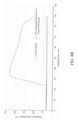
FIGs. 4Ato 4B show observation curves of a battery voltage and a temperature in nail penetration tests on NMC622 lithium ion batteries. - The following examples are used for illustrating the present disclosure. A person skilled in the art can easily conceive the other advantages and effects of the present disclosure, based on the disclosure of the specification. The present disclosure can also be implemented or applied as described in different examples. It is possible to modify or alter the following examples for carrying out this disclosure without contravening its scope, for different aspects and applications.
- The present disclosure is directed to a phosphazene derivative having a structure of Formula (I):


- B is C1-C8 alkoxy or C1-C8 alkyl, and q is an integer of 0 to 3; and
- 0<p+q ≤ 5.
- In one embodiment, a range of the number of carbon atoms of the present disclosure can extend from a lower limit to an upper limit, for example, C1-C8 refers to a number of the carbon atom(s) of 1, 2, 3, 4, 5, 6, 7, or 8.
- In some embodiments, the compound of the phosphazene derivative having the structure of Formula (I) of the present disclosure is selected from Table 1, but not limited thereto.
Table 1: Compound of Formula 1-1 
Compound of Formula 1-2 
Compound of Formula 1-3 
Compound of Formula 1-4 
- In another embodiment, the compound of the phosphazene derivative having the structure of Formula (I) of the present disclosure is preferably the following compound:

- In another embodiment, the present disclosure provides a composition for an electrochemical device, which comprises the novel phosphazene derivative-based additive of the present disclosure. The defect of the electrochemical device of poor safety can be improved by the use of the additive. In one embodiment, the composition of the present disclosure comprises an electrolyte, a non-aqueous solvent and an additive. The additive comprises the phosphazene derivative having the structure of Formula (I) of the present disclosure:


- B is C1-C8 alkoxy or C1-C8 alkyl, and q is an integer of 0 to 3; and
- 0<p+q ≤ 5.
- In one embodiment, a range of the number of carbon atoms of the present disclosure can extend from a lower limit to an upper limit, for example, C1-C8 refers to a number of carbon atoms of 1, 2, 3, 4, 5, 6, 7, or 8.
- In one embodiment, the phosphazene derivative having the structure of Formula (I) contained in the additive of the composition of the present disclosure is selected from Table 1 aforementioned, but not limited thereto.
- In another embodiment, the phosphazene derivative having the structure of Formula (I) contained in the additive of the composition of the present disclosure is preferably the following compound:

- In the composition of the present disclosure, the contents of each component can vary depending on the actual application and is not limited to the contents described herein.
- In one embodiment, the amount of the electrolyte contained in the composition of the present application is about 9.95 to 19.95 wt.%, e.g., 9.95, 10.0, 11.0, 12.0, 13.0, 14.0, 15.0, 16.0, 17.0, 18.0, 19.0 or 19.95 wt.%, based on the total weight of the composition.
- In one embodiment, the amount of the additive contained in the composition of the present application is about 0.05 to 20.0 wt.%, e.g., 0.05, 0.1, 0.2, 0.3, 0.4, 0.5, 0.6, 0.7, 0.8, 0.9, 1.0, 2.0, 3.0, 4.0, 5.0, 6.0, 7.0, 8.0, 9.0, 10.0, 11.0, 12.0, 13.0, 14.0, 15.0, 16.0, 17.0, 18.0, 19.0 or 20.0 wt.%, based on the total weight of the composition.
- In the composition of the present disclosure, the content of the non-aqueous solvent can vary corresponding to changes in the contents of other components in the composition, provided that the total amount of the non-aqueous solvent and the other components in the composition is 100 wt.% That is, one of the uses of the non-aqueous solvent is to complement the composition to 100 wt.%. In one embodiment, the non-aqueous solvent contained in the composition of the present disclosure is at an amount of about 65.0 to 90.0 wt.%, e.g., 65, 66, 67, 68, 69, 70, 71, 72, 73, 74, 75, 76, 77, 78, 79, 80, 81, 82, 83, 84, 85, 86, 87, 88, 89 or 90 wt.%. In one embodiment, the composition of the present disclosure contains the non-aqueous solvent at an amount of about 80.0 to 90.0 wt.%.
- The electrolytes suitable for the present disclosure are those commonly used in the art. In one embodiment of the composition of the present disclosure, the electrolyte comprises at least one selected from the group consisting of lithium hexafluorophosphate (LiPF6), lithium fluoroborate (LiBF4), lithium bis(trifluoromethanesulfonyl)imide (LiN(CF3SO2)2), and lithium trifluoromethanesulfonate (LiCF3SO3).
- The non-aqueous solvent in the composition of the present disclosure can be in a liquid or non- liquid form such as solid or gel, but not limited thereto.
- In one embodiment of the non-aqueous solvents in the liquid form, those commonly used in the art can be selected, such as at least one selected from the group consisting of carbonates (e.g., ethylene carbonate, propylene carbonate, dimethyl carbonate, diethyl carbonate, or methylethyl carbonate), furans (e.g., tetrahydrofuran), ethers (e.g., diethyl ether), sulfides (e.g., methyl-sulfolane) and nitriles (e.g., acetonitrile, propionitrile). In one embodiment of the composition of the present disclosure, the non-aqueous solvent comprises at least one selected from the group consisting of carbonates, furans, ethers, sulfides and nitriles.
- In one embodiment, the non-aqueous solvents in the non-liquid form can be a polymer compound, e.g., at least one selected from the group consisting of ether-based polymers (e.g., polyethyleneoxide or a cross-linked product thereof), polymethacrylate-based polymers, polyacrylate-based polymers, fluoropolymers (e.g., polyvinylidene fluoride (PVDF) and vinylidene fluoride-hexafluoro propylene polymer). In one embodiment of the composition of the present disclosure, the non-aqueous solvent comprises at least one selected from the group consisting of ether-based polymers, polymethacrylate-based polymers, polyacrylated polymers, and fluoropolymers.
- The composition of the present disclosure can be obtained either by dissolving the aforementioned electrolyte and the phosphazene derivative-based additive of the present disclosure in a liquid non-aqueous solvent described above or by dissolving the electrolyte and the phosphazene derivative-based additive in liquid non-aqueous solvents, respectively, followed by mixing. If the used non-aqueous solvent is solid, the electrolyte, the phosphazene derivative-based additive and the solid non-aqueous solvent are first dissolved with organic solvents (e.g., alkanes, ketones, aldehydes, alcohols, ethers, benzene, toluene, xylene, kerosene, or the combination thereof), mixed thoroughly, and heated to evaporate the organic solvents to yield the composition of the present disclosure.
- In another embodiment, the electrochemical device different from the conventional devices is provided by applying the aforementioned composition therein. In other words, the present disclosure also provides an electrochemical device, comprising an anode, a cathode, and the composition of the present disclosure configured between the anode and the cathode.
- In one embodiment, the electrochemical device of the present disclosure is a lithium-ion secondary battery.
- Various properties and efficacies will be illustrated by Examples below. The Examples set forth are used to illustrate the properties of the present disclosure which is not limited to those illustrated in the particular examples.
- The compound of Formula 1-1 of the present disclosure can be prepared by the following
Scheme 1. Specifically, hexachlorophosphazene (1 g, 2.87 mmol, 1 eq) was mixed with acetone (20 mL) to form Solution a; 4-(2-methoxyethyl)phenol (3.94 g, 25.9 mmol, 9 eq) was mixed with acetone (60 mL) to form Solution b. Afterwards, K2CO3 (3.58 g, 25.9 mmol, 9 eq) was added to the Solution b to form Solution c. The Solution c was poured into the Solution a to perform a condensation and reflux reaction in an oil bath at 70°C for 4 days. After the reaction was completed, the solid was removed, and the solvent was removed by distillation under a reduced pressure to yield a crude product. The crude product was washed with methanol and water repeatedly, and then freezing-dried to yield the compound of Formula 1-1 as a powder. The NMR spectrum of the compound of Formula 1-1 was shown inFIG. 1A . -

- Ethylene carbonate (EC) was dissolved in diethyl carbonate (DEC) or dimethyl carbonate (DMC) at an equal weight ratio, to give a mixed solution of EC:DEC:DMC (1:1:1) or EC:DEC (1:1). Thereafter, 11.8 wt.% of LiPF6 electrolyte was added to the mixed solution aforementioned, after calculated based on the weight molar concentration. Finally, 5 wt.% or 7 wt.% of the additive (compound of Formula 1-1 prepared by the method described) was added and stirred to mix thoroughly, thereby forming the composition for the electrochemical device.
- The compounds were prepared by the same procedures described in the preparation of the compound of Formula 1-1 in the Preparation Example 1, except that 4-(2-methoxyethyl)phenol is replaced with vanillyl butyl ether, vanillyl ethyl ether and 4-methoxyphenol), respectively, to prepare each compound of Formula 1-2, Formula 1-3, and Formula 1-4. The NMR spectra of the compounds of Formula 1-2 to Formula 1-4 were shown in
FIGs. 1B-1D , respectively. - Fire-retarding tests were performed as below by using the compound of Formula 1-1 obtained in Preparative Example 1 in the electrolyte:
- 1. The compound of Formula 1-1 and the commercially available fire retardant PFPN (pentafluoroethoxycyclotriphosphazene) were dissolved in the commercially available electrolyte (EC: DEC =1:1; 1M LiPF6) at the amounts of 0 and 5 wt.%, respectively, to form electrolytes to be tested.
- 2. 10 ml of each electrolyte to be tested was taken into a 20 ml sample bottle. A fiberglass cloth of 4 cm long and 1 cm wide was soaked completely in the electrolyte for 10 sec, and then was removed and fixed at one end on the tube rack with the binder clip.
- 3. The fiberglass cloth was brought into contact with a fixed fire source (from a commercial butane lighter) at the non-fixed end opposite to the fixed end for 3 secs, then the fire source was removed, and the combustion phenomenon was observed until the flame completely extinguished and the combustion duration was recorded. The duration was recorded as the time from removal of the fire source to complete extinguishing (self-extinguishing time).
- Results of tests: The results of the fire-retarding tests were summarized in Table 2 below. It can be seen from the addition concentrations and the self-extinguishing times, the compound of Formula 1-1 did have the effect of improving the fire-retarding capability of the electrolyte, with the fire-retarding effect at an amount of 5% being better than that of PFPN, a commercially available fire-retardant.
Table 2: Results of the fire-retarding tests on electrolytes Sample (wt.%) 0 5 Self-extinguishing time Fiberglass cloth 0 s - Electrolyte (blank reagent) 24 s - Electrolyte + PFPN - 29 s Electrolyte + compound of Formula 1-1 - 19 s - Coin cells were assembled by using LiFePO4 as the cathode, lithium as the anode, and a commercial separator (Celgard® 2325) and an electrolyte (1 M LiPF6 in EC/DEC (1:1)).
- Coin cells were charged and discharged by repeating (1) charging to 4.0V with 1C constant current and (2) discharging to 2.5V under the discharge condition of 1C constant current by using an electrolyte without the addition (0%, as a control group) or with the addition of 5%, 10%, 15% and 20% of the compound of Formula 1-1, under an environmental temperature of 25°C, and the degradation of capacitance in the first 250 cycles was recorded (Charge Discharge Test Instrument: Actech Systems BAT-750B). The results of the tests were shown in
FIGs. 2A-2E , it can be seen that neither the addition nor the addition amount of the compound of Formula 1-1 showed an obvious effect on the cycle life of the battery within 250 cycles. Electric capacities during the first 5 cycles and the last 5 cycles as well as the electric capacity retention rates in the 250 cycles tests were recorded in Table 3 below, with different addition ratio of the compound of Formula 1-1.Table 3: Electric capacities during the first/last 5 cycles as well as the electric capacity retention rates in the 250 cycles tests with different addition ratio of the compound of Formula 1-1 Content of the compound of Formula 1-1 (%) 0 5 10 15 20 Electric capacity during the first 5 cycles (mAh/g) 144.6±0. 09 144.58±0 .26 133.69±0 .64 123.89±0. 30 130.57±0. 3 Electric capacity during the last 5 cycles (mAh/g) 145.2±0. 35 139.96±0 .24 135.42±0 .12 119.16±0. 12 128.16±0. 11 Electric capacity retention rate (%) >100 96.8 >100 96.2 98.2 - Charge-discharge tests were performed on the coin cells assembled in Example 2 by using an electrolyte without the addition (0%, as the control group) or with the addition of 5%, 10%, 15% and 20% of the compound of Formula 1-1 aforementioned at an environmental temperature of 25 °C with different rates of 0.1 C, 0.2 C, 0.3 C, 0.5 C and 1 C (charge-discharge tester:Acutech Systems BAT-750B). The results of the tests were shown in
FIGs. 3A-3E , it can be seen that there was no obvious difference in the specific capacity at the same charge-discharge rate, regardless of the addition and the addition amount of the compound of Formula 1-1. As examples, the discharge specific electric capacities at the rates of 0.1 C and 1 C with different addition amount of the compound of Formula 1-1 were recorded in Table 4 below.Table 4: Discharge specific electric capacities at the rates of 0.1 C and 1 C with different addition amounts of the compound of Formula 1-1 Sample wt.% Discharge specific capacity (mAh/g) 0.1 C 1 C Compound of Formula 1-1 0 151.5 143.0 5 152.8 144.3 10 152.4 134.8 15 151.2 136.8 20 154.1 133.6 - The type of batteries in the tests are punch cells employed with the cathode of LiNi0.6Mn0.2Co0.2O2 and the anode of artificial graphite (simplified as NMC622 lithium ion batteries), which were designed as shown in Table 5 below.
Table 5: Designs of NMC622 lithium ion batteries Anode/cathode material Ni-Mn-Co 622 cathode/artificial graphite anode Compositions of electrolyte 1M LiPF6 in electrolyte (EC: DEC: DMC=1: 1: 1) Separator PP 20 um, without coating Battery size 3.5 + 0.1 mm * 40 + 1 mm * 60 ± 1 mm Battery capacity 1 Ah (energy density of about 220 Wh/kg) - A punch cell with the addition of 7 wt.% of the compound of Formula 1-1 as the experiment group, and one with no addition of a fire retardant as the control group, were tested for battery performances with a charger/discharger (CT-4008T-5V6A-S1, Neware Technology Co,.Ltd.) (Assayer: Keysight 34972A LXI) and subjected to nail penetration tests. The device for the nail penetration tests was customized by disposing of steel needles and the controller in the metal case and providing temperature and voltage monitors outside the case, with the sensing wiring inserted into the device. The nail penetration tests complied with the specifications for needle diameter and nail penetrating rate in standards such as IEC60086-4:2000, UL1642-2007, and UL2054. Cells were test for performance in steps shown in Table 6 below; and the parameters for nail penetration tests were shown in Table 7 below.
Table 6: Steps for testing performance of batteries 1 Charging to 4.25V with 1C constant current 2 Charging with 1C constant voltage to a current cutoff of 0.175 A 3 Resting for 2 minutes 4 Discharging to 2.8V with 1C constant current 5 Resting for 2 minutes and repeating the steps aforementioned Table 7: Parameters for nail penetration test Needle diameter 3 mm Nail penetrating rate 4.2 cm/s Initial height 24.5 cm - The results from the battery performance test and the nail penetration test were shown in Table 8 below and
FIGs. 4A and4B . It was observed in the nail penetration test, for cells in the experiment group with the addition of the compound of Formula 1-1, no fire or smoke was seen, the surface temperature was maintained at 30°C without evident increase, and there was no significant change in voltage of the cells; in contrast, fire and smoke were observed in the control group without the addition of any additive with a dramatic increase in surface temperature and reduction in the voltage to 0V. Changes in voltage and temperature of the experiment and control groups were shown inFIGs. 4A and4B . It can be seen from the results presented above, the safety of battery containing the electrolyte formulated with the compound of Formula 1-1 of the present disclosure was improved in view of the results from the nail penetration test for battery safety relative to those containing the electrolyte without any additive.Table 8: The electronic properties of 1Ah punch cells and the results of nail penetration Additive (%) Charging voltage (V) Median voltage (V) Factional capacity (mAh) Inner resistance of product (mΩ) Results of nail penetration Control group ----- 4.25 3.64 1100.9 22.4 Dramatic rise in temperature, firing, burning, dropping to zero in voltage Experiment group 7 wt.% of the compound of 4.25 3.64 1104.4 25.7 No observation of burning, no significant changes in Formula 1-1 temperature, voltage, appearance - It can be seen from the examples above, by using the phosphazene derivative of the present disclosure as the additive to the electrolyte of a lithium-ion battery, in addition to no significant effect on the performance of the battery, the fire retardance effect better than PFPN, a commercially available fire retardant, can be achieved, and the safety of the battery upon external damages can be significantly enhanced. Therefore, the phosphazene derivative of the present disclosure is an inventive substance having excellent efficacies and can be utilized broadly.
- While some of the embodiments of the present disclosure have been described in detail above, it is, however, possible for those of ordinary skill in the art to make various modifications and changes to the particular embodiments shown without substantially departing from the teaching and advantages of the present disclosure. Such modifications and changes are encompassed in the scope of the present disclosure as set forth in the appended claims.
Claims (13)
- A phosphazene derivative having a structure of Formula (I):


 B is C1-C8 alkoxy or C1-C8 alkyl, and q is an integer of 0 to 3; and0 < p + q ≤ 5.
 - The phosphazene derivative of claim 1, wherein R1 and R2 are groups represented by Formula (I-1), A is -R3-O-R4, R3 is C1-C8 alkylene, R4 is C1-C8 alkyl, and p is 0 or 1; B is C1-C8 alkoxy, and q is 0 or 1; and 0 < p + q ≤ 2.
- The phosphazene derivative of claim 2, which is one selected from the group consisting of compounds (1-1) to (1-4) below:


- A composition for an electrochemical device, comprising an electrolyte, a non-aqueous solvent and an additive, wherein the additive comprises the phosphazene derivative according to claim 1.
- The composition of claim 4, wherein R1 and R2 are groups represented by Formula (I-1), A is -R3-O-R4, R3 is C1-C8 alkylene, R4 is C1-C8 alkyl, and p is 0 or 1; B is C1-C8 alkoxy, and q is 0 or 1; and 0 < p + q ≤ 2.
- The composition of claim 5, which is one selected from the group consisting of compounds (1-1) to (1-4) below:


- The composition of claim 4, wherein the electrolyte is present at an amount of 9.95 to 19.95 wt.%, based on a total weight of the composition.
- The composition of claim 4, wherein the additive is present at an amount of 0.05 to 20.0 wt.%, based on a total weight of the composition.
- The composition of claim 4, wherein the electrolyte comprises at least one selected from the group consisting of lithium hexafluorophosphate (LiPF6), lithium fluoroborate (LiBF4), lithium bis(trifluoromethanesulfonyl)imide (LiN(CF3SO2)2), and lithium trifluoromethanesulfonate (LiCF3SO3).
- The composition of claim 4, wherein the non-aqueous solvent comprises at least one selected from the group consisting of carbonates, furans, ethers, sulfides, and nitriles.
- The composition of claim 4, wherein the non-aqueous solvent comprises at least one selected from the group consisting of ether-based polymers, polymethacrylate-based polymers, polyacrylated polymers, and fluoropolymers.
- An electrochemical device, comprising an anode, a cathode, and the composition of claim 4 configured between the anode and the cathode.
- The electrochemical device of claim 12, which is a lithium-ion secondary battery.
Applications Claiming Priority (1)
| Application Number | Priority Date | Filing Date | Title |
|---|---|---|---|
| TW112114098A TWI843528B (en) | 2023-04-14 | 2023-04-14 | A phosphazene derivative, composition, and an electrochemical device comprising the same |
Publications (2)
| Publication Number | Publication Date |
|---|---|
| EP4446329A1 true EP4446329A1 (en) | 2024-10-16 |
| EP4446329B1 EP4446329B1 (en) | 2025-10-01 |
Family
ID=90720108
Family Applications (1)
| Application Number | Title | Priority Date | Filing Date |
|---|---|---|---|
| EP24169282.1A Active EP4446329B1 (en) | 2023-04-14 | 2024-04-09 | A phosphazene derivative, composition, and an electrochemical device comprising the same |
Country Status (4)
| Country | Link |
|---|---|
| US (1) | US20240347783A1 (en) |
| EP (1) | EP4446329B1 (en) |
| JP (1) | JP7706596B2 (en) |
| TW (1) | TWI843528B (en) |
Families Citing this family (1)
| Publication number | Priority date | Publication date | Assignee | Title |
|---|---|---|---|---|
| TWI913150B (en) * | 2025-04-09 | 2026-01-21 | 中國石油化學工業開發股份有限公司 | A phosphazene derivative-containing cathode slurry composition, cathode and electrochemical device comprising the same |
Citations (1)
| Publication number | Priority date | Publication date | Assignee | Title |
|---|---|---|---|---|
| US20130196223A1 (en) * | 2012-01-27 | 2013-08-01 | Battelle Energy Alliance, Llc | Electrodes including a polyphosphazene cyclomatrix, methods of forming the electrodes, and related electrochemical cells |
Family Cites Families (7)
| Publication number | Priority date | Publication date | Assignee | Title |
|---|---|---|---|---|
| JP2001023687A (en) * | 1999-07-09 | 2001-01-26 | Sony Corp | Non-aqueous electrolyte battery |
| JP5780481B2 (en) * | 2011-01-24 | 2015-09-16 | 積水化学工業株式会社 | Electrolyte, electrolyte membrane, lithium ion secondary battery and phosphazene compound |
| CN103570764B (en) * | 2013-11-04 | 2015-12-30 | 北京理工大学 | A kind of ring three phosphazene derivative containing mercapto groups and preparation method thereof |
| JP6583422B2 (en) * | 2015-10-22 | 2019-10-02 | ダイキン工業株式会社 | Electrolytic solution, electrochemical device, lithium ion secondary battery, and module |
| CN109734877A (en) * | 2018-12-25 | 2019-05-10 | 广东工业大学 | A novel bio-based phosphazene epoxy resin monomer and its prepared bio-based phosphorus nitrogen flame retardant epoxy resin |
| US11637329B2 (en) * | 2021-02-08 | 2023-04-25 | Global Graphene Group, Inc. | High-elasticity phosphazene polymer for lithium metal protection, lithium secondary battery and manufacturing method |
| CN115377509A (en) * | 2022-09-30 | 2022-11-22 | 江苏传艺钠电新材料有限公司 | Gel electrolyte with high safety for sodium ion battery and preparation method thereof |
-
2023
- 2023-04-14 TW TW112114098A patent/TWI843528B/en active
-
2024
- 2024-04-09 EP EP24169282.1A patent/EP4446329B1/en active Active
- 2024-04-10 US US18/631,207 patent/US20240347783A1/en active Pending
- 2024-04-11 JP JP2024063907A patent/JP7706596B2/en active Active
Patent Citations (1)
| Publication number | Priority date | Publication date | Assignee | Title |
|---|---|---|---|---|
| US20130196223A1 (en) * | 2012-01-27 | 2013-08-01 | Battelle Energy Alliance, Llc | Electrodes including a polyphosphazene cyclomatrix, methods of forming the electrodes, and related electrochemical cells |
Non-Patent Citations (4)
| Title |
|---|
| JOURNAL OF POWER SOURCE, vol. 119-121, 1 June 2003 (2003-06-01), pages 383 - 387 |
| JOURNAL OF POWER SOURCE, vol. 278, 15 March 2015 (2015-03-15), pages 190 - 196 |
| MAHANTA CHANDRA S. ET AL: "Cobaltabisdicarbollide based metallodendrimers with cyclotriphosphazene core", JOURNAL OF ORGANOMETALLIC CHEMISTRY, vol. 865, 1 June 2018 (2018-06-01), AMSTERDAM, NL, pages 183 - 188, XP093200386, ISSN: 0022-328X, DOI: 10.1016/j.jorganchem.2018.02.022 * |
| YE CHENGFENG ET AL: "MICROWAWASSISTED SYNTHESIS OF HEXASUBSTITUTED CYCLOTRIPHOSPHAZENES", ORGANIC PREPARATIONS AND PROCEDURES INTERNATIONAL: THE NEW JOURNAL FOR ORGANIC SYNTHESIS, vol. 33, no. 4, 1 August 2001 (2001-08-01), US, pages 376 - 379, XP093200381, ISSN: 0030-4948, DOI: 10.1080/00304940109356604 * |
Also Published As
| Publication number | Publication date |
|---|---|
| US20240347783A1 (en) | 2024-10-17 |
| TW202442665A (en) | 2024-11-01 |
| JP2024152688A (en) | 2024-10-25 |
| TWI843528B (en) | 2024-05-21 |
| JP7706596B2 (en) | 2025-07-11 |
| EP4446329B1 (en) | 2025-10-01 |
Similar Documents
| Publication | Publication Date | Title |
|---|---|---|
| EP1329974B1 (en) | Non-aqueous liquid electrolyte secondary cell and non-aqueous liquid electrolyte electric double layer capacitor | |
| KR100591057B1 (en) | Non-aqueous electrolyte cell, electrode stabilizer, phosphazene derivative and manufacturing method | |
| JP5448871B2 (en) | Flame retardant electrolyte for lithium secondary battery and lithium secondary battery including the same | |
| CN102576907B (en) | Solvent for electrolytic solution, electrolytic solution, and gel electrolyte | |
| JP2008521161A (en) | Non-aqueous electrolyte for electrochemical energy devices | |
| KR101309157B1 (en) | Electrolyte for rechargeable lithium battery, and rechargeable lithium battery including the same | |
| US20030003358A1 (en) | Thermal runaway inhibitors | |
| EP3719912A1 (en) | Electrolyte additive, lithium secondary battery electrolyte and lithium secondary battery | |
| JP2021528806A (en) | An electrolyte having phosfit as an additive or an auxiliary solvent, a lithium secondary battery having this electrolyte, and a method for producing phosfit. | |
| EP1328036B1 (en) | Additive for non aqueous-electrolyte secondary cell | |
| CN101116217B (en) | Electrolyte solutions for electrochemical energy devices | |
| JP5493288B2 (en) | Electrolytic solution and secondary battery using the same | |
| EP1347530A1 (en) | Additive for non-aqueous liquid electrolyte, non-aqueous liquid electrolyte secondary cell and non-aqueous liquid electrolyte electric double layer capacitor | |
| WO2002053529A1 (en) | High-boiling electrolyte solvent | |
| CN116565327A (en) | Use of fluorinated amide compounds for preparing electrolyte | |
| JP2008021560A (en) | Non-aqueous electrolyte | |
| EP4446329A1 (en) | A phosphazene derivative, composition, and an electrochemical device comprising the same | |
| KR20160057814A (en) | Electrolyte for lithium battery, and lithium battery including the electrolyte | |
| CN103928709B (en) | A kind of nonaqueous electrolytic solution and lithium ion battery | |
| JP2006179458A (en) | Nonaqueous electrolyte for battery and nonaqueous electrolyte battery having the same | |
| JP2003151625A (en) | Non-aqueous electrolyte with excellent overcharge safety and lithium battery using the same | |
| JP7427650B2 (en) | Liquid electrolyte containing organic carbonate and cyclic sulfoxide for use in lithium-ion secondary batteries | |
| CN112397784B (en) | Electrolyte and high-nickel ternary lithium ion battery | |
| KR20220087452A (en) | composition | |
| CN120554419A (en) | A phosphazene derivative, composition and application thereof in electrochemical device |
Legal Events
| Date | Code | Title | Description |
|---|---|---|---|
| PUAI | Public reference made under article 153(3) epc to a published international application that has entered the european phase |
Free format text: ORIGINAL CODE: 0009012 |
|
| STAA | Information on the status of an ep patent application or granted ep patent |
Free format text: STATUS: THE APPLICATION HAS BEEN PUBLISHED |
|
| AK | Designated contracting states |
Kind code of ref document: A1 Designated state(s): AL AT BE BG CH CY CZ DE DK EE ES FI FR GB GR HR HU IE IS IT LI LT LU LV MC ME MK MT NL NO PL PT RO RS SE SI SK SM TR |
|
| STAA | Information on the status of an ep patent application or granted ep patent |
Free format text: STATUS: REQUEST FOR EXAMINATION WAS MADE |
|
| 17P | Request for examination filed |
Effective date: 20250318 |
|
| GRAP | Despatch of communication of intention to grant a patent |
Free format text: ORIGINAL CODE: EPIDOSNIGR1 |
|
| STAA | Information on the status of an ep patent application or granted ep patent |
Free format text: STATUS: GRANT OF PATENT IS INTENDED |
|
| RIC1 | Information provided on ipc code assigned before grant |
Ipc: H01M 10/0525 20100101ALI20250428BHEP Ipc: H01M 10/0565 20100101ALI20250428BHEP Ipc: H01M 10/0568 20100101ALI20250428BHEP Ipc: H01M 10/0567 20100101ALI20250428BHEP Ipc: H01M 10/0569 20100101ALI20250428BHEP Ipc: H01M 10/42 20060101ALI20250428BHEP Ipc: H01M 10/052 20100101ALI20250428BHEP Ipc: H01G 11/64 20130101ALI20250428BHEP Ipc: H01G 11/62 20130101ALI20250428BHEP Ipc: H01G 11/60 20130101ALI20250428BHEP Ipc: H01G 11/06 20130101ALI20250428BHEP Ipc: C07F 9/6593 20060101AFI20250428BHEP |
|
| INTG | Intention to grant announced |
Effective date: 20250526 |
|
| GRAS | Grant fee paid |
Free format text: ORIGINAL CODE: EPIDOSNIGR3 |
|
| GRAA | (expected) grant |
Free format text: ORIGINAL CODE: 0009210 |
|
| STAA | Information on the status of an ep patent application or granted ep patent |
Free format text: STATUS: THE PATENT HAS BEEN GRANTED |
|
| P01 | Opt-out of the competence of the unified patent court (upc) registered |
Free format text: CASE NUMBER: UPC_APP_3422_4446329/2025 Effective date: 20250814 |
|
| AK | Designated contracting states |
Kind code of ref document: B1 Designated state(s): AL AT BE BG CH CY CZ DE DK EE ES FI FR GB GR HR HU IE IS IT LI LT LU LV MC ME MK MT NL NO PL PT RO RS SE SI SK SM TR |
|
| REG | Reference to a national code |
Ref country code: GB Ref legal event code: FG4D Ref country code: CH Ref legal event code: F10 Free format text: ST27 STATUS EVENT CODE: U-0-0-F10-F00 (AS PROVIDED BY THE NATIONAL OFFICE) Effective date: 20251001 |
|
| REG | Reference to a national code |
Ref country code: IE Ref legal event code: FG4D |
|
| REG | Reference to a national code |
Ref country code: DE Ref legal event code: R096 Ref document number: 602024000778 Country of ref document: DE |
|
| REG | Reference to a national code |
Ref country code: NL Ref legal event code: MP Effective date: 20251001 |
|
| REG | Reference to a national code |
Ref country code: AT Ref legal event code: MK05 Ref document number: 1842455 Country of ref document: AT Kind code of ref document: T Effective date: 20251001 |
|
| PG25 | Lapsed in a contracting state [announced via postgrant information from national office to epo] |
Ref country code: NL Free format text: LAPSE BECAUSE OF FAILURE TO SUBMIT A TRANSLATION OF THE DESCRIPTION OR TO PAY THE FEE WITHIN THE PRESCRIBED TIME-LIMIT Effective date: 20251001 |
|
| PG25 | Lapsed in a contracting state [announced via postgrant information from national office to epo] |
Ref country code: ES Free format text: LAPSE BECAUSE OF FAILURE TO SUBMIT A TRANSLATION OF THE DESCRIPTION OR TO PAY THE FEE WITHIN THE PRESCRIBED TIME-LIMIT Effective date: 20251001 |
|
| REG | Reference to a national code |
Ref country code: LT Ref legal event code: MG9D |
|
| PG25 | Lapsed in a contracting state [announced via postgrant information from national office to epo] |
Ref country code: NO Free format text: LAPSE BECAUSE OF FAILURE TO SUBMIT A TRANSLATION OF THE DESCRIPTION OR TO PAY THE FEE WITHIN THE PRESCRIBED TIME-LIMIT Effective date: 20260101 |
|
| PG25 | Lapsed in a contracting state [announced via postgrant information from national office to epo] |
Ref country code: AT Free format text: LAPSE BECAUSE OF FAILURE TO SUBMIT A TRANSLATION OF THE DESCRIPTION OR TO PAY THE FEE WITHIN THE PRESCRIBED TIME-LIMIT Effective date: 20251001 Ref country code: FI Free format text: LAPSE BECAUSE OF FAILURE TO SUBMIT A TRANSLATION OF THE DESCRIPTION OR TO PAY THE FEE WITHIN THE PRESCRIBED TIME-LIMIT Effective date: 20251001 Ref country code: HR Free format text: LAPSE BECAUSE OF FAILURE TO SUBMIT A TRANSLATION OF THE DESCRIPTION OR TO PAY THE FEE WITHIN THE PRESCRIBED TIME-LIMIT Effective date: 20251001 |
|
| PG25 | Lapsed in a contracting state [announced via postgrant information from national office to epo] |
Ref country code: RS Free format text: LAPSE BECAUSE OF FAILURE TO SUBMIT A TRANSLATION OF THE DESCRIPTION OR TO PAY THE FEE WITHIN THE PRESCRIBED TIME-LIMIT Effective date: 20260101 |
|
| PG25 | Lapsed in a contracting state [announced via postgrant information from national office to epo] |
Ref country code: IS Free format text: LAPSE BECAUSE OF FAILURE TO SUBMIT A TRANSLATION OF THE DESCRIPTION OR TO PAY THE FEE WITHIN THE PRESCRIBED TIME-LIMIT Effective date: 20260201 |
|
| PG25 | Lapsed in a contracting state [announced via postgrant information from national office to epo] |
Ref country code: CZ Free format text: LAPSE BECAUSE OF FAILURE TO SUBMIT A TRANSLATION OF THE DESCRIPTION OR TO PAY THE FEE WITHIN THE PRESCRIBED TIME-LIMIT Effective date: 20251001 Ref country code: PT Free format text: LAPSE BECAUSE OF FAILURE TO SUBMIT A TRANSLATION OF THE DESCRIPTION OR TO PAY THE FEE WITHIN THE PRESCRIBED TIME-LIMIT Effective date: 20260202 |
|
| PG25 | Lapsed in a contracting state [announced via postgrant information from national office to epo] |
Ref country code: PL Free format text: LAPSE BECAUSE OF FAILURE TO SUBMIT A TRANSLATION OF THE DESCRIPTION OR TO PAY THE FEE WITHIN THE PRESCRIBED TIME-LIMIT Effective date: 20251001 |
|
| PG25 | Lapsed in a contracting state [announced via postgrant information from national office to epo] |
Ref country code: LV Free format text: LAPSE BECAUSE OF FAILURE TO SUBMIT A TRANSLATION OF THE DESCRIPTION OR TO PAY THE FEE WITHIN THE PRESCRIBED TIME-LIMIT Effective date: 20251001 |