EP4446175A1 - Passenger seat airbag device - Google Patents
Passenger seat airbag device Download PDFInfo
- Publication number
- EP4446175A1 EP4446175A1 EP22903836.9A EP22903836A EP4446175A1 EP 4446175 A1 EP4446175 A1 EP 4446175A1 EP 22903836 A EP22903836 A EP 22903836A EP 4446175 A1 EP4446175 A1 EP 4446175A1
- Authority
- EP
- European Patent Office
- Prior art keywords
- panel
- airbag
- occupant
- airbag device
- fabric
- Prior art date
- Legal status (The legal status is an assumption and is not a legal conclusion. Google has not performed a legal analysis and makes no representation as to the accuracy of the status listed.)
- Pending
Links
Images




Classifications
-
- B—PERFORMING OPERATIONS; TRANSPORTING
- B60—VEHICLES IN GENERAL
- B60R—VEHICLES, VEHICLE FITTINGS, OR VEHICLE PARTS, NOT OTHERWISE PROVIDED FOR
- B60R21/00—Arrangements or fittings on vehicles for protecting or preventing injuries to occupants or pedestrians in case of accidents or other traffic risks
- B60R21/02—Occupant safety arrangements or fittings, e.g. crash pads
- B60R21/16—Inflatable occupant restraints or confinements designed to inflate upon impact or impending impact, e.g. air bags
- B60R21/20—Arrangements for storing inflatable members in their non-use or deflated condition; Arrangement or mounting of air bag modules or components
- B60R21/205—Arrangements for storing inflatable members in their non-use or deflated condition; Arrangement or mounting of air bag modules or components in dashboards
-
- B—PERFORMING OPERATIONS; TRANSPORTING
- B60—VEHICLES IN GENERAL
- B60R—VEHICLES, VEHICLE FITTINGS, OR VEHICLE PARTS, NOT OTHERWISE PROVIDED FOR
- B60R21/00—Arrangements or fittings on vehicles for protecting or preventing injuries to occupants or pedestrians in case of accidents or other traffic risks
- B60R21/02—Occupant safety arrangements or fittings, e.g. crash pads
- B60R21/16—Inflatable occupant restraints or confinements designed to inflate upon impact or impending impact, e.g. air bags
- B60R21/23—Inflatable members
- B60R21/231—Inflatable members characterised by their shape, construction or spatial configuration
-
- B—PERFORMING OPERATIONS; TRANSPORTING
- B60—VEHICLES IN GENERAL
- B60R—VEHICLES, VEHICLE FITTINGS, OR VEHICLE PARTS, NOT OTHERWISE PROVIDED FOR
- B60R21/00—Arrangements or fittings on vehicles for protecting or preventing injuries to occupants or pedestrians in case of accidents or other traffic risks
- B60R21/02—Occupant safety arrangements or fittings, e.g. crash pads
- B60R21/16—Inflatable occupant restraints or confinements designed to inflate upon impact or impending impact, e.g. air bags
- B60R21/23—Inflatable members
- B60R21/231—Inflatable members characterised by their shape, construction or spatial configuration
- B60R21/2334—Expansion control features
- B60R21/2346—Soft diffusers
-
- B—PERFORMING OPERATIONS; TRANSPORTING
- B60—VEHICLES IN GENERAL
- B60R—VEHICLES, VEHICLE FITTINGS, OR VEHICLE PARTS, NOT OTHERWISE PROVIDED FOR
- B60R21/00—Arrangements or fittings on vehicles for protecting or preventing injuries to occupants or pedestrians in case of accidents or other traffic risks
- B60R21/02—Occupant safety arrangements or fittings, e.g. crash pads
- B60R21/16—Inflatable occupant restraints or confinements designed to inflate upon impact or impending impact, e.g. air bags
- B60R21/23—Inflatable members
- B60R21/235—Inflatable members characterised by their material
-
- B—PERFORMING OPERATIONS; TRANSPORTING
- B60—VEHICLES IN GENERAL
- B60R—VEHICLES, VEHICLE FITTINGS, OR VEHICLE PARTS, NOT OTHERWISE PROVIDED FOR
- B60R21/00—Arrangements or fittings on vehicles for protecting or preventing injuries to occupants or pedestrians in case of accidents or other traffic risks
- B60R21/02—Occupant safety arrangements or fittings, e.g. crash pads
- B60R21/16—Inflatable occupant restraints or confinements designed to inflate upon impact or impending impact, e.g. air bags
- B60R21/23—Inflatable members
- B60R21/235—Inflatable members characterised by their material
- B60R2021/23504—Inflatable members characterised by their material characterised by material
- B60R2021/23509—Fabric
-
- B—PERFORMING OPERATIONS; TRANSPORTING
- B60—VEHICLES IN GENERAL
- B60R—VEHICLES, VEHICLE FITTINGS, OR VEHICLE PARTS, NOT OTHERWISE PROVIDED FOR
- B60R21/00—Arrangements or fittings on vehicles for protecting or preventing injuries to occupants or pedestrians in case of accidents or other traffic risks
- B60R21/02—Occupant safety arrangements or fittings, e.g. crash pads
- B60R21/16—Inflatable occupant restraints or confinements designed to inflate upon impact or impending impact, e.g. air bags
- B60R21/23—Inflatable members
- B60R21/235—Inflatable members characterised by their material
- B60R2021/23571—Inflatable members characterised by their material characterised by connections between panels
- B60R2021/23576—Sewing
-
- B—PERFORMING OPERATIONS; TRANSPORTING
- B60—VEHICLES IN GENERAL
- B60R—VEHICLES, VEHICLE FITTINGS, OR VEHICLE PARTS, NOT OTHERWISE PROVIDED FOR
- B60R21/00—Arrangements or fittings on vehicles for protecting or preventing injuries to occupants or pedestrians in case of accidents or other traffic risks
- B60R21/02—Occupant safety arrangements or fittings, e.g. crash pads
- B60R21/16—Inflatable occupant restraints or confinements designed to inflate upon impact or impending impact, e.g. air bags
- B60R21/26—Inflatable occupant restraints or confinements designed to inflate upon impact or impending impact, e.g. air bags characterised by the inflation fluid source or means to control inflation fluid flow
- B60R21/261—Inflatable occupant restraints or confinements designed to inflate upon impact or impending impact, e.g. air bags characterised by the inflation fluid source or means to control inflation fluid flow with means other than bag structure to diffuse or guide inflation fluid
- B60R2021/2612—Gas guiding means, e.g. ducts
Definitions
- the present invention relates to a passenger seat airbag device for protecting an occupant riding in a passenger seat of a vehicle.
- the provision of a vehicle with one or more kinds of airbags in order to protect an occupant in the event of a vehicle accident is well known.
- airbags including, for example, a so-called driver airbag that expands from a vicinity of a center of a steering wheel of an automobile in order to protect a driver, a passenger airbag that expands from the instrument panel in order to protect an occupant in a passenger seat, a curtain airbag that deploys downward inside a window of the automobile in order to protect the occupant in the event of an impact in the vehicle lateral direction or an overturn or rollover accident, and a side airbag that deploys from a side of a seat in order to protect the occupant in the event of an impact in the vehicle lateral direction.
- the present invention relates to an airbag device for a passenger seat.
- deployment shape is not easy to control for an airbag for the passenger seat that is relatively large and receiving the occupant with a non-deviating uniform pressure is difficult.
- an occupant enters the deployed airbag at an irregular position and angle, and there are cases where the head of the occupant cannot be suitably protected.
- an object of the present invention is to provide an airbag device that enables suitably restraining an occupant riding in a passenger seat of a vehicle through precise control of a deployment shape of the airbag.
- the present invention is an airbag device for protecting an occupant in a passenger seat of a vehicle, is stowed in the instrument panel, and is provided with an inflator that generates expansion gas and an airbag for restraining the occupant that expands and deploys from the instrument panel towards the occupant side based on the gas discharged from the inflator.
- the airbag is formed from woven fabric of mutually orthogonal warp thread and weft thread.
- the airbag includes an occupant side panel facing the occupant and side surface panels that are connected by a seam to a peripheral end part of the occupant side panel and from side surfaces of the airbag. Furthermore, the occupant side panel and the side surface panels are connected so the fabric of both panels approximately match at a connection point.
- the "instrument panel” is in front of the front seats of the vehicle, a portion positioned below a windshield, is generally formed of resin, and also may be called a dashboard.
- fabric indicates the direction the weft threads or warp threads extend.
- fabric matches means that on both sides of the sewing point of the two panels, the weft thread or warp thread of a first panel is arranged parallel or orthogonal to the weft thread or warp thread of a second panel. Note that for woven fabric woven from orthogonal weft thread and warp thread, there is no difference between weft thread and warp thread after cutting to a panel shape.
- the panels fabrics (weft thread or warp thread direction) are sewn so as to be orthogonal to the connection point on both sides of the connection point of two panels, and are set so the fabric of both panels match (are parallel); however, a slight misalignment is permitted.
- the fabric of both panels is connected so as to approximately match, stabilizing the deployed shape of a deployed airbag and enabling receiving the occupant with a non-deviating uniform pressure.
- inclination (displacement of fabric) of the fabric from both panels relative to a direction orthogonal to this connection point can be set to within 30°.
- the side surface panel can include a first side surface panel and a second side surface panel, where a structure is a first end part of the first side surface panel connected to a first end part of the second side surface panel and a second end part of the first side surface panel connected to a second end part of the second side surface panel by sewing the side surface of the airbag, and the sewing is performed such that the fabrics approximately match at the sewing point of the first and second side surface panels.
- the panels constituting the side surface panel are not limited to one or two panels, and may be three or more panels.
- inclination (displacement of fabric) of the fabric from both panels relative to a direction orthogonal to this connection point can be set to within 30°.
- the airbag can further include a mount part panel in contact with the instrument panel.
- a curved part of the airbag in a deployed state is formed along a shape of the instrument panel below and to come into contact with the instrument panel, as viewed from the side in the vehicle width direction, and the mount part panel is connected by a seam at the lower end part of the side surface panel to form the curved part.
- the lower end part of the airbag is formed along the shape of the instrument panel enabling efficient use of the instrument panel as a reaction surface when the airbag deploys.
- the deployment behavior and deployment shape of the deployed airbag as a whole airbag is not violent, is controlled, and is stable.
- a length in the front-to-back direction from an upper end of the curved part to the sewing point of the occupant side panel and the side surface panel along the airbag deploy direction when the airbag in a deployed state is viewed from the side in the vehicle width direction, is longer than a length in the vertical direction that is orthogonal to the deployment direction.
- a diffuser connected to the inflator for controlling the flow of gas inside the airbag can be further provided.
- the diffuser can be connected and arranged inside the mount part panel inside the airbag.
- the occupant side panel may be circular, or the like.
- the occupant side panel and the side surface panel can be continuously formed from the same panel.
- “continuously from the same panel” means in the case the side surface panel is formed of a single panel, this panel and the occupant side panel are continuously connected. On the other hand, if the side surface panel is formed of a plurality of panels, the occupant side panel is connected continuously with one of the side surface panels. Continuously forming the side surface panel and the occupant side panel enables shortening the sewing length of both panels and simplifying aligning of the fabric.
- the diffuser 20 can be formed by the same base cloth as the airbag 18.
- FIG. 3 is a plan view depicting a panel configuration (base cloth pattern) of the airbag 18.
- FIG. 4 is a plan view depicting a state of each panel in the base cloth pattern depicted in FIG. 3 assembled together.
- the fine lines in the grid outline the direction of the fabric grain of the base cloth. The actual fabric grain is very fine and so will not be depicted on the drawings. In addition, the same goes for other drawings, the fine lines in the grid indicate the direction of the fabric.
- FIG. 5 is an explanatory diagram (plan view) depicting the appearance of the airbag 18 after sewing.
- FIG. 6 is a perspective view depicting the deployed state of the airbag 18 as viewed from the occupant P side.
- FIG. 7 is a perspective view depicting the appearance of the airbag 18 in a deployed state from the side in the vehicle width direction.
- the airbag 18 is formed from a woven fabric of mutually orthogonal warp thread and weft thread.
- the airbag 18 includes an occupant side panel 28 facing the occupant and side surface panels 24 and 26 that are connected by a seam to a peripheral end part of the occupant side panel 28 and form side surfaces of the airbag 18.
- the occupant side panel 28 used in the present Embodiment is formed in a generally rectangular shape with rounded corners, but other shapes, such as circular or oval, can be used.
- the side surface panels 24 and 26 are formed with the same shape. Bent parts 24a and 26b are formed in the side surface panels 24 and 26. Furthermore, as depicted in FIG. 4 , a mount part panel 30 is connected to a recess part formed by opposing these bent parts 24a and 26b.
- the diffuser 20 is connected on the outside of the mount part panel 30 and is thereafter pushed into the airbag 18.
- a curved part 18a of the airbag 18 in a deployed state is formed along the shape of the instrument panel 10 below and to come into contact with the instrument panel 10, and a mount part panel 20 is connected by sewing to lower end parts of the side surface panels 24 and 26 to form the curved part 18a.
- the lower end part of the airbag 18 is formed along the shape of the instrument panel 10 enabling efficient use of the instrument panel 10 as a reaction surface when the airbag 18 deploys.
- the deployment behavior and deployment shape of the deployed airbag 18 as a whole airbag 18 is not violent, is controlled, and is stable.
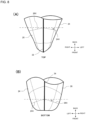
- FIG. 8(A) and (B) are diagrams depicting the deployed state of the airbag 18, where (A) depicts a part of an appearance of FIG. 7 from above and (B) depicts a part of an appearance of FIG. 7 from below.
- the two side surface panels 24 and 26 are connected to an upper end part and a lower end part of the airbag 18 by seams 32 and 34 that extend linearly in the front-to-back direction.
- the fabric of the two panels 24 and 26 is connected together so as to approximately match.
- approximately match means that cases where there is a slight relative inclination between fabric 24X of a first panel and fabric 26X of a second panel that are two panels 24 and 26 connected together on both sides of sewing points 32 and 34 is permissible.
- the displacement angle (inclination angle) ⁇ of the fabric is roughly ⁇ 30° relative to a perpendicular line (dashed line) at the sewing points 32 and 34, the effect of the present invention can be achieved.
- the side surface panel is composed of two panels 24 and 26 but can be composed of a single side surface panel.
- both end parts of the side surface panels are sewn together at an upper part (32) and a lower part (34) of the airbag 18.
- the length L1 in the front-to-back direction along the airbag deployment direction from the upper end of the curved part 18a to the sewing point 31 of the occupant side panel 28 with the side surface panel is set larger than a length L2 in a vertical direction that is perpendicular to this deployment direction.
- FIG. 9 is a plan view depicting a part of a panel constituting an airbag according to another aspect of the present invention.
- an occupant side panel 128 and one side surface panel 124 are continuously formed from a same panel.
- Continuously forming the side surface panel 124 and the occupant side panel 128 enables shortening the sewing length of both panels and simplifying aligning of the fabric.
- more panels can be made from a base cloth with limited surface area, in other words, base cloth pattern efficiency can be increased.
- connection point 31 between at least the occupant side panel 28 and the side surface panels 24 and 26 the fabric of both panels is connected so as to approximately match, stabilizing the deployed shape of a deployed airbag 18 and enabling receiving the occupant with a non-deviating uniform pressure.
- connection points 32 and 34 on the side surface panels 24 and 26 as well, connecting the fabric of both panels so as to approximately match further stabilizes the deployed shape of the airbag 18.
Landscapes
- Engineering & Computer Science (AREA)
- Mechanical Engineering (AREA)
- Air Bags (AREA)
- Physics & Mathematics (AREA)
- Fluid Mechanics (AREA)
Abstract
Description
- The present invention relates to a passenger seat airbag device for protecting an occupant riding in a passenger seat of a vehicle.
- The provision of a vehicle with one or more kinds of airbags in order to protect an occupant in the event of a vehicle accident is well known. There are various forms of airbags, including, for example, a so-called driver airbag that expands from a vicinity of a center of a steering wheel of an automobile in order to protect a driver, a passenger airbag that expands from the instrument panel in order to protect an occupant in a passenger seat, a curtain airbag that deploys downward inside a window of the automobile in order to protect the occupant in the event of an impact in the vehicle lateral direction or an overturn or rollover accident, and a side airbag that deploys from a side of a seat in order to protect the occupant in the event of an impact in the vehicle lateral direction. The present invention relates to an airbag device for a passenger seat.
- Here, deployment shape is not easy to control for an airbag for the passenger seat that is relatively large and receiving the occupant with a non-deviating uniform pressure is difficult. In particular, in a case of an oblique impact from the front of the vehicle, an occupant enters the deployed airbag at an irregular position and angle, and there are cases where the head of the occupant cannot be suitably protected.
- In light of the problem described above, an object of the present invention is to provide an airbag device that enables suitably restraining an occupant riding in a passenger seat of a vehicle through precise control of a deployment shape of the airbag.
- In order to resolve the problem described above, the present invention is an airbag device for protecting an occupant in a passenger seat of a vehicle, is stowed in the instrument panel, and is provided with an inflator that generates expansion gas and an airbag for restraining the occupant that expands and deploys from the instrument panel towards the occupant side based on the gas discharged from the inflator. The airbag is formed from woven fabric of mutually orthogonal warp thread and weft thread. The airbag includes an occupant side panel facing the occupant and side surface panels that are connected by a seam to a peripheral end part of the occupant side panel and from side surfaces of the airbag. Furthermore, the occupant side panel and the side surface panels are connected so the fabric of both panels approximately match at a connection point.
- Here, the "instrument panel" is in front of the front seats of the vehicle, a portion positioned below a windshield, is generally formed of resin, and also may be called a dashboard.
- In addition, "toward the occupant side" can also be expressed as from the instrument panel to the rear in a diagonally upward direction.
- In addition, "fabric" indicates the direction the weft threads or warp threads extend. Furthermore, "fabric matches" means that on both sides of the sewing point of the two panels, the weft thread or warp thread of a first panel is arranged parallel or orthogonal to the weft thread or warp thread of a second panel. Note that for woven fabric woven from orthogonal weft thread and warp thread, there is no difference between weft thread and warp thread after cutting to a panel shape.
- With the present invention, the panels fabrics (weft thread or warp thread direction) are sewn so as to be orthogonal to the connection point on both sides of the connection point of two panels, and are set so the fabric of both panels match (are parallel); however, a slight misalignment is permitted.
- With the present invention described above, at the connection point of the occupant side panel and the side surface panel, the fabric of both panels is connected so as to approximately match, stabilizing the deployed shape of a deployed airbag and enabling receiving the occupant with a non-deviating uniform pressure.
- At the connection point of the occupant side panel and the side surface panel, inclination (displacement of fabric) of the fabric from both panels relative to a direction orthogonal to this connection point can be set to within 30°.
- If the displacement of fabric (inclination) is roughly ±30°, the effect of the present invention can be achieved.
- The side surface panel is formed of a single panel, both end parts are connected by a seam at a side surface of the airbag along a first connecting line extending in the front-to-back direction, and fabric of both end parts of the side surface panel are sewn so as to approximately match.
- In this case, at the connection point with both end parts of the side surface panel, inclination (displacement of fabric) of the fabric from both panels relative to a direction orthogonal to this connection point can be set to within 30°.
- The side surface panel can include a first side surface panel and a second side surface panel, where a structure is a first end part of the first side surface panel connected to a first end part of the second side surface panel and a second end part of the first side surface panel connected to a second end part of the second side surface panel by sewing the side surface of the airbag, and the sewing is performed such that the fabrics approximately match at the sewing point of the first and second side surface panels.
- Note that the panels constituting the side surface panel are not limited to one or two panels, and may be three or more panels.
- In this case, at the connection point with the first and second end parts, inclination (displacement of fabric) of the fabric from both panels relative to a direction orthogonal to this connection point can be set to within 30°.
- The airbag can further include a mount part panel in contact with the instrument panel.
- A curved part of the airbag in a deployed state is formed along a shape of the instrument panel below and to come into contact with the instrument panel, as viewed from the side in the vehicle width direction, and the mount part panel is connected by a seam at the lower end part of the side surface panel to form the curved part.
- In this manner, the lower end part of the airbag is formed along the shape of the instrument panel enabling efficient use of the instrument panel as a reaction surface when the airbag deploys. As a result, the deployment behavior and deployment shape of the deployed airbag as a whole airbag is not violent, is controlled, and is stable.
- A length in the front-to-back direction from an upper end of the curved part to the sewing point of the occupant side panel and the side surface panel along the airbag deploy direction when the airbag in a deployed state is viewed from the side in the vehicle width direction, is longer than a length in the vertical direction that is orthogonal to the deployment direction.
- In this manner, the stroke of the airbag in the front-to-back direction is lengthened, increasing energy absorption performance when the occupant enters therein.
- A diffuser connected to the inflator for controlling the flow of gas inside the airbag can be further provided.
- The diffuser can be connected and arranged inside the mount part panel inside the airbag.
- The occupant side panel can be formed in a generally rectangular shape.
- Setting the occupant side panel to a rectangular shape provides an advantage of simplifying sewing with the side surface panel. The occupant side panel may be circular, or the like.
- The occupant side panel and the side surface panel can be continuously formed from the same panel.
- Here, "continuously from the same panel" means in the case the side surface panel is formed of a single panel, this panel and the occupant side panel are continuously connected. On the other hand, if the side surface panel is formed of a plurality of panels, the occupant side panel is connected continuously with one of the side surface panels. Continuously forming the side surface panel and the occupant side panel enables shortening the sewing length of both panels and simplifying aligning of the fabric.
- Note that in the specification, claims, and drawings of the present application, "front" refers to the front (in the traveling direction) of a vehicle, "rear" refers to the rear (opposite the traveling direction) of the vehicle, "right" refers to the right side in the traveling direction, "left" refers to the left side in the traveling direction, and "vehicle width direction" refers to the left-to-right direction.
-
-
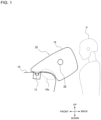
FIG. 1 is a side view depicting an airbag in the airbag device according to the present invention in a deployed state. -
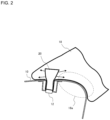
FIG. 2 is a cross section view depicting the airbag according to the present invention and depicts the structure surrounding an instrument panel. -
FIG. 3 is a plan view depicting a panel configuration (base cloth pattern) of the airbag according to the present invention. -
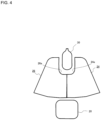
FIG. 4 is a plan view depicting a state of each panel in the base cloth pattern depicted inFIG. 3 assembled together. -
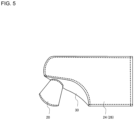
FIG. 5 is an explanatory diagram (plan view) depicting an appearance of the airbag according to the present invention after sewing. -
FIG. 6 is a perspective view depicting an appearance of a deployed state of the airbag according to the present invention as viewed from the occupant side. -
FIG. 7 is a perspective view depicting an appearance of the airbag according to the present invention in a deployed state from a side in the vehicle width direction. -
FIG. 8(A) and (B) are diagrams depicting a deployed state of the airbag according to the present invention, where (A) depicts a part of an appearance ofFIG. 7 from above and (B) depicts a part of an appearance ofFIG. 7 from below. -
FIG. 9 is a plan view depicting a part of a panel constituting an airbag according to another aspect of the present invention. - Occupant airbag devices according to embodiments of the present invention are described in detail below based on the accompanying drawings. Note that in the present embodiment, while an occupant P is based on an experimental dummy, it goes without saying that the same functions will be achieved with an actual occupant (human).
-
FIG. 1 is a side view depicting an airbag (18) of an airbag device (14) according to the present invention in a deployed state.FIG. 2 is a cross section view depicting a deployed state of the airbag (18) and depicts the structure surrounding an instrument panel (10). - The
airbag device 14 according to the present invention is for protecting an occupant P in a passenger seat of a vehicle, is stowed in theinstrument panel 10, and is provided with aninflator 12 that generates expansion gas and anairbag 18 for restraining the occupant P that expands and deploys from theinstrument panel 10 toward the occupant P based on the gas discharged from theinflator 12. - As depicted in
FIG. 1 , ventholes 22 for expelling gas externally are formed in both left and right sides of the side surface of theairbag 18. - As depicted in
FIG. 1 andFIG. 2 , the bottom portion of theairbag 18 has acurved part 18a formed so as to match the shape of the inflator 10 [sic]. - As depicted in
FIG. 2 , the inside of theairbag 18 is provided with adiffuser 20 for controlling flow of gas in theairbag 18. The lower end part of thediffuser 20 is connected to theinflator 12 so that gas from a side surface of the upper portion is dispersed and directed into theairbag 18. Thus, gas is able to rapidly fill theairbag 18 that is long in the front-to-back direction. - Note that the
diffuser 20 can be formed by the same base cloth as theairbag 18. -
FIG. 3 is a plan view depicting a panel configuration (base cloth pattern) of theairbag 18.FIG. 4 is a plan view depicting a state of each panel in the base cloth pattern depicted inFIG. 3 assembled together. InFIG. 3 , the fine lines in the grid outline the direction of the fabric grain of the base cloth. The actual fabric grain is very fine and so will not be depicted on the drawings. In addition, the same goes for other drawings, the fine lines in the grid indicate the direction of the fabric. -
FIG. 5 is an explanatory diagram (plan view) depicting the appearance of theairbag 18 after sewing.FIG. 6 is a perspective view depicting the deployed state of theairbag 18 as viewed from the occupant P side. In addition,FIG. 7 is a perspective view depicting the appearance of theairbag 18 in a deployed state from the side in the vehicle width direction. - As depicted in
FIG. 3 , theairbag 18 is formed from a woven fabric of mutually orthogonal warp thread and weft thread. - As depicted in
FIG. 3 ,FIG. 4 , andFIG. 6 , theairbag 18 includes anoccupant side panel 28 facing the occupant andside surface panels occupant side panel 28 and form side surfaces of theairbag 18. - The
occupant side panel 28 used in the present Embodiment is formed in a generally rectangular shape with rounded corners, but other shapes, such as circular or oval, can be used. - As depicted in
FIG. 3 , theside surface panels Bent parts 24a and 26b are formed in theside surface panels FIG. 4 , amount part panel 30 is connected to a recess part formed by opposing thesebent parts 24a and 26b. - As depicted in
FIG. 5 , at the stage of sewing, thediffuser 20 is connected on the outside of themount part panel 30 and is thereafter pushed into theairbag 18. - As depicted in
FIG. 6 , theoccupant side panel 28 and theside surface panels connection point 31. Here, "approximately match" means that cases where there is a slight relative inclination betweenfabric 28X of a first panel andfabric 24X of a second panel that are two panels connected together on both sides of thesewing point 31 is permissible. For example, if the displacement angle (inclination angle) θ of the fabric is roughly ±30° relative to a perpendicular line (dashed line) at thesewing point 30, the effect of the present invention can be achieved. - As depicted in
FIG. 5 andFIG. 7 , acurved part 18a of theairbag 18 in a deployed state is formed along the shape of theinstrument panel 10 below and to come into contact with theinstrument panel 10, and amount part panel 20 is connected by sewing to lower end parts of theside surface panels curved part 18a. - In this manner, the lower end part of the
airbag 18 is formed along the shape of theinstrument panel 10 enabling efficient use of theinstrument panel 10 as a reaction surface when theairbag 18 deploys. As a result, the deployment behavior and deployment shape of the deployedairbag 18 as awhole airbag 18 is not violent, is controlled, and is stable. -
FIG. 8(A) and (B) are diagrams depicting the deployed state of theairbag 18, where (A) depicts a part of an appearance ofFIG. 7 from above and (B) depicts a part of an appearance ofFIG. 7 from below. - As depicted in
FIG. 8 , the twoside surface panels airbag 18 byseams side surface panels panels fabric 24X of a first panel andfabric 26X of a second panel that are twopanels - Note that in the embodiment described above, the side surface panel is composed of two
panels airbag 18. - As depicted in
FIG. 7 , when theairbag 18 in a deployed state is viewed from the side in the vehicle width direction, the length L1 in the front-to-back direction along the airbag deployment direction from the upper end of thecurved part 18a to thesewing point 31 of theoccupant side panel 28 with the side surface panel is set larger than a length L2 in a vertical direction that is perpendicular to this deployment direction. -
FIG. 9 is a plan view depicting a part of a panel constituting an airbag according to another aspect of the present invention. In the aspect ofFIG. 9 , anoccupant side panel 128 and oneside surface panel 124 are continuously formed from a same panel. - Continuously forming the
side surface panel 124 and theoccupant side panel 128 enables shortening the sewing length of both panels and simplifying aligning of the fabric. In addition, more panels can be made from a base cloth with limited surface area, in other words, base cloth pattern efficiency can be increased. - As described above, with the present invention, for the
connection point 31 between at least theoccupant side panel 28 and theside surface panels airbag 18 and enabling receiving the occupant with a non-deviating uniform pressure. In addition, with the connection points 32 and 34 on theside surface panels airbag 18. - Examples of the present invention have been described above; however, the present invention is not limited in any way to the examples described above and can be changed as appropriate within the scope of the technical idea as that defined in the patent claims.
Claims (14)
- An airbag device for protecting an occupant in a passenger seat of a vehicle, comprising:an inflator stowed in an instrument panel for generating expansion gas; andan airbag that utilizes the gas discharged from the inflator to expand and deploy from the instrument panel toward the occupant side to restrain the occupant; whereinthe airbag is formed from cloth woven from mutually perpendicular weft thread and warp thread,the airbag includes an occupant side panel that faces the occupant and a side surface panel forming a side surface of the airbag that is connected to the occupant side panel by sewing around a peripheral end part, andat a connection point of the occupant side panel and the side surface panel, fabric of both panels is connected so as to approximately match.
- The airbag device according to claim 1, wherein at the connection point of the occupant side panel and the side surface panel, inclination (displacement of fabric) of the fabric from both panels relative to a direction orthogonal to this connection point is within 30°.
- The airbag device according to claim 1 or 2, wherein the side surface panel is formed of a single panel, both end parts are connected by a seam at a side surface of the airbag along a first connecting line extending in the front-to-back direction, and fabric of both end parts of the side surface panel are sewn so as to approximately match.
- The airbag device according to claim 3, wherein at the connection point of both end parts of the side surface panel, inclination (displacement of fabric) of the fabric from both panels relative to a direction orthogonal to this connection point is within 30°.
- The airbag device according to claim 1 or 2, whereinthe side surface panel includes a first side surface panel and a second side surface panel,a structure that is a first end part of the first side surface panel is connected to a first end part of the second side surface panel and a second end part of the first side surface panel is connected to a second end part of the second side surface panel by sewing the side surface of the airbag, andthe sewing is performed such that the fabrics approximately match at the sewing point of the first and second side surface panels.
- The airbag device according to claim 5, wherein at the connection point of first and second end parts, inclination (displacement of fabric) of the fabric from both panels relative to a direction orthogonal to this connection point is within 30°.
- The airbag device according to claim 1 or 2, wherein the airbag further includes a mount part panel that comes into contact with the instrument panel.
- The airbag device according to claim 7, whereina curved part of the airbag in a deployed state is formed along a shape of the instrument panel below and to come into contact with the instrument panel, as viewed from the side in the vehicle width direction, andthe mount part panel is connected by a seam at the lower end part of the side surface panel to form the curved part.
- The airbag device according to claim 8, wherein a length in the front-to-back direction from an upper end of the curved part to the sewing point of the occupant side panel and the side surface panel along the airbag deploy direction when the airbag in a deployed state is viewed from the side in the vehicle width direction, is longer than a length in the vertical direction that is orthogonal to the deployment direction.
- The airbag device according to claim 1 or 2, further comprising a diffuser connected to the inflator for controlling flow of gas inside the airbag.
- The airbag device according to claim 10, wherein the diffuser is connected and arranged inside the mount part panel inside the airbag.
- The airbag device according to claim 1 or 2 wherein the occupant side panel is formed generally rectangular in shape.
- The airbag device according to claim 1 or 2, wherein the occupant side panel and the side surface panel are formed continuously from the same panel.
- An airbag that uses the airbag device according to claim 1 or 2.
Applications Claiming Priority (2)
| Application Number | Priority Date | Filing Date | Title |
|---|---|---|---|
| JP2021201265 | 2021-12-10 | ||
| PCT/JP2022/037183 WO2023105902A1 (en) | 2021-12-10 | 2022-10-04 | Passenger seat airbag device |
Publications (2)
| Publication Number | Publication Date |
|---|---|
| EP4446175A1 true EP4446175A1 (en) | 2024-10-16 |
| EP4446175A4 EP4446175A4 (en) | 2025-10-15 |
Family
ID=86730117
Family Applications (1)
| Application Number | Title | Priority Date | Filing Date |
|---|---|---|---|
| EP22903836.9A Pending EP4446175A4 (en) | 2021-12-10 | 2022-10-04 | AIRBAG DEVICE FOR A PASSENGER SEAT |
Country Status (6)
| Country | Link |
|---|---|
| US (1) | US12337783B2 (en) |
| EP (1) | EP4446175A4 (en) |
| JP (1) | JP7699225B2 (en) |
| KR (1) | KR20240117608A (en) |
| CN (1) | CN118215608A (en) |
| WO (1) | WO2023105902A1 (en) |
Families Citing this family (1)
| Publication number | Priority date | Publication date | Assignee | Title |
|---|---|---|---|---|
| JP2025135512A (en) * | 2024-03-05 | 2025-09-18 | 豊田合成株式会社 | 3D airbag |
Family Cites Families (28)
| Publication number | Priority date | Publication date | Assignee | Title |
|---|---|---|---|---|
| JPS4987035A (en) * | 1972-12-25 | 1974-08-20 | ||
| JPH04189643A (en) * | 1990-11-21 | 1992-07-08 | Nissan Motor Co Ltd | Bag body for vehicle air bag device |
| JPH04339047A (en) * | 1991-05-16 | 1992-11-26 | Toyoda Gosei Co Ltd | Air bag |
| DE4314347A1 (en) * | 1993-04-30 | 1994-11-03 | Trw Repa Gmbh | Inflatable gas bag for restraint systems in vehicles |
| JPH07125587A (en) * | 1993-11-02 | 1995-05-16 | Nippon Plast Co Ltd | Air bag |
| JPH07172257A (en) * | 1993-12-22 | 1995-07-11 | Toyoda Gosei Co Ltd | Front-passenger airbag |
| JPH07315152A (en) * | 1994-04-07 | 1995-12-05 | Tokai Rika Co Ltd | Bag for air bag device |
| JP3713810B2 (en) * | 1996-05-17 | 2005-11-09 | 豊田合成株式会社 | Vehicle airbag |
| US6382664B1 (en) * | 1999-08-31 | 2002-05-07 | Toyoda Gosei Co., Ltd. | Passenger seat air bag |
| US6523855B2 (en) * | 1999-09-24 | 2003-02-25 | Breed Automotive Technologies, Inc. | Air bag, method of manufacture and system therefor |
| JP2001191882A (en) * | 1999-10-29 | 2001-07-17 | Calsonic Kansei Corp | Air bag device for vehicle |
| US7048304B1 (en) * | 2000-08-18 | 2006-05-23 | Milliken & Company | Multiple panel airbag and method |
| US7150470B2 (en) * | 2002-05-31 | 2006-12-19 | Toyoda Gosei Co., Ltd. | Airbag device for front passenger's seat |
| JP4604704B2 (en) * | 2004-12-21 | 2011-01-05 | 豊田合成株式会社 | Airbag |
| JP2007223396A (en) * | 2006-02-22 | 2007-09-06 | Honda Motor Co Ltd | Airbag device for vehicle |
| JP2008013162A (en) * | 2006-06-09 | 2008-01-24 | Toyoda Gosei Co Ltd | Airbag for front passenger seat |
| JP4931855B2 (en) * | 2008-04-23 | 2012-05-16 | オートリブ ディベロップメント エービー | Airbag device |
| DE102008057968A1 (en) * | 2008-11-19 | 2010-05-20 | Trw Automotive Gmbh | airbag |
| JP5402218B2 (en) * | 2008-12-19 | 2014-01-29 | タカタ株式会社 | Air bag, air bag device and vehicle |
| JP5440088B2 (en) * | 2008-12-19 | 2014-03-12 | タカタ株式会社 | Airbag device and vehicle |
| JP5195400B2 (en) * | 2008-12-24 | 2013-05-08 | タカタ株式会社 | Air bag and air bag device |
| JP5206707B2 (en) * | 2010-02-23 | 2013-06-12 | 豊田合成株式会社 | Airbag device for passenger seat |
| JP6058381B2 (en) * | 2012-12-21 | 2017-01-11 | 芦森工業株式会社 | Airbag device |
| JP6085470B2 (en) * | 2012-12-21 | 2017-02-22 | スズキ株式会社 | Airbag device |
| JP6224915B2 (en) * | 2013-05-20 | 2017-11-01 | タカタ株式会社 | Air bag and air bag device |
| JP6472425B2 (en) * | 2016-11-14 | 2019-02-20 | 本田技研工業株式会社 | Sewing structure of airbag |
| CN117561184A (en) * | 2021-06-30 | 2024-02-13 | 奥托立夫开发公司 | Vehicle airbag device |
| JP2025087035A (en) | 2023-11-29 | 2025-06-10 | 久武 齋藤 | Parking lot management system and parking lot management service providing method |
-
2022
- 2022-10-04 CN CN202280074365.1A patent/CN118215608A/en active Pending
- 2022-10-04 KR KR1020247022642A patent/KR20240117608A/en active Pending
- 2022-10-04 EP EP22903836.9A patent/EP4446175A4/en active Pending
- 2022-10-04 JP JP2023566104A patent/JP7699225B2/en active Active
- 2022-10-04 WO PCT/JP2022/037183 patent/WO2023105902A1/en not_active Ceased
- 2022-10-04 US US18/717,800 patent/US12337783B2/en active Active
Also Published As
| Publication number | Publication date |
|---|---|
| JPWO2023105902A1 (en) | 2023-06-15 |
| KR20240117608A (en) | 2024-08-01 |
| US12337783B2 (en) | 2025-06-24 |
| US20250042353A1 (en) | 2025-02-06 |
| WO2023105902A1 (en) | 2023-06-15 |
| JP7699225B2 (en) | 2025-06-26 |
| EP4446175A4 (en) | 2025-10-15 |
| CN118215608A (en) | 2024-06-18 |
Similar Documents
| Publication | Publication Date | Title |
|---|---|---|
| US9758123B2 (en) | Airbag device for a front passenger seat | |
| CN1265989C (en) | Vehicle occupant knee protection system and inflation and deployment method thereof | |
| EP3543075B1 (en) | Airbag device | |
| US20010033072A1 (en) | Airbag device | |
| US11679734B2 (en) | Frontal airbag | |
| US5395134A (en) | Passenger side air bag with controlled deployment | |
| JP2879233B2 (en) | Airbag device | |
| EP4446175A1 (en) | Passenger seat airbag device | |
| JP6672080B2 (en) | Airbag | |
| JP6969238B2 (en) | Rear seat airbag | |
| KR20190110363A (en) | Diffuser and airbag module with the same | |
| US20210206335A1 (en) | Passenger-side airbag | |
| US20230011886A1 (en) | Driver seat airbag device for vehicle and method for manufacturing same | |
| US11628797B2 (en) | Airbag | |
| KR102723506B1 (en) | Airbag device | |
| US12337782B2 (en) | Airbag device | |
| KR20250003669A (en) | Knee airbag cushion | |
| JPH04166454A (en) | Air bag device | |
| JP7536121B2 (en) | Knee Air Bag Device | |
| JP7824182B2 (en) | Airbags | |
| EP0614785A1 (en) | Passenger side air bag with controlled deployment | |
| US12515609B2 (en) | Vehicular airbag device | |
| JP2007038754A (en) | Collision protection device | |
| JP2006232178A (en) | Airbag | |
| KR102581842B1 (en) | Driver airbag apparatus of vehicle |
Legal Events
| Date | Code | Title | Description |
|---|---|---|---|
| STAA | Information on the status of an ep patent application or granted ep patent |
Free format text: STATUS: THE INTERNATIONAL PUBLICATION HAS BEEN MADE |
|
| PUAI | Public reference made under article 153(3) epc to a published international application that has entered the european phase |
Free format text: ORIGINAL CODE: 0009012 |
|
| STAA | Information on the status of an ep patent application or granted ep patent |
Free format text: STATUS: REQUEST FOR EXAMINATION WAS MADE |
|
| 17P | Request for examination filed |
Effective date: 20240624 |
|
| AK | Designated contracting states |
Kind code of ref document: A1 Designated state(s): AL AT BE BG CH CY CZ DE DK EE ES FI FR GB GR HR HU IE IS IT LI LT LU LV MC ME MK MT NL NO PL PT RO RS SE SI SK SM TR |
|
| DAV | Request for validation of the european patent (deleted) | ||
| DAX | Request for extension of the european patent (deleted) | ||
| A4 | Supplementary search report drawn up and despatched |
Effective date: 20250916 |
|
| RIC1 | Information provided on ipc code assigned before grant |
Ipc: B60R 21/231 20110101AFI20250910BHEP Ipc: B60R 21/205 20110101ALI20250910BHEP Ipc: B60R 21/261 20110101ALI20250910BHEP Ipc: B60R 21/2346 20110101ALI20250910BHEP Ipc: B60R 21/235 20060101ALI20250910BHEP |