EP4440138A1 - Methods of master battery unit and module battery unit management, and battery system - Google Patents
Methods of master battery unit and module battery unit management, and battery system Download PDFInfo
- Publication number
- EP4440138A1 EP4440138A1 EP24155743.8A EP24155743A EP4440138A1 EP 4440138 A1 EP4440138 A1 EP 4440138A1 EP 24155743 A EP24155743 A EP 24155743A EP 4440138 A1 EP4440138 A1 EP 4440138A1
- Authority
- EP
- European Patent Office
- Prior art keywords
- battery management
- identifier
- management unit
- module battery
- module
- Prior art date
- Legal status (The legal status is an assumption and is not a legal conclusion. Google has not performed a legal analysis and makes no representation as to the accuracy of the status listed.)
- Granted
Links
Images







Classifications
-
- H—ELECTRICITY
- H04—ELECTRIC COMMUNICATION TECHNIQUE
- H04Q—SELECTING
- H04Q9/00—Arrangements in telecontrol or telemetry systems for selectively calling a substation from a main station, in which substation desired apparatus is selected for applying a control signal thereto or for obtaining measured values therefrom
-
- H—ELECTRICITY
- H01—ELECTRIC ELEMENTS
- H01M—PROCESSES OR MEANS, e.g. BATTERIES, FOR THE DIRECT CONVERSION OF CHEMICAL ENERGY INTO ELECTRICAL ENERGY
- H01M10/00—Secondary cells; Manufacture thereof
- H01M10/42—Methods or arrangements for servicing or maintenance of secondary cells or secondary half-cells
- H01M10/425—Structural combination with electronic components, e.g. electronic circuits integrated to the outside of the casing
-
- H—ELECTRICITY
- H01—ELECTRIC ELEMENTS
- H01M—PROCESSES OR MEANS, e.g. BATTERIES, FOR THE DIRECT CONVERSION OF CHEMICAL ENERGY INTO ELECTRICAL ENERGY
- H01M10/00—Secondary cells; Manufacture thereof
- H01M10/42—Methods or arrangements for servicing or maintenance of secondary cells or secondary half-cells
-
- H—ELECTRICITY
- H01—ELECTRIC ELEMENTS
- H01M—PROCESSES OR MEANS, e.g. BATTERIES, FOR THE DIRECT CONVERSION OF CHEMICAL ENERGY INTO ELECTRICAL ENERGY
- H01M10/00—Secondary cells; Manufacture thereof
- H01M10/42—Methods or arrangements for servicing or maintenance of secondary cells or secondary half-cells
- H01M10/48—Accumulators combined with arrangements for measuring, testing or indicating the condition of cells, e.g. the level or density of the electrolyte
- H01M10/482—Accumulators combined with arrangements for measuring, testing or indicating the condition of cells, e.g. the level or density of the electrolyte for several batteries or cells simultaneously or sequentially
-
- H—ELECTRICITY
- H01—ELECTRIC ELEMENTS
- H01M—PROCESSES OR MEANS, e.g. BATTERIES, FOR THE DIRECT CONVERSION OF CHEMICAL ENERGY INTO ELECTRICAL ENERGY
- H01M10/00—Secondary cells; Manufacture thereof
- H01M10/42—Methods or arrangements for servicing or maintenance of secondary cells or secondary half-cells
- H01M10/425—Structural combination with electronic components, e.g. electronic circuits integrated to the outside of the casing
- H01M2010/4271—Battery management systems including electronic circuits, e.g. control of current or voltage to keep battery in healthy state, cell balancing
-
- H—ELECTRICITY
- H01—ELECTRIC ELEMENTS
- H01M—PROCESSES OR MEANS, e.g. BATTERIES, FOR THE DIRECT CONVERSION OF CHEMICAL ENERGY INTO ELECTRICAL ENERGY
- H01M10/00—Secondary cells; Manufacture thereof
- H01M10/42—Methods or arrangements for servicing or maintenance of secondary cells or secondary half-cells
- H01M10/425—Structural combination with electronic components, e.g. electronic circuits integrated to the outside of the casing
- H01M2010/4278—Systems for data transfer from batteries, e.g. transfer of battery parameters to a controller, data transferred between battery controller and main controller
-
- H—ELECTRICITY
- H04—ELECTRIC COMMUNICATION TECHNIQUE
- H04Q—SELECTING
- H04Q2209/00—Arrangements in telecontrol or telemetry systems
- H04Q2209/30—Arrangements in telecontrol or telemetry systems using a wired architecture
-
- Y—GENERAL TAGGING OF NEW TECHNOLOGICAL DEVELOPMENTS; GENERAL TAGGING OF CROSS-SECTIONAL TECHNOLOGIES SPANNING OVER SEVERAL SECTIONS OF THE IPC; TECHNICAL SUBJECTS COVERED BY FORMER USPC CROSS-REFERENCE ART COLLECTIONS [XRACs] AND DIGESTS
- Y02—TECHNOLOGIES OR APPLICATIONS FOR MITIGATION OR ADAPTATION AGAINST CLIMATE CHANGE
- Y02E—REDUCTION OF GREENHOUSE GAS [GHG] EMISSIONS, RELATED TO ENERGY GENERATION, TRANSMISSION OR DISTRIBUTION
- Y02E60/00—Enabling technologies; Technologies with a potential or indirect contribution to GHG emissions mitigation
- Y02E60/10—Energy storage using batteries
Definitions
- One or more embodiments relate to an operating method of a module battery management unit, an operating method of a master battery management unit, and a battery system.
- a battery management system is a controller that monitors the state of a battery and manages a battery system including the battery to maintain and use the battery in optimal conditions.
- the BMS includes a plurality of battery modules and one master controller.
- the battery module includes a bundle of cells connected in series/parallel and a slave controller that measures the voltage of the cells and transmits the measured value to the master controller.
- the main functions of the slave controller include voltage measurement of individual cells, individual cell balancing, battery module temperature measurement, and battery module fault diagnosis.
- a master controller In a conventional method, a master controller must be able to identify data transmitted from multiple slave controllers. Therefore, by assigning an identifier to identify each slave controller and transmitting data including the identifier, it should be possible to know the slave controller from which the data was transmitted.
- a method of including an identifier in data may vary depending on a communication protocol for transmitting and receiving data. For example, in controller area network (CAN) communication, the identifier may be included in the may identification (ID), and in a universal asynchronous receiver/transmitter (UART), the identifier may be included in data.
- CAN controller area network
- ID identification
- UART universal asynchronous receiver/transmitter
- Embodiments are directed to a method of operating a module battery management unit connected to a master battery management unit and at least one other module battery management unit through a serial communication bus.
- the method comprises receiving an identifier assignment command including assignable identifier information from the master battery management unit, randomly selecting one number from among assignable identification numbers according to the assignable identifier information in response to the identifier assignment command, and assigning the selected number as a temporary identifier, transmitting a first message including the temporary identifier through the serial communication bus in response to an identifier transmission command received from the master battery management unit; receiving messages transmitted by the at least one other module battery management unit in response to the identifier transmission command, and checking identifiers of the at least one other module battery management unit from the messages, comparing the temporary identifier with identifiers of the at least one other module battery management unit in response to an identifier comparison command received from the master battery management unit; and assigning the temporary identifier as a final identifier if the temporary identifier does not overlap with
- an identifier can be assigned to at least one second module battery management unit without the need to pre-assign the identifier. Additionally, double assigned over overlapping identifiers can be avoided. By this method, production and/or repair of a battery module are simplified.
- the at least one second module battery management unit may be a newly introduced or replaced module battery management unit.
- One or more embodiments provide a method and system for transmitting a second message including the final identifier to the serial communication bus in response to an identifier check command from the master battery management unit.
- One or more embodiments provide that the step of transmitting may be performed by the first module battery management unit.
- One or more embodiments provide a method and system for not assigning a final identifier in response to the identifier check command if the temporary identifier overlaps with identifiers of the at least one other module battery management unit.
- One or more embodiments provide the step of not assigning a final identifier may be performed by the first module battery management unit.
- One or more embodiments provide a method and system wherein the assignable identifier information comprises a plurality of bits, wherein bits having a first value, from among the plurality of bits, indicate numbers assigned as final identifiers to at least one other module battery management unit, from among the at least one other module battery management unit.
- One or more embodiments provide a method and system wherein bits having a second value, from among the plurality of bits, indicate the assignable identification numbers.
- the method includes confirming whether the final identifier was assigned in response to the identifier assignment command, and performing the randomly selecting one number from among the assignable identification numbers only if the final identifier is confirmed as not assigned.
- the step of confirming whether the final identifier was assigned may be performed by the first module battery management unit.
- the module battery management unit detects state information of the battery cell and communicates the state information to the master battery management unit, the state information including at least one of a voltage, a charge current, a discharge current, and a temperature.
- the master battery management unit includes at least one microcontroller, the at least one microcontroller including a processor and a memory storing instructions for operating the module battery management unit, the instructions being executable in the processor.
- the method may further include not assigning a final identifier in response to the identifier check command if the temporary identifier overlaps with identifiers of the at least one other module battery management unit.
- the step of not assigning a final identifier may be performed by the module battery management unit.
- the assignable identifier information may include a plurality of bits, wherein bits having a first value, from among the plurality of bits, indicate numbers assigned as final identifiers to at least one other module battery management unit, from among the at least one other module battery management unit, and wherein bits having a second value, from among the plurality of bits, indicate the assignable identification numbers.
- the method may further include confirming whether the final identifier was assigned in response to the identifier assignment command, wherein the randomly selecting one number from among the assignable identification numbers if the final identifier is not assigned.
- the step of confirming whether the final identifier was assigned may be performed by the module battery management unit.
- One or more embodiments of the method steps above may refer to the master battery management unit. That is, the steps of transmitting a first identifier assignment command, transmitting an identifier transmission command, sequentially transmitting an identifier comparison command, receiving messages transmitted by at least some of the module battery management units, and generating second assignable identifier information may be performed by the master battery management unit.
- the method of operating a master battery management unit comprises receiving messages transmitted by the other module battery management units in response to the identifier transmission command.
- the method includes transmitting a second identifier assignment command including the second assignable identifier information to the plurality of module battery management units.
- the step of transmitting a second identifier assignment command may be performed by the master battery management unit.
- the method may further include, responsive to transmitting the identifier check command, if the number of messages received from the plurality of module battery management units is equal to the number of the plurality of module battery management units, terminating an identifier assignment operation.
- the step of terminating an identifier assignment operation may be performed by the master battery management unit.
- the first and second assignable identifier information may each include a plurality of bits, wherein bits having a first value, from among the plurality of bits, indicate identification numbers corresponding to final identifiers of at least some module battery management units to which the final identifiers are assigned, from among the plurality of module battery management units.
- bits having a second value indicate identification numbers that can be assigned by at least some module battery management units to which the final identifier is not assigned, from among the plurality of module battery management units.
- a battery system includes a plurality of module battery management units respectively connected to nodes of a serial communication bus, each of the plurality of module battery management units configured to randomly select one number from among assignable identification numbers according to assignable identifier information in response to an identifier assignment command received, and to assign the selected number as a temporary identifier.
- a master battery management unit is connected to a serial communication bus, and is configured to transmit an identifier assignment command including the assignable identifier information to the plurality of module battery management units, and to transmit an identifier transmission command to the plurality of module battery management units.
- the master battery management unit is further configured to transmit an identifier comparison command to the plurality of module battery management units, to compare the temporary identifier with identifiers of the other module battery management units in response to an identifier comparison command, and if the temporary identifier does not overlap with the identifiers of the other module battery management units, to assign the temporary identifier as a final identifier.
- each of the plurality of module battery management units is configured to transmit a first message including the temporary identifier in response to the identifier transmission command, receive messages transmitted by the other module battery management units, and check identifiers of the other module battery management units from the messages.
- the master battery management unit is further configured to transmit an identifier check command to the plurality of module battery management units.
- each of the plurality of module battery management units is further configured to transmit a second message including the final identifier in response to the identifier check command.
- the battery system may further include a plurality of battery modules, wherein each of the plurality of battery modules includes at least one battery cell, a protection circuit configured to protect the at least one battery cell, and the module battery management unit is further configured to control the protection circuit by monitoring a state of the at least one battery cell.
- the protection circuit includes one or more of a charge control switch, a discharge control switch, a main switch, a precharge switch, and a fuse.
- the master battery management unit includes at least one microcontroller, the at least one microcontroller including a processor and a memory storing instructions for operating the module battery management unit, the instructions being executable in the processor.
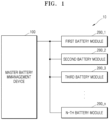
- FIG. 1 schematically shows a battery system from a power source point of view, according to some embodiments.
- a battery system 10 may include a master battery management device 100 and battery modules 200_1 to 200_n each coupled to the master battery management device 100.
- the battery system 10 may be an integral energy storage system for supplying power to battery cells of the battery module 200 and outputting power stored in the battery cells.
- the battery system 10 may be connected to a battery charging system (a so-called battery charging station) for charging the battery cells of the battery module 200.
- the battery system 10 may be connected to an electric load to be supplied with power stored in battery cells of the battery module 200.
- the master battery management device 100 is configured to manage the battery system 10 and may include, for example, a micro control unit (MCU).
- the master battery management device 100 may perform data communication with the module battery management units.
- the master battery management device 100 may provide state information of the battery system 10 collected through the module battery management units to an external device.
- the battery module 200 may include at least one battery cell and a module battery management unit.
- the at least one battery cell may include a rechargeable secondary battery.
- the at least one battery cell may include nickel-cadmium batteries, lead-acid batteries, nickel-metal hydride batteries (NiMH), lithium-ion batteries, and lithium polymer batteries, and the like.
- the at least one battery cell may be connected to each other in series, parallel or a combination of series and parallel, and the number of the at least one battery cell may be determined according to an output voltage required for the battery module 200.
- the master battery management device 100 may perform a protection operation to protect the battery system 10.
- the protection operation may be based on state information of the battery system 10.
- the battery system 10 may include a protection circuit controlled by the master battery management device 100.
- FIG. 2 an internal configuration of any one battery module 200 among the battery modules 200 of FIG. 1 is shown in an example.
- the battery module 200 includes a module battery management unit 210 and at least one battery cell 220. As shown in FIG. 2 , the battery module 200 may further include a protection circuit 230.
- the battery module 200 may be connected to the serial communication bus through the first terminal 201 and the second terminal 202.
- the first terminal 201 is connected to the receiver of the module battery management unit 210.
- the module battery management unit 210 may receive a command CM from the master battery management device 100 (see FIG. 1 ).
- the command CM may be received through the first terminal 201.
- the module battery management unit 210 may receive a message MS' transmitted by another battery module management unit 210.
- the message MS' may be transmitted through the first terminal 201.
- the module battery management unit 210 may be activated in response to a command CM.
- the CM may be from the master battery management device 100.
- the CM may be received through the first terminal 201.
- the module battery management unit 210 may assign a temporary identifier or a final identifier to itself.
- the module battery management unit 210 may transmit a message MS including a temporary identifier or a final identifier.
- the transmission may be to the serial communication bus through the second terminal 202.
- a message transmitted by the module battery management unit 210 in response to an identifier transmission command from the master battery management device 100 is referred to as a first message tIDm.
- the first message tIDm includes a temporary identifier or a final identifier.
- a message transmitted by the module battery management unit 210 in response to an identifier check command from the master battery management device 100 is referred to as a second message fIDm.
- the second message fIDm includes the final identifier.
- the module battery management unit 210 may communicate with the master battery management device 100 using a temporary identifier or a final identifier.
- a protection circuit 230 may be positioned between the battery cell 220 and at least one (in the example of FIG. 2 ) of the terminals 203 and 204.
- the protection circuit 230 may include at least one switch controlled by the module battery management unit 210.
- the protection circuit 230 may include at least one of a charge control switch, a discharge control switch, a main switch, and a precharge switch.
- the protection circuit 230 may include a fuse.
- FIG. 3 schematically shows a battery system according to some embodiments from a communication point of view.
- the master battery management unit 110 and the plurality of module battery management units 210_1 to 210_n may perform data communication through the serial communication bus 300.
- the first module battery management units 210_1, the second module battery management units 210_2, or the n-th module battery management units 210_n hereafter, for the sake of simplicity, it may be referred to a module battery management units 210 in general.
- k may be a natural number greater than 1 and smaller than n.
- the master battery management unit 110 may be included in the master battery management device 100 of FIG. 1 .
- the master battery management unit 110 may control the operation of the master battery management device 100 as a whole.
- the master battery management unit 110 may be an integrated controller of the master battery management device 100.
- the master battery management unit 110 may include one or more microcontrollers.
- the master battery management unit 110 may communicate with the module battery management units 210_1 to 210_n through the serial communication bus 300.
- the master battery management unit 110 may transmit identifier commands for allowing the module battery management units 210_1 to 210_n to assign themselves different final identifiers to the module battery management units 210.
- the module battery management units 210_1 to 210_n may receive messages transmitted by the module battery management units 210_1 to 210n through the serial communication bus 300.
- the identifier commands may include an identifier assignment command AcID, an identifier transmission command TcID, an identifier comparison command CcID, and/or an identifier check command VcID.
- the plurality of module battery management units 210_1 to 210_n are respectively included in the battery modules 200_1 to 200_n of FIG. 1 .
- the plurality of module battery management units 210_1 to 210_n may be collectively referred to as the module battery management unit 210.
- the module battery management unit 210 may detect states (e.g., voltage, charge/discharge current, temperature, etc.) of battery cells of the battery module and may transmit the detected state information to the master battery management unit 110.
- the module battery management units 210 may be connected to nodes of the serial communication bus 300 and communicate with the master battery management unit 110 through the serial communication bus 300.
- the module battery management unit 210 may perform an operation according to a command in response to a command from the master battery management unit 110.
- a default identifier such as '0x1FF' may be assigned to the module battery management unit 210 before assigning the identifier.
- the module battery management unit 210 may check whether the final identifier has been assigned in response to an identifier assignment command AcID from the master battery management unit 110. If the final identifier is not assigned, the module battery management unit 210 may randomly select one number among assignable identification numbers and assign the selected number as a temporary identifier. According to the example of FIG. 3 , since final identifiers are not assigned to the first module battery management unit to the k-th module battery management unit 210_1 to 210_k, each of the first module battery management units to the k-th module battery management units 210_1 to 210_k randomly may select one number among assignable identification numbers, and assign a temporary identifier based on the selected number.
- '0x103' may be assigned as a temporary identifier.
- the temporary identifier of the first module battery management unit 210_1 is indicated as a first temporary identifier tID_1.
- tID_1 the number randomly selected by the second module battery management unit 210_2 is '10'
- '0x10A' may be assigned as a temporary identifier.
- the module battery management unit 210 may transmit a first message tIDm through the serial communication bus 300 in response to an identifier transmission command TcID from the master battery management unit 110.
- the first to k-th module battery management units 210_1 to 210_k to which the final identifier is not assigned may transmit first messages tIDm_1 to tIDm_k including its temporary identifier tID through the serial communication bus 300.
- the (k+1)-th to n-th module battery management units 210_(k+1) to 210_n to which the final identifiers are assigned may transmit first messages tIDm_(k+1) to tIDm_n including their final identifiers through the serial communication bus 300.
- first and second messages tIDm and fIDm transmitted by other module battery management units may be received.
- the module battery management unit 210 may receive first messages tIDm transmitted by other module battery management units in response to an identifier transmission command TcID, and check identifiers of other module battery management units from the first messages tIDm.
- the first module battery management unit 210_1 may receive first messages tIDm_2 to tIDm_n transmitted by other module battery management units 210_2 to 210_n and check identifiers included in the first messages tIDm_2 to tIDm_n.
- the module battery management unit 210 may compare its own temporary identifier with identifiers of other module battery management units. The comparison between own temporary identifier with identifiers of other module battery management units may be performed in response to the identifier comparison command CcID from the master battery management unit 110. If its own temporary identifier does not overlap with identifiers of other module battery management units, the module battery management unit 210 may assign the temporary identifier as a final identifier fID. Overlapping means, that the identifiers are identical up to a certain degree of accuracy which may make them non-distinguishable.
- the module battery management unit 210 may not assign the final identifier fID.
- the first module battery management unit 210_1 may check whether its first temporary identifier tID_1 overlaps with identifiers included in the first messages tIDm_2 to tIDm_n received from other module battery management units 210_2 to 210_n.
- the first module battery management unit 210_1 may assign the first temporary identifier tID_1 as the final identifier of the first module battery management unit 210_1.
- the final identifier of the first module battery management unit 210_1 may be indicated as the first final identifier fID_1. If the first temporary identifier tID_1 of the first module battery management unit 210_1 overlaps with an or a plurality of identifiers of other module battery management units 210_2 to 210_k, the first module battery management unit 210_1 may not assign a final identifier.
- At least some of the first to k-th module battery management units 210_1 to 210_k may assign final identifiers. If numbers randomly selected by the first to k-th module battery management units 210_1 to 210_k among assignable identification numbers are all different, all of the first to k-th module battery management units 210_1 to 210_k may assign final identifiers. If numbers randomly selected by the first to k-th module battery management units 210_1 to 210_k among assignable identification numbers are the same, all of the first to k-th module battery management units 210_1 to 210_k may not assign final identifiers.
- the module battery management unit 210 may transmit the second message fIDm including the final identifier fID through the serial communication bus 300 in response to the identifier check command VcID from the master battery management unit 110.
- the module battery management units to which the final identifier is assigned may transmit the second message fIDm including the final identifier through the serial communication bus 300.
- the first module battery management unit 210_1 may transmit the second message fIDm_1 including the first final identifier fID_1 of the first module battery management unit 210_1 through the serial communication bus 300.
- the master battery management unit 110 may receive the second message fIDm from the module battery management units 210 after transmitting the identifier check command VcID.
- the master battery management unit 110 may perform processing according to a predesigned algorithm. If the number of second messages fIDm received from the plurality of module battery management units 210 is equal to the number of the plurality of module battery management units 210, it is determined that all of the plurality of module battery management units 210 have assigned final identifiers. Then, the identifier assignment operation may be terminated. If the number of second messages fIDm received from the plurality of module battery management units 210 is smaller than the number of the plurality of module battery management units 210, the master battery management unit 110 may re-execute an identifier assignment operation. Module battery management units that have not assigned final identifiers may assign final identifiers in a subsequent identifier assignment operation.
- the master battery management unit 110 may end the identifier assignment operation. If the number of second messages fIDm received from the module battery management units 210_1 to 210_n is less than n, the master battery management unit 110 may re-execute the identifier assignment operation.
- Controller area network (CAN) communication may be used as a communication protocol between the master battery management unit 110 and the module battery management unit 210 and between the plurality of module battery management units 210.
- the serial communication bus 300 may be a CAN bus and may communicate with the master battery management unit 110 and other module battery management units 210 through the CAN bus.
- the master battery management unit 110 is connected to the CAN bus, and the module battery management units 210 are respectively connected to nodes of the CAN bus.
- universal asynchronous receiver/transmitter (UART) communication may be used as a communication protocol between the master battery management unit 110 and the module battery management unit 210 and between the plurality of module battery management units 210.
- UART universal asynchronous receiver/transmitter
- the inventive concept is not limited thereto, and any communication protocol that transmits data or commands using a bus line may be applied. In some embodiments, different communication protocols may be mixed.
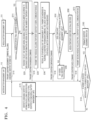
- FIG. 4 shows operations of a master battery controller and a module battery controller in sequence for assigning a final identifier to the module battery controller according to some embodiments.
- a master battery management unit 110 and a module battery management unit 210 are illustrated as an example.
- the master battery management unit 110 is included in the master battery management device 100 of FIG. 1 and may function as a master.
- the module battery management unit 210 is included in the battery module of FIG. 1 and may function as a slave to the master battery management unit 110.
- the module battery management unit 210 may represent one of a plurality of module battery management units 210_1 to 210_n.
- the master battery management unit 110 may transmit an identifier assignment command including assignable identifier information to the module battery management unit 210 in operation S110.
- the assignable identifier information represents assignable identification numbers that the module battery management unit 210 may assign as final identifiers.
- assignable identifier information in operation S 110 is referred to as first assignable identifier information to be distinguished from assignable identifier information in operation S170 performed after operations S120 to S150.
- the module battery management unit 210 may check whether the final identifier has been assigned in response to an identifier assignment command from the master battery management unit 110 in operation S210. If the final identifier is not assigned, in response to the identifier assignment command, the module battery management unit 210 may randomly select one number among assignable identification numbers according to assignable identifier information and assign a temporary identifier corresponding to the selected number in operation S220. The module battery management unit 210 may determine a temporary identifier corresponding to the selected number and change a default identifier (e.g., '0x1FF') to a temporary identifier.
- a default identifier e.g., '0x1FF'
- operation S220 may be omitted.
- the module battery management unit 210 may transmit a second message including the final identifier. Said transmission may be to the serial communication bus according to the identifier check command from the master battery management unit 110 of operation S140 in operation S270.
- the master battery management unit 110 may transmit an identifier transmission command to the module battery management unit 210 in operation S120.
- the identifier transmission command may be a command to transmit a message to the serial communication bus using the temporary identifier assigned to the module battery management unit 210.
- the plurality of module battery management units 210 may share temporary identifiers assigned to the plurality of module battery management units 210 with other module battery management units 210 through a serial communication bus.
- the module battery management unit 210 may transmit a first message including the temporary identifier through the serial communication bus in response to the identifier transmission command in operation S230. At this time, the module battery management unit 210 to which the final identifier is assigned may transmit a message including the final identifier to the serial communication bus. According to another example, the module battery management unit 210 to which the final identifier is assigned may not respond to the identifier transmission command.
- the module battery management unit 210 may receive messages transmitted by other module battery management units 210 in response to an identifier transmission command.
- the module battery management unit 210 may check the identifiers of the other module battery management units 210 from the messages in operation S240.
- the master battery management unit 110 may transmit an identifier comparison command to the module battery management unit 210 in operation S130.
- the module battery management unit 210 may determine whether its own temporary identifier overlaps with identifiers of other module battery management units 210 in operation S250. If the temporary identifier does not overlap with identifiers of other module battery management units 210, the module battery management unit 210 may assign the temporary identifier as a final identifier in operation S260.
- the module battery management unit 210 may un-assign the final identifier in response to the identifier comparison command in operation S280.
- operation S170 may be executed after operation S280.
- the master battery management unit 110 may transmit an identifier check command to the module battery management unit 210 in operation S140.
- the identifier check command may be delivered to all module battery management units 210 included in the battery system. In an embodiment, the identifier check command may be delivered to some of the plurality of module battery management units 210 included in the battery system. If the module battery management unit 210 assigns the final identifier, in response to the identifier check command from the master battery management unit 110, a second message including the final identifier may be transmitted through the serial communication bus in operation S270. If the module battery management unit 210 does not assign the final identifier, a message may not be transmitted in response to an identifier check command from the master battery management unit 110.
- the master battery management unit 110 may determine whether the number of second messages received from the module battery management units 210 is equal to the number of module battery management units 210 in operation S150. If the master battery management unit 110 determines that the number of second messages received from the module battery management units 210 is equal to the number of module battery management units 210, the identifier assignment operation may end in operation S160.
- new assignable identifier information may be generated in operation S170.
- the new assignable identifier information may exclude identification numbers corresponding to final identifiers of module battery management units 210 that already assigned final identifiers from the assignable identification numbers of the first assignable identifier information.
- the assignable identifier information generated in operation S170 may be referred to as second assignable identifier information to be distinguished from the first assignable identifier information in operation S110.
- the operations S110 to S170 of the master battery management unit 110 and the operations S210 to S280 of the module battery management unit 210 may be repeated as described above until the final identifier is assigned to all module battery management units 210.
- FIG. 5 schematically shows an example in which a final identifier is assigned to only one module battery management unit among a plurality of module battery management units according to some embodiments.
- the module battery management unit to which a final identifier is assigned may be indicated by a dashed line
- the module battery management unit to which a final identifier is not assigned may be indicated by a solid line.
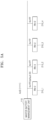
- FIG. 5A schematically shows an example of selecting a random number according to an identifier assignment command of a master battery management unit according to some embodiments.
- the master battery management unit 110 may transmit an identifier assignment command AcID to four module battery management units 210_1 to 210_4.
- the module battery management unit 210 may assign a default identifier such as '0x1FF' before a temporary identifier or a final identifier is assigned.
- the identifier assignment command AcID may include assignable identifier information (e.g., '1111') including a plurality of bits. Bits having a first value among the plurality of bits may indicate numbers assigned as final identifiers to at least one other module battery management unit among the other module battery management units 210. For example, the first value may be '0'. Bits having a second value among the plurality of bits may represent assignable identification numbers. For example, the second value may be '1'.
- an assignable identification number according to the identifier assignment command AcID may be a natural number from 1 to 4.
- the identifier assignment command AcID may be a command that randomly selects one number among the assignable identification numbers and assign the one number as a temporary identifier for each of the first module battery management unit 210_1, the second module battery management unit 210_2, the third module battery management unit 210_3, and the fourth module battery management unit 210_4.
- each module battery management unit 210 may randomly select '2' for the first module battery management unit 210_1, '3' for the second module battery management unit 210_2, '2' for the third module battery management unit 210_1, and '2' for the fourth module battery management unit 210_2, as identification numbers RN, respectively.
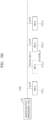
- FIG. 5B schematically shows an example of assigning a temporary identifier according to an identifier transmission command of a master battery management unit according to some embodiments.
- the first module battery management unit 210_1 may assign '0x102'
- the second module battery management unit 210_2 may assign '0x103'
- the third module battery management unit 210_3 may assign '0x102'
- the fourth module battery management unit 210_4 may assign '0x102' may assign '0x103' as temporary IDs tID, respectively.
- the master battery management unit 110 may transmit an identifier transmission command TcID to the four module battery management units 210_1 to 210_4.
- the module battery management units 210 may transmit the first message including the assigned temporary identifier to the serial communication bus.
- the first message may include a temporary identifier tID or a final identifier fID.
- the first module battery management unit 210_1 may transmit a first message tIDm_1 including '0x102' as a temporary identifier
- the second module battery management unit 2102 may transmit a first message tIDm_2 including '0x103' as a temporary identifier
- the third module battery management unit 210_3 may transmit a first message tIDm_3 including '0x102' as a temporary identifier
- the fourth module battery management unit 210_4 may transmit the first message tIDm_4 including '0x102' as a temporary identifier through the serial communication bus.
- Each of the module battery management units 210 may receive the first message tIDm_1 to tIDm_4 from each other through a serial communication bus, and check the temporary identifiers '0x102' and '0x103' included in the first messages tIDm_1 to tIDm_4.
- FIG. 5C schematically shows an example of a battery system according to an identifier comparison command of a master battery management unit according to some embodiments.
- the master battery management unit 110 may transmit an identifier comparison command CcID to four module battery management units 210_1 to 210_4.
- each of the module battery management units 210 may compare whether the temporary identifier assigned to the module battery management unit 210 overlaps with the identifiers of other module battery management units. If the temporary identifier does not overlap with identifiers of other module battery management units, the temporary identifier may be assigned as a final identifier. According to FIG.
- the first, third, and fourth module battery management units 210_1, 210_3, and 210_4 may not assign '0x102' as a final identifier.
- FIG. 5D schematically shows an example of assigning a final identifier according to an identifier check command of a master battery management unit according to some embodiments.
- the master battery management unit 110 may transmit an identifier check command VcID to the four module battery management units 210_1 to 210_4.
- the master battery management unit 110 may receive the second message fIDm from the module battery management unit to which the final identifier fID is assigned.
- the second module battery management unit 210_2 assigns '0x103' as the final identifier fID_2
- the master battery management unit 110 may receive one second message fIDm_2 including '0x103' as a final identifier from the second module battery management unit 210_2.
- the master battery management unit 110 may initialize the identifier by changing the temporary identifiers of the first module battery management unit, the third module battery management unit, and the fourth module battery management unit 210_1, 210_3, and 210_4 to which the final identifier fID has not been assigned to a default identifier value (e.g., '0x1FF'). Since the master battery management unit 110 receives one second message fIDm_2 from the second module battery management unit 210_2 among the four module battery management units 210_1 to 210_4, the master battery management unit 110 may then perform an identifier assignment task.
- a default identifier value e.g., '0x1FF'
- FIG. 6 schematically shows an example in which final identifiers are assigned to all of the plurality of module battery management units according to the continuous embodiment of FIG. 5 .
- the module battery management unit to which a final identifier is assigned may be indicated by a dotted line, and the module battery management unit to which a final identifier is not assigned may be indicated by a solid line.
- the second module battery management unit 210_2 may be a module battery management unit to which the final identifier fID _2 is assigned.
- FIG. 6A schematically shows an example of selecting a random number according to an identifier assignment command of a master battery management unit according to a continuing embodiment of FIG. 5 .
- the master battery management unit 110 may transmit an identifier assignment command AcID including '1101' as assignable identifier information to four module battery management units 210_1 to 210_4.
- the four module battery management units 210_1 to 210_4 check whether the final identifier has been assigned in response to the identifier assignment command AcID, and if the final identifier is not assigned, may randomly select one number among assignable identification numbers.
- the identifier assignment command AcID may include assignable identifier information (e.g., '1101').
- the identifier assignment command AcID may include binary coded assignable identifier information (e.g., '1101').
- the assignable identifier information may include a plurality of bits.
- Bits having a first value (e.g., '0') among the plurality of bits may represent numbers assigned as final identifiers to at least one other module battery management unit among other module battery management units.
- Bits having a second value (e.g., '1') among the plurality of bits may represent assignable identification numbers.
- assignable identification numbers may be represented in ascending order of natural numbers (natural numbers from 1) from the left bit among a plurality of bits included in assignable identifier information. For example, according to the identifier assignment command AcID including '1101' as assignable identifier information, assignable identification numbers may be '1', '2', or '4'.
- assignable identification numbers may represent assignable identification numbers in descending order from the left bit among a plurality of bits. It is possible to indicate assignable identification numbers in ascending order from the right bit among a plurality of bits.
- assignable identification numbers may be '1', '3', and '4'.
- the implementation is not limited to these examples and any other binary coding may be used to indicate available identifiers.
- Assignable identification numbers in FIG. 6 are shown as an example in ascending order of natural numbers from the left bit among a plurality of bits.
- the assignable identification numbers according to the identifier assignment command ('1101', AcID) of FIG. 6A are '1', '2' and '4', which may be a command to randomly select one number among the assignable identification numbers for each of the module battery management units 210 and assign the one number as a temporary identifier.
- the three module battery management units 210_1, 210_3, and 210_4 to which the final identifier fID is not assigned may randomly select one number among assignable identification numbers '1', '2', and '4'. For example, in FIG.
- the first module battery management unit 210_1 may randomly select '1'
- the third module battery management unit 210_3 may select '2'
- the fourth module battery management unit 210_4 may select '4' as an identification number RN.
- FIG. 6B schematically shows an example of assigning a temporary identifier according to an identifier transmission command of a master battery management unit according to a continuing embodiment of FIG. 5 .
- the first module battery management unit 210_1 may assign '0x101'
- the third module battery management unit 210_3 may assign '0x102'
- the fourth module battery management unit 210_4 may assign '0x104' as temporary identifiers tID, respectively.
- the master battery management unit 110 may transmit an identifier transmission command TcID to the module battery management units 210.
- the module battery management units 210 may transmit the first message tIDm including the assigned temporary identifier tID or final identifier fID through the serial communication bus.
- the first module battery management unit 210_1 transmits a first message tIDm_1 including '0x101' as a temporary identifier tID_1
- the second module battery management unit 210_2 transmits a first message tIDm_2 including '0x103' as a final identifier fID_2
- the third module battery management unit 210_3 transmits a first message tIDm_3 including '0x102' as a temporary identifier tID_3
- the fourth module battery management unit 210_4 transmits a first message tIDm_4 including '0x104' as a temporary identifier tID_4 through a serial communication bus.
- Each of the module battery management units 210 may receive the first message tIDm_1 to tIDm_4 from each other through a serial communication bus, and check the temporary identifiers '0x101', '0x102', and '0x104' and the final identifier '0x103' included in the first message tIDm_1 to tIDm_4.
- FIG. 6C schematically shows an example of a battery system according to an identifier comparison command of a master battery management unit according to a continuing embodiment of FIG. 5 .
- the master battery management unit 110 may transmit an identifier comparison command CcID to the module battery management units 210.
- each of the module battery management units 210 may compare whether its own temporary identifier is duplicated with identifiers of other module battery management units. According to FIG. 6C ,
- the third module battery management unit 210_3 assigns '0x102'(tID_3)
- the fourth module battery management unit 210_4 assigns '0x104' (tID_4) as temporary identifiers tID, identifiers included in each of the first messages tIDm_1 to tIDm_4 do not overlap.
- the first module battery management unit 210_1 may assign '0x101' as the final identifier fID _1
- the third module battery management unit 210_3 may assign '0x102' as the final identifier fID _3
- the fourth module battery management unit 210_4 may assign '0x104' as the final identifier fLD_4.
- FIG. 6D schematically shows an example of assigning a final identifier according to an identifier check command of a master battery management unit according to a continuing embodiment of FIG. 5 .
- the master battery management unit 110 may transmit an identifier check command VcID to the four module battery management units 210_1 to 210_4.
- the master battery management unit 110 may receive the second message fIDm including the final identifier fIDm from the module battery management unit to which the final identifier fID is assigned.
- the first module battery management unit 210_1 may transmit the second message fIDm_1 including '0x101' as the final identifier fID _1
- the second module battery management unit 2102 may transmit a second message fIDm_2 including '0x103' as the final identifier fID_2
- the third module battery management unit 210_3 may transmit the second message fIDm_3 including '0x102' as the final identifier fID _3
- the fourth module battery management unit 210_4 may transmit the second message fIDm_4 including '0x104' as the final identifier fID _4 to the master battery management unit 110 through a serial communication bus.
- the master battery management unit 110 Since the master battery management unit 110 has received four second messages fIDm _1 to fIDm_4 from all of the four module battery management units 210_1 to 210_4, it is determined that the final identifier fID is assigned to all of the module battery management units 210_1 to 210_4, and the identifier assignment operation may be terminated.
Landscapes
- Engineering & Computer Science (AREA)
- Manufacturing & Machinery (AREA)
- Chemical & Material Sciences (AREA)
- Chemical Kinetics & Catalysis (AREA)
- Electrochemistry (AREA)
- General Chemical & Material Sciences (AREA)
- Microelectronics & Electronic Packaging (AREA)
- Computer Networks & Wireless Communication (AREA)
- Charge And Discharge Circuits For Batteries Or The Like (AREA)
Abstract
Description
- One or more embodiments relate to an operating method of a module battery management unit, an operating method of a master battery management unit, and a battery system.
- A battery management system (BMS) is a controller that monitors the state of a battery and manages a battery system including the battery to maintain and use the battery in optimal conditions. The BMS includes a plurality of battery modules and one master controller. The battery module includes a bundle of cells connected in series/parallel and a slave controller that measures the voltage of the cells and transmits the measured value to the master controller. The main functions of the slave controller include voltage measurement of individual cells, individual cell balancing, battery module temperature measurement, and battery module fault diagnosis.
- In a conventional method, a master controller must be able to identify data transmitted from multiple slave controllers. Therefore, by assigning an identifier to identify each slave controller and transmitting data including the identifier, it should be possible to know the slave controller from which the data was transmitted. A method of including an identifier in data may vary depending on a communication protocol for transmitting and receiving data. For example, in controller area network (CAN) communication, the identifier may be included in the may identification (ID), and in a universal asynchronous receiver/transmitter (UART), the identifier may be included in data.
- In a conventional method, if a plurality of slave controllers are used, a method of pre-storing identifiers (e.g.,
number 1 to number N) in the slave controller has been used. However, if the slave controller in this case needs to be assembled or replaced in one battery pack, since only the slave controller corresponding to the identifier assigned to the user should be replaced, mass productivity is lowered. - Embodiments are directed to a method of operating a module battery management unit connected to a master battery management unit and at least one other module battery management unit through a serial communication bus. The method comprises receiving an identifier assignment command including assignable identifier information from the master battery management unit, randomly selecting one number from among assignable identification numbers according to the assignable identifier information in response to the identifier assignment command, and assigning the selected number as a temporary identifier, transmitting a first message including the temporary identifier through the serial communication bus in response to an identifier transmission command received from the master battery management unit; receiving messages transmitted by the at least one other module battery management unit in response to the identifier transmission command, and checking identifiers of the at least one other module battery management unit from the messages, comparing the temporary identifier with identifiers of the at least one other module battery management unit in response to an identifier comparison command received from the master battery management unit; and assigning the temporary identifier as a final identifier if the temporary identifier does not overlap with identifiers of the at least one other module battery management unit.
- In one or more embodiments, the method steps above may refer to a first module battery management unit. That is, the identifier assignment command may be received by the first module battery management unit. The random selection may be performed by the first module battery management unit. The assignment may be made to the first module battery management unit. The first message may be transmitted by the first module battery management unit. The messages transmitted by at least one second module battery management unit may be received by the first module battery management unit and the identifiers of the messages may be checked by the first module battery management unit. The comparison of the temporary identifier with identifiers of the at least one second module battery management unit may be performed by the first module battery management unit. Further, the assignment of the temporary identifier as a final identifier may be done by the first module battery management unit.
- By this method, an identifier can may be assigned to at least one second module battery management unit without the need to pre-assign the identifier. Additionally, double assigned over overlapping identifiers can be avoided. By this method, production and/or repair of a battery module are simplified. The at least one second module battery management unit may be a newly introduced or replaced module battery management unit.
- One or more embodiments provide a method and system for transmitting a second message including the final identifier to the serial communication bus in response to an identifier check command from the master battery management unit.
- One or more embodiments provide that the step of transmitting may be performed by the first module battery management unit.
- One or more embodiments provide a method and system for not assigning a final identifier in response to the identifier check command if the temporary identifier overlaps with identifiers of the at least one other module battery management unit.
- One or more embodiments provide the step of not assigning a final identifier may be performed by the first module battery management unit.
- One or more embodiments provide a method and system wherein the assignable identifier information comprises a plurality of bits, wherein bits having a first value, from among the plurality of bits, indicate numbers assigned as final identifiers to at least one other module battery management unit, from among the at least one other module battery management unit.
- One or more embodiments provide a method and system wherein bits having a second value, from among the plurality of bits, indicate the assignable identification numbers.
- In one or more embodiments, the method includes confirming whether the final identifier was assigned in response to the identifier assignment command, and performing the randomly selecting one number from among the assignable identification numbers only if the final identifier is confirmed as not assigned.
- In one or more embodiments the step of confirming whether the final identifier was assigned may be performed by the first module battery management unit.
- In one or more embodiments, the module battery management unit is included in a battery module that includes at least a battery cell, a plurality of terminals electrically coupled to the serial communication bus, and a protection circuit electrically coupling the battery cell and at least one of the plurality of terminals.
- In one or more embodiments, the module battery management unit detects state information of the battery cell and communicates the state information to the master battery management unit, the state information including at least one of a voltage, a charge current, a discharge current, and a temperature.
- In one or more embodiments, the master battery management unit includes at least one microcontroller, the at least one microcontroller including a processor and a memory storing instructions for operating the module battery management unit, the instructions being executable in the processor.
- According to one or more embodiments, a method of operating a module battery management unit connected to a master battery management unit and at least one other module battery management unit through a serial communication bus, includes receiving an identifier assignment command including assignable identifier information from the master battery management unit, randomly selecting one number from among assignable identification numbers according to the assignable identifier information in response to the identifier assignment command, and assigning the selected number as a temporary identifier, transmitting a first message including the temporary identifier through the serial communication bus in response to an identifier transmission command received from the master battery management unit, receiving messages transmitted by the at least one other module battery management unit in response to the identifier transmission command, and checking identifiers of the at least one other module battery management unit from the messages, comparing the temporary identifier with identifiers of the at least one other module battery management unit in response to an identifier comparison command received from the master battery management unit, assigning the temporary identifier as a final identifier if the temporary identifier does not overlap with identifiers of the at least one other module battery management unit, and transmitting a second message including the final identifier to the serial communication bus in response to an identifier check command from the master battery management unit.
- In one or more embodiments the method steps above may refer to the first module battery management unit. That is, the steps of receiving an identifier assignment command, randomly selecting one number from among assignable identification numbers, assigning the selected number as a temporary identifier, transmitting a first message including the temporary identifier, receiving messages transmitted by the at least one second module battery management unit, checking identifiers of the at least one second module battery management unit, comparing the temporary identifier, assigning the temporary identifier as a final identifier and transmitting a second message including the final identifier may be performed by the first module battery management unit. The second module battery management unit is a unit different of the first module battery management unit.
- The same advantages as mentioned regarding the previous method of operating a module battery management unit connected to a master battery management unit and at least one other module battery management unit can be achieved.
- According to some embodiments, the method may further include not assigning a final identifier in response to the identifier check command if the temporary identifier overlaps with identifiers of the at least one other module battery management unit.
- In one or more embodiments the step of not assigning a final identifier may be performed by the module battery management unit.
- According to another embodiment, the assignable identifier information may include a plurality of bits, wherein bits having a first value, from among the plurality of bits, indicate numbers assigned as final identifiers to at least one other module battery management unit, from among the at least one other module battery management unit, and wherein bits having a second value, from among the plurality of bits, indicate the assignable identification numbers.
- According to another embodiment, the method may further include confirming whether the final identifier was assigned in response to the identifier assignment command, wherein the randomly selecting one number from among the assignable identification numbers if the final identifier is not assigned.
- One or more embodiments the step of confirming whether the final identifier was assigned may be performed by the module battery management unit.
- According to one or more embodiments, an operating method of a master battery management unit connected to a plurality of module battery management units through a serial communication bus, includes transmitting a first identifier assignment command including first assignable identifier information indicating assignable identification numbers to the plurality of module battery management units, transmitting an identifier transmission command to the plurality of module battery management units, the serial communication bus receiving messages transmitted by the other module battery management units in response to the identifier transmission command, sequentially transmitting an identifier comparison command and an identifier check command to the plurality of module battery management units, receiving messages transmitted by at least some of the module battery management units to which a final identifier is assigned, from among the plurality of module battery management units, in response to the identifier check command, and checking final identifiers of the at least some of the module battery management units from the messages, generating second assignable identifier information excluding identification numbers corresponding to final identifiers of the at least some module battery management units from the assignable identification numbers.
- One or more embodiments of the method steps above may refer to the master battery management unit. That is, the steps of transmitting a first identifier assignment command, transmitting an identifier transmission command, sequentially transmitting an identifier comparison command, receiving messages transmitted by at least some of the module battery management units, and generating second assignable identifier information may be performed by the master battery management unit.
- According to some embodiments, the method of operating a master battery management unit comprises receiving messages transmitted by the other module battery management units in response to the identifier transmission command.
- The same advantages as mentioned regarding the previous methods can be achieved.
- According to some embodiments, the method includes transmitting a second identifier assignment command including the second assignable identifier information to the plurality of module battery management units.
- The step of transmitting a second identifier assignment command may be performed by the master battery management unit.
- According to some embodiments, the method may further include, responsive to transmitting the identifier check command, if the number of messages received from the plurality of module battery management units is equal to the number of the plurality of module battery management units, terminating an identifier assignment operation.
- The step of terminating an identifier assignment operation may be performed by the master battery management unit.
- According to another embodiment, the first and second assignable identifier information may each include a plurality of bits, wherein bits having a first value, from among the plurality of bits, indicate identification numbers corresponding to final identifiers of at least some module battery management units to which the final identifiers are assigned, from among the plurality of module battery management units.
- According to another embodiment, bits having a second value, from among the plurality of bits, indicate identification numbers that can be assigned by at least some module battery management units to which the final identifier is not assigned, from among the plurality of module battery management units.
- According to one or more embodiments, a battery system includes
a plurality of module battery management units respectively connected to nodes of a serial communication bus, each of the plurality of module battery management units configured to randomly select one number from among assignable identification numbers according to assignable identifier information in response to an identifier assignment command received, and to assign the selected number as a temporary identifier. A master battery management unit is connected to a serial communication bus, and is configured to transmit an identifier assignment command including the assignable identifier information to the plurality of module battery management units, and to transmit an identifier transmission command to the plurality of module battery management units. The master battery management unit is further configured to transmit an identifier comparison command to the plurality of module battery management units, to compare the temporary identifier with identifiers of the other module battery management units in response to an identifier comparison command, and if the temporary identifier does not overlap with the identifiers of the other module battery management units, to assign the temporary identifier as a final identifier. - The same advantages as mentioned regarding the previous mentioned methods can be achieved.
- In some embodiments, each of the plurality of module battery management units is configured to transmit a first message including the temporary identifier in response to the identifier transmission command, receive messages transmitted by the other module battery management units, and check identifiers of the other module battery management units from the messages.
- In some embodiments, the master battery management unit is further configured to transmit an identifier check command to the plurality of module battery management units.
- In some embodiments, each of the plurality of module battery management units is further configured to transmit a second message including the final identifier in response to the identifier check command.
- According to some embodiments, the battery system may further include a plurality of battery modules, wherein each of the plurality of battery modules includes at least one battery cell, a protection circuit configured to protect the at least one battery cell, and the module battery management unit is further configured to control the protection circuit by monitoring a state of the at least one battery cell.
- According to another embodiment, the module battery management unit detects state information of the at least one battery cell and communicates the state information to the master battery management unit, the state information including at least one of a voltage, a charge current, a discharge current, and a temperature.
- In some embodiments, the protection circuit includes one or more of a charge control switch, a discharge control switch, a main switch, a precharge switch, and a fuse.
- According to some embodiments, the master battery management unit includes at least one microcontroller, the at least one microcontroller including a processor and a memory storing instructions for operating the module battery management unit, the instructions being executable in the processor.
- Features will become apparent to those of skill in the art by describing in detail exemplary embodiments with reference to the attached drawings in which:
-
FIG. 1 is a block diagram schematically showing a battery system according to embodiments; -
FIG. 2 is a block diagram showing an internal configuration of a battery module according to embodiments; -
FIG. 3 is a block diagram showing a battery system from a communication point of view according to embodiments; -
FIG. 4 is a logic flow diagram showing sequential operations of a master battery controller and a module battery controller for assigning a final identifier to a module battery management unit, according to some embodiments; -
FIG. 5A is a block diagram showing an example of selecting a random number according to an identifier assignment command of a master battery management unit, according to embodiments; -
FIG. 5B is a block diagram showing an example of assigning a temporary identifier according to an identifier transmission command of a master battery management unit, according to embodiments; -
FIG. 5C is a block diagram showing an example of a battery system according to an identifier comparison command of a master battery management unit, according to embodiments; -
FIG. 5D is a block diagram showing an example of assigning a final identifier according to an identifier check command of a master battery management unit, according to some embodiments; -
FIG. 6A is a block diagram showing an example of selecting a random number according to an identifier assignment command of the master battery management unit according to a continuing embodiment ofFIG. 5 ; -
FIG. 6B is a block diagram showing an example of assigning a temporary identifier according to an identifier transmission command of the master battery management unit according to a continuing embodiment ofFIG. 5 ; -
FIG. 6C is a block diagram showing an example of a battery system according to an identifier comparison command of the master battery management unit according to a continuing embodiment ofFIG. 5 ; -
FIG. 6D is a block diagram showing an example of assigning a final identifier according to an identifier check command of the master battery management unit according to a continuing embodiment ofFIG. 5 . - Example embodiments will now be described in more detail below with reference to the accompanying drawings. However, the inventive concept may be embodied in many forms and should not be construed as limited to the embodiments set forth herein. Rather, these embodiments are provided so that this disclosure will be complete and comprehensive, and will fully convey the illustrative implementations to those skilled in the art.
- The terms used in the present application are used only to describe certain embodiments, and are not intended to limit the inventive concept. The terms of a singular form may include plural forms unless otherwise specified. In this specification, the term "include," "comprise," "including," or "comprising," specifies a property, a region, a fixed number, a step, a process, an element and/or a component but does not exclude other properties, regions, fixed numbers, steps, processes, elements and/or components. It will be understood that the terms "first" and "second" are used herein to describe various components but these components should not be limited by these terms. The above terms are used only to distinguish one component from another.
- Hereinafter, embodiments will be described more completely with reference to the accompanying drawings in which embodiments are shown. Like reference numbers throughout indicate like elements. In the drawings, identical or corresponding components are assigned the same reference numerals, and will not be described redundantly.
-
FIG. 1 schematically shows a battery system from a power source point of view, according to some embodiments. - Referring to
FIG. 1 , abattery system 10 may include a masterbattery management device 100 and battery modules 200_1 to 200_n each coupled to the masterbattery management device 100. - The battery modules 200_1 to 200_n may be collectively referred to as the
battery module 200. Thebattery module 200 includes at least one battery cell and a module battery management unit for managing the battery cell. - The
battery system 10 may be an integral energy storage system for supplying power to battery cells of thebattery module 200 and outputting power stored in the battery cells. Thebattery system 10 may be connected to a battery charging system (a so-called battery charging station) for charging the battery cells of thebattery module 200. Thebattery system 10 may be connected to an electric load to be supplied with power stored in battery cells of thebattery module 200. - The master
battery management device 100 is configured to manage thebattery system 10 and may include, for example, a micro control unit (MCU). The masterbattery management device 100 may perform data communication with the module battery management units. The master battery management device 100may provide state information of thebattery system 10 collected through the module battery management units to an external device. - The
battery module 200 may include at least one battery cell and a module battery management unit. The at least one battery cell may include a rechargeable secondary battery. For example, the at least one battery cell may include nickel-cadmium batteries, lead-acid batteries, nickel-metal hydride batteries (NiMH), lithium-ion batteries, and lithium polymer batteries, and the like. The at least one battery cell may be connected to each other in series, parallel or a combination of series and parallel, and the number of the at least one battery cell may be determined according to an output voltage required for thebattery module 200. - The
battery module 200 may further include a protection circuit. The protection circuit is a circuit for protecting a battery cell and may include a charge control switch, a discharge control switch, a fuse, and the like. The module battery management unit may monitor the state of the battery cell, control the protection circuit, and transmit the state of the battery cell to the masterbattery management device 100. - The master
battery management device 100 may perform a protection operation to protect thebattery system 10. The protection operation may be based on state information of thebattery system 10. To this end, thebattery system 10 may include a protection circuit controlled by the masterbattery management device 100. -
FIG. 2 schematically shows the internal configuration of a battery module according to some embodiments. - Referring to
FIG. 2 , an internal configuration of any onebattery module 200 among thebattery modules 200 ofFIG. 1 is shown in an example. - The
battery module 200 includes a modulebattery management unit 210 and at least onebattery cell 220. As shown inFIG. 2 , thebattery module 200 may further include aprotection circuit 230. - The
battery module 200 may be connected to the serial communication bus through thefirst terminal 201 and thesecond terminal 202. Thefirst terminal 201 is connected to the receiver of the modulebattery management unit 210. The modulebattery management unit 210 may receive a command CM from the master battery management device 100 (seeFIG. 1 ). The command CM may be received through thefirst terminal 201. Also, the modulebattery management unit 210 may receive a message MS' transmitted by another batterymodule management unit 210. The message MS' may be transmitted through thefirst terminal 201. - The
second terminal 202 is connected to the transmitter of the modulebattery management unit 210. The modulebattery management unit 210 may transmit a message MS to the masterbattery management device 100. The message MS' may be transmitted through thesecond terminal 202. - The module
battery management unit 210 may be activated in response to a command CM. The CM may be from the masterbattery management device 100. The CM may be received through thefirst terminal 201. The modulebattery management unit 210 may assign a temporary identifier or a final identifier to itself. The modulebattery management unit 210 may transmit a message MS including a temporary identifier or a final identifier. The transmission may be to the serial communication bus through thesecond terminal 202. Among the messages MS, a message transmitted by the modulebattery management unit 210 in response to an identifier transmission command from the masterbattery management device 100 is referred to as a first message tIDm. The first message tIDm includes a temporary identifier or a final identifier. Among the messages MS, a message transmitted by the modulebattery management unit 210 in response to an identifier check command from the masterbattery management device 100 is referred to as a second message fIDm. The second message fIDm includes the final identifier. The modulebattery management unit 210 may communicate with the masterbattery management device 100 using a temporary identifier or a final identifier. - A
protection circuit 230 may be positioned between thebattery cell 220 and at least one (in the example ofFIG. 2 ) of theterminals protection circuit 230 may include at least one switch controlled by the modulebattery management unit 210. Theprotection circuit 230 may include at least one of a charge control switch, a discharge control switch, a main switch, and a precharge switch. Theprotection circuit 230 may include a fuse. -
FIG. 3 schematically shows a battery system according to some embodiments from a communication point of view. - Referring to
FIG. 3 , the masterbattery management unit 110 and the plurality of module battery management units 210_1 to 210_n may perform data communication through theserial communication bus 300. Instead of referring to the first module battery management units 210_1, the second module battery management units 210_2, or the n-th module battery management units 210_n, hereafter, for the sake of simplicity, it may be referred to a modulebattery management units 210 in general. The same applies to the temporary identifier tID_1 of the first module battery management units 210_1, which may be simplified to tID, the final identifier fID_1 of the first module battery management units 210_1, which may be simplified to fID. The same applies to the first message fIDm and the second message fIDm. - It is assumed that final identifiers are not assigned to the first to k-th module battery management units 210_1 to 210_k among the total number of n module battery management units 210_1 to 210_n, and identifiers are assigned to the (k+1)-th module battery management units to the n-th module battery management units 210_(k+1) to 210_n. k may be a natural number greater than 1 and smaller than n.
- The master
battery management unit 110 may be included in the masterbattery management device 100 ofFIG. 1 . The masterbattery management unit 110 may control the operation of the masterbattery management device 100 as a whole. The masterbattery management unit 110 may be an integrated controller of the masterbattery management device 100. The masterbattery management unit 110 may include one or more microcontrollers. - The master
battery management unit 110 may communicate with the module battery management units 210_1 to 210_n through theserial communication bus 300. The masterbattery management unit 110 may transmit identifier commands for allowing the module battery management units 210_1 to 210_n to assign themselves different final identifiers to the modulebattery management units 210. The module battery management units 210_1 to 210_n may receive messages transmitted by the module battery management units 210_1 to 210n through theserial communication bus 300. The identifier commands may include an identifier assignment command AcID, an identifier transmission command TcID, an identifier comparison command CcID, and/or an identifier check command VcID. - The plurality of module battery management units 210_1 to 210_n are respectively included in the battery modules 200_1 to 200_n of
FIG. 1 . The plurality of module battery management units 210_1 to 210_n may be collectively referred to as the modulebattery management unit 210. The modulebattery management unit 210 may detect states (e.g., voltage, charge/discharge current, temperature, etc.) of battery cells of the battery module and may transmit the detected state information to the masterbattery management unit 110. - The module
battery management units 210 may be connected to nodes of theserial communication bus 300 and communicate with the masterbattery management unit 110 through theserial communication bus 300. The modulebattery management unit 210 may perform an operation according to a command in response to a command from the masterbattery management unit 110. A default identifier such as '0x1FF' may be assigned to the modulebattery management unit 210 before assigning the identifier. - The module
battery management unit 210 may check whether the final identifier has been assigned in response to an identifier assignment command AcID from the masterbattery management unit 110. If the final identifier is not assigned, the modulebattery management unit 210 may randomly select one number among assignable identification numbers and assign the selected number as a temporary identifier. According to the example ofFIG. 3 , since final identifiers are not assigned to the first module battery management unit to the k-th module battery management unit 210_1 to 210_k, each of the first module battery management units to the k-th module battery management units 210_1 to 210_k randomly may select one number among assignable identification numbers, and assign a temporary identifier based on the selected number. For example, if the number randomly selected by the first module battery management unit 210_1 is '3', '0x103' may be assigned as a temporary identifier. The temporary identifier of the first module battery management unit 210_1 is indicated as a first temporary identifier tID_1. If the number randomly selected by the second module battery management unit 210_2 is '10', '0x10A' may be assigned as a temporary identifier. - The module
battery management unit 210 may transmit a first message tIDm through theserial communication bus 300 in response to an identifier transmission command TcID from the masterbattery management unit 110. The first to k-th module battery management units 210_1 to 210_k to which the final identifier is not assigned may transmit first messages tIDm_1 to tIDm_k including its temporary identifier tID through theserial communication bus 300. The (k+1)-th to n-th module battery management units 210_(k+1) to 210_n to which the final identifiers are assigned may transmit first messages tIDm_(k+1) to tIDm_n including their final identifiers through theserial communication bus 300. - For example, some of the temporary identifiers tID included in the first messages tIDm_1 to tIDm_k transmitted by the first to k-th module battery management units 210_1 to 210_k may be duplicated.
- Since the module
battery management unit 210 is connected to theserial communication bus 300, first and second messages tIDm and fIDm transmitted by other module battery management units may be received. The modulebattery management unit 210 may receive first messages tIDm transmitted by other module battery management units in response to an identifier transmission command TcID, and check identifiers of other module battery management units from the first messages tIDm. According to the example ofFIG. 3 , the first module battery management unit 210_1 may receive first messages tIDm_2 to tIDm_n transmitted by other module battery management units 210_2 to 210_n and check identifiers included in the first messages tIDm_2 to tIDm_n. - The module
battery management unit 210 may compare its own temporary identifier with identifiers of other module battery management units. The comparison between own temporary identifier with identifiers of other module battery management units may be performed in response to the identifier comparison command CcID from the masterbattery management unit 110. If its own temporary identifier does not overlap with identifiers of other module battery management units, the modulebattery management unit 210 may assign the temporary identifier as a final identifier fID. Overlapping means, that the identifiers are identical up to a certain degree of accuracy which may make them non-distinguishable. If the temporary identifier of the modulebattery management unit 210 overlaps with identifiers of other module battery management units, the modulebattery management unit 210 may not assign the final identifier fID. According to the example ofFIG. 3 , the first module battery management unit 210_1 may check whether its first temporary identifier tID_1 overlaps with identifiers included in the first messages tIDm_2 to tIDm_n received from other module battery management units 210_2 to 210_n. If the first temporary identifier tID _1 of the first module battery management unit 210_1 does not overlap with identifiers of other module battery management units 210_2 to 210_n, the first module battery management unit 210_1 may assign the first temporary identifier tID_1 as the final identifier of the first module battery management unit 210_1. The final identifier of the first module battery management unit 210_1 may be indicated as the first final identifier fID_1. If the first temporary identifier tID_1 of the first module battery management unit 210_1 overlaps with an or a plurality of identifiers of other module battery management units 210_2 to 210_k, the first module battery management unit 210_1 may not assign a final identifier. - At least some of the first to k-th module battery management units 210_1 to 210_k may assign final identifiers. If numbers randomly selected by the first to k-th module battery management units 210_1 to 210_k among assignable identification numbers are all different, all of the first to k-th module battery management units 210_1 to 210_k may assign final identifiers. If numbers randomly selected by the first to k-th module battery management units 210_1 to 210_k among assignable identification numbers are the same, all of the first to k-th module battery management units 210_1 to 210_k may not assign final identifiers.
- The module
battery management unit 210 may transmit the second message fIDm including the final identifier fID through theserial communication bus 300 in response to the identifier check command VcID from the masterbattery management unit 110. According to the example ofFIG. 3 , among the first module battery management units to the n-th module battery management units 210_1 to 210_n, the module battery management units to which the final identifier is assigned may transmit the second message fIDm including the final identifier through theserial communication bus 300. For example, if the first module battery management unit 210_1 assigns the final identifier, the first module battery management unit 210_1 may transmit the second message fIDm_1 including the first final identifier fID_1 of the first module battery management unit 210_1 through theserial communication bus 300. - The master
battery management unit 110 may receive the second message fIDm from the modulebattery management units 210 after transmitting the identifier check command VcID. The masterbattery management unit 110 may perform processing according to a predesigned algorithm. If the number of second messages fIDm received from the plurality of modulebattery management units 210 is equal to the number of the plurality of modulebattery management units 210, it is determined that all of the plurality of modulebattery management units 210 have assigned final identifiers. Then, the identifier assignment operation may be terminated. If the number of second messages fIDm received from the plurality of modulebattery management units 210 is smaller than the number of the plurality of modulebattery management units 210, the masterbattery management unit 110 may re-execute an identifier assignment operation. Module battery management units that have not assigned final identifiers may assign final identifiers in a subsequent identifier assignment operation. - According to the example of
FIG. 3 , if the number of second messages fIDm received from the n module battery management units 210_1 to 210_n is n, the masterbattery management unit 110 may end the identifier assignment operation. If the number of second messages fIDm received from the module battery management units 210_1 to 210_n is less than n, the masterbattery management unit 110 may re-execute the identifier assignment operation. - Controller area network (CAN) communication may be used as a communication protocol between the master
battery management unit 110 and the modulebattery management unit 210 and between the plurality of modulebattery management units 210. For example, theserial communication bus 300 may be a CAN bus and may communicate with the masterbattery management unit 110 and other modulebattery management units 210 through the CAN bus. The masterbattery management unit 110 is connected to the CAN bus, and the modulebattery management units 210 are respectively connected to nodes of the CAN bus. - According to another embodiment, universal asynchronous receiver/transmitter (UART) communication may be used as a communication protocol between the master
battery management unit 110 and the modulebattery management unit 210 and between the plurality of modulebattery management units 210. However, the inventive concept is not limited thereto, and any communication protocol that transmits data or commands using a bus line may be applied. In some embodiments, different communication protocols may be mixed. -
FIG. 4 shows operations of a master battery controller and a module battery controller in sequence for assigning a final identifier to the module battery controller according to some embodiments. - Referring to
FIG. 4 , a masterbattery management unit 110 and a modulebattery management unit 210 are illustrated as an example. - The master
battery management unit 110 is included in the masterbattery management device 100 ofFIG. 1 and may function as a master. The modulebattery management unit 210 is included in the battery module ofFIG. 1 and may function as a slave to the masterbattery management unit 110. The modulebattery management unit 210 may represent one of a plurality of module battery management units 210_1 to 210_n. - The master
battery management unit 110 may transmit an identifier assignment command including assignable identifier information to the modulebattery management unit 210 in operation S110. The assignable identifier information represents assignable identification numbers that the modulebattery management unit 210 may assign as final identifiers. For example, assignable identifier information inoperation S 110 is referred to as first assignable identifier information to be distinguished from assignable identifier information in operation S170 performed after operations S120 to S150. - The module
battery management unit 210 may check whether the final identifier has been assigned in response to an identifier assignment command from the masterbattery management unit 110 in operation S210. If the final identifier is not assigned, in response to the identifier assignment command, the modulebattery management unit 210 may randomly select one number among assignable identification numbers according to assignable identifier information and assign a temporary identifier corresponding to the selected number in operation S220. The modulebattery management unit 210 may determine a temporary identifier corresponding to the selected number and change a default identifier (e.g., '0x1FF') to a temporary identifier. - If the module
battery management unit 210 is in a state in which the final identifier is assigned, operation S220 may be omitted. According to another example, if the final identifier is assigned, the modulebattery management unit 210 may transmit a second message including the final identifier. Said transmission may be to the serial communication bus according to the identifier check command from the masterbattery management unit 110 of operation S140 in operation S270. - The master
battery management unit 110 may transmit an identifier transmission command to the modulebattery management unit 210 in operation S120. The identifier transmission command may be a command to transmit a message to the serial communication bus using the temporary identifier assigned to the modulebattery management unit 210. According to the identifier transmission command, the plurality of modulebattery management units 210 may share temporary identifiers assigned to the plurality of modulebattery management units 210 with other modulebattery management units 210 through a serial communication bus. - The module
battery management unit 210 may transmit a first message including the temporary identifier through the serial communication bus in response to the identifier transmission command in operation S230. At this time, the modulebattery management unit 210 to which the final identifier is assigned may transmit a message including the final identifier to the serial communication bus. According to another example, the modulebattery management unit 210 to which the final identifier is assigned may not respond to the identifier transmission command. - The module
battery management unit 210 may receive messages transmitted by other modulebattery management units 210 in response to an identifier transmission command. The modulebattery management unit 210 may check the identifiers of the other modulebattery management units 210 from the messages in operation S240. - The master
battery management unit 110 may transmit an identifier comparison command to the modulebattery management unit 210 in operation S130. - In response to the identifier comparison command from the master
battery management unit 110, the modulebattery management unit 210 may determine whether its own temporary identifier overlaps with identifiers of other modulebattery management units 210 in operation S250. If the temporary identifier does not overlap with identifiers of other modulebattery management units 210, the modulebattery management unit 210 may assign the temporary identifier as a final identifier in operation S260. - If its temporary identifier overlaps with identifiers of other module
battery management units 210, the modulebattery management unit 210 may un-assign the final identifier in response to the identifier comparison command in operation S280. Although not shown inFIG. 4 , operation S170 may be executed after operation S280. - The master
battery management unit 110 may transmit an identifier check command to the modulebattery management unit 210 in operation S140. The identifier check command may be delivered to all modulebattery management units 210 included in the battery system. In an embodiment, the identifier check command may be delivered to some of the plurality of modulebattery management units 210 included in the battery system. If the modulebattery management unit 210 assigns the final identifier, in response to the identifier check command from the masterbattery management unit 110, a second message including the final identifier may be transmitted through the serial communication bus in operation S270. If the modulebattery management unit 210 does not assign the final identifier, a message may not be transmitted in response to an identifier check command from the masterbattery management unit 110. - The master
battery management unit 110 may determine whether the number of second messages received from the modulebattery management units 210 is equal to the number of modulebattery management units 210 in operation S150. If the masterbattery management unit 110 determines that the number of second messages received from the modulebattery management units 210 is equal to the number of modulebattery management units 210, the identifier assignment operation may end in operation S160. - If the master
battery management unit 110 determines that the number of messages received from the modulebattery management units 210 is not equal to the number of modulebattery management units 210 new assignable identifier information may be generated in operation S170. The new assignable identifier information may exclude identification numbers corresponding to final identifiers of modulebattery management units 210 that already assigned final identifiers from the assignable identification numbers of the first assignable identifier information. For example, the assignable identifier information generated in operation S170 may be referred to as second assignable identifier information to be distinguished from the first assignable identifier information in operation S110. The operations S110 to S170 of the masterbattery management unit 110 and the operations S210 to S280 of the modulebattery management unit 210 may be repeated as described above until the final identifier is assigned to all modulebattery management units 210. -
FIG. 5 schematically shows an example in which a final identifier is assigned to only one module battery management unit among a plurality of module battery management units according to some embodiments. InFIG. 5 , among the plurality of module battery management units, the module battery management unit to which a final identifier is assigned may be indicated by a dashed line, and the module battery management unit to which a final identifier is not assigned may be indicated by a solid line. -
FIG. 5A schematically shows an example of selecting a random number according to an identifier assignment command of a master battery management unit according to some embodiments. - Referring to
FIG. 5A , the masterbattery management unit 110 may transmit an identifier assignment command AcID to four module battery management units 210_1 to 210_4. The modulebattery management unit 210 may assign a default identifier such as '0x1FF' before a temporary identifier or a final identifier is assigned. The identifier assignment command AcID may include assignable identifier information (e.g., '1111') including a plurality of bits. Bits having a first value among the plurality of bits may indicate numbers assigned as final identifiers to at least one other module battery management unit among the other modulebattery management units 210. For example, the first value may be '0'. Bits having a second value among the plurality of bits may represent assignable identification numbers. For example, the second value may be '1'. - According to
FIG. 5A , if the masterbattery management unit 110 transmits an identifier assignment command AcID including '1111' as assignable identifier information to the four module battery management units 210_1 to 210_4, an assignable identification number according to the identifier assignment command AcID may be a natural number from 1 to 4. The identifier assignment command AcID may be a command that randomly selects one number among the assignable identification numbers and assign the one number as a temporary identifier for each of the first module battery management unit 210_1, the second module battery management unit 210_2, the third module battery management unit 210_3, and the fourth module battery management unit 210_4. InFIG. 5A , according to the identifier assignment command AcID that includes '1111' as assignable identifier information, each modulebattery management unit 210 may randomly select '2' for the first module battery management unit 210_1, '3' for the second module battery management unit 210_2, '2' for the third module battery management unit 210_1, and '2' for the fourth module battery management unit 210_2, as identification numbers RN, respectively. -
FIG. 5B schematically shows an example of assigning a temporary identifier according to an identifier transmission command of a master battery management unit according to some embodiments. - Referring to
FIG. 5B , inFIG. 5A , as the four module battery management units 210_1 to 210_4 randomly select the identification numbers RN, the first module battery management unit 210_1 may assign '0x102', the second module battery management unit 210_2 may assign '0x103', the third module battery management unit 210_3 may assign '0x102' and the fourth module battery management unit 210_4 may assign '0x102' may assign '0x103' as temporary IDs tID, respectively. - The master
battery management unit 110 may transmit an identifier transmission command TcID to the four module battery management units 210_1 to 210_4. The modulebattery management units 210 may transmit the first message including the assigned temporary identifier to the serial communication bus. For example, the first message may include a temporary identifier tID or a final identifier fID. The first module battery management unit 210_1 may transmit a first message tIDm_1 including '0x102' as a temporary identifier, the second module battery management unit 2102 may transmit a first message tIDm_2 including '0x103' as a temporary identifier, the third module battery management unit 210_3 may transmit a first message tIDm_3 including '0x102' as a temporary identifier, and the fourth module battery management unit 210_4 may transmit the first message tIDm_4 including '0x102' as a temporary identifier through the serial communication bus. - Each of the module
battery management units 210 may receive the first message tIDm_1 to tIDm_4 from each other through a serial communication bus, and check the temporary identifiers '0x102' and '0x103' included in the first messages tIDm_1 to tIDm_4. -
FIG. 5C schematically shows an example of a battery system according to an identifier comparison command of a master battery management unit according to some embodiments. - Referring to
FIG. 5C , the masterbattery management unit 110 may transmit an identifier comparison command CcID to four module battery management units 210_1 to 210_4. In response to an identifier comparison command CcID, each of the modulebattery management units 210 may compare whether the temporary identifier assigned to the modulebattery management unit 210 overlaps with the identifiers of other module battery management units. If the temporary identifier does not overlap with identifiers of other module battery management units, the temporary identifier may be assigned as a final identifier. According toFIG. 5C , in the second module battery management unit 210_2 assigning '0x103' as a temporary identifier, since the temporary identifier '0x102' included in the first message received from the other module battery management units 210_1, 210_3, and 210_4 does not overlap with the temporary identifier '0x103' of the second module battery management unit 210_2, '0x103' may be assigned as the final identifier fID_2. Among the first messages tIDm_1 to tIDm_4 received from different module battery management units, since the temporary identifiers '0x102' included in some of the first messages tIDm_1, tIDm_3, and tIDm_4 overlap with the temporary identifiers '0x102' of the first, third, and fourth module battery management units 210_1, 210_3, and 210_4, the first, third, and fourth module battery management units 210_1, 210_3, and 210_4 that have assigned '0x102' as a temporary identifier may not assign '0x102' as a final identifier. -
FIG. 5D schematically shows an example of assigning a final identifier according to an identifier check command of a master battery management unit according to some embodiments. - Referring to
FIG. 5D , the masterbattery management unit 110 may transmit an identifier check command VcID to the four module battery management units 210_1 to 210_4. The masterbattery management unit 110 may receive the second message fIDm from the module battery management unit to which the final identifier fID is assigned. According toFIG. 5C , among the four module battery management units 210_1 to 210_4, the second module battery management unit 210_2 assigns '0x103' as the final identifier fID_2, the masterbattery management unit 110 may receive one second message fIDm_2 including '0x103' as a final identifier from the second module battery management unit 210_2. The masterbattery management unit 110 may initialize the identifier by changing the temporary identifiers of the first module battery management unit, the third module battery management unit, and the fourth module battery management unit 210_1, 210_3, and 210_4 to which the final identifier fID has not been assigned to a default identifier value (e.g., '0x1FF'). Since the masterbattery management unit 110 receives one second message fIDm_2 from the second module battery management unit 210_2 among the four module battery management units 210_1 to 210_4, the masterbattery management unit 110 may then perform an identifier assignment task. - Then, the identifier assignment task will be described in detail in
FIG. 6 . -
FIG. 6 schematically shows an example in which final identifiers are assigned to all of the plurality of module battery management units according to the continuous embodiment ofFIG. 5 . - In
FIG. 6 , among the plurality of module battery management units, the module battery management unit to which a final identifier is assigned may be indicated by a dotted line, and the module battery management unit to which a final identifier is not assigned may be indicated by a solid line. According to the embodiment ofFIG. 6 , the second module battery management unit 210_2 may be a module battery management unit to which the final identifier fID _2 is assigned. -
FIG. 6A schematically shows an example of selecting a random number according to an identifier assignment command of a master battery management unit according to a continuing embodiment ofFIG. 5 . - Referring to
FIG. 6A , the masterbattery management unit 110 may transmit an identifier assignment command AcID including '1101' as assignable identifier information to four module battery management units 210_1 to 210_4. The four module battery management units 210_1 to 210_4 check whether the final identifier has been assigned in response to the identifier assignment command AcID, and if the final identifier is not assigned, may randomly select one number among assignable identification numbers. The identifier assignment command AcID may include assignable identifier information (e.g., '1101'). Optionally, the identifier assignment command AcID may include binary coded assignable identifier information (e.g., '1101'). The assignable identifier information may include a plurality of bits. Bits having a first value (e.g., '0') among the plurality of bits may represent numbers assigned as final identifiers to at least one other module battery management unit among other module battery management units. Bits having a second value (e.g., '1') among the plurality of bits may represent assignable identification numbers. According to one embodiment, assignable identification numbers may be represented in ascending order of natural numbers (natural numbers from 1) from the left bit among a plurality of bits included in assignable identifier information. For example, according to the identifier assignment command AcID including '1101' as assignable identifier information, assignable identification numbers may be '1', '2', or '4'. According to another embodiment, assignable identification numbers may represent assignable identification numbers in descending order from the left bit among a plurality of bits. It is possible to indicate assignable identification numbers in ascending order from the right bit among a plurality of bits. For example, according to the identifier assignment command including '1101' as assignable identifier information, assignable identification numbers may be '1', '3', and '4'. However, the implementation is not limited to these examples and any other binary coding may be used to indicate available identifiers. - Assignable identification numbers in
FIG. 6 are shown as an example in ascending order of natural numbers from the left bit among a plurality of bits. According to one embodiment, the assignable identification numbers according to the identifier assignment command ('1101', AcID) ofFIG. 6A are '1', '2' and '4', which may be a command to randomly select one number among the assignable identification numbers for each of the modulebattery management units 210 and assign the one number as a temporary identifier. According toFIG. 6A , since the second module battery management unit 210_2 assigns '0x103' as the final identifier fID_2, the three module battery management units 210_1, 210_3, and 210_4 to which the final identifier fID is not assigned may randomly select one number among assignable identification numbers '1', '2', and '4'. For example, inFIG. 6A , according to the identifier assignment command AcID in which each modulebattery management unit 210 includes '1101' as assignable identifier information, the first module battery management unit 210_1 may randomly select '1', the third module battery management unit 210_3 may select '2', and the fourth module battery management unit 210_4 may select '4' as an identification number RN. -
FIG. 6B schematically shows an example of assigning a temporary identifier according to an identifier transmission command of a master battery management unit according to a continuing embodiment ofFIG. 5 . - Referring to
FIG. 6B , InFIG. 6A , as the three module battery management units 210_1, 210_3, and 210_4 randomly select identification numbers RN, the first module battery management unit 210_1 may assign '0x101', the third module battery management unit 210_3 may assign '0x102', and the fourth module battery management unit 210_4 may assign '0x104' as temporary identifiers tID, respectively. - The master
battery management unit 110 may transmit an identifier transmission command TcID to the modulebattery management units 210. The modulebattery management units 210 may transmit the first message tIDm including the assigned temporary identifier tID or final identifier fID through the serial communication bus. The first module battery management unit 210_1 transmits a first message tIDm_1 including '0x101' as a temporary identifier tID_1, the second module battery management unit 210_2 transmits a first message tIDm_2 including '0x103' as a final identifier fID_2, the third module battery management unit 210_3 transmits a first message tIDm_3 including '0x102' as a temporary identifier tID_3, and the fourth module battery management unit 210_4 transmits a first message tIDm_4 including '0x104' as a temporary identifier tID_4 through a serial communication bus. - Each of the module
battery management units 210 may receive the first message tIDm_1 to tIDm_4 from each other through a serial communication bus, and check the temporary identifiers '0x101', '0x102', and '0x104' and the final identifier '0x103' included in the first message tIDm_1 to tIDm_4. -
FIG. 6C schematically shows an example of a battery system according to an identifier comparison command of a master battery management unit according to a continuing embodiment ofFIG. 5 . - Referring to
FIG. 6C , the masterbattery management unit 110 may transmit an identifier comparison command CcID to the modulebattery management units 210. In response to an identifier comparison command CcID, each of the modulebattery management units 210 may compare whether its own temporary identifier is duplicated with identifiers of other module battery management units. According toFIG. 6C , since the first module battery management unit 210_1 assigns '0x101'(tID_1), the third module battery management unit 210_3 assigns '0x102'(tID_3), and the fourth module battery management unit 210_4 assigns '0x104' (tID_4) as temporary identifiers tID, identifiers included in each of the first messages tIDm_1 to tIDm_4 do not overlap. The first module battery management unit 210_1 may assign '0x101' as the final identifier fID _1, the third module battery management unit 210_3 may assign '0x102' as the final identifier fID _3, and the fourth module battery management unit 210_4 may assign '0x104' as the final identifier fLD_4. -
FIG. 6D schematically shows an example of assigning a final identifier according to an identifier check command of a master battery management unit according to a continuing embodiment ofFIG. 5 . - Referring to
FIG. 6D , the masterbattery management unit 110 may transmit an identifier check command VcID to the four module battery management units 210_1 to 210_4. The masterbattery management unit 110 may receive the second message fIDm including the final identifier fIDm from the module battery management unit to which the final identifier fID is assigned. According toFIG. 6D , the first module battery management unit 210_1 may transmit the second message fIDm_1 including '0x101' as the final identifier fID _1, the second module battery management unit 2102 may transmit a second message fIDm_2 including '0x103' as the final identifier fID_2, the third module battery management unit 210_3 may transmit the second message fIDm_3 including '0x102' as the final identifier fID _3, and the fourth module battery management unit 210_4 may transmit the second message fIDm_4 including '0x104' as the final identifier fID _4 to the masterbattery management unit 110 through a serial communication bus. Since the masterbattery management unit 110 has received four second messages fIDm _1 to fIDm_4 from all of the four module battery management units 210_1 to 210_4, it is determined that the final identifier fID is assigned to all of the module battery management units 210_1 to 210_4, and the identifier assignment operation may be terminated. - While the inventive concept has been particularly shown and described with reference to embodiments thereof, it will be understood that various changes in form and details may be made therein without departing from the spirit and scope of the following claims.
- Example embodiments have been disclosed herein, and although specific terms are employed, they are used and are to be interpreted in a generic and descriptive sense only and not for the purpose of limitation. In some instances, as would be apparent to one of ordinary skill in the art as of the filing of the present application, features, characteristics, and/or elements described in connection with a particular embodiment may be used singly or in combination with features, characteristics, and/or elements described in connection with other embodiments unless otherwise specifically indicated. Accordingly, it will be understood by those of skill in the art that various changes in form and details may be made without departing from the spirit and scope of the present invention as set forth in the following claims.
Claims (15)
- A method of operating a module battery management unit (210_1) connected to a master battery management unit (110) and at least one other module battery management unit (210_2) through a serial communication bus (300), the method comprising:receiving an identifier assignment command (AcID) including assignable identifier information from the master battery management unit (110);randomly selecting (S220) one number from among assignable identification numbers according to the assignable identifier information in response to the identifier assignment command (AcID), and assigning the selected number as a temporary identifier;transmitting (S230) a first message including the temporary identifier through the serial communication bus (300) in response to an identifier transmission command (TcID) received from the master battery management unit (110);receiving (S240) messages transmitted by the at least one other module battery management unit (210_2) in response to the identifier transmission command (TcID), and checking identifiers of the at least one other module battery management unit (210_2) from the messages;comparing (S250) the temporary identifier with identifiers of the at least one other module battery management unit (210_2) in response to an identifier comparison command (CcID) received from the master battery management unit (110); andassigning (S260) the temporary identifier as a final identifier if the temporary identifier does not overlap with identifiers of the at least one other module battery management unit (210_2).
- The method as claimed in claim 1, further comprising transmitting (S270) a second message including the final identifier to the serial communication bus (300) in response to an identifier check command (VcID) from the master battery management unit (110).
- The method as claimed in claims 1 or 2, further comprising not assigning (S280) a final identifier in response to the identifier check command (VcID) if the temporary identifier overlaps with identifiers of the at least one other module battery management unit (210_2).
- The method as claimed in any one of the preceding claims, wherein the assignable identifier information comprises a plurality of bits, and the bits having a first value, from among the plurality of bits, indicate numbers assigned as final identifiers to at least another module battery management unit (210_2) from among the at least one other module battery management unit (210_2).
- The method as claimed in claim 4, wherein bits having a second value, from among the plurality of bits, indicate the assignable identification numbers.
- The method as claimed in any one of the preceding claims, further comprising confirming (S210) whether the final identifier was assigned in response to the identifier assignment command (AcID), and performing the randomly selecting (S220) one number from among the assignable identification numbers only if the final identifier is confirmed as not assigned.
- The method as claimed in any one of the preceding claims, wherein the module battery management unit (210_1) is included in a battery module (200) that includes at least a battery cell (220), a plurality of terminals (203, 204) electrically coupled to the serial communication bus (300), and a protection circuit (230) electrically coupling the battery cell (220) and at least one of the plurality of terminals (203, 204).
- The method as claimed in claim 7, wherein the module battery management unit (21 0_1) detects state information of the battery cell (220) and communicates the state information to the master battery management unit (110), the state information including at least one of a voltage, a charge current, a discharge current, and a temperature.
- A method of operating a master battery management unit (110) connected to a plurality of module battery management units (210_1, 210_2, ... , 210_n) through a serial communication bus (300), the method comprising:transmitting (S110) a first identifier assignment command (AcID) including first assignable identifier information indicating assignable identification numbers to the plurality of module battery management units (210_1, 210_2, ... , 210_n);transmitting (S120) an identifier transmission command (TcID) to the plurality of module battery management units (210_1, 210_2, ... , 210_n);the serial communication bus (300) receiving messages transmitted by the module battery management units (210_1, 210_2, ... , 210_n) in response to the identifier transmission command (TcID);sequentially transmitting (S130, S140) an identifier comparison command (CcID) and an identifier check command (VcID) to the plurality of module battery management units (210_1, 210_2, ... ,210_n);receiving messages transmitted by at least some of the module battery management units (210_1, 210_2) to which a final identifier is assigned, from among the plurality of module battery management units (210_1, 210_2, ... , 210_n), in response to the identifier check command (VcID), and checking (S150) final identifiers of the at least some of the module battery management units (210_1, 210_2) from the messages; andgenerating (S170) second assignable identifier information excluding identification numbers corresponding to final identifiers of the at least some module battery management units (210_1, 210_2) from the assignable identification numbers.
- The method as claimed in claim 9, further comprising transmitting a second identifier assignment command (AcID) including the second assignable identifier information to the plurality of module battery management units (210_1, 210_2, ... , 210_n).
- The method as claimed in claim 9 or 10, further comprising, responsive to transmitting the identifier check command (VcID), terminating (S160) an identifier assignment operation if the number of messages received from the plurality of module battery management units (210_1, 210_2, ... , 210_n) is equal to the number of the plurality of module battery management units (210_1, 210_2, ... , 210_n).
- The method as claimed in any one of claims 9 to 11, wherein the first and second assignable identifier information each comprise a plurality of bits, and the bits having a first value, from among the plurality of bits, indicate identification numbers corresponding to final identifiers of at least some module battery management units (210_1, 210_2) to which the final identifiers are assigned, from among the plurality of module battery management units (210_1, 210_2, ... , 210_n).
- The method as claimed in claim 12, wherein bits having a second value, from among the plurality of bits, indicate identification numbers that can be assigned by at least some module battery management units (210_1, 210_2) to which the final identifier is not assigned, from among the plurality of module battery management units (210_1, 210_2, ... , 210_n).
- A battery system (10) comprising:a plurality of module battery management units (210_1, 210_2, ... , 210_n) respectively connected to nodes of a serial communication bus (300), each of the plurality of module battery management units (210_1, 210_2, ... , 210_n) configured to randomly select one number from among assignable identification numbers according to assignable identifier information in response to an identifier assignment command (AcID) received, and to assign the selected number as a temporary identifier; anda master battery management unit (110) connected to a serial communication bus (300), the master battery management unit (110) configured to transmit an identifier assignment command (AcID) including the assignable identifier information to the plurality of module battery management units (210_1, 210_2, ... , 210_n), and to transmit an identifier transmission command (TcID) to the plurality of module battery management units (210_1, 210_2, ... , 210_n), the master battery management unit (110) being further configured to transmit an identifier comparison command (CcID) to the plurality of module battery management units (210_1, 210_2, ... , 210_n), and to compare the temporary identifier with identifiers of the other module battery management units (210_1, 210_2) in response to an identifier comparison command (CcID), and if the temporary identifier does not overlap with the identifiers of the other module battery management units (210_1, 210_2), to assign the temporary identifier as a final identifier,wherein each of the plurality of module battery management units (210_1, 210_2, ... , 210_n) is configured to transmit a first message including the temporary identifier in response to the identifier transmission command (TcID), receive messages transmitted by the other module battery management units (210_1, 210_2), and check identifiers of the other module battery management units (210_1, 210_2) from the messages,wherein the master battery management unit (110) is further configured to transmit an identifier check command (VcID) to the plurality of module battery management units (210_1, 210_2, ... , 210_n), andwherein each of the plurality of module battery management units (210_1, 210_2, ... , 210_n) is further configured to transmit a second message including the final identifier in response to the identifier check command (VcID).
- The battery system (10) as claimed in claim 14, further comprising a plurality of battery modules (200), each of the plurality of battery modules (200) including:at least one battery cell (220);a protection circuit (230) configured to protect the at least one battery cell (220); andthe module battery management unit (210_1) is further configured to control the protection circuit (230) by monitoring a state of the at least one battery cell (220).
Applications Claiming Priority (2)
| Application Number | Priority Date | Filing Date | Title |
|---|---|---|---|
| KR20230040014 | 2023-03-27 | ||
| KR1020230077005A KR20240145346A (en) | 2023-03-27 | 2023-06-15 | Operating method of master battery management unit and module battery management unit, and battery system |
Publications (2)
| Publication Number | Publication Date |
|---|---|
| EP4440138A1 true EP4440138A1 (en) | 2024-10-02 |
| EP4440138B1 EP4440138B1 (en) | 2026-03-25 |
Family
ID=89843666
Family Applications (1)
| Application Number | Title | Priority Date | Filing Date |
|---|---|---|---|
| EP24155743.8A Active EP4440138B1 (en) | 2023-03-27 | 2024-02-05 | Methods of master battery unit and module battery unit management, and battery system |
Country Status (2)
| Country | Link |
|---|---|
| US (1) | US20240332645A1 (en) |
| EP (1) | EP4440138B1 (en) |
Citations (2)
| Publication number | Priority date | Publication date | Assignee | Title |
|---|---|---|---|---|
| US8898341B2 (en) * | 2012-10-19 | 2014-11-25 | Lg Chem, Ltd. | Method of allocating unique identifier and battery management system using the same |
| US8963507B2 (en) * | 2011-09-05 | 2015-02-24 | Lg Chem, Ltd. | Method and system for allocating identifiers to multi-slave in battery pack |
-
2023
- 2023-10-31 US US18/385,603 patent/US20240332645A1/en active Pending
-
2024
- 2024-02-05 EP EP24155743.8A patent/EP4440138B1/en active Active
Patent Citations (2)
| Publication number | Priority date | Publication date | Assignee | Title |
|---|---|---|---|---|
| US8963507B2 (en) * | 2011-09-05 | 2015-02-24 | Lg Chem, Ltd. | Method and system for allocating identifiers to multi-slave in battery pack |
| US8898341B2 (en) * | 2012-10-19 | 2014-11-25 | Lg Chem, Ltd. | Method of allocating unique identifier and battery management system using the same |
Also Published As
| Publication number | Publication date |
|---|---|
| EP4440138B1 (en) | 2026-03-25 |
| US20240332645A1 (en) | 2024-10-03 |
Similar Documents
| Publication | Publication Date | Title |
|---|---|---|
| EP3790229B1 (en) | Slave bms inspection system and method | |
| US8933671B2 (en) | System and method for allocating identifier to multi-BMS | |
| EP2293375B1 (en) | Battery identification setting system and method of setting battery identification parameters | |
| US9088052B2 (en) | Battery multi-series system and communication method thereof | |
| CN118176640A (en) | Mode-based disabling of the communication bus of the battery management system | |
| EP3644183B1 (en) | Apparatus and method for diagnosing communication abnormality | |
| WO2014162765A1 (en) | Battery-monitoring system and identifying-information setting method | |
| KR20130053885A (en) | Battery management system and battery pack protection apparatus including the same | |
| WO2012157475A1 (en) | Power supply system, method for setting identification information of power supply system, and battery unit | |
| EP3996237A1 (en) | Battery control system, battery pack, electrical vehicle, and id setting method for battery control system | |
| CN113841282A (en) | Accumulator device | |
| CN119364555A (en) | Battery pack, battery pack control method, electronic device and storage medium | |
| CN102468980B (en) | Communication system | |
| KR101613230B1 (en) | Wired communication unit changing communication protocol when malfunction has occurred in the communication line and wired communication system including thereof | |
| CN110679055B (en) | Single module equalization and pre-charge apparatus and method | |
| EP4440138A1 (en) | Methods of master battery unit and module battery unit management, and battery system | |
| EP2738909B1 (en) | Battery block, and power source system | |
| EP3576211B1 (en) | Method and system for managing battery pack | |
| KR102940424B1 (en) | Battery management apparatus, battery system and operating method of the same | |
| KR20240145346A (en) | Operating method of master battery management unit and module battery management unit, and battery system | |
| CN115276181A (en) | Parallel operation control method, device and equipment of battery pack and storage medium | |
| CN103415976B (en) | Power system and identification information setting method of power system | |
| EP4135269A1 (en) | Network routing device and method | |
| WO2024154586A1 (en) | Transmission device and reception device | |
| WO2021192428A1 (en) | Battery monitoring device |
Legal Events
| Date | Code | Title | Description |
|---|---|---|---|
| PUAI | Public reference made under article 153(3) epc to a published international application that has entered the european phase |
Free format text: ORIGINAL CODE: 0009012 |
|
| STAA | Information on the status of an ep patent application or granted ep patent |
Free format text: STATUS: REQUEST FOR EXAMINATION WAS MADE |
|
| 17P | Request for examination filed |
Effective date: 20240205 |
|
| AK | Designated contracting states |
Kind code of ref document: A1 Designated state(s): AL AT BE BG CH CY CZ DE DK EE ES FI FR GB GR HR HU IE IS IT LI LT LU LV MC ME MK MT NL NO PL PT RO RS SE SI SK SM TR |
|
| GRAP | Despatch of communication of intention to grant a patent |
Free format text: ORIGINAL CODE: EPIDOSNIGR1 |
|
| STAA | Information on the status of an ep patent application or granted ep patent |
Free format text: STATUS: GRANT OF PATENT IS INTENDED |
|
| INTG | Intention to grant announced |
Effective date: 20251103 |
|
| RIN1 | Information on inventor provided before grant (corrected) |
Inventor name: KIM, SUNMIN |
|
| GRAS | Grant fee paid |
Free format text: ORIGINAL CODE: EPIDOSNIGR3 |
|
| GRAA | (expected) grant |
Free format text: ORIGINAL CODE: 0009210 |
|
| STAA | Information on the status of an ep patent application or granted ep patent |
Free format text: STATUS: THE PATENT HAS BEEN GRANTED |
|
| AK | Designated contracting states |
Kind code of ref document: B1 Designated state(s): AL AT BE BG CH CY CZ DE DK EE ES FI FR GB GR HR HU IE IS IT LI LT LU LV MC ME MK MT NL NO PL PT RO RS SE SI SK SM TR |
|
| REG | Reference to a national code |
Ref country code: CH Ref legal event code: F10 Free format text: ST27 STATUS EVENT CODE: U-0-0-F10-F00 (AS PROVIDED BY THE NATIONAL OFFICE) Effective date: 20260325 Ref country code: GB Ref legal event code: FG4D |
|
| REG | Reference to a national code |
Ref country code: DE Ref legal event code: R096 Ref document number: 602024003333 Country of ref document: DE |
|
| REG | Reference to a national code |
Ref country code: IE Ref legal event code: FG4D |