EP4440085A2 - Netzwerkfunktionsvirtualisierung zur berechnung der bildaktualisierung eines elements - Google Patents
Netzwerkfunktionsvirtualisierung zur berechnung der bildaktualisierung eines elements Download PDFInfo
- Publication number
- EP4440085A2 EP4440085A2 EP24194588.0A EP24194588A EP4440085A2 EP 4440085 A2 EP4440085 A2 EP 4440085A2 EP 24194588 A EP24194588 A EP 24194588A EP 4440085 A2 EP4440085 A2 EP 4440085A2
- Authority
- EP
- European Patent Office
- Prior art keywords
- server
- controller
- connection
- network
- protocol
- Prior art date
- Legal status (The legal status is an assumption and is not a legal conclusion. Google has not performed a legal analysis and makes no representation as to the accuracy of the status listed.)
- Pending
Links
Images




Classifications
-
- H—ELECTRICITY
- H04—ELECTRIC COMMUNICATION TECHNIQUE
- H04L—TRANSMISSION OF DIGITAL INFORMATION, e.g. TELEGRAPHIC COMMUNICATION
- H04L41/00—Arrangements for maintenance, administration or management of data switching networks, e.g. of packet switching networks
- H04L41/50—Network service management, e.g. ensuring proper service fulfilment according to agreements
- H04L41/5041—Network service management, e.g. ensuring proper service fulfilment according to agreements characterised by the time relationship between creation and deployment of a service
-
- H—ELECTRICITY
- H04—ELECTRIC COMMUNICATION TECHNIQUE
- H04L—TRANSMISSION OF DIGITAL INFORMATION, e.g. TELEGRAPHIC COMMUNICATION
- H04L41/00—Arrangements for maintenance, administration or management of data switching networks, e.g. of packet switching networks
- H04L41/28—Restricting access to network management systems or functions, e.g. using authorisation function to access network configuration
-
- G—PHYSICS
- G06—COMPUTING OR CALCULATING; COUNTING
- G06F—ELECTRIC DIGITAL DATA PROCESSING
- G06F8/00—Arrangements for software engineering
- G06F8/60—Software deployment
- G06F8/61—Installation
- G06F8/63—Image based installation; Cloning; Build to order
-
- G—PHYSICS
- G06—COMPUTING OR CALCULATING; COUNTING
- G06F—ELECTRIC DIGITAL DATA PROCESSING
- G06F9/00—Arrangements for program control, e.g. control units
- G06F9/06—Arrangements for program control, e.g. control units using stored programs, i.e. using an internal store of processing equipment to receive or retain programs
- G06F9/44—Arrangements for executing specific programs
- G06F9/455—Emulation; Interpretation; Software simulation, e.g. virtualisation or emulation of application or operating system execution engines
- G06F9/45533—Hypervisors; Virtual machine monitors
- G06F9/45558—Hypervisor-specific management and integration aspects
-
- H—ELECTRICITY
- H04—ELECTRIC COMMUNICATION TECHNIQUE
- H04L—TRANSMISSION OF DIGITAL INFORMATION, e.g. TELEGRAPHIC COMMUNICATION
- H04L41/00—Arrangements for maintenance, administration or management of data switching networks, e.g. of packet switching networks
- H04L41/08—Configuration management of networks or network elements
- H04L41/0803—Configuration setting
- H04L41/0806—Configuration setting for initial configuration or provisioning, e.g. plug-and-play
-
- H—ELECTRICITY
- H04—ELECTRIC COMMUNICATION TECHNIQUE
- H04L—TRANSMISSION OF DIGITAL INFORMATION, e.g. TELEGRAPHIC COMMUNICATION
- H04L41/00—Arrangements for maintenance, administration or management of data switching networks, e.g. of packet switching networks
- H04L41/08—Configuration management of networks or network elements
- H04L41/0803—Configuration setting
- H04L41/0813—Configuration setting characterised by the conditions triggering a change of settings
- H04L41/082—Configuration setting characterised by the conditions triggering a change of settings the condition being updates or upgrades of network functionality
-
- H—ELECTRICITY
- H04—ELECTRIC COMMUNICATION TECHNIQUE
- H04L—TRANSMISSION OF DIGITAL INFORMATION, e.g. TELEGRAPHIC COMMUNICATION
- H04L41/00—Arrangements for maintenance, administration or management of data switching networks, e.g. of packet switching networks
- H04L41/08—Configuration management of networks or network elements
- H04L41/0895—Configuration of virtualised networks or elements, e.g. virtualised network function or OpenFlow elements
-
- H—ELECTRICITY
- H04—ELECTRIC COMMUNICATION TECHNIQUE
- H04L—TRANSMISSION OF DIGITAL INFORMATION, e.g. TELEGRAPHIC COMMUNICATION
- H04L41/00—Arrangements for maintenance, administration or management of data switching networks, e.g. of packet switching networks
- H04L41/20—Network management software packages
-
- H—ELECTRICITY
- H04—ELECTRIC COMMUNICATION TECHNIQUE
- H04L—TRANSMISSION OF DIGITAL INFORMATION, e.g. TELEGRAPHIC COMMUNICATION
- H04L41/00—Arrangements for maintenance, administration or management of data switching networks, e.g. of packet switching networks
- H04L41/34—Signalling channels for network management communication
- H04L41/342—Signalling channels for network management communication between virtual entities, e.g. orchestrators, SDN or NFV entities
-
- H—ELECTRICITY
- H04—ELECTRIC COMMUNICATION TECHNIQUE
- H04L—TRANSMISSION OF DIGITAL INFORMATION, e.g. TELEGRAPHIC COMMUNICATION
- H04L41/00—Arrangements for maintenance, administration or management of data switching networks, e.g. of packet switching networks
- H04L41/40—Arrangements for maintenance, administration or management of data switching networks, e.g. of packet switching networks using virtualisation of network functions or resources, e.g. SDN or NFV entities
-
- H—ELECTRICITY
- H04—ELECTRIC COMMUNICATION TECHNIQUE
- H04L—TRANSMISSION OF DIGITAL INFORMATION, e.g. TELEGRAPHIC COMMUNICATION
- H04L45/00—Routing or path finding of packets in data switching networks
- H04L45/302—Route determination based on requested QoS
- H04L45/306—Route determination based on the nature of the carried application
-
- H—ELECTRICITY
- H04—ELECTRIC COMMUNICATION TECHNIQUE
- H04L—TRANSMISSION OF DIGITAL INFORMATION, e.g. TELEGRAPHIC COMMUNICATION
- H04L45/00—Routing or path finding of packets in data switching networks
- H04L45/64—Routing or path finding of packets in data switching networks using an overlay routing layer
-
- H—ELECTRICITY
- H04—ELECTRIC COMMUNICATION TECHNIQUE
- H04L—TRANSMISSION OF DIGITAL INFORMATION, e.g. TELEGRAPHIC COMMUNICATION
- H04L63/00—Network architectures or network communication protocols for network security
- H04L63/04—Network architectures or network communication protocols for network security for providing a confidential data exchange among entities communicating through data packet networks
- H04L63/0428—Network architectures or network communication protocols for network security for providing a confidential data exchange among entities communicating through data packet networks wherein the data content is protected, e.g. by encrypting or encapsulating the payload
-
- H—ELECTRICITY
- H04—ELECTRIC COMMUNICATION TECHNIQUE
- H04L—TRANSMISSION OF DIGITAL INFORMATION, e.g. TELEGRAPHIC COMMUNICATION
- H04L63/00—Network architectures or network communication protocols for network security
- H04L63/08—Network architectures or network communication protocols for network security for authentication of entities
- H04L63/0823—Network architectures or network communication protocols for network security for authentication of entities using certificates
-
- H—ELECTRICITY
- H04—ELECTRIC COMMUNICATION TECHNIQUE
- H04L—TRANSMISSION OF DIGITAL INFORMATION, e.g. TELEGRAPHIC COMMUNICATION
- H04L63/00—Network architectures or network communication protocols for network security
- H04L63/20—Network architectures or network communication protocols for network security for managing network security; network security policies in general
-
- H—ELECTRICITY
- H04—ELECTRIC COMMUNICATION TECHNIQUE
- H04L—TRANSMISSION OF DIGITAL INFORMATION, e.g. TELEGRAPHIC COMMUNICATION
- H04L69/00—Network arrangements, protocols or services independent of the application payload and not provided for in the other groups of this subclass
- H04L69/16—Implementation or adaptation of Internet protocol [IP], of transmission control protocol [TCP] or of user datagram protocol [UDP]
- H04L69/163—In-band adaptation of TCP data exchange; In-band control procedures
-
- G—PHYSICS
- G06—COMPUTING OR CALCULATING; COUNTING
- G06F—ELECTRIC DIGITAL DATA PROCESSING
- G06F9/00—Arrangements for program control, e.g. control units
- G06F9/06—Arrangements for program control, e.g. control units using stored programs, i.e. using an internal store of processing equipment to receive or retain programs
- G06F9/44—Arrangements for executing specific programs
- G06F9/455—Emulation; Interpretation; Software simulation, e.g. virtualisation or emulation of application or operating system execution engines
- G06F9/45533—Hypervisors; Virtual machine monitors
- G06F9/45558—Hypervisor-specific management and integration aspects
- G06F2009/45595—Network integration; Enabling network access in virtual machine instances
-
- H—ELECTRICITY
- H04—ELECTRIC COMMUNICATION TECHNIQUE
- H04L—TRANSMISSION OF DIGITAL INFORMATION, e.g. TELEGRAPHIC COMMUNICATION
- H04L41/00—Arrangements for maintenance, administration or management of data switching networks, e.g. of packet switching networks
- H04L41/08—Configuration management of networks or network elements
- H04L41/085—Retrieval of network configuration; Tracking network configuration history
- H04L41/0859—Retrieval of network configuration; Tracking network configuration history by keeping history of different configuration generations or by rolling back to previous configuration versions
-
- H—ELECTRICITY
- H04—ELECTRIC COMMUNICATION TECHNIQUE
- H04L—TRANSMISSION OF DIGITAL INFORMATION, e.g. TELEGRAPHIC COMMUNICATION
- H04L41/00—Arrangements for maintenance, administration or management of data switching networks, e.g. of packet switching networks
- H04L41/08—Configuration management of networks or network elements
- H04L41/0866—Checking the configuration
Definitions
- the disclosed technology relates to computer network operation. Particular examples disclosed herein relate to managing compute element images that support network function virtualization (NFV) capabilities on compute elements in software defined networks.
- NFV network function virtualization
- a packet switched computer networking architecture 100 is illustrated.
- a network node is either data communication equipment (DCE) 110 or data terminal equipment (DTE) 120.
- DCEs 110 include, but are not limited to, routers, switches, and bridges.
- Example DTEs 120 include, but are not limited to, host computers and peripherals, such as printers.
- nodes are connected by a transmission medium, such as wired or wireless, and other elements of a communications network 99.
- Packet switched computer network operation across DCEs 110 can be described as occurring across three "planes" - the data plane 112, the control plane 114, and the management plane 116.
- the data plane 112 also referred to as the "forwarding plane,” is responsible for the actual switching/forwarding of packets over the network by a DCE 110 to either another DCE 110 or a DTE 120 based on a forwarding information base (FIB).
- the control plane 114 is responsible for i) defining the network topology and the network routing protocols, and ii) building/maintaining the FIB in accordance with the topology and routing protocols.
- the management plane 116 is responsible for both user and programmatic interfaces to the control plane 114 along with other network housekeeping tasks. Typically, each of both data plane 112 functions and control plane 114 functions are tightly coupled to the DCEs 110.
- control plane 114 functions can be separated from data plane functions 112 and hosted in one or more SDN "controllers" 230 outside the data communication equipment (DCEs) 110 - thus decoupling the control plane from the DCEs 110 and from the data plane 112.
- DCEs data communication equipment
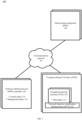
- an architecture 300 for an SDN employing network function virtualization is illustrated. Similar to the manner in which the evolution from architecture 100 to an SDN 200 decouples the control plane 114 from the DCEs 110 and the data plane 112, an SDN 200 employing NFV as in architecture 300 decouples the data plane 112 from DCE 110 hardware - allowing general purpose compute elements 320 (including some DCEs 120) to host virtual network functions (VNFs) 322.
- NFV uses the approaches of information technology virtualization, such as hypervisors in a network function virtualization infrastructure (NFVI) 324, to virtualize classes of DCE 110 functions into building blocks that may connect, or chain together, to create communication services.
- NFVI network function virtualization infrastructure
- image upgrade often involves a reboot/restart (hereinafter "reboot”) to the compute element 320 for the changes to take effect.
- reboot reboot/restart
- the SDN controller 230 has the responsibility to check the status of the image upgrade by connecting to the compute element 320.
- the controller 230 imports an image to an image management service that is part of, or managed by, the controller 230.
- the image management service distributes archived versions of the image, for example, "*.tar.gz" or "qcow2" archives, to the compute elements 320.
- the controller 230 then activates the distributed archives by executing a set of configuration commands on the compute element 320 that does the installation of the image on the compute element 320.
- the compute element 320 typically reboots after installation of the image; while independently the controller 230 begins polling the compute element 320 at some time after the activation, for example, using the PING command.
- the controller 230 can issue command line interface (CLI) commands (as a CLI client) to the compute element 320 (as a CLI server) to determine the status of the upgrade.
- CLI command line interface
- the compute element 320 may take considerable time to reboot after an image installation - requiring that the controller 230 employ a properly-tested and synchronized timeout and retry mechanism.
- certain microservices are designated to execute the CLI commands on the compute element 320.
- a network programmer microservice can do a write on the compute element 320 and an inventory microservice can do a read on the compute element 320 to determine the image upgrade status.
- the controller 230 invokes multiple calls to such microservices. These calls can introduce non-trivial latency, especially at the scale of networks with many compute elements 320.
- controllers 230 distribute their functionality across subsystems each dedicated to specific tasks. For example, image distribution may be handled by a subsystem of the controller 230 that is separate from the subsystem of the controller 230 responsible for monitoring VNFs 322.
- the polling logic that determines whether a compute element 320 device is up and running has to be duplicated across different subsystems that interact with the compute element 320 during the upgrade.
- the rebooted compute element 320 might obtain a new Internet Protocol (IP) address from a Dynamic Host Configuration Protocol (DHCP) server.
- IP Internet Protocol
- DHCP Dynamic Host Configuration Protocol
- a controller 230 polling the compute element's 320 old IP address will report an upgrade failure.
- the compute element 320 could be behind a firewall with respect to the controller 230 - requiring approaches such as a change in firewall settings or the configuration of a virtual private network between the rebooted compute element 320 and the controller 230.
- NFV network function virtualization
- TCP Transmission Control Protocol
- SDN Software Defined Network
- the rebooted compute element Upon rebooting the compute element after the installation, the rebooted compute element establishes, as TCP client in accordance with the instructions and using the data, a TCP connection with the controller over the network.
- the compute element accepts, as a cryptographic network protocol server, a cryptographic network protocol connection via the TCP connection from the controller as a cryptographic network protocol client in accordance with the instructions.
- the compute element accepts, as a network management protocol server, a network management protocol connection via the cryptographic network protocol connection from the controller as network management protocol client in accordance with the instructions.
- the compute element receives, from the controller over the network management protocol connection, network management commands regarding the status of the virtual network function, and then transmits, to the controller over the network management protocol connection, responses to the received commands in accordance with the instructions.
- the cryptographic network protocol is one of a Secure Shell (SSH) cryptographic network protocol or a Blocks Extensible Exchange Protocol (BEEP) compliant cryptographic network protocol.
- SSH Secure Shell
- BEEP Blocks Extensible Exchange Protocol
- the network management protocol is a Network Configuration Protocol (NETCONF) network management protocol.
- the received network management commands include one or more commands to create a NETCONF remote procedure call (RPC) subscription for the controller with the compute element, and transmitting responses to the received commands includes transmitting responses in accordance with the RPC subscription.
- RPC NETCONF remote procedure call
- the controller is characterized by first Internet Protocol (IP) addresses for monitoring reachability of the compute element and a second IP address for image management and the data comprises the first IP address and the second IP address.
- IP Internet Protocol
- establishing a TCP connection includes establishing, by the rebooted compute element a first TCP connection to monitor reachability with the first IP address, and a second TCP connection to monitor image installation with the second IP address.
- transmitting includes transmitting reachability responses to the first IP address, and transmitting image installation responses to the second IP address.
- the rebooted compute element also transmits, to the controller, a public key certificate of the rebooted compute element including an IP address of the compute element.
- a public key certificate of the rebooted compute element including an IP address of the compute element.
- at least one of the TCP connection, the cryptographic protocol connection, and the network management protocol connection are conditioned on the authentication of the rebooted compute element by the controller based on the public key certificate.
- the technology disclosed herein provides for management of compute element 320 images implementing network function virtualization. As such, the technologies described herein may be employed to determine whether an image installation on a compute element 320 was successfully completed.
- each element shown in the architecture 300 may be represented by one instance of the element, multiple instances of each can be used. Further, while certain aspects of operation of the present technology are presented in examples related to Figure 1 through Figure 3 to facilitate enablement of the claimed invention, additional features of the present technology, also facilitating enablement of the claimed invention, are disclosed elsewhere herein.
- Further network 99 includes one or more of a local area network (LAN), a wide area network (WAN), an intranet, an Internet, a storage area network (SAN), a personal area network (PAN), a metropolitan area network (MAN), a wireless local area network (WLAN), a virtual private network (VPN), a cellular or other mobile communication network, a BLUETOOTH ® wireless technology connection, any combination thereof, and any other appropriate architecture or system that facilitates the communication of signals, data, and/or messages.
- LAN local area network
- WAN wide area network
- SAN storage area network
- PAN personal area network
- MAN metropolitan area network
- WLAN wireless local area network
- VPN virtual private network
- BLUETOOTH ® wireless technology connection any combination thereof, and any other appropriate architecture or system that facilitates the communication of signals, data, and/or messages.
- network connections illustrated are examples and other approaches for establishing a communications link between the computers and devices can be used. Additionally, those having ordinary skill in the art and having the benefit of this disclosure will appreciate that the network devices illustrated in the figures may have any of several other suitable computer system configurations, and may not include all the components described above.
- the network computing devices, and any other computing machines associated with the technology presented herein may be any type of computing machine such as, but not limited to, those discussed in more detail with respect to Figure 9.
- any functions, applications, or components associated with any of these computing machines, such as those described herein or any others (for example, scripts, web content, software, firmware, hardware, or modules) associated with the technology presented herein may by any of the components discussed in more detail with respect to Figure 9.
- the computing machines discussed herein may communicate with one another, as well as with other computing machines or communication systems over one or more networks, such as network 99.
- Each network may include various types of data or communications network, including any of the network technology discussed with respect to Figure 9.
- the examples illustrated in the following figures are described hereinafter with respect to the components of the example operating environment and example architectures 100, 200, and 300 described elsewhere herein.
- the example embodiments may also be practiced with other systems and in other environments.
- the operations described with respect to the example processes can be implemented as executable code stored on a computer or machine readable non-transitory tangible storage medium (e.g., floppy disk, hard disk, ROM, EEPROM, nonvolatile RAM, CD-ROM, etc.) that are completed based on execution of the code by a processor circuit implemented using one or more integrated circuits.
- a computer or machine readable non-transitory tangible storage medium e.g., floppy disk, hard disk, ROM, EEPROM, nonvolatile RAM, CD-ROM, etc.
- the operations described herein also can be implemented as executable logic that is encoded in one or more non-transitory tangible media for execution (e.g., programmable logic arrays or devices, field programmable gate arrays, programmable array logic, application specific integrated circuits, etc.).
- executable logic e.g., programmable logic arrays or devices, field programmable gate arrays, programmable array logic, application specific integrated circuits, etc.
- an NFV compute element 320 installs an image implementing at least the NFV infrastructure (NFVI) to support at least one virtualized network function (VNF) 322 on the compute element 320 - Block 410.
- the image includes instructions and data (including a configuration file) to initiate an Internet protocol suite transport layer connection between the compute element 320 and its controller 230 over network 99 upon a reboot of the compute element 320.
- the DNAC 230 can be used to build a SDN hierarchy across sites, buildings, and floors; define device credentials, discover devices, import software images using SWIM functions (for example, tagging an existing image as "golden,” or downloading an image from an online server or local host); and distribute the image to a compute element 320 for later or immediate activation in support of one or more VNFs 322.
- SWIM functions for example, tagging an existing image as "golden,” or downloading an image from an online server or local host
- the compute element 320 installs the image. After the image has been installed in the compute element 320, the compute element 320 reboots - Block 420.
- the controller 230 listens for Internet Protocol suite transport layer connections on a port designated for such.
- the Internet Protocol transport layer connection is a Transmission Control Protocol (TCP) connection and the port is 4334, corresponding to the NETwork CONFiguration (NETCONF) protocol "callhome” Secure Shell (SSH) port.
- TCP Transmission Control Protocol
- NETCONF NETwork CONFiguration
- SSH Secure Shell
- the NETCONF callhome Transport Layer Security (TLS) port 4335 can be used.
- the technology uses the REpresentational State Transfer (REST) CONFiguration (RESTCONF) callhome port 4336. TABLE 1
- the NETCONF callhome Transport Layer Security (TLS) port 4335 can be used.
- the technology uses the REpresentational State Transfer (REST) CONFiguration (RESTCONF) callhome port 4336.
- the rebooted compute element 320 as an Internet protocol suite transport layer client, establishes an Internet protocol suite transport layer connection over the network 99 with the controller 230 in accordance with the instructions and using the data - Block 430.
- the compute element 320 on a successful reboot after image installation, initiates a TCP connection with the controller 230 via the controller's port 4334 using a daemon process and information from a configuration file - each of which is included in the image.
- the information can include the SWIM IP address (and other controller 230 IP addresses, for example, if the controller 230 distributes functions across multiple IP addresses) along with the compute element 320 credentials.
- the compute element 320 is reachable by the controller 230 over network 99.
- This portion of the technology differs from conventional operation in that the controller 230, not the compute element 320, is typically the "client" initiator of communication connections.
- a NETCONF protocol approach is used not only in the Internet protocol suite transport layer, but also in the Internet protocol suite application layer as described below.
- the controller 230 does not require a properly-tested and synchronized timeout and retry mechanism for polling each compute element 320, given that the compute element 320 is the TCP connection initiator.
- the controller 230 will not have to proliferate calls to microservices (which introduces latency and requires processing resources) in order to poll/ping possibly-rebooted compute elements 320.
- microservices which introduces latency and requires processing resources
- each of those clusters will not have to spend processing resources, memory resources, and bandwidth to initiate interaction with a potentially large number of rebooted compute elements 320.
- each compute element 320 does not have to open a port to listen for polls/pings from the controller 230.
- the compute element 320 accepts a cryptographic network protocol connection via the established transport layer connection from the controller 230 as a cryptographic network protocol client in accordance with the instructions - Block 440.
- the compute element 320 acts as a Secure Shell (SSH) server, and accepts an SSH connection initiated by the controller 230.
- SSH provides a secure channel over an unsecured network in a client-server architecture, connecting an SSH client application (in this case an application running on the controller 230) with an SSH server application running on the compute element 320.
- the cryptographic network protocol is a Blocks Extensible Exchange Protocol (BEEP) compliant cryptographic network protocol.
- a block flow diagram depicting methods 500 to upgrade images on compute elements 320 is shown, in accordance with certain examples of the technology disclosed herein.
- the compute element 320 sends its host key or certificate, for example, an X.509 public key certificate, to the controller 230 - Block 540.
- the controller 230 uses the certificate to validate the identity of the rebooted compute element 320.
- the compute element 320 has been assigned a trusted key from the compute element 320 manufacturer that is common across a plurality of compute elements 320 and that can be verified by a third party certificate authority.
- controller 230 has to trust only a single certificate that validates the authenticity of the various compute elements 320.
- the compute element 320 receives a new IP address upon reboot from a DHCP server.
- the new IP address can be incorporated into the compute element's 320 certificate, from which the controller 230 can extract the new IP address.
- Establishing the SSH session can also include the authentication of the controller 230 credentials which the compute element 320 can read from a configuration file that was part of the image installation.
- the compute element 320 can implement a persistent SSH connection with the controller. As the connection initiator, the compute element 320 can actively test the aliveness of the established connection using a keep-alive mechanism.
- the compute element 320 accepts, as a network management protocol server, a network management protocol connection via the cryptographic network protocol connection from the controller 230 as network management protocol client in accordance with the instructions - Block 450.
- the compute element 320 acts as a NETCONF server and accepts a NETCONF connection on top of the SSH connection from controller 230.
- NETCONF is a network management protocol that provides mechanisms to install, manipulate, and delete the configuration of network devices. NETCONF's operations are realized on top of a Remote Procedure Call (RPC) layer.
- the NETCONF protocol uses an Extensible Markup Language (XML) based data encoding for the configuration data as well as the protocol messages.
- XML Extensible Markup Language
- the compute element 320 receives, from the controller 230 over the network management protocol connection, network management commands regarding the status of the upgrade - Block 460.
- the compute element 320 receives NETCONF instructions creating an RPC subscription that sends upgrade event reports from the compute element 320 to the controller 230 over the layered TCP/SSH/NETCONF connection.
- TABLE 2 illustrates a NETCONF command from the controller 230 to the compute element for creating such an RPC subscription.
- the controller 230 can also use GET RPC calls instead of the notification to determine the status of the image upgrade.
- the compute element 320 transmits, to the controller 230 over the network management protocol connection, responses to the received commands in accordance with the instructions - Block 470.
- a user interface 600 of the controller 230 reporting events from the RPC subscription created by the command of TABLE 2 is shown, in accordance with certain examples of the technology disclosed herein.
- the user interface 600 includes a temporal indication 610, event type 620, event description 630, and event status 640 for each event, along with interface controls for search 650, the number of entries per page 660, which entries are being displayed 670, and page status/control 680.
- TABLE 3 presents example NETCONF syntax message from the compute element 320 to the controller 230 as a response indicating an "In process" upgrade - entry 690 in Figure 6 .
- Other event descriptions 630 include "restoring VMs" and "successfully upgraded.”
- FIG. 7 depicts a computing machine 2000 and a module 2050 in accordance with certain example embodiments.
- the computing machine 2000 may correspond to any of the various computers, servers, mobile devices, embedded systems, or computing systems presented herein.
- the module 2050 may comprise one or more hardware or software elements configured to facilitate the computing machine 2000 in performing the various methods and processing functions presented herein.
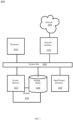
- the computing machine 2000 may include various internal or attached components, for example, a processor 2010, system bus 2020, system memory 2030, storage media 2040, input/output interface 2060, and a network interface 2070 for communicating with a network 2080.
- the computing machine 2000 may be implemented as a conventional computer system, an embedded controller, a laptop, a server, a mobile device, a smartphone, a set-top box, a kiosk, a vehicular information system, one more processors associated with a television, a customized machine, any other hardware platform, or any combination or multiplicity thereof.
- the computing machine 2000 may be a distributed system configured to function using multiple computing machines interconnected via a data network or bus system.
- the processor 2010 may be configured to execute code or instructions to perform the operations and functionality described herein, manage request flow and address mappings, and to perform calculations and generate commands.
- the processor 2010 may be configured to monitor and control the operation of the components in the computing machine 2000.
- the processor 2010 may be a general purpose processor, a processor core, a multiprocessor, a reconfigurable processor, a microcontroller, a digital signal processor (DSP), an application specific integrated circuit (ASIC), a graphics processing unit (GPU), a field programmable gate array (FPGA), a programmable logic device (PLD), a controller, a state machine, gated logic, discrete hardware components, any other processing unit, or any combination or multiplicity thereof.
- DSP digital signal processor
- ASIC application specific integrated circuit
- GPU graphics processing unit
- FPGA field programmable gate array
- PLD programmable logic device
- the processor 2010 may be a single processing unit, multiple processing units, a single processing core, multiple processing cores, special purpose processing cores, co-processors, or any combination thereof. According to certain embodiments, the processor 2010 along with other components of the computing machine 2000 may be a virtualized computing machine executing within one or more other computing machines.
- the system memory 2030 may include non-volatile memories, for example, read-only memory (ROM), programmable read-only memory (PROM), erasable programmable read-only memory (EPROM), flash memory, or any other device capable of storing program instructions or data with or without applied power.
- the system memory 2030 may also include volatile memories, for example, random access memory (RAM), static random access memory (SRAM), dynamic random access memory (DRAM), and synchronous dynamic random access memory (SDRAM). Other types of RAM also may be used to implement the system memory 2030.
- RAM random access memory
- SRAM static random access memory
- DRAM dynamic random access memory
- SDRAM synchronous dynamic random access memory
- Other types of RAM also may be used to implement the system memory 2030.
- the system memory 2030 may be implemented using a single memory module or multiple memory modules.
- system memory 2030 is depicted as being part of the computing machine 2000, one skilled in the art will recognize that the system memory 2030 may be separate from the computing machine 2000 without departing from the scope of the subject technology. It should also be appreciated that the system memory 2030 may include, or operate in conjunction with, a non-volatile storage device, for example, the storage media 2040.
- the storage media 2040 may include a hard disk, a floppy disk, a compact disc read only memory (CD-ROM), a digital versatile disc (DVD), a Blu-ray disc, a magnetic tape, a flash memory, other non-volatile memory device, a solid state drive (SSD), any magnetic storage device, any optical storage device, any electrical storage device, any semiconductor storage device, any physical-based storage device, any other data storage device, or any combination or multiplicity thereof.
- the storage media 2040 may store one or more operating systems, application programs and program modules, for example, module 2050, data, or any other information.
- the storage media 2040 may be part of, or connected to, the computing machine 2000.
- the storage media 2040 may also be part of one or more other computing machines that are in communication with the computing machine 2000, for example, servers, database servers, cloud storage, network attached storage, and so forth.
- the module 2050 may comprise one or more hardware or software elements configured to facilitate the computing machine 2000 with performing the various methods and processing functions presented herein.
- the module 2050 may include one or more sequences of instructions stored as software or firmware in association with the system memory 2030, the storage media 2040, or both.
- the storage media 2040 may therefore represent examples of machine or computer readable media on which instructions or code may be stored for execution by the processor 2010.
- Machine or computer readable media may generally refer to any medium or media used to provide instructions to the processor 2010.
- Such machine or computer readable media associated with the module 2050 may comprise a computer software product.
- a computer software product comprising the module 2050 may also be associated with one or more processes or methods for delivering the module 2050 to the computing machine 2000 via the network 2080, any signal-bearing medium, or any other communication or delivery technology.
- the module 2050 may also comprise hardware circuits or information for configuring hardware circuits, for example, microcode or configuration information for an FPGA or other PLD.
- the input/output (I/O) interface 2060 may be configured to couple to one or more external devices, to receive data from the one or more external devices, and to send data to the one or more external devices. Such external devices along with the various internal devices may also be known as peripheral devices.
- the I/O interface 2060 may include both electrical and physical connections for operably coupling the various peripheral devices to the computing machine 2000 or the processor 2010.
- the I/O interface 2060 may be configured to communicate data, addresses, and control signals between the peripheral devices, the computing machine 2000, or the processor 2010.
- the I/O interface 2060 may be configured to implement any standard interface, for example, small computer system interface (SCSI), serial-attached SCSI (SAS), Fibre Channel, peripheral component interconnect (PCI), PCI express (PCIe), serial bus, parallel bus, advanced technology attached (ATA), serial ATA (SATA), universal serial bus (USB), Thunderbolt, FireWire, various video buses, and the like.
- the I/O interface 2060 may be configured to implement only one interface or bus technology. Alternatively, the I/O interface 2060 may be configured to implement multiple interfaces or bus technologies.
- the I/O interface 2060 may be configured as part of, all of, or to operate in conjunction with, the system bus 2020.
- the I/O interface 2060 may include one or more buffers for buffering transmissions between one or more external devices, internal devices, the computing machine 2000, or the processor 2010.
- the I/O interface 2060 may couple the computing machine 2000 to various input devices including mice, touch-screens, scanners, electronic digitizers, sensors, receivers, touchpads, trackballs, cameras, microphones, keyboards, any other pointing devices, or any combinations thereof.
- the I/O interface 2060 may couple the computing machine 2000 to various output devices including video displays, speakers, printers, projectors, tactile feedback devices, automation control, robotic components, actuators, motors, fans, solenoids, valves, pumps, transmitters, signal emitters, lights, and so forth.
- the computing machine 2000 may operate in a networked environment using logical connections through the network interface 2070 to one or more other systems or computing machines across the network 2080.
- the network 2080 may include wide area networks (WAN), local area networks (LAN), intranets, the Internet, wireless access networks, wired networks, mobile networks, telephone networks, optical networks, or combinations thereof.
- the network 2080 may be packet switched, circuit switched, of any topology, and may use any communication protocol. Communication links within the network 2080 may involve various digital or analog communication media, for example, fiber optic cables, free-space optics, waveguides, electrical conductors, wireless links, antennas, radio-frequency communications, and so forth.
- the processor 2010 may be connected to the other elements of the computing machine 2000 or the various peripherals discussed herein through the system bus 2020. It should be appreciated that the system bus 2020 may be within the processor 2010, outside the processor 2010, or both. According to certain example embodiments, any of the processor 2010, the other elements of the computing machine 2000, or the various peripherals discussed herein may be integrated into a single device, for example, a system on chip (SOC), system on package (SOP), or ASIC device.
- SOC system on chip
- SOP system on package
- ASIC application specific integrated circuit
- Embodiments may comprise a computer program that embodies the functions described and illustrated herein, wherein the computer program is implemented in a computer system that comprises instructions stored in a machine-readable medium and a processor that executes the instructions.
- the embodiments should not be construed as limited to any one set of computer program instructions.
- a skilled programmer would be able to write such a computer program to implement an embodiment of the disclosed embodiments based on the appended flow charts and associated description in the application text. Therefore, disclosure of a particular set of program code instructions is not considered necessary for an adequate understanding of how to make and use embodiments.
- the example embodiments described herein can be used with computer hardware and software that perform the methods and processing functions described previously.
- the systems, methods, and procedures described herein can be embodied in a programmable computer, computer-executable software, or digital circuitry.
- the software can be stored on computer-readable media.
- computer-readable media can include a floppy disk, RAM, ROM, hard disk, removable media, flash memory, memory stick, optical media, magneto-optical media, CD-ROM, etc.
- Digital circuitry can include integrated circuits, gate arrays, building block logic, field programmable gate arrays (FPGA), etc.
- the image management service portion of the controller 230 may have multiple instances which are load balanced with a HA proxy.
- the HA proxy address can be stored on the configuration file which the compute element 320 uses to initiate the transport layer connection. In such cases the notification is routed to one of the instances in the HA cluster.
- NETCONF connections can be persisted in case the controller 230 misses some transport layer connections so that the compute element 320 can retry the connection.
- This can help on a scale setup where the controller 230 manages many devices. In such cases it can listen for the appropriate port (4334 in the case of NETCONF) on all the controller 230 devices and can open NETCONF client session on each of the devices. If a device transport layer connection is missed, keep alive and retry mechanism at the compute element 320 side can be used to persist the connection and retry. If an active NETCONF session is disconnected due to some network connection issues the compute element 320 can restart the process by doing a keep alive check on the established connection.
- the compute element image may implement operating system (OS) level virtualization in which the kernel allows the existence of multiple isolated user-space instances.
- OS-level virtualization is also known as "containerization.”
- the technology can employ a transport layer protocol other than transport control protocol (TCP) - for example, user datagram protocol (UDP) employed with corresponding cryptographic network and network management protocols.
- TCP transport control protocol
- UDP user datagram protocol
- Network function virtualization can use virtualization technologies to virtualize physical network elements like routers and firewalls.
- a virtualized network function or VNF can include one or more virtual machines runs different network functions on top of an NFV compute device. Below is a step wise process of how to bring up a VNF on an NFV compute element.
- hypervisor e.g. NFVIS, ESXi, openstack
- hypervisor software is installed on the compute element.
- the hypervisor helps to represent the hardware elements like storage, network and memory present on the compute machine.
- An NFV-Orchestrator that is typically part of the hypervisor software helps to orchestrate or create VNFs. Creating a VNF calls for an image, storage, CPU, network and memory - all can be created using the orchestrator. Once the image is uploaded in the compute device, NFV orchestrator will use that image and create a virtual machine with the given storage, CPU, network, and disk.
- hypervisor implements the new/upgraded capabilities to bring up a new VNF.
- a network function virtualization (NFV) compute element installs an image supporting a virtualized network function (VNF) on the element.
- the image includes instructions/data to initiate a TCP connection between the element and a Software Defined Network (SDN) controller upon reboot of the element.
- SDN Software Defined Network
- the element Upon rebooting, the element establishes, as client in accordance with the instructions/data, a TCP connection with the controller.
- the element accepts, as a cryptographic network protocol server, a connection via the TCP connection from the controller as a client in accordance with the instructions.
- the element accepts, as a network management protocol server, a connection via the cryptographic network protocol connection from the controller as network management protocol client.
- the element receives, from the controller over the network management protocol connection, commands regarding the status of the rebooted compute element, and then transmits, to the controller over the network management protocol connection, responses to the commands.
Landscapes
- Engineering & Computer Science (AREA)
- Computer Networks & Wireless Communication (AREA)
- Signal Processing (AREA)
- Computer Security & Cryptography (AREA)
- General Engineering & Computer Science (AREA)
- Software Systems (AREA)
- Theoretical Computer Science (AREA)
- Computing Systems (AREA)
- Computer Hardware Design (AREA)
- Physics & Mathematics (AREA)
- General Physics & Mathematics (AREA)
- Computer And Data Communications (AREA)
- Stored Programmes (AREA)
- Data Exchanges In Wide-Area Networks (AREA)
Applications Claiming Priority (3)
| Application Number | Priority Date | Filing Date | Title |
|---|---|---|---|
| US16/700,718 US10958539B1 (en) | 2019-12-02 | 2019-12-02 | Network function virtualization compute element image upgrade |
| PCT/US2020/061854 WO2021113110A1 (en) | 2019-12-02 | 2020-11-23 | Network function virtualization compute element image upgrade |
| EP20828188.1A EP4070507B1 (de) | 2019-12-02 | 2020-11-23 | Upgrade eines berechnungselementbildes einer netzwerkfunktionsvirtualisierung |
Related Parent Applications (2)
| Application Number | Title | Priority Date | Filing Date |
|---|---|---|---|
| EP20828188.1A Division EP4070507B1 (de) | 2019-12-02 | 2020-11-23 | Upgrade eines berechnungselementbildes einer netzwerkfunktionsvirtualisierung |
| EP20828188.1A Division-Into EP4070507B1 (de) | 2019-12-02 | 2020-11-23 | Upgrade eines berechnungselementbildes einer netzwerkfunktionsvirtualisierung |
Publications (2)
| Publication Number | Publication Date |
|---|---|
| EP4440085A2 true EP4440085A2 (de) | 2024-10-02 |
| EP4440085A3 EP4440085A3 (de) | 2024-12-18 |
Family
ID=73855550
Family Applications (2)
| Application Number | Title | Priority Date | Filing Date |
|---|---|---|---|
| EP20828188.1A Active EP4070507B1 (de) | 2019-12-02 | 2020-11-23 | Upgrade eines berechnungselementbildes einer netzwerkfunktionsvirtualisierung |
| EP24194588.0A Pending EP4440085A3 (de) | 2019-12-02 | 2020-11-23 | Netzwerkfunktionsvirtualisierung zur berechnung der bildaktualisierung eines elements |
Family Applications Before (1)
| Application Number | Title | Priority Date | Filing Date |
|---|---|---|---|
| EP20828188.1A Active EP4070507B1 (de) | 2019-12-02 | 2020-11-23 | Upgrade eines berechnungselementbildes einer netzwerkfunktionsvirtualisierung |
Country Status (4)
| Country | Link |
|---|---|
| US (3) | US10958539B1 (de) |
| EP (2) | EP4070507B1 (de) |
| CN (1) | CN114788239B (de) |
| WO (1) | WO2021113110A1 (de) |
Families Citing this family (6)
| Publication number | Priority date | Publication date | Assignee | Title |
|---|---|---|---|---|
| JP2021131630A (ja) * | 2020-02-18 | 2021-09-09 | 株式会社東芝 | 監視制御装置およびクライアントpc |
| US12153945B2 (en) * | 2020-02-28 | 2024-11-26 | Cisco Technology, Inc. | Centralized management, provisioning and monitoring of cloud infrastructure |
| US12500778B2 (en) * | 2020-05-26 | 2025-12-16 | Verizon Patent And Licensing Inc. | Systems and methods for managing public key infrastructure certificates for components of a network |
| US11943110B2 (en) * | 2022-05-13 | 2024-03-26 | Charter Communications Operating, Llc | Automated network generation, validation and implementation in a production environment |
| TWI823450B (zh) * | 2022-06-29 | 2023-11-21 | 光寶科技股份有限公司 | 基站管理系統和方法 |
| CN117395307B (zh) * | 2023-11-16 | 2024-10-18 | 北京驭数华创科技有限公司 | 一种数据传输的方法、装置及存储介质 |
Family Cites Families (35)
| Publication number | Priority date | Publication date | Assignee | Title |
|---|---|---|---|---|
| AU743258B2 (en) * | 1997-01-03 | 2002-01-24 | Fortress Technologies, Inc. | Improved network security device |
| US6266809B1 (en) * | 1997-08-15 | 2001-07-24 | International Business Machines Corporation | Methods, systems and computer program products for secure firmware updates |
| US7360072B1 (en) * | 2003-03-28 | 2008-04-15 | Cisco Technology, Inc. | iSCSI system OS boot configuration modification |
| FI120072B (fi) * | 2005-07-19 | 2009-06-15 | Ssh Comm Security Corp | Pakettidatan lähettäminen verkon yli tietoturvaprotokollaa käyttäen |
| US20070233827A1 (en) * | 2006-03-29 | 2007-10-04 | Mcknight Lee W | Ad hoc distributed resource coordination for a wireless grid |
| US20080163208A1 (en) * | 2006-12-29 | 2008-07-03 | Jeremy Burr | Virtual machine creation for removable storage devices |
| CN101110822B (zh) * | 2007-07-06 | 2011-11-02 | 华为技术有限公司 | 基于网络配置协议的事件通知发送方法、系统及设备 |
| US8004998B2 (en) * | 2008-05-23 | 2011-08-23 | Solera Networks, Inc. | Capture and regeneration of a network data using a virtual software switch |
| CN101808009B (zh) * | 2010-03-08 | 2014-01-01 | 中兴通讯股份有限公司 | 一种网络设备升级的方法和系统 |
| US8627310B2 (en) * | 2010-09-30 | 2014-01-07 | International Business Machines Corporation | Capturing multi-disk virtual machine images automatically |
| CN102480515A (zh) * | 2010-11-30 | 2012-05-30 | 英业达集团(天津)电子技术有限公司 | 映像文件的安装方法 |
| EP2792104B1 (de) * | 2011-12-21 | 2021-06-30 | SSH Communications Security Oyj | Automatisierter zugriffs-, schlüssel-, zertifikat- und berechtigungsverwaltung |
| US8843650B2 (en) * | 2012-01-09 | 2014-09-23 | Fujitsu Limited | Trusted network booting system and method |
| US20120266209A1 (en) * | 2012-06-11 | 2012-10-18 | David Jeffrey Gooding | Method of Secure Electric Power Grid Operations Using Common Cyber Security Services |
| EP3028528A4 (de) * | 2013-08-27 | 2017-05-03 | Huawei Technologies Co., Ltd. | System und verfahren zur virtualisierung von mobilnetzwerkfunktionen |
| CN104883266B (zh) * | 2014-02-28 | 2018-10-12 | 新华三技术有限公司 | 网络配置访问方法及装置 |
| US9507566B2 (en) * | 2014-04-01 | 2016-11-29 | Oracle International Corporation | Entropy generation for a distributed computing system |
| BR112016025264B1 (pt) * | 2014-05-05 | 2022-02-01 | Telefonaktiebolaget Lm Ericsson (Publ) | Dispositivo de plano de controle em um sistema de computação em nuvem para executar uma pluralidade de máquinas virtuais para implantar a virtualização de função de rede |
| US10044795B2 (en) * | 2014-07-11 | 2018-08-07 | Vmware Inc. | Methods and apparatus for rack deployments for virtual computing environments |
| EP3201764A1 (de) * | 2014-09-29 | 2017-08-09 | Hewlett-Packard Enterprise Development LP | Bereitstellung eines dienstes |
| KR101951273B1 (ko) * | 2014-12-04 | 2019-02-22 | 노키아 솔루션스 앤드 네트웍스 게엠베하 운트 코. 카게 | 가상화된 자원들의 조종 |
| WO2016118636A1 (en) * | 2015-01-20 | 2016-07-28 | Huawei Technologies Co., Ltd. | Method and apparatus for nfv management and orchestration |
| KR101929048B1 (ko) * | 2015-06-24 | 2018-12-13 | 한국전자통신연구원 | 인메모리 기반 가상 데스크탑 서비스를 위한 장치 및 방법 |
| US10298489B2 (en) * | 2015-07-24 | 2019-05-21 | International Business Machines Corporation | Adding multi-tenant awareness to a network packet processing device on a software defined network (SDN) |
| US10050947B2 (en) * | 2016-01-28 | 2018-08-14 | Cisco Technology, Inc. | Key distribution in a distributed network environment |
| US10095506B2 (en) * | 2016-02-12 | 2018-10-09 | Nutanix, Inc. | Virtualized file server data sharing |
| US10111127B2 (en) * | 2016-02-26 | 2018-10-23 | At&T Intellectual Property I, L.P. | Enhanced software-defined network controller to support ad-hoc radio access networks |
| WO2017167392A1 (en) * | 2016-04-01 | 2017-10-05 | Nokia Solutions And Networks Oy | Dynamic experience management in communications |
| CN105955771A (zh) * | 2016-04-27 | 2016-09-21 | 浪潮集团有限公司 | 一种实现操作系统的方法、装置及系统 |
| US10091070B2 (en) * | 2016-06-01 | 2018-10-02 | Cisco Technology, Inc. | System and method of using a machine learning algorithm to meet SLA requirements |
| US11063856B2 (en) * | 2017-08-24 | 2021-07-13 | Cisco Technology, Inc. | Virtual network function monitoring in a network function virtualization deployment |
| US11005892B2 (en) * | 2017-09-17 | 2021-05-11 | Allot Ltd. | System, method, and apparatus of securing and managing internet-connected devices and networks |
| CN109639449B (zh) * | 2017-10-09 | 2021-09-03 | 中兴通讯股份有限公司 | 虚拟化流镜像策略自动化管理的方法、设备及介质 |
| US10659339B2 (en) * | 2018-05-14 | 2020-05-19 | Spirent Communications, Inc. | Enhancing transmission control protocol (TCP) performance and scalability on multicore processor architectures |
| US10833929B2 (en) * | 2018-12-27 | 2020-11-10 | Juniper Networks, Inc. | Secure remote bootstrapping of network device |
-
2019
- 2019-12-02 US US16/700,718 patent/US10958539B1/en active Active
-
2020
- 2020-11-23 CN CN202080083556.5A patent/CN114788239B/zh active Active
- 2020-11-23 EP EP20828188.1A patent/EP4070507B1/de active Active
- 2020-11-23 WO PCT/US2020/061854 patent/WO2021113110A1/en not_active Ceased
- 2020-11-23 EP EP24194588.0A patent/EP4440085A3/de active Pending
-
2021
- 2021-02-11 US US17/173,763 patent/US11516095B2/en active Active
-
2022
- 2022-10-31 US US17/977,531 patent/US12021711B2/en active Active
Also Published As
| Publication number | Publication date |
|---|---|
| US20210168054A1 (en) | 2021-06-03 |
| US20230055620A1 (en) | 2023-02-23 |
| CN114788239B (zh) | 2024-09-13 |
| EP4440085A3 (de) | 2024-12-18 |
| EP4070507A1 (de) | 2022-10-12 |
| EP4070507B1 (de) | 2025-01-01 |
| US11516095B2 (en) | 2022-11-29 |
| WO2021113110A1 (en) | 2021-06-10 |
| US10958539B1 (en) | 2021-03-23 |
| CN114788239A (zh) | 2022-07-22 |
| US12021711B2 (en) | 2024-06-25 |
Similar Documents
| Publication | Publication Date | Title |
|---|---|---|
| US12021711B2 (en) | Network function virtualization compute element image upgrade | |
| US11483405B2 (en) | Private cloud as a service | |
| US11281476B2 (en) | Plugin framework to support zero touch management of heterogeneous infrastructure elements across distributed data centers | |
| US11902271B2 (en) | Two-way secure channels between multiple services across service groups | |
| JP5885834B2 (ja) | モバイル・コンピューティング・デバイスを介して管理されたusbサービスをリモートに送達する方法および装置 | |
| US9923978B2 (en) | Automated network service discovery and communication | |
| US11863378B2 (en) | Automated provisioning of endpoint devices with management connectivity | |
| US20180136946A1 (en) | Securely and reliably transferring startup script | |
| US20240422102A1 (en) | Controlling a destination of network traffic | |
| US8566847B2 (en) | Out-of-band host management via a management controller | |
| JP2015158773A (ja) | 仮想装置の動作検証装置,仮想装置の動作検証システム及びプログラム | |
| US10778510B2 (en) | Coordinated network configuration system | |
| US8977899B1 (en) | Assisted device recovery | |
| US20160026602A1 (en) | Method and System for Communication of Device Information | |
| US9736027B2 (en) | Centralized enterprise image upgrades for distributed campus networks | |
| KR101883712B1 (ko) | 네트워크 기능 가상화 시스템을 운용하는 방법, 장치 및 컴퓨터 프로그램 | |
| WO2023003812A1 (en) | Automated provisioning of endpoint devices with management connectivity | |
| US10560307B2 (en) | Method and system for management of an openflow agent in openflow devices | |
| CN103220235A (zh) | 分布式虚拟交换机的管理方法和相关装置及系统 | |
| KR102617686B1 (ko) | 클라우드 컴퓨팅 환경에서 클러스터 구성 및 관리 시스템 및 그 방법 | |
| US12609823B1 (en) | Terminal access to virtual private servers with automatic protocol fallback | |
| NL2027692B1 (en) | Pre-provisioning server hardware for deployment on an edge network | |
| CN120301928A (zh) | 云边架构的通信控制方法、电子设备及计算机可读介质 | |
| WO2024097526A1 (en) | Fabric-based root-of-trust |
Legal Events
| Date | Code | Title | Description |
|---|---|---|---|
| PUAI | Public reference made under article 153(3) epc to a published international application that has entered the european phase |
Free format text: ORIGINAL CODE: 0009012 |
|
| STAA | Information on the status of an ep patent application or granted ep patent |
Free format text: STATUS: THE APPLICATION HAS BEEN PUBLISHED |
|
| AC | Divisional application: reference to earlier application |
Ref document number: 4070507 Country of ref document: EP Kind code of ref document: P |
|
| AK | Designated contracting states |
Kind code of ref document: A2 Designated state(s): AL AT BE BG CH CY CZ DE DK EE ES FI FR GB GR HR HU IE IS IT LI LT LU LV MC MK MT NL NO PL PT RO RS SE SI SK SM TR |
|
| REG | Reference to a national code |
Ref country code: DE Ref legal event code: R079 Free format text: PREVIOUS MAIN CLASS: H04L0069163000 Ipc: H04L0041082000 |
|
| PUAL | Search report despatched |
Free format text: ORIGINAL CODE: 0009013 |
|
| AK | Designated contracting states |
Kind code of ref document: A3 Designated state(s): AL AT BE BG CH CY CZ DE DK EE ES FI FR GB GR HR HU IE IS IT LI LT LU LV MC MK MT NL NO PL PT RO RS SE SI SK SM TR |
|
| RIC1 | Information provided on ipc code assigned before grant |
Ipc: H04L 41/0866 20220101ALN20241111BHEP Ipc: H04L 41/0859 20220101ALN20241111BHEP Ipc: H04L 9/40 20220101ALI20241111BHEP Ipc: H04L 69/163 20220101ALI20241111BHEP Ipc: H04L 41/40 20220101ALI20241111BHEP Ipc: H04L 41/342 20220101ALI20241111BHEP Ipc: H04L 41/28 20220101ALI20241111BHEP Ipc: H04L 41/0895 20220101ALI20241111BHEP Ipc: H04L 41/0806 20220101ALI20241111BHEP Ipc: G06F 9/455 20180101ALI20241111BHEP Ipc: G06F 8/61 20180101ALI20241111BHEP Ipc: H04L 41/082 20220101AFI20241111BHEP |
|
| STAA | Information on the status of an ep patent application or granted ep patent |
Free format text: STATUS: REQUEST FOR EXAMINATION WAS MADE |
|
| 17P | Request for examination filed |
Effective date: 20250304 |