EP4439801A1 - Battery module including composite mica insulation pad with improved fire resistance and thermal diffusivity - Google Patents
Battery module including composite mica insulation pad with improved fire resistance and thermal diffusivity Download PDFInfo
- Publication number
- EP4439801A1 EP4439801A1 EP23214227.3A EP23214227A EP4439801A1 EP 4439801 A1 EP4439801 A1 EP 4439801A1 EP 23214227 A EP23214227 A EP 23214227A EP 4439801 A1 EP4439801 A1 EP 4439801A1
- Authority
- EP
- European Patent Office
- Prior art keywords
- layer
- insulating
- mica
- resistant
- fire
- Prior art date
- Legal status (The legal status is an assumption and is not a legal conclusion. Google has not performed a legal analysis and makes no representation as to the accuracy of the status listed.)
- Pending
Links
Images



Classifications
-
- B—PERFORMING OPERATIONS; TRANSPORTING
- B32—LAYERED PRODUCTS
- B32B—LAYERED PRODUCTS, i.e. PRODUCTS BUILT-UP OF STRATA OF FLAT OR NON-FLAT, e.g. CELLULAR OR HONEYCOMB, FORM
- B32B9/00—Layered products comprising a layer of a particular substance not covered by groups B32B11/00 - B32B29/00
- B32B9/005—Layered products comprising a layer of a particular substance not covered by groups B32B11/00 - B32B29/00 comprising one layer of ceramic material, e.g. porcelain, ceramic tile
- B32B9/007—Layered products comprising a layer of a particular substance not covered by groups B32B11/00 - B32B29/00 comprising one layer of ceramic material, e.g. porcelain, ceramic tile comprising carbon, e.g. graphite, composite carbon
-
- A—HUMAN NECESSITIES
- A62—LIFE-SAVING; FIRE-FIGHTING
- A62C—FIRE-FIGHTING
- A62C3/00—Fire prevention, containment or extinguishing specially adapted for particular objects or places
- A62C3/16—Fire prevention, containment or extinguishing specially adapted for particular objects or places in electrical installations, e.g. cableways
-
- B—PERFORMING OPERATIONS; TRANSPORTING
- B32—LAYERED PRODUCTS
- B32B—LAYERED PRODUCTS, i.e. PRODUCTS BUILT-UP OF STRATA OF FLAT OR NON-FLAT, e.g. CELLULAR OR HONEYCOMB, FORM
- B32B19/00—Layered products comprising a layer of natural mineral fibres or particles, e.g. asbestos, mica
- B32B19/04—Layered products comprising a layer of natural mineral fibres or particles, e.g. asbestos, mica next to another layer of the same or of a different material
- B32B19/046—Layered products comprising a layer of natural mineral fibres or particles, e.g. asbestos, mica next to another layer of the same or of a different material of paper or cardboard
-
- B—PERFORMING OPERATIONS; TRANSPORTING
- B32—LAYERED PRODUCTS
- B32B—LAYERED PRODUCTS, i.e. PRODUCTS BUILT-UP OF STRATA OF FLAT OR NON-FLAT, e.g. CELLULAR OR HONEYCOMB, FORM
- B32B7/00—Layered products characterised by the relation between layers; Layered products characterised by the relative orientation of features between layers, or by the relative values of a measurable parameter between layers, i.e. products comprising layers having different physical, chemical or physicochemical properties; Layered products characterised by the interconnection of layers
- B32B7/02—Physical, chemical or physicochemical properties
- B32B7/022—Mechanical properties
-
- B—PERFORMING OPERATIONS; TRANSPORTING
- B32—LAYERED PRODUCTS
- B32B—LAYERED PRODUCTS, i.e. PRODUCTS BUILT-UP OF STRATA OF FLAT OR NON-FLAT, e.g. CELLULAR OR HONEYCOMB, FORM
- B32B7/00—Layered products characterised by the relation between layers; Layered products characterised by the relative orientation of features between layers, or by the relative values of a measurable parameter between layers, i.e. products comprising layers having different physical, chemical or physicochemical properties; Layered products characterised by the interconnection of layers
- B32B7/02—Physical, chemical or physicochemical properties
- B32B7/027—Thermal properties
-
- B—PERFORMING OPERATIONS; TRANSPORTING
- B32—LAYERED PRODUCTS
- B32B—LAYERED PRODUCTS, i.e. PRODUCTS BUILT-UP OF STRATA OF FLAT OR NON-FLAT, e.g. CELLULAR OR HONEYCOMB, FORM
- B32B9/00—Layered products comprising a layer of a particular substance not covered by groups B32B11/00 - B32B29/00
- B32B9/002—Layered products comprising a layer of a particular substance not covered by groups B32B11/00 - B32B29/00 comprising natural stone or artificial stone
-
- B—PERFORMING OPERATIONS; TRANSPORTING
- B32—LAYERED PRODUCTS
- B32B—LAYERED PRODUCTS, i.e. PRODUCTS BUILT-UP OF STRATA OF FLAT OR NON-FLAT, e.g. CELLULAR OR HONEYCOMB, FORM
- B32B9/00—Layered products comprising a layer of a particular substance not covered by groups B32B11/00 - B32B29/00
- B32B9/04—Layered products comprising a layer of a particular substance not covered by groups B32B11/00 - B32B29/00 comprising such particular substance as the main or only constituent of a layer, which is next to another layer of the same or of a different material
-
- B—PERFORMING OPERATIONS; TRANSPORTING
- B32—LAYERED PRODUCTS
- B32B—LAYERED PRODUCTS, i.e. PRODUCTS BUILT-UP OF STRATA OF FLAT OR NON-FLAT, e.g. CELLULAR OR HONEYCOMB, FORM
- B32B9/00—Layered products comprising a layer of a particular substance not covered by groups B32B11/00 - B32B29/00
- B32B9/04—Layered products comprising a layer of a particular substance not covered by groups B32B11/00 - B32B29/00 comprising such particular substance as the main or only constituent of a layer, which is next to another layer of the same or of a different material
- B32B9/06—Layered products comprising a layer of a particular substance not covered by groups B32B11/00 - B32B29/00 comprising such particular substance as the main or only constituent of a layer, which is next to another layer of the same or of a different material of paper or cardboard
-
- H—ELECTRICITY
- H01—ELECTRIC ELEMENTS
- H01M—PROCESSES OR MEANS, e.g. BATTERIES, FOR THE DIRECT CONVERSION OF CHEMICAL ENERGY INTO ELECTRICAL ENERGY
- H01M10/00—Secondary cells; Manufacture thereof
- H01M10/60—Heating or cooling; Temperature control
- H01M10/64—Heating or cooling; Temperature control characterised by the shape of the cells
- H01M10/647—Prismatic or flat cells, e.g. pouch cells
-
- H—ELECTRICITY
- H01—ELECTRIC ELEMENTS
- H01M—PROCESSES OR MEANS, e.g. BATTERIES, FOR THE DIRECT CONVERSION OF CHEMICAL ENERGY INTO ELECTRICAL ENERGY
- H01M10/00—Secondary cells; Manufacture thereof
- H01M10/60—Heating or cooling; Temperature control
- H01M10/65—Means for temperature control structurally associated with the cells
- H01M10/653—Means for temperature control structurally associated with the cells characterised by electrically insulating or thermally conductive materials
-
- H—ELECTRICITY
- H01—ELECTRIC ELEMENTS
- H01M—PROCESSES OR MEANS, e.g. BATTERIES, FOR THE DIRECT CONVERSION OF CHEMICAL ENERGY INTO ELECTRICAL ENERGY
- H01M10/00—Secondary cells; Manufacture thereof
- H01M10/60—Heating or cooling; Temperature control
- H01M10/65—Means for temperature control structurally associated with the cells
- H01M10/658—Means for temperature control structurally associated with the cells by thermal insulation or shielding
-
- H—ELECTRICITY
- H01—ELECTRIC ELEMENTS
- H01M—PROCESSES OR MEANS, e.g. BATTERIES, FOR THE DIRECT CONVERSION OF CHEMICAL ENERGY INTO ELECTRICAL ENERGY
- H01M50/00—Constructional details or processes of manufacture of the non-active parts of electrochemical cells other than fuel cells, e.g. hybrid cells
- H01M50/20—Mountings; Secondary casings or frames; Racks, modules or packs; Suspension devices; Shock absorbers; Transport or carrying devices; Holders
- H01M50/204—Racks, modules or packs for multiple batteries or multiple cells
-
- H—ELECTRICITY
- H01—ELECTRIC ELEMENTS
- H01M—PROCESSES OR MEANS, e.g. BATTERIES, FOR THE DIRECT CONVERSION OF CHEMICAL ENERGY INTO ELECTRICAL ENERGY
- H01M50/00—Constructional details or processes of manufacture of the non-active parts of electrochemical cells other than fuel cells, e.g. hybrid cells
- H01M50/20—Mountings; Secondary casings or frames; Racks, modules or packs; Suspension devices; Shock absorbers; Transport or carrying devices; Holders
- H01M50/204—Racks, modules or packs for multiple batteries or multiple cells
- H01M50/207—Racks, modules or packs for multiple batteries or multiple cells characterised by their shape
- H01M50/211—Racks, modules or packs for multiple batteries or multiple cells characterised by their shape adapted for pouch cells
-
- H—ELECTRICITY
- H01—ELECTRIC ELEMENTS
- H01M—PROCESSES OR MEANS, e.g. BATTERIES, FOR THE DIRECT CONVERSION OF CHEMICAL ENERGY INTO ELECTRICAL ENERGY
- H01M50/00—Constructional details or processes of manufacture of the non-active parts of electrochemical cells other than fuel cells, e.g. hybrid cells
- H01M50/20—Mountings; Secondary casings or frames; Racks, modules or packs; Suspension devices; Shock absorbers; Transport or carrying devices; Holders
- H01M50/233—Mountings; Secondary casings or frames; Racks, modules or packs; Suspension devices; Shock absorbers; Transport or carrying devices; Holders characterised by physical properties of casings or racks, e.g. dimensions
- H01M50/242—Mountings; Secondary casings or frames; Racks, modules or packs; Suspension devices; Shock absorbers; Transport or carrying devices; Holders characterised by physical properties of casings or racks, e.g. dimensions adapted for protecting batteries against vibrations, collision impact or swelling
-
- H—ELECTRICITY
- H01—ELECTRIC ELEMENTS
- H01M—PROCESSES OR MEANS, e.g. BATTERIES, FOR THE DIRECT CONVERSION OF CHEMICAL ENERGY INTO ELECTRICAL ENERGY
- H01M50/00—Constructional details or processes of manufacture of the non-active parts of electrochemical cells other than fuel cells, e.g. hybrid cells
- H01M50/20—Mountings; Secondary casings or frames; Racks, modules or packs; Suspension devices; Shock absorbers; Transport or carrying devices; Holders
- H01M50/249—Mountings; Secondary casings or frames; Racks, modules or packs; Suspension devices; Shock absorbers; Transport or carrying devices; Holders specially adapted for aircraft or vehicles, e.g. cars or trains
-
- H—ELECTRICITY
- H01—ELECTRIC ELEMENTS
- H01M—PROCESSES OR MEANS, e.g. BATTERIES, FOR THE DIRECT CONVERSION OF CHEMICAL ENERGY INTO ELECTRICAL ENERGY
- H01M50/00—Constructional details or processes of manufacture of the non-active parts of electrochemical cells other than fuel cells, e.g. hybrid cells
- H01M50/20—Mountings; Secondary casings or frames; Racks, modules or packs; Suspension devices; Shock absorbers; Transport or carrying devices; Holders
- H01M50/258—Modular batteries; Casings provided with means for assembling
-
- H—ELECTRICITY
- H01—ELECTRIC ELEMENTS
- H01M—PROCESSES OR MEANS, e.g. BATTERIES, FOR THE DIRECT CONVERSION OF CHEMICAL ENERGY INTO ELECTRICAL ENERGY
- H01M50/00—Constructional details or processes of manufacture of the non-active parts of electrochemical cells other than fuel cells, e.g. hybrid cells
- H01M50/20—Mountings; Secondary casings or frames; Racks, modules or packs; Suspension devices; Shock absorbers; Transport or carrying devices; Holders
- H01M50/289—Mountings; Secondary casings or frames; Racks, modules or packs; Suspension devices; Shock absorbers; Transport or carrying devices; Holders characterised by spacing elements or positioning means within frames, racks or packs
- H01M50/293—Mountings; Secondary casings or frames; Racks, modules or packs; Suspension devices; Shock absorbers; Transport or carrying devices; Holders characterised by spacing elements or positioning means within frames, racks or packs characterised by the material
-
- H—ELECTRICITY
- H01—ELECTRIC ELEMENTS
- H01M—PROCESSES OR MEANS, e.g. BATTERIES, FOR THE DIRECT CONVERSION OF CHEMICAL ENERGY INTO ELECTRICAL ENERGY
- H01M50/00—Constructional details or processes of manufacture of the non-active parts of electrochemical cells other than fuel cells, e.g. hybrid cells
- H01M50/50—Current conducting connections for cells or batteries
- H01M50/572—Means for preventing undesired use or discharge
- H01M50/584—Means for preventing undesired use or discharge for preventing incorrect connections inside or outside the batteries
- H01M50/588—Means for preventing undesired use or discharge for preventing incorrect connections inside or outside the batteries outside the batteries, e.g. incorrect connections of terminals or busbars
-
- H—ELECTRICITY
- H01—ELECTRIC ELEMENTS
- H01M—PROCESSES OR MEANS, e.g. BATTERIES, FOR THE DIRECT CONVERSION OF CHEMICAL ENERGY INTO ELECTRICAL ENERGY
- H01M50/00—Constructional details or processes of manufacture of the non-active parts of electrochemical cells other than fuel cells, e.g. hybrid cells
- H01M50/50—Current conducting connections for cells or batteries
- H01M50/572—Means for preventing undesired use or discharge
- H01M50/584—Means for preventing undesired use or discharge for preventing incorrect connections inside or outside the batteries
- H01M50/59—Means for preventing undesired use or discharge for preventing incorrect connections inside or outside the batteries characterised by the protection means
- H01M50/593—Spacers; Insulating plates
-
- B—PERFORMING OPERATIONS; TRANSPORTING
- B32—LAYERED PRODUCTS
- B32B—LAYERED PRODUCTS, i.e. PRODUCTS BUILT-UP OF STRATA OF FLAT OR NON-FLAT, e.g. CELLULAR OR HONEYCOMB, FORM
- B32B2305/00—Condition, form or state of the layers or laminate
- B32B2305/07—Parts immersed or impregnated in a matrix
- B32B2305/076—Prepregs
-
- B—PERFORMING OPERATIONS; TRANSPORTING
- B32—LAYERED PRODUCTS
- B32B—LAYERED PRODUCTS, i.e. PRODUCTS BUILT-UP OF STRATA OF FLAT OR NON-FLAT, e.g. CELLULAR OR HONEYCOMB, FORM
- B32B2307/00—Properties of the layers or laminate
- B32B2307/20—Properties of the layers or laminate having particular electrical or magnetic properties, e.g. piezoelectric
- B32B2307/206—Insulating
-
- B—PERFORMING OPERATIONS; TRANSPORTING
- B32—LAYERED PRODUCTS
- B32B—LAYERED PRODUCTS, i.e. PRODUCTS BUILT-UP OF STRATA OF FLAT OR NON-FLAT, e.g. CELLULAR OR HONEYCOMB, FORM
- B32B2307/00—Properties of the layers or laminate
- B32B2307/30—Properties of the layers or laminate having particular thermal properties
- B32B2307/306—Resistant to heat
- B32B2307/3065—Flame resistant or retardant, fire resistant or retardant
-
- B—PERFORMING OPERATIONS; TRANSPORTING
- B32—LAYERED PRODUCTS
- B32B—LAYERED PRODUCTS, i.e. PRODUCTS BUILT-UP OF STRATA OF FLAT OR NON-FLAT, e.g. CELLULAR OR HONEYCOMB, FORM
- B32B2457/00—Electrical equipment
- B32B2457/10—Batteries
-
- Y—GENERAL TAGGING OF NEW TECHNOLOGICAL DEVELOPMENTS; GENERAL TAGGING OF CROSS-SECTIONAL TECHNOLOGIES SPANNING OVER SEVERAL SECTIONS OF THE IPC; TECHNICAL SUBJECTS COVERED BY FORMER USPC CROSS-REFERENCE ART COLLECTIONS [XRACs] AND DIGESTS
- Y02—TECHNOLOGIES OR APPLICATIONS FOR MITIGATION OR ADAPTATION AGAINST CLIMATE CHANGE
- Y02E—REDUCTION OF GREENHOUSE GAS [GHG] EMISSIONS, RELATED TO ENERGY GENERATION, TRANSMISSION OR DISTRIBUTION
- Y02E60/00—Enabling technologies; Technologies with a potential or indirect contribution to GHG emissions mitigation
- Y02E60/10—Energy storage using batteries
Definitions
- the present invention relates to a battery module including an insulating pad having a multi-layer structure with improved fire resistance and thermal diffusivity between battery cells.
- the related art focused on preventing flame exposure at a level of the pack rather than the module by applying a fire retardant within the pack.
- the extent of the flame also increases, and thus a greater amount of fire retardant or fire extinguishing material may be required to expose the flame to the outside, or a situation where the flame cannot be prevented may occur.
- the related art may not be applicable due to the internal package space, or the battery mounting space may be insufficient due to the increased fire retardants or fire extinguishing materials.
- it was impossible to apply conventional fire retardants between battery cells and this is because there was a limitation in the material used to absorb cell swelling.
- the present invention is directed to providing an insulating pad that simultaneously delays heat transfer from a pouch cell battery and prevents swelling pressure transfer caused by cell swelling.
- the present invention is also directed to providing a battery module including an insulating pad with excellent fire resistance and thermal diffusivity.
- the present invention is also directed to providing a technique in which, by developing an insulating pad that is applicable between pouch cells, costs are reduced and space is secured inside the battery pack by minimizing the application of other fire retardants or fire extinguishing materials within a battery pack.
- a battery module which includes a plurality of battery cells, and an insulating pad having a multi-layer structure disposed between the battery cells, wherein the insulating pad includes a swelling pressure absorption layer, an insulating fire-resistant layer, and a thermal diffusion layer.
- the swelling pressure absorption layer may include heat-resistant fiber and mica
- the insulating fire-resistant layer may include mica
- the thermal diffusion layer may include a carbon-based material.
- the heat-resistant fiber may be one or more selected from among ceramic fiber and aramid fiber, but the present invention is not particularly limited thereto, and any fiber whose performance is not degraded at high temperature may be used.
- the carbon-based material may be one or more selected from among graphene, carbon nanotubes, and graphite.
- a thickness of the swelling pressure absorption layer may be in a range of 10 to 35% of a total thickness of the insulating pad
- a thickness of the insulating fire-resistant layer may be in a range of 35 to 45% of the total thickness of the insulating pad
- a thickness of the thermal diffusion layer may be in a range of 25 to 35% of the total thickness of the insulating pad.
- the total thickness of the insulating pad may range from 1.0 to 2.5 mm.
- the arrangement of the multi-layer structure of the insulating pad may be modified in various ways, and may be configured by stacking the thermal diffusion layer and the insulating fire-resistant layer in a different order around the swelling pressure absorption layer or configured asymmetrically by stacking another layer on both side surfaces of the swelling pressure absorption layer.
- the insulating pad having a multi-layer structure disposed between the plurality of battery cells may have a structure in which thermal diffusion layers are stacked on both surfaces of the swelling pressure absorption layer and insulating fire-resistant layers are stacked on the thermal diffusion layers.
- the insulating pad having a multi-layer structure disposed between the plurality of battery cells may have a structure in which insulating fire-resistant layers are stacked on both surfaces of the swelling pressure absorption layer and thermal diffusion layers are stacked on the insulating fire-resistant layers.
- the insulating pad having a multi-layer structure disposed between the plurality of battery cells may have a structure in which an insulating fire-resistant layer and a thermal diffusion layer are sequentially stacked on one surface of the swelling pressure absorption layer and an insulating fire-resistant layer is stacked on the other surface of the swelling pressure absorption layer.
- the insulating pad may be manufactured by stacking the swelling pressure absorption layer, the insulating fire-resistant layer, and the thermal diffusion layer and then performing heat pressing and heat fusing on the swelling pressure absorption layer, the insulating fire-resistant layer, and the thermal diffusion layer.
- a battery module includes a plurality of battery cells, and an insulating pad having a multi-layer structure disposed between the battery cells, wherein the insulating pad includes a swelling pressure absorption layer, an insulating fire-resistant layer, and a thermal diffusion layer.
- the swelling pressure absorption layer may include heat-resistant fiber and mica
- the insulating fire-resistant layer may include mica
- the thermal diffusion layer may include a carbon-based material.
- the heat-resistant fiber may be at least one selected from among ceramic fiber and aramid fiber, but the present invention is not particularly limited thereto, and any fiber whose performance is not degraded at high temperature may be used.
- the carbon-based material may be at least one selected from among graphene, carbon nanotubes, and graphite.
- the thickness of the swelling pressure absorption layer may be in a range of 10 to 35% of the total thickness of the insulating pad
- the thickness of the insulating fire-resistant layer may be in a range of 35 to 45% of the total thickness of the insulating pad
- the thickness of the thermal diffusion layer may be in a range of 25 to 35% of the total thickness of the insulating pad.
- the total thickness of the insulating pad may range from 1.0 to 2.5 mm.
- the arrangement of the multi-layer structure of the insulating pad may be modified in various ways, and may be configured by stacking the thermal diffusion layer and the insulating fire-resistant layer in a different order around the swelling pressure absorption layer or configured asymmetrically by stacking other layers on both side surfaces of the swelling pressure absorption layer.
- the insulating pad having a multi-layer structure disposed between the plurality of battery cells may have a structure in which thermal diffusion layers are stacked on both surfaces of the swelling pressure absorption layer and the insulating fire-resistant layers are stacked on the thermal diffusion layers.
- the insulating pad having a multi-layer structure disposed between the plurality of battery cells may have a structure in which the insulating fire-resistant layers are stacked on both surfaces of the swelling pressure absorption layer and the thermal diffusion layers are stacked on the insulating fire-resistant layer.
- the insulating pad having a multi-layer structure disposed between the plurality of battery cells may have a structure in which the insulating fire-resistant layer and the thermal diffusion layer are sequentially stacked on one surface of the swelling pressure absorption layer and the insulating fire-resistant layer is stacked on the other surface of the swelling pressure absorption layer.
- the insulating pad may be manufactured by stacking the swelling pressure absorption layer, the insulating fire-resistant layer, and the thermal diffusion layer and then performing heat pressing and heat fusing on the swelling pressure absorption layer, the insulating fire-resistant layer, and the thermal diffusion layer.
- Materials used in the insulating pad having a multi-layer structure according to the present invention are as follows.
- Mica is a silicate mineral that is commonly found in igneous and metamorphic rock, and there are many types of micas. Mica has a complex chemical composition in terms of minerals. Micas are produced as hexagonal plate-shaped crystals and have the characteristic of being divided into very thin and tough plates.
- mica can withstand high voltages due to its low electrical conductivity and high insulation strength (muscovite 1,500 to 3,000 volts/mill, phlogopite 1,000 to 1,500 volts/mill). Further, mica has the characteristics of low power loss (high Q factor), high resistance (1,015-1,016 ohm/cm for muscovite, 1,012 to 1,014 ohm/cm for phlogopite), and storage capacity stability, and has the ability to instantly store electrostatic energy because of a high dielectric constant (6 to 8 for muscovite, 5 to 6 for phlogopite). Due to these characteristics, mica is used in numerous electrical products such as condensers, transformers, rheostats, fuses, thermionic valve bridges, incandescent light bulbs, insulation materials for vacuum tubes, and the like.
- mica is very difficult to compress, and is mainly used as optical fillers, windows of stoves and furnaces, retardation plates of helium-neon lasers, gauge glass of high-pressure steam boilers, and the like due to its chemical inertness that does not react with water, acids (except hydrofluoric acid and concentrated sulfuric acid), alkaline solutions, general solvents and oil, etc., flexibility, transparency, and high mechanical strength.
- mica has natural structural stability
- the mica is an ideal insulator with stability at high temperatures and high insulation strength.
- Such mica has curvature, elasticity, and high tensile strength, but is somewhat soft and can be cut by hand, and thus mica is processed into various shapes and used in various industries.
- a thermal process is performed on the mica ore from which impurities have been removed at a high temperature of 850 °C to remove organic substances and enable crystal water to evaporate inside the mica ore.
- the crystal water evaporates from the mica ore, air flows into a plurality of spaces formed by the evaporation of the crystal water, and thus the thermal conductivity of the mica ore is significantly lowered and a heat insulating property is significantly improved.
- the mica ore When the mica ore is completely preprocessed in this way, the mica ore is grinded.
- an aspect ratio i.e., a value obtained by dividing mica length by mica thickness
- dielectric strength is improved to increase the dielectric breakdown voltage, and thus it is very advantageous for interlayer insulation of battery cells.
- Aramid fiber or ceramic fiber is suitable for a heat-resistant fiber raw material.
- the heat-resistant fiber raw material may be either aramid fiber or ceramic fiber, or may be a mixture of the aramid fiber and ceramic fiber at an appropriate ratio.
- Aramid fiber has excellent tensile strength, toughness, and heat resistance, and has high strength and a high modulus of elasticity, and thus does not break or damage easily.
- aramid fiber does not burn or melt, and turns black only when the temperature exceeds 500 °C.
- the aramid fiber is widely used as reinforced plastic materials such as internal aggregates in aircraft, bulletproof jackets, bulletproof helmets, golf clubs, and tennis rackets.
- Ceramic fiber is made by fiberizing glass, and has excellent heat resistance and is suitable for an insulator, and thus the ceramic fiber is mainly used as an insulating fire-resistant insulating material by being mixed with a metal or plastic.
- the insulating pad disposed between the battery cells may include a thermal diffusion layer containing a carbon-based material.
- the carbon-based material that can be used include graphene, carbon nanotubes, graphite, and the like, but the present invention is not limited thereto.
- FIG. 3 is a flowchart illustrating a process of preparing a heat-resistant fiber-mica composite according to an embodiment.
- the impurities were removed using a vibrating screen.
- a thermal process was performed on the mica ore from which impurities have been removed at a high temperature of 850 °C to remove organic substances and enable crystal water to evaporate inside the mica ore (S101).
- crystal water evaporates from the mica ore, air flows into a plurality of spaces formed by the evaporation of the crystal water, and thus the thermal conductivity of the mica ore is significantly lowered and a heat insulating property is significantly improved.
- the mica ore was grinded (S102).
- an aspect ratio i.e., a value obtained by dividing mica length by mica thickness
- dielectric strength is improved to increase the dielectric breakdown voltage, and thus it is very advantageous for interlayer insulation of battery cells.
- the mica ore was used by being grinded to a size ranging from 100 to 800 ⁇ m. In this way, when the preprocessing and grinding of the mica ore were completed, the preparation of the mica raw material was completed.
- Aramid fiber, ceramic fiber, or a mixture of aramid fiber and ceramic fiber may be used as the heat-resistant fiber.
- a mixture of ceramic fiber and aramid fiber was used, and the heat-resistant fiber was prepared by being dissociated using a refiner to facilitate the dispersion and length adjustment of the fiber.
- the preprocessed mica and the dissociated heat-resistant fiber were prepared as described above, and a heat-resistant fiber-mica composite for manufacturing a swelling pressure absorption layer was prepared.
- 10 to 50 wt% preprocessed mica, 10 to 50 wt% dissociated ceramic fiber, and 10 to 40 wt% aramid fiber were mixed (S103).
- the mixture then dehydrated in a vacuum to remove as much moisture as possible (S104).
- the dehydrated mixture was heated and dried (S105) and then formed into a thin paper form to prepare a heat-resistant fiber-mica composite to be used in an insulating pad.
- the insulating heat-resistant fiber-mica composite prepared in this way has an advantage of excellent insulation and heat-resistant properties and significantly improved mechanical strength due to the mica and ceramic fiber.
- a mica sheet constituting an insulating fire-resistant layer and a graphite sheet constituting a thermal diffusion layer were also manufactured according to a process illustrated in FIG. 4 in the same manner as the method of preparing the heat-resistant fiber-mica composite.
- Example 2 Manufacture of insulating pad having multi-layer structure
- the insulating pad 10 having a multi-layer structure disposed between battery cells 20 was manufactured.
- the insulating pad 10 includes a swelling pressure absorption layer 11, an insulating fire-resistant layer 13, and a thermal diffusion layer 12.
- the paper-type heat-resistant fiber-mica composite prepared in Example 1 was used as the swelling pressure absorption layer 11, a mica sheet was used as the insulating fire-resistant layer 13, and a graphite sheet made of a carbon-based material was used as the thermal diffusion layer 12.
- FIG. 4 is a flowchart illustrating a process of manufacturing an insulating pad 10 having a multi-layer structure according to an embodiment.
- an adhesive was applied onto a surface of the heat-resistant fiber-mica composite formed into a paper form (S201), and a postprocessing process of heating and drying in a drying furnace at 80 to 180 °C was performed to prepare heat-resistant fiber-mica composite paper in a prepreg state (S202).
- Examples of the adhesive used to manufacture the insulating pad may include organic adhesives such as silicone resin, epoxy resin, acrylic resin, unsaturated polyester resin, and ethyl vinyl acetate tape resin, and inorganic adhesives such as sodium silicate, potassium silicate, and lithium silicate.
- organic adhesives such as silicone resin, epoxy resin, acrylic resin, unsaturated polyester resin, and ethyl vinyl acetate tape resin
- inorganic adhesives such as sodium silicate, potassium silicate, and lithium silicate.
- the organic adhesive when the temperature is below 80 °C, the residual organic solvent contained in the adhesive is not removed, and when the temperature exceeds 180 °C, the adhesive is cured excessively, resulting in low flexibility, heat shrinkage, a significantly reduced heat insulating property, and no prepreg (semi-cured) state. Therefore, the organic adhesive should be heated and dried at the above set temperature.
- the inorganic adhesive when the temperature is below 80 °C, moisture contained in the adhesive does not evaporate, and when the temperature exceeds 180 °C, moisture rapidly evaporates and forms bubbles, and thus a bonding force is significantly weakened. Therefore, the inorganic adhesive should be heated and dried at the above set temperature.
- the bonding force between the mica raw material and heat-resistant fiber raw material is strengthened due to the adhesive applied to the surface, and thus it is possible to perform heat fusing in a semi-cured state.
- a mica sheet and a graphite sheet were stacked on a ceramic mica composite prepreg (S203) that can be heat-fused, then heat fusing was performed by heating and pressing the mica sheet and graphite sheet at a temperature of 150 to 180 °C and a pressure of 2 to 10 kg/cm 2 (S204), and the mica sheet and graphite sheet were cut to the required size (S205), and thus an insulating pad with significantly improved fire resistance, thermal diffusivity, and mechanical strength was manufactured.
- Example 3 Manufacture of insulating pads having various layer arrangements
- Insulation pads having various layer structures were manufactured by changing the arrangement of an insulating fire-resistant layer and a thermal diffusion layer, and were disposed between battery cells 20 to manufacture a battery module.
- the heat-resistant fiber-mica composite prepared in Example 2 was used as a swelling pressure absorption layer 11, a mica sheet was used as an insulating fire-resistant layer 13, and a graphite sheet made of a carbon-based material was used as a thermal diffusion layer 12.
- an insulating pad in which thermal diffusion layers 12 were stacked on both surfaces of a swelling pressure absorption layer 11 and insulating fire-resistant layers 13 were stacked on the thermal diffusion layers 12 was manufactured, and was disposed between battery cells.
- the total thickness of the insulating pad ranged from 1.0 to 2.5 mm, the thickness of the swelling pressure absorption layer 11 is 29% of the total thickness of the insulating pad, the thickness of the insulating fire-resistant layer 13 is 41% of the total thickness of the insulating pad, and the thickness of the thermal diffusion layer 12 is 29% of the total thickness of the insulating pad.
- an insulating pad having a multi-layer structure was manufactured by changing the arrangement order of insulating fire-resistant layers and a thermal diffusion layer. That is, an insulating pad in which insulating fire-resistant layers 13 were first stacked on both surfaces of the swelling pressure absorption layer 11 and thermal diffusion layers 12 were stacked on the insulating fire-resistant layers 13 was manufactured, and was disposed between battery cells.
- an asymmetrical insulating pad was manufactured by changing the layer arrangement on both side surfaces of a swelling pressure absorption layer 11. As illustrated in FIG. 7 , an insulating pad in which an insulating fire-resistant layer 13 was stacked on one surface of the swelling pressure absorption layer 11, a thermal diffusion layer 12 was stacked on the other surface of the swelling pressure absorption layer 11, and an insulating fire-resistant layer 13 was stacked on the thermal diffusion layer 12 was manufactured. In this way, even when the insulating fire-resistant layer and the thermal diffusion layer are arranged asymmetrically and manufactured, the performance of the insulating pad is similar.
- an insulating pad containing mica, a ceramic fiber-mica composite, and graphite according to Example 1 has excellent fire resistance and thermal diffusivity performance. Although it was confirmed that fire resistance and thermal diffusivity performance were improved with the addition of graphite, which is a carbon-based material, an insulating property tended to be degraded.
- insulating pads were manufactured by changing the thicknesses of each of layers as shown in Table 2 below, and then fire resistance, thermal diffusivity, and insulating properties were evaluated.
- Table 2 First layer Second layer Third layer
- Example 1 Mica ceramic fiber-mica composite carbon-based material (graphite)
- Example 2 Mica ceramic fiber-mica composite carbon-based material (graphite) (Increased thickness)
- Example 3 Mica ceramic fiber-mica composite (Increased thickness) carbon-based material (graphite)
- the insulating pads according to the embodiments of the present invention had no cracks or thermal damage, which are problems with conventional insulating pads.
- the battery module according to the present invention it is possible to secure the performance of absorbing swelling pressure caused by cell swelling.
Landscapes
- Chemical & Material Sciences (AREA)
- Chemical Kinetics & Catalysis (AREA)
- Electrochemistry (AREA)
- General Chemical & Material Sciences (AREA)
- Engineering & Computer Science (AREA)
- Manufacturing & Machinery (AREA)
- Ceramic Engineering (AREA)
- Physics & Mathematics (AREA)
- Thermal Sciences (AREA)
- Mechanical Engineering (AREA)
- Health & Medical Sciences (AREA)
- Public Health (AREA)
- Business, Economics & Management (AREA)
- Emergency Management (AREA)
- Aviation & Aerospace Engineering (AREA)
- Inorganic Insulating Materials (AREA)
- Laminated Bodies (AREA)
Abstract
Description
- This application claims priority to and the benefit of
Korean Patent Application No. 2023-0042696, filed on March 31, 2023 - The present invention relates to a battery module including an insulating pad having a multi-layer structure with improved fire resistance and thermal diffusivity between battery cells.
- Recently, the need to ensure safety against fires in battery packs of electric vehicles is increasing. Accordingly, the development of technology to apply fire retardants or fire extinguishing materials within battery packs to prevent fires is in progress. In the case of prismatic or cylindrical batteries, positive and negative electrode materials are present together in a battery case and the case is thick so that heat transfer between cells is relatively small, whereas in the case of pouch cell batteries, there is a problem that heat transfer easily occurs when the temperature inside the cell rises because positive and negative electrode materials are present in a thin aluminum foil.
- In order to solve the above problem, a technique, in which the external leakage of flames is prevented by applying a structure in which cells are stacked and then the stacked cells are surrounded in order to delay heat transfer from pouch cell batteries, has been proposed. In addition, a structure in which a fire extinguishing liquid is sprayed on the outside of a module to prevent flames has been also proposed.
- In this way, the related art focused on preventing flame exposure at a level of the pack rather than the module by applying a fire retardant within the pack. In this case, when the capacity of the battery cell increases, the extent of the flame also increases, and thus a greater amount of fire retardant or fire extinguishing material may be required to expose the flame to the outside, or a situation where the flame cannot be prevented may occur.
- Further, the related art may not be applicable due to the internal package space, or the battery mounting space may be insufficient due to the increased fire retardants or fire extinguishing materials. In addition, it was impossible to apply conventional fire retardants between battery cells, and this is because there was a limitation in the material used to absorb cell swelling. In addition, there was a problem that conventional pads that are used to absorb cell swelling cracked or melted when exposed to high temperatures.
- Therefore, the development of insulating pads made of new materials that can be applied between pouch battery cells and have excellent fire resistance and thermal diffusivity is required.
- The present invention is directed to providing an insulating pad that simultaneously delays heat transfer from a pouch cell battery and prevents swelling pressure transfer caused by cell swelling.
- The present invention is also directed to providing a battery module including an insulating pad with excellent fire resistance and thermal diffusivity.
- The present invention is also directed to providing a technique in which, by developing an insulating pad that is applicable between pouch cells, costs are reduced and space is secured inside the battery pack by minimizing the application of other fire retardants or fire extinguishing materials within a battery pack.
- According to an aspect of the present invention, there is provided a battery module which includes a plurality of battery cells, and an insulating pad having a multi-layer structure disposed between the battery cells, wherein the insulating pad includes a swelling pressure absorption layer, an insulating fire-resistant layer, and a thermal diffusion layer.
- In the insulating pad, the swelling pressure absorption layer may include heat-resistant fiber and mica, the insulating fire-resistant layer may include mica, and the thermal diffusion layer may include a carbon-based material.
- The heat-resistant fiber may be one or more selected from among ceramic fiber and aramid fiber, but the present invention is not particularly limited thereto, and any fiber whose performance is not degraded at high temperature may be used.
- The carbon-based material may be one or more selected from among graphene, carbon nanotubes, and graphite.
- A thickness of the swelling pressure absorption layer may be in a range of 10 to 35% of a total thickness of the insulating pad, a thickness of the insulating fire-resistant layer may be in a range of 35 to 45% of the total thickness of the insulating pad, and a thickness of the thermal diffusion layer may be in a range of 25 to 35% of the total thickness of the insulating pad. The total thickness of the insulating pad may range from 1.0 to 2.5 mm.
- The arrangement of the multi-layer structure of the insulating pad may be modified in various ways, and may be configured by stacking the thermal diffusion layer and the insulating fire-resistant layer in a different order around the swelling pressure absorption layer or configured asymmetrically by stacking another layer on both side surfaces of the swelling pressure absorption layer.
- The insulating pad having a multi-layer structure disposed between the plurality of battery cells may have a structure in which thermal diffusion layers are stacked on both surfaces of the swelling pressure absorption layer and insulating fire-resistant layers are stacked on the thermal diffusion layers.
- The insulating pad having a multi-layer structure disposed between the plurality of battery cells may have a structure in which insulating fire-resistant layers are stacked on both surfaces of the swelling pressure absorption layer and thermal diffusion layers are stacked on the insulating fire-resistant layers.
- The insulating pad having a multi-layer structure disposed between the plurality of battery cells may have a structure in which an insulating fire-resistant layer and a thermal diffusion layer are sequentially stacked on one surface of the swelling pressure absorption layer and an insulating fire-resistant layer is stacked on the other surface of the swelling pressure absorption layer.
- The insulating pad may be manufactured by stacking the swelling pressure absorption layer, the insulating fire-resistant layer, and the thermal diffusion layer and then performing heat pressing and heat fusing on the swelling pressure absorption layer, the insulating fire-resistant layer, and the thermal diffusion layer.
- The above and other objects, features and advantages of the present invention will become more apparent to those of ordinary skill in the art by describing exemplary embodiments thereof in detail with reference to the accompanying drawings, in which:
-
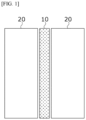
FIG. 1 is a cross-sectional view illustrating a structure of a battery module according to the related art; -
FIG. 2 is a set of photographs showing the results of a flame resistance test for a pad used in the battery module according to the related art; -
FIG. 3 is a flowchart illustrating a process of preparing a heat-resistant fiber-mica composite according to an embodiment of the present invention; -
FIG. 4 is a flowchart illustrating a process of manufacturing an insulating pad having a multi-layer structure according to an embodiment of the present invention; -
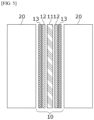
FIG. 5 is a cross-sectional view illustrating a structure of a battery module according to an embodiment of the present invention; -
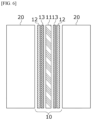
FIG. 6 is a cross-sectional view illustrating a structure of a battery module according to another embodiment of the present invention; -
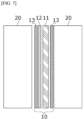
FIG. 7 is a cross-sectional view illustrating a structure of a battery module according to still another embodiment of the present invention; -
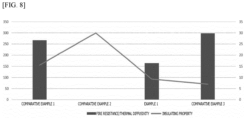
FIG. 8 is a graph showing the results of a fire resistance and thermal diffusivity test for an insulating pad according to an embodiment of the present invention; -
FIG. 9 is a graph showing the results of a fire resistance and thermal diffusivity test for an insulating pad according to another embodiment of the present invention; and -
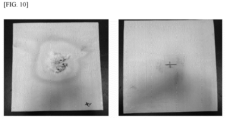
FIG. 10 is a set of photographs showing the results of a flame resistance test for an insulating pad according to an embodiment of the present invention. - Hereinafter, the present invention will be described in more detail with reference to embodiments and the accompanying drawings. However, the following embodiments are intended only to aid understanding of the present invention, and the scope of the present invention is not limited thereto. The present invention may have various modifications and alternative forms, embodiments thereof may be implemented in several different forms, and it should be understood that the present invention covers all modifications, equivalents, and alternatives falling within the spirit and scope of the present invention.
- The terms used herein are for the purpose of describing specific embodiments only and are not intended to limit the present invention. As used herein, the singular forms "a" and "an" are intended to include the plural forms as well, unless the context clearly indicates otherwise. It will be further understood that the terms "comprise," "comprising," "include," and/or "including" used herein specify the presence of stated features, integers, steps, operations, elements, parts, or combinations thereof, but do not preclude the presence or addition of one or more other features, integers, steps, operations, elements, parts, or combinations thereof.
- Unless otherwise defined, all terms including technical and scientific terms used herein have the same meaning as commonly understood by one of ordinary skill in the art to which the present invention belongs. It will be further understood that terms, such as those defined in commonly used dictionaries, should be interpreted as having a meaning that is consistent with their meaning in the context of the relevant art and will not be interpreted in an idealized or overly formal sense unless expressly so defined herein.
- A battery module according to an embodiment of the present invention includes a plurality of battery cells, and an insulating pad having a multi-layer structure disposed between the battery cells, wherein the insulating pad includes a swelling pressure absorption layer, an insulating fire-resistant layer, and a thermal diffusion layer.
- The swelling pressure absorption layer may include heat-resistant fiber and mica, the insulating fire-resistant layer may include mica, and the thermal diffusion layer may include a carbon-based material.
- The heat-resistant fiber may be at least one selected from among ceramic fiber and aramid fiber, but the present invention is not particularly limited thereto, and any fiber whose performance is not degraded at high temperature may be used.
- The carbon-based material may be at least one selected from among graphene, carbon nanotubes, and graphite.
- The thickness of the swelling pressure absorption layer may be in a range of 10 to 35% of the total thickness of the insulating pad, the thickness of the insulating fire-resistant layer may be in a range of 35 to 45% of the total thickness of the insulating pad, and the thickness of the thermal diffusion layer may be in a range of 25 to 35% of the total thickness of the insulating pad.
- The total thickness of the insulating pad may range from 1.0 to 2.5 mm.
- The arrangement of the multi-layer structure of the insulating pad may be modified in various ways, and may be configured by stacking the thermal diffusion layer and the insulating fire-resistant layer in a different order around the swelling pressure absorption layer or configured asymmetrically by stacking other layers on both side surfaces of the swelling pressure absorption layer.
- The insulating pad having a multi-layer structure disposed between the plurality of battery cells may have a structure in which thermal diffusion layers are stacked on both surfaces of the swelling pressure absorption layer and the insulating fire-resistant layers are stacked on the thermal diffusion layers.
- The insulating pad having a multi-layer structure disposed between the plurality of battery cells may have a structure in which the insulating fire-resistant layers are stacked on both surfaces of the swelling pressure absorption layer and the thermal diffusion layers are stacked on the insulating fire-resistant layer.
- The insulating pad having a multi-layer structure disposed between the plurality of battery cells may have a structure in which the insulating fire-resistant layer and the thermal diffusion layer are sequentially stacked on one surface of the swelling pressure absorption layer and the insulating fire-resistant layer is stacked on the other surface of the swelling pressure absorption layer.
- The insulating pad may be manufactured by stacking the swelling pressure absorption layer, the insulating fire-resistant layer, and the thermal diffusion layer and then performing heat pressing and heat fusing on the swelling pressure absorption layer, the insulating fire-resistant layer, and the thermal diffusion layer.
- Materials used in the insulating pad having a multi-layer structure according to the present invention are as follows.
- Mica is a silicate mineral that is commonly found in igneous and metamorphic rock, and there are many types of micas. Mica has a complex chemical composition in terms of minerals. Micas are produced as hexagonal plate-shaped crystals and have the characteristic of being divided into very thin and tough plates.
- In particular, mica can withstand high voltages due to its low electrical conductivity and high insulation strength (muscovite 1,500 to 3,000 volts/mill, phlogopite 1,000 to 1,500 volts/mill). Further, mica has the characteristics of low power loss (high Q factor), high resistance (1,015-1,016 ohm/cm for muscovite, 1,012 to 1,014 ohm/cm for phlogopite), and storage capacity stability, and has the ability to instantly store electrostatic energy because of a high dielectric constant (6 to 8 for muscovite, 5 to 6 for phlogopite). Due to these characteristics, mica is used in numerous electrical products such as condensers, transformers, rheostats, fuses, thermionic valve bridges, incandescent light bulbs, insulation materials for vacuum tubes, and the like.
- In addition, mica is very difficult to compress, and is mainly used as optical fillers, windows of stoves and furnaces, retardation plates of helium-neon lasers, gauge glass of high-pressure steam boilers, and the like due to its chemical inertness that does not react with water, acids (except hydrofluoric acid and concentrated sulfuric acid), alkaline solutions, general solvents and oil, etc., flexibility, transparency, and high mechanical strength.
- Further, since mica has natural structural stability, the mica is an ideal insulator with stability at high temperatures and high insulation strength. Such mica has curvature, elasticity, and high tensile strength, but is somewhat soft and can be cut by hand, and thus mica is processed into various shapes and used in various industries.
- Since such mica contains many impurities in a mica ore state, the impurities are removed using a vibrating screen.
- Then, a thermal process is performed on the mica ore from which impurities have been removed at a high temperature of 850 °C to remove organic substances and enable crystal water to evaporate inside the mica ore. When the crystal water evaporates from the mica ore, air flows into a plurality of spaces formed by the evaporation of the crystal water, and thus the thermal conductivity of the mica ore is significantly lowered and a heat insulating property is significantly improved.
- When the mica ore is completely preprocessed in this way, the mica ore is grinded. There are various ways to grind mica ore, but an aspect ratio (i.e., a value obtained by dividing mica length by mica thickness) may be maximized using high-pressure water. In this way, when the aspect ratio is maximized, dielectric strength is improved to increase the dielectric breakdown voltage, and thus it is very advantageous for interlayer insulation of battery cells.
- Aramid fiber or ceramic fiber is suitable for a heat-resistant fiber raw material. The heat-resistant fiber raw material may be either aramid fiber or ceramic fiber, or may be a mixture of the aramid fiber and ceramic fiber at an appropriate ratio.
- Aramid fiber has excellent tensile strength, toughness, and heat resistance, and has high strength and a high modulus of elasticity, and thus does not break or damage easily. In particular, aramid fiber does not burn or melt, and turns black only when the temperature exceeds 500 °C. Further, since aramid fiber does not easily stretch even when a large external force is applied, the aramid fiber is widely used as reinforced plastic materials such as internal aggregates in aircraft, bulletproof jackets, bulletproof helmets, golf clubs, and tennis rackets.
- Ceramic fiber is made by fiberizing glass, and has excellent heat resistance and is suitable for an insulator, and thus the ceramic fiber is mainly used as an insulating fire-resistant insulating material by being mixed with a metal or plastic.
- It is preferable to dissociate and use the aramid fiber and ceramic fiber using a refiner so as to facilitate the dispersion and length adjustment of the fibers.
- In the present invention, the insulating pad disposed between the battery cells may include a thermal diffusion layer containing a carbon-based material. Examples of the carbon-based material that can be used include graphene, carbon nanotubes, graphite, and the like, but the present invention is not limited thereto.
- In order to manufacture a thermal expansion absorption layer constituting an insulating pad, mica and heat-resistant fiber were prepared and preprocessed as follows, and then a heat-resistant fiber-mica composite was prepared.
FIG. 3 is a flowchart illustrating a process of preparing a heat-resistant fiber-mica composite according to an embodiment. Referring toFIG. 3 , first, since mica in a mica ore state contains many impurities, the impurities were removed using a vibrating screen. Next, a thermal process was performed on the mica ore from which impurities have been removed at a high temperature of 850 °C to remove organic substances and enable crystal water to evaporate inside the mica ore (S101). When crystal water evaporates from the mica ore, air flows into a plurality of spaces formed by the evaporation of the crystal water, and thus the thermal conductivity of the mica ore is significantly lowered and a heat insulating property is significantly improved. - When the mica ore was completely preprocessed in this way, the mica ore was grinded (S102). There are various ways to grind mica ore, but an aspect ratio (i.e., a value obtained by dividing mica length by mica thickness) may be maximized using high-pressure water. In this way, when the aspect ratio is maximized, dielectric strength is improved to increase the dielectric breakdown voltage, and thus it is very advantageous for interlayer insulation of battery cells. In this example, the mica ore was used by being grinded to a size ranging from 100 to 800 µm. In this way, when the preprocessing and grinding of the mica ore were completed, the preparation of the mica raw material was completed.
- Aramid fiber, ceramic fiber, or a mixture of aramid fiber and ceramic fiber may be used as the heat-resistant fiber. In this example, a mixture of ceramic fiber and aramid fiber was used, and the heat-resistant fiber was prepared by being dissociated using a refiner to facilitate the dispersion and length adjustment of the fiber.
- The preprocessed mica and the dissociated heat-resistant fiber were prepared as described above, and a heat-resistant fiber-mica composite for manufacturing a swelling pressure absorption layer was prepared.
- 10 to 50 wt% preprocessed mica, 10 to 50 wt% dissociated ceramic fiber, and 10 to 40 wt% aramid fiber were mixed (S103). The mixture then dehydrated in a vacuum to remove as much moisture as possible (S104). The dehydrated mixture was heated and dried (S105) and then formed into a thin paper form to prepare a heat-resistant fiber-mica composite to be used in an insulating pad. The insulating heat-resistant fiber-mica composite prepared in this way has an advantage of excellent insulation and heat-resistant properties and significantly improved mechanical strength due to the mica and ceramic fiber.
- A mica sheet constituting an insulating fire-resistant layer and a graphite sheet constituting a thermal diffusion layer were also manufactured according to a process illustrated in
FIG. 4 in the same manner as the method of preparing the heat-resistant fiber-mica composite. - An insulating
pad 10 having a multi-layer structure disposed betweenbattery cells 20 was manufactured. The insulatingpad 10 includes a swellingpressure absorption layer 11, an insulating fire-resistant layer 13, and athermal diffusion layer 12. The paper-type heat-resistant fiber-mica composite prepared in Example 1 was used as the swellingpressure absorption layer 11, a mica sheet was used as the insulating fire-resistant layer 13, and a graphite sheet made of a carbon-based material was used as thethermal diffusion layer 12. -
FIG. 4 is a flowchart illustrating a process of manufacturing an insulatingpad 10 having a multi-layer structure according to an embodiment. - Referring to
FIG. 4 , specifically, an adhesive was applied onto a surface of the heat-resistant fiber-mica composite formed into a paper form (S201), and a postprocessing process of heating and drying in a drying furnace at 80 to 180 °C was performed to prepare heat-resistant fiber-mica composite paper in a prepreg state (S202). - Examples of the adhesive used to manufacture the insulating pad may include organic adhesives such as silicone resin, epoxy resin, acrylic resin, unsaturated polyester resin, and ethyl vinyl acetate tape resin, and inorganic adhesives such as sodium silicate, potassium silicate, and lithium silicate.
- In the case of organic adhesives, when the temperature is below 80 °C, the residual organic solvent contained in the adhesive is not removed, and when the temperature exceeds 180 °C, the adhesive is cured excessively, resulting in low flexibility, heat shrinkage, a significantly reduced heat insulating property, and no prepreg (semi-cured) state. Therefore, the organic adhesive should be heated and dried at the above set temperature.
- Meanwhile, in the case of inorganic adhesives, when the temperature is below 80 °C, moisture contained in the adhesive does not evaporate, and when the temperature exceeds 180 °C, moisture rapidly evaporates and forms bubbles, and thus a bonding force is significantly weakened. Therefore, the inorganic adhesive should be heated and dried at the above set temperature.
- When such a postprocessing process is performed, the bonding force between the mica raw material and heat-resistant fiber raw material is strengthened due to the adhesive applied to the surface, and thus it is possible to perform heat fusing in a semi-cured state.
- A mica sheet and a graphite sheet were stacked on a ceramic mica composite prepreg (S203) that can be heat-fused, then heat fusing was performed by heating and pressing the mica sheet and graphite sheet at a temperature of 150 to 180 °C and a pressure of 2 to 10 kg/cm2 (S204), and the mica sheet and graphite sheet were cut to the required size (S205), and thus an insulating pad with significantly improved fire resistance, thermal diffusivity, and mechanical strength was manufactured.
- Insulation pads having various layer structures were manufactured by changing the arrangement of an insulating fire-resistant layer and a thermal diffusion layer, and were disposed between
battery cells 20 to manufacture a battery module. The heat-resistant fiber-mica composite prepared in Example 2 was used as a swellingpressure absorption layer 11, a mica sheet was used as an insulating fire-resistant layer 13, and a graphite sheet made of a carbon-based material was used as athermal diffusion layer 12. - As illustrated in
FIG. 5 , an insulating pad in which thermal diffusion layers 12 were stacked on both surfaces of a swellingpressure absorption layer 11 and insulating fire-resistant layers 13 were stacked on the thermal diffusion layers 12 was manufactured, and was disposed between battery cells. - The total thickness of the insulating pad ranged from 1.0 to 2.5 mm, the thickness of the swelling
pressure absorption layer 11 is 29% of the total thickness of the insulating pad, the thickness of the insulating fire-resistant layer 13 is 41% of the total thickness of the insulating pad, and the thickness of thethermal diffusion layer 12 is 29% of the total thickness of the insulating pad. - As another example illustrated in
FIG. 6 , an insulating pad having a multi-layer structure was manufactured by changing the arrangement order of insulating fire-resistant layers and a thermal diffusion layer. That is, an insulating pad in which insulating fire-resistant layers 13 were first stacked on both surfaces of the swellingpressure absorption layer 11 and thermal diffusion layers 12 were stacked on the insulating fire-resistant layers 13 was manufactured, and was disposed between battery cells. - In this way, even when the arrangement order of the insulation fire resistant layer and the thermal diffusion layer is changed, the performance of the insulating pad is similar.
- As still another example, an asymmetrical insulating pad was manufactured by changing the layer arrangement on both side surfaces of a swelling
pressure absorption layer 11. As illustrated inFIG. 7 , an insulating pad in which an insulating fire-resistant layer 13 was stacked on one surface of the swellingpressure absorption layer 11, athermal diffusion layer 12 was stacked on the other surface of the swellingpressure absorption layer 11, and an insulating fire-resistant layer 13 was stacked on thethermal diffusion layer 12 was manufactured. In this way, even when the insulating fire-resistant layer and the thermal diffusion layer are arranged asymmetrically and manufactured, the performance of the insulating pad is similar. - A 1,200 °C flame was applied for 10 minutes to insulating pads manufactured according to examples and comparative examples having compositions shown in Table 1 below, and then backside temperatures were measured to evaluate fire resistance and thermal diffusivity.
[Table 1] First layer Second layer Third layer Example 1 Mica Ceramic fiber-mica Carbon-based material (graphite) Comparative Example 1 Mica Ceramic fiber-mica Comparative Example 2 Mica Silicone Comparative Example 3 Mica Silicone Carbon-based material (graphite) - The evaluation results of the examples and comparative examples in Table 1 above are shown in the graph of
FIG. 8 . As shown inFIG. 8 , although the mica/silicone structure of Comparative Example 1 had an excellent insulating property, the mica/silicone structure burned down, making it impossible to measure fire resistance and thermal diffusivity. - It was evaluated that an insulating pad containing mica, a ceramic fiber-mica composite, and graphite according to Example 1 has excellent fire resistance and thermal diffusivity performance. Although it was confirmed that fire resistance and thermal diffusivity performance were improved with the addition of graphite, which is a carbon-based material, an insulating property tended to be degraded.
- Therefore, in order to improve insulating properties, insulating pads were manufactured by changing the thicknesses of each of layers as shown in Table 2 below, and then fire resistance, thermal diffusivity, and insulating properties were evaluated.
[Table 2] First layer Second layer Third layer Example 1 Mica ceramic fiber-mica composite carbon-based material (graphite) Example 2 Mica ceramic fiber-mica composite carbon-based material (graphite) (Increased thickness) Example 3 Mica ceramic fiber-mica composite (Increased thickness) carbon-based material (graphite) - The evaluation results of the examples in Table 2 above are shown in the graph of
FIG. 9 . As shown inFIG. 9 , as a result of increasing the thickness of the carbon-based thermal diffusion layer, it was evaluated that fire resistance and the thermal diffusivity was improved as compared to comparative examples, which are conventional products, but the insulating property was degraded. On the other hand, as a result of increasing the thickness of the swelling pressure absorption layer containing ceramic fiber and mica, it was evaluated that fire resistance, thermal diffusivity, and the insulating property were all improved as compared to the conventional products. - Further, as shown in
FIG. 10 , it can be confirmed that the insulating pads according to the embodiments of the present invention had no cracks or thermal damage, which are problems with conventional insulating pads. - In the battery module according to the present invention, it is possible to secure the performance of absorbing swelling pressure caused by cell swelling.
- Since a pad does not crack or melt even at high temperatures, heat generated from a cell cannot be transferred to adjacent cells on the side, or even when the generated heat is transferred thereto, it is possible to protect the cell against the heat to the extent that the function of the cell is not damaged.
- Even when a cell is vented, by preventing the venting of adjacent cells on the side to prevent ignition of nearby modules and cells and minimize the intensity of the flame, it is possible to minimize the application of other fire retardants or fire extinguishing materials.
- Meanwhile, effects of the present invention are not limited to the above-described effects and other effects that are not described may be clearly understood by those skilled in the art from the above detailed descriptions.
- While the present invention has been particularly described with reference to embodiments, the embodiments are only exemplary embodiments of the present invention. It will be understood by those skilled in the art that modified examples and applications in other forms may be made without departing from the spirit and scope of the present invention. For example, each component specifically shown in the embodiments may be modified and embodied. In addition, it should be understood that differences related to these modified examples and applications are within the scope of the present invention as defined in the appended claims.
Claims (10)
- A battery module comprising:a plurality of battery cells; andan insulating pad having a multi-layer structure disposed between the battery cells,wherein the insulating pad includes a swelling pressure absorption layer, an insulating fire-resistant layer, and a thermal diffusion layer.
- The battery module of claim 1, wherein the swelling pressure absorption layer includes heat-resistant fiber and mica,the insulating fire-resistant layer includes the mica, andthe thermal diffusion layer includes a carbon-based material.
- The battery module of claim 2, wherein the heat-resistant fiber is one or more selected from among ceramic fiber and aramid fiber.
- The battery module of claim 2 or 3, wherein the carbon-based material is one or more selected from among graphene, carbon nanotubes, and graphite.
- The battery module of any one of claims 1 to 4, wherein a thickness of the swelling pressure absorption layer is in a range of 10 to 35% of a total thickness of the insulating pad,a thickness of the insulating fire-resistant layer is in a range of 35 to 45% of the total thickness of the insulating pad, anda thickness of the thermal diffusion layer is in a range of 25 to 35% of the total thickness of the insulating pad.
- The battery module of any one of claims 1 to 5, wherein a total thickness of the insulating pad ranges from 1.0 to 2.5 mm.
- The battery module of any one of claims 1 to 6, wherein the insulating pad includes thermal diffusion layers stacked on both surfaces of the swelling pressure absorption layer and insulating fire-resistant layers stacked on the thermal diffusion layers.
- The battery module of any one of claims 1 to 7, wherein the insulating pad includes insulating fire-resistant layers stacked on both surfaces of the swelling pressure absorption layer and thermal diffusion layers stacked on the insulating fire-resistant layers.
- The battery module of any one of claims 1 to 8, wherein the insulating pad includes an insulating fire-resistant layer and a thermal diffusion layer sequentially stacked on one surface of the swelling pressure absorption layer, and an insulating fire-resistant layer stacked on the other surface of the swelling pressure absorption layer.
- The battery module of any one of claims 1 to 9, wherein the insulating pad is made by performing heat fusing on the swelling pressure absorption layer, the insulating fire-resistant layer, and the thermal diffusion layer.
Applications Claiming Priority (1)
| Application Number | Priority Date | Filing Date | Title |
|---|---|---|---|
| KR1020230042696A KR20240147149A (en) | 2023-03-31 | 2023-03-31 | Battery module comprising composite mica insulation pad with improved fire resistance and thermal diffusivity |
Publications (1)
| Publication Number | Publication Date |
|---|---|
| EP4439801A1 true EP4439801A1 (en) | 2024-10-02 |
Family
ID=89119262
Family Applications (1)
| Application Number | Title | Priority Date | Filing Date |
|---|---|---|---|
| EP23214227.3A Pending EP4439801A1 (en) | 2023-03-31 | 2023-12-05 | Battery module including composite mica insulation pad with improved fire resistance and thermal diffusivity |
Country Status (4)
| Country | Link |
|---|---|
| US (1) | US20240332675A1 (en) |
| EP (1) | EP4439801A1 (en) |
| KR (1) | KR20240147149A (en) |
| CN (1) | CN118738748A (en) |
Citations (5)
| Publication number | Priority date | Publication date | Assignee | Title |
|---|---|---|---|---|
| US20210074960A1 (en) * | 2017-12-21 | 2021-03-11 | H.K.O. Isolier- Und Textiltechnik Gmbh | Multi-layer thermal insulation element for batteries |
| US20210257690A1 (en) * | 2020-02-18 | 2021-08-19 | Rogers Corporation | Thermal management multilayer sheet for a battery |
| US20210376405A1 (en) * | 2018-10-25 | 2021-12-02 | 3M Innovative Properties Company | Thermal barrier material for electric vehicle battery applications |
| US20230057172A1 (en) * | 2021-08-06 | 2023-02-23 | GM Global Technology Operations LLC | Flame-retardant compositions for energy storage devices, methods of manufacture thereof and batteries containing the same |
| KR20230042696A (en) | 2020-06-21 | 2023-03-29 | 쇼어라인 디자인 앤드 매뉴팩처링 엘엘씨 | Magnetorheological fluid valves and variable manufacturing molds |
-
2023
- 2023-03-31 KR KR1020230042696A patent/KR20240147149A/en active Pending
- 2023-12-05 EP EP23214227.3A patent/EP4439801A1/en active Pending
- 2023-12-19 CN CN202311753365.7A patent/CN118738748A/en active Pending
- 2023-12-20 US US18/390,573 patent/US20240332675A1/en active Pending
Patent Citations (5)
| Publication number | Priority date | Publication date | Assignee | Title |
|---|---|---|---|---|
| US20210074960A1 (en) * | 2017-12-21 | 2021-03-11 | H.K.O. Isolier- Und Textiltechnik Gmbh | Multi-layer thermal insulation element for batteries |
| US20210376405A1 (en) * | 2018-10-25 | 2021-12-02 | 3M Innovative Properties Company | Thermal barrier material for electric vehicle battery applications |
| US20210257690A1 (en) * | 2020-02-18 | 2021-08-19 | Rogers Corporation | Thermal management multilayer sheet for a battery |
| KR20230042696A (en) | 2020-06-21 | 2023-03-29 | 쇼어라인 디자인 앤드 매뉴팩처링 엘엘씨 | Magnetorheological fluid valves and variable manufacturing molds |
| US20230057172A1 (en) * | 2021-08-06 | 2023-02-23 | GM Global Technology Operations LLC | Flame-retardant compositions for energy storage devices, methods of manufacture thereof and batteries containing the same |
Also Published As
| Publication number | Publication date |
|---|---|
| CN118738748A (en) | 2024-10-01 |
| KR20240147149A (en) | 2024-10-08 |
| US20240332675A1 (en) | 2024-10-03 |
Similar Documents
| Publication | Publication Date | Title |
|---|---|---|
| US11387521B2 (en) | Nanoporous composite separators with increased thermal conductivity | |
| KR102072399B1 (en) | Method for manufaturing insulation mica paper | |
| CN112151918A (en) | Heat insulation film and preparation method and application thereof | |
| JP2017182945A (en) | All-solid lithium ion secondary battery | |
| CN106450105B (en) | Porous composite material partition plate, preparation method thereof, composite structure battery cell and lithium ion battery | |
| KR20240050401A (en) | Batteries and Electrical Devices | |
| KR101085198B1 (en) | Planar heating element for high temperature and manufacturing method | |
| CN112266795A (en) | Fireproof heat-insulating material, battery module and battery pack | |
| CN108615590B (en) | A composite thermistor material, thermistor, thermistor tab and lithium ion battery | |
| KR20240059147A (en) | Fireproof busbar with intergrated cap and battery pack hanving the same | |
| WO2025028430A1 (en) | Fire spread prevention material, battery pack, and automobile | |
| KR20240058547A (en) | Fireproof busbar and battery pack hanving the same | |
| EP4439801A1 (en) | Battery module including composite mica insulation pad with improved fire resistance and thermal diffusivity | |
| WO2026065440A1 (en) | Battery and method for manufacturing battery | |
| KR102725021B1 (en) | Fire-resistant insulation mica tape with prepreg adhesive layers and method for manufacturing the same | |
| US20250140989A1 (en) | Insulation pad for preventing heat transfer, method of manufacturing the same and battery pack including insulation pad for preventing heat transfer | |
| CN207304950U (en) | A kind of ptc heater | |
| KR20240058550A (en) | Fireproof busbar cap and battery pack hanving the same | |
| KR20250004793A (en) | Heat-resistant protection element and battery | |
| KR20250004794A (en) | Heat-resistant protection element and battery | |
| JP2025516574A (en) | Heat-resistant protective material and battery | |
| KR20260048730A (en) | Thermal Runaway Prevention Material and Manufacturing Method Thereof | |
| KR102799124B1 (en) | A separator, a manufacturing method thereof and an electrochemical device including the separator | |
| CN223074114U (en) | Flame retardant insulating film for battery cell | |
| CN223206406U (en) | A flame retardant structure for energy storage batteries |
Legal Events
| Date | Code | Title | Description |
|---|---|---|---|
| PUAI | Public reference made under article 153(3) epc to a published international application that has entered the european phase |
Free format text: ORIGINAL CODE: 0009012 |
|
| STAA | Information on the status of an ep patent application or granted ep patent |
Free format text: STATUS: THE APPLICATION HAS BEEN PUBLISHED |
|
| AK | Designated contracting states |
Kind code of ref document: A1 Designated state(s): AL AT BE BG CH CY CZ DE DK EE ES FI FR GB GR HR HU IE IS IT LI LT LU LV MC ME MK MT NL NO PL PT RO RS SE SI SK SM TR |
|
| STAA | Information on the status of an ep patent application or granted ep patent |
Free format text: STATUS: REQUEST FOR EXAMINATION WAS MADE |
|
| 17P | Request for examination filed |
Effective date: 20250313 |
|
| STAA | Information on the status of an ep patent application or granted ep patent |
Free format text: STATUS: EXAMINATION IS IN PROGRESS |
|
| 17Q | First examination report despatched |
Effective date: 20250714 |
|
| GRAP | Despatch of communication of intention to grant a patent |
Free format text: ORIGINAL CODE: EPIDOSNIGR1 |
|
| STAA | Information on the status of an ep patent application or granted ep patent |
Free format text: STATUS: GRANT OF PATENT IS INTENDED |