EP4439775A1 - Gasdetektion in batterien - Google Patents
Gasdetektion in batterien Download PDFInfo
- Publication number
- EP4439775A1 EP4439775A1 EP23275046.3A EP23275046A EP4439775A1 EP 4439775 A1 EP4439775 A1 EP 4439775A1 EP 23275046 A EP23275046 A EP 23275046A EP 4439775 A1 EP4439775 A1 EP 4439775A1
- Authority
- EP
- European Patent Office
- Prior art keywords
- gas
- concentration
- rate
- battery pack
- preset
- Prior art date
- Legal status (The legal status is an assumption and is not a legal conclusion. Google has not performed a legal analysis and makes no representation as to the accuracy of the status listed.)
- Pending
Links
- 238000001514 detection method Methods 0.000 title description 13
- 238000000034 method Methods 0.000 claims abstract description 36
- 238000013022 venting Methods 0.000 claims abstract description 33
- 230000004044 response Effects 0.000 claims description 12
- 230000001629 suppression Effects 0.000 claims description 6
- 230000002265 prevention Effects 0.000 claims description 5
- HBBGRARXTFLTSG-UHFFFAOYSA-N Lithium ion Chemical compound [Li+] HBBGRARXTFLTSG-UHFFFAOYSA-N 0.000 claims description 4
- 229910001416 lithium ion Inorganic materials 0.000 claims description 4
- 230000002459 sustained effect Effects 0.000 claims 2
- 239000000126 substance Substances 0.000 claims 1
- 239000007789 gas Substances 0.000 description 118
- 238000005259 measurement Methods 0.000 description 19
- VNWKTOKETHGBQD-UHFFFAOYSA-N methane Chemical compound C VNWKTOKETHGBQD-UHFFFAOYSA-N 0.000 description 16
- 230000009471 action Effects 0.000 description 8
- 239000003345 natural gas Substances 0.000 description 8
- 230000008901 benefit Effects 0.000 description 4
- 230000001351 cycling effect Effects 0.000 description 3
- 230000000116 mitigating effect Effects 0.000 description 3
- 238000012544 monitoring process Methods 0.000 description 3
- 208000032953 Device battery issue Diseases 0.000 description 2
- 230000015556 catabolic process Effects 0.000 description 2
- 230000006378 damage Effects 0.000 description 2
- 238000006731 degradation reaction Methods 0.000 description 2
- 239000003792 electrolyte Substances 0.000 description 2
- 230000003466 anti-cipated effect Effects 0.000 description 1
- 230000008859 change Effects 0.000 description 1
- 239000003795 chemical substances by application Substances 0.000 description 1
- 230000001010 compromised effect Effects 0.000 description 1
- 238000001816 cooling Methods 0.000 description 1
- 238000011161 development Methods 0.000 description 1
- 230000009977 dual effect Effects 0.000 description 1
- 230000000694 effects Effects 0.000 description 1
- 238000005265 energy consumption Methods 0.000 description 1
- 238000004880 explosion Methods 0.000 description 1
- 230000007774 longterm Effects 0.000 description 1
- 238000004519 manufacturing process Methods 0.000 description 1
- 239000000463 material Substances 0.000 description 1
- 238000012986 modification Methods 0.000 description 1
- 230000004048 modification Effects 0.000 description 1
- 238000011160 research Methods 0.000 description 1
- 238000012883 sequential measurement Methods 0.000 description 1
Images



Classifications
-
- H—ELECTRICITY
- H01—ELECTRIC ELEMENTS
- H01M—PROCESSES OR MEANS, e.g. BATTERIES, FOR THE DIRECT CONVERSION OF CHEMICAL ENERGY INTO ELECTRICAL ENERGY
- H01M10/00—Secondary cells; Manufacture thereof
- H01M10/42—Methods or arrangements for servicing or maintenance of secondary cells or secondary half-cells
- H01M10/48—Accumulators combined with arrangements for measuring, testing or indicating the condition of cells, e.g. the level or density of the electrolyte
- H01M10/488—Cells or batteries combined with indicating means for external visualization of the condition, e.g. by change of colour or of light density
-
- H—ELECTRICITY
- H01—ELECTRIC ELEMENTS
- H01M—PROCESSES OR MEANS, e.g. BATTERIES, FOR THE DIRECT CONVERSION OF CHEMICAL ENERGY INTO ELECTRICAL ENERGY
- H01M50/00—Constructional details or processes of manufacture of the non-active parts of electrochemical cells other than fuel cells, e.g. hybrid cells
- H01M50/30—Arrangements for facilitating escape of gases
- H01M50/383—Flame arresting or ignition-preventing means
-
- G—PHYSICS
- G01—MEASURING; TESTING
- G01N—INVESTIGATING OR ANALYSING MATERIALS BY DETERMINING THEIR CHEMICAL OR PHYSICAL PROPERTIES
- G01N33/00—Investigating or analysing materials by specific methods not covered by groups G01N1/00 - G01N31/00
- G01N33/0004—Gaseous mixtures, e.g. polluted air
- G01N33/0009—General constructional details of gas analysers, e.g. portable test equipment
- G01N33/0062—General constructional details of gas analysers, e.g. portable test equipment concerning the measuring method or the display, e.g. intermittent measurement or digital display
- G01N33/0063—General constructional details of gas analysers, e.g. portable test equipment concerning the measuring method or the display, e.g. intermittent measurement or digital display using a threshold to release an alarm or displaying means
- G01N33/0065—General constructional details of gas analysers, e.g. portable test equipment concerning the measuring method or the display, e.g. intermittent measurement or digital display using a threshold to release an alarm or displaying means using more than one threshold
-
- G—PHYSICS
- G01—MEASURING; TESTING
- G01N—INVESTIGATING OR ANALYSING MATERIALS BY DETERMINING THEIR CHEMICAL OR PHYSICAL PROPERTIES
- G01N33/00—Investigating or analysing materials by specific methods not covered by groups G01N1/00 - G01N31/00
- G01N33/0004—Gaseous mixtures, e.g. polluted air
- G01N33/0009—General constructional details of gas analysers, e.g. portable test equipment
- G01N33/0062—General constructional details of gas analysers, e.g. portable test equipment concerning the measuring method or the display, e.g. intermittent measurement or digital display
- G01N33/0067—General constructional details of gas analysers, e.g. portable test equipment concerning the measuring method or the display, e.g. intermittent measurement or digital display by measuring the rate of variation of the concentration
-
- H—ELECTRICITY
- H01—ELECTRIC ELEMENTS
- H01M—PROCESSES OR MEANS, e.g. BATTERIES, FOR THE DIRECT CONVERSION OF CHEMICAL ENERGY INTO ELECTRICAL ENERGY
- H01M10/00—Secondary cells; Manufacture thereof
- H01M10/05—Accumulators with non-aqueous electrolyte
- H01M10/052—Li-accumulators
- H01M10/0525—Rocking-chair batteries, i.e. batteries with lithium insertion or intercalation in both electrodes; Lithium-ion batteries
-
- H—ELECTRICITY
- H01—ELECTRIC ELEMENTS
- H01M—PROCESSES OR MEANS, e.g. BATTERIES, FOR THE DIRECT CONVERSION OF CHEMICAL ENERGY INTO ELECTRICAL ENERGY
- H01M10/00—Secondary cells; Manufacture thereof
- H01M10/42—Methods or arrangements for servicing or maintenance of secondary cells or secondary half-cells
- H01M10/425—Structural combination with electronic components, e.g. electronic circuits integrated to the outside of the casing
-
- H—ELECTRICITY
- H01—ELECTRIC ELEMENTS
- H01M—PROCESSES OR MEANS, e.g. BATTERIES, FOR THE DIRECT CONVERSION OF CHEMICAL ENERGY INTO ELECTRICAL ENERGY
- H01M10/00—Secondary cells; Manufacture thereof
- H01M10/42—Methods or arrangements for servicing or maintenance of secondary cells or secondary half-cells
- H01M10/4285—Testing apparatus
-
- H—ELECTRICITY
- H01—ELECTRIC ELEMENTS
- H01M—PROCESSES OR MEANS, e.g. BATTERIES, FOR THE DIRECT CONVERSION OF CHEMICAL ENERGY INTO ELECTRICAL ENERGY
- H01M10/00—Secondary cells; Manufacture thereof
- H01M10/42—Methods or arrangements for servicing or maintenance of secondary cells or secondary half-cells
- H01M10/48—Accumulators combined with arrangements for measuring, testing or indicating the condition of cells, e.g. the level or density of the electrolyte
-
- H—ELECTRICITY
- H01—ELECTRIC ELEMENTS
- H01M—PROCESSES OR MEANS, e.g. BATTERIES, FOR THE DIRECT CONVERSION OF CHEMICAL ENERGY INTO ELECTRICAL ENERGY
- H01M2220/00—Batteries for particular applications
- H01M2220/20—Batteries in motive systems, e.g. vehicle, ship, plane
-
- H—ELECTRICITY
- H01—ELECTRIC ELEMENTS
- H01M—PROCESSES OR MEANS, e.g. BATTERIES, FOR THE DIRECT CONVERSION OF CHEMICAL ENERGY INTO ELECTRICAL ENERGY
- H01M50/00—Constructional details or processes of manufacture of the non-active parts of electrochemical cells other than fuel cells, e.g. hybrid cells
- H01M50/30—Arrangements for facilitating escape of gases
-
- H—ELECTRICITY
- H01—ELECTRIC ELEMENTS
- H01M—PROCESSES OR MEANS, e.g. BATTERIES, FOR THE DIRECT CONVERSION OF CHEMICAL ENERGY INTO ELECTRICAL ENERGY
- H01M6/00—Primary cells; Manufacture thereof
- H01M6/50—Methods or arrangements for servicing or maintenance, e.g. for maintaining operating temperature
- H01M6/5044—Cells or batteries structurally combined with cell condition indicating means
Definitions
- the present disclosure relates to methods and systems for gas detection in batteries, for example in lithium-ion batteries.
- the gas detection methods and systems may be employed in fire suppression systems for said batteries.
- a battery pack typically includes many individual battery cells arranged in series and in parallel. The individual cells may rupture due to unfavorable external or internal battery conditions. A failing battery cell may leak gaseous matter into the surrounding battery pack. In the case of a gas leak, a battery may be subject to a fire event, and in extreme cases, an explosion, which may propagate to other nearby battery cells. This can cause thermal runaway within the whole battery pack, resulting in large-scale fire event and destruction of the battery. When such an event occurs in a battery pack in a vehicle, such as an airplane, the consequences can be extremely dangerous. Attempts have been made to predict potential fire events by monitoring the concentration of gas within battery packs.
- a cell venting event When the measured concentration of the gas rises above a particular predetermined threshold, a cell venting event is indicated and an alarm signal is generated.
- the alarm signal can then be used to automatically or manually prompt fire avoidance or suppression actions, such as delivery of a fire suppressant material into the battery pack, depowering the battery pack, disposal of the battery pack and/or evacuation of a vehicle in which the battery pack may be located. If the detection of the venting event and subsequent fire avoidance or suppression action are carried out fast enough, thermal runaway and large-scale fire or battery destruction can be avoided.
- One of the problems, however, with utilizing the measurement of gas concentration in the battery pack as an indicator of a cell venting event is that the overall concentration of gas may rise steadily past the predetermined threshold due to other, normally occurring, non-dangerous factors.
- a method of detecting a cell venting event in a battery pack comprising: determining a rate of increase of the concentration of a gas in the battery pack with respect to time; providing an indication that the determined rate of increase of the concentration of the gas has exceeded a first preset rate of increase threshold value.
- a system comprising: a battery pack, comprising one or more cells; a gas sensor; a controller; wherein the gas sensor is configured to measure a concentration of a gas in the battery pack; wherein the controller is configured to: determine a rate of increase of the concentration of the gas with respect to time and provide an indication that the determined rate of increase of the concentration of the gas has exceeded a first preset rate of increase threshold value
- the rapid release of gas from the vent of a single cell (failure of the cell) within a battery pack is enough to initiate thermal runaway and/or a fire event within a battery pack. It is therefore important to provide the necessary rapid detection of a failed battery cell at the very early stages after a cell has vented. It has been shown that, if detected early enough, removing the load from a battery pack where a single cell has vented can prevent thermal runaway. Additionally, active delivery of suppressing agent into the battery pack(s) at this early stage has shown improved cooling, resulting in either prevention or mitigation of the effects of thermal runaway.
- known systems and methods employ monitoring of the concentration of gas within the battery pack. Once the concentration of the gas reaches a predetermined threshold, an alarm signal is generated, and appropriate fire event/thermal runaway prevention actions may be performed in response thereto.
- the present disclosure provides an improved system and method for gas detection in battery packs, which may be, but are not necessarily, lithium-ion battery packs, capable of accurately and rapidly detecting a venting event of a battery cell, which may be an indicator of imminent thermal runaway or fire.
- FIG. 1A illustrates a gas detection system 650 according to the present disclosure.
- the system 650 includes a battery pack 612, a gas sensor 624 and a controller 644.
- the battery pack 612 may be a lithium-ion, or similar, battery pack.
- the battery pack 612 may be comprised of a collection of individual battery cells, which may be combined in series or parallel in order to tune or raise the voltage and capacity of the battery pack 612.
- the gas sensor 624 is configured to measure a concentration of a gas in the battery pack 612.
- such gas sensors 624 may be configured to output a voltage signal which is indicative of the sensed concentration of gas.
- other types of gas sensor may also be utilised.
- the gas sensor 624 and the controller may be configured to (where each step is either performed by the gas sensor 624 or controller 644, in any combination): calculate a rate of rise, i.e. rate of increase with respect to time, of the concentration of a gas in the battery pack 612 over a preset length of time; compare the calculated rate of rise of the gas concentration with a preset rate of rise threshold value; and if the calculated rate of rise exceeds said rate of rise threshold value, provide an indication thereof.
- the controller 644 may be further configured to generate an alarm signal and/or take measures to mitigate thermal runaway or fire upon provision of this indication.
- the measures to mitigate thermal runaway or fire can be any of those described in this application.
- Figure 1B illustrates a method 600 according to the present disclosure, which may be used with the system of Figure 1A .
- the rate of rise i.e. the rate of increase with respect to time
- the concentration of the gas in the battery pack is determined. If the determined rate of rise of the concentration of the gas exceeds a preset rate of rise threshold value, an indication thereof is provided. In response to this indication, an alarm signal may be generated or some other response or action may follow.
- measurements may first be made of the gas concentration at a first point in time and a second point in time, a preset amount of time after the first point in time.
- These measurements may be taken by one or more gas sensors 624 and said gas sensors 624 may output a voltage signal indicative of the sensed concentration of gas, thereby enabling measurements of the gas concentration.
- the rate of rise may then be calculated using the gas concentration measurements at the first and second points in time and the time interval between the first and second points in time.
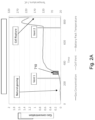
- Figure 2A shows a graph showing sensed gas concentration in a battery pack with respect to time.
- the graph also includes lines illustrating two cell rupture, or venting, events, "Vent 1" and “Vent 2", and a line representative of the battery pack temperature.
- Vent 1 the first venting event
- Vent 2 the second venting event
- the gas concentration increases rapidly.
- a short time after the second venting event both the gas concentration and battery pack temperature increase very rapidly. This sequence of events is indicative of thermal runaway in the battery pack.
- the initial rapid increase in gas concentration caused by the first venting event may cause generation of an indication that the rate of rise has exceeded a threshold, which may in turn cause generation of an alarm signal.
- a threshold which may in turn cause generation of an alarm signal.
- the rate of rise of the concentration in the gas during the time period indicated by reference numeral 710 would be sufficiently high, i.e. above a preset rate of rise threshold value, to generate said indication in the associated gas sensor 624 and/or controller 644.
- a rectangle is overlaid onto the graph at point 710.
- the width of the rectangle, i.e. the extension thereof along the "Time" axis corresponds to the length of time over which the rate of rise is measured.
- the height of the rectangle i.e.
- the extension of the rectangle in the "Concentration" axis corresponds to the magnitude of the increase in gas concentration in the battery pack in the time interval determined by the width of the rectangle. It will be appreciated that the rate of rise of the concentration of gas may be calculated by dividing the magnitude of the increase in gas concentration over the length of time elapsed during said time interval.
- Figure 2B shows a graph similar to the graph of Figure 2A .
- Three rectangles 720, 730 and 740 are overlaid onto the graph and represent three consecutive calculations of the rate of rise of the gas concentration in a battery pack, each over the same length of time.
- the rates of rise of gas concentration over the elapsed length of time in the first two measurements, 720 and 730 do not exceed a preset rate of rise threshold value, and no indication is provided of said preset rate of rise threshold value being exceeded in response.
- the rate of rise of the gas concentration during the time interval indicated by reference numeral 740 exceeds the preset rate of rise threshold value and triggers generation of such an indication, which may in turn trigger an alarm signal and/or a fire suppression action.
- the actual length of time may be selected based on one or more parameters such as battery pack size, structure or type. Equally, the rate of rise threshold value may be selected to meet the needs of a specific battery system.
- One way in which the method 600 of the present disclosure may be implemented is by continually measuring the gas concentration in the battery pack, storing these measurements with their associated timestamps and continually making calculations of the rate of rise of the gas concentration using gas concentration measurements between time points, the length of time between time points corresponding to a preselected length of time.
- the frequency at which this is performed may be chosen to find a balance between avoiding excessive computation/energy consumption and ensuring the reliability and speed of detecting cell venting events.
- the advantage of this method is that a venting event can be detected based on the rate of rise of the concentration of gas in the battery pack alone, without taking into account the actual magnitude of gas concentration in the battery pack. This may be useful when the expected values for the magnitude of the concentration of the gas in the battery due to natural gas generation alone and/or due to dangerous battery failure are not known.
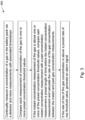
- FIG. 3 illustrates a method 800, which is another example of how the method 600 may be carried out.
- this method 800 the concentration of a gas in a battery pack is continually measured. The measurements are stored with their associated timestamps. Each measurement is compared to one or more preset concentration threshold values. If a measurement exceeds one or more of the preset concentration threshold values, a calculation of the rate of rise of the gas concentration over a preset length of time is made using the instant concentration measurement value and a previously stored concentration measurement value, measured at a point in time the preset length of time before to the instant measurement. In this way, a calculation of the rate of rise of the gas concentration is made retrospectively, based on the preset length of time leading up to the measurement exceeding the concentration threshold value.
- One advantage of this method is that rate of rise calculations are only made once a preset concentration threshold value is met, which may reduce computational burden.
- the preset rate of rise threshold value may be automatically adjusted once a preset gas concentration threshold value is reached. For example, when a particular overall gas concentration in the battery pack exceeds a certain value, the preset rate of rise threshold value, which when exceeded causes provision of an indication thereof, can be raised or lowered. Similarly, the preset length of time over which the rate of rise is calculated may also be automatically adjusted, i.e. lengthened or shortened, in response to a particular gas concentration being reached or exceeded. It is also anticipated that the frequency of gas concentration measurements and/or frequency of rate of rise calculations may be raised or lowered in response to a particular gas concentration in the battery pack being reached or exceeded. Automatic adjustment of the aforementioned parameters upon a particular gas concentration threshold value being met or reached can increase the reliability of detecting a cell venting event, which may be compromised when greater concentrations of gas are present in the battery pack.
- an indication may be provided of a preset rate of rise threshold value being exceeded as well as an indication being provided of a preset critical concentration threshold value being exceeded. For example, when the concentration of gas in a battery pack is below a preset critical concentration threshold, an indication may be provided of the rate of rise of the gas concentration exceeding a preset rate of rise threshold value. In addition, an indication of the gas concentration exceeding the preset critical concentration threshold value may also be provided. This indication will be provided irrespective of the time taken for said critical concentration threshold value to be exceeded. Either the indication of the preset rate of rise threshold value being exceeded or the indication of the preset critical concentration value being exceeded may generate an alarm signal.
- the two indications may additionally or alternatively cause provision of two distinct, respective, alarm signals.
- the features of this embodiment i.e. the provision of an indication of the gas concentration exceeding a critical concentration threshold, may be combined with any of the other disclosed methods.
- two concentration threshold values may be set, a first concentration threshold value and a critical concentration threshold value.
- the concentration of gas is under the first concentration threshold value, the concentration of gas is measured, but no rate of rise calculations are performed.
- the first concentration threshold value (the same concentration threshold value as originally defined in method 800) is exceeded, calculation of the rate of rise of the gas concentration is performed and an indication of the rate of rise of the gas concentration exceeding a preset rate of rise threshold value is provided.
- an indication thereof will provided, irrespective of whether the rate of rise of the gas concentration has exceeded the preset rate of rise threshold value. Either indication may induce an alarm signal. Each indication may induce its own respective alarm signal.
- battery packs such as those described in relation to any of the embodiments of this application may be installed in systems comprising one or more high energy components.
- Electromagnetic compatibility, or EMC becomes a significant consideration when detecting gas concentrations in battery packs placed in or around such high energy components, particularly when the components are not adequately earthed or packaged.
- Electromagnetic interference from nearby high energy components can cause erroneous readings in gas concentration sensors in the battery pack.
- Typical gas sensors output a voltage signal indicative of the concentration of gas in the battery pack.
- Electromagnetic interference can cause occasional spikes in the voltage output of these gas sensors, erroneously indicating a sudden spike in gas concentration in the battery pack. These spikes in voltage are usually very high and often do not last for very long.
- FIG 4 illustrates a graph similar to that shown in Figure 2B . However, in the graph illustrated in Figure 4 , a spike 910 is present in the voltage signal indicative of the gas concentration in the battery pack 612 due to electromagnetic interference experienced by the gas sensor 624.
- an indication of the rate of rise of the gas concentration exceeding the preset rate of rise threshold value will not be provided unless the concentration of gas and/or the rate of rise of the gas concentration exceed, respectively, a particular preset concentration threshold value or the preset rate of rise threshold value for a preset length of time.
- This functionality provides the advantage that voltage spikes due to electromagnetic interference, such that that indicated by reference numeral 910 in Figure 4 do not result in provision of an indication of the gas concentration exceeding the preset rate of rise threshold, which is itself indicative of a cell venting event. This will also avoid an alarm signal being generated in response thereto. As mentioned previously, erroneous generation of an alarm signal in absence of an actual cell venting event is undesirable, and can lead to unnecessary mitigation measures being taken.
- an upper rate of rise threshold value can be set.
- an indication of the gas concentration exceeding the preset rate of rise threshold may not be provided if the measured rate of rise of the gas concentration is above this upper rate of rise threshold value. It can be appreciated that this will reduce the risk of erroneous generation of an alarm signal due to an electrical spike caused by electromagnetic interference, which typically causes a very sharp increase in the voltage signal from a gas sensor.
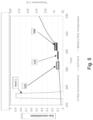
- Figure 5 illustrates a graph similar to that shown in Figure 2B .
- the graph shows the change in gas concentration with respect to time after a cell venting event "Vent 1" and subsequent sequential measurements of the rate of rise of the gas concentration after said cell venting event.
- the rate of rise measurements are depicted using rectangles as in the previous figures. As can be seen in the figure, two different size rectangles are overlaid.
- the rectangle denoted by reference numeral 510 represents a comparison of the measured rate of rise of the gas concentration against a significant level rate of rise threshold value.
- the rectangle denoted by reference numeral 520 illustrates a comparison of the measured rate of rise of the gas concentration over this time period against a trace level rate of rise threshold. As can be seen, the rate of rise of the gas concentration across the rectangle at 520 is almost the same as that across the rectangle at 510.
- Reference numeral 530 represents a theoretical simultaneous comparison of the measured rate of rise of the gas concentration with the trace level rate of rise threshold and the significant level rate of rise threshold, where the measured rate of rise threshold exceeds the significant level rate of rise threshold value. In such a situation, since the significant level rate of rise threshold value is greater than the trace level rate of rise threshold value, indications of both a trace level and significant level rate of rise are both produced.
- the rate of rise threshold value(s) may be replaced with this dual rate of rise threshold, i.e. with two threshold values, a trace level rate of rise threshold value and a significant rate of rise threshold value.
- the use of two different threshold values in place of one enables more detailed monitoring of the development of gas concentration in a battery pack and therethrough better informed decision making with regards to fire or thermal runaway prevention actions.
Landscapes
- Chemical & Material Sciences (AREA)
- Engineering & Computer Science (AREA)
- Electrochemistry (AREA)
- General Chemical & Material Sciences (AREA)
- Chemical Kinetics & Catalysis (AREA)
- Life Sciences & Earth Sciences (AREA)
- Health & Medical Sciences (AREA)
- Manufacturing & Machinery (AREA)
- Medicinal Chemistry (AREA)
- Combustion & Propulsion (AREA)
- Food Science & Technology (AREA)
- Physics & Mathematics (AREA)
- Analytical Chemistry (AREA)
- Biochemistry (AREA)
- General Health & Medical Sciences (AREA)
- General Physics & Mathematics (AREA)
- Immunology (AREA)
- Pathology (AREA)
- Microelectronics & Electronic Packaging (AREA)
- Materials Engineering (AREA)
- Secondary Cells (AREA)
Priority Applications (2)
| Application Number | Priority Date | Filing Date | Title |
|---|---|---|---|
| EP23275046.3A EP4439775A1 (de) | 2023-03-28 | 2023-03-28 | Gasdetektion in batterien |
| US18/619,113 US20240332727A1 (en) | 2023-03-28 | 2024-03-27 | Gas detection in batteries |
Applications Claiming Priority (1)
| Application Number | Priority Date | Filing Date | Title |
|---|---|---|---|
| EP23275046.3A EP4439775A1 (de) | 2023-03-28 | 2023-03-28 | Gasdetektion in batterien |
Publications (1)
| Publication Number | Publication Date |
|---|---|
| EP4439775A1 true EP4439775A1 (de) | 2024-10-02 |
Family
ID=85781798
Family Applications (1)
| Application Number | Title | Priority Date | Filing Date |
|---|---|---|---|
| EP23275046.3A Pending EP4439775A1 (de) | 2023-03-28 | 2023-03-28 | Gasdetektion in batterien |
Country Status (2)
| Country | Link |
|---|---|
| US (1) | US20240332727A1 (de) |
| EP (1) | EP4439775A1 (de) |
Families Citing this family (1)
| Publication number | Priority date | Publication date | Assignee | Title |
|---|---|---|---|---|
| CN118936786B (zh) * | 2024-10-10 | 2025-04-04 | 宁德时代新能源科技股份有限公司 | 电池漏液的检测方法、检测装置、电池和储能系统 |
Citations (3)
| Publication number | Priority date | Publication date | Assignee | Title |
|---|---|---|---|---|
| CN107469257A (zh) * | 2016-11-04 | 2017-12-15 | 安徽中科中涣防务装备技术有限公司 | 一种车用电池箱预警灭火系统及方法 |
| US20200266405A1 (en) * | 2019-02-20 | 2020-08-20 | Rivian Ip Holdings, Llc | Battery module gas sensor for battery cell monitoring |
| CN113176512A (zh) * | 2021-03-29 | 2021-07-27 | 国网江苏省电力有限公司南京供电分公司 | 基于c2h4变化速率的锂离子电池过充故障诊断方法及系统 |
-
2023
- 2023-03-28 EP EP23275046.3A patent/EP4439775A1/de active Pending
-
2024
- 2024-03-27 US US18/619,113 patent/US20240332727A1/en active Pending
Patent Citations (3)
| Publication number | Priority date | Publication date | Assignee | Title |
|---|---|---|---|---|
| CN107469257A (zh) * | 2016-11-04 | 2017-12-15 | 安徽中科中涣防务装备技术有限公司 | 一种车用电池箱预警灭火系统及方法 |
| US20200266405A1 (en) * | 2019-02-20 | 2020-08-20 | Rivian Ip Holdings, Llc | Battery module gas sensor for battery cell monitoring |
| CN113176512A (zh) * | 2021-03-29 | 2021-07-27 | 国网江苏省电力有限公司南京供电分公司 | 基于c2h4变化速率的锂离子电池过充故障诊断方法及系统 |
Also Published As
| Publication number | Publication date |
|---|---|
| US20240332727A1 (en) | 2024-10-03 |
Similar Documents
| Publication | Publication Date | Title |
|---|---|---|
| US12040503B2 (en) | Battery module gas sensor for battery cell monitoring | |
| KR102051810B1 (ko) | 통합 환경 감시 장치를 이용한 배터리 보호 방법 및 장치 | |
| JP2025160421A (ja) | 筐体内の電池用熱暴走検出システム及びその使用方法 | |
| US8862414B2 (en) | Detection of high voltage electrolysis of coolant in a battery pack | |
| US10008752B1 (en) | Safety feature for energy storage device | |
| CN112670604B (zh) | 一种储能电池保护方法及应用装置 | |
| CN105589046A (zh) | 一种动力电池组热失控扩散的检测警报方法 | |
| US10714735B2 (en) | Response to high voltage electrolysis of coolant in a battery pack | |
| CN115684489A (zh) | 一种用于安全生产的可燃有毒气体预警系统 | |
| US20240332727A1 (en) | Gas detection in batteries | |
| JP7562205B2 (ja) | バッテリー管理システム(bms)の温度センサーを活用したバッテリーセルの温度異常状態の診断システム及び方法 | |
| US11456494B2 (en) | Method for early detection of an imminent overheating of at least one battery cell of a battery, detection device, and motor vehicle | |
| KR102299116B1 (ko) | 통합 환경 감시 장치를 이용한 배터리 보호 장치 | |
| EP2482409B1 (de) | Gleichstrom-Lichtbogendetektion und -schutz | |
| CN114046938A (zh) | 一种燃料电池系统氢气泄露检测方法、装置 | |
| CN117767549A (zh) | 一种电网基建安全管理方法及系统 | |
| CN109782184B (zh) | Pack系统的热失控风险诊断方法及其电子设备 | |
| KR102559132B1 (ko) | 과전압 감지 시스템 및 방법 | |
| KR102230615B1 (ko) | 배터리 랙별 절연감시가 가능한 에너지 저장 시스템 | |
| CN120490846A (zh) | 钠离子电池热失控检测方法和系统 | |
| CN119818873A (zh) | 储能电池包及储能电池包的消防控制方法 | |
| CN116914296A (zh) | 一种电池异常预警处理方法及装置 | |
| US20230296690A1 (en) | Battery System and Detection Method | |
| JP7018192B2 (ja) | 非水電解質2次電池の異常検出装置 | |
| GB2623501A (en) | Improvements in a cell assembly safety and an associated system |
Legal Events
| Date | Code | Title | Description |
|---|---|---|---|
| PUAI | Public reference made under article 153(3) epc to a published international application that has entered the european phase |
Free format text: ORIGINAL CODE: 0009012 |
|
| STAA | Information on the status of an ep patent application or granted ep patent |
Free format text: STATUS: THE APPLICATION HAS BEEN PUBLISHED |
|
| AK | Designated contracting states |
Kind code of ref document: A1 Designated state(s): AL AT BE BG CH CY CZ DE DK EE ES FI FR GB GR HR HU IE IS IT LI LT LU LV MC ME MK MT NL NO PL PT RO RS SE SI SK SM TR |
|
| STAA | Information on the status of an ep patent application or granted ep patent |
Free format text: STATUS: REQUEST FOR EXAMINATION WAS MADE |
|
| 17P | Request for examination filed |
Effective date: 20250326 |