EP4439416A1 - Management device - Google Patents
Management device Download PDFInfo
- Publication number
- EP4439416A1 EP4439416A1 EP24166406.9A EP24166406A EP4439416A1 EP 4439416 A1 EP4439416 A1 EP 4439416A1 EP 24166406 A EP24166406 A EP 24166406A EP 4439416 A1 EP4439416 A1 EP 4439416A1
- Authority
- EP
- European Patent Office
- Prior art keywords
- variation range
- blockchain
- data
- transaction data
- weight
- Prior art date
- Legal status (The legal status is an assumption and is not a legal conclusion. Google has not performed a legal analysis and makes no representation as to the accuracy of the status listed.)
- Pending
Links
Images


Classifications
-
- G—PHYSICS
- G06—COMPUTING OR CALCULATING; COUNTING
- G06Q—INFORMATION AND COMMUNICATION TECHNOLOGY [ICT] SPECIALLY ADAPTED FOR ADMINISTRATIVE, COMMERCIAL, FINANCIAL, MANAGERIAL OR SUPERVISORY PURPOSES; SYSTEMS OR METHODS SPECIALLY ADAPTED FOR ADMINISTRATIVE, COMMERCIAL, FINANCIAL, MANAGERIAL OR SUPERVISORY PURPOSES, NOT OTHERWISE PROVIDED FOR
- G06Q10/00—Administration; Management
- G06Q10/06—Resources, workflows, human or project management; Enterprise or organisation planning; Enterprise or organisation modelling
-
- G—PHYSICS
- G06—COMPUTING OR CALCULATING; COUNTING
- G06F—ELECTRIC DIGITAL DATA PROCESSING
- G06F16/00—Information retrieval; Database structures therefor; File system structures therefor
- G06F16/20—Information retrieval; Database structures therefor; File system structures therefor of structured data, e.g. relational data
- G06F16/23—Updating
- G06F16/2379—Updates performed during online database operations; commit processing
-
- G—PHYSICS
- G06—COMPUTING OR CALCULATING; COUNTING
- G06F—ELECTRIC DIGITAL DATA PROCESSING
- G06F16/00—Information retrieval; Database structures therefor; File system structures therefor
- G06F16/20—Information retrieval; Database structures therefor; File system structures therefor of structured data, e.g. relational data
- G06F16/22—Indexing; Data structures therefor; Storage structures
-
- G—PHYSICS
- G06—COMPUTING OR CALCULATING; COUNTING
- G06F—ELECTRIC DIGITAL DATA PROCESSING
- G06F16/00—Information retrieval; Database structures therefor; File system structures therefor
- G06F16/20—Information retrieval; Database structures therefor; File system structures therefor of structured data, e.g. relational data
- G06F16/23—Updating
- G06F16/2358—Change logging, detection, and notification
-
- G—PHYSICS
- G06—COMPUTING OR CALCULATING; COUNTING
- G06F—ELECTRIC DIGITAL DATA PROCESSING
- G06F16/00—Information retrieval; Database structures therefor; File system structures therefor
- G06F16/20—Information retrieval; Database structures therefor; File system structures therefor of structured data, e.g. relational data
- G06F16/27—Replication, distribution or synchronisation of data between databases or within a distributed database system; Distributed database system architectures therefor
-
- G—PHYSICS
- G06—COMPUTING OR CALCULATING; COUNTING
- G06Q—INFORMATION AND COMMUNICATION TECHNOLOGY [ICT] SPECIALLY ADAPTED FOR ADMINISTRATIVE, COMMERCIAL, FINANCIAL, MANAGERIAL OR SUPERVISORY PURPOSES; SYSTEMS OR METHODS SPECIALLY ADAPTED FOR ADMINISTRATIVE, COMMERCIAL, FINANCIAL, MANAGERIAL OR SUPERVISORY PURPOSES, NOT OTHERWISE PROVIDED FOR
- G06Q10/00—Administration; Management
- G06Q10/08—Logistics, e.g. warehousing, loading or distribution; Inventory or stock management
- G06Q10/087—Inventory or stock management, e.g. order filling, procurement or balancing against orders
- G06Q10/0875—Itemisation or classification of parts, supplies or services, e.g. bill of materials
-
- G—PHYSICS
- G06—COMPUTING OR CALCULATING; COUNTING
- G06Q—INFORMATION AND COMMUNICATION TECHNOLOGY [ICT] SPECIALLY ADAPTED FOR ADMINISTRATIVE, COMMERCIAL, FINANCIAL, MANAGERIAL OR SUPERVISORY PURPOSES; SYSTEMS OR METHODS SPECIALLY ADAPTED FOR ADMINISTRATIVE, COMMERCIAL, FINANCIAL, MANAGERIAL OR SUPERVISORY PURPOSES, NOT OTHERWISE PROVIDED FOR
- G06Q30/00—Commerce
- G06Q30/018—Certifying business or products
- G06Q30/0185—Product, service or business identity fraud
-
- H—ELECTRICITY
- H04—ELECTRIC COMMUNICATION TECHNIQUE
- H04L—TRANSMISSION OF DIGITAL INFORMATION, e.g. TELEGRAPHIC COMMUNICATION
- H04L67/00—Network arrangements or protocols for supporting network services or applications
- H04L67/01—Protocols
- H04L67/10—Protocols in which an application is distributed across nodes in the network
- H04L67/104—Peer-to-peer [P2P] networks
-
- H—ELECTRICITY
- H04—ELECTRIC COMMUNICATION TECHNIQUE
- H04L—TRANSMISSION OF DIGITAL INFORMATION, e.g. TELEGRAPHIC COMMUNICATION
- H04L67/00—Network arrangements or protocols for supporting network services or applications
- H04L67/01—Protocols
- H04L67/10—Protocols in which an application is distributed across nodes in the network
- H04L67/1097—Protocols in which an application is distributed across nodes in the network for distributed storage of data in networks, e.g. transport arrangements for network file system [NFS], storage area networks [SAN] or network attached storage [NAS]
-
- H—ELECTRICITY
- H04—ELECTRIC COMMUNICATION TECHNIQUE
- H04L—TRANSMISSION OF DIGITAL INFORMATION, e.g. TELEGRAPHIC COMMUNICATION
- H04L9/00—Cryptographic mechanisms or cryptographic arrangements for secret or secure communications; Network security protocols
- H04L9/50—Cryptographic mechanisms or cryptographic arrangements for secret or secure communications; Network security protocols using hash chains, e.g. blockchains or hash trees
-
- Y—GENERAL TAGGING OF NEW TECHNOLOGICAL DEVELOPMENTS; GENERAL TAGGING OF CROSS-SECTIONAL TECHNOLOGIES SPANNING OVER SEVERAL SECTIONS OF THE IPC; TECHNICAL SUBJECTS COVERED BY FORMER USPC CROSS-REFERENCE ART COLLECTIONS [XRACs] AND DIGESTS
- Y02—TECHNOLOGIES OR APPLICATIONS FOR MITIGATION OR ADAPTATION AGAINST CLIMATE CHANGE
- Y02P—CLIMATE CHANGE MITIGATION TECHNOLOGIES IN THE PRODUCTION OR PROCESSING OF GOODS
- Y02P90/00—Enabling technologies with a potential contribution to greenhouse gas [GHG] emissions mitigation
- Y02P90/30—Computing systems specially adapted for manufacturing
Definitions
- the present disclosure relates to traceability technology using blockchain.
- Patent Document 1 WO 2021/002226 A1
- raw materials even when there is no malicious intent, it is actually possible for raw materials to lose weight during a process of manufacturing. For example, there may be a case that a portion of gasoline or the like evaporates, a case that seasonings or the like are spilled during a process of manufacturing, or a case that a portion of the material adheres to casing and is left unprocessed. Similarly, even when there is no malicious intent, it is actually possible that the amount of raw materials increases during processing. For example, iron reacts with oxygen in the air to form iron oxide, and dehumidifiers absorb moisture from the air.
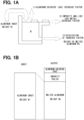
- FIG. 1A is a diagram showing a case in which an aluminum ingot is melted in a melting furnace, and liquid molten aluminum is taken out from the melting furnace.
- a part of it becomes aluminum chloride and vaporizes, and also a part of it reacts with impurities during manufacturing, thereby removed as unusable from processing.
- These cases are factors that reduce the amount of molten aluminum output.
- aluminum is oxidized to produce aluminum oxide, which is a factor causing an increase in output.
- the amount of molten aluminum in the output decreases with respect to the input aluminum ingot even when there is no fraud.
- the present disclosure employs the following technical measures. It is to be noted that the scope of claims and the reference numerals in parentheses described in this section indicate a correspondence with a specific means described in the embodiments described later as one mode and limit the technical scope of the disclosure, thereby not limiting the technical scope of the present disclosure.
- a management device includes: a blockchain that is configured to record transaction data of material of a product; a variation range registration unit that is configured to register, on the blockchain, data indicative of a variation range, the variation range being an allowable range of a weight of material in a transaction process; and a transaction data registration unit that is configured to receive an input of the transaction data including data of a weight of material and is configured to register the transaction data on the blockchain.
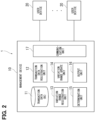
- FIG. 2 is a diagram showing a configuration of a management system 1 according to an embodiment.
- the management system 1 includes a management device 10 that manages a blockchain 11 of transaction data, and a user device 20 connected to the management device 10 via a network.
- the user device 20 is placed, for example, at a base such as a supplier's factory, and has a function of receiving input of (i) data regarding materials received from the supplier and (ii) data regarding materials used.
- Transaction data input to the user device 20 is transmitted to the management device 10 and is managed by the management device 10.
- the management device 10 includes the blockchain 11 for recording transaction data, a transaction data registration unit 12, a variation range registration unit 13, a variation range update unit 14, a determination unit 15, an output unit 16, and a communication unit 17.
- the management device 10 uses the communication unit 17 to transmit and receive data to and from the user device 20.
- the blockchain 11 is a type of database technology that records information, managing data in units called blocks, and storing the data by connecting them like a chain.
- the blockchain 11 may manage transaction data in a distributed manner using a plurality of nodes.
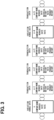
- FIG. 3 is an example of data recorded in the blockchain 11 by the management device 10 of the present embodiment. Each block is given a serial number. In FIG. 3 , blocks with serial numbers from n to n+5 are described.
- the blockchain 11 includes blocks that record transaction data and blocks that record variation range data.
- a transaction data block records data such as "company name,” “worker,” “date,” “material weight,” “rate,” and “product weight.”
- a variation range data block records data such as "company name,” “worker,” “date,” and “rate.”
- the transaction data registration unit 12 has a function of (a) receiving transaction data transmitted from the user device 20 and (b) registering the transaction data to the blockchain 11.
- the variation range registration unit 13 has a function of registering data on an allowable variation range regarding a weight of a material.
- the variation range update unit 14 has a function of calculating and updating the allowable variation range based on an actual weight variation of the material.
- the determination unit 15 has a function of (a) comparing an actual measurement value of the weight of the material with the variation range, and (b) determining whether the actual measurement value of the weight of the material is within the variation range. Data of the actual measurement value may be input from an input unit (not shown) or may also be received from the user device 20.
- the output unit 16 has a function of outputting a warning that notifies that the actual measurement value exceeds the allowable variation range when the actual measurement value is not within the allowable variation range.
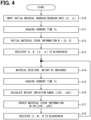
- FIG. 4 is a diagram showing an operation of registering transaction data to the blockchain 11 when receiving materials.
- the management device 10 first receives an input of an initial material increase/decrease rate [ ⁇ , ⁇ ] (S10).
- the input described above is an initial value of the material increase/decrease rate.
- Registration of the initial material stock information W means initializing a variable W by setting an upper limit value and a lower limit value of the variable W to 0 (S13).
- the current time Tc is registered to the blockchain 11 as a timestamp.
- the supplier measures a weight Wi of the material (S14).
- 'I' is a subscript indicating an input.
- the transaction data registration unit 12 acquires a current time Tc (S15).
- the transaction data registration unit 12 calculates a variation range [ ⁇ Wi, ⁇ Wi] of the weight of the received material (aluminum) (S16). That is, a range of variation in the weight of aluminum when an aluminum ingot is melted is calculated.
- the transaction data registration unit 12 adds a weight having the calculated variation range to the weight of the stock material, and updates the material stock information (S17). Since a weight having a variation range is added to the material stock, the weight of the material stock also has a variation range. Specifically, the weight of the material stock is a value having a variation range of [ ⁇ Wi, ⁇ Wi].
- the transaction data registration unit 12 of the management device 10 registers the current time Tc, the weight Wi of the received material, and the updated material stock information W to the blockchain 11 (S18). At this time, the transaction data registration unit 12 also registers the name of the company that has supplied the material and the name of the worker who has performed the work.
- FIG. 5 is a diagram showing an operation of registering transaction data to the blockchain 11 when shipping and processing the material.
- the supplier measures a weight Wo of the material used (in this case, molten aluminum) (S20).
- 'o' is a subscript indicating an output.
- the transaction data registration unit 12 of the management device 10 acquires a current time Tc (S21), and updates the material stock information W (S22). Specifically, the weight Wo of the used material is subtracted from the weight W of the material stock, and the result of subtraction is used as new material stock information W.
- the transaction data registration unit 12 registers the current time Tc, the weight Wo of the used material, and the updated material stock information W to the blockchain 11 (S23). At this time, the transaction data registration unit 12 also registers the name of the company that has used the material and the name of the worker who has performed the work.
- FIG. 6 is a diagram showing an operation for updating the variation range.
- the variation range update unit 14 of the management device 10 receives a setting of a learning coefficient L (S30).
- the variation range update unit 14 performs an update of the variation range as described below after an update period P (for example, 3 months) has elapsed (S31).
- an update period P for example, 3 months
- an update of the variation range may be started periodically, or manually, for example, when an error from the actual measurement value is large.
- the variation range update unit 14 reads the current material increase/decrease rate [ ⁇ , ⁇ ] (S32). Next, the variation range update unit 14 reads an update time Ts of the material increase/decrease rate (S33) and acquires a current time Tc (S34).
- the update time Ts may be a time when the current material increase/decrease rate is updated.
- the variation range update unit 14 acquires reception information Wi (Wi 1 , Wi 2 , ..., Wi N ) and usage information Wo (Wo 1 , Wo 2 , ..., Wo M ) during time [Ts, Tc] (S35), and also acquires an actual measurement value Wr,c of the current material stock and an actual measurement value Wr,b of the material stock when the variation range was previously set (S36).
- the variation range update unit 14 calculates a variation rate ⁇ based on a theoretical value of a material stock value derived from the reception information Wi and the usage information Wo, the current actual measurement value Wr,c, and the previous actual measurement value Wr,b (S37).
- the relationship between the current actual measurement value Wr,c and the previous actual measurement value Wr,b is expressed as follows using the variation rate ⁇ .
- Wr , c Wr , b + ⁇ Wi 1 + Wi 2 + .. + Wi N ⁇ Wo 1 + Wo 2 + .. + Wo M
- the variation range update unit 14 uses the value of this variation rate ⁇ to acquire new [ ⁇ , ⁇ ] using the following equation (S38). ⁇ , ⁇ ⁇ 1 ⁇ L ⁇ , ⁇ + L ⁇ 1 , 1
- L may be dynamically varied between 0 and 1.
- the variation range update unit 14 of the management device 10 registers the current time Tc, the actual measurement value Wr of the material, and the new variation range [ ⁇ , ⁇ ] to the blockchain 11 (S39). At this time, the transaction data registration unit 12 also registers the name of the company that has used the material and the name of the worker who has performed the work.
- the variation range is refined based on actual data.
- the actual measurement value of the material stock is 0, and the variation range is [0.90, 1.10].
- the variation range is set to a more appropriate value.
- an example of the device implementing hardware described above is a computer equipped with CPU, RAM, ROM, a hard disk, a display, a keyboard, a mouse, a communication interface, and the like
- the above-described device may be realized by storing a program having modules that implement the above-mentioned functions in the RAM or the ROM, and executing such a program by the CPU.
- the program described above also falls within the scope of the present disclosure.
Landscapes
- Engineering & Computer Science (AREA)
- Theoretical Computer Science (AREA)
- Business, Economics & Management (AREA)
- General Physics & Mathematics (AREA)
- Physics & Mathematics (AREA)
- Databases & Information Systems (AREA)
- Economics (AREA)
- General Engineering & Computer Science (AREA)
- Data Mining & Analysis (AREA)
- Strategic Management (AREA)
- Entrepreneurship & Innovation (AREA)
- Development Economics (AREA)
- Marketing (AREA)
- Human Resources & Organizations (AREA)
- General Business, Economics & Management (AREA)
- Operations Research (AREA)
- Tourism & Hospitality (AREA)
- Computer Networks & Wireless Communication (AREA)
- Signal Processing (AREA)
- Quality & Reliability (AREA)
- Accounting & Taxation (AREA)
- Finance (AREA)
- Computing Systems (AREA)
- Software Systems (AREA)
- Educational Administration (AREA)
- Game Theory and Decision Science (AREA)
- Management, Administration, Business Operations System, And Electronic Commerce (AREA)
- Information Retrieval, Db Structures And Fs Structures Therefor (AREA)
Abstract
A management device includes: a blockchain (11) that records transaction data of material of a product; a variation range registrar (13) that registers data on a variation range of a weight of material allowed in a transaction process to the blockchain; and a transaction data registrar (12) that receives input of data regarding a transaction including data on the weight of material and registers the data of transaction to the blockchain.
Description
- The present disclosure relates to traceability technology using blockchain.
- Traceability technology using databases and blockchain is very convenient for correctly tracing material used in a process of manufacturing, using, and recycling, and many technical proposals have already been made (for example, Patent Document 1).
- In particular, when using traceability technology that uses virtual-currency-based blockchain, there is no risk of unauthorized increases or decreases in the amount of material during a process of manufacturing. That is, data communication involving increase or decrease of material during a process of manufacturing is not allowed in the world of blockchain, since increase/decrease of material allowed during a process of manufacturing means increase/decrease of money during transaction in the world, in a sense.
- Thus, it is convenient (for the manufacturer) to build a system for preventing the introduction of unauthorized raw materials and unauthorized diversion, because, based on the traceability technology while utilizing the above-described basic concept, the system is made extremely transparent.
- [Patent Document 1]
WO 2021/002226 A1 - On the other hand, even when there is no malicious intent, it is actually possible for raw materials to lose weight during a process of manufacturing. For example, there may be a case that a portion of gasoline or the like evaporates, a case that seasonings or the like are spilled during a process of manufacturing, or a case that a portion of the material adheres to casing and is left unprocessed. Similarly, even when there is no malicious intent, it is actually possible that the amount of raw materials increases during processing. For example, iron reacts with oxygen in the air to form iron oxide, and dehumidifiers absorb moisture from the air.
-
FIG. 1A is a diagram showing a case in which an aluminum ingot is melted in a melting furnace, and liquid molten aluminum is taken out from the melting furnace. When an aluminum ingot is melted, a part of it becomes aluminum chloride and vaporizes, and also a part of it reacts with impurities during manufacturing, thereby removed as unusable from processing. These cases are factors that reduce the amount of molten aluminum output. Conversely, aluminum is oxidized to produce aluminum oxide, which is a factor causing an increase in output. At least for the reasons described above, as shown inFIG. 1B , the amount of molten aluminum in the output decreases with respect to the input aluminum ingot even when there is no fraud. - When managing such materials using traceability technology that uses a regular database or blockchain, there has been a problem that a decrease in the amount of materials will be treated as unauthorized diversion, and an increase in the amount of materials will be treated as a false increase of the material.
- In view of the above background, it is one objective of the present disclosure to provide traceability technology that appropriately manages the amount of material even when a quantity of material increases or decreases during a transaction.
- In order to solve a problem described above, the present disclosure employs the following technical measures. It is to be noted that the scope of claims and the reference numerals in parentheses described in this section indicate a correspondence with a specific means described in the embodiments described later as one mode and limit the technical scope of the disclosure, thereby not limiting the technical scope of the present disclosure.
- A management device includes: a blockchain that is configured to record transaction data of material of a product; a variation range registration unit that is configured to register, on the blockchain, data indicative of a variation range, the variation range being an allowable range of a weight of material in a transaction process; and a transaction data registration unit that is configured to receive an input of the transaction data including data of a weight of material and is configured to register the transaction data on the blockchain.
- According to the present disclosure, it is possible (a) to allow variations in the weight of material, and (b) to trace a point of variation, i.e., where the variation has occurred in an event that the variation exceeds a registered variation range.
-
FIG. 1A is a diagram showing a case in which an aluminum ingot is melted in a melting furnace and liquid molten aluminum is taken out from the melting furnace; -
FIG. 1B is a diagram showing a comparison of amounts of input aluminum ingot and output molten aluminum; -
FIG. 2 is a diagram showing a configuration of a management system according to an embodiment; -
FIG. 3 is an example of data recorded in a blockchain by a management device according to the embodiment; -
FIG. 4 is a diagram showing an operation of registering transaction data to the blockchain when material arrives; -
FIG. 5 is a diagram showing an operation of registering transaction data to the blockchain when shipping and processing the material; -
FIG. 6 is a diagram showing an operation for updating a variation range; and -
FIG. 7 is a diagram showing an example of updating the variation range. - A management system and a management device of the present embodiment will be described below with reference to the drawings. Note that the following description merely shows an example of a preferred embodiment, and is not intended to limit the disclosure described in the claims.
-
FIG. 2 is a diagram showing a configuration of amanagement system 1 according to an embodiment. Themanagement system 1 includes amanagement device 10 that manages ablockchain 11 of transaction data, and auser device 20 connected to themanagement device 10 via a network. Theuser device 20 is placed, for example, at a base such as a supplier's factory, and has a function of receiving input of (i) data regarding materials received from the supplier and (ii) data regarding materials used. Transaction data input to theuser device 20 is transmitted to themanagement device 10 and is managed by themanagement device 10. - The
management device 10 includes theblockchain 11 for recording transaction data, a transactiondata registration unit 12, a variationrange registration unit 13, a variationrange update unit 14, adetermination unit 15, anoutput unit 16, and acommunication unit 17. Themanagement device 10 uses thecommunication unit 17 to transmit and receive data to and from theuser device 20. Theblockchain 11 is a type of database technology that records information, managing data in units called blocks, and storing the data by connecting them like a chain. Theblockchain 11 may manage transaction data in a distributed manner using a plurality of nodes. -
FIG. 3 is an example of data recorded in theblockchain 11 by themanagement device 10 of the present embodiment. Each block is given a serial number. InFIG. 3 , blocks with serial numbers from n to n+5 are described. Theblockchain 11 includes blocks that record transaction data and blocks that record variation range data. - A transaction data block records data such as "company name," "worker," "date," "material weight," "rate," and "product weight." A variation range data block records data such as "company name," "worker," "date," and "rate." Although not described, in addition to the data shown in
FIG. 3 , a hash value and nonce data of the previous block are also recorded in the actual blockchain. Further, general traceability data such as other transaction data, supply chain data, manufacturing data, manufacturing method, and the like may also be recorded. - The transaction
data registration unit 12 has a function of (a) receiving transaction data transmitted from theuser device 20 and (b) registering the transaction data to theblockchain 11. The variationrange registration unit 13 has a function of registering data on an allowable variation range regarding a weight of a material. The variationrange update unit 14 has a function of calculating and updating the allowable variation range based on an actual weight variation of the material. - The
determination unit 15 has a function of (a) comparing an actual measurement value of the weight of the material with the variation range, and (b) determining whether the actual measurement value of the weight of the material is within the variation range. Data of the actual measurement value may be input from an input unit (not shown) or may also be received from theuser device 20. Theoutput unit 16 has a function of outputting a warning that notifies that the actual measurement value exceeds the allowable variation range when the actual measurement value is not within the allowable variation range. -
FIG. 4 is a diagram showing an operation of registering transaction data to theblockchain 11 when receiving materials. Here, explanation will be given using an example of an aluminum ingot shown inFIG. 1 . Themanagement device 10 first receives an input of an initial material increase/decrease rate [β, α] (S10). The material increase/decrease rate is data indicating an allowable variation range regarding the increase/decrease of material when an aluminum ingot is converted into molten aluminum, with α being an upper limit and β being a lower limit. For example, when a rate of variation regarding an output versus an input is allowed to vary within a range of 98% to 103%, α = 1.03 and β = 0.98. The input described above is an initial value of the material increase/decrease rate. - The transaction
data registration unit 12 of themanagement device 10 acquires a current time Tc (S11), and registers an initial material stock information W = [0, 0] (S12). Generally, material stock information is expressed in a scalar format, such as W = 0. However, in order to consider an upper limit amount and a lower limit amount of the material, it is expressed in a vector format. Registration of the initial material stock information W means initializing a variable W by setting an upper limit value and a lower limit value of the variable W to 0 (S13). The current time Tc is registered to theblockchain 11 as a timestamp. - When the material is received, the supplier measures a weight Wi of the material (S14). Here, 'I' is a subscript indicating an input. The transaction
data registration unit 12 acquires a current time Tc (S15). Next, the transactiondata registration unit 12 calculates a variation range [βWi, αWi] of the weight of the received material (aluminum) (S16). That is, a range of variation in the weight of aluminum when an aluminum ingot is melted is calculated. - The transaction
data registration unit 12 adds a weight having the calculated variation range to the weight of the stock material, and updates the material stock information (S17). Since a weight having a variation range is added to the material stock, the weight of the material stock also has a variation range. Specifically, the weight of the material stock is a value having a variation range of [ΣβWi, ΣαWi]. The transactiondata registration unit 12 of themanagement device 10 registers the current time Tc, the weight Wi of the received material, and the updated material stock information W to the blockchain 11 (S18). At this time, the transactiondata registration unit 12 also registers the name of the company that has supplied the material and the name of the worker who has performed the work. -
FIG. 5 is a diagram showing an operation of registering transaction data to theblockchain 11 when shipping and processing the material. When the material is shipped and processed, the supplier measures a weight Wo of the material used (in this case, molten aluminum) (S20). Here, 'o' is a subscript indicating an output. The transactiondata registration unit 12 of themanagement device 10 acquires a current time Tc (S21), and updates the material stock information W (S22). Specifically, the weight Wo of the used material is subtracted from the weight W of the material stock, and the result of subtraction is used as new material stock information W. The transactiondata registration unit 12 registers the current time Tc, the weight Wo of the used material, and the updated material stock information W to the blockchain 11 (S23). At this time, the transactiondata registration unit 12 also registers the name of the company that has used the material and the name of the worker who has performed the work. - In such manner, by registering data on the allowable range of weight of the material to the blockchain along with the transaction data including material weight data, while allowing variation of weight of the material changing within the registered variation range, it is possible to detect the variation of weight exceeding the registered variation range. By examining the blocks registered to the
blockchain 11, it is possible to trace a large amount of variation, i.e., to detect such a variation occurring at what stage of transaction, thereby making it possible to discover fraud, such as diversion of the material (away from manufacturing) and/or false increase of the amount of the material. Further, since the company name and worker are registered in each block, it becomes clear who is responsible and it is possible to interview the worker, for example. -
FIG. 6 is a diagram showing an operation for updating the variation range. The variationrange update unit 14 of themanagement device 10 receives a setting of a learning coefficient L (S30). The variationrange update unit 14 performs an update of the variation range as described below after an update period P (for example, 3 months) has elapsed (S31). Note that, inFIG. 6 , an example is described in which the variation range is updated as the update period P elapses. However, an update of the variation range may be started periodically, or manually, for example, when an error from the actual measurement value is large. - The variation
range update unit 14 reads the current material increase/decrease rate [β, α] (S32). Next, the variationrange update unit 14 reads an update time Ts of the material increase/decrease rate (S33) and acquires a current time Tc (S34). The update time Ts may be a time when the current material increase/decrease rate is updated. The variationrange update unit 14 acquires reception information Wi (Wi1, Wi2, ..., WiN) and usage information Wo (Wo1, Wo2, ..., WoM) during time [Ts, Tc] (S35), and also acquires an actual measurement value Wr,c of the current material stock and an actual measurement value Wr,b of the material stock when the variation range was previously set (S36). - The variation
range update unit 14 calculates a variation rate γ based on a theoretical value of a material stock value derived from the reception information Wi and the usage information Wo, the current actual measurement value Wr,c, and the previous actual measurement value Wr,b (S37). The relationship between the current actual measurement value Wr,c and the previous actual measurement value Wr,b is expressed as follows using the variation rate γ.
- Therefore, the variation rate γ is

- The variation
range update unit 14 uses the value of this variation rate γ to acquire new [β, α] using the following equation (S38).
- As can be seen from the equation described above, the larger the learning coefficient is, the greater the influence of the variation rate γ regarding variation from the previous measurement value to the current measurement value becomes, and the smaller the learning coefficient is, the greater the influence of the original variation range [β, α]. For example, when L = 1, it means that the latest variation rate is always used, and, when L = 0, it means that use of the initially-set variation rate is continued. Generally, for avoiding sudden / steep variation, a relatively small value between 0 and 1 is used for L. Further, L may be dynamically varied between 0 and 1.
- The variation
range update unit 14 of themanagement device 10 registers the current time Tc, the actual measurement value Wr of the material, and the new variation range [β, α] to the blockchain 11 (S39). At this time, the transactiondata registration unit 12 also registers the name of the company that has used the material and the name of the worker who has performed the work. - By updating the variation range in a manner described above, the variation range is refined based on actual data.
-
FIG. 7 shows an example in which a rate of the variation range is updated at a constant period (after lapse of every 5 periods) with the learning coefficient L = 0.2. At time T0, the actual measurement value of the material stock is 0, and the variation range is [0.90, 1.10]. There are inputs and outputs as shown inFIG. 7 between times T1 and T4, and the variation range is updated at time T5. From the inputs and outputs at times T1 to T4 and the actual measurement values at times T0 and T5, the variation rate γ is determined as follows.
- Therefore, a new variation range is acquired as follows.

- Regarding the update of the variation range at time T10, the variation range γ is acquired from the inputs and outputs from times T6 to T9 and the actual measurement values at times T5 and T10 as follows.

- Therefore, a new variation rate is acquired as follows.

- In such manner, by periodically updating the variation range based on the actual data, the variation range is set to a more appropriate value.
- Regarding the configuration of the management device of the present embodiment has been described above, an example of the device implementing hardware described above is a computer equipped with CPU, RAM, ROM, a hard disk, a display, a keyboard, a mouse, a communication interface, and the like The above-described device may be realized by storing a program having modules that implement the above-mentioned functions in the RAM or the ROM, and executing such a program by the CPU. The program described above also falls within the scope of the present disclosure.
Claims (6)
- A management device, comprising:a blockchain (11) that is configured to record transaction data of material of a product;a variation range registration unit (13) that is configured to register, on the blockchain, data indicative of a variation range, the variation range being an allowable range of a weight of material in a transaction process; anda transaction data registration unit (12) that is configured to receive an input of the transaction data including data of a weight of material and is configured to register the transaction data on the blockchain.
- The management device according to claim 1, further comprising:a variation range update unit (14) that is configured to update the data of the variation range based on an actual measurement value of the weight of the material and the data of the weight of the material recorded on the blockchain.
- The management device according to claim 1 or 2, further comprising:a determination unit (15) that is configured to determine whether the actual measurement value of the weight of the material in the transaction process falls within the variation range registered on the blockchain; andan output unit (16) that is configured to output a warning when the variation range is determined not to fall within the variation range.
- A management system, comprising:the management device according to claim 1 or 2; anda user device that is configured to receive an input of the transaction data and to transmit the received transaction data to the management device, whereinthe transaction data registration unit of the management device is further configured to register the transaction data received from the user device.
- A management method for recording, on a blockchain, and managing transaction data of material of a product, the management method comprising steps of:registering, with a management device, data indicative of a variation range on the blockchain, the variation range being an allowable range of a weight of material in a transaction process; andreceiving, with the management device, an input of the transaction data including data of a weight of the material and registering the transaction data on the blockchain.
- A program for recording, on a blockchain, and managing transaction data of material of a product, the program causing a computer to perform steps of:registering, on the blockchain, data indicative of a variation range that is an allowable range of a weight of material in a transaction process; andreceiving an input of the transaction data including data of a weight of the material and registering the transaction data on the blockchain.
Applications Claiming Priority (1)
| Application Number | Priority Date | Filing Date | Title |
|---|---|---|---|
| JP2023055707A JP2024143175A (en) | 2023-03-30 | 2023-03-30 | Management Device |
Publications (1)
| Publication Number | Publication Date |
|---|---|
| EP4439416A1 true EP4439416A1 (en) | 2024-10-02 |
Family
ID=90482060
Family Applications (1)
| Application Number | Title | Priority Date | Filing Date |
|---|---|---|---|
| EP24166406.9A Pending EP4439416A1 (en) | 2023-03-30 | 2024-03-26 | Management device |
Country Status (4)
| Country | Link |
|---|---|
| US (1) | US20240330274A1 (en) |
| EP (1) | EP4439416A1 (en) |
| JP (1) | JP2024143175A (en) |
| CN (1) | CN118733580A (en) |
Citations (4)
| Publication number | Priority date | Publication date | Assignee | Title |
|---|---|---|---|---|
| CN110059935A (en) * | 2019-03-27 | 2019-07-26 | 东莞市荣和机械有限公司 | The method of full-automatic typing and output in material flow |
| US20190377904A1 (en) * | 2018-06-06 | 2019-12-12 | International Business Machines Corporation | Civil project and materials management on a blockchain |
| WO2021002226A1 (en) | 2019-07-02 | 2021-01-07 | 株式会社デンソー | Supply chain management method, supply chain management program, supply chain management system, and transaction record display program |
| KR20230023022A (en) * | 2020-08-17 | 2023-02-16 | 베이징 징동 젼스 인포메이션 테크놀로지 씨오., 엘티디. | Material handling method and device |
Family Cites Families (5)
| Publication number | Priority date | Publication date | Assignee | Title |
|---|---|---|---|---|
| WO2019036804A1 (en) * | 2017-08-22 | 2019-02-28 | Peer Ledger Inc. | System and method for tracking of provenance and flows of goods, services, and payments in responsible supply chains |
| US10931438B2 (en) * | 2018-08-13 | 2021-02-23 | International Business Machines Corporation | Generating a representative article |
| GB2580914B (en) * | 2019-01-29 | 2022-08-10 | Utterberry Ltd | Vehicles and transportation systems employing blockchain-based monitoring |
| US12062054B2 (en) * | 2019-06-14 | 2024-08-13 | Newlight Technologies, Inc. | Blockchain tracking of carbon credits for materials with sequestered carbon |
| US11329800B2 (en) * | 2019-10-20 | 2022-05-10 | LendingClub Bank, National Association | Proof of dynamic quorum for blockchain consensus |
-
2023
- 2023-03-30 JP JP2023055707A patent/JP2024143175A/en active Pending
-
2024
- 2024-03-26 EP EP24166406.9A patent/EP4439416A1/en active Pending
- 2024-03-26 CN CN202410350041.7A patent/CN118733580A/en active Pending
- 2024-03-28 US US18/620,596 patent/US20240330274A1/en active Pending
Patent Citations (4)
| Publication number | Priority date | Publication date | Assignee | Title |
|---|---|---|---|---|
| US20190377904A1 (en) * | 2018-06-06 | 2019-12-12 | International Business Machines Corporation | Civil project and materials management on a blockchain |
| CN110059935A (en) * | 2019-03-27 | 2019-07-26 | 东莞市荣和机械有限公司 | The method of full-automatic typing and output in material flow |
| WO2021002226A1 (en) | 2019-07-02 | 2021-01-07 | 株式会社デンソー | Supply chain management method, supply chain management program, supply chain management system, and transaction record display program |
| KR20230023022A (en) * | 2020-08-17 | 2023-02-16 | 베이징 징동 젼스 인포메이션 테크놀로지 씨오., 엘티디. | Material handling method and device |
Also Published As
| Publication number | Publication date |
|---|---|
| US20240330274A1 (en) | 2024-10-03 |
| JP2024143175A (en) | 2024-10-11 |
| CN118733580A (en) | 2024-10-01 |
Similar Documents
| Publication | Publication Date | Title |
|---|---|---|
| CN115600992A (en) | Project management method based on prediction algorithm | |
| US7054699B2 (en) | Process management system and production management system | |
| JP2019135602A (en) | Information management system and information management method | |
| CN118469442A (en) | Medical instrument inventory data processing method and device, medium and electronic equipment | |
| EP1796031A1 (en) | Environment load totalizing device and method | |
| US20240330274A1 (en) | Management device | |
| JP2003058693A5 (en) | ||
| Nakamura et al. | Effects of technology adoption on productivity and industry growth: A study of steel refining furnaces | |
| JP4860422B2 (en) | Test support apparatus, test support method, computer program, and storage medium | |
| JP2003058693A (en) | Transaction management method and system | |
| JP5087951B2 (en) | Product exchange program, product exchange method, product exchange device | |
| JP2002117164A (en) | Repair cost predicting system for working vehicle | |
| JP2021082207A (en) | Waste carry-in amount prediction device, waste carry-in amount prediction method, and waste carry-in amount prediction program | |
| JPH11217619A (en) | System for deciding ratio of scrap amount to be used | |
| JP5245687B2 (en) | Processing apparatus and program | |
| Dupačová et al. | Melt control: Charge optimization via stochastic programming | |
| US20060175393A1 (en) | Analysis technique of computer system | |
| CN112016958B (en) | Product selection method, device, electronic equipment and storage medium | |
| JPH10301995A (en) | Cost control equipment | |
| JP2011047135A (en) | Method and device for controlling construction | |
| JP2006040202A (en) | Industrial product recycling support device and method, program | |
| CN118071398A (en) | Cast iron parts cost prediction method, device, computer equipment and storage medium | |
| JP2011008504A (en) | Device, method and program for calculating progress rate | |
| JP4382705B2 (en) | Investment trust return check device, investment trust return check method, and program | |
| JP5652499B2 (en) | Processing apparatus and program |
Legal Events
| Date | Code | Title | Description |
|---|---|---|---|
| PUAI | Public reference made under article 153(3) epc to a published international application that has entered the european phase |
Free format text: ORIGINAL CODE: 0009012 |
|
| STAA | Information on the status of an ep patent application or granted ep patent |
Free format text: STATUS: THE APPLICATION HAS BEEN PUBLISHED |
|
| AK | Designated contracting states |
Kind code of ref document: A1 Designated state(s): AL AT BE BG CH CY CZ DE DK EE ES FI FR GB GR HR HU IE IS IT LI LT LU LV MC ME MK MT NL NO PL PT RO RS SE SI SK SM TR |
|
| STAA | Information on the status of an ep patent application or granted ep patent |
Free format text: STATUS: REQUEST FOR EXAMINATION WAS MADE |
|
| 17P | Request for examination filed |
Effective date: 20250318 |
|
| RAP3 | Party data changed (applicant data changed or rights of an application transferred) |
Owner name: DENSO CORPORATION Owner name: HONDA MOTOR CO., LTD. |