EP4439293A1 - Aufgabenabhängigkeiten - Google Patents
Aufgabenabhängigkeiten Download PDFInfo
- Publication number
- EP4439293A1 EP4439293A1 EP24165022.5A EP24165022A EP4439293A1 EP 4439293 A1 EP4439293 A1 EP 4439293A1 EP 24165022 A EP24165022 A EP 24165022A EP 4439293 A1 EP4439293 A1 EP 4439293A1
- Authority
- EP
- European Patent Office
- Prior art keywords
- task
- resource
- tasks
- class
- queue
- Prior art date
- Legal status (The legal status is an assumption and is not a legal conclusion. Google has not performed a legal analysis and makes no representation as to the accuracy of the status listed.)
- Pending
Links
Images



Classifications
-
- G—PHYSICS
- G06—COMPUTING OR CALCULATING; COUNTING
- G06F—ELECTRIC DIGITAL DATA PROCESSING
- G06F9/00—Arrangements for program control, e.g. control units
- G06F9/06—Arrangements for program control, e.g. control units using stored programs, i.e. using an internal store of processing equipment to receive or retain programs
- G06F9/46—Multiprogramming arrangements
- G06F9/50—Allocation of resources, e.g. of the central processing unit [CPU]
- G06F9/5005—Allocation of resources, e.g. of the central processing unit [CPU] to service a request
- G06F9/5027—Allocation of resources, e.g. of the central processing unit [CPU] to service a request the resource being a machine, e.g. CPUs, Servers, Terminals
- G06F9/5038—Allocation of resources, e.g. of the central processing unit [CPU] to service a request the resource being a machine, e.g. CPUs, Servers, Terminals considering the execution order of a plurality of tasks, e.g. taking priority or time dependency constraints into consideration
-
- G—PHYSICS
- G06—COMPUTING OR CALCULATING; COUNTING
- G06F—ELECTRIC DIGITAL DATA PROCESSING
- G06F9/00—Arrangements for program control, e.g. control units
- G06F9/06—Arrangements for program control, e.g. control units using stored programs, i.e. using an internal store of processing equipment to receive or retain programs
- G06F9/30—Arrangements for executing machine instructions, e.g. instruction decode
- G06F9/38—Concurrent instruction execution, e.g. pipeline or look ahead
- G06F9/3836—Instruction issuing, e.g. dynamic instruction scheduling or out of order instruction execution
- G06F9/3851—Instruction issuing, e.g. dynamic instruction scheduling or out of order instruction execution from multiple instruction streams, e.g. multistreaming
-
- G—PHYSICS
- G06—COMPUTING OR CALCULATING; COUNTING
- G06F—ELECTRIC DIGITAL DATA PROCESSING
- G06F9/00—Arrangements for program control, e.g. control units
- G06F9/06—Arrangements for program control, e.g. control units using stored programs, i.e. using an internal store of processing equipment to receive or retain programs
- G06F9/30—Arrangements for executing machine instructions, e.g. instruction decode
- G06F9/38—Concurrent instruction execution, e.g. pipeline or look ahead
- G06F9/3885—Concurrent instruction execution, e.g. pipeline or look ahead using a plurality of independent parallel functional units
-
- G—PHYSICS
- G06—COMPUTING OR CALCULATING; COUNTING
- G06F—ELECTRIC DIGITAL DATA PROCESSING
- G06F9/00—Arrangements for program control, e.g. control units
- G06F9/06—Arrangements for program control, e.g. control units using stored programs, i.e. using an internal store of processing equipment to receive or retain programs
- G06F9/46—Multiprogramming arrangements
- G06F9/48—Program initiating; Program switching, e.g. by interrupt
- G06F9/4806—Task transfer initiation or dispatching
- G06F9/4843—Task transfer initiation or dispatching by program, e.g. task dispatcher, supervisor, operating system
- G06F9/4881—Scheduling strategies for dispatcher, e.g. round robin, multi-level priority queues
-
- G—PHYSICS
- G06—COMPUTING OR CALCULATING; COUNTING
- G06F—ELECTRIC DIGITAL DATA PROCESSING
- G06F9/00—Arrangements for program control, e.g. control units
- G06F9/06—Arrangements for program control, e.g. control units using stored programs, i.e. using an internal store of processing equipment to receive or retain programs
- G06F9/46—Multiprogramming arrangements
- G06F9/50—Allocation of resources, e.g. of the central processing unit [CPU]
- G06F9/5005—Allocation of resources, e.g. of the central processing unit [CPU] to service a request
- G06F9/5027—Allocation of resources, e.g. of the central processing unit [CPU] to service a request the resource being a machine, e.g. CPUs, Servers, Terminals
- G06F9/505—Allocation of resources, e.g. of the central processing unit [CPU] to service a request the resource being a machine, e.g. CPUs, Servers, Terminals considering the load
-
- G—PHYSICS
- G06—COMPUTING OR CALCULATING; COUNTING
- G06F—ELECTRIC DIGITAL DATA PROCESSING
- G06F9/00—Arrangements for program control, e.g. control units
- G06F9/06—Arrangements for program control, e.g. control units using stored programs, i.e. using an internal store of processing equipment to receive or retain programs
- G06F9/46—Multiprogramming arrangements
- G06F9/52—Program synchronisation; Mutual exclusion, e.g. by means of semaphores
-
- G—PHYSICS
- G06—COMPUTING OR CALCULATING; COUNTING
- G06T—IMAGE DATA PROCESSING OR GENERATION, IN GENERAL
- G06T1/00—General purpose image data processing
- G06T1/20—Processor architectures; Processor configuration, e.g. pipelining
-
- G—PHYSICS
- G06—COMPUTING OR CALCULATING; COUNTING
- G06F—ELECTRIC DIGITAL DATA PROCESSING
- G06F2209/00—Indexing scheme relating to G06F9/00
- G06F2209/48—Indexing scheme relating to G06F9/48
- G06F2209/484—Precedence
-
- G—PHYSICS
- G06—COMPUTING OR CALCULATING; COUNTING
- G06F—ELECTRIC DIGITAL DATA PROCESSING
- G06F2209/00—Indexing scheme relating to G06F9/00
- G06F2209/48—Indexing scheme relating to G06F9/48
- G06F2209/486—Scheduler internals
Definitions
- the invention relates to tracking of task dependencies in a graphics processing unit (GPU).
- GPU graphics processing unit
- tasks that are to be executed are typically held in a task queue and a scheduler selects tasks for execution from the task queue.
- Tasks can only be executed when their dependencies are met. These dependencies may relate to things outside the task queue (e.g. waiting for an external unit to finishing loading data that is required by the task) or they may be task-to-task dependencies within the task queue.
- a method of managing task dependencies within a task queue of a GPU comprises determining a class ID and a resource ID for a task and also for any parent task of the task and outputting the class IDs and resource IDs for both the task itself and any parent task of the task for storage associated with the task in a task queue.
- the class ID identifies a class of the task from a hierarchy of task classes and the resource ID of the task identifies resources allocated and/or written to by the task.
- a first aspect provides a method of managing task dependencies within a task queue of a GPU, the method comprising: determining a class ID and a resource ID for a task and also for any parent task of the task, wherein a class ID identifies a class of the task from a hierarchy of task classes and a resource ID of the task identifies resources allocated and/or written to by the task; and outputting the class IDs and resource IDs for both the task itself and any parent task of the task for storage associated with the task in a task queue.
- Determining a resource ID for a task may comprise assigning a resource ID to the task.
- Assigning a resource ID to the task may comprise: allocating resources to the task; and assigning a resource ID for the allocated resources to the task.
- the resources may comprise shared registers, coefficient registers or local memory registers.
- a second aspect provides a method of scheduling tasks within a GPU, the method comprising: examining tasks in a task queue and parameters associated with the tasks, wherein the parameters comprise a class ID and a resource ID for both the task itself and any parent task of the task, wherein a class ID identifies a class of the task from a hierarchy of task classes and a resource ID of the task identifies resources allocated and/or written to by the task; selecting a task for execution based on an order of the tasks in the queue and the parameters; and sending the selected task for execution.
- Selecting a task for execution based on an order of the tasks in the queue and the parameters may comprise: selecting a task in the task queue with a parent task class ID and parent resource ID that does not match the class ID and resource ID of any tasks that precede it in the task queue.
- a resource ID may be assigned to a task when the task is created.
- Selecting a task for execution may be additionally based on a master unit that issued the task in the task queue.
- the task queue may comprise tasks queued for execution and tasks currently running.
- a third aspect provides a resource management unit of a GPU comprising: hardware logic arranged to determine a class ID and a resource ID for a task and also for any parent task of the task, wherein a class ID identifies a class of the task from a hierarchy of task classes and a resource ID of the task identifies resources allocated and/or written to by the task; and an output, arranged to output the class IDs and resource IDs for both the task itself and any parent task of the task for storage associated with the task in a task queue.
- the hardware logic may be arranged to determine a resource ID for a task by assigning a resource ID to the task.
- Assigning a resource ID to the task may comprise: allocating resources to the task; and assigning a resource ID for the allocated resources to the task.
- the resources may comprise shared registers, coefficient registers or local memory registers.
- a fourth aspect provides a scheduling and processing logic of a GPU comprising: analysis logic arranged to examining tasks in a task queue and parameters associated with the tasks, wherein the parameters comprise a class ID and a resource ID for both the task itself and any parent task of the task, wherein a class ID identifies a class of the task from a hierarchy of task classes and a resource ID of the task identifies resources allocated and/or written to by the task; and selection logic arranged to select a task for execution based on an order of the tasks in the queue and the parameters and send the selected task for execution.
- the selection logic may be arranged to select a task for execution based on an order of the tasks in the queue and the parameters by: selecting a task in the task queue with a parent task class ID and parent resource ID that does not match the class ID and resource ID of any tasks that precede it in the task queue.
- a resource ID may be assigned to a task when the task is created.
- the selection logic may be further arranged to select a task for execution based on a master unit that issued the task in the task queue.
- the task queue may comprise tasks queued for execution and tasks currently running.
- a fifth aspect provides a GPU comprising: the resource management unit according to the third aspect; the scheduling and processing logic according to the fourth aspect; the task queue; and the resources.
- a sixth aspect provides a GPU configured to perform the method of the first aspect.
- the GPU may be embodied in hardware on an integrated circuit.
- a method of manufacturing at an integrated circuit manufacturing system, a GPU.
- an integrated circuit definition dataset that, when processed in an integrated circuit manufacturing system, configures the system to manufacture a GPU.
- a non-transitory computer readable storage medium having stored thereon a computer readable description of a GPU that, when processed in an integrated circuit manufacturing system, causes the integrated circuit manufacturing system to manufacture an integrated circuit embodying a GPU.
- an integrated circuit manufacturing system comprising: a non-transitory computer readable storage medium having stored thereon a computer readable description of the GPU; a layout processing system configured to process the computer readable description so as to generate a circuit layout description of an integrated circuit embodying the GPU; and an integrated circuit generation system configured to manufacture the GPU according to the circuit layout description.
- tasks that are to be executed by a GPU are typically held in a task queue and a scheduler selects tasks for execution from the task queue.
- Tasks can only be executed when their dependencies are met, where these dependencies may be external or may be internal to the task queue (i.e. task-to-task dependencies within the task queue).
- the scheduler uses the dependency information to determine which task can be selected next for execution and which tasks can be executed in parallel.
- Internal dependencies within the task queue limit the ability of the scheduler to select tasks for execution from the task queue in age order and this may increase the latency for some tasks.
- the queue may also hold tasks that are running and tasks in the queue may be in a ⁇ queued' or 'running' state.
- sequential dependency groups In order to increase the scheduling freedom, the concept of sequential dependency groups may be used. Tasks within a sequential dependency group are scheduled in order (i.e. task order is preserved within a sequential dependency group) but non-dependent tasks within the queue can be scheduled more freely.
- These sequential dependency groups may be defined implicitly based on classifying tasks and defining a hierarchy of the task classes; however, this relies upon the sequential dependency groups all being independent of each other. If a task of a class at the highest level of the hierarchy is shared between tasks at the next level down in the classification, then the sequential dependency groups are not independent of each other. This could be resolved by merging the two overlapping sequential dependency groups, but results in large sequential dependency groups which reduces the scheduling freedom and increases latency for some tasks.
- Described herein are methods of managing task dependencies within a task queue (e.g. within a single task queue) and methods of scheduling tasks based on those task dependencies.
- tasks in a task queue are tagged with a plurality of parameters: the class of the particular task and an identifier for any cross-task resources allocated by and/or written to by that task and the class of the immediate parent task of the particular task and an identifier for any cross-task resources allocated by and/or written to by that parent task.
- Each task will be tagged with three or four of these parameters because some tasks may not allocate or write to any cross-task resources and so the identifier for the cross-task resource written by that resource may be missing.
- Examples of cross-task resources that may be allocated and/or written to by a task include shared registers, coefficient registers and local memory registers. There may be a correlation between the type of cross-task resources that may be written to by a task and the class of the task. Only one task allocates a cross-task resource but there may be none, one or multiple other tasks that write to a particular cross-task resources (as described in more detail below). Where multiple tasks write to a particular cross-task resource, each may write to a different, non-overlapping portion of the resource which has been previously allocated.
- Task class Number of tasks Cross-task resources that can be allocated and/or updated State 0 or 1 Shared registers Coefficient 0 or more Coefficient registers or local memory registers Work 0 or more None Whilst this example shows three different task classes, in other examples there may be a different number of task classes. In all examples, the lowest class of task in the hierarchy cannot allocate or update (i.e. write to) cross-task resources (but can only allocate and/or update per-task resources) and the fact that a class of task has the ability to allocate or update cross-task resources does not mean that it necessarily does allocate or update any cross-task resources.
- a GPU may comprise one or more of the following: a vertex master unit, a domain master unit, a compute master unit, a 2D master unit, a pixel master unit (which may also be referred to as a 3D master unit or a fragment master unit) and a ray master unit.
- Coefficient tasks that are issued by a compute master unit typically update data in local memory registers and a work task that is issued by a compute master unit is the main compute kernel shader.
- Coefficient tasks that are issued by a vertex or domain master unit are vertex or domain shaders respectively. These may update data in local memory registers or may write directly to the buffer that stores output vertex data for the geometry pipeline to later consume. This buffer may be referred to as the Unified Vertex Buffer (UVB).
- a work task that is issued by a vertex or domain master unit is a geometry or hull shader.
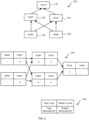
- Figure 1 shows two different representations 102, 104 of the same group of dependent tasks.
- the first representation 102 shows the state task 122 at the top level of the hierarchy, with one dependent coefficient task 124 and two dependent work tasks 126.
- the second representation 104 shows these same tasks represented by the four parameters that the task is tagged with in the task queue, with the resource IDs shown as A and B.
- the legend 108 for this representation is also shown in Figure 1 .
- Figure 1 shows a one-to-one relationship between coefficient tasks and state tasks and a many-to-one relationship between work tasks and coefficient tasks.
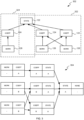
- the first group 322 in Figure 3 shows a many-to-one relationship between coefficient tasks and state tasks and a many-to-many relationship between work tasks and coefficient tasks.
- the second group 324 in Figure 3 shows a one-to-one relationship between coefficient tasks and state tasks and a one-to-one relationship between work tasks and coefficient tasks.
- the coefficient task and the state task both have the same resource ID, A, however these correspond to different resources because of the different classes (e.g. resource ID A for the state task identifies one or more shared registers and resource ID A for the coefficient task identifies one or more coefficient registers or one or more local memory registers).
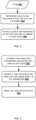
- FIG 4 shows an example method of managing task dependencies within a task queue (e.g. within a single task queue) and Figure 5 shows an example method of task scheduling that uses the task dependency information described above.
- the GPU 600 comprises a plurality of resources 602 that may be allocated by tasks as cross-task resources as described above. These resources 602 comprise one or more of: shared registers 604, coefficient registers 606 and local memory registers 608.
- the GPU 600 further comprises a plurality of master units 610, a resource management unit 612 and a plurality of processing pipelines 614. Each processing pipeline 614 comprises a task queue 616 and scheduling and processing logic 608. As shown in Figure 6 , the resources 602 may be grouped as part of the processing pipelines 614. It will be appreciated that the GPU 600 may comprise additional elements not shown in Figure 6 .
- the resource management unit 612 tracks resources and allocation for tasks being processed by the processing pipelines 614. Whilst Figure 6 shows a single resource management unit 612, in other examples where the processing pipelines 614 are arranged in clusters, there may be a separate resource management unit 612 for each cluster.
- the resource management unit 612 determines the class ID and resource ID for both the task itself and any parent task (block 404), i.e. it determines the class ID and resource ID for the task and also determines the class ID and resource ID for any parent task of the task.
- This information is the output to a processing pipeline 614 (block 406), and in particular it is output to the task queue 616 containing the task and stored for subsequent use by the scheduling and processing logic 618 in the processing pipeline 614.
- the class ID of the task identifies a class of the task from a hierarchy of task classes and a resource ID of the task identifies resources allocated and/or written to by the task.
- the class ID of a parent task identifies a class of the parent task from the hierarchy of task classes and a resource ID of the parent task identifies resources allocated and/or written to by the parent task.
- the scheduling and processing logic 618 selects a new task for execution, it examines the task queue and the parameters associated with tasks in the task queue (block 502, e.g. using the analysis logic 622). These parameters are those described above and shown in the legend 108 in Figures 1 and 2 , i.e. the class of the particular task and an identifier for any cross-task resources allocated and/or written to by that task and the class of the immediate parent task of the particular task and an identifier for any cross-task resources written to by that parent task. Based on an order of tasks in the queue and the parameters, a task is selected from the task queue for execution (block 504, e.g. using the selection logic 624) and then sent for execution (block 506, e.g. by the selection logic 624) by the scheduling and processing logic 618.
- the selection of a task based on the parameters comprises identifying a task in the task queue with a parent class and parent resource ID that does not match the class ID and resource ID of any tasks that precede it in the task queue (where the task queue is arranged in task age order with the oldest first), where, as described above, the task queue may store both tasks that are queued for execution and tasks that are running.
- a particular task is considered ineligible for selection if there is a preceding task in the task queue whose class and resource ID matches those of the particular task's parent class and parent resource ID.
- the particular task is ineligible (i.e.
- identifying a preceding, matching, task in the queue means that there are still tasks that are running or queued on which particular task is dependant.
- There may be additional criteria that are also used in combination with the dependency information when selecting tasks e.g. based on the master unit 610 that issued the task in order to service the different master units fairly.
- the use of the parameters associated with each task to select tasks for execution enables more tasks to be executed in submission (i.e. age) order and hence reduces overall latency. Referring back to the examples shown in Figures 1-3 , it may enable the coefficient and work tasks to be executed more closely to submission order than conventional methods which would execute all coefficient tasks within a sequential dependency group before executing any of the work tasks in the group. Furthermore, the use of the parameters associated with each task to select tasks for execution, as shown in Figure 5 , improves scheduling where groups of tasks overlap (e.g. as shown in Figure 3 ) as it is not necessary to treat the overlapping groups as a single group and enforce task order within the combined group.
- the coefficient resources have a shorter lifetime / latency compared to where all state tasks are executed before the coefficient tasks and all the coefficient tasks executed before the work tasks, and this improves scheduling of tasks and increases efficiency.
- the methods described herein may be used for any type of master unit and hence provide a single, unified, dependency tracking scheme.
- the resources are tracked at the resource level, based on the resource ID.
- the resources written to by a task may be tracked at a more granular level and this enables the tracking of tasks at a sub-task granularity.
- a more granular parameter may be provided along with, or instead of, the resource ID.
- the more granular parameter may be implemented, for example, using an additional mask describing the portion of the resource that a sub-task writes (if a parent task) or reads (if a child task).
- the portions of a resource may be referred to as a sub-resource. Where this sub-task granularity is used, the selection of a task (in block 504) determines that a task cannot be selected (i.e. is ineligible) where there is a matching mask of sub-resource regions.
- the GPU of Figure 6 is shown as comprising a number of functional blocks. This is schematic only and is not intended to define a strict division between different logic elements of such entities. Each functional block may be provided in any suitable manner. It is to be understood that intermediate values described herein as being formed by the methods described herein need not be physically generated by the GPU at any point and may merely represent logical values which conveniently describe the processing performed by the GPU between its input and output.
- the GPU described herein may be embodied in hardware on an integrated circuit.
- the GPU described herein may be configured to perform any of the methods described herein.
- any of the functions, methods, techniques or components described above can be implemented in software, firmware, hardware (e.g., fixed logic circuitry), or any combination thereof.
- the terms “module,” “functionality,” “component”, “element”, “unit”, “block” and “logic” may be used herein to generally represent software, firmware, hardware, or any combination thereof.
- the module, functionality, component, element, unit, block or logic represents program code that performs the specified tasks when executed on a processor.
- a computer-readable storage medium examples include a random-access memory (RAM), read-only memory (ROM), an optical disc, flash memory, hard disk memory, and other memory devices that may use magnetic, optical, and other techniques to store instructions or other data and that can be accessed by a machine.
- RAM random-access memory
- ROM read-only memory
- optical disc optical disc
- flash memory hard disk memory
- hard disk memory and other memory devices that may use magnetic, optical, and other techniques to store instructions or other data and that can be accessed by a machine.
- Computer program code and computer readable instructions refer to any kind of executable code for processors, including code expressed in a machine language, an interpreted language or a scripting language.
- Executable code includes binary code, machine code, bytecode, code defining an integrated circuit (such as a hardware description language or netlist), and code expressed in a programming language code such as C, Java or OpenCL.
- Executable code may be, for example, any kind of software, firmware, script, module or library which, when suitably executed, processed, interpreted, compiled, executed at a virtual machine or other software environment, cause a processor of the computer system at which the executable code is supported to perform the tasks specified by the code.
- HDL hardware description language
- An integrated circuit definition dataset may be, for example, an integrated circuit description.
- a method of manufacturing at an integrated circuit manufacturing system, a GPU as described herein. Furthermore, there may be provided an integrated circuit definition dataset that, when processed in an integrated circuit manufacturing system, causes the method of manufacturing a GPU to be performed.
- An integrated circuit definition dataset may be in the form of computer code, for example as a netlist, code for configuring a programmable chip, as a hardware description language defining hardware suitable for manufacture in an integrated circuit at any level, including as register transfer level (RTL) code, as high-level circuit representations such as Verilog or VHDL, and as low-level circuit representations such as OASIS (RTM) and GDSII.
- RTL register transfer level
- RTM high-level circuit representations
- GDSII GDSI
- one or more intermediate user steps may be required in order for a computer system configured for generating a manufacturing definition of an integrated circuit to execute code defining an integrated circuit so as to generate the manufacturing definition of that integrated circuit.
- Figure 8 shows an example of an integrated circuit (IC) manufacturing system 802 which is configured to manufacture a GPU as described in any of the examples herein.
- the IC manufacturing system 802 comprises a layout processing system 804 and an integrated circuit generation system 806.
- the IC manufacturing system 802 is configured to receive an IC definition dataset (e.g. defining a GPU as described in any of the examples herein), process the IC definition dataset, and generate an IC according to the IC definition dataset (e.g. which embodies a GPU as described in any of the examples herein).
- the processing of the IC definition dataset configures the IC manufacturing system 802 to manufacture an integrated circuit embodying a GPU as described in any of the examples herein.
- the layout processing system 804 is configured to receive and process the IC definition dataset to determine a circuit layout.
- Methods of determining a circuit layout from an IC definition dataset are known in the art, and for example may involve synthesising RTL code to determine a gate level representation of a circuit to be generated, e.g. in terms of logical components (e.g. NAND, NOR, AND, OR, MUX and FLIP-FLOP components).
- a circuit layout can be determined from the gate level representation of the circuit by determining positional information for the logical components. This may be done automatically or with user involvement in order to optimise the circuit layout.
- the layout processing system 804 When the layout processing system 804 has determined the circuit layout it may output a circuit layout definition to the IC generation system 806.
- a circuit layout definition may be, for example, a circuit layout description.
- the IC generation system 806 generates an IC according to the circuit layout definition, as is known in the art.
- the IC generation system 806 may implement a semiconductor device fabrication process to generate the IC, which may involve a multiple-step sequence of photo lithographic and chemical processing steps during which electronic circuits are gradually created on a wafer made of semiconducting material.
- the circuit layout definition may be in the form of a mask which can be used in a lithographic process for generating an IC according to the circuit definition.
- the circuit layout definition provided to the IC generation system 806 may be in the form of computer-readable code which the IC generation system 806 can use to form a suitable mask for use in generating an IC.
- the different processes performed by the IC manufacturing system 802 may be implemented all in one location, e.g. by one party.
- the IC manufacturing system 802 may be a distributed system such that some of the processes may be performed at different locations, and may be performed by different parties.
- some of the stages of: (i) synthesising RTL code representing the IC definition dataset to form a gate level representation of a circuit to be generated, (ii) generating a circuit layout based on the gate level representation, (iii) forming a mask in accordance with the circuit layout, and (iv) fabricating an integrated circuit using the mask may be performed in different locations and/or by different parties.
- processing of the integrated circuit definition dataset at an integrated circuit manufacturing system may configure the system to manufacture a GPU without the IC definition dataset being processed so as to determine a circuit layout.
- an integrated circuit definition dataset may define the configuration of a reconfigurable processor, such as an FPGA, and the processing of that dataset may configure an IC manufacturing system to generate a reconfigurable processor having that defined configuration (e.g. by loading configuration data to the FPGA).
- an integrated circuit manufacturing definition dataset when processed in an integrated circuit manufacturing system, may cause an integrated circuit manufacturing system to generate a device as described herein.
- the configuration of an integrated circuit manufacturing system in the manner described above with respect to Figure 8 by an integrated circuit manufacturing definition dataset may cause a device as described herein to be manufactured.
- an integrated circuit definition dataset could include software which runs on hardware defined at the dataset or in combination with hardware defined at the dataset.
- the IC generation system may further be configured by an integrated circuit definition dataset to, on manufacturing an integrated circuit, load firmware onto that integrated circuit in accordance with program code defined at the integrated circuit definition dataset or otherwise provide program code with the integrated circuit for use with the integrated circuit.
- performance improvements may include one or more of increased computational performance, reduced latency, increased throughput, and/or reduced power consumption.
- performance improvements can be traded-off against the physical implementation, thereby improving the method of manufacture. For example, a performance improvement may be traded against layout area, thereby matching the performance of a known implementation but using less silicon. This may be done, for example, by reusing functional blocks in a serialised fashion or sharing functional blocks between elements of the devices, apparatus, modules and/or systems.
Landscapes
- Engineering & Computer Science (AREA)
- Theoretical Computer Science (AREA)
- Software Systems (AREA)
- Physics & Mathematics (AREA)
- General Physics & Mathematics (AREA)
- General Engineering & Computer Science (AREA)
- Multimedia (AREA)
- Debugging And Monitoring (AREA)
- Devices For Executing Special Programs (AREA)
- Advance Control (AREA)
- Design And Manufacture Of Integrated Circuits (AREA)
Applications Claiming Priority (1)
| Application Number | Priority Date | Filing Date | Title |
|---|---|---|---|
| GB2304586.7A GB2628578B (en) | 2023-03-29 | 2023-03-29 | Task dependencies |
Publications (1)
| Publication Number | Publication Date |
|---|---|
| EP4439293A1 true EP4439293A1 (de) | 2024-10-02 |
Family
ID=86228128
Family Applications (1)
| Application Number | Title | Priority Date | Filing Date |
|---|---|---|---|
| EP24165022.5A Pending EP4439293A1 (de) | 2023-03-29 | 2024-03-21 | Aufgabenabhängigkeiten |
Country Status (4)
| Country | Link |
|---|---|
| US (1) | US20240345888A1 (de) |
| EP (1) | EP4439293A1 (de) |
| CN (1) | CN118733246A (de) |
| GB (1) | GB2628578B (de) |
Citations (1)
| Publication number | Priority date | Publication date | Assignee | Title |
|---|---|---|---|---|
| GB2585306A (en) * | 2016-09-23 | 2021-01-06 | Imagination Tech Ltd | Task scheduling in a GPU |
Family Cites Families (1)
| Publication number | Priority date | Publication date | Assignee | Title |
|---|---|---|---|---|
| CN102902573B (zh) * | 2012-09-20 | 2014-12-17 | 北京搜狐新媒体信息技术有限公司 | 一种基于共享资源的任务的处理方法及装置 |
-
2023
- 2023-03-29 GB GB2304586.7A patent/GB2628578B/en active Active
-
2024
- 2024-03-21 EP EP24165022.5A patent/EP4439293A1/de active Pending
- 2024-03-27 CN CN202410356349.2A patent/CN118733246A/zh active Pending
- 2024-03-29 US US18/621,392 patent/US20240345888A1/en active Pending
Patent Citations (1)
| Publication number | Priority date | Publication date | Assignee | Title |
|---|---|---|---|---|
| GB2585306A (en) * | 2016-09-23 | 2021-01-06 | Imagination Tech Ltd | Task scheduling in a GPU |
Non-Patent Citations (1)
| Title |
|---|
| HILLERY HUNTER: "Wireframe : supporting data-dependent parallelism through dependency graph execution in GPUs", PROCEEDINGS OF THE 50TH ANNUAL IEEE/ACM INTERNATIONAL SYMPOSIUM ON MICROARCHITECTURE , MICRO-50 '17, 14 October 2017 (2017-10-14), New York, New York, USA, pages 600 - 611, XP093153826, ISBN: 978-1-4503-4952-9 * |
Also Published As
| Publication number | Publication date |
|---|---|
| US20240345888A1 (en) | 2024-10-17 |
| GB202304586D0 (en) | 2023-05-10 |
| GB2628578B (en) | 2025-09-03 |
| CN118733246A (zh) | 2024-10-01 |
| GB2628578A (en) | 2024-10-02 |
Similar Documents
| Publication | Publication Date | Title |
|---|---|---|
| US11656908B2 (en) | Allocation of memory resources to SIMD workgroups | |
| US20190266018A1 (en) | Task Scheduling in a GPU | |
| US11422953B2 (en) | Arbitrating requests for access to a computer resource by ordered requestors | |
| US20210279103A1 (en) | Resource allocation in a parallel processing system | |
| US12223351B2 (en) | Scheduling tasks in a processor | |
| CN110717989A (zh) | 可缩放并行镶嵌 | |
| CN113656188B (zh) | 用于使用虚拟分区分配存储单元的部分的方法和分配器 | |
| US20230016927A1 (en) | Scheduling processing in a ray tracing system | |
| GB2572248A (en) | Resource allocation | |
| EP4439293A1 (de) | Aufgabenabhängigkeiten | |
| WO2023004347A1 (en) | Run-time configurable architectures | |
| Kaneko et al. | A sycl-based high-level programming framework for hpc programmers to use remote fpga clusters | |
| US20250086103A1 (en) | Processing Memory Access Transactions | |
| US20250377944A1 (en) | Compression of Work Item Coordinate Data for Work Items in a Work Group | |
| US20260050561A1 (en) | Method and System for Optimizing Buffer Reservation and Utilization | |
| CN120430929A (zh) | 顶点缓冲器的管理 | |
| GB2599041A (en) | Methods for managing virtual partitionings of a storage unit | |
| GB2616528A (en) | Resource allocation in a parallel processing system | |
| GB2615225A (en) | Resource allocation in a parallel processing system | |
| GB2597868A (en) | Scheduling tasks in a processor | |
| GB2578998A (en) | Resource allocation |
Legal Events
| Date | Code | Title | Description |
|---|---|---|---|
| PUAI | Public reference made under article 153(3) epc to a published international application that has entered the european phase |
Free format text: ORIGINAL CODE: 0009012 |
|
| STAA | Information on the status of an ep patent application or granted ep patent |
Free format text: STATUS: THE APPLICATION HAS BEEN PUBLISHED |
|
| AK | Designated contracting states |
Kind code of ref document: A1 Designated state(s): AL AT BE BG CH CY CZ DE DK EE ES FI FR GB GR HR HU IE IS IT LI LT LU LV MC ME MK MT NL NO PL PT RO RS SE SI SK SM TR |
|
| STAA | Information on the status of an ep patent application or granted ep patent |
Free format text: STATUS: REQUEST FOR EXAMINATION WAS MADE |
|
| 17P | Request for examination filed |
Effective date: 20250401 |