EP4438776A1 - Method for obtaining textile yarns from lignocellulosic wastes or by-products and fabric obtained by the method - Google Patents
Method for obtaining textile yarns from lignocellulosic wastes or by-products and fabric obtained by the method Download PDFInfo
- Publication number
- EP4438776A1 EP4438776A1 EP23382311.1A EP23382311A EP4438776A1 EP 4438776 A1 EP4438776 A1 EP 4438776A1 EP 23382311 A EP23382311 A EP 23382311A EP 4438776 A1 EP4438776 A1 EP 4438776A1
- Authority
- EP
- European Patent Office
- Prior art keywords
- fibers
- raw material
- previous
- textile
- obtaining
- Prior art date
- Legal status (The legal status is an assumption and is not a legal conclusion. Google has not performed a legal analysis and makes no representation as to the accuracy of the status listed.)
- Withdrawn
Links
Images
Classifications
-
- D—TEXTILES; PAPER
- D01—NATURAL OR MAN-MADE THREADS OR FIBRES; SPINNING
- D01F—CHEMICAL FEATURES IN THE MANUFACTURE OF ARTIFICIAL FILAMENTS, THREADS, FIBRES, BRISTLES OR RIBBONS; APPARATUS SPECIALLY ADAPTED FOR THE MANUFACTURE OF CARBON FILAMENTS
- D01F2/00—Monocomponent artificial filaments or the like of cellulose or cellulose derivatives; Manufacture thereof
-
- D—TEXTILES; PAPER
- D01—NATURAL OR MAN-MADE THREADS OR FIBRES; SPINNING
- D01D—MECHANICAL METHODS OR APPARATUS IN THE MANUFACTURE OF ARTIFICIAL FILAMENTS, THREADS, FIBRES, BRISTLES OR RIBBONS
- D01D1/00—Treatment of filament-forming or like material
-
- D—TEXTILES; PAPER
- D01—NATURAL OR MAN-MADE THREADS OR FIBRES; SPINNING
- D01D—MECHANICAL METHODS OR APPARATUS IN THE MANUFACTURE OF ARTIFICIAL FILAMENTS, THREADS, FIBRES, BRISTLES OR RIBBONS
- D01D1/00—Treatment of filament-forming or like material
- D01D1/02—Preparation of spinning solutions
Definitions
- the present invention relates to a method for obtaining textile yarns from a lignocellulosic waste or by-product.
- the invention also relates to a fabric, such as knitted, woven, non-woven fabric, obtained by said method.
- vegetal fibers constitute a raw material for the future, not only for the textile industry, but as components of new composite materials for construction, insulation, food, nutrition, cosmetics, medicine and new agrochemical and energy products.
- vegetal fibers can be grown in diverse climatic zones and contribute to the reduction of atmospheric carbon dioxide.
- their production contributes to improve the agricultural balance of the planet and reduces the deficit of cellulose fibers, obtained mainly from cotton.
- This agricultural balance can be structured in two main groups: the final product, which is the main objective of the harvesting of the different vegetable species, and a second very important group formed by all the lignocellulosic residues generated during the whole process, from the seeds until they become plants.
- the quantity of lignocellulosic residues is, in fact, greater than the final fruit or seed itself.
- these residues represent a significant volume that requires a form, procedure, or methodology to be carefully treated.
- present invention is proposed, to establish a waste treatment protocol to obtain cellulose from waste and separate the lignin for use in many other applications.
- the cellulose obtained will be combined, or not, with other sources to obtain a substrate capable of being spun.
- hemp An example of such vegetal fibers is hemp.
- Hemp Cannabis sativa L.
- Hemp fiber is very durable and stable, the fabric produced lasts up to five times longer than the made of cotton. It absorbs moisture much better than cotton and gives a fresh sensation in summer and warm in winter due to its thermal properties.
- hemp is protective of UV radiation, bactericidal and fungicidal, with comfortability similar to flax and with good mechanical properties, thermal stability and moisture absorption and desorption.
- vegetal fibers are jute fibers. These fibers are long, soft and shiny, with a length of 1 to 4 m and a diameter of 17 to 20 microns and are mainly composed of cellulose, hemicellulose and lignin. Jute fibers are biodegradable and recyclable, i.e. environmentally friendly materials [1,2].
- Banana is very popular and has been cultivated in many countries, being the second most sold fruit after citrus fruits. On the one hand, it is a crop that generates large amounts of bio-waste, some of which is disposed of as compost, and on the other hand, bio-waste that is discarded or not used presents a great opportunity as a by-product. Most parts of the plant are usable, such as the leaf, the fruit, the pseudostem, etc. In recent years, there has been, therefore great interest in using the by-products of this crop in a more sustainable way, e.g. as a source of cellulosic fiber.
- lignin is a hard-woody biopolymer that makes up 8-10% of the dry weight of hemp fibers and is responsible for its rough and scratchy touch. When lignin is removed, the resulting fiber is smoother and softer.
- the lack of optimization of the delignification process that affects the properties of the fiber led to the use of other plant fibers instead of hemp.
- Several treatments like those followed by wood must be carried out, that is, a delignification and a separation of the cellulosic fibers constituting it, which is called cottonisation or separation of elementary fibers.
- Cottonisation as a possibility of transforming technical fibers into finer aggregates of elementary fibers, allows hemp its production and use "as-cotton" [5,6], although this process presents more difficulty than in the case of flax.
- CN 100535203-C discloses a method for preparing textile fibers by degumming environment-friendly raw hemp.
- the method comprises scouring for 2-5 hours to extract the lignin in the raw hemp; using the organic degumming solution of hydrogen peroxide for the delignified hemp fiber as a pectin and hemicellulose remover, and removing the lignin from room temperature for half an hour.
- the temperature is raised to 50-100 DEG C, and the temperature is kept for 1-4 hours to obtain hemp fibers for textile use
- WO 2021208209-A1 discloses a method for producing a pure fibrilia fabric and a pure fibrilia fabric produced by means of the method.
- the method comprises preparing a long fibrilia; preparing an alkali-soluble fiber; spinning the long fibrilia mixed with the alkali-soluble fiber into a yarn by means of wet spinning; weaving or knitting the yarn into a fabric; and dissolving the alkali-soluble fiber in the fabric with an alkali solution to remove the alkali-soluble fiber from the fabric, so as to obtain the pure fibrilia fabric.
- a pure fibrilia fabric with a yarn count of up to 70 metric single strands can be produced at an industrial grade yield and quality, which minimizes possible environmental pollution caused by production, and also facilitates the dyeing process after dissolution and can improve the dyeing performance of the fabric.
- US2021148009 discloses a method for degumming bast fibers comprising soaking a source of bast fiber in a saline solution.
- the source of bast fiber may be soaked in a saline solution having a concentration ranging between less than 1 part per thousand to about 200 parts per thousand.
- the saline concentration may vary as the source of bast fiber is soaking, or by alternating bast fiber between aqueous solutions of differing ionic concentrations.
- the source of bast fiber is soaked in seawater, wherein the saline concentration varies by alternating the salinity using a tide.
- the source of bast fiber may be hemp.
- An object of present invention is the obtention of fibers and subsequently yarns and fabrics that are suitable for textile applications through the cottonisation of agricultural lignocellulosic waste or by-products such as hemp, jute fibers, banana fibers, short-length linseed flax, etc.
- the present invention proposes, according to one aspect, a method for obtaining textile yarns from lignocellulosic wastes or by-products.
- the method comprises:
- the lignocellulosic fibers can be retted or unretted.
- the lignocellulosic fibers can comprise any of non-textile hemp fibers, jute fibers, short-length hemp fibers, short-length linseed flax, banana fibers, among others.
- the textile fibers can comprise any of cotton fibers, viscose fibers, lyocell fibers, polylactide fibers, polyester fibers or combinations thereof.
- the method comprises blending the obtained substrate with a given proportion of textile fibers.
- the one or more alkaline treatments are performed at different alkali concentrations, temperature and time.
- the temperature is around 80oC.
- the chemical process further comprises applying one or more oxidizing treatments to the raw material.
- the method comprises cutting the raw material to a given length.
- the cutting can be done using a cutting machine, among others.
- step b2) further comprises applying an enzymatic treatment using laccase on the opened and cleaned raw material.
- the cleaning and the one or more alkaline treatments are carried out in a reactor with bath recirculation.
- the method further comprises using the obtained textile yarns to produce a fabric, for instance a knitted, woven, or non-woven fabric.
- the obtained substrate, the obtained textile yarns, or the produced fabric are further dyed with one or more dyes.
- Present invention also proposes, according to another aspect, a fabric obtained by the method of the first aspect.
- Yet another aspect of the present invention provides a reaction system for performing the method of the first aspect.
- present invention enables the use of an agricultural lignocellulosic waste or by-product with no initial textile use to obtain substrates with properties similar to those of cotton. From the industrial point of view, it will be of great interest since with the machinery currently available, fine fiber yarns could be obtained and, the developed processes are expected to be scalable to industrial scale.
- the lignocellulosic fibers can involve at least one of non-textile hemp fibers, jute fibers, short-length hemp fibers, short-length linseed flax, banana fibers, among others. That is, the raw material used by the present invention to obtain textile yarns, fabrics or textile substrates comes from non-textile industrial resources/residues.
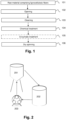
- Fig. 1 illustrates an embodiment of the proposed method.
- the method at step 101, comprises obtaining a raw material comprising lignocellulosic fibers (e.g. any of the above-mentioned examples). Then, the raw material is exposed to a cottonisation process that involves i) a first mechanical process of opening (step 102) the raw material to separate the fibers that might be initially compacted and cleaning (step 103) the raw material, for instance, by using one or more surfactants, and ii) a second delignification (extraction of lignin) process that comprises submitting the opened and cleaned raw material to a chemical process (step 104).
- the chemical treatment comprises the application of one or more alkaline treatments on the opened and cleaned raw material. Particularly, treatments at high temperature and alkaline medium are carried out to ensure the elimination of the greatest amount of lignin of the raw material.
- the delignification process also comprises applying an enzymatic treatment, particularly using laccase, on the opened and cleaned raw material (step 105). Nevertheless, this enzymatic treatment is optional and in other embodiments might not be necessary or implemented in the delignification process.
- a substrate is obtained.
- This substrate is submitted to a spinning process (step 106) to obtain textile yarns, which can be used to produce different types of fabrics.
- the substrate is blended with a given proportion of textile fibers, for instance, cotton fibers, viscose fibers, lyocell fibers, polylactide fibers, polyester fibers or combinations thereof.
- textile fibers for instance, cotton fibers, viscose fibers, lyocell fibers, polylactide fibers, polyester fibers or combinations thereof.
- the substrate can be further dyed.
- the raw material can be cut, for example with a guillotine or bale cutter, among others, to a given length.
- the alkaline treatments are carried out on the opened and cleaned raw material at different alkali concentrations (e.g. using NaOH, KOH or Na 2 CO 3 as alkaline agent), temperature and time.
- alkali concentrations e.g. using NaOH, KOH or Na 2 CO 3 as alkaline agent
- a concentration of 0.7-3 g/L of surfactant and a liquor ratio between 1:5 and 1:20 was used for the alkaline treatment.
- Trials were performed in a Laboratory dyeing and fastness testing machine. Liquor was prepared and placed in the vessels along with the raw material. Once the reaction temperature was reached, the vessels were inserted in the machine until the reaction time elapsed. Then, the sample was rinsed with distilled water, neutralized with acid, rinsed with distilled water three times and dried in an oven.
- the chemical treatment of step 104 can also comprise the use of one or more oxidizing treatments on the raw material. Particularly, oxidizing treatments are performed at different conditions of, H 2 O 2 , NaOH, stabilizer or activator (depending on the temperature) liquor ratio and time.
- a concentration of 0.7-3 g/L of surfactant was used. Liquor was prepared and placed in the vessels along with the raw material. Once the reaction temperature was reached, the vessels were inserted in the Laboratory dyeing and fastness testing machine until the reaction time elapsed. Then, the sample was rinsed with distilled water, neutralized with acid, rinsed with distilled water three times and dried at room temperature.
- the enzymatic treatment reduces the remaining non-cellulosic components and increases the softening of the lignocellulosic fibers.
- Tests were carried out in the Laboratory dyeing and fastness testing machine using the lignocellulosic fibers at the following experimental conditions: Liquor ratio: 1:50 - 1:200; temperature: 45-50 °C. Liquor was prepared and placed in the vessels with the lignocellulosic fibers. Once the reaction temperature was reached, the vessels were inserted in in the Laboratory dyeing and fastness testing machine until the reaction time elapsed. Then, the sample was rinsed with distilled water three times and dried in an oven.
- a reaction system such that the proposed method can be scaled-up at different volumes.
- a stainless-steel reactor 201 and a stainless-steel container tank 202 are fabricated to process the lignocellulosic fibers at low temperatures and atmospheric pressure.
- Different dyeing machines are used in textile processing depending on a number of factors, including operating principles, which involve liquor circulation system, material movement system or system with both liquor and material in motion.
- a liquor circulation system is chosen to avoid entanglement between the fibers if they had to move inside the reactor 201 or the entanglement that would be produced in the case of using a paddle stirred reactor.
- this selected configuration promotes the forced convection caused by the movement of the liquor to favor the reaction.
- FIG. 2 A scheme of the reaction system is shown in Fig. 2 .
- the final assembly of the reactor and its components comprise the chemical bath container tank 202; the reactor 201; a spray column; a metallic basket; and a recirculation pump 203.
- the chemical solution (liquor) prepared in the container tank 202 gets in contact with the lignocellulosic fibers, which are placed in the reactor 201 inside the metal basket (not shown in the figure), through the spray column (neither shown) that is located in the center of the reactor 201.
- the peristaltic pump 203 With the help of the peristaltic pump 203, the solution flows and recirculates to ensure homogeneity of temperature and final material.
- the reactor 201 is calibrated in volume and temperature before its use.
Landscapes
- Engineering & Computer Science (AREA)
- Textile Engineering (AREA)
- Mechanical Engineering (AREA)
- Chemical & Material Sciences (AREA)
- Chemical Kinetics & Catalysis (AREA)
- General Chemical & Material Sciences (AREA)
- Chemical Or Physical Treatment Of Fibers (AREA)
Abstract
Method for obtaining textile yarns from lignocellulosic wastes or by-products and fabric obtained by the method. The method comprises obtaining a raw material comprising lignocellulosic fibers; submitting the raw material to a cottonisation process, obtaining a substrate as a result, the cottonisation process comprising opening and cleaning the raw material and submitting the opened and cleaned raw material to a chemical process, the chemical process comprising applying one or more alkaline treatments on the opened and cleaned raw material; and obtaining textile yarns by submitting the obtained substrate to a spinning process.
Description
- The present invention relates to a method for obtaining textile yarns from a lignocellulosic waste or by-product. The invention also relates to a fabric, such as knitted, woven, non-woven fabric, obtained by said method.
- Nowadays, environmental biodegradation and sustainability of renewable resources have been promoted, attracting a considerable attention in vegetal fibers. These materials constitute a raw material for the future, not only for the textile industry, but as components of new composite materials for construction, insulation, food, nutrition, cosmetics, medicine and new agrochemical and energy products. Under optimal cultivation conditions, vegetal fibers can be grown in diverse climatic zones and contribute to the reduction of atmospheric carbon dioxide. In addition, their production contributes to improve the agricultural balance of the planet and reduces the deficit of cellulose fibers, obtained mainly from cotton.
- This agricultural balance can be structured in two main groups: the final product, which is the main objective of the harvesting of the different vegetable species, and a second very important group formed by all the lignocellulosic residues generated during the whole process, from the seeds until they become plants. In several cases, such as in banana or pine harvesting, the quantity of lignocellulosic residues is, in fact, greater than the final fruit or seed itself. In others, such as wheat and corn, these residues represent a significant volume that requires a form, procedure, or methodology to be carefully treated.
- It is with this objective in mind that present invention is proposed, to establish a waste treatment protocol to obtain cellulose from waste and separate the lignin for use in many other applications. The cellulose obtained will be combined, or not, with other sources to obtain a substrate capable of being spun.
- An example of such vegetal fibers is hemp. Hemp (Cannabis sativa L.), is a plant of the Cannabaceae family, cultivated for its fiber or seeds. The ability of rooting deeply makes hemp a low nitrogen and irrigation demanding crop, leading to significant environmental benefits compared to other competing arable crops, such as cotton. Hemp fiber is very durable and stable, the fabric produced lasts up to five times longer than the made of cotton. It absorbs moisture much better than cotton and gives a fresh sensation in summer and warm in winter due to its thermal properties. Furthermore, hemp is protective of UV radiation, bactericidal and fungicidal, with comfortability similar to flax and with good mechanical properties, thermal stability and moisture absorption and desorption. These properties provide optimal conditions to be used intensively in textile-household and clothing sectors.
- Another example of vegetal fibers are jute fibers. These fibers are long, soft and shiny, with a length of 1 to 4 m and a diameter of 17 to 20 microns and are mainly composed of cellulose, hemicellulose and lignin. Jute fibers are biodegradable and recyclable, i.e. environmentally friendly materials [1,2].
- Banana is very popular and has been cultivated in many countries, being the second most sold fruit after citrus fruits. On the one hand, it is a crop that generates large amounts of bio-waste, some of which is disposed of as compost, and on the other hand, bio-waste that is discarded or not used presents a great opportunity as a by-product. Most parts of the plant are usable, such as the leaf, the fruit, the pseudostem, etc. In recent years, there has been, therefore great interest in using the by-products of this crop in a more sustainable way, e.g. as a source of cellulosic fiber. The main source of production of these banana fibers is the pseudostem of the plant, and several studies have been carried out to optimize the parameters in the delignification and further processing process, most of them with banana residues from India, the Philippines and other major producing countries. The presence of this type of fiber in the market would be a good alternative to the very present synthetic fibers, giving rise to a more sustainable industry, complementing the cotton industry, which is currently unable to meet the population's demand [2-4].
- Besides the above, lignin is a hard-woody biopolymer that makes up 8-10% of the dry weight of hemp fibers and is responsible for its rough and scratchy touch. When lignin is removed, the resulting fiber is smoother and softer. The lack of optimization of the delignification process that affects the properties of the fiber, led to the use of other plant fibers instead of hemp. Several treatments like those followed by wood must be carried out, that is, a delignification and a separation of the cellulosic fibers constituting it, which is called cottonisation or separation of elementary fibers. Cottonisation as a possibility of transforming technical fibers into finer aggregates of elementary fibers, allows hemp its production and use "as-cotton" [5,6], although this process presents more difficulty than in the case of flax.
- The success of the massive introduction of hemp as the main component of fabrics for clothing, is in part due to the efficiency of the cottonisation process, which allows the obtaining of soft touch fibers, like cotton, with the characteristics inherent to the fiber of hemp. Bacteriostatic properties, softness, electromagnetic protection, comfortability by efficient moisture management and superior mechanical properties of wear resistance can facilitate the use of hemp by replacing the most commonly used cellulosic fibers [7,8].
- There are known some patents and patent applications in this field.
-
CN 100535203-C discloses a method for preparing textile fibers by degumming environment-friendly raw hemp. The method comprises scouring for 2-5 hours to extract the lignin in the raw hemp; using the organic degumming solution of hydrogen peroxide for the delignified hemp fiber as a pectin and hemicellulose remover, and removing the lignin from room temperature for half an hour. The temperature is raised to 50-100 DEG C, and the temperature is kept for 1-4 hours to obtain hemp fibers for textile use -
WO 2021208209-A1 discloses a method for producing a pure fibrilia fabric and a pure fibrilia fabric produced by means of the method. The method comprises preparing a long fibrilia; preparing an alkali-soluble fiber; spinning the long fibrilia mixed with the alkali-soluble fiber into a yarn by means of wet spinning; weaving or knitting the yarn into a fabric; and dissolving the alkali-soluble fiber in the fabric with an alkali solution to remove the alkali-soluble fiber from the fabric, so as to obtain the pure fibrilia fabric. By means of the method for producing a pure fibrilia fabric, a pure fibrilia fabric with a yarn count of up to 70 metric single strands can be produced at an industrial grade yield and quality, which minimizes possible environmental pollution caused by production, and also facilitates the dyeing process after dissolution and can improve the dyeing performance of the fabric. -
US2021148009 discloses a method for degumming bast fibers comprising soaking a source of bast fiber in a saline solution. The source of bast fiber may be soaked in a saline solution having a concentration ranging between less than 1 part per thousand to about 200 parts per thousand. The saline concentration may vary as the source of bast fiber is soaking, or by alternating bast fiber between aqueous solutions of differing ionic concentrations. In one embodiment, the source of bast fiber is soaked in seawater, wherein the saline concentration varies by alternating the salinity using a tide. The source of bast fiber may be hemp. - Other methods of treating hemp fibers for its application in the textile industry are also disclosed by
CN109914124-A ,CN1546782-A ,CN114381810-A ,CN112080483-A ,CN1400338-A ,CN103451745-A , andCN103572444-A . -
- 1. Senthil Kumar, P.; Suganya, S. Introduction to Sustainable Fibres and Textiles. In Sustainable Fibres and Textiles; Muthu, S.S., Ed.; Elsevier: Duxford, 2017; pp. 1-18 ISBN 978-0-08-102041-8.
- 2. Khalil, H.P.S.A.; Bhat, A.H.; Yusra, A.F.I. Green Composites from Sustainable Cellulose Nanofibrils: A Review. Carbohydr. Polym. 2012, 87, 963-979, doi:10.1016/j.carbpol.2011.08.078.
- 3. Ansell, M.P.; Mwaikambo, L.Y. The Structure of Cotton and Other Plant Fibres. In Handbook of Textile Fibre Structure. Volume 2: Natural, Regenerated, Inorganic and Specialist Fibres; Eichhorn, S.J., Hearle, J.W.S., Jaffe, M., Kikutani, T., Eds.; Elsevier: Cambridge, 2009; pp. 62-94 ISBN 9781845697303.
- 4. Kozfowski, R.M.; Mackiewicz-Talarczyk, M.; Barriga-Bedoya, J. New Emerging Natural Fibres and Relevant Sources of Information. In Handbook of Natural Fibres; Ryszard M. Kozfowski, Mackiewicz-Talarczyk, M., Eds.; Elsevier: Cambridge, 2020; Vol. 1, pp. 747-787 ISBN 9780128206669.
- 5. Dhondt, F.; Muthu, S.S. Hemp and Sustainability; Sustainable Textiles: Production, Processing, Manufacturing & Chemistry; Springer Singapore: Singapore, 2021; ISBN 978-981-16-3333-1.
- 6. Zimniewska, M. Hemp Fibre Properties and Processing Target Textile: A Review. Materials (Basel). 2022, 15, 1901, doi:10.3390/ma15051901.
- 7. Guicheret-Retel, V.; Cisse, O.; Placet, V.; Beaugrand, J.; Pernes, M.; Boubakar, M.L. Creep Behaviour of Single Hemp Fibres. Part II: Influence of Loading Level, Moisture Content and Moisture Variation. J. Mater. Sci. 2015, 50, 2061-2072, doi:10.1007/s10853-014-8768-0.
- 8. Siroka, B.; Noisternig, M.; Griesser, U.J.; Bechtold, T. Characterization of Cellulosic Fibers and Fabrics by Sorption/Desorption. Carbohydr. Res. 2008, 343, 2194-2199, doi:10.1016/j.carres.2008.01.037.
- An object of present invention is the obtention of fibers and subsequently yarns and fabrics that are suitable for textile applications through the cottonisation of agricultural lignocellulosic waste or by-products such as hemp, jute fibers, banana fibers, short-length linseed flax, etc.
- This object is fulfilled by a method with the characteristics of claim 1 and by a fabric with the features of claim 12.
- To that end, the present invention proposes, according to one aspect, a method for obtaining textile yarns from lignocellulosic wastes or by-products. The method comprises:
- a) obtaining a raw material comprising lignocellulosic fibers;
- b) submitting the raw material to a cottonisation process, obtaining a substrate as a result, the cottonisation process comprising: b1) opening and cleaning the raw material; and b2) submitting the opened and cleaned raw material to a chemical process, the chemical process comprising applying one or more alkaline treatments on the opened and cleaned raw material; and
- c) obtaining textile yarns by submitting the obtained substrate to a spinning process.
- According to the invention, the lignocellulosic fibers can be retted or unretted. The lignocellulosic fibers can comprise any of non-textile hemp fibers, jute fibers, short-length hemp fibers, short-length linseed flax, banana fibers, among others. The textile fibers can comprise any of cotton fibers, viscose fibers, lyocell fibers, polylactide fibers, polyester fibers or combinations thereof.
- In an embodiment, before step c), the method comprises blending the obtained substrate with a given proportion of textile fibers.
- In an embodiment, the one or more alkaline treatments are performed at different alkali concentrations, temperature and time. In some particular embodiments the temperature is around 80ºC.
- In an embodiment, the chemical process further comprises applying one or more oxidizing treatments to the raw material.
- In an embodiment, before step c) the method comprises cutting the raw material to a given length. For example, the cutting can be done using a cutting machine, among others.
- In an embodiment, step b2) further comprises applying an enzymatic treatment using laccase on the opened and cleaned raw material.
- In an embodiment, the cleaning and the one or more alkaline treatments are carried out in a reactor with bath recirculation.
- In an embodiment, the method further comprises using the obtained textile yarns to produce a fabric, for instance a knitted, woven, or non-woven fabric.
- In an embodiment, the obtained substrate, the obtained textile yarns, or the produced fabric are further dyed with one or more dyes.
- Present invention also proposes, according to another aspect, a fabric obtained by the method of the first aspect.
- Yet another aspect of the present invention provides a reaction system for performing the method of the first aspect.
- Therefore, present invention enables the use of an agricultural lignocellulosic waste or by-product with no initial textile use to obtain substrates with properties similar to those of cotton. From the industrial point of view, it will be of great interest since with the machinery currently available, fine fiber yarns could be obtained and, the developed processes are expected to be scalable to industrial scale.
- The previous and other advantages and features will be more fully understood from the following detailed description of embodiments, with reference to the attached figures, which must be considered in an illustrative and non-limiting manner, in which:
-
Fig. 1 is a flow diagram illustrating a method for obtaining textile yarns from lignocellulosic wastes or by-products, according to an embodiment of the present invention. -
Fig. 2 schematically illustrates a scheme of a reaction system for carrying out the chemical treatment of the lignocellulosic fibers, according to an embodiment of the present invention. - Present invention provides a method for obtaining textile yarns from a lignocellulosic waste or by-product. According to the invention, the lignocellulosic fibers can involve at least one of non-textile hemp fibers, jute fibers, short-length hemp fibers, short-length linseed flax, banana fibers, among others. That is, the raw material used by the present invention to obtain textile yarns, fabrics or textile substrates comes from non-textile industrial resources/residues.
-
Fig. 1 illustrates an embodiment of the proposed method. According to this embodiment, the method, atstep 101, comprises obtaining a raw material comprising lignocellulosic fibers (e.g. any of the above-mentioned examples). Then, the raw material is exposed to a cottonisation process that involves i) a first mechanical process of opening (step 102) the raw material to separate the fibers that might be initially compacted and cleaning (step 103) the raw material, for instance, by using one or more surfactants, and ii) a second delignification (extraction of lignin) process that comprises submitting the opened and cleaned raw material to a chemical process (step 104). The chemical treatment comprises the application of one or more alkaline treatments on the opened and cleaned raw material. Particularly, treatments at high temperature and alkaline medium are carried out to ensure the elimination of the greatest amount of lignin of the raw material. - According to the embodiment of
Fig. 1 , the delignification process also comprises applying an enzymatic treatment, particularly using laccase, on the opened and cleaned raw material (step 105). Nevertheless, this enzymatic treatment is optional and in other embodiments might not be necessary or implemented in the delignification process. - After the aforementioned cottonisation process is completed, a substrate is obtained. This substrate is submitted to a spinning process (step 106) to obtain textile yarns, which can be used to produce different types of fabrics.
- In some embodiments, before
step 106 is carried out, the substrate is blended with a given proportion of textile fibers, for instance, cotton fibers, viscose fibers, lyocell fibers, polylactide fibers, polyester fibers or combinations thereof. - In addition, in some embodiments, the substrate can be further dyed.
- Likewise, in some embodiments, before
step 106 is carried out, the raw material can be cut, for example with a guillotine or bale cutter, among others, to a given length. - Particularly, the alkaline treatments are carried out on the opened and cleaned raw material at different alkali concentrations (e.g. using NaOH, KOH or Na2CO3 as alkaline agent), temperature and time.
- More specifically, in an embodiment, a concentration of 0.7-3 g/L of surfactant and a liquor ratio between 1:5 and 1:20 was used for the alkaline treatment. Trials were performed in a Laboratory dyeing and fastness testing machine. Liquor was prepared and placed in the vessels along with the raw material. Once the reaction temperature was reached, the vessels were inserted in the machine until the reaction time elapsed. Then, the sample was rinsed with distilled water, neutralized with acid, rinsed with distilled water three times and dried in an oven.
- The chemical treatment of
step 104 can also comprise the use of one or more oxidizing treatments on the raw material. Particularly, oxidizing treatments are performed at different conditions of, H2O2, NaOH, stabilizer or activator (depending on the temperature) liquor ratio and time. - More specifically, in an embodiment, a concentration of 0.7-3 g/L of surfactant was used. Liquor was prepared and placed in the vessels along with the raw material. Once the reaction temperature was reached, the vessels were inserted in the Laboratory dyeing and fastness testing machine until the reaction time elapsed. Then, the sample was rinsed with distilled water, neutralized with acid, rinsed with distilled water three times and dried at room temperature.
- The enzymatic treatment, if used, reduces the remaining non-cellulosic components and increases the softening of the lignocellulosic fibers. Tests were carried out in the Laboratory dyeing and fastness testing machine using the lignocellulosic fibers at the following experimental conditions: Liquor ratio: 1:50 - 1:200; temperature: 45-50 °C. Liquor was prepared and placed in the vessels with the lignocellulosic fibers. Once the reaction temperature was reached, the vessels were inserted in in the Laboratory dyeing and fastness testing machine until the reaction time elapsed. Then, the sample was rinsed with distilled water three times and dried in an oven.
- Present invention also provides a reaction system such that the proposed method can be scaled-up at different volumes. In particular, a stainless-
steel reactor 201 and a stainless-steel container tank 202 are fabricated to process the lignocellulosic fibers at low temperatures and atmospheric pressure. Different dyeing machines are used in textile processing depending on a number of factors, including operating principles, which involve liquor circulation system, material movement system or system with both liquor and material in motion. In the present invention, a liquor circulation system is chosen to avoid entanglement between the fibers if they had to move inside thereactor 201 or the entanglement that would be produced in the case of using a paddle stirred reactor. Moreover, this selected configuration promotes the forced convection caused by the movement of the liquor to favor the reaction. A scheme of the reaction system is shown inFig. 2 . The final assembly of the reactor and its components comprise the chemicalbath container tank 202; thereactor 201; a spray column; a metallic basket; and arecirculation pump 203. The chemical solution (liquor) prepared in thecontainer tank 202 gets in contact with the lignocellulosic fibers, which are placed in thereactor 201 inside the metal basket (not shown in the figure), through the spray column (neither shown) that is located in the center of thereactor 201. With the help of theperistaltic pump 203, the solution flows and recirculates to ensure homogeneity of temperature and final material. Thereactor 201 is calibrated in volume and temperature before its use. - The scope of the present invention is defined in the following set of claims.
Claims (12)
- A method for obtaining textile yarns from lignocellulosic wastes or by-products, comprising:a) obtaining a raw material comprising lignocellulosic fibers;b) submitting the raw material to a cottonisation process, obtaining a substrate as a result, the cottonisation process comprising:b1) opening and cleaning the raw material; andb2) submitting the opened and cleaned raw material to a chemical process, the chemical process comprising applying one or more alkaline treatments on the opened and cleaned raw material; andc) obtaining textile yarns by submitting the obtained substrate to a spinning process.
- The method of claim 1, wherein before step c) the method comprises blending the obtained substrate with a given proportion of textile fibers.
- The method of any one of the previous claims, wherein the one or more alkaline treatments are performed at different alkali concentrations, temperature and time.
- The method of any one of the previous claims, wherein the chemical process further comprises applying one or more oxidizing treatments to the raw material.
- The method of any one of the previous claims, wherein before step c) the method comprises cutting the raw material to a given length.
- The method of any one of the previous claims, wherein step b2) further comprises applying an enzymatic treatment using laccase on the opened and cleaned raw material.
- The method of any one of the previous claims, wherein the cleaning and the one or more alkaline treatments are carried out in a reactor with bath recirculation.
- The method of any one of the previous claims, wherein the lignocellulosic fibers comprise non-textile hemp fibers, jute fibers, short-length hemp fibers, short-length linseed flax, or banana fibers.
- The method of claim 2, wherein the textile fibers comprise cotton fibers, viscose fibers, lyocell fibers, polylactide fibers, polyester fibers or combinations thereof.
- The method of any one of the previous claims, further comprising using the obtained textile yarns to produce a fabric.
- The method of any one of the previous claims, wherein the obtained substrate, the obtained textile yarns, or the produced fabric are further dyed with one or more dyes.
- A fabric obtained by the method according to any one of previous claims.
Priority Applications (1)
| Application Number | Priority Date | Filing Date | Title |
|---|---|---|---|
| EP23382311.1A EP4438776A1 (en) | 2023-03-31 | 2023-03-31 | Method for obtaining textile yarns from lignocellulosic wastes or by-products and fabric obtained by the method |
Applications Claiming Priority (1)
| Application Number | Priority Date | Filing Date | Title |
|---|---|---|---|
| EP23382311.1A EP4438776A1 (en) | 2023-03-31 | 2023-03-31 | Method for obtaining textile yarns from lignocellulosic wastes or by-products and fabric obtained by the method |
Publications (1)
| Publication Number | Publication Date |
|---|---|
| EP4438776A1 true EP4438776A1 (en) | 2024-10-02 |
Family
ID=85985275
Family Applications (1)
| Application Number | Title | Priority Date | Filing Date |
|---|---|---|---|
| EP23382311.1A Withdrawn EP4438776A1 (en) | 2023-03-31 | 2023-03-31 | Method for obtaining textile yarns from lignocellulosic wastes or by-products and fabric obtained by the method |
Country Status (1)
| Country | Link |
|---|---|
| EP (1) | EP4438776A1 (en) |
Citations (12)
| Publication number | Priority date | Publication date | Assignee | Title |
|---|---|---|---|---|
| CN1400338A (en) | 2001-07-30 | 2003-03-05 | 中国科学院化工冶金研究所 | Method for cleaning and degumming steamed hemp |
| CN1546782A (en) | 2003-12-05 | 2004-11-17 | 大连轻工业学院 | Bioenzyme one-bath degumming modification technology of hemp bast fiber |
| CN100535203C (en) | 2007-02-15 | 2009-09-02 | 东华大学 | Method of preparing textile fabric by degumming environment-friendly type crude hemp |
| CN103451745A (en) | 2013-08-12 | 2013-12-18 | 六安市凯旋大麻纺织有限责任公司 | Hemp biological degumming process |
| CN103572444A (en) | 2012-07-24 | 2014-02-12 | 际华三五四二纺织有限公司 | Apocynum fiber, China-hemp fiber and cotton fiber blended yarns and manufacturing technology thereof |
| CN109914124A (en) | 2019-01-30 | 2019-06-21 | 中科纺织研究院(青岛)有限公司 | A kind of hemp fiber prepared by modification of plant extract and preparation method thereof |
| CN112080483A (en) | 2019-06-13 | 2020-12-15 | 青岛奥洛思新材料有限公司 | Hemp fiber degumming composite enzyme and preparation method thereof |
| US20210148009A1 (en) | 2018-04-09 | 2021-05-20 | Renaissance Fiber Llc | Degumming and scouring of bast material for production of textile and pulp-quality fiber |
| WO2021208209A1 (en) | 2020-04-14 | 2021-10-21 | 斯特凡诺·奇普里亚尼工作室 | Method for producing pure fibrilia fabric and pure fibrilia fabric produced by means of said method |
| WO2022003638A1 (en) * | 2020-07-02 | 2022-01-06 | Gencrest Private Limited | Method of enzymatic processing of plant biomass to produce textile grade fiber |
| CN114381810A (en) | 2021-11-22 | 2022-04-22 | 东嘉麻棉(常州)有限公司 | Degumming technology of environment-friendly novel China hemp fiber |
| WO2022097175A1 (en) * | 2020-11-09 | 2022-05-12 | Shah Shikha | Method for processing fibrous matter from waste material |
-
2023
- 2023-03-31 EP EP23382311.1A patent/EP4438776A1/en not_active Withdrawn
Patent Citations (12)
| Publication number | Priority date | Publication date | Assignee | Title |
|---|---|---|---|---|
| CN1400338A (en) | 2001-07-30 | 2003-03-05 | 中国科学院化工冶金研究所 | Method for cleaning and degumming steamed hemp |
| CN1546782A (en) | 2003-12-05 | 2004-11-17 | 大连轻工业学院 | Bioenzyme one-bath degumming modification technology of hemp bast fiber |
| CN100535203C (en) | 2007-02-15 | 2009-09-02 | 东华大学 | Method of preparing textile fabric by degumming environment-friendly type crude hemp |
| CN103572444A (en) | 2012-07-24 | 2014-02-12 | 际华三五四二纺织有限公司 | Apocynum fiber, China-hemp fiber and cotton fiber blended yarns and manufacturing technology thereof |
| CN103451745A (en) | 2013-08-12 | 2013-12-18 | 六安市凯旋大麻纺织有限责任公司 | Hemp biological degumming process |
| US20210148009A1 (en) | 2018-04-09 | 2021-05-20 | Renaissance Fiber Llc | Degumming and scouring of bast material for production of textile and pulp-quality fiber |
| CN109914124A (en) | 2019-01-30 | 2019-06-21 | 中科纺织研究院(青岛)有限公司 | A kind of hemp fiber prepared by modification of plant extract and preparation method thereof |
| CN112080483A (en) | 2019-06-13 | 2020-12-15 | 青岛奥洛思新材料有限公司 | Hemp fiber degumming composite enzyme and preparation method thereof |
| WO2021208209A1 (en) | 2020-04-14 | 2021-10-21 | 斯特凡诺·奇普里亚尼工作室 | Method for producing pure fibrilia fabric and pure fibrilia fabric produced by means of said method |
| WO2022003638A1 (en) * | 2020-07-02 | 2022-01-06 | Gencrest Private Limited | Method of enzymatic processing of plant biomass to produce textile grade fiber |
| WO2022097175A1 (en) * | 2020-11-09 | 2022-05-12 | Shah Shikha | Method for processing fibrous matter from waste material |
| CN114381810A (en) | 2021-11-22 | 2022-04-22 | 东嘉麻棉(常州)有限公司 | Degumming technology of environment-friendly novel China hemp fiber |
Non-Patent Citations (8)
| Title |
|---|
| ANSELL, M.P.MWAIKAMBO, L.Y.: "The Structure of Cotton and Other Plant Fibres", HANDBOOK OF TEXTILE FIBRE STRUCTURE, vol. 2 |
| DHONDT, F.MUTHU, S.S: "Sustainable Textiles: Production, Processing, Manufacturing & Chemistry", 2021, SPRINGER SINGAPORE, article "Hemp and Sustainability" |
| GUICHERET-RETEL, V.CISSE, O.PLACET, V.BEAUGRAND, J.PERNES, M.BOUBAKAR, M.L.: "Creep Behaviour of Single Hemp Fibres. Part II: Influence of Loading Level, Moisture Content and Moisture Variation", J. MATER. SCI., vol. 50, 2015, pages 2061 - 2072, XP035423476, DOI: 10.1007/s10853-014-8768-0 |
| KHALIL, H.P.S.A.BHAT, A.H.;YUSRA, A.F.I.: "Green Composites from Sustainable Cellulose Nanofibrils: A Review", CARBOHYDR. POLYM., vol. 87, 2012, pages 963 - 979, XP028112374, DOI: 10.1016/j.carbpol.2011.08.078 |
| KOZFOWSKI, R.M.MACKIEWICZ-TALARCZYK, M.BARRIGA-BEDOYA, J.: "Handbook of Natural Fibres", vol. 1, 2020, ELSEVIER, article "New Emerging Natural Fibres and Relevant Sources of Information", pages: 747 - 787 |
| SENTHIL KUMAR, P.SUGANYA, S.: "Sustainable Fibres and Textiles", 2017, ELSEVIER, article "Introduction to Sustainable Fibres and Textiles", pages: 1 - 18 |
| SIROKA, B.NOISTERNIG, M.GRIESSER, U.J.BECHTOLD, T.: "Characterization of Cellulosic Fibers and Fabrics by Sorption/Desorption", CARBOHYDR. RES., vol. 343, 2008, pages 2194 - 2199, XP022757857, DOI: 10.1016/j.carres.2008.01.037 |
| ZIMNIEWSKA, M: "Hemp Fibre Properties and Processing Target Textile: A Review", MATERIALS (BASEL), vol. 15, 2022, pages 1901 |
Similar Documents
| Publication | Publication Date | Title |
|---|---|---|
| Subagyo et al. | Preparation, Characteristics, and Applications | |
| Jose et al. | An overview on production, properties, and value addition of pineapple leaf fibers (PALF) | |
| Chaves et al. | Extraction, characterization and properties evaluation of pineapple leaf fibers from Azores pineapple | |
| Rocky et al. | Production of natural bamboo fibers-1: Experimental approaches to different processes and analyses | |
| Biagiotti et al. | A review on natural fibre-based composites-part I: structure, processing and properties of vegetable fibres | |
| Pandey | Ramie fibre: part I. Chemical composition and chemical properties. A critical review of recent developments | |
| Leão et al. | The use of pineapple leaf fibers (PALFs) as reinforcements in composites | |
| Othman et al. | Utilization of regenerated cellulose fiber (banana fiber) in various textile applications and reinforced polymer composites | |
| Bhuyan et al. | Natural fibers: innovative sustainable and eco-friendly | |
| Ruangnarong et al. | Evaluation of mechanically extracted banana fibers from pseudostem layers: a sustainable textile raw material | |
| Azam et al. | Sustainable raw materials | |
| Unal et al. | Production of sustainable banana fibers from agricultural wastes and their properties | |
| Lalhruaitluangi et al. | Utilization of pineapple leaf: an alternative for paper and textile industries | |
| Liao et al. | An update on pineapple leaf fibers | |
| CN101187068A (en) | Japanese banana fiber and its preparation method and uses | |
| Othman et al. | Focus on bamboo and its physical, chemical properties, and dyeing methods | |
| Palanisamy et al. | Effect of extraction methods on the properties of bast fibres | |
| EP4176108A1 (en) | Method of enzymatic processing of plant biomass to produce textile grade fiber | |
| Akin | Flax—structure, chemistry, retting, and processing | |
| Othman et al. | The transformative power of green chemistry: Advancing sustainability and natural fiber utilization | |
| US20060180285A1 (en) | High quality and long natural cellulose fibers from rice straw and method of producing rice straw fibers | |
| EP4240898B1 (en) | Method for processing fibrous matter from waste material | |
| Babu et al. | Bamboo fibres: processing, properties and applications | |
| Devi et al. | Eco-fibers: product of agri-bio-waste recycling | |
| Goudar et al. | Flax fibre-extraction and quality characteristics |
Legal Events
| Date | Code | Title | Description |
|---|---|---|---|
| PUAI | Public reference made under article 153(3) epc to a published international application that has entered the european phase |
Free format text: ORIGINAL CODE: 0009012 |
|
| STAA | Information on the status of an ep patent application or granted ep patent |
Free format text: STATUS: THE APPLICATION HAS BEEN PUBLISHED |
|
| AK | Designated contracting states |
Kind code of ref document: A1 Designated state(s): AL AT BE BG CH CY CZ DE DK EE ES FI FR GB GR HR HU IE IS IT LI LT LU LV MC ME MK MT NL NO PL PT RO RS SE SI SK SM TR |
|
| STAA | Information on the status of an ep patent application or granted ep patent |
Free format text: STATUS: THE APPLICATION IS DEEMED TO BE WITHDRAWN |
|
| 18D | Application deemed to be withdrawn |
Effective date: 20250403 |