EP4438457A1 - Système et procédé de reliquéfaction de gaz d'évaporation de navire - Google Patents
Système et procédé de reliquéfaction de gaz d'évaporation de navire Download PDFInfo
- Publication number
- EP4438457A1 EP4438457A1 EP21965802.8A EP21965802A EP4438457A1 EP 4438457 A1 EP4438457 A1 EP 4438457A1 EP 21965802 A EP21965802 A EP 21965802A EP 4438457 A1 EP4438457 A1 EP 4438457A1
- Authority
- EP
- European Patent Office
- Prior art keywords
- reliquefaction
- gas
- pressure
- capacity
- boil
- Prior art date
- Legal status (The legal status is an assumption and is not a legal conclusion. Google has not performed a legal analysis and makes no representation as to the accuracy of the status listed.)
- Pending
Links
Images


Classifications
-
- B—PERFORMING OPERATIONS; TRANSPORTING
- B63—SHIPS OR OTHER WATERBORNE VESSELS; RELATED EQUIPMENT
- B63B—SHIPS OR OTHER WATERBORNE VESSELS; EQUIPMENT FOR SHIPPING
- B63B25/00—Load-accommodating arrangements, e.g. stowing, trimming; Vessels characterised thereby
- B63B25/02—Load-accommodating arrangements, e.g. stowing, trimming; Vessels characterised thereby for bulk goods
- B63B25/08—Load-accommodating arrangements, e.g. stowing, trimming; Vessels characterised thereby for bulk goods fluid
- B63B25/12—Load-accommodating arrangements, e.g. stowing, trimming; Vessels characterised thereby for bulk goods fluid closed
- B63B25/16—Load-accommodating arrangements, e.g. stowing, trimming; Vessels characterised thereby for bulk goods fluid closed heat-insulated
-
- F—MECHANICAL ENGINEERING; LIGHTING; HEATING; WEAPONS; BLASTING
- F25—REFRIGERATION OR COOLING; COMBINED HEATING AND REFRIGERATION SYSTEMS; HEAT PUMP SYSTEMS; MANUFACTURE OR STORAGE OF ICE; LIQUEFACTION SOLIDIFICATION OF GASES
- F25J—LIQUEFACTION, SOLIDIFICATION OR SEPARATION OF GASES OR GASEOUS OR LIQUEFIED GASEOUS MIXTURES BY PRESSURE AND COLD TREATMENT OR BY BRINGING THEM INTO THE SUPERCRITICAL STATE
- F25J1/00—Processes or apparatus for liquefying or solidifying gases or gaseous mixtures
- F25J1/02—Processes or apparatus for liquefying or solidifying gases or gaseous mixtures requiring the use of refrigeration, e.g. of helium or hydrogen ; Details and kind of the refrigeration system used; Integration with other units or processes; Controlling aspects of the process
- F25J1/0243—Start-up or control of the process; Details of the apparatus used; Details of the refrigerant compression system used
- F25J1/0244—Operation; Control and regulation; Instrumentation
- F25J1/0254—Operation; Control and regulation; Instrumentation controlling particular process parameter, e.g. pressure, temperature
- F25J1/0255—Operation; Control and regulation; Instrumentation controlling particular process parameter, e.g. pressure, temperature controlling the composition of the feed or liquefied gas, e.g. to achieve a particular heating value of natural gas
-
- B—PERFORMING OPERATIONS; TRANSPORTING
- B63—SHIPS OR OTHER WATERBORNE VESSELS; RELATED EQUIPMENT
- B63H—MARINE PROPULSION OR STEERING
- B63H21/00—Use of propulsion power plant or units on vessels
- B63H21/38—Apparatus or methods specially adapted for use on marine vessels, for handling power plant or unit liquids, e.g. lubricants, coolants, fuels or the like
-
- F—MECHANICAL ENGINEERING; LIGHTING; HEATING; WEAPONS; BLASTING
- F17—STORING OR DISTRIBUTING GASES OR LIQUIDS
- F17C—VESSELS FOR CONTAINING OR STORING COMPRESSED, LIQUEFIED OR SOLIDIFIED GASES; FIXED-CAPACITY GAS-HOLDERS; FILLING VESSELS WITH, OR DISCHARGING FROM VESSELS, COMPRESSED, LIQUEFIED, OR SOLIDIFIED GASES
- F17C13/00—Details of vessels or of the filling or discharging of vessels
- F17C13/02—Special adaptations of indicating, measuring, or monitoring equipment
-
- F—MECHANICAL ENGINEERING; LIGHTING; HEATING; WEAPONS; BLASTING
- F17—STORING OR DISTRIBUTING GASES OR LIQUIDS
- F17C—VESSELS FOR CONTAINING OR STORING COMPRESSED, LIQUEFIED OR SOLIDIFIED GASES; FIXED-CAPACITY GAS-HOLDERS; FILLING VESSELS WITH, OR DISCHARGING FROM VESSELS, COMPRESSED, LIQUEFIED, OR SOLIDIFIED GASES
- F17C3/00—Vessels not under pressure
- F17C3/02—Vessels not under pressure with provision for thermal insulation
- F17C3/025—Bulk storage in barges or on ships
-
- F—MECHANICAL ENGINEERING; LIGHTING; HEATING; WEAPONS; BLASTING
- F25—REFRIGERATION OR COOLING; COMBINED HEATING AND REFRIGERATION SYSTEMS; HEAT PUMP SYSTEMS; MANUFACTURE OR STORAGE OF ICE; LIQUEFACTION SOLIDIFICATION OF GASES
- F25J—LIQUEFACTION, SOLIDIFICATION OR SEPARATION OF GASES OR GASEOUS OR LIQUEFIED GASEOUS MIXTURES BY PRESSURE AND COLD TREATMENT OR BY BRINGING THEM INTO THE SUPERCRITICAL STATE
- F25J1/00—Processes or apparatus for liquefying or solidifying gases or gaseous mixtures
- F25J1/0002—Processes or apparatus for liquefying or solidifying gases or gaseous mixtures characterised by the fluid to be liquefied
- F25J1/0022—Hydrocarbons, e.g. natural gas
- F25J1/0025—Boil-off gases "BOG" from storages
-
- F—MECHANICAL ENGINEERING; LIGHTING; HEATING; WEAPONS; BLASTING
- F25—REFRIGERATION OR COOLING; COMBINED HEATING AND REFRIGERATION SYSTEMS; HEAT PUMP SYSTEMS; MANUFACTURE OR STORAGE OF ICE; LIQUEFACTION SOLIDIFICATION OF GASES
- F25J—LIQUEFACTION, SOLIDIFICATION OR SEPARATION OF GASES OR GASEOUS OR LIQUEFIED GASEOUS MIXTURES BY PRESSURE AND COLD TREATMENT OR BY BRINGING THEM INTO THE SUPERCRITICAL STATE
- F25J1/00—Processes or apparatus for liquefying or solidifying gases or gaseous mixtures
- F25J1/003—Processes or apparatus for liquefying or solidifying gases or gaseous mixtures characterised by the kind of cold generation within the liquefaction unit for compensating heat leaks and liquid production
- F25J1/0047—Processes or apparatus for liquefying or solidifying gases or gaseous mixtures characterised by the kind of cold generation within the liquefaction unit for compensating heat leaks and liquid production using an "external" refrigerant stream in a closed vapor compression cycle
- F25J1/005—Processes or apparatus for liquefying or solidifying gases or gaseous mixtures characterised by the kind of cold generation within the liquefaction unit for compensating heat leaks and liquid production using an "external" refrigerant stream in a closed vapor compression cycle by expansion of a gaseous refrigerant stream with extraction of work
-
- F—MECHANICAL ENGINEERING; LIGHTING; HEATING; WEAPONS; BLASTING
- F25—REFRIGERATION OR COOLING; COMBINED HEATING AND REFRIGERATION SYSTEMS; HEAT PUMP SYSTEMS; MANUFACTURE OR STORAGE OF ICE; LIQUEFACTION SOLIDIFICATION OF GASES
- F25J—LIQUEFACTION, SOLIDIFICATION OR SEPARATION OF GASES OR GASEOUS OR LIQUEFIED GASEOUS MIXTURES BY PRESSURE AND COLD TREATMENT OR BY BRINGING THEM INTO THE SUPERCRITICAL STATE
- F25J1/00—Processes or apparatus for liquefying or solidifying gases or gaseous mixtures
- F25J1/006—Processes or apparatus for liquefying or solidifying gases or gaseous mixtures characterised by the refrigerant fluid used
- F25J1/007—Primary atmospheric gases, mixtures thereof
- F25J1/0072—Nitrogen
-
- F—MECHANICAL ENGINEERING; LIGHTING; HEATING; WEAPONS; BLASTING
- F25—REFRIGERATION OR COOLING; COMBINED HEATING AND REFRIGERATION SYSTEMS; HEAT PUMP SYSTEMS; MANUFACTURE OR STORAGE OF ICE; LIQUEFACTION SOLIDIFICATION OF GASES
- F25J—LIQUEFACTION, SOLIDIFICATION OR SEPARATION OF GASES OR GASEOUS OR LIQUEFIED GASEOUS MIXTURES BY PRESSURE AND COLD TREATMENT OR BY BRINGING THEM INTO THE SUPERCRITICAL STATE
- F25J1/00—Processes or apparatus for liquefying or solidifying gases or gaseous mixtures
- F25J1/02—Processes or apparatus for liquefying or solidifying gases or gaseous mixtures requiring the use of refrigeration, e.g. of helium or hydrogen ; Details and kind of the refrigeration system used; Integration with other units or processes; Controlling aspects of the process
- F25J1/0203—Processes or apparatus for liquefying or solidifying gases or gaseous mixtures requiring the use of refrigeration, e.g. of helium or hydrogen ; Details and kind of the refrigeration system used; Integration with other units or processes; Controlling aspects of the process using a single-component refrigerant [SCR] fluid in a closed vapor compression cycle
- F25J1/0204—Processes or apparatus for liquefying or solidifying gases or gaseous mixtures requiring the use of refrigeration, e.g. of helium or hydrogen ; Details and kind of the refrigeration system used; Integration with other units or processes; Controlling aspects of the process using a single-component refrigerant [SCR] fluid in a closed vapor compression cycle as a single flow SCR cycle
-
- F—MECHANICAL ENGINEERING; LIGHTING; HEATING; WEAPONS; BLASTING
- F25—REFRIGERATION OR COOLING; COMBINED HEATING AND REFRIGERATION SYSTEMS; HEAT PUMP SYSTEMS; MANUFACTURE OR STORAGE OF ICE; LIQUEFACTION SOLIDIFICATION OF GASES
- F25J—LIQUEFACTION, SOLIDIFICATION OR SEPARATION OF GASES OR GASEOUS OR LIQUEFIED GASEOUS MIXTURES BY PRESSURE AND COLD TREATMENT OR BY BRINGING THEM INTO THE SUPERCRITICAL STATE
- F25J1/00—Processes or apparatus for liquefying or solidifying gases or gaseous mixtures
- F25J1/02—Processes or apparatus for liquefying or solidifying gases or gaseous mixtures requiring the use of refrigeration, e.g. of helium or hydrogen ; Details and kind of the refrigeration system used; Integration with other units or processes; Controlling aspects of the process
- F25J1/0243—Start-up or control of the process; Details of the apparatus used; Details of the refrigerant compression system used
- F25J1/0244—Operation; Control and regulation; Instrumentation
-
- F—MECHANICAL ENGINEERING; LIGHTING; HEATING; WEAPONS; BLASTING
- F25—REFRIGERATION OR COOLING; COMBINED HEATING AND REFRIGERATION SYSTEMS; HEAT PUMP SYSTEMS; MANUFACTURE OR STORAGE OF ICE; LIQUEFACTION SOLIDIFICATION OF GASES
- F25J—LIQUEFACTION, SOLIDIFICATION OR SEPARATION OF GASES OR GASEOUS OR LIQUEFIED GASEOUS MIXTURES BY PRESSURE AND COLD TREATMENT OR BY BRINGING THEM INTO THE SUPERCRITICAL STATE
- F25J1/00—Processes or apparatus for liquefying or solidifying gases or gaseous mixtures
- F25J1/02—Processes or apparatus for liquefying or solidifying gases or gaseous mixtures requiring the use of refrigeration, e.g. of helium or hydrogen ; Details and kind of the refrigeration system used; Integration with other units or processes; Controlling aspects of the process
- F25J1/0243—Start-up or control of the process; Details of the apparatus used; Details of the refrigerant compression system used
- F25J1/0244—Operation; Control and regulation; Instrumentation
- F25J1/0245—Different modes, i.e. 'runs', of operation; Process control
-
- F—MECHANICAL ENGINEERING; LIGHTING; HEATING; WEAPONS; BLASTING
- F25—REFRIGERATION OR COOLING; COMBINED HEATING AND REFRIGERATION SYSTEMS; HEAT PUMP SYSTEMS; MANUFACTURE OR STORAGE OF ICE; LIQUEFACTION SOLIDIFICATION OF GASES
- F25J—LIQUEFACTION, SOLIDIFICATION OR SEPARATION OF GASES OR GASEOUS OR LIQUEFIED GASEOUS MIXTURES BY PRESSURE AND COLD TREATMENT OR BY BRINGING THEM INTO THE SUPERCRITICAL STATE
- F25J1/00—Processes or apparatus for liquefying or solidifying gases or gaseous mixtures
- F25J1/02—Processes or apparatus for liquefying or solidifying gases or gaseous mixtures requiring the use of refrigeration, e.g. of helium or hydrogen ; Details and kind of the refrigeration system used; Integration with other units or processes; Controlling aspects of the process
- F25J1/0243—Start-up or control of the process; Details of the apparatus used; Details of the refrigerant compression system used
- F25J1/0244—Operation; Control and regulation; Instrumentation
- F25J1/0245—Different modes, i.e. 'runs', of operation; Process control
- F25J1/0249—Controlling refrigerant inventory, i.e. composition or quantity
-
- F—MECHANICAL ENGINEERING; LIGHTING; HEATING; WEAPONS; BLASTING
- F25—REFRIGERATION OR COOLING; COMBINED HEATING AND REFRIGERATION SYSTEMS; HEAT PUMP SYSTEMS; MANUFACTURE OR STORAGE OF ICE; LIQUEFACTION SOLIDIFICATION OF GASES
- F25J—LIQUEFACTION, SOLIDIFICATION OR SEPARATION OF GASES OR GASEOUS OR LIQUEFIED GASEOUS MIXTURES BY PRESSURE AND COLD TREATMENT OR BY BRINGING THEM INTO THE SUPERCRITICAL STATE
- F25J1/00—Processes or apparatus for liquefying or solidifying gases or gaseous mixtures
- F25J1/02—Processes or apparatus for liquefying or solidifying gases or gaseous mixtures requiring the use of refrigeration, e.g. of helium or hydrogen ; Details and kind of the refrigeration system used; Integration with other units or processes; Controlling aspects of the process
- F25J1/0243—Start-up or control of the process; Details of the apparatus used; Details of the refrigerant compression system used
- F25J1/0257—Construction and layout of liquefaction equipments, e.g. valves, machines
- F25J1/0269—Arrangement of liquefaction units or equipments fulfilling the same process step, e.g. multiple "trains" concept
-
- F—MECHANICAL ENGINEERING; LIGHTING; HEATING; WEAPONS; BLASTING
- F25—REFRIGERATION OR COOLING; COMBINED HEATING AND REFRIGERATION SYSTEMS; HEAT PUMP SYSTEMS; MANUFACTURE OR STORAGE OF ICE; LIQUEFACTION SOLIDIFICATION OF GASES
- F25J—LIQUEFACTION, SOLIDIFICATION OR SEPARATION OF GASES OR GASEOUS OR LIQUEFIED GASEOUS MIXTURES BY PRESSURE AND COLD TREATMENT OR BY BRINGING THEM INTO THE SUPERCRITICAL STATE
- F25J1/00—Processes or apparatus for liquefying or solidifying gases or gaseous mixtures
- F25J1/02—Processes or apparatus for liquefying or solidifying gases or gaseous mixtures requiring the use of refrigeration, e.g. of helium or hydrogen ; Details and kind of the refrigeration system used; Integration with other units or processes; Controlling aspects of the process
- F25J1/0243—Start-up or control of the process; Details of the apparatus used; Details of the refrigerant compression system used
- F25J1/0257—Construction and layout of liquefaction equipments, e.g. valves, machines
- F25J1/0275—Construction and layout of liquefaction equipments, e.g. valves, machines adapted for special use of the liquefaction unit, e.g. portable or transportable devices
- F25J1/0277—Offshore use, e.g. during shipping
-
- F—MECHANICAL ENGINEERING; LIGHTING; HEATING; WEAPONS; BLASTING
- F25—REFRIGERATION OR COOLING; COMBINED HEATING AND REFRIGERATION SYSTEMS; HEAT PUMP SYSTEMS; MANUFACTURE OR STORAGE OF ICE; LIQUEFACTION SOLIDIFICATION OF GASES
- F25J—LIQUEFACTION, SOLIDIFICATION OR SEPARATION OF GASES OR GASEOUS OR LIQUEFIED GASEOUS MIXTURES BY PRESSURE AND COLD TREATMENT OR BY BRINGING THEM INTO THE SUPERCRITICAL STATE
- F25J1/00—Processes or apparatus for liquefying or solidifying gases or gaseous mixtures
- F25J1/02—Processes or apparatus for liquefying or solidifying gases or gaseous mixtures requiring the use of refrigeration, e.g. of helium or hydrogen ; Details and kind of the refrigeration system used; Integration with other units or processes; Controlling aspects of the process
- F25J1/0243—Start-up or control of the process; Details of the apparatus used; Details of the refrigerant compression system used
- F25J1/0279—Compression of refrigerant or internal recycle fluid, e.g. kind of compressor, accumulator, suction drum etc.
- F25J1/0285—Combination of different types of drivers mechanically coupled to the same refrigerant compressor, possibly split on multiple compressor casings
- F25J1/0288—Combination of different types of drivers mechanically coupled to the same refrigerant compressor, possibly split on multiple compressor casings using work extraction by mechanical coupling of compression and expansion of the refrigerant, so-called companders
-
- F—MECHANICAL ENGINEERING; LIGHTING; HEATING; WEAPONS; BLASTING
- F17—STORING OR DISTRIBUTING GASES OR LIQUIDS
- F17C—VESSELS FOR CONTAINING OR STORING COMPRESSED, LIQUEFIED OR SOLIDIFIED GASES; FIXED-CAPACITY GAS-HOLDERS; FILLING VESSELS WITH, OR DISCHARGING FROM VESSELS, COMPRESSED, LIQUEFIED, OR SOLIDIFIED GASES
- F17C2221/00—Handled fluid, in particular type of fluid
- F17C2221/03—Mixtures
- F17C2221/032—Hydrocarbons
- F17C2221/033—Methane, e.g. natural gas, CNG, LNG, GNL, GNC, PLNG
-
- F—MECHANICAL ENGINEERING; LIGHTING; HEATING; WEAPONS; BLASTING
- F17—STORING OR DISTRIBUTING GASES OR LIQUIDS
- F17C—VESSELS FOR CONTAINING OR STORING COMPRESSED, LIQUEFIED OR SOLIDIFIED GASES; FIXED-CAPACITY GAS-HOLDERS; FILLING VESSELS WITH, OR DISCHARGING FROM VESSELS, COMPRESSED, LIQUEFIED, OR SOLIDIFIED GASES
- F17C2223/00—Handled fluid before transfer, i.e. state of fluid when stored in the vessel or before transfer from the vessel
- F17C2223/01—Handled fluid before transfer, i.e. state of fluid when stored in the vessel or before transfer from the vessel characterised by the phase
- F17C2223/0146—Two-phase
- F17C2223/0153—Liquefied gas, e.g. LPG, GPL
- F17C2223/0161—Liquefied gas, e.g. LPG, GPL cryogenic, e.g. LNG, GNL, PLNG
-
- F—MECHANICAL ENGINEERING; LIGHTING; HEATING; WEAPONS; BLASTING
- F17—STORING OR DISTRIBUTING GASES OR LIQUIDS
- F17C—VESSELS FOR CONTAINING OR STORING COMPRESSED, LIQUEFIED OR SOLIDIFIED GASES; FIXED-CAPACITY GAS-HOLDERS; FILLING VESSELS WITH, OR DISCHARGING FROM VESSELS, COMPRESSED, LIQUEFIED, OR SOLIDIFIED GASES
- F17C2223/00—Handled fluid before transfer, i.e. state of fluid when stored in the vessel or before transfer from the vessel
- F17C2223/03—Handled fluid before transfer, i.e. state of fluid when stored in the vessel or before transfer from the vessel characterised by the pressure level
- F17C2223/033—Small pressure, e.g. for liquefied gas
-
- F—MECHANICAL ENGINEERING; LIGHTING; HEATING; WEAPONS; BLASTING
- F17—STORING OR DISTRIBUTING GASES OR LIQUIDS
- F17C—VESSELS FOR CONTAINING OR STORING COMPRESSED, LIQUEFIED OR SOLIDIFIED GASES; FIXED-CAPACITY GAS-HOLDERS; FILLING VESSELS WITH, OR DISCHARGING FROM VESSELS, COMPRESSED, LIQUEFIED, OR SOLIDIFIED GASES
- F17C2250/00—Accessories; Control means; Indicating, measuring or monitoring of parameters
- F17C2250/03—Control means
- F17C2250/032—Control means using computers
-
- F—MECHANICAL ENGINEERING; LIGHTING; HEATING; WEAPONS; BLASTING
- F17—STORING OR DISTRIBUTING GASES OR LIQUIDS
- F17C—VESSELS FOR CONTAINING OR STORING COMPRESSED, LIQUEFIED OR SOLIDIFIED GASES; FIXED-CAPACITY GAS-HOLDERS; FILLING VESSELS WITH, OR DISCHARGING FROM VESSELS, COMPRESSED, LIQUEFIED, OR SOLIDIFIED GASES
- F17C2250/00—Accessories; Control means; Indicating, measuring or monitoring of parameters
- F17C2250/04—Indicating or measuring of parameters as input values
- F17C2250/0404—Parameters indicated or measured
- F17C2250/043—Pressure
-
- F—MECHANICAL ENGINEERING; LIGHTING; HEATING; WEAPONS; BLASTING
- F17—STORING OR DISTRIBUTING GASES OR LIQUIDS
- F17C—VESSELS FOR CONTAINING OR STORING COMPRESSED, LIQUEFIED OR SOLIDIFIED GASES; FIXED-CAPACITY GAS-HOLDERS; FILLING VESSELS WITH, OR DISCHARGING FROM VESSELS, COMPRESSED, LIQUEFIED, OR SOLIDIFIED GASES
- F17C2250/00—Accessories; Control means; Indicating, measuring or monitoring of parameters
- F17C2250/04—Indicating or measuring of parameters as input values
- F17C2250/0404—Parameters indicated or measured
- F17C2250/043—Pressure
- F17C2250/0434—Pressure difference
-
- F—MECHANICAL ENGINEERING; LIGHTING; HEATING; WEAPONS; BLASTING
- F17—STORING OR DISTRIBUTING GASES OR LIQUIDS
- F17C—VESSELS FOR CONTAINING OR STORING COMPRESSED, LIQUEFIED OR SOLIDIFIED GASES; FIXED-CAPACITY GAS-HOLDERS; FILLING VESSELS WITH, OR DISCHARGING FROM VESSELS, COMPRESSED, LIQUEFIED, OR SOLIDIFIED GASES
- F17C2265/00—Effects achieved by gas storage or gas handling
- F17C2265/03—Treating the boil-off
- F17C2265/032—Treating the boil-off by recovery
- F17C2265/033—Treating the boil-off by recovery with cooling
- F17C2265/034—Treating the boil-off by recovery with cooling with condensing the gas phase
-
- F—MECHANICAL ENGINEERING; LIGHTING; HEATING; WEAPONS; BLASTING
- F17—STORING OR DISTRIBUTING GASES OR LIQUIDS
- F17C—VESSELS FOR CONTAINING OR STORING COMPRESSED, LIQUEFIED OR SOLIDIFIED GASES; FIXED-CAPACITY GAS-HOLDERS; FILLING VESSELS WITH, OR DISCHARGING FROM VESSELS, COMPRESSED, LIQUEFIED, OR SOLIDIFIED GASES
- F17C2265/00—Effects achieved by gas storage or gas handling
- F17C2265/03—Treating the boil-off
- F17C2265/032—Treating the boil-off by recovery
- F17C2265/037—Treating the boil-off by recovery with pressurising
-
- F—MECHANICAL ENGINEERING; LIGHTING; HEATING; WEAPONS; BLASTING
- F17—STORING OR DISTRIBUTING GASES OR LIQUIDS
- F17C—VESSELS FOR CONTAINING OR STORING COMPRESSED, LIQUEFIED OR SOLIDIFIED GASES; FIXED-CAPACITY GAS-HOLDERS; FILLING VESSELS WITH, OR DISCHARGING FROM VESSELS, COMPRESSED, LIQUEFIED, OR SOLIDIFIED GASES
- F17C2270/00—Applications
- F17C2270/01—Applications for fluid transport or storage
- F17C2270/0102—Applications for fluid transport or storage on or in the water
- F17C2270/0105—Ships
-
- F—MECHANICAL ENGINEERING; LIGHTING; HEATING; WEAPONS; BLASTING
- F25—REFRIGERATION OR COOLING; COMBINED HEATING AND REFRIGERATION SYSTEMS; HEAT PUMP SYSTEMS; MANUFACTURE OR STORAGE OF ICE; LIQUEFACTION SOLIDIFICATION OF GASES
- F25J—LIQUEFACTION, SOLIDIFICATION OR SEPARATION OF GASES OR GASEOUS OR LIQUEFIED GASEOUS MIXTURES BY PRESSURE AND COLD TREATMENT OR BY BRINGING THEM INTO THE SUPERCRITICAL STATE
- F25J2230/00—Processes or apparatus involving steps for increasing the pressure of gaseous process streams
- F25J2230/30—Compression of the feed stream
-
- F—MECHANICAL ENGINEERING; LIGHTING; HEATING; WEAPONS; BLASTING
- F25—REFRIGERATION OR COOLING; COMBINED HEATING AND REFRIGERATION SYSTEMS; HEAT PUMP SYSTEMS; MANUFACTURE OR STORAGE OF ICE; LIQUEFACTION SOLIDIFICATION OF GASES
- F25J—LIQUEFACTION, SOLIDIFICATION OR SEPARATION OF GASES OR GASEOUS OR LIQUEFIED GASEOUS MIXTURES BY PRESSURE AND COLD TREATMENT OR BY BRINGING THEM INTO THE SUPERCRITICAL STATE
- F25J2290/00—Other details not covered by groups F25J2200/00 - F25J2280/00
- F25J2290/62—Details of storing a fluid in a tank
-
- F—MECHANICAL ENGINEERING; LIGHTING; HEATING; WEAPONS; BLASTING
- F25—REFRIGERATION OR COOLING; COMBINED HEATING AND REFRIGERATION SYSTEMS; HEAT PUMP SYSTEMS; MANUFACTURE OR STORAGE OF ICE; LIQUEFACTION SOLIDIFICATION OF GASES
- F25J—LIQUEFACTION, SOLIDIFICATION OR SEPARATION OF GASES OR GASEOUS OR LIQUEFIED GASEOUS MIXTURES BY PRESSURE AND COLD TREATMENT OR BY BRINGING THEM INTO THE SUPERCRITICAL STATE
- F25J2290/00—Other details not covered by groups F25J2200/00 - F25J2280/00
- F25J2290/72—Processing device is used off-shore, e.g. on a platform or floating on a ship or barge
Definitions
- the present invention relates to a boil-off gas reliquefaction system and method in which boil-off gas (BOG) generated from a liquefied gas stored in a storage tank of a ship is cooled and reliquefied, while allowing a pressure in the storage tank to be kept constant by adjusting reliquefaction capacity of a reliquefaction apparatus according to the pressure in the storage tank.
- BOG boil-off gas
- Natural gas contains methane as a main component and has been attracting attention as an eco-friendly fuel that emits little or no environmental pollutants during combustion.
- Liquefied natural gas LNG is obtained by liquefying natural gas through cooling to about -163°C under normal pressure and is suited to long-distance transportation by sea since it has a volume of about 1/600 that of natural gas in a gaseous state. Accordingly, natural gas is stored and transported as liquefied natural gas, which is easy to store and transport.
- boil-off gas is a kind of LNG loss and is an important issue for transportation efficiency and fuel efficiency of LNG. Therefore, various methods are employed to handle boil-off gas generated in the LNG storage tank.
- the SMR cycle and the C3MR cycle both use a mixed refrigerant.
- the composition of the mixed refrigerant changes due to refrigerant loss during liquefaction of boil-off gas, this can lead to poor liquefaction efficiency. Accordingly, there is a need to maintain constant composition of the refrigerant by continuously measuring the composition of the mixed refrigerant and replenishing lacking refrigerant components.
- An alternative reliquefaction cycle to reliquefy boil-off gas is a single-cycle liquefaction process using nitrogen refrigerant.
- Boil-off gas generated during operation of a ship may be discharged from a storage tank, compressed by a compressor, and supplied as fuel or introduced into a reliquefaction cycle to be reliquefied and returned to the storage tank.
- Regulation of reliquefaction capacity of the reliquefaction system may be carried out by adjusting the amount of cold heat in the reliquefaction cycle through a controller.
- the reliquefaction system continues to reliquefy a greater amount of boil-off gas than the amount of boil-off gas generated in the storage tank, or if the reliquefied gas having passed through the reliquefaction system, such as a reliquefaction cycle adopting nitrogen as a refrigerant, is introduced into the storage tank in a subcooled state to maintain reliquefaction capacity of the reliquefaction system despite reduction in amount of boil-off gas generated in the storage tank, the internal pressure of the storage tank can drop excessively, causing a dangerous situation, such as tank failure.
- a boil-off gas reliquefaction system for ships including: a storage tank disposed in a ship and storing a liquefied gas;
- the boil-off gas reliquefaction system further includes: a first pressure transmitter sensing an absolute pressure of the boil-off gas at the vapor header; a second pressure transmitter sensing a gauge pressure of the boil-off gas at the vapor header; a typical pressure control unit receiving a pressure value sensed by the first pressure transmitter and adjusting the reliquefaction capacity of the reliquefaction apparatus to maintain the pressure in the storage tank at a target value; and a low pressure controller controlling the reliquefaction capacity controller to forcibly reduce the reliquefaction capacity of the reliquefaction apparatus when a pressure value sensed by the second pressure transmitter is lower than the preset low pressure value.
- the typical pressure control unit includes: a first typical pressure controller outputting an operation signal for adjusting the reliquefaction capacity of the reliquefaction apparatus based on the pressure value sensed by the first pressure transmitter; a second typical pressure controller outputting an operation signal for adjusting the reliquefaction capacity of the reliquefaction apparatus based on the pressure value sensed by the second pressure transmitter; and a selector selecting and outputting an operation signal for adjusting the reliquefaction capacity to the reliquefaction capacity controller among the operation signals output from the first and second typical pressure controllers, wherein the typical pressure control unit and the reliquefaction capacity controller are connected in a cascade.
- the reliquefaction apparatus is provided in plural and each of the reliquefaction apparatuses is installed as an independent train in the ship and is provided with a reliquefaction capacity controller.
- each of the trains is provided with a train capacity controller controlling the reliquefaction capacity controller of the reliquefaction apparatus disposed on the corresponding train.
- the reliquefaction apparatus is provided in plural, each of the reliquefaction apparatuses being installed as an independent train in the ship and being provided with a reliquefaction capacity controller, and the reliquefaction apparatus of each train is connected to the typical pressure control unit to be operated thereby, or is operated independently of the typical pressure control unit by a train capacity controller controlling a reliquefaction capacity controller of the reliquefaction apparatus provided to each train.
- the term "ship” may refer to any type of ship that is provided with a liquefied gas storage tank.
- the ship may include self-propelled vessels, such as an LNG carrier, a liquid hydrogen carrier, and an LNG regasification vessel (RV), as well as non-self-propelled floating offshore structures, such as an LNG floating production storage and offloading (FPSO) unit and an LNG floating storage regasification unit (FSRU).
- self-propelled vessels such as an LNG carrier, a liquid hydrogen carrier, and an LNG regasification vessel (RV)
- RV LNG regasification vessel
- FPSO LNG floating production storage and offloading
- FSRU LNG floating storage regasification unit
- FIG. 1 is a schematic diagram of a boil-off gas reliquefaction system for ships according to one embodiment of the present invention.
- the reliquefaction system includes a storage tank T disposed in a ship and storing a liquefied gas, a compressor compressing boil-off gas generated from the liquefied gas, and a reliquefaction apparatus NRS cooling and reliquefying the compressed gas compressed in the compressor through heat exchange with a refrigerant circulating in a refrigerant circulation part.
- Boil-off gas generated from the cold liquefied gas stored in the storage tank T is discharged through a vapor header VH and is supplied to the compressor (not shown).
- the compressor (not shown) compresses the boil-off gas to, for example, a fuel supply pressure required for a main engine of the ship.
- the compressor may compress the boil-off gas to a pressure of 5.5 barg for a DF engine, 15 barg for an X-DF engine, and 300 barg for an ME-GI engine.
- the compressed boil-off gas may be supplied as fuel to the main engine (not shown) of the ship and surplus compressed boil-off gas may be reliquefied.
- the compressor may include a main compressor and a redundant compressor.
- the reliquefaction apparatus NRS includes a heat exchanger cooling the compressed gas compressed in the compressor through heat exchange, and a gas-liquid separator disposed downstream of the heat exchanger and separating the reliquefied gas into a gaseous phase and a liquid phase.
- a decompression valve may be further disposed upstream of the gas-liquid separator in a reliquefaction line to depressurize the compressed gas cooled in the heat exchanger and to adjust the reliquefaction amount.
- the heat exchanger cools and re-liquefies the compressed gas using a refrigerant circulating in the refrigerant circulation part as a source of cold heat.
- the boil-off gas discharged from the storage tank also passes through the heat exchanger and is introduced into the compressor after recovery of cold heat in the heat exchanger, whereby cold heat of uncompressed boil-off gas can also be used in the heat exchanger.
- the reliquefied gas cooled in the heat exchanger and then separated in the gas-liquid separator may be supplied to the storage tank to be stored again and flash gas may be supplied to a stream of uncompressed boil-off gas upstream of the heat exchanger in a boil-off gas supply line or may be delivered to a GCU.
- the reliquefaction apparatus NRS is provided with reliquefaction capacity controllers NCC1, NCC2, NCC3 that control reliquefaction capacity thereof.
- the reliquefaction apparatus may be provided in plural in a ship, and when multiple reliquefaction apparatuses are provided, each of the reliquefaction apparatuses is installed as an independent train in the ship and multiple reliquefaction apparatus trains TR1, TR2, TR3 are provided with reliquefaction capacity controllers NCC1, NCC2, NCC3, respectively.
- each train including the reliquefaction apparatus may be provided with a train capacity controller TLC1, TLC2 or TLC3 that controls the reliquefaction capacity controller of the reliquefaction apparatus installed on the corresponding train.
- the reliquefaction capacity of the reliquefaction apparatus may be adjusted based on the pressure in the storage tank.
- the reliquefaction system includes a first pressure transmitter PT1 sensing an absolute pressure of boil-off gas at a vapor header VH and a second pressure transmitter PT2 sensing a gauge pressure of the boil-off gas at the vapor header.
- the reliquefaction system includes a typical pressure control unit that adjusts reliquefaction capacity of the reliquefaction apparatus based on pressure values sensed by the first and second pressure transmitters to maintain the pressure of the storage tank at a target value within a certain range.
- the reliquefaction system further includes a low-pressure controller LPC that can forcibly reduce the reliquefaction capacity of the reliquefaction apparatus, particularly to prevent excessive reduction in pressure of the storage tank.
- LPC low-pressure controller
- the typical pressure control unit includes a first typical pressure controller NPC1 that outputs an operation signal for adjusting the reliquefaction capacity of the reliquefaction apparatus based on the pressure sensed by the first pressure transmitter; and a second typical pressure controller NPC2 that outputs an operation signal for adjusting the reliquefaction capacity of the reliquefaction apparatus based on the pressure sensed by the second pressure transmitter, a selector (SS) that selects and outputs an operation signal for adjusting the reliquefaction capacity to the reliquefaction capacity controller NCC1, NCC2 or NCC3 of each train among the operation signals output from the first and second typical pressure controllers.
- the typical pressure control unit and the reliquefaction capacity controllers may be connected in a cascade to maintain the pressure in the storage tank at a preset target value by automatically adjusting reliquefaction capacity of each of the reliquefaction apparatuses.
- the reliquefaction apparatus of each train may be independently connected to the typical pressure control unit to be operated thereby, or may be operated independently of the typical pressure control unit by the train capacity controllers TLC1, TLC2, TLC3.
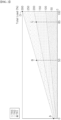
- FIG. 2 and FIG. 3 are graphs depicting total reliquefaction apparatus load change depending on an output value change according to pressure of boil-off gas sensed at a vapor header in the reliquefaction system, which is provided with three trains of reliquefaction apparatuses.
- FIG. 2 is a graph depicting the total reliquefaction apparatus load change depending on the output value change when three trains of the reliquefaction apparatuses are connected to the typical pressure control unit and the reliquefaction capacity controller of each train shares the reliquefaction load based on the output value of the typical pressure control unit according to the pressure of the storage tank.
- point A corresponds to an output of 0% from the typical pressure control unit, in which the reliquefaction apparatus load of each train is about 11% and the total reliquefaction apparatus load of the three trains has a minimum value of 33%.
- Point B corresponds to an output of 53%, in which the reliquefaction apparatus load of each train is about 58% and the total reliquefaction apparatus load of the three trains is 173%.
- Point C corresponds to an output of 85%, where two trains are operated. Here, each of the two trains has a load of 87%, and the total reliquefaction apparatus load is 180%.
- Point D corresponds to an output of 100%, where each train also has a reliquefaction apparatus load of 100%. Here, the total reliquefaction apparatus load of the three trains has a maximum value of 300%.
- FIG. 3 is a graph depicting the total reliquefaction apparatus load change depending on the output value change when one train is operated by the train capacity controller and two trains are connected to the typical pressure control unit to share a reliquefaction load according to an output value thereof.
- the first train is operated by the train capacity controller at a fixed reliquefaction load of 58%, and the second and third trains are connected to the typical pressure control unit to share the reliquefaction load according to the output value of the typical pressure control unit based on the pressure of boil-off gas in the storage tank.
- a plurality of reliquefaction apparatus trains may be operated according to an output value of the typical pressure control unit by connecting the reliquefaction apparatus of each train to the typical pressure control unit, as needed, or may be independently operated by the train capacity controller provided to each train to adjust the reliquefaction apparatus load.
Landscapes
- Engineering & Computer Science (AREA)
- Mechanical Engineering (AREA)
- General Engineering & Computer Science (AREA)
- Physics & Mathematics (AREA)
- Thermal Sciences (AREA)
- Chemical & Material Sciences (AREA)
- Ocean & Marine Engineering (AREA)
- Oil, Petroleum & Natural Gas (AREA)
- Combustion & Propulsion (AREA)
- Chemical Kinetics & Catalysis (AREA)
- General Chemical & Material Sciences (AREA)
- Filling Or Discharging Of Gas Storage Vessels (AREA)
Applications Claiming Priority (2)
| Application Number | Priority Date | Filing Date | Title |
|---|---|---|---|
| KR1020210162298A KR102538600B1 (ko) | 2021-11-23 | 2021-11-23 | 선박의 증발가스 재액화 시스템 및 방법 |
| PCT/KR2021/019908 WO2023096019A1 (fr) | 2021-11-23 | 2021-12-27 | Système et procédé de reliquéfaction de gaz d'évaporation de navire |
Publications (2)
| Publication Number | Publication Date |
|---|---|
| EP4438457A1 true EP4438457A1 (fr) | 2024-10-02 |
| EP4438457A4 EP4438457A4 (fr) | 2025-11-19 |
Family
ID=86539844
Family Applications (1)
| Application Number | Title | Priority Date | Filing Date |
|---|---|---|---|
| EP21965802.8A Pending EP4438457A4 (fr) | 2021-11-23 | 2021-12-27 | Système et procédé de reliquéfaction de gaz d'évaporation de navire |
Country Status (6)
| Country | Link |
|---|---|
| US (1) | US20250020398A1 (fr) |
| EP (1) | EP4438457A4 (fr) |
| JP (1) | JP7757532B2 (fr) |
| KR (1) | KR102538600B1 (fr) |
| CN (1) | CN118302360A (fr) |
| WO (1) | WO2023096019A1 (fr) |
Family Cites Families (16)
| Publication number | Priority date | Publication date | Assignee | Title |
|---|---|---|---|---|
| MX2007002937A (es) * | 2004-09-13 | 2008-03-05 | Argent Marine Operations Inc | Sistema y proceso para transportar gas natural licuado mediante un transportador de gas natural licuado, marino, no auto-propulsado. |
| US8783061B2 (en) * | 2007-06-12 | 2014-07-22 | Honeywell International Inc. | Apparatus and method for optimizing a natural gas liquefaction train having a nitrogen cooling loop |
| JP5757074B2 (ja) * | 2010-08-20 | 2015-07-29 | トヨタ自動車株式会社 | ガス充填システム及び補正方法 |
| WO2012124886A1 (fr) * | 2011-03-11 | 2012-09-20 | 대우조선해양 주식회사 | Système d'alimentation en combustible d'une structure marine possédant un dispositif de re-liquéfaction et un moteur à injection de gaz naturel haute-pression |
| CN104748321B (zh) | 2013-12-30 | 2018-04-27 | 海尔集团公司 | 一种适用于高海拔区域的空调系统及控制方法 |
| KR101707509B1 (ko) * | 2014-12-23 | 2017-02-16 | 대우조선해양 주식회사 | 선박의 증발가스 처리 시스템 및 방법 |
| JP6703837B2 (ja) * | 2016-01-07 | 2020-06-03 | 株式会社神戸製鋼所 | ボイルオフガス供給装置 |
| KR102632400B1 (ko) * | 2017-01-05 | 2024-02-01 | 한화오션 주식회사 | 선박용 가스처리 시스템 및 이를 이용한 선박용 가스처리 방법 |
| KR102654821B1 (ko) * | 2017-02-08 | 2024-04-04 | 한화오션 주식회사 | 선박용 엔진의 연료 공급 시스템 및 방법 |
| JP7108017B2 (ja) | 2017-07-31 | 2022-07-27 | デウ シップビルディング アンド マリン エンジニアリング カンパニー リミテッド | 船舶用蒸発ガス再液化システムおよび方法、ならびに船舶用蒸発ガス再液化システムの起動方法 |
| KR102241822B1 (ko) * | 2017-09-08 | 2021-04-16 | 한국조선해양 주식회사 | 가스 처리 시스템 및 이를 포함하는 선박 |
| CN109060229B (zh) | 2018-06-13 | 2019-12-20 | 中国科学院电子学研究所 | 一种电容式压力传感器及其制造方法 |
| KR102078587B1 (ko) | 2018-11-28 | 2020-02-19 | 재단법인한국조선해양기자재연구원 | 선박용 모듈형 lng 연료 공급 시스템 |
| KR102595971B1 (ko) * | 2018-12-17 | 2023-10-31 | 한화오션 주식회사 | 증발가스 재액화 시스템 및 방법 |
| FR3093785B1 (fr) * | 2019-03-15 | 2021-06-04 | Gaztransport Et Technigaz | Système de contrôle de pression dans une cuve de gaz naturel liquéfié. |
| JP7140734B2 (ja) * | 2019-10-03 | 2022-09-21 | トヨタ自動車株式会社 | ガス供給システムおよびガスタンクの内部圧力を推定する方法 |
-
2021
- 2021-11-23 KR KR1020210162298A patent/KR102538600B1/ko active Active
- 2021-12-27 US US18/712,080 patent/US20250020398A1/en active Pending
- 2021-12-27 CN CN202180104460.7A patent/CN118302360A/zh active Pending
- 2021-12-27 EP EP21965802.8A patent/EP4438457A4/fr active Pending
- 2021-12-27 JP JP2024527455A patent/JP7757532B2/ja active Active
- 2021-12-27 WO PCT/KR2021/019908 patent/WO2023096019A1/fr not_active Ceased
Also Published As
| Publication number | Publication date |
|---|---|
| WO2023096019A1 (fr) | 2023-06-01 |
| JP2024544909A (ja) | 2024-12-05 |
| JP7757532B2 (ja) | 2025-10-21 |
| CN118302360A (zh) | 2024-07-05 |
| KR102538600B1 (ko) | 2023-05-31 |
| US20250020398A1 (en) | 2025-01-16 |
| EP4438457A4 (fr) | 2025-11-19 |
Similar Documents
| Publication | Publication Date | Title |
|---|---|---|
| KR102442557B1 (ko) | 선박의 증발가스 재액화 시스템 및 방법 | |
| KR102926357B1 (ko) | 선박의 증발가스 재액화 시스템 및 방법 | |
| US12529517B2 (en) | Refrigerant cycle pressure control system for reliquefaction system for ship | |
| KR102376277B1 (ko) | 선박의 증발가스 재액화 시스템 및 그 운전방법 | |
| EP4438457A1 (fr) | Système et procédé de reliquéfaction de gaz d'évaporation de navire | |
| KR102376279B1 (ko) | 선박의 증발가스 재액화 시스템 및 그 운전방법 | |
| EP4368489A1 (fr) | Système et procédé de reliquéfaction de gaz d'évaporation d'un navire | |
| US20240344665A1 (en) | Refrigerant charging system for reliquefaction system for ship | |
| US20250237430A1 (en) | Leakage detection system of reliquefaction system for ship | |
| US20240230033A1 (en) | Power-saving type liquefied-gas-fuel ship and method for processing boil-off gas for liquefied-gas-fuel ship | |
| US20260036364A1 (en) | Control system for vessel reliquefaction system | |
| EP4424581A1 (fr) | Système et procédé de reliquéfaction de gaz d'évaporation pour un navire | |
| EP4663532A1 (fr) | Système de commande de cycle de fluide frigorigène et procédé de commande pour système de reliquéfaction pour navire | |
| KR102883965B1 (ko) | 선박의 증발가스 재액화 시스템 | |
| KR102926401B1 (ko) | 선박의 증발가스 재액화 시스템 | |
| EP4424582A1 (fr) | Procédé de purge de système de reliquéfaction pour navire | |
| EP4650268A2 (fr) | Système et procédé de reliquéfaction de gaz d'évaporation de navire et système et procédé de traitement de gaz d'échappement d'appareil de reliquéfaction | |
| KR20250174135A (ko) | 선박의 가스처리시스템 |
Legal Events
| Date | Code | Title | Description |
|---|---|---|---|
| STAA | Information on the status of an ep patent application or granted ep patent |
Free format text: STATUS: THE INTERNATIONAL PUBLICATION HAS BEEN MADE |
|
| PUAI | Public reference made under article 153(3) epc to a published international application that has entered the european phase |
Free format text: ORIGINAL CODE: 0009012 |
|
| STAA | Information on the status of an ep patent application or granted ep patent |
Free format text: STATUS: REQUEST FOR EXAMINATION WAS MADE |
|
| 17P | Request for examination filed |
Effective date: 20240617 |
|
| AK | Designated contracting states |
Kind code of ref document: A1 Designated state(s): AL AT BE BG CH CY CZ DE DK EE ES FI FR GB GR HR HU IE IS IT LI LT LU LV MC MK MT NL NO PL PT RO RS SE SI SK SM TR |
|
| DAV | Request for validation of the european patent (deleted) | ||
| DAX | Request for extension of the european patent (deleted) | ||
| REG | Reference to a national code |
Ref country code: DE Ref legal event code: R079 Free format text: PREVIOUS MAIN CLASS: B63B0025160000 Ipc: F17C0003020000 |
|
| A4 | Supplementary search report drawn up and despatched |
Effective date: 20251017 |
|
| RIC1 | Information provided on ipc code assigned before grant |
Ipc: F17C 3/02 20060101AFI20251013BHEP Ipc: F17C 13/02 20060101ALI20251013BHEP Ipc: B63B 25/16 20060101ALI20251013BHEP Ipc: B63H 21/38 20060101ALI20251013BHEP Ipc: F25J 1/02 20060101ALI20251013BHEP Ipc: F25J 1/00 20060101ALI20251013BHEP |