EP4438353A1 - Air conditioning adjustment method and apparatus based on networked interaction, and electronic device - Google Patents
Air conditioning adjustment method and apparatus based on networked interaction, and electronic device Download PDFInfo
- Publication number
- EP4438353A1 EP4438353A1 EP22894795.8A EP22894795A EP4438353A1 EP 4438353 A1 EP4438353 A1 EP 4438353A1 EP 22894795 A EP22894795 A EP 22894795A EP 4438353 A1 EP4438353 A1 EP 4438353A1
- Authority
- EP
- European Patent Office
- Prior art keywords
- demisting
- air
- information
- conditioner
- speed
- Prior art date
- Legal status (The legal status is an assumption and is not a legal conclusion. Google has not performed a legal analysis and makes no representation as to the accuracy of the status listed.)
- Granted
Links
Images





Classifications
-
- B—PERFORMING OPERATIONS; TRANSPORTING
- B60—VEHICLES IN GENERAL
- B60H—ARRANGEMENTS OF HEATING, COOLING, VENTILATING OR OTHER AIR-TREATING DEVICES SPECIALLY ADAPTED FOR PASSENGER OR GOODS SPACES OF VEHICLES
- B60H1/00—Heating, cooling or ventilating devices
- B60H1/00642—Control systems or circuits; Control members or indication devices for heating, cooling or ventilating devices
- B60H1/00735—Control systems or circuits characterised by their input, i.e. by the detection, measurement or calculation of particular conditions, e.g. signal treatment, dynamic models
-
- B—PERFORMING OPERATIONS; TRANSPORTING
- B60—VEHICLES IN GENERAL
- B60H—ARRANGEMENTS OF HEATING, COOLING, VENTILATING OR OTHER AIR-TREATING DEVICES SPECIALLY ADAPTED FOR PASSENGER OR GOODS SPACES OF VEHICLES
- B60H1/00—Heating, cooling or ventilating devices
- B60H1/00642—Control systems or circuits; Control members or indication devices for heating, cooling or ventilating devices
- B60H1/00735—Control systems or circuits characterised by their input, i.e. by the detection, measurement or calculation of particular conditions, e.g. signal treatment, dynamic models
- B60H1/00764—Control systems or circuits characterised by their input, i.e. by the detection, measurement or calculation of particular conditions, e.g. signal treatment, dynamic models the input being a vehicle driving condition, e.g. speed
- B60H1/00771—Control systems or circuits characterised by their input, i.e. by the detection, measurement or calculation of particular conditions, e.g. signal treatment, dynamic models the input being a vehicle driving condition, e.g. speed the input being a vehicle position or surrounding, e.g. GPS-based position or tunnel
-
- B—PERFORMING OPERATIONS; TRANSPORTING
- B60—VEHICLES IN GENERAL
- B60H—ARRANGEMENTS OF HEATING, COOLING, VENTILATING OR OTHER AIR-TREATING DEVICES SPECIALLY ADAPTED FOR PASSENGER OR GOODS SPACES OF VEHICLES
- B60H1/00—Heating, cooling or ventilating devices
- B60H1/00642—Control systems or circuits; Control members or indication devices for heating, cooling or ventilating devices
- B60H1/00735—Control systems or circuits characterised by their input, i.e. by the detection, measurement or calculation of particular conditions, e.g. signal treatment, dynamic models
- B60H1/00785—Control systems or circuits characterised by their input, i.e. by the detection, measurement or calculation of particular conditions, e.g. signal treatment, dynamic models by the detection of humidity or frost
-
- B—PERFORMING OPERATIONS; TRANSPORTING
- B60—VEHICLES IN GENERAL
- B60S—SERVICING, CLEANING, REPAIRING, SUPPORTING, LIFTING, OR MANOEUVRING OF VEHICLES, NOT OTHERWISE PROVIDED FOR
- B60S1/00—Cleaning of vehicles
- B60S1/02—Cleaning windscreens, windows or optical devices
- B60S1/023—Cleaning windscreens, windows or optical devices including defroster or demisting means
-
- G—PHYSICS
- G01—MEASURING; TESTING
- G01W—METEOROLOGY
- G01W1/00—Meteorology
- G01W1/14—Rainfall or precipitation gauges
-
- G—PHYSICS
- G08—SIGNALLING
- G08G—TRAFFIC CONTROL SYSTEMS
- G08G1/00—Traffic control systems for road vehicles
- G08G1/01—Detecting movement of traffic to be counted or controlled
- G08G1/0104—Measuring and analyzing of parameters relative to traffic conditions
- G08G1/0108—Measuring and analyzing of parameters relative to traffic conditions based on the source of data
- G08G1/0112—Measuring and analyzing of parameters relative to traffic conditions based on the source of data from the vehicle, e.g. floating car data [FCD]
-
- G—PHYSICS
- G08—SIGNALLING
- G08G—TRAFFIC CONTROL SYSTEMS
- G08G1/00—Traffic control systems for road vehicles
- G08G1/01—Detecting movement of traffic to be counted or controlled
- G08G1/0104—Measuring and analyzing of parameters relative to traffic conditions
- G08G1/0125—Traffic data processing
- G08G1/0129—Traffic data processing for creating historical data or processing based on historical data
-
- G—PHYSICS
- G08—SIGNALLING
- G08G—TRAFFIC CONTROL SYSTEMS
- G08G1/00—Traffic control systems for road vehicles
- G08G1/09—Arrangements for giving variable traffic instructions
- G08G1/0962—Arrangements for giving variable traffic instructions having an indicator mounted inside the vehicle, e.g. giving voice messages
- G08G1/0967—Systems involving transmission of highway information, e.g. weather, speed limits
- G08G1/096708—Systems involving transmission of highway information, e.g. weather, speed limits where the received information might be used to generate an automatic action on the vehicle control
- G08G1/096725—Systems involving transmission of highway information, e.g. weather, speed limits where the received information might be used to generate an automatic action on the vehicle control where the received information generates an automatic action on the vehicle control
-
- G—PHYSICS
- G08—SIGNALLING
- G08G—TRAFFIC CONTROL SYSTEMS
- G08G1/00—Traffic control systems for road vehicles
- G08G1/09—Arrangements for giving variable traffic instructions
- G08G1/0962—Arrangements for giving variable traffic instructions having an indicator mounted inside the vehicle, e.g. giving voice messages
- G08G1/0967—Systems involving transmission of highway information, e.g. weather, speed limits
- G08G1/096733—Systems involving transmission of highway information, e.g. weather, speed limits where a selection of the information might take place
- G08G1/096741—Systems involving transmission of highway information, e.g. weather, speed limits where a selection of the information might take place where the source of the transmitted information selects which information to transmit to each vehicle
-
- G—PHYSICS
- G08—SIGNALLING
- G08G—TRAFFIC CONTROL SYSTEMS
- G08G1/00—Traffic control systems for road vehicles
- G08G1/09—Arrangements for giving variable traffic instructions
- G08G1/0962—Arrangements for giving variable traffic instructions having an indicator mounted inside the vehicle, e.g. giving voice messages
- G08G1/0967—Systems involving transmission of highway information, e.g. weather, speed limits
- G08G1/096766—Systems involving transmission of highway information, e.g. weather, speed limits where the system is characterised by the origin of the information transmission
- G08G1/096775—Systems involving transmission of highway information, e.g. weather, speed limits where the system is characterised by the origin of the information transmission where the origin of the information is a central station
-
- G—PHYSICS
- G08—SIGNALLING
- G08G—TRAFFIC CONTROL SYSTEMS
- G08G1/00—Traffic control systems for road vehicles
- G08G1/20—Monitoring the location of vehicles belonging to a group, e.g. fleet of vehicles, countable or determined number of vehicles
- G08G1/207—Monitoring the location of vehicles belonging to a group, e.g. fleet of vehicles, countable or determined number of vehicles with respect to certain areas, e.g. forbidden or allowed areas with possible alerting when inside or outside boundaries
-
- H—ELECTRICITY
- H04—ELECTRIC COMMUNICATION TECHNIQUE
- H04W—WIRELESS COMMUNICATION NETWORKS
- H04W4/00—Services specially adapted for wireless communication networks; Facilities therefor
- H04W4/02—Services making use of location information
- H04W4/021—Services related to particular areas, e.g. point of interest [POI] services, venue services or geofences
-
- H—ELECTRICITY
- H04—ELECTRIC COMMUNICATION TECHNIQUE
- H04W—WIRELESS COMMUNICATION NETWORKS
- H04W4/00—Services specially adapted for wireless communication networks; Facilities therefor
- H04W4/02—Services making use of location information
- H04W4/023—Services making use of location information using mutual or relative location information between multiple location based services [LBS] targets or of distance thresholds
Definitions
- the present disclosure relates to the field of cars, and particularly relates to a regulating method and apparatus for air-conditioner based on networked interaction, and an electronic device.
- the drivers usually prepare a towel in advance, and, when the front windshield has mist, manually wipe out it, to quickly remove the mist.
- a handling approach is difficult to be used when mist appears during high-speed travelling or during normal travelling in an urban road condition, therefore, it has a large potential safety hazard. That is difficult to handle for a learner of vehicle driving.
- the embodiments of the present disclosure provide a regulating method and apparatus for air-conditioner based on networked interaction, and an electronic device, which may enable the target demand vehicle to realize a reasonable setting of the onboard air conditioner.
- the embodiments of the present disclosure include a regulating method for air-conditioner based on networked interaction, applied to a cloud server, and the method includes:
- the demisting-parameter information includes initial air-conditioner parameters, a demisting duration and a demisting speed
- the step of performing data analysis according to the demisting-parameter information, to obtain the benchmarking information includes: analyzing the demisting duration and the demisting speed, to obtain a demisting-speed distribution interval; and analyzing the initial air-conditioner parameters in the demisting-speed distribution interval according to the demisting-speed distribution interval, to determine the benchmarking information.
- the step of analyzing the demisting duration and the demisting speed, to obtain the demisting-speed distribution interval includes: performing normal distribution to the demisting duration and the demisting speed, to obtain a normal-distribution result; and determining a distribution interval of the demisting speed within a predetermined range to be the demisting-speed distribution interval according to the normal-distribution result.
- the method before the step of sending the benchmarking information to the target demand vehicle, the method further includes: receiving uploaded peripheral-environment weather information; and determining a vehicle in a same environment weather and a same region to be the target demand vehicle according to the peripheral-environment weather information, wherein the same region refers to a region within a predetermined distance.
- the embodiments of the present disclosure include a regulating apparatus for air-conditioner based on networked interaction, applied to a cloud server, and the apparatus includes:
- the receiving module includes: a first receiving submodule configured for receiving the demisting-parameter information uploaded by the vehicle, wherein the demisting-parameter information includes initial air-conditioner parameters, a demisting duration and a demisting speed; and a second receiving submodule configured for receiving peripheral-environment weather information uploaded by the vehicle.
- the sending module includes: a determining submodule configured for determining a vehicle in a same environment weather and a same region to be the target demand vehicle according to the peripheral-environment weather information, wherein the same region refers to a region within a predetermined distance; and a sending submodule configured for sending the benchmarking information to the target demand vehicle, so that the target demand vehicle adjusts onboard air-conditioner parameters according to the benchmarking information.
- the analyzing module includes: a first analyzing submodule configured for analyzing the demisting duration and the demisting speed, to obtain a demisting-speed distribution interval; and a second analyzing submodule configured for analyzing the initial air-conditioner parameters in the demisting-speed distribution interval according to the demisting-speed distribution interval, to determine the benchmarking information.
- the first analyzing submodule includes: a first analyzing unit configured for performing normal distribution to the demisting duration and the demisting speed, to obtain a normal-distribution result; and a second analyzing unit configured for determining a distribution interval of the demisting speed within the predetermined range to be the demisting-speed distribution interval according to the normal-distribution result.
- the embodiments of the present disclosure include an electronic device, and the electronic device includes:
- the embodiments of the present disclosure have the following advantages:
- the method provided by the present disclosure includes: receiving uploaded demisting-parameter information; performing data analysis according to the demisting-parameter information, to obtain benchmarking information, wherein the benchmarking information is determined based on air-conditioner parameters of vehicles within a predetermined area where a target demand vehicle is located; and sending the benchmarking information to the target demand vehicle, so that the target demand vehicle adjusts onboard air-conditioner parameters according to the benchmarking information.
- An embodiment of the present disclosure relates to a regulating method for air-conditioner based on networked interaction
- the air-conditioner based on networked interaction is an onboard intelligent air-conditioner that can interact with a network, and the method is applied to a cloud server. Its process is shown in FIG. 1 , and includes: S101: receiving uploaded demisting-parameter information.
- the uploaded demisting-parameter information is received to be used for the analysis and calculation of the subsequent steps.
- the demisting-parameter information includes the initial air-conditioner parameters, the demisting duration and the demisting speed.
- the initial air-conditioner parameters are the air-conditioner parameters that were uploaded at the first time, and they may be the default air-conditioner parameters, and may also be air-conditioner parameters that are set by the user manually.
- the demisting duration and the demisting speed refer to the time and the speed for demisting the vehicle windows with the current air-conditioner parameters of the vehicle.
- the demisting-parameter information may further include other data, which are not discussed further herein.
- S102 performing data analysis according to the demisting-parameter information, to obtain benchmarking information, wherein the benchmarking information is determined based on air-conditioner parameters of vehicles within a predetermined area where a target demand vehicle is located.
- target demand vehicle refers to a target vehicle having a demand to adjust its onboard air-conditioner parameters.
- the demisting-parameter information According to the received uploaded demisting-parameter information, data analysis and calculation is performed to the demisting-parameter information, to obtain the optimum scheme of the air-conditioner parameters within the current region, i.e., the benchmarking information. Further, the benchmarking information is stored, which is not only for the current application, but also facilitates the invoking when the similar situation appears again. The particular data analysis process will be described in the next embodiment, and is not discussed further herein.
- S103 sending the benchmarking information to the target demand vehicle, so that the target demand vehicle adjusts onboard air-conditioner parameters according to the benchmarking information.
- the peripheral-environment weather information a vehicle in the same environment weather, within the same region and having the same brand is determined to be the target demand vehicle, among them, the same region is within a predetermined distance, and the peripheral-environment weather information includes locating information, real-time-weather-forecast information, and information acquired from the weather information collected by the vehicle.
- the target demand vehicle is a vehicle of which the onboard air-conditioner parameters need to be adjusted. The particular contents of the weather information collected by the vehicle and the step of determining the target demand vehicle will be described below, and are not discussed further herein.
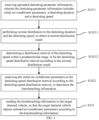
- the present embodiment includes: receiving uploaded demisting-parameter information; performing data analysis according to the demisting-parameter information, to obtain benchmarking information, wherein the benchmarking information is determined based on air-conditioner parameters of vehicles within a predetermined area where a target demand vehicle is located; and sending the benchmarking information to the target demand vehicle, so that the target demand vehicle adjusts onboard air-conditioner parameters according to the benchmarking information.
- An embodiment of the present disclosure relates to a regulating method for air-conditioner based on networked interaction, applied to a cloud server. Its process is shown in FIG. 2 , and includes: S1011: receiving uploaded demisting-parameter information, wherein the demisting-parameter information includes initial air-conditioner parameters, a demisting duration and a demisting speed.
- the uploaded demisting-parameter information is received to be used for the analysis and calculation of the subsequent steps.
- the demisting-parameter information includes the initial air-conditioner parameters, the demisting duration and the demisting speed.
- the initial air-conditioner parameters are the air-conditioner parameters that were uploaded at the first time, and they may be the default air-conditioner parameters, and may also be air-conditioner parameters that are set by the user manually.
- the demisting duration and the demisting speed refer to the time and the speed for demisting the vehicle windows with the current air-conditioner parameters of the vehicle.
- the demisting-parameter information may further contain other data, which are not discussed further herein.
- S1021 analyzing the demisting duration and the demisting speed, to obtain a demisting-speed distribution interval.
- the cloud server performs the normal distribution of the demisting duration and the demisting speed according to big data.
- the purpose of the normal distribution is to remove abnormal information or extreme information, and select the reasonable data information, to provide more accurate data for the subsequent data analysis.
- the air-conditioner setting information in the distribution interval of the demisting speed within a predetermined range is screened out to be used as the information of the initial air-conditioner parameters that are required to be analyzed, to provide the data for the subsequent analysis and calculation of the benchmarking information.
- variance analysis is performed, to determine the benchmarking information, and the benchmarking information is stored.
- variance analysis is performed to the initial air-conditioner parameters in the demisting-speed distribution interval, which means that the air-conditioner setting information in the distribution interval of the demisting speed within the predetermined range is screened out, and subsequently variance analysis is performed to the air-conditioner setting information, thereby the optimum air-conditioner setting information is obtained as the benchmarking information. Further, the obtained benchmarking information is stored, which is not only for the current application, but also facilitates the invoking when the similar situation appears again.
- S103 sending the benchmarking information to the target demand vehicle, so that the target demand vehicle adjusts onboard air-conditioner parameters according to the benchmarking information.
- the cloud server after receives the peripheral-environment weather information uploaded by a vehicle within a demand region (regions that are in the same environment weather and are within a predetermined distance from this vehicle are the same region), according to the peripheral-environment weather information, determines a vehicle in the same environment weather, within the same region and having the same brand to be the target demand vehicle.
- a demand region regions that are in the same environment weather and are within a predetermined distance from this vehicle are the same region
- the same region is within a predetermined distance
- the peripheral-environment weather information includes the locating information, the real-time-weather-forecast information, and the weather information collected by the vehicle.
- the locating information includes high-precision map locating and GNSS-chip precise locating.
- the high-precision map locating can complement the map of the periphery of the vehicle.
- the GNSS chip can realize the precise locating of the vehicle itself. Under the double assurance, the purpose of more accurate vehicle locating is realized.
- the present embodiment further describes the data analysis according to the last embodiment, describes the calculation process of the benchmarking information, and describes in detail the steps.
- An embodiment of the present disclosure relates to a regulating method for air-conditioner based on networked interaction, applied to a cloud server. Its process is shown in FIG. 3 , and includes: S1011: receiving uploaded demisting-parameter information, wherein the demisting-parameter information includes initial air-conditioner parameters, a demisting duration and a demisting speed.
- the uploaded demisting-parameter information is received to be used for the analysis and calculation of the subsequent steps.
- the demisting-parameter information includes the initial air-conditioner parameters, the demisting duration and the demisting speed.
- the initial air-conditioner parameters are the air-conditioner parameters that were uploaded at the first time, and they may be the default air-conditioner parameters, and may also be air-conditioner parameters that are set by the user manually.
- the demisting duration and the demisting speed refer to the time and the speed for demisting the vehicle windows with the current air-conditioner parameters of the vehicle.
- the demisting-parameter information may further contain other data, which are not discussed further herein.
- the cloud server performs the normal distribution of the demisting duration and the demisting speed according to big data.
- the purpose of the normal distribution is to remove abnormal information or extreme information, and select the reasonable data information, to provide more accurate data for the subsequent data analysis.
- the data screening using the normal distribution is screening according to the distribution range based on big data, which can more quickly and more effectively screen the data.
- S10212 determining a distribution interval of the demisting speed within the predetermined range to be the demisting-speed distribution interval according to the normal-distribution result.
- the extreme data and the abnormal data at the two ends are excluded, and the reasonable range is selected to screen out the air-conditioner setting information in the distribution interval of the demisting speed within the predetermined range to be used as the information of the initial air-conditioner parameters that are required to be analyzed, to provide the data for the subsequent analysis and calculation of the benchmarking information.
- variance analysis is performed, to determine the benchmarking information, and the benchmarking information is stored.
- variance analysis is performed to the initial air-conditioner parameters in the demisting-speed distribution interval, which means that the air-conditioner setting information in the distribution interval of the demisting speed within the predetermined range is screened out, and subsequently variance analysis is performed to the air-conditioner setting information, thereby the optimum air-conditioner setting information is obtained as the benchmarking information. Further, the obtained benchmarking information is stored, which is not only for the current application, but also facilitates the invoking when the similar situation appears again.
- S103 sending the benchmarking information to the target demand vehicle, so that the target demand vehicle adjusts onboard air-conditioner parameters according to the benchmarking information.
- the cloud server after receives the peripheral-environment weather information uploaded by a vehicle within a demand region (a region that is in the same environment weather and is within a predetermined distance from this vehicle is the same region), according to the peripheral-environment weather information, determines a vehicle in the same environment weather, within the same region and having the same brand to be the target demand vehicle.
- a demand region a region that is in the same environment weather and is within a predetermined distance from this vehicle is the same region
- the same region is within a predetermined distance
- the peripheral-environment weather information includes the locating information, the real-time-weather-forecast information, and the weather information collected by the vehicle.
- the locating information includes high-precision map locating and GNSS-chip precise locating.
- the high-precision map locating can complement the map of the periphery of the vehicle.
- the GNSS chip can realize the precise locating of the vehicle itself. Under the double assurance, the purpose of more accurate vehicle locating is realized.
- the present embodiment further describes the data analysis according to the last embodiment, describes the process of the analysis and calculation of the demisting-speed distribution interval, and describes in detail the steps.
- An embodiment of the present disclosure relates to a regulating method for air-conditioner based on networked interaction, applied to a cloud server. Its process is shown in FIG. 4 , and includes: S101: receiving uploaded demisting-parameter information.
- the uploaded demisting-parameter information is received to be used for the analysis and calculation of the subsequent steps.
- the demisting-parameter information contains the initial air-conditioner parameters, the demisting duration and the demisting speed.
- the initial air-conditioner parameters are the air-conditioner parameters that were uploaded at the first time, and they may be the default air-conditioner parameters, and may also be air-conditioner parameters that are set by the user manually.
- the demisting duration and the demisting speed refer to the time and the speed for demisting the vehicle windows with the current air-conditioner parameters of the vehicle.
- the demisting-parameter information may further contain other data, which are not discussed further herein.
- S102 performing data analysis according to the initial air-conditioner parameters, the demisting duration and the demisting speed, to obtain benchmarking information, wherein the benchmarking information is determined based on air-conditioner parameters of vehicles within a predetermined area where a target demand vehicle is located.
- the demisting-parameter information According to the received uploaded demisting-parameter information, data analysis and calculation is performed to the demisting-parameter information, to obtain the optimum scheme of the air-conditioner parameters within the current region, i.e., the benchmarking information. Further, the benchmarking information is stored, which is not only for the current application, but also facilitates the invoking when the similar situation appears again. The particular data analysis process will be described in the next embodiment, and is not discussed further herein.
- the uploaded peripheral-environment weather information is received to be used for the determination on the target demand vehicle of the subsequent steps.
- the peripheral-environment weather information includes locating information, real-time-weather-forecast information, and weather information collected by the vehicle.
- the locating information contains high-precision map locating and GNSS-chip precise locating.
- the high-precision map locating can complement the map of the periphery of the vehicle.
- the GNSS chip can realize the precise locating of the vehicle itself. Under the double assurance, the purpose of more accurate vehicle locating is realized.
- the particular contents of the weather information collected by the vehicle will be described below, and are not discussed further herein.
- S105 determining a vehicle in a same environment weather and a same region to be the target demand vehicle according to the peripheral-environment weather information, wherein the same region refers to a region within a predetermined distance.
- a vehicle in the same environment weather, within the same region and having the same brand is determined to be the target demand vehicle.
- the same region is within a predetermined distance
- the peripheral-environment weather information contains locating information, real-time-weather-forecast information, and weather information collected by the vehicle.
- the locating information contains high-precision map locating and GNSS-chip precise locating.
- the high-precision map locating can complement the map of the periphery of the vehicle.
- the GNSS chip can realize the precise locating of the vehicle itself. Under the double assurance, the purpose of more accurate vehicle locating is realized.
- the weather information collected by the vehicle includes the illumination, the water amount, and the angle of total reflection with which the lights enter the air from the glass, to determine the environment-weather information of the periphery of the vehicle. If the illuminance is 50-500 luxes, it is an overcast; if the illuminance is 100-1000 luxes, it is a clear day; the illuminance at a night is 0.001-0.02 luxes; and the sunshine illumination at a summer noon reaches above 10000 luxes.
- the water amount is measured by using a rain sensor. In other words, when the glass is dry, the light rays will be totally reflected, pass through a lens system to become parallel light, and are received by a receiver.
- the rain sensor can merely receive part of the signals, and determine the magnitude of the rain amount according to the percentage value.
- the percentage of the total reflection of the lights through the glass is 100% (the angle of total reflection is 42°), that indicates a no-rain state.
- the angle of total reflection of the lights through the glass decreases to 80% (the angle of total reflection is 62°), that indicates a rain state, wherein 60% is a moderate rain, and 40% or lower is a heavy rain.
- the demisting-parameter information may further contain other data, which are not discussed further herein.
- the data acquired by the onboard sensing system include but are not limited to the following.
- An onboard rain-mist sensor in the vehicle detects the misting of the vehicle, according to the resistance value of the rain-mist sensor, determines the level of misting, feeds back to an information memory, and sends a defrosting signal via an ECU.
- the defrosting signal is assigned to the different shifts of the air-conditioner blower, and the current air-conditioner parameters are adjusted into the preset parameters, wherein the preset parameters refer to, in the default setting of the vehicle, the air-conditioner parameters that are set by default in the vehicle-vehicle mutual-helping mode when the vehicle windows are misting in any weather.
- the air-conditioner setting of itself is uploaded to the cloud, and at the same time the information pushed by the cloud server is accepted, i.e., information interaction with the cloud server.
- the intelligent network-connected system started up by the user realizes the information interaction of the current vehicle misting situation with the external and with the cloud by using a V2X technique.
- the operation of the information reception and emission requires the vehicle to start up the onboard vehicle-vehicle mutual-helping mode.
- the user will be asked for the permission on the starting-up of the vehicle-vehicle mutual-helping mode. If the user requires, the user may receive the reasonable setting of the air conditioner pushed by the cloud by using a button or the default setting. If the user does not require, he may shut down that function directly by using a button or the default setting.
- the rain-mist sensor determines the concentration of the mist according to the resistance value of the rain-mist sensor.
- concentration of the mist may be defined as follows.
- the grade 1 is haze, in which the visibility is high.
- the grade 2 is mist, in which the visibility seriously decreases.
- the grade 3 is heavy mist, in which the visibility is 0.
- the rain-mist sensor when has detected that the demisting has been completed, feeds back that to the information memory, and sends a defrosting-completion signal via the ECU.
- the air-conditioner parameters are adjusted back to the initial air-conditioner parameters before the air conditioner is set to be the preset parameters, to ensure the comfortableness of the user.
- the parameters of the air-conditioner setting include the air-conditioner outer circulation, the blower switch, the blower blowing rate, and the air-conditioner outlet air temperature.
- the present disclosure also relates to a 5G network device. As shown in FIG. 10 , the device includes:
- the 5G integrated front-end module formed by the 5G module 301, the integrated front-end module 302 and the ANT_1304 has the characteristic of a low time delay, wherein the air-interface time delay is less than 1 millisecond, and the time delay of the business layer can be controlled within 10 milliseconds.
- the high-performance notching filter 303 is added, which improves the reliability and the precision of the 5G network. For example, at the vehicle speed of 120km/h, the braking distance caused by the communication time delay in 5G can be controlled within 33cm.
- the 5G real-time high-precision locating provides a powerful technical support for the present disclosure.
- the present embodiment adds the description on the step of determining the target demand vehicle, describes in detail the particular contents of the weather information collected by the vehicle, and further supplements and elaborates the technical solutions.
- Another embodiment of the present disclosure relates to a regulating apparatus for air-conditioner based on networked interaction, applied to a cloud server.
- the apparatus includes:
- the receiving module 201 includes:
- the analyzing module 202 includes:
- the first analyzing submodule 2021 includes:
- the sending module 203 includes:
- the present embodiment relates to a particular implementation method of an apparatus, which may refer to the process embodiments provided in the above embodiments of the present disclosure, and is not discussed further herein.
- the above-described device embodiments are merely illustrative, wherein the units that are described as separate components may or may not be physically separate, and the components that are displayed as units may or may not be physical units; in other words, they may be located at the same one location, and may also be distributed to a plurality of network units. Some or all of the modules may be selected according to practical demands to realize the purposes of the solutions of the embodiments. A person skilled in the art can understand and implement the technical solutions without paying creative work.
- the electronic device includes:
- the memory and the processor are connected by means of a bus.
- the bus may include interconnected buses and bridges of any quantities.
- the bus connects the various circuits of one or more processors and memories together.
- the bus may further connect various other circuits such as peripheral devices, voltage regulators and power managing circuits together, all of which are well known in the art, and are not described further herein.
- Bus interfaces provide the interfaces between the bus and the transceiver.
- Transceiver may be one element, and may also be a plurality of elements, for example, a plurality of receivers and emitters, to provide units for communicating with various other devices via a transmission medium.
- the data that have been processed by the processor are transmitted by using an antenna via a wireless medium.
- the antenna further receives data and transmits the data to the processor.
- the processor serves for the management of the bus and common processing, and may further provide various functions, for example, the timing, the peripheral interfaces, the voltage regulation, the power-supply management and other controlling functions.
- the memory may be configured to store the data that the processor uses in operation.
- the computer program instructions may be provided to a processor of a general-purpose computer, a special-purpose computer, an embedded processor, or another programmable data processing terminal device to generate a machine, so that a device for implementing the functions specified in one or more flows of the flow charts and/or one or more blocks of the block diagrams can be generated by instructions executed by the processor of the computers or the other programmable data processing terminal device.
- the computer program instructions may also be stored in a computer-readable memory that can instruct the computers or the other programmable data processing terminal device to operate in a specific mode, so that the instructions stored in the computer-readable memory generate an article including an instruction device, and the instruction device implements the functions specified in one or more flows of the flow charts and/or one or more blocks of the block diagrams.
- the computer program instructions may also be loaded to the computers or the other programmable data processing terminal device, so that the computers or the other programmable data processing terminal device implement a series of operation steps to generate the computer-implemented processes, whereby the instructions executed in the computers or the other programmable data processing terminal device provide the steps for implementing the functions specified in one or more flows of the flow charts and/or one or more blocks of the block diagrams.
- Each component embodiment of the present disclosure may be implemented by hardware, or by software modules that are operated in one or more processors, or by a combination thereof.
- a person skilled in the art should understand that some or all of the functions of some or all of the components of the computing and processing device according to the embodiments of the present disclosure may be implemented by using a microprocessor or a digital signal processor (DSP) in practice.
- DSP digital signal processor
- the present disclosure may also be implemented as apparatus or device programs (for example, computer programs and computer program products) for implementing part of or the whole of the method described herein.
- Such programs for implementing the present disclosure may be stored in a computer-readable medium, or may be in the form of one or more signals. Such signals may be downloaded from an Internet website, or provided on a carrier signal, or provided in any other forms.
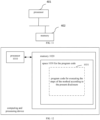
- FIG. 12 shows a computing and processing device that can implement the method according to the present disclosure.
- the computing and processing device traditionally includes a processor 1010 and a computer program product or computer-readable medium in the form of a memory 1020.
- the memory 1020 may be electronic memories such as flash memory, EEPROM (Electrically Erasable Programmable Read Only Memory), EPROM, hard disk or ROM.
- the memory 1020 has the storage space 1030 of the program code 1031 for implementing any steps of the above method.
- the storage space 1030 for program code may contain program codes 1031 for individually implementing each of the steps of the above method. Those program codes may be read from one or more computer program products or be written into the one or more computer program products.
- Those computer program products include program code carriers such as a hard disk, a compact disk (CD), a memory card or a floppy disk. Such computer program products are usually portable or fixed storage units as shown in FIG. 13 .
- the storage unit may have storage segments or storage spaces with similar arrangement to the memory 1020 of the computing and processing device in FIG. 12 .
- the program codes may, for example, be compressed in a suitable form.
- the storage unit contains a computer-readable code 1031', which can be read by a processor like 1010. When those codes are executed by the computing and processing device, the codes cause the computing and processing device to implement each of the steps of the method described above.
- any reference signs between parentheses should not be construed as limiting the claims.
- the word “comprise” does not exclude elements or steps that are not listed in the claims.
- the word “a” or “an” preceding an element does not exclude the existing of a plurality of such elements.
- the present disclosure may be implemented by means of hardware comprising several different elements and by means of a properly programmed computer. In unit claims that list several devices, some of those devices may be embodied by the same item of hardware.
- the words first, second, third and so on do not denote any order. Those words may be interpreted as names.
Landscapes
- Physics & Mathematics (AREA)
- Engineering & Computer Science (AREA)
- General Physics & Mathematics (AREA)
- Mechanical Engineering (AREA)
- Life Sciences & Earth Sciences (AREA)
- Thermal Sciences (AREA)
- Atmospheric Sciences (AREA)
- Chemical & Material Sciences (AREA)
- Computer Networks & Wireless Communication (AREA)
- Signal Processing (AREA)
- Environmental & Geological Engineering (AREA)
- Analytical Chemistry (AREA)
- Ecology (AREA)
- Environmental Sciences (AREA)
- Radar, Positioning & Navigation (AREA)
- Remote Sensing (AREA)
- Biodiversity & Conservation Biology (AREA)
- Hydrology & Water Resources (AREA)
- Air Conditioning Control Device (AREA)
- Air-Conditioning For Vehicles (AREA)
- Management, Administration, Business Operations System, And Electronic Commerce (AREA)
Abstract
Description
- This application claims the priority of the
Chinese patent application filed on November 22nd, 2021 before the Chinese Patent Office with the application number of 202111390195.1 - The present disclosure relates to the field of cars, and particularly relates to a regulating method and apparatus for air-conditioner based on networked interaction, and an electronic device.
- Most of vehicles are equipped with an automatic air conditioning system, but few people can set the parameters of the onboard automatic air conditioner suitably to ensure the comfortableness. Especially, a learner of vehicle driving is not familiar with the vehicle, and cannot set the air conditioner very professionally. When the vehicle is at a place where the weather varies frequently and the temperature difference between morning and evening is large, during the travelling, it very easily happens that the front windshield rapidly mists, which blocks the sight line of the driver. When the air conditioner is set to be automatic air conditioning, the air conditioner cannot be switched to the correct circulated mode and temperature. Even if it can skip to the defrosting mode, it might be not capable of dealing with the quick misting in a sudden extreme weather because the vehicle setting is for the misting in normal weathers. For example, in Northeast China, extreme weathers frequently appear, which causes abrupt change of the temperature difference, to result in quick misting of the windshield during the driving, which blocks the sight line. That causes a learner of vehicle driving to be in tearing hurry and emotional stress, which easily causes traffic accidents, and has a large potential safety hazard.
- In order to solve the above problem, the drivers usually prepare a towel in advance, and, when the front windshield has mist, manually wipe out it, to quickly remove the mist. However, such a handling approach is difficult to be used when mist appears during high-speed travelling or during normal travelling in an urban road condition, therefore, it has a large potential safety hazard. That is difficult to handle for a learner of vehicle driving.
- In the prior art, there has not been an effective method to solve the problems of air conditioner setting for dealing with sudden weathers and automatic switching of air-conditioner modes and temperatures.
- The embodiments of the present disclosure provide a regulating method and apparatus for air-conditioner based on networked interaction, and an electronic device, which may enable the target demand vehicle to realize a reasonable setting of the onboard air conditioner.
- In order to solve the above problem, in a first aspect, the embodiments of the present disclosure include a regulating method for air-conditioner based on networked interaction, applied to a cloud server, and the method includes:
- receiving uploaded demisting-parameter information;
- performing data analysis according to the demisting-parameter information, to obtain benchmarking information, wherein the benchmarking information is determined based on air-conditioner parameters of vehicles within a predetermined area where a target demand vehicle is located; and
- sending the benchmarking information to the target demand vehicle, so that the target demand vehicle adjusts onboard air-conditioner parameters according to the benchmarking information.
- Optionally, in the regulating method for air-conditioner based on networked interaction according to an embodiment of the present disclosure, the demisting-parameter information includes initial air-conditioner parameters, a demisting duration and a demisting speed, and the step of performing data analysis according to the demisting-parameter information, to obtain the benchmarking information, wherein the benchmarking information is determined based on the air-conditioner parameters of the vehicles within the predetermined area where the target demand vehicle is located includes: analyzing the demisting duration and the demisting speed, to obtain a demisting-speed distribution interval; and analyzing the initial air-conditioner parameters in the demisting-speed distribution interval according to the demisting-speed distribution interval, to determine the benchmarking information.
- Optionally, in the regulating method for air-conditioner based on networked interaction according to an embodiment of the present disclosure, the step of analyzing the demisting duration and the demisting speed, to obtain the demisting-speed distribution interval includes: performing normal distribution to the demisting duration and the demisting speed, to obtain a normal-distribution result; and determining a distribution interval of the demisting speed within a predetermined range to be the demisting-speed distribution interval according to the normal-distribution result.
- Optionally, in the regulating method for air-conditioner based on networked interaction according to an embodiment of the present disclosure, before the step of sending the benchmarking information to the target demand vehicle, the method further includes: receiving uploaded peripheral-environment weather information; and determining a vehicle in a same environment weather and a same region to be the target demand vehicle according to the peripheral-environment weather information, wherein the same region refers to a region within a predetermined distance.
- In a second aspect, the embodiments of the present disclosure include a regulating apparatus for air-conditioner based on networked interaction, applied to a cloud server, and the apparatus includes:
- a receiving module configured for receiving demisting-parameter information uploaded by a vehicle;
- an analyzing module configured for performing data analysis according to the demisting-parameter information, to obtain benchmarking information, wherein the benchmarking information is determined based on air-conditioner parameters of vehicles within a predetermined area where a target demand vehicle is located; and
- a sending module configured for sending the benchmarking information to the target demand vehicle, so that the target demand vehicle adjusts onboard air-conditioner parameters according to the benchmarking information.
- Optionally, the receiving module includes:
a first receiving submodule configured for receiving the demisting-parameter information uploaded by the vehicle, wherein the demisting-parameter information includes initial air-conditioner parameters, a demisting duration and a demisting speed; and a second receiving submodule configured for receiving peripheral-environment weather information uploaded by the vehicle. - Optionally, the sending module includes:
a determining submodule configured for determining a vehicle in a same environment weather and a same region to be the target demand vehicle according to the peripheral-environment weather information, wherein the same region refers to a region within a predetermined distance; and a sending submodule configured for sending the benchmarking information to the target demand vehicle, so that the target demand vehicle adjusts onboard air-conditioner parameters according to the benchmarking information. - Optionally, the analyzing module includes:
a first analyzing submodule configured for analyzing the demisting duration and the demisting speed, to obtain a demisting-speed distribution interval; and a second analyzing submodule configured for analyzing the initial air-conditioner parameters in the demisting-speed distribution interval according to the demisting-speed distribution interval, to determine the benchmarking information. - Optionally, the first analyzing submodule includes:
a first analyzing unit configured for performing normal distribution to the demisting duration and the demisting speed, to obtain a normal-distribution result; and a second analyzing unit configured for determining a distribution interval of the demisting speed within the predetermined range to be the demisting-speed distribution interval according to the normal-distribution result. - In a third aspect, the embodiments of the present disclosure include an electronic device, and the electronic device includes:
- at least one processor; and
- a memory communicatively connected to the at least one processor;
- wherein the memory stores an instruction executable by the at least one processor, and the instruction is executed by the at least one processor, to enable the at least one processor to implement the method.
- The embodiments of the present disclosure have the following advantages:
The method provided by the present disclosure includes: receiving uploaded demisting-parameter information; performing data analysis according to the demisting-parameter information, to obtain benchmarking information, wherein the benchmarking information is determined based on air-conditioner parameters of vehicles within a predetermined area where a target demand vehicle is located; and sending the benchmarking information to the target demand vehicle, so that the target demand vehicle adjusts onboard air-conditioner parameters according to the benchmarking information. Which enables the target demand vehicle to realize a reasonable setting of the onboard air conditioner, which improves the driving comfortableness and the driving safety of the user. - The above description is merely a summary of the technical solutions of the present disclosure. In order to more clearly know the elements of the present disclosure to enable the implementation according to the contents of the description, and in order to make the above and other purposes, features and advantages of the present disclosure more apparent and understandable, the particular embodiments of the present disclosure are provided below.
- In order to more clearly illustrate the technical solutions of the embodiments of the present disclosure or the prior art, the figures that are required to describe the embodiments or the prior art will be briefly described below. Apparently, the figures that are described below are merely embodiments of the present disclosure, and a person skilled in the art can obtain other figures according to these figures without paying creative work.
-
FIG. 1 is a first flow chart of the regulating method for air-conditioner based on networked interaction according to an embodiment of the present disclosure; -
FIG. 2 is a second flow chart of the regulating method for air-conditioner based on networked interaction according to an embodiment of the present disclosure; -
FIG. 3 is a third flow chart of the regulating method for air-conditioner based on networked interaction according to an embodiment of the present disclosure; -
FIG. 4 is a fourth flow chart of the regulating method for air-conditioner based on networked interaction according to an embodiment of the present disclosure; -
FIG. 5 is a schematic structural diagram of the regulating apparatus for air-conditioner based on networked interaction according to an embodiment of the present disclosure; -
FIG. 6 is a schematic structural diagram of thereceiving module 201 inFIG. 5 ; -
FIG. 7 is a schematic structural diagram of the analyzingmodule 202 inFIG. 5 ; -
FIG. 8 is a schematic structural diagram of thefirst analyzing submodule 2021 inFIG. 7 ; -
FIG. 9 is a schematic structural diagram of thesending module 203 inFIG. 5 ; -
FIG. 10 is a schematic structural diagram of a 5G network device according to an embodiment of the present disclosure; -
FIG. 11 is a schematic structural diagram of an electronic device according to an embodiment of the present disclosure; -
FIG. 12 is a block diagram of a computing and processing device for implementing the method in the present disclosure according to an embodiment of the present disclosure; and -
FIG. 13 is a storage unit for maintaining or carrying a program code for implementing the method in the present disclosure according to an embodiment of the present disclosure. - The exemplary embodiments of the present disclosure will be described in further detail below with reference to the drawings. Although the drawings illustrate the exemplary embodiments of the present disclosure, it should be understood that the present disclosure may be implemented in various forms, which should not be limited by the embodiments illustrated herein. In contrast, the purpose of providing those embodiments is to more clearly understand the present disclosure, and to completely convey the scope of the present disclosure to a person skilled in the art.
- The regulating method and apparatus for air-conditioner based on networked interaction, and the electronic device according to the embodiments of the present disclosure will be illustrated in detail below with reference to the drawings, the particular embodiments and the application scenes thereof.
- In order to make the objects, the technical solutions and the advantages of the embodiments of the present disclosure clearer, the technical solutions according to the embodiments of the present disclosure will be clearly and completely described below with reference to the drawings according to the embodiments of the present disclosure. Apparently, the described embodiments are merely certain embodiments of the present disclosure, rather than all of the embodiments. All of the other embodiments that a person skilled in the art obtains on the basis of the embodiments of the present disclosure without paying creative work fall within the protection scope of the present disclosure.
- An embodiment of the present disclosure relates to a regulating method for air-conditioner based on networked interaction, the air-conditioner based on networked interaction is an onboard intelligent air-conditioner that can interact with a network, and the method is applied to a cloud server. Its process is shown in
FIG. 1 , and includes:
S101: receiving uploaded demisting-parameter information. - The uploaded demisting-parameter information is received to be used for the analysis and calculation of the subsequent steps. The demisting-parameter information includes the initial air-conditioner parameters, the demisting duration and the demisting speed.
- It should be noted that the initial air-conditioner parameters are the air-conditioner parameters that were uploaded at the first time, and they may be the default air-conditioner parameters, and may also be air-conditioner parameters that are set by the user manually. The demisting duration and the demisting speed refer to the time and the speed for demisting the vehicle windows with the current air-conditioner parameters of the vehicle. Certainly, the above are merely particular examples, and in practical usage, the demisting-parameter information may further include other data, which are not discussed further herein.
- S102: performing data analysis according to the demisting-parameter information, to obtain benchmarking information, wherein the benchmarking information is determined based on air-conditioner parameters of vehicles within a predetermined area where a target demand vehicle is located. The term "target demand vehicle" refers to a target vehicle having a demand to adjust its onboard air-conditioner parameters.
- In the present embodiment, according to the received uploaded demisting-parameter information, data analysis and calculation is performed to the demisting-parameter information, to obtain the optimum scheme of the air-conditioner parameters within the current region, i.e., the benchmarking information. Further, the benchmarking information is stored, which is not only for the current application, but also facilitates the invoking when the similar situation appears again. The particular data analysis process will be described in the next embodiment, and is not discussed further herein.
- S103: sending the benchmarking information to the target demand vehicle, so that the target demand vehicle adjusts onboard air-conditioner parameters according to the benchmarking information.
- According to the peripheral-environment weather information, a vehicle in the same environment weather, within the same region and having the same brand is determined to be the target demand vehicle, among them, the same region is within a predetermined distance, and the peripheral-environment weather information includes locating information, real-time-weather-forecast information, and information acquired from the weather information collected by the vehicle. Moreover, the target demand vehicle is a vehicle of which the onboard air-conditioner parameters need to be adjusted. The particular contents of the weather information collected by the vehicle and the step of determining the target demand vehicle will be described below, and are not discussed further herein.
- The present embodiment includes: receiving uploaded demisting-parameter information; performing data analysis according to the demisting-parameter information, to obtain benchmarking information, wherein the benchmarking information is determined based on air-conditioner parameters of vehicles within a predetermined area where a target demand vehicle is located; and sending the benchmarking information to the target demand vehicle, so that the target demand vehicle adjusts onboard air-conditioner parameters according to the benchmarking information. Which enables the target demand vehicle to realize a reasonable setting of the onboard air conditioner, which improves the driving comfortableness and the driving safety of the user.
- An embodiment of the present disclosure relates to a regulating method for air-conditioner based on networked interaction, applied to a cloud server. Its process is shown in
FIG. 2 , and includes:
S1011: receiving uploaded demisting-parameter information, wherein the demisting-parameter information includes initial air-conditioner parameters, a demisting duration and a demisting speed. - The uploaded demisting-parameter information is received to be used for the analysis and calculation of the subsequent steps. The demisting-parameter information includes the initial air-conditioner parameters, the demisting duration and the demisting speed.
- It should be noted that the initial air-conditioner parameters are the air-conditioner parameters that were uploaded at the first time, and they may be the default air-conditioner parameters, and may also be air-conditioner parameters that are set by the user manually. The demisting duration and the demisting speed refer to the time and the speed for demisting the vehicle windows with the current air-conditioner parameters of the vehicle. Certainly, the above are merely particular examples, and in practical usage the demisting-parameter information may further contain other data, which are not discussed further herein.
- S1021: analyzing the demisting duration and the demisting speed, to obtain a demisting-speed distribution interval.
- The cloud server performs the normal distribution of the demisting duration and the demisting speed according to big data. The purpose of the normal distribution is to remove abnormal information or extreme information, and select the reasonable data information, to provide more accurate data for the subsequent data analysis.
- Further, the air-conditioner setting information in the distribution interval of the demisting speed within a predetermined range is screened out to be used as the information of the initial air-conditioner parameters that are required to be analyzed, to provide the data for the subsequent analysis and calculation of the benchmarking information.
- S 1022: analyzing the initial air-conditioner parameters in the demisting-speed distribution interval according to the demisting-speed distribution interval, to determine the benchmarking information.
- According to the demisting-speed distribution interval, variance analysis is performed, to determine the benchmarking information, and the benchmarking information is stored.
- Optionally, according to the demisting-speed distribution interval, variance analysis is performed to the initial air-conditioner parameters in the demisting-speed distribution interval, which means that the air-conditioner setting information in the distribution interval of the demisting speed within the predetermined range is screened out, and subsequently variance analysis is performed to the air-conditioner setting information, thereby the optimum air-conditioner setting information is obtained as the benchmarking information. Further, the obtained benchmarking information is stored, which is not only for the current application, but also facilitates the invoking when the similar situation appears again.
- S103: sending the benchmarking information to the target demand vehicle, so that the target demand vehicle adjusts onboard air-conditioner parameters according to the benchmarking information.
- The cloud server, after receives the peripheral-environment weather information uploaded by a vehicle within a demand region (regions that are in the same environment weather and are within a predetermined distance from this vehicle are the same region), according to the peripheral-environment weather information, determines a vehicle in the same environment weather, within the same region and having the same brand to be the target demand vehicle. The particular contents of the determination on the demand vehicle will be described below, and are not discussed further herein.
- Optionally, the same region is within a predetermined distance, and the peripheral-environment weather information includes the locating information, the real-time-weather-forecast information, and the weather information collected by the vehicle. The locating information includes high-precision map locating and GNSS-chip precise locating. The high-precision map locating can complement the map of the periphery of the vehicle. The GNSS chip can realize the precise locating of the vehicle itself. Under the double assurance, the purpose of more accurate vehicle locating is realized.
- The present embodiment further describes the data analysis according to the last embodiment, describes the calculation process of the benchmarking information, and describes in detail the steps.
- An embodiment of the present disclosure relates to a regulating method for air-conditioner based on networked interaction, applied to a cloud server. Its process is shown in
FIG. 3 , and includes:
S1011: receiving uploaded demisting-parameter information, wherein the demisting-parameter information includes initial air-conditioner parameters, a demisting duration and a demisting speed. - The uploaded demisting-parameter information is received to be used for the analysis and calculation of the subsequent steps. The demisting-parameter information includes the initial air-conditioner parameters, the demisting duration and the demisting speed.
- It should be noted that the initial air-conditioner parameters are the air-conditioner parameters that were uploaded at the first time, and they may be the default air-conditioner parameters, and may also be air-conditioner parameters that are set by the user manually. The demisting duration and the demisting speed refer to the time and the speed for demisting the vehicle windows with the current air-conditioner parameters of the vehicle. Certainly, the above are merely particular examples, and in practical usage the demisting-parameter information may further contain other data, which are not discussed further herein.
- S10211: performing normal distribution to the demisting duration and the demisting speed, to obtain a normal-distribution result.
- The cloud server performs the normal distribution of the demisting duration and the demisting speed according to big data. The purpose of the normal distribution is to remove abnormal information or extreme information, and select the reasonable data information, to provide more accurate data for the subsequent data analysis.
- Optionally, the data screening using the normal distribution is screening according to the distribution range based on big data, which can more quickly and more effectively screen the data.
- S10212: determining a distribution interval of the demisting speed within the predetermined range to be the demisting-speed distribution interval according to the normal-distribution result.
- In this step, according to the normal-distribution result obtained in the last step, the extreme data and the abnormal data at the two ends are excluded, and the reasonable range is selected to screen out the air-conditioner setting information in the distribution interval of the demisting speed within the predetermined range to be used as the information of the initial air-conditioner parameters that are required to be analyzed, to provide the data for the subsequent analysis and calculation of the benchmarking information.
- S 1022: analyzing the initial air-conditioner parameters in the demisting-speed distribution interval according to the demisting-speed distribution interval, to determine the benchmarking information.
- According to the demisting-speed distribution interval, variance analysis is performed, to determine the benchmarking information, and the benchmarking information is stored.
- Optionally, according to the demisting-speed distribution interval, variance analysis is performed to the initial air-conditioner parameters in the demisting-speed distribution interval, which means that the air-conditioner setting information in the distribution interval of the demisting speed within the predetermined range is screened out, and subsequently variance analysis is performed to the air-conditioner setting information, thereby the optimum air-conditioner setting information is obtained as the benchmarking information. Further, the obtained benchmarking information is stored, which is not only for the current application, but also facilitates the invoking when the similar situation appears again.
- S103: sending the benchmarking information to the target demand vehicle, so that the target demand vehicle adjusts onboard air-conditioner parameters according to the benchmarking information.
- The cloud server, after receives the peripheral-environment weather information uploaded by a vehicle within a demand region (a region that is in the same environment weather and is within a predetermined distance from this vehicle is the same region), according to the peripheral-environment weather information, determines a vehicle in the same environment weather, within the same region and having the same brand to be the target demand vehicle. The particular contents of the determination on the demand vehicle will be described below, and are not discussed further herein.
- Optionally, the same region is within a predetermined distance, and the peripheral-environment weather information includes the locating information, the real-time-weather-forecast information, and the weather information collected by the vehicle. The locating information includes high-precision map locating and GNSS-chip precise locating. The high-precision map locating can complement the map of the periphery of the vehicle. The GNSS chip can realize the precise locating of the vehicle itself. Under the double assurance, the purpose of more accurate vehicle locating is realized.
- The present embodiment further describes the data analysis according to the last embodiment, describes the process of the analysis and calculation of the demisting-speed distribution interval, and describes in detail the steps.
- An embodiment of the present disclosure relates to a regulating method for air-conditioner based on networked interaction, applied to a cloud server. Its process is shown in
FIG. 4 , and includes:
S101: receiving uploaded demisting-parameter information. - The uploaded demisting-parameter information is received to be used for the analysis and calculation of the subsequent steps. The demisting-parameter information contains the initial air-conditioner parameters, the demisting duration and the demisting speed.
- It should be noted that the initial air-conditioner parameters are the air-conditioner parameters that were uploaded at the first time, and they may be the default air-conditioner parameters, and may also be air-conditioner parameters that are set by the user manually. The demisting duration and the demisting speed refer to the time and the speed for demisting the vehicle windows with the current air-conditioner parameters of the vehicle. Certainly, the above are merely particular examples, and in practical usage the demisting-parameter information may further contain other data, which are not discussed further herein.
- S102: performing data analysis according to the initial air-conditioner parameters, the demisting duration and the demisting speed, to obtain benchmarking information, wherein the benchmarking information is determined based on air-conditioner parameters of vehicles within a predetermined area where a target demand vehicle is located.
- In the present embodiment, according to the received uploaded demisting-parameter information, data analysis and calculation is performed to the demisting-parameter information, to obtain the optimum scheme of the air-conditioner parameters within the current region, i.e., the benchmarking information. Further, the benchmarking information is stored, which is not only for the current application, but also facilitates the invoking when the similar situation appears again. The particular data analysis process will be described in the next embodiment, and is not discussed further herein.
- S104: receiving the uploaded peripheral-environment weather information.
- The uploaded peripheral-environment weather information is received to be used for the determination on the target demand vehicle of the subsequent steps. The peripheral-environment weather information includes locating information, real-time-weather-forecast information, and weather information collected by the vehicle. The locating information contains high-precision map locating and GNSS-chip precise locating. The high-precision map locating can complement the map of the periphery of the vehicle. The GNSS chip can realize the precise locating of the vehicle itself. Under the double assurance, the purpose of more accurate vehicle locating is realized. The particular contents of the weather information collected by the vehicle will be described below, and are not discussed further herein.
- S105: determining a vehicle in a same environment weather and a same region to be the target demand vehicle according to the peripheral-environment weather information, wherein the same region refers to a region within a predetermined distance.
- S103 : sending the benchmarking information to the target demand vehicle, so that the target demand vehicle adjusts onboard air-conditioner parameters according to the benchmarking information.
- According to the peripheral-environment weather information, a vehicle in the same environment weather, within the same region and having the same brand is determined to be the target demand vehicle.
- Optionally, the same region is within a predetermined distance, and the peripheral-environment weather information contains locating information, real-time-weather-forecast information, and weather information collected by the vehicle. The locating information contains high-precision map locating and GNSS-chip precise locating. The high-precision map locating can complement the map of the periphery of the vehicle. The GNSS chip can realize the precise locating of the vehicle itself. Under the double assurance, the purpose of more accurate vehicle locating is realized.
- Optionally, the weather information collected by the vehicle includes the illumination, the water amount, and the angle of total reflection with which the lights enter the air from the glass, to determine the environment-weather information of the periphery of the vehicle. If the illuminance is 50-500 luxes, it is an overcast; if the illuminance is 100-1000 luxes, it is a clear day; the illuminance at a night is 0.001-0.02 luxes; and the sunshine illumination at a summer noon reaches above 10000 luxes. The water amount is measured by using a rain sensor. In other words, when the glass is dry, the light rays will be totally reflected, pass through a lens system to become parallel light, and are received by a receiver. When rainwater or raindrops is on the glass, because the refractive index changes, the light rays cannot be totally reflected, but are partially reflected depending on the areas of the water drops, in which case the rain sensor can merely receive part of the signals, and determine the magnitude of the rain amount according to the percentage value. When the percentage of the total reflection of the lights through the glass is 100% (the angle of total reflection is 42°), that indicates a no-rain state. When the angle of total reflection of the lights through the glass decreases to 80% (the angle of total reflection is 62°), that indicates a rain state, wherein 60% is a moderate rain, and 40% or lower is a heavy rain. Certainly, the above are merely particular examples, and in practical usage the demisting-parameter information may further contain other data, which are not discussed further herein.
- The data acquired by the onboard sensing system include but are not limited to the following. An onboard rain-mist sensor in the vehicle detects the misting of the vehicle, according to the resistance value of the rain-mist sensor, determines the level of misting, feeds back to an information memory, and sends a defrosting signal via an ECU. After it has been confirmed that the user permits the starting-up of a vehicle-vehicle mutual-helping mode, the defrosting signal is assigned to the different shifts of the air-conditioner blower, and the current air-conditioner parameters are adjusted into the preset parameters, wherein the preset parameters refer to, in the default setting of the vehicle, the air-conditioner parameters that are set by default in the vehicle-vehicle mutual-helping mode when the vehicle windows are misting in any weather. Furthermore, the air-conditioner setting of itself is uploaded to the cloud, and at the same time the information pushed by the cloud server is accepted, i.e., information interaction with the cloud server. The intelligent network-connected system started up by the user realizes the information interaction of the current vehicle misting situation with the external and with the cloud by using a V2X technique.
- In the present disclosure, the operation of the information reception and emission requires the vehicle to start up the onboard vehicle-vehicle mutual-helping mode. The user will be asked for the permission on the starting-up of the vehicle-vehicle mutual-helping mode. If the user requires, the user may receive the reasonable setting of the air conditioner pushed by the cloud by using a button or the default setting. If the user does not require, he may shut down that function directly by using a button or the default setting.
- In addition, it should be noted that the rain-mist sensor determines the concentration of the mist according to the resistance value of the rain-mist sensor. The concentration of the mist may be defined as follows. The grade 1 is haze, in which the visibility is high. The grade 2 is mist, in which the visibility seriously decreases. The grade 3 is heavy mist, in which the visibility is 0.
- In addition, the rain-mist sensor, when has detected that the demisting has been completed, feeds back that to the information memory, and sends a defrosting-completion signal via the ECU. The air-conditioner parameters are adjusted back to the initial air-conditioner parameters before the air conditioner is set to be the preset parameters, to ensure the comfortableness of the user. The parameters of the air-conditioner setting include the air-conditioner outer circulation, the blower switch, the blower blowing rate, and the air-conditioner outlet air temperature.
The present disclosure also relates to a 5G network device. As shown inFIG. 10 , the device includes: - A
5G module 301, an integrated front-end module 302, a high-performance notching filter 303 and an ANT_1304. The 5G integrated front-end module formed by the5G module 301, the integrated front-end module 302 and the ANT_1304 has the characteristic of a low time delay, wherein the air-interface time delay is less than 1 millisecond, and the time delay of the business layer can be controlled within 10 milliseconds. In the present disclosure, based on the 5G integrated front-end module, the high-performance notching filter 303 is added, which improves the reliability and the precision of the 5G network. For example, at the vehicle speed of 120km/h, the braking distance caused by the communication time delay in 5G can be controlled within 33cm. The 5G real-time high-precision locating provides a powerful technical support for the present disclosure. - The present embodiment adds the description on the step of determining the target demand vehicle, describes in detail the particular contents of the weather information collected by the vehicle, and further supplements and elaborates the technical solutions.
- Another embodiment of the present disclosure relates to a regulating apparatus for air-conditioner based on networked interaction, applied to a cloud server. As shown in
FIG. 5 , the apparatus includes: - a
receiving module 201 configured for receiving uploaded demisting-parameter information; - an
analyzing module 202 configured for performing data analysis to the demisting-parameter information, to obtain benchmarking information, wherein the benchmarking information is determined based on air-conditioner parameters of vehicles within a predetermined area where a target demand vehicle is located; and - a sending
module 203 configured for sending the benchmarking information to the target demand vehicle, so that the target demand vehicle adjusts onboard air-conditioner parameters according to the benchmarking information. - Optionally, as shown in
FIG. 6 , the receivingmodule 201 includes: - a
first receiving submodule 2011 configured for receiving the uploaded demisting-parameter information, wherein the demisting-parameter information contains a demisting duration and a demisting speed; and - a
second receiving submodule 2012 configured for receiving uploaded peripheral-environment weather information. - Optionally, as shown in
FIG. 7 , the analyzingmodule 202 includes: - a
first analyzing submodule 2021 configured for analyzing the demisting duration and the demisting speed, to obtain a demisting-speed distribution interval; and - a
second analyzing submodule 2022 configured for analyzing air-conditioner setting information in the demisting-speed distribution interval according to the demisting-speed distribution interval, to determine the benchmarking information. - Optionally, as shown in
FIG. 8 , thefirst analyzing submodule 2021 includes: - a
first analyzing unit 20211 configured for performing normal distribution to the demisting duration and the demisting speed, to obtain a normal-distribution result; and - a
second analyzing unit 20212 configured for determining a distribution interval of the demisting speed within the predetermined range to be the demisting-speed distribution interval according to the normal-distribution result. - Optionally, as shown in
FIG. 9 , the sendingmodule 203 includes: - a determining
submodule 2031 configured for determining a vehicle in a same environment weather and a same region to be the target demand vehicle according to the peripheral-environment weather information, wherein the same region refers to a region within a predetermined distance; and - a sending
submodule 2032 configured for sending the benchmarking information to the target demand vehicle, so that the target demand vehicle adjusts onboard air-conditioner parameters according to the benchmarking information. - The present embodiment relates to a particular implementation method of an apparatus, which may refer to the process embodiments provided in the above embodiments of the present disclosure, and is not discussed further herein.
- The above-described device embodiments are merely illustrative, wherein the units that are described as separate components may or may not be physically separate, and the components that are displayed as units may or may not be physical units; in other words, they may be located at the same one location, and may also be distributed to a plurality of network units. Some or all of the modules may be selected according to practical demands to realize the purposes of the solutions of the embodiments. A person skilled in the art can understand and implement the technical solutions without paying creative work.
- Another embodiment of the present disclosure relates to an electronic device. As shown in
FIG. 11 , the electronic device includes: - at least one
processor 401; and - a
memory 402 communicatively connected to the at least oneprocessor 401; and - the
memory 402 stores an instruction executable by the at least one processor, and the instruction is executed by the at least oneprocessor 401, to enable the at least oneprocessor 401 to implement the method according to the embodiments of the present disclosure. - The memory and the processor are connected by means of a bus. The bus may include interconnected buses and bridges of any quantities. The bus connects the various circuits of one or more processors and memories together. The bus may further connect various other circuits such as peripheral devices, voltage regulators and power managing circuits together, all of which are well known in the art, and are not described further herein. Bus interfaces provide the interfaces between the bus and the transceiver. Transceiver may be one element, and may also be a plurality of elements, for example, a plurality of receivers and emitters, to provide units for communicating with various other devices via a transmission medium. The data that have been processed by the processor are transmitted by using an antenna via a wireless medium. The antenna further receives data and transmits the data to the processor.
- The processor serves for the management of the bus and common processing, and may further provide various functions, for example, the timing, the peripheral interfaces, the voltage regulation, the power-supply management and other controlling functions. Moreover, the memory may be configured to store the data that the processor uses in operation.
- The technical solutions of the present disclosure have been described in detail above. The principle and the embodiments of the present disclosure are described herein with reference to the particular examples. The description of the above embodiments is merely intended to facilitate to comprehend the present disclosure, and the contents of the description should not be understood as limiting the present disclosure. Moreover, for a person skilled in the art, according to the present disclosure, the particular embodiments and the range of application may be varied in various forms. The embodiments are not required to and cannot be exhaustively listed herein. The obvious variations or modifications that are made on that basis still fall within the protection scope of the present disclosure.
- The embodiments of the description are described in the mode of progression, each of the embodiments emphatically describes the differences from the other embodiments, and the same or similar parts of the embodiments may refer to each other.
- The embodiments of the present disclosure are described with reference to the flow charts and/or block diagrams of the method, the terminal device (system), and the computer program product according to the embodiments of the present disclosure. It should be understood that each flow and/or block in the flow charts and/or block diagrams, and combinations of the flows and/or blocks in the flow charts and/or block diagrams, may be implemented by a computer program instruction. The computer program instructions may be provided to a processor of a general-purpose computer, a special-purpose computer, an embedded processor, or another programmable data processing terminal device to generate a machine, so that a device for implementing the functions specified in one or more flows of the flow charts and/or one or more blocks of the block diagrams can be generated by instructions executed by the processor of the computers or the other programmable data processing terminal device.
- The computer program instructions may also be stored in a computer-readable memory that can instruct the computers or the other programmable data processing terminal device to operate in a specific mode, so that the instructions stored in the computer-readable memory generate an article including an instruction device, and the instruction device implements the functions specified in one or more flows of the flow charts and/or one or more blocks of the block diagrams.
- The computer program instructions may also be loaded to the computers or the other programmable data processing terminal device, so that the computers or the other programmable data processing terminal device implement a series of operation steps to generate the computer-implemented processes, whereby the instructions executed in the computers or the other programmable data processing terminal device provide the steps for implementing the functions specified in one or more flows of the flow charts and/or one or more blocks of the block diagrams.
- Although preferable embodiments of the embodiments of the present disclosure have been described, once a person skilled in the art has known the essential inventive concept, he may make further variations and modifications on those embodiments. Therefore, the appended claims are intended to be interpreted as including the preferable embodiments and all of the variations and modifications that fall within the scope of the embodiments of the present disclosure.
- Finally, it should also be noted that, in the present text, relation terms such as first and second are merely intended to distinguish one entity or operation from another entity or operation, and that does not necessarily require or imply that those entities or operations have therebetween any such actual relation or order. Furthermore, the terms "include", "comprise" or any variants thereof are intended to cover non-exclusive inclusions, so that processes, methods, articles or terminal devices that include a series of elements do not only include those elements, but also include other elements that are not explicitly listed, or include the elements that are inherent to such processes, methods, articles or terminal devices. Unless further limitation is set forth, an element defined by the wording "comprising a ..." does not exclude additional same element in the process, method, article or terminal device comprising the element.
- The regulating method and apparatus for air-conditioner based on networked interaction, and the electronic device according to the present disclosure have been described in detail above. The principle and the embodiments of the present disclosure are described herein with reference to the particular examples, and the description of the above embodiments is merely intended to facilitate to comprehend the method according to the present disclosure and its core concept. Moreover, for a person skilled in the art, according to the concept of the present disclosure, the particular embodiments and the range of application may be varied. In conclusion, the contents of the description should not be understood as limiting the present disclosure.
- Each component embodiment of the present disclosure may be implemented by hardware, or by software modules that are operated in one or more processors, or by a combination thereof. A person skilled in the art should understand that some or all of the functions of some or all of the components of the computing and processing device according to the embodiments of the present disclosure may be implemented by using a microprocessor or a digital signal processor (DSP) in practice. The present disclosure may also be implemented as apparatus or device programs (for example, computer programs and computer program products) for implementing part of or the whole of the method described herein. Such programs for implementing the present disclosure may be stored in a computer-readable medium, or may be in the form of one or more signals. Such signals may be downloaded from an Internet website, or provided on a carrier signal, or provided in any other forms.
- For example,
FIG. 12 shows a computing and processing device that can implement the method according to the present disclosure. The computing and processing device traditionally includes aprocessor 1010 and a computer program product or computer-readable medium in the form of amemory 1020. Thememory 1020 may be electronic memories such as flash memory, EEPROM (Electrically Erasable Programmable Read Only Memory), EPROM, hard disk or ROM. Thememory 1020 has thestorage space 1030 of theprogram code 1031 for implementing any steps of the above method. For example, thestorage space 1030 for program code may containprogram codes 1031 for individually implementing each of the steps of the above method. Those program codes may be read from one or more computer program products or be written into the one or more computer program products. Those computer program products include program code carriers such as a hard disk, a compact disk (CD), a memory card or a floppy disk. Such computer program products are usually portable or fixed storage units as shown inFIG. 13 . The storage unit may have storage segments or storage spaces with similar arrangement to thememory 1020 of the computing and processing device inFIG. 12 . The program codes may, for example, be compressed in a suitable form. Generally, the storage unit contains a computer-readable code 1031', which can be read by a processor like 1010. When those codes are executed by the computing and processing device, the codes cause the computing and processing device to implement each of the steps of the method described above. - The "one embodiment", "an embodiment" or "one or more embodiments" as used herein means that particular features, structures or characteristics described with reference to an embodiment are included in at least one embodiment of the present disclosure. Moreover, it should be noted that here an example using the wording "in an embodiment" does not necessarily refer to the same one embodiment.
- The description provided herein describes many concrete details. However, it can be understood that the embodiments of the present disclosure may be implemented without those concrete details. In some of the embodiments, well-known processes, structures and techniques are not described in detail, so as not to affect the understanding of the description.
- In the claims, any reference signs between parentheses should not be construed as limiting the claims. The word "comprise" does not exclude elements or steps that are not listed in the claims. The word "a" or "an" preceding an element does not exclude the existing of a plurality of such elements. The present disclosure may be implemented by means of hardware comprising several different elements and by means of a properly programmed computer. In unit claims that list several devices, some of those devices may be embodied by the same item of hardware. The words first, second, third and so on do not denote any order. Those words may be interpreted as names.
- Finally, it should be noted that the above embodiments are merely intended to explain the technical solutions of the present disclosure, and not to limit them. Although the present disclosure is explained in detail with reference to the above embodiments, a person skilled in the art should understand that he can still modify the technical solutions set forth by the above embodiments, or make equivalent substitutions to part of the technical features of them. However, those modifications or substitutions do not make the essence of the corresponding technical solutions depart from the spirit and scope of the technical solutions of the embodiments of the present disclosure.
Claims (12)
- A regulating method for air-conditioner based on networked interaction, applied to a cloud server, characterized in that the method comprises:receiving demisting-parameter information;performing data analysis according to the demisting-parameter information, to obtain benchmarking information, wherein the benchmarking information is determined based on air-conditioner parameters of vehicles within a predetermined area where a target demand vehicle is located; andsending the benchmarking information to the target demand vehicle, so that the target demand vehicle adjusts onboard air-conditioner parameters according to the benchmarking information.
- The regulating method for air-conditioner based on networked interaction according to claim 1, characterized in that the demisting-parameter information comprises initial air-conditioner parameters, a demisting duration and a demisting speed, and the step of performing data analysis according to the demisting-parameter information, to obtain the benchmarking information comprises:analyzing the demisting duration and the demisting speed, to obtain a demisting-speed distribution interval; andanalyzing the initial air-conditioner parameters in the demisting-speed distribution interval according to the demisting-speed distribution interval, to determine the benchmarking information.
- The regulating method for air-conditioner based on networked interaction according to claim 2, characterized in that the step of analyzing the demisting duration and the demisting speed, to obtain the demisting-speed distribution interval comprises:performing normal distribution to the demisting duration and the demisting speed, to obtain a normal-distribution result; anddetermining a distribution interval of the demisting speed within a predetermined range to be the demisting-speed distribution interval according to the normal-distribution result.
- The regulating method for air-conditioner based on networked interaction according to claim 1, characterized in that before the step of sending the benchmarking information to the target demand vehicle, the method further comprises:receiving uploaded peripheral-environment weather information; anddetermining a vehicle in a same environment weather and a same region to be the target demand vehicle according to the peripheral-environment weather information, wherein the same region refers to a region within a predetermined distance.
- A regulating apparatus for air-conditioner based on networked interaction, applied to a cloud server, characterized in that the apparatus comprises:a receiving module configured for receiving uploaded demisting-parameter information;an analyzing module configured for performing data analysis according to the demisting-parameter information, to obtain benchmarking information, wherein the benchmarking information is determined based on air-conditioner parameters of vehicles within a predetermined area where a target demand vehicle is located; anda sending module configured for sending the benchmarking information to the target demand vehicle, so that the target demand vehicle adjusts onboard air-conditioner parameters according to the benchmarking information.
- The regulating apparatus for air-conditioner based on networked interaction according to claim 5, characterized in that the receiving module comprises:a first receiving submodule configured for receiving the uploaded demisting-parameter information, wherein the demisting-parameter information comprises initial air-conditioner parameters, a demisting duration and a demisting speed; anda second receiving submodule configured for receiving uploaded peripheral-environment weather information.
- The regulating apparatus for air-conditioner based on networked interaction according to claim 6, characterized in that the sending module comprises:a determining submodule configured for determining a vehicle in a same environment weather and a same region to be the target demand vehicle according to the peripheral-environment weather information, wherein the same region refers to a region within a predetermined distance; anda sending submodule configured for sending the benchmarking information to the target demand vehicle, so that the target demand vehicle adjusts onboard air-conditioner parameters according to the benchmarking information.
- The regulating apparatus for air-conditioner based on networked interaction according to claim 6, characterized in that the analyzing module comprises:a first analyzing submodule configured for analyzing the demisting duration and the demisting speed, to obtain a demisting-speed distribution interval; anda second analyzing submodule configured for analyzing the initial air-conditioner parameters in the demisting-speed distribution interval according to the demisting-speed distribution interval, to determine the benchmarking information.
- The regulating apparatus for air-conditioner based on networked interaction according to claim 8, characterized in that the first analyzing submodule comprises:a first analyzing unit configured for performing normal distribution to the demisting duration and the demisting speed, to obtain a normal-distribution result; anda second analyzing unit configured for determining a distribution interval of the demisting speed within a predetermined range to be the demisting-speed distribution interval according to the normal-distribution result.
- An electronic device, characterized in that the electronic device comprises:at least one processor; anda memory communicatively connected to the at least one processor;wherein the memory stores an instruction executable by the at least one processor, and the instruction is executed by the at least one processor, to enable the at least one processor to implement the method according to any one of claims 1 to 4.
- A computer program, characterized in that the computer program comprises a computer-readable code, and when the computer-readable code is executed in a computing and processing device, the computer-readable code causes the computing and processing device to implement the regulating method for air-conditioner based on networked interaction according to any one of claims 1 to 4.
- A computer-readable medium, characterized in that the computer-readable medium stores the computer program according to claim 11.
Applications Claiming Priority (2)
| Application Number | Priority Date | Filing Date | Title |
|---|---|---|---|
| CN202111390195.1A CN115042579A (en) | 2021-11-22 | 2021-11-22 | Internet-connected interactive air conditioner adjusting method and device and electronic equipment |
| PCT/CN2022/132052 WO2023088262A1 (en) | 2021-11-22 | 2022-11-15 | Air conditioning adjustment method and apparatus based on networked interaction, and electronic device |
Publications (3)
| Publication Number | Publication Date |
|---|---|
| EP4438353A1 true EP4438353A1 (en) | 2024-10-02 |
| EP4438353A4 EP4438353A4 (en) | 2025-04-02 |
| EP4438353B1 EP4438353B1 (en) | 2026-04-29 |
Family
ID=83156197
Family Applications (1)
| Application Number | Title | Priority Date | Filing Date |
|---|---|---|---|
| EP22894795.8A Active EP4438353B1 (en) | 2021-11-22 | 2022-11-15 | Air conditioning adjustment method and apparatus based on networked interaction, and electronic device |
Country Status (3)
| Country | Link |
|---|---|
| EP (1) | EP4438353B1 (en) |
| CN (1) | CN115042579A (en) |
| WO (1) | WO2023088262A1 (en) |
Families Citing this family (2)
| Publication number | Priority date | Publication date | Assignee | Title |
|---|---|---|---|---|
| CN115042579A (en) * | 2021-11-22 | 2022-09-13 | 长城汽车股份有限公司 | Internet-connected interactive air conditioner adjusting method and device and electronic equipment |
| CN116080567A (en) * | 2023-02-02 | 2023-05-09 | 岚图汽车科技有限公司 | Vehicle cabin interaction method and related equipment |
Family Cites Families (17)
| Publication number | Priority date | Publication date | Assignee | Title |
|---|---|---|---|---|
| CN103547466B (en) * | 2011-05-18 | 2016-01-13 | 丰田自动车株式会社 | Vehicle air conditioner remote operating system, server and portable terminal |
| US9409549B2 (en) * | 2013-09-25 | 2016-08-09 | Ford Global Technologies, Llc | Autonomous vehicle window clearing |
| US9849751B2 (en) * | 2015-01-14 | 2017-12-26 | Ford Global Technologies, Llc | Adaptive control of automotive HVAC system using crowd-sourcing data |
| US9783024B2 (en) * | 2015-03-09 | 2017-10-10 | Bergstrom Inc. | System and method for remotely managing climate control systems of a fleet of vehicles |
| US10011156B2 (en) * | 2015-08-06 | 2018-07-03 | General Motors Llc | Cloud-based in-car HVAC system |
| CN105270141B (en) * | 2015-11-19 | 2017-10-27 | 深圳乐行无限科技有限公司 | A kind of automobile air-conditioner control method and air-conditioner controller |
| CN108202696A (en) * | 2016-12-20 | 2018-06-26 | 乐视汽车(北京)有限公司 | Vehicle glazing defogging control method, device and electronic equipment |
| JP6638664B2 (en) * | 2017-02-03 | 2020-01-29 | トヨタ自動車株式会社 | Remote air conditioning starting system, server |
| CN110406348A (en) * | 2018-04-26 | 2019-11-05 | 上海博泰悦臻网络技术服务有限公司 | Air-conditioning Automatic adjustment method and cloud server based on automobile |
| US11273684B2 (en) * | 2018-09-29 | 2022-03-15 | Thermo King Corporation | Methods and systems for autonomous climate control optimization of a transport vehicle |
| US11091122B2 (en) * | 2018-11-21 | 2021-08-17 | International Business Machines Corporation | Cognitive based automated deicing for vehicles |
| JP7099333B2 (en) * | 2019-01-10 | 2022-07-12 | トヨタ自動車株式会社 | Ventilation control system and ventilation control program |
| CN110803130B (en) * | 2019-07-30 | 2020-12-15 | 中国第一汽车股份有限公司 | Vehicle defrosting method, device, server and storage medium |
| CN113119683B (en) * | 2019-12-31 | 2023-06-20 | 长城汽车股份有限公司 | A control method for a vehicle air conditioner, a vehicle terminal, and a server |
| CN112389157B (en) * | 2020-11-20 | 2022-07-01 | 广州橙行智动汽车科技有限公司 | Air conditioner control method and device, vehicle and storage medium |
| CN112389159A (en) * | 2020-12-01 | 2021-02-23 | 安徽江淮汽车集团股份有限公司 | Vehicle air conditioning system control method, vehicle and storage medium |
| CN115042579A (en) * | 2021-11-22 | 2022-09-13 | 长城汽车股份有限公司 | Internet-connected interactive air conditioner adjusting method and device and electronic equipment |
-
2021
- 2021-11-22 CN CN202111390195.1A patent/CN115042579A/en active Pending
-
2022
- 2022-11-15 WO PCT/CN2022/132052 patent/WO2023088262A1/en not_active Ceased
- 2022-11-15 EP EP22894795.8A patent/EP4438353B1/en active Active
Also Published As
| Publication number | Publication date |
|---|---|
| EP4438353A4 (en) | 2025-04-02 |
| EP4438353B1 (en) | 2026-04-29 |
| WO2023088262A1 (en) | 2023-05-25 |
| CN115042579A (en) | 2022-09-13 |
Similar Documents
| Publication | Publication Date | Title |
|---|---|---|
| CN107128287B (en) | Intelligent windscreen wiper control device based on image recognition and cloud computing and control method thereof | |
| US10377301B2 (en) | Lamp light control method and apparatus, computer storage medium and in-vehicle device | |
| CN111791668B (en) | Method, apparatus, and medium for controlling driving status components of an autonomous vehicle | |
| CN111907295B (en) | Navigation-based in-vehicle air control method and device and storage medium | |
| US11192430B2 (en) | Controlling sunshades in an autonomous vehicle | |
| CN111055810B (en) | Rear wiper intelligent automatic control system and method | |
| US8450677B2 (en) | Methods and systems for controlling a reflectance of mirror in a vehicle | |
| EP4438353B1 (en) | Air conditioning adjustment method and apparatus based on networked interaction, and electronic device | |
| CN104442711A (en) | Autonomous vehicle window clearing system and readable medium | |
| US11654935B2 (en) | Adjustable automatic window tinting for autonomous vehicles | |
| US11983908B2 (en) | Systems and methods for controlling a window heating element | |
| US20220289147A1 (en) | System and Method for Cleaning Sensors of a Vehicle | |
| GB2475871A (en) | Navigation based function mapping for a vehicle | |
| JP2020080113A (en) | Environmental state estimation device, environmental state estimation method, environmental state estimation program | |
| CN110969893A (en) | Vehicle autonomous passenger-replacing parking method, vehicle-mounted equipment and storage medium | |
| US20180229692A1 (en) | System and method of operating windshield wipers of a semi-autonomous motor vehicle | |
| KR20180126199A (en) | Control system of streetlight, and method thereof | |
| DE102018114608A1 (en) | System and method for correcting ambient air temperature measurements using a wireless network | |
| DE102013206208B4 (en) | vehicle with automatic parking lights | |
| CN110562264A (en) | Road hazard prediction method, device, equipment and medium for driverless driving | |
| CN110422176B (en) | Intelligent transportation system and automobile based on V2X | |
| DE102022107273A1 (en) | Method and computing device for providing a situation-adapted speed for a motor vehicle | |
| CN111612140B (en) | Automatic driving safety judging method, equipment and storage medium based on road side unit | |
| CN114670838A (en) | Driving mode control method, device and equipment | |
| CN116653863A (en) | Wiper control method, device, electronic device and readable storage medium |
Legal Events
| Date | Code | Title | Description |
|---|---|---|---|
| STAA | Information on the status of an ep patent application or granted ep patent |
Free format text: STATUS: THE INTERNATIONAL PUBLICATION HAS BEEN MADE |
|
| PUAI | Public reference made under article 153(3) epc to a published international application that has entered the european phase |
Free format text: ORIGINAL CODE: 0009012 |
|
| STAA | Information on the status of an ep patent application or granted ep patent |
Free format text: STATUS: REQUEST FOR EXAMINATION WAS MADE |
|
| 17P | Request for examination filed |
Effective date: 20240607 |
|
| AK | Designated contracting states |
Kind code of ref document: A1 Designated state(s): AL AT BE BG CH CY CZ DE DK EE ES FI FR GB GR HR HU IE IS IT LI LT LU LV MC ME MK MT NL NO PL PT RO RS SE SI SK SM TR |
|
| DAV | Request for validation of the european patent (deleted) | ||
| DAX | Request for extension of the european patent (deleted) | ||
| REG | Reference to a national code |
Ref country code: DE Ref legal event code: R079 Free format text: PREVIOUS MAIN CLASS: B60H0001000000 Ipc: G08G0001000000 Ref country code: DE Ref legal event code: R079 Ref document number: 602022035886 Country of ref document: DE Free format text: PREVIOUS MAIN CLASS: B60H0001000000 Ipc: G08G0001000000 |
|
| A4 | Supplementary search report drawn up and despatched |
Effective date: 20250304 |
|
| RIC1 | Information provided on ipc code assigned before grant |
Ipc: B60S 1/02 20060101ALI20250226BHEP Ipc: B60H 1/00 20060101ALI20250226BHEP Ipc: G08G 1/00 20060101AFI20250226BHEP |
|
| GRAP | Despatch of communication of intention to grant a patent |
Free format text: ORIGINAL CODE: EPIDOSNIGR1 |
|
| STAA | Information on the status of an ep patent application or granted ep patent |
Free format text: STATUS: GRANT OF PATENT IS INTENDED |
|
| INTG | Intention to grant announced |
Effective date: 20260119 |
|
| GRAS | Grant fee paid |
Free format text: ORIGINAL CODE: EPIDOSNIGR3 |
|
| GRAA | (expected) grant |
Free format text: ORIGINAL CODE: 0009210 |
|
| STAA | Information on the status of an ep patent application or granted ep patent |
Free format text: STATUS: THE PATENT HAS BEEN GRANTED |
|
| AK | Designated contracting states |
Kind code of ref document: B1 Designated state(s): AL AT BE BG CH CY CZ DE DK EE ES FI FR GB GR HR HU IE IS IT LI LT LU LV MC ME MK MT NL NO PL PT RO RS SE SI SK SM TR |
|
| REG | Reference to a national code |
Ref country code: CH Ref legal event code: F10 Free format text: ST27 STATUS EVENT CODE: U-0-0-F10-F00 (AS PROVIDED BY THE NATIONAL OFFICE) Effective date: 20260429 Ref country code: GB Ref legal event code: FG4D |
|
| REG | Reference to a national code |
Ref country code: DE Ref legal event code: R096 Ref document number: 602022035886 Country of ref document: DE |