EP4438281A1 - Dip-tinting ophthalmic lenses with natural dyes - Google Patents
Dip-tinting ophthalmic lenses with natural dyes Download PDFInfo
- Publication number
- EP4438281A1 EP4438281A1 EP23305421.2A EP23305421A EP4438281A1 EP 4438281 A1 EP4438281 A1 EP 4438281A1 EP 23305421 A EP23305421 A EP 23305421A EP 4438281 A1 EP4438281 A1 EP 4438281A1
- Authority
- EP
- European Patent Office
- Prior art keywords
- lens
- dyes
- tinting
- ophthalmic lens
- plant
- Prior art date
- Legal status (The legal status is an assumption and is not a legal conclusion. Google has not performed a legal analysis and makes no representation as to the accuracy of the status listed.)
- Withdrawn
Links
Images


Classifications
-
- B—PERFORMING OPERATIONS; TRANSPORTING
- B29—WORKING OF PLASTICS; WORKING OF SUBSTANCES IN A PLASTIC STATE IN GENERAL
- B29D—PRODUCING PARTICULAR ARTICLES FROM PLASTICS OR FROM SUBSTANCES IN A PLASTIC STATE
- B29D11/00—Producing optical elements, e.g. lenses or prisms
- B29D11/00865—Applying coatings; tinting; colouring
- B29D11/00894—Applying coatings; tinting; colouring colouring or tinting
- B29D11/00903—Applying coatings; tinting; colouring colouring or tinting on the surface
-
- B—PERFORMING OPERATIONS; TRANSPORTING
- B29—WORKING OF PLASTICS; WORKING OF SUBSTANCES IN A PLASTIC STATE IN GENERAL
- B29D—PRODUCING PARTICULAR ARTICLES FROM PLASTICS OR FROM SUBSTANCES IN A PLASTIC STATE
- B29D11/00—Producing optical elements, e.g. lenses or prisms
- B29D11/00009—Production of simple or compound lenses
-
- G—PHYSICS
- G02—OPTICS
- G02B—OPTICAL ELEMENTS, SYSTEMS OR APPARATUS
- G02B1/00—Optical elements characterised by the material of which they are made; Optical coatings for optical elements
- G02B1/10—Optical coatings produced by application to, or surface treatment of, optical elements
-
- G—PHYSICS
- G02—OPTICS
- G02C—SPECTACLES; SUNGLASSES OR GOGGLES INSOFAR AS THEY HAVE THE SAME FEATURES AS SPECTACLES; CONTACT LENSES
- G02C7/00—Optical parts
- G02C7/10—Filters, e.g. for facilitating adaptation of the eyes to the dark; Sunglasses
- G02C7/108—Colouring materials
Definitions
- the present disclosure relates to the field of tinted ophthalmic lenses, tinting processes for ophthalmic lenses and, in particular, to a dip-tinting process.
- a widely used process for tinting ophthalmic lenses is dip-tinting.
- Dip-tinting consists in dying the lens through dipping the lens in a tinting solution comprising a dye, a solvent and optional additives, such as acids or bases, surfactants etc.
- the solvent and other parameters of the process such as the additives, the temperature or the pH of the solution, increase the porosity of the lens and facilitate the diffusion of the dye into the lens.
- the porosity of the lens comes back to normal and the dye that diffused into the lens is trapped therein, thereby tinting the lens.
- the diffusion of the dye into the lens remains generally limited (due to slow diffusion and/or to the fact that the change in porosity of the lens is not homogeneous) and the obtained lens comprises the dye mainly in a layer close to the surface of the lens.
- the dyes used for dying lenses through dip-tinting are synthetic dyes (i.e. made by chemical synthesis) dependent on the oil industry and/or on complicated transformation processes of raw matter into the dye molecules.
- dip-tinting lenses is a process in which not any dye can be used. Specific dyes and/or process conditions are necessary to obtain efficient tinting of an ophthalmic lens. Under a given set of conditions, it is not obvious to find or predict which dye will be able to penetrate a given ophthalmic lens and it is not obvious that the dye will be efficiently retained in the lens thereafter and provide a stable color to the lens.
- the present disclosure provides ophthalmic lenses efficiently tinted with dyes that may be of biological origin.
- the present disclosure also provides a remarkably simple method for tinting an ophthalmic lens via dip-tinting which allows tinting lenses with dyes of biological origin.
- the presently disclosed method does not require the use of organic solvents or of synthetic additives (such as a dispersant or a mordant).
- the present disclosure relates to a tinted ophthalmic lens comprising one or more dyes chosen from anthraquinone dyes comprising at least two hydroxyl groups, naphthoquinone dyes comprising at least two hydroxyl groups, and mixtures thereof.
- the present disclosure also relates to a method of tinting an ophthalmic lens comprising the following steps:
- the present disclosure also relates to a tinted ophthalmic lens obtainable by the herein disclosed method of tinting.
- the presently disclosed tinted ophthalmic lens comprises a lens substrate and comprises one or more dyes chosen from anthraquinone dyes comprising at least two hydroxyl groups, naphthoquinone dyes comprising at least two hydroxyl groups, and mixtures thereof.
- the dyes Said one or more dyes are hereinafter called "the dyes”.
- the presently disclosed tinted ophthalmic lens is hereinafter called "the presently disclosed lens”.
- the dyes contribute to providing its tint to the lens.
- an ophthalmic lens is a lens which is designed to be used in monocles or in eyeglasses (including sunglasses, goggles and safety glasses).
- contact lenses are not ophthalmic lenses.
- Ophthalmic lenses are typically used to protect the eye and/or correct the sight.
- Ophthalmic lenses may be non-corrective ophthalmic lenses (also called piano or afocal lenses) or corrective ophthalmic lenses.
- a corrective lens may be a unifocal, a bifocal, a trifocal, or a progressive lens.
- ophthalmic lenses may be finished lenses of semi-finished lenses.
- a semi-finished lens may undergo various treatment steps such as surfacing, coloring, coating and edging before being finally included in eyeglasses or in a monocle.
- a finished lens is ready to be included in eyeglasses or in a monocle.
- a lens substrate is the main part of a lens which provides the bulk of its optical and thermomechanical properties to the lens.
- an ophthalmic lens substrate is an ophthalmic lens (i.e. a lens may comprise only a lens substrate, often a semi-finished lens is a lens substrate).
- a lens may also comprise the lens substrate and one or more coatings deposited on the substrate. Such coatings are well known to the skilled person and may comprise a hard coat, an interferential stack, such as an antireflective stack, an anti-smudge coating, etc.
- the presently disclosed lens may consist of the lens substrate.
- the lens substrate is a tinted lens substrate.
- a tinted lens is a lens comprising one or more colorants, such as a dye, wherein the one or more colorants provide the lens with a certain color or modify the original color of the lens, which may originate from other sources than said colorants, such as interferential stacks, UV absorbers or the polymer from which the lens substrate is made.
- the parts of the tinted lens comprising the colorant are such that the colorant provides the desired color change to the desired parts of the lens and a tinted lens must comprise an amount of colorant sufficient for providing the desired change of color to the parts of the lens, whose color must be changed by the colorant. Tinting a lens is the process of adding such a colorant to a lens to tint the lens.
- tinted lens does not have a strong coloration, for example it may be the case if the only goal of adding the colorant is to balance the color originating from other sources to make it more neutral or if a very light tint is sought after.
- the present definition of tinted lenses also includes more strongly colored lenses such as lenses for sunglasses.
- the dyes which may be of biological origin, may be efficiently introduced in a lens to provide tint to the lens.
- the obtained lenses have a tint that has excellent resistance to exposure to chemicals such as solvents or bases and to exposure to UV radiation.
- the presently disclosed lens or the lens substrate of the presently disclosed lens may have any one of the following optical properties:
- the colorimetric coefficients L*, a*, b*, C* and h are the colorimetric coefficients of the CIE L*a*b* color space of 1976. They are calculated between 380 and 780 nm, for light transmitted through the lens at an angle of incidence of 0°.
- the observer is a "standard observer" (10°) as defined in the CIE L*a*b* color space of 1976 and the illuminant considered is D65.
- RCAR Retinal Cell Apoptosis Reduction
- RCAR may be measured by in vitro measurements by measuring the effect of the lens filtering out the blue light on the apoptosis of A2E-loaded retinal pigment epithelium cells.
- This in vitro model that comprises A2E-loaded retinal pigment epithelium cells is described in details in the paper titled " Phototoxic Action Spectrum on a retinal Pigment Epithelium model of Age-Related macular Degeneration Exposed to Sunlight Normalized Conditions", by author Arnault, Barrau et al. published on August 23, 2013 in the peer-reviewed scientific Journal PlosOne (available on plosone.org website).
- the measurement of RCAR may also be calculated directly from the transmission spectrum of the lens of the invention by using a calculation model correlated with the experimental in vitro results as described in document EP 3214483 A1 .
- TmB0 is the average transmittance as measured, e.g. with a spectrometer, of the ophthalmic lens over the range 415-455 nm.
- TmB1 is the average transmittance as measured, e.g. with a spectrometer, of the ophthalmic lens over the range 420-450 nm.
- the first portion of the dyes is comprised in the lens substrate.
- the first portion of the dyes may comprise more than 90%, more particularly more than 99% by weight of the dyes comprised in the lens.
- the presently disclosed lens may comprise a coating.
- at least a second portion of the dyes may be comprised in the coating.
- the second portion of the dyes may comprise more than 90%, more particularly more than 99% by weight of the dyes comprised in the lens.
- the coating comprised in the presently disclosed lens may be a hard coat.
- Said hard coat may be a composite hard coat.
- a hard coat is a coating designed to protect the lens from the formation of scratches.
- Such coatings well-known to the skilled person, comprise composite hard coats.
- a composite hard coat comprises mineral nanoparticles, for example silica nanoparticles, and an organic component, which may be obtained by hydrolysis and polymerization of epoxy silanes with alkyl groups such as 3-glycidoxypropyl)trimethoxysilane.
- These coatings solve the problem of the formation of scratches due to their two-fold properties: resistance to fine scratches due to the hardness of their mineral component and resistance to large scratches due to the suppleness of their organic component.
- document EP0614957 describes a composite hard coat.
- the presently disclosed lens may comprise a hard coat comprising silica nanoparticles and an organic component, obtained by hydrolysis and polymerization of a trialkoxysilane of formula R-CH 2 -Si(OAlk) 3 , wherein R comprises an epoxy group, for example, R-CH 2 - may be a 3-glycidoxypropyl group, and Alk is an alkyl group, such as a methyl or ethyl group.
- the lens substrate of the presently disclosed lens may comprise a polythiourethane or an allylic polymer.
- the lens substrate may comprise more than 90%, more particularly more than 95%, by weight relative to the total weight of the lens substrate, of a polythiourethane or an allylic polymer.
- Polythiourethane and allylic polymers suitable for making ophthalmic lens substrates are well-known to the skilled person.
- Polythiourethane are cross-linked polymers obtained from monomers comprising a polyisocyanate monomer, for example an aromatic polyisocyanate monomer, and a polythiol monomer.
- said monomers may comprise a diisocyanate and a trithiol.
- the polythiourethane may be a polythiourethane with a refractive index of greater than 1.50, in particular of from 1.55 to 1.8, more particularly of 1.6 to 1.7.
- the refractive indexes referred to in the present disclosure are expressed at 25°C, at atmospheric pressure and at a wavelength of 550 nm.
- MR-7 provided by Mitsui Chemicals
- MR-7 is obtained from monomers comprising 2,3-bis((2-mercaptoethyl)thio)-1-propanethiol and m-xylylene diisocyanate.
- Allylic polymers suitable for ophthalmic lens substrates are cross-linked polymers obtained from precursors comprising one or more allyl monomer or oligomer comprising at least two allyl groups each.
- the allylic polymer may be an allylic polymer with a refractive index of below 1.6, in particular of 1.45 to 1.55.
- Said allyl monomer or oligomer may be selected from the group comprising diethylene glycol bis(allyl carbonate), oligomers of diethylene glycol bis(allyl carbonate), ethylene glycol bis(allyl carbonate), oligomers of ethylene glycol bis(allyl carbonate), bisphenol A bis(allyl carbonate), oligomers of bisphenol A bis(allyl carbonate), diallyl phthalate, diallyl isophthalate, diallyl terephthalate, and mixtures thereof.
- allylic polymer is the one obtained from polymerization CR-39 TM (provided by PPG).
- a more efficient tinting of the lens substrate is obtained when the lens substrate comprises a polythiourethane or an allylic polymer, in particular when the polythiourethane is obtained from monomers comprising an aromatic polyisocyanate.
- the dyes may comprise or consist of dyes of biological origin.
- the dyes may comprise or consist of a mixture of dyes of biological origin.
- a dye or a mixture of dyes of biological origin is a dye or a mixture of dyes that can be found in a living organism.
- a mixture of dyes it is to be understood that all dyes comprised in said mixture can be found in one living organism even if the living organism also contains other dyes, and even if the relative amount of each dye is not the same in the living organism and in said mixture.
- the relative amount of each dye may not be the same in the living organism and in the plant extract.
- a dip tinting process using this plant extract as a tinting solution may result in a lens having once again a relative amount of each dye differing from the relative amount of each dye in the tinting solution and from the relative amount of each dye in the plant.
- the chemical structures of the dyes preferably comprise only carbon atoms, hydrogen atoms and oxygen atoms.
- anthraquinone and naphthoquinone dyes of biological origin have chemical structures comprising only carbon atoms, hydrogen atoms and oxygen atoms.
- the dyes may be selected from the list comprising alizarin, purpurin, xanthopurpurin, pseudopurpurin, chrysophanol, emodin, physcion, munjistin, rhein, alkannin, lucidin, lucidin omega-methyl ether, ruberythric acid, and mixtures thereof.
- the dyes may comprise a mixture of alizarin and purpurin, such as in plant extracts from Rubia tinctoria; a mixture of chrysophanol, emodin and physcion, such as in plant extracts from Rheum rhabarbarum; or alkannin, such as in plant extracts from Alkanna orientalis.
- the presently disclosed method of tinting an ophthalmic lens comprises the following steps:
- the presently disclosed method is a dip-tinting method.
- the steps of providing a lens and of providing a tinting solution may be performed in any order.
- the provided lens may be dipped in the water used for the tinting solution before or after the dyes are added to or dissolved in the tinting solution.
- the dyes may be dissolved in the tinting solution by adding a plant extract or one or more part of a plant to the water used for the tinting solution.
- the dissolving of the dyes contained in the one or more part of the plant in the water used for the tinting solution is an extraction of the dyes from the one or more part of the plant.
- the provided lens may be dipped in the water used for the tinting solution before or during or after the extraction of the dyes from one or more part of the plants in said water used for the tinting solution.
- the mechanical means for example the container for the solution, holder of the lens
- the mechanical means may be any means known to the skilled person.
- the step of recovering may be performed by any method known to the skilled person and may comprise a step of drying the lens.
- the dipping may last 5 min to 6 hours, in particular 10 min to 3 hours, and the temperature of the tinting solution during dipping may be of 40°C to 120°C, in particular of 50°C to 95°C, more particularly of 70°C to 90°C.
- the provided ophthalmic lens may comprise a polythiourethane or an allylic polymer.
- the provided ophthalmic lens may comprise a lens substrate made of the polythiourethane or allylic polymer.
- the pH of the tinting solution may be below 7, for example below 6, below 5, of 1 to 7, of 1.5 to 6, of 1.5 to 4, of 2 to 3, of 5 to 7, or of 6 to 7.
- the pH of the tinting solution influences the hue of the dye and the efficiency of the tinting process.
- an acidic pH is preferred.
- the provided ophthalmic lens may consist of a lens substrate. This implies that the provided ophthalmic lens is devoid of coatings.
- the provided ophthalmic lens may comprise a lens substrate and one or more coatings on the lens substrate.
- the provided ophthalmic lens may comprise a hard coat and the hard coat may be an outermost coating on the lens substrate.
- the pH of the tinting solution may be above 7, in particular of 8 to 13, more particularly of 11 to 13.
- the provided lens comprises a hard coat
- providing the tinting solution may comprise providing the one or more dyes in the form of one or more plant extracts comprising the dyes.
- Plant extracts are defined as concentrated preparations of liquid, solid or viscous consistency. As a rule, they are obtained from plants or one or more particular part of a plant by maceration (extraction to equilibrium with water or alcohol) or percolation (extraction to exhaustion with water or alcohol). Water-soluble (hydrophilic) constituents may be extracted with water giving a water-based plant extract, whilst fat-soluble (lipophilic) constituents are extracted with alcohol or other organic solvents giving an organic solvent-based plant extract.
- the one or more plant extracts may be water-based plant extract.
- the one or more plant extracts may comprise an extract of one or more parts of a plant from the rubiaceae family of plants, in particular from the genus rubia, the genus asperula, or the genus galium, more particularly from Rubia tinctoria or Rubia cordifolia.
- the one or more plant extracts may comprise an extract of one or more parts of a plant from the polygonaceae family of plants, in particular from the genus rheum or from the genus rumex, more particularly from Rheum x hybridum, Rheum rhaponticum or Rheum rhabarbatum.
- the one or more plant extracts may comprise an extract of one or more parts of a plant from the boraginaceae family of plants, in particular from the genus alkanna, more particularly from Alkanna tinctoria or Alkanna orientalis.
- the one or more plant extracts may comprise an extract of one or more parts of a plant from the Rhamnaceae family of plants, in particular from the genus frangula, such as Frangula alnus, or from the genus rhamnus, such as Rhamnus alaternus.
- the tinting solution may be devoid of synthetic surfactants.
- the tinting solution may be devoid of synthetic additives other than non-surfactant acids or bases, such as acetic acid citric acid, mineral acids, and sodium hydroxide. More particularly, the tinting solution may be devoid of any synthetic additives.
- the one or more plant extracts may be obtained by an extraction method wherein the only ingredients used are one or more parts of a plant comprising the dyes, for example in the form of a plant powder comprising the dyes, and water.
- the one or more plant extracts may be obtained by an extraction method comprising the following steps:
- the lens may be dipped in the water in the container before or during the extraction of the dyes from the plants, for example at the beginning of step e. in the extraction method above, during step e., or before step e. when step d. is omitted.
- the extraction of the dyes and the tinting of the lens then happen simultaneously.
- the tinting solution may be devoid of additives other than the one or more plant extracts and other than acids or bases added to adjust the pH.
- the acids or bases added to adjust the pH may comprise acetic acid, citric acid, mineral acids, and sodium hydroxide.
- the present disclosure also relates to a tinted ophthalmic lens obtainable by the presently disclosed method.
- the dye is comprised in the lens substrate, close to the surface of the parts of the lens substrate that were immersed in the tinting solution during the step of dipping.
- the provided ophthalmic lens comprises a hard coat
- a majority of the dye may be located in the hard coat.
- the tinting solutions were prepared from the commercial plant extracts or powders as follows: plant extracts or plant powders were added to water at room temperature and the obtained solution was heated 1h at 70°C to 95°C.
- Plant extract from Rheum x hybridum was obtained using the following procedure:
- the substrate material is indicated in the column “Substrate” (where "PC” means polycarbonate).
- PC means polycarbonate.
- HC means that the coating is a composite hard coat comprising silica colloids and a product of hydrolysis and polymerization of (3-glycidoxypropyl)trimethoxysilane.
- pH of the tinting solution is indicated in the column “pH”.
- Table 2 below presents measurements made on the tinted lens.
- the lens numbers in bold font and underlined correspond to comparative examples where the tinting was inefficient (as seen e.g. from the low values of C ⁇ ).
- the tinting solution did not comprise any dye.
- Lens n° 8 was tinted with extracts from Lawsonia inermis.
- the dye extracted from Lawsonia inermis, lawsone, is a naphthoquinone dye comprising only one hydroxyl group (see structure below).
- Lenses n° 9, 12, 16 and 17 were tinted with extracts from Reseda luteola.
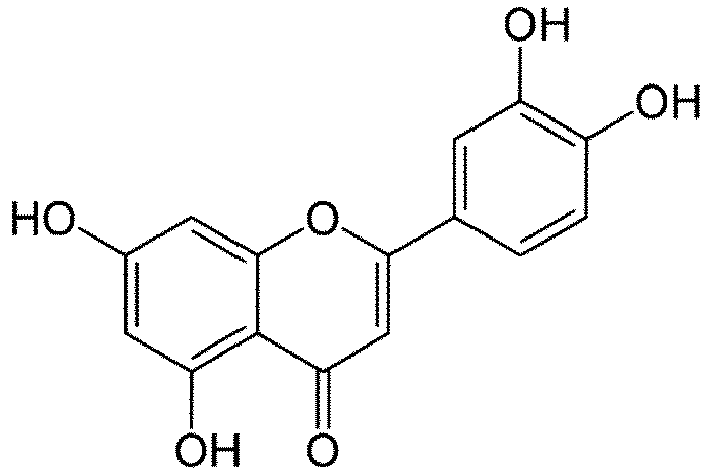
- the dye extracted from Reseda luteola is the flavonoid dye luteolin, which is not an anthraquinone or a naphthoquinone.
- Luteolin comprises four hydroxyl groups and a benzopyranone group (see structure below).
- Solvent fastness of CR-39 lens substrates dip-tinted with Rubia tinctoria was tested by dipping the lens substrate successively in a sodium hydroxide solution and in methanol and compared with the solvent fastness of CR-39 lens substrates dip-tinted with a synthetic dye presently used for the dip-tinting of CR-39 lenses. As seen from the comparison between fig. 1 and fig. 2 , the solvent fastness is excellent and as good as the solvent fastness of the comparative synthetic dye.
- Example A Tinted ophthalmic lens comprising a lens substrate and comprising one or more dyes chosen from anthraquinone dyes comprising at least two hydroxyl groups, naphthoquinone dyes comprising at least two hydroxyl groups, and mixtures thereof.
- Example A1 The lens of Example A, wherein the lens consist of the lens substrate.
- Example A2 The lens of Example A or A1, wherein the lens or the lens substrate has a Tv of 10% and to 90%, in particular of 43% to 80%.
- Example A3 The lens of any one of Examples A to A2, wherein the lens or the lens substrate has a BVC(B') and/or a RCAR(B') of 50% to 100%, in particular of 80% to 100%.
- Example A4 The lens of any one of Examples A to A3, wherein the lens or the lens substrate has a TmB0 and a TmB 1 both of 0% to 40%, in particular of 0% to 20%, more particularly of 0% to 10%
- Example A5 The lens of any one of Examples A to A4, wherein the lens or the lens substrate has a chroma C* above 10, for example of 10 to 150, in particular of 20 to 150.
- Example A6 The lens of any one of Examples A to A5, wherein at least a first portion of the dyes is comprised in the lens substrate.
- Example A7 The lens of Example A6, wherein the first portion of the dyes comprises more than 90%, in particular more than 99% by weight of the dyes comprised in the lens.
- Example A8 The lens of any one of Examples A and A2 to A7, wherein the lens comprises at least one coating.
- Example A9 The lens of Example A8, wherein at least a second portion of the dyes is comprised in the coating.
- Example A10 The lens of Example A9, wherein the second portion of the dyes comprises more than 90%, in particular more than 99% by weight of the dyes comprised in the lens.
- Example A11 The lens of any one of Examples A8 to A10, wherein the coating is a hard coat, in particular a composite hard coat, more particularly a hard coat comprising silica nanoparticles and an organic component, obtained by hydrolysis and polymerization of a trialkoxysilane of formula R-CH 2 -Si(OAlk) 3 , wherein R comprises an epoxy group, and Alk is an alkyl group.
- the coating is a hard coat, in particular a composite hard coat, more particularly a hard coat comprising silica nanoparticles and an organic component, obtained by hydrolysis and polymerization of a trialkoxysilane of formula R-CH 2 -Si(OAlk) 3 , wherein R comprises an epoxy group, and Alk is an alkyl group.
- Example A12 The lens of any one of Examples A to A11, wherein the lens substrate comprises a polythiourethane or an allylic polymer.
- Example A13 The lens of Example A12, wherein the lens substrate comprises more than 90%, in particular more than 95%, by weight relative to the total weight of the lens substrate, of a polythiourethane or an allylic polymer.
- Example A14 The lens of any one of Examples A to A13, wherein the one or more dyes are of biological origin, in particular wherein the one or more dyes are a mixture of dyes of biological origin.
- Example A15 The lens of any one of Examples A to A14, wherein the chemical structures of the one or more dyes comprise only carbon atoms, hydrogen atoms and oxygen atoms.
- Example A16 The lens of any one of Example A15, wherein the one or more dyes are selected from the list comprising alizarin, purpurin, xanthopurpurin, pseudopurpurin, chrysophanol, emodin, physcion, munjistin, rhein, alkannin, lucidin, lucidin omega-methyl ether, ruberythric acid, and mixtures thereof, in particular wherein the dyes comprise a mixture of alizarin and purpurin; a mixture of chrysophanol, emodin and physcion; or alkannin.
- the one or more dyes are selected from the list comprising alizarin, purpurin, xanthopurpurin, pseudopurpurin, chrysophanol, emodin, physcion, munjistin, rhein, alkannin, lucidin, lucidin omega-methyl ether, ruberythric acid, and mixtures thereof, in particular wherein
- Example B Method of tinting an ophthalmic lens comprising the following steps:
- Example B1 The method of Example B, wherein the dipping lasts 5 min to 6 hours, in particular 10 min to 3 hours, and the temperature of the tinting solution during dipping is of 40°C to 120°C, in particular of 50°C to 95°C, more particularly of 70°C to 90°C.
- Example B2 The method of Example B or B1, wherein the provided ophthalmic lens comprises a polythiourethane or an allylic polymer, in particular wherein the provided ophthalmic lens comprises a lens substrate made of the polythiourethane or allylic polymer.
- Example B3 The method of any one of Examples B to B2, wherein the pH of the tinting solution is below 7, for example below 6, below 5, of 1 to 7, of 1.5 to 6, of 1.5 to 4, of 2 to 3, of 5 to 7, or of 6 to 7.
- Example B4 The method of Example B3, wherein the provided ophthalmic lens comprises a lens substrate made of the polythiourethane or allylic polymer, wherein the tinting solution comprises at least one anthraquinone dye comprising at least two hydroxyl groups, and wherein the pH of the tinting solution is below 5, for example of 1.5 to 4 or of 2 to 3.
- Example B5 The method of any one of Examples B to B4, wherein the provided ophthalmic lens consist of a lens substrate.
- Example B6 The method of any one of Examples B to B4, wherein the provided ophthalmic lens comprises a lens substrate and one or more coatings on the lens substrate.
- Example B7 The method of Example B6, wherein the provided ophthalmic lens comprises a hard coat, for example a composite hard coat, and the hard coat is an outermost coating on the lens substrate.
- a hard coat for example a composite hard coat
- Example B8 The method of Example B7, wherein the pH of the tinting solution is above 7, in particular of 8 to 13, more particularly of 11 to 13.
- Example B9 The method of any one of Examples B to B8, wherein the one or more dyes are of biological origin, in particular wherein the one or more dyes are a mixture of dyes of biological origin.
- Example B10 The lens of any one of Examples B to B9, wherein the chemical structures of the one or more dyes comprise only carbon atoms, hydrogen atoms and oxygen atoms.
- Example B11 The method of Examples B10, wherein the dyes comprised in the tinting solution are selected from the list comprising alizarin, purpurin, xanthopurpurin, pseudopurpurin, chrysophanol, emodin, physcion, munjistin, rhein, alkannin, lucidin, lucidin omega-methyl ether, ruberythric acid, and mixtures thereof, in particular wherein said dyes comprise a mixture of alizarin and purpurin; a mixture of chrysophanol, emodin and physcion; or alkannin.
- the dyes comprised in the tinting solution are selected from the list comprising alizarin, purpurin, xanthopurpurin, pseudopurpurin, chrysophanol, emodin, physcion, munjistin, rhein, alkannin, lucidin, lucidin omega-methyl ether, ruberythric acid, and mixtures thereof
- Example B12 The method of any one of Examples B to B11, wherein the tinting solution is devoid of synthetic surfactants, in particular devoid of synthetic additives other than non-surfactant acids or bases, such as acetic acid, citric acid, mineral acids, and sodium hydroxide, more particularly devoid of any synthetic additives.
- synthetic surfactants in particular devoid of synthetic additives other than non-surfactant acids or bases, such as acetic acid, citric acid, mineral acids, and sodium hydroxide, more particularly devoid of any synthetic additives.
- Example B13 The method of any one of Examples B to B12, wherein providing the tinting solution comprises providing the one or more dyes in the form of one or more plant extracts comprising the one or more dyes, in particular, in the form of one or more water-based plant extract.
- Example B14 The method of Example B13, wherein the one or more plant extracts may comprise an extract of one or more parts of a plant of:
- Example B15 The method of any one of Example B13 or B 14, wherein the one or more plant extracts are each obtained by an extraction method wherein the only ingredients used are one or more parts of a plant comprising the one or more dyes and water, for example in the form of a plant powder comprising the dyes.
- Example B 16 The method of any one of Examples B13 to B15, wherein the one or more plant extracts are each obtained by an extraction method comprising the following steps:
- Example B 17 The method of any one of Examples B13 to B16, wherein the tinting solution is devoid of additives other than the one or more plant extracts and other than acids or bases added to adjust the pH, such as acetic acid, citric acid, mineral acids, or sodium hydroxide.
- the tinting solution is devoid of additives other than the one or more plant extracts and other than acids or bases added to adjust the pH, such as acetic acid, citric acid, mineral acids, or sodium hydroxide.
- Example C Tinted ophthalmic lens obtainable by the method of any one of Examples B to B 17.
Landscapes
- Health & Medical Sciences (AREA)
- Ophthalmology & Optometry (AREA)
- Physics & Mathematics (AREA)
- Engineering & Computer Science (AREA)
- General Physics & Mathematics (AREA)
- Optics & Photonics (AREA)
- Manufacturing & Machinery (AREA)
- Mechanical Engineering (AREA)
- General Health & Medical Sciences (AREA)
- Eyeglasses (AREA)
Abstract
The present disclosure relates to a tinted ophthalmic lens comprising a lens substrate and comprising one or more dyes, which may be of biological origin, chosen from anthraquinone dyes comprising at least two hydroxyl groups, naphthoquinone dyes comprising at least two hydroxyl groups, and mixtures thereof. The present disclosure relates to a method of tinting an ophthalmic lens comprising the following steps:Providing an ophthalmic lens,Providing a tinting solution comprising water as a solvent and one or more dyes dissolved therein chosen from anthraquinone dyes comprising at least two hydroxyl groups, naphthoquinone dyes comprising at least two hydroxyl groups, and mixtures thereof, said dyes may in particular be provided as a plant extract,Dipping at least a portion of the ophthalmic lens, for example the whole ophthalmic lens, into the tinting solution to tint the ophthalmic lens, andRecovering the tinted ophthalmic lens.
Description
- The present disclosure relates to the field of tinted ophthalmic lenses, tinting processes for ophthalmic lenses and, in particular, to a dip-tinting process.
- A widely used process for tinting ophthalmic lenses is dip-tinting.
- Dip-tinting consists in dying the lens through dipping the lens in a tinting solution comprising a dye, a solvent and optional additives, such as acids or bases, surfactants etc. In the dip-tinting process, the solvent and other parameters of the process, such as the additives, the temperature or the pH of the solution, increase the porosity of the lens and facilitate the diffusion of the dye into the lens. When the lens is removed from the tinting solution and dried, the porosity of the lens comes back to normal and the dye that diffused into the lens is trapped therein, thereby tinting the lens. However, the diffusion of the dye into the lens remains generally limited (due to slow diffusion and/or to the fact that the change in porosity of the lens is not homogeneous) and the obtained lens comprises the dye mainly in a layer close to the surface of the lens.
- Nowadays, the dyes used for dying lenses through dip-tinting are synthetic dyes (i.e. made by chemical synthesis) dependent on the oil industry and/or on complicated transformation processes of raw matter into the dye molecules.
- It would be desirable to find alternative sources of dyes usable for the dip-tinting of ophthalmic lenses, such that the production of the dyes would be less dependent or non-dependent on the oil industry and/or on complicated transformation processes of raw matter. In particular, it is desired to have dyes of biological origin usable for the dip-tinting of ophthalmic lenses.
- However, dip-tinting lenses is a process in which not any dye can be used. Specific dyes and/or process conditions are necessary to obtain efficient tinting of an ophthalmic lens. Under a given set of conditions, it is not obvious to find or predict which dye will be able to penetrate a given ophthalmic lens and it is not obvious that the dye will be efficiently retained in the lens thereafter and provide a stable color to the lens.
- It is the merit of the present disclosure to provide ophthalmic lenses efficiently tinted with dyes that may be of biological origin. The present disclosure also provides a remarkably simple method for tinting an ophthalmic lens via dip-tinting which allows tinting lenses with dyes of biological origin. Moreover, the presently disclosed method does not require the use of organic solvents or of synthetic additives (such as a dispersant or a mordant).
- The present disclosure relates to a tinted ophthalmic lens comprising one or more dyes chosen from anthraquinone dyes comprising at least two hydroxyl groups, naphthoquinone dyes comprising at least two hydroxyl groups, and mixtures thereof.
- The present disclosure also relates to a method of tinting an ophthalmic lens comprising the following steps:
- Providing an ophthalmic lens,
- Providing a tinting solution comprising water as a solvent and one or more dyes dissolved therein chosen from anthraquinone dyes comprising at least two hydroxyl groups, naphthoquinone dyes comprising at least two hydroxyl groups, and mixtures thereof,
- Dipping at least a portion of the ophthalmic lens, for example the whole ophthalmic lens, into the tinting solution to tint the ophthalmic lens, and
- Recovering the tinted ophthalmic lens.
- The present disclosure also relates to a tinted ophthalmic lens obtainable by the herein disclosed method of tinting.
-
-
Figure 1 represents the transmission spectra of a CR-39 lens substrate dip-tinted with a Rubia tinctoria extract directly after tinting (dashed line), after dipping in a sodium hydroxide solution (dotted line), and after dipping in methanol (solid line). -
Figure 2 represents the transmission spectra of a CR-39 lens substrate dip-tinted with a synthetic dye directly after tinting (dashed line), after dipping in a sodium hydroxide solution (dotted line), and after dipping in methanol (solid line). -
Figure 3 represents the transmission spectra of a CR-39 lens substrate dip-tinted with a Rubia tinctoria extract directly after tinting (dashed line), after 20 hours of UV-ageing (dotted line), and after 40 hours of UV-ageing (solid line). -
Figure 4 represents the transmission spectra of a CR-39 lens substrate dip-tinted with a synthetic dye directly after tinting (dashed line), after 20 hours of UV-ageing (dotted line), and after 40 hours of UV-ageing (solid line). - The presently disclosed tinted ophthalmic lens comprises a lens substrate and comprises one or more dyes chosen from anthraquinone dyes comprising at least two hydroxyl groups, naphthoquinone dyes comprising at least two hydroxyl groups, and mixtures thereof.
- Said one or more dyes are hereinafter called "the dyes".
- The presently disclosed tinted ophthalmic lens is hereinafter called "the presently disclosed lens".
- In the presently disclosed lens, the dyes contribute to providing its tint to the lens.
- As herein defined, an ophthalmic lens is a lens which is designed to be used in monocles or in eyeglasses (including sunglasses, goggles and safety glasses). As defined herein, contact lenses are not ophthalmic lenses. Ophthalmic lenses are typically used to protect the eye and/or correct the sight. Ophthalmic lenses may be non-corrective ophthalmic lenses (also called piano or afocal lenses) or corrective ophthalmic lenses. A corrective lens may be a unifocal, a bifocal, a trifocal, or a progressive lens. As defined herein, ophthalmic lenses may be finished lenses of semi-finished lenses. A semi-finished lens may undergo various treatment steps such as surfacing, coloring, coating and edging before being finally included in eyeglasses or in a monocle. A finished lens is ready to be included in eyeglasses or in a monocle.
- As defined herein, a lens substrate is the main part of a lens which provides the bulk of its optical and thermomechanical properties to the lens. As defined herein, an ophthalmic lens substrate is an ophthalmic lens (i.e. a lens may comprise only a lens substrate, often a semi-finished lens is a lens substrate). A lens may also comprise the lens substrate and one or more coatings deposited on the substrate. Such coatings are well known to the skilled person and may comprise a hard coat, an interferential stack, such as an antireflective stack, an anti-smudge coating, etc.
- The presently disclosed lens may consist of the lens substrate. In such case, the lens substrate is a tinted lens substrate.
- As defined herein, a tinted lens is a lens comprising one or more colorants, such as a dye, wherein the one or more colorants provide the lens with a certain color or modify the original color of the lens, which may originate from other sources than said colorants, such as interferential stacks, UV absorbers or the polymer from which the lens substrate is made. In a tinted lens, the parts of the tinted lens comprising the colorant are such that the colorant provides the desired color change to the desired parts of the lens and a tinted lens must comprise an amount of colorant sufficient for providing the desired change of color to the parts of the lens, whose color must be changed by the colorant. Tinting a lens is the process of adding such a colorant to a lens to tint the lens. With the present definition of a tinted lens, it may be that a tinted lens does not have a strong coloration, for example it may be the case if the only goal of adding the colorant is to balance the color originating from other sources to make it more neutral or if a very light tint is sought after. The present definition of tinted lenses also includes more strongly colored lenses such as lenses for sunglasses.
- It has been observed that the dyes, which may be of biological origin, may be efficiently introduced in a lens to provide tint to the lens. Moreover, the obtained lenses have a tint that has excellent resistance to exposure to chemicals such as solvents or bases and to exposure to UV radiation.
- The presently disclosed lens or the lens substrate of the presently disclosed lens may have any one of the following optical properties:
- a chroma C* above 10, for example of 10 to 150, in particular of 20 to 150,
- a Tv of 10% and to 90%, for example of 43% to 80%, and/or
- a BVC(B') and/or a RCAR(B') of 50% to 100%, in particular of 80% to 100%, and/or
- a TmB0 and a TmB1 of 0% to 40%, in particular of 0% to 20%, more particularly of 0% to 10%.
- In the present disclosure, the colorimetric coefficients L*, a*, b*, C* and h are the colorimetric coefficients of the CIE L*a*b* color space of 1976. They are calculated between 380 and 780 nm, for light transmitted through the lens at an angle of incidence of 0°. The observer is a "standard observer" (10°) as defined in the CIE L*a*b* color space of 1976 and the illuminant considered is D65.
- The Tv factor, also called luminous transmission of the system, is such as defined in the standard ISO 13666:1998 and is the average transmission in the 380-780 nm wavelength weighted according to the sensitivity of the eye at each wavelength of the range and measured under D65 illumination conditions (daylight).
- BVC(B') is a measure of the blue cut performance of a lens. It is described in document
EP 3296799 A1 . It is measured and calculated according to the following formula:
T(λ) is the transmittance (%) with 5 nm pitch at a given wavelength measured at 0° incidence; and
B'(λ) is the blue light hazard function as defined in the table below:Wavelength (nm) Ponderation coefficient B'(λ) 400 0.1618 410 0.3263 420 0.8496 430 1.00 440 0.6469 450 0.4237 - RCAR (Retinal Cell Apoptosis Reduction), also known as photoprotective potency, is another measure of the blue cut performance of a lens. It is described in document
EP 3296799 A1 . It is determined as the difference between the light-induced apoptosis rate without the filtering of the lens (ANF) and the light-induced apoptosis rate with the lens (AF) divided by the light-induced apoptosis rate without any lens (ANF):
- RCAR may be measured by in vitro measurements by measuring the effect of the lens filtering out the blue light on the apoptosis of A2E-loaded retinal pigment epithelium cells. This in vitro model that comprises A2E-loaded retinal pigment epithelium cells, is described in details in the paper titled "Phototoxic Action Spectrum on a retinal Pigment Epithelium model of Age-Related macular Degeneration Exposed to Sunlight Normalized Conditions", by author Arnault, Barrau et al. published on August 23, 2013 in the peer-reviewed scientific Journal PlosOne (available on plosone.org website).
- The in vitro measurements using narrow band light sources or a broadband visible light source are described in document
EP 3214483 A1 . - The measurement of RCAR may also be calculated directly from the transmission spectrum of the lens of the invention by using a calculation model correlated with the experimental in vitro results as described in document
EP 3214483 A1 . - TmB0 is the average transmittance as measured, e.g. with a spectrometer, of the ophthalmic lens over the range 415-455 nm.
- TmB1 is the average transmittance as measured, e.g. with a spectrometer, of the ophthalmic lens over the range 420-450 nm.
- In the presently disclosed lens, at least a first portion of the dyes is comprised in the lens substrate. In particular, the first portion of the dyes may comprise more than 90%, more particularly more than 99% by weight of the dyes comprised in the lens.
- The presently disclosed lens may comprise a coating. In this case, at least a second portion of the dyes may be comprised in the coating. In particular, the second portion of the dyes may comprise more than 90%, more particularly more than 99% by weight of the dyes comprised in the lens.
- The coating comprised in the presently disclosed lens may be a hard coat. Said hard coat may be a composite hard coat.
- As defined herein a hard coat is a coating designed to protect the lens from the formation of scratches. Such coatings, well-known to the skilled person, comprise composite hard coats.
- A composite hard coat comprises mineral nanoparticles, for example silica nanoparticles, and an organic component, which may be obtained by hydrolysis and polymerization of epoxy silanes with alkyl groups such as 3-glycidoxypropyl)trimethoxysilane. These coatings solve the problem of the formation of scratches due to their two-fold properties: resistance to fine scratches due to the hardness of their mineral component and resistance to large scratches due to the suppleness of their organic component. For example, document
EP0614957 describes a composite hard coat. - The presently disclosed lens may comprise a hard coat comprising silica nanoparticles and an organic component, obtained by hydrolysis and polymerization of a trialkoxysilane of formula R-CH2-Si(OAlk)3, wherein R comprises an epoxy group, for example, R-CH2- may be a 3-glycidoxypropyl group, and Alk is an alkyl group, such as a methyl or ethyl group.
- The lens substrate of the presently disclosed lens may comprise a polythiourethane or an allylic polymer. In particular, the lens substrate may comprise more than 90%, more particularly more than 95%, by weight relative to the total weight of the lens substrate, of a polythiourethane or an allylic polymer.
- Polythiourethane and allylic polymers suitable for making ophthalmic lens substrates are well-known to the skilled person.
- Polythiourethane are cross-linked polymers obtained from monomers comprising a polyisocyanate monomer, for example an aromatic polyisocyanate monomer, and a polythiol monomer. For example said monomers may comprise a diisocyanate and a trithiol. For example, the polythiourethane may be a polythiourethane with a refractive index of greater than 1.50, in particular of from 1.55 to 1.8, more particularly of 1.6 to 1.7.
- Unless otherwise specified, the refractive indexes referred to in the present disclosure are expressed at 25°C, at atmospheric pressure and at a wavelength of 550 nm.
- One example of a suitable polythiourethane is MR-7 (provided by Mitsui Chemicals), which is obtained from monomers comprising 2,3-bis((2-mercaptoethyl)thio)-1-propanethiol and m-xylylene diisocyanate.
- Allylic polymers suitable for ophthalmic lens substrates are cross-linked polymers obtained from precursors comprising one or more allyl monomer or oligomer comprising at least two allyl groups each. For example, the allylic polymer may be an allylic polymer with a refractive index of below 1.6, in particular of 1.45 to 1.55. Said allyl monomer or oligomer may be selected from the group comprising diethylene glycol bis(allyl carbonate), oligomers of diethylene glycol bis(allyl carbonate), ethylene glycol bis(allyl carbonate), oligomers of ethylene glycol bis(allyl carbonate), bisphenol A bis(allyl carbonate), oligomers of bisphenol A bis(allyl carbonate), diallyl phthalate, diallyl isophthalate, diallyl terephthalate, and mixtures thereof.
- One example of an allylic polymer is the one obtained from polymerization CR-39™ (provided by PPG).
- A more efficient tinting of the lens substrate is obtained when the lens substrate comprises a polythiourethane or an allylic polymer, in particular when the polythiourethane is obtained from monomers comprising an aromatic polyisocyanate.
- In the present disclosure, the dyes may comprise or consist of dyes of biological origin. In particular, the dyes may comprise or consist of a mixture of dyes of biological origin.
- A dye or a mixture of dyes of biological origin is a dye or a mixture of dyes that can be found in a living organism. In the case of a mixture of dyes, it is to be understood that all dyes comprised in said mixture can be found in one living organism even if the living organism also contains other dyes, and even if the relative amount of each dye is not the same in the living organism and in said mixture. For example, in the case of a plant extract from a plant comprising several dyes, depending on the particular extraction method, the relative amount of each dye may not be the same in the living organism and in the plant extract. A dip tinting process using this plant extract as a tinting solution may result in a lens having once again a relative amount of each dye differing from the relative amount of each dye in the tinting solution and from the relative amount of each dye in the plant.
- In the present disclosure, the chemical structures of the dyes preferably comprise only carbon atoms, hydrogen atoms and oxygen atoms.
- Most anthraquinone and naphthoquinone dyes of biological origin have chemical structures comprising only carbon atoms, hydrogen atoms and oxygen atoms.
- In the present disclosure, the dyes may be selected from the list comprising alizarin, purpurin, xanthopurpurin, pseudopurpurin, chrysophanol, emodin, physcion, munjistin, rhein, alkannin, lucidin, lucidin omega-methyl ether, ruberythric acid, and mixtures thereof. In particular, the dyes may comprise a mixture of alizarin and purpurin, such as in plant extracts from Rubia tinctoria; a mixture of chrysophanol, emodin and physcion, such as in plant extracts from Rheum rhabarbarum; or alkannin, such as in plant extracts from Alkanna orientalis.
- The presently disclosed method of tinting an ophthalmic lens (hereinafter "the presently disclosed method") comprises the following steps:
- Providing an ophthalmic lens,
- Providing a tinting solution comprising water as a solvent and one or more dyes dissolved therein chosen from anthraquinone dyes comprising at least two hydroxyl groups, naphthoquinone dyes comprising at least two hydroxyl groups, and mixtures thereof,
- Dipping at least a portion of the ophthalmic lens, for example the whole ophthalmic lens, into the tinting solution to tint the ophthalmic lens, and
- Recovering the tinted ophthalmic lens.
- The presently disclosed method is a dip-tinting method.
- The steps of providing a lens and of providing a tinting solution may be performed in any order.
- It should be understood that the provided lens may be dipped in the water used for the tinting solution before or after the dyes are added to or dissolved in the tinting solution.
- The dyes may be dissolved in the tinting solution by adding a plant extract or one or more part of a plant to the water used for the tinting solution. In the latter case, the dissolving of the dyes contained in the one or more part of the plant in the water used for the tinting solution is an extraction of the dyes from the one or more part of the plant. In this case, it should be understood that the provided lens may be dipped in the water used for the tinting solution before or during or after the extraction of the dyes from one or more part of the plants in said water used for the tinting solution.
- The mechanical means (for example the container for the solution, holder of the lens) to perform the method may be any means known to the skilled person.
- The step of recovering may be performed by any method known to the skilled person and may comprise a step of drying the lens.
- In the presently disclosed method, the dipping may last 5 min to 6 hours, in particular 10 min to 3 hours, and the temperature of the tinting solution during dipping may be of 40°C to 120°C, in particular of 50°C to 95°C, more particularly of 70°C to 90°C.
- In the presently disclosed method, the provided ophthalmic lens may comprise a polythiourethane or an allylic polymer. In particular, the provided ophthalmic lens may comprise a lens substrate made of the polythiourethane or allylic polymer.
- What has been said in relation with the presently disclosed lens regarding polythiourethanes or allylic polymers is applicable to the polythiourethanes or allylic polymers in the presently disclosed method.
- It has been observed that using the dyes make it possible to tint polythiourethanes or allylic polymers particularly efficiently.
- In the presently disclosed method, the pH of the tinting solution may be below 7, for example below 6, below 5, of 1 to 7, of 1.5 to 6, of 1.5 to 4, of 2 to 3, of 5 to 7, or of 6 to 7.
- The pH of the tinting solution influences the hue of the dye and the efficiency of the tinting process. In particular, for tinting polythiourethanes or allylic polymers with the dyes, an acidic pH is preferred.
- In some embodiments of the presently disclosed method, the provided ophthalmic lens may consist of a lens substrate. This implies that the provided ophthalmic lens is devoid of coatings.
- In other embodiments of the presently disclosed method, the provided ophthalmic lens may comprise a lens substrate and one or more coatings on the lens substrate. For example, the provided ophthalmic lens may comprise a hard coat and the hard coat may be an outermost coating on the lens substrate. In such embodiments, the pH of the tinting solution may be above 7, in particular of 8 to 13, more particularly of 11 to 13.
- What has been said in relation with the presently disclosed lens regarding hard coats is applicable to the hard coats in the presently disclosed method.
- When the provided lens comprises a hard coat, it is possible to tint the hard coat even when the lens substrate is not easily tintable.
- What has been said regarding the dyes in relation with the presently disclosed lens is applicable to the dyes in the presently disclosed method.
- Moreover, in the presently disclosed method, providing the tinting solution may comprise providing the one or more dyes in the form of one or more plant extracts comprising the dyes.
- Plant extracts are defined as concentrated preparations of liquid, solid or viscous consistency. As a rule, they are obtained from plants or one or more particular part of a plant by maceration (extraction to equilibrium with water or alcohol) or percolation (extraction to exhaustion with water or alcohol). Water-soluble (hydrophilic) constituents may be extracted with water giving a water-based plant extract, whilst fat-soluble (lipophilic) constituents are extracted with alcohol or other organic solvents giving an organic solvent-based plant extract.
- In the presently disclosed method, the one or more plant extracts may be water-based plant extract.
- In the presently disclosed method, the one or more plant extracts may comprise an extract of one or more parts of a plant from the rubiaceae family of plants, in particular from the genus rubia, the genus asperula, or the genus galium, more particularly from Rubia tinctoria or Rubia cordifolia.
- In the presently disclosed method, the one or more plant extracts may comprise an extract of one or more parts of a plant from the polygonaceae family of plants, in particular from the genus rheum or from the genus rumex, more particularly from Rheum x hybridum, Rheum rhaponticum or Rheum rhabarbatum.
- In the presently disclosed method, the one or more plant extracts may comprise an extract of one or more parts of a plant from the boraginaceae family of plants, in particular from the genus alkanna, more particularly from Alkanna tinctoria or Alkanna orientalis.
- In the presently disclosed method, the one or more plant extracts may comprise an extract of one or more parts of a plant from the Rhamnaceae family of plants, in particular from the genus frangula, such as Frangula alnus, or from the genus rhamnus, such as Rhamnus alaternus.
- The tinting solution may be devoid of synthetic surfactants. In particular, the tinting solution may be devoid of synthetic additives other than non-surfactant acids or bases, such as acetic acid citric acid, mineral acids, and sodium hydroxide. More particularly, the tinting solution may be devoid of any synthetic additives.
- The one or more plant extracts may be obtained by an extraction method wherein the only ingredients used are one or more parts of a plant comprising the dyes, for example in the form of a plant powder comprising the dyes, and water.
- The one or more plant extracts may be obtained by an extraction method comprising the following steps:
- a. Providing one or more parts of the plant comprising the dyes, for example in the form of a plant powder comprising the dyes,
- b. Providing water in a container,
- c. Plunging the provided one or more parts of the plant in the water in the container,
- d. Optionally, changing the water in the container one or more times,
- e. Heating the one or more parts of the plant in the water in the container to extract the dyes from the one or more parts of the plant, for example heating the one or more parts of the plant in water 15 minutes to 3 hours at 70°C to 95°C,
- f. Optionally separating the one or more parts of the plant from the aqueous solution or suspension comprising the dyes to obtain the plant extract, and
- g. Optionally concentrating the plant extract.
- As mentioned above, the lens may be dipped in the water in the container before or during the extraction of the dyes from the plants, for example at the beginning of step e. in the extraction method above, during step e., or before step e. when step d. is omitted. The extraction of the dyes and the tinting of the lens then happen simultaneously.
- In the presently disclosed method, the tinting solution may be devoid of additives other than the one or more plant extracts and other than acids or bases added to adjust the pH. The acids or bases added to adjust the pH may comprise acetic acid, citric acid, mineral acids, and sodium hydroxide.
- This is in contrast with currently used dip tinting processes where a dispersant is added to help the dye penetrate the lens during the dipping.
- The present disclosure also relates to a tinted ophthalmic lens obtainable by the presently disclosed method.
- In particular, when such a tinted ophthalmic lens is obtained from the presently disclosed method wherein the provided ophthalmic lens is a lens substrate, the dye is comprised in the lens substrate, close to the surface of the parts of the lens substrate that were immersed in the tinting solution during the step of dipping. When the provided ophthalmic lens comprises a hard coat, a majority of the dye may be located in the hard coat.
- The following plant extracts or plant powders were obtained from commercial providers in the form of powders:
- Rubia tinctoria (plant extract; Couleur Garance, 84360 Lauris, France),
- Alkanna orientalis (plant powder; Plantes et couleurs, 56320 Le Faouet, France),
- Lawsonia inermis (plant powder; Couleur Garance, 84360 Lauris, France),
- Reseda luteola (plant extract; Couleur Garance, 84360 Lauris, France).
- The tinting solutions were prepared from the commercial plant extracts or powders as follows: plant extracts or plant powders were added to water at room temperature and the obtained solution was heated 1h at 70°C to 95°C.
- Plant extract from Rheum x hybridum was obtained using the following procedure:
- Harvest the root of Rheum x hybridum.
- Cut the harvested roots of Rheum x hybridum into pieces and put the cut pieces into water at room temperature for 24h.
- Remove the water.
- Put the wet cut pieces of Rheum x hybridum, in water.
- Heat 1h at 70 to 95°C.
- Filter, keep the liquid extract and remove the plant pieces.
- The thus obtained liquid extract from Rheum x hybridum was used directly as the tinting solution.
- The following procedure was followed for dip tinting of lenses:
- Provide the lens
- Provide the tinting solution
- Adjust the pH of the tinting solution
- Dip the lens into the tinting solution
- Heat at 70 to 95°C for the desired amount of time
- Remove the lens and rinse with water
- Table 1 below summarizes the conditions tested. The substrate material is indicated in the column "Substrate" (where "PC" means polycarbonate). The presence of a coating is specified and where a coating is present, the type is specified. "HC" means that the coating is a composite hard coat comprising silica colloids and a product of hydrolysis and polymerization of (3-glycidoxypropyl)trimethoxysilane. The pH of the tinting solution is indicated in the column "pH".
- The pH of the tinting solutions was adjusted using white vinegar for acidification or sodium hydroxide for making the pH more basic.
Table 1 Lens n° Substrate Coating Plant extract pH Dip time (min) 1 CR-39 no - 5 60 2 CR-39 no Rubia tinctoria 5 10 3 CR-39 no Rubia tinctoria 5 60 4 CR-39 no Rubia tinctoria 5 140 5 CR-39 no Rubia tinctoria 2.5 60 6 CR-39 no Rheum x hybridum 5 60 7 CR-39 no Alkanna orientalis 2.5 60 8 CR-39 no Lawsonia inermis 5 60 9 CR-39 no Reseda luteola 5 20 10 MR7 no Rubia tinctoria 5 15 11 MR7 no Rubia tinctoria 5 120 12 MR7 no Reseda luteola 5 15 13 CR-39 HC Rubia tinctoria 2.5 60 14 CR-39 HC Rubia tinctoria 5 60 15 PC HC Rubia tinctoria 12 60 16 CR-39 HC Reseda luteola 2.5 60 17 CR-39 HC Reseda luteola 5 60 - Table 2 below presents measurements made on the tinted lens.
- The lens numbers in bold font and underlined correspond to comparative examples where the tinting was inefficient (as seen e.g. from the low values of C∗).
- For lens n°1 the tinting solution did not comprise any dye.
- Lens n° 8 was tinted with extracts from Lawsonia inermis. The dye extracted from Lawsonia inermis, lawsone, is a naphthoquinone dye comprising only one hydroxyl group (see structure below).
- Lenses n° 9, 12, 16 and 17 were tinted with extracts from Reseda luteola. The dye extracted from Reseda luteola is the flavonoid dye luteolin, which is not an anthraquinone or a naphthoquinone. Luteolin comprises four hydroxyl groups and a benzopyranone group (see structure below).
- Comparing lens n° 10 with lens n° 12 shows that tinting of MR7 is more efficient with Rubia tinctoria compared to Reseda Luteola.
- Comparing lenses n° 13 and 14 with lenses n° 16 and 17 shows that, even with a hard coat, tinting with Reseda luteola is inefficient compared to tinting with Rubia tinctoria.
Table 2 Lens n° L∗ a∗ b∗ C∗ h Tv BVC(B') RCAR(B') TmB0 TmB1 1 97 0 0 0 114 92 9 17 91.4 91.5 2 91 -7 87 87 95 81.8 97 100 3.3 3.0 3 90 -7 106 106 94 79.9 100 100 0.3 0.3 4 83 14 124 125 84 67.3 100 100 0.0 0.0 5 90 0 55 55 90 80.1 81 84 19.4 18.8 6 95 -15 56 58 106 89.2 81 87 18.4 17.5 7 84 25 3 25 6 64.1 32 37 67 67 8 96 0 2 2 100 90.7 13 22 87.6 87.7 9 96 0 2 2 87 90.9 15 24 86.3 86.6 10 94 -2 11 11 101.6 85.7 36.3 36.4 68.8 69.6 11 91 -3 30 30 95 79.8 62 50 41.3 41.7 12 95 -1 2 2 119 86.6 23 27 83.2 84.4 13 76 25 36 44 55 51.5 79 81 21.1 20.8 14 79 18 20 27 48 56.3 64 55 36.3 36.3 15 84 9 19 21 65 65.9 55 47 44.7 44.4 16 95 -3 8 9 111 87 37 37 68.3 68.6 17 95 -2 4 5 111 88 26 32 77.3 77.7 -

-

-

-

-

-

-

-
-

-

-

-

-

-

-

- Solvent fastness of CR-39 lens substrates dip-tinted with Rubia tinctoria was tested by dipping the lens substrate successively in a sodium hydroxide solution and in methanol and compared with the solvent fastness of CR-39 lens substrates dip-tinted with a synthetic dye presently used for the dip-tinting of CR-39 lenses. As seen from the comparison between
fig. 1 and fig. 2 , the solvent fastness is excellent and as good as the solvent fastness of the comparative synthetic dye. - Light fastness of CR-39 lens substrates dip-tinted with Rubia tinctoria was tested by exposure to UV light in a xenon test chamber Q-SUN ® Xe-3 from Q-LAB and compared with the light fastness of CR-39 lens substrates dip-tinted with a synthetic dye presently used for the dip-tinting of CR-39 lenses. As seen from the comparison between
fig. 3 and fig. 4 , the light fastness is excellent and as good as the light fastness of the comparative synthetic dye. - Example A: Tinted ophthalmic lens comprising a lens substrate and comprising one or more dyes chosen from anthraquinone dyes comprising at least two hydroxyl groups, naphthoquinone dyes comprising at least two hydroxyl groups, and mixtures thereof.
- Example A1: The lens of Example A, wherein the lens consist of the lens substrate.
- Example A2: The lens of Example A or A1, wherein the lens or the lens substrate has a Tv of 10% and to 90%, in particular of 43% to 80%.
- Example A3: The lens of any one of Examples A to A2, wherein the lens or the lens substrate has a BVC(B') and/or a RCAR(B') of 50% to 100%, in particular of 80% to 100%.
- Example A4: The lens of any one of Examples A to A3, wherein the lens or the lens substrate has a TmB0 and a TmB 1 both of 0% to 40%, in particular of 0% to 20%, more particularly of 0% to 10%
- Example A5: The lens of any one of Examples A to A4, wherein the lens or the lens substrate has a chroma C* above 10, for example of 10 to 150, in particular of 20 to 150.
- Example A6: The lens of any one of Examples A to A5, wherein at least a first portion of the dyes is comprised in the lens substrate.
- Example A7: The lens of Example A6, wherein the first portion of the dyes comprises more than 90%, in particular more than 99% by weight of the dyes comprised in the lens.
- Example A8: The lens of any one of Examples A and A2 to A7, wherein the lens comprises at least one coating.
- Example A9: The lens of Example A8, wherein at least a second portion of the dyes is comprised in the coating.
- Example A10: The lens of Example A9, wherein the second portion of the dyes comprises more than 90%, in particular more than 99% by weight of the dyes comprised in the lens.
- Example A11: The lens of any one of Examples A8 to A10, wherein the coating is a hard coat, in particular a composite hard coat, more particularly a hard coat comprising silica nanoparticles and an organic component, obtained by hydrolysis and polymerization of a trialkoxysilane of formula R-CH2-Si(OAlk)3, wherein R comprises an epoxy group, and Alk is an alkyl group.
- Example A12: The lens of any one of Examples A to A11, wherein the lens substrate comprises a polythiourethane or an allylic polymer.
- Example A13: The lens of Example A12, wherein the lens substrate comprises more than 90%, in particular more than 95%, by weight relative to the total weight of the lens substrate, of a polythiourethane or an allylic polymer.
- Example A14: The lens of any one of Examples A to A13, wherein the one or more dyes are of biological origin, in particular wherein the one or more dyes are a mixture of dyes of biological origin.
- Example A15: The lens of any one of Examples A to A14, wherein the chemical structures of the one or more dyes comprise only carbon atoms, hydrogen atoms and oxygen atoms.
- Example A16: The lens of any one of Example A15, wherein the one or more dyes are selected from the list comprising alizarin, purpurin, xanthopurpurin, pseudopurpurin, chrysophanol, emodin, physcion, munjistin, rhein, alkannin, lucidin, lucidin omega-methyl ether, ruberythric acid, and mixtures thereof, in particular wherein the dyes comprise a mixture of alizarin and purpurin; a mixture of chrysophanol, emodin and physcion; or alkannin.
- Example B: Method of tinting an ophthalmic lens comprising the following steps:
- Providing an ophthalmic lens,
- Providing a tinting solution comprising water as a solvent and one or more dyes dissolved therein chosen from anthraquinone dyes comprising at least two hydroxyl groups, naphthoquinone dyes comprising at least two hydroxyl groups, and mixtures thereof,
- Dipping at least a portion of the ophthalmic lens, for example the whole ophthalmic lens, into the tinting solution to tint the ophthalmic lens, and
- Recovering the tinted ophthalmic lens.
- Example B1: The method of Example B, wherein the dipping lasts 5 min to 6 hours, in particular 10 min to 3 hours, and the temperature of the tinting solution during dipping is of 40°C to 120°C, in particular of 50°C to 95°C, more particularly of 70°C to 90°C.
- Example B2: The method of Example B or B1, wherein the provided ophthalmic lens comprises a polythiourethane or an allylic polymer, in particular wherein the provided ophthalmic lens comprises a lens substrate made of the polythiourethane or allylic polymer.
- Example B3: The method of any one of Examples B to B2, wherein the pH of the tinting solution is below 7, for example below 6, below 5, of 1 to 7, of 1.5 to 6, of 1.5 to 4, of 2 to 3, of 5 to 7, or of 6 to 7.
- Example B4: The method of Example B3, wherein the provided ophthalmic lens comprises a lens substrate made of the polythiourethane or allylic polymer, wherein the tinting solution comprises at least one anthraquinone dye comprising at least two hydroxyl groups, and wherein the pH of the tinting solution is below 5, for example of 1.5 to 4 or of 2 to 3.
- Example B5: The method of any one of Examples B to B4, wherein the provided ophthalmic lens consist of a lens substrate.
- Example B6: The method of any one of Examples B to B4, wherein the provided ophthalmic lens comprises a lens substrate and one or more coatings on the lens substrate.
- Example B7: The method of Example B6, wherein the provided ophthalmic lens comprises a hard coat, for example a composite hard coat, and the hard coat is an outermost coating on the lens substrate.
- Example B8: The method of Example B7, wherein the pH of the tinting solution is above 7, in particular of 8 to 13, more particularly of 11 to 13.
- Example B9: The method of any one of Examples B to B8, wherein the one or more dyes are of biological origin, in particular wherein the one or more dyes are a mixture of dyes of biological origin.
- Example B10 The lens of any one of Examples B to B9, wherein the chemical structures of the one or more dyes comprise only carbon atoms, hydrogen atoms and oxygen atoms.
- Example B11: The method of Examples B10, wherein the dyes comprised in the tinting solution are selected from the list comprising alizarin, purpurin, xanthopurpurin, pseudopurpurin, chrysophanol, emodin, physcion, munjistin, rhein, alkannin, lucidin, lucidin omega-methyl ether, ruberythric acid, and mixtures thereof, in particular wherein said dyes comprise a mixture of alizarin and purpurin; a mixture of chrysophanol, emodin and physcion; or alkannin.
- Example B12: The method of any one of Examples B to B11, wherein the tinting solution is devoid of synthetic surfactants, in particular devoid of synthetic additives other than non-surfactant acids or bases, such as acetic acid, citric acid, mineral acids, and sodium hydroxide, more particularly devoid of any synthetic additives.
- Example B13: The method of any one of Examples B to B12, wherein providing the tinting solution comprises providing the one or more dyes in the form of one or more plant extracts comprising the one or more dyes, in particular, in the form of one or more water-based plant extract.
- Example B14: The method of Example B13, wherein the one or more plant extracts may comprise an extract of one or more parts of a plant of:
- a. the rubiaceae family of plants, in particular from the genus rubia, the genus asperula, or the genus galium, more particularly from Rubia tinctoria or Rubia cordifolia; or of
- b. the polygonaceae family of plants, in particular from the genus rheum or from the genus rumex, more particularly from Rheum x hybridum, Rheum rhaponticum or Rheum rhabarbatum; or of
- c. the boraginaceae family of plants, in particular from the genus alkanna, more particularly from Alkanna tinctoria or Alkanna orientalis; or of
- d. the Rhamnaceae family of plants, in particular from the genus frangula, such as Frangula alnus, or from the genus rhamnus, such as Rhamnus alaternus.
- Example B15: The method of any one of Example B13 or B 14, wherein the one or more plant extracts are each obtained by an extraction method wherein the only ingredients used are one or more parts of a plant comprising the one or more dyes and water, for example in the form of a plant powder comprising the dyes.
- Example B 16: The method of any one of Examples B13 to B15, wherein the one or more plant extracts are each obtained by an extraction method comprising the following steps:
- a. Providing one or more parts of the plant comprising the one or more dyes, for example in the form of a plant powder comprising the dyes,
- b. Providing water in a container,
- c. Plunging the provided parts of the plant in the water in the container,
- d. Optionally, changing the water in the container one or more times,
- e. Heating the parts of the plant in the water in the container to extract the dyes from the parts of the plant, for example heating the parts of the plant in water 15 minutes to 3 hours at 70°C to 95°C,
- f. Optionally separating the parts of the plant from the aqueous solution or suspension comprising the dyes to obtain the plant extract, and
- g. Optionally concentrating the plant extract.
- Example B 17: The method of any one of Examples B13 to B16, wherein the tinting solution is devoid of additives other than the one or more plant extracts and other than acids or bases added to adjust the pH, such as acetic acid, citric acid, mineral acids, or sodium hydroxide.
- Example C: Tinted ophthalmic lens obtainable by the method of any one of Examples B to B 17.
Claims (15)
- Tinted ophthalmic lens comprising a lens substrate and comprising one or more dyes chosen from anthraquinone dyes comprising at least two hydroxyl groups, naphthoquinone dyes comprising at least two hydroxyl groups, and mixtures thereof.
- The lens of claim 1, wherein at least a first portion of the dyes is comprised in the lens substrate.
- The lens of claim 1 or 2, wherein the lens comprises a composite hard coat and wherein at least a second portion of the dyes is comprised in the composite hard coat.
- The lens of any one of the preceding claims, wherein the lens substrate comprises a polythiourethane or an allylic polymer.
- The lens of any one of the preceding claims, wherein the dyes are of biological origin, in particular wherein the dyes are a mixture of dyes of biological origin.
- The lens of claim 5, wherein the dyes are selected from the list comprising alizarin, purpurin, xanthopurpurin, pseudopurpurin, chrysophanol, emodin, physcion, munjistin, rhein, alkannin, lucidin, lucidin omega-methyl ether, and mixtures thereof, in particular wherein the dyes comprise a mixture of alizarin and purpurin; a mixture of chrysophanol, emodin and physcion; or alkannin.
- Method of tinting an ophthalmic lens comprising the following steps:Providing an ophthalmic lens,Providing a tinting solution comprising water as a solvent and one or more dyes dissolved therein chosen from anthraquinone dyes comprising at least two hydroxyl groups, naphthoquinone dyes comprising at least two hydroxyl groups, and mixtures thereof,Dipping at least a portion of the ophthalmic lens into the tinting solution to tint the ophthalmic lens, andRecovering the tinted ophthalmic lens.
- The method of claim 7, wherein the dipping lasts 5 min to 6 hours, in particular 10 min to 3 hours, and the temperature of the tinting solution during dipping is of 40°C to 120°C, in particular of 50°C to 95°C, more particularly of 70°C to 90°C.
- The method of claim 7 or 8, wherein the provided ophthalmic lens comprises a polythiourethane or an allylic polymer, in particular wherein the provided ophthalmic lens comprises a lens substrate made of the polythiourethane or allylic polymer.
- The method of any one of claims 7 to 9, wherein the provided ophthalmic lens consist of a lens substrate.
- The method of any one of claims 7 to 9, wherein the provided ophthalmic lens comprises a hard coat, for example a composite hard coat, and the hard coat is an outermost coating on the lens substrate.
- The method of any one of claims 7 to 11, wherein providing the tinting solution comprises providing the one or more dyes in the form of one or more plant extracts comprising the one or more dyes, in particular in the form of one or more water-based plant extract.
- The method of claim 12, wherein the one or more plant extracts are each obtained by an extraction method wherein the only ingredients used are parts of a plant comprising the one or more dyes and water, for example in the form of a plant powder comprising the dyes.
- The method of claim 12 or 13, wherein the tinting solution is devoid of additives other than the one or more plant extracts and other than acids or bases added to adjust the pH, such as acetic acid, citric acid, mineral acids, or sodium hydroxide.
- Tinted ophthalmic lens obtainable by the method of any one of claims 7 to 14.
Priority Applications (1)
| Application Number | Priority Date | Filing Date | Title |
|---|---|---|---|
| EP23305421.2A EP4438281A1 (en) | 2023-03-28 | 2023-03-28 | Dip-tinting ophthalmic lenses with natural dyes |
Applications Claiming Priority (1)
| Application Number | Priority Date | Filing Date | Title |
|---|---|---|---|
| EP23305421.2A EP4438281A1 (en) | 2023-03-28 | 2023-03-28 | Dip-tinting ophthalmic lenses with natural dyes |
Publications (1)
| Publication Number | Publication Date |
|---|---|
| EP4438281A1 true EP4438281A1 (en) | 2024-10-02 |
Family
ID=86052305
Family Applications (1)
| Application Number | Title | Priority Date | Filing Date |
|---|---|---|---|
| EP23305421.2A Withdrawn EP4438281A1 (en) | 2023-03-28 | 2023-03-28 | Dip-tinting ophthalmic lenses with natural dyes |
Country Status (1)
| Country | Link |
|---|---|
| EP (1) | EP4438281A1 (en) |
Citations (7)
| Publication number | Priority date | Publication date | Assignee | Title |
|---|---|---|---|---|
| EP0614957A1 (en) | 1993-03-08 | 1994-09-14 | ESSILOR INTERNATIONAL Compagnie Générale d'Optique | Abrasion-resistant coating compositions containing hydrolised silanes and aluminium compounds; coated articles resistant to abrasion and shocks |
| US20080075848A1 (en) * | 2006-09-25 | 2008-03-27 | Seiko Epson Corporation | Method of manufacturing colored lens |
| EP2514791A1 (en) * | 2009-12-17 | 2012-10-24 | Menicon Co., Ltd. | Anthraquinone pigment, ocular lens material using same, ocular lens material manufacturing method, and ocular lens |
| US20160313574A1 (en) * | 2013-11-12 | 2016-10-27 | Nikon-Essilor Co., Ltd. | Functional dyed spectacle lens |
| EP3214483A1 (en) | 2016-03-04 | 2017-09-06 | ESSILOR INTERNATIONAL (Compagnie Générale d'Optique) | Method for determining a value quantifying the effect of an optical filter on a parameter linked to an eye |
| EP3296799A1 (en) | 2016-09-20 | 2018-03-21 | Essilor International | Optical article with blue cut, high uv cut and high clarity |
| US20180290408A1 (en) * | 2015-10-30 | 2018-10-11 | Transitions Optical, Inc. | Method of Making Optical Articles Having Gradient Light Influencing Properties |
-
2023
- 2023-03-28 EP EP23305421.2A patent/EP4438281A1/en not_active Withdrawn
Patent Citations (7)
| Publication number | Priority date | Publication date | Assignee | Title |
|---|---|---|---|---|
| EP0614957A1 (en) | 1993-03-08 | 1994-09-14 | ESSILOR INTERNATIONAL Compagnie Générale d'Optique | Abrasion-resistant coating compositions containing hydrolised silanes and aluminium compounds; coated articles resistant to abrasion and shocks |
| US20080075848A1 (en) * | 2006-09-25 | 2008-03-27 | Seiko Epson Corporation | Method of manufacturing colored lens |
| EP2514791A1 (en) * | 2009-12-17 | 2012-10-24 | Menicon Co., Ltd. | Anthraquinone pigment, ocular lens material using same, ocular lens material manufacturing method, and ocular lens |
| US20160313574A1 (en) * | 2013-11-12 | 2016-10-27 | Nikon-Essilor Co., Ltd. | Functional dyed spectacle lens |
| US20180290408A1 (en) * | 2015-10-30 | 2018-10-11 | Transitions Optical, Inc. | Method of Making Optical Articles Having Gradient Light Influencing Properties |
| EP3214483A1 (en) | 2016-03-04 | 2017-09-06 | ESSILOR INTERNATIONAL (Compagnie Générale d'Optique) | Method for determining a value quantifying the effect of an optical filter on a parameter linked to an eye |
| EP3296799A1 (en) | 2016-09-20 | 2018-03-21 | Essilor International | Optical article with blue cut, high uv cut and high clarity |
Non-Patent Citations (2)
| Title |
|---|
| ARNAULT, BARRAU ET AL.: "Phototoxic Action Spectrum on a retinal Pigment Epithelium model of Age-Related macular Degeneration Exposed to Sunlight Normalized Conditions", JOURNAL PLOSONE, 23 August 2013 (2013-08-23) |
| DULO BENSON ET AL: "Natural Quinone Dyes: A Review on Structure, Extraction Techniques, Analysis and Application Potential", WASTE AND BIOMASS VALORIZATION, SPRINGER NETHERLANDS, NL, vol. 12, no. 12, 10 May 2021 (2021-05-10), pages 6339 - 6374, XP037615370, ISSN: 1877-2641, [retrieved on 20210510], DOI: 10.1007/S12649-021-01443-9 * |
Similar Documents
| Publication | Publication Date | Title |
|---|---|---|
| EP3140306B1 (en) | Photo-stable and thermally-stable dye compounds for selective blue light filtered optic | |
| DE69937813T2 (en) | Eyeglass lenses for correcting color vision | |
| DE60027147T2 (en) | OPHTHALMIC COMPOSITLINES AND METHOD OF MANUFACTURE | |
| EP4172667B1 (en) | Coloured contact lens | |
| JP3868683B2 (en) | Plastic substrate | |
| US10534117B2 (en) | Optical filters and methods for making the same | |
| JP7438133B2 (en) | Blue light-cutting optical material with a bluish appearance | |
| AU2007239006A1 (en) | Tinted lenses that correct for high order aberrations | |
| KR102720931B1 (en) | Ophthalmic lenses containing oxazolone | |
| WO2018082946A1 (en) | Near infrared light-cutting optical articles with low residual color | |
| EP2514791A1 (en) | Anthraquinone pigment, ocular lens material using same, ocular lens material manufacturing method, and ocular lens | |
| EP3783420A1 (en) | Spectacles and spectacle lens with filter effect for blue light | |
| US20180259693A1 (en) | Photo-stable and thermally-stable dye compounds for selective blue light filtered optic | |
| CN103076690A (en) | Manufacturing method of light-filtering spectacle lens | |
| DE68903199T2 (en) | OPHTHALMIC GLASS LENSES WITH COLORABLE COATINGS. | |
| EP4423548A1 (en) | Spectacle lens and method for manufacturing a spectacle lens | |
| EP4542287A1 (en) | Eyeglass lens | |
| EP4644974A1 (en) | Eyeglass lens | |
| CN121079617A (en) | Ophthalmic lenses comprising acrylonitrile compounds | |
| JP2512137B2 (en) | High refractive index plastic lens | |
| CN116569076B (en) | Liquid polymerizable allyl compositions containing lake pigments | |
| WO2026063915A1 (en) | Curable composition for anti-glare lenses with high refractive index | |
| WO2007147509A1 (en) | Spectacle lenses improving night vision | |
| CN117209407A (en) | Preparation method and application of polythiol compound | |
| EP0656895A1 (en) | Photochromic spiropyran compounds |
Legal Events
| Date | Code | Title | Description |
|---|---|---|---|
| PUAI | Public reference made under article 153(3) epc to a published international application that has entered the european phase |
Free format text: ORIGINAL CODE: 0009012 |
|
| STAA | Information on the status of an ep patent application or granted ep patent |
Free format text: STATUS: THE APPLICATION HAS BEEN PUBLISHED |
|
| AK | Designated contracting states |
Kind code of ref document: A1 Designated state(s): AL AT BE BG CH CY CZ DE DK EE ES FI FR GB GR HR HU IE IS IT LI LT LU LV MC ME MK MT NL NO PL PT RO RS SE SI SK SM TR |
|
| STAA | Information on the status of an ep patent application or granted ep patent |
Free format text: STATUS: THE APPLICATION IS DEEMED TO BE WITHDRAWN |
|
| 18D | Application deemed to be withdrawn |
Effective date: 20250403 |