EP4435642A1 - Biometrisches authentifizierungssystem, biometrische authentifizierungsvorrichtung und biometrisches authentifizierungsverfahren - Google Patents
Biometrisches authentifizierungssystem, biometrische authentifizierungsvorrichtung und biometrisches authentifizierungsverfahren Download PDFInfo
- Publication number
- EP4435642A1 EP4435642A1 EP23194810.0A EP23194810A EP4435642A1 EP 4435642 A1 EP4435642 A1 EP 4435642A1 EP 23194810 A EP23194810 A EP 23194810A EP 4435642 A1 EP4435642 A1 EP 4435642A1
- Authority
- EP
- European Patent Office
- Prior art keywords
- biometric authentication
- security level
- biometric
- information
- authentication device
- Prior art date
- Legal status (The legal status is an assumption and is not a legal conclusion. Google has not performed a legal analysis and makes no representation as to the accuracy of the status listed.)
- Pending
Links
Images






Classifications
-
- G—PHYSICS
- G06—COMPUTING OR CALCULATING; COUNTING
- G06F—ELECTRIC DIGITAL DATA PROCESSING
- G06F21/00—Security arrangements for protecting computers, components thereof, programs or data against unauthorised activity
- G06F21/30—Authentication, i.e. establishing the identity or authorisation of security principals
- G06F21/31—User authentication
- G06F21/32—User authentication using biometric data, e.g. fingerprints, iris scans or voiceprints
-
- G—PHYSICS
- G06—COMPUTING OR CALCULATING; COUNTING
- G06F—ELECTRIC DIGITAL DATA PROCESSING
- G06F21/00—Security arrangements for protecting computers, components thereof, programs or data against unauthorised activity
- G06F21/30—Authentication, i.e. establishing the identity or authorisation of security principals
- G06F21/44—Program or device authentication
- G06F21/445—Program or device authentication by mutual authentication, e.g. between devices or programs
-
- H—ELECTRICITY
- H04—ELECTRIC COMMUNICATION TECHNIQUE
- H04L—TRANSMISSION OF DIGITAL INFORMATION, e.g. TELEGRAPHIC COMMUNICATION
- H04L9/00—Cryptographic mechanisms or cryptographic arrangements for secret or secure communications; Network security protocols
- H04L9/32—Cryptographic mechanisms or cryptographic arrangements for secret or secure communications; Network security protocols including means for verifying the identity or authority of a user of the system or for message authentication, e.g. authorization, entity authentication, data integrity or data verification, non-repudiation, key authentication or verification of credentials
- H04L9/3226—Cryptographic mechanisms or cryptographic arrangements for secret or secure communications; Network security protocols including means for verifying the identity or authority of a user of the system or for message authentication, e.g. authorization, entity authentication, data integrity or data verification, non-repudiation, key authentication or verification of credentials using a predetermined code, e.g. password, passphrase or PIN
- H04L9/3231—Biological data, e.g. fingerprint, voice or retina
-
- G—PHYSICS
- G06—COMPUTING OR CALCULATING; COUNTING
- G06F—ELECTRIC DIGITAL DATA PROCESSING
- G06F2221/00—Indexing scheme relating to security arrangements for protecting computers, components thereof, programs or data against unauthorised activity
- G06F2221/21—Indexing scheme relating to G06F21/00 and subgroups addressing additional information or applications relating to security arrangements for protecting computers, components thereof, programs or data against unauthorised activity
- G06F2221/2113—Multi-level security, e.g. mandatory access control
Definitions
- biometric authentication device having a biometric authentication function
- a biometric authentication device such as a smartphone or security card having a fingerprint authentication function.
- a user attempts to use an information processing device, only a user having valid authority can be allowed to use the information processing device by performing mutual authentication between the information processing device and a biometric authentication device brought with the user.
- the biometric authentication device and the information processing device each need to determine whether or not a security level guaranteed by the counterpart device satisfies a standard requested by the own device.
- the biometric authentication device and the information processing device each need to perform mutual authentication with taken into account the security level of the counterpart device.
- a biometric authentication system includes a biometric authentication device and an information processing device.
- the biometric authentication device includes
- the information processing device includes
- a biometric authentication device includes a memory and a processing circuitry.
- the memory includes a first secure element configured to store data related to biometric information and data related to a first security level.
- the processing circuitry includes a biometric information acquirer configured to read the data related to the biometric information from the first secure element and acquire the biometric information based on the data related to the biometric information;
- a biometric authentication method includes:
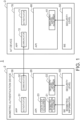
- FIG. 1 is a diagram illustrating the configuration of a biometric authentication system 1 according to Approach 1.
- the biometric authentication system 1 includes a biometric authentication device 2 and an IoT device 3.
- the biometric authentication device 2 is, for example, a security card, smartphone, or dedicated device having a function to acquire biometric information of a user.
- the biometric information of the user is characteristic data extracted from, for example, the fingerprint, face, iris, vein, or voice of the user.
- the IoT device 3 is, for example, a working machine installed in a factory. However, the applicable range of a technology according to Approach 1 is not limited thereto.
- the biometric authentication device 2 includes a secure element (SE) 10, an application programmable interface (API) layer 20, and an application (APP) layer 30.
- SE secure element
- API application programmable interface
- APP application
- the biometric authentication device 2 also includes a non-illustrated communication interface.
- the communication scheme of the communication interface is, for example, a wired LAN, a wireless LAN, WiFi (registered trademark), near-filed communication (NFC), Bluetooth (registered trademark), or ZigBee (registered trademark).
- the SE 10 is a device having a function to encrypt and store important information in a hardware manner and is, for example, a trusted platform module (TPM) mounted on a smartphone or the like, or a security chip mounted on an IC card or the like.
- TPM trusted platform module
- the SE 10 may be entirely configured as hardware such as a processing circuitry and/or a memory or may be partially configured as software.
- the SE 10 stores data related to various kinds of important information such as the biometric information of the user, the role of the user, the kind of a biometric authentication function of the biometric authentication device 2, and the security level of the biometric authentication device 2.
- the biometric information of the user is characteristic data extracted from, for example, the fingerprint, face, iris, vein, or voice of the user.
- the role of the user is, for example, 0: no information, 1: general user, or 2: management user.
- the kind of the biometric authentication function is, for example, 0: no biometric authentication function, 1: fingerprint authentication, 2: face authentication, 3: iris authentication, 4: vein authentication, or 5: voice authentication.
- the security level is, for example, 0: not supported, 1: Low, 2: Middle, or 3: High.
- data related to the biometric information of the user is encrypted and stored in a hardware manner in the SE 10.
- the data related to the biometric information may be the biometric information itself or may be a private key for decrypting biometric information encrypted and stored at a place other than the SE 10 in the biometric authentication device 2.
- data related to the security level of the biometric authentication device 2 is encrypted and stored in a hardware manner in the SE 10.
- the data related to the security level may be the security level itself or may be a private key for decrypting a security level encrypted and stored at a place other than the SE 10 in the biometric authentication device 2.
- the API layer 20 includes a biometric information acquirer 21, a security level acquirer 22, and a data list acquirer 23. These APIs are defined and implemented as, for example, methods, functions, or procedures in a typical programing language such as Java, Objective-C, C#, C++, or C. These APIs can be called and used by modules of the APP layer 30 to be described later. These APIs or the API layer 20 may be entirely implemented by software or may be partially or entirely implemented by hardware such as a processing circuitry and/or a memory.
- the biometric information acquirer 21 reads the data related to the biometric information and stored in the SE 10 and acquires the biometric information of the user based on the data related to the biometric information. For example, when the data related to the biometric information is the biometric information itself, the biometric information acquirer 21 can directly acquire the data read from the SE 10 as the biometric information of the user. When the data related to the biometric information is a private key for decrypting biometric information encrypted and stored at another place, the biometric information acquirer 21 can acquire the biometric information of the user by decrypting the encrypted biometric information by using the private key read from the SE 10.
- the security level acquirer 22 reads the data related to the security level and stored in the SE 10 and acquires the security level of the biometric authentication device 2 based on the data related to the security level. For example, when the data related to the security level is the security level itself, the security level acquirer 22 can directly acquire the data read from the SE 10 as the security level of the biometric authentication device 2. When the data related to the security level is a private key for decrypting a security level encrypted and stored at another place, the security level acquirer 22 can acquire the security level of the biometric authentication device 2 by decrypting the encrypted security level by using the private key read from the SE 10.
- the data list acquirer 23 acquires a list of data stored in the SE 10.
- the APP layer 30 includes an authenticator 31 and a communicator 32. These modules are written and implemented in a typical programing language. These modules can call and use APIs included in the API layer 20. These modules may be entirely implemented by software or may be partially or entirely implemented by hardware such as a processing circuitry and/or a memory.
- the authenticator 31 performs authentication of the user based on the biometric information and performs authentication of the IoT device 3 based on a security level received from the IoT device 3.
- the communicator 32 transmits and receives various kinds of data to and from the IoT device 3 through a non-illustrated communication interface.
- the communicator 32 is included in the APP layer 30, but alternatively, the communicator 32 may be included in the API layer 20.
- the IoT device 3 includes a secure element (SE) 50, an API layer 60, and an APP layer 70.
- the IoT device 3 also includes a non-illustrated communication interface.
- the communication scheme of the communication interface corresponds to the communication scheme of the communication interface of the biometric authentication device 2 described above.
- the SE 50 is a device having a function to encrypt and store important information in a hardware manner and is, for example, a TPM or a security chip.
- the SE 50 may be entirely configured as hardware such as a processing circuitry and/or a memory or may be partially configured as software.
- the SE 50 of the IoT device 3 and the SE 10 of the biometric authentication device 2 may have identical specifications or different specifications.
- Data related to the security level of the IoT device 3 is encrypted and stored in a hardware manner in the SE 50.
- the data related to the security level may be the security level itself or may be a private key for decrypting a security level encrypted and stored at a place other than the SE 50 in the IoT device 3.
- the API layer 60 includes a security level acquirer 61.
- the security level acquirer 61 reads the data related to the security level and stored in the SE 50 and acquires the security level of the IoT device 3 based on the data related to the security level.
- the API layer 60 may be entirely implemented by software or may be partially or entirely implemented by hardware such as a processing circuitry and/or a memory.
- the APP layer 70 includes an authenticator 71 and a communicator 72. These modules are written and implemented in a typical programing language. These modules can call and use APIs included in the API layer 60. These modules may be entirely implemented by software or may be partially or entirely implemented by hardware such as a processing circuitry and/or a memory.
- the authenticator 71 performs authentication of the biometric authentication device 2 based on a security level received from the biometric authentication device 2.
- the communicator 72 transmits and receives various kinds of data to and from the biometric authentication device 2 through a non-illustrated communication interface.
- the communicator 72 is included in the APP layer 70, but alternatively, the communicator 72 may be included in the API layer 60.
- the authenticator 71 of the IoT device 3 acquires the security level of the IoT device 3, which is protected by the SE 50, through the security level acquirer 61 of the API layer 60.
- the communicator 32 of the biometric authentication device 2 receives the security level of the IoT device 3, which is transmitted at step S102 described above.
- the authenticator 31 of the biometric authentication device 2 acquires the biometric information of the user, which is protected by the SE 10, through the biometric information acquirer 21 of the API layer 20.
- the authenticator 31 of the biometric authentication device 2 performs biometric authentication of the user based on the biometric information acquired at step S104 described above. For example, when the biometric authentication device 2 is a smartphone having a function to acquire biometric information, the authenticator 31 compares the biometric information of the user, which is acquired by the smartphone, and the biometric information acquired at step S104 described above and determines whether or not the pieces of information match each other. When the pieces of information match each other, the authenticator 31 proceeds to processing at the next step S106. Although not illustrated in FIG. 2 , the authenticator 31 stops the authentication processing in FIG. 2 when the pieces of information do not match each other.
- the authenticator 31 of the biometric authentication device 2 acquires the security level of the biometric authentication device 2, which is protected by the SE 10, through the security level acquirer 22 included in the API layer 20.
- the communicator 32 of the biometric authentication device 2 transmits the security level of the biometric authentication device 2, which is acquired at step S106 described above to the IoT device 3.
- the communicator 72 of the IoT device 3 receives the security level of the biometric authentication device 2, which is transmitted at step S107 described above.
- the authenticator 31 of the biometric authentication device 2 determines whether or not the security level of the IoT device 3, which is received at step 103 described above is equal to or larger than a predetermined threshold value.
- the authenticator 31 determines that the security level of the IoT device 3 satisfies a standard requested by the own device, and accepts the IoT device 3 (S110).
- the authenticator 31 determines that the security level of the IoT device 3 does not satisfy the standard requested by the own device, rejects the IoT device 3, and stops the authentication processing (S111).
- the communicator 32 of the biometric authentication device 2 transmits the authentication result of acceptance or rejection to the IoT device 3.
- the communicator 72 of the IoT device 3 receives the authentication result transmitted from the biometric authentication device 2 at step S112 described above.
- the authenticator 71 of the IoT device 3 checks the authentication result received from the biometric authentication device 2 at step S113 described above.
- the authenticator 71 stops the authentication processing (S115).
- the authenticator 71 When the authentication result received from the biometric authentication device 2 is acceptance, the authenticator 71 performs operation setting of the IoT device 3 based on the security level of the biometric authentication device 2, which is received at step S103 described above (S116).
- the authenticator 71 when the security level of the biometric authentication device 2 is 3 (High), the authenticator 71 performs such operation setting that all functions of the IoT device 3 can be used. For example, when the security level of the biometric authentication device 2 is 1 (Low), the authenticator 71 restricts some functions of the IoT device 3. For example, when the security level of the biometric authentication device 2 is 0 (not supported), the authenticator 71 restricts all functions of the IoT device 3. In this case, the user cannot use the IoT device 3. When the operation setting of the IoT device 3 is completed, the authenticator 71 ends the authentication processing (END).
- END authentication processing
- the biometric authentication device 2 performs authentication of the user based on the biometric information protected by the SE 10 and performs authentication of the IoT device 3 based on the security level received from the IoT device 3.
- the IoT device 3 performs authentication of the biometric authentication device 2 based on the security level received from the biometric authentication device 2.
- each device in the biometric authentication system 1 according to Approach 1 can perform mutual authentication with taken into account the security level of the counterpart device.
- the authenticator 71 of the IoT device 3 performs operation setting of the IoT device 3 based on the security level of the biometric authentication device 2. Accordingly, some or all functions of the IoT device 3 can be restricted in accordance with the security level of the biometric authentication device 2.
- the processing does not necessarily need to be executed in the illustrated order.
- the reception processing by the biometric authentication device 2 at step S103 may be executed at an optional timing between START and step S109.
- the reception processing by the IoT device 3 at step 108 may be executed at an optional timing between START and step S114.
- FIG. 3 is a diagram illustrating the configuration of a biometric authentication system 201 according to Approach 2.
- the configuration of the IoT device is the same as in Approach 1 and thus omitted in the drawing.
- a biometric authentication device 202 has a configuration that a SE 210 is physically replaceable.
- Specific forms of the SE 210 are, for example, a removable chip such as a SIM, and an external device that can communicate with the biometric authentication device 202 by a USB or the like.
- Biometric information protected by the SE 210 is the biometric information of a user.
- the security level protected by the SE 210 is the security level of the SE 210.
- the security level protected by the SE 10 in Approach 1 is the security level of the biometric authentication device 2
- the security level protected by the SE 210 in Approach 2 is the security level of the SE 210 itself.
- the security level of the biometric authentication device 202 is stored in, for example, a ROM of the biometric authentication device 202.
- the verification information is information for verifying validity of the biometric authentication device 202 when the biometric authentication device 202 is activated.
- the verification information is information for verifying whether the firmware of the biometric authentication device 202 is falsified.
- An API layer 220 of the biometric authentication device 202 includes a biometric information setter 224, a security level setter 225, a verification information setter 226, and a verification information acquirer 227 in addition to the APIs included in the API layer 20 in Approach 1.
- the API layer 220 also includes a security level acquirer 228 in place of the security level acquirer 22 of Approach 1.
- a security level acquired by the security level acquirer 228 is the security level of the SE 210.
- the biometric information setter 224 writes data related to biometric information to the SE 210.
- the security level setter 225 writes data related to a security level to the SE 210.
- the verification information setter 226 writes data related to verification information to the SE 210.
- the verification information acquirer 227 reads the data related to the verification information and stored in the SE 210 and acquires the verification information based on the data related to the verification information.
- An APP layer 230 of the biometric authentication device 202 includes an initial register 233 and a verifier 234 in addition to the modules included in the application layer 30 in Approach 1.
- the initial register 233 causes the SE 210 to store data related to the biometric information of the user through the biometric information setter 224.
- the initial register 233 causes the SE 210 to store data related to the security level of the SE 210 through the security level setter 225.
- the initial register 233 causes the SE 210 to store data related to the verification information through the verification information setter 226.
- the verifier 234 verifies validity of the biometric authentication device 202 by using the verification information when the biometric authentication device 202 is activated, reactivated, and initialized.
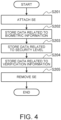
- FIG. 4 is a flowchart for description of details of initial registration processing by the SE 210. At the start of the flowchart, no data may be stored in the SE 210.
- the SE 210 is physically attached to the biometric authentication device 202. This process is manually performed by the user or the like.
- the initial register 233 of the biometric authentication device 202 causes the SE 210 to store data related to the biometric information of the user through the biometric information setter 224 of the API layer 220. In this case, data is overwritten when data related to the biometric information of the user is already stored in the SE 210.
- the initial register 233 of the biometric authentication device 202 causes the SE 210 to store data related to the security level of the SE 210 through the security level setter 225 of the API layer 220. In this case, data is overwritten when data related to the security level is already stored in the SE 210.
- the initial register 233 of the biometric authentication device 202 causes the SE 210 to store data related to the verification information through the verification information setter 226 of the API layer 220. In this case, data is overwritten when data related to the verification information is already stored in the SE 210.
- the SE 210 is physically removed from the biometric authentication device 202. This process is manually performed by the user or the like.
- FIG. 5 is a flowchart for description of details of processing when the SE 210 is replaced while the biometric authentication device 202 is powered off.
- the above-described initial registration processing in FIG. 4 is completed, and data related to the biometric information, data related to the security level, and the verification information are already stored in the SE 210.
- step S301 the SE 210 already attached to the biometric authentication device 202 is removed and another SE 210 is newly attached. This process is manually performed by the user.
- step S302 the biometric authentication device 202 is powered on. This process is also manually performed by the user.
- the verifier 234 of the biometric authentication device 202 acquires the verification information from the SE 210 through the verification information acquirer 227 of the API layer 220.
- the verifier 234 of the biometric authentication device 202 verifies validity of the biometric authentication device 202 by using the verification information acquired at step S303 described above. For example, the verifier 234 verifies whether the firmware of the biometric authentication device 202 is falsified by using the verification information.
- the authenticator 31 of the biometric authentication device 202 starts the processing of the flowchart in FIG. 2 in Approach 1 already described.
- the biometric authentication device 202 compares the security level of the biometric authentication device 202 and the security level of the SE 210 and transmits the lower security level to the IoT device.
- FIG. 6 is a flowchart for description of details of processing when the SE 210 is replaced while the biometric authentication device 202 is powered on.
- the above-described initial setting processing in FIG. 4 is completed, and data related to the biometric information, data related to the security level, and the verification information are already stored in the SE 210.
- step S401 the SE 210 already attached to the biometric authentication device 202 is removed and another SE 210 is newly attached. This process is manually performed by the user.
- the biometric authentication device 202 when having sensed that the SE 210 is replaced, the biometric authentication device 202 initializes or reactivates itself.
- the verifier 234 of the biometric authentication device 202 acquires the verification information from the SE 210 through the verification information acquirer 227 of the API layer 220.
- the verifier 234 of the biometric authentication device 202 verifies validity of the biometric authentication device 202 by using the verification information acquired at step S303 described above. For example, the verifier 234 verifies whether the firmware of the biometric authentication device 202 is falsified by using the verification information.
- the authenticator 31 of the biometric authentication device 202 starts the processing of the flowchart in FIG. 2 in Approach 1 already described.
- the biometric authentication device 202 compares the security level of the biometric authentication device 202 and the security level of the SE 210 and transmits the lower security level to the IoT device.
- the biometric authentication device 202 has a configuration that the SE 210 is replaceable. Accordingly, for example, one biometric authentication device 202 can be shared by a plurality of users.
- FIG. 7 is a diagram illustrating the configuration of a biometric authentication system 301 according to Approach 3.
- the biometric authentication system 301 includes two biometric authentication devices 302a and 302b and one IoT device 303.
- FIG. 8 is a flowchart for description of details of the two-stage authentication processing by the biometric authentication system 301.
- FIG. 9 is a flowchart for description of details of processing called from steps S501 and S502 in FIG. 8 .
- step S501 in FIG. 8 mutual authentication processing is performed between the biometric authentication device 302a and the IoT device 303.
- the processing illustrated in FIG. 9 is performed between the biometric authentication device 302a and the IoT device 303.
- Processing at steps S601 to S613 in FIG. 9 is the same as the processing at steps S101 to S113 in FIG. 2 in Approach 1 already described.
- step S502 in FIG. 8 mutual authentication processing is performed between the biometric authentication device 302b and the IoT device 303. Specifically, the processing illustrated in FIG. 9 is performed between the biometric authentication device 302b and the IoT device 303.
- the IoT device 303 checks an authentication result received from the biometric authentication device 302a and an authentication result received from the biometric authentication device 302b, and only when both results indicate acceptance, the IoT device 303 performs operation setting of the own device based on the lower one of the security levels of the biometric authentication devices 302a and 302b.
- the biometric authentication system 301 includes the two biometric authentication devices 302a and 302b.
- the IoT device 303 performs authentication of the biometric authentication device 302a based on the security level of the biometric authentication device 302a, and performs authentication of the biometric authentication device 302b based on the security level of the biometric authentication device 302b.
- the security level is communicated between the biometric authentication device 302a and the IoT device 303
- the security level is communicated between the biometric authentication device 302b and the IoT device 303.
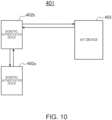
- the biometric authentication device 402a is a security card brought with a user
- the biometric authentication device 402b is an authentication device having an insertion port for a security card.
- mutual authentication processing is first performed between the biometric authentication device 402a and the biometric authentication device 402b, and then mutual authentication processing is performed between the biometric authentication device 402b and the IoT device 403.
- the strength of security can be improved by performing such two-stage authentication processing.
- FIG. 11 is a flowchart for description of details of the two-stage authentication processing by the biometric authentication system 401.
- step S701 in FIG. 11 mutual authentication processing is performed between the biometric authentication device 402a and the biometric authentication device 402b. Specifically, processing of a flowchart in FIG. 12 is performed.
- the biometric authentication device 402b acquires the security level of the biometric authentication device 402b, which is protected by a SE.
- the biometric authentication device 402b transmits the security level of the biometric authentication device 402b, which is acquired at step S801 described above to the biometric authentication device 402a.
- the biometric authentication device 402a receives the security level of the biometric authentication device 402b, which is transmitted at step S802 described above.
- the biometric authentication device 402a acquires the biometric information of the user, which is protected by a SE.
- the biometric authentication device 402a performs biometric authentication of the user based on the biometric information acquired at step S804 described above.
- the biometric authentication device 402a acquires the security level of the biometric authentication device 402a, which is protected by the SE.
- the biometric authentication device 402a transmits the security level of the biometric authentication device 402a, which is acquired at step S806 described above to the biometric authentication device 402b.
- the biometric authentication device 402b receives the security level of the biometric authentication device 402a, which is transmitted at step S807 described above.
- the biometric authentication device 402a determines whether or not the security level of the biometric authentication device 402b, which is received at step S803 described above is equal to or larger than a predetermined threshold value.
- the biometric authentication device 402a determines that the security level of the biometric authentication device 402b satisfies a standard requested by the own device, and accepts the biometric authentication device 402b (S810).
- the biometric authentication device 402a determines that the security level of the biometric authentication device 402b does not satisfy the standard requested by the own device, rejects the biometric authentication device 402b, and stops the authentication processing (S811).
- the biometric authentication device 402a transmits the authentication result of acceptance or rejection to the biometric authentication device 402b.
- the biometric authentication device 402b receives the authentication result transmitted from the biometric authentication device 402a at step S812 described above.
- the biometric authentication device 402b checks the authentication result received from the biometric authentication device 402a at step S813 described above.
- the biometric authentication device 402b stops the authentication processing (S815).
- the biometric authentication device 402b proceeds to step S702 in FIG. 11 .
- step S702 in FIG. 11 mutual authentication processing is performed between the biometric authentication device 402b and the IoT device 403. Specifically, processing of a Flowchart in FIG. 13 is performed.
- the IoT device 403 acquires the security level of the IoT device 403, which is protected by a SE.
- the IoT device 403 transmits the security level of the IoT device 403, which is acquired at step S901 described above to the biometric authentication device 402b.
- the biometric authentication device 402b receives the security level of the IoT device 403, which is transmitted at step S902 described above.
- the biometric authentication device 402b acquires the biometric information of the user, which is protected by a SE.
- the biometric authentication device 402b performs biometric authentication of the user based on the biometric information acquired at step S904 described above.
- the biometric authentication device 402b acquires the security level of the biometric authentication device 402b, which is protected by a SE.
- the biometric authentication device 402b transmits the security level of the biometric authentication device 402b, which is acquired at step S906 described above to the IoT device 403.
- the IoT device 403 receives the security level of the biometric authentication device 402b, which is transmitted at step S907 described above.
- the biometric authentication device 402b determines whether or not the security level of the IoT device 403, which is received at step 903 described above is equal to or larger than a predetermined threshold value.
- the biometric authentication device 402b determines that the security level of the IoT device 403 satisfies a standard requested by the own device, and accepts the IoT device 403 (S910).
- the IoT device 403 receives the authentication result transmitted from the biometric authentication device 402b at step S912 described above.
- the IoT device 403 checks the authentication result received from the biometric authentication device 402b at step S913 described above.
- the IoT device 403 stops the authentication processing (S915).
- the IoT device 403 When the authentication result received from the biometric authentication device 402b is acceptance, the IoT device 403 performs operation setting of the IoT device 403 based on the security level of the biometric authentication device 402b, which is received at step S903 described above (S916). When the operation setting of the IoT device 403 is completed, the IoT device 403 returns to FIG. 11 and ends the authentication processing (END).
- the biometric authentication system 401 includes the two biometric authentication devices 402a and 402b.
- the biometric authentication device 402b performs authentication of the biometric authentication device 402a based on the security level of the biometric authentication device 402a.
- the IoT device 403 performs authentication of the biometric authentication device 402b based on the security level of the biometric authentication device 402b.
- the security level is communicated between the biometric authentication device 402a and the biometric authentication device 402b, and the security level is communicated between the biometric authentication device 402b and the IoT device 403.
- the strength of security in the biometric authentication system 401 according to Approach 4 improves as compared to a case in which only one biometric authentication device is used.
- the number of biometric authentication devices 402 may be equal to or larger than three.
- a biometric authentication system comprising a biometric authentication device and an information processing device, wherein
- a biometric authentication device comprising:
- a biometric authentication method comprising:
Landscapes
- Engineering & Computer Science (AREA)
- Computer Security & Cryptography (AREA)
- Theoretical Computer Science (AREA)
- Software Systems (AREA)
- Computer Hardware Design (AREA)
- Physics & Mathematics (AREA)
- General Engineering & Computer Science (AREA)
- General Physics & Mathematics (AREA)
- Health & Medical Sciences (AREA)
- Life Sciences & Earth Sciences (AREA)
- Biodiversity & Conservation Biology (AREA)
- Biomedical Technology (AREA)
- General Health & Medical Sciences (AREA)
- Computer Networks & Wireless Communication (AREA)
- Signal Processing (AREA)
- Collating Specific Patterns (AREA)
Applications Claiming Priority (1)
| Application Number | Priority Date | Filing Date | Title |
|---|---|---|---|
| JP2023045893A JP2024135280A (ja) | 2023-03-22 | 2023-03-22 | 生体認証システム、生体認証装置および生体認証方法 |
Publications (1)
| Publication Number | Publication Date |
|---|---|
| EP4435642A1 true EP4435642A1 (de) | 2024-09-25 |
Family
ID=87929401
Family Applications (1)
| Application Number | Title | Priority Date | Filing Date |
|---|---|---|---|
| EP23194810.0A Pending EP4435642A1 (de) | 2023-03-22 | 2023-09-01 | Biometrisches authentifizierungssystem, biometrische authentifizierungsvorrichtung und biometrisches authentifizierungsverfahren |
Country Status (3)
| Country | Link |
|---|---|
| US (1) | US20240320313A1 (de) |
| EP (1) | EP4435642A1 (de) |
| JP (1) | JP2024135280A (de) |
Citations (4)
| Publication number | Priority date | Publication date | Assignee | Title |
|---|---|---|---|---|
| US20160358172A1 (en) * | 2015-06-07 | 2016-12-08 | Apple Inc. | Provisioning multiple secure credentials on an electronic device |
| WO2019104323A1 (en) * | 2017-11-27 | 2019-05-31 | Nok Nok Labs, Inc. | Extending a secure key storage for transaction confirmation and cryptocurrency |
| US20210365531A1 (en) * | 2018-06-19 | 2021-11-25 | Fingerprint Cards Ab | Method and electronic device for authenticating a user |
| EP4036775A1 (de) * | 2019-11-08 | 2022-08-03 | Huawei Technologies Co., Ltd. | Datenverarbeitungsverfahren und -vorrichtung sowie systemchip |
Family Cites Families (6)
| Publication number | Priority date | Publication date | Assignee | Title |
|---|---|---|---|---|
| JP3943897B2 (ja) * | 2001-10-30 | 2007-07-11 | 株式会社東芝 | 本人確認システム及び装置 |
| JP4047592B2 (ja) * | 2002-01-28 | 2008-02-13 | 株式会社東芝 | 通信接続システム、方法、プログラム及び電子投票システム |
| US10698995B2 (en) * | 2014-08-28 | 2020-06-30 | Facetec, Inc. | Method to verify identity using a previously collected biometric image/data |
| KR102483832B1 (ko) * | 2016-02-19 | 2023-01-03 | 삼성전자주식회사 | 생체 정보 기반 인증을 이용한 전자 장치들 간 연결 방법 및 장치 |
| JP6721435B2 (ja) * | 2016-07-04 | 2020-07-15 | 株式会社東芝 | Icカード、携帯可能電子装置及び情報処理方法 |
| JP2022143846A (ja) * | 2021-03-18 | 2022-10-03 | 株式会社東芝 | セキュリティデバイスおよび情報管理システム |
-
2023
- 2023-03-22 JP JP2023045893A patent/JP2024135280A/ja active Pending
- 2023-09-01 EP EP23194810.0A patent/EP4435642A1/de active Pending
- 2023-09-11 US US18/464,428 patent/US20240320313A1/en active Pending
Patent Citations (4)
| Publication number | Priority date | Publication date | Assignee | Title |
|---|---|---|---|---|
| US20160358172A1 (en) * | 2015-06-07 | 2016-12-08 | Apple Inc. | Provisioning multiple secure credentials on an electronic device |
| WO2019104323A1 (en) * | 2017-11-27 | 2019-05-31 | Nok Nok Labs, Inc. | Extending a secure key storage for transaction confirmation and cryptocurrency |
| US20210365531A1 (en) * | 2018-06-19 | 2021-11-25 | Fingerprint Cards Ab | Method and electronic device for authenticating a user |
| EP4036775A1 (de) * | 2019-11-08 | 2022-08-03 | Huawei Technologies Co., Ltd. | Datenverarbeitungsverfahren und -vorrichtung sowie systemchip |
Also Published As
| Publication number | Publication date |
|---|---|
| JP2024135280A (ja) | 2024-10-04 |
| US20240320313A1 (en) | 2024-09-26 |
Similar Documents
| Publication | Publication Date | Title |
|---|---|---|
| JP6629952B2 (ja) | モバイルアプリケーションの安全性を確保する方法および装置 | |
| EP3582166A1 (de) | Verfahren und system zur erzeugung einer vertrauenswürdigen aufzeichnung oder nachricht und verwendung für eine sichere aktivierung oder starke kundenauthentifizierung | |
| US9826403B2 (en) | Protected smart card profile management | |
| AU2014340234B2 (en) | Facilitating secure transactions using a contactless interface | |
| EP3155552B1 (de) | Mechanismen zur steuerung von etikett-personalisierung | |
| US12015703B2 (en) | Electronic device for user authentication, server, and control method therefor | |
| KR20170042549A (ko) | 제2 전자 엔티티에 의한 제1 전자 엔티티의 인증 방법 및 그러한 방법을 구현하는 전자 엔티티 | |
| US11843947B2 (en) | Electronic device and authentication method in electronic device | |
| CN110876144B (zh) | 一种身份凭证的移动应用方法、装置及系统 | |
| US11849049B2 (en) | Circuit chip and a method of operating it | |
| CN114666786B (zh) | 一种基于电信智能卡的身份认证方法及系统 | |
| WO2018024241A1 (zh) | 一种数据通信方法及系统 | |
| EP4435642A1 (de) | Biometrisches authentifizierungssystem, biometrische authentifizierungsvorrichtung und biometrisches authentifizierungsverfahren | |
| JP7509148B2 (ja) | データ処理装置、データ処理方法、およびプログラム | |
| JP5264182B2 (ja) | 距離認識による高速事前認証のための方法 | |
| CN106557708B (zh) | 一种安全保护方法和系统 | |
| KR102010764B1 (ko) | 스마트폰 인증 기능을 이용한 컴퓨터 보안 시스템 및 방법 | |
| KR20110074441A (ko) | Rfid 시스템에서 태그와 리더간 상호 인증 방법 | |
| EP4044500B1 (de) | Elektronische vorrichtung zur sicherstellung der integrität intrinsischer informationen einer elektronischen vorrichtung und betriebsverfahren dafür | |
| JP2018113504A (ja) | セキュアエレメント、uimカード、認証方法、及び認証プログラム | |
| US20160241557A1 (en) | Method for secured communication between an operating system of a terminal and a device distinct from the terminal | |
| CN113596788A (zh) | 身份信息获取方法、移动终端及可穿戴设备 | |
| JP6801448B2 (ja) | 電子情報記憶媒体、認証システム、認証方法、及び認証アプリケーションプログラム | |
| KR101505735B1 (ko) | 시간 검증을 이용한 엔에프씨카드 인증 방법 | |
| KR101777044B1 (ko) | 비동기식 근거리 무선 통신 기반 오티피 카드 |
Legal Events
| Date | Code | Title | Description |
|---|---|---|---|
| PUAI | Public reference made under article 153(3) epc to a published international application that has entered the european phase |
Free format text: ORIGINAL CODE: 0009012 |
|
| STAA | Information on the status of an ep patent application or granted ep patent |
Free format text: STATUS: REQUEST FOR EXAMINATION WAS MADE |
|
| 17P | Request for examination filed |
Effective date: 20230901 |
|
| AK | Designated contracting states |
Kind code of ref document: A1 Designated state(s): AL AT BE BG CH CY CZ DE DK EE ES FI FR GB GR HR HU IE IS IT LI LT LU LV MC ME MK MT NL NO PL PT RO RS SE SI SK SM TR |
|
| RAP3 | Party data changed (applicant data changed or rights of an application transferred) |
Owner name: TOSHIBA INFRASTRUCTURE SYSTEMS &SOLUTIONS CORPORATION Owner name: KABUSHIKI KAISHA TOSHIBA |
|
| RAP1 | Party data changed (applicant data changed or rights of an application transferred) |
Owner name: KABUSHIKI KAISHA TOSHIBA |