EP4435018A1 - Antibacterial resin and molded body comprising same - Google Patents
Antibacterial resin and molded body comprising same Download PDFInfo
- Publication number
- EP4435018A1 EP4435018A1 EP23877745.2A EP23877745A EP4435018A1 EP 4435018 A1 EP4435018 A1 EP 4435018A1 EP 23877745 A EP23877745 A EP 23877745A EP 4435018 A1 EP4435018 A1 EP 4435018A1
- Authority
- EP
- European Patent Office
- Prior art keywords
- antibacterial
- sample
- antibacterial resin
- present specification
- group
- Prior art date
- Legal status (The legal status is an assumption and is not a legal conclusion. Google has not performed a legal analysis and makes no representation as to the accuracy of the status listed.)
- Pending
Links
Images

Classifications
-
- C—CHEMISTRY; METALLURGY
- C08—ORGANIC MACROMOLECULAR COMPOUNDS; THEIR PREPARATION OR CHEMICAL WORKING-UP; COMPOSITIONS BASED THEREON
- C08F—MACROMOLECULAR COMPOUNDS OBTAINED BY REACTIONS ONLY INVOLVING CARBON-TO-CARBON UNSATURATED BONDS
- C08F220/00—Copolymers of compounds having one or more unsaturated aliphatic radicals, each having only one carbon-to-carbon double bond, and only one being terminated by only one carboxyl radical or a salt, anhydride ester, amide, imide or nitrile thereof
- C08F220/02—Monocarboxylic acids having less than ten carbon atoms; Derivatives thereof
- C08F220/10—Esters
- C08F220/34—Esters containing nitrogen, e.g. N,N-dimethylaminoethyl (meth)acrylate
-
- A—HUMAN NECESSITIES
- A01—AGRICULTURE; FORESTRY; ANIMAL HUSBANDRY; HUNTING; TRAPPING; FISHING
- A01N—PRESERVATION OF BODIES OF HUMANS OR ANIMALS OR PLANTS OR PARTS THEREOF; BIOCIDES, e.g. AS DISINFECTANTS, AS PESTICIDES OR AS HERBICIDES; PEST REPELLANTS OR ATTRACTANTS; PLANT GROWTH REGULATORS
- A01N25/00—Biocides, pest repellants or attractants, or plant growth regulators, characterised by their forms, or by their non-active ingredients or by their methods of application, e.g. seed treatment or sequential application; Substances for reducing the noxious effect of the active ingredients to organisms other than pests
- A01N25/08—Biocides, pest repellants or attractants, or plant growth regulators, characterised by their forms, or by their non-active ingredients or by their methods of application, e.g. seed treatment or sequential application; Substances for reducing the noxious effect of the active ingredients to organisms other than pests containing solids as carriers or diluents
- A01N25/10—Macromolecular compounds
-
- A—HUMAN NECESSITIES
- A01—AGRICULTURE; FORESTRY; ANIMAL HUSBANDRY; HUNTING; TRAPPING; FISHING
- A01N—PRESERVATION OF BODIES OF HUMANS OR ANIMALS OR PLANTS OR PARTS THEREOF; BIOCIDES, e.g. AS DISINFECTANTS, AS PESTICIDES OR AS HERBICIDES; PEST REPELLANTS OR ATTRACTANTS; PLANT GROWTH REGULATORS
- A01N37/00—Biocides, pest repellants or attractants, or plant growth regulators containing organic compounds containing a carbon atom having three bonds to hetero atoms with at the most two bonds to halogen, e.g. carboxylic acids
- A01N37/12—Biocides, pest repellants or attractants, or plant growth regulators containing organic compounds containing a carbon atom having three bonds to hetero atoms with at the most two bonds to halogen, e.g. carboxylic acids containing the group, wherein Cn means a carbon skeleton not containing a ring; Thio analogues thereof
-
- A—HUMAN NECESSITIES
- A01—AGRICULTURE; FORESTRY; ANIMAL HUSBANDRY; HUNTING; TRAPPING; FISHING
- A01P—BIOCIDAL, PEST REPELLANT, PEST ATTRACTANT OR PLANT GROWTH REGULATORY ACTIVITY OF CHEMICAL COMPOUNDS OR PREPARATIONS
- A01P1/00—Disinfectants; Antimicrobial compounds or mixtures thereof
-
- C—CHEMISTRY; METALLURGY
- C08—ORGANIC MACROMOLECULAR COMPOUNDS; THEIR PREPARATION OR CHEMICAL WORKING-UP; COMPOSITIONS BASED THEREON
- C08F—MACROMOLECULAR COMPOUNDS OBTAINED BY REACTIONS ONLY INVOLVING CARBON-TO-CARBON UNSATURATED BONDS
- C08F212/00—Copolymers of compounds having one or more unsaturated aliphatic radicals, each having only one carbon-to-carbon double bond, and at least one being terminated by an aromatic carbocyclic ring
- C08F212/02—Monomers containing only one unsaturated aliphatic radical
- C08F212/04—Monomers containing only one unsaturated aliphatic radical containing one ring
- C08F212/06—Hydrocarbons
- C08F212/08—Styrene
-
- C—CHEMISTRY; METALLURGY
- C08—ORGANIC MACROMOLECULAR COMPOUNDS; THEIR PREPARATION OR CHEMICAL WORKING-UP; COMPOSITIONS BASED THEREON
- C08L—COMPOSITIONS OF MACROMOLECULAR COMPOUNDS
- C08L25/00—Compositions of, homopolymers or copolymers of compounds having one or more unsaturated aliphatic radicals, each having only one carbon-to-carbon double bond, and at least one being terminated by an aromatic carbocyclic ring; Compositions of derivatives of such polymers
- C08L25/02—Homopolymers or copolymers of hydrocarbons
- C08L25/04—Homopolymers or copolymers of styrene
- C08L25/08—Copolymers of styrene
- C08L25/14—Copolymers of styrene with unsaturated esters
Definitions
- the present specification relates to an antibacterial resin and a molded article including the same.
- the degree of antibacterial properties required and the material requirements for imparting antibacterial properties differ depending on the material of the product requiring antibacterial properties and the state of final use.
- the properties of the material for imparting antibacterial properties and the degree of antibacterial properties vary depending on the amount of antibacterial material applied to a product used and the materials used together.
- GPPS general purpose polystyrene
- Cu, Ag, and the like an inorganic antibacterial agent
- sustainability deteriorates and problems occur due to the toxicity of the materials used.
- Patent Document 1 Korean Patent Application Laid-Open No. 10-2009-0131847
- the present specification provides an antibacterial resin and a molded article including the same.
- An exemplary embodiment of the present specification provides an antibacterial resin including a copolymer including: a first unit derived from styrene; and
- Another exemplary embodiment of the present specification provides a molded article including the above-described antibacterial resin or prepared therefrom.
- An antibacterial resin according to some exemplary embodiments of the present specification has hydrophilic and hydrophobic properties, and thus has excellent antibacterial properties.
- the antibacterial resin according to some exemplary embodiments of the present specification can solve safety problems due to the release of antibacterial materials.
- the antibacterial resin according to some exemplary embodiments of the present specification can exhibit antibacterial properties within a short period of time.
- the antibacterial resin since the antibacterial resin according to some exemplary embodiments of the present specification has little change in antibacterial strength depending on the amount of antibacterial material used, the antibacterial resin can exhibit antibacterial properties within an expected range even when the unevenness of concentration occurs unintentionally during application to a product. Therefore, antibacterial properties are controlled within a specific range, so that excellent antibacterial properties can be safely imparted.
- the antibacterial resin according to some exemplary embodiments of the present specification has low toxicity, and thus can solve safety problems.
- the antibacterial resin according to some exemplary embodiments of the present specification are characterized in that antibacterial activity can be maintained even after high-temperature processing due to excellent heat resistance.
- An exemplary embodiment of the present specification provides an antibacterial resin including a copolymer including: a first unit derived from styrene; and a second unit derived from a monomer represented by the following Chemical Formula 1, in which the copolymer has a weight average molecular weight of 10,000 g/mol or more and 1,000,000 g/mol or less.
- antibacterial agents were simply mixed with polymers, and in this case, inorganic antibacterial agents or organic antibacterial agents were used.
- the inorganic antibacterial agents are expensive, easily induce discoloration of materials, and may degrade the physical properties of polymers during processing processes such as extrusion or injection. Further, the inorganic antibacterial agents also have a disadvantage in that the immediate antibacterial efficacy thereof is low.
- the organic antibacterial agents themselves have a disadvantage in that antibacterial persistence deteriorates due to poor stability against the human and poor thermal stability.
- the antibacterial resin according to the present specification does not include an inorganic antibacterial agent, and thus overcomes disadvantages such as discoloration and deterioration in transparency, and an antibacterial material is not included as a separate substance but is polymerized as a monomer, there is an advantage in that stability for the human body is excellent and antibacterial persistence is maintained.
- an organic antibacterial agent is applied to the polymerization of a polymer, the polymerization efficiency or conversion rate decreases or the inherent advantages of the polymer are impaired in many cases, but the present invention may also overcome these disadvantages.
- the antibacterial resin of the present specification may exhibit excellent antibacterial persistence. That is, the antibacterial resin of the present specification may simultaneously improve stability due to the release of the antibacterial agent while having excellent antibacterial properties and antibacterial persistence.
- the antibacterial resin when the antibacterial resin has a weight average molecular weight of less than 10,000 g/mol, the antibacterial resin is present in the form of a monomer rather than in the form of a macromolecule, and thus, may be easily eluted, and there may occur a problem in that the antibacterial resin is absorbed in the human body due to low molecular weight, and when the antibacterial resin has a weight average molecular weight of more than 1,000,000 g/mol, the molecular weight is excessively increased, so that the viscosity is increased and the antibacterial resin is not easily applied, and thus processability deteriorates, thereby leading to deterioration in antibacterial activity.
- the antibacterial resin has a weight average molecular weight (Mw: g/mol) of 15,000 g/mol or more, 20,000 g/mol or more, 30,000 g/mol or more, or 40,000 g/mol or more and 1,000,000 g/mol or less, 500,000 g/mol or less, 400,000 g/mol or less, 300,000 g/mol or less, 200,000 g/mol or less, or 150,000 g/mol or less.
- Mw weight average molecular weight
- the antibacterial resin has a number average molecular weight (Mn) of 10,000 g/mol to 800,000 g/mol. More preferably, the antibacterial resin has a number average molecular weight of 15,000 g/mol or more, 20,000 g/mol or more, 25,000 g/mol or more, 30,000 g/mol or more, 35,000 g/mol or more, or 40,000 g/mol or more, and 150,000 g/mol or less, 100,000 g/mol or less, 90,000 g/mol or less or 80,000 g/mol or less.
- Mn number average molecular weight
- the weight average molecular weight (Mw) and number average molecular weight (Mn) of the antibacterial resin may be measured using gel permeation chromatography (GPC) .
- the GPC is measured as follows.
- a material to be analyzed is diluted with dimethylformamide (DMF) to a concentration of 5 mg/mL, dissolved at 50°C for 6 hours, and then filtered with a PVDF filter (pore size: 0.45 um) to prepare a sample solution.
- DMF dimethylformamide
- PVDF filter pore size: 0.45 um
- the antibacterial resin may have a molecular weight distribution (Mw/Mn) within a range of 1 to 3.
- the molecular weight distribution may be 1.1 or more, 1.2 or more, 1.3 or more, or 1.4 or more, or 2.8 or less, 2.6 or less, 2.4 or less, 2.2 or less, 2.0 or less, 1.8 or less, or 1.6 or less in other examples.
- the weight average molecular weight, number average molecular weight, and molecular weight distribution of the antibacterial resin may be determined by a copolymer including the first unit derived from the above-described styrene; and the second unit derived from the monomer represented by Chemical Formula 1
- the "monomer” means a unit compound that may be converted into a polymer compound by a polymerization reaction, and structures derived therefrom may become a repeating unit in a polymer or copolymer. Specifically, this means that in a state in which the corresponding compound is polymerized and bonded in the polymer, in the structure of the compound, all or a portion of two or more substituents are omitted, and a radical for being bonded to other units of the polymer is located at the position. In this case, the corresponding compound may be included in a state of being polymerized in any order and bonded in the polymer.
- derived means that a new bond is generated while a bond between at least two adjacent elements in a compound is broken, or hydrogen or a substituent is detached
- a unit derived from the compound may mean a unit which forms one or more of a main chain and a side chain in a polymer.
- the unit may be included in a main chain in a polymer to constitute the polymer.
- the "weight average molecular weight” is one of the average molecular weights in which the molecular weight is not uniform and the molecular weight of any polymer material is used as a reference, and is a value obtained by averaging the molecular weight of a component molecular species of a polymer compound having a molecular weight distribution by a weight fraction.
- room temperature means the natural temperature that has not been heated or cooled, for example, any one temperature within a range of about 10°C to 30°C, for example, a temperature of about 15°C, about 18°C, meaning a temperature of about 20°C, about 23°C, or about 25°C. Further, in the present specification, the unit of temperature is °C, unless otherwise specified.
- the corresponding physical property is a physical property measured at normal pressure, unless otherwise specified.
- normal pressure is the natural pressure that has not been pressurized or depressurized, and refers to a pressure which is typically about 1 atmosphere (about 700 to 800 mmHg).
- the corresponding physical property is a physical property measured at a humidity that is not particularly controlled in the room temperature and normal pressure state, unless otherwise specified.
- an "alkyl group” may be straight-chained or branched, and the number of carbon atoms thereof is not particularly limited, but is preferably 1 to 60. According to an exemplary embodiment of the present specification, the number of carbon atoms of the alkyl group is 1 to 30.
- alkyl group examples include a methyl group, an ethyl group, a propyl group, an isopropyl group, a butyl group, an isobutyl group, a tert-butyl group, a pentyl group, a hexyl group, a heptyl group, an octyl group, a nonyl group, a decyl group, an undecyl group, a dodecyl group, a tridecyl group, and the like, but are not limited thereto.
- an "alkylene group” means a group having two bonding positions in an alkyl group, that is, a divalent group.
- the above-described description on the alkyl group may be applied to the alkylene group, except for a divalent alkylene group.
- the "alkoxy group” may be straight-chained, branched, or cyclic.
- the number of carbon atoms of the alkoxy group is not particularly limited, but is preferably 1 to 30. Specific examples thereof include methoxy, ethoxy, n-propoxy, isopropoxy, i-propyloxy, n-butoxy, isobutoxy, tert-butoxy, sec-butoxy, n-pentyloxy, neopentyloxy, isopentyloxy, n-hexyloxy, 3,3-dimethylbutyloxy, 2-ethylbutyloxy, n-octyloxy, n-nonyloxy, n-decyloxy, benzyloxy, p-methylbenzyloxy, and the like, but are not limited thereto.
- attachment point in the copolymer.
- the attachment point may be a point where the same units are attached to each other, and may also be a point where different units are attached to each other.
- * means both a part to which the first units are attached and a part to which the first unit and the second unit are attached.
- the "antibacterial resin” may mean a copolymer itself including a first unit derived from the styrene and a second unit derived from the monomer represented by Chemical Formula 1, and may also mean that additional components in addition to the polymer are further included.
- the first unit derived from the styrene may have a structure in which the double bond of styrene forms a repeating unit while being broken.
- the first unit is represented by the following Chemical Formula 2-1.
- n1 is an integer from 3 to 10,000, an integer from 10 to 8,000, or an integer from 20 to 5,000.
- the copolymer includes 1 to 10,000 of the first units. Specifically, the copolymer includes 3 to 10,000, 10 to 8,000, or 20 to 5,000 of the first units.
- the monomer represented by Chemical Formula 1 is an antibacterial material.
- the second unit is represented by the following Chemical Formula 1-1.
- n2 is an integer from 3 to 10,000, an integer from 10 to 8,000, or an integer from 20 to 5,000.
- R4 is hydrogen or an alkyl group having 1 to 10 carbon atoms.
- R4 is hydrogen or a methyl group.
- L1 is an alkylene group having 1 to 10 carbon atoms.
- L1 is an alkylene group having 1 to 5 carbon atoms.
- L1 is a methylene group; an ethylene group; a propylene group; or a butylene group.
- R1 to R3 are the same as or different from each other, and are each independently an alkyl group having 1 to 30 carbon atoms.
- any one of R1 to R3 is an alkyl group having 5 to 30 carbon atoms, and the others are the same as or different from each other, and are each independently an alkyl group having 1 to 30 carbon atoms.
- any one of R1 to R3 is an alkyl group having 5 to 30 carbon atoms, and the others are the same as or different from each other, and are each independently an alkyl group having 1 to 20 carbon atoms.
- any one of R1 to R3 is an alkyl group having 5 to 30 carbon atoms, and the others are the same as or different from each other, and are each independently an alkyl group having 1 to 10 carbon atoms.
- any one of R1 to R3 is an alkyl group having 5 to 20 carbon atoms, and the others are the same as or different from each other, and are each independently an alkyl group having 1 to 30 carbon atoms.
- any one of R1 to R3 is an alkyl group having 5 to 20 carbon atoms, and the others are the same as or different from each other, and are each independently an alkyl group having 1 to 20 carbon atoms.
- any one of R1 to R3 is an alkyl group having 5 to 20 carbon atoms, and the others are the same as or different from each other, and are each independently an alkyl group having 1 to 10 carbon atoms.
- two or more of R1 to R3 are an alkyl group having 6 to 30 carbon atoms, or the difference in carbon number between an alkyl group having the largest number of carbon atoms and an alkyl group having the smallest number of carbon atoms among R1 to R3 is 4 or more.
- R1 to R3 are an alkyl group having 6 to 30 carbon atoms; two of R1 to R3 are an alkyl group having 6 to 30 carbon atoms, the other one is an alkyl group having 1 to 30 carbon atoms; or the difference in carbon number between an alkyl group having the largest number of carbon atoms and an alkyl group having the smallest number of carbon atoms among R1 to R3 is 4 or more. In this case, an effect in which antibacterial activity is excellent is exhibited.
- a difference in the number of carbon atoms between the alkyl group having the largest number of carbon atoms and the alkyl group having the smallest number of carbon atoms of 4 or more means that the asymmetry is large, and the difference in the number of carbon atoms may be 4 to 30, 5 to 30, or 5 to 10.
- the monomer represented by Chemical Formula 1 is any one of the following structures.
- X - is a monovalent anionic group.
- the second unit derived from the monomer represented by Chemical Formula 1 is any one of the following structures.
- X - is a monovalent anionic group
- * is an attachment point in the copolymer.
- the copolymer includes 1 to 10,000 of the second units. Specifically, the copolymer includes 3 to 10,000, 10 to 8,000, or 20 to 5,000 of the second units.
- X- is any one selected from the following Group 1.
- R11 is hydrogen; a hydroxyl group; or an alkoxy group.
- r11 is an integer from 1 to 3.
- X- is any one selected from the following Group 2.
- a molar ratio of the first unit and the second unit is 100:0.5 to 100:50.
- the molar ratio is 100:0.5 to 100:40, 100:0.5 to 100:30, or 100:0.5 to 100:10.
- the resin including the first unit and the second unit exhibits the same or better effects in terms of antibacterial properties, heat resistance, and mechanical properties (tensile strength, impact strength, flexural properties, and the like), compared to the resin including only the first unit and the resin including only the second unit.
- the antibacterial properties of the antibacterial resin are derived from the anionic functional group and cationic functional group included in the second unit which the antibacterial resin includes.
- the anionic functional group included in the second unit which the antibacterial resin includes.
- cell walls of bacteria and the like are often negatively charged, and the cationic functional group may perform a destructive action on the cell walls.
- a copolymer is a random copolymer, an alternating copolymer, or a block copolymer. Specifically, the copolymer is a random copolymer.
- the first unit and the second unit are included in the main chain of the copolymer.
- the first unit is included in the main chain of the copolymer, and the second unit is included in the side chain of the copolymer.
- the antibacterial resin includes a third unit represented by the following Chemical Formula 3.
- m1 and m2 are each an integer from 3 to 10,000, an integer from 10 to 8,000, or an integer from 20 to 5,000.
- a copolymer including a first unit derived from the styrene; and a second unit derived from the monomer represented by Chemical Formula 1 is represented by Chemical Formula 3.
- the terminal end of the copolymer is any one of the following structures.
- L1, R1 to R4 and X - are the same as those defined in Chemical Formula 1, and is a moiety attached to the copolymer.
- the antibacterial resin has antibacterial properties.
- having antibacterial properties means that the antibacterial activity measured based on the following Method 1, in other words, the bacteriostatic reduction rate is 90% or more.
- the antibacterial resin has an antibacterial activity of 90% or more against at least one strain selected from the group consisting of Gram-positive bacteria, Gram-negative bacteria, and molds, as measured by the following Method 1.
- the antibacterial activity of the antibacterial resin according to the present specification was evaluated using Method 1, only the case where the antibacterial activity was 90% or more was observed. As a result, it could be confirmed that the antibacterial resin according to the present specification has excellent antibacterial activity.
- the antibacterial activity may be 920 or more, 950 or more, 990 or more, 99.8% or more, or 99.9% or more in other examples.
- the upper limit of the antibacterial activity is not particularly limited, and may be, for example, 100% or less or less than 100%.
- Gram-positive bacteria is a general term for bacteria that are stained purple when stained using the Gram staining method, and Gram-positive bacteria exhibit a purple color without discoloration even though the Gram-positive bacteria are stained with a basic dye such as crystal violet and then treated with ethanol because the cell walls of Gram-positive bacteria are composed of several layers of peptidoglycan.
- the Gram-positive bacteria are selected from Enterococcus faecalis, Staphylococcus aureus, Streptococcus pneumoniae , Enterococcus faecium and Lactobacillus lactis.
- the Gram-positive bacteria are any one selected from the above-described examples, but are not limited thereto.
- the Gram-negative bacteria are a general term for bacteria that are stained red when stained with the Gram staining method, and Gram-negative bacteria have an outer membrane composed of lipid polysaccharides, lipid proteins, and/or other complex polymeric materials instead of having a cell wall with a relatively small amount of peptidoglycan compared to Gram-positive bacteria.
- the Gram-negative bacteria are selected from Proteus mirabilis, Escherichia coli, Salmonella typhi , Pseudomonas aeruginosa and Vibrio cholerae.
- the Gram-negative bacteria are any one selected from the above-described examples, but are not limited thereto.
- the mold may be Candida albicans , but is not limited thereto.
- the antibacterial resin has an antibacterial activity of 90% or more against Gram-positive bacteria as measured by Method 1.
- the antibacterial resin has an antibacterial activity of 90% or more against Gram-negative bacteria as measured by Method 1.
- the antibacterial resin has an antibacterial activity of 90% or more against molds as measured by Method 1.
- the bacterium used in the measurement of antibacterial activity is Escherichia coli.
- the antibacterial resin has an antibacterial activity of 90% or more against Gram-positive bacteria, Gram-negative bacteria, and molds as measured by Method 1. Since the strains of the Gram-positive bacteria, Gram-negative bacteria and molds may not only induce various diseases upon contact, but also cause secondary infections, it is preferred to exhibit antibacterial properties against all of the Gram-positive bacteria, Gram-negative bacteria, and molds using one antibacterial agent.
- An exemplary embodiment of the present specification provides a composition for forming an antibacterial resin for forming the above-described antibacterial resin.
- the composition for forming an antibacterial resin includes styrene; a monomer represented by Chemical Formula 1; and an initiator.
- the amount of the styrene is 55 parts by weight to 99.7 parts by weight based on 100 parts by weight of the composition for forming an antibacterial resin.
- the styrene is included in an amount of 65 parts by weight to 99.5 parts by weight, or 70 parts by weight to 99.5 parts by weight.
- the resin may exhibit an excellent strength effect while being transparent.
- the amount of the monomer represented by Chemical Formula 1 is 0.2 parts by weight to 40 parts by weight based on 100 parts by weight of the composition for forming an antibacterial resin. Specifically, the monomer represented by Chemical Formula 1 is included in an amount of 0.5 parts by weight to 35 parts by weight, or 0.5 parts by weight to 30 parts by weight. When the content of the monomer represented by Chemical Formula 1 satisfies the above range, there is an effect of exhibiting excellent antibacterial properties and antibacterial persistence.
- the initiator is included in an amount of 0.1 parts by weight to 5 parts by weight based on 100 parts by weight of the composition for forming an antibacterial resin.
- the initiator is included in an amount of 0.1 parts by weight to 5 parts by weight, 0.1 parts by weight to 4 parts by weight, 0.1 parts by weight to 3 parts by weight, 0.1 parts by weight to 2 parts by weight, 0.1 parts by weight to 1 part by weight, or 0.1 parts by weight to 0.5 parts by weight based on 100 parts by weigh of the composition for forming an antibacterial resin.
- the content of the initiator when the content of the initiator is less than 0.1 parts by weight, the polymerization reaction time is prolonged and the polymerization conversion efficiency is reduced, so that there is a concern in that productivity deteriorates. Specifically, the polymerization conversion efficiency is decreased, so that there is a disadvantage in that a large amount of residual monomer and decomposition products are generated. In contrast, when the content exceeds 5 parts by weight, the initiator is not completely consumed during the polymerization process and remains in a polymer to be finally prepared, so that there is a concern in that the physical properties of the polymer, particularly, thermal stability, and the like deteriorate.
- examples of the initiator include a peroxide-based compound such as dicumyl peroxide, dipentyl peroxide, di-3,5,5-trimethylhexanoyl peroxide or dilauryl peroxide; a peroxydicarbonate-based compound such as diisopropyl peroxydicarbonate, di-sec-butyl peroxydicarbonate or di-2-ethylhexyl peroxydicarbonate; a peroxyester-based compound such as t-butylperoxy pivalate, 1,1,3,3-tetramethylbutyl peroxyneodecanoate or t-butyl peroxyneodecanoate; an azo-based compound such as azobisisobutyronitrile (AIBN) and azobis-2,4-dimethylvaleronitrile; a hydroperoxide-based compound such as t-butyl hydroperoxide; or a s
- An exemplary embodiment of the present specification provides a molded article including the above-described antibacterial resin or prepared therefrom.
- the molded article may be specifically a vegetable box for a refrigerator, an automobile part, a blow molding molded article, an inflation molded article, a cast molded article, an extrusion laminate molded article, an extrusion molded article, a foam molded article, an injection molded article, a sheet, a film, a fiber, a monofilament, or a non-woven fabric, but is not limited to the examples.
- the automobile part may be an interior or exterior material for automobiles.
- Compound 4 was prepared in the same manner as in Preparation Example 1-1, except that 2-(dioctylamino)ethanol (DOAE) was used instead of 2-(dibutylamino)ethanol in (1) of Step 1 of Preparation Example 1-1.
- DOAE 2-(dioctylamino)ethanol
- Compound 6 was prepared in the same manner as in Preparation Example 1-4, except that 2-(butylhexylamino)ethanol (BHAE) was used instead of 2-(dihexylamino)ethanol in (1) of Step 1 of Preparation Example 1-4.
- BHAE 2-(butylhexylamino)ethanol
- Compound 7 was prepared in the same manner as in Preparation Example 1-4, except that 2-(butyloctylamino)ethanol (BOAE) was used instead of 2-(dihexylamino)ethanol in (1) of Step 1 of Preparation Example 1-4.
- BOAE butyloctylamino
- Compound 8 was prepared in the same manner as in Preparation Example 1-4, except that 2-(butyldecylamino)ethanol (BOAE) was used instead of 2-(dihexylamino)ethanol in (1) of Step 1 of Preparation Example 1-4.
- BOAE 2-(butyldecylamino)ethanol
- Compound 9 was prepared in the same manner as in Preparation Example 1-1, except that 2-(dibutylamino)butanol (DBAB) was used instead of 2-(dibutylamino)ethanol in (1) of Step 1 of Preparation Example 1-1.
- DBAB 2-(dibutylamino)butanol
- Compound 10 was prepared in the same manner as in Preparation Example 1-1, except that 2-(dioctylamino)butanol (DOAB) was used instead of 2-(dibutylamino)ethanol in (1) of Step 1 of Preparation Example 1-1.
- DOAB 2-(dioctylamino)butanol
- Compounds 12 and 13 were prepared in the same manner as in Preparation Example 1-10, except that 1-bromodecane (preparation of Compound 12) or 1-bromododecane (preparation of Compound 13) was used instead of 1-bromooctane in Preparation Example 1-10.
- Compound 13 prepared in Preparation Example 1-11 was dissolved in water, sodium tetrafluoroborate was dissolved in water, and the two solutions were mixed with each other. Upon stirring, the product was precipitated as a solid, and the solid was filtered and washed several times with water to prepare Compound 14.
- Compound 15 was prepared in the same manner as in Preparation Example 1-12, except that sodium trifluoromethanesulfonate was used instead of sodium tetrafluoroborate in Preparation Example 1-12.
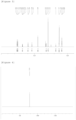
- FIG. 1 illustrates H NMR measurement results of Compound 14.
- FIG. 2 illustrates F NMR measurement results of Compound 14.
- FIG. 3 illustrates H NMR measurement results of Compound 15.
- FIG. 4 illustrates F NMR measurement results of Compound 15.
- Samples 2 to 15 were secured in the same manner as in Preparation Example 2-1, except that compounds shown in the following Table 1 were used instead of Compound 1 in Preparation Example 2-1.
- Table 1 Sample No. Compound used during preparation of sample Sample 1 Compound 1 Sample 2 Compound 2 Sample 3 Compound 3 Sample 4 Compound 4 Sample 5 Compound 5 Sample 6 Compound 6 Sample 7 Compound 7 Sample 8 Compound 8 Sample 9 Compound 9 Sample 10 Compound 10 Sample 11 Compound 11 Sample 12 Compound 12 Sample 13 Compound 13 Sample 14 Compound 14 Sample 15 Compound 15
- Preparation Example 2-16 Sample 16 was secured in the same manner as in Preparation Example 2-1, except that the polymerization was performed without using Compound 1 in Preparation Example 2-1.
- Sample 17 was secured by simply mixing Compound 13 with styrene.
- Styrene (10 g, Aldrich), Compound 12 (0.36 g), and azobisisobutyronitrile (AIBN) (0.01 g, Aldrich) were sequentially put into a flask.
- the solution was precipitated with isopropyl alcohol (Duksan), and after the precipitation, only a solid was selectively obtained through a filter.
- Sample 19 was secured by drying the solid in a vacuum oven to completely remove the residual solvent.
- Antibacterial activity was derived in the same manner as in Example 1-1, except that samples in the following Table 2 were used instead of Sample 12 in Example 1-1.
- Example 1-1 Sample 12 0 99.9 or more Example 1-2 Sample 13 0 99.9 or more Example 1-3 Sample 14 0 99.9 or more Example 1-4 Sample 15 0 99.9 or more Comparative Example 1-1 Sample 16 5.49 0 Comparative Example 1-2 Sample 17 0 99.9 or more Comparative Example 1-3 Sample 18 0 99.9 or more Comparative Example 1-4 Sample 19 0 99.9 or more
- Example 1-1 to 1-4 have excellent antibacterial activity compared to the resin homopolymerized with only styrene (Comparative Example 1-1).
- Sample 12 was stored in water at room temperature for 24 hours, the remaining solid material was obtained to prepare Sample 12-1.
- 0.2 g of Sample 12-1 was put into a 50 mL conical tube, 10 mL of phosphate buffered saline inoculated with 2 x 10 5 CFU/mL of strain was injected into the conical tube, and the conical tube was incubated in a shaking incubator maintained at 35°C for 1 hour.
- the culture solution was diluted 1-fold, 10-fold, and 100-fold, respectively, and spread on agar medium plates.
- the spread agar medium plate was allowed to stand for incubation at 37°C for 24 to 48 hours.
- Antibacterial activity was derived by calculating Equation 1 above based on the CFU number of each of the samples diluted 1-fold, 10-fold, and 100-fold.
- Sample 14 was stored in water at room temperature for 24 hours, the remaining solid material was obtained to prepare Sample 14-1.
- the antibacterial activity was derived in the same manner as in Example 2-1.
- Sample 15 was stored in water at room temperature for 24 hours, the remaining solid material was obtained to prepare Sample 15-1.
- the antibacterial activity was derived in the same manner as in Example 2-1.
- Sample 17 was stored in water at room temperature for 24 hours, the remaining solid material was obtained to prepare Sample 17-1.
- Sample 17-1 the antibacterial activity was derived in the same manner as in Example 2-1.
- Sample 18 was stored in water at room temperature for 24 hours, the remaining solid material was obtained to prepare Sample 18-1.
- the antibacterial activity was derived in the same manner as in Example 2-1.
- Sample 19 was stored in water at room temperature for 24 hours, the remaining solid material was obtained to prepare Sample 19-1.
- the antibacterial activity was derived in the same manner as in Example 2-1.
- the antibacterial resin according to an exemplary embodiment of the present specification maintains its antibacterial activity even after a certain period of time has passed.
- the antibacterial activity deteriorates after a certain period of time has passed.
- the antibacterial resin according to an exemplary embodiment of the present specification is excellent in both antibacterial activity and antibacterial persistence.
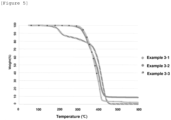
- the thermal decomposition temperature of Sample 12 was measured using a thermogravimetric analyzer (TGA, TA Instrument, DISCOVERY TGA 550 W/MFC & AUTO). More specifically, under the conditions of normal pressure and a temperature at which the sample was warmed from 50°C to 600°C at a rate of 10°C/min, the first temperature decreasing section in a mass decreasing curve was determined as the thermal decomposition temperature.
- TGA thermogravimetric analyzer
- a thermal decomposition temperature was measured in the same manner as in Example 3-1, except that Sample 14 was used instead of Sample 12 in Example 3-1.
- a thermal decomposition temperature was measured in the same manner as in Example 3-1, except that Sample 15 was used instead of Sample 12 in Example 3-1.
- a thermal decomposition temperature was measured in the same manner as in Example 3-1, except that Sample 16 (styrene homopolymer) was used instead of Sample 12 in Example 3-1.
- thermo decomposition measurement results measured in Examples 3-1 to 3-3 are shown in FIG. 5
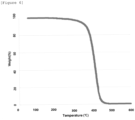
- thermal decomposition measurement results measured in Comparative Example 3-1 are shown in FIG. 6 .
- the high thermal decomposition temperature means that the heat resistance characteristics are improved. From FIG. 5 , it can be confirmed that all the antibacterial resins according to an exemplary embodiment of the present specification exhibit a thermal decomposition temperature of 150°C or higher. It can be confirmed that in particular, when the antibacterial resin according to an exemplary embodiment of the present specification includes anions other than a halogen group (Examples 3-2 and 3-3), the antibacterial resin exhibits a thermal decomposition temperature (300°C or higher) similar to that of polystyrene (Comparative Example 3-1, FIG. 6 ).
- the antibacterial resin of the present invention exhibits antibacterial properties and antibacterial persistence, and also has heat resistance characteristics.
- the heat resistance characteristics are further improved when substituted with specific anions.
- Styrene 1000 g, Aldrich
- Compound 12 360 g
- azobisisobutyronitrile AIBN
- acetonitrile 1000 mL
- Styrene 1000 g, Aldrich
- Compound 12 360 g
- AIBN azobisisobutyronitrile
- the solution was precipitated with isopropyl alcohol (Duksan), and after the precipitation, only a solid was selectively obtained through a filter.
- isopropyl alcohol Duksan
- Sample 20 was extruded using a 16 mm extruder (16 mm Twin Screw Extruder LTE 16, LABTECH). More specifically, extrusion was performed at a screw speed of 160 RPM under isothermal conditions of 200°C to obtain a long cylindrical sample with a diameter of 1 to 2 mm, and the sample was then cooled and cut into a length of about 2 mm to obtain Sample 20-1 in the form of a pellet. In this case, the pressure at a discharge part was 15 bar on average.
- Sample 21-1 in the form of a pellet was obtained by performing extrusion in the same manner as in Preparation Example 5-1, except that Sample 21 was used instead of Sample 20 provided in Preparation Example 5-1. In this case, the pressure at a discharge part was 20 bar on average.
- Sample 20 (0.2 g) was put into a 50 mL conical tube, 10 mL of phosphate buffered saline inoculated with 2 x 10 5 CFU/mL of strain was injected into the conical tube, and the conical tube was incubated in a shaking incubator maintained at 35°C for 24 hours.
- the culture solution was diluted 1-fold, 10-fold, and 100-fold, respectively, and spread on agar medium plates.
- the spread agar medium plate was allowed to stand for incubation at 37°C for 24 to 48 hours.
- Antibacterial activity was derived by calculating Equation 1 above based on the CFU number of each of the samples diluted 1-fold, 10-fold, and 100-fold.
- Antibacterial activity was derived in the same manner as in Example 4-1, except that Sample 20-1 was used instead of Sample 20 in Example 4-1.
- Antibacterial activity was derived in the same manner as in Example 4-1, except that Sample 21 was used instead of Sample 20 in Example 4-1.
- Antibacterial activity was derived in the same manner as in Example 4-1, except that Sample 21-1 was used instead of Sample 20 in Example 4-1.
- Example 4-1 Sample 20 0 99.9 or more Example 4-2 Sample 20-1 0 99.9 or more Comparative Example 4-1 Sample 21 0 99.9 or more Comparative Example 4-2 Sample 21-1 5.52 0
Landscapes
- Life Sciences & Earth Sciences (AREA)
- Chemical & Material Sciences (AREA)
- Health & Medical Sciences (AREA)
- Engineering & Computer Science (AREA)
- Chemical Kinetics & Catalysis (AREA)
- Pest Control & Pesticides (AREA)
- Plant Pathology (AREA)
- Wood Science & Technology (AREA)
- Zoology (AREA)
- Environmental Sciences (AREA)
- General Health & Medical Sciences (AREA)
- Agronomy & Crop Science (AREA)
- Dentistry (AREA)
- Medicinal Chemistry (AREA)
- Polymers & Plastics (AREA)
- Organic Chemistry (AREA)
- General Chemical & Material Sciences (AREA)
- Toxicology (AREA)
- Addition Polymer Or Copolymer, Post-Treatments, Or Chemical Modifications (AREA)
- Agricultural Chemicals And Associated Chemicals (AREA)
Abstract
Description
- The present specification relates to an antibacterial resin and a molded article including the same.
- This application claims priority to and the benefit of
Korean Patent Application Nos. 10-2022-0131728 10-2023-0136278 filed in the Korean Intellectual Property Office on October 13, 2022 - Recently, various products such as daily supplies or hygiene products are required to have high antibacterial properties.
- The degree of antibacterial properties required and the material requirements for imparting antibacterial properties differ depending on the material of the product requiring antibacterial properties and the state of final use. For example, the properties of the material for imparting antibacterial properties and the degree of antibacterial properties vary depending on the amount of antibacterial material applied to a product used and the materials used together.
- However, in introducing antibacterial agents and the like, which inhibit bacterial proliferation into resins, it has not been easy to select and introduce an antibacterial component that is harmless to the human body, satisfies economic feasibility, and does not degrade the basic physical properties of a polymer resin, while exhibiting excellent bacterial proliferation inhibiting properties.
- As one example, general purpose polystyrene (GPPS) is widely used because it is transparent and has good strength. To add antibacterial activity to GPPS, an inorganic antibacterial agent (Cu, Ag, and the like) is added, but depending on the method of addition, sustainability deteriorates and problems occur due to the toxicity of the materials used.
- Accordingly, there is a need for developing a highly antibacterial material which is suitable for application to each of the various products, and which does not release antibacterial materials and thus is harmless to the human body.
[Citation List](Patent Document 1)Korean Patent Application Laid-Open No. 10-2009-0131847 - The present specification provides an antibacterial resin and a molded article including the same.
- An exemplary embodiment of the present specification provides an antibacterial resin including a copolymer including: a first unit derived from styrene; and
- a second unit derived from a monomer represented by the following Chemical Formula 1,
- in which the copolymer has a weight average molecular weight of 10,000 g/mol or more and 1,000,000 g/mol or less.

- In Chemical Formula 1,
- L1 is an alkylene group,
- R1 to R3 are the same as or different from each other, and are each independently an alkyl group,
- R4 is hydrogen or an alkyl group, and
- X- is a monovalent anion.
- Another exemplary embodiment of the present specification provides a molded article including the above-described antibacterial resin or prepared therefrom.
- An antibacterial resin according to some exemplary embodiments of the present specification has hydrophilic and hydrophobic properties, and thus has excellent antibacterial properties.
- The antibacterial resin according to some exemplary embodiments of the present specification can solve safety problems due to the release of antibacterial materials.
- The antibacterial resin according to some exemplary embodiments of the present specification can exhibit antibacterial properties within a short period of time.
- Since the antibacterial resin according to some exemplary embodiments of the present specification has little change in antibacterial strength depending on the amount of antibacterial material used, the antibacterial resin can exhibit antibacterial properties within an expected range even when the unevenness of concentration occurs unintentionally during application to a product. Therefore, antibacterial properties are controlled within a specific range, so that excellent antibacterial properties can be safely imparted.
- The antibacterial resin according to some exemplary embodiments of the present specification has low toxicity, and thus can solve safety problems.
- The antibacterial resin according to some exemplary embodiments of the present specification are characterized in that antibacterial activity can be maintained even after high-temperature processing due to excellent heat resistance.
-
-
FIG. 1 is a view illustrating H NMR measurement results of Compound 14. -
FIG. 2 is a view illustrating F NMR measurement results of Compound 14. -
FIG. 3 is a view illustrating H NMR measurement results of Compound 15. -
FIG. 4 is a view illustrating F NMR measurement results of Compound 15. -
FIG. 5 is a view illustrating TGA measurement results of the antibacterial resin according to some exemplary embodiments of the present specification. -
FIG. 6 is a view illustrating TGA measurement results of a resin according to a comparative exemplary embodiment of the present specification. - Hereinafter, the present specification will be described in detail.
- An exemplary embodiment of the present specification provides an antibacterial resin including a copolymer including: a first unit derived from styrene; and a second unit derived from a monomer represented by the following Chemical Formula 1,
in which the copolymer has a weight average molecular weight of 10,000 g/mol or more and 1,000,000 g/mol or less.
- In Chemical Formula 1,
- L1 is an alkylene group,
- R1 to R3 are the same as or different from each other, and are each independently an alkyl group,
- R4 is hydrogen or an alkyl group, and
- X- is a monovalent anion.
- In the related art, in order to impart antibacterial activity to materials, antibacterial agents were simply mixed with polymers, and in this case, inorganic antibacterial agents or organic antibacterial agents were used. The inorganic antibacterial agents are expensive, easily induce discoloration of materials, and may degrade the physical properties of polymers during processing processes such as extrusion or injection. Further, the inorganic antibacterial agents also have a disadvantage in that the immediate antibacterial efficacy thereof is low. The organic antibacterial agents themselves have a disadvantage in that antibacterial persistence deteriorates due to poor stability against the human and poor thermal stability.
- In contrast, since the antibacterial resin according to the present specification does not include an inorganic antibacterial agent, and thus overcomes disadvantages such as discoloration and deterioration in transparency, and an antibacterial material is not included as a separate substance but is polymerized as a monomer, there is an advantage in that stability for the human body is excellent and antibacterial persistence is maintained. When an organic antibacterial agent is applied to the polymerization of a polymer, the polymerization efficiency or conversion rate decreases or the inherent advantages of the polymer are impaired in many cases, but the present invention may also overcome these disadvantages. Due to the above advantages, the antibacterial resin of the present specification may exhibit excellent antibacterial persistence. That is, the antibacterial resin of the present specification may simultaneously improve stability due to the release of the antibacterial agent while having excellent antibacterial properties and antibacterial persistence.
- Further, when the antibacterial resin has a weight average molecular weight of less than 10,000 g/mol, the antibacterial resin is present in the form of a monomer rather than in the form of a macromolecule, and thus, may be easily eluted, and there may occur a problem in that the antibacterial resin is absorbed in the human body due to low molecular weight, and when the antibacterial resin has a weight average molecular weight of more than 1,000,000 g/mol, the molecular weight is excessively increased, so that the viscosity is increased and the antibacterial resin is not easily applied, and thus processability deteriorates, thereby leading to deterioration in antibacterial activity.
- More preferably, the antibacterial resin has a weight average molecular weight (Mw: g/mol) of 15,000 g/mol or more, 20,000 g/mol or more, 30,000 g/mol or more, or 40,000 g/mol or more and 1,000,000 g/mol or less, 500,000 g/mol or less, 400,000 g/mol or less, 300,000 g/mol or less, 200,000 g/mol or less, or 150,000 g/mol or less.
- According to an exemplary embodiment of the present specification, the antibacterial resin has a number average molecular weight (Mn) of 10,000 g/mol to 800,000 g/mol. More preferably, the antibacterial resin has a number average molecular weight of 15,000 g/mol or more, 20,000 g/mol or more, 25,000 g/mol or more, 30,000 g/mol or more, 35,000 g/mol or more, or 40,000 g/mol or more, and 150,000 g/mol or less, 100,000 g/mol or less, 90,000 g/mol or less or 80,000 g/mol or less.
- According to an exemplary embodiment of the present specification, the weight average molecular weight (Mw) and number average molecular weight (Mn) of the antibacterial resin may be measured using gel permeation chromatography (GPC) .
- According to an exemplary embodiment of the present specification, the GPC is measured as follows.
- A material to be analyzed is diluted with dimethylformamide (DMF) to a concentration of 5 mg/mL, dissolved at 50°C for 6 hours, and then filtered with a PVDF filter (pore size: 0.45 um) to prepare a sample solution. ChemStation manufactured by Agilent Technologies, Inc. was used as an analysis program, and the weight average molecular weight (Mw) and number average molecular weight (Mn) were each determined by comparing the elution time of the sample with the calibration curve. The measurement conditions of GPC are as follows.
- Apparatus: 1200 series manufactured by Agilent Technologies, Inc.
- Stationary phase: 3x Agilent PLgel MIXED-C, 7.5 X 300 mm, 5 um
- Mobile phase A: 0.05 M LiBr in DMF
- Flow rate: 1.0 mL/min
- Stationary phase temperature: 40°C
- Injection amount: 100 µL (0.45 um filter)
- Standard sample: PS
- According to an exemplary embodiment of the present specification, the antibacterial resin may have a molecular weight distribution (Mw/Mn) within a range of 1 to 3. The molecular weight distribution may be 1.1 or more, 1.2 or more, 1.3 or more, or 1.4 or more, or 2.8 or less, 2.6 or less, 2.4 or less, 2.2 or less, 2.0 or less, 1.8 or less, or 1.6 or less in other examples.
- The weight average molecular weight, number average molecular weight, and molecular weight distribution of the antibacterial resin may be determined by a copolymer including the first unit derived from the above-described styrene; and the second unit derived from the monomer represented by Chemical Formula 1
- When one part "includes" one constituent element in the present specification, unless otherwise specifically described, this does not mean that another constituent element is excluded, but means that another constituent element may be further included.
- In the present specification, the "monomer" means a unit compound that may be converted into a polymer compound by a polymerization reaction, and structures derived therefrom may become a repeating unit in a polymer or copolymer. Specifically, this means that in a state in which the corresponding compound is polymerized and bonded in the polymer, in the structure of the compound, all or a portion of two or more substituents are omitted, and a radical for being bonded to other units of the polymer is located at the position. In this case, the corresponding compound may be included in a state of being polymerized in any order and bonded in the polymer.
- In the present specification, the "derived" means that a new bond is generated while a bond between at least two adjacent elements in a compound is broken, or hydrogen or a substituent is detached, and a unit derived from the compound may mean a unit which forms one or more of a main chain and a side chain in a polymer. The unit may be included in a main chain in a polymer to constitute the polymer.
- In the present specification, the "weight average molecular weight" is one of the average molecular weights in which the molecular weight is not uniform and the molecular weight of any polymer material is used as a reference, and is a value obtained by averaging the molecular weight of a component molecular species of a polymer compound having a molecular weight distribution by a weight fraction.
- In the present specification, among physical properties, physical properties which are affected by temperature are physical properties measured at room temperature, unless otherwise specified.
- In the present specification, "room temperature" means the natural temperature that has not been heated or cooled, for example, any one temperature within a range of about 10°C to 30°C, for example, a temperature of about 15°C, about 18°C, meaning a temperature of about 20°C, about 23°C, or about 25°C. Further, in the present specification, the unit of temperature is °C, unless otherwise specified.
- In the present specification, when pressure among physical properties affects the results, the corresponding physical property is a physical property measured at normal pressure, unless otherwise specified.
- In the present specification, "normal pressure" is the natural pressure that has not been pressurized or depressurized, and refers to a pressure which is typically about 1 atmosphere (about 700 to 800 mmHg).
- In the present specification, when humidity among physical properties affects the results, the corresponding physical property is a physical property measured at a humidity that is not particularly controlled in the room temperature and normal pressure state, unless otherwise specified.
- In the present specification, an "alkyl group" may be straight-chained or branched, and the number of carbon atoms thereof is not particularly limited, but is preferably 1 to 60. According to an exemplary embodiment of the present specification, the number of carbon atoms of the alkyl group is 1 to 30. Specific examples of the alkyl group include a methyl group, an ethyl group, a propyl group, an isopropyl group, a butyl group, an isobutyl group, a tert-butyl group, a pentyl group, a hexyl group, a heptyl group, an octyl group, a nonyl group, a decyl group, an undecyl group, a dodecyl group, a tridecyl group, and the like, but are not limited thereto.
- In the present specification, an "alkylene group" means a group having two bonding positions in an alkyl group, that is, a divalent group. The above-described description on the alkyl group may be applied to the alkylene group, except for a divalent alkylene group.
- In the present specification, the "alkoxy group" may be straight-chained, branched, or cyclic. The number of carbon atoms of the alkoxy group is not particularly limited, but is preferably 1 to 30. Specific examples thereof include methoxy, ethoxy, n-propoxy, isopropoxy, i-propyloxy, n-butoxy, isobutoxy, tert-butoxy, sec-butoxy, n-pentyloxy, neopentyloxy, isopentyloxy, n-hexyloxy, 3,3-dimethylbutyloxy, 2-ethylbutyloxy, n-octyloxy, n-nonyloxy, n-decyloxy, benzyloxy, p-methylbenzyloxy, and the like, but are not limited thereto.
- In the present specification, "*" means an attachment point in the copolymer. In this case, the attachment point may be a point where the same units are attached to each other, and may also be a point where different units are attached to each other. As an example, in the following Chemical Formula 2-1, * means both a part to which the first units are attached and a part to which the first unit and the second unit are attached.
- In the present specification, the "antibacterial resin" may mean a copolymer itself including a first unit derived from the styrene and a second unit derived from the monomer represented by Chemical Formula 1, and may also mean that additional components in addition to the polymer are further included.
- According to an exemplary embodiment of the present specification, the first unit derived from the styrene may have a structure in which the double bond of styrene forms a repeating unit while being broken.
- According to an exemplary embodiment of the present specification, the first unit is represented by the following Chemical Formula 2-1.


- In Chemical Formula 2-1,
- n1 is an integer from 1 to 10,000, and
- * is an attachment point in the copolymer.
- According to an exemplary embodiment of the present specification, n1 is an integer from 3 to 10,000, an integer from 10 to 8,000, or an integer from 20 to 5,000.
- According to an exemplary embodiment of the present specification, the copolymer includes 1 to 10,000 of the first units. Specifically, the copolymer includes 3 to 10,000, 10 to 8,000, or 20 to 5,000 of the first units.
- According to an exemplary embodiment of the present specification, the monomer represented by Chemical Formula 1 is an antibacterial material.
- According to an exemplary embodiment of the present specification, the second unit is represented by the following Chemical Formula 1-1.


- In Chemical Formula 1-1,
- L1 is an alkylene group,
- R1 to R3 are the same as or different from each other, and are each independently an alkyl group,
- R4 is hydrogen or an alkyl group,
- X- is a monovalent anion,
- n2 is an integer from 1 to 10,000, and
- * is an attachment point in the copolymer.
- According to an exemplary embodiment of the present specification, n2 is an integer from 3 to 10,000, an integer from 10 to 8,000, or an integer from 20 to 5,000.
- According to an exemplary embodiment of the present specification, R4 is hydrogen or an alkyl group having 1 to 10 carbon atoms.
- According to an exemplary embodiment of the present specification, R4 is hydrogen or a methyl group.
- According to an exemplary embodiment of the present specification, L1 is an alkylene group having 1 to 10 carbon atoms.
- According to an exemplary embodiment of the present specification, L1 is an alkylene group having 1 to 5 carbon atoms.
- According to an exemplary embodiment of the present specification, L1 is a methylene group; an ethylene group; a propylene group; or a butylene group.
- According to an exemplary embodiment of the present specification, R1 to R3 are the same as or different from each other, and are each independently an alkyl group having 1 to 30 carbon atoms.
- According to an exemplary embodiment of the present specification, any one of R1 to R3 is an alkyl group having 5 to 30 carbon atoms, and the others are the same as or different from each other, and are each independently an alkyl group having 1 to 30 carbon atoms.
- According to an exemplary embodiment of the present specification, any one of R1 to R3 is an alkyl group having 5 to 30 carbon atoms, and the others are the same as or different from each other, and are each independently an alkyl group having 1 to 20 carbon atoms.
- According to an exemplary embodiment of the present specification, any one of R1 to R3 is an alkyl group having 5 to 30 carbon atoms, and the others are the same as or different from each other, and are each independently an alkyl group having 1 to 10 carbon atoms.
- According to an exemplary embodiment of the present specification, any one of R1 to R3 is an alkyl group having 5 to 20 carbon atoms, and the others are the same as or different from each other, and are each independently an alkyl group having 1 to 30 carbon atoms.
- According to an exemplary embodiment of the present specification, any one of R1 to R3 is an alkyl group having 5 to 20 carbon atoms, and the others are the same as or different from each other, and are each independently an alkyl group having 1 to 20 carbon atoms.
- According to an exemplary embodiment of the present specification, any one of R1 to R3 is an alkyl group having 5 to 20 carbon atoms, and the others are the same as or different from each other, and are each independently an alkyl group having 1 to 10 carbon atoms.
- According to an exemplary embodiment of the present specification, two or more of R1 to R3 are an alkyl group having 6 to 30 carbon atoms, or the difference in carbon number between an alkyl group having the largest number of carbon atoms and an alkyl group having the smallest number of carbon atoms among R1 to R3 is 4 or more.
- Specifically, three of R1 to R3 are an alkyl group having 6 to 30 carbon atoms; two of R1 to R3 are an alkyl group having 6 to 30 carbon atoms, the other one is an alkyl group having 1 to 30 carbon atoms; or the difference in carbon number between an alkyl group having the largest number of carbon atoms and an alkyl group having the smallest number of carbon atoms among R1 to R3 is 4 or more. In this case, an effect in which antibacterial activity is excellent is exhibited.
- According to an exemplary embodiment of the present specification, a difference in the number of carbon atoms between the alkyl group having the largest number of carbon atoms and the alkyl group having the smallest number of carbon atoms of 4 or more means that the asymmetry is large, and the difference in the number of carbon atoms may be 4 to 30, 5 to 30, or 5 to 10.
- According to an exemplary embodiment of the present specification, the monomer represented by Chemical Formula 1 is any one of the following structures.


- In the structures, X- is a monovalent anionic group.
- According to an exemplary embodiment of the present specification, the second unit derived from the monomer represented by Chemical Formula 1 is any one of the following structures.

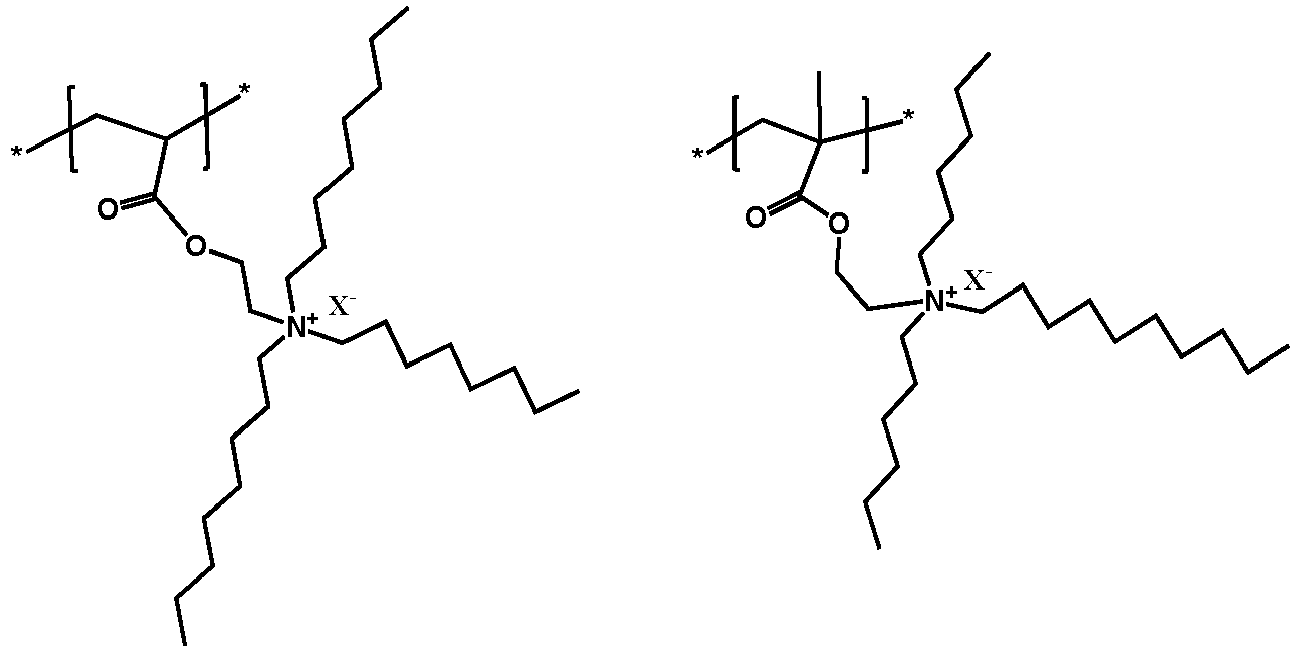


- According to an exemplary embodiment of the present specification, the copolymer includes 1 to 10,000 of the second units. Specifically, the copolymer includes 3 to 10,000, 10 to 8,000, or 20 to 5,000 of the second units.
- According to an exemplary embodiment of the present specification, X- is any one selected from the following Group 1.

- In Group 1,
- R11 is hydrogen; deuterium; a hydroxy group; a substituted or unsubstituted alkoxy group; or a substituted or unsubstituted alkyl group, and
- r11 is an integer from 1 to 5, and when r11 is 2 or higher, two or more R11's are the same as or different from each other.
- According to an exemplary embodiment of the present specification, R11 is hydrogen; a hydroxyl group; or an alkoxy group.
- According to an exemplary embodiment of the present specification, r11 is an integer from 1 to 3.
- According to an exemplary embodiment of the present specification, X- is any one selected from the following Group 2.

- According to an exemplary embodiment of the present specification, a molar ratio of the first unit and the second unit is 100:0.5 to 100:50. Specifically, the molar ratio is 100:0.5 to 100:40, 100:0.5 to 100:30, or 100:0.5 to 100:10. When the molar ratio of the first unit and the second unit satisfies the above-described range, the resin including the first unit and the second unit exhibits the same or better effects in terms of antibacterial properties, heat resistance, and mechanical properties (tensile strength, impact strength, flexural properties, and the like), compared to the resin including only the first unit and the resin including only the second unit.
- The antibacterial properties of the antibacterial resin are derived from the anionic functional group and cationic functional group included in the second unit which the antibacterial resin includes. In general, cell walls of bacteria and the like are often negatively charged, and the cationic functional group may perform a destructive action on the cell walls.
- According to an exemplary embodiment of the present specification, a copolymer is a random copolymer, an alternating copolymer, or a block copolymer. Specifically, the copolymer is a random copolymer.
- According to an exemplary embodiment of the present specification, the first unit and the second unit are included in the main chain of the copolymer.
- According to an exemplary embodiment of the present specification, the first unit is included in the main chain of the copolymer, and the second unit is included in the side chain of the copolymer.
- According to an exemplary embodiment of the present specification, the antibacterial resin includes a third unit represented by the following Chemical Formula 3.

- In Chemical Formula 3,
- L1 is an alkylene group,
- R1 to R3 are the same as or different from each other, and are each independently an alkyl group,
- R4 is hydrogen or an alkyl group,
- X- is a monovalent anion,
- m1 and m2 are each an integer from 1 to 10,000, and
- * is an attachment point in the copolymer.
- According to an exemplary embodiment of the present specification, m1 and m2 are each an integer from 3 to 10,000, an integer from 10 to 8,000, or an integer from 20 to 5,000.
- According to an exemplary embodiment of the present specification, a copolymer including a first unit derived from the styrene; and a second unit derived from the monomer represented by Chemical Formula 1 is represented by Chemical Formula 3.
- According to an exemplary embodiment of the present specification, the terminal end of the copolymer is any one of the following structures.

- In the structures, L1, R1 to R4 and X- are the same as those defined in Chemical Formula 1, andis a moiety attached to the copolymer.

- According to an exemplary embodiment of the present specification, the antibacterial resin has antibacterial properties.
- In the present specification, having antibacterial properties means that the antibacterial activity measured based on the following Method 1, in other words, the bacteriostatic reduction rate is 90% or more.
- According to an exemplary embodiment of the present specification, the antibacterial resin has an antibacterial activity of 90% or more against at least one strain selected from the group consisting of Gram-positive bacteria, Gram-negative bacteria, and molds, as measured by the following Method 1.
- After 0.2 g of the antibacterial resin is put into a 50 mL conical tube, 10 mL of phosphate buffered saline inoculated with 2 x 10⁵ CFU/mL of strain is injected into the conical tube, and the conical tube is incubated in a shaking incubator maintained at 35°C for 1 hour. The culture solution is diluted 1-fold, 10-fold, and 100-fold, respectively, and spread on agar medium plates. The spread agar medium plate is allowed to stand for incubation at 37°C for 24 to 48 hours. Antibacterial activity is derived by calculating the following Equation 1 based on the colony forming unit (CFU) number of each of the samples diluted 1-fold, 10-fold, and 100-fold.

- ASample = Concentration of microorganism in medium incubated by adding the antibacterial resin
- AReference = Concentration of microorganism in medium incubated without adding the antibacterial resin
- When the antibacterial activity of the antibacterial resin according to the present specification was evaluated using Method 1, only the case where the antibacterial activity was 90% or more was observed. As a result, it could be confirmed that the antibacterial resin according to the present specification has excellent antibacterial activity.
- The antibacterial activity may be 920 or more, 950 or more, 990 or more, 99.8% or more, or 99.9% or more in other examples. The upper limit of the antibacterial activity is not particularly limited, and may be, for example, 100% or less or less than 100%.
- As used herein, the term Gram-positive bacteria is a general term for bacteria that are stained purple when stained using the Gram staining method, and Gram-positive bacteria exhibit a purple color without discoloration even though the Gram-positive bacteria are stained with a basic dye such as crystal violet and then treated with ethanol because the cell walls of Gram-positive bacteria are composed of several layers of peptidoglycan.
- According to an exemplary embodiment of the present specification, the Gram-positive bacteria are selected from Enterococcus faecalis, Staphylococcus aureus, Streptococcus pneumoniae, Enterococcus faecium and Lactobacillus lactis. Specifically, the Gram-positive bacteria are any one selected from the above-described examples, but are not limited thereto.
- In the present specification, the Gram-negative bacteria are a general term for bacteria that are stained red when stained with the Gram staining method, and Gram-negative bacteria have an outer membrane composed of lipid polysaccharides, lipid proteins, and/or other complex polymeric materials instead of having a cell wall with a relatively small amount of peptidoglycan compared to Gram-positive bacteria.
- According to an exemplary embodiment of the present specification, the Gram-negative bacteria are selected from Proteus mirabilis, Escherichia coli, Salmonella typhi, Pseudomonas aeruginosa and Vibrio cholerae. Specifically, the Gram-negative bacteria are any one selected from the above-described examples, but are not limited thereto.
- According to an exemplary embodiment of the present specification, the mold may be Candida albicans, but is not limited thereto.
- According to an exemplary embodiment of the present specification, the antibacterial resin has an antibacterial activity of 90% or more against Gram-positive bacteria as measured by Method 1.
- According to an exemplary embodiment of the present specification, the antibacterial resin has an antibacterial activity of 90% or more against Gram-negative bacteria as measured by Method 1.
- According to an exemplary embodiment of the present specification, the antibacterial resin has an antibacterial activity of 90% or more against molds as measured by Method 1.
- According to an exemplary embodiment of the present specification, the bacterium used in the measurement of antibacterial activity is Escherichia coli.
- According to an exemplary embodiment of the present specification, the antibacterial resin has an antibacterial activity of 90% or more against Gram-positive bacteria, Gram-negative bacteria, and molds as measured by Method 1. Since the strains of the Gram-positive bacteria, Gram-negative bacteria and molds may not only induce various diseases upon contact, but also cause secondary infections, it is preferred to exhibit antibacterial properties against all of the Gram-positive bacteria, Gram-negative bacteria, and molds using one antibacterial agent.
- An exemplary embodiment of the present specification provides a composition for forming an antibacterial resin for forming the above-described antibacterial resin.
- According to an exemplary embodiment of the present specification, the composition for forming an antibacterial resin includes styrene; a monomer represented by Chemical Formula 1; and an initiator.
- According to an exemplary embodiment of the present specification, the amount of the styrene is 55 parts by weight to 99.7 parts by weight based on 100 parts by weight of the composition for forming an antibacterial resin. Specifically, the styrene is included in an amount of 65 parts by weight to 99.5 parts by weight, or 70 parts by weight to 99.5 parts by weight. When the content of styrene satisfies the above range, the resin may exhibit an excellent strength effect while being transparent.
- According to an exemplary embodiment of the present specification, the amount of the monomer represented by Chemical Formula 1 is 0.2 parts by weight to 40 parts by weight based on 100 parts by weight of the composition for forming an antibacterial resin. Specifically, the monomer represented by Chemical Formula 1 is included in an amount of 0.5 parts by weight to 35 parts by weight, or 0.5 parts by weight to 30 parts by weight. When the content of the monomer represented by Chemical Formula 1 satisfies the above range, there is an effect of exhibiting excellent antibacterial properties and antibacterial persistence.
- According to an exemplary embodiment of the present specification, the initiator is included in an amount of 0.1 parts by weight to 5 parts by weight based on 100 parts by weight of the composition for forming an antibacterial resin. As an example, the initiator is included in an amount of 0.1 parts by weight to 5 parts by weight, 0.1 parts by weight to 4 parts by weight, 0.1 parts by weight to 3 parts by weight, 0.1 parts by weight to 2 parts by weight, 0.1 parts by weight to 1 part by weight, or 0.1 parts by weight to 0.5 parts by weight based on 100 parts by weigh of the composition for forming an antibacterial resin. In this case, when the content of the initiator is less than 0.1 parts by weight, the polymerization reaction time is prolonged and the polymerization conversion efficiency is reduced, so that there is a concern in that productivity deteriorates. Specifically, the polymerization conversion efficiency is decreased, so that there is a disadvantage in that a large amount of residual monomer and decomposition products are generated. In contrast, when the content exceeds 5 parts by weight, the initiator is not completely consumed during the polymerization process and remains in a polymer to be finally prepared, so that there is a concern in that the physical properties of the polymer, particularly, thermal stability, and the like deteriorate.
- According to an exemplary embodiment of the present specification, examples of the initiator include a peroxide-based compound such as dicumyl peroxide, dipentyl peroxide, di-3,5,5-trimethylhexanoyl peroxide or dilauryl peroxide; a peroxydicarbonate-based compound such as diisopropyl peroxydicarbonate, di-sec-butyl peroxydicarbonate or di-2-ethylhexyl peroxydicarbonate; a peroxyester-based compound such as t-butylperoxy pivalate, 1,1,3,3-tetramethylbutyl peroxyneodecanoate or t-butyl peroxyneodecanoate; an azo-based compound such as azobisisobutyronitrile (AIBN) and azobis-2,4-dimethylvaleronitrile; a hydroperoxide-based compound such as t-butyl hydroperoxide; or a sulfate-based compound such as potassium persulfate or ammonium persulfate; or the like, and any one thereof or a mixture of two or more thereof may be used, but the initiator is not limited to the examples.
- An exemplary embodiment of the present specification provides a molded article including the above-described antibacterial resin or prepared therefrom. The molded article may be specifically a vegetable box for a refrigerator, an automobile part, a blow molding molded article, an inflation molded article, a cast molded article, an extrusion laminate molded article, an extrusion molded article, a foam molded article, an injection molded article, a sheet, a film, a fiber, a monofilament, or a non-woven fabric, but is not limited to the examples. The automobile part may be an interior or exterior material for automobiles.
- Hereinafter, the present specification will be described in detail with reference to Examples for specifically describing the present specification. However, the Examples according to the present specification may be modified in various forms, and it is not interpreted that the scope of the present specification is limited to the Examples described below. The Examples of the present specification are provided to more completely explain the present specification to a person with ordinary skill in the art.
-
- (1) 0.1 mol of 2-(dibutylamino)ethanol (DBAE), 0.1 mol of trimethylamine and 0.001 mol of hydroquinone were added to 100 mL of THF (solvent).
- (2) 0.1 mol of methacryloyl chloride was added dropwise onto a reaction solution while stirring the materials (room temperature).
- (3) The resulting mixture was stirred for 2 hours.
- (4) After a triethylamine salt was removed by filtering the mixture, the solvent was removed by a rotary evaporator.
- (5) The residue was dried under vacuum at 83°C to 87°C.
-
- (1) The product of Step 1 and 1-bromooctane were dissolved at 50 wt% in acrylonitrile (solvent) at a molar ratio of 1:1.
- (2) Subsequently, p-methoxyphenol, which is a polymerization inhibitor, was added (ratio with reactants is 1:0.001 (eq)).
- (3) The resulting mixture was reacted at 50°C for 20 hours.
- (4) After static precipitation (MTBE:reaction solution = 15:1 (volume ratio)) in methyl t-butyl ether (MTBE), the mixture was filtered.
- (5) The filtered mixture was vacuum dried at 45°C to prepare Compound 1.
- Compounds 2 and 3 were prepared in the same manner as in Preparation Example 1-1, except that 1-bromodecane (preparation of Compound 2) or 1-bromododecane (preparation of Compound 3) was used instead of 1-bromooctane in (1) of Step 2 of Preparation Example 1-1.
- Compound 4 was prepared in the same manner as in Preparation Example 1-1, except that 2-(dioctylamino)ethanol (DOAE) was used instead of 2-(dibutylamino)ethanol in (1) of Step 1 of Preparation Example 1-1.
-
- (1) 0.1 mol of 2-(dihexylamino) ethanol (DHAE), 0.1 mol of trimethylamine and 0.001 mol of hydroquinone were put into 100 mL of THF (solvent).
- (2) 0.1 mol of methacryloyl chloride was added dropwise onto a reaction solution while stirring the materials (room temperature).
- (3) The resulting mixture was stirred for 2 hours.
- (4) After a triethylamine salt was removed by filtering the mixture, the solvent was removed by a rotary evaporator.
- (5) The residue was dried under vacuum at 83°C to 87°C.
-
- (1) The product of Step 1 and 1-bromodecane were dissolved at 50 wt% in acrylonitrile (solvent) at a molar ratio of 1:1.
- (2) Subsequently, p-methoxyphenol, which is a polymerization inhibitor, was added (ratio with reactants is 1:0.001 (eq)).
- (3) The resulting mixture was reacted at 50°C for 20 hours.
- (4) After static precipitation (MTBE:reaction solution = 15:1 (volume ratio)) in methyl t-butyl ether (MTBE), the mixture was filtered.
- (5) The filtered mixture was vacuum dried at 45°C to prepare Compound 5.
- Compound 6 was prepared in the same manner as in Preparation Example 1-4, except that 2-(butylhexylamino)ethanol (BHAE) was used instead of 2-(dihexylamino)ethanol in (1) of Step 1 of Preparation Example 1-4.
- Compound 7 was prepared in the same manner as in Preparation Example 1-4, except that 2-(butyloctylamino)ethanol (BOAE) was used instead of 2-(dihexylamino)ethanol in (1) of Step 1 of Preparation Example 1-4.
- Compound 8 was prepared in the same manner as in Preparation Example 1-4, except that 2-(butyldecylamino)ethanol (BOAE) was used instead of 2-(dihexylamino)ethanol in (1) of Step 1 of Preparation Example 1-4.
- Compound 9 was prepared in the same manner as in Preparation Example 1-1, except that 2-(dibutylamino)butanol (DBAB) was used instead of 2-(dibutylamino)ethanol in (1) of Step 1 of Preparation Example 1-1.
-
Compound 10 was prepared in the same manner as in Preparation Example 1-1, except that 2-(dioctylamino)butanol (DOAB) was used instead of 2-(dibutylamino)ethanol in (1) of Step 1 of Preparation Example 1-1. -
- (1) 1-bromooctane (preparation of Compound 11), 2-(dimethylamino)ethyl methacrylate, 4-methoxyphenol and acetonitrile were sequentially put into a two-neck round bottom flask (RBF).
- (2) The resulting mixture was reacted at 60°C for 6 hours.
- (3) After static precipitation (MTBE:reaction solution = 15:1 (volume ratio)) in methyl t-butyl ether (MTBE), the mixture was filtered.
- (4) The resulting product was dried under vacuum at 45°C.
- Compounds 12 and 13 were prepared in the same manner as in Preparation Example 1-10, except that 1-bromodecane (preparation of Compound 12) or 1-bromododecane (preparation of Compound 13) was used instead of 1-bromooctane in Preparation Example 1-10.
- Compound 13 prepared in Preparation Example 1-11 was dissolved in water, sodium tetrafluoroborate was dissolved in water, and the two solutions were mixed with each other. Upon stirring, the product was precipitated as a solid, and the solid was filtered and washed several times with water to prepare Compound 14.
- Compound 15 was prepared in the same manner as in Preparation Example 1-12, except that sodium trifluoromethanesulfonate was used instead of sodium tetrafluoroborate in Preparation Example 1-12.
- Although a static precipitation method of adding a reactant to a nonsolvent was used in Preparation Examples 1-1 to 1-12, a reverse precipitation method of adding a nonsolvent to a reactant may also be used. Furthermore, in addition to 15:1, other ratios of MTBE and reaction solution may be used, and for example, 12:1 and 26:1 may be used.
- The structures of Compounds 1 to 15 prepared in Preparation Examples 1-1 to 1-13 above are as follows.


- It was confirmed through NMR measurement that Compounds 1 to 15 were synthesized.
- Representative NMR measurement results of Compounds 14 and 15 are shown in
FIGS. 1 to 4 . -
FIG. 1 illustrates H NMR measurement results of Compound 14. -
FIG. 2 illustrates F NMR measurement results of Compound 14. -
FIG. 3 illustrates H NMR measurement results of Compound 15. -
FIG. 4 illustrates F NMR measurement results of Compound 15. - Styrene (10 g, Aldrich), Compound 1 (0.36 g) prepared in Preparation Example 1, azobisisobutyronitrile (AIBN) (0.08 g, Aldrich), and acetonitrile (10 mL) were sequentially put into a flask. After the resulting mixture was allowed to react at 80°C for 16 hours, the resulting product was precipitated with isopropyl alcohol (Duksan), and after the precipitation, only a solid was selectively obtained through a filter. Sample 1 was secured by drying the solid in a vacuum oven to completely remove the residual solvent.
- It was confirmed through GPC measurement that Samples 1 to 15 were prepared.
- As a representative example, the GPC measurement results of Samples 14 and 15 are shown.
- (Sample 14) Mn: 87,080, Mw: 160,635, PDI: 1.8
- (Sample 15) Mn: 86,161, Mw: 153,204, PDI: 1.8
- Samples 2 to 15 were secured in the same manner as in Preparation Example 2-1, except that compounds shown in the following Table 1 were used instead of Compound 1 in Preparation Example 2-1.
[Table 1] Sample No. Compound used during preparation of sample Sample 1 Compound 1 Sample 2 Compound 2 Sample 3 Compound 3 Sample 4 Compound 4 Sample 5 Compound 5 Sample 6 Compound 6 Sample 7 Compound 7 Sample 8 Compound 8 Sample 9 Compound 9 Sample 10Compound 10Sample 11 Compound 11 Sample 12 Compound 12 Sample 13 Compound 13 Sample 14 Compound 14 Sample 15 Compound 15 - Preparation Example 2-16. Sample 16 was secured in the same manner as in Preparation Example 2-1, except that the polymerization was performed without using Compound 1 in Preparation Example 2-1.
- Sample 17 was secured by simply mixing Compound 13 with styrene.
- Styrene (10 g, Aldrich), Compound 12 (0.36 g), azobisisobutyronitrile (AIBN) (0.16 g, Aldrich), dodecyl mercaptane (0.20 g, Aldrich), and acetonitrile (90 mL) were sequentially put into a flask.
- After the resulting mixture was allowed to react at 80°C for 4 hours, the resulting product was precipitated with isopropyl alcohol (Duksan), and after the precipitation, only a solid was selectively obtained through a filter. Sample 18 was secured by drying the solid in a vacuum oven to completely remove the residual solvent.
- Styrene (10 g, Aldrich), Compound 12 (0.36 g), and azobisisobutyronitrile (AIBN) (0.01 g, Aldrich) were sequentially put into a flask.
- After reaction at 70°C for 16 hours, the resulting product was dissolved in acetonitrile (10 mL).
- The solution was precipitated with isopropyl alcohol (Duksan), and after the precipitation, only a solid was selectively obtained through a filter. Sample 19 was secured by drying the solid in a vacuum oven to completely remove the residual solvent.
- The GPC measurement results of Samples 18 and 19 are shown.
- (Sample 18) Mn: 5,432, Mw: 8,329, PDI: 1.5
- (Sample 19) Mn: 382,786, Mw: 1,014,872, PDI: 2.7
- After 0.2 g of Sample 12 was put into a 50 mL conical tube, 10 mL of phosphate buffered saline inoculated with 2 x 10⁵ CFU/mL of an E. coli strain was injected into the conical tube, and the conical tube was incubated in a shaking incubator maintained at 35°C for 1 hour. The culture solution was diluted 1-fold, 10-fold, and 100-fold, respectively, and spread on agar medium plates. The spread agar medium plate was allowed to stand for incubation at 37°C for 24 to 48 hours. Antibacterial activity was derived by calculating the following Equation 1 based on the CFU number of each of the samples diluted 1-fold, 10-fold, and 100-fold.

- ASample = Concentration of microorganism in medium incubated by adding the antibacterial resin
- AReference = Concentration of microorganism in medium incubated without adding the antibacterial resin
- Antibacterial activity was derived in the same manner as in Example 1-1, except that samples in the following Table 2 were used instead of Sample 12 in Example 1-1.
- The antibacterial activity derived by Equation 1 in Examples 1-1 to 1-4 and Comparative Examples 1-1 to 1-4 above is shown in the following Table 2.
[Table 2] No. Resin Log CFU/ml Antibacterial activity Example 1-1 Sample 12 0 99.9 or more Example 1-2 Sample 13 0 99.9 or more Example 1-3 Sample 14 0 99.9 or more Example 1-4 Sample 15 0 99.9 or more Comparative Example 1-1 Sample 16 5.49 0 Comparative Example 1-2 Sample 17 0 99.9 or more Comparative Example 1-3 Sample 18 0 99.9 or more Comparative Example 1-4 Sample 19 0 99.9 or more - Through Table 2 above, it can be confirmed that the antibacterial resins according to one embodiment of the present specification (Examples 1-1 to 1-4) have excellent antibacterial activity compared to the resin homopolymerized with only styrene (Comparative Example 1-1).
- After Sample 12 was stored in water at room temperature for 24 hours, the remaining solid material was obtained to prepare Sample 12-1. After 0.2 g of Sample 12-1 was put into a 50 mL conical tube, 10 mL of phosphate buffered saline inoculated with 2 x 10⁵ CFU/mL of strain was injected into the conical tube, and the conical tube was incubated in a shaking incubator maintained at 35°C for 1 hour. The culture solution was diluted 1-fold, 10-fold, and 100-fold, respectively, and spread on agar medium plates. The spread agar medium plate was allowed to stand for incubation at 37°C for 24 to 48 hours. Antibacterial activity was derived by calculating Equation 1 above based on the CFU number of each of the samples diluted 1-fold, 10-fold, and 100-fold.
- After Sample 13 was stored in water at room temperature for 24 hours, the remaining solid material was obtained to prepare Sample 13-1. For Sample 13-1, the antibacterial activity was derived in the same manner as in Example 2-1.
- After Sample 14 was stored in water at room temperature for 24 hours, the remaining solid material was obtained to prepare Sample 14-1. For Sample 14-1, the antibacterial activity was derived in the same manner as in Example 2-1.
- After Sample 15 was stored in water at room temperature for 24 hours, the remaining solid material was obtained to prepare Sample 15-1. For Sample 15-1, the antibacterial activity was derived in the same manner as in Example 2-1.
- After Sample 17 was stored in water at room temperature for 24 hours, the remaining solid material was obtained to prepare Sample 17-1. For Sample 17-1, the antibacterial activity was derived in the same manner as in Example 2-1.
- After Sample 18 was stored in water at room temperature for 24 hours, the remaining solid material was obtained to prepare Sample 18-1. For Sample 18-1, the antibacterial activity was derived in the same manner as in Example 2-1.
- After Sample 19 was stored in water at room temperature for 24 hours, the remaining solid material was obtained to prepare Sample 19-1. For Sample 19-1, the antibacterial activity was derived in the same manner as in Example 2-1.
- The antibacterial activity derived by Equation 1 in Examples 2-1 to 2-4 and Comparative Examples 2-1 to 2-3 above is shown in the following Table 3.
[Table 3] No. Resin Log CFU/ml Antibacterial activity Example 2-1 Sample 12-1 0 99.9 or more Example 2-2 Sample 13-1 0 99.9 or more Example 2-3 Sample 14-1 0 99.9 or more Example 2-4 Sample 15-1 0 99.9 or more Comparative Example 2-1 Sample 17-1 5.49 0 Comparative Example 2-2 Sample 18-1 5.23 39.5 Comparative Example 2-3 Sample 19-1 0 99.9 or more - Through Table 3 above, it can be confirmed that the antibacterial resin according to an exemplary embodiment of the present specification maintains its antibacterial activity even after a certain period of time has passed. In contrast, it can be confirmed that in the case of a resin in which a compound and styrene are simply mixed (Comparative Example 2-1) and resins having a weight average molecular weight of less than 10,000 g/mol (Comparative Examples 2-2 and 2-3), the antibacterial activity deteriorates after a certain period of time has passed. Through this, it can be confirmed that the antibacterial resin according to an exemplary embodiment of the present specification is excellent in both antibacterial activity and antibacterial persistence.
- The thermal decomposition temperature of Sample 12 was measured using a thermogravimetric analyzer (TGA, TA Instrument, DISCOVERY TGA 550 W/MFC & AUTO). More specifically, under the conditions of normal pressure and a temperature at which the sample was warmed from 50°C to 600°C at a rate of 10°C/min, the first temperature decreasing section in a mass decreasing curve was determined as the thermal decomposition temperature.
- A thermal decomposition temperature was measured in the same manner as in Example 3-1, except that Sample 14 was used instead of Sample 12 in Example 3-1.
- A thermal decomposition temperature was measured in the same manner as in Example 3-1, except that Sample 15 was used instead of Sample 12 in Example 3-1.
- A thermal decomposition temperature was measured in the same manner as in Example 3-1, except that Sample 16 (styrene homopolymer) was used instead of Sample 12 in Example 3-1.
- The thermal decomposition measurement results measured in Examples 3-1 to 3-3 are shown in
FIG. 5 , and the thermal decomposition measurement results measured in Comparative Example 3-1 are shown inFIG. 6 . - The high thermal decomposition temperature means that the heat resistance characteristics are improved. From
FIG. 5 , it can be confirmed that all the antibacterial resins according to an exemplary embodiment of the present specification exhibit a thermal decomposition temperature of 150°C or higher. It can be confirmed that in particular, when the antibacterial resin according to an exemplary embodiment of the present specification includes anions other than a halogen group (Examples 3-2 and 3-3), the antibacterial resin exhibits a thermal decomposition temperature (300°C or higher) similar to that of polystyrene (Comparative Example 3-1,FIG. 6 ). - Through the above-described exemplary embodiments, it can be confirmed that the antibacterial resin of the present invention exhibits antibacterial properties and antibacterial persistence, and also has heat resistance characteristics. In particular, it can be confirmed that the heat resistance characteristics are further improved when substituted with specific anions.
- Styrene (1000 g, Aldrich), Compound 12 (360 g), azobisisobutyronitrile (AIBN) (80 g, Aldrich), and acetonitrile (1000 mL) were sequentially put into a 3000-mL flask.
- After the resulting mixture was allowed to react at 80°C for 16 hours, the resulting product was precipitated with isopropyl alcohol (Duksan), and after the precipitation, only a solid was selectively obtained through a filter.
- After the solid was dried in a vacuum oven to completely remove the residual solvent,
Sample 20 was secured. - It was confirmed through GPC measurement that
Sample 20 was prepared.
(Sample 20) Mn: 87,451, Mw: 162,400, PDI: 1.9 - Styrene (1000 g, Aldrich), Compound 12 (360 g), and azobisisobutyronitrile (AIBN) (10 g, Aldrich) were sequentially put into a 3000-mL flask.
- After reaction at 70°C for 16 hours, the resulting product was dissolved in acetonitrile (1000 mL).
- The solution was precipitated with isopropyl alcohol (Duksan), and after the precipitation, only a solid was selectively obtained through a filter.
- After the solid was dried in a vacuum oven to completely remove the residual solvent, Sample 21 was secured.
- It was confirmed through GPC measurement that Sample 21 was prepared.
(Sample 21) Mn: 364,809, Mw: 1,026,020, PDI: 2.8 -
Sample 20 was extruded using a 16 mm extruder (16 mm Twin Screw Extruder LTE 16, LABTECH). More specifically, extrusion was performed at a screw speed of 160 RPM under isothermal conditions of 200°C to obtain a long cylindrical sample with a diameter of 1 to 2 mm, and the sample was then cooled and cut into a length of about 2 mm to obtain Sample 20-1 in the form of a pellet. In this case, the pressure at a discharge part was 15 bar on average. - Sample 21-1 in the form of a pellet was obtained by performing extrusion in the same manner as in Preparation Example 5-1, except that Sample 21 was used instead of
Sample 20 provided in Preparation Example 5-1. In this case, the pressure at a discharge part was 20 bar on average. - After Sample 20 (0.2 g) was put into a 50 mL conical tube, 10 mL of phosphate buffered saline inoculated with 2 x 10⁵ CFU/mL of strain was injected into the conical tube, and the conical tube was incubated in a shaking incubator maintained at 35°C for 24 hours.
- The culture solution was diluted 1-fold, 10-fold, and 100-fold, respectively, and spread on agar medium plates. The spread agar medium plate was allowed to stand for incubation at 37°C for 24 to 48 hours. Antibacterial activity was derived by calculating Equation 1 above based on the CFU number of each of the samples diluted 1-fold, 10-fold, and 100-fold.
- Antibacterial activity was derived in the same manner as in Example 4-1, except that Sample 20-1 was used instead of
Sample 20 in Example 4-1. - Antibacterial activity was derived in the same manner as in Example 4-1, except that Sample 21 was used instead of
Sample 20 in Example 4-1. - Antibacterial activity was derived in the same manner as in Example 4-1, except that Sample 21-1 was used instead of
Sample 20 in Example 4-1. - The antibacterial activity of each of Examples 4-1 and 4-2 and Comparative Examples 4-1 and 4-2 is shown in the following Table 4.
[Table 4] No. Resin Log CFU/mL Antibacterial activity (%) - in accordance with Equation 1 Example 4-1 Sample 200 99.9 or more Example 4-2 Sample 20-1 0 99.9 or more Comparative Example 4-1 Sample 21 0 99.9 or more Comparative Example 4-2 Sample 21-1 5.52 0 - According to Table 4 above, it can be confirmed that when the antibacterial resin according to the present specification has a weight average molecular weight in a range of 10,000 g/mol to 1,000,000 g/mol, the antibacterial activity was maintained at a high level even after the extrusion processing process (Example 4-2) compared to before the extrusion process (Example 4-1). In contrast, when the weight average molecular weight is out of the range of 10,000 g/mol to 1,000,000 g/mol, it can be confirmed that the antibacterial resin according to the present specification has high antibacterial activity before the extrusion process (Comparative Example 4-1), but the antibacterial activity deteriorates after the extrusion processing process (Comparative Example 4-2).
- The results as described above indicate that when a resin having an excessively high molecular weight is applied to a processing process such as extrusion, the resin remains under high temperature and high pressure conditions for long periods of time due to the high viscosity and low fluidity thereof, leading to a decrease in antibacterial activity.
Claims (10)
- An antibacterial resin comprising a copolymer comprising:a first unit derived from styrene; anda second unit derived from a monomer represented by the following Chemical Formula 1,wherein the copolymer has a weight average molecular weight of 10,000 g/mol or more and 1,000,000 g/mol or less:
 L1 is an alkylene group,R1 to R3 are the same as or different from each other, and are each independently an alkyl group,R4 is hydrogen or an alkyl group, andX- is a monovalent anion.
 - The antibacterial resin of claim 1, wherein X- is any one selected from the following Group 1:

 R11 is hydrogen; deuterium; a hydroxy group; a substituted or unsubstituted alkoxy group; or a substituted or unsubstituted alkyl group, andr11 is an integer from 1 to 5, and when r11 is 2 or higher, two or more R11's are the same as or different from each other.
 - The antibacterial resin of claim 1, wherein a molar ratio of the first unit to the second unit is 100:0.5 to 100:50.
- The antibacterial resin of claim 1, wherein the copolymer is a random copolymer.
- The antibacterial resin of claim 1, wherein any one of R1 to R3 is an alkyl group having 5 to 30 carbon atoms, and the others are the same as or different from each other, and are each independently an alkyl group having 1 to 30 carbon atoms.
- The antibacterial resin of claim 1, wherein the monomer represented by Chemical Formula 1 is any one of the following structures:


- The antibacterial resin of claim 1, wherein the antibacterial resin has an antibacterial activity of 90% or more against at least one strain selected from the group consisting of Gram-positive bacteria, Gram-negative bacteria, and molds, as measured by the following Method 1:
[Method 1]
After 0.2 g of the antibacterial resin is put into a 50 mL conical tube, 10 mL of phosphate buffered saline inoculated with 2 x 10⁵ CFU/mL of strain is injected into the conical tube, and the conical tube is incubated in a shaking incubator maintained at 35°C for 1 hour, the culture solution is diluted 1-fold, 10-fold, and 100-fold, respectively, and spread on agar medium plates, the spread agar medium plate is allowed to stand for incubation at 37°C for 24 to 48 hours, antibacterial activity is derived by calculating the following Equation 1 based on the CFU number of each of the samples diluted 1-fold, 10-fold, and 100-fold. ASample = Concentration of microorganism in medium incubated by adding the antibacterial resinAReference = Concentration of microorganism in medium incubated without adding the antibacterial resin
 - The antibacterial resin of claim 7, wherein the Gram-positive bacteria are selected from Enterococcus faecalis, Staphylococcus aureus, Streptococcus pneumoniae, Enterococcus faecium and Lactobacillus lactis.
- The antibacterial resin of claim 7, wherein the Gram-negative bacteria are selected from Proteus mirabilis, Escherichia coll, Salmonella typhi, Pseudomonas aeruginosa and Vibrio cholerae.
- A molded article comprising the antibacterial resin according to any one of claims 1 to 9 or prepared therefrom.
Applications Claiming Priority (3)
| Application Number | Priority Date | Filing Date | Title |
|---|---|---|---|
| KR20220131728 | 2022-10-13 | ||
| KR1020230136278A KR20240051870A (en) | 2022-10-13 | 2023-10-12 | Antibacterial resin, and molding product comprising antibacterial resin |
| PCT/KR2023/015815 WO2024080822A1 (en) | 2022-10-13 | 2023-10-13 | Antibacterial resin and molded body comprising same |
Publications (2)
| Publication Number | Publication Date |
|---|---|
| EP4435018A1 true EP4435018A1 (en) | 2024-09-25 |
| EP4435018A4 EP4435018A4 (en) | 2025-06-11 |
Family
ID=90670010
Family Applications (1)
| Application Number | Title | Priority Date | Filing Date |
|---|---|---|---|
| EP23877745.2A Pending EP4435018A4 (en) | 2022-10-13 | 2023-10-13 | ANTIBACTERIAL RESIN AND MOLDED BODY COMPRISING IT |
Country Status (4)
| Country | Link |
|---|---|
| US (1) | US20250101159A1 (en) |
| EP (1) | EP4435018A4 (en) |
| JP (1) | JP2025500517A (en) |
| WO (1) | WO2024080822A1 (en) |
Family Cites Families (13)
| Publication number | Priority date | Publication date | Assignee | Title |
|---|---|---|---|---|
| DE19502206A1 (en) * | 1995-01-25 | 1996-08-01 | Buna Sow Leuna Olefinverb Gmbh | Functionalized polymers, processes for their production and their use in thermoplastic molding compositions |
| JPH09188821A (en) * | 1995-11-09 | 1997-07-22 | Asahi Chem Ind Co Ltd | Thermoplastic polymer composition containing polymer having quaternary cathonic salt group |
| US6034129A (en) * | 1996-06-24 | 2000-03-07 | Geltex Pharmaceuticals, Inc. | Ionic polymers as anti-infective agents |
| WO2008000429A2 (en) * | 2006-06-26 | 2008-01-03 | Novartis Ag | Polymers with antimicrobial activity containing quaternary ammonium groups |
| GB2450475A (en) * | 2007-06-12 | 2008-12-31 | Univ Nottingham Trent | Antimicrobial polymer nanocomposite |
| KR20090131847A (en) | 2008-06-19 | 2009-12-30 | 대구대학교 산학협력단 | Antibiotic polymer and method for preparing the same |
| CN103694401B (en) * | 2013-12-04 | 2016-01-13 | 华南农业大学 | A kind of Nano-polymer antibacterial agent and preparation method thereof |
| CN107488245A (en) * | 2017-09-14 | 2017-12-19 | 安徽建筑大学 | Antibacterial styrene-acrylic emulsion, preparation method and application |
| JP2022547609A (en) * | 2019-09-13 | 2022-11-14 | ザ・ボーイング・カンパニー | antibacterial nanoworms |
| US20230120607A1 (en) * | 2020-10-07 | 2023-04-20 | Lg Chem, Ltd. | Antibacterial Polymer Composition |
| CN115175968B (en) * | 2020-10-07 | 2024-05-14 | 株式会社Lg化学 | Antimicrobial polymer composition |
| KR20220131728A (en) | 2021-03-22 | 2022-09-29 | 주식회사 언텍트 | Cloud-linked motion detection system |
| KR102680631B1 (en) | 2022-03-18 | 2024-07-01 | 에스케이엔펄스 주식회사 | Assembly for draw out and draw in and apparatus for treating substrate includung the same |
-
2023
- 2023-10-13 EP EP23877745.2A patent/EP4435018A4/en active Pending
- 2023-10-13 JP JP2024538454A patent/JP2025500517A/en active Pending
- 2023-10-13 WO PCT/KR2023/015815 patent/WO2024080822A1/en not_active Ceased
- 2023-10-13 US US18/727,872 patent/US20250101159A1/en active Pending
Also Published As
| Publication number | Publication date |
|---|---|
| WO2024080822A1 (en) | 2024-04-18 |
| US20250101159A1 (en) | 2025-03-27 |
| JP2025500517A (en) | 2025-01-09 |
| EP4435018A4 (en) | 2025-06-11 |
Similar Documents
| Publication | Publication Date | Title |
|---|---|---|
| JP2023514629A (en) | Antibacterial polymer composition | |
| CN115175968B (en) | Antimicrobial polymer composition | |
| KR102797462B1 (en) | Antibacterial polymer | |
| US20250101159A1 (en) | Antibacterial Resin and Molded Body Comprising Same | |
| EP4435022A1 (en) | Antibacterial resin, composition for preparing same, and molded body comprising same | |
| CN118475623A (en) | Antibacterial resin and molded body containing same | |
| KR20240051870A (en) | Antibacterial resin, and molding product comprising antibacterial resin | |
| KR102943858B1 (en) | Antibacterial resin, composition for forming antibacterial resin, and molding product comprising antibacterial resin | |
| EP4467583A1 (en) | Copolymer, antimicrobial deodorant composition comprising same, and method for producing same | |
| US12534552B2 (en) | Antibacterial polymer | |
| KR102723120B1 (en) | Copolymer, antibacterial deordorant composition comprising thereof, and manufacturing method thereof | |
| KR20230144311A (en) | Antibacterial polymer | |
| CN118749003A (en) | Copolymer, antibacterial deodorant composition containing the same and method for producing the same | |
| EP4628514A1 (en) | Antibacterial resin and molded body comprising same | |
| CN118451115A (en) | Antibacterial resin, composition for preparing the same, and molded body comprising the same | |
| EP4349876A1 (en) | Antibacterial san resin, preparation method therefor, and antibacterial abs resin composition containing same | |
| KR20250057499A (en) | Composition, antibacterial resin and method for producing the same | |
| KR20250000455A (en) | Antibacterial resin, and molding product comprising antibacterial resin | |
| KR20250057492A (en) | Composition, antibacterial resin and method for producing the same | |
| KR20250000343A (en) | Antibacterial resin, and molding product comprising antibacterial resin | |
| KR20260055697A (en) | Composition, antibacterial resin and method for producing the same | |
| KR20240092426A (en) | Anti-bacterial polymer | |
| KR20240178817A (en) | Composition for forming copolymer, method for producing copolymer, copolymer, antibacterial resin, and molded article including the same | |
| KR20240112228A (en) | Antibacterial resin and molding product comprising same | |
| KR20260068395A (en) | Composition, antibacterial resin and method for producing the same |
Legal Events
| Date | Code | Title | Description |
|---|---|---|---|
| STAA | Information on the status of an ep patent application or granted ep patent |
Free format text: STATUS: THE INTERNATIONAL PUBLICATION HAS BEEN MADE |
|
| PUAI | Public reference made under article 153(3) epc to a published international application that has entered the european phase |
Free format text: ORIGINAL CODE: 0009012 |
|
| STAA | Information on the status of an ep patent application or granted ep patent |
Free format text: STATUS: REQUEST FOR EXAMINATION WAS MADE |
|
| 17P | Request for examination filed |
Effective date: 20240619 |
|
| AK | Designated contracting states |
Kind code of ref document: A1 Designated state(s): AL AT BE BG CH CY CZ DE DK EE ES FI FR GB GR HR HU IE IS IT LI LT LU LV MC ME MK MT NL NO PL PT RO RS SE SI SK SM TR |
|
| A4 | Supplementary search report drawn up and despatched |
Effective date: 20250509 |
|
| RIC1 | Information provided on ipc code assigned before grant |
Ipc: A01P 1/00 20060101ALI20250502BHEP Ipc: A01N 37/12 20060101ALI20250502BHEP Ipc: A01N 25/10 20060101ALI20250502BHEP Ipc: C08L 33/06 20060101ALI20250502BHEP Ipc: C08L 23/12 20060101ALI20250502BHEP Ipc: C08F 220/36 20060101ALI20250502BHEP Ipc: C08F 210/06 20060101ALI20250502BHEP Ipc: C08L 25/14 20060101ALI20250502BHEP Ipc: C08F 220/34 20060101ALI20250502BHEP Ipc: C08F 212/08 20060101AFI20250502BHEP |
|
| DAV | Request for validation of the european patent (deleted) | ||
| DAX | Request for extension of the european patent (deleted) |