EP4434935A1 - Method and equipment for in situ water removal and hydrogen production during co2 hydrogenation reaction - Google Patents
Method and equipment for in situ water removal and hydrogen production during co2 hydrogenation reaction Download PDFInfo
- Publication number
- EP4434935A1 EP4434935A1 EP23163012.0A EP23163012A EP4434935A1 EP 4434935 A1 EP4434935 A1 EP 4434935A1 EP 23163012 A EP23163012 A EP 23163012A EP 4434935 A1 EP4434935 A1 EP 4434935A1
- Authority
- EP
- European Patent Office
- Prior art keywords
- reaction
- hydrogen
- reaction chamber
- aluminium
- bayerite
- Prior art date
- Legal status (The legal status is an assumption and is not a legal conclusion. Google has not performed a legal analysis and makes no representation as to the accuracy of the status listed.)
- Pending
Links
Images

Classifications
-
- C—CHEMISTRY; METALLURGY
- C07—ORGANIC CHEMISTRY
- C07C—ACYCLIC OR CARBOCYCLIC COMPOUNDS
- C07C1/00—Preparation of hydrocarbons from one or more compounds, none of them being a hydrocarbon
- C07C1/02—Preparation of hydrocarbons from one or more compounds, none of them being a hydrocarbon from oxides of a carbon
- C07C1/12—Preparation of hydrocarbons from one or more compounds, none of them being a hydrocarbon from oxides of a carbon from carbon dioxide with hydrogen
-
- C—CHEMISTRY; METALLURGY
- C01—INORGANIC CHEMISTRY
- C01B—NON-METALLIC ELEMENTS; COMPOUNDS THEREOF; METALLOIDS OR COMPOUNDS THEREOF NOT COVERED BY SUBCLASS C01C
- C01B3/00—Hydrogen; Gaseous mixtures containing hydrogen; Separation of hydrogen from mixtures containing it; Purification of hydrogen; Reversible storage of hydrogen
- C01B3/02—Production of hydrogen; Production of gaseous mixtures containing hydrogen
- C01B3/06—Production of hydrogen; Production of gaseous mixtures containing hydrogen by reaction of inorganic compounds containing electro-positively bound hydrogen with inorganic reducing agents
- C01B3/08—Production of hydrogen; Production of gaseous mixtures containing hydrogen by reaction of inorganic compounds containing electro-positively bound hydrogen with inorganic reducing agents by reaction of inorganic compounds with metals
Definitions
- the presented invention relates generally to the removal of water molecules from CO 2 + H 2 mixtures and biogases with the following production of H 2 and reaction by-products Bayerite - Al(OH) 3 , Na 2 CO 3 •H 2 O thermonatrite and useful heat.
- the four main methods for the removal of water and water vapour from CO 2 + H 2 mixtures and biogases are mainly used today by industry: 1) condensation (refrigeration); 2) adsorption drying; 3) absorption drying, and 4) use of special membranes.
- Condensation based methods Using this approach, the gas mixtures are cooled down at atmospheric pressure to condense the excessive water vapour.
- the condensed water droplets are then separated using: 1) demisters, in which the water droplets are separated using a wired mesh; 2) cyclone separators, in which the water droplets are separated using centrifugal force, equal to hundreds of times the force of gravity; 3) moisture traps, in which the condensation occurs by the expansion of biogas, and subsequently a drop in temperature that condenses the water vapour; and/or 4) water taps in the gas pipe, used for the collection of condensed water ( Golmakani A, Nabavi SA, Wadi B, Manovic V. Advances, challenges, and perspectives of biogas cleaning, upgrading, and utilisation. Fuel. Volume 317, 1 June 2022, 123085 https://doi.org/10.1016/j.fuel.2021.123085 ).
- the technology and equipment described herein allows to transform in situ water molecules from CO 2 + H 2 mixtures and biogases to pure hydrogen and aluminium and water reaction by-products.
- the produced hydrogen could be directed back to the reaction chamber and produced heat used for other purposes.
- the invention relates to the method of removal of water molecules using the direct reaction between CO 2 + H 2 mixtures or biogases with plasma activated aluminium.
- Aluminium scrap activation is performed in glow discharge plasma in the presence of 3-10 Pa of hydrogen with purity not less than 99.00 % or argon with purity not less than 99.00 %, or hydrogen and argon mixtures at the best Ar:H 2 proportion 70:30 as residual gasses for 10-60 min treatment in plasma.
- the temperature during the plasma treatment of aluminium scrap process is 60-110 0 C.
- the hydrophilic activated aluminium is placed in a reaction chamber in layered structure between the layers of NaOH particles. Stainless steel mesh with pores diameters 1 mm was used at the inlet and outlet of reaction molecules to prevent aluminium and reaction by-products migration from the innovative reaction chamber. Two modifications of equipment setup could be realized using the same developed innovative reaction chamber:
- the invention relates to the method of removal of water molecules using the direct reaction between CO 2 + H 2 mixtures or biogases with plasma activated aluminium.
- the activation of the aluminium scrap is performed in glow discharge plasma in the presence of 3-10 Pa of hydrogen with purity not less than 99.00 %, or argon with purity not less than 99.00 %, or hydrogen and argon mixtures with the best Ar:H 2 ratio at 70:30 as residual gasses for 10-60 min treatment in plasma.
- the temperature during the plasma treatment of aluminium scrap process is 60-110 °C.
- reaction chamber 1 which comprises hydrophilic activated aluminium 5 placed in the chamber 1 in layered structure between layers 4 enriched with NaOH particles as hydrogen generation promoters.
- Stainless steel mesh 2 with pores diameters less or equal to 1 mm and glass wool layers 3 were used at the inlet and outlet of the reaction chamber 1 to prevent escape of reaction products from the chamber.
- Aluminium scrap which consist of non-uniform flake like particles with the dimensions more than 1 mm in length and width and consist of almost pure crystalline aluminium, as could be seen from x-ray diffraction pattern ( Fig. 4 ), is activated in glow discharge plasma in the presence of 3-10 Pa of hydrogen with purity not less than 99.00 %, or argon with purity not less than 99.00 %, or hydrogen and argon mixtures with the best Ar:H 2 ratio at 70:30 as residual gasses for 10-60 min treatment in plasma with the DC power density up to 10 - 30 W/cm 2 . Temperature is 60-110 0 C during the plasma process.
- Plasma activated hydrophilic aluminium 5 is placed in the reaction chamber 1 in layered structure between layers 4 enriched with NaOH particles.
- the proportion of layers thickness between layers 4 enriched with NaOH particles, which act as reaction promoters between plasma activated aluminium and water molecules, and activated aluminium layer 5 is 1:5 by volume.
- a stainless steel mesh 2 with pores diameters 1 mm and glass wool layers 3 were used at the inlet and outlet of reaction molecules to prevent aluminium 5 and reaction by-products Bayerite - Al(OH) 3 , Na 2 CO 3 •H 2 O thermonatrite migration from the reaction chamber.
- the similar reaction chamber could be connected using two configurations shown in Fig. 2-3 .
- initial reaction gasses CH 4 + H 2 O in Fig. 2 shown as 6, which leaves Sabatier reactor 11, enters the reaction chamber 1 where reaction between activated aluminium 5 and water molecules takes place and mixture of CH 4 + H 2 gases 7, the reaction by-products Bayerite - Al(OH) 3 , Na 2 CO 3 •H 2 O thermonatrite and useful heat are produced. No preliminary water condensation is needed in this case.
- H 2 O molecules 15 together with CO 2 enter Sabatier reactor 11 and CH 4 + H 2 O water vapour 6 produced.
- the vapour 6 enters water vapour condenser 13, and condensed water 14 enters the reaction chamber 1 where reaction between activated aluminium 5, layers 4 of NaOH particles, and water molecules 14 takes place, and pure H 2 gas and reaction by-products Bayerite - Al(OH) 3 , Na 2 CO 3 •H 2 O thermonatrite are produced.
- oxygen is captured in the reaction by-products.
- Produced CH 4 gas 7 could be used for final applications and produced H 2 gas 12 could be separated and supplied to the Sabatier reactor 11 in a close cycle system for CO 2 + H 2 reactions again.
- Stainless steel mesh 2 with pores diameters of 1 mm together with glass wool layers 3 were used at the inlet and outlet of reaction molecules to prevent migration of aluminium 5 and reaction by-products Bayerite - Al(OH) 3 , Na 2 CO 3 •H 2 O thermonatrite from the reaction chamber. NaOH layers 4 were used as reaction promoters.
- the reaction by-products Bayerite - Al(OH) 3 , Na 2 CO 3 •H 2 O and useful heat are produced during reactions between activated aluminium 5 and water molecules.
- the received H 2 gas 12 in case Fig. 3 configuration or separated H 2 from the received CH 4 + H 2 mixture in case Fig. 2 could be used in Sabatier reactor 11 for reaction with CO 2 again.
- the solid state reaction by-products for the both cases are the same and consist of Bayerite - Al(OH) 3 , Na 2 CO 3 •H 2 O thermonatrite.
- Heat management in all cases was realized using a heat exchange fluid 8 with Tmin, 0 C, which heats up and dissipate produced heat at exit where heat exchange fluid 9 Tmax, 0 C and could be used for further applications.
- thermocouples 10 were installed in different places of the innovative chamber 1. Water could be used as a heat exchange fluid in all cases.
Landscapes
- Chemical & Material Sciences (AREA)
- Organic Chemistry (AREA)
- Chemical Kinetics & Catalysis (AREA)
- Engineering & Computer Science (AREA)
- Health & Medical Sciences (AREA)
- General Health & Medical Sciences (AREA)
- Combustion & Propulsion (AREA)
- Inorganic Chemistry (AREA)
- General Chemical & Material Sciences (AREA)
- Oil, Petroleum & Natural Gas (AREA)
- Organic Low-Molecular-Weight Compounds And Preparation Thereof (AREA)
Abstract
The presented invention relates to the method and equipment of water molecules removal from CO2 + H2 mixtures and biogases with the following production of H2 and reaction by-products Bayerite - Al(OH)3, Na2CO3•H2O thermonatrite and useful heat. The method comprising: activating the aluminium scrap in glow discharge plasma in the presence of 3-10 Pa of hydrogen, or argon, or hydrogen and argon mixtures with the best Ar:H2 ratio at 70:30 as residual gasses for 10-60 min with the DC power density up to 10-30 W/cm2 while keeping the temperature in the range of 60-110 0C during the plasma treatment process; placing hydrophilic activated aluminium (5) in a layered structure of the reaction chamber (1) between layers (4) enriched with NaOH particles acting as hydrogen generation promoters; introducing CH4 + H2O mixture into the reaction chamber (1) with hydrogen; obtaining the CH4+H2 mixture (7) and the reaction by-products Bayerite - Al(OH)3 and Na2CO3•H2O thermonatrite; separating the H2 from the CH4 + H2 mixture (7).
Description
- The presented invention relates generally to the removal of water molecules from CO2 + H2 mixtures and biogases with the following production of H2 and reaction by-products Bayerite - Al(OH)3, Na2CO3•H2O thermonatrite and useful heat.
- Reversible CO2 hydrogenation reaction (Sabatier reaction) and biogases requires in situ water removal to get higher methane yield and selectivity.
- The four main methods for the removal of water and water vapour from CO2 + H2 mixtures and biogases are mainly used today by industry: 1) condensation (refrigeration); 2) adsorption drying; 3) absorption drying, and 4) use of special membranes.
- Condensation based methods. Using this approach, the gas mixtures are cooled down at atmospheric pressure to condense the excessive water vapour. The condensed water droplets are then separated using: 1) demisters, in which the water droplets are separated using a wired mesh; 2) cyclone separators, in which the water droplets are separated using centrifugal force, equal to hundreds of times the force of gravity; 3) moisture traps, in which the condensation occurs by the expansion of biogas, and subsequently a drop in temperature that condenses the water vapour; and/or 4) water taps in the gas pipe, used for the collection of condensed water (Golmakani A, Nabavi SA, Wadi B, Manovic V. Advances, challenges, and perspectives of biogas cleaning, upgrading, and utilisation. Fuel. ).
- Adsorption drying. Using this approach water molecules were adsorbed using solid adsorbents with high BET, such as Silica based, for example Silica-NH2-MAS; Silica-NH2-PSS; Silica-NH2-PAAS (Pei L, Zhang L. Preparation and selective adsorption of core-shell desiccant for heat and moisture recovery. Colloids Surfaces A Physicochem Eng Asp 2012;406: 68-74. https://doi.org/10.1016/j.colsurfa.2012.04.052), activated alumina (Solomon I, Anam Ribeiro, Santos JC, Loureiro JM, Rodrigues AE, Sandu I, et al. Adsorption equilibrium of water vapor on activated carbon and alumina and carbon and alumina impregnated with hygroscopic salt. Turkish J Chem 2013;37: 358-65), activated carbons without and with impregnation with hydroscopic salts (Tso CY, Chao CYH. Activated carbon, silica-gel and calcium chloride composite adsorbents for energy efficient solar adsorption cooling and dehumidification systems. Int J Refrig 2012; 35:1626-38. https://doi.org/10.1016/j. ijrefrig.2012.05.007), polymer structures impregnated with hygroscopic salts (Lee J, Lee D-Y. Sorption characteristics of a novel polymeric desiccant. Int J Refrig 2012; 35:1940-9. https://doi.org/10.1016/j.ijrefrig.2012.07.009) and metal organic frameworks (Seo YK, Yoon JW, Lee JS, Hwang YK, Jun CH, Chang JS, et al. Energy-efficient dehumidification over hierachically porous metal-organic frameworks as advanced water adsorbents. Adv Mater 2012;24:806-10. https://doi.org/ 10.1002/adma.201104084 ).
- Absorption drying. It could be realized using hydroscopic salts and salts should be continuously replaced after saturation with water molecules (Persson M, Jonsson O, Biogas Wellinger A. Upgrading To Vehicle Fuel Standards and Grid. 2007 ). The same approach could be realized using glycol as absorption media.
- Most of the novel developments are related with the use of hybrid materials containing both catalyst (Cu/UGSO, UGSO - UpGraded slag oxide) and hydrophilic adsorbent (13X zeolite) for in-situ water removal for gas mixtures (Desgagnes A, Iliuta M.C. Intensification of CO2 hydrogenation by in-situ water removal using hybrid catalyst-adsorbent materials: Effect of preparation method and operating conditions on the RWGS reaction as a case study. Chemical Engineering Journal 454 (2023) 140214. https://doi.org/10.10167j.cej.2022.140214 ) in sorption-enhanced (SE) reaction process, which allows the reactors to be operated at much lower temperatures to achieve the same conversion of reactants.
- The technology and equipment described herein allows to transform in situ water molecules from CO2 + H2 mixtures and biogases to pure hydrogen and aluminium and water reaction by-products. The produced hydrogen could be directed back to the reaction chamber and produced heat used for other purposes.
- The invention relates to the method of removal of water molecules using the direct reaction between CO2 + H2 mixtures or biogases with plasma activated aluminium. Aluminium scrap activation is performed in glow discharge plasma in the presence of 3-10 Pa of hydrogen with purity not less than 99.00 % or argon with purity not less than 99.00 %, or hydrogen and argon mixtures at the best Ar:H2 proportion 70:30 as residual gasses for 10-60 min treatment in plasma. The temperature during the plasma treatment of aluminium scrap process is 60-110 0C. The hydrophilic activated aluminium is placed in a reaction chamber in layered structure between the layers of NaOH particles. Stainless steel mesh with
pores diameters 1 mm was used at the inlet and outlet of reaction molecules to prevent aluminium and reaction by-products migration from the innovative reaction chamber. Two modifications of equipment setup could be realized using the same developed innovative reaction chamber: - 1) CH4 + H2O mixture directly enters the chamber and hydrogen; Bayerite - Al(OH)3, Na2CO3•H2O thermonatrite; heat was produced and CH4 + H2 leaves the reaction chamber; H2 could be separated from CH4 + H2 mixture and further used in reactions with CO2 again; and
- 2) CH4 + H2O enters water vapour condensation equipment, condensed water enters the reaction chamber and hydrogen, Bayerite - Al(OH)3, Na2CO3•H2O thermonatrite, the reaction heat was produced and H2 leaves the reaction chamber and could be used in the Sabatier reactor with the reaction CO2 again. The main novelty of the invention is related to the development of the reaction chamber filled with hydrophilic activated aluminium, and glass wool layers enriched with layers of NaOH particles to enhance chemical reactions. Stainless steel mesh with pores diameters up to 1 mm was used at the inlet and outlet of developed innovative reaction chamber to prevent the migration of reaction materials from the chamber.
- The presented invention is described with the reference to the accompanying drawings:
-
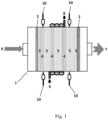
Fig.1 depicts a schematic view illustration of innovative reaction chamber; -
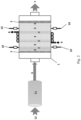
Fig. 2 depicts a schematic view illustration of the process for water molecules removal and production of hydrogen; -
Fig. 3 depicts a schematic view illustration of the process for water molecules removal and production of hydrogen; -
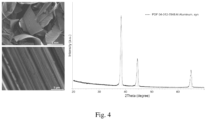
Fig.4 depicts scanning electron images of initial activated aluminium scrap at two magnifications and X-ray diffraction pattern which corresponds to pure aluminium; -
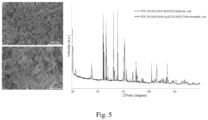
Fig.5 depicts scanning electron microscope images of water and activated aluminium reaction by-products and X-ray diffraction pattern which corresponds to Bayerite - Al(OH)3, Na2CO3•H2O thermonatrite. - Schematic views of the present invention are presented in
Fig. 1-5 . The invention relates to the method of removal of water molecules using the direct reaction between CO2 + H2 mixtures or biogases with plasma activated aluminium. The activation of the aluminium scrap is performed in glow discharge plasma in the presence of 3-10 Pa of hydrogen with purity not less than 99.00 %, or argon with purity not less than 99.00 %, or hydrogen and argon mixtures with the best Ar:H2 ratio at 70:30 as residual gasses for 10-60 min treatment in plasma. The temperature during the plasma treatment of aluminium scrap process is 60-110 °C. - The removal of water molecules from CO2 + H2O and biogases occurs in an
innovative reaction chamber 1 which comprises hydrophilic activatedaluminium 5 placed in thechamber 1 in layered structure betweenlayers 4 enriched with NaOH particles as hydrogen generation promoters.Stainless steel mesh 2 with pores diameters less or equal to 1 mm andglass wool layers 3 were used at the inlet and outlet of thereaction chamber 1 to prevent escape of reaction products from the chamber. - Detailed description of water molecules removal:
Aluminium scrap, which consist of non-uniform flake like particles with the dimensions more than 1 mm in length and width and consist of almost pure crystalline aluminium, as could be seen from x-ray diffraction pattern (Fig. 4 ), is activated in glow discharge plasma in the presence of 3-10 Pa of hydrogen with purity not less than 99.00 %, or argon with purity not less than 99.00 %, or hydrogen and argon mixtures with the best Ar:H2 ratio at 70:30 as residual gasses for 10-60 min treatment in plasma with the DC power density up to 10 - 30 W/cm2. Temperature is 60-110 0C during the plasma process. - Plasma activated
hydrophilic aluminium 5 is placed in thereaction chamber 1 in layered structure betweenlayers 4 enriched with NaOH particles. The proportion of layers thickness betweenlayers 4 enriched with NaOH particles, which act as reaction promoters between plasma activated aluminium and water molecules, and activatedaluminium layer 5 is 1:5 by volume. Astainless steel mesh 2 withpores diameters 1 mm andglass wool layers 3 were used at the inlet and outlet of reaction molecules to preventaluminium 5 and reaction by-products Bayerite - Al(OH)3, Na2CO3•H2O thermonatrite migration from the reaction chamber.Reaction gasses 6, which consist of CH4+H2O, enter thereactor chamber 1, and CH4+H2 mixture 7 was produced. - The similar reaction chamber could be connected using two configurations shown in
Fig. 2-3 . In case ofFig. 2 configuration, initial reaction gasses CH4 + H2O, inFig. 2 shown as 6, which leavesSabatier reactor 11, enters thereaction chamber 1 where reaction between activatedaluminium 5 and water molecules takes place and mixture of CH4 + H2 gases 7, the reaction by-products Bayerite - Al(OH)3, Na2CO3•H2O thermonatrite and useful heat are produced. No preliminary water condensation is needed in this case. - In case water condensation equipment is present (
Fig. 3 ), H2O molecules 15 together with CO2 enterSabatier reactor 11 and CH4 + H2O water vapour 6 produced. Thevapour 6 enterswater vapour condenser 13, andcondensed water 14 enters thereaction chamber 1 where reaction between activatedaluminium 5, layers 4 of NaOH particles, andwater molecules 14 takes place, and pure H2 gas and reaction by-products Bayerite - Al(OH)3, Na2CO3•H2O thermonatrite are produced. Whereas oxygen is captured in the reaction by-products. Produced CH4 gas 7 could be used for final applications and produced H2 gas 12 could be separated and supplied to theSabatier reactor 11 in a close cycle system for CO2 + H2 reactions again.Stainless steel mesh 2 with pores diameters of 1 mm together withglass wool layers 3 were used at the inlet and outlet of reaction molecules to prevent migration ofaluminium 5 and reaction by-products Bayerite - Al(OH)3, Na2CO3•H2O thermonatrite from the reaction chamber.NaOH layers 4 were used as reaction promoters. The reaction by-products Bayerite - Al(OH)3, Na2CO3•H2O and useful heat are produced during reactions between activatedaluminium 5 and water molecules. - The received H2 gas 12 in case
Fig. 3 configuration or separated H2 from the received CH4 + H2 mixture in caseFig. 2 could be used inSabatier reactor 11 for reaction with CO2 again. The solid state reaction by-products for the both cases are the same and consist of Bayerite - Al(OH)3, Na2CO3•H2O thermonatrite. - As the reaction between activated aluminium and water molecules was exothermic, useful heat is produced and removed from the reaction chamber using similar heat exchange fluid 8 (
Fig. 2-3 ). - Heat management in all cases (
Fig. 1-3 ) was realized using aheat exchange fluid 8 with Tmin, 0C, which heats up and dissipate produced heat at exit whereheat exchange fluid 9 Tmax, 0C and could be used for further applications. Fourthermocouples 10 were installed in different places of theinnovative chamber 1. Water could be used as a heat exchange fluid in all cases. - As the reaction is exothermic, from 1 kg of aluminium and 2 kg of water molecules could be produced up to 0.11 kg of H2 and 4.3 kWh of useful heat for both configurations.
Claims (2)
- A method for in situ removal of water molecules from CO2 + H2O and biogases and hydrogen production during CO2 hydrogenation reaction, characterized by comprising:- activating the aluminium scrap in glow discharge plasma in the presence of 3-10 Pa of hydrogen with purity not less than 99.00 %, or argon with purity not less than 99.00 %, or hydrogen and argon mixtures with the best Ar:H2 ratio at 70:30 as residual gasses for 10-60 min with the DC power density up to 10-30 W/cm2 while keeping the temperature in the range of 60-110 0C during the plasma treatment process;- placing the hydrophilic activated aluminium (5) in a layered structure of the reaction chamber (1) between layers (4) enriched with NaOH particles as hydrogen generation promoters,- introducing CH4 + H2O mixture directly into the reaction chamber (1) with hydrogen; obtaining the CH4+H2 mixture (7), which leaves the reaction chamber (1), and the reaction by-products Bayerite - Al(OH)3 and Na2CO3•H2O thermonatrite;- separating the H2 from the CH4 + H2 mixture (7), and introducing the H2 into the reaction with CO2 again,- capturing the oxygen in reaction by-products Bayerite - Al(OH)3 and Na2CO3•H2O thermonatrite.
- An equipment for in situ removal of water molecules from CO2 + H2O and biogases and hydrogen production during CO2 hydrogenation reaction, the equipment comprising a reaction chamber (1), wherein the reaction chamber (1) comprises a layered structure consisting of layers (4) enriched with NaOH particles as hydrogen generation promoters, between which layers the hydrophilic activated aluminium (5) is placed, and stainless steel meshes (2) with pores diameters less or equal to 1 mm together with glass wool layers (3) are placed at the inlet (6) and outlet (7) of gases to prevent the aluminium and reaction by-products Bayerite - Al(OH)3, Na2CO3•H2O thermonatrite migration from the reaction chamber.
Priority Applications (1)
| Application Number | Priority Date | Filing Date | Title |
|---|---|---|---|
| EP23163012.0A EP4434935A1 (en) | 2023-03-21 | 2023-03-21 | Method and equipment for in situ water removal and hydrogen production during co2 hydrogenation reaction |
Applications Claiming Priority (1)
| Application Number | Priority Date | Filing Date | Title |
|---|---|---|---|
| EP23163012.0A EP4434935A1 (en) | 2023-03-21 | 2023-03-21 | Method and equipment for in situ water removal and hydrogen production during co2 hydrogenation reaction |
Publications (1)
| Publication Number | Publication Date |
|---|---|
| EP4434935A1 true EP4434935A1 (en) | 2024-09-25 |
Family
ID=85724743
Family Applications (1)
| Application Number | Title | Priority Date | Filing Date |
|---|---|---|---|
| EP23163012.0A Pending EP4434935A1 (en) | 2023-03-21 | 2023-03-21 | Method and equipment for in situ water removal and hydrogen production during co2 hydrogenation reaction |
Country Status (1)
| Country | Link |
|---|---|
| EP (1) | EP4434935A1 (en) |
-
2023
- 2023-03-21 EP EP23163012.0A patent/EP4434935A1/en active Pending
Non-Patent Citations (14)
| Title |
|---|
| DESGAGNES AILIUTA M.C: "Intensification of CO hydrogenation by in-situ water removal using hybrid catalyst-adsorbent materials: Effect of preparation method and operating conditions on the RWGS reaction as a case study", CHEMICAL ENGINEERING JOURNAL, vol. 454, 2023, pages 140214 |
| GOLMAKANI ANABAVI SAWADI ΒMANOVIC V: "Advances, challenges, and perspectives of biogas cleaning, upgrading, and utilisation", FUEL, vol. 317, 1 June 2022 (2022-06-01), pages 123085 |
| HUANG XIANI ET AL: "A review: Feasibility of hydrogen generation from the reaction between aluminum and water for fuel cell applications", JOURNAL OF POWER SOURCES, vol. 229, 28 December 2012 (2012-12-28), AMSTERDAM, NL, pages 133 - 140, XP093076046, ISSN: 0378-7753, DOI: 10.1016/j.jpowsour.2012.12.016 * |
| KHAI PHUNG KHOR ET AL: "Production of H 2 from aluminium/water reaction and its potential for CO 2 methanation", IOP CONFERENCE SERIES: EARTH AND ENVIRONMENTAL SCIENCE, vol. 140, April 2018 (2018-04-01), pages 012020, XP093076044, ISSN: 1755-1307, DOI: 10.1088/1755-1315/140/1/012020 * |
| LEE JLEE D-Y: "Sorption characteristics of a novel polymeric desiccant", INT J REFRIG, vol. 35, 2012, pages 1940 - 9, XP028939876, DOI: 10.1016/j.ijrefrig.2012.07.009 |
| MARIUS URBONAVICIUS ET AL: "Generation of Hydrogen through the Reaction between Plasma-Modified Aluminum and Water", ENERGY TECHNOLOGY, vol. 5, no. 12, 20 July 2017 (2017-07-20), DE, pages 2300 - 2308, XP055523154, ISSN: 2194-4288, DOI: 10.1002/ente.201700344 * |
| MEZULIS ANSIS ET AL: "Studies on Water-Aluminum Scrap Reaction Kinetics in Two Steps and the Efficiency of Green Hydrogen Production", ENERGIES, vol. 16, no. 14, 22 July 2023 (2023-07-22), CH, pages 5554, XP093076073, ISSN: 1996-1073, DOI: 10.3390/en16145554 * |
| MUÑOZ J. ET AL: "Aluminum metal surface cleaning and activation by atmospheric-pressure remote plasma", APPLIED SURFACE SCIENCE, vol. 407, 14 February 2017 (2017-02-14), Amsterdam , NL, pages 72 - 81, XP093075833, ISSN: 0169-4332, Retrieved from the Internet <URL:https://www.sciencedirect.com/science/article/pii/S0169433217304543/pdfft?md5=f49f82cedb8ab4c68ceb3e78f86cf439&pid=1-s2.0-S0169433217304543-main.pdf> DOI: 10.1016/j.apsusc.2017.02.092 * |
| PEI LZHANG L: "Preparation and selective adsorption of core-shell desiccant for heat and moisture recovery", COLLOIDS SURFACES A PHYSICOCHEM ENG ASP, vol. 406, 2012, pages 68 - 74 |
| PERSSON MJONSSON OBIOGAS WELLINGER A, UPGRADING TO VEHICLE FUEL STANDARDS AND GRID, 2007 |
| SEO YKYOON JWLEE JSHWANG YKJUN CHCHANG JS ET AL.: "Energy-efficient dehumidification over hierachically porous metal-organic frameworks as advanced water adsorbents", ADV MATER, vol. 24, 2012, pages 806 - 10 |
| SOLOMON IANAM RIBEIROSANTOS JCLOUREIRO JMRODRIGUES AESANDU I ET AL.: "Adsorption equilibrium of water vapor on activated carbon and alumina and carbon and alumina impregnated with hygroscopic salt", TURKISH J CHEM, vol. 37, 2013, pages 358 - 65 |
| TSO CYCHAO CYH.: "Activated carbon, silica-gel and calcium chloride composite adsorbents for energy efficient solar adsorption cooling and dehumidification systems", INT J REFRIG, vol. 35, 2012, pages 1626 - 38, XP028451438, DOI: 10.1016/j.ijrefrig.2012.05.007 |
| URBONAVICIUS MARIUS ET AL: "Hydrogen generation based on aluminum-water reaction for fuel cell applications", ENERGY PROCEDIA, vol. 128, September 2017 (2017-09-01), pages 114 - 120, XP085225771, ISSN: 1876-6102, DOI: 10.1016/J.EGYPRO.2017.09.024 * |
Similar Documents
| Publication | Publication Date | Title |
|---|---|---|
| Rodríguez-Mosqueda et al. | CO2 capture from ambient air using hydrated Na2CO3 supported on activated carbon honeycombs with application to CO2 enrichment in greenhouses | |
| KR100291115B1 (en) | Use of zeolites and alumina in adsorption processes | |
| JP6820318B2 (en) | Microcrystalline Cellulose Pyrolysis Product Adsorbent and Method for Producing and Using It | |
| CN102583281B (en) | Method and device for recovering and purifying argon in monocrystalline silicon production | |
| AU2021451048A1 (en) | Ammonia cracking for green hydrogen | |
| JP4745299B2 (en) | Adsorption / desorption material of ammonia using a combination of specific metal halides, separation method and storage method | |
| CA2785323C (en) | Co2 sorbent | |
| KR20000062180A (en) | Process and apparatus for recovering ammonia | |
| JP2001046826A (en) | Method for separating gas component from gaseous mixture | |
| JP6400077B2 (en) | Novel carbon molecular sieve and pellet composition useful for C2-C3 alkane / alkene separation | |
| Fu et al. | Highly-efficient separation of SF6/N2 and NF3/N2 with record selectivity on one-step synthesized carbon nanosheet | |
| CN102471056B (en) | The reuse method of hydrogen | |
| WO2016053471A1 (en) | Methods and systems for making ammonia in a double ammonia converter system | |
| WO2010021127A1 (en) | Xenon adsorbent, xenon enrichment method, xenon enrichment device, and air liquefaction and separation device | |
| WO2025111372A1 (en) | Compositions, systems, and methods for sequestering co2 from combustion flue gas | |
| Zurrer et al. | Harnessing the structural attributes of NiMg-CUK-1 MOF for the dual-function capture and transformation of carbon dioxide into methane | |
| Song et al. | Adsorption of carbon dioxide on chemically modified carbon adsorbents | |
| EP4434935A1 (en) | Method and equipment for in situ water removal and hydrogen production during co2 hydrogenation reaction | |
| JP2011057491A (en) | Method for recovering gas | |
| CN114749145A (en) | Molecular sieve for adsorption and separation of nitrogen and methane and preparation method thereof | |
| CN101863734B (en) | Method for purifying carbon tetrafluoride | |
| TWI294405B (en) | Process for refining nitrogen trifluoride gas using alkali earth metal exchanged zeolite | |
| JP2002326810A (en) | Method and apparatus for separating ammonia using metal halide | |
| JP2023147421A (en) | Method for producing a gas composition, method for producing a substance derived from at least carbon dioxide, and method for regenerating a solid adsorbent | |
| JP3908819B2 (en) | CFC recovery method |
Legal Events
| Date | Code | Title | Description |
|---|---|---|---|
| PUAI | Public reference made under article 153(3) epc to a published international application that has entered the european phase |
Free format text: ORIGINAL CODE: 0009012 |
|
| STAA | Information on the status of an ep patent application or granted ep patent |
Free format text: STATUS: THE APPLICATION HAS BEEN PUBLISHED |
|
| AK | Designated contracting states |
Kind code of ref document: A1 Designated state(s): AL AT BE BG CH CY CZ DE DK EE ES FI FR GB GR HR HU IE IS IT LI LT LU LV MC ME MK MT NL NO PL PT RO RS SE SI SK SM TR |
|
| STAA | Information on the status of an ep patent application or granted ep patent |
Free format text: STATUS: REQUEST FOR EXAMINATION WAS MADE |
|
| 17P | Request for examination filed |
Effective date: 20250317 |