EP4432346A1 - Cover for heat generating electronic component - Google Patents
Cover for heat generating electronic component Download PDFInfo
- Publication number
- EP4432346A1 EP4432346A1 EP22892599.6A EP22892599A EP4432346A1 EP 4432346 A1 EP4432346 A1 EP 4432346A1 EP 22892599 A EP22892599 A EP 22892599A EP 4432346 A1 EP4432346 A1 EP 4432346A1
- Authority
- EP
- European Patent Office
- Prior art keywords
- cover
- electronic component
- heat generating
- generating electronic
- silicone rubber
- Prior art date
- Legal status (The legal status is an assumption and is not a legal conclusion. Google has not performed a legal analysis and makes no representation as to the accuracy of the status listed.)
- Pending
Links
Images


Classifications
-
- H—ELECTRICITY
- H05—ELECTRIC TECHNIQUES NOT OTHERWISE PROVIDED FOR
- H05K—PRINTED CIRCUITS; CASINGS OR CONSTRUCTIONAL DETAILS OF ELECTRIC APPARATUS; MANUFACTURE OF ASSEMBLAGES OF ELECTRICAL COMPONENTS
- H05K7/00—Constructional details common to different types of electric apparatus
- H05K7/20—Modifications to facilitate cooling, ventilating, or heating
- H05K7/2039—Modifications to facilitate cooling, ventilating, or heating characterised by the heat transfer by conduction from the heat generating element to a dissipating body
- H05K7/20436—Inner thermal coupling elements in heat dissipating housings, e.g. protrusions or depressions integrally formed in the housing
- H05K7/20445—Inner thermal coupling elements in heat dissipating housings, e.g. protrusions or depressions integrally formed in the housing the coupling element being an additional piece, e.g. thermal standoff
- H05K7/20472—Sheet interfaces
- H05K7/20481—Sheet interfaces characterised by the material composition exhibiting specific thermal properties
-
- H—ELECTRICITY
- H05—ELECTRIC TECHNIQUES NOT OTHERWISE PROVIDED FOR
- H05K—PRINTED CIRCUITS; CASINGS OR CONSTRUCTIONAL DETAILS OF ELECTRIC APPARATUS; MANUFACTURE OF ASSEMBLAGES OF ELECTRICAL COMPONENTS
- H05K7/00—Constructional details common to different types of electric apparatus
- H05K7/20—Modifications to facilitate cooling, ventilating, or heating
- H05K7/2039—Modifications to facilitate cooling, ventilating, or heating characterised by the heat transfer by conduction from the heat generating element to a dissipating body
-
- C—CHEMISTRY; METALLURGY
- C08—ORGANIC MACROMOLECULAR COMPOUNDS; THEIR PREPARATION OR CHEMICAL WORKING-UP; COMPOSITIONS BASED THEREON
- C08K—Use of inorganic or non-macromolecular organic substances as compounding ingredients
- C08K3/00—Use of inorganic substances as compounding ingredients
- C08K3/18—Oxygen-containing compounds, e.g. metal carbonyls
- C08K3/20—Oxides; Hydroxides
- C08K3/22—Oxides; Hydroxides of metals
-
- C—CHEMISTRY; METALLURGY
- C08—ORGANIC MACROMOLECULAR COMPOUNDS; THEIR PREPARATION OR CHEMICAL WORKING-UP; COMPOSITIONS BASED THEREON
- C08K—Use of inorganic or non-macromolecular organic substances as compounding ingredients
- C08K5/00—Use of organic ingredients
- C08K5/54—Silicon-containing compounds
-
- H—ELECTRICITY
- H05—ELECTRIC TECHNIQUES NOT OTHERWISE PROVIDED FOR
- H05K—PRINTED CIRCUITS; CASINGS OR CONSTRUCTIONAL DETAILS OF ELECTRIC APPARATUS; MANUFACTURE OF ASSEMBLAGES OF ELECTRICAL COMPONENTS
- H05K7/00—Constructional details common to different types of electric apparatus
- H05K7/20—Modifications to facilitate cooling, ventilating, or heating
- H05K7/2089—Modifications to facilitate cooling, ventilating, or heating for power electronics, e.g. for inverters for controlling motor
- H05K7/209—Heat transfer by conduction from internal heat source to heat radiating structure
-
- C—CHEMISTRY; METALLURGY
- C08—ORGANIC MACROMOLECULAR COMPOUNDS; THEIR PREPARATION OR CHEMICAL WORKING-UP; COMPOSITIONS BASED THEREON
- C08K—Use of inorganic or non-macromolecular organic substances as compounding ingredients
- C08K3/00—Use of inorganic substances as compounding ingredients
- C08K3/18—Oxygen-containing compounds, e.g. metal carbonyls
- C08K3/20—Oxides; Hydroxides
- C08K3/22—Oxides; Hydroxides of metals
- C08K2003/2227—Oxides; Hydroxides of metals of aluminium
-
- C—CHEMISTRY; METALLURGY
- C08—ORGANIC MACROMOLECULAR COMPOUNDS; THEIR PREPARATION OR CHEMICAL WORKING-UP; COMPOSITIONS BASED THEREON
- C08K—Use of inorganic or non-macromolecular organic substances as compounding ingredients
- C08K2201/00—Specific properties of additives
- C08K2201/002—Physical properties
- C08K2201/005—Additives being defined by their particle size in general
-
- C—CHEMISTRY; METALLURGY
- C08—ORGANIC MACROMOLECULAR COMPOUNDS; THEIR PREPARATION OR CHEMICAL WORKING-UP; COMPOSITIONS BASED THEREON
- C08K—Use of inorganic or non-macromolecular organic substances as compounding ingredients
- C08K2201/00—Specific properties of additives
- C08K2201/014—Additives containing two or more different additives of the same subgroup in C08K
-
- H—ELECTRICITY
- H10—SEMICONDUCTOR DEVICES; ELECTRIC SOLID-STATE DEVICES NOT OTHERWISE PROVIDED FOR
- H10W—GENERIC PACKAGES, INTERCONNECTIONS, CONNECTORS OR OTHER CONSTRUCTIONAL DETAILS OF DEVICES COVERED BY CLASS H10
- H10W40/00—Arrangements for thermal protection or thermal control
- H10W40/20—Arrangements for cooling
- H10W40/25—Arrangements for cooling characterised by their materials
- H10W40/251—Organics
-
- H—ELECTRICITY
- H10—SEMICONDUCTOR DEVICES; ELECTRIC SOLID-STATE DEVICES NOT OTHERWISE PROVIDED FOR
- H10W—GENERIC PACKAGES, INTERCONNECTIONS, CONNECTORS OR OTHER CONSTRUCTIONAL DETAILS OF DEVICES COVERED BY CLASS H10
- H10W40/00—Arrangements for thermal protection or thermal control
- H10W40/60—Securing means for detachable heating or cooling arrangements, e.g. clamps
Definitions
- the present invention relates to a cover for a heat generating electronic component.
- a typical power transistor T has the configuration as shown in FIG. 4 .
- the transistor of FIG. 4 has a transistor body 11 and terminals 12 that protrude from one end surface of the transistor body 11.
- the transistor of FIG. 4 includes a flat heat dissipation plate 13 attached to a bottom surface 11a of the power transistor body 11 on the same plane.
- One end side of this heat dissipation plate is inserted to a cutout 11b formed by cutting off the transistor body 11, and another end side of the plate is placed in the opposite direction from the protrusion direction of the terminals 12.
- one of the plurality of the terminals 12 is connected to the flat heat dissipation plate 13 inside of the power transistor body 11. Heat generated in the power transistor is transmitted to outside via a thermally conductive material that is sandwiched between the heat dissipation plate 13 and an external heat sink such as a metal chassis.
- thermally conductive material a liquid material such as heat dissipation grease, or in view of insulation property and assembling ability, a molded product such as a heat dissipation sheet is used.
- a heat dissipation material is disposed planarly, a creepage distance for electrical insulation (distance with other electronic component or external heat dissipation plate) is increased. Therefore, a method for molding the thermally conductive material into a tube-shaped cover or a hollow cover having an opening on one side to sterically enclose an electronic component has been conceived (Patent Document 1 and Patent Document 2).
- the tube-shaped cover is used as shown in FIG. 5 .
- a transistor is inserted into one end of the tube-shaped cover 14, which is sandwiched between two external heat sinks 15 and 16, and secured by a fixing screw 17.
- a hollow cover 18 having an opening on one side has a shape having an opening 19 into which a transistor T is inserted.
- Patent Document 3 a hollow cover having a structure in which thickness of the sides are varied has also been conceived (Patent Document 3). That is, it is a structure in which a thicker side is grounded to a heat dissipation plate side where leakage of current is likely to occur, and the thickness of the opposite side is made thinner, thereby enabling improvement of the heat dissipation.
- thermally conductive molded products have a merit that they can be easily attached to a power transistor because internal dimensions of the products are designed in accordance with a cross section size of the transistor.
- the thermally conductive molded products may be easily detached or positionally deviated by vibration generated during transfer in the manufacturing process or processing operation until the molded products are secured to an external heat dissipation plate such as a heat sink.
- an external heat dissipation plate such as a heat sink.
- the present invention was made in view of the above-mentioned circumstances, and has for its object to provide a cover for a heat generating electronic component capable of preventing detachment of an electronic component such as a transistor.
- the present invention provides a cover for a heat generating electronic component including a hollow structure having one or more openings for inserting an electronic circuit component, wherein an inner wall surface of the hollow structure has one or more protrusion portions.
- the cover for a heat generating electronic component of the present invention as described above can prevent detachment of an electronic component such as a transistor.
- the protrusion portion preferably has a height in the range of 0.1 to 1 mm.
- the height of the protrusion portion is within the above range, it is possible to sufficiently prevent detachment or positional deviation of the cover in producing a substrate, and insertion of a transistor or the like can be performed smoothly.
- the cover for a heat generating electronic component of the present invention preferably includes a cured product of a silicone rubber composition containing silicone rubber and a thermally conductive filler.
- cover material for forming the cover is a soft and elastic material, and has thermal conductivity and electric insulation.
- the cover does not damage an electronic component during insertion, and allows easy insertion of the electronic component.
- the cover has sufficient heat resistance such that it can be used even when exposed to a high temperature due to heat generation of the electronic component.
- the cured product of the silicone rubber composition preferably has a thermal conductivity of equal to or more than 0.5 W/m ⁇ K.
- Such cover can sufficiently promote heat dissipation of a heat generating electronic component such as a power transistor.
- the cured product of the silicone rubber composition with a thickness of 0.45 mm preferably has a dielectric breakdown voltage in air of equal to or more than 4.5 W/m ⁇ K.
- Such cover has good electric insulation, and thus can achieve both heat dissipation and electric insulation more effectively.
- the silicone rubber composition is preferably a thermally conductive silicone rubber composition including the following components (A) to (D):
- the thermally conductive silicone rubber composition as described above is more preferably used as a silicone rubber composition containing a thermally conductive filler that forms a matrix of the cover for a heat generating electronic component of the present invention.
- the component (A) in the silicone rubber composition contains a diorganocyclopolysiloxane having 3 to 10 silicon atoms in a total amount of 500 ppm or less based on a total amount of the component (A) .
- the thermally conductive silicone rubber composition as described above is still more preferably used as the silicone rubber composition that forms a matrix of the cover for a heat generating electronic component of the present invention.
- the present inventors made intensive investigations to achieve the above object. As a result, they found that a hollow structure having one or more openings, and one or more protrusion portions on its inner wall surface, can be easily attached to a transistor, and also can prevent detachment or positional deviation from the transistor. Thus, the present invention was completed.
- the present invention is a cover for a heat generating electronic component, including a hollow structure having one or more openings for inserting an electronic circuit component, wherein an inner wall surface of the hollow structure has one or more protrusion portions.
- the cover for a heat generating electronic component of the present invention includes a hollow structure having one or more openings for inserting an electronic circuit component, wherein an inner wall surface of the hollow structure has one or more protrusion portions.
- the heat generating electronic component is not particularly limited as long as it is an electronic component that generates heat during use, such as a power transistor.
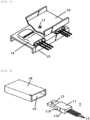
- FIG. 1 shows the cover for a heat generating electronic component according to one embodiment of the present invention.
- This cover is suitably used as a cover for a power transistor as previously shown in FIG. 4 , and has an opening 2 at one end of the cover 1 for inserting the power transistor T.
- the cover for a heat generating electronic component of the present invention has a protrusion portion 3 on the inner wall for preventing detachment from the transistor T after insertion of the transistor.
- the protrusion portion 3 contacts with the transistor after the insertion.
- the transistor is pressurized, and thus detachment of the cover 1 can be prevented.
- the width of the opening of the cover for a heat generating electronic component may be such that a power transistor can be inserted.
- the opening is preferably formed to have the width and height that are substantially the same as the maximum width and the maximum height of the power transistor, or typically 0.1 to 3 mm, preferably 0.3 to 2 mm, and particularly preferably about 0.5 to 1 mm larger than the above maximum width and the maximum height.
- a depth of the cover for a heat generating electronic component is preferably such that at least one-half, more preferably at least four-fifth parts of terminals protrude from the opening 2 when the cover is attached to the power transistor.
- the thickness of the cover for a heat generating electronic component of the present invention is preferably 0.1 to 2.0 mm, and more preferably 0.1 to 1.0 mm.
- withstand voltage strength is sufficiently high, for example, when a metal chassis or metal heat dissipation fin is used as an external heat dissipation plate, a short circuit is not caused. Furthermore, sufficient self-holding power is provided, and thus the shape is maintained.
- the thickness of a plate part (cover) is equal to or less than 2.0 mm, excellent heat dissipation effect can be obtained.
- Number of the protrusion portions on the inner wall surface of the cover for a heat generating electronic component of the present invention is one or more, preferably 1 to 10, and more preferably 1 to 5.
- the number of the protrusion portions is equal to or less than 10, space between the cover and power transistor is sufficiently small, and thus thermal conduction is not hindered.
- the shape of the protrusion portion in the present invention is not particularly limited. Specific examples include column shape such as a square column, triangular column, and cylindrical column, and pyramid shape such as a square pyramid, triangular pyramid, and cone.
- the height of the protrusion portion on the inner wall surface of the cover for a heat generating electronic component of the present invention is preferably in the range of 0.1 to 1 mm, and more preferably 0.2 to 0.5 mm.
- the height of the protrusion portion is equal to or more than 0.1 mm, it is possible to sufficiently prevent detachment or positional deviation of the cover in producing a substrate, and when the height is equal to or less than 1 mm, insertion of a transistor is not hindered.
- the dimension of the inner wall surface of the cover for a heat generating electronic component of the present invention is preferably larger than the dimension of an electronic component to be covered within the range of 0 to 1.0 mm, and more preferably 0.1 to 0.8 mm.
- the dimension of the inner wall surface of the cover for a heat generating electronic component is larger than the dimension of the electronic component by equal to or less than 1.0 mm, the effect of preventing detachment obtained by the protrusion portion can be effectively exerted.
- the dimension of the inner wall surface of the cover for a heat generating electronic component is equal to or more than the dimension of the electronic component, preferably larger than the dimension of the electronic component, the electronic component can be easily inserted.
- Material for forming the cover for a heat generating electronic component may have thermal conductivity and electric insulation. Moreover, taking damage during insertion or insertion easiness of the electronic component into consideration, a soft and elastic material such as rubber is preferable. Furthermore, there is a possibility that the cover may be exposed to a high temperature due to heat generation of the electronic component, and thus it is preferable to use a silicone rubber composition obtained by adding a thermally conductive filler to silicone rubber.
- the silicone rubber composition containing a thermally conductive filler that provides a matrix of the cover for a heat generating electronic component of the present invention is more preferably a thermally conductive silicone rubber composition including the following components (A) to (D):
- the component (A) serves as a base polymer of the silicone rubber composition, and preferably has an average compositional formula represented by the following formula (1).
- R independently represents a monovalent hydrocarbon group having 1 to 8 carbon atoms, and examples thereof include alkyl groups such as a methyl group, an ethyl group, and a propyl group; alkenyl groups such as a vinyl group and an allyl group; aryl groups such as a phenyl group and a tolyl group; and cycloalkyl groups such as a cyclohexyl group and a cyclopentyl group.
- groups obtained by substituting part or all of hydrogen atoms directly bonded to carbon atoms in these groups with a halogen atom such as fluorine or chlorine may also be used.
- Preferred are a methyl group, a phenyl group, a trifluoropropyl group, and a vinyl group.
- "a" represents a positive number of 1.85 to 2.10.
- the organopolysiloxane preferably has a linear molecular structure, and may partially have a branched structure within the molecule. Further preferably, molecular chain terminals of the organopolysiloxane are blocked with a triorganosilyl group or a hydroxyl group.
- the triorganosilyl group include a trimethylsilyl group, a dimethylvinylsilyl group, a trivinylsilyl group, a methylphenylvinylsilyl group, a methyldiphenylsilyl group, a dimethylphenylsilyl group, and a dimethylhydroxysilyl group.
- the average polymerization degree of the component (A) is 3,000 to 10,000, and preferably 5,000 to 10,000.
- the average polymerization degree referred herein refers to an average polymerization degree obtained from a number average molecular weight determined by gel permeation chromatography (GPC) using tetrahydrofuran (THF) as a solvent and polystyrene as a standard substance.
- the component (A) preferably contains a diorganocyclopolysiloxane having 3 to 10 silicon atoms in a total amount of 500 ppm (mass basis) or less based on a total amount of the component (A).
- the lower the lower limit of the total content is, the more preferable it is. It is not particularly limited, and may be, for example, equal to or more than 10 ppm.
- the component (B) is a component subjected to crosslinking reaction in the silicone rubber composition.
- the component (B) is an organopolysiloxane having an average polymerization degree of 2 to 2,000 and having alkenyl groups only at both molecular chain terminals.
- the alkenyl group is preferably an alkenyl group having 2 to 8 carbon atoms, and examples thereof include a vinyl group, an allyl group, a propenyl group, an isopropenyl group, a butenyl group, a hexenyl group, and a cyclohexenyl group.
- organopolysiloxane of the component (B) may be used alone, or two or more organopolysiloxanes having different average polymerization degree may be used in combination.
- the average polymerization degree of the component (B) is 2 to 2,000, and preferably 10 to 2,000.
- the blending amount of the component (B) is preferably 10 to 100 parts by mass, and more preferably 30 to 70 parts by mass based on 100 parts by mass of the component (A).
- the component (C) is a component used as a filler for imparting thermal conductivity in the silicone rubber composition.
- the component (C) may be any component as long as it has thermal conductivity, and further preferably, has electric insulation. Examples thereof include, but are not limited to, metal oxides such as alumina, silica, magnesia, red oxide, beryllia, titania, and zirconia; metal nitrides such as aluminum nitride, silicon nitride, and boron nitride; metal hydroxides such as magnesium hydroxide; and substances that are generally used as thermally conductive fillers such as artificial diamond and silicon carbide.
- the shape of the thermally conductive filler is not particularly limited, and may be crushed or spherical, according to need.
- the average particle diameter (volume average particle diameter) of the thermally conductive filler is preferably 0.1 to 100 ⁇ m, more preferably 0.5 to 50 ⁇ m, and further preferably 1 to 45 um, as a measurement value determined by a laser diffraction scattering method (micro-track method).
- the blending amount of the component (C) is preferably 500 to 2,700 parts by mass, and more preferably 600 to 2,500 parts by mass based on 100 parts by mass of the component (A).
- thermally conductive fillers may be surfacetreated with a surface treatment agent (wetter) such as a silane-based coupling agent or a partial hydrolysate thereof, alkyl alkoxysilane or a partial hydrolysate thereof, organic silazanes, organopolysiloxane oil, and an organopolysiloxane containing a hydrolysable functional group.
- a surface treatment agent such as a silane-based coupling agent or a partial hydrolysate thereof, alkyl alkoxysilane or a partial hydrolysate thereof, organic silazanes, organopolysiloxane oil, and an organopolysiloxane containing a hydrolysable functional group.
- the surface treatment agent include a polysiloxane having an alkoxy group or a hydroxy group within the molecule, such as a dimethylpolysiloxane with one end blocked with a trialkoxysilyl group.
- the component (D) is a component for curing the silicone rubber composition.
- the curing agent is appropriately selected according to the crosslinking reaction mechanism of the composition.
- an organic peroxide is used.
- organic peroxide examples thereof include benzoyl peroxide, monochlorobenzoyl peroxide, bis 2,4-dichlorobenzoyl peroxide, o-methylbenzoyl peroxide, p-methylbenzoyl peroxide, di(t-butyl) perbenzoate, dicumyl peroxide, 2,5-dimethyl-2,5-bis(t-butyl peroxy)hexane, and di(t-butyl)peroxide.
- the organic peroxide is preferably added in an amount of 0.1 to 10 parts by mass, and particularly preferably 0.2 to 5 parts by mass, based on 100 parts by mass of total organopolysiloxane in the component (A) and component (B) .
- an organohydrogen siloxane having two or more hydrogen atoms directly bonded to silicon atoms per molecule, and as a catalyst, an effective amount (catalytic amount) of a platinum group element (preferably platinum) or a compound thereof are used.
- the organopolysiloxane contains two or more alkenyl groups per molecule.
- the organohydrogen polysiloxane is preferably added in such an amount that the amount of hydrogen atoms directly bonded to silicon atoms are preferably 0.5 to 5 times, particularly preferably 0.6 to 3 times as large as the amount of alkenyl group contained in the components (A) and component (B).
- hydrolysable silane or siloxane containing two or more, preferably three or more hydrolysable groups such as an alkoxy group, an acetoxy group, and an oxime group per molecule is used as a crosslinking agent (curing agent).
- the blending amount of the crosslinking agent is 1 to 20 parts by mass, and particularly 2 to 10 parts by mass based on 100 parts by mass of total organopolysiloxane in the component (A) and the component (B).
- an organometallic compound such as Sn, Ti, Fe, or Co is preferably used. In this case, it is necessary that both molecular chain terminals of the organopolysiloxane are blocked with a hydroxyl group or an alkoxy group.
- the blending amount of the curing agent may be an effective amount, and may be appropriately adjusted in accordance with the species and blending ratio of other components.
- radical reaction using ultraviolet irradiation or electron beam irradiation may also be used, but the curing method is not limited thereto.
- the silicone rubber composition of the present invention may also contain the surface treatment agent described above, and still other components according to need.
- optional components including a heat resistance improver such as iron oxide and cerium oxide; a viscosity modifier such as silica; a colorant; and an internal mold release agent such as methyl phenyl polysiloxane may be blended.
- the silicone rubber composition can be produced by mixing the above components.
- the production method is not particularly limited, and a known method can be used.
- the silicone rubber composition can be produced as follows.
- Molding of the cover for a heat generating electronic component of the present invention is preferably performed by die molding, in which the silicone rubber composition is poured into a molding die and heat-cured.
- the molding is preferably performed by transfer molding, in which a material softened by heat is poured into a mold and cured, in view of dimension accuracy and mass productivity of the molded product.
- the pressure for injecting the silicone rubber composition into the die is preferably 100 to 300 kgf/cm 2 .
- the injection pressure is equal to or less than 300 kgf/cm 2 , an oily component and the thermally conductive filler in the silicone rubber composition are not separated.
- injection pressure is equal to or more than 100 kgf/cm 2 , injection does not take a long time, and thus curing of the material does not proceed. Furthermore, for removing the molded cover for a heat generating electronic component from the die, it is effective to apply or spray a surfactant on the surface of die.
- the cover for a heat generating electronic component of the present invention preferably, is formed from a cured product of a silicone rubber composition containing silicone rubber and a thermally conductive filler.
- cover material for forming the cover is a soft and elastic material, and has thermal conductivity and electric insulation.
- the cover does not damage an electronic component during insertion, and allows easy insertion of the electronic component.
- the cover has sufficient heat resistance such that it can be used even when exposed to a high temperature due to heat generation of the electronic component.
- the cured product of the silicone rubber composition preferably has a thermal conductivity of equal to or more than 0.5 W/m ⁇ K.
- the cured product as above can sufficiently promote heat dissipation of a heat generating electronic component such as a power transistor.
- the thermal conductivity may be measured, for example, by a hot disk method in accordance with ISO 22007-2 at 25°C using TPA-501 (manufactured by KYOTO ELECTRONICS MANUFACTURING CO., LTD.) .
- the cured product of the silicone rubber composition with a thickness of 0.45 mm preferably has dielectric breakdown voltage in air of equal to or more than 4.5 kV.
- the cured product as above has good electric insulation, and thus can achieve both heat dissipation and electric insulation more effectively.
- Measurement of the dielectric breakdown in air of the cured product (molded product) with a thickness of 0.45 mm may be performed by attaching an electrode to the object to be measured, applying 4.5 kV voltage for 10 seconds in air to determine whether there is leakage current.
- (B-1) 27 parts by mass of a dimethylpolysiloxane having vinyl groups at both terminals and having an average polymerization degree of 500:
- (B-2) 15 parts by mass of a dimethylpolysiloxane having vinyl groups at both terminals and having an average polymerization degree of 1,600:
- the obtained thermally conductive silicone rubber composition was poured into a flat die with a depth of 6 mm, and press cured for 10 minutes using a high-pressure pressing machine (manufactured by Shoji Iron Works Co., Ltd.) at 165°C and 100 kgf/cm 2 to produce a sheet with a thickness of 6 mm.
- a high-pressure pressing machine manufactured by Shoji Iron Works Co., Ltd.
- the thermal conductivity was measured by a hot disk method in accordance with ISO 22007-2 at 25°C using TPA-501 (manufactured by KYOTO ELECTRONICS MANUFACTURING CO., LTD.). As a result, the thermal conductivity was 2.8 W/m ⁇ K.
- the thermally conductive silicone rubber composition after kneading was molded by heat pressing at 165°C and 100 kgf/cm 2 for 10 minutes using a transfer molding machine including a piston, pot, middle mold, and lower mold (manufactured by PRC Co., Ltd.). After the molded product was removed from the die, secondary vulcanization was performed at 150°C for 1 hour, thereby producing a cover for a heat generating electronic component.
- the shape of the cover for a heat generating electronic component is as shown in the following Example 1 and Comparative Example 1.
- a thermally conductive silicone rubber composition was molded as described above, thereby producing a cover for a heat generating electronic component in the shape as shown in FIG. 2 (with a protrusion portion).
- dimensions unit: mm
- a thermally conductive silicone rubber composition was molded as described above, thereby producing a cover for a heat generating electronic component in the shape as shown in FIG. 3 (without protrusion portion).
- dimensions unit: mm
- Example 1 To electrodes of 15 mm ⁇ 4.5 mm ⁇ 20 mm (height) (manufactured by SAFE Corporation), the covers for heat generating electronic components produced in Example 1 and Comparative Example 1 were attached, and voltage of 4.5 kV was applied for 10 seconds to determine whether there was leakage current. The results are shown in Table 1.
- Example 1 Comparative Example 1 Transistor type TO-247 With or without protrusion structure With protrusion Without protrusion Whether there was leakage current when 4.5 kV/10 sec voltage was applied No leakage current No leakage current Number of tests 100 100 Number of detachments 0 94
- provision of the protrusion portion can prevent detachment of the cover for a heat generating electronic component from the transistor.
Landscapes
- Engineering & Computer Science (AREA)
- Microelectronics & Electronic Packaging (AREA)
- Physics & Mathematics (AREA)
- Thermal Sciences (AREA)
- Chemical & Material Sciences (AREA)
- Health & Medical Sciences (AREA)
- Chemical Kinetics & Catalysis (AREA)
- Medicinal Chemistry (AREA)
- Polymers & Plastics (AREA)
- Organic Chemistry (AREA)
- Cooling Or The Like Of Semiconductors Or Solid State Devices (AREA)
- Finger-Pressure Massage (AREA)
Abstract
Description
- The present invention relates to a cover for a heat generating electronic component.
- In recent years, along with miniaturization and densification of various electronic devices, the heat dissipation problem of heat generating electronic components such as a power transistor that are integrated into the electronic devices has been highlighted.
- A typical power transistor T has the configuration as shown in
FIG. 4 . The transistor ofFIG. 4 has atransistor body 11 andterminals 12 that protrude from one end surface of thetransistor body 11. In addition, the transistor ofFIG. 4 includes a flatheat dissipation plate 13 attached to abottom surface 11a of thepower transistor body 11 on the same plane. One end side of this heat dissipation plate is inserted to acutout 11b formed by cutting off thetransistor body 11, and another end side of the plate is placed in the opposite direction from the protrusion direction of theterminals 12. Furthermore, one of the plurality of theterminals 12 is connected to the flatheat dissipation plate 13 inside of thepower transistor body 11. Heat generated in the power transistor is transmitted to outside via a thermally conductive material that is sandwiched between theheat dissipation plate 13 and an external heat sink such as a metal chassis. - As the thermally conductive material, a liquid material such as heat dissipation grease, or in view of insulation property and assembling ability, a molded product such as a heat dissipation sheet is used. On the other hand, when a heat dissipation material is disposed planarly, a creepage distance for electrical insulation (distance with other electronic component or external heat dissipation plate) is increased. Therefore, a method for molding the thermally conductive material into a tube-shaped cover or a hollow cover having an opening on one side to sterically enclose an electronic component has been conceived (
Patent Document 1 and Patent Document 2). The tube-shaped cover is used as shown inFIG. 5 . A transistor is inserted into one end of the tube-shaped cover 14, which is sandwiched between twoexternal heat sinks fixing screw 17. Similarly, as shown inFIG. 6 , ahollow cover 18 having an opening on one side has a shape having anopening 19 into which a transistor T is inserted. Furthermore, for achieving both heat dissipation and electric insulation more efficiently, a hollow cover having a structure in which thickness of the sides are varied has also been conceived (Patent Document 3). That is, it is a structure in which a thicker side is grounded to a heat dissipation plate side where leakage of current is likely to occur, and the thickness of the opposite side is made thinner, thereby enabling improvement of the heat dissipation. - These thermally conductive molded products have a merit that they can be easily attached to a power transistor because internal dimensions of the products are designed in accordance with a cross section size of the transistor.
- However, because of their easy attachability, the thermally conductive molded products may be easily detached or positionally deviated by vibration generated during transfer in the manufacturing process or processing operation until the molded products are secured to an external heat dissipation plate such as a heat sink. Thus, there has been a problem such as deterioration of the operation efficiency or product yield.
-
- Patent Document 1:
Japanese Unexamined Utility Model Application Publication No. Sho 57-2666 - Patent Document 2:
Japanese Examined Utility Model (Registration) Application Publication No. Hei 3-53510 - Patent Document 3:
JP 2007-115816 A - The present invention was made in view of the above-mentioned circumstances, and has for its object to provide a cover for a heat generating electronic component capable of preventing detachment of an electronic component such as a transistor.
- For solving the above problem, the present invention provides a cover for a heat generating electronic component including a hollow structure having one or more openings for inserting an electronic circuit component, wherein an inner wall surface of the hollow structure has one or more protrusion portions.
- The cover for a heat generating electronic component of the present invention as described above can prevent detachment of an electronic component such as a transistor.
- In this case, the protrusion portion preferably has a height in the range of 0.1 to 1 mm.
- When the height of the protrusion portion is within the above range, it is possible to sufficiently prevent detachment or positional deviation of the cover in producing a substrate, and insertion of a transistor or the like can be performed smoothly.
- The cover for a heat generating electronic component of the present invention preferably includes a cured product of a silicone rubber composition containing silicone rubber and a thermally conductive filler.
- In such cover, material for forming the cover is a soft and elastic material, and has thermal conductivity and electric insulation. Thus, the cover does not damage an electronic component during insertion, and allows easy insertion of the electronic component. In addition, the cover has sufficient heat resistance such that it can be used even when exposed to a high temperature due to heat generation of the electronic component.
- In this case, the cured product of the silicone rubber composition preferably has a thermal conductivity of equal to or more than 0.5 W/m·K.
- Such cover can sufficiently promote heat dissipation of a heat generating electronic component such as a power transistor.
- Furthermore, the cured product of the silicone rubber composition with a thickness of 0.45 mm preferably has a dielectric breakdown voltage in air of equal to or more than 4.5 W/m·K.
- Such cover has good electric insulation, and thus can achieve both heat dissipation and electric insulation more effectively.
- The silicone rubber composition is preferably a thermally conductive silicone rubber composition including the following components (A) to (D):
- (A) 100 parts by mass of an organopolysiloxane having an average polymerization degree of 3,000 to 10,000;
- (B) 10 to 100 parts by mass of an organopolysiloxane having an average polymerization degree of 2 to 2,000, and having an alkenyl group only at both molecular chain terminals;
- (C) 500 to 2,700 parts by mass of a thermally conductive filler; and
- (D) an effective amount of a curing agent.
- The thermally conductive silicone rubber composition as described above is more preferably used as a silicone rubber composition containing a thermally conductive filler that forms a matrix of the cover for a heat generating electronic component of the present invention.
- In this case, the component (A) in the silicone rubber composition contains a diorganocyclopolysiloxane having 3 to 10 silicon atoms in a total amount of 500 ppm or less based on a total amount of the component (A) .
- The thermally conductive silicone rubber composition as described above is still more preferably used as the silicone rubber composition that forms a matrix of the cover for a heat generating electronic component of the present invention.
- As described above, according to the present invention, it is possible to provide a cover for a heat generating electronic component that can prevent detachment from an electronic component such as a transistor.
-
-
FIG. 1 is a perspective view showing one embodiment of a cover for a heat generating electronic component of the present invention; -
FIG. 2 is a view showing a shape of a cover for a heat generating electronic component with a protrusion portion of Example; -
FIG. 3 is view showing a shape of a cover for a heat generating electronic component without protrusion portion of Comparative Example; -
FIG. 4 is a perspective view showing an example of a power transistor; -
FIG. 5 is a perspective view showing an example of use of a tube-shaped cover; and -
FIG. 6 is a perspective view showing an example of use of a hollow cover. - The present inventors made intensive investigations to achieve the above object. As a result, they found that a hollow structure having one or more openings, and one or more protrusion portions on its inner wall surface, can be easily attached to a transistor, and also can prevent detachment or positional deviation from the transistor. Thus, the present invention was completed.
- That is, the present invention is a cover for a heat generating electronic component, including a hollow structure having one or more openings for inserting an electronic circuit component, wherein an inner wall surface of the hollow structure has one or more protrusion portions.
- Hereinafter, the present invention will be described in detail. However, the present invention is not limited thereto.
- The cover for a heat generating electronic component of the present invention includes a hollow structure having one or more openings for inserting an electronic circuit component, wherein an inner wall surface of the hollow structure has one or more protrusion portions. The heat generating electronic component is not particularly limited as long as it is an electronic component that generates heat during use, such as a power transistor.
- Hereinafter, description will be given by taking a power transistor as an example of the heat generating electronic component.
-
FIG. 1 shows the cover for a heat generating electronic component according to one embodiment of the present invention. This cover is suitably used as a cover for a power transistor as previously shown inFIG. 4 , and has anopening 2 at one end of thecover 1 for inserting the power transistor T. Furthermore, the cover for a heat generating electronic component of the present invention has aprotrusion portion 3 on the inner wall for preventing detachment from the transistor T after insertion of the transistor. - Herein, when the
opening 2 has a shape similar to the cross section of the transistor T, theprotrusion portion 3 contacts with the transistor after the insertion. The transistor is pressurized, and thus detachment of thecover 1 can be prevented. - The width of the opening of the cover for a heat generating electronic component may be such that a power transistor can be inserted. Typically, the opening is preferably formed to have the width and height that are substantially the same as the maximum width and the maximum height of the power transistor, or typically 0.1 to 3 mm, preferably 0.3 to 2 mm, and particularly preferably about 0.5 to 1 mm larger than the above maximum width and the maximum height. As described above, by forming the opening (and a hollow portion including the opening) having the width and height that are slightly larger than the maximum width and the maximum height of the power transistor, no redundant space is generated around the transistor when the power transistor attached with the cover of the present invention is disposed in an electronic device. Furthermore, a depth of the cover for a heat generating electronic component is preferably such that at least one-half, more preferably at least four-fifth parts of terminals protrude from the
opening 2 when the cover is attached to the power transistor. - The thickness of the cover for a heat generating electronic component of the present invention is preferably 0.1 to 2.0 mm, and more preferably 0.1 to 1.0 mm. When the thickness is equal to or more than 0.1 mm, withstand voltage strength is sufficiently high, for example, when a metal chassis or metal heat dissipation fin is used as an external heat dissipation plate, a short circuit is not caused. Furthermore, sufficient self-holding power is provided, and thus the shape is maintained. On the other hand, when the thickness of a plate part (cover) is equal to or less than 2.0 mm, excellent heat dissipation effect can be obtained.
- Number of the protrusion portions on the inner wall surface of the cover for a heat generating electronic component of the present invention is one or more, preferably 1 to 10, and more preferably 1 to 5. When the number of the protrusion portions is equal to or less than 10, space between the cover and power transistor is sufficiently small, and thus thermal conduction is not hindered.
- The shape of the protrusion portion in the present invention is not particularly limited. Specific examples include column shape such as a square column, triangular column, and cylindrical column, and pyramid shape such as a square pyramid, triangular pyramid, and cone.
- The height of the protrusion portion on the inner wall surface of the cover for a heat generating electronic component of the present invention is preferably in the range of 0.1 to 1 mm, and more preferably 0.2 to 0.5 mm. When the height of the protrusion portion is equal to or more than 0.1 mm, it is possible to sufficiently prevent detachment or positional deviation of the cover in producing a substrate, and when the height is equal to or less than 1 mm, insertion of a transistor is not hindered.
- The dimension of the inner wall surface of the cover for a heat generating electronic component of the present invention is preferably larger than the dimension of an electronic component to be covered within the range of 0 to 1.0 mm, and more preferably 0.1 to 0.8 mm. When the dimension of the inner wall surface of the cover for a heat generating electronic component is larger than the dimension of the electronic component by equal to or less than 1.0 mm, the effect of preventing detachment obtained by the protrusion portion can be effectively exerted. When the dimension of the inner wall surface of the cover for a heat generating electronic component is equal to or more than the dimension of the electronic component, preferably larger than the dimension of the electronic component, the electronic component can be easily inserted.
- Material for forming the cover for a heat generating electronic component may have thermal conductivity and electric insulation. Moreover, taking damage during insertion or insertion easiness of the electronic component into consideration, a soft and elastic material such as rubber is preferable. Furthermore, there is a possibility that the cover may be exposed to a high temperature due to heat generation of the electronic component, and thus it is preferable to use a silicone rubber composition obtained by adding a thermally conductive filler to silicone rubber.
- The silicone rubber composition containing a thermally conductive filler that provides a matrix of the cover for a heat generating electronic component of the present invention is more preferably a thermally conductive silicone rubber composition including the following components (A) to (D):
- (A) 100 parts by mass of an organopolysiloxane having an average polymerization degree of 3,000 to 10,000;
- (B) 10 to 100 parts by mass of an organopolysiloxane having an average polymerization degree of 2 to 2,000, and having an alkenyl group only at both molecular chain terminals;
- (C) 500 to 2,700 parts by mass of a thermally conductive filler; and
- (D) an effective amount of a curing agent,
- The component (A) serves as a base polymer of the silicone rubber composition, and preferably has an average compositional formula represented by the following formula (1).
RaSiO(4-a)/2 (1)
- In the above formula (1), R independently represents a monovalent hydrocarbon group having 1 to 8 carbon atoms, and examples thereof include alkyl groups such as a methyl group, an ethyl group, and a propyl group; alkenyl groups such as a vinyl group and an allyl group; aryl groups such as a phenyl group and a tolyl group; and cycloalkyl groups such as a cyclohexyl group and a cyclopentyl group. Furthermore, groups obtained by substituting part or all of hydrogen atoms directly bonded to carbon atoms in these groups with a halogen atom such as fluorine or chlorine may also be used. Preferred are a methyl group, a phenyl group, a trifluoropropyl group, and a vinyl group. In addition, "a" represents a positive number of 1.85 to 2.10.
- The organopolysiloxane preferably has a linear molecular structure, and may partially have a branched structure within the molecule. Further preferably, molecular chain terminals of the organopolysiloxane are blocked with a triorganosilyl group or a hydroxyl group. Examples of the triorganosilyl group include a trimethylsilyl group, a dimethylvinylsilyl group, a trivinylsilyl group, a methylphenylvinylsilyl group, a methyldiphenylsilyl group, a dimethylphenylsilyl group, and a dimethylhydroxysilyl group.
- The average polymerization degree of the component (A) is 3,000 to 10,000, and preferably 5,000 to 10,000.
- Note that the average polymerization degree referred herein refers to an average polymerization degree obtained from a number average molecular weight determined by gel permeation chromatography (GPC) using tetrahydrofuran (THF) as a solvent and polystyrene as a standard substance.
- The component (A) preferably contains a diorganocyclopolysiloxane having 3 to 10 silicon atoms in a total amount of 500 ppm (mass basis) or less based on a total amount of the component (A). The lower the lower limit of the total content is, the more preferable it is. It is not particularly limited, and may be, for example, equal to or more than 10 ppm.
- The component (B) is a component subjected to crosslinking reaction in the silicone rubber composition. The component (B) is an organopolysiloxane having an average polymerization degree of 2 to 2,000 and having alkenyl groups only at both molecular chain terminals. The alkenyl group is preferably an alkenyl group having 2 to 8 carbon atoms, and examples thereof include a vinyl group, an allyl group, a propenyl group, an isopropenyl group, a butenyl group, a hexenyl group, and a cyclohexenyl group. Among them, lower alkenyl groups having 2 to 4 carbon atoms such as a vinyl group and an allyl group are preferred, and a vinyl group is particularly preferred. The organopolysiloxane of the component (B) may be used alone, or two or more organopolysiloxanes having different average polymerization degree may be used in combination.
- The average polymerization degree of the component (B) is 2 to 2,000, and preferably 10 to 2,000.
- The blending amount of the component (B) is preferably 10 to 100 parts by mass, and more preferably 30 to 70 parts by mass based on 100 parts by mass of the component (A).
- The component (C) is a component used as a filler for imparting thermal conductivity in the silicone rubber composition. The component (C) may be any component as long as it has thermal conductivity, and further preferably, has electric insulation. Examples thereof include, but are not limited to, metal oxides such as alumina, silica, magnesia, red oxide, beryllia, titania, and zirconia; metal nitrides such as aluminum nitride, silicon nitride, and boron nitride; metal hydroxides such as magnesium hydroxide; and substances that are generally used as thermally conductive fillers such as artificial diamond and silicon carbide.
- The shape of the thermally conductive filler is not particularly limited, and may be crushed or spherical, according to need.
- The average particle diameter (volume average particle diameter) of the thermally conductive filler is preferably 0.1 to 100 µm, more preferably 0.5 to 50 µm, and further preferably 1 to 45 um, as a measurement value determined by a laser diffraction scattering method (micro-track method).
- The blending amount of the component (C) is preferably 500 to 2,700 parts by mass, and more preferably 600 to 2,500 parts by mass based on 100 parts by mass of the component (A).
- These thermally conductive fillers may be surfacetreated with a surface treatment agent (wetter) such as a silane-based coupling agent or a partial hydrolysate thereof, alkyl alkoxysilane or a partial hydrolysate thereof, organic silazanes, organopolysiloxane oil, and an organopolysiloxane containing a hydrolysable functional group. Examples of the surface treatment agent include a polysiloxane having an alkoxy group or a hydroxy group within the molecule, such as a dimethylpolysiloxane with one end blocked with a trialkoxysilyl group. The bonding state of siloxane units in the polysiloxane may be block or random. The thermally conductive filler itself may be treated in advance, or the treatment may be performed when the component (A), organopolysiloxane of the component (B), and (C) thermally conductive filler are mixed.
- The component (D) is a component for curing the silicone rubber composition. The curing agent is appropriately selected according to the crosslinking reaction mechanism of the composition.
- In the case of radical crosslinking reaction, an organic peroxide is used. Specific examples thereof include benzoyl peroxide, monochlorobenzoyl peroxide,
bis 2,4-dichlorobenzoyl peroxide, o-methylbenzoyl peroxide, p-methylbenzoyl peroxide, di(t-butyl) perbenzoate, dicumyl peroxide, 2,5-dimethyl-2,5-bis(t-butyl peroxy)hexane, and di(t-butyl)peroxide. The organic peroxide is preferably added in an amount of 0.1 to 10 parts by mass, and particularly preferably 0.2 to 5 parts by mass, based on 100 parts by mass of total organopolysiloxane in the component (A) and component (B) . - In the case of addition crosslinking reaction, an organohydrogen siloxane having two or more hydrogen atoms directly bonded to silicon atoms per molecule, and as a catalyst, an effective amount (catalytic amount) of a platinum group element (preferably platinum) or a compound thereof are used. In this case, it is necessary that the organopolysiloxane contains two or more alkenyl groups per molecule. The organohydrogen polysiloxane is preferably added in such an amount that the amount of hydrogen atoms directly bonded to silicon atoms are preferably 0.5 to 5 times, particularly preferably 0.6 to 3 times as large as the amount of alkenyl group contained in the components (A) and component (B).
- Furthermore, in the case of condensation crosslinking reaction, hydrolysable silane or siloxane containing two or more, preferably three or more hydrolysable groups such as an alkoxy group, an acetoxy group, and an oxime group per molecule is used as a crosslinking agent (curing agent). The blending amount of the crosslinking agent is 1 to 20 parts by mass, and particularly 2 to 10 parts by mass based on 100 parts by mass of total organopolysiloxane in the component (A) and the component (B). In addition, as the catalyst, an organometallic compound such as Sn, Ti, Fe, or Co is preferably used. In this case, it is necessary that both molecular chain terminals of the organopolysiloxane are blocked with a hydroxyl group or an alkoxy group.
- The blending amount of the curing agent (crosslinking agent) may be an effective amount, and may be appropriately adjusted in accordance with the species and blending ratio of other components. In addition, radical reaction using ultraviolet irradiation or electron beam irradiation may also be used, but the curing method is not limited thereto.
- The silicone rubber composition of the present invention may also contain the surface treatment agent described above, and still other components according to need. For example, optional components including a heat resistance improver such as iron oxide and cerium oxide; a viscosity modifier such as silica; a colorant; and an internal mold release agent such as methyl phenyl polysiloxane may be blended.
- The silicone rubber composition can be produced by mixing the above components. The production method is not particularly limited, and a known method can be used. For example, the silicone rubber composition can be produced as follows.
- (1) The components (A) to (C) described above, and optional components of the surface treatment agent and internal mold release agent are placed in a 5 L heat treatment kneader, and mixed at 25°C to 40°C for 30 minutes. Then, the inside of the kneader is heated. After confirming that the composition temperature reached 170°C, heating and stirring are further performed for 2 hours.
- (2) After the heating and stirring, the composition is cooled to around room temperature (25°C), and a kneaded compound is taken out. Then, by using a twin roll, a curing agent is added to the compound, and the mixture is kneaded to obtain a thermally conductive silicone rubber composition.
- Molding of the cover for a heat generating electronic component of the present invention is preferably performed by die molding, in which the silicone rubber composition is poured into a molding die and heat-cured. In particular, the molding is preferably performed by transfer molding, in which a material softened by heat is poured into a mold and cured, in view of dimension accuracy and mass productivity of the molded product. When the molding is performed by transfer molding, the pressure for injecting the silicone rubber composition into the die is preferably 100 to 300 kgf/cm2. When the injection pressure is equal to or less than 300 kgf/cm2, an oily component and the thermally conductive filler in the silicone rubber composition are not separated. And when the injection pressure is equal to or more than 100 kgf/cm2, injection does not take a long time, and thus curing of the material does not proceed. Furthermore, for removing the molded cover for a heat generating electronic component from the die, it is effective to apply or spray a surfactant on the surface of die.
- The cover for a heat generating electronic component of the present invention, preferably, is formed from a cured product of a silicone rubber composition containing silicone rubber and a thermally conductive filler.
- In such cover, material for forming the cover is a soft and elastic material, and has thermal conductivity and electric insulation. Thus, the cover does not damage an electronic component during insertion, and allows easy insertion of the electronic component. In addition, the cover has sufficient heat resistance such that it can be used even when exposed to a high temperature due to heat generation of the electronic component.
- The cured product of the silicone rubber composition preferably has a thermal conductivity of equal to or more than 0.5 W/m·K. The cured product as above can sufficiently promote heat dissipation of a heat generating electronic component such as a power transistor. The higher the upper limit of the thermal conductivity is, the more preferable it is. It is not particularly limited, and may be, for example, equal to or less than 10 W/m·K.
- In the present invention, the thermal conductivity may be measured, for example, by a hot disk method in accordance with ISO 22007-2 at 25°C using TPA-501 (manufactured by KYOTO ELECTRONICS MANUFACTURING CO., LTD.) .
- Furthermore, the cured product of the silicone rubber composition with a thickness of 0.45 mm preferably has dielectric breakdown voltage in air of equal to or more than 4.5 kV. The cured product as above has good electric insulation, and thus can achieve both heat dissipation and electric insulation more effectively. The higher the upper limit of the dielectric breakdown voltage is, the more preferable it is. It is not particularly limited, and may be, for example, equal to or less than 10 kV.
- Measurement of the dielectric breakdown in air of the cured product (molded product) with a thickness of 0.45 mm may be performed by attaching an electrode to the object to be measured, applying 4.5 kV voltage for 10 seconds in air to determine whether there is leakage current.
- Hereinafter, the present invention will be specifically described with reference to Example and Comparative Example. However, the present invention is not limited to the following Example.
-
- (1) The components (A) to (C) shown below, and optional components (E) and (F) were placed in a 5 L heat treatment kneader (manufactured by INOUE MFG., INC.), and mixed at 25 to 40°C for 30 minutes. Then, the inside of the kneader was heated. After confirming that the composition temperature reached 170°C, heating and stirring were further performed for 2 hours.
- One hundred parts by mass of a dimethylpolysiloxane having vinyl groups at both terminals and having an average polymerization degree of 8,000:

- (B-1) 27 parts by mass of a dimethylpolysiloxane having vinyl groups at both terminals and having an average polymerization degree of 500:

- (B-2) 15 parts by mass of a dimethylpolysiloxane having vinyl groups at both terminals and having an average polymerization degree of 1,600:

-
- (C-1) 1080 parts by mass of crashed alumina having an average particle diameter of 1 um
- (C-2) 385 parts by mass of spherical alumina having an average particle diameter of 1 um
- (C-3) 462 parts by mass of spherical alumina having an average particle diameter of 10 um
- (C-4) 231 parts by mass of spherical alumina having an average particle diameter of 45 um
- Nineteen parts by mass of a dimethylpolysiloxane with one end blocked with a trialkoxysilyl group represented by the following formula (E-1) as a surface treatment agent (wetter component) of the component (C); and

- 6 parts by mass of a vinyl-containing dimethylpolysiloxane represented by the following formula (E-2);

- Seven parts by mass of a methylphenyl polysiloxane represented by the following formula as an internal mold release agent;

- (2) After the heating and stirring, the composition was cooled to around room temperature (25°C), and a kneaded compound was taken out. Then, by using a twin roll (manufactured by Daishin Kikai Co., Ltd.), the following component (D) was added and kneaded as a curing agent with the compound to obtain a thermally conductive silicone rubber composition.
- (D) 0.8 parts by mass of an organic peroxide represented by the following formula:

- The obtained thermally conductive silicone rubber composition was poured into a flat die with a depth of 6 mm, and press cured for 10 minutes using a high-pressure pressing machine (manufactured by Shoji Iron Works Co., Ltd.) at 165°C and 100 kgf/cm2 to produce a sheet with a thickness of 6 mm.
- Using two 6 mm thickness sheets thus produced, the thermal conductivity was measured by a hot disk method in accordance with ISO 22007-2 at 25°C using TPA-501 (manufactured by KYOTO ELECTRONICS MANUFACTURING CO., LTD.). As a result, the thermal conductivity was 2.8 W/m·K.
- The thermally conductive silicone rubber composition after kneading was molded by heat pressing at 165°C and 100 kgf/cm2 for 10 minutes using a transfer molding machine including a piston, pot, middle mold, and lower mold (manufactured by PRC Co., Ltd.). After the molded product was removed from the die, secondary vulcanization was performed at 150°C for 1 hour, thereby producing a cover for a heat generating electronic component. The shape of the cover for a heat generating electronic component is as shown in the following Example 1 and Comparative Example 1.
- A thermally conductive silicone rubber composition was molded as described above, thereby producing a cover for a heat generating electronic component in the shape as shown in
FIG. 2 (with a protrusion portion). InFIG. 2 , dimensions (unit: mm) are shown. - A thermally conductive silicone rubber composition was molded as described above, thereby producing a cover for a heat generating electronic component in the shape as shown in
FIG. 3 (without protrusion portion). InFIG. 3 , dimensions (unit: mm) are shown. - To electrodes of 15 mm × 4.5 mm × 20 mm (height) (manufactured by SAFE Corporation), the covers for heat generating electronic components produced in Example 1 and Comparative Example 1 were attached, and voltage of 4.5 kV was applied for 10 seconds to determine whether there was leakage current. The results are shown in Table 1.
- The molded products produced in the shapes of Example 1 and Comparative Example 1 were attached to a TO-247 transistor (
FIG. 4 , manufactured by IXYS Corporation, CLA 50 E 1200 HB) secured on a vibration stand with the terminals directed upward. Then, vibration with a swing width of 10 cm in gravity direction and vibration frequency of 10 Hz was applied for 5 minutes to observe whether the products were detached from the transistor. The results are shown in Table 1.[Table 1] Example 1 Comparative Example 1 Transistor type TO-247 With or without protrusion structure With protrusion Without protrusion Whether there was leakage current when 4.5 kV/10 sec voltage was applied No leakage current No leakage current Number of tests 100 100 Number of detachments 0 94 - As is obvious from the results shown in Table 1, provision of the protrusion portion can prevent detachment of the cover for a heat generating electronic component from the transistor.
- It should be noted that the present invention is not limited to the above-described embodiments. The embodiments are just examples, and any examples that substantially have the same configuration and demonstrate the same functions and effects as those in the technical concept disclosed in claims of the present invention are included in the technical scope of the present invention.
Claims (7)
- A cover for a heat generating electronic component, comprising a hollow structure having one or more openings for inserting an electronic circuit component, wherein an inner wall surface of the hollow structure has one or more protrusion portions.
- The cover for a heat generating electronic component according to claim 1, wherein the protrusion portion has a height in a range of 0.1 to 1 mm.
- The cover for a heat generating electronic component according to claim 1 or 2, comprising a cured product of a silicone rubber composition containing silicone rubber and a thermally conductive filler.
- The cover for a heat generating electronic component according to claim 3, wherein the cured product of the silicone rubber composition has a thermal conductivity of equal to or more than 0.5 W/m·K.
- The cover for a heat generating electronic component according to claim 3 or 4, wherein the cured product of the silicone rubber composition with a thickness of 0.45 mm has dielectric breakdown voltage in air of equal to or more than 4.5 kV.
- The cover for a heat generating electronic component according to any one of claims 3 to 5, wherein the silicone rubber composition is a thermally conductive silicone rubber composition comprising following components (A) to (D):(A) 100 parts by mass of an organopolysiloxane having an average polymerization degree of 3,000 to 10,000;(B) 10 to 100 parts by mass of an organopolysiloxane having an average polymerization degree of 2 to 2,000, and having an alkenyl group only at both molecular chain terminals;(C) 500 to 2,700 parts by mass of a thermally conductive filler; and(D) an effective amount of a curing agent.
- The cover for a heat generating electronic component according to claim 6, wherein the component (A) in the silicone rubber composition contains a diorganocyclopolysiloxane having 3 to 10 silicon atoms in a total amount of 500 ppm or less based on a total amount of the component (A).
Applications Claiming Priority (2)
| Application Number | Priority Date | Filing Date | Title |
|---|---|---|---|
| JP2021183699 | 2021-11-10 | ||
| PCT/JP2022/040031 WO2023085099A1 (en) | 2021-11-10 | 2022-10-26 | Cover for heat generating electronic component |
Publications (2)
| Publication Number | Publication Date |
|---|---|
| EP4432346A1 true EP4432346A1 (en) | 2024-09-18 |
| EP4432346A4 EP4432346A4 (en) | 2025-11-19 |
Family
ID=86335689
Family Applications (1)
| Application Number | Title | Priority Date | Filing Date |
|---|---|---|---|
| EP22892599.6A Pending EP4432346A4 (en) | 2021-11-10 | 2022-10-26 | COVER FOR A HEAT-GENERATING ELECTRONIC COMPONENT |
Country Status (7)
| Country | Link |
|---|---|
| US (1) | US20240422944A1 (en) |
| EP (1) | EP4432346A4 (en) |
| JP (1) | JP7690051B2 (en) |
| KR (1) | KR20240101573A (en) |
| CN (1) | CN118235243A (en) |
| TW (1) | TW202324626A (en) |
| WO (1) | WO2023085099A1 (en) |
Family Cites Families (11)
| Publication number | Priority date | Publication date | Assignee | Title |
|---|---|---|---|---|
| JPS572666U (en) | 1980-06-05 | 1982-01-08 | ||
| JPH0353510U (en) | 1989-09-29 | 1991-05-23 | ||
| JPH0791468B2 (en) * | 1991-04-26 | 1995-10-04 | 信越化学工業株式会社 | Thermally conductive silicone rubber composition |
| JPH0631194U (en) * | 1992-09-29 | 1994-04-22 | 太陽誘電株式会社 | Hybrid integrated circuit device |
| JPH0774033A (en) * | 1993-08-31 | 1995-03-17 | Taiyo Yuden Co Ltd | Electronic component manufacturing method |
| US6147310A (en) * | 1998-09-24 | 2000-11-14 | Scientific-Atlanta, Inc. | Insulative holder for an electronic component |
| JP4591699B2 (en) | 2005-10-19 | 2010-12-01 | 信越化学工業株式会社 | Cover for heat-generating electronic parts and method of attaching the cover |
| JP6021253B2 (en) * | 2012-11-15 | 2016-11-09 | 新電元工業株式会社 | Electronics |
| JP5853989B2 (en) * | 2013-05-16 | 2016-02-09 | 信越化学工業株式会社 | Thermally conductive silicone adhesive composition for reactor and reactor |
| JP6674590B1 (en) * | 2018-05-08 | 2020-04-01 | 富士高分子工業株式会社 | Thermal conductive sheet, mounting method using the same, and bonding method using the same |
| JP6957435B2 (en) * | 2018-10-23 | 2021-11-02 | 信越化学工業株式会社 | Thermally conductive silicone composition and its cured product |
-
2022
- 2022-10-26 WO PCT/JP2022/040031 patent/WO2023085099A1/en not_active Ceased
- 2022-10-26 EP EP22892599.6A patent/EP4432346A4/en active Pending
- 2022-10-26 JP JP2023559545A patent/JP7690051B2/en active Active
- 2022-10-26 CN CN202280074158.6A patent/CN118235243A/en active Pending
- 2022-10-26 US US18/702,417 patent/US20240422944A1/en active Pending
- 2022-10-26 KR KR1020247014692A patent/KR20240101573A/en active Pending
- 2022-11-01 TW TW111141524A patent/TW202324626A/en unknown
Also Published As
| Publication number | Publication date |
|---|---|
| EP4432346A4 (en) | 2025-11-19 |
| US20240422944A1 (en) | 2024-12-19 |
| KR20240101573A (en) | 2024-07-02 |
| WO2023085099A1 (en) | 2023-05-19 |
| JPWO2023085099A1 (en) | 2023-05-19 |
| CN118235243A (en) | 2024-06-21 |
| TW202324626A (en) | 2023-06-16 |
| JP7690051B2 (en) | 2025-06-09 |
Similar Documents
| Publication | Publication Date | Title |
|---|---|---|
| EP0823451B1 (en) | Thermally conductive silicone composition, thermally conductive materials and thermally conductive silicone grease | |
| CN109844030B (en) | Heat conductive silicone composition | |
| EP3892685B1 (en) | Cured product of thermally conductive silicone composition | |
| JP2938429B1 (en) | Thermal conductive silicone composition | |
| JP6269511B2 (en) | Thermally conductive silicone composition, cured product and composite sheet | |
| JP2017210518A (en) | Thermally conductive silicone composition and cured product of the same | |
| KR20110017864A (en) | Thermally Conductive Silicone Compositions and Electronic Devices | |
| JP2011153252A (en) | Heat-conductive silicone rubber composition | |
| JP7750635B2 (en) | Curable organopolysiloxane composition, thermally conductive member, and heat dissipation structure | |
| TWI732896B (en) | Thermally conductive sheet | |
| KR20060092088A (en) | Insulating Silicone Rubber Composition | |
| JP3127093B2 (en) | Thermally conductive silicone rubber composition | |
| JP2007119588A (en) | Thermoconductive silicone rubber composition | |
| CN118139930A (en) | Curable thermally conductive composition containing diamond particles | |
| KR100852028B1 (en) | Silicone Rubber Compositions And Their Uses | |
| JP2003176412A (en) | Conductive silicone rubber sponge-forming composition, conductive silicone rubber sponge, and methods for producing them | |
| US20240422944A1 (en) | Cover for heat generating electronic component | |
| EP4036964A1 (en) | Thermally conductive silicone composition, production method thereof, and semiconductor device | |
| KR20250134677A (en) | Thermally conductive silicone composition and method for producing the same | |
| KR101889194B1 (en) | Heat-releasing sheet and preparing method for the same | |
| CN112714784A (en) | Heat-conductive silicone composition and cured product thereof | |
| JP7577048B2 (en) | Thermally conductive silicone rubber composition | |
| TWI925666B (en) | Silicone compositions, silicone curing bodies, and electronic components | |
| TW202525900A (en) | Organopolysiloxane having alkenyl groups at both molecular-terminals, thermal conductive organopolysiloxane composition comprising it, thermally-conductive article and heat-dissipation structure and other compositions thereof | |
| JP2023049417A (en) | Method for producing thermally conductive silicone composition |
Legal Events
| Date | Code | Title | Description |
|---|---|---|---|
| STAA | Information on the status of an ep patent application or granted ep patent |
Free format text: STATUS: THE INTERNATIONAL PUBLICATION HAS BEEN MADE |
|
| PUAI | Public reference made under article 153(3) epc to a published international application that has entered the european phase |
Free format text: ORIGINAL CODE: 0009012 |
|
| STAA | Information on the status of an ep patent application or granted ep patent |
Free format text: STATUS: REQUEST FOR EXAMINATION WAS MADE |
|
| 17P | Request for examination filed |
Effective date: 20240418 |
|
| AK | Designated contracting states |
Kind code of ref document: A1 Designated state(s): AL AT BE BG CH CY CZ DE DK EE ES FI FR GB GR HR HU IE IS IT LI LT LU LV MC ME MK MT NL NO PL PT RO RS SE SI SK SM TR |
|
| DAV | Request for validation of the european patent (deleted) | ||
| DAX | Request for extension of the european patent (deleted) | ||
| A4 | Supplementary search report drawn up and despatched |
Effective date: 20251016 |
|
| RIC1 | Information provided on ipc code assigned before grant |
Ipc: H01L 23/40 20060101AFI20251010BHEP Ipc: H05K 7/20 20060101ALI20251010BHEP |